Lake Bohinj: the Julian Alps lake that rewards those who go further
Slovenia's largest natural lake — everything Bled offers with far fewer crowds. Hiking, paragliding, and clear-water swimming inside Triglav Park.
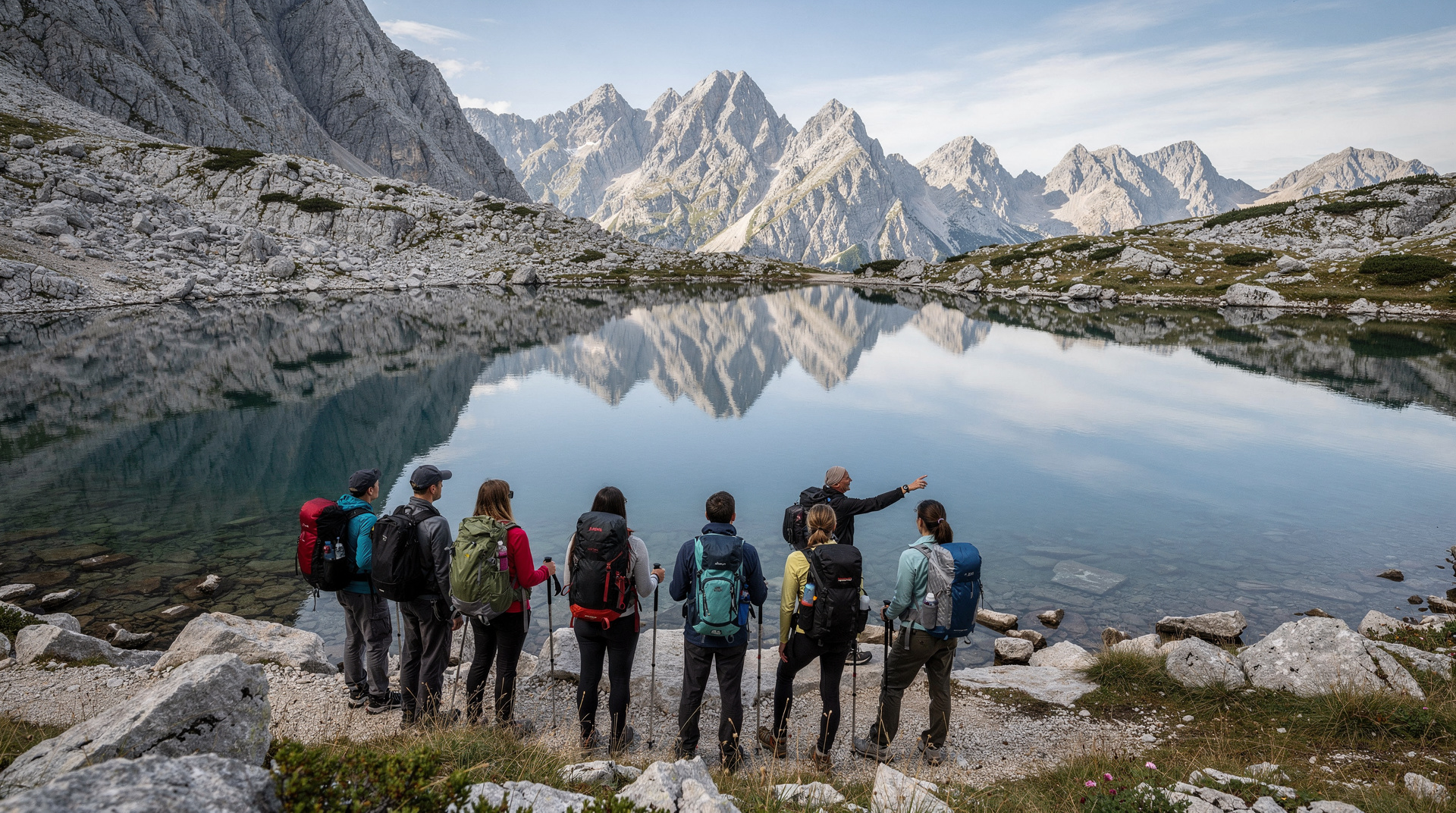
Triglav National Park: 7 Lakes Valley hiking tour
Quick facts
- Best time to visit
- Jun–Sep for swimming; Dec–Mar for winter sports
- Days needed
- 2–3 days
- Getting there
- Bus from Bled ~40 min, EUR 3; from Ljubljana ~1h45
- Budget per day
- EUR 50 to 120
The lake that makes Bled look like a theme park
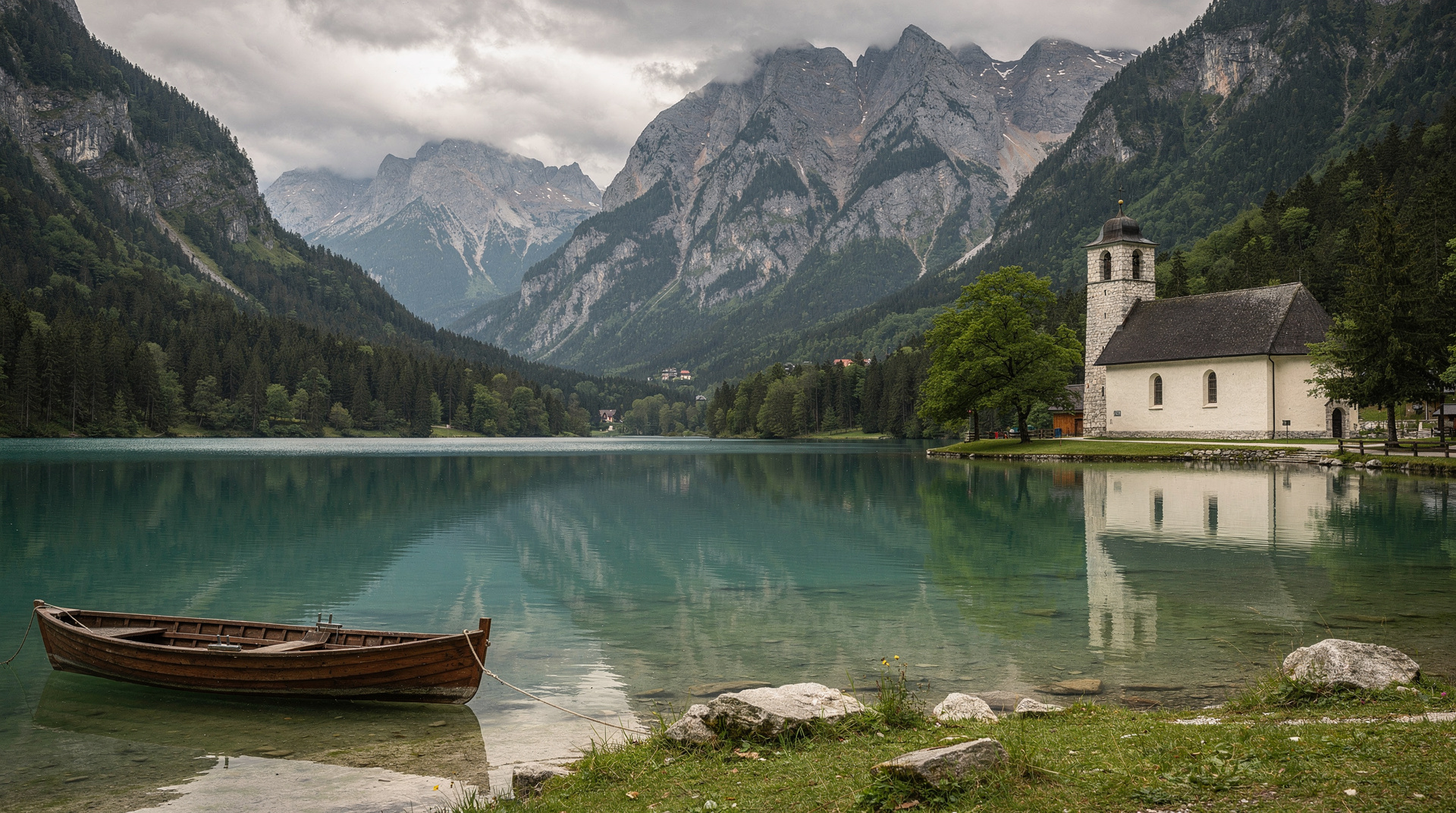
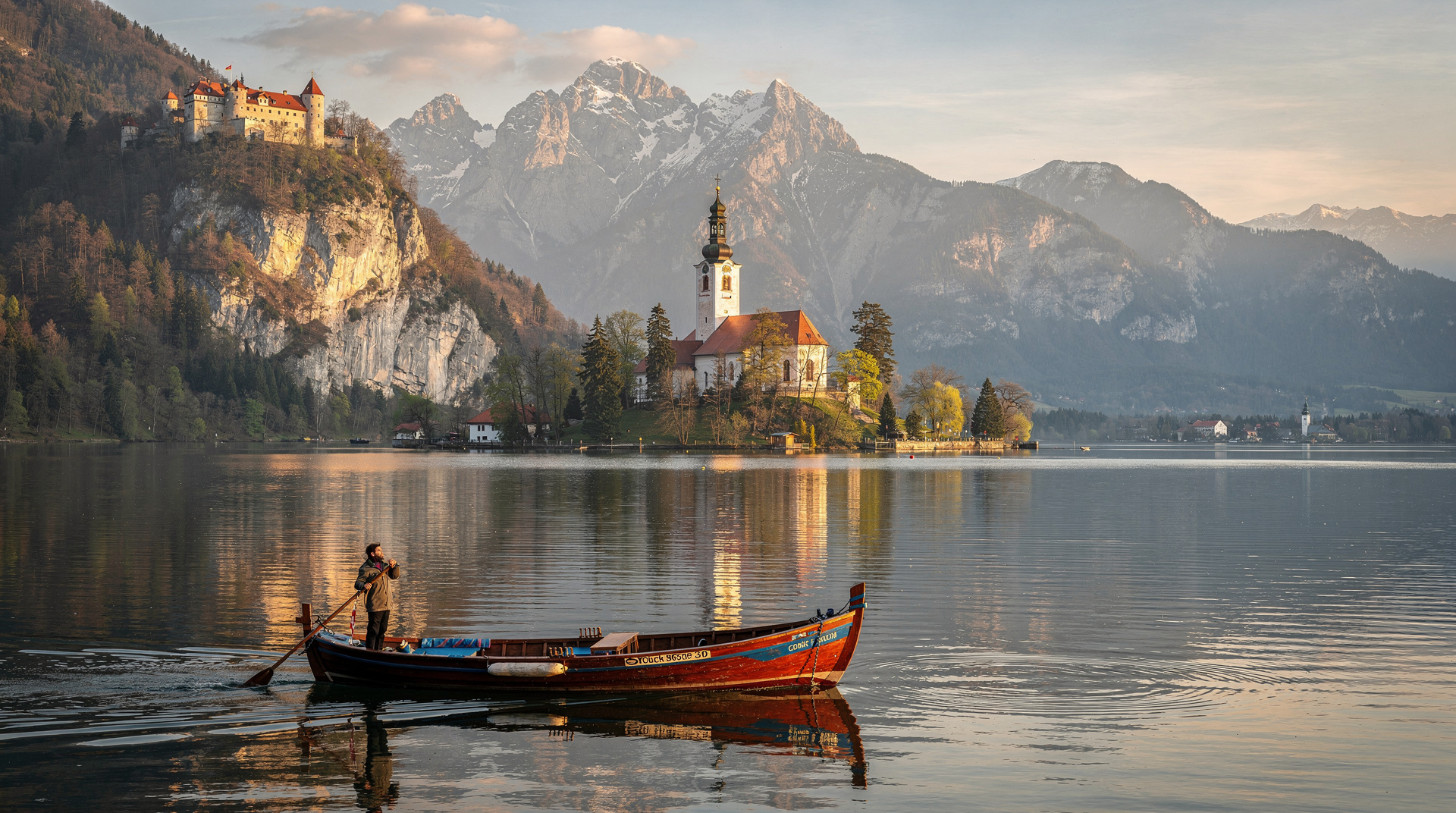
Thirty kilometres separate Lake Bled from Lake Bohinj, but the experiential gap is wider than the distance suggests. Bled is manicured, heavily photographed, and efficiently touristified. Bohinj — Slovenia’s largest natural lake — is wilder, quieter, and set directly within Triglav National Park. The trailheads start at the lake’s edge. The water is cleaner. The afternoon light on the Triglav range, reflected in water that stretches 4.2 km without an island breaking the view, is among the finest alpine scenes in Europe.
The trade-off: fewer restaurants, less infrastructure, and a slightly longer journey from Ljubljana. If you can live with that, Bohinj is the better lake.
| Where | Julian Alps, inside Triglav National Park, 30km from Bled |
| Time needed | 2–3 days |
| Getting there | Bus from Bled ~40min, EUR 3; from Ljubljana ~1h45 |
| Budget per day | EUR 50–120 |
| Best time | June–September for swimming/hiking; Dec–March for Vogel skiing |
Getting to Lake Bohinj
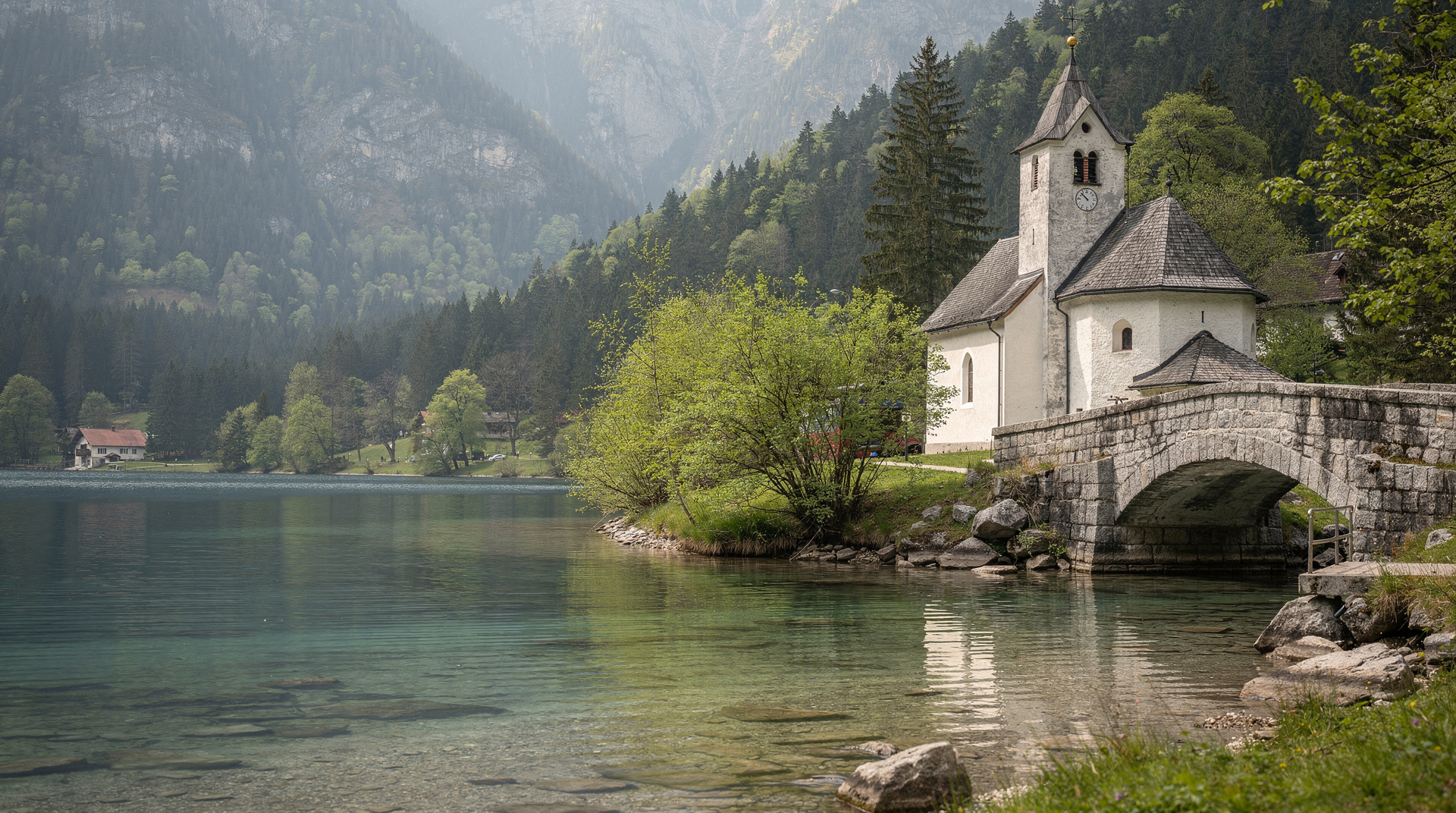
The lake village of Ribčev Laz serves as the main entry point (the church with the stone bridge is the postcard view). From Bled, Arriva buses run roughly hourly, taking about 40 minutes to Ribčev Laz (EUR 3). From Ljubljana, the same bus line continues through Bled to Bohinj — total journey around 1h45, EUR 7–9.
By car from Ljubljana: 75 km, approximately 1h15 via the A2 motorway to Lesce and then regional roads. No motorway driving is needed past Lesce, so the e-vignette covers the Ljubljana-to-Lesce portion only; the rest is toll-free.
By train: the scenic Bohinj railway line runs from Jesenice through Bohinjska Bistrica, connecting to the main Ljubljana–Salzburg line. Bohinjska Bistrica is 6 km from the lake; a local bus or taxi covers the last section. The train is slower than the bus but more scenic.
Parking near Ribčev Laz is limited and fills quickly in July and August; arrive before 09:00 or use one of the parking areas further along the lake road and walk or cycle.
The lake itself: swimming, kayaking, and doing nothing
Bohinj’s main appeal in summer is simple: the lake is clean, cold, magnificent, and free to swim in. Water temperatures reach 22–24°C in late July and August, fed by snowmelt from the surrounding 2000 m peaks. The main swimming area is at Ukanc (western end), where a meadow runs to the lake edge and the mountains fill the entire skyline.
For active time on the water, kayak and canoe rental is available near Ribčev Laz (EUR 10–15/hour). Stand-up paddleboarding has become popular — the calm mornings before 10:00 are the best time, when the lake surface is flat.
The Bohinj-Vogel cable car at Ukanc rises 1,000 m in under four minutes to the Vogel ski area (closed for maintenance until 1 December 2026; check the Vogel website for the reopening date). The panoramic view from Vogel (1,535 m) over the lake and the Triglav massif behind it is one of the best viewpoints in Slovenia without requiring a serious hike. Round-trip cable car costs around EUR 32–35.
In winter, the Vogel ski area has 22 km of pistes, a snowboard park, and reliable snow cover from December to March — less developed than Kranjska Gora but with better scenery.
The best hikes from Lake Bohinj
Bohinj is a serious hiking base. Triglav National Park surrounds the lake and the trail network is dense and well-maintained.
Savica Waterfall (Slap Savica): the most-visited walk from Bohinj. The waterfall drops 78 m into a gorge and is reached by a 25-minute walk from the Savica car park at the lake’s western end. Since 1 August 2026, entry costs EUR 4 from age 16 (free under 16, and free for everyone on the first Sunday of the month); parking P9 is EUR 7 for up to 3 hours or EUR 15 for the day, card payment only. The walk is easy and suitable for families; the view of the waterfall itself is dramatic. Combined with the cable car to Vogel, this makes a full morning.
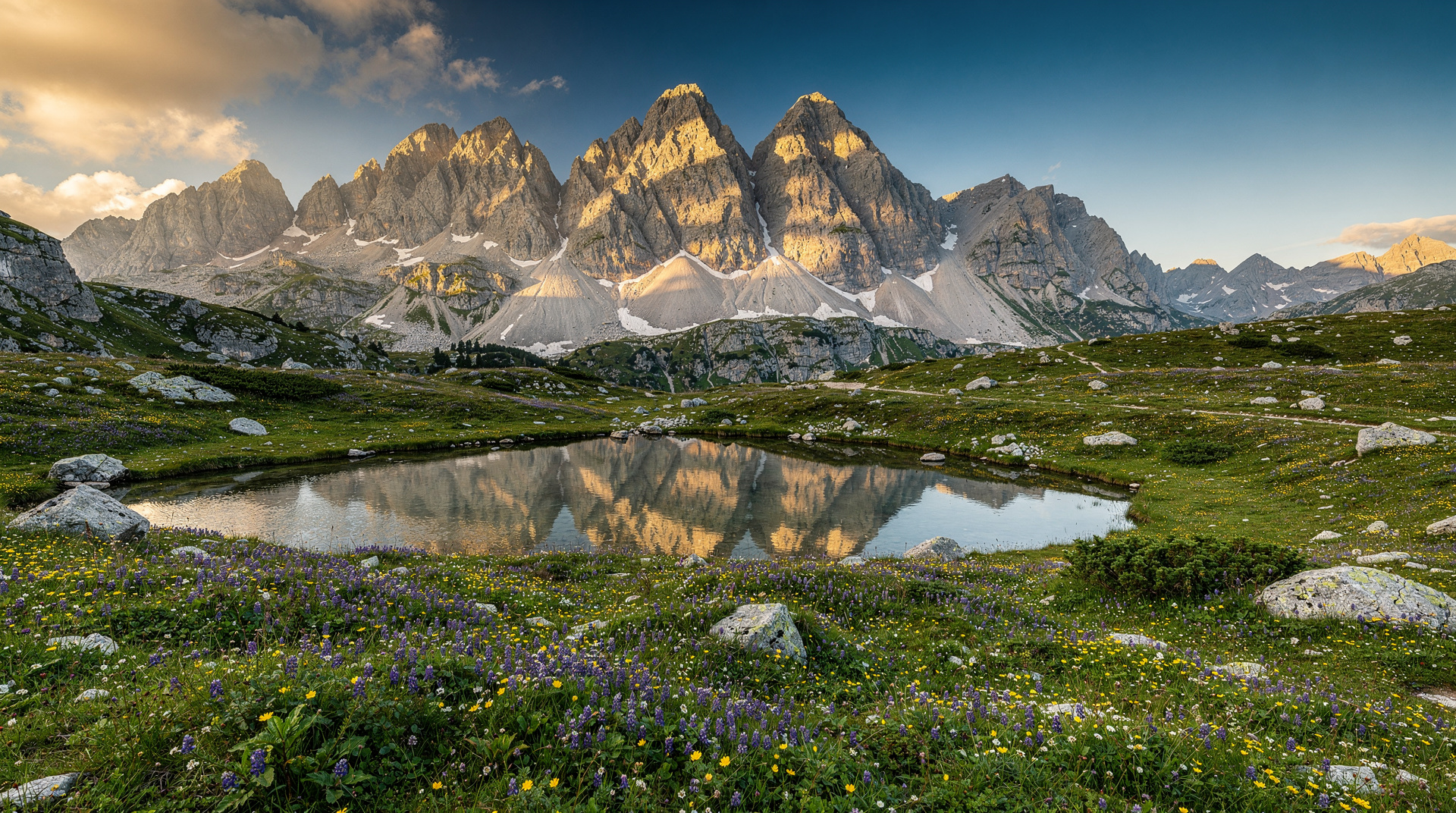
Seven Triglav Lakes Valley (Dolina Triglavskih jezerih): one of the great alpine hikes in Slovenia. The trail from Ukanc climbs steeply to the valley — a chain of seven glacial lakes at 1,600–1,900 m altitude. The first lake (Črno jezero) takes about 2 hours from the bottom; the full valley requires a 5–7 hour day or an overnight in the Koča pri Triglavskih jezerih mountain hut. The guided Seven Lakes hike from Bohinj is highly recommended for first-timers — the guide knows the trail conditions, the hut availability, and the weather patterns on the upper plateau.
Vogel summit circuit (1,922 m): an intermediate half-day hike from the cable car station. Rocky terrain in the upper sections; trekking poles useful but not essential. Views extend to Triglav on clear days.
Studor: a village 3 km east of Ribčev Laz with traditional hay-rack (kozolec) architecture. An easy flat walk along the lake road; worth building into a Bohinj day for those interested in rural Slovenia.
For the combination trip with Bled, the Bled and Bohinj day trip including Savica Waterfall covers both lakes with a guide and transport from Bled — good for those without a car.
Paragliding above Bohinj
The Vogel cable car station is a launch point for tandem paragliding — one of the most spectacular ways to see the Julian Alps. The acrobatic paragliding from Vogel offers both standard tandem flights and more dynamic acrobatic options; the thermal lift above the lake in summer afternoons is consistent. Flights typically last 15–30 minutes. Not for those susceptible to motion sickness, but genuinely extraordinary otherwise.
Fishing on the Sava Bohinjka
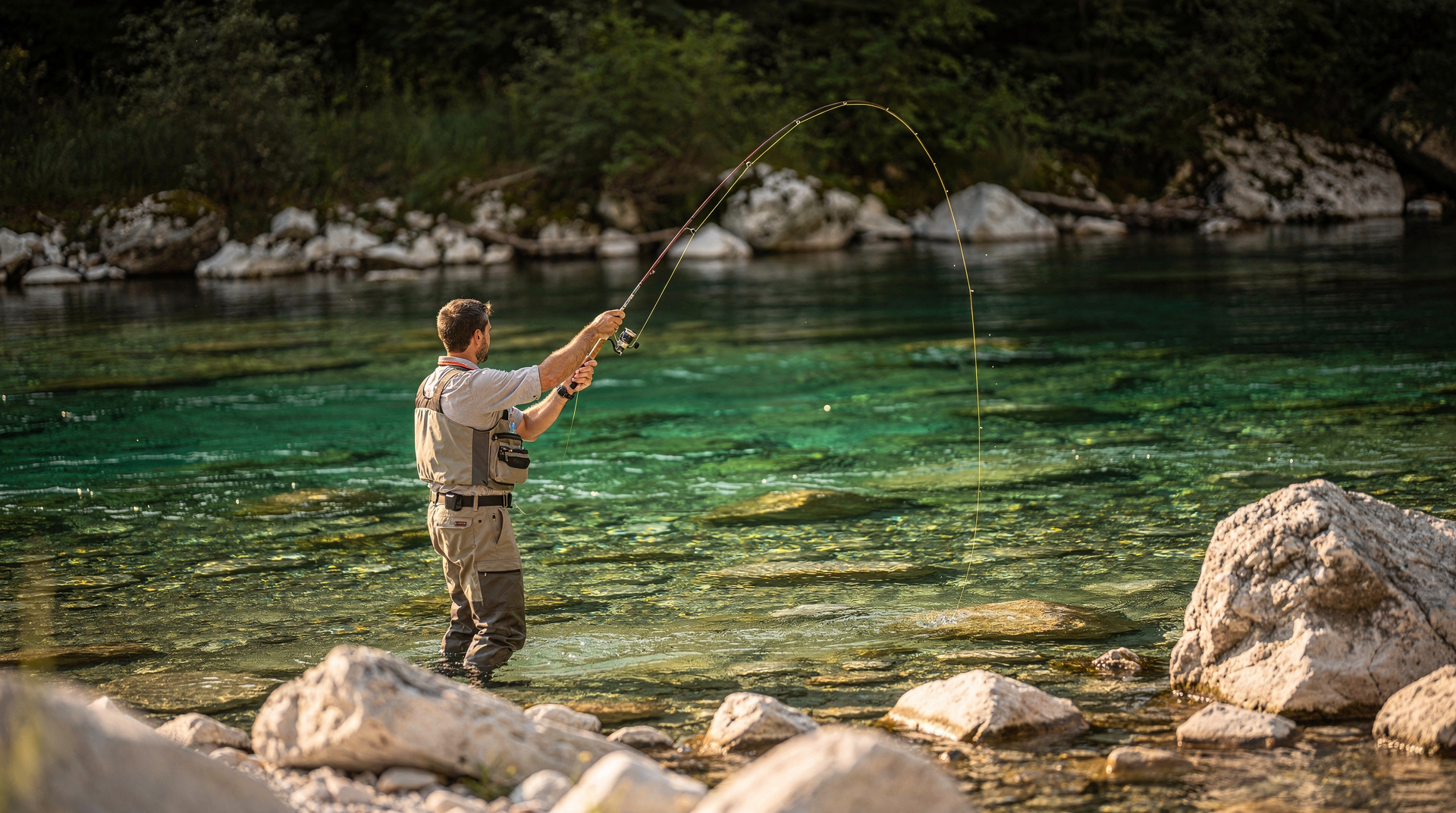
Fly fishing on the Sava Bohinjka river, which drains the lake eastward to Bled, is a serious pursuit — the river holds marble trout (endemic to Slovenian rivers), grayling, and Danube salmon in its crystal-clear sections. Day permits are available through the local fishing association; guided fishing sessions can be booked in advance. The season runs from April to October; fishing without a permit results in significant fines.
Eating and accommodation at Bohinj
The village of Ribčev Laz has a handful of restaurants and a supermarket. Restavracija Triglav is the most consistently recommended for grilled trout and traditional Slovenian dishes; main courses EUR 14–22. For cheaper eating, the Mercator supermarket in Bohinjska Bistrica is better stocked and 6 km away.
Hotel Bohinj (Ribčev Laz) is the main lakeside hotel — comfortable, with a terrace directly over the lake, EUR 100–160/night. Penzion Rožič and Apartmaji Bohinj offer apartment-style accommodation at EUR 60–90/night. Camping Zlatorog at Ukanc is the best campsite, directly on the western shore; expect EUR 25–35 per night.
Bohinj is quieter in the evenings than Bled — this is a feature, not a bug.
Seasonal considerations
Bohinj’s appeal shifts significantly by season. Summer (June–September) is for swimming, hiking, and water sports. The lake is at its warmest in late July and August, but June has better hiking conditions and fewer people. Autumn (October) brings remarkable colour in the surrounding forests and peaceful conditions on the lake.
Winter (December–March) activates the Vogel ski area. The lake can freeze in cold winters, creating eerie, beautiful conditions. Some accommodation and restaurants close from October to May — confirm before booking.
Spring (April–May): snowmelt makes higher trails slushy and some mountain huts are closed. The Savica Waterfall is spectacular in spring when snowmelt maximises the flow. The Savica car park road typically opens in late April.
Bohinj vs Bled: which should you choose?
Choose Bohinj if you want to hike, swim without crowds, or base yourself in the national park. Choose Bled if you want easy castle views, island access, and a range of restaurants within walking distance. Many visitors do both — Bled for a first impression, Bohinj for the substance. The comparison guide covers this in more detail, but the honest summary is: Bohinj is for people who travel to be in nature, not to photograph nature.
For those planning a longer trip through the Julian Alps, the Triglav National Park guide connects Bohinj to the wider alpine network including Kranjska Gora and the Vršič Pass.
The Bohinj railway and the Isonzo front history
Bohinj’s infrastructure has a history that most visitors miss. The Bohinj railway line — completed in 1906 as part of the Transalpine Railway linking Trieste to Vienna — was an engineering achievement that bored the longest Alpine tunnel in the world at that time (the Karawanks/Bohinj tunnel at 6.3 km). The line brought tourism to Bohinj; the first tourists were aristocratic Viennese and Triestine families who arrived by train at Bohinjska Bistrica and continued to the lake by horse carriage.
The same railway carried soldiers to the Soča/Isonzo front in WWI, which was 30 km to the west. The Bohinj area was a rear logistics base and hospital zone; the cemeteries at Bohinjska Bistrica include both military graves and those of prisoners of war who died in the camps. The national park information centre at Ribčev Laz covers this history briefly.
For visitors interested in the WWI heritage — one of the most significant and underexplored dimensions of Slovenian history — the town of Kobarid in the Soča valley, 40 km west of Bohinj, has the best museum in Europe on the Isonzo front battles. It’s accessible by car in 40 minutes from Bohinj.
The Bohinj church of St John the Baptist
The Church of St John the Baptist (Cerkvica sv. Janeza Krstnika) at Ribčev Laz, on the bank of the lake at the stone bridge, is one of the finest examples of medieval religious art in Slovenia. The church dates from the 14th century and retains original Gothic frescos in the interior — covering the walls and vaulted ceiling with biblical scenes, saints, and decorative borders.
The fresco programme was created in the late 14th and early 15th centuries by artists working in the Boljska workshop tradition. The quality is notably higher than provincial equivalents; several faces and figure groupings show sophisticated handling of drapery and spatial depth. The church is open during the day in summer (small donation appreciated); the combination of the frescoed interior and the lake view from the doorway makes it the best single cultural stop in Bohinj.
Winter at Bohinj
The summer reputation of Lake Bohinj tends to obscure what winter here offers. When the Vogel ski area is running (December to March), the combination of skiing and the frozen valley below creates conditions that serious photography enthusiasts seek out specifically. The lake occasionally freezes — not every year, but when it does (usually in January in cold winters), the flat frozen surface reflecting the snow-covered mountains behind is one of the finest winter images in Slovenia.
The Savica Waterfall is accessible in winter and is sometimes frozen — a dramatic ice formation above the pool. The access road is ploughed. Check conditions locally; the trail to the waterfall can be icy and requires traction devices (crampons or ice cleats) in hard frost conditions.
Cross-country skiing on the Pokljuka Plateau (15 km from Bohinj, accessible by car) is popular with local families and seriously developed — the plateau hosts World Cup biathlon events and has 40 km of groomed tracks. The contrast between the plateau altitude (1,300 m, typically good snow cover from December) and the valley below is dramatic.
Bird watching and the Triglav national park ecosystem
The Bohinj basin is one of the better locations in Slovenia for bird watching. The reedbeds at the eastern end of the lake shelter purple herons, bitterns, and great reed warblers in summer. The Sava Bohinjka river downstream from the lake is habitat for dippers, kingfishers, and grey wagtails year-round.
Above the treeline in the surrounding mountains, golden eagles and peregrine falcons are present. The reintroduced bearded vulture (lammergeier) from the French and Italian Alps programs has been recorded in the Triglav area and is occasionally seen over the Bohinj basin.
The national park authority publishes seasonal bird reports on its website; contact the park information centre at Ribčev Laz for current sightings and recommended watching locations.
Getting the most from 2 days at Bohinj
A well-structured 2-day visit covers the lake’s main dimensions without rushing:
Day 1: arrive by midday, walk the lake circuit (8 km, 2 hours, flat), swim at Ukanc in the afternoon, dinner at Restavracija Triglav, evening walk to see the Church of St John.
Day 2: morning cable car to Vogel (summit by 09:00 for the best light), circuit of the Vogel plateau, return by cable car at 13:00, afternoon at the Savica Waterfall (25-minute walk). Optional: take the return bus from Ukanc to Ribčev Laz and continue to Bled or Radovljica.
This structure gives swimming, altitude views, waterfall, and cultural elements without needing a car. With a car, a third day allows the Seven Lakes Valley or the Kamnik Bistrica valley.
The where to stay in Slovenia guide covers Bohinj accommodation options in more detail, including the apartment rental scene which is more developed here than the hotel directory suggests.
Bohinj vs Vogel accommodation: lakeside or slope-side
Most visitors stay near Ribčev Laz, close to the lake and the main restaurants, which is the right choice for anyone splitting time between swimming and hiking. Skiers focused purely on Vogel sometimes prefer accommodation nearer Ukanc, closer to the cable car base station, cutting a few minutes off the daily commute up the mountain. In practice the whole lake basin is compact enough that the difference is marginal outside peak winter mornings when the cable car queue matters — for most trips, book wherever has the better room and view rather than optimising for proximity to a single activity.
Bohinj with children
Bohinj suits families who enjoy nature over infrastructure. The lake circuit is flat and manageable with a stroller for the sections near Ribčev Laz, the Savica Waterfall walk (25 minutes, easy grade) is genuinely rewarding for children old enough to walk it themselves, and the Ukanc swimming meadow is shallow enough near the shore for supervised younger swimmers. The Vogel cable car is a highlight for most kids regardless of age — the ride itself is half the fun. What Bohinj lacks compared with Bled is variety of easy entertainment if the weather turns; there’s no equivalent of an accessible castle or museum for a rainy backup plan, so build in flexibility if travelling with children in shoulder season.
Combining Bohinj with a longer Julian Alps loop
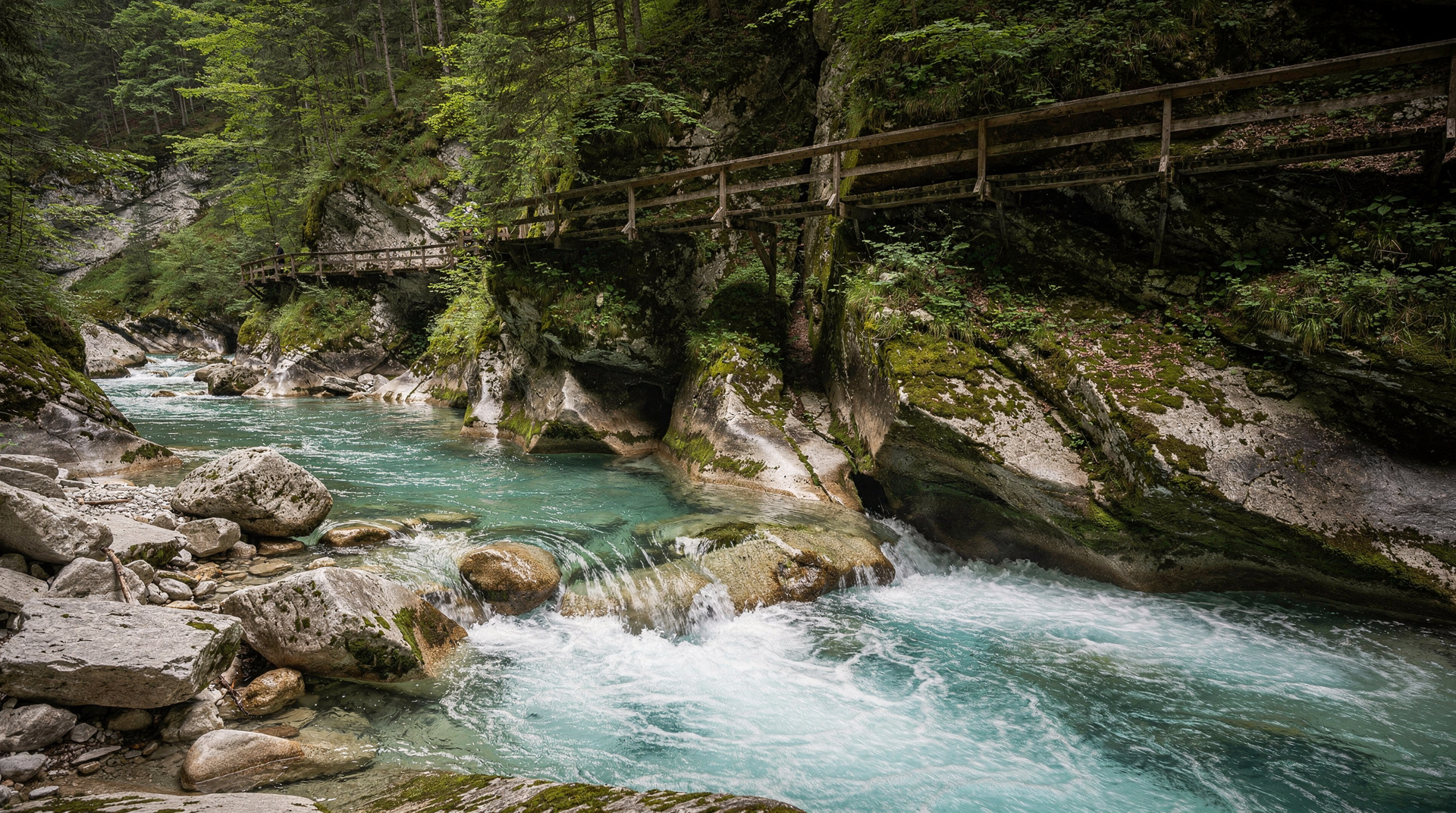
For visitors with a car and 4–5 days, Bohinj works well as one stop on a wider circuit: Lake Bled for the classic views and castle, Vintgar Gorge as a half-day between the two lakes, Bohinj itself for hiking and swimming, then Kranjska Gora and the Vršič Pass for the high alpine drive, looping down into the Soča Valley before returning to Ljubljana. This sequence covers the full range of what the Julian Alps offer without excessive backtracking, and Bohinj’s position roughly in the middle makes it a natural two-night anchor point.
Frequently asked questions about Lake Bohinj
Is Bohinj better than Bled?
Better for different things. Bohinj has cleaner water for swimming, a less crowded atmosphere, and direct access to Triglav National Park hiking. Bled has better infrastructure, the island excursion, and is easier for day-trippers from Ljubljana. Many travellers split their time: a day or two at each. If you can only pick one and you prioritise nature over convenience, pick Bohinj.
How do I get from Bled to Bohinj?
Arriva buses run roughly hourly between Bled and Ribčev Laz (Bohinj); journey time about 40 minutes, cost around EUR 3. By car it’s 28 km on regional roads, approximately 30 minutes. There is no motorway section, so no additional vignette charge beyond what you’ve already paid.
Can I swim in Lake Bohinj?
Yes — it’s one of the best wild swimming spots in Slovenia. The lake is clean, cold, and beautifully situated. Main swimming area is at Ukanc on the western shore. Water temperature reaches 22–24°C in late July and August. Swimming is free.
What is the best hike from Bohinj?
The Seven Triglav Lakes Valley hike is the standout for experienced walkers — one of the finest alpine routes in Slovenia. For families or those wanting something manageable, the Savica Waterfall walk (25 minutes, easy) is excellent. The Vogel summit circuit (accessed via cable car) is a good middle option.
How many days should I spend at Lake Bohinj?
Two to three days lets you cover the lake circuit, the Savica Waterfall, the Vogel cable car and viewpoint, and either the Seven Lakes hike or a slower cultural day (Studor, the frescoed church, bird watching). A single day is workable if paired with Bled, but rushes the hiking that makes Bohinj distinctive.
Top experiences
Bookable activities with verified prices and instant confirmation on GetYourGuide.