Ljubljana: Slovenia's compact, car-free capital
Ljubljana rewards slow exploration: a walkable old town, a vibrant food market, and a castle hill that earns its climb. Honest tips, EUR prices, no hype.
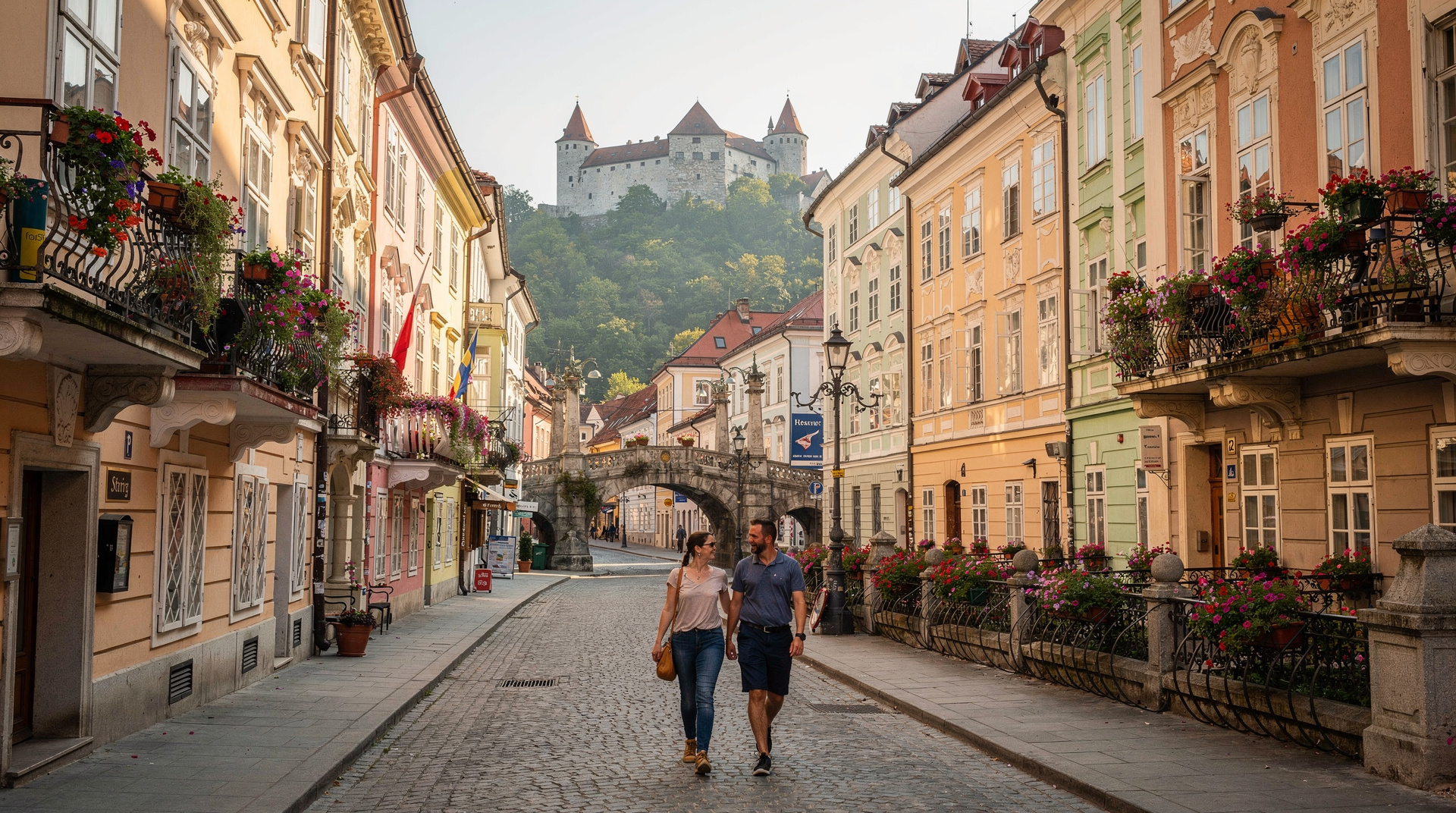
Ljubljana: historic old town private walking tour
Quick facts
- Best time to visit
- Apr–Jun, Sep–Oct
- Days needed
- 2–3 days
- Getting there
- Bus from LJU airport ~30 min, EUR 4
- Budget per day
- EUR 55 to 130
A city that works better on foot than on paper
Ljubljana often shows up as a footnote in Central European itineraries — “nice for a day between Vienna and Dubrovnik.” That framing undersells it. Two full days here reward you with one of Europe’s most liveable old towns, a food scene that punches well above the city’s 280,000-person population, and an easy base for half-day escapes into the Alps or karst country.
| Where | Central Slovenia, on the Ljubljanica river |
| Cost | around EUR 55–130/day, meals included |
| Time needed | 2–3 days |
| Getting there | Bus from LJU airport (line 28), around EUR 4, 30–45 min |
| Best time | April–June or September–October |
The key insight: Ljubljana is small enough to exhaust by foot but dense enough to stay interesting. The historic core around Mestni trg and Stari trg fits comfortably in a 20-minute stroll. The tourist draw is genuine — but the crowds are manageable compared to Prague or Dubrovnik, especially if you arrive outside July and August.
Getting there and getting oriented
Ljubljana Jože Pučnik Airport (LJU) sits 27 km north of the city. The Alpetour shuttle bus (line 28) runs roughly every 30–60 minutes and costs EUR 4 — far cheaper than taxis (EUR 25–35). Journey time is 30–45 minutes depending on traffic. Uber operates in Ljubljana but surge pricing near the airport is common; the bus is almost always the better call.
From the station (central, five-minute walk to the old town), trains connect to Lake Bled in about 80 minutes, though the bus is faster and cheaper for most travellers heading to the Julian Alps.
The Ljubljanica River divides the city into two distinct halves. On the east bank sits the old town — the castle hill, Baroque churches, and most of the cafés. On the west bank lies the 19th-century grid of the Ljubljana Centre neighbourhood, where you’ll find the Central Market, the train station, and the majority of the hotels. Most visitors stay east of the river; staying west gives you cheaper prices and quieter mornings.
The old town: what’s actually worth your time
The pedestrianised stretch from Prešeren Square to the Triple Bridge (Tromostovje) is Ljubljana’s postcard view — and deservedly so. Jože Plečnik’s white stone bridges are genuinely beautiful, and the square buzzes with café life from April through October. But linger longer than the selfie stop.
Walk south along the river on the Mestni trg and Stari trg promenade. The arcaded buildings are Plečnik’s work again; he spent decades reworking Ljubljana’s public spaces after the 1895 earthquake cleared much of the old fabric. The Dragon Bridge (Zmajski most) at the north end of the old town is a 1901 Secessionist piece worth crossing, though less dramatic than the Triple Bridge.
The Central Market (Odprta kuhna) operates Friday lunchtime from late March to late October along the riverside colonnade. It’s a genuine local institution: chefs from restaurants across Slovenia set up stalls, prices are reasonable (EUR 5–12 for a plate), and the atmosphere is relaxed rather than tourist-trap. Arrive between 11:00 and 13:00; it winds down fast.
For everyday food shopping, the covered Plečnik Market hall just behind the colonnade opens daily except Sunday. Buy local honey, Tolminc cheese, and Carniolan sausage (kranjska klobasa) here rather than in the airport.
Ljubljana Castle: the honest verdict
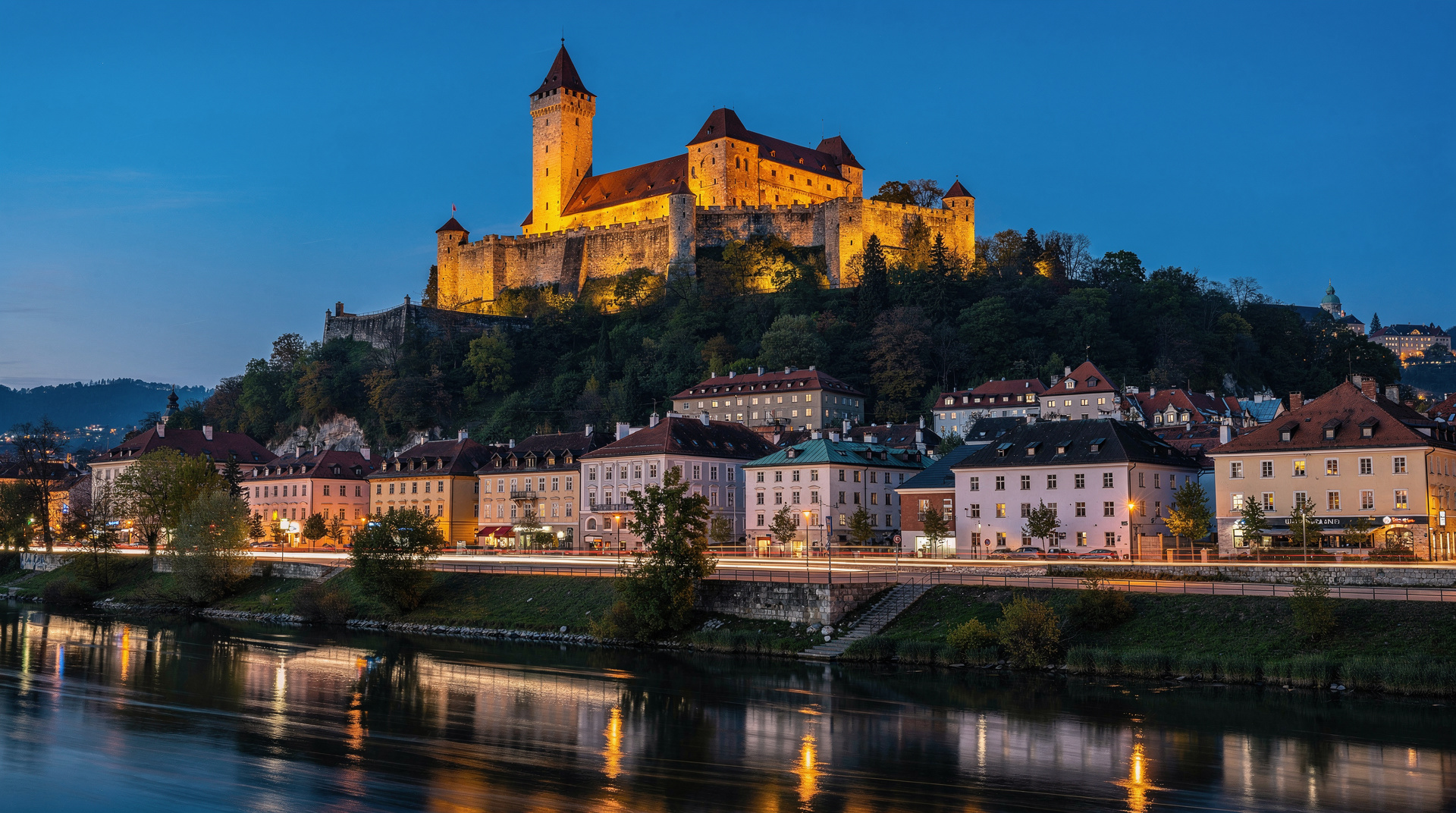
The castle sits on a 375 m hill directly above the old town. Most visitors make the climb expecting revelation; most come down a little deflated. The view is good rather than spectacular, the castle interior has limited original fabric, and the castle ticket (adults EUR 17.10 online, EUR 19 at the desk; includes the funicular) feels steep for what’s inside.
Our advice: take the castle funicular walk with a guide who knows the history and can make the sparse interiors worth the ascent — or simply walk up the free footpath from Studentovska ulica and enjoy the view without paying for the museum. The view from the top of the nearby Nebotičnik skyscraper café (free) is arguably better and certainly more interesting architecturally.
Tourist trap flag: the restaurants at the castle charge a premium for food that’s perfectly fine elsewhere in the old town for EUR 5–8 less per dish. Eat before you go up.
Eating and drinking: where locals actually go
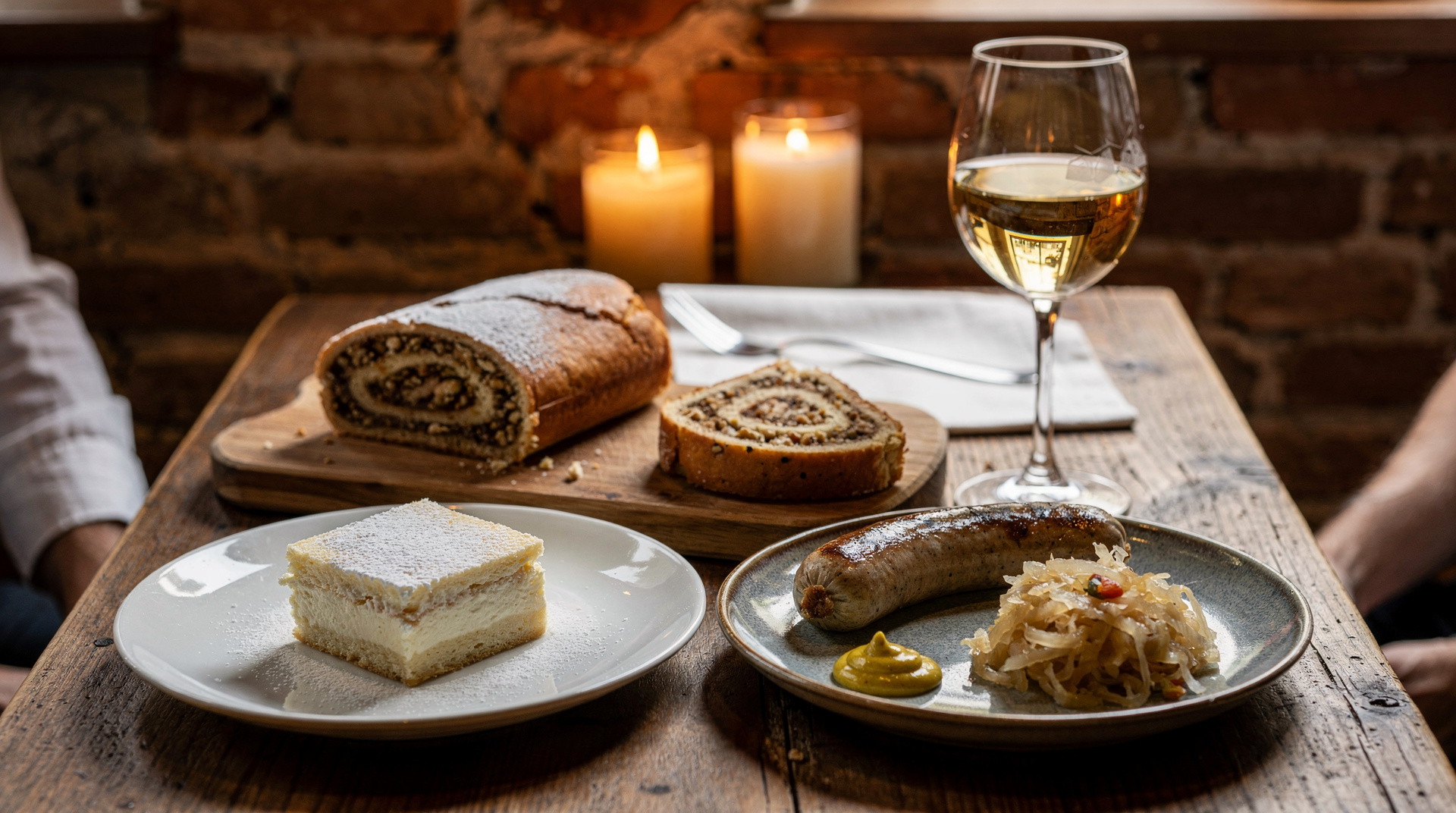
Gostilna na Gradu (at the castle, yes — but the exception) serves traditional Slovenian dishes at prices that are fair for the location; the Carniolan sausage with turnips and mustard is the thing to order. Reservations recommended in July and August.
For everyday lunch, Lunch Café Marley & Me near the Central Market runs a daily-changing set menu (soup, main, salad, dessert) for around EUR 12 — genuinely popular with office workers rather than tourists.
Špajza on Gornji trg is a reliable old-town choice for traditional Slovenian cooking — duck, venison, žlikrofi dumplings — with a solid local wine list and a courtyard that’s pleasant on warm evenings. Main courses run EUR 18–26.
For coffee, Ljubljana has a strong café culture centred on the riverside terraces. Kavarna Tromostovje and the nearby Kavarna Zvezda (famous for Kremšnita, the Slovenian cream cake) are both worth sitting at for an hour, though the Kremšnita here is less legendary than the version at Lake Bled’s Gostilna Pri Planincu.
The Metelkova Mesto cultural centre, a 15-minute walk north of the old town, comes alive after 22:00 — an autonomous social centre in a former Yugoslav army barracks, graffiti-covered and consistently interesting. It’s not everyone’s scene but it’s authentically Ljubljana rather than a tourist construct.
Day trips from Ljubljana
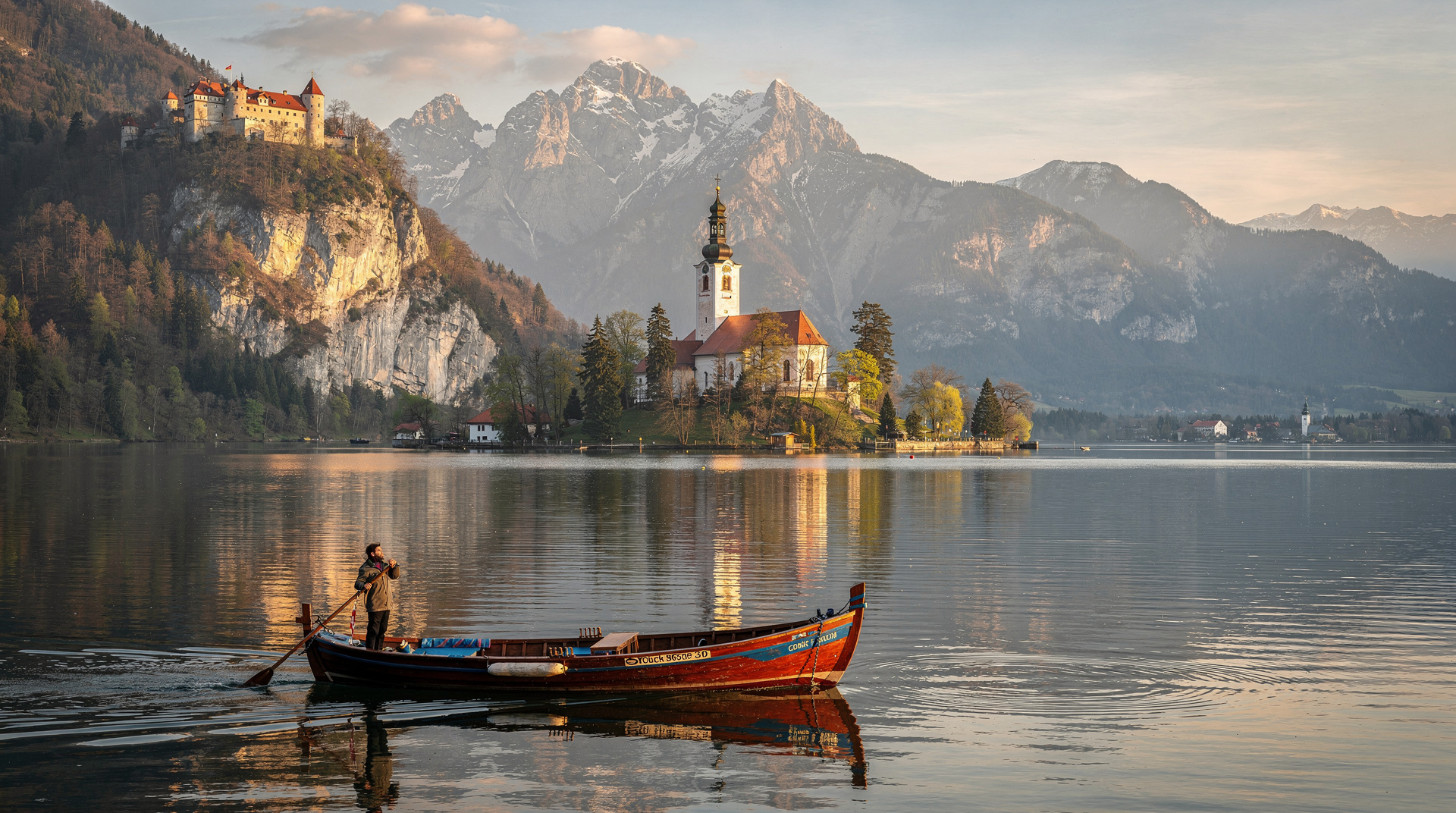
Ljubljana’s best feature is what it puts within reach. Lake Bled is 55 km north (1 hour by car, 1h20 by direct bus, EUR 6 each way on Arriva buses). The bus drops you at Bled bus station, a five-minute walk from the lake — no car needed for a day trip.
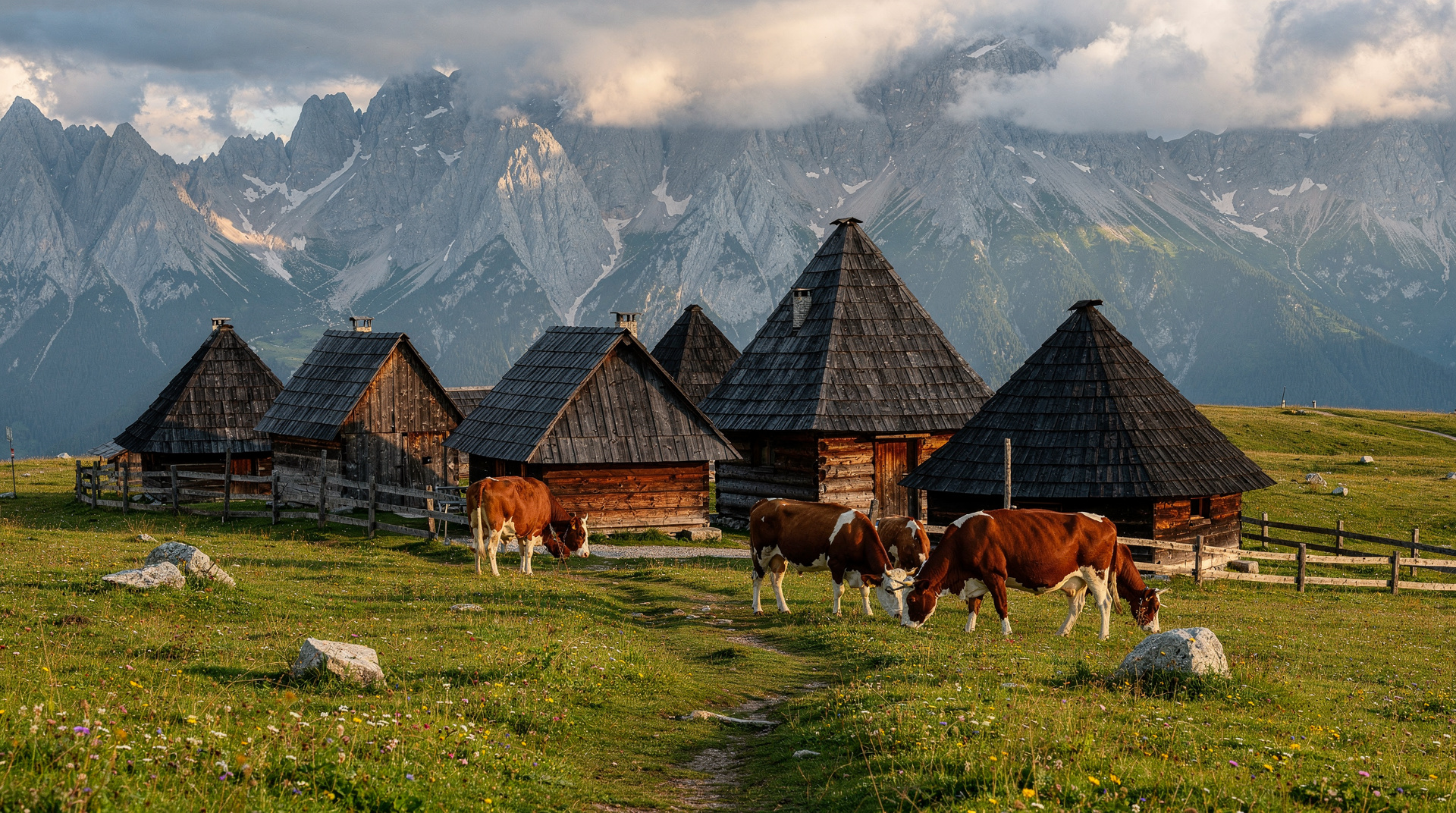
Velika Planina — an Alpine plateau with traditional shepherds’ huts — is 45 km east (about 50 minutes by car or 1 hour by bus to Kamnik, then a cable car). It makes an excellent half-day or full-day excursion and is dramatically less crowded than Bled. See the Velika Planina destination page for full logistics.
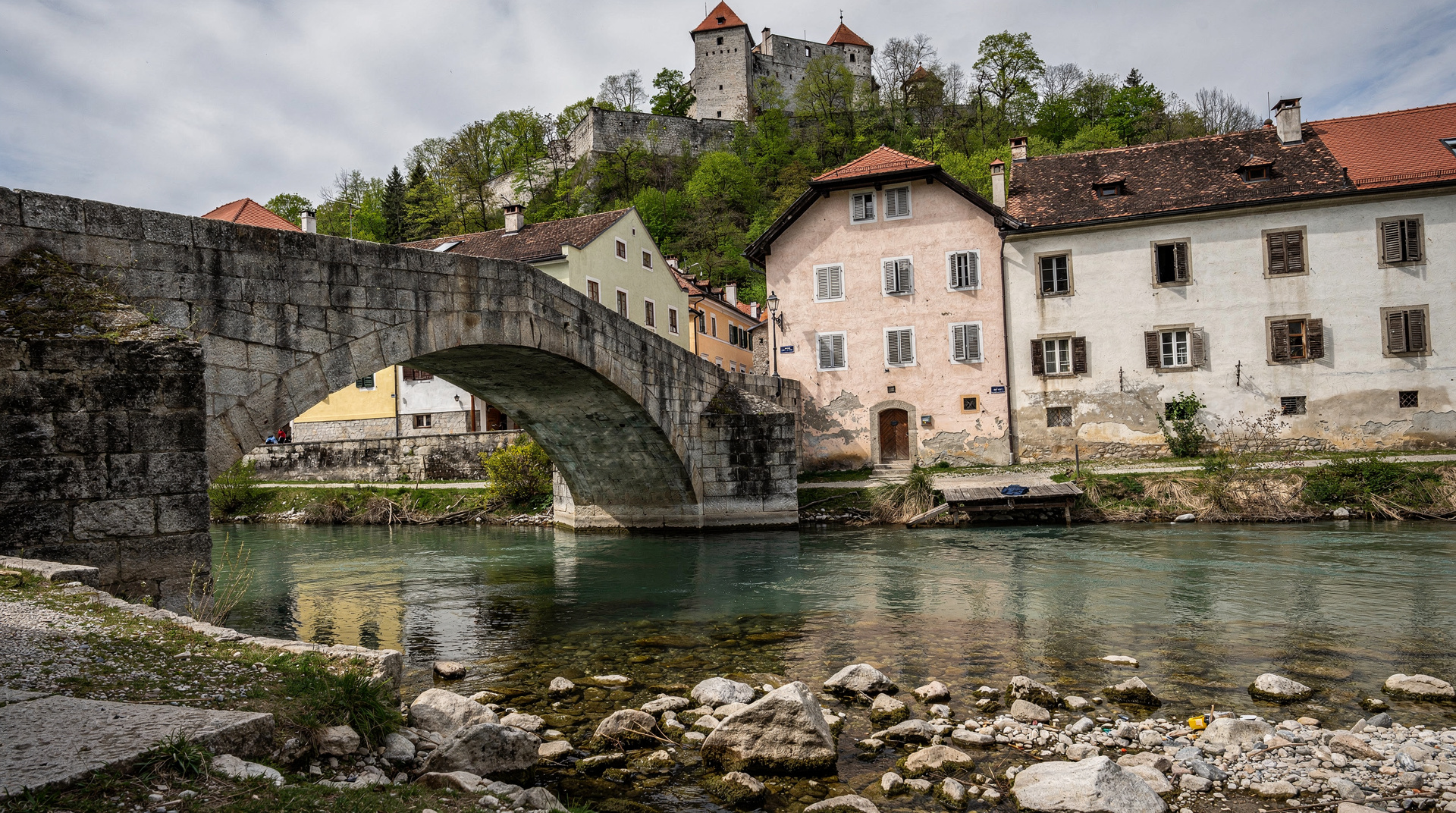
Škofja Loka, one of Slovenia’s best-preserved medieval towns, is 25 km northwest — 40 minutes by car or 30 minutes by bus from the station. It’s an easy half-day and rarely overrun.
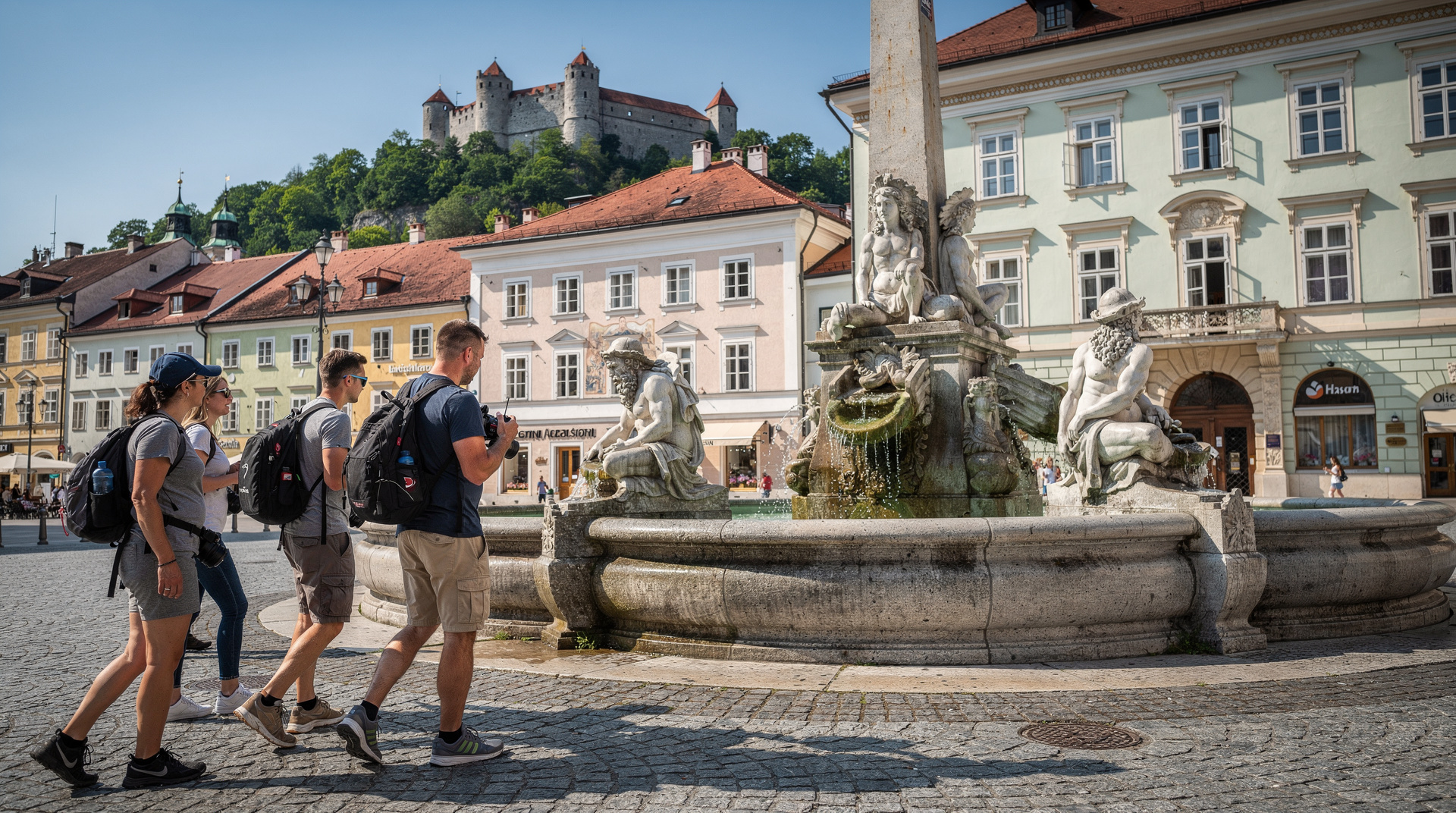
For a guided overview of the capital before striking out, the Ljubljana old town private walking tour is consistently well-reviewed and gives you the Plečnik context that makes the architecture click. Guides typically run 2 hours and depart from Prešeren Square.
For food specifically, the Ljubljana food tasting tour — 10 tastings across the market and old-town vendors — is a practical way to eat lunch and learn the cuisine simultaneously.
Getting around Ljubljana
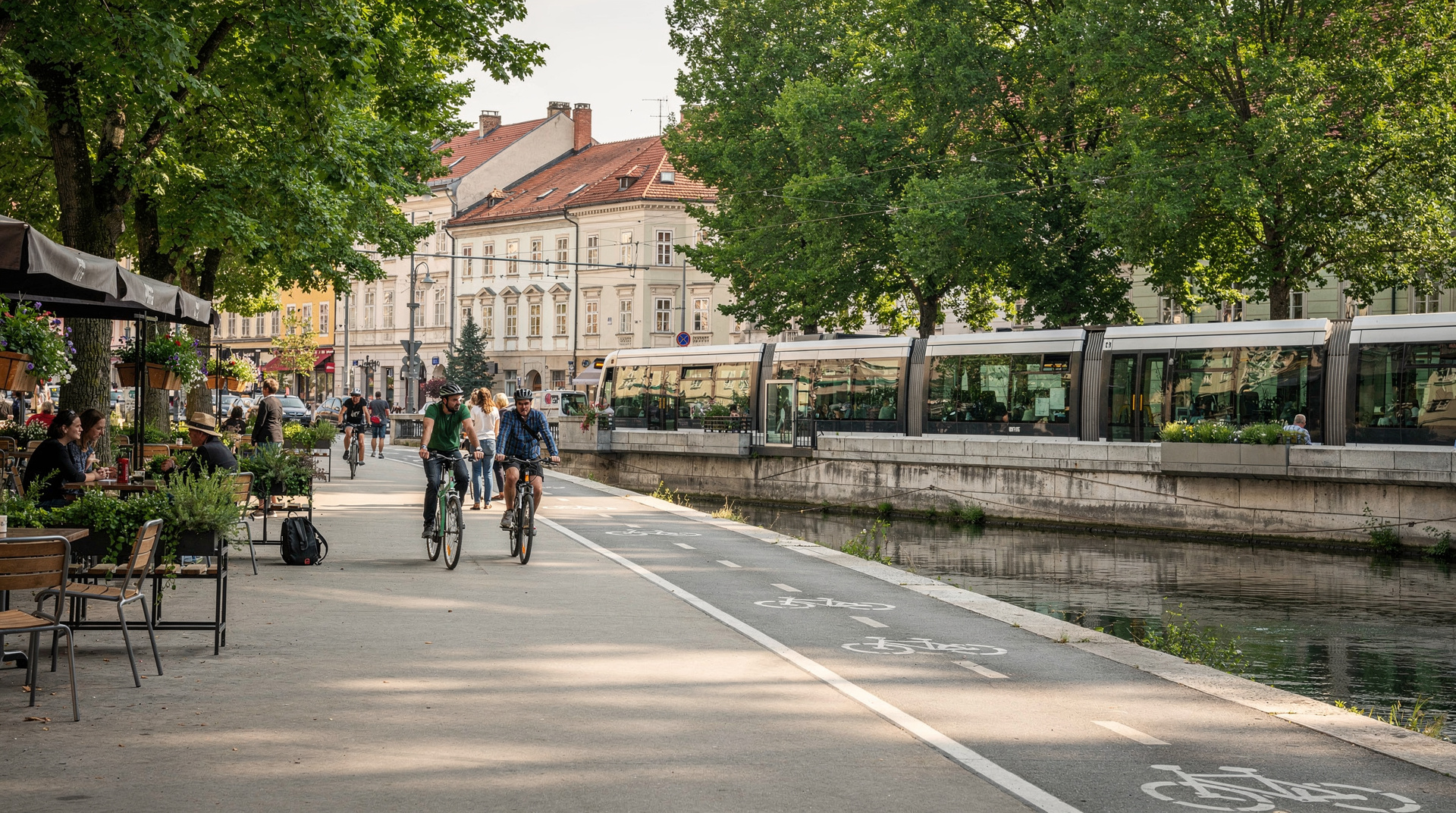
The old town is pedestrianised and easily walkable; you won’t need public transport within the historic core. For wider exploration, the Kavalir electric buggy service is free within the pedestrian zone (handy for tired legs or luggage).
The city bike share system (Bicikelj) has 36 stations and costs EUR 1 for the first hour — practical for reaching Tivoli Park or the Metelkova area. The e-bike tour is a good option if you want to cover more ground with context; it reaches the Tivoli Park, the Grad neighbourhood, and the river banks in a 2–3 hour loop that would otherwise require either a taxi or a lot of walking.
For the airport run, confirm your shuttle time the night before — the last bus departure from the airport is typically around 21:00, and the last departure back from the city centre to the airport is around 19:00 (check current timetables, schedules change seasonally).
Practical information
Currency: Euro (EUR). Ljubljana is a eurozone city; no exchange needed from other eurozone countries.
Accommodation: The old town has several boutique hotels (Hotel Cubo, Hotel Galleria) at EUR 120–180/night. Cheaper options cluster in the Centre neighbourhood west of the river (EUR 70–110/night). Hostels and guesthouses start around EUR 25–40/person in dormitories.
Vignette: If you’re driving to Ljubljana from a neighbouring country, you need a Slovenian motorway e-vignette (from EUR 16 for a week). See the driving in Slovenia guide for details — the fines for missing it are EUR 300–800.
Safety: Ljubljana is one of Europe’s safer capitals. Standard city vigilance applies; petty theft at the Central Market is the main concern.
Internet: Free Wi-Fi throughout the old town pedestrian zone and in most cafés.
Best time to visit: April to June for mild weather and the market in full swing; September to October for harvest events and fewer tourists. July and August are busy but manageable — Ljubljana doesn’t have Bled’s chokepoint crowd problem.
For complete planning context, the Slovenia travel guide covers transport, budget, and visa logistics that apply whichever regions you’re visiting.
Plečnik’s Ljubljana: a quick orientation
Jože Plečnik (1872–1957) is the single most important figure in Ljubljana’s physical appearance. An architect trained in Vienna under Otto Wagner, Plečnik spent the 1920s–1950s redesigning Ljubljana’s public spaces — bridges, market halls, parks, streets, fountains — in a singular style that blends classical motifs with modernist proportion and local materials.
The Triple Bridge, the Plečnik Market colonnade, the National and University Library (NUK), Tivoli Park’s processional avenue, and dozens of other structures are his work. Understanding that this is a coherent body of work by one architect — rather than the accumulated accretions of different periods — makes the city read very differently. The architecture is not a historical pastiche; it’s the vision of a European modernist who happened to stay in Ljubljana.
The best introduction is the free walking route mapped on the Ljubljana tourism authority website, covering 20 Plečnik interventions in the city. It takes 3–4 hours at a relaxed pace. The Ljubljana old town guide covers the most significant sites with architectural context.
The Ljubljana food scene beyond gostilne
Ljubljana’s restaurant scene has developed significantly since 2015. The traditional gostilna (country-style inn, often family-run, focused on Slovenian classics) remains excellent, but the city now has a food culture that draws on the surrounding regions — the Karst for wine and prosciutto, Istria for olive oil and seafood, the Julian Alps for trout and game, the Soča valley for specific varietals.
Atelje on Cankarjevo nabrežje is the most-cited fine dining option — a tasting menu restaurant focused on Slovenian ingredients, prix fixe at EUR 75–95 per person. Book 2–3 weeks ahead. The wine list focuses on natural wines from Goriška Brda and the Vipava Valley.
Monstera Bistro near the old town runs a lunch-focused menu (open until 16:00) that changes weekly around seasonal produce — popular with food professionals, reliable but no reservation system so queues form.
For wine specifically, the Vinoteka Movia on Mestni trg stocks wines from the Movia estate in Goriška Brda and a broader selection of Slovenian producers. A guided tasting (EUR 15–20/person) is a good introduction to Slovenian viticulture before visiting the wine regions in person.
What Ljubljana looks like in different seasons
Spring (March–May): the Tivoli Park and the riverbanks fill with locals at the first warm days. The chestnut trees along the Prešeren and Miklošičev Park corridors bloom in April. Tourist numbers are low; the market is just reopening. Best time for unhurried exploration.
Summer (June–August): the outdoor café culture is at its peak. The Ljubljana Festival runs through July and August with concerts, theatre, and opera performances in Krizanke (a 16th-century Augustinian monastery converted into an outdoor venue by Plečnik). The old town is busy but not overwhelmed — no single chokepoint the way Bled has.
Autumn (September–October): harvest season brings food events, the Ljubljana Marathon in late October, and the transition from tourist season. The Tivoli Park forest turns colour in mid-October — worth an afternoon walk.
Winter (November–February): Ljubljana makes a genuine effort with Christmas markets and ice rinks (the main rink is on Kongresni trg). The city is compact enough that cold weather is manageable. Some outdoor café terraces close but the old town remains active.
Ljubljana with children
Ljubljana is an easy city for families. The old town is pedestrianised and flat except for the castle climb, so pushchairs are not a problem outside that one hill. Tivoli Park has playgrounds, wide paths for scooters and bikes, and enough open lawn for children to run off energy after a morning of sightseeing.
The Ljubljana Zoo, on the wooded slopes of Rožnik hill about 3 km from the centre, is small by international standards but well-kept and a reasonable half-day option if the weather turns. The castle funicular itself is a minor attraction for younger children independent of what’s at the top. Restaurants are broadly accommodating; few insist on formality, and gostilna menus usually have simple grilled options even when not formally listed as a children’s menu.
ETIAS and entry requirements
Slovenia is in the Schengen zone. UK and US passport holders can currently visit for up to 90 days in any 180-day period without a visa. The European Travel Information and Authorisation System (ETIAS) — a pre-travel authorisation for visa-exempt nationals — is not yet in operation, and its start date will be announced several months ahead. Check the official EU ETIAS website for current status before travel. The Slovenia entry requirements tool on this site has current information by nationality.
Where to base yourself: east bank vs west bank
| East bank (old town) | West bank (Centre) | |
|---|---|---|
| Character | Castle hill, cafés, tourist buzz | 19th-century grid, quieter |
| Price | Higher (EUR 120–180 boutique) | Lower (EUR 70–110) |
| Walk to sights | 0–10 minutes | 10–20 minutes |
| Best for | First-timers, short stays | Longer stays, budget travellers |
| Noise at night | Livelier, especially near Metelkova | Quieter |
Comparing Ljubljana’s day trips
For visitors deciding how to split limited time, the three most common day trips break down like this: Lake Bled is the scenic headline act but also the busiest and requires a full day; Velika Planina trades postcard fame for genuine quiet and a distinctly Alpine-pastoral atmosphere; Škofja Loka is the lowest-effort option, easily combined with a half-day in the city itself. If you only have one spare day, Bled remains the default choice for first-time visitors, but Velika Planina rewards travellers who have already done a lake in another country and want something different.
A little more on Metelkova and Ljubljana after dark
Metelkova Mesto deserves a slightly longer note because it is easy to misjudge. By day, it looks abandoned — graffiti-covered concrete blocks around a courtyard, a former Yugoslav army barracks squatted by artists and activists since 1993. By night, it hosts a rotating set of small clubs and bars, each with its own crowd and sound (industrial, punk, techno, world music), free or very cheap entry, and an atmosphere that has nothing in common with the polished old-town cafés.
It is safe by ordinary city standards but genuinely alternative in feel — not a place for anyone hoping for craft cocktails and design lighting. Worth an hour even if clubbing isn’t your plan, simply to see a functioning piece of Ljubljana’s post-Yugoslav cultural history that the castle-and-bridge itinerary never shows you.
Frequently asked questions about Ljubljana
Is Ljubljana worth visiting or should I go straight to Lake Bled?
Ljubljana is absolutely worth 2 days. Many travellers who treat it as a connection point later wish they’d stayed longer. If your trip is 5 days or more, start in Ljubljana (2 nights), then head to Bled. If you have only 3 days total, a single night in Ljubljana before Bled still makes sense — the city is compact enough to see the essentials in an afternoon and morning.
How many days do I need in Ljubljana?
Two days is the sweet spot for first-time visitors: one day for the old town, castle, and market; one day for a mix of Tivoli Park, the Metelkova area, and an optional half-day trip to Škofja Loka or Velika Planina. Three days allows a full day trip to Bled while keeping a slower pace in the city.
Is Ljubljana expensive compared to other European capitals?
Ljubljana is mid-range by Western European standards and noticeably cheaper than Vienna, Zurich, or Paris. A sit-down lunch for two (soup, main, drink) runs EUR 25–35 at a decent local gostilna. Craft beer at a riverside bar is EUR 4–6. A budget traveller spending EUR 55–65/day can eat well and sleep in decent accommodation.
Can I do Ljubljana without a car?
Completely. The old town is pedestrianised and the airport bus is cheaper and more convenient than taxis for most arrivals. Buses to Bled, Kranjska Gora, and Postojna depart from the central bus station next to the train station. A car becomes useful only if you want to explore the karst villages, Soča Valley, or coastal towns that have limited public transport connections.
What is the best free thing to do in Ljubljana?
The Tivoli Park is the local favourite — 5 km of tree-lined paths leading to the hills above the city, entirely free and busy with joggers and families year-round. The Prešeren Square and Triple Bridge area are obviously free. The view from Nebotičnik (open café on the 12th floor, no entrance charge) rivals the castle view at zero cost.
When is the Ljubljana Central Market open?
The covered Plečnik Market hall is open Monday to Saturday, roughly 07:00 to 14:00, and closed Sundays. The outdoor Odprta kuhna (open kitchen) street food market runs Friday lunchtime (10:00–20:00) from approximately late March to late October. Both are worth timing into your visit.
Top experiences
Bookable activities with verified prices and instant confirmation on GetYourGuide.