Škofja Loka: Slovenia's best-preserved medieval town
One of Central Europe's best-preserved medieval old towns, with a castle above the Selška Sora river and almost no tourist crowds.
Ljubljana: historic old town private walking tour
Quick facts
- Best time to visit
- Apr–Oct; Easter Passion Play every 6 years
- Days needed
- Half day from Ljubljana
- Getting there
- Bus from Ljubljana ~30 min, EUR 3
- Budget per day
- EUR 25 to 55 (half day)
One of Slovenia’s quiet surprises, 25 km from the capital
Škofja Loka (pronounced roughly “shkof-ya lo-ka”) has been continuously inhabited since the 10th century, when the Bishops of Freising established a settlement at the confluence of the Selška and Poljanska Sora rivers. The medieval old town that survives today — Mestni trg and the surrounding lanes — is one of the most intact examples of late Gothic and Renaissance townscape in Central Europe.
It’s also genuinely uncrowded. Bled receives a million visitors a year; Škofja Loka receives perhaps a tenth of that. The lanes around Mestni trg are quiet on weekday mornings even in July. The castle museum is modest and the restaurants are local. This is what Slovenia looks like when tourism hasn’t yet arrived in force.
| Where | 25 km northwest of Ljubljana, central Slovenia |
| Cost | Around EUR 5 castle museum, EUR 9–18 lunch |
| Time needed | Half day (3–4 hours) |
| Getting there | Bus from Ljubljana ~30 min, EUR 3 |
| Best time | April to October; dry weather any season |
Getting to Škofja Loka
From Ljubljana: direct buses run every 20–30 minutes from the central bus station, journey time 30–35 minutes, cost EUR 3. The Škofja Loka bus station is 5 minutes’ walk from the old town centre.
By car: 25 km northwest of Ljubljana on Route 230. Drive time 30–35 minutes. Free parking on the streets near the old town or at the main car park below the castle hill.
By train: trains run from Ljubljana on the Škofja Loka line, journey time about 40 minutes. The station is a 10-minute walk from the centre.
The old town: Mestni trg and the lanes
Mestni trg (Town Square) is the core of the historic centre — a slightly irregular square of Gothic and Renaissance buildings, many with arcaded ground floors. The Baroque plague column at the square’s centre dates from 1751.
The most architecturally significant building is the Homan House (Homanova hiša) at the square’s eastern end — a 16th-century Renaissance townhouse with an original arcaded loggia and a painted facade that retains traces of Gothic frescos. It’s privately owned and not open inside, but the exterior is the best single example of the town’s architectural quality.
The Parish Church of St James (Župnijska cerkev sv. Jakoba) on the hillside above the square has Baroque interior decorations and a tower that can be climbed for views over the old town roofscape. Open during services and tourist hours (check locally for current schedule).
The lanes north and south of Mestni trg — particularly Spodnji trg and the lanes toward the Selška Sora river — repay slow walking. The scale is domestic: workshops, small apartments, the occasional artisan studio. Nothing is staged.
Škofja Loka Castle
Loka Castle (Loški grad) sits on a 100 m cliff directly above the old town, visible from every point in Mestni trg. The castle dates from the 13th century and was substantially rebuilt in the 16th century after an earthquake. It now houses the Loški muzej — a regional museum covering the town’s history from prehistoric settlement through the medieval bishops’ rule to the 20th century.
The museum is well-presented and includes a section on the traditional craft industries (lace-making, ironwork) that gave Škofja Loka its 16th-century prosperity. Entry approximately EUR 5 for adults. The castle courtyard has panoramic views over the river confluence.
The walk up from the old town takes about 10 minutes via Puštalna street.
The Capuchin Bridge and the Selška Sora
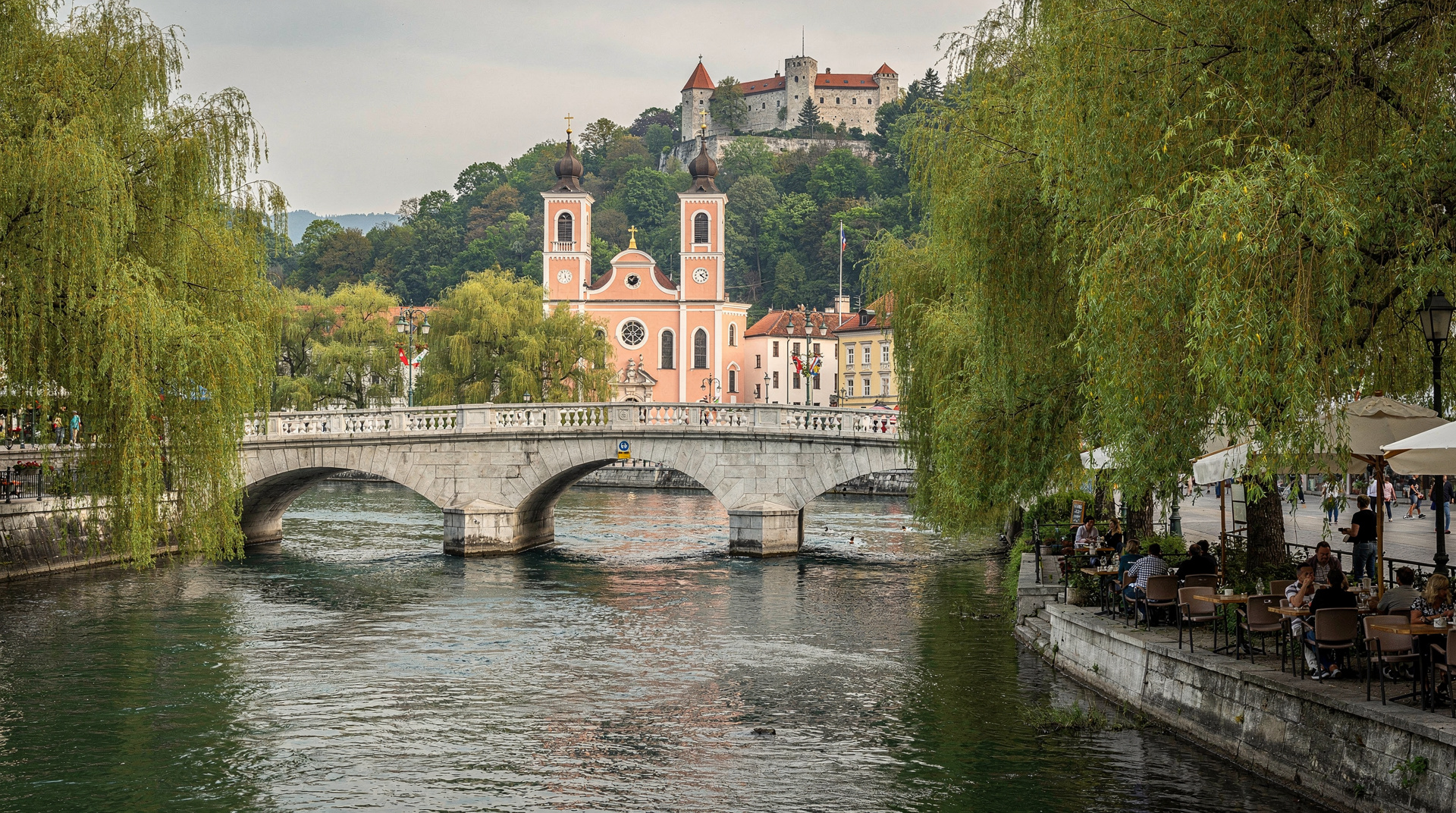
The Capuchin Bridge (Kapucinski most) — a 17th-century stone bridge over the Selška Sora — is the town’s most photographed element. The combination of the bridge, the castle hill behind, and the medieval townhouses on the bank is a genuinely striking view. The light is best in morning (south-facing bank in full sun) or late afternoon. The bridge is a functional crossing used daily; not a tourist recreation.
The Selška Sora running below the bridge is clean and swimmable in summer at the meadow stretches upstream from the town — a local bathing spot that sees no tourist infrastructure whatsoever.
The Škofja Loka Passion Play
Every 6 years, Škofja Loka hosts the Škofja Loka Passion Play (Škofjeloški pasijon) — an outdoor passion play first performed in 1721 and one of the oldest surviving outdoor theatrical performances in Europe. The next edition is due in 2027. The 2021 and 2015 editions drew audiences of 20,000+ across multiple nights in April. If your visit coincides with a passion play year, it’s a genuinely unusual cultural event rather than a tourist recreation.
Eating in Škofja Loka
The restaurant scene is modest but honest.
Gostilna Čop near the old town is the most reliable choice — traditional Slovenian dishes, good portions, main courses EUR 11–16. Popular with local workers rather than tourists; the daily set menu (juha, main, salad) at around EUR 9 is good value.
Kavarna Homan on Mestni trg is the main café — decent coffee, pastries, and a terrace on the square. The prices are local rather than tourist.
For something more substantial, Gostilna Pr’Tavčar on the edge of the old town serves grilled meats and local sausages; main courses EUR 12–18.
Combining Škofja Loka with Ljubljana
Škofja Loka fits naturally as a half-day extension from Ljubljana. The most practical sequence:
Morning: bus from Ljubljana to Škofja Loka (09:00 arrival). Walk Mestni trg, visit Homan House exterior, coffee at Kavarna Homan.
Late morning: walk to and through the castle, Loški muzej (45 minutes).
Midday: lunch at Gostilna Čop, walk to the Capuchin Bridge.
Early afternoon: bus back to Ljubljana (arrive 14:00–15:00), leaving the afternoon free for the Ljubljana old town or other activities.
Total cost for the day: EUR 3.50 bus each way + EUR 5 museum + EUR 10–15 lunch = approximately EUR 22–27.
If you would rather spend that free afternoon with someone explaining the capital’s streets, a private walking tour of Ljubljana’s historic old town makes a good counterpart to the quiet morning you have just had in Škofja Loka.
For context on the broader Ljubljana region and other day-trip options, the Ljubljana destination guide covers the capital’s day-trip network including Škofja Loka, Kamnik, and Velika Planina. For those who enjoy this kind of medieval town atmosphere, Radovljica offers a similar experience in the Julian Alps setting.
Practical notes
Škofja Loka is entirely walkable from the bus station — no local transport needed within the town. The castle is a 10-minute uphill walk. Most sights are outdoors and free (the museum is the only paid attraction). The town is a genuine working settlement, not a tourist village; respect normal town conventions (avoid photographing private residences, keep noise down in residential lanes).
There is no dedicated tourist information office — the castle museum staff can answer questions. Wi-Fi is available at the main cafés.
The history behind the town: bishops, merchants, and earthquakes
Škofja Loka’s story begins in 973 AD when Holy Roman Emperor Otto II granted the territory to the Bishops of Freising — making it one of the oldest documented episcopal holdings in the Eastern Alps. For nearly 800 years, the town operated as a episcopal seat, which meant relative stability, a degree of autonomous governance, and the wealth to build in stone.
The 1511 earthquake that destroyed much of the original town was the architectural inflection point. The rebuilding in the 16th century produced the current urban fabric — a late Gothic and early Renaissance townscape that has survived subsequent centuries with unusually little modification. Historians credit the town’s relative poverty from the 17th century onwards (as trade routes shifted and the bishops lost political influence) with preserving the medieval fabric: there was no money to demolish and rebuild in Baroque or Neoclassical style, so the earlier buildings survived.
The Freising bishops ruled until 1803, when Napoleon’s secularisation of church territories transferred the town to French and then Austrian Habsburg administration. The episcopal era is documented in the Loški muzej, where the Freising connection is treated with appropriate pride — Freising is a Bavarian town now on the edge of Munich airport, and the historical link between a 10th-century German diocese and a Slovenian mountain town is genuinely interesting.
Lace-making and the craft tradition
Škofja Loka was historically a centre of the bobbin lace-making tradition — a craft practised by women in the Poljanska and Selška valleys from the 17th century onwards. At its peak in the 19th century, tens of thousands of women in the surrounding villages produced lace for export throughout the Habsburg Empire.
The tradition declined with industrialisation but has been partially revived as a cultural heritage practice. Several women in Škofja Loka and the surrounding villages still practise bobbin lace-making; workshops are occasionally open to visitors (ask at the museum or the town’s tourist office).
The Museum of Lacemaking (Čipkarska šola Idrija) in the nearby town of Idrija (50 km from Škofja Loka) is the definitive destination for lace heritage — one of the best specialist museums in Slovenia. Idrija lace is on the UNESCO Intangible Cultural Heritage list. A day combining Škofja Loka and Idrija is more coherent than either alone for visitors interested in craft heritage, though it requires a car (public transport connections are poor).
Walking the Poljanska and Selška valleys
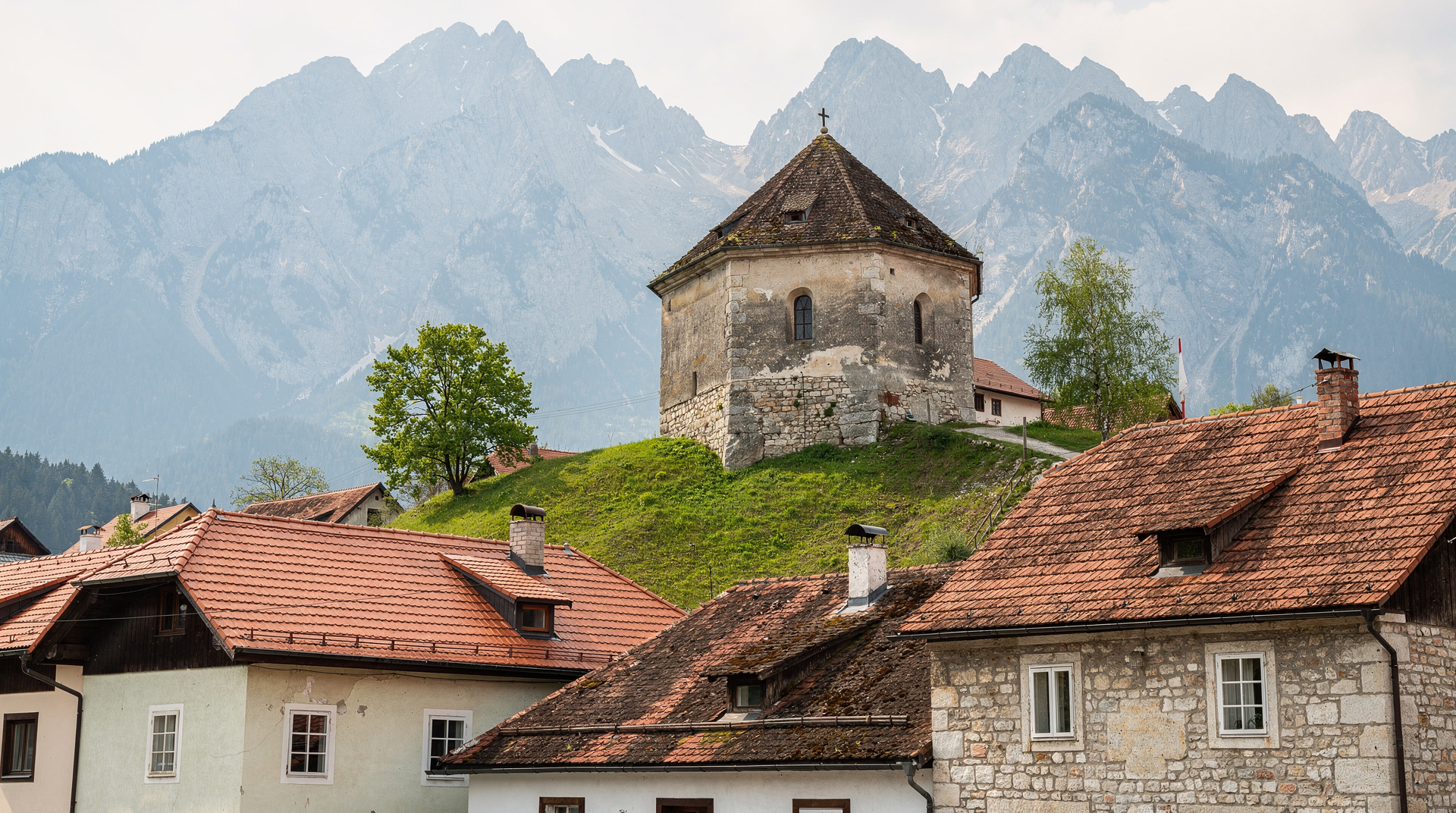
Škofja Loka sits at the confluence of two valleys — the Poljanska dolina to the south and the Selška dolina to the northeast. Both valleys are traditional farming landscapes with characteristic hayrack architecture (kozolci), whitewashed farmhouses, and village churches on hillocks. Neither valley is on the tourist trail.
The Selška Sora path follows the river upstream from Škofja Loka for 15 km to Železniki, a former iron-working town with a small museum (open in summer). The walk is mostly flat and follows the valley floor through meadows and woodland. It can be done one-way by walking and returning by bus (Železniki is connected by bus to Škofja Loka and Ljubljana). Allow 4–5 hours one way.
In the other direction, the Škofja Loka hills (Škofjeloško hribovje) rise immediately north of the town — a rounded, forested upland with panoramic viewpoints that are quieter than anything in the Julian Alps. The trail to Lubnik (1,025 m), the most accessible summit, takes about 1.5 hours from the town and passes through the vineyard terraces above Škofja Loka before entering forest. The views from the top extend south to Ljubljana and north to the Julian Alps.
Photography and the best viewpoints
The Capuchin Bridge view (castle behind, river below) is the classic shot. The best light is morning (the castle-facing bank is in full sun). The wide-angle view from the Lubnik path, with the entire old town visible from above, is the more interesting photographer’s choice.
Inside the old town, the arcaded loggia of the Homan House on Mestni trg is the best single architectural detail — worth framing from ground level looking up at the loggia arch. The Baroque plague column at the centre of the square is symmetrical and easier to compose cleanly in the morning before the market stalls set up.
Autumn (October) brings colour to the hillside vineyards above the town and the forest strips on the surrounding hills — the views from the Lubnik trail are at their best in mid-to-late October.
When to visit and seasonal context
Škofja Loka visits comfortably any time the weather is dry. There are no outdoor attractions that close seasonally (the museum has reduced winter hours, typically closing earlier). The town is genuinely pleasant in a light snowfall — the castle against white rooftops is one of the less-photographed winter scenes in Slovenia.
If you’re planning a visit around the Škofja Loka Passion Play (next edition 2027), note that the play runs over multiple April evenings and the town fills for the performance nights. Accommodation books out; plan 6+ months ahead for the play year.
The best time to visit Slovenia guide covers the broader seasonal patterns that affect day trips from Ljubljana, and the Ljubljana tourist traps guide addresses the honest comparison between well-known sites and less-visited alternatives like Škofja Loka.
Škofja Loka vs the other Ljubljana day trips
| Day trip | Distance from Ljubljana | Character | Best for |
|---|---|---|---|
| Škofja Loka | 25 km | Intact medieval old town, quiet | Medieval architecture, uncrowded culture |
| Kamnik | 25 km | Small town + Alpine gateway | Combining a town visit with mountain access |
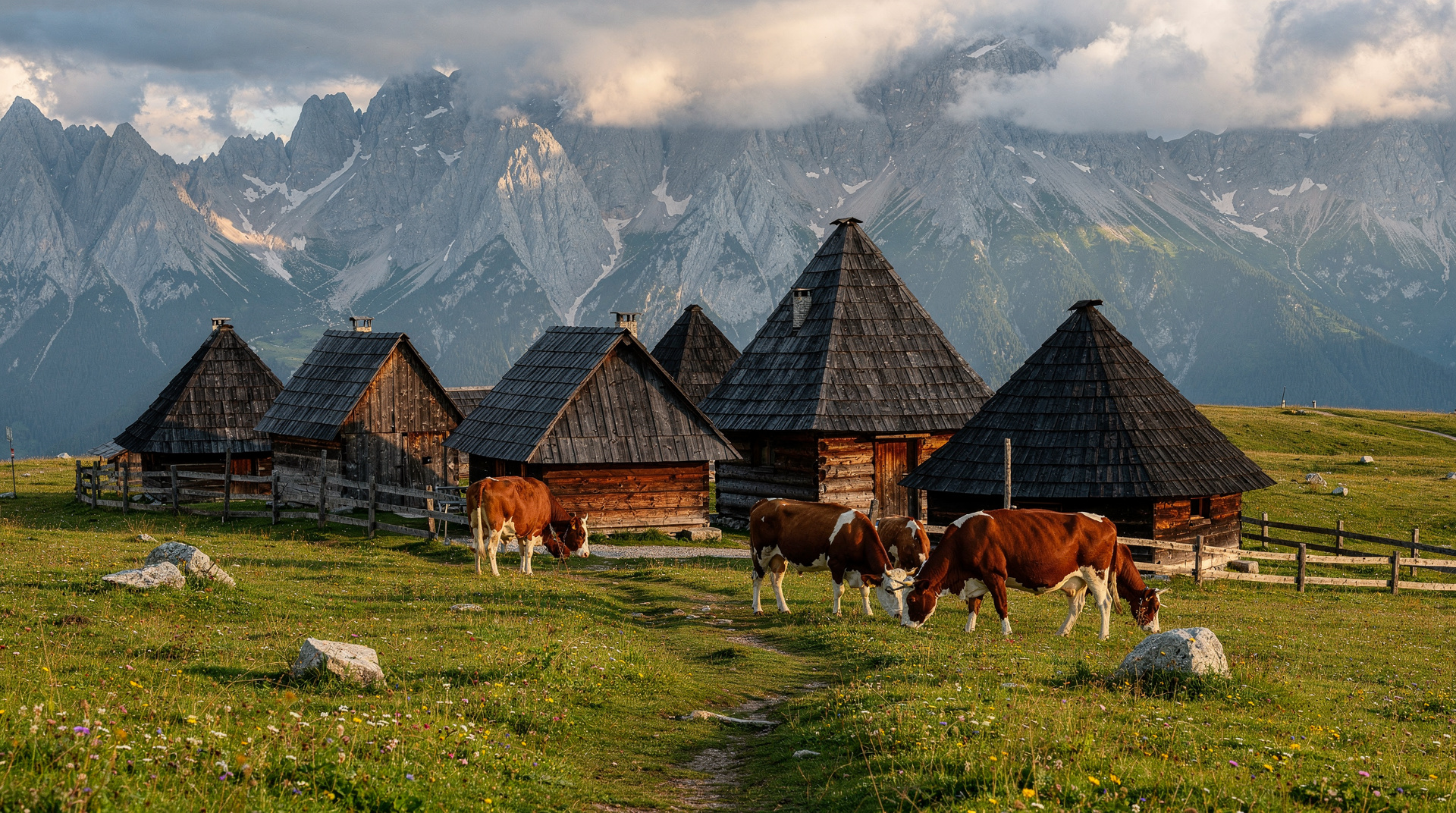
| Velika Planina | 50 km (via Kamnik) | Alpine shepherd’s plateau | Hikers and families wanting mountain scenery |
| Lake Bled | 55 km | Iconic lake, busy | First-time visitors who want the postcard view |
Most first-time visitors do Bled first. Škofja Loka rewards those on a second or third day trip who have already ticked off the obvious stop and want somewhere that feels lived-in rather than curated for tourism.
A practical half-day for photographers and slow travellers
Beyond the standard morning-bus itinerary above, a slower version works well if you have a full day rather than a half day: arrive by the first bus, spend an unhurried hour in the Homan House and Mestni trg area before the day-trippers from Ljubljana arrive (Škofja Loka gets busiest between 11:00 and 14:00 on weekends), walk up to Lubnik for the panoramic view over lunch, then descend for a late lunch at Gostilna Pr’Tavčar and a final wander through the lanes toward the Selška Sora as the light turns golden in late afternoon.
This version uses the full day rather than treating the town as a two-hour box to tick, and it fits naturally with a stop in Kamnik or a Velika Planina cable car trip the following day, since both are reachable from a Ljubljana base without backtracking. If you would rather see the capital’s hilltop landmark on the same trip, a guided walk with a funicular ride up to Ljubljana Castle pairs well with a quieter day in Škofja Loka.
Honest verdict
Frequently asked questions about Škofja Loka
Is Škofja Loka worth visiting if I’ve already seen Ljubljana’s old town?
Yes — the architectural character is different (Gothic and Renaissance rather than Ljubljana’s mostly Baroque and Art Nouveau centre) and the atmosphere is markedly quieter. It’s a good second or third day-trip choice precisely because it doesn’t compete directly with Ljubljana’s old town.
How does Škofja Loka compare to Radovljica for a medieval-town day trip?
Both are compact, uncrowded medieval towns with a castle overlooking the old town, but Škofja Loka is closer to Ljubljana while Radovljica sits near Bled in the Julian Alps. Choose based on which region you’re already exploring — Škofja Loka for a Ljubljana-based day, Radovljica for a Bled-based one.
Do I need a full day for Škofja Loka, or is a half day enough?
A half day (3–4 hours) covers the old town, castle museum, and Capuchin Bridge comfortably. A full day lets you add the Lubnik viewpoint hike or a longer walk along the Selška Sora, and pairs well with an overnight before continuing to Kamnik or Bled the next day.