Slovenia tourist traps: what to skip, what's overhyped and what actually delivers
From Ljubljana: Postojna Cave and Predjama half-day tour
What are the biggest tourist traps in Slovenia?
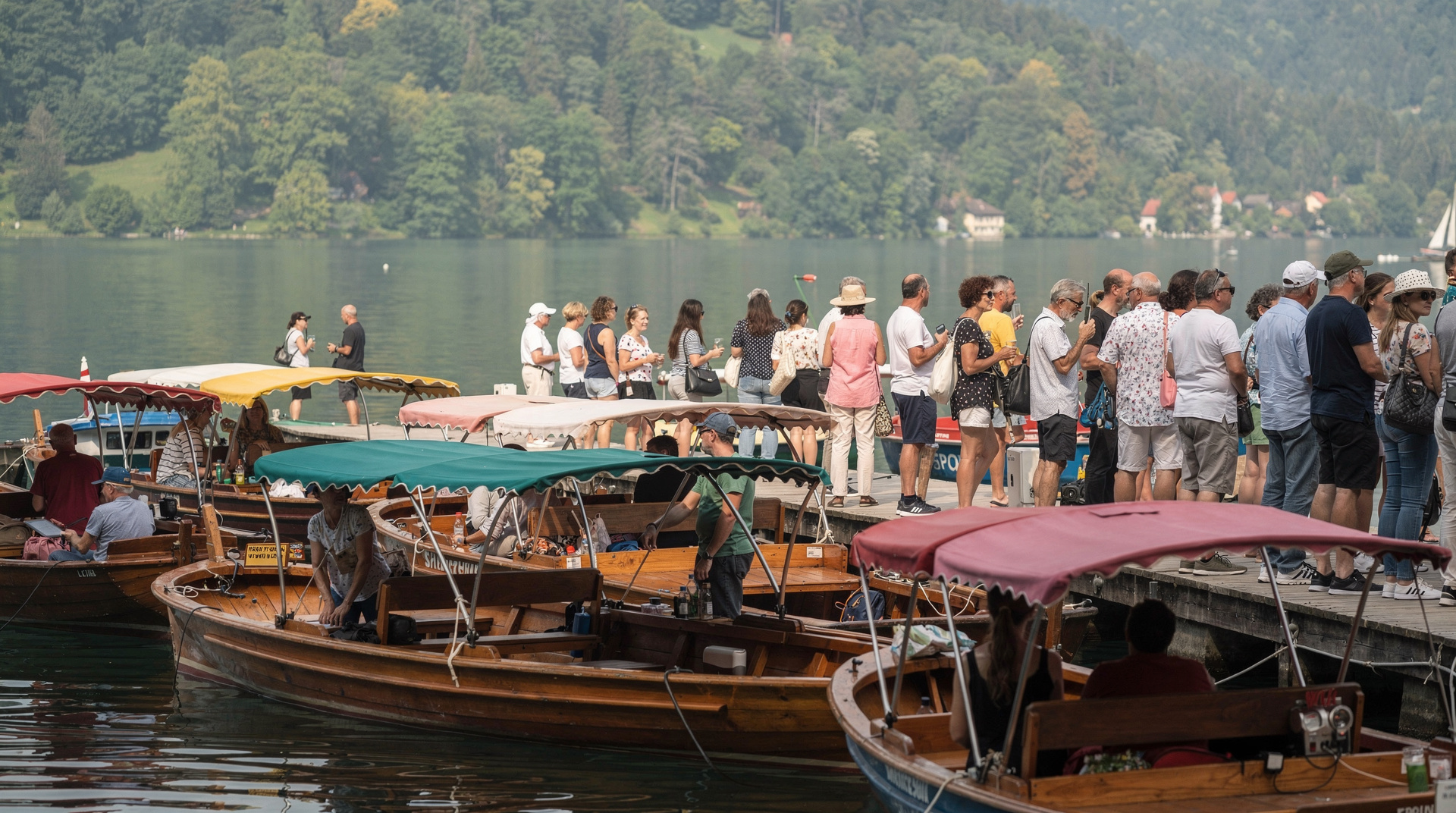
The main ones are: the pletna boat to Bled Island (a 15-minute crossing to a small church; confirm the fare at the dock or with the Bled tourist office, bled.si); Postojna Cave in peak summer (EUR 34.90 and Disneyland-level crowds); Ljubljana Castle interior (EUR 17.10 online for a modest museum when the free hilltop walk gives the same view); and tourist restaurants within 100 metres of major sights. None of these are scams — they just cost more than they deliver. This guide covers all of them and the honest alternatives.
The honest guide to Slovenia’s most overhyped experiences
Slovenia punches above its weight in travel media. A compact country with an extraordinary range of landscapes — alpine lakes, karst caves, Adriatic coast, wine valleys — it regularly tops “hidden gem” lists and earns genuinely enthusiastic word of mouth. Most of that enthusiasm is deserved.
But no destination is without its tourist-industrial complex, and Slovenia has developed one at speed over the past decade. This guide names the specific experiences that cost more than they deliver, explains what the problem actually is (which is rarely the place itself), and points you toward the alternatives that locals and repeat visitors prefer.
None of these are “scams.” Slovenia is a safe, well-run country with honest businesses. What follows is a frank assessment of mismatched expectations and overpriced ticketing — things you should know before you spend EUR 34.90 on a cave or pay for a 15-minute boat ride.
| Overhyped experience | Cost | Better alternative |
|---|---|---|
| Pletna boat to Bled Island | Fare confirmed at the dock (bled.si) | Rowboat hire or the free lake circuit walk |
| Postojna Cave (peak summer) | EUR 34.90 | Škocjan Caves or Križna Jama |
| Ljubljana Castle interior | EUR 17.10 online | Free walk-up to the ramparts, or Nebotičnik café view |
| Tourist-strip restaurants | Premium 20–40% | Gostilne 2km from the main sight |
| Group day tour to Bled | EUR 45–70 | Arriva bus + rowboat hire, EUR 30–40 |
The pletna boat to Bled Island
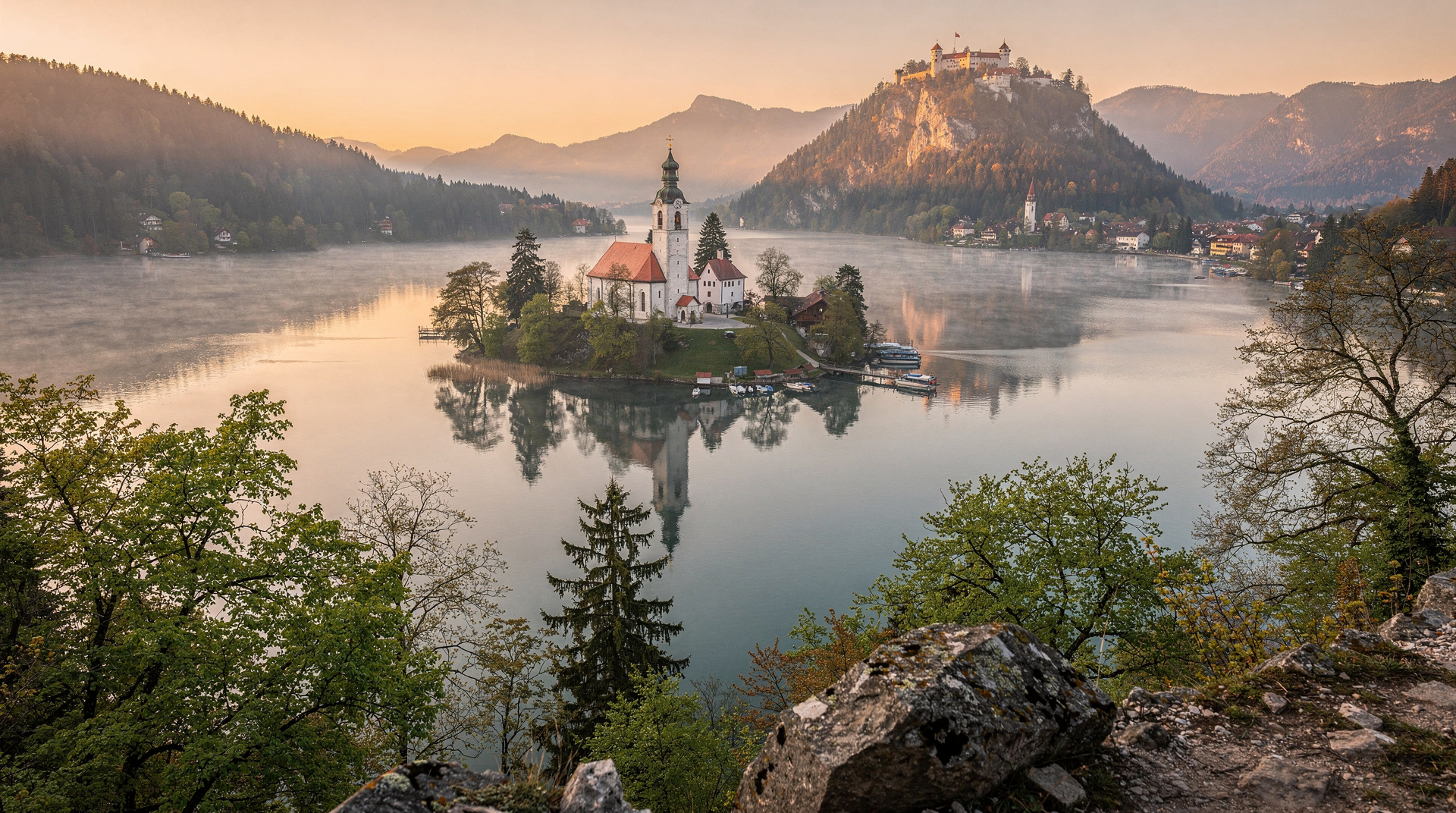
The image that defines Slovenia: a tiny church on a tiny island in an impossibly blue lake, alpine peaks stacked behind it, a wooden gondola gliding across. The pletna ride is central to that picture.
Here is the honest assessment. The pletna fare is not published officially, so confirm it at the dock or with the Bled tourist office (bled.si); it is set by the Pletna Association and does not vary. The crossing takes 15 minutes each way. The island itself — Bled Island — is small enough to walk around in five minutes. The church of the Assumption costs an additional EUR 12 to enter (church, bell tower and museum) and takes 15–20 minutes to see properly. The famous thing you came to photograph — the lake, the castle and the mountains — is behind you the moment you step off the boat. From the island, you cannot see the island.
The experience is pleasant. The gondoliers are professional. It is worth doing once if you have never done it. But it is not the transcendent experience the brochures imply, and at the pletna fare plus EUR 12 for the church for 45 minutes of activity, it is one of Slovenia’s more expensive half-hours.
Better options: Hire a rowboat from the southern shore for EUR 18–25 per hour. You row at your own pace, stop mid-lake for the perfect photograph, and can reach the island at no extra cost. Or walk the full 6 km circuit around the lake — the view from the northern shore looking back toward the castle is as good as anything you’ll see from the island, and it is free. For a completely different but arguably more beautiful lake experience, Lake Bohinj is 30 minutes by car, has no island boat fee and receives a fraction of the visitors.
Postojna Cave in summer
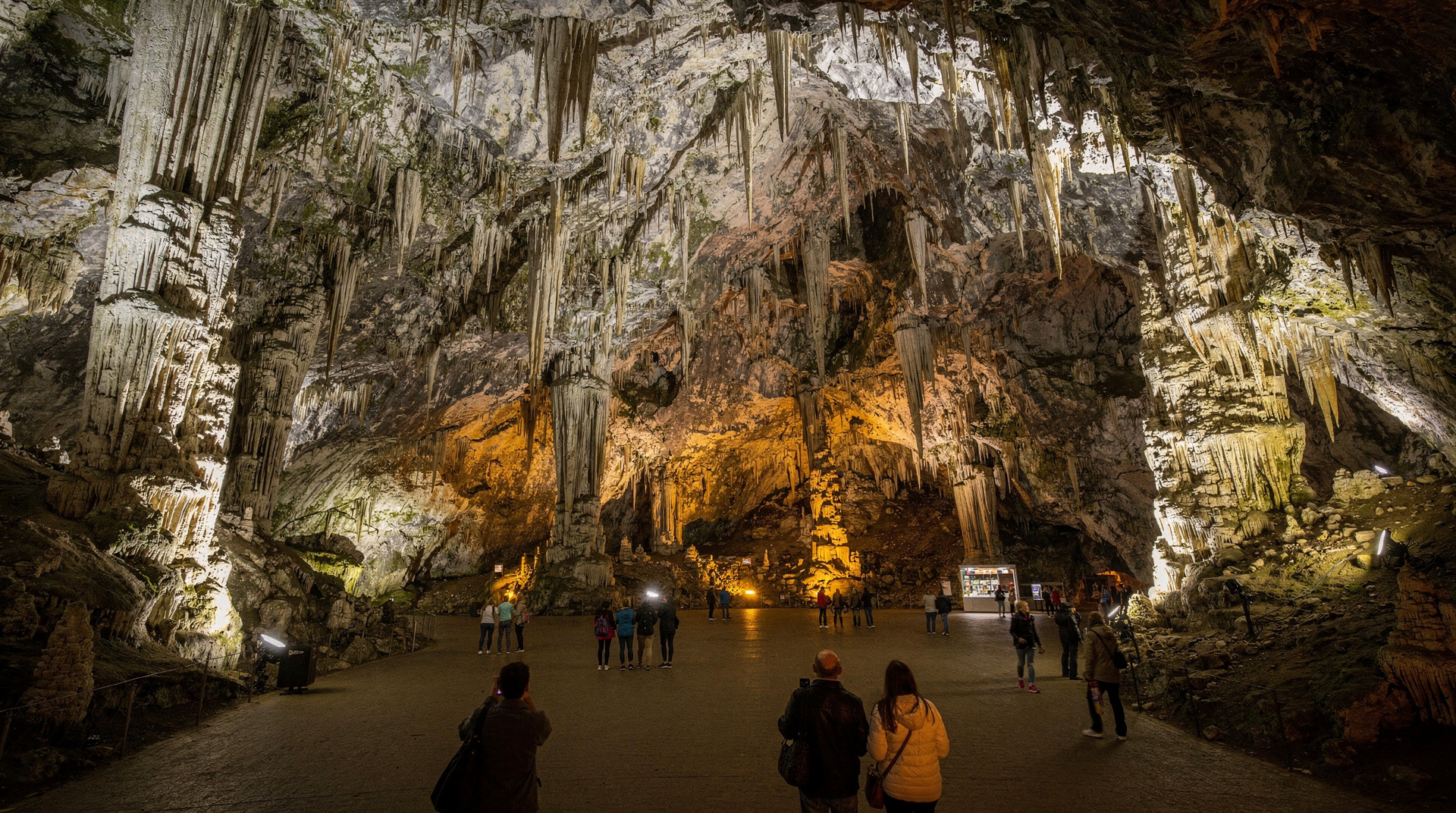
Postojna Cave is spectacular. Let that be clear. Twenty-four kilometres of passages, the Vivarium with its olm (the famous “human fish”), the underground concert hall large enough for 10,000 people, the electric train that whisks you through kilometres of limestone formations before the walking tour begins. It is an extraordinary thing to have underground.
The problem is the operating model. Postojna receives up to 800,000 visitors per year and up to 5,000 per day in peak summer. Tours run every 30 minutes with groups of 60 or more people. The commentary comes from a speaker on the guide’s lanyard at high volume. The paths are wide, lit with coloured lights and finished to theme-park standard. You will queue, shuffle, and feel the cave mainly through your ears. The ticket costs EUR 34.90 for adults, which is around the same as a UNESCO World Heritage cave system elsewhere in Europe where you’d have a group of 15.
Better options: Škocjan Caves is the serious alternative. UNESCO World Heritage Site since 1986, groups capped at around 20 people, EUR 18 per adult, and the centrepiece — the Murmuring Cave with its underground canyon and the Cerkvenik Bridge suspended 45 metres above the river — is more dramatic than anything in Postojna. The day-tour from Ljubljana to Škocjan is one of the better half-day trips you can take from the capital. Alternatively, Križna Jama near Cerknica has no tourist infrastructure, recommends advance booking, and takes you through underground lakes by boat with actual caving lamps. It is by any measure a more memorable experience.
If you have children or travelling with someone who is mobility-limited, Postojna’s wide paths and electric train make practical sense. For everyone else, Škocjan is the honest recommendation.
A combined Postojna and Predjama half-day is where the value case improves — Predjama’s cliff-cave castle rarely gets crowded even when Postojna is at capacity, and seeing both in one guided trip avoids the logistics of arranging transport between them independently.
Postojna Cave and Predjama Castle half-day tourLjubljana Castle interior
Ljubljana Castle sits on a wooded hill above the Old Town, visible from almost everywhere in the city and genuinely picturesque from below. The castle itself — the fortified complex — dates mainly from the 16th century, though the site has been fortified for over 2,000 years.
The interior costs EUR 17.10 online (EUR 19 at the ticket desk) for adults and contains a permanent museum exhibition, a small chapel, a puppet museum and a virtual tour of Ljubljana’s history. None of this is bad. But none of it is exceptional either, and the EUR 17.10 feels steep for a museum that a serious history enthusiast would rate at EUR 8.
The honest proposition: the reason to go to the castle is the view from the watchtower and the terrace. On a clear day you can see across Ljubljana to the Kamnik–Savinja Alps to the north and to Triglav on the horizon. That view, and the pleasure of walking the wooded path up through the trees, is real. But the walk up is free, and the terrace view costs only the entry fee for the tower (included in the full ticket).
Better options: The Nebotičnik skyscraper café on Štefanova ulica in the city centre has a rooftop terrace at 12 floors and charges nothing for the view — just the cost of a coffee. It is open to the public and offers a panorama that is actually better for seeing the city layout than the castle viewpoint, because you are in the centre looking out. If you want the castle hilltop experience, walk up and enjoy the grounds for free, then decide whether the EUR 17.10 is worth it for the interior.
Tourist restaurants near the main sights
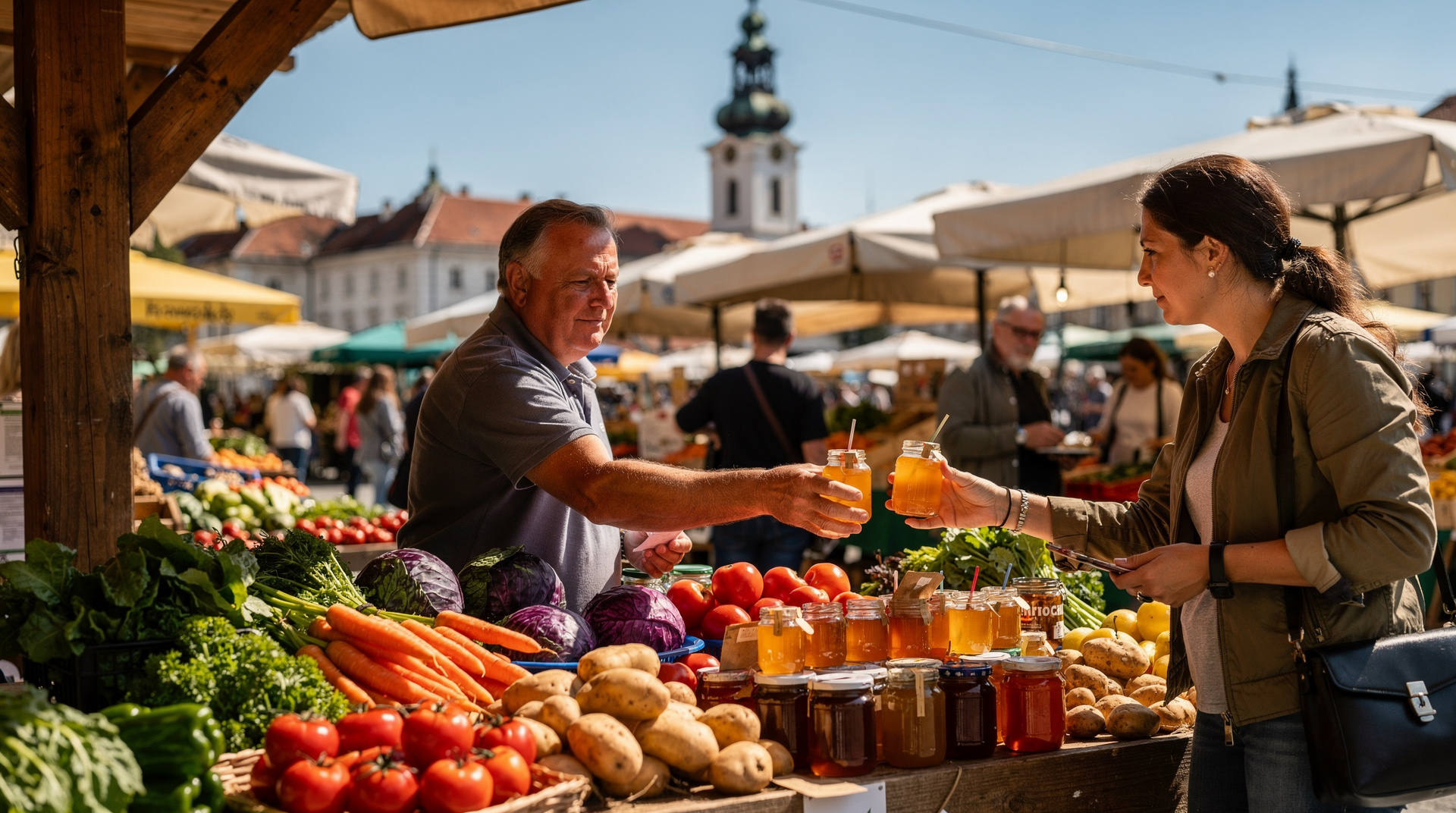
This one applies everywhere in Europe and Ljubljana is no exception. The restaurants within 100 metres of the Triple Bridge, along the castle hillside and on the obvious tourist stretch of Stari trg serve food that is competent at best, expensive by local standards and unlikely to give you a genuine sense of Slovenian cooking.
The same is true in Bled. The restaurants fronting the lake and immediately around the bus station are priced for tourists on one-day trips. The famous kremna rezina (cream cake) should cost around EUR 3.50–4; on the lake terrace it runs to EUR 6–8.
Better options: In Ljubljana, walk 10–15 minutes from the centre in almost any direction. Gostilna Dela on Kolodvorska serves traditional dishes to a lunchtime crowd that is mostly local workers. Pri Škofu in Rožna dolina is slightly further but offers one of the more honest takes on Slovenian home cooking in the city. In Bled, the standard advice holds: walk at least 2 km from the lake shore and the prices drop by 20–40%. The kremna rezina at the original Park Hotel café remains the benchmark, and it is worth the short detour.
The vignette trap
Not a tourist trap in the usual sense, but the most reliably expensive mistake foreign visitors make. Slovenia requires an e-vignette to drive on its motorways and expressways. The fine for driving without one is EUR 300–800 — not a fixed penalty but a range depending on the officer and the situation, and it is enforced.
The vignette costs EUR 16 for a one-week pass or EUR 117.50 for a full year. Since 2022 it is entirely digital — linked to your number plate, with no sticker required. You buy it online at the Dars.si website or at petrol stations at the border.
Rental cars are a particular risk area. Some rental companies include the vignette; many do not. Confirm in writing before you leave the lot, and if in doubt, buy your own. The one-week version costs the same as a single coffee at a tourist-facing restaurant — there is no reason to risk it.
Overpriced day tours from Ljubljana
Ljubljana is a compact city surrounded by an extraordinary concentration of sights within two hours. This makes it prime territory for group day tours, and the supply has ballooned to meet the demand.
The problem is not that the tours are fraudulent — most are honest and competently guided. The problem is value. A standard shared day tour to Bled costs EUR 45–70 per person, typically includes a pletna boat ride and sometimes a short Bled town walk. You can do the same trip independently on the Arriva bus (EUR 6 each way, roughly hourly) and design your own day. A hired rowboat costs EUR 18–25 per hour. The total independent cost is EUR 30–40 for more flexibility.
Where tours genuinely add value: Škocjan Caves (the logistics of getting there without a car are complicated and a well-organised day tour is a reasonable option), Triglav National Park hiking routes (having a local guide matters on the mountain), and multi-site days combining Predjama and the Karst region, where self-driving involves route decisions that confuse first-time visitors. The Škocjan day tour from Ljubljana is one case where the guide covers a legitimate gap.
The Bled cream cake mythology
The kremna rezina — vanilla custard and whipped cream between layers of flaky pastry — is genuinely worth eating in Bled. It is a local institution and it is good. The trap is believing that it can only be eaten at the Park Hotel terrace and that it must cost EUR 7. Versions of it appear in every pastry shop and café in Bled at EUR 3.50–4.50, and the quality difference is minimal. The Park Hotel terrace has the better view; the side-street versions are the same dessert.
What is not a tourist trap
Balance matters here. Several things that get labelled “touristy” in Slovenia are worth doing without apology:
Vintgar Gorge is a genuine highlight — 1.6 km of elevated wooden walkways above an emerald river through a steep gorge, 4 km from Bled, EUR 15 entry. Crowded in peak summer but unmissable if you go early. Note it closes roughly November through April.
The Soča Valley — Bovec and the surrounding area for rafting, kayaking and hiking — is exactly as good as its reputation and surprisingly uncommercialized for how photogenic it is.
Piran on the Slovenian coast is architecturally extraordinary and (outside July–August) genuinely quiet by Mediterranean standards. The old town is best in the early morning or late evening.
And Lake Bohinj, always. It is bigger than Bled, deeper, surrounded by higher mountains and receives a fraction of the visitors. The swim in summer from Ribčev Laz, the gondola to Vogel in winter, the 7 Lakes Valley hike — these are among the best experiences Slovenia offers and none of them feel like tourist infrastructure.
Planning around the crowds
The single most effective thing you can do to improve a Slovenia trip is visit in May, June or September. The weather is good, the lakes are swimmable by June, Vintgar is open, the mountain passes are clear, and the crowds at Bled and Postojna are manageable.
If you visit in July or August, the three rules are: arrive at Bled before 08:00, book Postojna in advance and for an early slot, and build in a day at Bohinj or the Soča Valley where the tourist infrastructure is thinner and the landscape is just as impressive.
The honest view: Slovenia is a small country with genuine natural beauty concentrated in a relatively small number of spots. The crowding problem is real but not unusual by European standards — it is similar to the pressure on the Dolomites, Plitvice Lakes or the Cinque Terre. The answer is the same everywhere: timing, early starts, and knowing which alternatives exist.
This guide links to the deeper dives: is Lake Bled overrated, avoiding crowds at Bled, honest Postojna Cave review, common mistakes in Slovenia and is Slovenia expensive. Between them, they cover most of what you need to know before you book.
The Ljubljana airport taxi mark-up
One more overpriced pattern worth flagging: fixed-price taxi quotes at Ljubljana Airport arrivals, sometimes double or triple the metered fare into the city. This isn’t unique to Slovenia, but it catches enough first-time visitors that it belongs in an honest traps guide. The Slovenia travel scams guide has the specific fares and the reliable workarounds (Bolt, Uber, and the airport shuttle bus).
The Ljubljana Card, revisited
The Ljubljana Card resurfaces regularly in “must-buy” travel advice, and it is worth exactly as much as the attractions you’ll actually use. Add up your planned paid visits before buying — if you’re seeing the castle, two museums and taking the tourist boat within the validity window, it pays for itself; if your Ljubljana time is mostly the free Old Town and market, it’s a straightforward money-sink. The Slovenia trip budget guide has the full attraction cost table to help with that calculation.
Where to go next once you know the traps
Knowing what to skip is half the job; the other half is filling the gap with something better. If the pletna boat has put you off Bled, the comparison in Bled vs Bohinj helps you decide how to split your lake days, and the Lake Bled complete guide covers the free ways to enjoy the shoreline. For the caves, Postojna vs Škocjan sets the two side by side, while the Križna Jama guide explains how the small-group underground boat trip works and why it needs planning ahead.
If you would rather spend an evening on the water without the Bled crowds, an evening stand-up paddleboard excursion on the Soča near Bovec is a quieter alternative, and the Soča Valley rewards the detour.
If your concern is mostly money, the Slovenia trip budget guide is the place to build a realistic daily figure, and the gostilna dining guide shows how to eat well away from the tourist strip. Travellers worried about the crowds more than the cost will get more from Slovenia overtourism and crowds and the best time to visit Slovenia, which together explain when the pressure is highest and how to dodge it.
Building a trip that avoids the worst of it
The simplest defence against tourist traps is a plan with enough slack that you never have to take the convenient, overpriced option. A first-time visitor can start from the first time in Slovenia guide and then pick an itinerary that suits their pace: Slovenia highlights in 5 days hits the big sights sensibly, while hidden gems in 6 days deliberately steers towards quieter places. Neither asks you to pay for the experiences criticised above.
Getting around also shapes how many traps you meet. Public transport and a few well-chosen days with a rental car usually beat expensive packaged transfers, and the getting around Slovenia guide lays out the options. Finally, if you are weighing up a car, the driving and vignette guide deals with the one genuinely costly mistake mentioned earlier.
Frequently asked questions about Slovenia tourist traps
Is Lake Bled a tourist trap?
Lake Bled itself is not — the lake, the setting and the hiking are genuinely beautiful and free. The trap is the pletna boat (fare confirmed at the dock or at bled.si) for what amounts to 15 minutes on a small island. The view you came to see — lake, castle, mountains — is better from the water than from the island. Hire a rowboat instead, walk the lake circuit, or simply go to Lake Bohinj if you want the same Julian Alps scenery without the crowds.Is Postojna Cave worth visiting?
It depends on your tolerance for crowds and your expectations. The cave is genuinely spectacular — 24 km of passages, the stalactite concert hall, the underground train. The problem is scale: up to 5,000 visitors a day in summer, group sizes of 60+, loud recorded commentary and a EUR 34.90 ticket. Škocjan Caves (UNESCO World Heritage, groups of 20, EUR 18) or Križna Jama (lamps, no tourist infrastructure, booking recommended) deliver a more memorable experience.What restaurants should I avoid in Slovenia?
Any restaurant within 100 metres of a major sight, and anything with a laminated picture menu in four languages. In Ljubljana, skip the obvious spots on Stari trg near the castle and look instead for gostilne 10–15 minutes' walk from the tourist centre — places like Gostilna Dela (Kolodvorska area) or Pri Škofu (Rožna dolina) serve better food at lower prices. The same applies in Bled: walk 2–3 km from the lake to find restaurants where locals actually eat.Do I need to buy the Ljubljana Card?
Probably not. The Ljubljana Card costs EUR 41/49/54 for 24h/48h/72h and covers most museums, the castle, city bus and the tourist boat. It is worth the money only if you plan to visit four or more paid attractions in a short time. Most of what makes Ljubljana enjoyable is free: the Old Town, the market, the riverside cafes, the free hilltop view from Nebotičnik. Calculate your actual itinerary before buying.What is the highway vignette fine in Slovenia?
Driving on Slovenian motorways without a valid e-vignette can result in a fine of EUR 300–800. The vignette itself costs EUR 16 for one week (or EUR 117.50 for annual). Many rental companies include it, but not all — confirm before you drive out of the lot. The vignette is digital (no sticker since 2022), linked to your number plate.Is Predjama Castle worth visiting?
Yes — Predjama is one of the genuinely underrated sights in Slovenia and rarely feels as crowded as Postojna just 9 km away. The castle built inside a cliff cave is architecturally extraordinary and the EUR 24 entry (or EUR 49.90 combined with Postojna) is fair. It takes about 1–1.5 hours. Go for Predjama even if you skip Postojna.When should I avoid Bled and Postojna?
July and August, particularly weekends, are the worst for both. Bled car parks fill by 09:00, the lakeside path is shoulder-to-shoulder from mid-morning, and Postojna runs back-to-back tour groups all day. If you must go in summer, arrive at Bled before 07:30 or after 18:00. For Postojna, book the first morning slot online. May, June and September are significantly better for both.Is Predjama Castle a better combined ticket than Postojna alone?
For most visitors, yes. The combined Postojna plus Predjama ticket (EUR 49.90) adds one of Slovenia's most distinctive sights — a castle built into a cliff cave — for a modest premium, and Predjama itself rarely feels crowded even when Postojna is packed. If you can only choose one, Predjama alone (EUR 24) is arguably the better value single attraction.Is the pletna boat ever worth booking in advance?
There's no need — pletna boats depart continuously from the southern shore whenever there are enough passengers, so pre-booking isn't standard practice and isn't necessary. The only planning that matters is timing your visit outside the 10:00–16:00 crowd window if you want a calmer crossing.