Is Lake Bled overrated? An honest answer for 2026
From Ljubljana: Lake Bled day tour
Is Lake Bled overrated?
No — but it is over-crowded in summer and slightly over-priced for some specific experiences. The lake, the Alpine setting and the hikes are genuinely beautiful and worth the visit. The pletna boat ride and the castle interior (EUR 19) deliver less than their cost implies. The key variable is timing: Bled in May or September is quietly extraordinary; Bled on a Saturday in August is a managed queue. The lake is not overrated — the hype around specific paid experiences often is.
Lake Bled: the honest assessment of Europe’s most photographed alpine lake
The short answer is no, Lake Bled is not overrated — but it is over-visited in the wrong season, and a handful of specific paid experiences disappoint relative to their cost. This guide untangles which parts of the Bled experience are genuinely worth it and which ones are inflated by expectation and marketing.
| Cost | free lake circuit; pletna fare to confirm at the landing stage; castle EUR 19 |
| Time needed | half-day minimum, full day with Vintgar Gorge |
| Getting there | bus from Ljubljana EUR 6, ~1h15–1h30 |
| Best time | before 08:00 in summer, or May/September |
| Booking | none required, except accommodation in peak season |
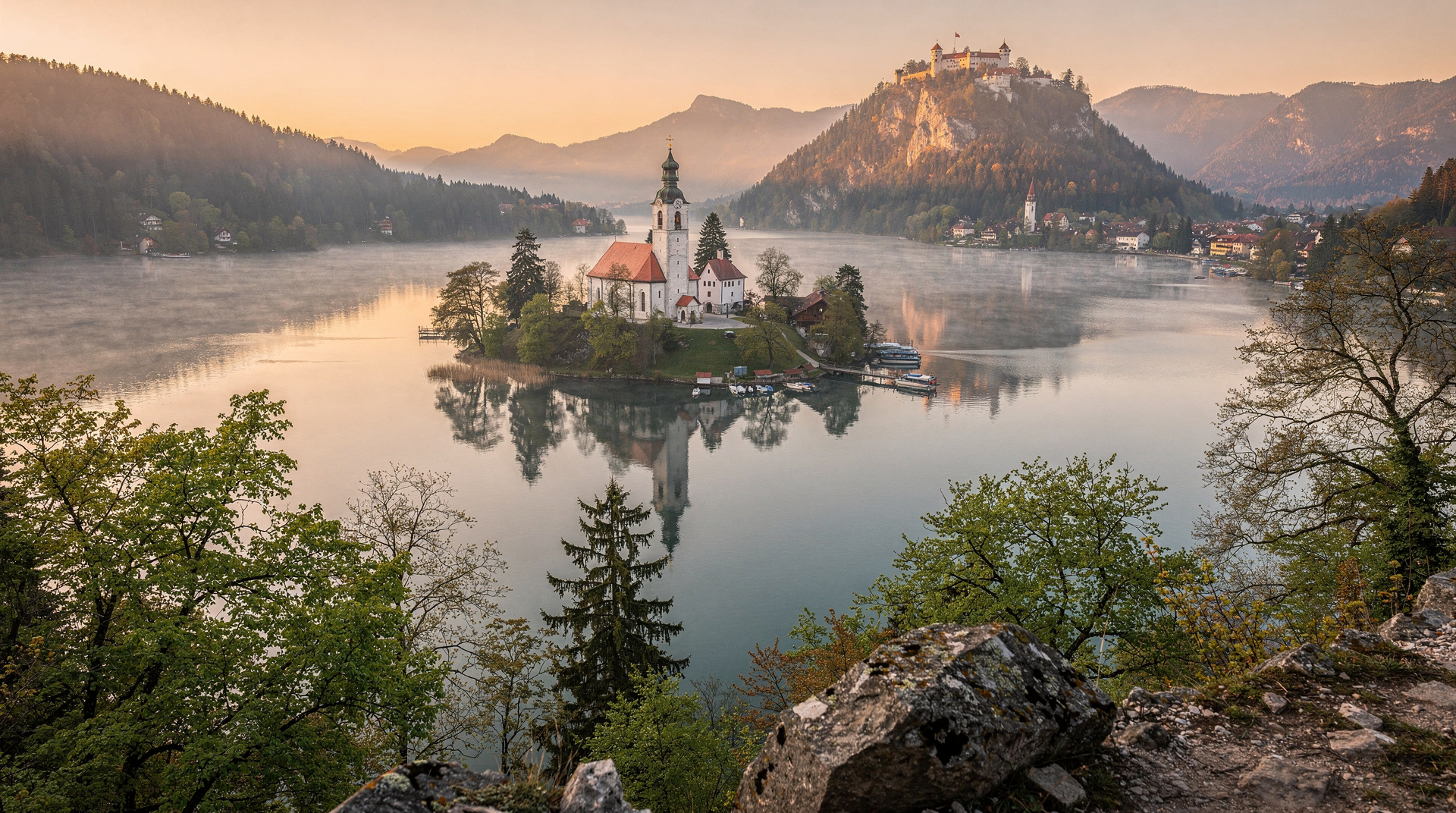
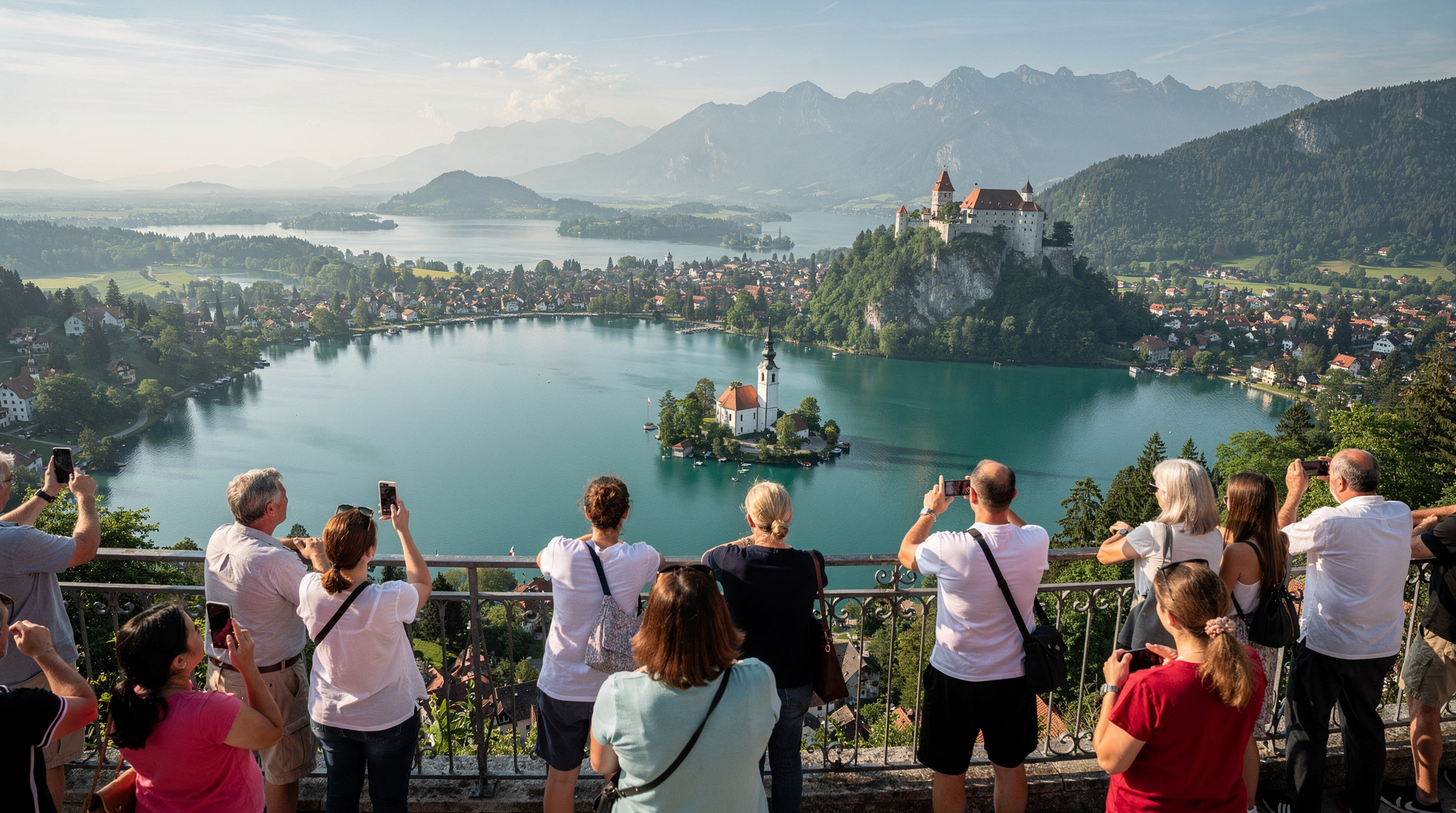
Lake Bled is, objectively, a remarkable place. The water is the colour that travel photographers dream about — a deep, shifting green-blue that changes character through the day. The island rises from the centre of the lake with a Baroque church at its peak. A medieval castle occupies a vertical cliff on the northern shore. The Julian Alps close the background. This is not an accident of Instagram framing; it really looks like that.
The issue is that approximately a million people per year have come to the same conclusion, and a significant proportion of them arrive on the same summer weekends.
What Bled actually looks like in July
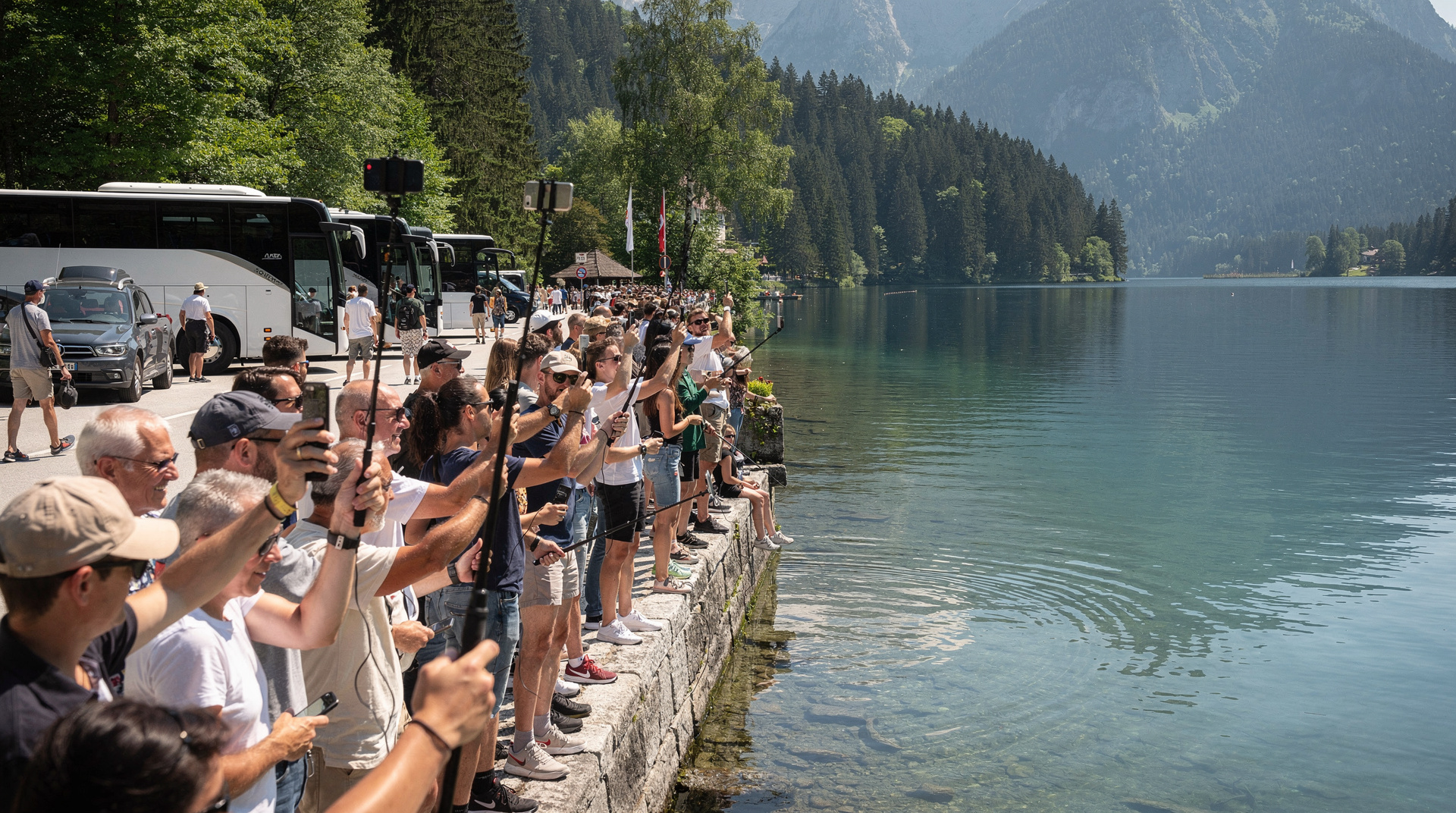
On a Saturday morning in August, the lakeside path from the main car park to the rowing club is shoulder-to-shoulder by 10:00. The main car parks fill by 09:30 and overflow parking spills onto roads leading to town. The pletna boats to the island operate in near-continuous rotation. Queues at the main café terraces can reach 20–30 minutes for a table. The lake itself remains beautiful — there is no getting around the physical reality of the place — but the experience around it is closer to a busy urban park than a mountain retreat.
This is the version of Bled that generates the “overrated” verdict on travel forums. And it is a fair description of peak summer, peak hours, peak weekdays.
The version of Bled that generates the “genuinely extraordinary” verdict is available a few hours earlier on the same morning, or a couple of months either side of the peak.
The 07:00 version
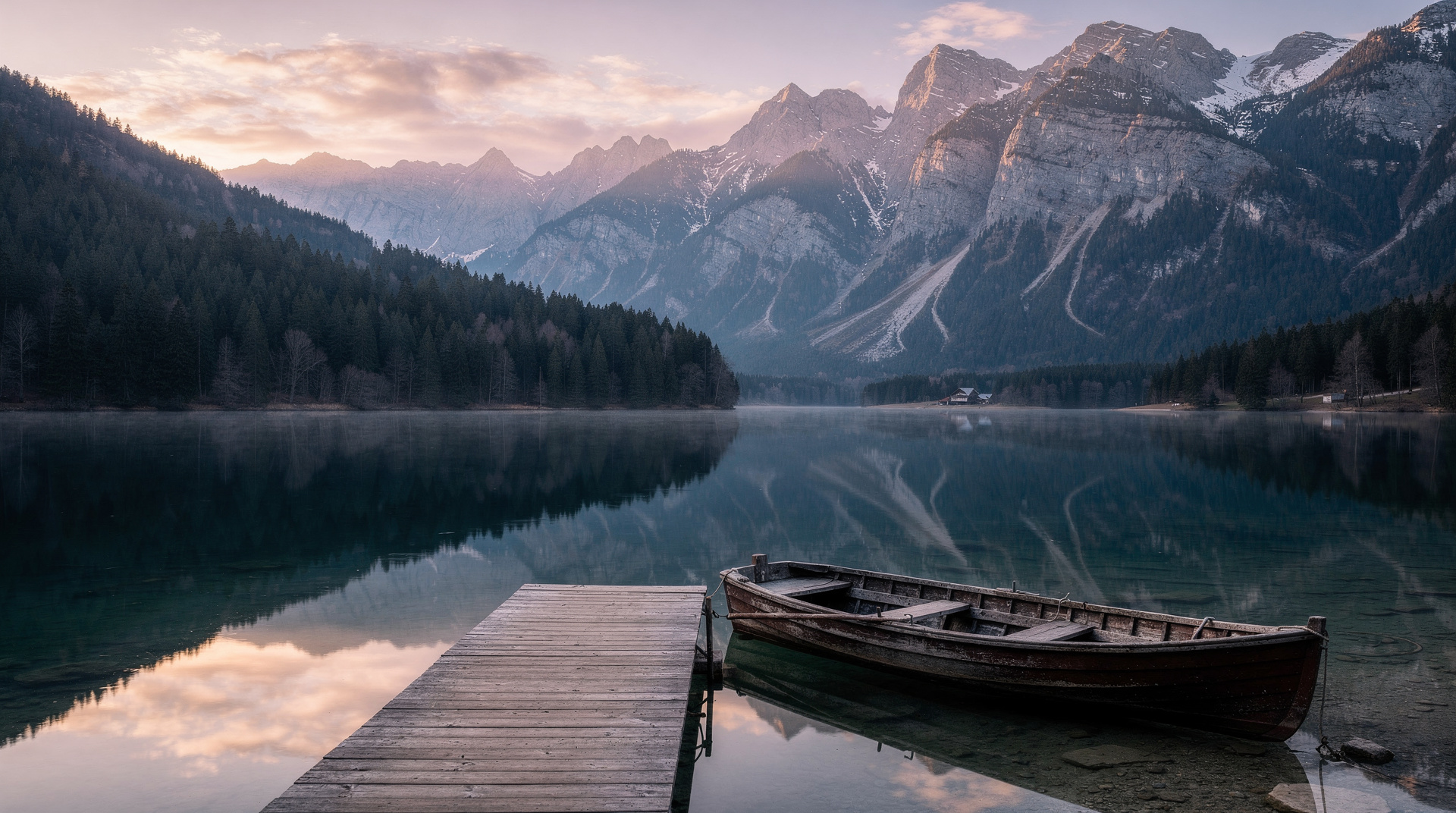
Arrive at the main Bled car park (P1 or P2 near the castle) at or before 07:00 in July–August, or at essentially any point in May, June or September. What you find is a lake at low light — water reflecting sky and peak, the island church still quiet, a handful of other early risers and locals with dogs. The rowing club’s rental boats are being prepared. A café opens for coffee around 07:30. By 08:30, the first tour buses appear.
That two-hour window is the Bled that earns its reputation. It requires only an early alarm and, ideally, an overnight stay in or near the town.
What specifically disappoints
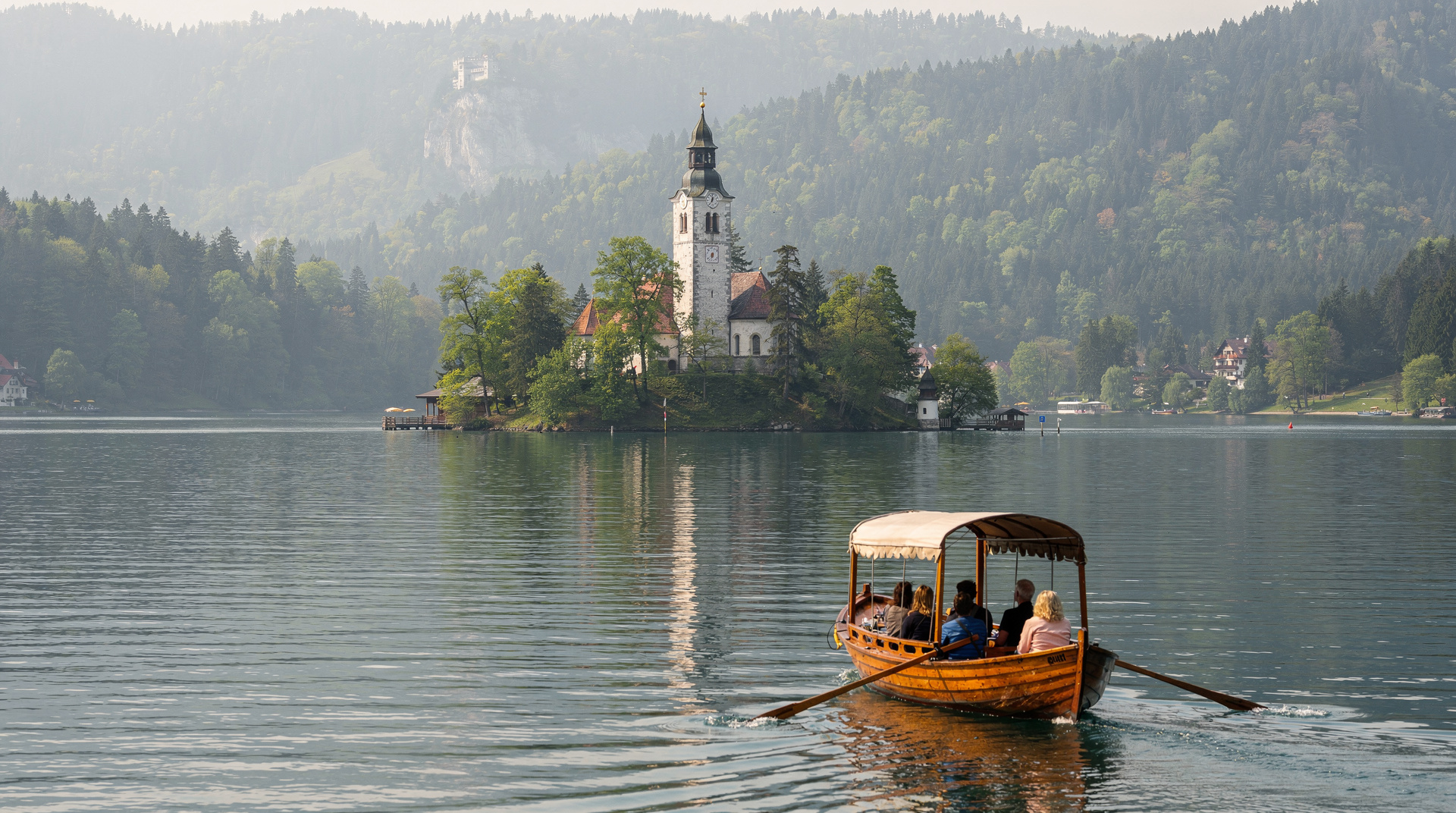
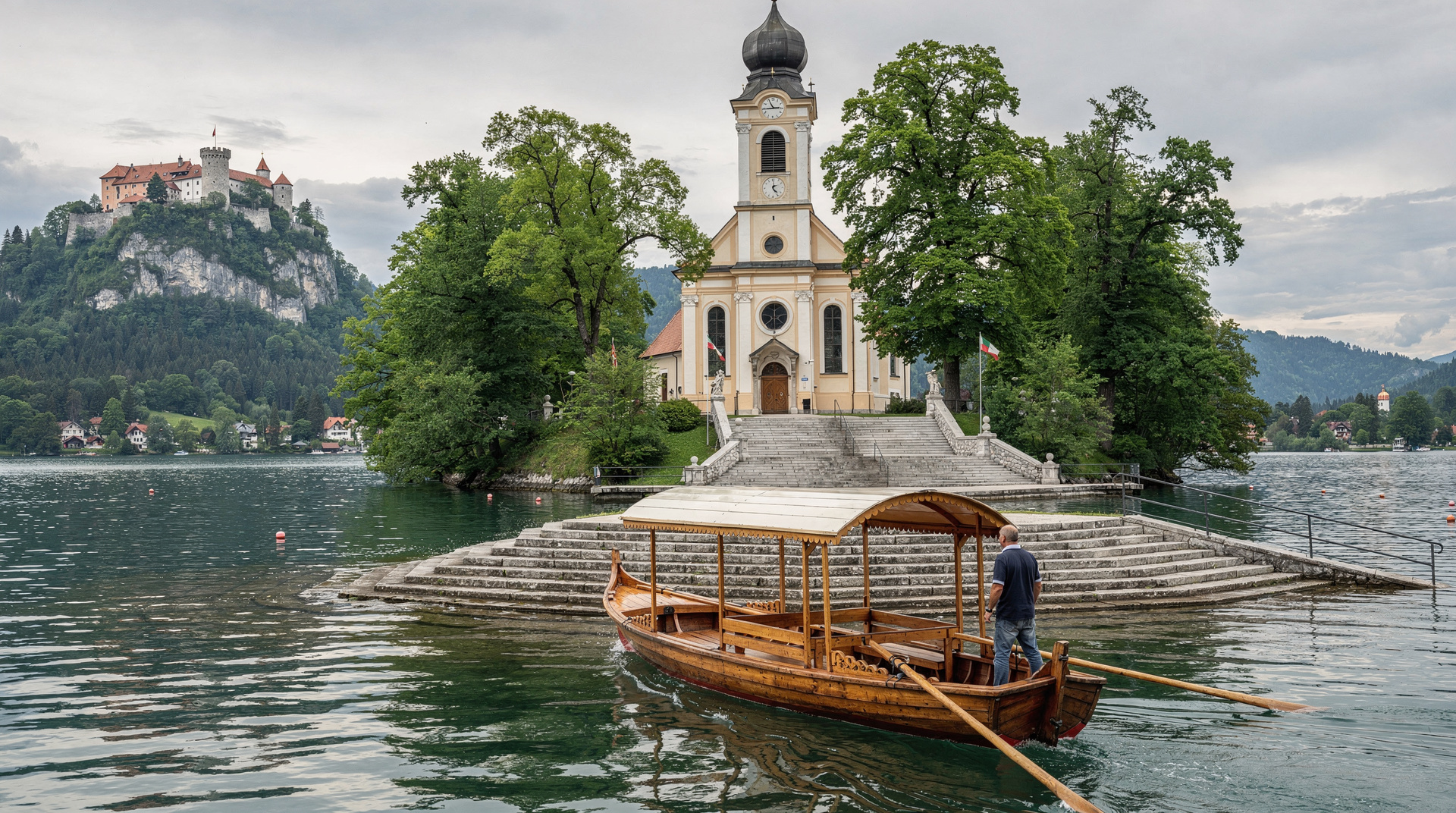
The pletna boat: the fare is confirmed at the landing stage or with the Bled tourist office (bled.si); the crossing takes 15 minutes each way and deposits you on an island small enough to walk around in four minutes. The island entry (adult EUR 12, covering the church, bell tower and museum) includes the church of the Assumption, a pleasant 17th-century Baroque interior with a medieval bell tower. The famous Bled wish bell is there — ring it three times for your wish to be granted, or so the tradition goes. All of this is agreeable.
But the island’s fundamental problem as a destination is that the thing you came to see — the lake, the castle, the mountains — is visible only from the water. Once you’re standing on the island, you are surrounded by trees and the church wall. The view you travelled for is behind you on the journey across.
A hired rowboat (EUR 18–25 per hour from multiple points on the southern shore) solves this. You can stop mid-lake, take the photograph from the optimal angle, drift at your own pace and row to the island if you want. The rowing is not demanding — the lake is calm and the distance is short. You can reach the island and be back in an hour.
The castle interior: EUR 19 (adult) buys you a permanent museum exhibition (moderately interesting, covering Bled’s history from prehistory to modernity), a small chapel, a 3D film, a working blacksmith and a winery. The exhibitions are competently done. Nothing is extraordinary.
The castle’s real value is the viewpoint from the terrace — a cliff-edge panorama of the lake, island and alpine backdrop that is among the best views in Slovenia. That view is free to walk up to (the path from the town is steep but takes 15 minutes) and the terrace is accessible without paying the entrance fee if you only go to the café there, which serves the same kremna rezina as everywhere else in town.
The kremna rezina price: EUR 6–8 on the main tourist terraces, EUR 3.50–4.50 in any other café in Bled. Same dessert.
What is genuinely good
The lakeside walk is free and excellent. The full 6 km circuit takes 1.5–2 hours at a moderate pace and covers every significant angle on the lake. The Osojnica viewpoint on the western shore — a 20-minute uphill walk — gives an elevated bird’s-eye perspective that is technically more impressive than anything from the lakeshore, and it is free.
Vintgar Gorge, 4 km from the town centre, is one of the best half-day walks in Slovenia. Open roughly May through October, EUR 15 entry, 1.6 km of wooden walkways above a river that runs through a narrow limestone gorge. The light in early morning is exceptional. Crowded at peak times, but the 8 km round-trip (including the road walk back) means people spread out.
For a fuller walk-through of the gorge itself, see the Vintgar Gorge guide and the Vintgar Gorge destination page.
Swimming from the public beaches on the south shore and near the campsite costs nothing and is one of the simple pleasures of a summer morning before the crowds build.
The cycling around the lake and along the Sava Bohinjka river toward Bohinj is underused by tourists and genuinely lovely — bike hire is around EUR 15–20 for a half-day.
Lake Bohinj as the honest alternative
Lake Bohinj is 30 minutes west of Bled by car and is a substantially different experience. At 4.5 km long, it is Slovenia’s largest lake and sits inside Triglav National Park. There is no island, no castle, no celebrity dessert. What there is: cleaner, colder water, a dramatic mountain backdrop including direct views toward Triglav itself, the cable car up to Vogel with mountain biking and skiing, and a fraction of Bled’s visitor numbers.
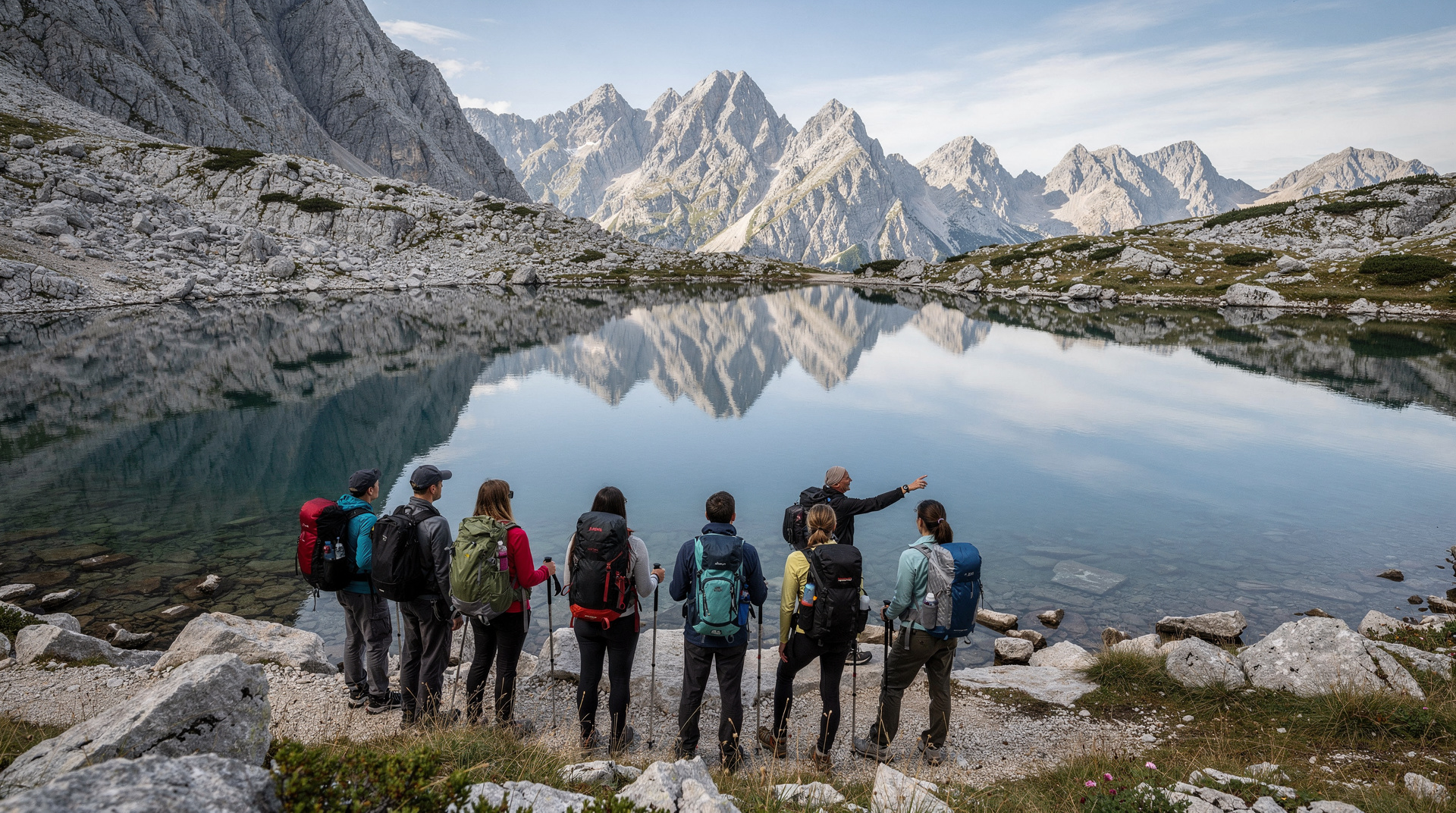
The 7 Lakes Valley hiking route above Bohinj — passing a chain of small alpine lakes below the Triglav ridge — is one of Slovenia’s best full-day hikes. If that appeals, the guided version handles the navigation and conditions assessment on a demanding mountain route.
7 Lakes Valley hiking tour from BohinjIf you are torn between the two lakes, the Bled vs Bohinj comparison and the Lake Bohinj guide lay out the differences in more detail, and the Seven Lakes Valley hike page covers the route above Bohinj.
The honest recommendation for most visitors: do both. Bled in the early morning for the icon, then Bohinj for the afternoon swim and mountain walk. Two days allows you to do Vintgar in the morning of day one, Bled in the afternoon and again the following dawn, then Bohinj for day two. That rhythm uses the place well.
Getting there without a car
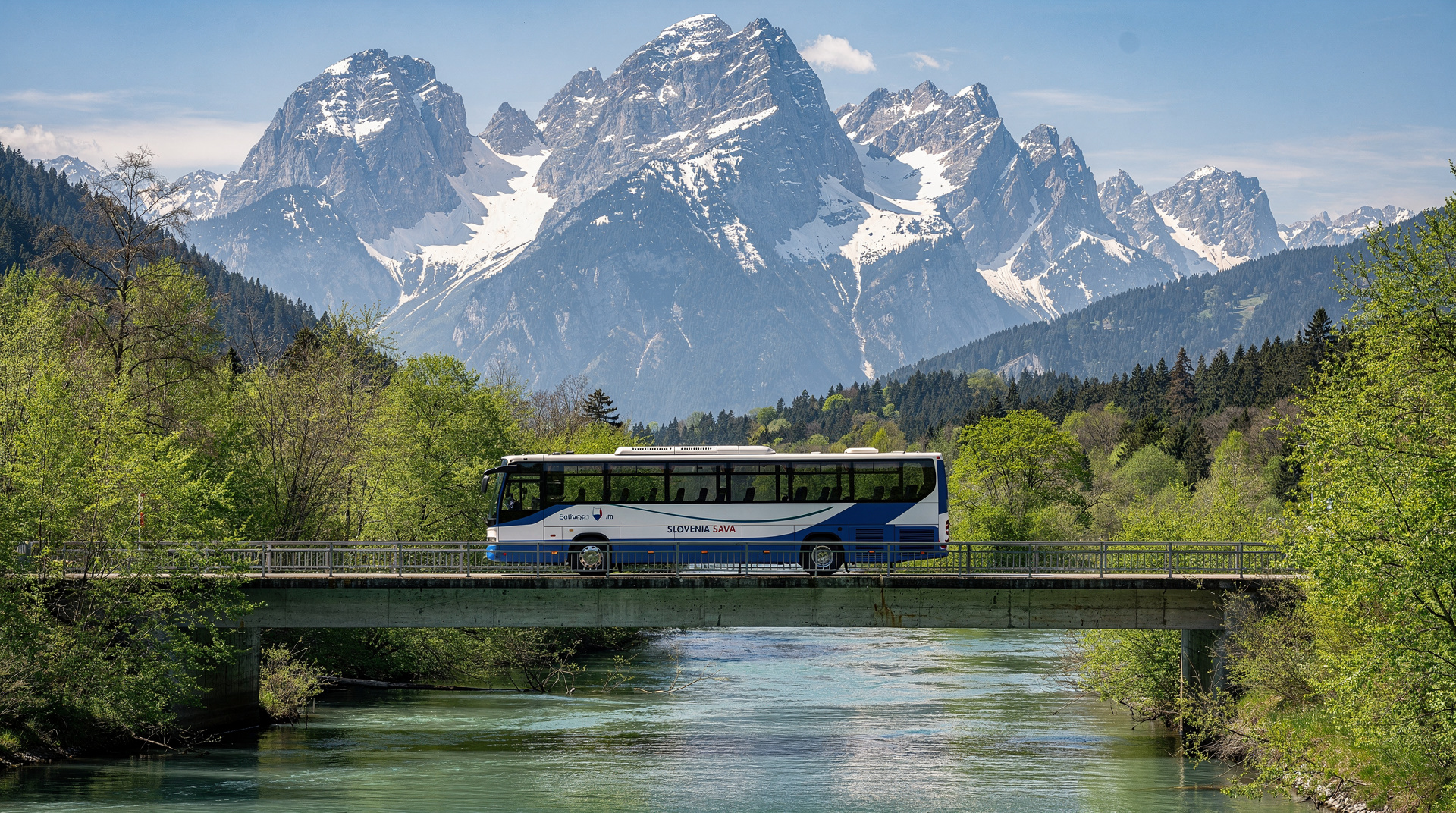
The Arriva bus from Ljubljana to Bled runs every 30–60 minutes, costs EUR 6 each way and takes 1h15–1h30. It drops you in Bled town, five minutes from the lake. No tour required.
If you want to combine Bled with Bohinj and Vintgar without a car, the logistics require a little planning: local buses connect Bled to Bohinj (roughly hourly, EUR 3) and a shuttle service runs to Vintgar Gorge from June to September. A day tour from Ljubljana covering Bled makes sense only if you value the guide’s commentary — the bus is otherwise more flexible and cheaper.
Lake Bled day tour from Ljubljana (if you want a guide)The final verdict
Lake Bled is not overrated. It is, genuinely, one of the most beautiful places in Central Europe. The problem is not the lake — it is the gap between the summer-Saturday experience and what the photographs imply. Fix the timing and the inflated expectations around specific paid experiences, and Bled delivers.
The checklist: arrive before 08:00 in summer. Walk the lake. Hire a rowboat rather than the pletna if budget matters. Go to the castle terrace but consider skipping the museum. Eat breakfast at a café away from the main terrace strips. Add Vintgar Gorge if you have a half-day to spare. Then drive 30 minutes west to Bohinj and remember that Slovenia has more to offer.
More on planning around the crowds: avoiding crowds at Bled and Slovenia overtourism and how to navigate it.
If you decide to go, the complete Lake Bled guide covers the practical detail, how to visit Bled Island and the pletna boat guide help you choose how to cross, and the Bled Castle visit guide explains what the entrance fee does and does not add. Travelling from the capital, the Ljubljana to Bled transport guide compares the options, and the Ljubljana and Bled in three days itinerary shows how the lake fits into a wider trip. Bled is also one of several stops in the Slovenia honest tourist-traps guide, which puts the lake in context with the rest of the country.
Bled in different seasons: a quick summary
May: The best shoulder-season month. Temperatures are 15–20°C, Vintgar Gorge opens in early May, snow may still dust the high peaks behind the lake (photogenic). Visitor numbers are roughly 30–40% of August levels. The lake is cold — around 13–15°C — but early-morning air is crisp and the light is exceptional. Most hotels and restaurants are open.
June: Excellent. Temperatures rise to 20–25°C. The lake warms toward 18°C by the end of the month. Visitors pick up from mid-June but remain manageable. Wildflowers are still visible on the hillsides. Swimming from the public beach is comfortable by the third week.
July–August: Peak season. Temperatures 25–30°C, lake at 22–24°C, swimming outstanding. The crowds described above. Go early, go late, or go to Bohinj. The lake at 06:30 in August is one of the most beautiful mornings available in Central Europe — the effort of an early alarm is completely repaid.
September: Many regular visitors consider this the best month. The lake is still warm (20–22°C) from the summer heat. Visitor numbers drop sharply after the last week of August when Austrian, German and Italian school holidays end. The high peaks behind the lake begin to show autumn colour by late September. Vintgar Gorge is quieter than at any point in summer.
October: The lake cools (14–17°C), Vintgar closes at the end of the month or early November, and some seasonal businesses shut. But the autumn colours — larch and beech on the hillsides, the reflection of changing leaves in the lake — are extraordinary. October morning mist on the lake is some of the most photographed imagery in Slovenia. A quiet and underrated month.
November–March: Genuinely quiet. Vintgar is closed. Some hotels and restaurants are closed or on reduced service. The lake occasionally freezes in severe winters — roughly once every few years — and the frozen lake is a remarkable thing to see. Winter hiking is possible on lower routes. Ski resorts (Kranjska Gora, Vogel above Bohinj) are the primary winter draw in the area.
Radovljica: the best base nobody talks about
Twenty minutes from Bled by car, Radovljica is a perfectly preserved baroque old town built on a river terrace above the Sava Bohinjka. It has a renowned museum of Slovenian beekeeping (the painted beehive panels are one of the most distinctive folk art traditions in Europe), a good weekly market, several excellent restaurants and accommodation that costs EUR 60–100 less per night than equivalent Bled addresses.
Visitors who base themselves in Radovljica drive to Bled for the dawn and return before the crowds build. They eat dinner in the old town where a restaurant main course costs EUR 12–16 rather than EUR 20–28 on the Bled tourist strip. They spend the saving on a better bottle of Slovenian wine.
Radovljica is also well-placed for day trips in multiple directions: Vintgar Gorge is 10 minutes, Kranjska Gora is 30 minutes, Bohinj is 40 minutes, Ljubljana is under an hour.
Frequently asked questions about Is Lake Bled overrated? An honest answer for 2026
What time should I arrive at Lake Bled to avoid crowds?
Before 08:00 in July and August, ideally before 07:30. The first tour buses arrive around 08:30, the lakeside path starts filling from 09:00, and the car parks are often full by 10:00. An early arrival means you have the lake almost to yourself for the first hour — genuinely one of the most beautiful mornings you can have in Central Europe.Is Lake Bohinj better than Lake Bled?
They are different. Bled has the island, the castle and better infrastructure. Bohinj is larger, wilder, deeper, surrounded by higher mountains and significantly less crowded. If you want the classic Instagram shot, go to Bled. If you want to swim in an alpine lake in something approaching peace, go to Bohinj. Most visitors who have time do both — they are 30 minutes apart by car.What is free to do at Lake Bled?
Walking the full 6 km lake circuit is free and takes about 1.5–2 hours. The northern shore viewpoints are free. Swimming from the public beaches (Grajsko kopališče on the north shore, the Camping Bled area on the south) is free or very cheap. The walk up to Bled Castle costs nothing until you reach the gate. Osojnica viewpoint above the western shore is a free 20-minute hike with arguably the best aerial angle on the lake.Is the pletna boat to Bled Island worth it?
It is a pleasant, traditional experience and the gondoliers are skilled. But for a 15-minute crossing to a small island, it is expensive relative to what you get (confirm the current fare at the landing stage or the Bled tourist office, bled.si). The island church is modest; the famous view of the lake is only visible from the water, not once you're standing on the island. A hired rowboat (EUR 18–25 per hour) lets you replicate the experience with more freedom and better photography opportunities.Should I stay overnight in Bled?
Yes, if you can. Staying overnight gives you the lake at dusk and at dawn — two windows that are dramatically quieter and more beautiful than any point during the day in peak season. Budget accommodation starts around EUR 35–50 in a hostel dormitory; a mid-range room with a lake view runs EUR 120–180. The Vila Bled, a former Tito presidential villa, is the most evocative option if budget allows (EUR 250+).What else is near Bled worth visiting?
Vintgar Gorge (open roughly April–October) is 4 km away and one of the best gorge walks in the Alps — 1.6 km of walkways above an emerald river, EUR 15. Lake Bohinj is 30 minutes by car. Kranjska Gora and the Vršič Pass (open roughly June–October) are 35 minutes and form a natural half-day circuit. Radovljica, a well-preserved baroque town, is 20 minutes away and almost tourist-free despite being excellent.Is Bled Castle worth the entrance fee?
The museum exhibitions inside are competent but unremarkable. The real draw — the cliff-edge viewpoint over the lake and island — is reached by the same free path and doesn't require paying the entrance fee, unless you specifically want the museum, chapel or 3D film. Most visitors are satisfied with the free terrace view and a coffee at the café there.How much time do I really need at Lake Bled?
A half-day covers the lake circuit and one viewpoint. A full day allows Vintgar Gorge plus the lake and a swim. An overnight stay is the single best upgrade available, since it gives you the dawn or dusk window when the crowds are gone and the light is best.
Top experiences
Bookable activities with verified prices and instant confirmation on GetYourGuide.