Slovenia overtourism: how serious is it and what can you do about it?
From Ljubljana: Škocjan Caves half-day tour
Is overtourism a serious problem in Slovenia?
In a handful of concentrated spots — Lake Bled, Postojna Cave and, to a lesser degree, central Ljubljana — it is a real and visible issue in July and August. In most of the rest of the country, including the Soča Valley, Lake Bohinj, the Karst region outside Postojna, eastern Slovenia and the wine country, visitor numbers are entirely manageable. The problem is geographic concentration, not national-level overcrowding.
Slovenia’s crowding problem: the honest picture
Slovenia has become one of Europe’s most searched-for travel destinations over the past decade. Tourist arrivals grew from around 2 million per year in 2010 to over 6 million by the mid-2020s. For a country with a population of 2.1 million, this ratio — three visitors per resident — places significant strain on the handful of sites that absorb most of the traffic.
The honest picture is more nuanced than headlines suggest. Slovenia does not have a nationwide overtourism problem. It has a problem of geographic concentration: a small number of sites absorbing visitor numbers that their physical infrastructure was not designed to handle, while large parts of the country receive a fraction of what they could sustainably host.
Understanding where the pressure is real and where it is manageable allows you to plan a trip that avoids the worst of it.
| Genuinely crowded (Jul–Aug) | Lake Bled, Postojna Cave, Vintgar Gorge |
| Busy but manageable | Central Ljubljana, Piran, Bovec |
| Quiet even in peak summer | Bohinj, Škocjan, Logar Valley, Ptuj, Goriška Brda |
| Best low-crowd months | May, June, September, October |
| Fix that costs nothing | Arrive before 08:00 at Bled and Vintgar |
Where the problem is real
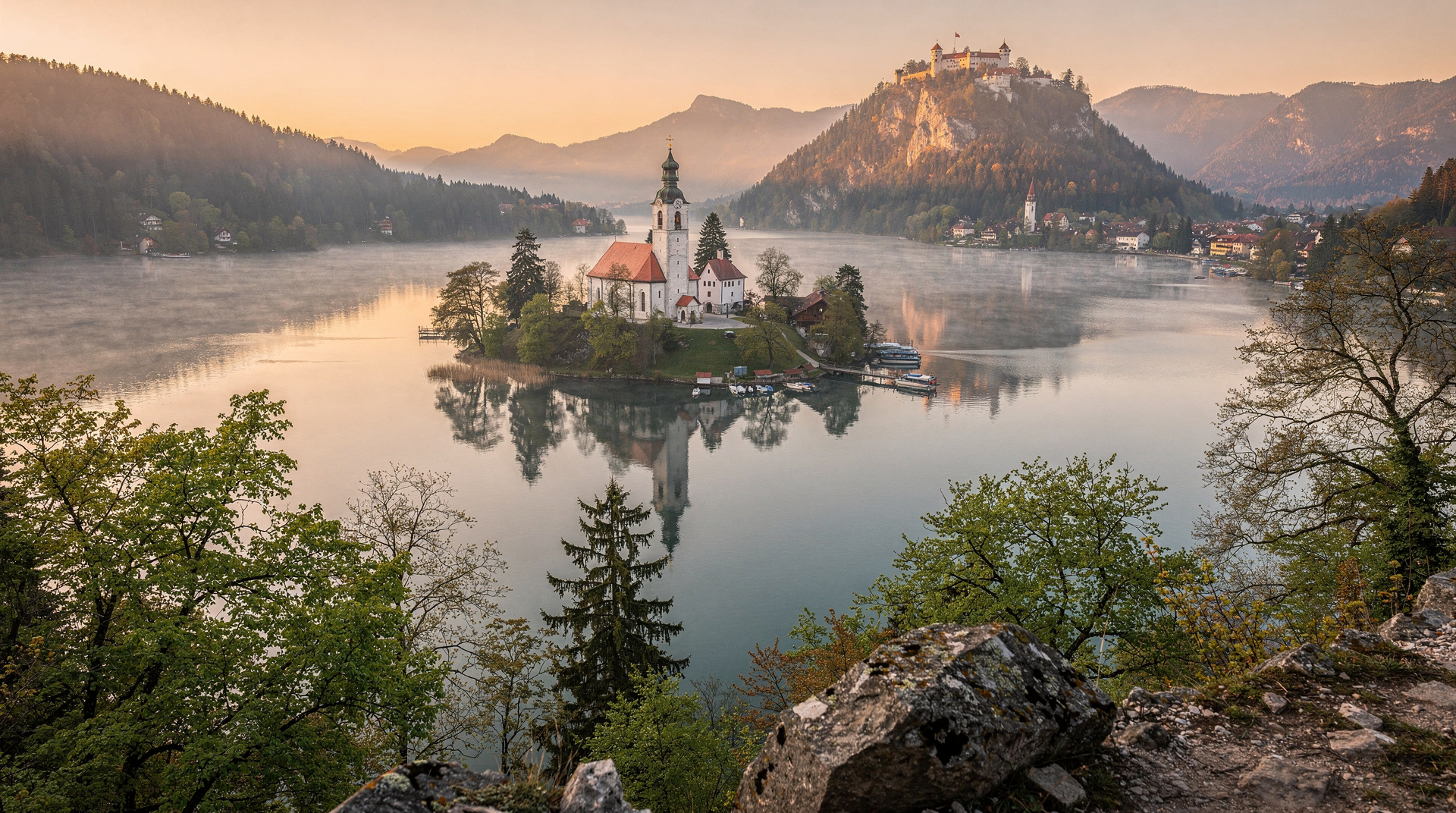
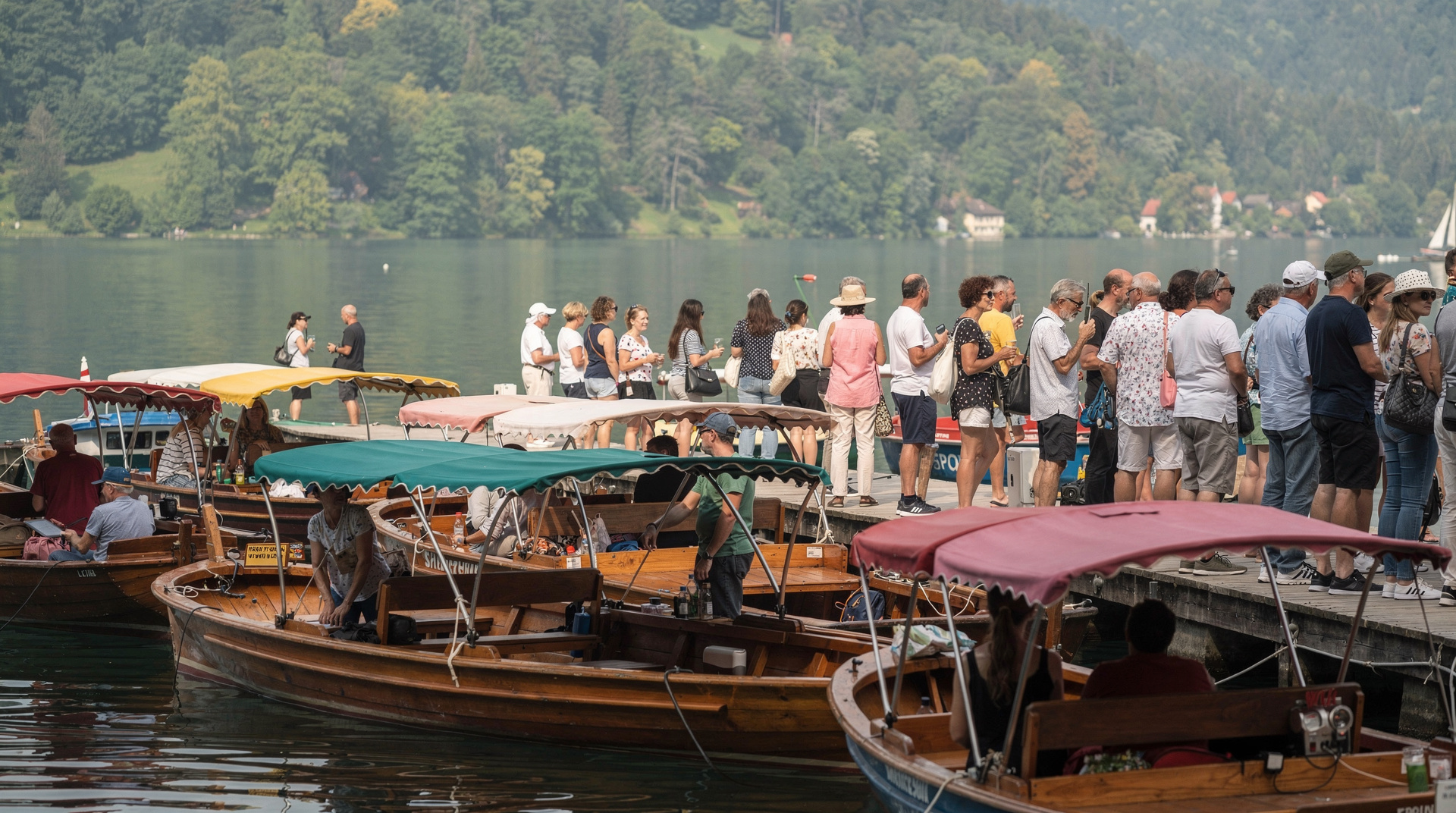
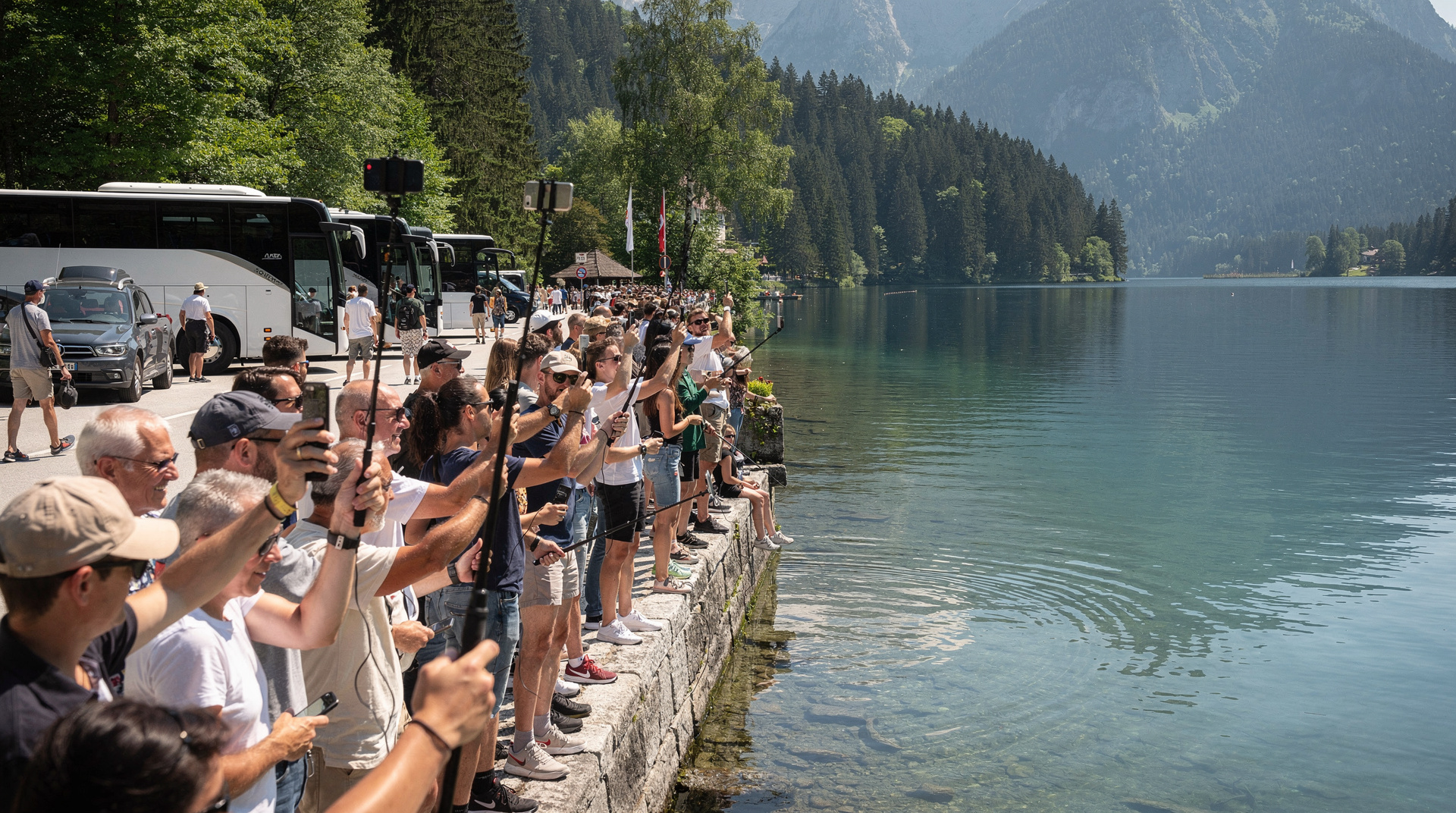
Lake Bled is the clearest case. The lake is 6 km in circumference. The main visitor infrastructure — car parks, pletna boat landing, café terraces, lakeside path — occupies perhaps 1.5 km of that perimeter. Into this space come an estimated 2–3 million visitors per year. In peak summer, the car parks (P1 and P2 near the castle, P3 near the rowing club) fill by 09:00–09:30. The lakeside path on the western and northern shore becomes a slow-moving stream of visitors from mid-morning. The pletna boats run with industrial continuity.
This is not enjoyable if you arrived expecting the peaceful alpine lake of the photographs. It is still beautiful — the lake itself cannot be ruined by visitor numbers, and the mountain backdrop remains indifferent to the crowd — but the experience of being in the space has changed.
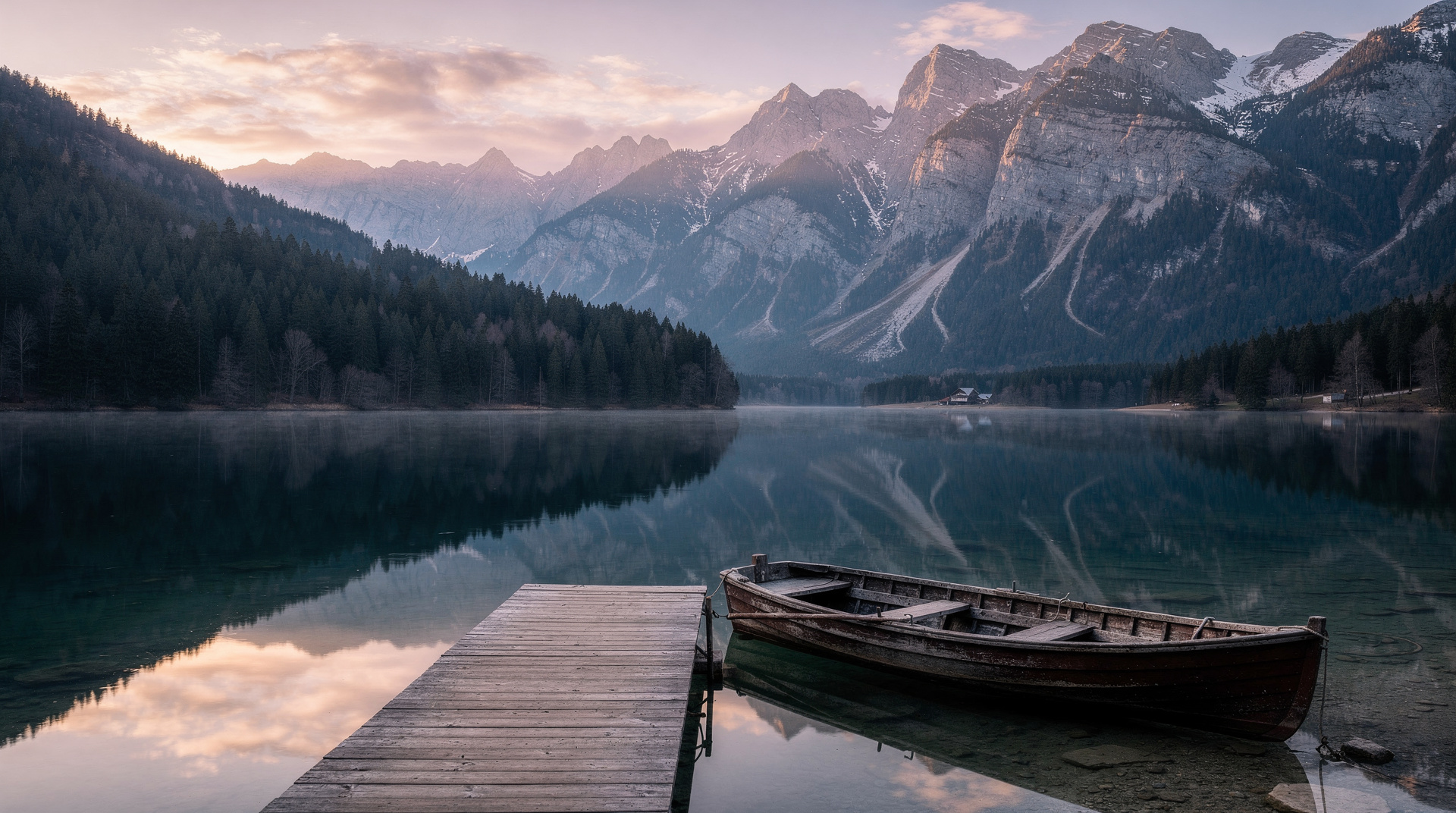
Lake Bohinj is 30 minutes away, inside the same national park, with the same alpine context and a fraction of the visitors. The Bohinj basin receives perhaps 20–25% of Bled’s numbers on an equivalent summer day. It is the single most effective alternative for visitors whose primary concern is crowd avoidance.
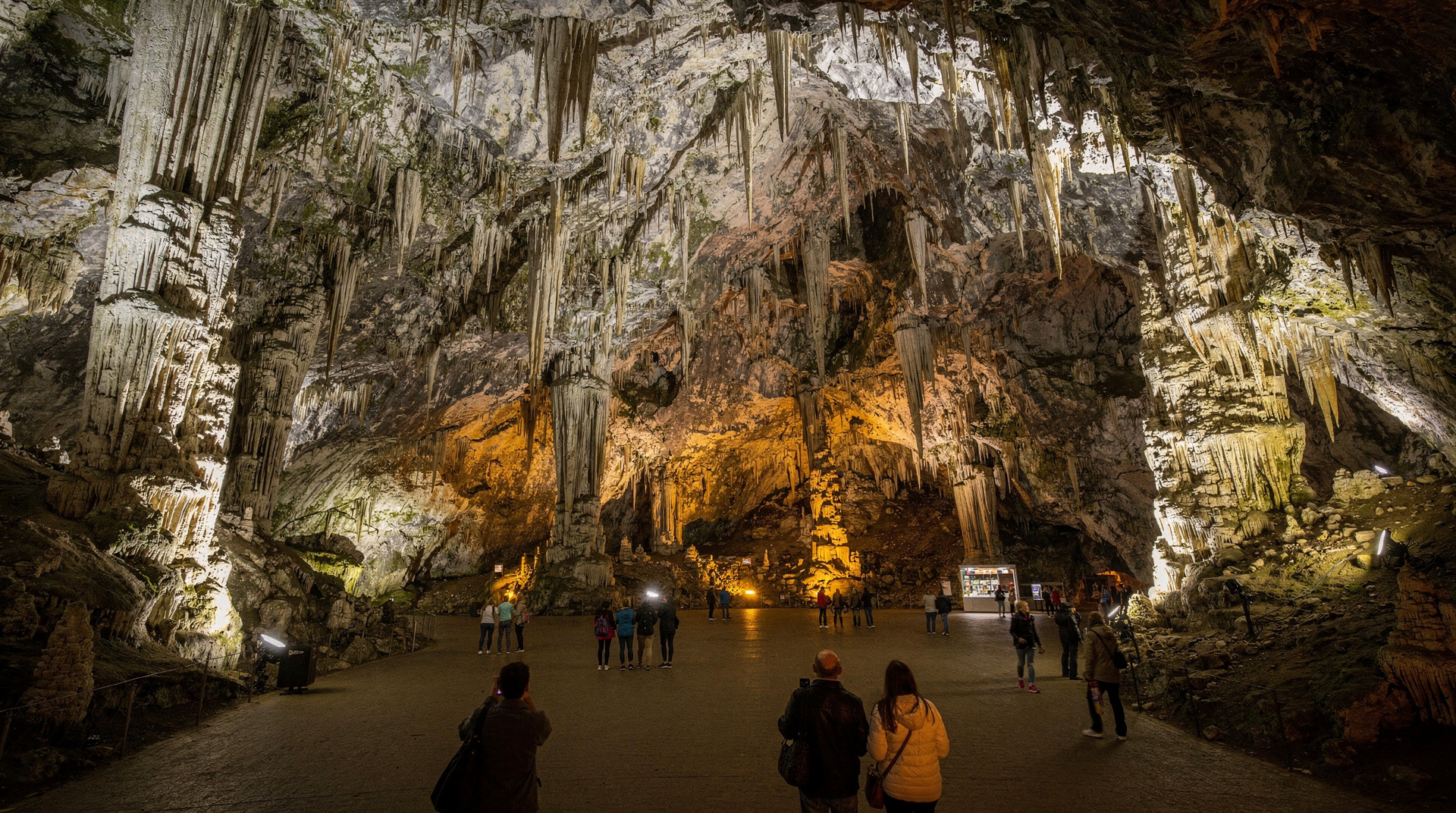
Postojna Cave faces a different kind of pressure. The cave is indifferent to crowds in the physical sense — the passages are large and the temperature is a consistent 10°C regardless of how many people are present. The problem is experiential: tour groups of 60 people, guides using loudspeakers, back-to-back departures on the peak summer schedule, and a visitor experience calibrated for maximum throughput rather than genuine encounter with the geology.
Škocjan Caves is the alternative. It is a UNESCO World Heritage Site, limits groups to around 20, and its centrepiece underground canyon is more dramatic than Postojna’s formations. The difference is meaningful.
Vintgar Gorge near Bled is genuinely congested between 10:00 and 16:00 on summer days, particularly weekends. The 1.6 km walkway above the Radovna River is narrow in places and does not absorb crowds well. Before 09:00 or after 17:00, it is an entirely different experience: the gorge itself, with the river in full light through the limestone walls, is one of the best short walks in Slovenia. It is worth the early start.
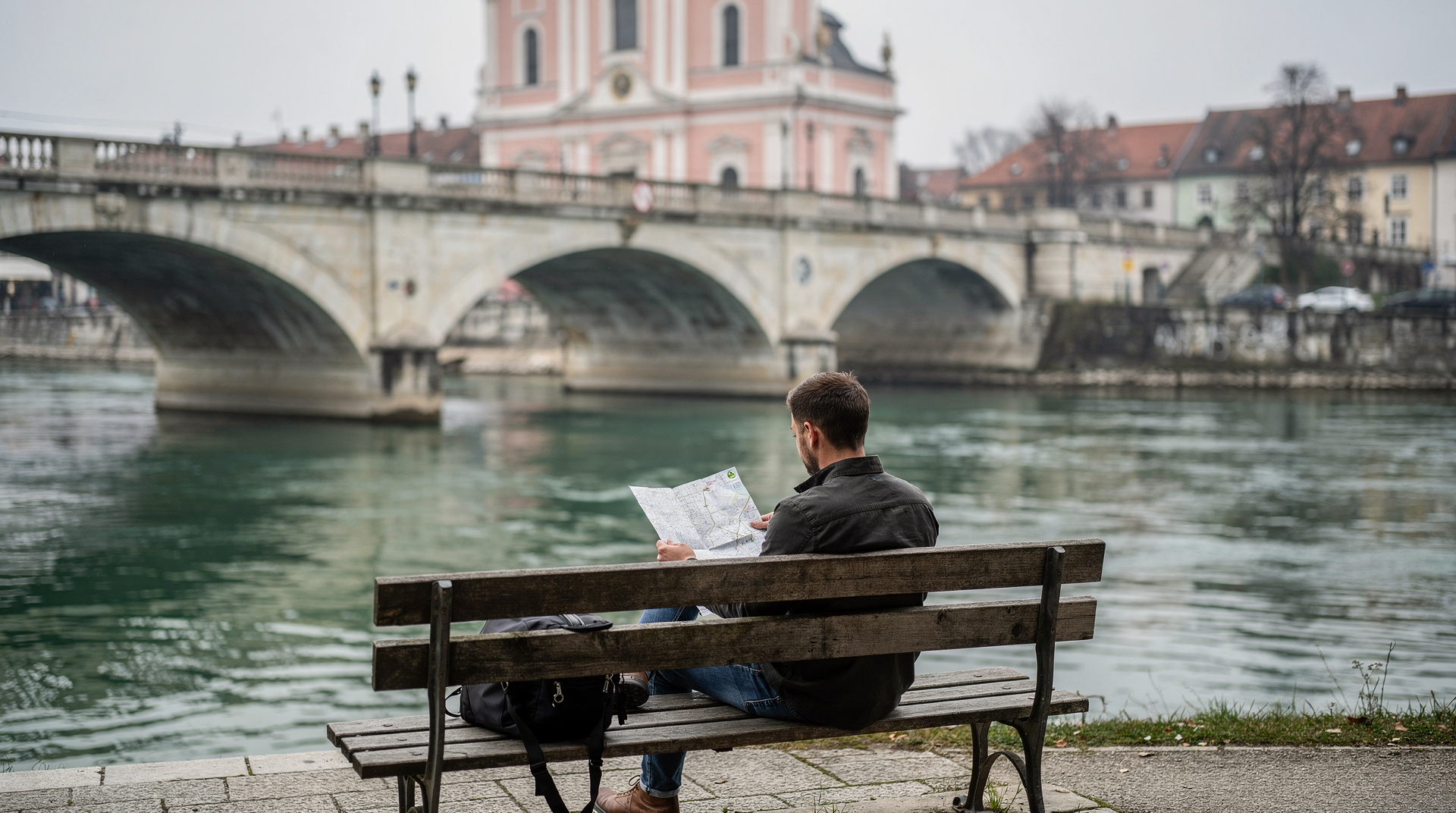
Central Ljubljana is busy but not broken. The Old Town handles its visitor numbers better than Bled because the space is larger and the accommodation supply within and around the city is extensive. The tourist concentration on the triple-bridge area and the market can feel dense at peak summer, but Ljubljana’s residential neighbourhoods behind and above the tourist core remain authentically Slovenian.
Where the problem is overstated
Most of Slovenia. The Soča Valley (Bovec, Kobarid, Tolmin) is popular but not overwhelmed — the geography of the valley spreads visitors across a 30 km river corridor and activity-based tourism (rafting, kayaking, canyoning, hiking) tends to regulate itself by capacity limits. Bovec’s centre is busy in July–August but not unpleasantly so.
The Karst region beyond Postojna — Škocjan Caves, Lipica, the Rakov Škocjan natural bridge, the Cerknica seasonal lake — is almost tourist-free despite being extraordinary. The Slovenian coast around Piran is busy in summer but operates at nothing like the density of comparable Adriatic destinations in Croatia or Italy.
Eastern Slovenia — Ptuj, Maribor, the Logar Valley, the thermal spa towns — receives visitors primarily from regional markets and is genuinely quiet by any international standard. The Logar Valley in the Kamnik–Savinja Alps offers glacial scenery comparable to the Julian Alps with practically no tourist infrastructure to speak of.
The structural reasons
Slovenia’s overtourism is self-reinforcing. The same sights appear in the same travel articles and Instagram searches, directing visitors toward the same places in the same season. Lake Bled photographs well in summer, Postojna photographs well in any season, and Ljubljana’s Old Town is compact enough for a reliable half-day stop. These three places absorb the majority of international visitors.
The national tourism board has tried to redirect attention — the I Feel Slovenia campaign has highlighted the Soča Valley, eastern wine regions and the coast — with moderate success. But the algorithmic reality of travel content is that the top results for “Slovenia travel” are the same three places they have always been.
The irony is that the places receiving the least attention are often the most rewarding. Goriška Brda wine country, within the same drive of Ljubljana as Bled, produces wines that compete with Burgundy at a fraction of the price and receives perhaps 2% of Bled’s visitors. Ptuj, Slovenia’s oldest town, has an intact medieval old town, a castle above the Drava river and almost no tourist queues.
Practical approaches
Timing: May, June and September are significantly better than July–August for the headline sights. The lakes are swimmable from June. The alpine passes are clear from late May. The crowds are a fraction of peak. If July–August is unavoidable, the early morning approach (arrive before 08:00 at Bled) transforms the experience.
Geographic diversification: build an itinerary that includes at least one non-headline destination for every headline one. Bled AND Bohinj, not just Bled. Škocjan rather than Postojna. The Logar Valley as an eastern extension. Goriška Brda for a wine afternoon rather than the tourist restaurant strip.
Transport choices: many of the less-crowded areas are hard to reach without a car. The Soča Valley requires driving. Goriška Brda requires driving. Eastern Slovenia requires driving or a slow train. Having a car dramatically widens the options.
Accommodation location: staying in Bled itself means you are in the crowd. Staying in Radovljica or Lesce, 15–20 minutes away, gives you easy access to the lake without being part of the peak-hour visitor mass. You can arrive at Bled for the dawn and leave before the main crowds build.
The deeper issue with overtourism is ethical as well as practical. The residents of Bled — a town of 8,000 people — live with the summer traffic, the car-park overflow, the noise and the year-round orientation of the local economy toward tourism. Whether that trade-off is sustainable is a conversation Slovenians are actively having. As a visitor, the most useful contribution is to spend money locally (at gostilne, at local guides, at family-run guesthouses), arrive with the infrastructure that exists rather than adding to congestion, and seriously consider the alternatives to the most pressured sites.
More detail on specific planning: avoiding crowds at Bled, is Lake Bled overrated and the Slovenia tourist traps overview.
Alternative destinations worth building into your itinerary
If overtourism is a genuine concern — either ethically or practically — the following areas offer landscape quality comparable to the headline sights with a fraction of the visitor load.
Logar Valley (Logarska Dolina): A glacial valley in the Kamnik–Savinja Alps, 1h30 from Ljubljana, with a waterfall (Rinka, the highest in Slovenia), meadow walking and mountain scenery as dramatic as anything in the Julian Alps. The valley is a protected landscape reserve; the entrance fee is EUR 5–7 per car and it keeps visitor numbers manageable. Tourist infrastructure is minimal — a few guesthouses, a handful of farm restaurants.
Ptuj: Slovenia’s oldest recorded town, with a castle perched above the Drava river and an old town of almost entirely preserved medieval and baroque architecture. The Kurentovanje carnival in February is one of Europe’s most distinctive folk festivals. Visitor numbers are a fraction of Ljubljana or Bled. A full day is comfortable; the local wine scene (the Haloze hills immediately south produce fine white wines) extends the stay naturally.
Goriška Brda wine country: Fifty km west of Ljubljana, on the Italian border, this region of vine-covered hills is visually remarkable and culinarily outstanding. The wine — primarily Rebula/Ribolla, Pinot Gris and red blends — is excellent by any international standard. Villages like Šmartno (a medieval hilltop fortification) receive very few foreign visitors. A day trip from Ljubljana combining Brda and the Vipava Valley rivals a comparable Tuscany day for food and wine quality at substantially lower cost.
Bovec and the Soča Valley: The most-visited part of Bovec (the town centre, the rafting companies on the river) is busy in July–August but the valley is 30 km long and the visitor numbers thin out quickly beyond the main activity zones. The Soča trail, a long-distance hiking path following the river from source to the Slovenian border, is almost deserted. The Trenta Valley at the head of the Soča is one of the quietest and most dramatic landscapes in Slovenia.
Snežnik Castle: A Renaissance castle in the forests south of Ljubljana, near Cerknica, that is almost unknown to foreign visitors. It is one of the best-preserved Renaissance interiors in Slovenia and sits in a forest that is still one of the primary habitats for brown bear and lynx. Bear-watching hides near the castle operate from late afternoon; guided evening watches cost EUR 40–60 per person and have a genuinely high encounter rate.
The seasonal pattern in numbers
To give a sense of the actual concentration: Postojna Cave receives roughly 5,000 visitors on a peak August day and roughly 200–400 on a weekday in February. Lake Bled’s main car parks fill by 09:30 in August and stand half-empty all day in October. The difference is not marginal — it is transformative.
The practical conclusion is simple but worth stating explicitly: if you have any flexibility in your travel dates, the two weeks either side of August — mid-May through June, and the whole of September — are not second-best options. They are, for most purposes, the best options. The weather is comparable (better in some years). The scenes are comparable. The cost is lower. The experience is quieter and more closely matches what people typically come to Slovenia to find.
Building a low-crowd itinerary in practice
The most reliable way to avoid Slovenia’s pressure points is to swap at least one headline stop for its quieter equivalent rather than trying to out-time the crowds everywhere. A workable pattern: base yourself near Lake Bohinj rather than Bled itself, day-trip into Bled for the dawn hours, choose Škocjan Caves over Postojna as your main cave visit, and build in a half-day at Goriška Brda or the Logar Valley rather than a second lap of the tourist core.
The Slovenia tourist traps guide covers the specific overpriced experiences that compound the crowding problem, and the common mistakes guide has a broader planning checklist.
For Škocjan specifically, access is by timed guided tour rather than free walk-through, so booking a small-group slot in advance both avoids disappointment and tends to land you in a quieter group than a same-day walk-up booking.
Škocjan Caves half-day tour from LjubljanaChoosing quieter options on the ground
Crowd avoidance works best when it shapes the whole route rather than a single morning. If the Julian Alps are your focus, the Julian Alps hiking guide and the Seven Lakes Valley hike point you toward trails where the day’s pace is set by the terrain rather than by a queue. The Bled vs Bohinj comparison helps you decide how to split your nights between the two lakes, and the Lake Bohinj guide covers what to do once you are there.
One easy way to spread out on the Soča is to book an evening stand-up paddle excursion from Bovec, when the midday rafting traffic has cleared and the river is at its calmest.
For the Soča Valley, the Soča Valley day trip and the Bovec adventure base guide show how activity-led days spread people out along the river. Wine drinkers will find the Goriška Brda wine guide and the Vipava Valley wine guide a calmer alternative to the busiest sights. In the east, the Logar Valley guide and the Ptuj guide are the natural starting points.
Getting to these quieter places is mostly a question of logistics. The car rental guide and the getting around Slovenia guide explain the options, and the Slovenia in summer guide is worth a read if July or August is the only window you have. If you would rather follow a ready-made plan, the hidden gems itinerary is built around the less-visited corners of the country, and the overtourism debate blog post gives the local perspective on how residents see the pressure.
Off-season versus shoulder season
It is worth distinguishing between the deep off-season (November–March, excluding ski resorts) and the shoulder season (May–June, September–October) when planning around crowds. Off-season delivers the quietest experience by far but comes with real trade-offs: Vintgar Gorge and the Vršič Pass are closed, and lake swimming is off the table. Shoulder season is the better trade for most travellers — crowds are a fraction of August, the lakes are swimmable from June, and everything stays open. The Slovenia in autumn and Slovenia in spring guides break down what each shoulder season specifically offers.
Related guides
- Avoiding crowds at Bled — Bled-specific timing tactics
- Is Lake Bled overrated? — an honest assessment
- Slovenia tourist traps — overpriced experiences to skip
- Postojna vs Škocjan Caves — choosing the right cave visit
- Common mistakes in Slovenia — the broader planning checklist
Frequently asked questions about Slovenia overtourism
Which places in Slovenia are most affected by overtourism?
Lake Bled is the primary pressure point: the car parks fill by 09:30 in summer, the lakeside path becomes congested by mid-morning, and the pletna boats run almost continuously. Postojna Cave reaches peak capacity with groups of 60+ people running back-to-back. The Vintgar Gorge walkway in peak hours can feel like a theme park queue. Central Ljubljana's Old Town is busy but not at a problematic level — it has more capacity than Bled.Is Lake Bohinj a better alternative to Bled for avoiding crowds?
Yes, significantly. Lake Bohinj is 30 minutes from Bled by car and receives perhaps 20–25% of Bled's visitor numbers despite being larger, deeper and arguably more dramatically sited within Triglav National Park. There is no island boat fee, no castle museum and no parking crisis (outside a few peak weekends). The Vogel cable car, the 7 Lakes Valley hike and the swimming are all excellent.What time should I arrive at Bled to avoid crowds?
Before 07:30 in July–August. The first tour buses arrive from around 08:30; the main car parks fill from 09:00–09:30. Arriving an hour before the first buses gives you 60–90 minutes of the lake in near-solitude. Alternatively, arrive after 18:00 in evening when most day-trip visitors have left — the golden hour light is exceptional and the lake is quiet.Which months are least crowded in Slovenia?
November through March is genuinely quiet everywhere except the ski resorts. May is the best month: pleasant temperatures, most things open, manageable crowds. June is excellent. September and October are good — slightly cooler, fewer visitors, the autumn colours in the Julian Alps are extraordinary. July and August are the months to avoid if crowd aversion is a priority.Are there areas of Slovenia that are not crowded even in summer?
Many. The Logar Valley in the Kamnik–Savinja Alps, Ptuj and the eastern wine region around Jeruzalem, the Vipava Valley and Goriška Brda, Bovec in the Soča Valley (busy but not overwhelming), the Slovenian hill towns between Ljubljana and the coast, and most of the thermal spa region in eastern Slovenia. These areas collectively offer landscapes and experiences comparable to the headline sights with a fraction of the visitors.Does visiting off-season actually change the experience, or just the crowd size?
Both, and the crowd-size change is the bigger one. The lake, the cave and the gorge are physically the same in October as in August — what changes is whether you experience them as intended or as a queue. Weather in shoulder months (May–June, September) is close to peak-season quality, so the trade-off is minimal outside of guaranteed lake swimming.Is it worth paying more for a guided tour to skip the crowds?
Sometimes. At Škocjan Caves specifically, a small-group guided visit is often the only way in, since access is by timed tour rather than free walk-through, and booking ahead secures a quieter slot than a walk-up ticket. Elsewhere — Bled, Vintgar — timing your own visit early achieves the same result for free.