Lake Bohinj guide: the quieter, wilder alpine lake you should visit
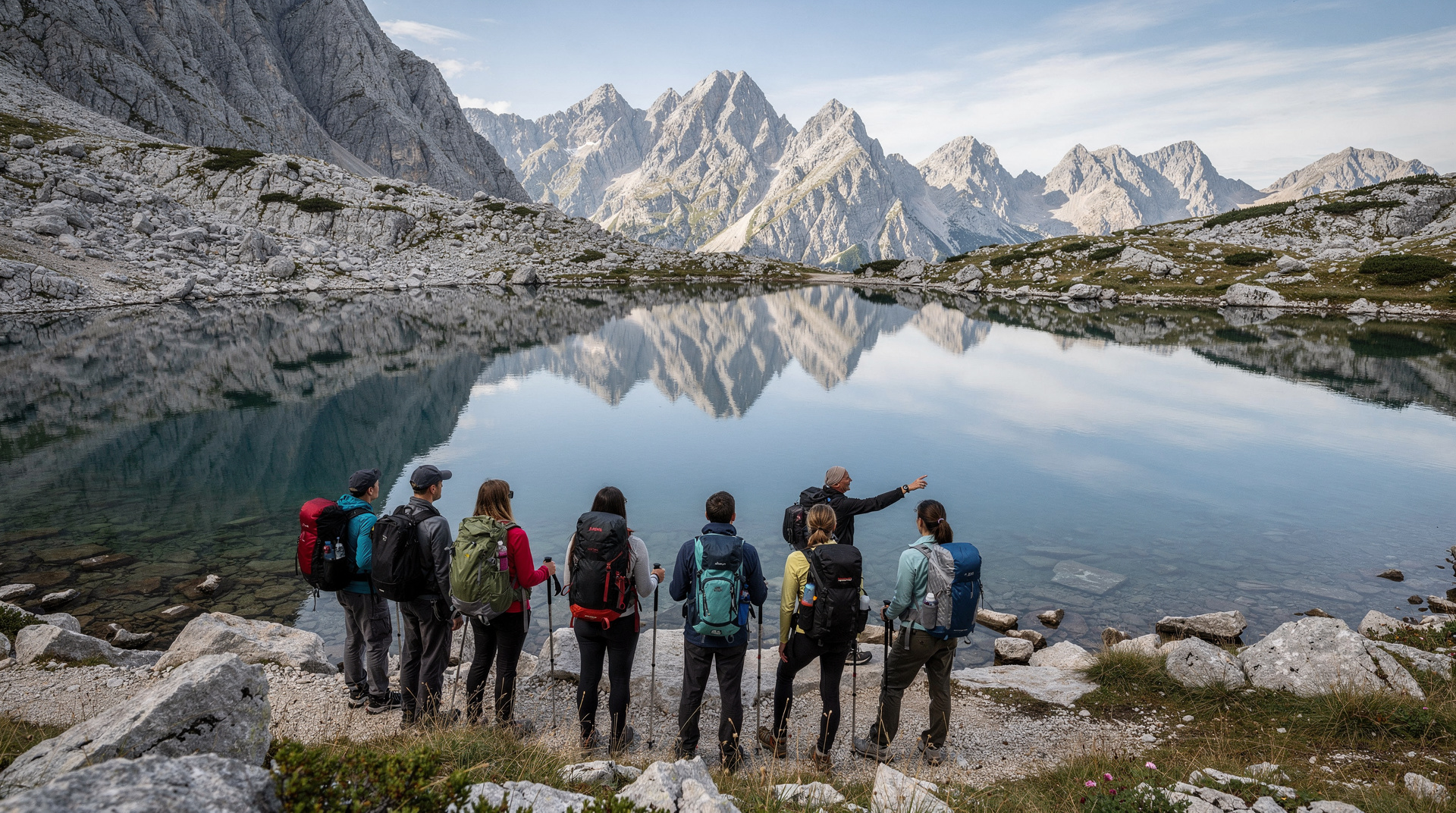
Triglav National Park: 7 Lakes Valley hiking tour
Is Lake Bohinj better than Lake Bled?
Bohinj is larger, wilder and has a fraction of Bled's crowds — it's often described as what Bled was like before tourism. The two lakes are 30 minutes apart and very different in character: Bled is polished and photogenic, Bohinj is natural and atmospheric. Most visitors find combining both in a single trip gives the best of both worlds.
Lake Bohinj: the alpine lake that hasn’t been polished for Instagram
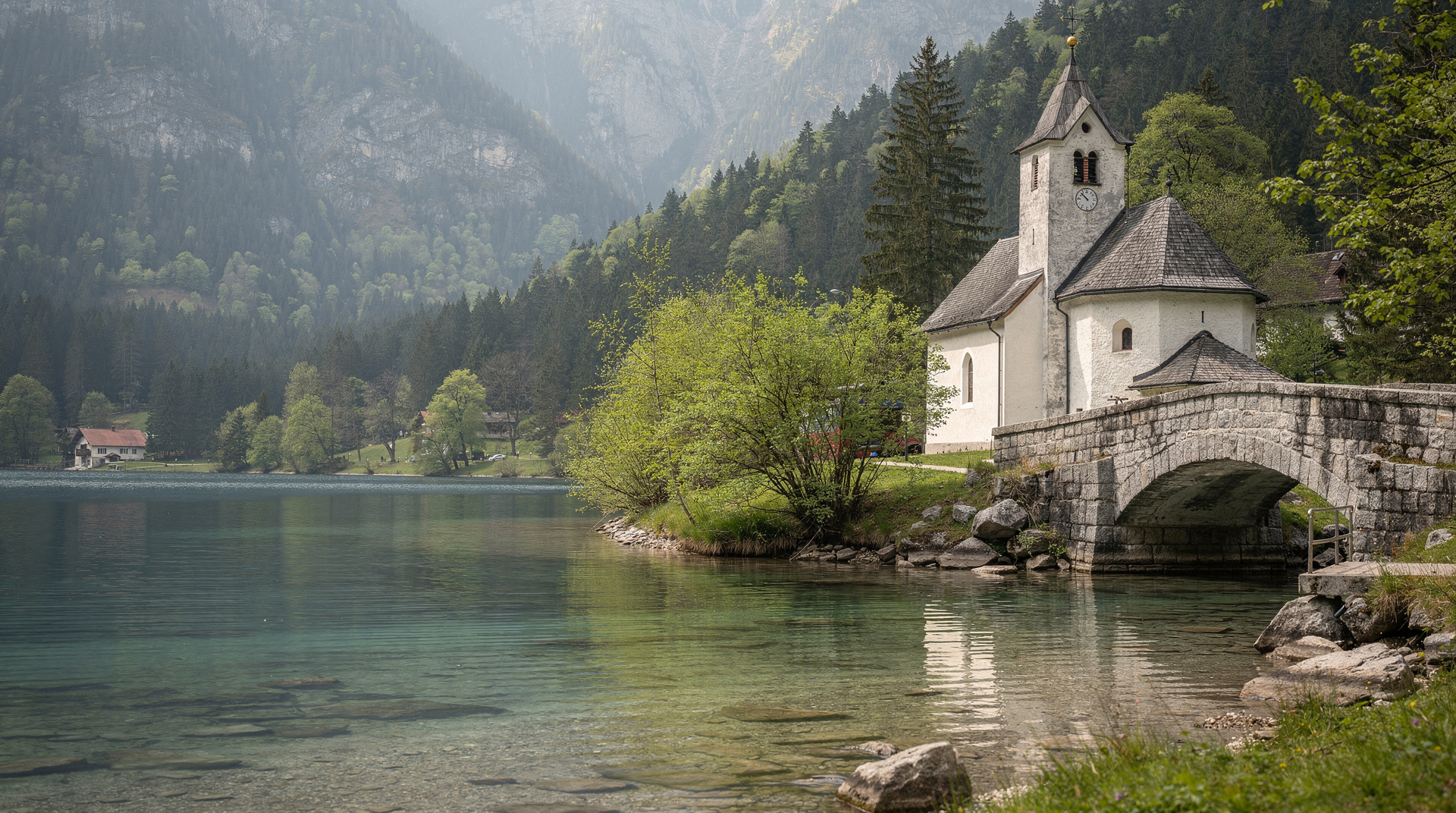
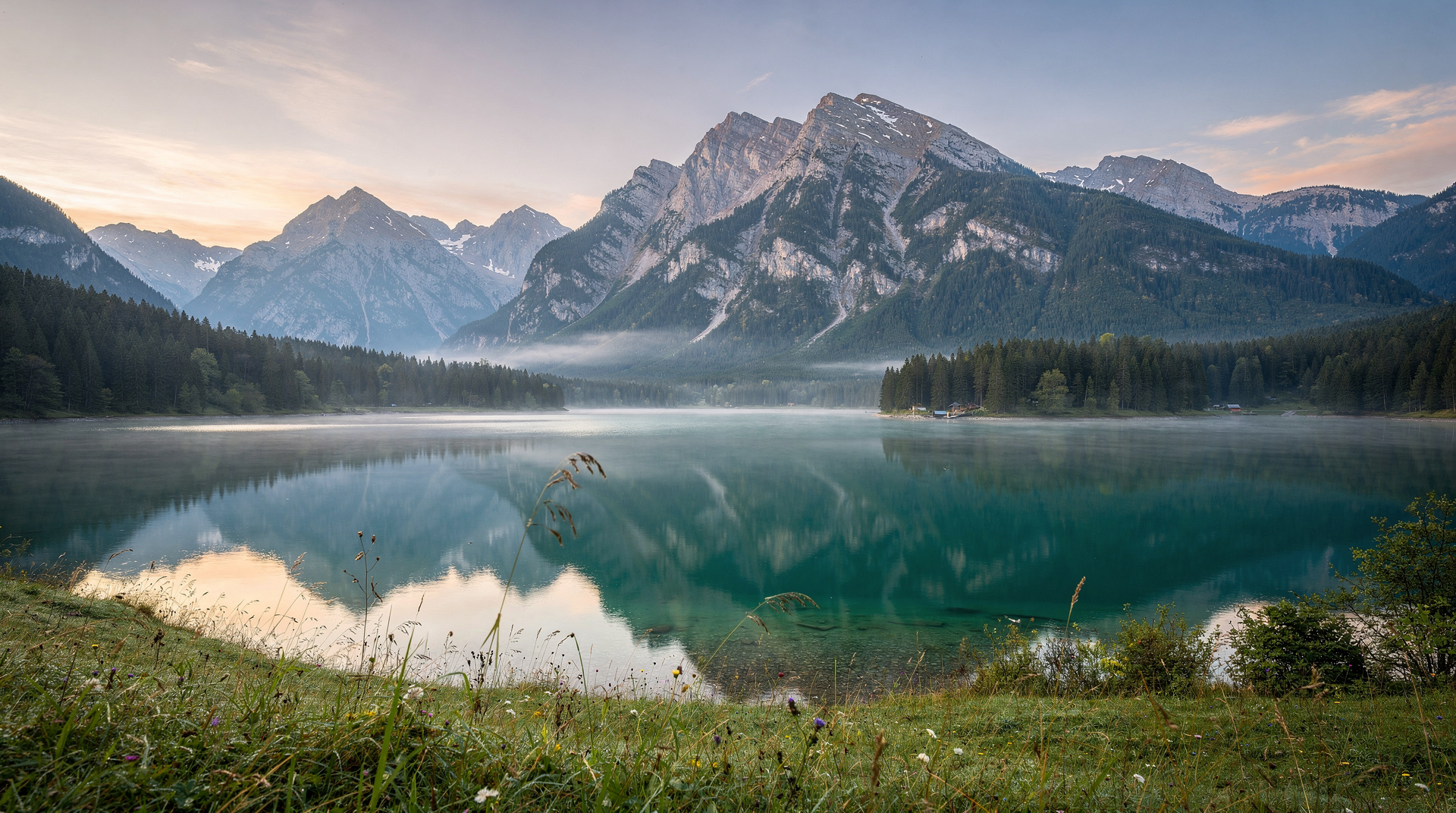
Lake Bohinj is the largest permanent lake in Slovenia. It sits at 526 metres above sea level inside Triglav National Park, surrounded by dramatic limestone peaks that rise steeply from both shores. The water is clear, deep (up to 45 metres) and a particular shade of deep turquoise-green that seems to change colour depending on the sky and season.
It is, unequivocally, more beautiful than Lake Bled in purely natural terms. It is also 30 minutes away from Bled by car, accessible by bus, and receives a fraction of Bled’s visitor numbers.
The reason is simple: Bohinj has no island church. There’s no single Instagram-ready focal point that appears on millions of phone screens every year. What it has instead is a lake that feels genuinely wild — shores that are mostly undeveloped, a small village (Ribcev Laz) at the eastern end that hasn’t been significantly tourist-polished, and a sense that the mountains are actually close.
If you visit Bled and wonder whether there’s more to Slovenia’s lake country, Bohinj is the answer.
| Where | Triglav National Park, 30 min from Lake Bled |
| Size | 4 km long, up to 45 m deep — Slovenia’s largest permanent lake |
| Getting there | 30 min by car/bus from Bled, no car needed |
| Swimming | Free, main beach at Ribcev Laz, 18–22°C in summer |
| Signature hike | Seven Lakes Valley, full day, serious ascent |
| Best time | June–September for swimming, autumn for cloud inversions |
Orientation: what’s at Lake Bohinj
The lake is about 4 km long and 1 km wide at its broadest. The main access point is the village of Ribcev Laz at the eastern end of the lake, where the bus stops and most accommodation and restaurants are concentrated.
At the western end of the lake, the Savica waterfall — one of Slovenia’s most scenic — is a 20-minute walk from the car park and well worth the detour.
The Vogel ski resort rises above the southern shore, accessible by cable car from Ukanc village near the western end of the lake. In summer, the cable car gives access to alpine meadows at 1540 metres with views across the lake and toward Triglav.
The Savica waterfall and the Vogel cable car are the two main activity anchors beyond the lake itself.
Getting to Lake Bohinj
From Bled by car: 30 minutes on the main road through the Bohinj valley. Parking at Ribcev Laz costs around EUR 2/hour in peak season. For the Savica waterfall, continue to the western end of the lake and park near Ukanc (separate car park, similar fee).
From Bled by bus: the local Arriva bus runs roughly every 1–2 hours from Bled to Bohinj Jezero (the lake stop). Journey time around 30 minutes, fare around EUR 3. The service is less frequent than the Ljubljana–Bled route — check current timetables before relying on it.
From Ljubljana direct: the train runs from Ljubljana to Bohinjska Bistrica (the main town in the Bohinj valley, 4 km from the lake), and a connecting bus runs to the lakeshore. Total journey around 1h50–2h. Alternatively, an Arriva bus from Ljubljana goes direct to Bohinj; journey about 1h50.
Tour from Bled: the Bled and Bohinj day tour with Savica waterfall covers both lakes and the waterfall in a single guided day, which is particularly useful if you’re based in Bled without a car and want to maximise your time.
Swimming at Lake Bohinj
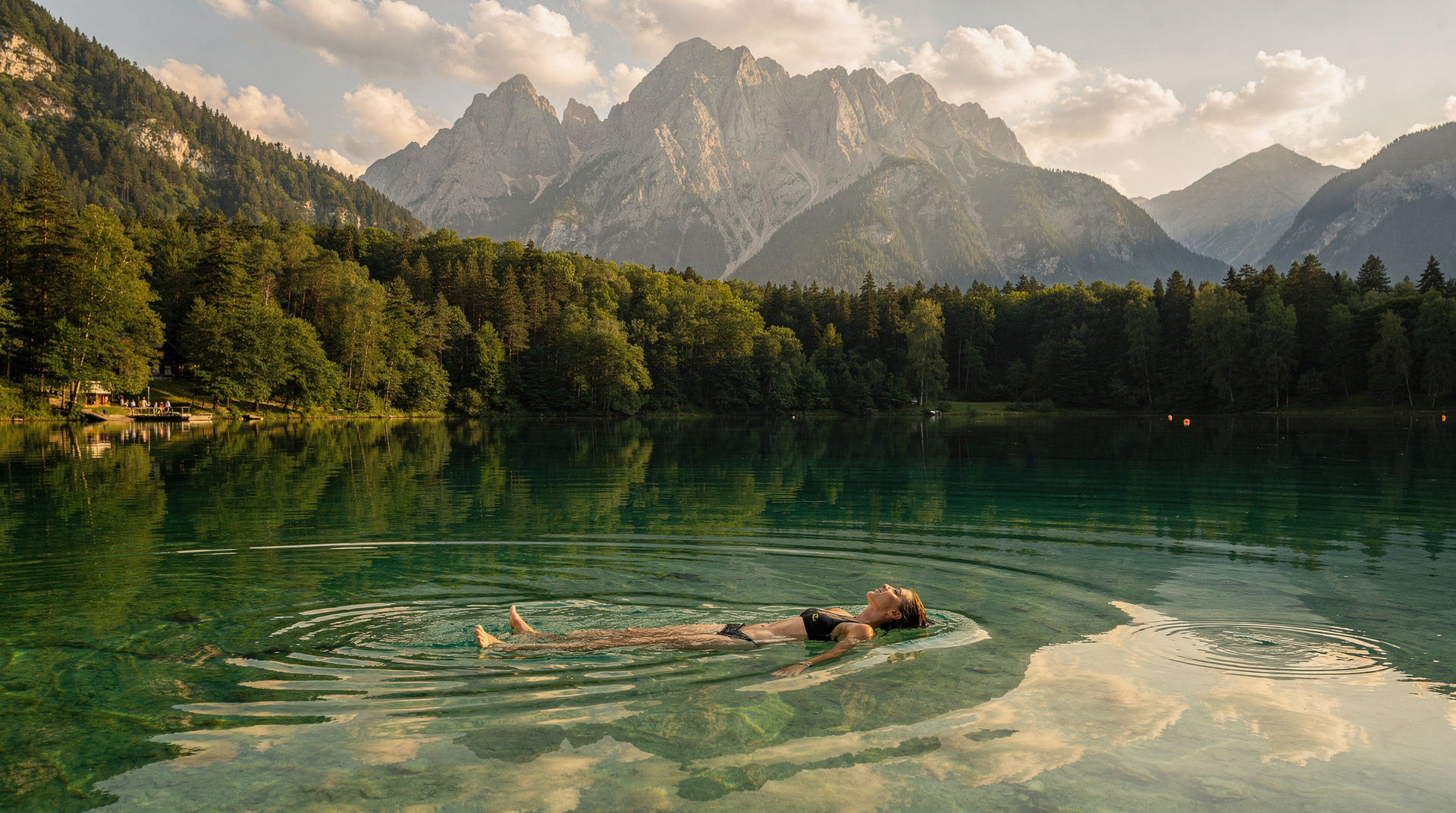
This is the activity that defines a summer Bohinj visit. The lake is clean, the water is cold (typically 18–22°C at peak summer, cooler than Bled which warms up faster), and the swimming is excellent.
The main public beach is at Ribcev Laz on the north shore — a gravel-and-grass area with changing facilities, a café and good access to the deep water. Swimming is free. The water here is deep enough to dive from the small dock.
Other swim spots exist along the north shore as you walk or cycle west from Ribcev Laz — the path is flat and follows the shoreline, with several quieter access points. The south shore is steeper and less accessible.
Water temperature guide: in May the lake is cold (12–15°C) — fine for short swims, cold for lingering. In June it warms to around 16–18°C. July and August see temperatures reach 20–22°C. By September it’s still comfortable, around 18–20°C, while the air is cooler.
For more on swimming across Slovenian lakes, see the swimming in Slovenian lakes guide.
Hiking from Lake Bohinj
Bohinj is one of the best bases for alpine hiking in Slovenia, with options ranging from easy lakeshore walks to serious multi-day Triglav routes.
Lakeshore walk (5 km one way, easy, 1h30): a flat path follows the north shore from Ribcev Laz to Ukanc at the western end. Excellent views across the lake, access to several swimming spots, and ends at the trailhead for the Savica waterfall.
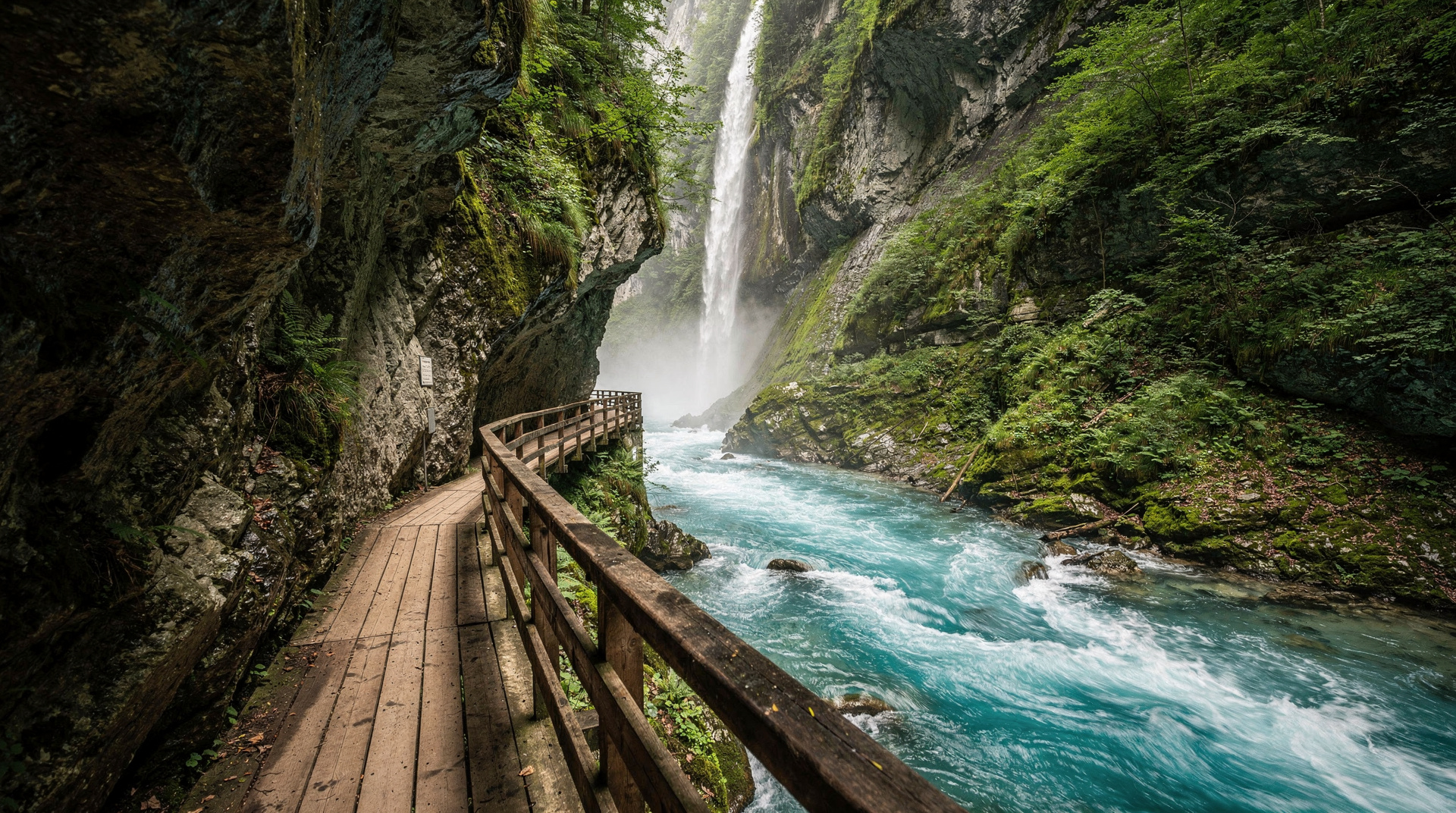
Savica Waterfall (1h return from the Ukanc car park, moderate): the Savica (pronounced roughly “Sav-itza”) is a dramatic two-tier waterfall that drops about 70 metres into a narrow gorge. The path from the car park is well-maintained with steps cut into the rock. Entrance fee approximately EUR 3 per adult. Open year-round, spectacular after rain or snowmelt.
Vogel cable car and alpine meadows (half-day, easy once at the top): the cable car from Ukanc rises to 1540 metres in under five minutes. From the top, easy walking trails cross alpine meadows with views over Bohinj, Bled and the full Triglav massif. Vogel ski resort operates the cable car year-round (except maintenance periods) — check schedules. Return fare around EUR 32–35.
Seven Lakes Valley (Dolina triglavskih jezerih) — full day hike: the classic Bohinj alpine hike. The trail from the lake valley rises steeply to a series of high-altitude glacial lakes at 1675–2000 metres, with Triglav’s north face as the backdrop. This is a serious day hike — 1200 metres of ascent, 5–6 hours up and back — but it’s one of the most spectacular walks in Slovenia. For a guided version, the Bohinj and Triglav Seven Lakes guided hike is excellent for those who want company and navigation support on the high terrain.
Water sports and activities
The lake’s calm water and absence of motor traffic (motors are prohibited on Bohinj) makes it ideal for quiet water sports.
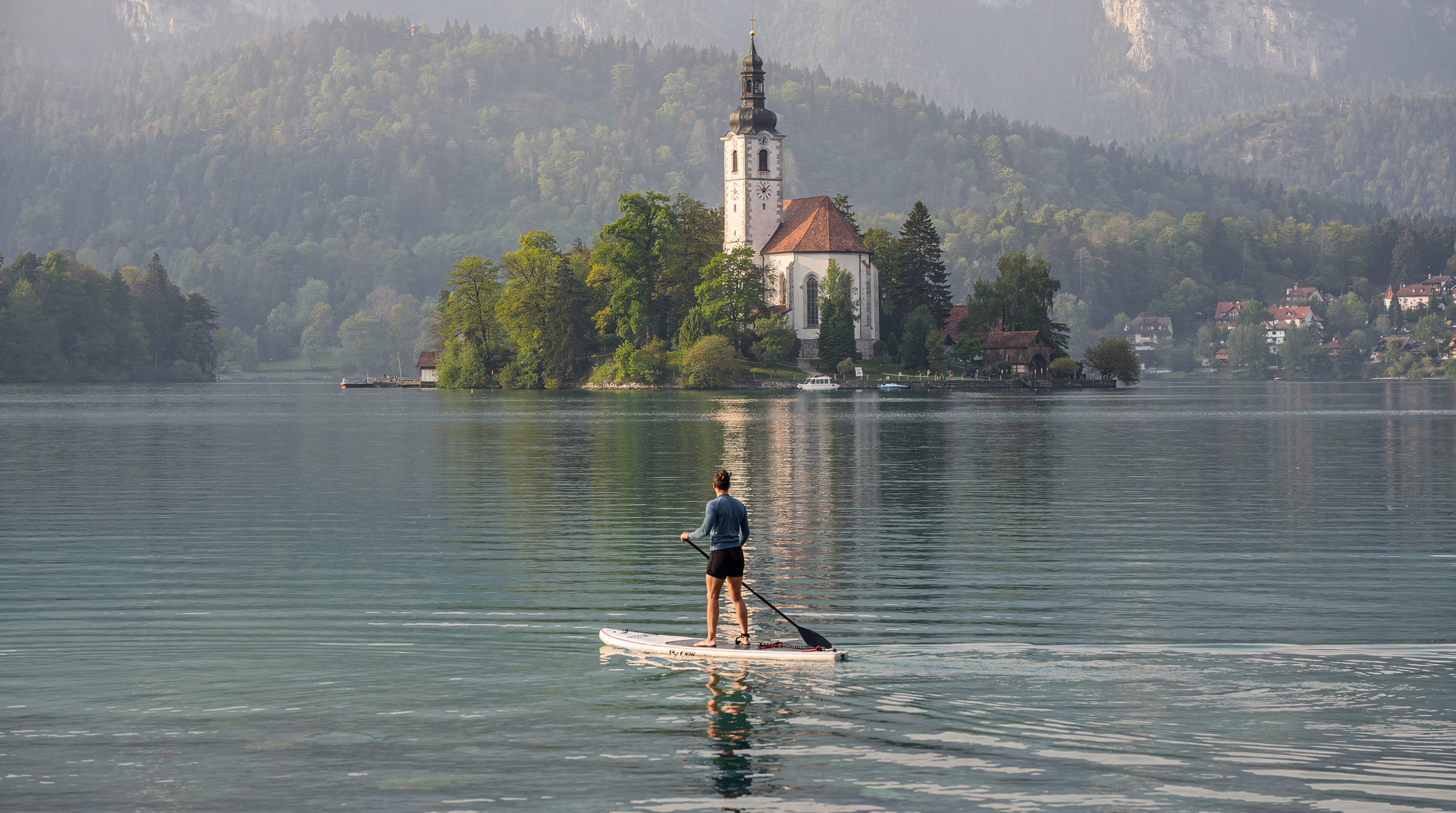
Kayaking and stand-up paddleboarding: rental available from several operators at Ribcev Laz. Rates around EUR 10–15 per hour for kayaks, EUR 12–18 for SUP boards. The lake’s 4 km length makes it ideal for a one-way paddle to the western end and back.
Fishing: Bohinj is a serious fishing lake — brown and rainbow trout, perch. Fishing permits available from the lake management office at Ribcev Laz (EUR 25–40 per day for visitors). The Sava Bohinjka river flowing out of the lake is also excellent.
Rowing: hire rowboats from several operators on the north shore. The entire lake takes about 3 hours to cross at a steady pace.
Cycling: a flat cycle path runs along the north shore and connects to the wider network in the Bohinj valley. Bike hire available at Ribcev Laz for around EUR 10–15 per half day.
Eating at Lake Bohinj
The village of Ribcev Laz has a handful of restaurants and cafés serving local Slovenian food. Prices are noticeably lower than at Lake Bled — a full meal at a local gostilna runs EUR 10–15 per person.
Recommended: the restaurant at Hotel Jezero (directly on the lake shore at Ribcev Laz) has good lake views and a reliable menu of Slovenian classics — trout, žlikrofi (Slovenian dumplings), grilled meats. The terrace is open in summer.
Near Savica: a small café at the Savica waterfall trailhead is seasonal (open May–October) and serves basic hot food and drinks.
Picnic option: Ribcev Laz has a well-stocked shop. A picnic by the lake is a genuinely pleasant option that no one will judge you for.
Local specialities to try: mohant cheese (a pungent, protected-origin sheep’s cheese from the Bohinj valley), Bohinj trout served simply grilled with potatoes, and blueberry štruklji in late summer when local berries are in season. Restaurants in Stara Fužina and the smaller villages tend to lean more heavily on these local products than the more generalist menus at Ribcev Laz.
Where to stay at Lake Bohinj
Accommodation ranges from the campsite at Zlatorog (one of the best-located campsites in Slovenia — right at the lakeside near Ukanc) to small hotels and apartments in Ribcev Laz and the surrounding villages.
Mid-range doubles range from EUR 60–100 per night in shoulder season, EUR 80–130 in July–August. Book in advance for summer visits, though availability is generally better than at Bled.
Glamping: several operators in the Bohinj valley now offer glamping tents and cabins with lake or mountain views — a good option if you want comfort without a full hotel budget.
Choosing where to stay: Ribcev Laz puts you closest to the bus stop, shops and restaurants, while Ukanc (western end) is quieter and closer to the Savica trailhead and the Vogel cable car. Stara Fužina, a small village just north of Ribcev Laz, has a handful of guesthouses at slightly lower prices and a genuine agricultural character worth seeing even if you’re not staying there.
Bohinj versus Bled: the honest comparison
Bled and Bohinj are 30 minutes apart and many visitors see both. The question of which is “better” misses the point — they’re different experiences.
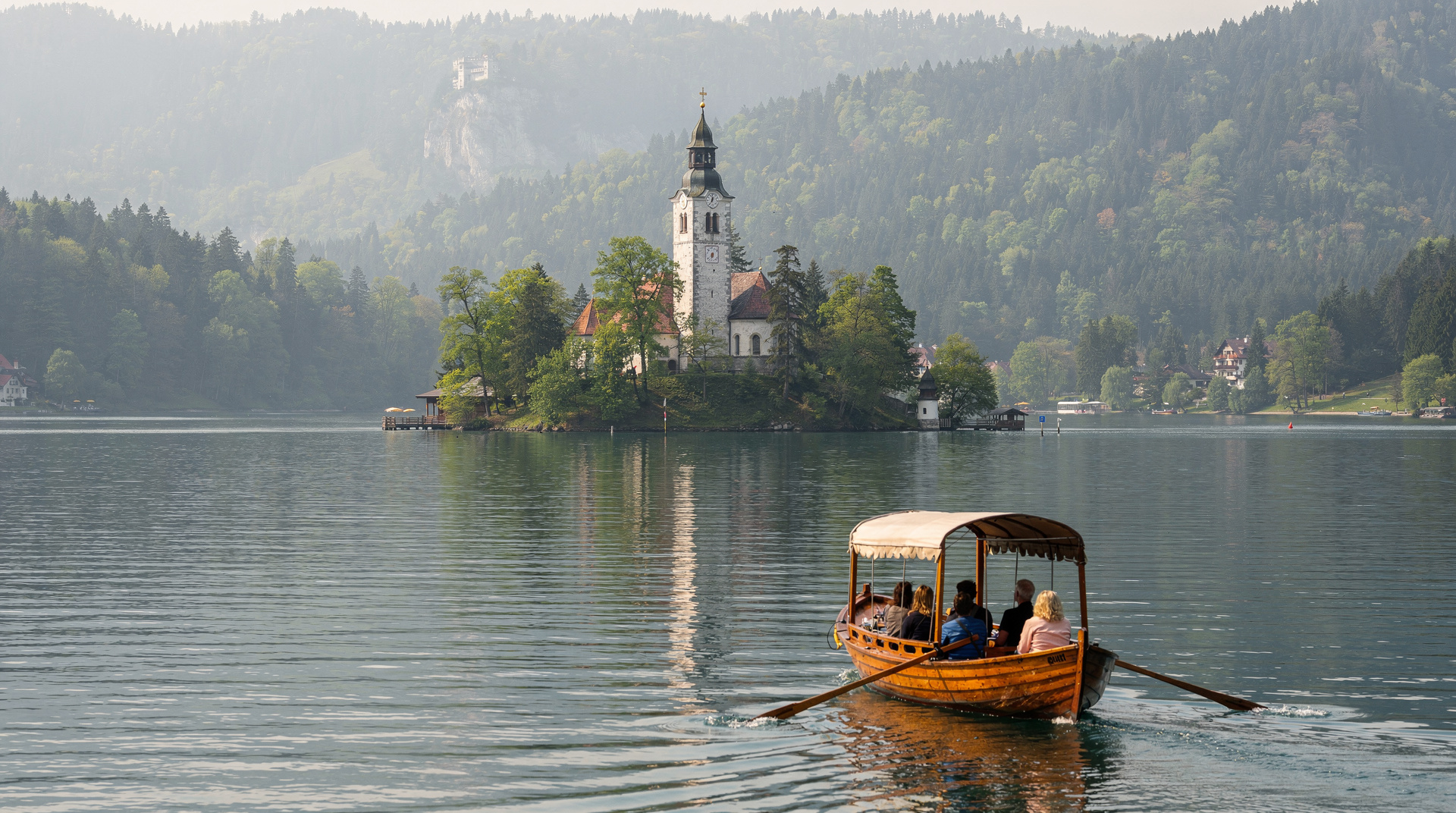
Bled: compact, extremely photogenic, well-served by tourism infrastructure, busy from May to September. The island view is one of the best in Europe. Best for first-time visitors to Slovenia and for day-trippers who want maximum impact in minimum time.
Bohinj: large, wild, less developed, quieter. Better for swimming, kayaking, serious hiking and anyone who finds Bled too touristy. Best for outdoor enthusiasts, repeat visitors and anyone staying several days in the area.
The ideal itinerary combines both: a night at Bled for the postcard views and the island, then a full day at Bohinj for the swimming, the Savica waterfall and the alpine hiking. See the alpine lakes of Slovenia guide for a broader comparison.
| Lake Bled | Lake Bohinj | |
|---|---|---|
| Character | Polished, iconic, photogenic | Wild, natural, quieter |
| Crowds | High, May–September | Moderate at most |
| Swimming | Good, warmer, busier beaches | Excellent, colder, more space |
| Hiking | Short viewpoints (Ojstrica, Mala Osojnica) | Serious options up to Seven Lakes Valley |
| Best for | First-time visitors, photography | Repeat visitors, outdoor enthusiasts |
Renting bikes, boats and equipment at Bohinj
Beyond the kayak, SUP and rowboat operators at Ribcev Laz already mentioned, a few practical notes make planning easier. Bike hire (EUR 10–15 per half day) is worth it for the flat 5 km lakeshore path, cutting a 1h30 walk to about 25 minutes each way and leaving more time for swimming or the Savica waterfall. Fishing permits (EUR 25–40 per day) must be bought in person at the lake management office in Ribcev Laz — bring ID and expect a short queue on peak summer mornings.
For visitors who want the fishing without navigating permits and gear themselves, a guided fly-fishing session on Lake Bohinj handles the permit, tackle and local knowledge of where the trout are running that day.
Practical information
Ribcev Laz: the main village, with bus stop, parking, ATM, shops, restaurants and most accommodation.
Bohinjska Bistrica: the larger town 4 km from the lake, with a train station, more services and less picturesque surroundings. Useful for practical needs.
Park entrance: Bohinj is inside Triglav National Park. Parking fees apply at most car parks. There’s no general entrance fee for the national park itself.
Opening hours: the lake and paths are accessible year-round. The Savica waterfall path is open year-round (the path may be icy in winter — bring appropriate footwear). The Vogel cable car is closed for maintenance until 1 December 2026 (check the Vogel website for the reopening date). The Seven Lakes Valley trail is best from June to October.
For a longer itinerary based around both lakes and the wider Julian Alps, see the Triglav National Park guide and the Vintgar Gorge guide.
The natural history of Lake Bohinj
Bohinj occupies a glacially carved basin — the lake formed when the last ice age glacier that filled the Bohinj valley melted and the bedrock depression it left filled with water. The current lake is about 13,000 years old in its current form, though the valley itself was carved over many ice ages.
The surrounding geology is complex: the Triassic limestone and dolomite of the Julian Alps sits above layers of older Palaeozoic rocks, and the glacial action exposed different rock types at different altitudes. The dramatically steep cliffs on the south side of the lake (below the Vogel ridge) expose the limestone bedrock directly; the gentler north shore is covered in glacial moraine and alluvial material deposited when the glacier retreated.
Flora: the lake shore at Bohinj has one of the richest aquatic plant communities in Slovenia. The shallower eastern sections (near Ribcev Laz) support extensive beds of common water-crowfoot and other aquatic plants, which are visible through the clear water in summer. The lakeside meadows are full of marsh orchids, cuckoo flowers and flag iris in late spring.
Birds: Bohinj is a significant site for waterbirds. The lake hosts breeding pairs of great crested grebe, common pochard and tufted duck. In winter, common goldeneye and occasional diver species use the lake. The Sava Bohinjka river below the lake outlet is one of the best Slovenian rivers for kingfisher sightings.
Fish: the lake is managed as a trout fishery under strict regulations. Brown trout (Salmo trutta fario) is the primary species, with catch-and-release required outside the formal fishing season. The trout population is healthy — a sign of the lake’s excellent water quality. Fly fishing here is considered among the best in Slovenia; see the Triglav National Park guide for context.
Winter at Lake Bohinj
Unlike Bled, which sees steady winter tourism from ski-connected visitors, Bohinj has a distinct winter character that is largely undiscovered by international visitors.
The Vogel ski resort above the lake operates from approximately December to March. It’s a mid-sized resort (24 km of pistes, peak elevation 1800m) with reliable snow cover higher up and excellent panoramas of the Julian Alps. The cable car from Ukanc connects to the resort; day passes cost around EUR 35–40 for adults.
The lake in winter is beautiful in a low-key way: the surrounding peaks carry snow, the lake surface is still and dark, and the few visitors are mostly local Slovenians coming for a weekend walk or ski day. Accommodation prices drop significantly from summer levels.
The Bohinj Christmas train: a seasonal steam train runs from Bohinjska Bistrica to Most na Soči in December and January, running through the dramatic Bohinj tunnel (the longest tunnel on the transalpine railway built in 1906). The train runs as a tourist attraction and fills up quickly — book in advance through the Slovenian Railways tourist service.
Ice on the lake: in cold winters, the lake sometimes partially freezes near the shallower eastern end. Full freezing is rare (the depth prevents it in most years) but partial ice creates extraordinary reflections.
Day trips from a Bohinj base
Using Bohinj as a base for 2–3 nights allows you to reach several worthwhile destinations:
Lake Bled (30 minutes by car, 30 minutes by bus): the obvious day trip. Go for the morning view, the island, the Kremšnita. Return to Bohinj for dinner — the gostilne in Ribcev Laz are better value than Bled’s tourist restaurants.
Vintgar Gorge (35 minutes by car): the scenic gorge walk near Bled, open April–October. Combine with the Bled visit or do it as a standalone half-day.
Kranjska Gora (45 minutes by car): the ski town at the head of the Sava valley. In summer, the base for Vršič Pass drives and Triglav approaches. In winter, a major ski resort.
Bovec and the Soča Valley (55 minutes by car via the Vršič Pass, May–October only): the pass opens in May and closes in November. The drive from Bohinj over the Vršič is one of the most scenic road journeys in the Alps.
Photography at Lake Bohinj
The lake has fewer iconic compositions than Bled (no island church, no cliff castle) which paradoxically makes it more rewarding for original photography. Some suggestions:
Reflections from the north shore path: in calm morning conditions, the southern mountain wall reflects in the lake with a clarity that rivals any mirror. The best reflection shots are from the path that runs west from Ribcev Laz toward Stara Fužina — walk about 1 km from the village bridge and look south across the lake.
Savica waterfall: the double waterfall photographs well in any light, but the gorge entrance (looking up from below the falls) is particularly dramatic in bright conditions after heavy water.
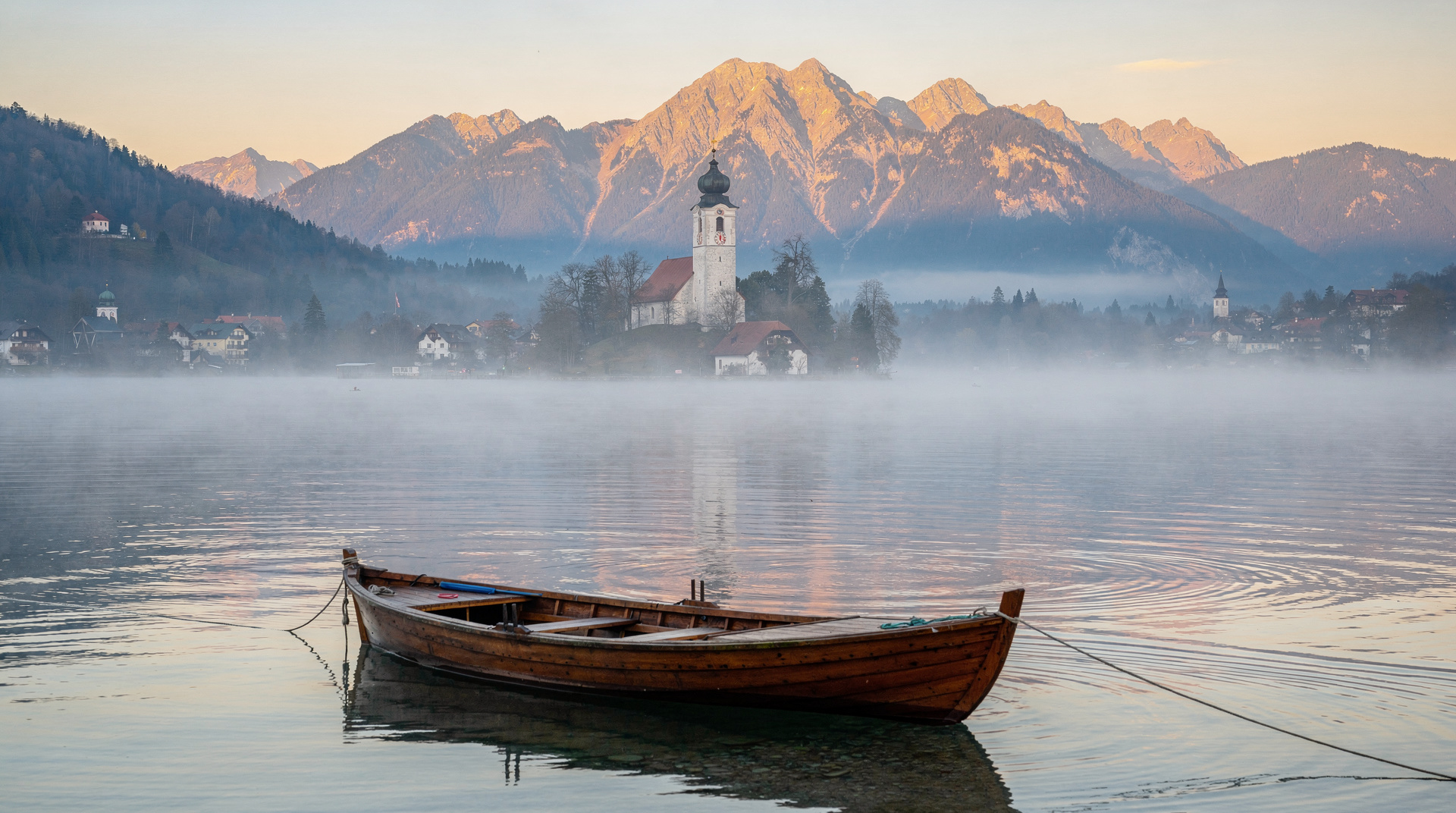
Vogel above the cloud inversion: when a temperature inversion creates a cloud layer at lake level (common in autumn mornings), the Vogel cable car lifts you above the clouds into clear sunshine, with the lake visible as a dark mirror below the fog. One of the most extraordinary visual experiences in Slovenia — completely weather-dependent and not schedulable, but worth riding the cable car early on foggy autumn mornings.
Frequently asked questions about Lake Bohinj guide
Is Lake Bohinj worth visiting if I've already seen Lake Bled?
Yes — the two lakes are different enough in character that seeing only one gives an incomplete picture of Slovenia's Julian Alps lakes. Bohinj offers better swimming, quieter hiking, and the Seven Lakes Valley trailhead, none of which Bled can match. Most visitors who add Bohinj to a Bled-based trip rate it as highly, if not more highly, than Bled itself.Can I visit Lake Bohinj without a car?
Yes. The Arriva bus runs from Bled to Bohinj roughly every 1–2 hours (30 minutes, around EUR 3), and a direct bus or train-plus-connecting-bus also runs from Ljubljana (around 1h50–2h). Once at Ribcev Laz, the lakeshore, Savica waterfall trailhead and Vogel cable car base are all reachable on foot, by local bus or by hired bike, so a car is not essential.
Top experiences
Bookable activities with verified prices and instant confirmation on GetYourGuide.