Swimming in Slovenian lakes: the best spots and when the water is warm enough
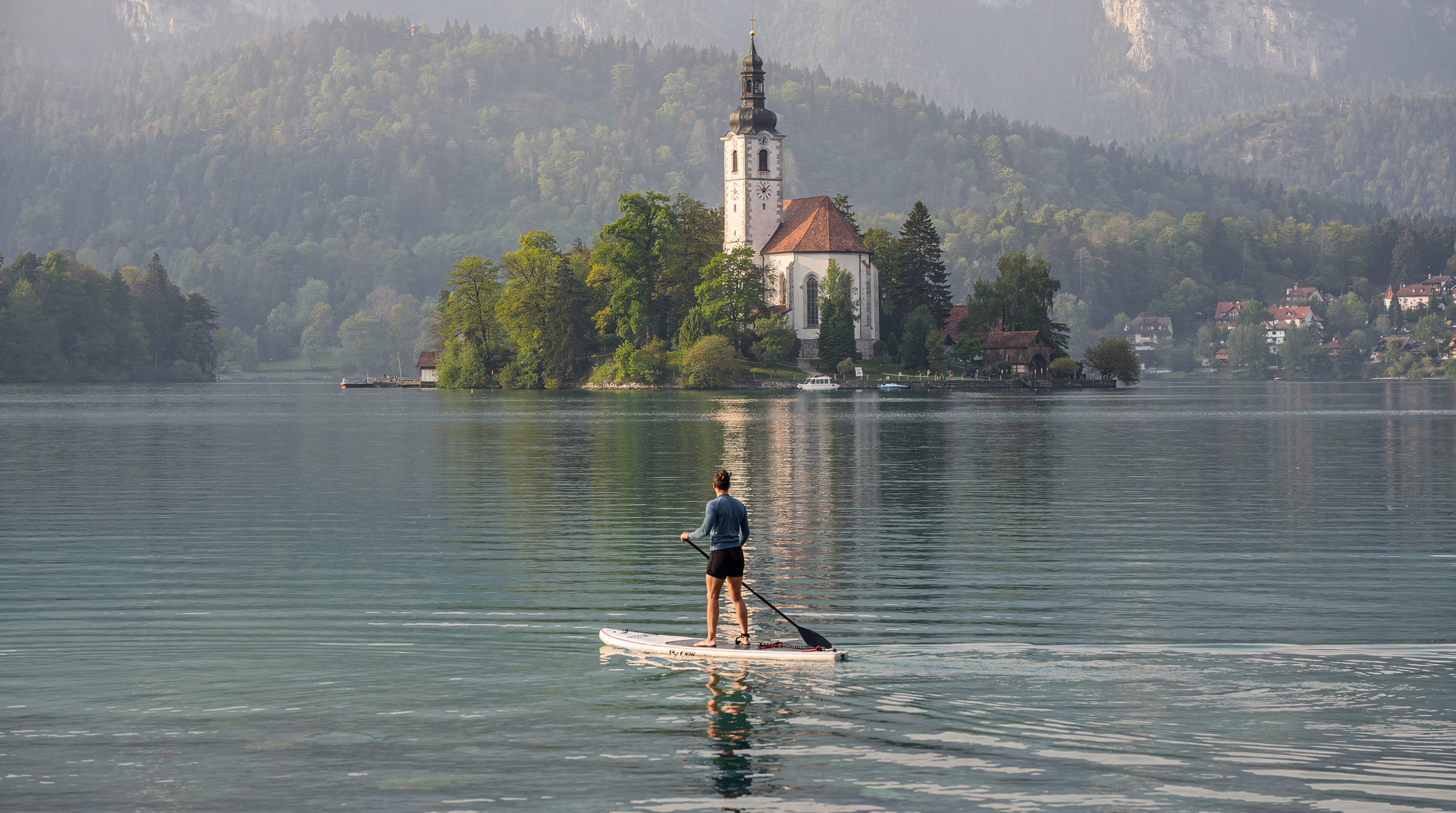
Lake Bled: stand-up paddleboarding tour
When is the water warm enough for swimming in Slovenian lakes?
Most Slovenian alpine lakes reach comfortable swimming temperatures in late June (around 18°C) and peak at 20–24°C in July and August. Lake Bled warms faster than Bohinj because it's shallower. By September the water is still pleasant (17–20°C) while the air is cooler. May is possible for cold-water swimming but most people wait until at least mid-June.
Swimming in Slovenia: lakes, rivers and the best places to get in the water
Slovenia has an embarrassment of riches for outdoor swimmers. The country has two significant alpine lakes that are among the clearest in Central Europe, numerous smaller lakes and reservoirs, and a network of rivers — the Soča, the Sava, the Krka — that offer some of the best river swimming on the continent. This guide focuses on the lakes.
| Best overall | Lake Bohinj (clearer, quieter, colder) |
| Warmest / earliest season | Lake Bled (20–24°C in July–August) |
| Water quality | ”Excellent” EU rating at both lakes |
| Facilities | Changing rooms and toilets at both main beaches; no lifeguards |
| Best months | June and September for fewer crowds |
| Cost | Free at public beaches; parking EUR 1.50–2/hr |
The alpine environment means water temperatures follow a predictable pattern: cold and brisk in May, warming steadily through June, reaching peak temperatures in July and August, and remaining comfortable into September. The water quality is exceptional across all the major sites — Slovenia has strict protections for its water bodies, and monitoring is transparent.
Lake Bohinj: the best swimming lake in Slovenia
Lake Bohinj is the best lake in Slovenia for swimming, and it’s not particularly close. It’s larger, deeper and less crowded than Lake Bled, the water is deeper and clearer, and the surrounding mountains give the whole experience a properly alpine character.
The main beach at Ribcev Laz: the public beach on the north shore at the eastern end of the lake. Gravel and grass, free to use, with changing facilities, a café and a small dock suitable for jumping in. The water is deep enough to dive from the dock — up to 5 metres within a short swim of shore.
Quieter spots along the north shore: a flat path follows the north shore west from Ribcev Laz for the entire 4 km length of the lake. Several unmarked access points allow you to get in the water away from the main beach. In peak season these spots are busy but not unpleasantly so.
Western shore near Ukanc: at the western end of the lake, near the Vogel cable car and the Savica waterfall trailhead, the shore is slightly less accessible but rewards those who walk or cycle there with more space and better mountain views looking back east.
Water temperature at Bohinj: May: 12–15°C (cold but possible). June: 16–18°C (comfortable for active swimmers). July–August: 20–22°C (excellent). September: 17–20°C (still very pleasant). October: 14–16°C (cold water enthusiasts only).
Motorboats banned: the entire lake is motor-free, which means the water surface is calm and clean. Kayaks, rowboats and SUP boards share the lake with swimmers in a peaceful coexistence.
For paddleboarding and kayaking on the lake rather than just swimming, rental is available at Ribcev Laz — see the Lake Bohinj guide for details.
Lake Bled: convenient swimming with a view
Lake Bled is shallower than Bohinj (maximum depth around 30 metres versus 45 metres at Bohinj) and warms up faster. The swimming season at Bled starts a week or two earlier than Bohinj in any given year.
The main beach (south shore, near the campsite): a gravel beach with a lawn area, basic changing facilities and a café. Free to use. Popular with campers and day visitors. The water is clear and the view from the water — looking up at the castle cliff — is one of the best perspectives on the lake.
The Grand Hotel Toplice lido (north shore): a lido complex with a heated outdoor pool fed by lake water, sundeck and towel hire. Small entrance fee for non-guests; sometimes restricted to hotel guests in peak season. Check current policy before making the trip.
Swimming from the path: the 6 km lakeside path passes several informal swim spots on the quieter sections of the south shore. The best are between the beach area and the rowing club — look for narrow paths down to the water.
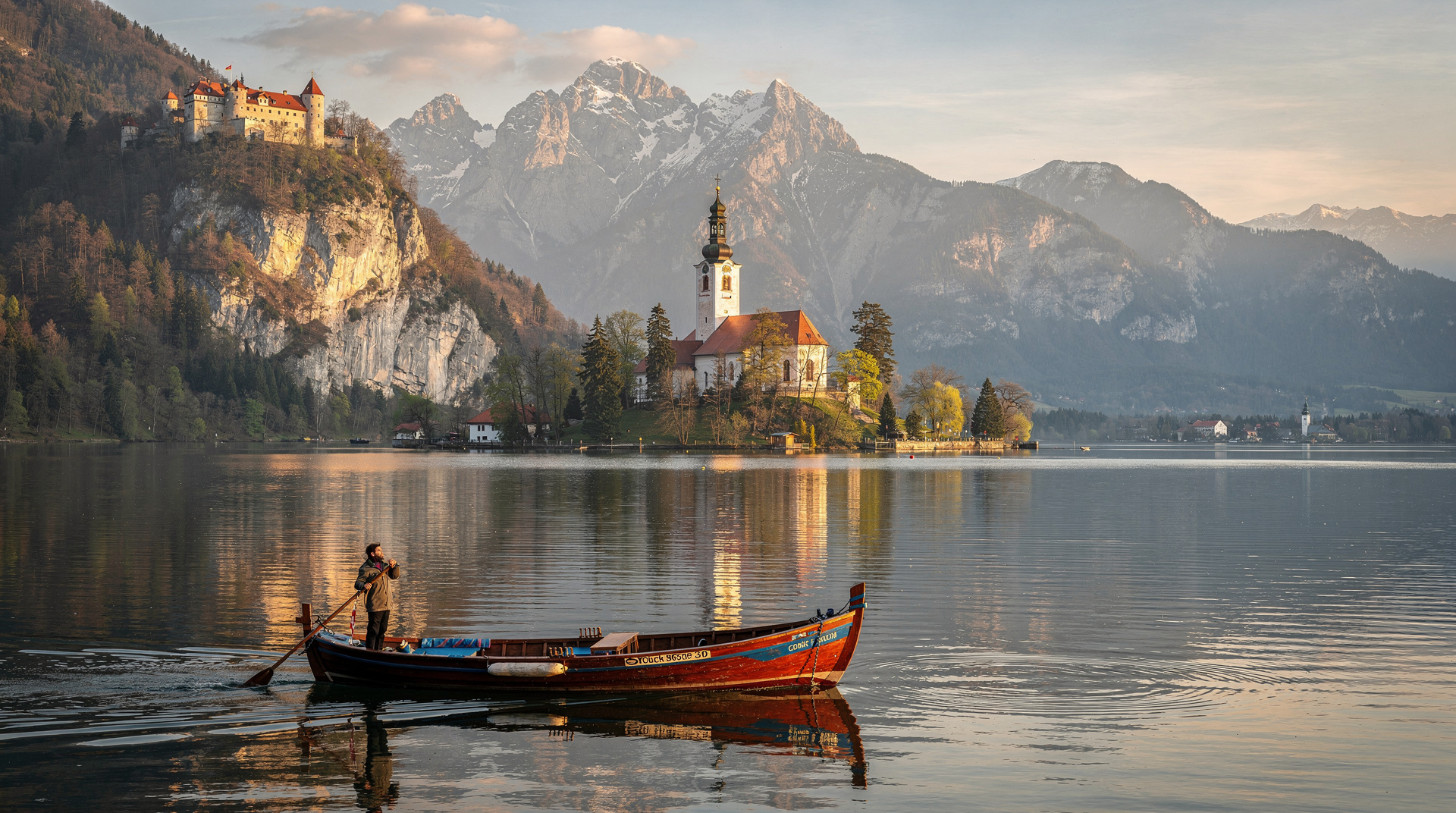
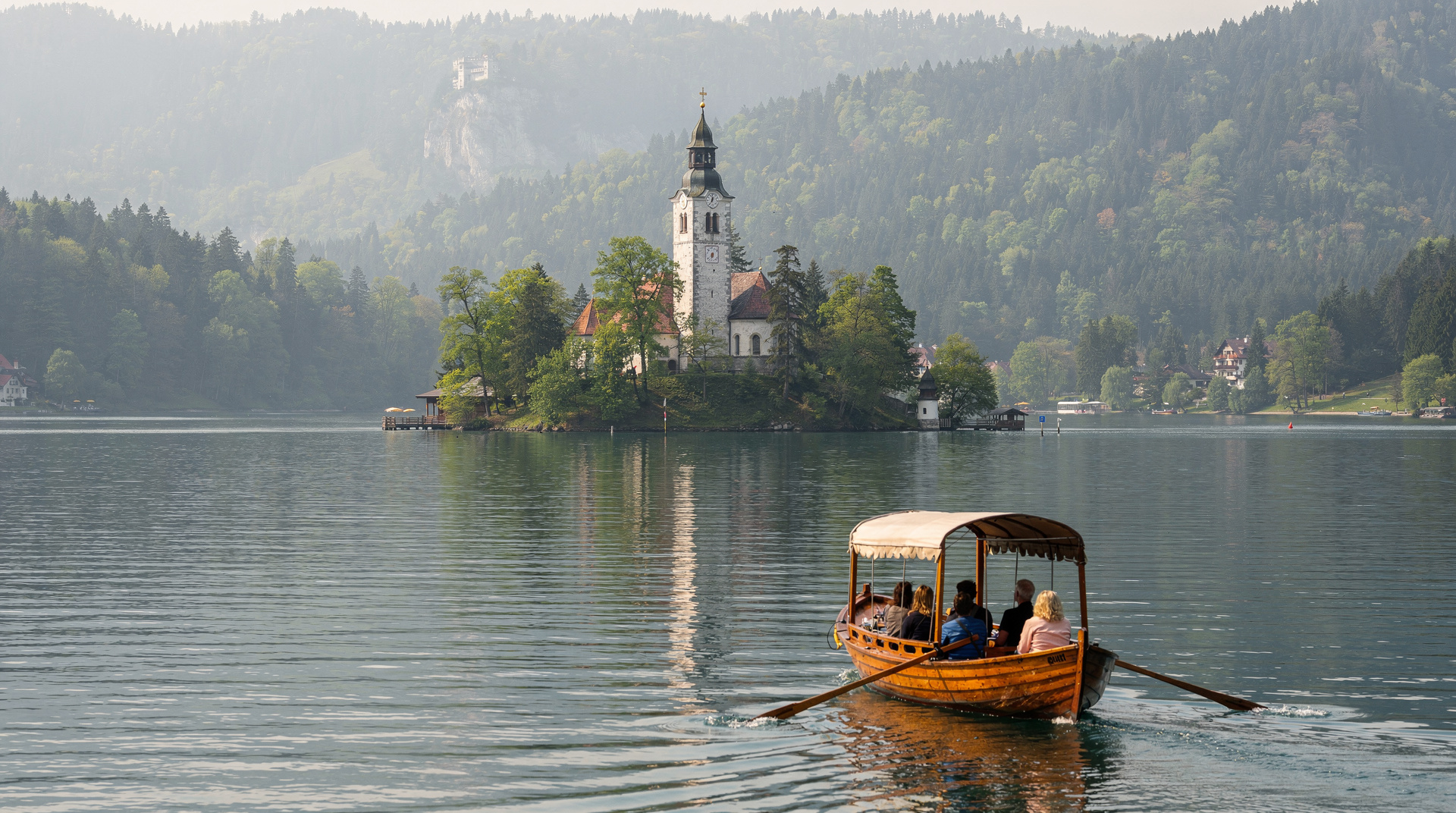
The island: you can swim to the island from the south shore — it’s about 600 metres and requires confidence in open water. This is not an official activity and you’ll need to be careful of pletna boat traffic. A rowboat is a more practical way to reach the island.
Water temperature at Bled: May: 14–16°C. June: 17–20°C. July–August: 20–24°C (can exceed 24°C in hot summers). September: 18–21°C.
For swimming while on the water rather than from shore, stand-up paddleboarding on Lake Bled allows you to explore the lake by board and stop to swim in spots away from the main beach crowds.
Transparent kayak experience on Lake Bled
For those who want to see the lake floor as well as swim in it, the transparent kayak tour on Lake Bled uses clear-hulled kayaks that let you see the underwater landscape as you paddle. Particularly good in the clear conditions of early morning, when the water is at its calmest.
Other lakes worth swimming in Slovenia
Lake Cerknica (Cerknišk jezero): an unusual seasonal lake in the Karst region that fills with water in spring and autumn and partially drains in summer. When full it’s one of the largest lakes in Slovenia and a remarkable wildlife habitat (migratory birds in particular). Swimming is possible when the water level is right. Not a classic swimming destination but extraordinary for nature.
Lake Šmartinsko: a reservoir near Celje in eastern Slovenia. Less dramatic scenery than the alpine lakes but warmer water (reaches 24–26°C in summer) and a good beach. Popular with locals from Celje and the surrounding area.
Lake Bloke: a high-altitude plateau lake (700m elevation) near Nova Loka in central Slovenia. Small, clear and very cold — a local swimming spot in warm summers. Not well-known to international visitors.
Velenjsko jezero: a lake near the town of Velenje in eastern Slovenia, formed by subsidence from coal mining and now a popular local recreation spot. Warm and sandy — a very different experience from the alpine lakes.
River swimming — the Soča and Krka: while this guide focuses on lakes, it would be incomplete without noting that river swimming in Slovenia is outstanding. The Soča Valley has emerald-green pools ideal for wild swimming. The Krka river (east Slovenia, near Novo Mesto) has warm, clear water and organized swim spots.
Water quality and safety
All major Slovenian lakes are monitored regularly for bathing water quality under EU directives. Both Lake Bled and Lake Bohinj consistently receive “excellent” ratings — the highest category. Results are publicly available through the EU bathing water portal.
Practical safety notes:
- Water depth drops off quickly from shore at Bohinj — don’t overestimate swimming ability, especially for children.
- Motor traffic is absent on Bohinj but pletna boats operate on Bled — swimmers should give them clear space.
- Thunderstorms build quickly in the Julian Alps, especially in afternoon in summer. Get out of the water immediately at the first sign of thunder.
- The water can be very cold in the deeper sections of both lakes even in summer — hypothermia is a real risk for long open-water swims.
Best months for lake swimming in Slovenia
June: uncrowded, water warming, good value accommodation. The best month for those who want swimming but not peak crowds.
July: warmest water, most facilities open. Busiest month — arrive early at beaches.
August: same conditions as July. Strong thunderstorm risk in afternoons.
September: still warm water, dramatic autumn light, very few tourists at Bohinj. One of the best months overall.
Gear and facilities
Both Lake Bled and Lake Bohinj have changing facilities at their main beaches. Towel hire is available at the Bled lido. There are no lifeguards at the main public beaches — swimming is at your own risk.
Wetsuits are not needed in summer (July–August) but are useful for May and June swimming. Cold-water swimmers who are comfortable with temperatures below 18°C will enjoy May, June and October at both lakes.
For broader activity planning across both lakes, the alpine lakes of Slovenia guide covers the full comparison. And for the complete Bohinj experience — hiking, Savica waterfall and the cable car as well as swimming — see the Lake Bohinj guide.
If you’re planning water activities alongside swimming — whitewater rafting, canyoning — the Bovec area on the Soča Valley is the best base in Slovenia for adrenaline water sports. The Bled area also offers options: rafting and canyoning near Lake Bled is a good introduction to white water for visitors who want to combine alpine scenery with active water activities.
Tips for early-morning lake swimming
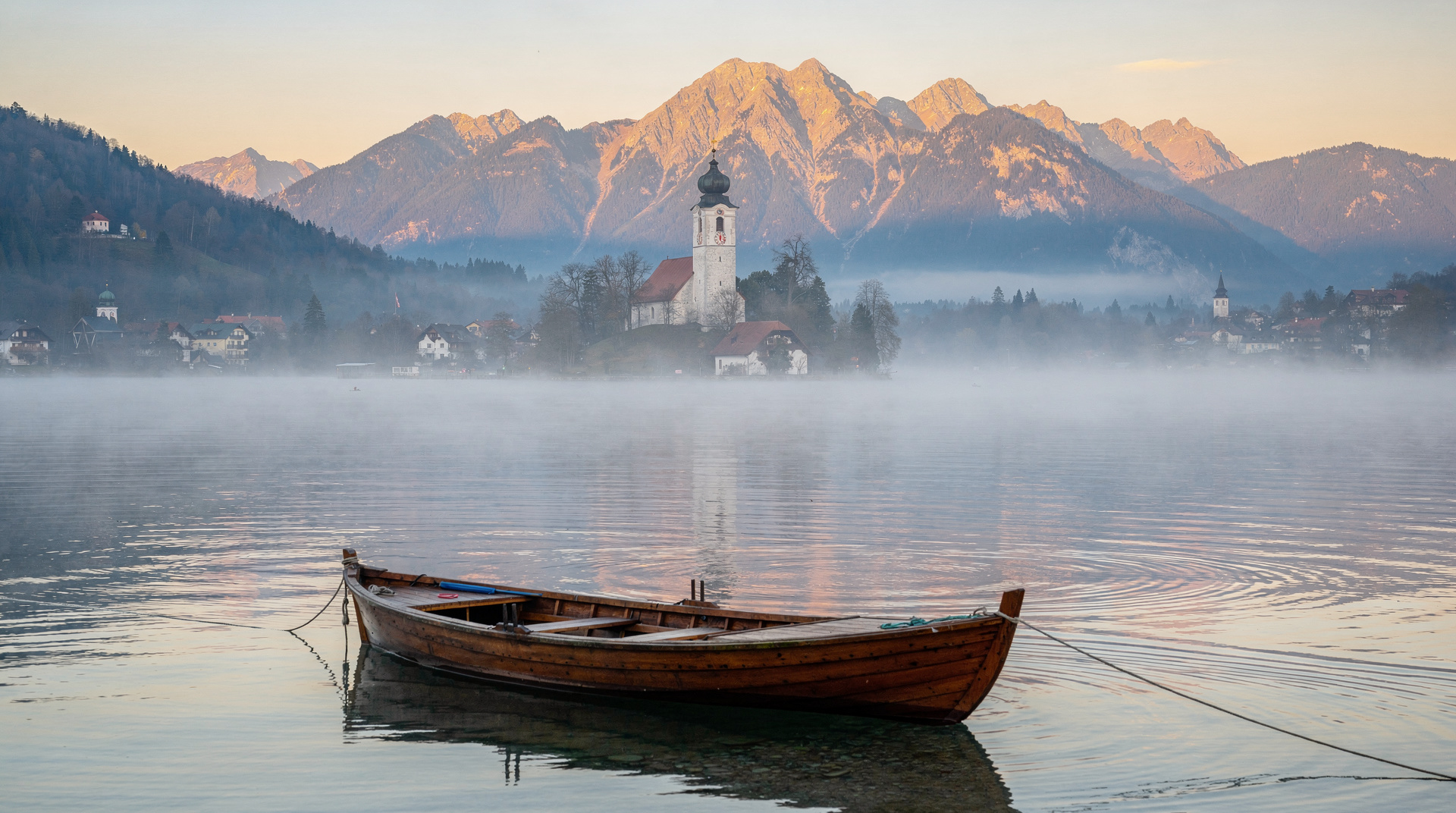
Both Bohinj and Bled are at their most magical very early in the morning, and this goes double for swimmers. Before 07:30 at Bled, the lake surface is often completely still — a mirror reflecting the island church and the castle cliff. The absence of boats creates a genuine silence. Swimming in this early light, with the fog sometimes lying low over the surface, is the kind of experience you’ll describe for years.
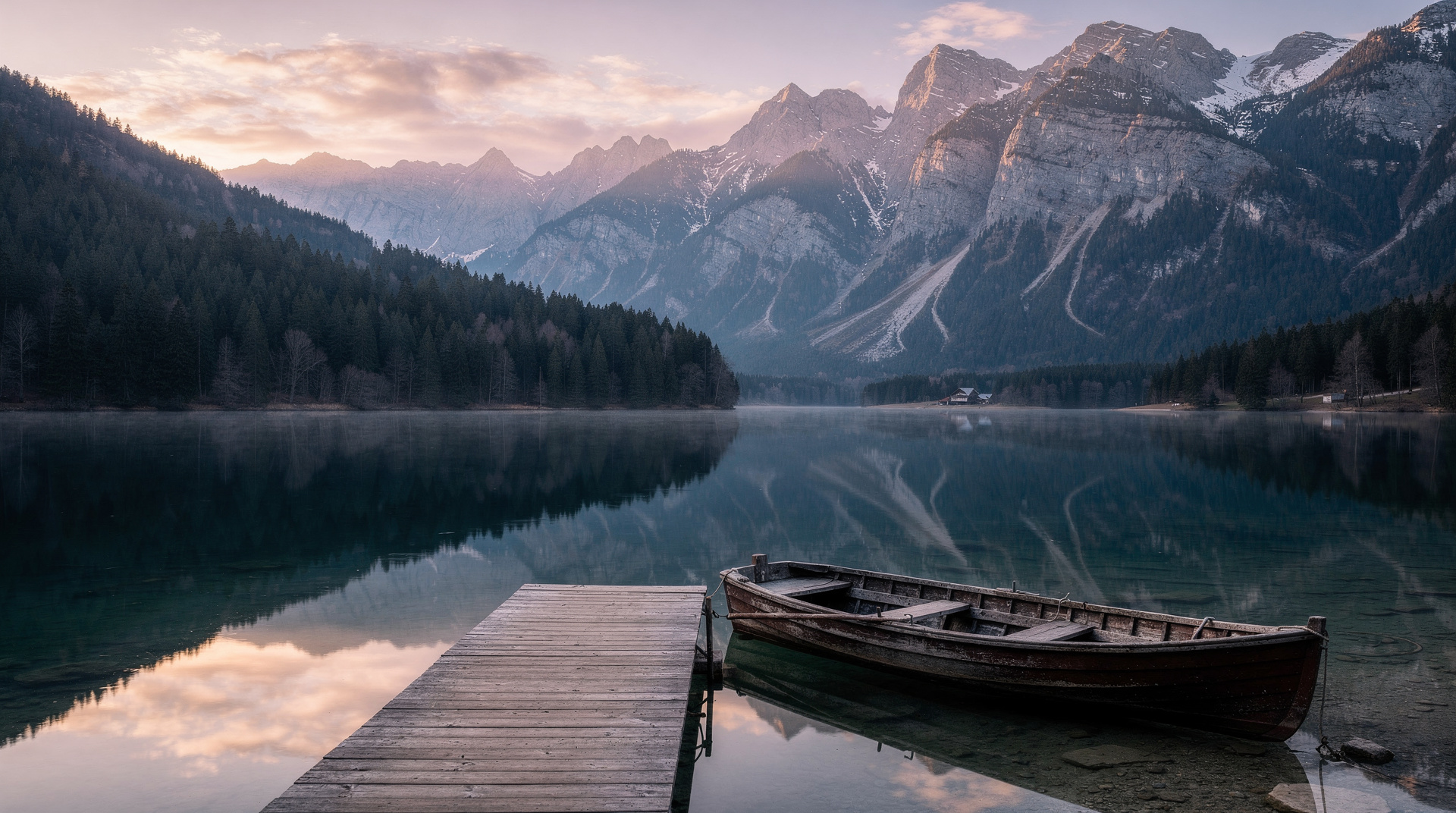
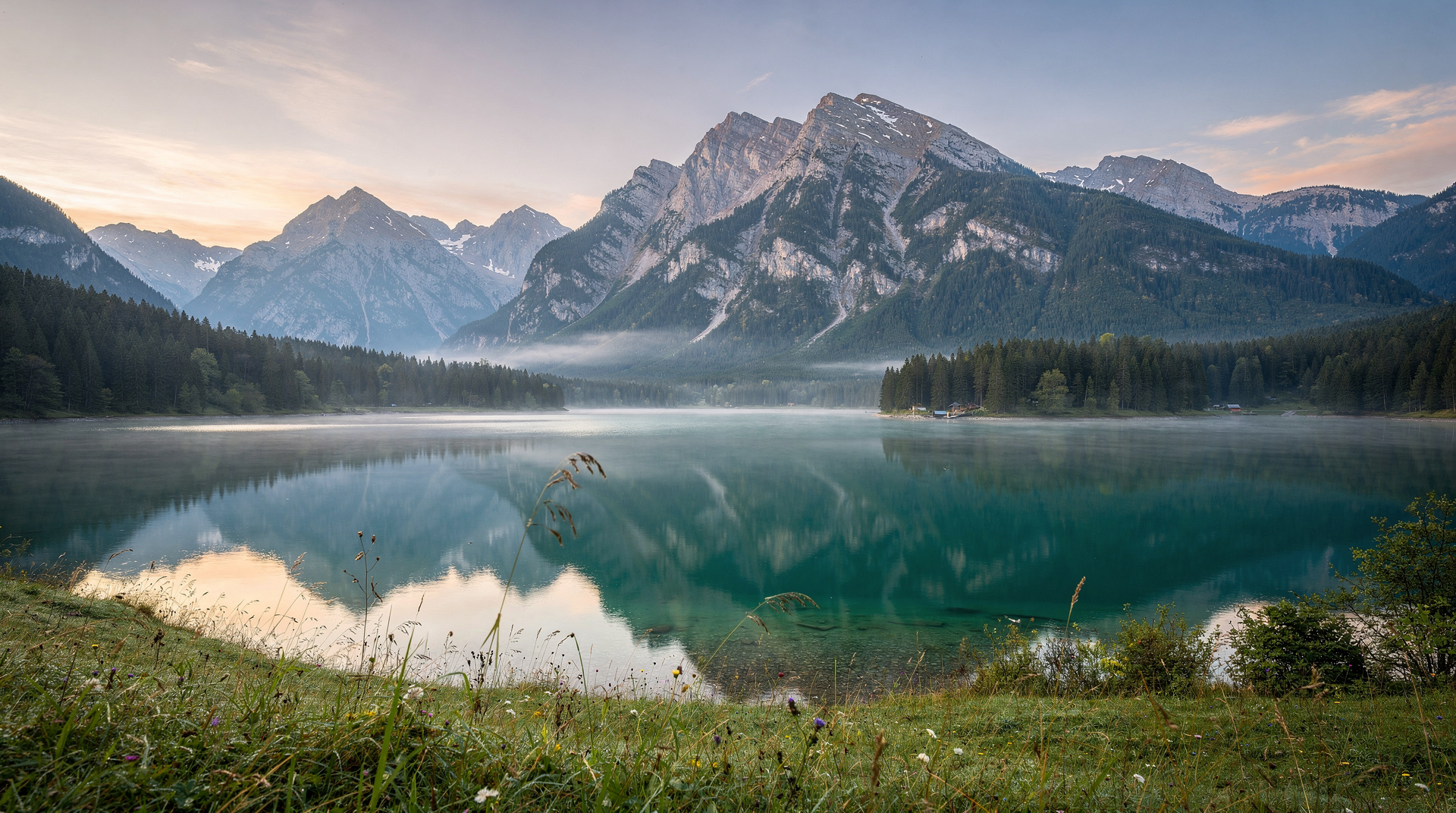
At Bohinj, the early morning is even more dramatic because the lake is longer and the mountains more immediately present. By 07:00, the alpenglow hits the peaks above the southern shore (the Vogel massif and the ridgeline toward Triglav) while the lake is still in shade. The water temperature is unchanged from the night, but the atmosphere is completely different from midday.
Practical early morning swimming logistics:
Bohinj: the Ribcev Laz beach is accessible 24/7. Park near the bridge over the Sava Bohinjka at the lake outlet — it’s free before the parking attendant arrives (typically after 08:00 in summer). Walk the 100 metres to the lake and swim before the first walkers arrive.
Bled: the south shore beach is also accessible early. The campsite car park opens at 07:00 (fee applies). The small track that runs between the lakeside road and the beach is passable from before dawn. Get there before the tour buses arrive at the bus station at 08:30–09:00.
Swimming etiquette and rules
Both lakes have implicit codes that are worth being aware of:
At Bled: pletna boats have right of way — give them a wide berth. Rowboats (hire boats) have right of way over swimmers. Swimming directly across to the island (about 600m) is possible but you should stay well clear of the main boat lane and inform someone of your plan before attempting it.
At Bohinj: no motor boats on the lake (this is enforced). Kayaks and SUP boards share the water with swimmers — mutual awareness is expected. The main beach can get genuinely crowded in August; quieter spots on the north shore path are recommended if you find the beach busy.
At both lakes: the water quality monitoring programmes measure coliform bacteria, blue-green algae and other indicators weekly during the bathing season. Results are posted at the beach entrances and online (European Environment Agency bathing water portal). Both lakes consistently return “excellent” readings, but it’s worth checking the current bulletin after heavy rain (when surface runoff can temporarily affect water quality near the inlet streams).
Cold-water swimming and year-round access
Both lakes are accessible for swimming year-round, though the experience changes dramatically in winter.
Bled in winter, when the water temperature drops to 4–6°C, has a small but active community of cold-water swimmers who meet at the south shore beach most weekend mornings. In the rare years when the lake partially freezes, wild swimming continues at the edges of the ice — a deeply unusual and atmospheric experience.
Bohinj similarly has winter swimmers, concentrated around the Ribcev Laz beach. The water is typically colder than Bled in winter (the deeper lake retains cold better) and the surrounding mountains mean the access points can be icy — sturdy footwear is essential for winter lake access.
For organised outdoor swimming in colder water, the Soča Valley offers river swimming in some of the clearest (and coldest) water in Europe — the Soča emerges from glacial meltwater sources and is around 8–12°C even in summer. Bovec is the natural base.
Facilities comparison
| Lake Bled (south beach) | Lake Bohinj (Ribcev Laz) | |
|---|---|---|
| Changing rooms | Yes | Yes |
| Toilets | Yes | Yes |
| Café/food | Yes (seasonal) | Yes (seasonal) |
| Towel hire | At Toplice lido | No |
| Parking | Paid (EUR 1.50–2/hr) | Paid (EUR 2/hr peak) |
| Access hours | 24/7 | 24/7 |
| Lifeguard | No | No |
| Water quality rating | Excellent (EU) | Excellent (EU) |
| Swim to island possible | Yes (600m) | N/A |
Both beaches operate on a self-service basis. The Bled Toplice lido (heated outdoor pool fed by lake water) is the only facility in the area with a lifeguard and supervised access.
For the stand-up paddleboarding option on Lake Bled that combines movement with the possibility of stopping to swim anywhere on the lake, SUP paddleboarding on Lake Bled is one of the best ways to experience the water actively. And for the ultimate perspective — underwater, through a transparent hull — the transparent kayak on Lake Bled gives views of the lake floor that no swimmer can match.
Planning a swimming-focused Slovenia trip
If lake swimming is your primary reason for visiting Slovenia, a focused itinerary maximises water time:
Best 5-day swimming trip:
- Day 1: Arrive Ljubljana, take the afternoon bus to Bled (arrive 17:00). Evening swim from the south shore.
- Day 2: Bled morning (early swim, pletna to island, Kremšnita). Afternoon: Vintgar Gorge (if April–October). Evening swim.
- Day 3: Morning drive/bus to Bohinj. Full day swimming, cycling the north shore, picnic. Savica waterfall afternoon.
- Day 4: Bohinj morning swim, afternoon Vogel cable car for alpine views. Evening return to Ljubljana.
- Day 5: Optional Soča Valley visit for river swimming (Bovec, 2 hours from Bled via Vršič Pass, seasonal).
Best single lake day: if you only have one day for lake swimming, go to Lake Bohinj. The water is colder than Bled (by 2–3°C in summer) but clearer and less crowded, the swimming environment is more natural, and the mountains are more immediately present. Take the bus from Bled (30 minutes) or hire a bike.
For confident open-water swimmers: the 4 km length of Bohinj and the 2 km circuit of Bled’s island offer genuine open-water swimming routes. Both lakes have organised open-water swimming events in summer — check the Slovenian open-water swimming association for the current calendar.
Children and lake swimming in Slovenia
Both lakes are good for children, with different characteristics:
Lake Bled with children: the south shore beach has a gentle slope into the water, suitable for children who are learning to swim. The clear water is shallow enough for children to stand comfortably within 10 metres of shore. The view from the water — island church, castle cliff — is exciting for children who have been told the stories.
Lake Bohinj with children: the Ribcev Laz beach also has a manageable entry. The water is deeper more quickly than at Bled, so children who can’t swim need closer supervision near the dock area. The campsite at Zlatorog has direct lake access and is a good option for families who want to base themselves at the water.
Water safety: there are no lifeguards at either public beach. Children should wear flotation aids if they can’t swim, and parents should maintain direct supervision. The lakes are generally calm, but the Bohinj south shore (accessible by kayak rather than on foot) has exposed, deep water unsuitable for non-swimmers.
Combining lake swimming with other water activities
Swimming rarely stands alone on a Lake Bled or Bohinj visit — most travellers combine it with a wider water experience. On Bled, stand-up paddleboarding lets you paddle out and swim from the board wherever you like, away from the crowded shoreline, and the transparent kayak tour gives underwater views of the lake floor for those who want to see rather than just swim. For a gentler introduction to moving water, rafting and canyoning near Bled pairs well with a lake swim earlier or later in the same day.
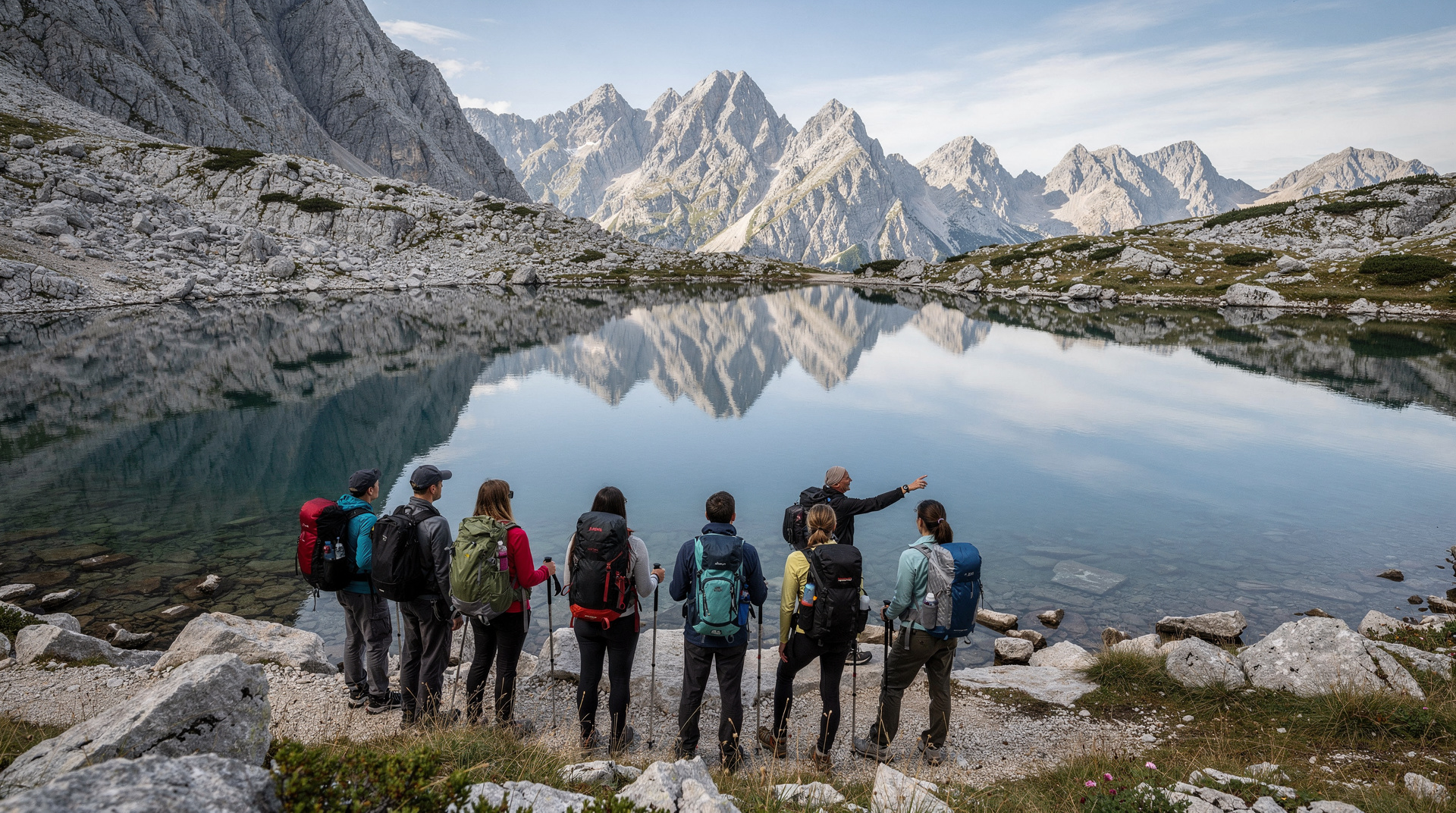
At Bohinj, the Seven Lakes Valley hike combines a swim at the main lake with a hike above it into the high alpine lake basin — a full day that goes well beyond the shoreline. See the guided Triglav and Seven Lakes hike for the structured version of that route.
Responsible lake swimming
Slovenia’s lakes are a shared resource between residents, visitors and the natural environment. A few principles for responsible swimming:
Leave no litter: pack everything out, including food packaging. The Bohinj national park relies on visitors respecting no-litter rules.
No soap or sunscreen in the water: standard sunscreen is persistent in water and affects the lake chemistry. If you must use sunscreen, apply it at least 30 minutes before swimming and rinse off as much as possible before entering. Mineral-based “reef safe” sunscreens have less impact. No soap or shampoo use in the lake — use the shower facilities at the campsite or accommodation.
Don’t disturb wildlife: the reed beds along the lake shores are nesting habitat for waterfowl. Give the reeds a 5-metre clearance when swimming.
Don’t swim near the Bohinj lake outlet: the Sava Bohinjka exits the lake at the eastern end near Ribcev Laz. The current near the outlet is stronger than it appears and is not suitable for swimming.
Frequently asked questions about Swimming in Slovenian lakes
Is it safe to swim in Slovenian lakes?
Yes — Lake Bled and Lake Bohinj both consistently receive 'excellent' EU bathing water quality ratings, the highest category. There are no lifeguards at the main public beaches, so swimmers are responsible for their own safety. The main real risks are cold water at depth, sudden summer thunderstorms in the Julian Alps, and underestimating the current near river outlets.Which is better for swimming, Lake Bled or Lake Bohinj?
Lake Bohinj is the better swimming lake — clearer, less crowded and with a more properly alpine setting, though the water runs 2–3°C colder than Bled in summer. Lake Bled is more convenient and warms up earlier in the season, with the added novelty of swimming toward the island. Many visitors do both: an early swim at Bled, a longer swim at Bohinj.
Top experiences
Bookable activities with verified prices and instant confirmation on GetYourGuide.