Postojna Cave: what no one tells you before you go
Postojna Cave is spectacular but crowded. Our honest guide covers what to expect, the EUR 34.90 entry fee, and when Škocjan or Križna Jama are better choices.
From Ljubljana: Postojna Cave and Predjama half-day tour
Quick facts
- Best time to visit
- Weekday mornings, April–June or September–October
- Days needed
- Half day to 1 day
- Getting there
- Car from Ljubljana (1h) or bus/train to Postojna town
- Budget per day
- EUR 40 to 90
The most visited cave in Europe — and what that actually means
Postojna Cave receives over a million visitors a year. On a July Saturday, tour groups depart in rapid succession and the queues at the entrance extend 200 metres. Inside, the cave train that carries visitors through the first 3.5km runs almost continuously. The cave is genuinely extraordinary — a 24km system of passages, halls, and formations that took five million years to build — but entering it in the middle of a summer weekend is an experience shaped as much by crowd management as by geology.
| Where | Postojna, Karst region (55km from Ljubljana) |
| Cost | EUR 34.90 adult; EUR 49.90 combined with Predjama |
| Time needed | Half day (cave + Predjama); 1 day with Škocjan comparison |
| Getting there | Car (1h from Ljubljana) or train/bus to Postojna town |
| Best time | Weekday mornings, April–June or September–October |
This is the honest context. Postojna Cave is worth visiting. The scale of the Speleodrome Concert Hall (capacity 10,000 people — used for actual concerts), the curtains of stalactites in the Winter Hall, and the olm (Proteus anguinus — the blind, cave-adapted amphibian that lives in its underground river) are all genuinely remarkable. But they are best experienced with a realistic understanding of what you are walking into, so that you can plan accordingly.
Special tours and cave experiences
Beyond the standard tour, Postojna offers several specialist options that are worth knowing about:
Night cave tour (dates and prices are listed on the official Postojna Cave park website): A tour conducted entirely by torchlight, following a different route through sections normally closed. The experience is completely different from the standard tour — darker, quieter, more atmospheric. Bookings open months ahead for summer dates.
Adventure caving (May to September, advance booking required; price, duration and minimum age are on the official Postojna Cave park website): For visitors who want a physical speleological experience beyond the paved tour route. Routes cross formations through crawl-spaces and over cave formations. Wetsuits and helmets provided. Groups limited to 6–8 people.
Mountain bike tour (available in warmer months; see the official Postojna Cave park website for prices): A cycling trail through the park around Postojna Cave, connecting the cave with Predjama Castle via off-road paths. About 15km. Bike rental available at the cave entrance.
Concert in the cave: The Postojna Cave Concert Hall hosts periodic classical and jazz concerts — genuinely unusual, with exceptional natural acoustics. The Vienna Philharmonic has performed here. Check the event calendar on the official Postojna Cave park website for scheduled dates.
How the visit works
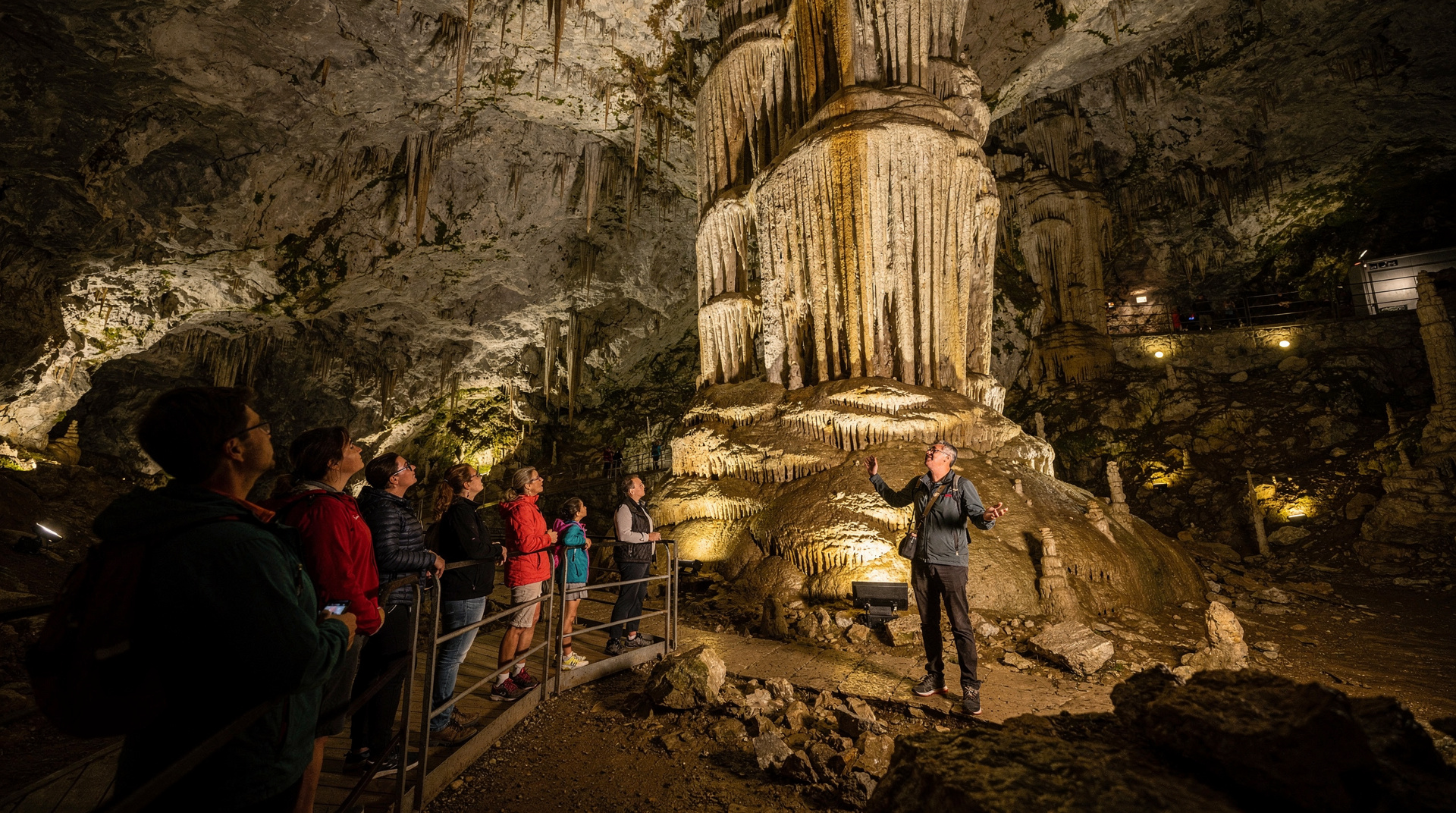
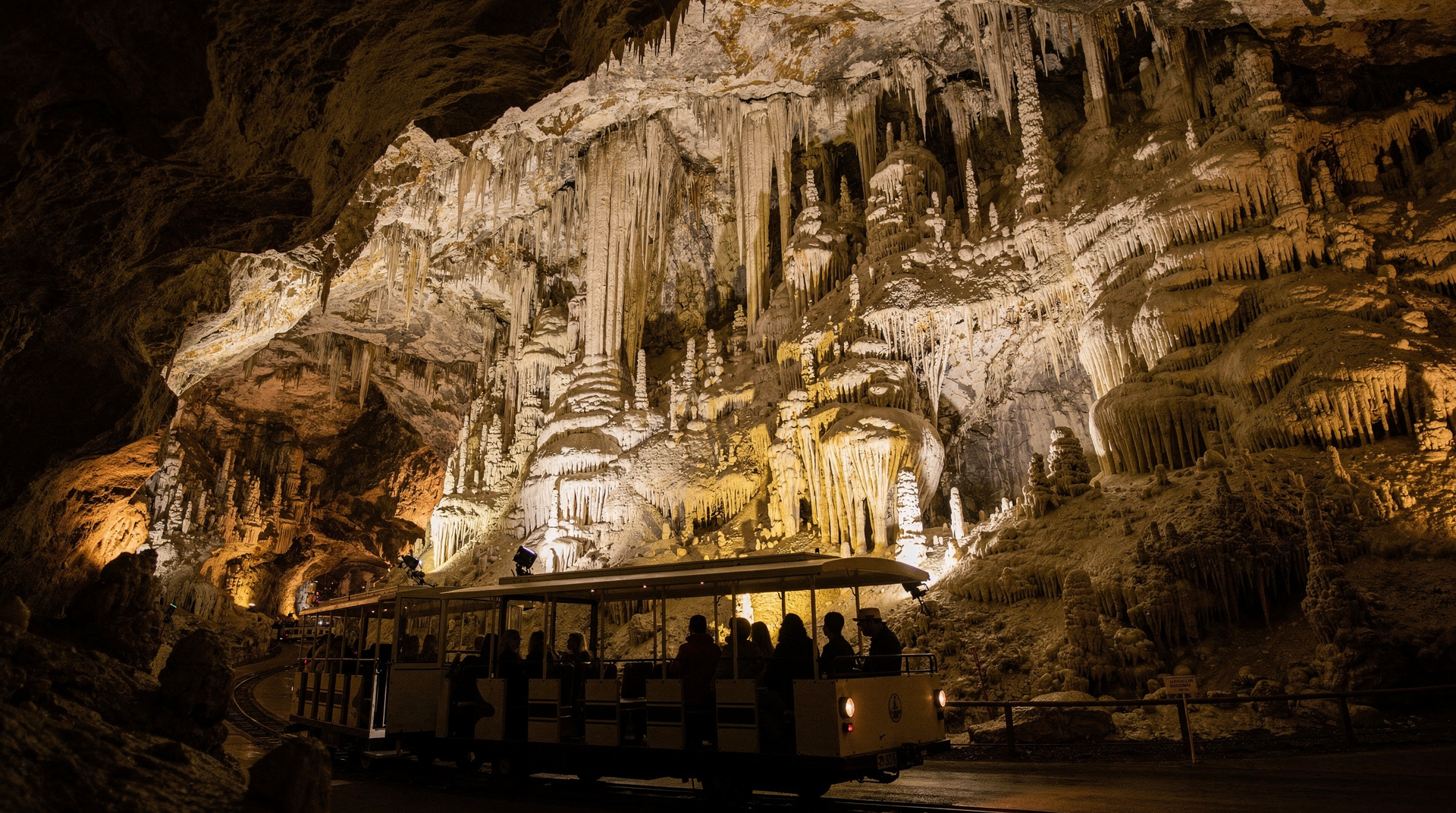
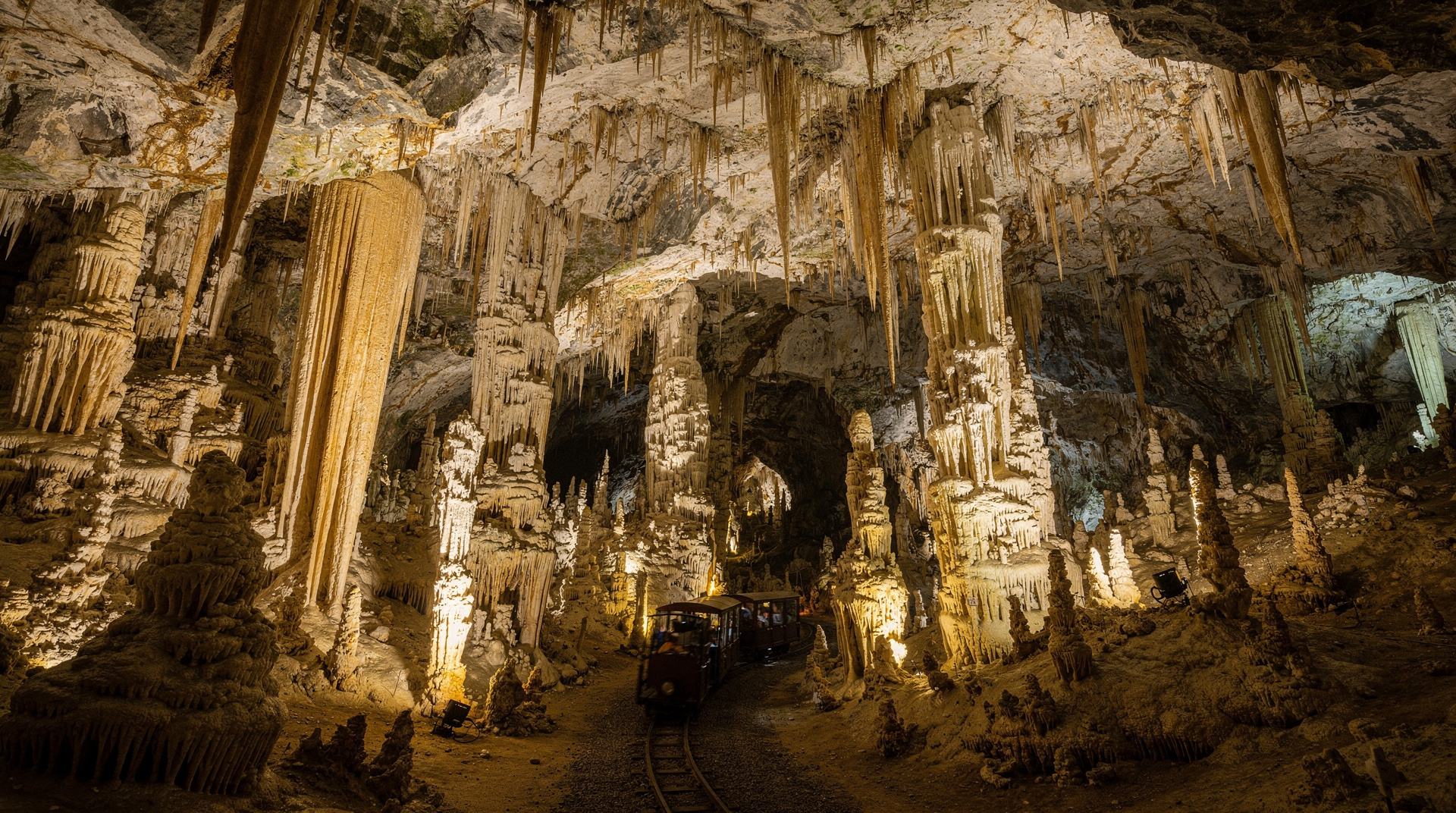
The standard tour covers approximately 5km of the cave system. The first 3.5km are by electric cave train; the remaining 1.5km are on foot. Entry includes the train ride. A guide leads each tour group, delivering a scripted commentary in multiple languages via earpiece.
Entry prices (2026): EUR 34.90 adults (tickets are sold only on the official website, with date and time chosen online); for student and child rates see the up-to-date prices on the official Postojna Cave park website. The combination ticket with Predjama Castle (9km away, included in most tours) is EUR 49.90 adults and represents genuine value — Predjama is worth the 30-minute detour and the castle itself is exceptional.
Half-day tour of Postojna Cave and Predjama CastleThe cave maintains a constant temperature of 10°C year-round. Bring a warm layer regardless of the outdoor temperature; the cave entrance in July and the cave interior in July feel completely different. The path is paved and lit throughout; no specialist gear is required. Standard wheelchairs can navigate some sections; contact the cave in advance for accessibility details.
When to go — the honest answer
Best: Tuesday–Thursday, before 11:00. The cave is open every day of the year, including public holidays; check the timetable on the official Postojna Cave park website. An early-weekday visit means touring with one or two other groups rather than the dozens of groups running simultaneously on summer weekends.
Avoid: Saturday and Sunday in July–August, during Slovenian public holidays, and any day during a Postojna school holiday period. The experience does not change underground — the cave is the same cave — but the crowd density outside and the queue times significantly affect how the visit feels.
By season: April–June and September–October are the best months. Queues are manageable, the weather outside is pleasant for the walk from the car park to the entrance, and combining with Predjama Castle doesn’t require military planning. November–March the cave operates on a reduced schedule (fewer daily tours); it is less crowded but the surrounding grounds are bleak.
Honest tourist trap assessment
Postojna is not a tourist trap in the sense of being a poor experience. It is a tourist trap in the sense of being an experience that its own success has partially undermined. Several specific criticisms are fair:
The merchandising gauntlet: The entrance complex requires walking through the gift shop on entry and exit. The shop is large, the products are generic, and the layout makes it difficult to exit quickly if you have children.
Café pricing: The on-site café charges EUR 5–8 for a coffee and snack at prices that acknowledge the captive audience. Eating or drinking before you arrive, or walking 1km to the town for lunch, saves meaningful money.
The olm: The cave’s famous olm colony is viewable in a tank at the cave’s “vivarium” section, but the animals are small (typically 20–30cm), motionless, and in a low-lit tank. Visitors expecting a David Attenborough encounter sometimes feel disappointed. Adjust expectations accordingly.
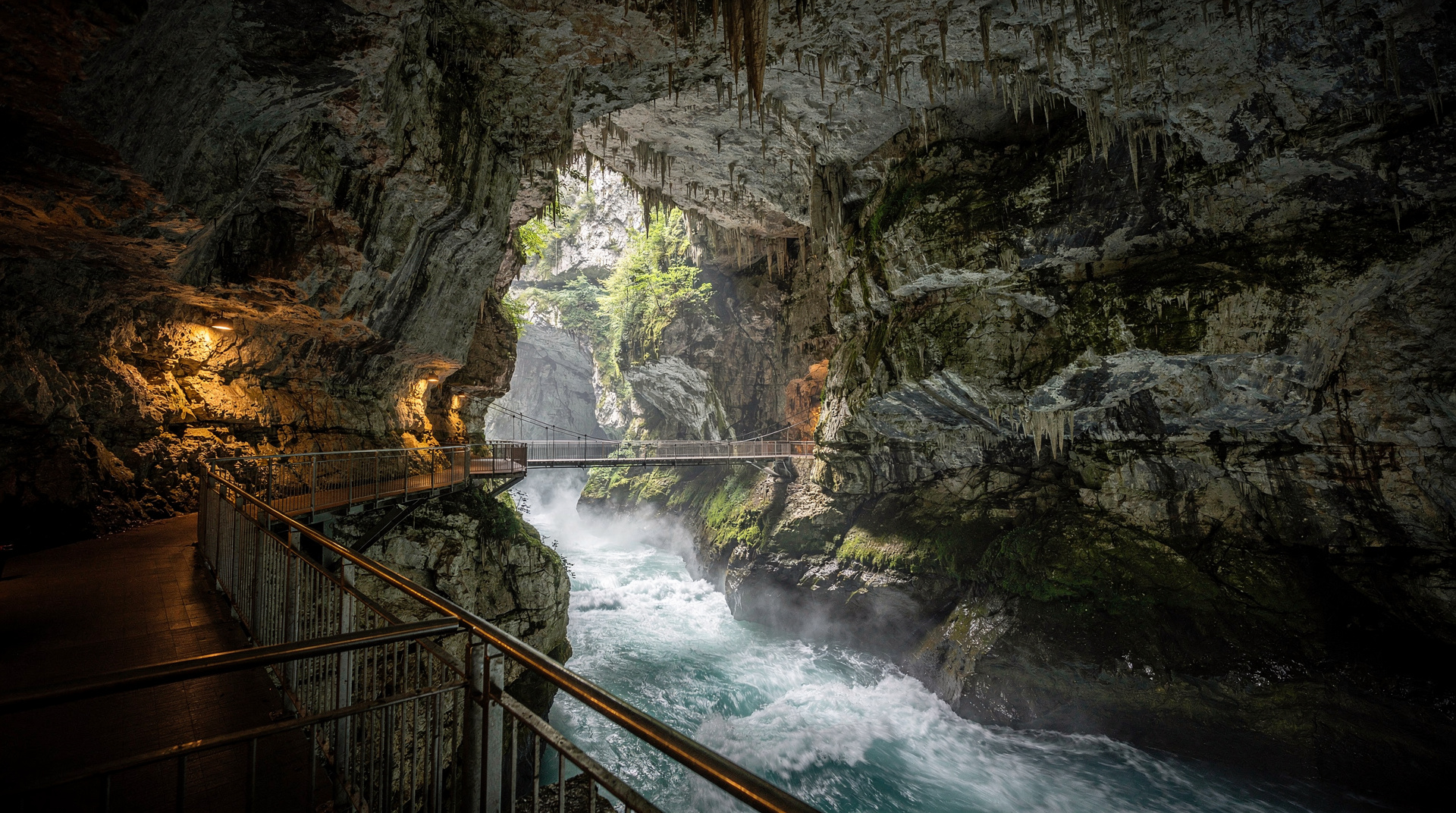
The better alternative for serious cave enthusiasts: Škocjan Caves, 60km southwest near Divača, is a UNESCO World Heritage site with a gorge system that is, by most objective measures, more dramatically impressive than Postojna. See our Postojna vs Škocjan comparison guide and our Škocjan Caves destination page.
The three karst caves compared
| Postojna | Škocjan | Križna Jama | |
|---|---|---|---|
| Scale | 24km, cave train | Deep gorge, UNESCO | Small, intimate |
| Crowds | Highest in Slovenia | Moderate | Very low |
| Access | Easy, frequent tours | Moderate, pre-booking useful | Requires advance booking |
| Unique feature | Olm vivarium, Speleodrome Hall | Underground canyon | Underground lake, boat travel |
| Around | EUR 34.90 | EUR 18 | See krizna-jama.si |
Križna Jama: For those who want a genuine speleological experience with minimal crowds, Križna Jama near Bloke offers guided tours (booking recommended) including boat travel on the underground lake. See the up-to-date prices on the official Križna Jama website, krizna-jama.si; the experience is incomparable in terms of intimacy.
Combining Postojna with Predjama Castle
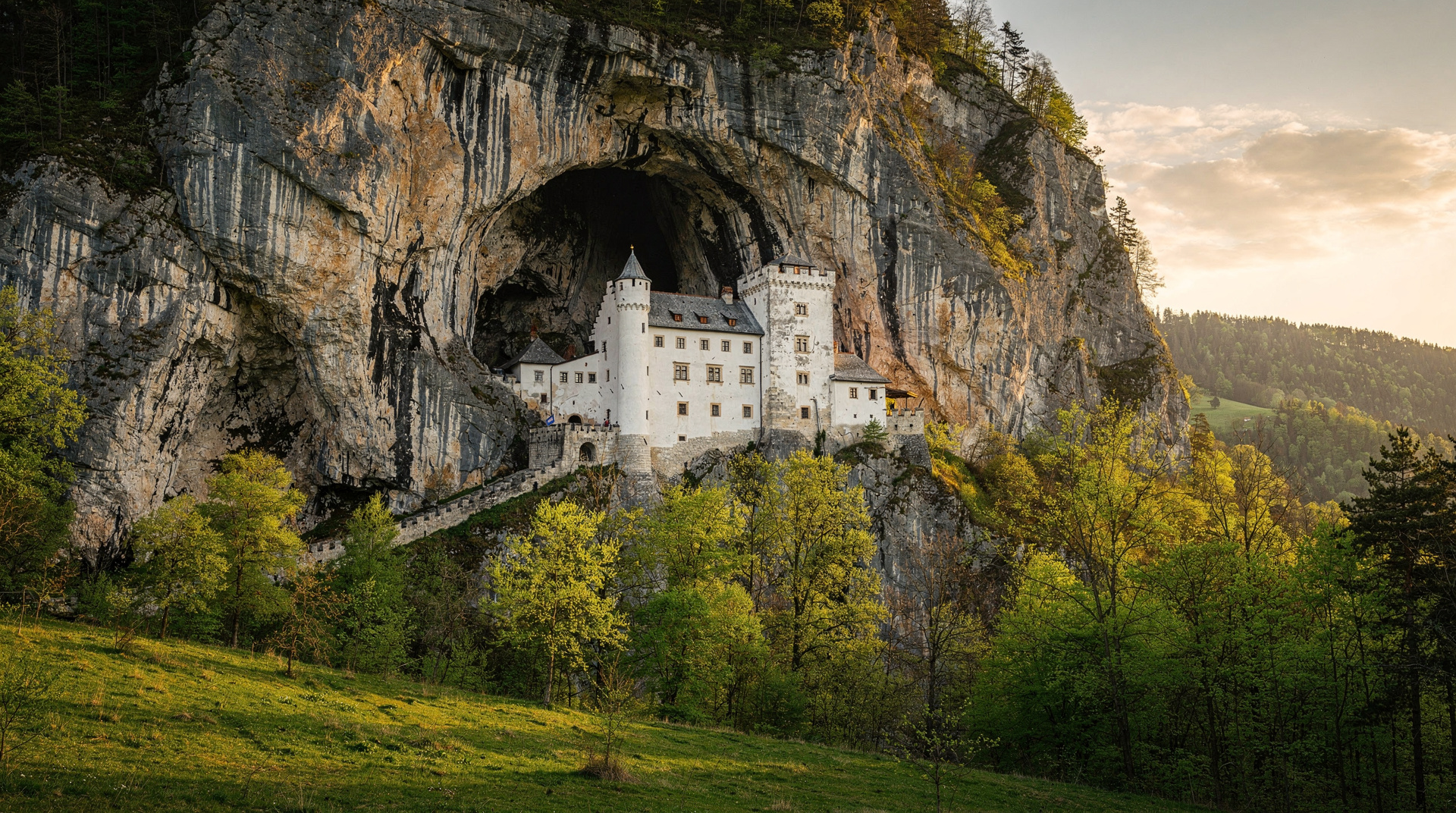
Predjama Castle — 9km from Postojna, built into the mouth of a cave at the top of a 123m cliff — is one of the most dramatically sited buildings in Europe. The castle dates to the 12th century and is associated with Erazem of Predjama, a knight who held it against a Habsburg siege in the 1480s using a secret tunnel through the cave behind it. The interior has been partially restored with period furnishings; the cliff face views from the upper battlements are exceptional.
Full-day Postojna and Predjama tour from LjubljanaEntry to Predjama Castle alone: EUR 24 adults. Combination with Postojna: EUR 49.90. The shared ticket is meaningfully better value than buying separately, and Predjama is good enough that skipping it to save money is a mistake.
Allow 1 hour at Predjama. The path from the car park to the castle entrance involves a steep uphill section (about 10 minutes); the interior has multiple levels connected by spiral staircases. Not accessible for wheelchairs or for visitors with mobility difficulties.
Seasonal guide for Postojna
April–June (recommended): The cave temperature is a constant 10°C regardless of season, so underground conditions are always the same. The difference is outside: April–June has mild weather, manageable queues, and the best option for early-morning first-slot visits. Weekday mornings in May are almost uncrowded.
July–August (busy): Peak season. Queues are longest on weekend afternoons. The first morning slots are dramatically less crowded than the midday and afternoon slots. If you must visit in August, book the earliest available slot online.
September–October (good): Crowds drop off sharply after the first week of September. The cave is unchanged; the experience outside is quieter and the drive from Ljubljana is more pleasant without motorway congestion.
November–March (reduced): The cave operates on a reduced schedule with fewer daily tours. Temperatures outside are cold; the cave itself at 10°C is warmer than the exterior in January. Genuinely uncrowded.
Getting there
By car: Ljubljana to Postojna is exactly 55km via the A1 motorway (EUR 6–8 in tolls with vignette). Follow signs to Postojna Cave from the motorway exit; parking at the cave complex costs EUR 4–6. Predjama Castle is signed from both the cave and the motorway exit.
By bus/train: Frequent trains and buses from Ljubljana to Postojna town (about 1h; check current fares with the operators). From the station, the cave is 2km — walkable (25 minutes) or by local taxi. Local buses connect Postojna town to the cave entrance in season.
Day trips from Ljubljana: The cave + castle combination is the most popular day trip from Ljubljana, and several operators run small-group trips that handle logistics and include guides. This is the most comfortable option if you don’t have a car and don’t want to navigate the combination independently. Our Postojna cave guide has full logistics detail.
The geology of Postojna
The Postojna Cave system formed over approximately five million years as slightly acidic rainwater dissolved the Cretaceous limestone bedrock. The process produced an 24km network of passages on multiple levels, carved by the Pivka River which still flows through the lowest section of the cave. The formations — stalactites, stalagmites, flowstone curtains, and calcite columns — represent hundreds of thousands of years of mineral deposition at rates too slow to detect in a human lifetime.
The cave’s most dramatic geological feature is the Speleodrome Concert Hall: a chamber 50m high, 60m wide, and 150m long, large enough to seat 10,000 people (it has been used for concerts, including by the Vienna Philharmonic). The scale is disorienting in a way that photographs do not convey; standing in it, the cave’s natural origin is both obvious and somehow implausible. The white calcite formations on the walls of this chamber are among the most photographed in any cave in Europe.
The cave was discovered by the public in 1818, though locals knew of the entrance for centuries. It became a tourist attraction almost immediately — Habsburg aristocracy toured it by torchlight in the 1820s, and the first cave train (horse-drawn) was introduced in 1872. The cave has been visited continuously since then, making it one of the oldest organized tourist attractions in Central Europe.
Photography inside the cave
Photography is permitted throughout the standard tour route, but conditions are challenging: low ambient light, the moving cave train, and a moving tour group that doesn’t wait for tripod setups. A phone camera with night mode, or a camera capable of a reasonably high ISO without excessive noise, handles the formations adequately.
Flash photography washes out the delicate colour variations in the flowstone and is generally discouraged near the more fragile formations — check current signage, as policies are occasionally adjusted. The best images typically come from the Winter Hall’s dense stalactite curtains and the Speleodrome’s cavernous scale, best captured with a wide-angle lens if you have one. Tripods are not practical given the pace of the tour; brace against a railing instead.
Accessibility and mobility considerations
The paved path through the standard tour route is generally manageable for visitors with moderate mobility limitations, and the cave train removes the need to walk the first 3.5km. Standard wheelchairs can navigate a meaningful portion of the walking section, though a few narrower or uneven stretches may require assistance — contact the cave directly ahead of your visit to confirm current accessibility provisions and to arrange support if needed.
The constant 10°C temperature is worth flagging for visitors with conditions sensitive to cold; a warm layer is essential regardless of mobility. Predjama Castle, by contrast, is not accessible for wheelchairs at all, given its steep approach path and internal stone stairs — factor this into planning if you’re combining the two sites and travelling with a visitor who has mobility needs.
Overnight in Postojna
Most visitors come on a day trip, but Postojna has adequate accommodation for an overnight that lets you visit the cave at opening time before the groups arrive. The town has several mid-range options: Hostel Proteus, Hotel Jama (cave-adjacent); check current rates with each property. Staying in Postojna also puts you 15 minutes from Pivka and the Pivka Caves network, which offers additional spelunking for the committed.
For planning the karst region as a whole — covering Postojna, Predjama, Škocjan, and Lipica in 2–3 days — see our predjama castle guide.
Fitting Postojna into a wider Slovenia trip
Postojna rarely stands alone in a plan. Most travellers meet it as one stop between the capital and the coast, so it helps to see where it sits among the other options. If you are based in the capital, our day trips from Ljubljana guide and the cave tours from Ljubljana guide show how the cave compares with other excursions, and the Postojna Cave day trip page walks through a typical day step by step.
If the crowds worry you, read our honest Postojna Cave review before you book, and the wider Slovenia tourist traps guide for how this cave compares with other places where popularity has changed the experience. For a broader view of underground Slovenia, the Slovenia caves overview puts all the major caves side by side.
Cave stops also slot neatly into longer routes. The Ljubljana and caves in 4 days itinerary builds a short trip around exactly this region, while the Slovenia highlights in 5 days route treats Postojna as one highlight among several. Travellers without a car will find the Slovenia in 5 days without a car plan useful, and the getting around Slovenia guide explains the wider transport picture.
Is Postojna Cave worth the crowds?
This is the question most visitors actually have, and the honest answer is yes, with conditions. The cave itself is genuinely extraordinary regardless of how many people are around you — the scale of the Speleodrome Hall and the sheer volume of formations are not diminished by crowd density. What is diminished is the pacing and atmosphere: a summer Saturday tour moves briskly with little opportunity to linger, while a Tuesday morning in May feels close to a private visit. If your schedule is flexible, shift it toward the quieter slots; if it isn’t, go anyway — Postojna at its busiest is still worth seeing once.
Frequently asked questions about Postojna Cave
How long does a Postojna Cave visit take?
Arrive 30 minutes before your chosen time; train boarding starts 15 minutes before it. If you combine with Predjama Castle (highly recommended), allow a full morning or afternoon for both sites including the 9km transfer. A full morning with Predjama is a complete half-day excursion.
Is Postojna Cave suitable for children?
Yes, with a few caveats. The train ride is exciting for children aged 4 and up. The cave is 10°C inside — bring warm layers for everyone, including babies in carriers. The walk on foot is 1.5km on level paved ground and is stroller-accessible for most strollers. The minimum age for some special tours (night tours, adventure caving) is higher — check specific tour terms.
Should I book tickets in advance for Postojna Cave?
Yes, always — tickets are sold only on the official Postojna Cave park website, and you choose the exact date and time online. In July and August weekend slots fill first, so book early.
How does Postojna compare to Škocjan Caves?
Postojna is larger, has the cave train (unique in Europe), and the olm. Škocjan has a deeper gorge, is UNESCO-listed, receives fewer visitors, and most independent travellers who visit both rate Škocjan higher for the sheer drama of the underground gorge. The practical difference: Postojna is easier logistically (more tours, more access), while Škocjan requires more planning. Our comparison guide covers both in detail.
What is the Proteus anguinus (olm) and will I definitely see it?
The olm is a cave-adapted salamander, endemic to karst caves in Slovenia, Croatia, and Bosnia. It is blind, white-pink, and can live to 100 years. Postojna’s vivarium section displays olms in a purpose-built tank. The animals are small and slow-moving. You will see them, but the encounter is closer to an aquarium exhibit than a wildlife observation — expectations should be calibrated accordingly.
Is there anything free near Postojna Cave?
The Predjama village below the castle is free to walk through. The cave spring (Pivka River source) near the cave entrance can be seen from outside. Rakov Škocjan — a natural rock arch valley between Postojna and Škocjan — is accessible on foot from the village of Rakek, about 12km from Postojna, and is entirely free. It is an undervisited gem.
Top experiences
Bookable activities with verified prices and instant confirmation on GetYourGuide.