Predjama Castle: Europe's most dramatic fortress
Predjama Castle grows out of a 123m cliff face above a cave entrance. Honest guide to visiting, EUR prices, and how to combine with Postojna and Škocjan.
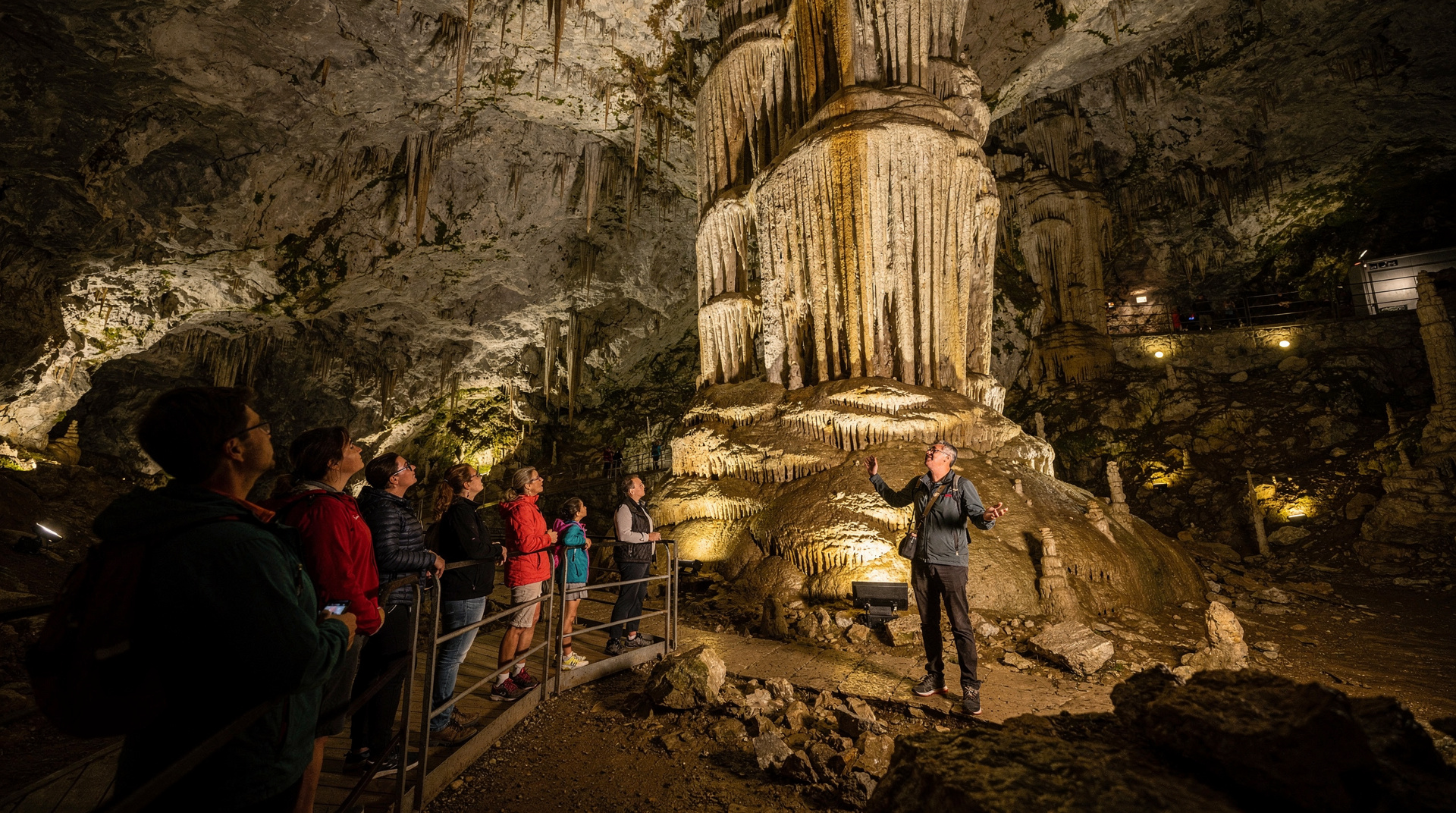
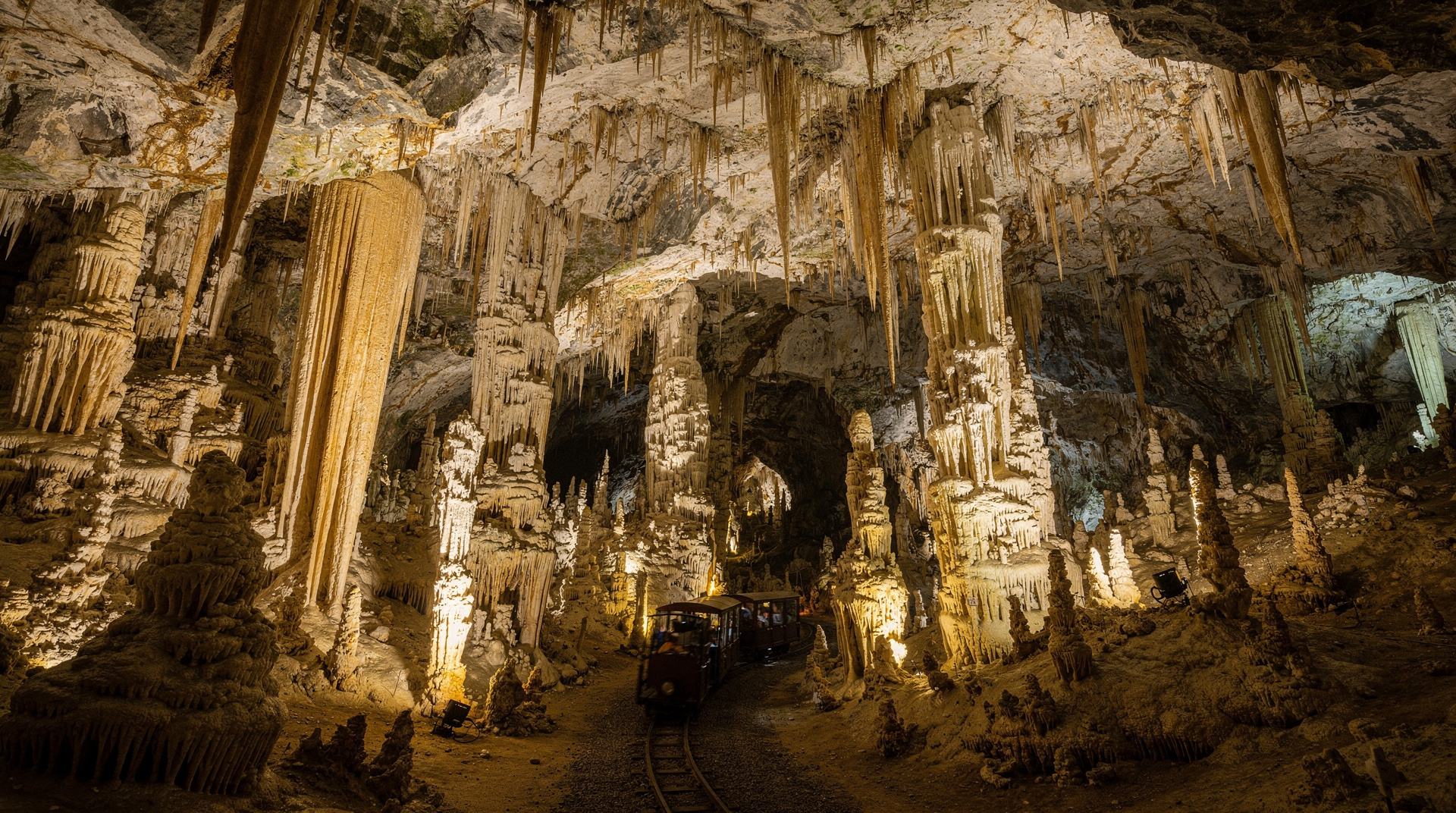
Ljubljana: Postojna Cave and Predjama Castle tour
Quick facts
- Best time to visit
- April–October; avoid July–August weekend afternoons
- Days needed
- 1–2 hours for the castle alone
- Getting there
- 9km from Postojna Cave; car essential
- Budget per day
- EUR 24 to 50 (usually a day-trip stop)
A castle built inside a cliff face
Predjama Castle is the kind of place that appears implausible until you are standing in front of it. The structure — medieval towers, Renaissance windows, defensive walls — grows directly from the mouth of a cave set 123m up a vertical limestone cliff. The cave continues deep into the rock behind the castle, linking to an escape route that allowed the castle’s most famous occupant, Erazem of Predjama, to supply his fortress even while under siege.
| Where | Predjama village, Karst region (9km from Postojna) |
| Cost | around EUR 24 alone; EUR 49.90 combined with Postojna |
| Time needed | 1–2 hours; half-day combined with Postojna |
| Getting there | Car essential, or a guided tour from Ljubljana |
| Best time | May, June, September, October |
It is listed in the Guinness World Records as the largest cave castle in the world. The superlative is well-earned and, unusually, understates the reality: photographs of Predjama Castle from the road below consistently look enhanced or composited, even when they are not. The castle genuinely looks like this.
The story of Erazem of Predjama
Erazem (Erasmus) was a 15th-century knight who fell out with the Habsburg court and retreated to Predjama, which had been in his family’s possession since the 12th century. After killing a Habsburg marshal in Vienna, he used the castle as a base for raiding Habsburg-aligned nobles in the region — a kind of Robin Hood character in contemporary accounts, though the history is messier than the legend.
The Habsburgs besieged the castle for over a year. Erazem resupplied himself via the cave’s secret passage, reportedly sending fresh cherries down to the besieging army to demonstrate his comfort. He was eventually killed not by the siege but by a traitor who signalled to the Habsburg forces from a window at a vulnerable moment — reportedly while in the castle’s latrine. The trebuchet that killed him is among the more memorable details in Slovenian medieval history.
The castle has been partially furnished with period artifacts to evoke the late medieval period. The experience is more atmospheric than scholarly — there is no permanent collection of exceptional quality — but the cliff-face position and the story together make for a compelling two hours.
Architecture and construction
The castle as it stands today is largely a Renaissance reconstruction of a medieval original, though the site has been occupied since at least the 12th century. The current form — with its projecting oriel windows, Renaissance loggia, and tower — was established in the 16th century after the medieval structure was partially destroyed. What makes the architecture unusual is not the Renaissance elements themselves (Slovenia has several good examples) but the integration of cliff face and cliff cave into the structural logic of the building.
The cave entrance, partially blocked by masonry but structurally still part of the building, sits at the top of the castle’s rear wall. The castle was not built in front of a cave; the cave is built into the castle. The builders used the cave’s natural shelter (constant temperature, protection from rain, concealment) as a feature rather than a problem. The medieval and Renaissance period had several cliff-face fortifications across Europe, but most use the cliff as a backing wall; Predjama uses the cave as a floor plan.
Visiting the castle
Entry: EUR 24 for adults (see the current child and student rates on the official Postojna Cave Park website). The combination ticket with Postojna Cave is EUR 49.90 and represents the better value if you are visiting both sites (which is almost everyone). Tickets are sold only on the official website, with the date and time chosen online, and the castle is reached via a steep path from the car park (10–12 minutes on foot, significant uphill, not wheelchair-accessible).
Full-day tour covering Ljubljana, Postojna, and Predjama CastleInside the castle, the rooms are arranged on multiple levels connected by uneven stone stairs with low ceilings. The original cave entrance — through which the escape passage runs — is visible at the back of the uppermost rooms. A narrow tunnel leads a short distance into the cave behind the castle (included in the entry, torches provided). Children generally love this section.
The view from the upper level terraces looks directly down the cliff face to the valley below — a perspective that makes the castle’s defensive logic immediately clear. Allow 1–1.5 hours inside; budget extra time on busy days when the corridors are slow.
Photography considerations
Predjama is extremely photogenic but the best shots require planning. The standard view from the road below (500m from the car park) works in soft morning or evening light but is flat in midday sun. The hill on the opposite side of the valley, 10–15 minutes of walking from the road, gives a higher angle and better compositional perspective. Arrive at opening (09:00) in April–June for golden-hour light on the cliff face.
Internal photography is permitted; flash is ineffective in the cave sections and reduces to nothing in the deeper passage. A phone camera is adequate in the furnished rooms but low-light situations benefit from a wider aperture.
The landscape around Predjama
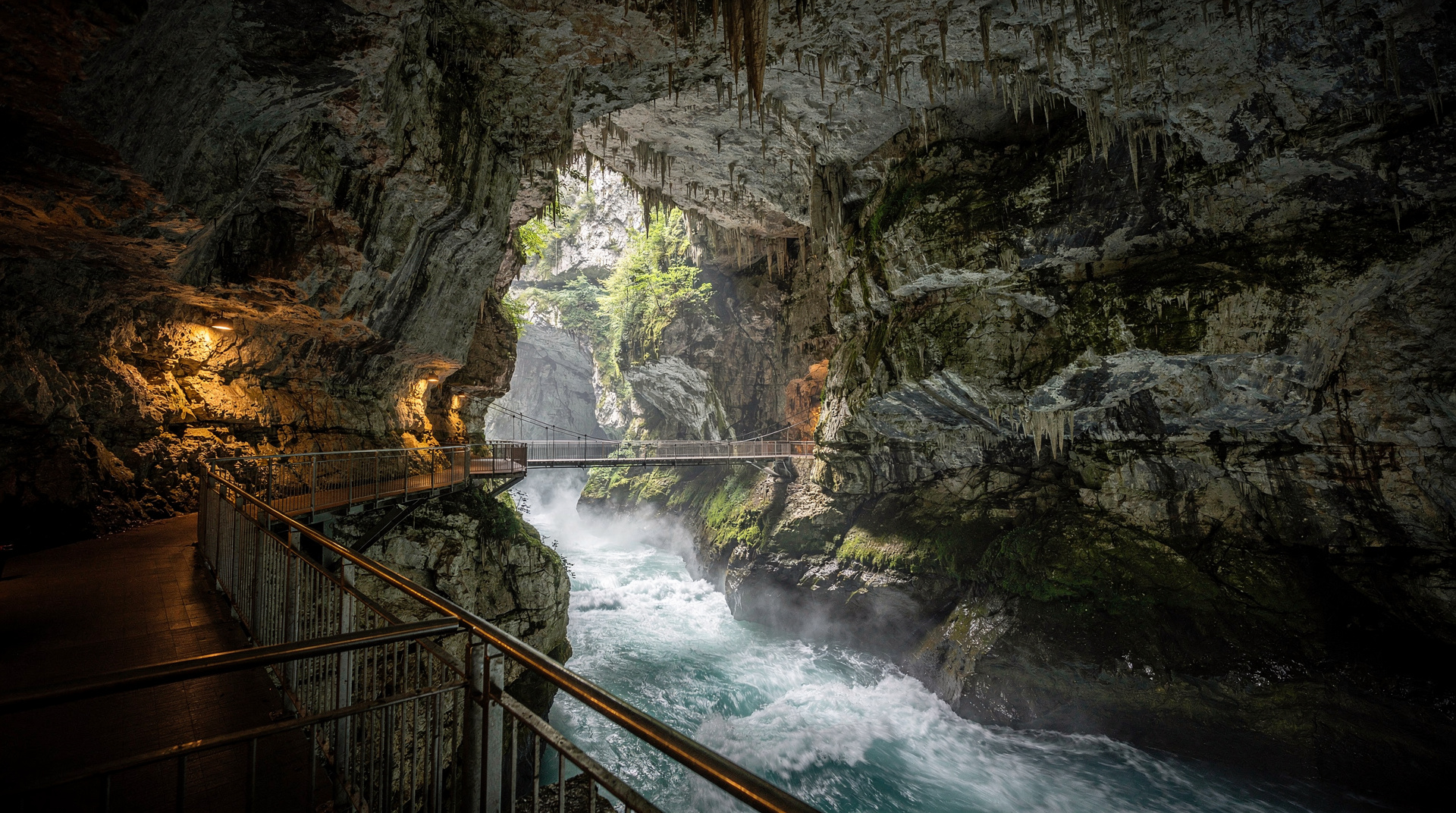
The valley below the castle is worth 30 minutes of exploration beyond simply photographing the building. The Lokva stream runs through the valley floor, having emerged from a cave 500m upstream. The cave mouth that feeds the stream is accessible on a short trail from the car park and gives a small taste of the karst hydrology: water appearing from apparently solid rock, already underground for some distance, and running clear before joining the stream below the cliff.
The village of Predjama (a handful of farmhouses below the castle) has a gostilna that operates in season and serves the only genuinely local meal available near the site. The castle’s visitor centre café is the obvious choice for most visitors, but Gostilna Požar, 500m down the valley, has been operated by the same family for three generations and is where the people who work at the castle eat lunch. Lamb with polenta (EUR 14–16) is the main event.
Combining Predjama with other karst sites
Predjama works naturally as a half-day pair with Postojna Cave — they are 9km apart and many visitors do both in a single morning. The standard tour order is Postojna first (allowing 1.5–2 hours including the train), then Predjama for the afternoon.
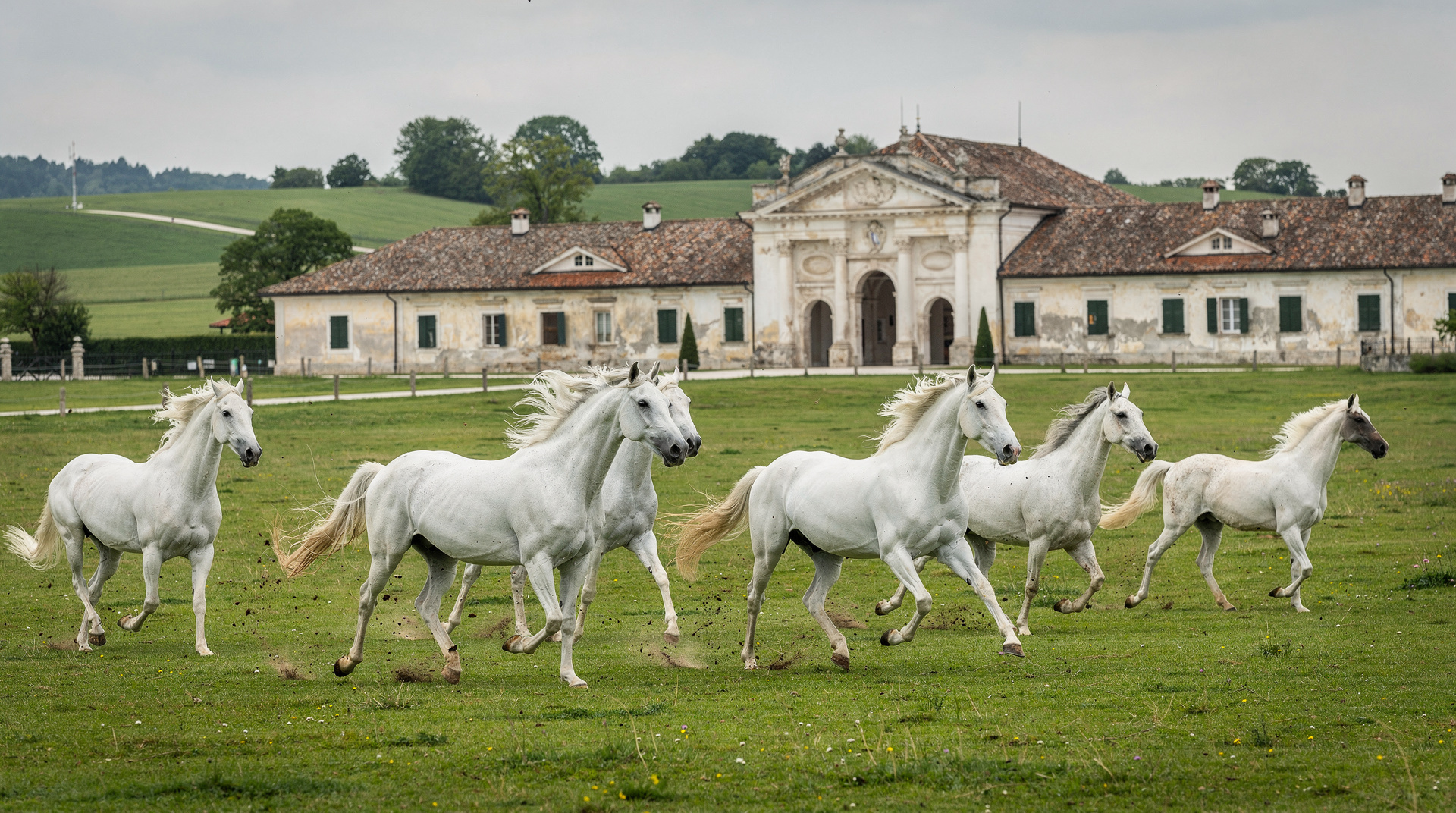
Half-day guided tour of Postojna Cave and Predjama CastleIf you are spending two days in the karst region, a good combination is: Day 1 Postojna Cave + Predjama Castle; Day 2 Škocjan Caves + Lipica Stud Farm. This covers the karst highlights without requiring a car to each destination separately, though a car significantly simplifies the logistics.
Rakov Škocjan — a hidden natural rock arch valley between Postojna and Škocjan — is free, virtually unvisited by international tourists, and about 12km from Predjama. It is worth a 90-minute detour if you are travelling by car. See our Škocjan Caves guide and Škocjan caves trip guide for context.
The cave behind the castle
One of the less-documented aspects of Predjama is the cave system that extends behind and below the castle. The escape route that allowed Erazem to survive a year-long siege runs through this system — a network of passages connecting to a side valley on the far side of the cliff, far from the besieging forces. The castle’s builders integrated the cave’s natural defensibility into the fortification’s design in a way that has no real parallel in European castle architecture.
The cave section open to visitors (included in castle entry) covers about 150m into the rock, following the original escape route. Torches are provided at the entrance; the passage is narrow in places and low-ceilinged. The deeper sections of the cave (Predjamski jama) extend several kilometres further and contain archaeological finds going back to prehistoric occupation. These deeper sections are open for additional speleological tours (book separately, May to September; check prices on the official Postojna Cave Park website).
The juxtaposition of Renaissance windows in a cliff face and raw cave passage 10 metres behind them is, architecturally and conceptually, one of the stranger experiences Slovenia offers. It is also the most photographically interesting interior in the karst region.
Context within Slovenian castle architecture
Slovenia has several notable medieval castles, and calibrating Predjama within that set helps set expectations. Ljubljana Castle (accessible by funicular, EUR 17.10 online entry, spectacular city views but limited interior content) is more prominently marketed but considered by most visitors who do both to be less memorable. Celje Castle in eastern Slovenia is better preserved inside but in a conventional hilltop position without the drama. Borl Castle and Žička Kartuzija (Žiče Charterhouse) are less-visited alternatives with good medieval character.
Predjama stands apart from all of these because of the geology. No other castle in Slovenia — or in Central Europe — has this relationship between human architecture and natural rock. The comparison with cliff dwellings in the American Southwest is not quite right (those were living quarters, not defensive fortifications), but it gives a sense of the category: buildings that use geology as architecture rather than treating it as a surface to build on.
Seasonal and logistical notes
Summer events: Predjama Castle hosts an annual medieval tournament (typically June or July) featuring jousting, archery, and period re-enactment. The event is somewhat theatrical rather than historically rigorous, but the castle as a backdrop makes it visually spectacular. Check the castle’s official site for dates.
Winter: The castle opens at 09:00 and closes between 17:00 and 19:00 depending on the season, with the last entry 30 minutes before closing (check the official Postojna Cave Park website for exact hours). The exterior view in winter snow is among the most dramatic in Slovenia; if you visit in December–February, the photographic opportunity is exceptional.
Photography: The best exterior shots require the valley-floor viewpoint about 500m from the entrance car park. The castle is on the south-facing cliff; morning light is flat and east-facing, midday direct. The best light is approximately 45–60 minutes before sunset in summer (19:00–20:00) when the cliff face goes warm orange while the sky behind remains blue. The cliff is 123m high, so the castle is small in a wide-angle frame; a telephoto lens compresses the distance and makes it more impressive.
Nearby alternatives
Postojna Cave (9km east): The obvious pairing. The Postojna–Predjama combination is the most popular half-day itinerary in the karst region. Our Postojna Cave guide and the Postojna cave guide detail cover everything you need.
Pivka Caves: Between Postojna and Predjama, the Pivka and Planinska Jama caves are linked by an underground river and can be visited on guided boat tours (seasonally; check the official Postojna Cave Park website for prices). Far less visited than Postojna and genuinely unusual; the boat trip through an underground passage is not available elsewhere in Slovenia.
Rakov Škocjan: The natural rock arch valley between Postojna and Divača, about 12km from Predjama, is a free 90-minute walk through a collapsed cave landscape. Bring the trail map from the Postojna visitor centre. Our Škocjan caves guide covers the broader karst circuit including this site.
Visiting with children
Predjama is one of the more reliably exciting stops for children in the karst region — the torchlit cave passage behind the castle and the story of a knight dropping cherries on his besiegers are the kind of details that stick with younger visitors far better than a standard museum room. That said, the steep approach path and the multiple levels of uneven stone stairs inside mean children need to be steady on their feet; this is not a stroller-friendly site, and very young children will need to be carried on the approach. Budget slightly more time than the standard hour if children want to linger at the cave section, which is usually the highlight of the visit for them.
Predjama in fiction and film
The dramatic setting has attracted more attention from filmmakers and photographers than most Slovenian sites its size. The castle has appeared in documentary features on European castles and cave systems, and its silhouette is a recurring image in Slovenian tourism marketing precisely because it photographs so well without any digital enhancement. The Erazem legend itself has been retold in various popular history accounts and remains a staple of Slovenian school history curricula — most Slovenian visitors arrive already knowing at least the outline of the siege story, which adds a layer of shared cultural context that non-Slovenian visitors experience for the first time on site.
Practical information
Car essential: Predjama is 9km from Postojna town and not accessible by public bus. If you are travelling without a car, the most practical approach is a guided tour from Ljubljana or Postojna that includes both sites. Ask a local taxi company for a fare from Postojna train station to Predjama and back before you set off.
Eating nearby: The visitor centre has a café that serves sandwiches and coffee at tourist-site prices. A better option is Gostilna Požar in the village below the castle, 500m from the car park, which serves local food (mains EUR 12–18) in a setting that predates the current tourist operation.
Timing your visit around groups: Large tour buses tend to arrive mid-morning and again in the early afternoon, coinciding with the busiest windows at the nearby cave. Arriving at opening or in the final hour before closing avoids the worst of the group congestion in the castle’s narrower interior corridors.
Accessibility: The path from the car park to the castle entrance is steep and not wheelchair-accessible. The interior has multiple levels connected by spiral staircases; not suitable for visitors with significant mobility difficulties. The cave section requires ducking in several places.
Honest assessment of visitor value: Predjama is not a place that rewards four hours. An hour inside the castle, thirty minutes looking at it from the valley, and thirty minutes in the cave passage adds up to a full experience. The combination ticket with Postojna makes economic sense; visiting Predjama alone for EUR 24 is questionable value compared to the cave. Almost everyone sees both together, which is the right call.
Predjama versus Slovenia’s other castles
| Predjama | Ljubljana Castle | Celje Castle | |
|---|---|---|---|
| Setting | Built into a cliff cave | City hill | Conventional hilltop |
| Interior content | Moderate, atmospheric | Limited | Better preserved |
| Uniqueness | No parallel in Europe | Common city-castle type | Solid but conventional |
| Time needed | 1–2 hours | 1–2 hours | 1–1.5 hours |
| Access | Car essential | Funicular or walk | Car or bus |
The verdict most repeat visitors reach: Predjama wins on spectacle and is worth prioritising over Ljubljana Castle if you have to choose, precisely because the geology does something no other Slovenian castle attempts.
For karst region planning, see our Postojna Cave guide, the Lipica destination guide, the getting around Slovenia guide, and the slovenia tourist traps guide for perspective on what to prioritize.
Top experiences
Bookable activities with verified prices and instant confirmation on GetYourGuide.