Lipica: the birthplace of the Lipizzaner horse
The origin of the famous white Lipizzaner horses. Entry information, honest visit tips, and how to combine with Škocjan Caves.
From Ljubljana: Lipica stud farm and coastal Piran
Quick facts
- Best time to visit
- April–October; check performance schedule
- Days needed
- 2–3 hours; combine with Škocjan or Piran
- Getting there
- Car from Ljubljana (1h 15min); 8km from Divača rail station
- Budget per day
- Stud farm visit from €16; see the official Lipica stud farm website
Where the Lipizzaner horse was born
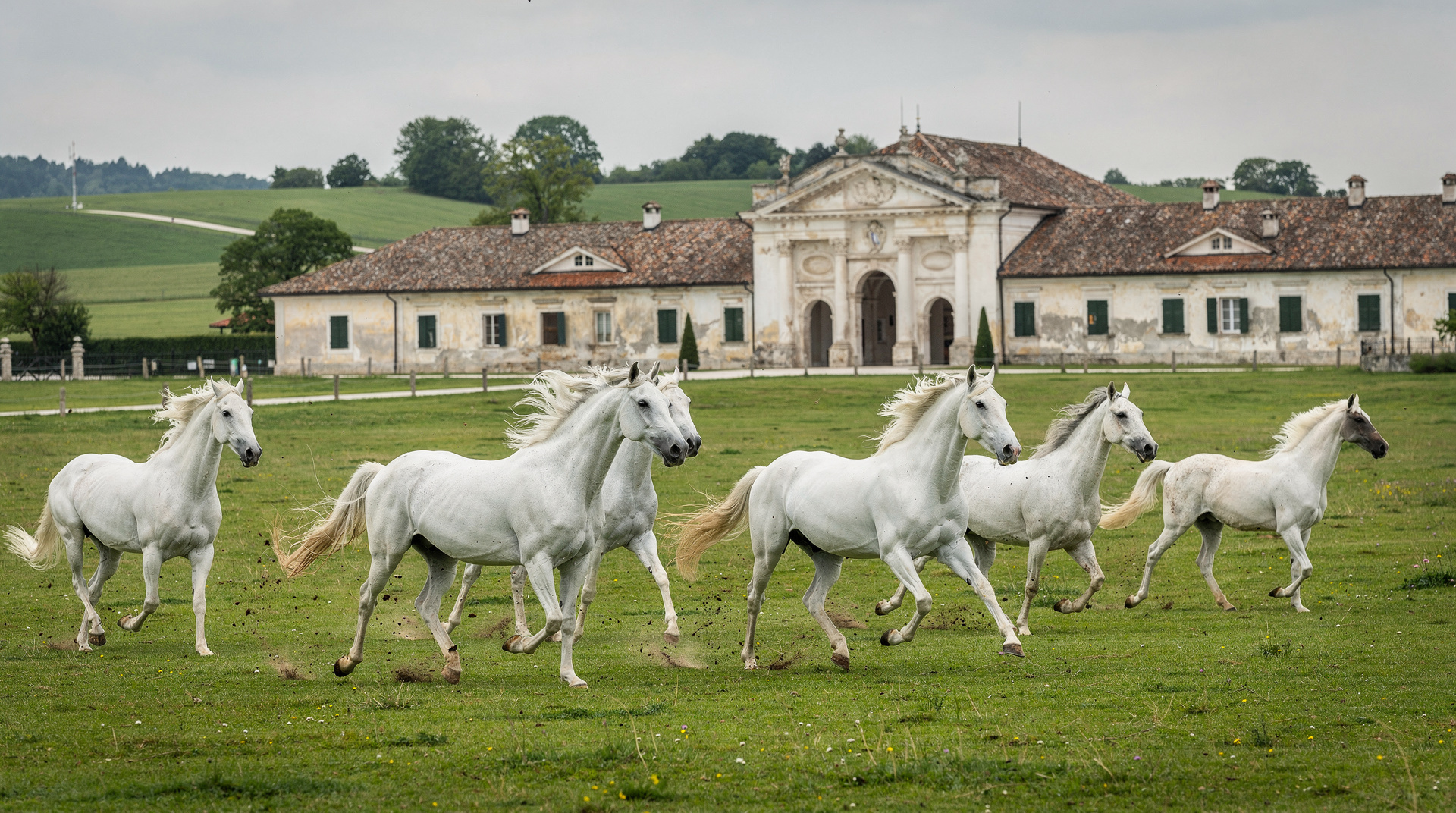
The Lipizzaner horses of Vienna’s Spanish Riding School are among the most recognizable icons of Central European culture. What far fewer people know is that the breed was developed not in Austria but in a small village in what is now Slovenia. Lipica (Lipizza in Italian, Lippiza in German) was chosen by the Habsburg Archduke Karl II in 1580 for its karst pastures and Mediterranean climate — conditions the local nobility understood as ideal for producing horses of exceptional quality. The stud farm has been operating continuously, with one major interruption during the Napoleonic Wars, ever since.
The Lipica Stud Farm today is the oldest continually operating stud farm in the world. It covers 310 hectares of karst plateau, houses around 350 horses including foals and mares, and offers visitors several levels of engagement — from a standard guided tour of the stables to performances of the Lipica riding school (check the official Lipica stud farm website for days).
| Where | Lipica, Karst region, near Sežana (1h15 from Ljubljana) |
| Cost | stud farm visit from €16; see the official Lipica stud farm website |
| Time needed | 2–3 hours; half-day combined with Škocjan or Piran |
| Getting there | Car essential, or an organised day tour from Ljubljana |
| Best time | May–June or September–October; check performance days first |
What to see at Lipica
The classic tour (guided visits at 10:00, 12:00, 14:00 and 16:00, about 60 minutes, from €16) covers the main stable yards, the historic stud building, and the paddocks where mares with foals are often visible. Guides explain the breeding programme, the Lipizzaner’s characteristic grey-to-white colour change (foals are born dark and lighten with age), and the connection to the Spanish Riding School in Vienna.
The performance ticket (from €25, stable visit included) adds a classical dressage demonstration by the Lipica riding school, at 15:00. Check the official Lipica stud farm website for performance days before planning your visit. This is the version worth choosing if the dates align.
Full-day tour combining Lipica and Piran from LjubljanaThe riding lessons and carriage drives (carriage rides from €35, dressage lessons from €50) are available for visitors who want more active engagement. Horse-riding at Lipica is not barrel-racing or trail riding — this is the same institution that trains horses for the Spanish Riding School, and the instruction reflects that. Prior riding experience is helpful but not required for introductory lessons.
Which option to choose
| Option | Duration | Around | Best for |
|---|---|---|---|
| Classic stable tour | About 60 minutes | From €16 | First visit, budget-conscious |
| Performance ticket | See official website | From €25 | Anyone visiting on a performance day |
| Dressage lesson | See official website | From €50 | Riders wanting hands-on instruction |
| Carriage drive | See official website | From €35 | Families, less-mobile visitors |
| Multi-day equestrian stay | See official website | See official website | Serious riders booking well ahead |
If your dates do not line up with a performance, the classic tour is still worthwhile for the stable yard and paddocks — just calibrate expectations toward “educational” rather than “spectacular.”
Honest assessment
Lipica is a genuine piece of European cultural heritage, and the horses are beautiful. Calibrate expectations as follows: the karst landscape around the farm is pleasant but not dramatic — flat, open, and modest compared to the cave systems nearby or the Soča Valley. The tour itself is educational rather than spectacular. If you have no particular interest in equestrian culture, the standard tour may feel like a long hour.
The performance tours are significantly better value as experiences — classical dressage at the source of the breed has a coherence that a stable walkthrough alone lacks. If performances are not running on your day, weigh whether the standard tour justifies the detour from the karst cave circuit.
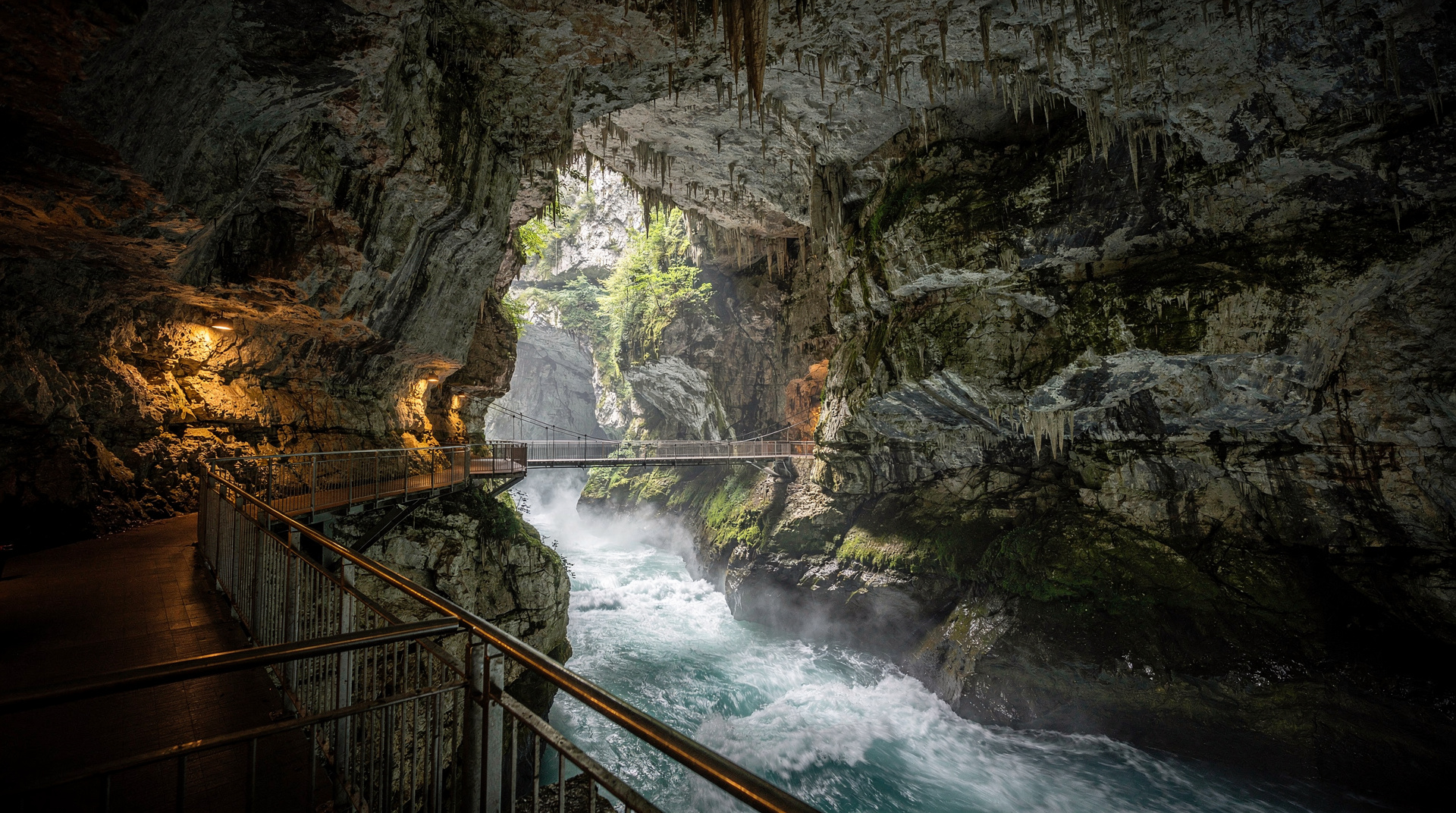
The combination with Škocjan Caves (13km away) is the most efficient karst day trip: caves in the morning, horses in the afternoon, Piran or the coast for dinner. This sequence captures three completely distinct Slovenian experiences in one day.
The Lipizzaner breed: a brief history
The white horses associated with Vienna’s Spanish Riding School are descended from a founding stud established by Archduke Karl II at Lipica in 1580. The name Lipizzaner comes directly from the village — Lipizza in Italian, Lipica in Slovenian. The breed was developed from Iberian (Spanish) stallions crossed with local Karst mares, producing the compact, intelligent, long-lived horses that the Habsburg court prized for classical horsemanship.
The colour evolution is one of the breed’s most recognizable traits: foals are born black or dark bay and gradually lighten, usually completing the change to white or grey by age 6–10. At Lipica you will typically see horses at every stage of this transformation, from dark foals in the paddocks to fully white stallions in the riding hall.
The stud nearly ceased to exist twice. During the Napoleonic Wars (1797 and 1809), the horses were evacuated deep into the Austrian interior to prevent capture; they returned to Lipica after peace was restored. In April 1945, as Allied forces advanced into Austria, General Patton coordinated a rescue mission — the subject of a Disney film in 1963 — to prevent the wartime-evacuated horses from falling into Soviet hands. They returned to Lipica in 1947.
What to expect on the visit
The grounds cover 310 hectares of rolling karst plateau — essentially a mini park with paddocks, stabling yards, a riding hall, and woodland walks. The pastoral scale is part of what makes Lipica feel different from a conventional tourist attraction; the pace is slower than a cave or castle visit, shaped by the horses’ rhythms rather than a tour operator’s schedule.
Outside the performance days, the tour involves walking through the main stable yard (where the smell, sound, and proximity of 30–40 horses at close range has its own impact) and observing the training yard where handlers work with younger horses on the long rein. This is genuine working horsemanship, not theatrical — if you arrive on a training morning you may observe advanced dressage work in progress.
Photography: The white horses against the grey karst stone backgrounds photograph well in overcast light. Direct sun creates harsh shadows that reduce the horse’s form. Morning visits on overcast days are ideal. Flash photography is not permitted in the riding hall.
Combining Lipica with other sites Private tour of Lipica and Škocjan Caves Lipica + Škocjan: 13km apart; the natural pairing. Škocjan in the morning (tours start at 10:00), Lipica in the afternoon (performance tours typically at 15:00). Return to Ljubljana or continue to Piran for the night.
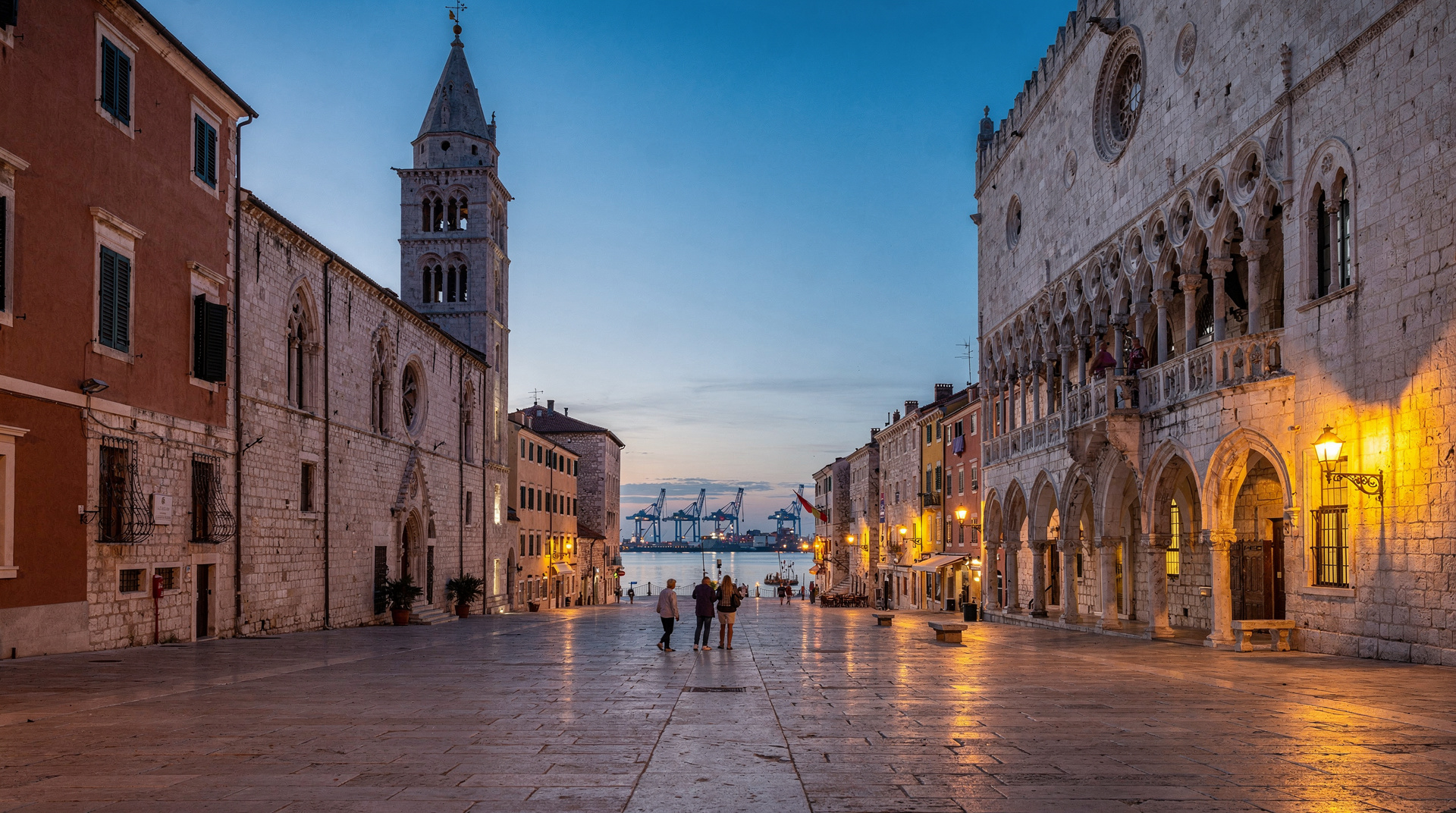
Lipica + Piran: 35km south to Piran (40min). A Lipica morning followed by an afternoon on the Adriatic coast covers two of Slovenia’s most distinct landscapes and works well as a two-destination day trip from Ljubljana.
Lipica + Koper: The combination with Koper (30km south) is less commonly done but useful for travellers exiting toward Trieste or heading to the Istrian coast. Koper’s city centre takes 2–3 hours; driving Koper–Lipica–Škocjan (in that order) in a single day is ambitious but achievable.
The karst landscape around Lipica
The Lipica Stud Farm sits on the Karst plateau — the geological region that gave the world the word “karst” (the German/Slovenian term for this type of limestone terrain). The plateau is a flat, dry, slightly eerie landscape: treeless in places, with scattered stone walls, red soil, and depressions (dolines) where the land has subsided over underground cavities. It looks nothing like the Slovenia of Alps and lakes and river valleys.
The plateau surrounding the farm is pleasant to walk through on the trails between paddocks and the woodland edge. Several signed walking circuits depart from the visitor centre and traverse the karst meadows. In spring, the karst flowers — including wild orchids, crocus varieties, and peonies — make these walks exceptional. The birding is also good: hoopoes, rollers, and red-backed shrikes are all present in the grassland between paddocks.
The karst geology is directly relevant to why the horses here are special. The limestone terrain produces calcium-rich water, and the calcium-rich grasses growing on the thin red soil are considered by equine nutritionists to produce horses with unusually dense bone structure — the quality that made Lipizzaners prized for military use for three centuries.
Connections to the Spanish Riding School
The link between Lipica and the Spanish Riding School (Spanische Hofreitschule) in Vienna is direct and ongoing. The Viennese school selects its stallions from the Lipica stud and from other approved Lipizzaner studs (there are seven studs worldwide breeding the original bloodlines). Lipica sends approximately 2–4 stallions to Vienna per generation.
Visiting Lipica therefore gives a kind of origin-story context that a visit to the Vienna school alone does not. The formal dressage traditions performed in Vienna were developed and refined here; the horses performing haute école in the Baroque riding hall in Vienna grew up in these Karst paddocks. For visitors interested in the equestrian tradition rather than just the spectacle, Lipica is the more informative visit — though the Vienna school’s performances are more polished.
The Lipizzaner in popular culture
The horses of Lipica have entered the popular imagination in ways that most visitors are only partially aware of. The rescue by General Patton in 1945 (Operation Cowboy) was subsequently made into a Disney film, Miracle of the White Stallions (1963), which introduced Lipica and the Spanish Riding School to an international audience. The film is factually imprecise in several respects — notably it credits Patton with a greater degree of personal initiative than the historical record supports — but it remains the reference point for most visitors over 60.
The Lipizzaner stallions that perform in Vienna are trained at the Spanish Riding School for 4–7 years before they are capable of performing the haute école movements (the airs above the ground: levade, courbette, capriole) that define classical dressage. The horses that perform these movements are typically 8–12 years old; they continue performing into their late teens. Most visitors to Lipica do not see haute école — the Lipica performances demonstrate lower-level dressage work — but the connection to the Viennese tradition is present in every horse.
Riding and equestrian tourism
Beyond the standard tour, Lipica offers several levels of equestrian engagement. The riding lesson programme (dressage lessons from €50) introduces visitors to classical seat and basic dressage principles — not a trail ride but a lesson in the tradition of the stud. Prior riding experience helps but is not required; the horses used for introductory lessons are experienced school horses accustomed to first-timers.
Carriage drives through the Karst landscape (from €35; daily rides run roughly 11:00 to 15:00) are particularly popular for families. The horse-drawn carriages use restored 19th-century vehicles that were part of the stud’s original working fleet; the drives follow paths through the surrounding Karst meadows.
For advanced riders, Lipica runs multi-day equestrian stays (accommodation and daily instruction; see the official Lipica stud farm website) focused on classical dressage technique. These require booking months in advance and are intended for riders with significant experience. Enquire directly through the stud’s riding school.
Seasonal notes
Spring (April–May) and autumn (September–October) are the best times for the outdoor sections of the tour — the karst plateau is either in fresh growth or autumn colour, and the horses are in the paddocks for longer hours. In July and August the midday heat (30–35°C) makes extended outdoor walking uncomfortable; morning visits are better.
Performance schedules vary by month — check the current schedule on the official Lipica stud farm website before planning your visit, as specific performance days change year to year.
Practical information
Getting there: Lipica is 3km from the village of Sežana and about 8km from Divača (train station, Ljubljana connections). No public bus runs directly to the stud farm; a taxi from Divača station is the usual option. By car from Ljubljana: 1h 15min via the A1 motorway. From Piran: 40min.
Accommodation on-site: Lipica has a hotel and several guest cottages within the farm grounds (see the official Lipica stud farm website for rates), offering the unusual experience of waking up to horses in a paddock outside your window. Useful if you are combining multiple karst sites over two days.
Best months: May and June before the summer heat makes the outdoor sections less comfortable. September and October are excellent — horses are typically in the paddocks throughout the day and the autumn light on the karst plateau is clear and warm.
Visiting with children
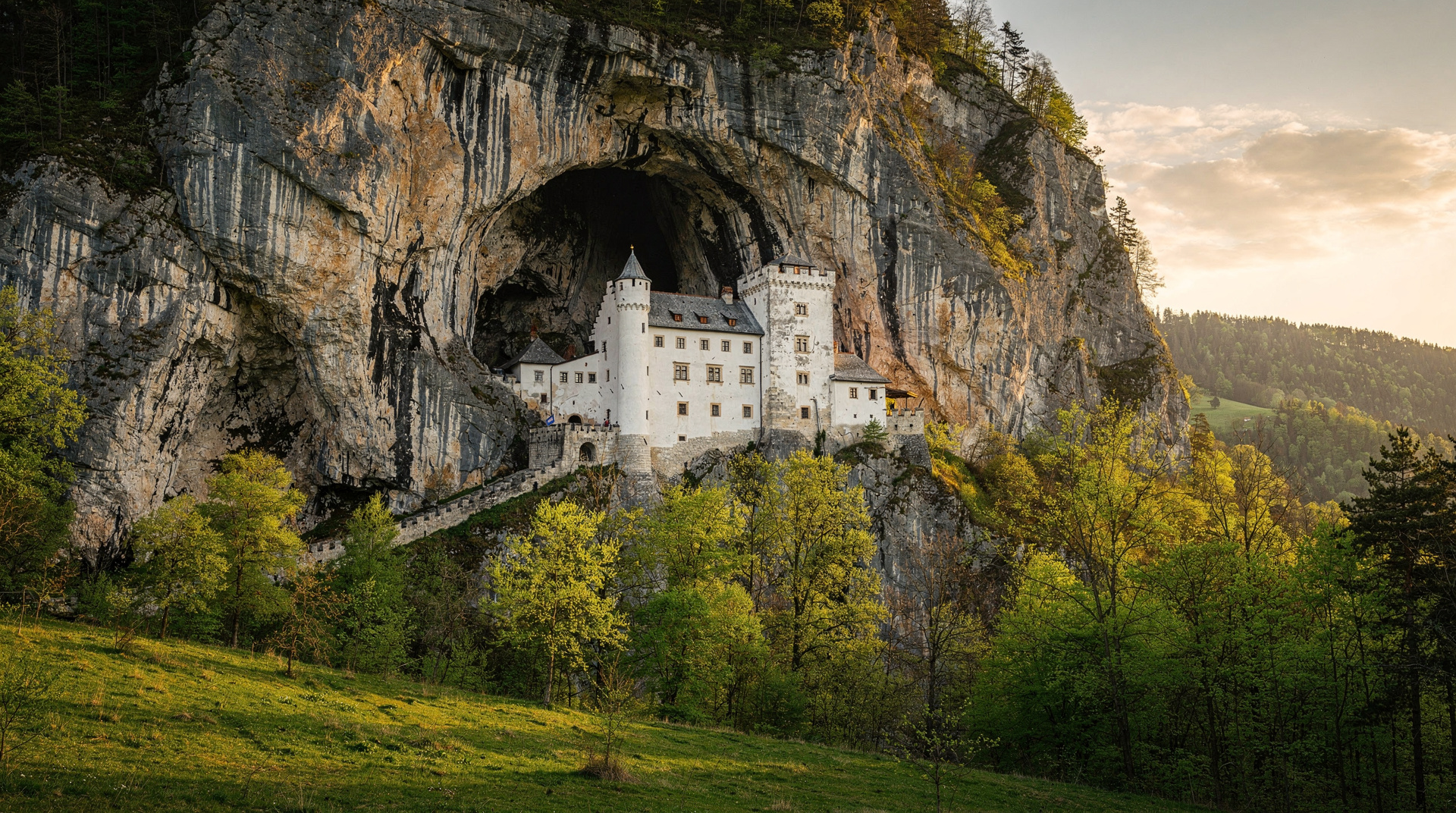
Lipica is one of the more reliably enjoyable karst-region stops for families, mainly because the pace is slow and the subject matter (large, friendly animals) needs no explanation for children. The carriage drive is the easiest option for very young children, who often find the standard walking tour long. Older children who ride, or are simply horse-mad, tend to remember Lipica more vividly than the caves at Postojna or Predjama Castle — worth weighing if you are planning a single karst-region day with kids and have to choose between them. The paddocks with foals (spring and early summer) are the best photo opportunity for a family visit; foals are typically born March–May.
Lipica versus the Vienna Spanish Riding School
Visitors who have already seen a performance in Vienna sometimes wonder whether Lipica adds anything beyond repetition. It does, but the value is different in kind. Vienna delivers the polished haute école performance — the finished product of years of training, in a Baroque hall built for exactly that spectacle. Lipica delivers the origin story: the pastures, the breeding programme, the young horses still learning, and the direct, physical sense of where the bloodline and the tradition actually come from. Neither substitutes for the other. If you can only do one, choose Vienna for the performance and Lipica for the context; doing both, in either order, rewards the comparison.
Practical FAQ points worth knowing before you go
Performance days shift from year to year and the schedule is not always up to date on third-party booking sites — confirm directly on the official Lipica stud farm website or through your tour operator close to your travel date. Dogs on leads are permitted in the outdoor areas but not inside the riding hall.
For context on the broader karst region, see our Škocjan Caves guide, our Postojna Cave guide, the getting around Slovenia guide, and the best time to visit Slovenia guide for planning context and seasonal guidance across the whole country.
Top experiences
Bookable activities with verified prices and instant confirmation on GetYourGuide.