Soča Valley: Slovenia's adventure heartland
The Soča Valley combines emerald-green river gorges, WWI history, and world-class adventure sports. Your honest guide to Bovec, Kobarid, and Tolmin.
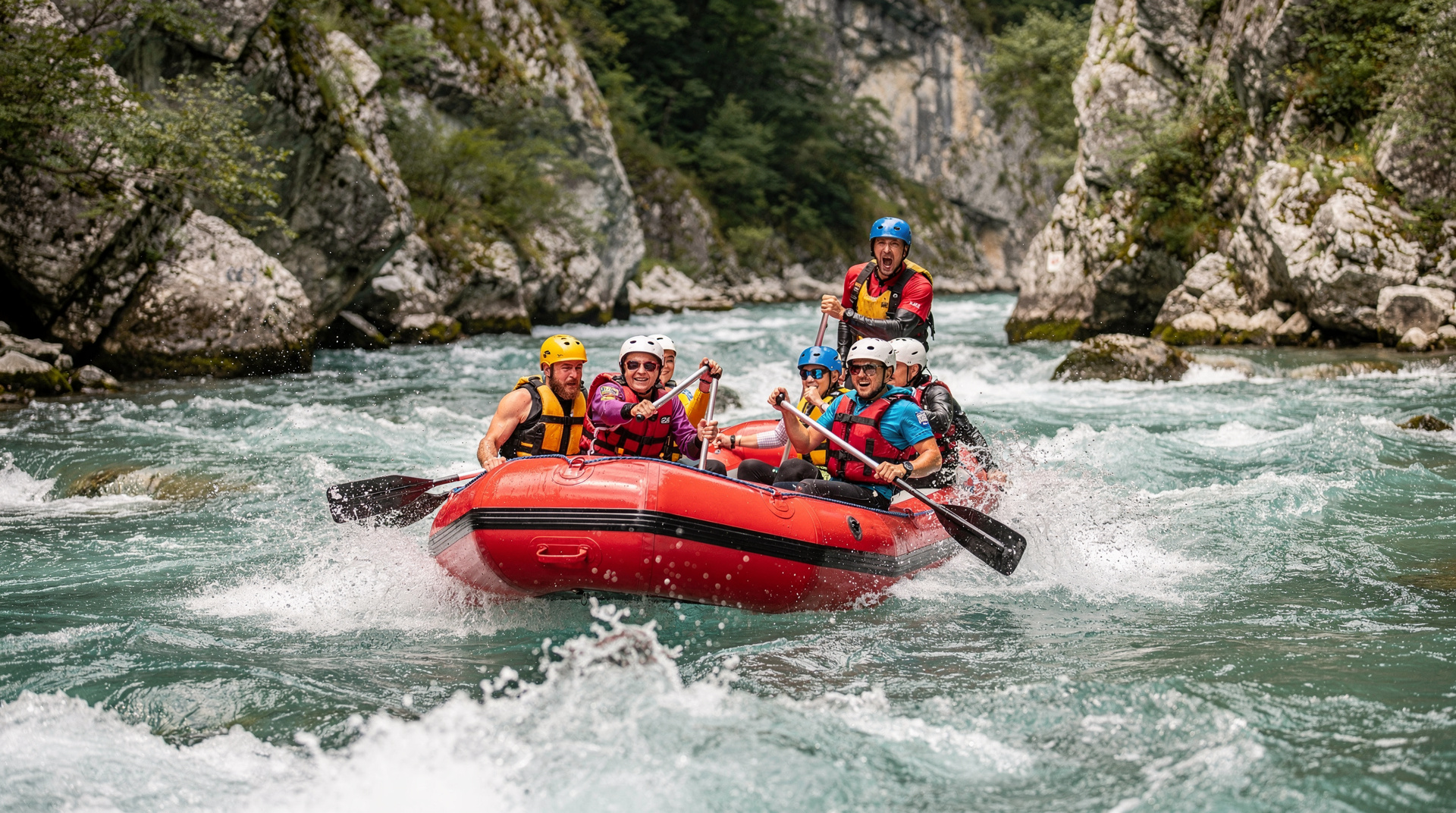
Bovec: Soča River whitewater rafting
Quick facts
- Best time to visit
- May–October
- Days needed
- 3–5 days
- Getting there
- Car from Ljubljana (2h) or bus to Bovec via Most na Soči
- Budget per day
- EUR 60 to 130
Where the Alps meet the Adriatic in a river of liquid jade
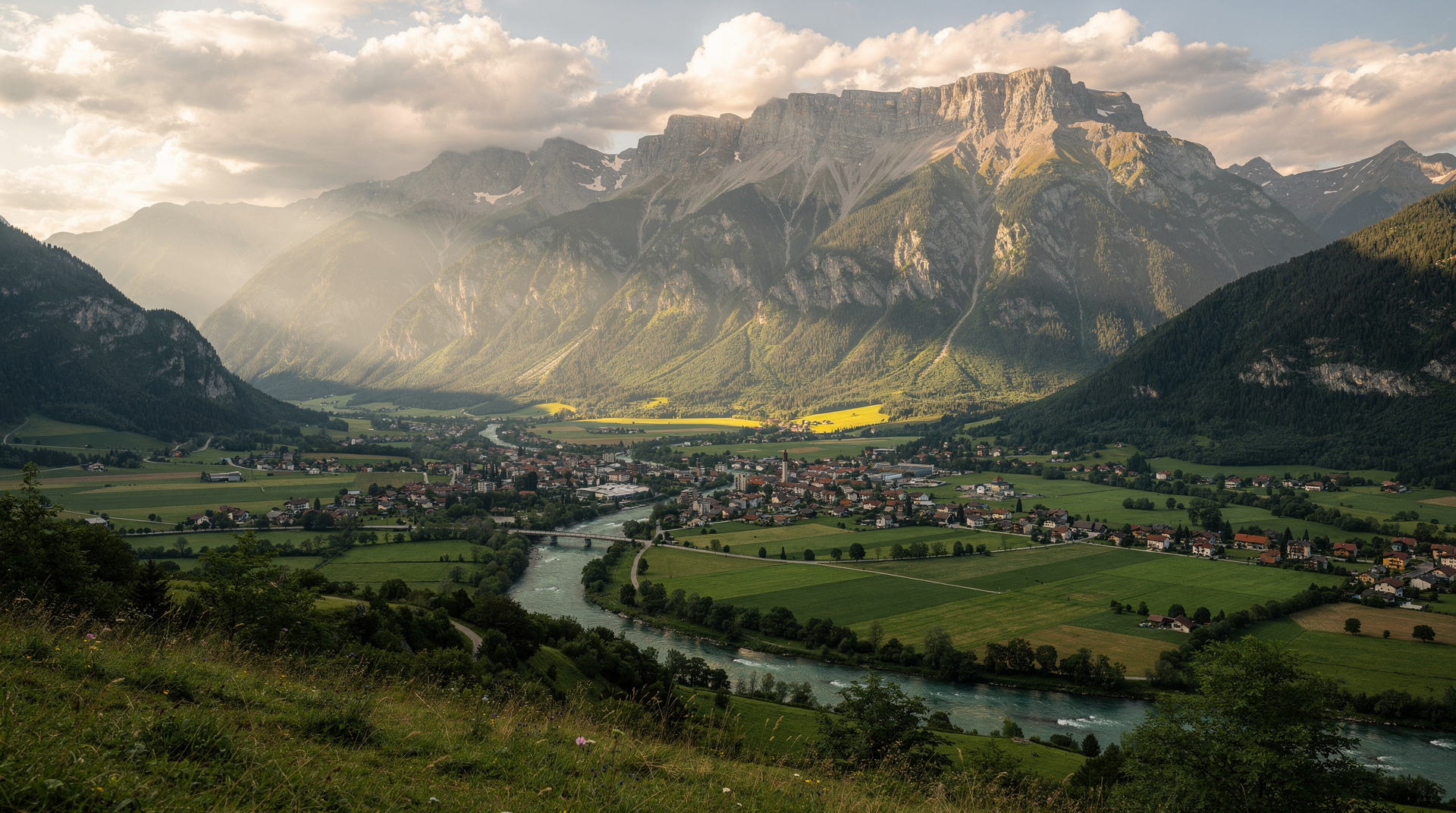
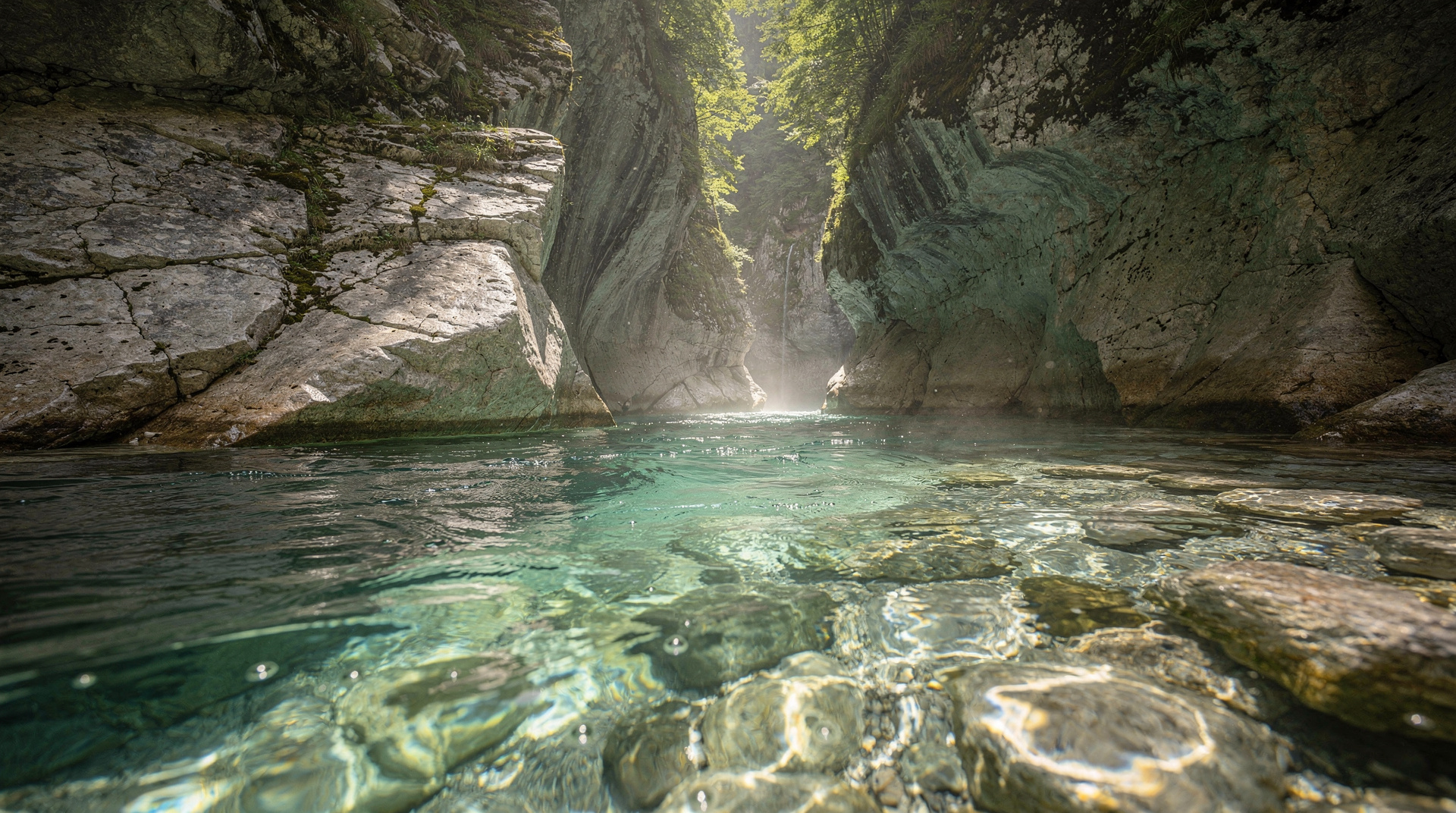
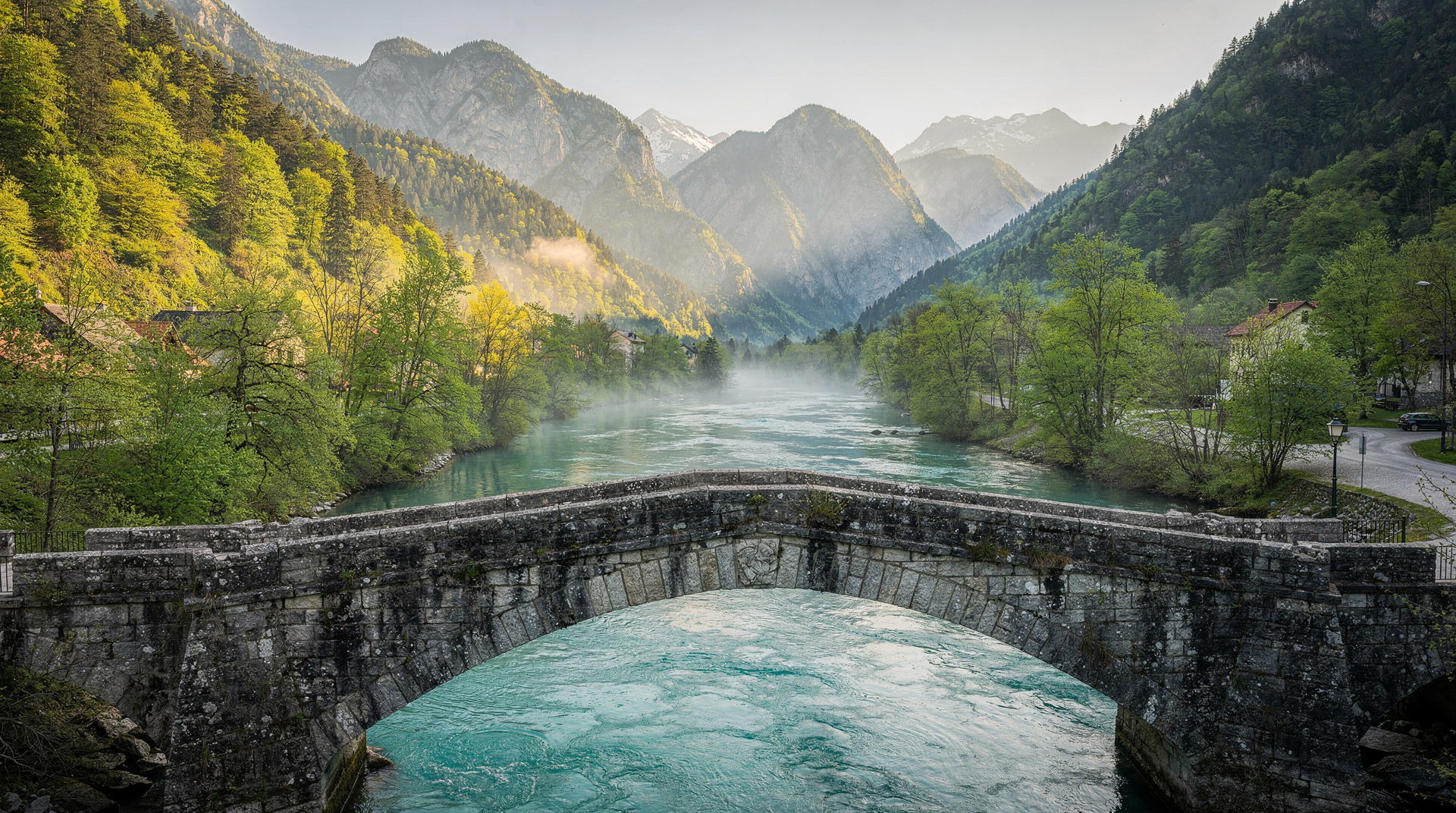
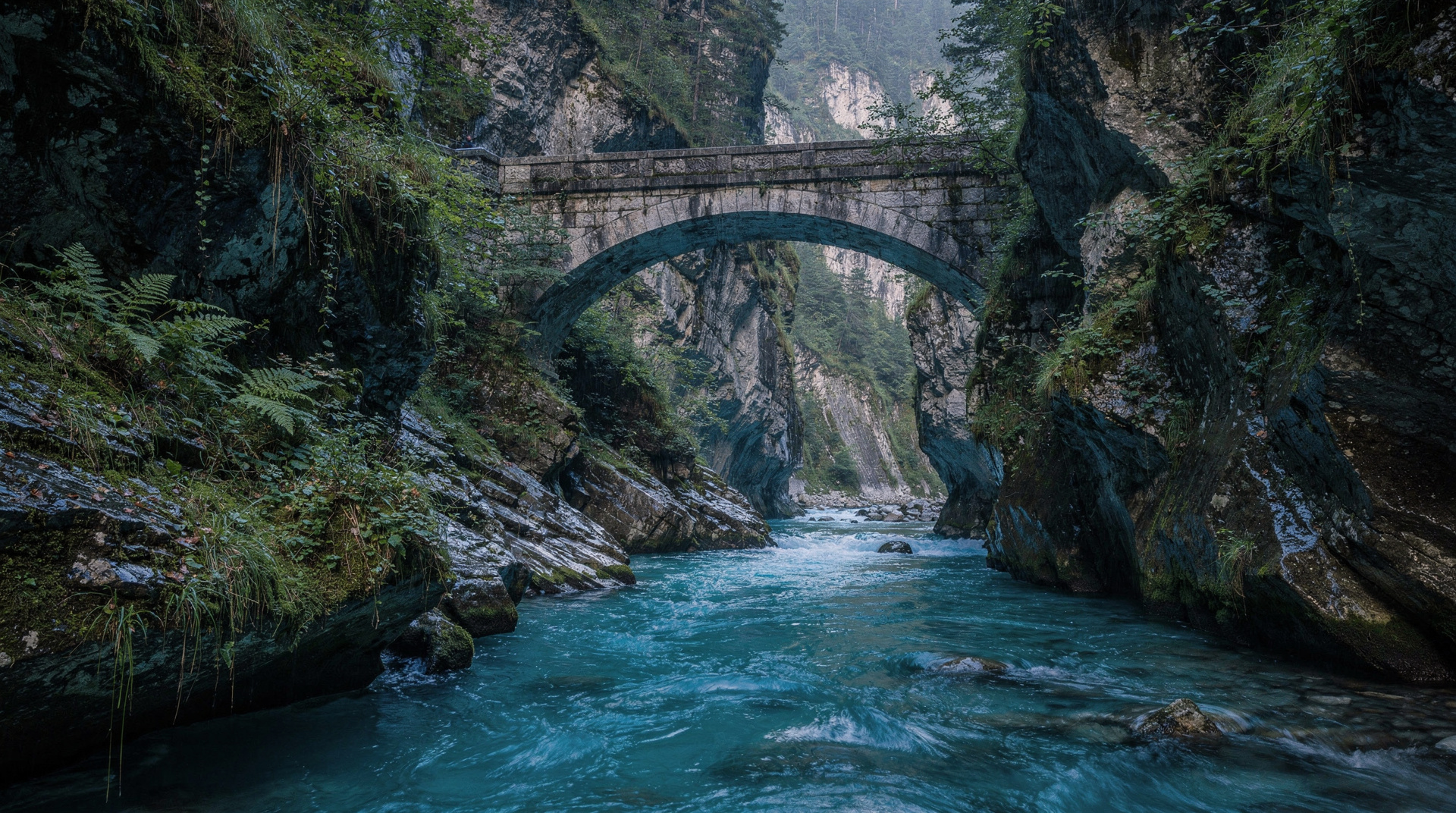
The Soča River is one of those places that photographs can’t quite capture honestly. The colour is wrong in every image — too blue, too cyan, too digital. In person the water is a cool, saturated emerald that seems to generate its own light from the riverbed, the result of glacial meltwater filtering through limestone karst. Couple that with the vertical walls of the Julian Alps on either side, a string of villages with one of the most moving WWI histories in Europe, and access to whitewater, canyoning, kayaking, and hiking that would be a draw on their own, and you have what is, for many travellers, the single most compelling part of Slovenia.
| Where | Northwest Slovenia, 2h from Ljubljana |
| Cost | Around EUR 60 to 130/day incl. one adventure activity |
| Time needed | 3–5 days for Bovec, Kobarid and Tolmin |
| Getting there | Car (2h) or bus to Bovec via Most na Soči |
| Best time | May–June or September for water levels and light |
The valley runs roughly 100km from the source near Trenta in the north to Tolmin in the south, dropping from alpine meadows at 900m to gentler hills at 200m. Bovec is the adventure hub in the upper valley. Kobarid — site of the 1917 Battle of Caporetto — sits in the middle, quieter and more cultured. Tolmin anchors the lower valley where the Tolminka tributary joins the Soča and the scenery opens up. Each has a distinct character; three to five days lets you experience all three without rushing.
The Soča as an adventure destination
The river is classified Grade II–IV depending on section and season, making it one of the most varied whitewater rivers in Europe. The upper section near Bovec (Grade III–IV) is technical enough to be thrilling; the sections near Kobarid are gentler and suitable for first-timers. Water levels are highest in May–June from snowmelt and again in September after autumn rains — these are the peak rafting months. In July and August the river runs lower and warmer, which is better for swimming and kayaking but less dramatic for rafting.
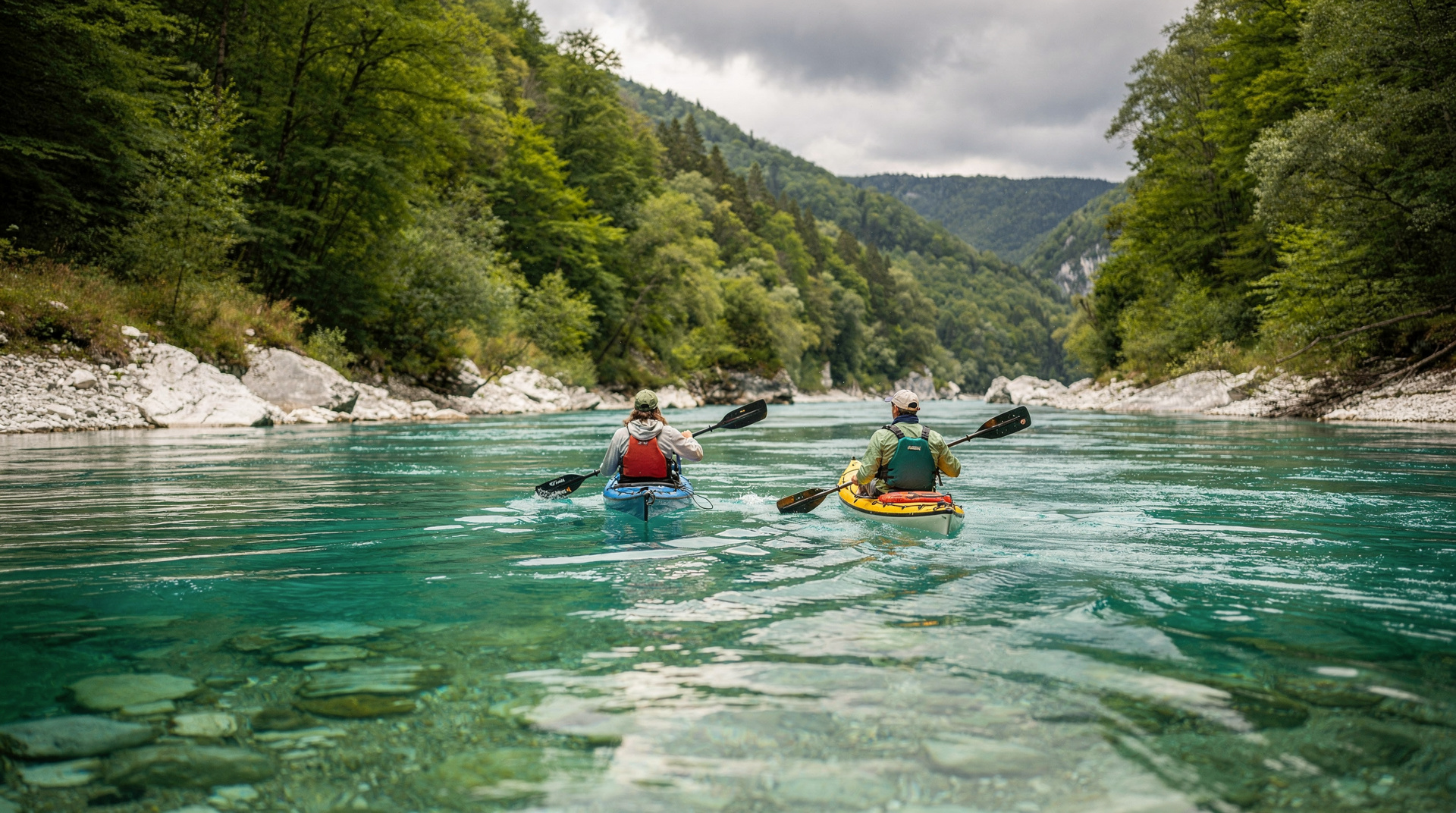
Book whitewater rafting on the Soča near BovecFor kayakers, the Soča offers something rare in Europe: a Grade II–III river accessible to intermediate paddlers with genuinely spectacular scenery and minimal commercial traffic. Several outfitters in Bovec and Kobarid run guided kayak tours for all levels. The lower Tolminka section near Tolmin is popular for stand-up paddleboarding.
Canyoning on the Soča tributaries — particularly Fratarica and Sušec — is among the best in Slovenia. The narrow slot canyons cut through limestone bedrock, with natural waterslides, jumps, and plunge pools. Most operators offer beginner-friendly half-day trips that don’t require prior experience, though you should be comfortable swimming in cold (13–16°C) water.
Half-day beginner canyoning from BovecThe Učja zipline above Bovec is one of the longest in Europe — 2km across the valley at speeds up to 70km/h. It’s a serious structure, not a tourist gimmick, and the views across the valley from the launch platform are worth the trip alone even before the flight.
Seasonal reality check
The Soča Valley is genuinely four-season but with important caveats. In winter (November–April), snow can close the Vršič Pass connecting the valley to Kranjska Gora and Bled. The valley itself rarely gets more than a foot of snow, and rafting operators typically close November–March. The villages are quiet but functional; hiking is possible on south-facing lower trails.
May and early June are arguably the best weeks in the entire valley: snowmelt is pumping the river to full strength, wildflowers are out across the meadows, and the summer crowds haven’t arrived. Prices are low-to-mid season. Late September and October mirror this — slightly lower water but golden light and empty trails.
July and August are busy but not Bled-level overwhelming. Bovec fills up; book accommodation six to eight weeks ahead. The water is warm enough to swim (18–20°C) and every operator is running full programmes.
Bovec: the adrenaline capital
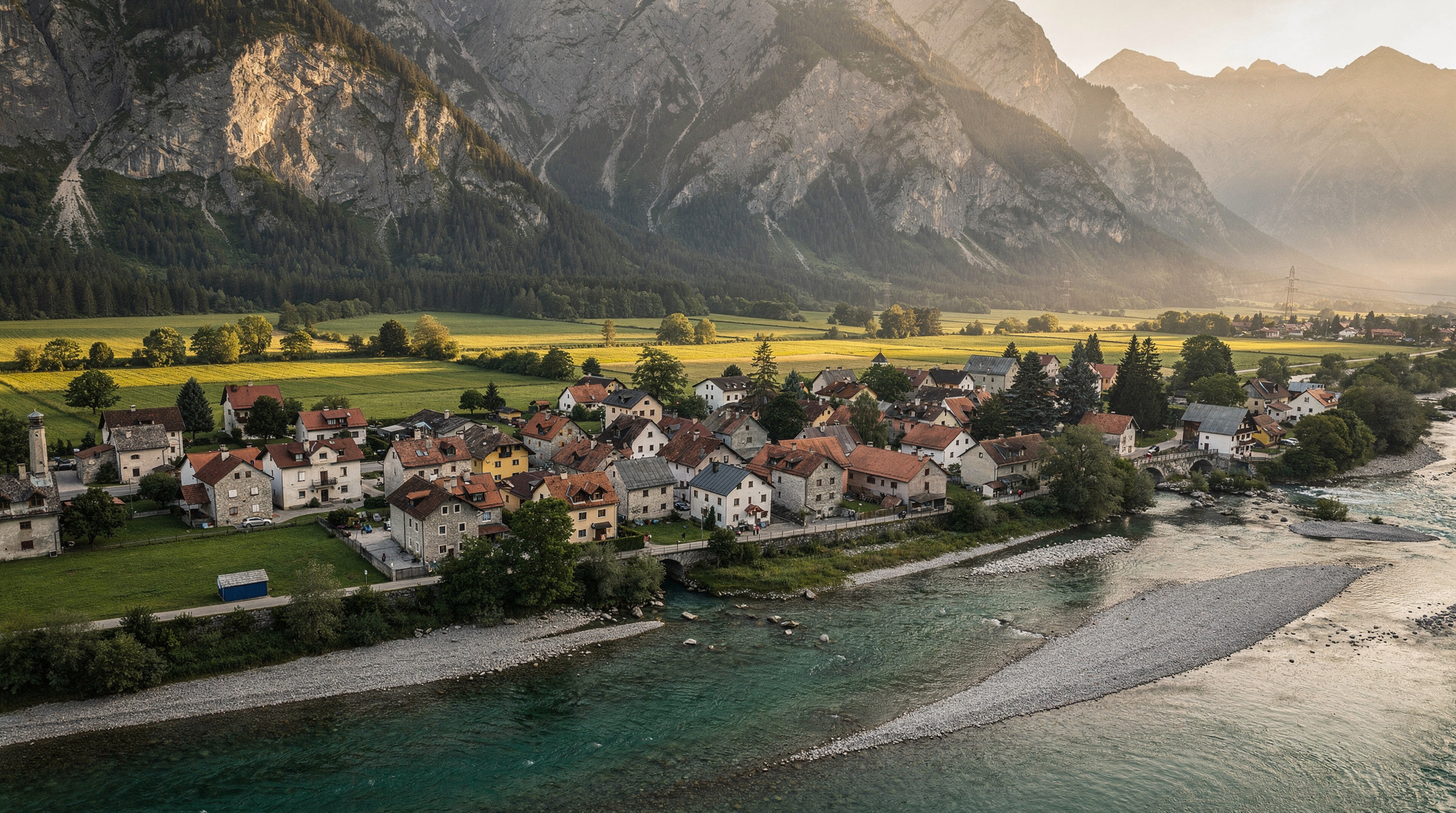
Bovec (475m) is a compact town of around 3,000 people that has organized its entire tourism offer around the river and the surrounding mountains. The main street has a line of adventure operators, gear rental shops, restaurants serving local trout, and a surprisingly decent supermarket for self-caterers.
The surrounding Triglav National Park backcountry offers serious multi-day hiking: the E-path from Bovec toward Trenta follows the upper Soča and is spectacular but requires navigation skills. For day hikes, the Čez Suho route (4h return, 900m ascent) gives expansive views of the valley and the Kanin ski area above.
Budget accommodation in Bovec runs from EUR 20–35 for a dorm bed to EUR 80–120 for a double in a mid-range guesthouse. Eating: trout with polenta at Gostišče Stari Kovač (mains EUR 14–20) is the local standard, reliable and unfussy. Avoid the overpriced tourist menus on the main square.
Kobarid: history with good food
Kobarid (233m) is one of those rare places where a military catastrophe from 1917 has been metabolized into something genuinely moving. The Kobarid Museum — recipient of the Council of Europe Museum Prize — tells the story of the Isonzo Front campaigns, in which half a million men died fighting over a river valley that most of Europe had never heard of. Ernest Hemingway, who served as an ambulance driver at Caporetto, wrote the retreat into A Farewell to Arms. The museum is compact (plan 90 minutes) and extraordinarily well-curated.
The outdoor WWI Walk (3h loop, free) connects surviving fortifications, cemeteries, and observation posts above the town. The Italian Ossuary contains the remains of 7,014 soldiers in a church that has been converted, with dignity, into a memorial.
Kobarid also has, by reputation, the best restaurant in the Soča Valley: Hiša Franko, run by Ana Roš (World’s Best Female Chef 2017), where a tasting menu runs EUR 130–170 per person. It requires booking two to three months ahead for summer. The lunch tasting at Hiša Polonka, same ownership but more accessible (EUR 50–70), is a more realistic option.
See our Kobarid destination page for the full breakdown.
Tolmin and the lower valley
Tolmin is quieter and less touristed than Bovec or Kobarid, which is part of its appeal. The Tolmin Gorges — where the Tolminka and Zadlaščica rivers join the Soča — are among the deepest river gorges in Slovenia, navigable on a 1.5km marked path for EUR 5. The entry point is 1.5km from the town centre.
The lower Soča near Tolmin is flat enough for evening stand-up paddleboarding, a completely different experience from the whitewater sections upstream. The e-bike network from Tolmin south through the valley offers 80km of signed routes through villages that see almost no independent tourists. Read our Tolmin destination page for specifics.
Getting there and around
By car: Ljubljana to Bovec is approximately 2 hours via the A2 motorway and then the valley road from Most na Soči. The drive through the lower Soča gorge from Most na Soči to Bovec is among the best driving roads in Slovenia. Fill up before you enter the valley — petrol stations in Bovec are present but prices are higher.
Without a car: There is a direct FlixBus/Arriva bus service Ljubljana–Bovec (2.5h, EUR 12–18) several times daily in summer. From Bovec to Kobarid a local bus runs twice daily. Between Kobarid and Tolmin a similar service operates. For flexibility within the valley, renting a bicycle or e-bike from your accommodation is the most practical option.
From Bled: The drive over the Vršič Pass (50 switchbacks, 1,611m) is spectacular and takes about 1.5 hours in summer. The pass is typically closed November through May depending on snowpack. Check road conditions at promet.si before attempting it in shoulder season.
For comprehensive logistics, see our getting around Slovenia guide.
The WWI dimension
Beneath the adventure tourism layer, the Soča Valley is one of the most significant WWI landscapes in Europe. Between 1915 and 1917, eleven battles of the Isonzo Front were fought along the river — a campaign in which Italian forces attempted to break through Austro-Hungarian defensive lines and advance toward the Slovenian interior. The mountain geography turned the front into a war of attrition that consumed approximately a million casualties across the eleven battles.
The Kobarid Museum (Council of Europe Museum Prize, 1993) is the finest interpretation of this history. The outdoor WWI Walk from Kobarid connects surviving fortifications, observation posts, and cemeteries in a 5km loop. Along the valley, the cliffs above Bovec, Kobarid, and Tolmin still contain bunker networks that were blasted into the rock between 1915 and 1917; several are accessible on marked trails.
The most haunting aspect of the WWI landscape in the Soča Valley is its overlap with the natural environment. The same limestone cliffs that make the valley beautiful were the terrain that soldiers tunnelled through and died on. The same river that rafters run was used to float resupply pontoons. Understanding this layer adds a dimension to the valley that the adventure sports industry understandably does not foreground but that is present everywhere you look.
Where to base yourself
Choose Bovec if: you’re here primarily for rafting, canyoning, and mountain sports. Best infrastructure, most operators, liveliest evenings.
Choose Kobarid if: you want a mix of history, culture, and lighter adventure. Quieter, better food scene, good central position for day trips to both Bovec (30km) and Tolmin (20km).
Choose Tolmin if: you want the valley without the tourist economy. Cheaper, authentic, better for independent hiking and cycling.
Going deeper on the river and the town bases
If the river is your main reason for coming, our Bovec adventure base guide and the Bovec destination page cover the operators and the town in more detail. The Soča river rafting guide explains how the sections differ, and the kayaking the Soča guide is the place to start if you would rather paddle yourself. For walkers, the Soča trail hike follows the river on foot, while the Soča Valley day trip guide helps if you only have a single day. To fit the valley into a longer route, see the Soča adventure itinerary.
Day trips from the Soča Valley
The valley’s position makes it a natural base for excursions to Goriška Brda (35km west, Slovenian wine country), Triglav National Park (accessible from the Vršič Pass), and the Slovenian coast (Piran is 90km southwest, about 1.5 hours).
Most visitors overlook the Tolmin Gorges and the small archaeological site at Most na Soči, where Iron Age finds suggest a significant pre-Roman settlement at the confluence of the Soča and Idrijca rivers. The finds are held in the National Museum of Slovenia in Ljubljana, but the setting is worth a brief stop.
Consult our best time to visit Slovenia guide for seasonal planning across the whole country.
Frequently asked questions about Soča Valley
Is the Soča River dangerous for swimming?
The river is cold (12–17°C) and has strong currents in places, particularly in the upper sections near Bovec and through the Soča Gorge. Marked swimming spots (kopališčes) near Bovec and Kobarid are supervised in peak season and are safe for confident swimmers. Never swim in unmarked sections of the upper valley — the current is deceptive. Children should be closely supervised everywhere.
Do I need experience for rafting on the Soča?
No prior experience is necessary for guided commercial rafting trips on the standard Bovec section. Operators provide wetsuits, helmets, and full instruction. The minimum age is typically 7–10 years depending on the operator and section. Advanced or independent kayaking on the upper sections requires real whitewater skills.
When does the Soča Valley get crowded?
July and August are the busiest months — accommodation fills up and rafting companies run at capacity on weekends. It never reaches the dysfunction of Bled or Postojna in summer; the valley is long enough to absorb visitors. Weekdays in July are noticeably quieter than weekends. May–June and September are the sweet spots.
Can I visit the Soča Valley without a car?
Yes, but with reduced flexibility. Direct buses from Ljubljana run daily in summer. Within the valley, buses connect Bovec, Kobarid, and Tolmin. Most adventure activities are bookable with pickup from accommodation. If you plan to hike extensively in Triglav National Park or explore the upper valley near Trenta, a car or guided tour is significantly more practical.
What’s the honest tourist trap warning for the Soča Valley?
The valley is relatively free of traps — there are no single over-priced icons equivalent to Bled island or Postojna. The main thing to watch is booking adventure activities through your accommodation or random touts: prices are often 20–30% higher than booking directly with operators. Compare prices at two or three operators before committing. Also: “Soča experience” packages that bundle multiple activities sometimes omit details about water temperature or timing — ask specifically about water levels before committing to a rafting session in late summer when the river runs low.
Are there alternatives to the standard rafting itinerary?
Yes. The e-bike routes through the valley are exceptional and almost entirely undiscovered by international tourists. The Soča e-bike explorer route covers 80km from Tolmin toward the coast and is manageable as a two-day ride. Fly-fishing on the Soča for marble trout (endemic to the basin) is world-class and available through licensed guides. The valley’s rock climbing walls near Bovec are increasingly popular with sport climbers.
Bovec vs Kobarid vs Tolmin: choosing your base
| Base | Character | Best for | Trade-off |
|---|---|---|---|
| Bovec | Adventure-sports hub, liveliest | Rafting, canyoning, ziplining | Busiest, priciest in July–August |
| Kobarid | History and food, central | WWI museum, fine dining, day trips both ways | Fewer adventure operators on-site |
| Tolmin | Quiet, budget, authentic | Cyclists, gorge walkers, independent hikers | Furthest from Bovec’s whitewater sections |
Most first-time visitors base in Bovec for convenience. Repeat visitors, or those prioritising food and history over adrenaline, increasingly choose Kobarid as the more balanced central option — see the Kobarid destination page for its own logistics.
Reaching the valley from other Slovenian bases
Beyond the direct Ljubljana routes, the Soča Valley connects naturally with two other regions worth knowing about. From Kranjska Gora, the Vršič Pass drive (in season) puts Trenta and Bovec within about an hour, making a Kranjska Gora–Soča combination realistic for a Julian Alps loop that avoids backtracking through Ljubljana. From the coast, the drive from Piran or Nova Gorica up through Tolmin is the natural approach if you’re arriving from Italy or combining the valley with the Slovenian coast rather than the capital.
For hikers wanting to link the valley with the high mountains directly, the Triglav National Park guide covers the trailheads accessible from Trenta and the Vršič Pass in more detail than fits here.
Packing and gear notes specific to the Soča
Because most of the valley’s headline activities involve cold glacial-fed water, what you pack matters more here than almost anywhere else in Slovenia. Wetsuits, helmets and buoyancy aids are provided by every licensed rafting, kayaking and canyoning operator, but bring your own quick-dry clothing for the change afterward — mountain evenings in Bovec and Kobarid cool quickly even in July. A dry bag for phones and cameras is worth carrying on any river-adjacent walk, since spray from the rapids reaches further than it looks. If you’re driving the Vršič Pass, check tyre requirements in shoulder season; snow chains are sometimes still required into May at the higher switchbacks even when Bovec itself is warm and dry.
Honest verdict
Top experiences
Bookable activities with verified prices and instant confirmation on GetYourGuide.