Nova Gorica: the border city between two wine worlds
Border city flanked by Goriška Brda and the Vipava Valley — practical base for western Slovenia's wine country, no tourist gloss.
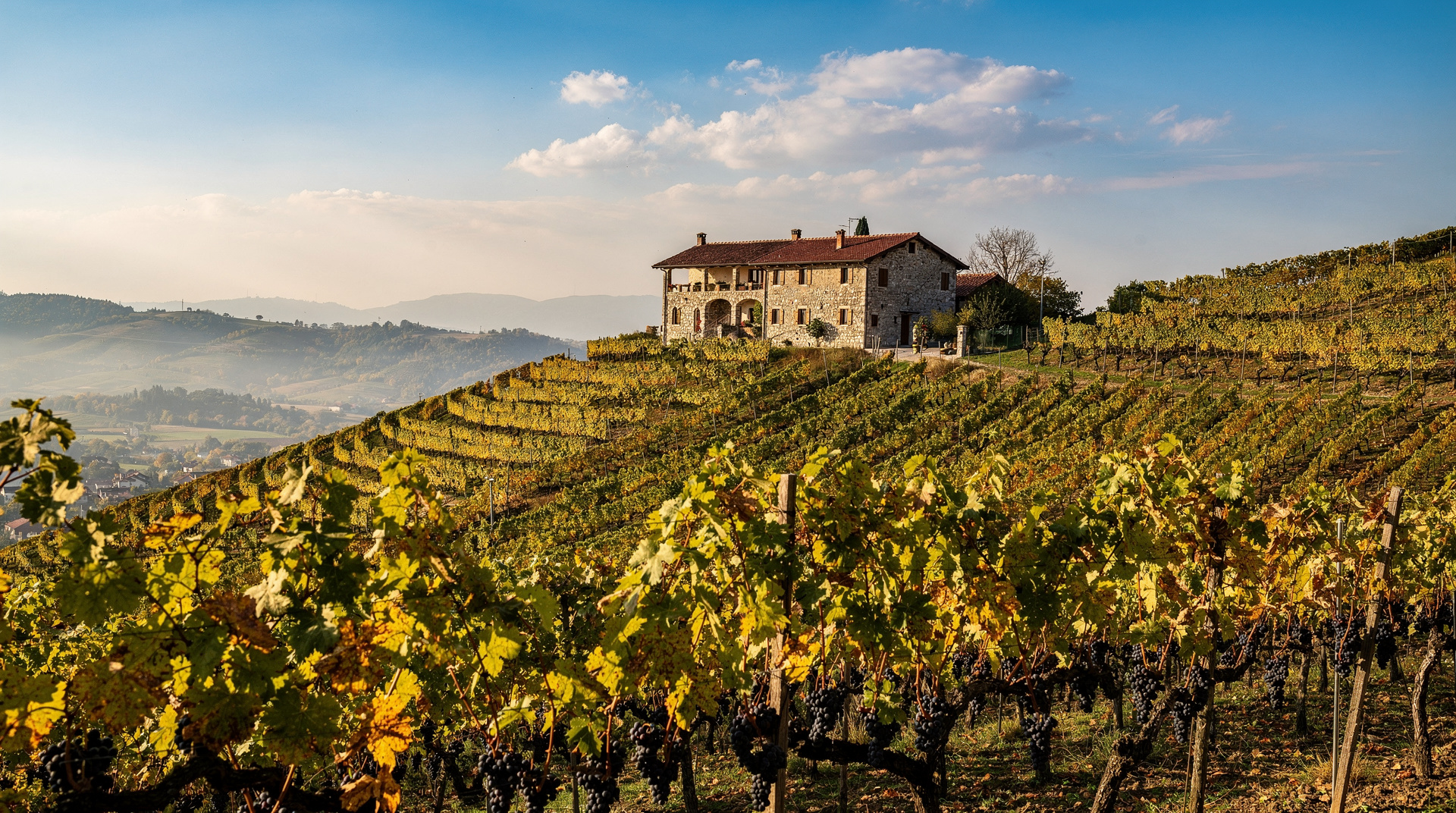
Goriška Brda: wine walk and tasting
Quick facts
- Best time to visit
- May–October
- Days needed
- Half to 1 full day (usually a base, not a destination)
- Getting there
- Train from Ljubljana (1h30); car 1h20 via A2 motorway
- Budget per day
- EUR 55 to 110
Two cities, one square, no border fence
Nova Gorica exists because of a political decision made in 1947. When the Paris Peace Treaty divided the historic city of Gorizia between Italy and Yugoslavia, the Italians kept the old city and the Yugoslavs built a new one from scratch on the adjacent plain. The two cities grew up face to face, separated by a wire fence during the Cold War years, then by an open border crossing after 1991, and finally, since 2004 with Schengen, by nothing at all.
| Where | Western Slovenia, on the Italian border |
| Cost | around EUR 55–110/day |
| Time needed | Half to 1 day as a stop; 1–2 nights as a wine-country base |
| Getting there | Train from Ljubljana, around 1h30, or car 1h20 |
| Best time | May–October |
Today the border crossing at Piazza della Transalpina/Trg Evrope is a small square divided by a line of paving stones marking where the frontier used to be. An Italian bar and a Slovenian bar stand perhaps 200 metres apart, and people cross for coffee or wine in either direction without showing anything to anyone. In 2025, the combined city of Gorizia/Nova Gorica holds the title of European Capital of Culture — a first for a binational urban area. That story is genuinely interesting even if the cities themselves are not conventionally beautiful.
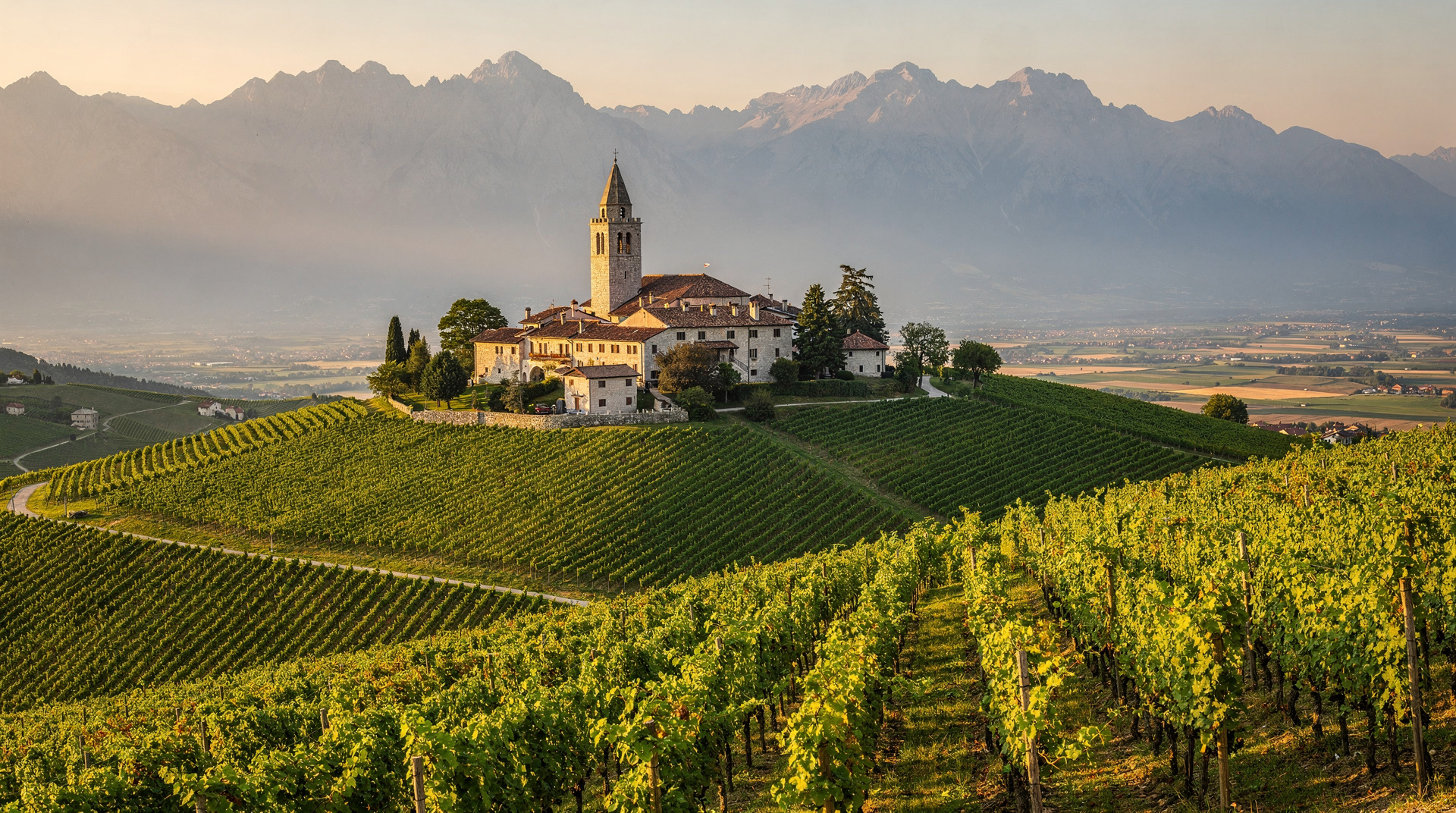
Nova Gorica is not a destination in the usual sense. It is a functional Slovenian town — post-war town planning, a casino that attracted Italians during Yugoslavia’s more permissive gambling laws, a decent local wine scene, and a position flanked by two of Slovenia’s best wine regions. Most people who stay here are using it as a base for the Goriška Brda (30 minutes north) and the Vipava Valley (25 minutes east).
What to see in the city itself
Piazza della Transalpina / Trg Evrope. The symbolic border square is worth 20 minutes. The central monument — an art installation marking the European Capital of Culture year — changes with exhibitions. Stand on the line and take a photo; it is one of the more unusual photo opportunities in Slovenia. Both the Italian and Slovenian sides of the square have small cafes.
Kostanjeviška jama cave. A short, guided cave visit (less than an hour, entry around EUR 7) available on demand in the hills above Nova Gorica — a small karst cave with stalactite formations, typical of the Karst plateau geology. Less impressive than Postojna or Škocjan but a pleasant add-on for visitors staying in the area.
Goriška Brda wine shop at Dobrovo Castle. Not technically in Nova Gorica (it is 35 minutes north), but accessible in a half-day loop from the city and the best single place to buy Brda wines with advice from someone who knows the producers.
Wine route day trips: the most productive use of a day based in Nova Gorica is a wine country excursion. A guided wine walk through Goriška Brda picks up from the area and takes you through the vineyards to producers — the practical way to experience the wine hills without a car or local knowledge.
The wine scene in town
Nova Gorica itself has wine bars and restaurants drawing on both the Brda and Vipava Valley supply chains. The town market (Tržnica) has a wine section with local producers selling direct. A few wine bars in the pedestrianised centre (Erjavčeva ulica area) serve both Slovenian and Italian Friulian wines.
Hiša Franko is not in Nova Gorica proper — it is at Kobarid in the Soča Valley, about 50 km north — but it is worth mentioning because it is the restaurant that put this corner of Slovenia on the international food map. If you have a reservation, it is 50 minutes from Nova Gorica by car.
Gostilna Stara Gora (above the city on the Sveta Gora hill) serves traditional Slovenian food with views over the Soča valley and the Italian plain. The svete gora (holy mountain) panoramic view is one of the best in western Slovenia on a clear day.
Getting there
By train: Nova Gorica is connected to Ljubljana by a direct train service, journey time 1h30–2h depending on the train (EUR 9–13 one way). The station is well positioned near the centre. This is the most practical way to arrive without a car.
By car: from Ljubljana, take the A1 motorway west and then the A2/E61 motorway towards Nova Gorica (about 115 km, 1h20). The motorway passes through the Karst plateau and descends into the Soča valley — a genuinely scenic approach.
From Trieste: about 45 minutes by car. Cross-border buses also run between Trieste and Nova Gorica.
From Koper / Slovenian coast: about 1h15 by car — a natural logical connection for visitors doing a western Slovenia circuit.
Practical notes
Accommodation: Nova Gorica has the most hotel options in western Slovenia outside Ljubljana — a useful fact if you are staying for multiple nights to explore the wine regions. Prices are lower than the coast: EUR 65–100 for a mid-range double. The Hotel Perla (also a casino hotel) is central and comfortable; several smaller guesthouses are on the outskirts.
The casino: Nova Gorica developed a cluster of casinos during Yugoslav times specifically to attract Italian visitors (gambling was restricted in Italy). The casinos are still operating and draw Italian day-trippers. This gives the town a slightly odd atmosphere in the evenings — not unpleasant, just unusual for a small city. The casino hotels tend to be good value because they subsidise room rates with gambling revenue.
Gorizia (Italian side): cross on foot or by car and spend an hour in the Gorizia old town, which has a medieval castle, a handful of good Italian restaurants, and a slightly melancholy beauty from being the city that history divided. The most interesting part is the Borgo Castello hill with the castle and the church of Sant’Ignazio. Italian food and wine standards apply: espresso is better, prices are higher.
European Capital of Culture 2025: the joint designation runs through 2025 with a programme of events, exhibitions and installations in both cities. Some cultural infrastructure built for the year will remain; check the official programme (goriva2025.eu) for what is still active in 2026.
Combining with the wine regions
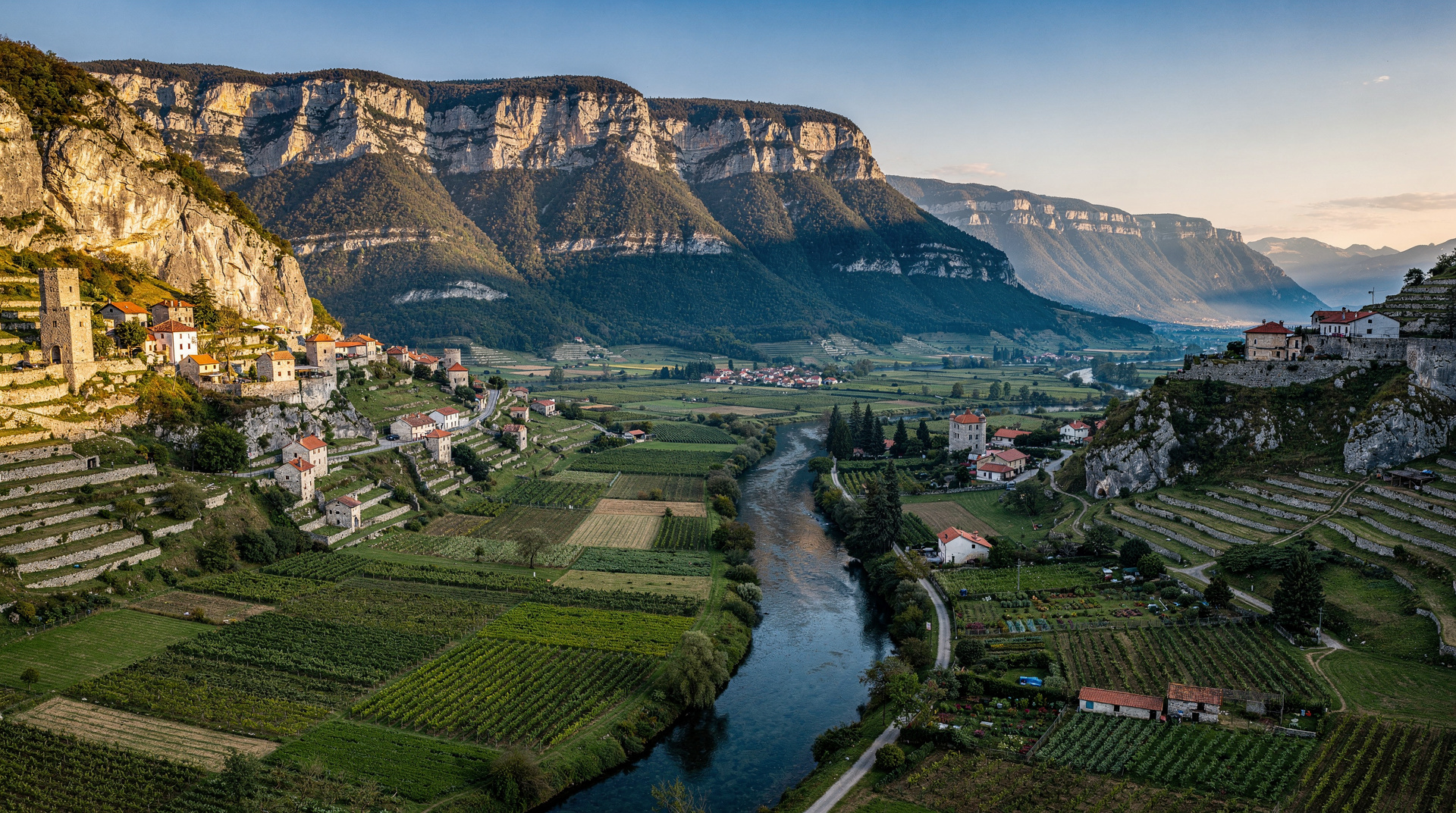
The classic two-day wine circuit based in Nova Gorica: day one in Goriška Brda (drive or join the Brda wine walk), day two in the Vipava Valley (30-minute drive east, independent exploration or guided tasting). This covers the two main wine styles of the region — the richer, fruitier Brda wines versus the leaner, more mineral Vipava style — and gives you a real basis for comparison.
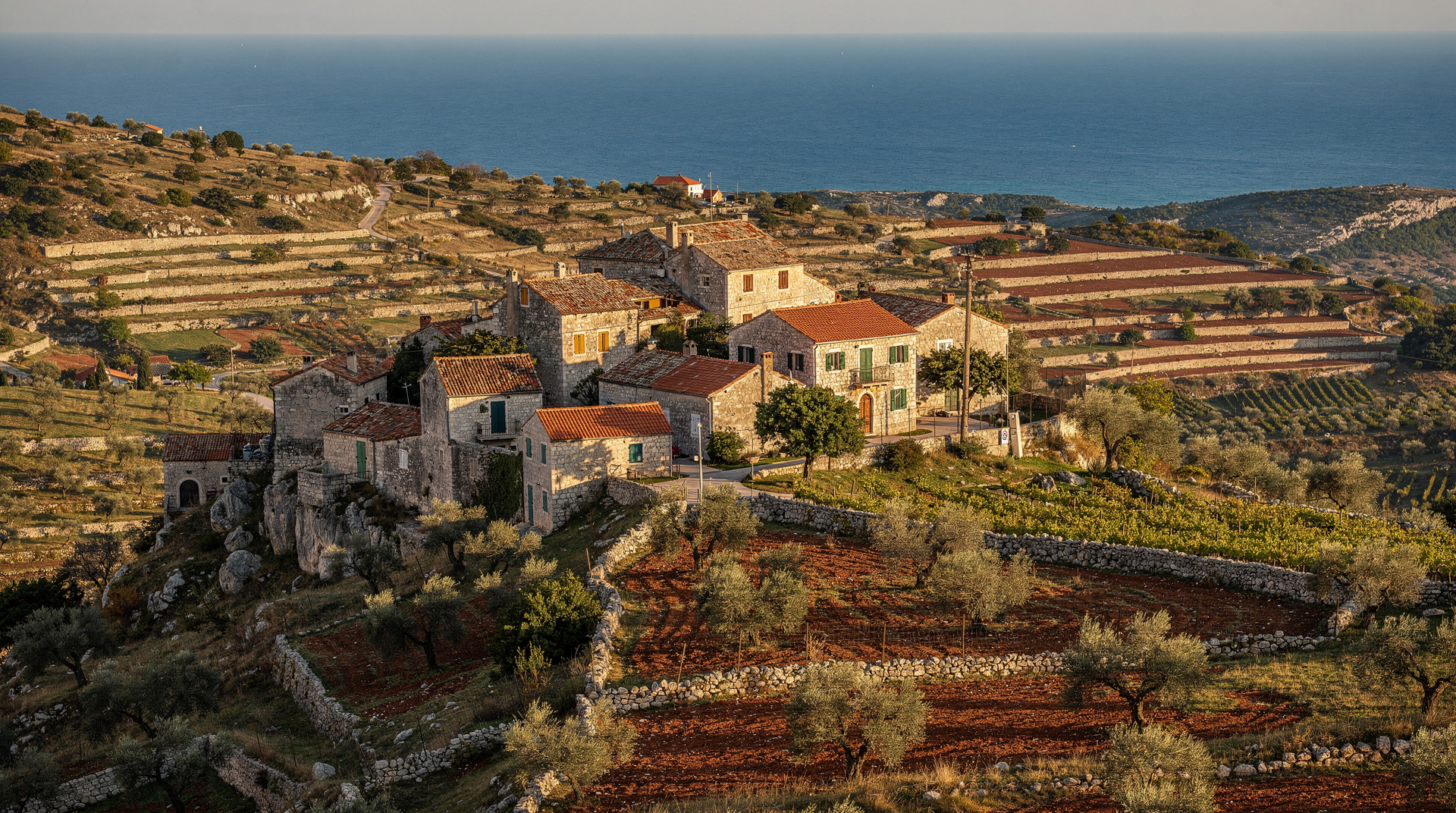
A three-day version adds a day on the Slovenian coast (about 1h15 south) for olive oil and seafood, completing a triangle of the western Slovenia food and wine geography.
For a single guided option that covers both wine regions without renting a car, a wine expedition through Vipava and Goriška Brda picks up from the area and visits producers in both valleys in one day — the practical choice if you have only one day to spare and want the comparison without driving yourself.
The Goriška Brda wine guide and the Vipava Valley wine guide have producer details for independent exploration. The getting around Slovenia guide covers car hire and rail logistics for western Slovenia.
The Soča Valley from Nova Gorica
Nova Gorica is the southern gateway to the Soča Valley — one of Slovenia’s most dramatic landscapes, with the emerald Soča river running through a gorge carved in pale limestone. Kobarid (the site of the 1917 battle of Caporetto, now hosting the finest WWI museum in the Alps) is about 50 km north by car, a straight drive up the Soča valley. Bovec (the adrenaline sports capital of Slovenia) is 75 km north.
If you have a car and a free day from a Nova Gorica base, a drive north through the Soča valley to Kobarid and back is one of the most beautiful road routes in the country. The Nadiža river pools near Robič, accessible off the valley road, are worth a swimming stop in summer — cold but brilliantly clear.
This extends the Nova Gorica base into a genuinely versatile one: wine country to the north and east, coast to the south, and alpine drama to the north along the Soča. Few other Slovenian cities give you this range within an hour’s drive.
Planning onward routes from the border
Because Nova Gorica is a base rather than a showpiece, it pays to decide early where each day will go. For the mountain side of the region, the Soča Valley and the small town of Kobarid are the natural first choices, while Bovec suits travellers who want river sports rather than wine. If the coast appeals more, Koper is the usual first stop on the way south.
Crossing into Italy is just as simple as heading north. Our Trieste day trip guide explains how to extend a stay here with a visit to the Adriatic port city, and it fits easily into a day when the weather is poor for vineyard walking.
Timing matters too: the best time to visit Slovenia guide helps you decide whether to aim for the warm months of the wine season or a quieter shoulder period, and the Julian Alps hiking guide is worth a look if you plan to pair the wine hills with a few days on mountain trails.
Sveta Gora (Holy Mountain)
The Sveta Gora pilgrimage church stands on a limestone ridge directly above Nova Gorica, accessible by a road from the city (about 15 minutes by car) or by foot on a marked pilgrim path (about 1.5 hours). The church has been a Marian pilgrimage site since the 16th century and the view from the ridge is panoramic: the Soča valley to the north, the Italian Friulian plain to the west, the Vipava valley to the east, and on clear days the Gulf of Trieste visible to the southwest.
The church was destroyed in WWI (1916) and rebuilt after the war. The current building is a striking early-20th-century reconstruction. It is primarily a religious site but the view alone justifies the drive. The small café near the upper car park is open in summer.
The site sits within the Isonzo Front battlefield landscape — the WWI front line that ran through this exact terrain between 1915 and 1917, one of the war’s bloodiest and least remembered theatres outside Italy and Slovenia. Walkers with an interest in military history can combine Sveta Gora with the trenches and memorial sites scattered across the surrounding hills; the Kobarid museum, further north up the Soča valley, gives the fuller context.
Food and drink in Nova Gorica
The city has a decent restaurant scene given its size, and the proximity to both Friulian Italy and the Brda wine zone means the wine lists in better restaurants are excellent.
Restavracija Manzin (Ulica Gradnikove brigade) is the best kitchen in the city proper: a focused menu using local Brda and Karst ingredients, serious wine list, clean cooking. Mains EUR 18–25.
Gostilna pri Lujzki is a traditional Slovenian restaurant on the edge of town — straightforward grilled meats, local sausage, daily soup — at prices (EUR 10–14 for a full meal) that reflect a local customer base rather than tourist demand.
The Italian side for coffee and aperitivo: Gorizia’s old town bars do a better espresso than the Slovenian side (this is not controversial — Italian espresso culture is what it is). Cross for morning coffee, come back for Slovenian wine at lunch. The combination is entirely normal for people who live here.
Getting around western Slovenia from Nova Gorica
Nova Gorica works as the single base for a multi-day western Slovenia circuit because of its train connection to Ljubljana and its car-accessible position at the centre of the region. From the city, the key destinations break down by driving time:
- Goriška Brda (Šmartno village): 25–35 minutes north
- Vipava Valley (Ajdovščina): 25–30 minutes east
- Slovenian coast (Koper): 1h10–1h20 south
- Kobarid and the Soča Valley: 50 minutes north
- Trieste (Italy): 40 minutes west
- Ljubljana: 1h20 by car or 1h30–2h by train
This puts Nova Gorica in a genuinely useful position for a 4–5 day western Slovenia itinerary. The train connection back to Ljubljana means you can return a hire car at Nova Gorica and train back to the capital if your itinerary ends here.
Nova Gorica as a base: who it suits
| Nova Gorica | Ljubljana | |
|---|---|---|
| Best for | Wine-region touring, budget, rail access | First-timers, city sights |
| Hotel prices | Lower (EUR 65–100 double) | Higher (EUR 120–180 old town) |
| Distance to Brda/Vipava | 25–35 minutes | 1h30–2h |
| City sights of its own | Limited (half-day) | 2–3 days worth |
| Best used for | A wine-country week | A short city break |
Choose Nova Gorica if the wine regions and the Soča Valley are your main goal and you want to minimise driving each day. Choose Ljubljana as a base if you want a genuine city break with day trips layered on top, and accept longer drives to reach the wine country.
Is Nova Gorica worth visiting on its own?
Honestly, no — not as a standalone destination. The city itself offers perhaps half a day of genuine interest: the border square, a cave, a pilgrimage hill, and a decent restaurant scene. What makes it worth including in an itinerary is entirely about position: it puts you closer to Goriška Brda, the Vipava Valley, the Soča Valley, the Slovenian coast, and Trieste than any other Slovenian base, all within roughly an hour. Travellers who arrive expecting a city on the level of Ljubljana or Piran will be disappointed; travellers who arrive expecting a practical, well-connected wine-country base will find exactly what they need.
See the Slovenian wine guide for context on the whole western Slovenia wine geography including Nova Gorica’s position between the Brda and the Vipava Valley.
Top experiences
Bookable activities with verified prices and instant confirmation on GetYourGuide.