Vipava Valley: Slovenia's most underrated wine region
Vipava Valley produces some of Slovenia's most interesting wines from indigenous varieties, in a dramatic karst landscape few visitors reach. Honest guide.
From Ljubljana: Vipava Valley wine express tour
Quick facts
- Best time to visit
- May–June, September–October
- Days needed
- 1–2 days
- Getting there
- Car from Ljubljana (50 min); bus to Ajdovščina from Ljubljana (1h30)
- Budget per day
- EUR 60 to 130
The wine valley the rest of Europe hasn’t found yet
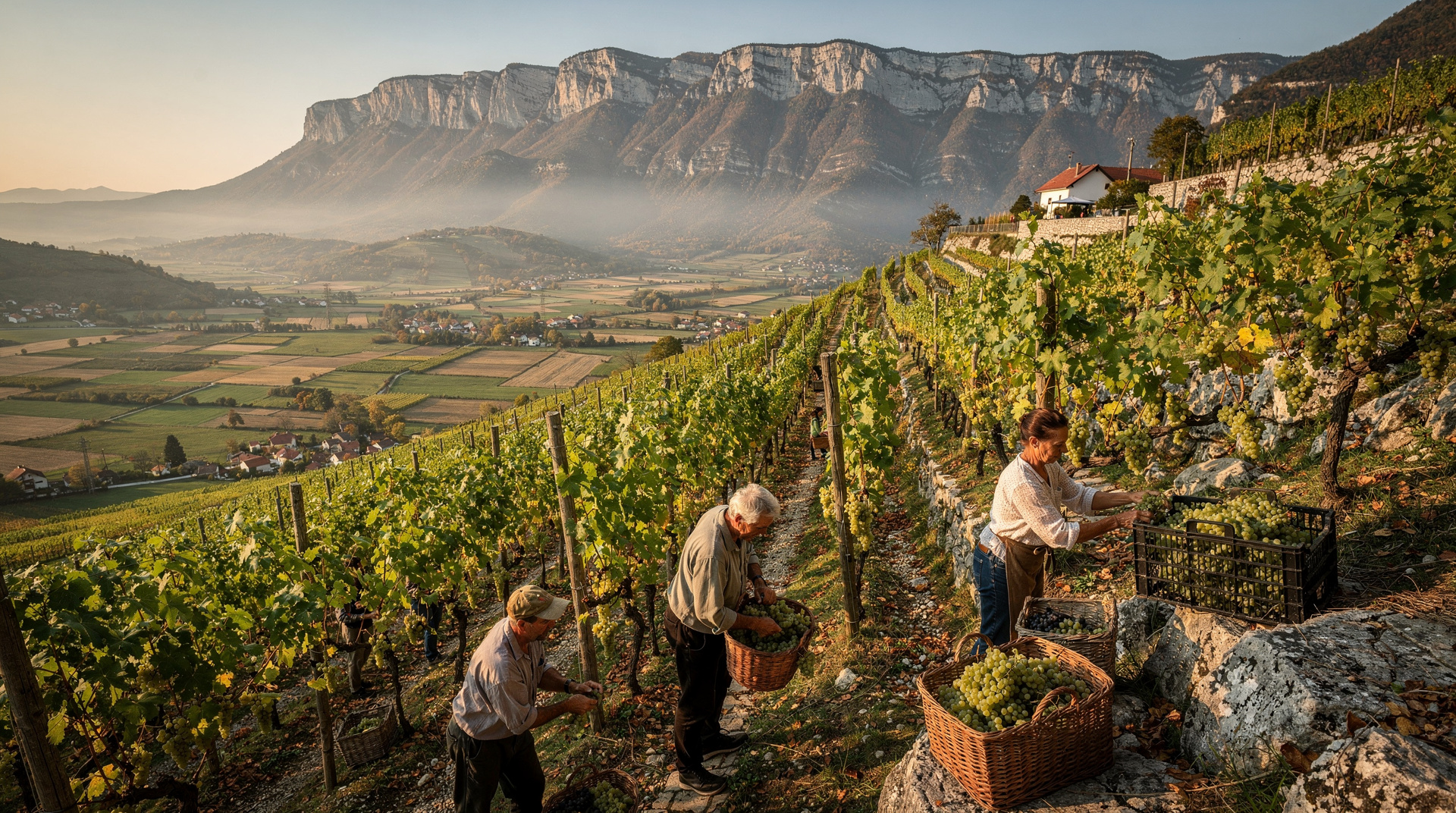
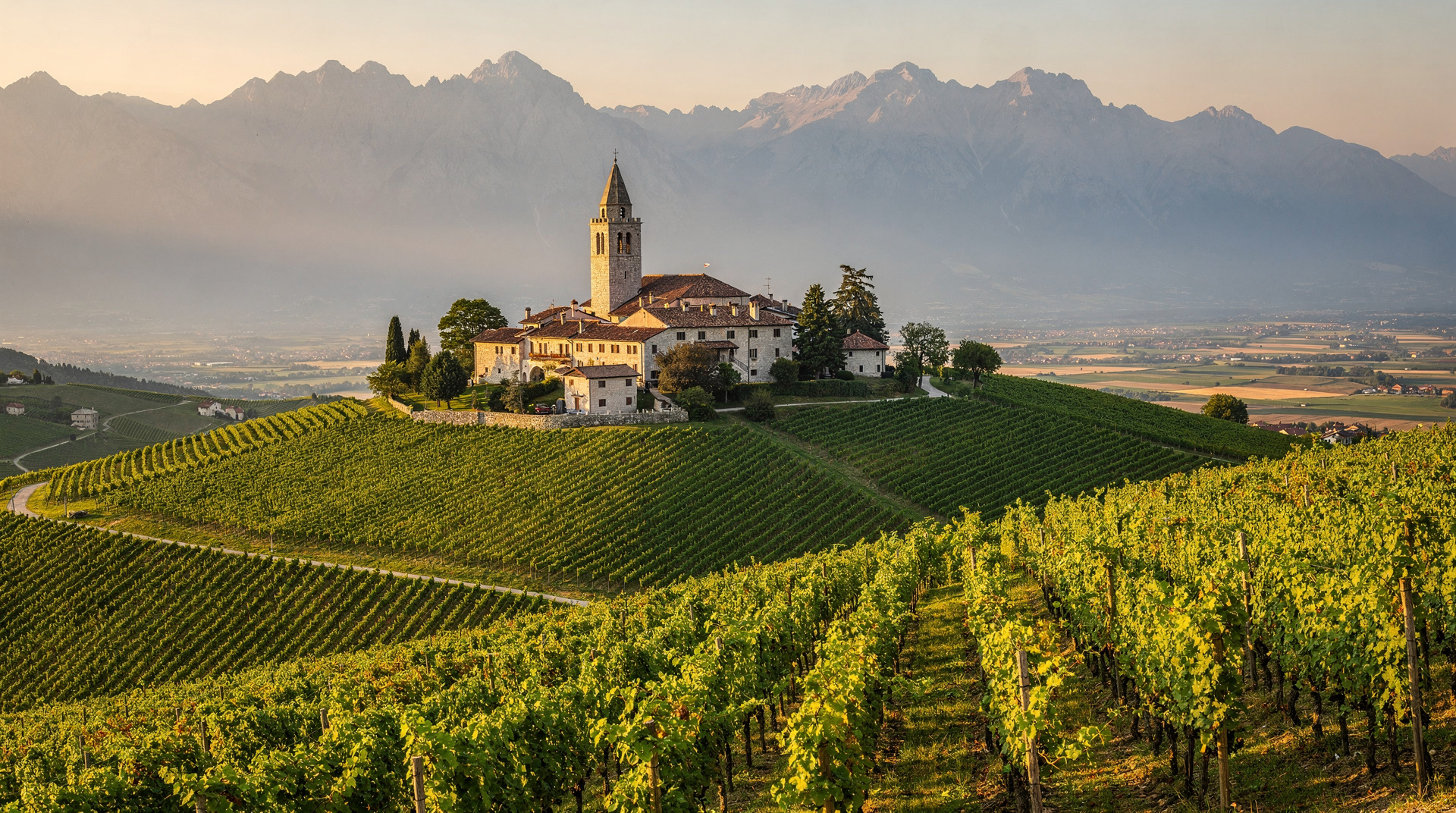
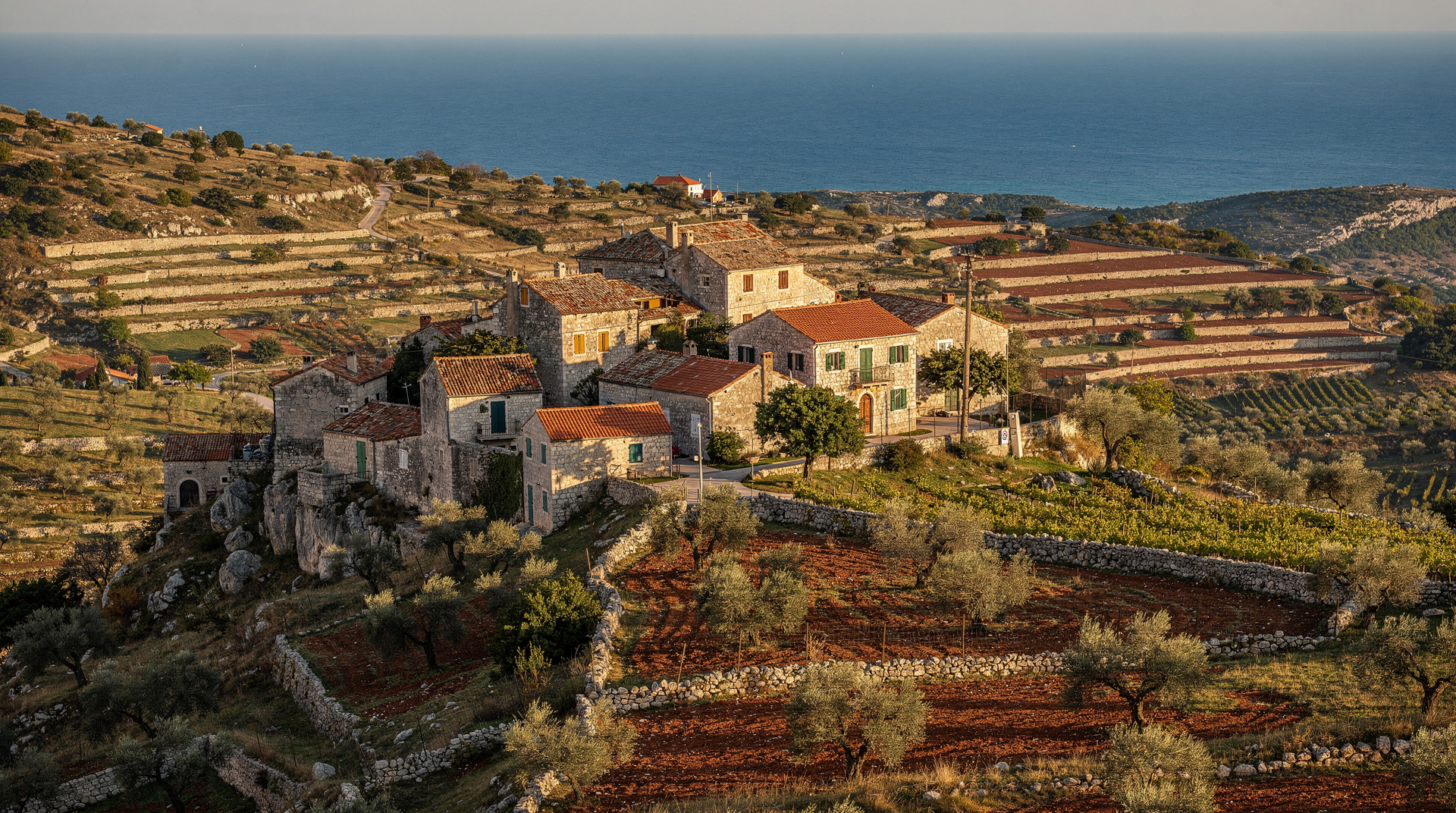
The Vipava Valley cuts between the Karst plateau and the Trnovo plateau in western Slovenia — a flat valley floor, pale limestone walls on both sides, the young Vipava river running through it, and vineyards on every south-facing slope. The town of Ajdovščina (the valley’s main settlement) was a Roman fort town; the village of Štanjel on the plateau edge above is fortified and medieval; the wind that sweeps down from the karst, the Burja (Bora), can blow at 100 km/h in winter and shapes everything about how people live and what grapes they grow here.
| Where | Western Slovenia, between Ljubljana and Nova Gorica |
| Cost | around EUR 60–130/day, incl. tastings and a meal |
| Time needed | 1–2 days; feasible as a long day trip from Ljubljana |
| Getting there | Car (50–55 min from Ljubljana) or bus to Ajdovščina (around EUR 7–9, 1h30) |
| Best time | May–June or September–October; avoid the Burja-heavy winter months |
What makes the Vipava Valley genuinely interesting to wine travellers is its grape diversity. This is one of the few wine regions in Europe still cultivating a significant number of indigenous varieties that exist almost nowhere else: Zelen (“green”), a white grape with a distinctive herbal bite; Pinela, a delicate, high-acid white; and Klarnica, a red that almost disappeared before local winemakers rescued it. The valley also grows Malvazija, Rebula, Sauvignon Blanc and Merlot to high standards. But the indigenous varieties are the reason serious wine travellers come.
Producer access is excellent — most cellar doors are open or available by appointment, and the winemakers are genuinely interested in visitors who want to understand what they are growing.
The landscape
The valley sits at 90–200 metres altitude, sheltered by the plateaux above. The Karst to the south (where Lipica and Škocjan Caves are located) is around 300–400 metres; the Trnovo forest plateau to the north rises to 1000 metres. This creates a specific microclimate: warm, relatively dry, with the Burja wind a constant feature. Vines on the valley slopes are trained low to the ground (unlike the higher-trained systems in the Brda) partly because of the wind, partly because of the rocky soil.
The limestone walls of the valley edge are serious rock climbing terrain. The crags above Ajdovščina and around Otlica attract a committed climbing community, and a number of sport routes up to 8c are bolted on the main walls. This is a minor destination in the European climbing world but a legitimate one.
Walking the valley floor: a marked cycling and walking route runs along the Vipava river from Ajdovščina downstream to Vipava town — about 12 km, flat, through orchards and vineyards, with good views of the karst walls above. Vipava town itself has a spring that produces the river from a cave mouth in the old town centre — a genuinely unusual phenomenon worth seeing.
The wine: indigenous varieties and natural producers
The Vipava Valley’s wine community has developed in a more experimental direction than most Slovenian regions over the past decade. A significant number of producers here work with natural wine methods — minimal sulphur, no filtering, wild yeast fermentation — while still producing wines that are technically sound rather than deliberately challenging.
Producers worth seeking out:
Burja Estate (Štanjel area) is internationally known for its work with indigenous varieties, particularly Zelen and Pinela. The wines are precise, mineral and structured. Appointment required; the estate does not have a public tasting room but welcomes serious visitors.
Guerila (Nova Gorica area, in the valley zone) is one of the most technically proficient of the natural-leaning producers. The Zelen is exceptional — lime blossom, mountain herbs, strong acidity. Wines available at the estate and at good wine shops in Ljubljana.
Batič Winery (Šempas village) has been working with indigenous varieties since the 1990s, before it was fashionable. The Zelen and the orange-style Rebula are benchmarks. The family winery is open for visits; good English spoken.
Scurek (near Šempas) bridges natural and conventional winemaking and produces reliable, well-priced wines across a broad range. Easy to visit; a good introduction to the valley’s range.
For visitors coming by train or bus, a Vipava wine express from Ljubljana brings you directly into the valley with transport, a guide, and structured cellar visits — removing the logistics problem. A half-day Vipava wine tasting experience is more flexible if you are already in the valley.
For a combined wine day covering both the Vipava Valley and Goriška Brda, a Winexpedition Vipava and Brda packages both regions with transport and guide.
Vipava Valley vs Goriška Brda: which wine region first?
Visitors with only one wine day near Ljubljana often ask whether to head for the Vipava Valley or for Goriška Brda instead. Both are legitimate, but they reward different priorities.
| Vipava Valley | Goriška Brda | |
|---|---|---|
| Distance from Ljubljana | 50–55 min by car | around 1h15 by car |
| Grape focus | Indigenous Zelen, Pinela, Klarnica | Rebula, Merlot, international blends |
| Landscape | Flat valley floor under limestone walls | Rolling hills, closer to Italian Collio |
| Wine style | Natural, experimental, mineral | Polished, internationally styled |
| Best for | Curious drinkers, cyclists, climbers | Classic wine-country scenery, longer stays |
Neither is objectively better — the Vipava Valley wine guide and the Goriška Brda wine guide both go deeper into producers. If time only allows one, choose Vipava for indigenous varieties and easy access from the capital, or Brda for a fuller multi-day wine-country experience. If you can’t decide, the combined Winexpedition tour mentioned above covers both regions in a single guided day.
Where to eat and stay
Gostilna Mahorčič (Podnanos village, on the valley floor below Štanjel) is the best traditional restaurant in the valley: trout, Vipava lamb, hand-made pasta with seasonal mushrooms. Mains EUR 13–18. The wine list is exclusively Vipava, reasonably priced.
Pri Lojzetu (Dvorec Zemono, above Vipava town) occupies a 17th-century fortified manor and is one of the finest restaurants in Slovenia — an unusually ambitious kitchen in a rural setting, with a tasting menu around EUR 65–85 per person. Reserve weeks in advance. The manor also has a small number of rooms.
Agriturismo Špilar (Šempas) is a farmstay with simple rooms and breakfast using produce from their own land — wine, honey, cured meats, orchard fruit. Around EUR 55–70 per person half board.
Ajdovščina has mid-range hotels (Hotel Vipavski križ) if you need a standard option — EUR 70–100 for a double room. It is a functional town without strong character but a convenient base.
Getting there
By car from Ljubljana: the valley is 50–55 km from Ljubljana via the A1 motorway west and then the E61 motorway towards Nova Gorica. Exit at Ajdovščina or Col. Journey time about 45–55 minutes. This is genuinely close to Ljubljana — a realistic day trip even in afternoon light.
By bus: Ajdovščina is served by bus from Ljubljana (Nomago, around EUR 7–9 one way, 1h30 journey). From Ajdovščina you need a car or bicycle to reach the village producers. A hire car from Ljubljana and driven down is the easiest solution; car hire in Ajdovščina itself is limited.
From Nova Gorica: about 25 minutes east by car, making the valley a natural half-day add-on to a Nova Gorica or Goriška Brda visit.
The Burja: the northeast wind can be very strong in autumn and winter (October–March), sometimes making cycling or outdoor dining uncomfortable. It is not dangerous but it is genuinely cold and persistent. The wine road trip is better in still weather; May–June and September are more reliable.
Best time to visit
May–June is the opening of winemaking season — the vines are flowering, new vintages are being released, and the valley is lush and green. The Burja is calmer than in winter. This is the best time for cycling the valley floor.
September–October is harvest time — the indigenous varieties are picked in September and October, and visiting producers during harvest (vendange) is the most educational way to understand how Zelen or Pinela behaves in the vineyard versus the cellar. The autumn light on the limestone walls is exceptional.
Winter: the Burja is at its most intense December–February. The valley is stark and dramatic in a different way — bare vines, white limestone, the river low and clear. A handful of producers and restaurants remain open. Not a comfortable cycling or walking destination but a real one.
Honest notes
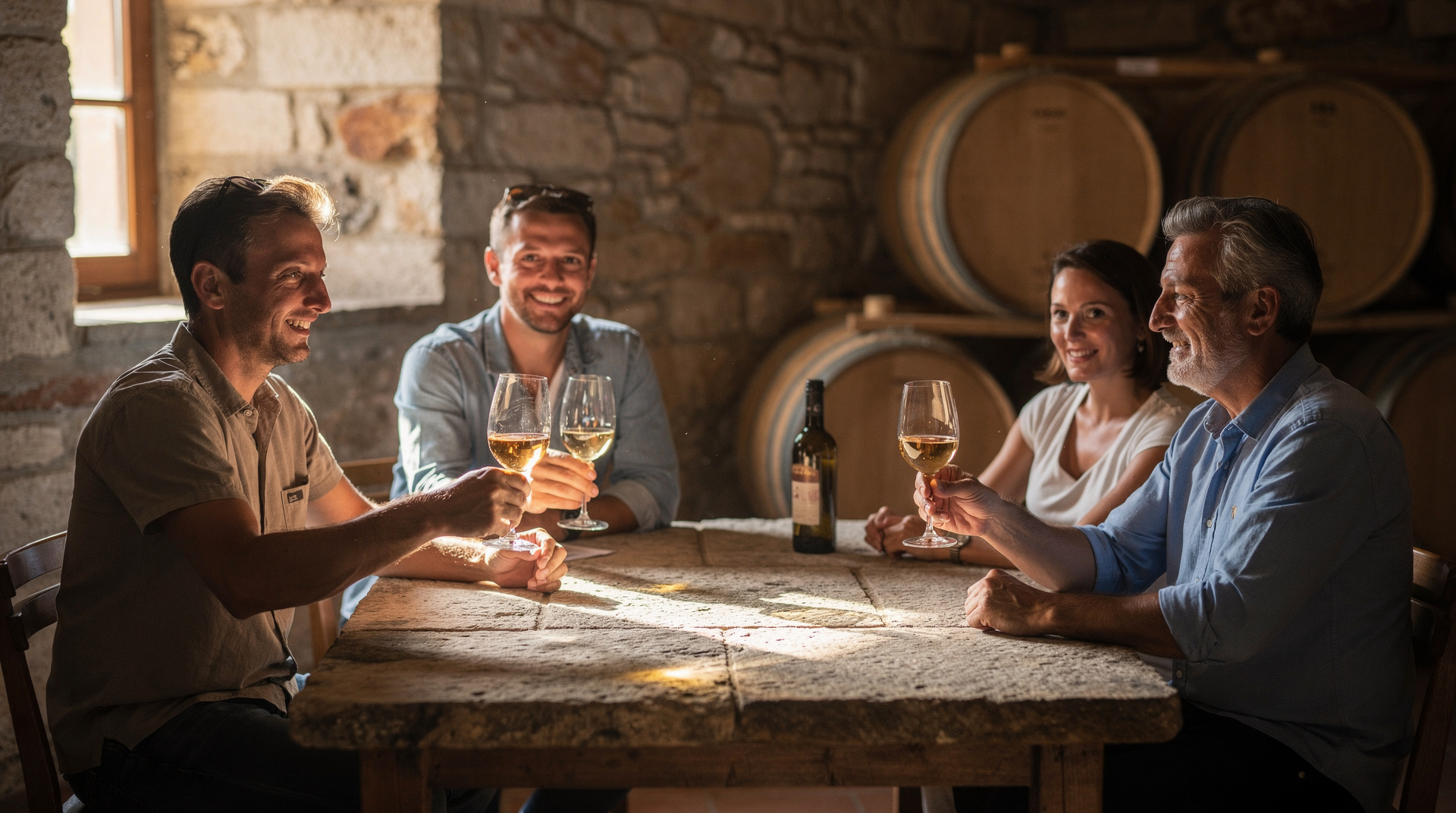
Indigenous varieties as an acquired taste: Zelen’s herbal, slightly phenolic character and Pinela’s extreme delicacy don’t map onto conventional wine expectations. Ask producers to walk you through the character before you taste if you are unfamiliar with them. Most will spend 20 minutes explaining their approach if you show genuine curiosity.
Restaurant availability: some of the best small restaurants (Pri Lojzetu, Gostilna Mahorčič) require reservations several days in advance in summer. Plan ahead.
Day trip from Ljubljana: the valley is close enough to Ljubljana that a one-night stay is not necessary unless you are doing a serious wine itinerary. A one-day drive — stop at two producers, lunch at Mahorčič, walk the river path in the afternoon, drive back — is entirely feasible.
The Karst plateau above the valley
The northern and southern edges of the Vipava Valley rise onto limestone plateaux — the Trnovo plateau to the north (forested, up to 1000 m) and the Karst to the south (open, rocky, leading to the cave systems at Postojna and Škocjan). These are visually and geologically dramatic edges to the valley’s flat floor.
The Trnovo forest plateau is accessible from the valley by a road that climbs steeply from Ajdovščina in a series of hairpin bends. At the top, the landscape shifts instantly: dark spruce and beech forest, cool even in August, with a nature reserve (Trnovski gozd Nature Park) protecting populations of brown bears, lynx and chamois. A half-day excursion up to the plateau and back is a striking contrast to the hot valley below.
The village of Predmeja on the plateau edge has a small gostilna serving mushroom dishes (porcini in September and October), game, and the local hearty stews. A standard lunch here in autumn costs EUR 12–15 — extremely good value.
Štanjel, on the edge of the Karst plateau south of the valley, is mentioned in the Slovenian Istria section but belongs equally to the Vipava Valley itinerary: a 25-minute drive south from the valley floor brings you to this fortified medieval village with its Ferrari garden and views back over the Vipava to the Trnovo forest.
Rock climbing
The limestone walls above Ajdovščina and the crags around Otlica and Col are equipped with sport climbing routes from grade 5 to 8c+, making the Vipava Valley one of the more serious sport climbing destinations in central Europe. The main crags include Otliška stena (trad and sport routes on a 150m face) and the shorter Sonce nad Vipavsko dolino sector above the valley. The climbing season runs March–November; the walls dry fast after rain.
This is genuinely not beginners’ terrain. Most visitors come with a rack, shoes and their own skills. The local guides association based in Ajdovščina can arrange guiding for intermediate climbers who want to try the easier sport routes.
Ajdovščina town
Ajdovščina itself is functional rather than beautiful, but it is not without interest. The old town core is enclosed within a late Roman wall (Castra ad Fluvium Frigidum, 4th century) that is remarkably complete — a rectangle of wall with towers, much of it standing to its original height, incorporated into the fabric of later buildings. Standing at the base of one of these towers and looking at the late Roman stonework is a quietly impressive experience that the tourist infrastructure of Ajdovščina (limited) has not yet managed to oversell.
The Pilon Gallery in the town centre holds a permanent collection of works by the painter Veno Pilon (1896–1970), who documented Ajdovščina and the Vipava Valley over 50 years. Entry EUR 3; the Pilon photographs of the valley in the 1920s–1940s are particularly striking.
See the Vipava Valley wine guide for a detailed producer map and tasting notes on the indigenous varieties. The Goriška Brda page covers the adjacent wine region 30–45 minutes west. The valley also appears on our day trips from Ljubljana guide alongside other short excursions from the capital, and pairs naturally with a visit to the tours page for the Vipava and Goriška Brda wine circuit if you want to compare guided options.
Top experiences
Bookable activities with verified prices and instant confirmation on GetYourGuide.