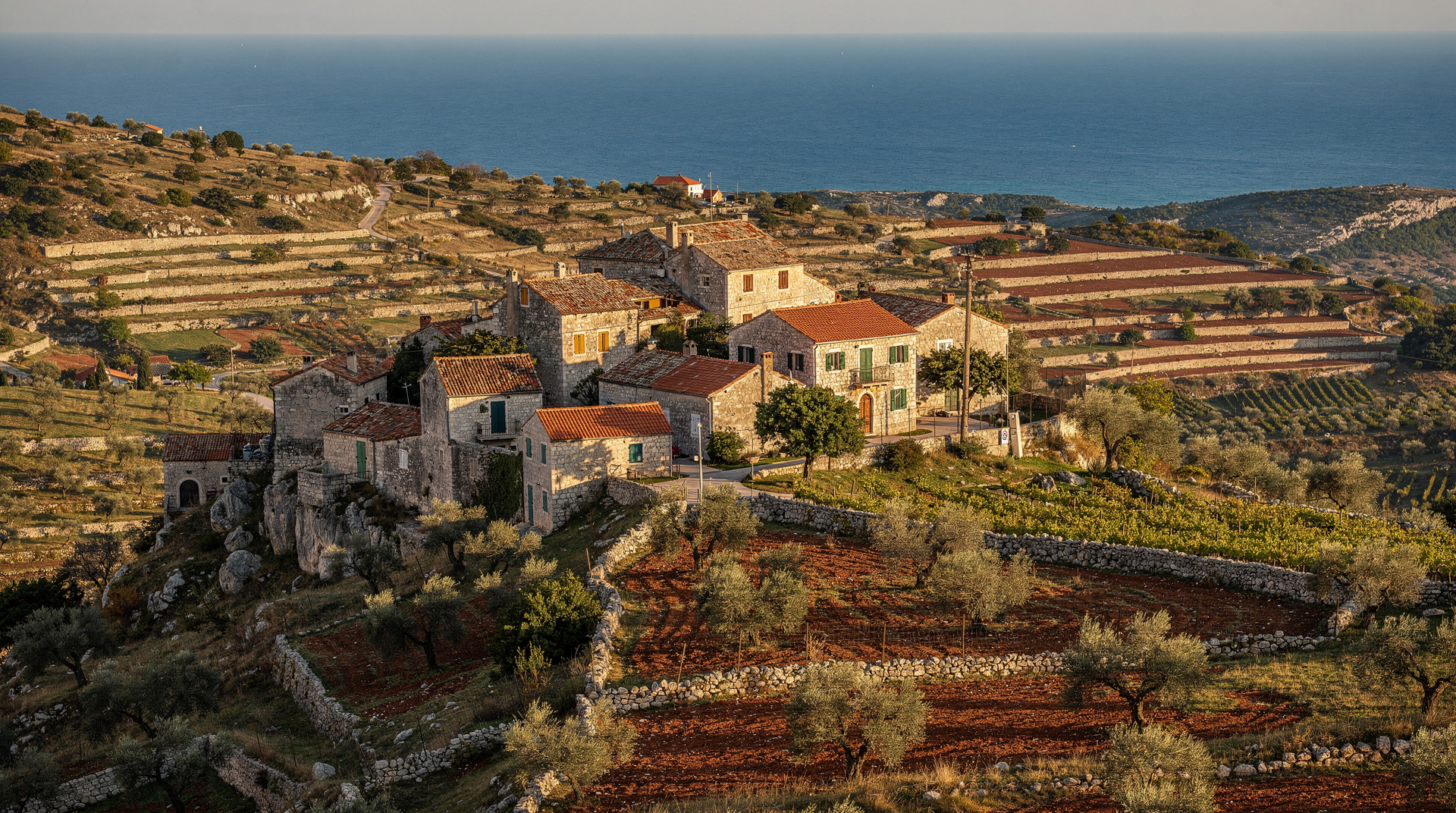
Goriška Brda: Slovenia's wine hills on the Italian border
Goriška Brda is Slovenia's Tuscan hills: Rebula wine, hilltop villages, Collio across the border, and producers who still answer the phone themselves.
Goriška Brda: wine walk and tasting
Quick facts
- Best time to visit
- May–June, September–October (harvest)
- Days needed
- 1–3 days
- Getting there
- Car from Ljubljana (1h30) or Nova Gorica (30 min); no direct trains
- Budget per day
- EUR 65 to 150
Where Slovenia looks across the border and sees itself looking back
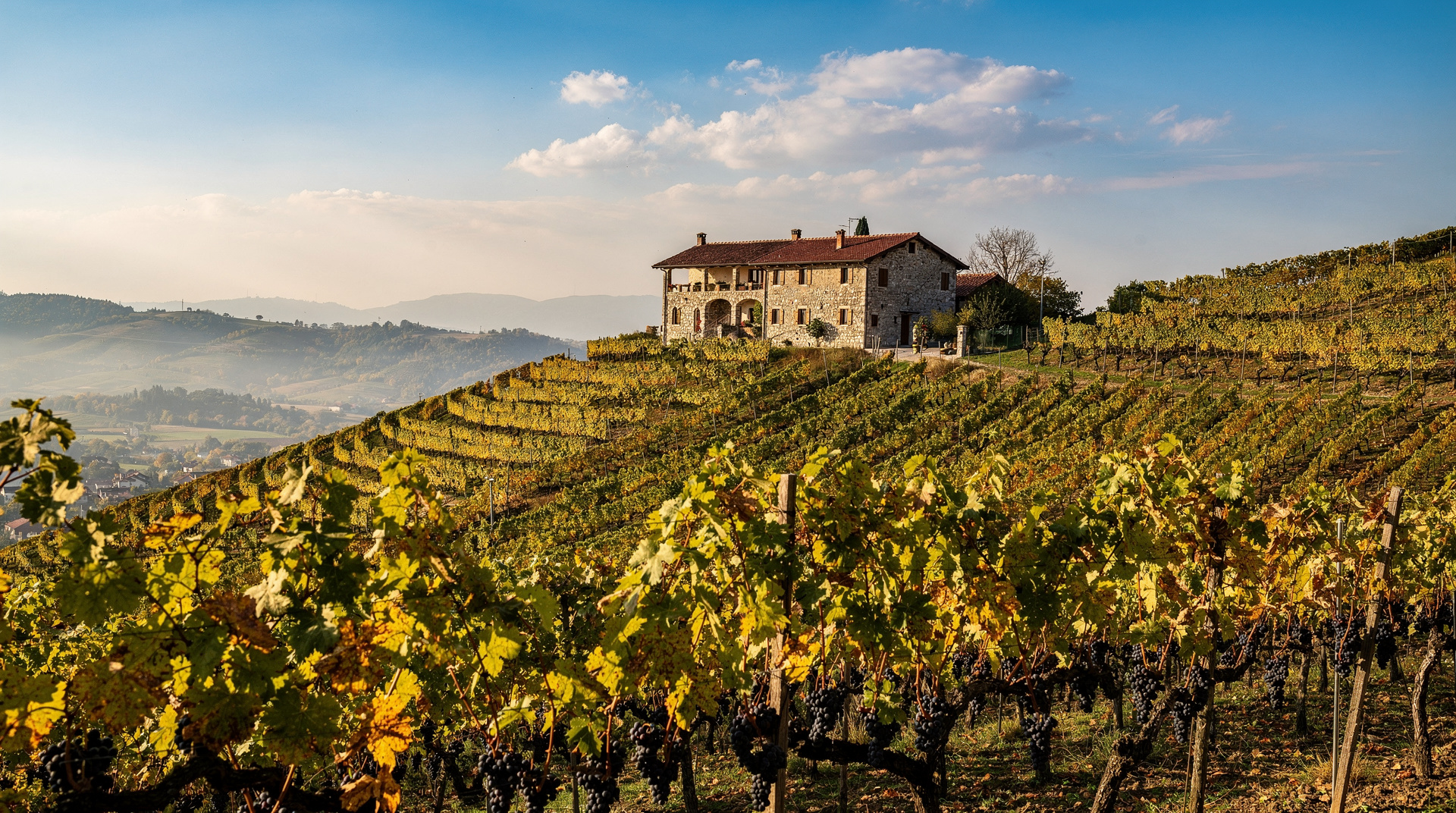
Goriška Brda (the name simply means “the hills of Gorizia”) occupies the southwestern corner of Slovenia — a landscape of gentle terraced ridges and valleys running from the Soča river in the east to the Italian border in the west, where the hills continue seamlessly as the Collio DOC zone. The vineyards on both sides of the border are the same geological formation, and the grape varieties (Rebula/Ribolla Gialla, Pinela, Malvazija) are the same. The wines have different label designs and slightly different price points, but tasting them blind is an exercise in geography, not Italy-vs-Slovenia nationalism.
What this means in practice: Goriška Brda gives you one of Europe’s best wine-growing landscapes, with hilltop villages that recall Tuscany or the Piedmont (without the crowds or the prices), producers who are genuinely passionate and mostly happy to receive visitors directly, and a food culture that combines Slovenian and Friulian Italian influences in a way that is better than either in isolation.
A car is required. Public transport to the villages does not exist in any practical sense. If you are still deciding how to move around the country, the car rental guide and the driving and vignette guide cover the practical side, and the getting around Slovenia guide compares the alternatives.
Travellers building a wider wine trip will find the Brda sits beside the Vipava Valley, and the broader Slovenian wine guide explains how the country’s regions fit together.
| Where | Southwestern Slovenia, on the Italian border, east of the Soča |
| Time needed | 1–3 days; day trip possible, two nights rewards serious wine travellers |
| Getting there | Car from Ljubljana (1h30) or Nova Gorica (30min); no direct trains or buses to the villages |
| Budget per day | EUR 65–150 |
| Best time | September–October (harvest); May–June (cherry blossom and harvest) |
The landscape and villages
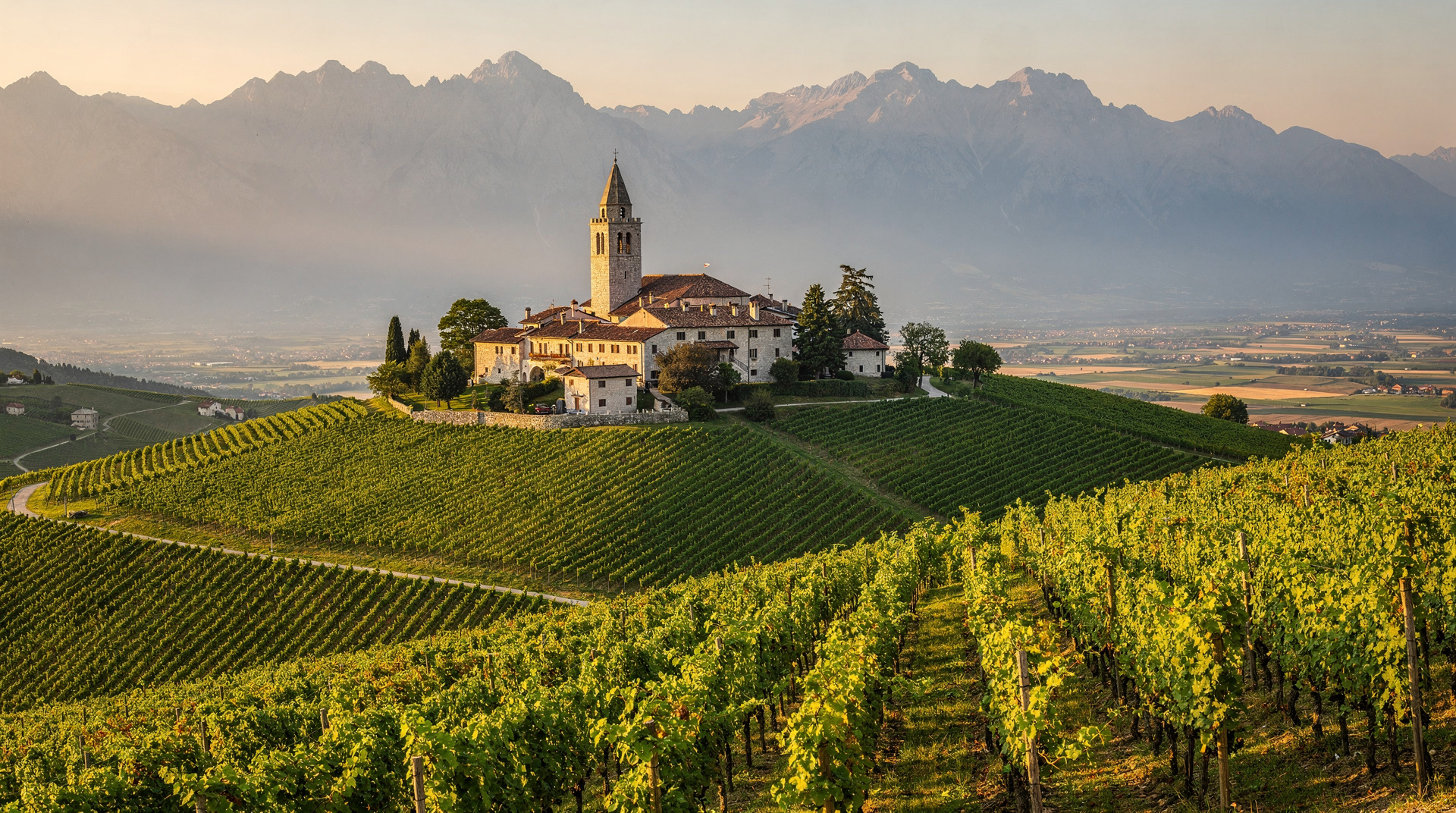
The Brda is criss-crossed by a network of small roads running between hilltop villages, most of them medieval cores of stone houses with views over terraced vineyards to the Italian hills beyond. The main village is Dobrovo (where the Dobrovo Castle houses a gallery and wine shop); the most photogenic are Šmartno (fortified medieval village, largely intact, with a café and a small wine bar) and Vipolže (above the main valley, with a 16th-century Renaissance courtyard).
Šmartno deserves particular mention. It is one of the best-preserved medieval fortified villages in Slovenia — a complete circuit of walls, towers and narrow alleys containing a church, a handful of houses, and now a couple of small wine bars and a ceramics studio. Walk the full circuit of the walls (about 20 minutes) and then sit with a glass of Rebula watching the valley. This is not manufactured tourism; people still live here.
Dobrovo Castle (Dvorec Dobrovo) holds a small museum of local history and an art gallery — worth 45 minutes. The ground floor has a tourist information office and a wine shop with a good selection of Brda producers. The castle is the practical starting point for a self-guided wine exploration of the area.
The border with Italy is open and barely marked — there is a road crossing at Neblo/Ruttars that takes you directly into the Collio zone. Italian producers (Schiopetto, Gradis’ciutta, La Castellada) are within 10 minutes of the Slovenian villages. Wine tourists with cars routinely cross for a tasting and come back for lunch — the two wine zones are complementary, not competitive.
The wine: Rebula and beyond
Rebula (Ribolla Gialla in Italian) is the signature white grape of the Brda — a variety grown here since at least the 13th century. Traditional Rebula is a light, crisp, mineral white with high acidity. In the hands of producers who age it in large oak barrels or amphora and use extended skin contact (orange wine), it becomes something altogether more complex — deep amber, structured, and capable of ageing for a decade.
The natural wine and orange wine movement is deeply rooted in the Brda. Movia (run by Aleš Kristančič) is the most famous producer internationally — the wines can be divisive but the estate visit is worth doing for the winemaking philosophy alone. Sečar, Edi Simčič, and Klinec are other names worth seeking out. Most producers are open for tasting appointments; email or call ahead.
For visitors who want a structured introduction, a guided wine walk through Goriška Brda takes you between two or three producers on foot through the vineyards, with tasting at each stop and a guide who understands both the wine and the landscape. This is the right format if you are new to the region and want context before exploring independently.
A more relaxed option is a Brda wine tasting with local food pairings — producers typically serve the wines alongside local salumi, cheese, olive oil and bread, and the informal setting of a family cellar makes for a different experience than a formal tasting room.
See the Slovenian wine regions guide for how the Brda compares with Vipava, Karst and Štajerska. Beyond Rebula: Sauvignon Blanc, Chardonnay and Pinot Grigio are all grown in the Brda and reach good quality levels. For reds, the region grows Merlot (widely planted), Cabernet Sauvignon, and the local Barbera-like Zeleni Sauvignon. Prices at the cellar door are notably lower than Italian Collio equivalents for comparable quality.
Food
Gostilna Sirk (Medana village) is the best-known restaurant in the Brda and is genuinely worth the reservation: seasonal Brda ingredients — spring asparagus, summer tomatoes, autumn truffles — prepared with skill and served with a cellar that covers the major Brda producers. A full dinner costs around EUR 40–55 per person. Book ahead; it fills weeks in advance in season.
Gostilna pri Mostu in Dobrovo is the more casual local option: grilled meats, house wine, outdoor terrace, prices around EUR 14–20 for a main. Good for lunch.
Agriturismo Kabaj (Snežatno village) is an estate that produces wine, olive oil and accommodates guests — a good option for a longer lunch combining tasting and food. The house salami and the Rebula-braised lamb are reliable orders.
If the gostilna format is new to you, the guide to traditional gostilna dining explains what to expect from the menu and the house wine, and the Slovenian food must-try list helps you recognise the dishes that appear on Brda tables.
The Brda produces good olive oil (same geological zone as Istria, similar Istrska Belica variety) and cherries — the cherry harvest in late May and early June is a local event, and the pink and red of the cherry trees against the white limestone walls is one of the region’s most photographed seasonal moments.
Getting there and around
From Ljubljana: take the A1 motorway west, then the E61/A2 towards Nova Gorica, and exit at Šempeter or Nova Gorica (about 110 km, 1h20). From Nova Gorica, the Brda villages are 20–35 minutes north.
From the coast (Koper, Izola, Piran): about 1h15 by car via the E61. A logical add-on to a coast trip.
From Trieste (Italy): about 50 minutes by car.
Within the Brda, GPS navigation is reliable but be aware that minor roads between villages can be very narrow — one car width with passing places. The main tourist routes are well surfaced; some back roads have potholed asphalt or gravel surfaces.
There is no practical public transport to the Brda villages. If you are in Nova Gorica without a car, a Winexpedition covering both the Vipava Valley and Goriška Brda gives you both wine regions in one guided day with transport included.
Best time to visit
September and October are the defining months — harvest time, when the vineyards are being picked, the air smells of fermenting must from the open cellar doors, and the golden light on the hillside rows is at its best. Producer visits during harvest are the most memorable wine experiences in the country.
May–June brings cherry blossom (early May), then cherry harvest (late May to mid-June) and young vine growth. The weather is settled and warm (20–25°C). Wine tourism season opens and producers are available and enthused.
Winter (December–February) is quiet. Most agritourism accommodation closes; Gostilna Sirk closes for a winter break. The landscape is bare but striking. Independent travellers can find their way around with advance planning; organised tours are largely seasonal.
Honest notes
Movia is internationally famous, genuinely interesting, and polarising. Aleš Kristančič’s winemaking philosophy involves minimal intervention, extended skin contact and occasional field blending. The wines are excellent if you appreciate the natural wine style; they are confusing or defective-tasting to people expecting conventional whites. Worth trying with an open mind.
Orange wine: the Brda has a high density of orange wine producers. If this is new to you, ask the guide or producer to explain the method before tasting — it helps calibrate expectations. The tannins and oxidative character in some Rebulas can read as faults to untrained palates.
Day trip vs staying: the Brda genuinely rewards two nights if you are a serious wine traveller — there are enough producers and enough landscape to fill two days well. For casual visitors, one day from Ljubljana or Nova Gorica is sufficient to see the main villages and do one or two tastings.
Where to stay
Agriturismo accommodation is the defining experience in the Brda — staying on an estate that produces wine and olive oil, eating meals prepared from the estate’s own ingredients, and waking up to vineyard views. The best-established options: Kabaj (Snežatno village, with wine estate accommodation and farm meals), Gredič (Vipolže, a renovated manor with hotel rooms and a wine cellar), and smaller family apartments at various estates around Šmartno and Medana.
For a wider view of lodging choices across the country, see the where to stay in Slovenia guide.
Estate accommodation runs EUR 80–140/night for a double, typically including breakfast with house products. Meals (dinner or lunch) are usually available on request at EUR 25–40 per person.
Dobrovo has a couple of guesthouses and B&Bs near the castle square — less atmospheric than estate accommodation but convenient and cheaper (EUR 55–75/night).
Nova Gorica (30 minutes south) has the fullest range of hotel accommodation in the region and is the practical choice if you need standard hotel services. From there the Brda is a 30-minute morning drive.
The landscape in different lights
The Brda is photographed most often in spring when the cherry trees are in blossom (late April to mid-May, depending on elevation), in September when the vineyards are golden-brown before harvest, and in late October when the last of the vine leaves turn red against the pale limestone walls.
In summer (June–August) the landscape is dense green — every terrace filled with vines — and the light can be harsh by midday. Early morning in July, before the heat builds, the Brda is as beautiful as anywhere in Europe; at noon in August, the limestone reflects enough heat that walking between villages is uncomfortable.
The view from the Šmartno walls at dusk, looking west over Italian Collio as the sun sets behind the Julian Alps, is the Brda’s signature image. Be there at golden hour.
Local specialities and produce
Olive oil is a shared thread with the coast, and the olive oil on the Slovenian coast guide is a good companion read if you enjoy buying direct from small producers.
The Brda cherry (Briška češnja) is a protected designation product — the cherry harvest in May and June is a small local event and the fruit is noticeably better than supermarket equivalents. Buy it at the Dobrovo market or directly from farms with roadside stalls.
Briška olive oil (same zone as Istrian Belica oil) is cold-pressed in October–November. Small producers sell direct at the cellar door; stock up if you find a good one — prices at the estate are EUR 12–18 per litre for excellent quality.
Local honey from the karst above the Brda (acacia and chestnut varieties) is sold at most agriturismo estates and at the Dobrovo market.
Combining Goriška Brda with Nova Gorica and the coast
Nova Gorica, 20–35 minutes south, is the practical hub for the Brda: it has the fullest hotel range in the area, a train and bus connection to Ljubljana, and sits directly on the Italian border opposite Gorizia — the twin cities share a central square that was, until Schengen removed the checkpoint, split by a national frontier. It’s a sensible overnight base for visitors without a car for part of their trip, or simply for those who want standard hotel infrastructure rather than an agriturismo estate.
The Brda also combines naturally with a coastal trip. Slovenian Istria — the hilltop villages, olive groves and Adriatic towns around Koper, Izola and Piran — is about 1h15 by car via the E61, and shares the same limestone-and-olive geology and food culture as the Brda, just closer to the sea. A wine-and-coast itinerary that spends two nights in the Brda and two on the coast covers a huge range of what makes northwestern Slovenia distinctive without excessive driving.
A day in the Brda without a guide
For visitors comfortable navigating minor roads themselves, a satisfying self-guided day looks like this: start at Dobrovo Castle for the wine shop and a first orientation, drive the 10 minutes to Šmartno for the walled-village walk and a mid-morning glass of Rebula, continue to Medana for lunch at Gostilna Sirk (book ahead) or a lighter stop at Agriturismo Kabaj, then spend the late afternoon at one or two cellar-door tastings — Klinec, Edi Simčič or Sečar all take same-day visitors if you call ahead — before finishing at the Šmartno walls for sunset over the Collio hills.
This covers the Brda’s core experience — villages, wine, food, landscape — in a single day with a car, though it moves faster than the region rewards. Two days lets you add a crossing into Italian Collio and a longer, unhurried producer visit rather than a quick tasting.
If the Brda is one stop among several, the hidden gems itinerary and the slow travel gastro itinerary both suit the unhurried pace this region asks for. For the seasonal side of the trip, the Slovenia in autumn guide covers the harvest months, and the best time to visit Slovenia page puts May–June and September–October in the context of the whole year. Visitors extending the trip toward Italy can look at the Trieste from Slovenia guide, and the wine harvest blog story gives a first-hand feel for the season.
Frequently asked questions about Goriška Brda
Do I need to book winery visits in advance?
For the well-known names — Movia, Edi Simčič, Klinec — yes, a phone call or email a few days ahead is expected; these are small family operations, not tasting-room businesses set up for drop-ins. Smaller, lesser-known producers are sometimes more flexible, but calling ahead is still the safer approach across the region.
Is Goriška Brda worth visiting if I’m not particularly interested in wine?
The villages and landscape stand on their own — Šmartno’s walled core and the terraced hills toward Italy are genuinely beautiful independent of any tasting. But the wine culture is so central to how the region is organised (restaurants, agriturismo stays, the rhythm of the harvest) that visiting with zero interest in wine means missing most of what makes the Brda distinctive, compared with simply admiring the view.
See the Goriška Brda wine guide for a producer-by-producer breakdown and tasting notes. The Vipava Valley page covers the adjacent wine region 45 minutes east — a natural pairing for a multi-day wine itinerary.
Top experiences
Bookable activities with verified prices and instant confirmation on GetYourGuide.