Wine regions of Slovenia: a practical comparison guide
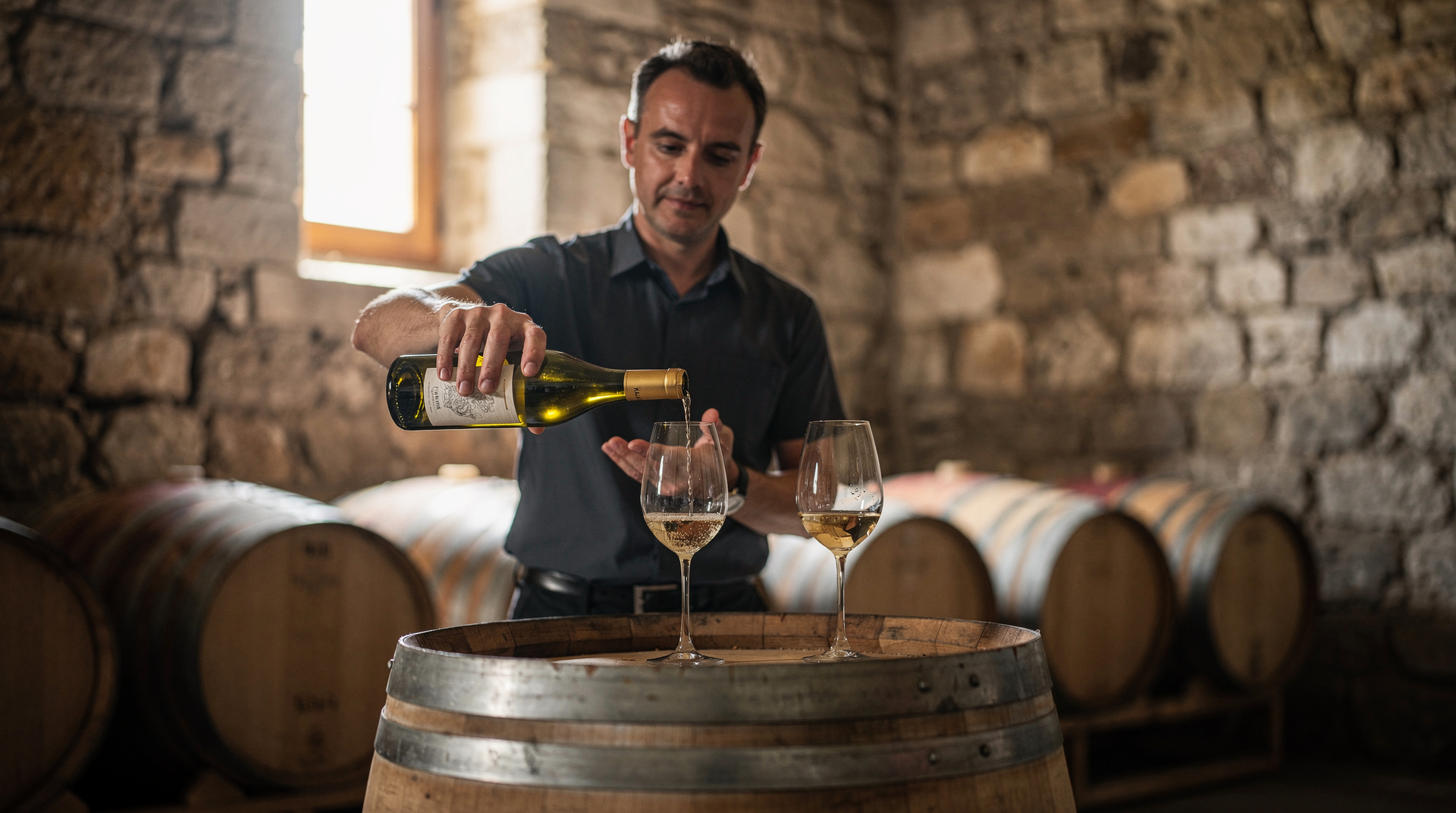
WINExPEDITION: Vipava Valley and Goriška Brda
How many wine regions does Slovenia have?
Slovenia has three main wine-growing zones: the western Mediterranean-influenced zone (Goriška Brda and Vipava Valley), the eastern continental zone (Štajerska around Maribor and Jeruzalem), and the Adriatic coastal strip (Slovenian Istria around Koper and Piran). Each has distinct grape varieties, climate and food culture.
Slovenia in three wine zones
Slovenia is small — smaller than Switzerland, roughly the size of New Jersey — but it manages to contain three wine cultures that are genuinely distinct from each other. The western zone shares geology and grape varieties with Italian Friuli and Collio. The eastern zone is closer to Austrian Styria and Hungarian wine country. The coastal strip is Mediterranean, with olive oil as important as wine. Understanding these distinctions before you visit means you spend your time in the zone that matches what you are actually looking for.
This guide lays out each zone honestly: what it produces, who makes the best wine, how to get there from Ljubljana, and what kind of traveller will find it most rewarding.
| Zones | Western (Brda/Vipava), Eastern (Štajerska), Coastal (Istria) |
| Closest to Ljubljana | Vipava Valley, around 50 minutes |
| Typical tasting cost | Around EUR 10–20 for a cellar-door tasting |
| Best time | May–June for touring; late Sept–Oct for harvest |
| Getting there | Self-drive easiest; guided day trips cover western zone |
Zone 1: The western Mediterranean zone
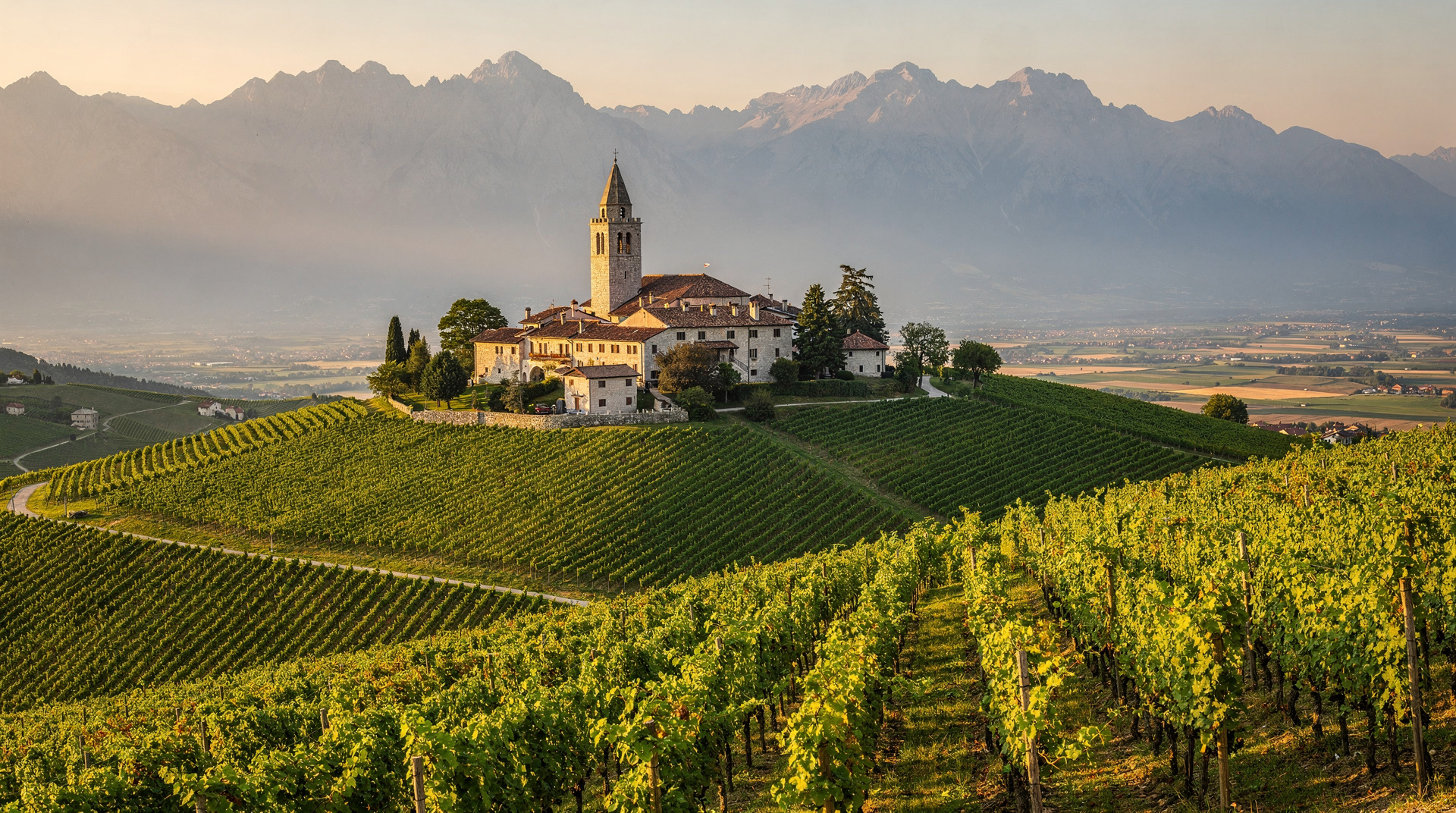
What it covers: Goriška Brda and the Vipava Valley — two valleys separated by 30–45 minutes of driving, in the extreme southwest of Slovenia.
Climate and geography: Mediterranean air from the Adriatic reaches these valleys, moderating what would otherwise be a more continental climate. Goriška Brda is warmer and sunnier than Vipava; both are warmer than Ljubljana and significantly warmer than the eastern zone. The Brda is built on Eocene flysch (marl and sandstone); Vipava is on limestone.
Key grapes: In Brda: Rebula (Ribolla Gialla), Pinot Gris, Sauvignon Blanc, Merlot. In Vipava: Zelen, Pinela, Rebula, Klarnica — plus international varieties.
Wine styles: The western zone is where most of Slovenia’s internationally known wine comes from. Orange wine (skin-contact Rebula) originated here and is still the style most associated with the region. Brda produces fuller-bodied, richer wines than Vipava; Vipava is more mineral, more herbal, with the distinctive Zelen character that requires explanation before it makes sense.
Getting there: Goriška Brda is 80–90 km from Ljubljana (1 hour 15 min by car). Vipava Valley is 55 km (50 minutes). Both are easy day trips; an overnight stay allows a more relaxed pace.
Best for: Wine travellers interested in orange wine, natural wine, indigenous varieties, and the Friuli-Slovenia wine continuum. Also good for cycling and walking in scenic hill country.
A combined day covering both Brda and Vipava is achievable with a Winexpedition through Vipava and Brda. For Vipava alone from Ljubljana without a car, the Vipava wine express from Ljubljana solves the transport problem. For Brda specifically, a guided Goriška Brda wine walk provides the landscape and wine context together.
Zone 2: The eastern continental zone
What it covers: Štajerska (Styria) — the wine country around Maribor, Jeruzalem, Ptuj, and the Drava valley. Sometimes called Podravje (the Drava region).
Climate and geography: Continental — hot summers, cold winters, significant rainfall. The wine country sits at 200–300 metres altitude on gentle south-facing hills. No Mediterranean influence; the comparison is with Austrian Styria directly to the north or with Hungarian wine country to the east.
Key grapes: Welschriesling (Laški Rizling) is the dominant variety — a grape with humble reputation elsewhere in Europe but capable of producing genuinely mineral, age-worthy whites in the Jeruzalem hills. Pinot Blanc (Beli Pinot), Šipon (Furmint), and small amounts of Sauvignon Blanc. Reds are less important.
Wine styles: Lighter, higher-acid, more delicate than the western zone. Less richness and alcohol, more freshness. The Jeruzalem Welschriesling at its best resembles a Grüner Veltliner from the Kremstal — mineral, dry, savoury. Šipon (Furmint) from the best sites has remarkable ageing potential.
Getting there: Maribor is 130 km east of Ljubljana (1 hour 15 min by motorway). Direct trains run regularly (2 hours). Jeruzalem is another 45 minutes east of Maribor by car.
Best for: Travellers who want to understand eastern European wine traditions, fans of Austrian wine styles, and anyone making the circuit of Slovenia who wants the full national picture rather than just the western zone.
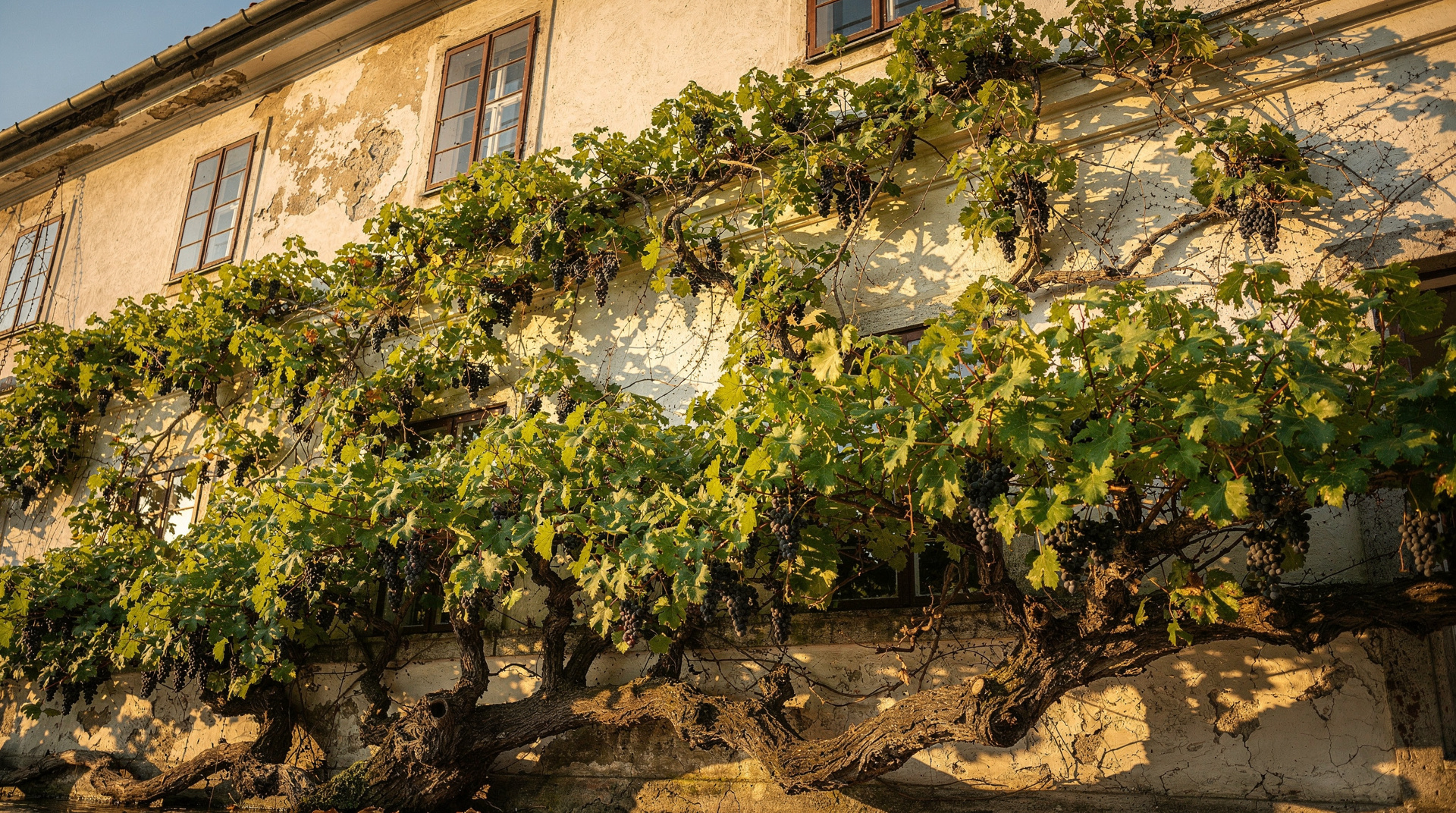
The iconic experience here is the Old Vine in Maribor (see the Maribor Old Vine guide) and the Vinag wine cellar — a 6-km network of 19th-century vaulted tunnels under the city. A Vinag wine cellar tour is the single most distinctive wine experience in the eastern zone.
Zone 3: The Adriatic coastal strip
What it covers: Slovenian Istria — the narrow coastal zone around Koper, Izola, Piran, and the hinterland hills. Slovenia’s shortest coastline (46 km) produces wine in a landscape that is entirely Mediterranean.
Climate and geography: Full Mediterranean: hot dry summers, mild winters, the sea moderating temperature extremes. The clay-limestone hills behind Koper and Izola are the main wine-growing terrain, rising to 200–350 metres above the coast.
Key grapes: Malvazija Istrska (White Muscat-family aromatic white, shared with Istrian Croatia) is the defining variety of the zone — full-bodied, aromatic, intensely food-friendly. Refošk (Refosco) is the main red — earthy, tannic, rustic, best with food. Small amounts of Chardonnay and international varieties.
Wine styles: Fresh, aromatic, food-oriented rather than age-focused. The best Malvazija is a perfect match for Adriatic seafood, olive oil dishes, and the Istrian cuisine of grilled fish and pasta. Less complex and less internationally famous than the western zone, but genuine and pleasurable.
Getting there: Koper is 100 km from Ljubljana (1 hour by motorway). Piran is 115 km (1 hour 15 min). Both are straightforward day trips or overnight stays.
Best for: Visitors combining wine with beach time and Mediterranean food culture. The olive oil here (Istrska Belica variety) is as interesting as the wine — ideally tasted together.
How the zones compare
| Western zone | Eastern zone | Coastal zone | |
|---|---|---|---|
| Distance from Ljubljana | 55–90 km | 130–175 km | 100–115 km |
| Wine style | Rich, skin-contact, orange | Light, mineral, continental | Aromatic, Mediterranean |
| Key grape | Rebula / Zelen | Welschriesling | Malvazija |
| Orange wine | Central to region | Rare | Rare |
| Food culture | Italian-influenced | Austrian-influenced | Mediterranean |
| Best season | May–June, Sept–Oct | Sept–Oct (harvest) | May–Sept |
Itinerary suggestions
If you have one day for wine: The Vipava Valley is the most time-efficient choice — 50 minutes from Ljubljana, two or three producers in a half day, excellent rural restaurant for lunch, back to Ljubljana for dinner. A Vipava Valley wine tasting experience gives structure without requiring a rental car.
If you have two days for wine: Day one in Vipava, day two in Goriška Brda. Stay overnight in Dobrovo or Nova Gorica. Drive back via the Karst on day two.
If you have three or four days: Add Maribor on day three (drive east, Old Vine, Vinag cellar, dinner in the old town) and either the coast on day four (Koper Malvazija and olive oil) or a Jeruzalem detour on the way home from Maribor.
If you are a serious wine traveller: Treat the western zone and eastern zone as two separate trips. The western zone alone has enough serious producers for three or four days if you want depth over breadth. Combine Brda-Vipava with the Collio across the Italian border for a full Friuli-Slovenia wine experience.
Buying Slovenian wine to take home
Cellar door prices in all three zones are competitive — EUR 10–20 for quality wines, EUR 25–45 for premium aged wines. The indigenous varieties (Zelen, Pinela, Žametovka, Malvazija Istrska) are the best souvenirs because they are unavailable or very hard to find at home. Natural wine from the western zone (Movia, Kabaj, Burja, Guerila) is available at good natural wine shops in Western Europe but at a significant markup over cellar price.
Ljubljana has good wine shops if you want to buy across the regions without driving: Vinoteka Movia (obviously focused on Brda), Vino Boutique on Mestni trg, and the wine section of the Mercator supermarket on Slovenska for everyday bottles.
Slovenian wine and food pairing across zones
The three zones produce wine that matches their local food culture with a logic that is worth understanding:
Western zone food pairings: Zelen from Vipava Valley pairs naturally with trout (the valley river is important), fresh cheeses, asparagus and light spring vegetables. The orange-style Rebula from both Brda and Vipava handles richer dishes — mushroom risotto, smoked meats, aged Tolminc cheese, game terrine. The full-bodied Merlot and Cabernet blends from Brda match roast meats and aged hard cheeses.
Eastern zone food pairings: Laški Rizling and Pinot Blanc from Štajerska are food-first wines — the acidity and lightness make them natural partners for freshwater fish, light pork dishes, and the Austrian-influenced cooking of the region (Wiener Schnitzel equivalents, roast pork with dumplings). The Šipon (Furmint) from the best Jeruzalem sites has enough body to handle mushroom-based dishes.
Coastal zone food pairings: Malvazija Istrska is the perfect match for Adriatic seafood — grilled sea bass, sea bream, octopus salad, clams. It also works well with Istrian pasta dishes (fuži with truffle or seafood) and with the local olive oil culture.
The harvest calendar
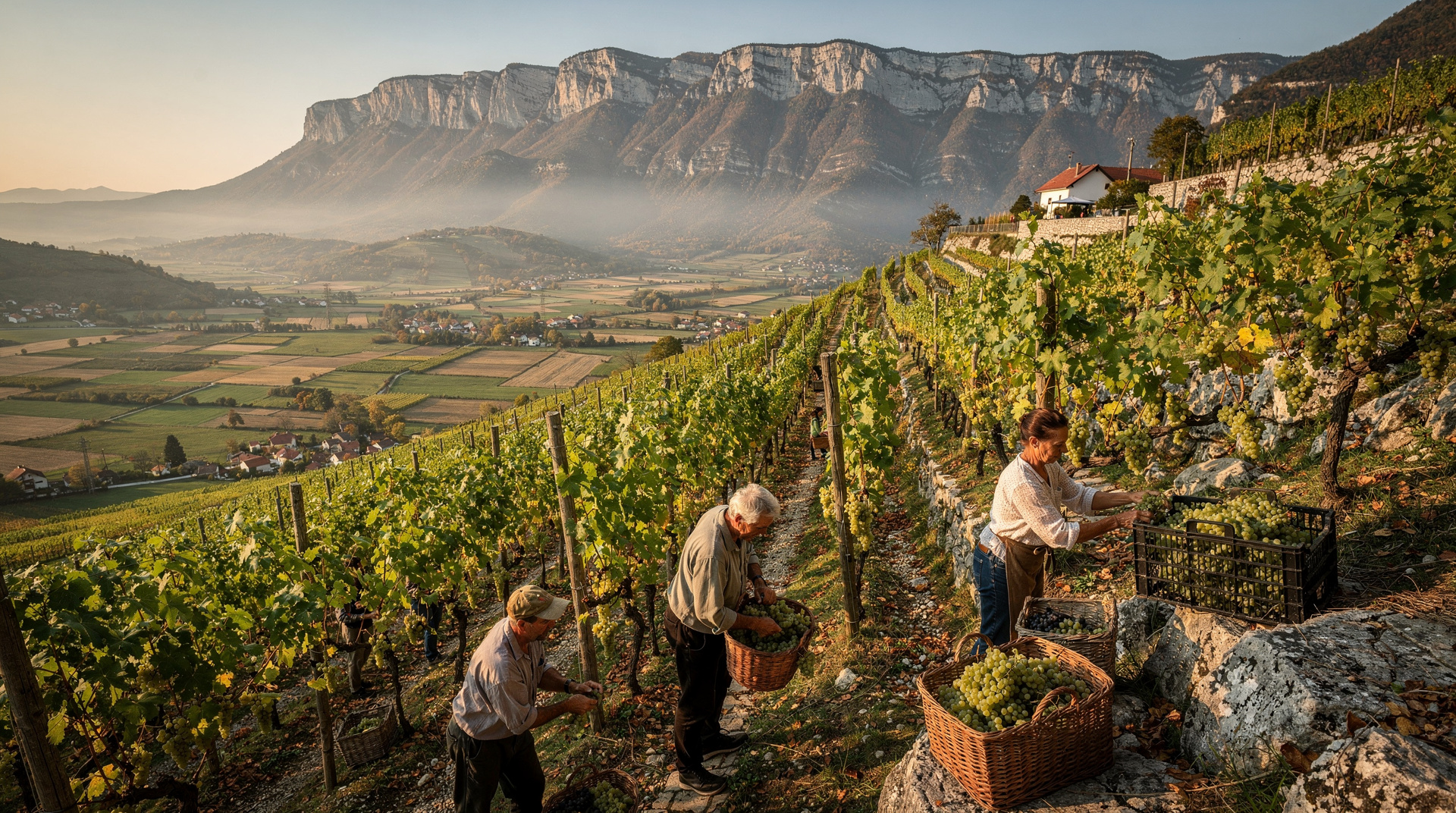
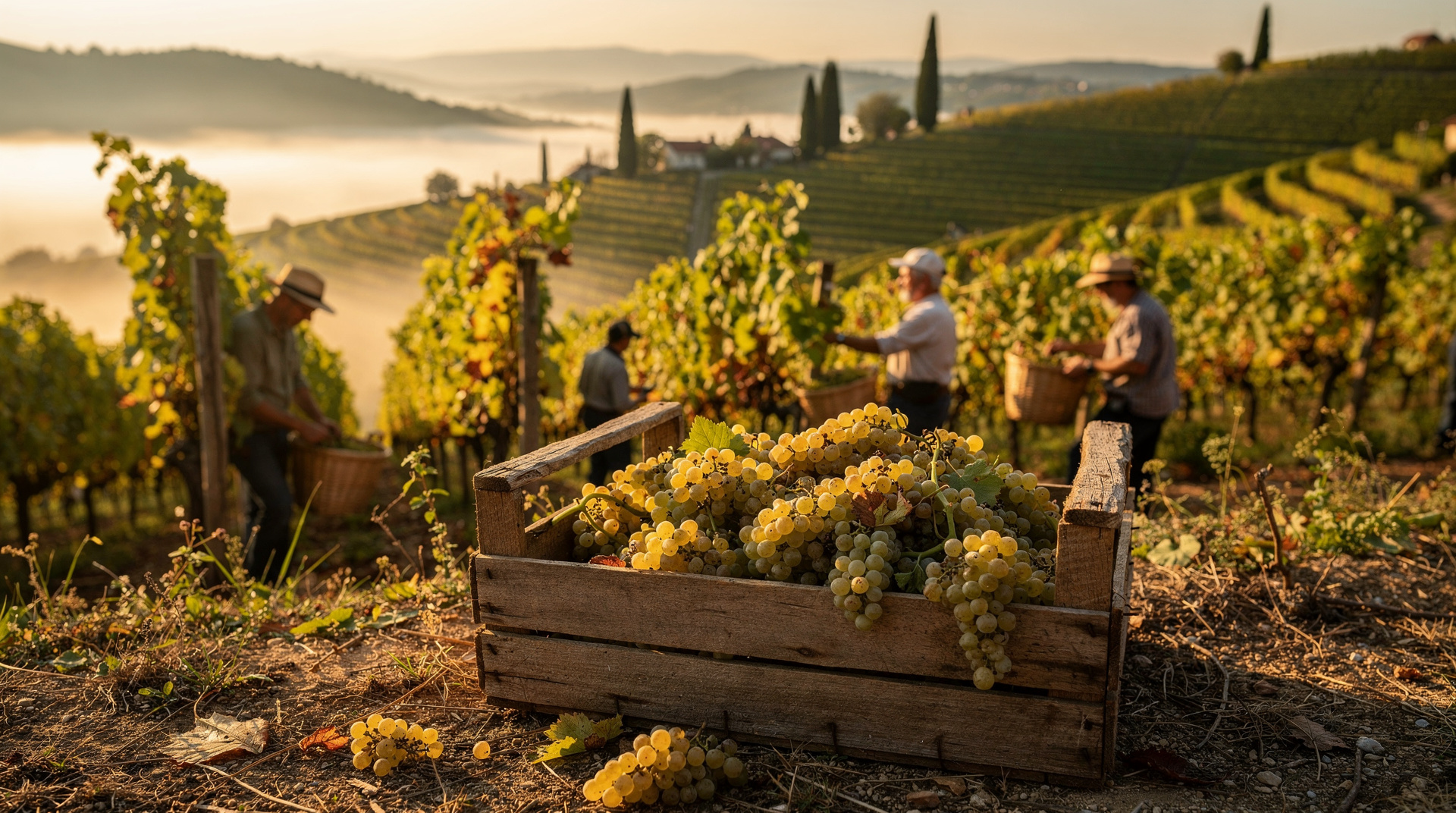
Each zone harvests at a different time, which shapes when to visit if you want to see the vineyards at work:
- Slovenian Istria (Malvazija): September, occasionally late August in warm years.
- Goriška Brda: mid-September to early October. The festival atmosphere around Dobrovo peaks the first two weeks of October.
- Vipava Valley (indigenous varieties): Pinela and Zelen harvest in late September to October; Rebula slightly later.
- Štajerska (eastern zone): October into November. The Old Vine Festival in Maribor is the second weekend of October.
If you are planning a wine-focused trip to Slovenia in autumn, the two weeks spanning late September into early October gives you Brda harvest, Vipava harvest, and the beginning of the Maribor festival in a single sweep.
The natural wine map of Slovenia
Natural wine production in Slovenia is concentrated in the western zone (Brda and Vipava) but exists across all three zones. The map of committed natural producers:
Brda: Movia, Kabaj, Burja (primarily Vipava but sources some Brda fruit), several smaller experimental estates.
Vipava: Burja Estate, Guerila, Batič (traditional natural rather than experimentally minimal), Mlečnik, Aci Urbajs, Sutor.
Eastern zone: Dveri-Pax in Štajerska is certified biodynamic; Marof in Jeruzalem practices organic farming without formal certification.
Coastal zone: Čotar practices natural winemaking with Malvazija; production is small and the wines appear primarily in Slovenia’s best natural wine bars.
The natural wine concentration in the western zone is partly a product of the climate (Mediterranean influence reduces disease pressure, making organic management more viable) and partly a product of the cultural influence of Italian natural wine from Friuli across the border.
Wine certification and labelling
Slovenian wine labelling uses the European PDO (zaščiteno označbo porekla / ZOP) and PGI (zaščitena geografska označba / ZGO) systems. The main PDOs relevant to visitors:
- Goriška Brda PDO covers wines from the Brda appellation.
- Vipavska dolina PDO covers wines from the Vipava Valley.
- Štajerska Slovenija PDO covers the eastern zone.
- Koper PDO covers the coastal Malvazija and Refošk.
The PGI (ZGO) designation covers a broader category of wines that don’t meet the stricter PDO requirements but still indicate geographic origin. Understanding these designations helps when buying in a shop without a producer conversation — a PDO wine from Goriška Brda is more reliably what it claims to be than an unlabelled “Slovenian white.”
Emerging zones and what to watch
Beyond the three established zones, two areas are worth noting for the wine-focused traveller:
Bizeljsko-Sremič (eastern Slovenia, on the Croatian border east of Brežice) is a small appellation producing whites and a notable local speciality: the repnice — carved underground storage caverns in the local tufa stone, used for centuries to store wine at stable temperatures. The wine quality is variable but the repnice culture is a genuine local curiosity. The appellation is not on most Slovenian wine itineraries; the traveller who finds it is rewarded with a genuinely unspoiled wine destination.
Bela Krajina (southeastern Slovenia, between the Karst and the Croatian border) is the smallest Slovenian wine zone — a handful of producers making light Metlika Črnina (a red from indigenous varieties) and white wines of modest ambition. Worth knowing about if you are passing through the region; not a destination in its own right for wine tourism.
Slovenian wine books and resources
For visitors who want to prepare before arrival, the most useful English-language resource is the Wines of Slovenia booklet produced by the Slovenian Tourism Board — available as a free download from the official tourism website and in printed form at TIC offices in Ljubljana. It covers all zones with maps and producer contact information.
The Robert Parker Wine Advocate and Jancis Robinson’s Wine Pages have both published Slovenia guides in recent years; both favour the western zone and natural wine producers but give reasonable country coverage.
For a more opinionated view, the natural wine community’s resources (RAW Wine guide, Les Caves de Pyrene producer notes) are heavily weighted toward Brda and Vipava but identify the most interesting individual producers within those zones.
Transport between wine regions
The three zones are not directly connected by public transport in a wine-touring sequence. The most practical approaches:
- Car: by far the most flexible. Ljubljana to Vipava Valley 50 min; to Brda 1h15; to Maribor 1h15; to coast 1h. A self-drive wine tour is the standard approach.
- Guided tour: the various organised wine experiences (Vipava wine express, Winexpedition, Brda wine walk) handle transport for individual zone visits but do not connect zones consecutively.
- Train: Ljubljana–Maribor trains run regularly (2 hours, EUR 8–12). Ljubljana–Koper (1h45, EUR 5–10). No direct train service to Brda or Vipava Valley — buses to Ajdovščina exist (1h30) but onward transport within the valley requires a car.
The practical recommendation: if you are renting a car, plan the wine circuit as a loop from Ljubljana — Vipava Valley, Brda and coast in a 2-3 day swing, or Maribor and the east in a separate trip. Trying to combine all three zones in a single multi-day trip without a car base is logistically inefficient.
See the Slovenian wine guide for producer recommendations across all zones, and individual region guides for Goriška Brda, Vipava Valley and Maribor for deeper coverage of each area.
Frequently asked questions about Wine regions of Slovenia
Which Slovenian wine region should I visit first?
Goriška Brda and the Vipava Valley — the western zone — is the best first choice for most visitors. It is closest to Ljubljana (50–75 minutes), has the country's best-known producers, and is where the distinctive orange-wine style originated. Add Maribor and the eastern zone on a second visit or a longer trip.Can I visit Slovenian wine regions without a car?
Yes, but with limits. Guided experiences like the Vipava wine express or the Winexpedition through Vipava and Brda handle transport for those specific zones. Maribor and Koper are reachable by train. Goriška Brda has no direct train service, so a self-drive or a guided tour is the practical option there.
Top experiences
Bookable activities with verified prices and instant confirmation on GetYourGuide.