Vipava Valley wine guide: indigenous grapes and natural producers
Vipava Valley: wine tasting experience
What wine is Vipava Valley known for?
The Vipava Valley is best known for indigenous white varieties Zelen (herbal, mineral) and Pinela (delicate, floral), as well as orange-style Rebula. The valley has a strong natural wine community with producers like Burja Estate, Guerila, Batič and Scurek.
Zelen, Pinela and the wine that almost nobody knows
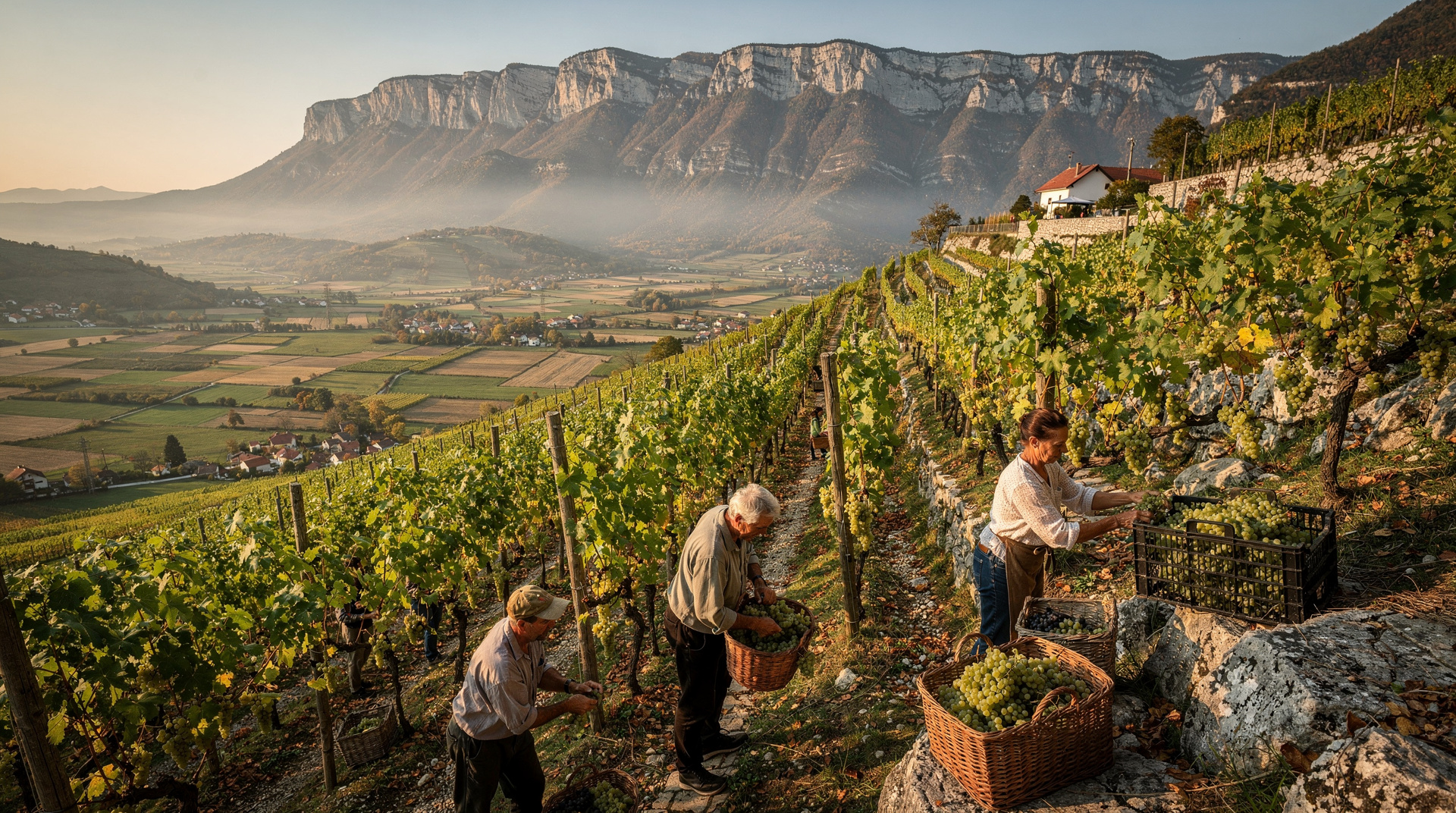
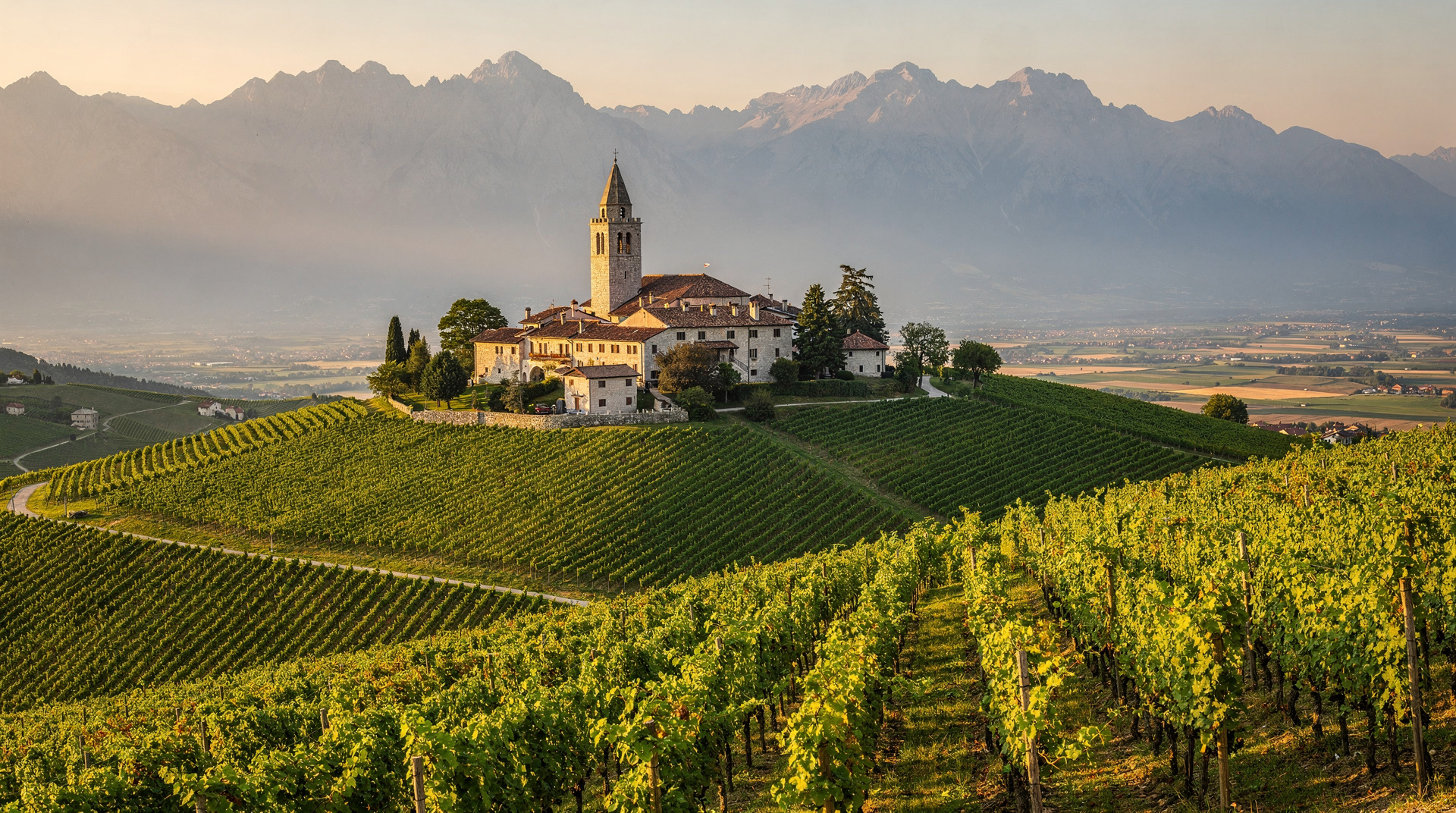
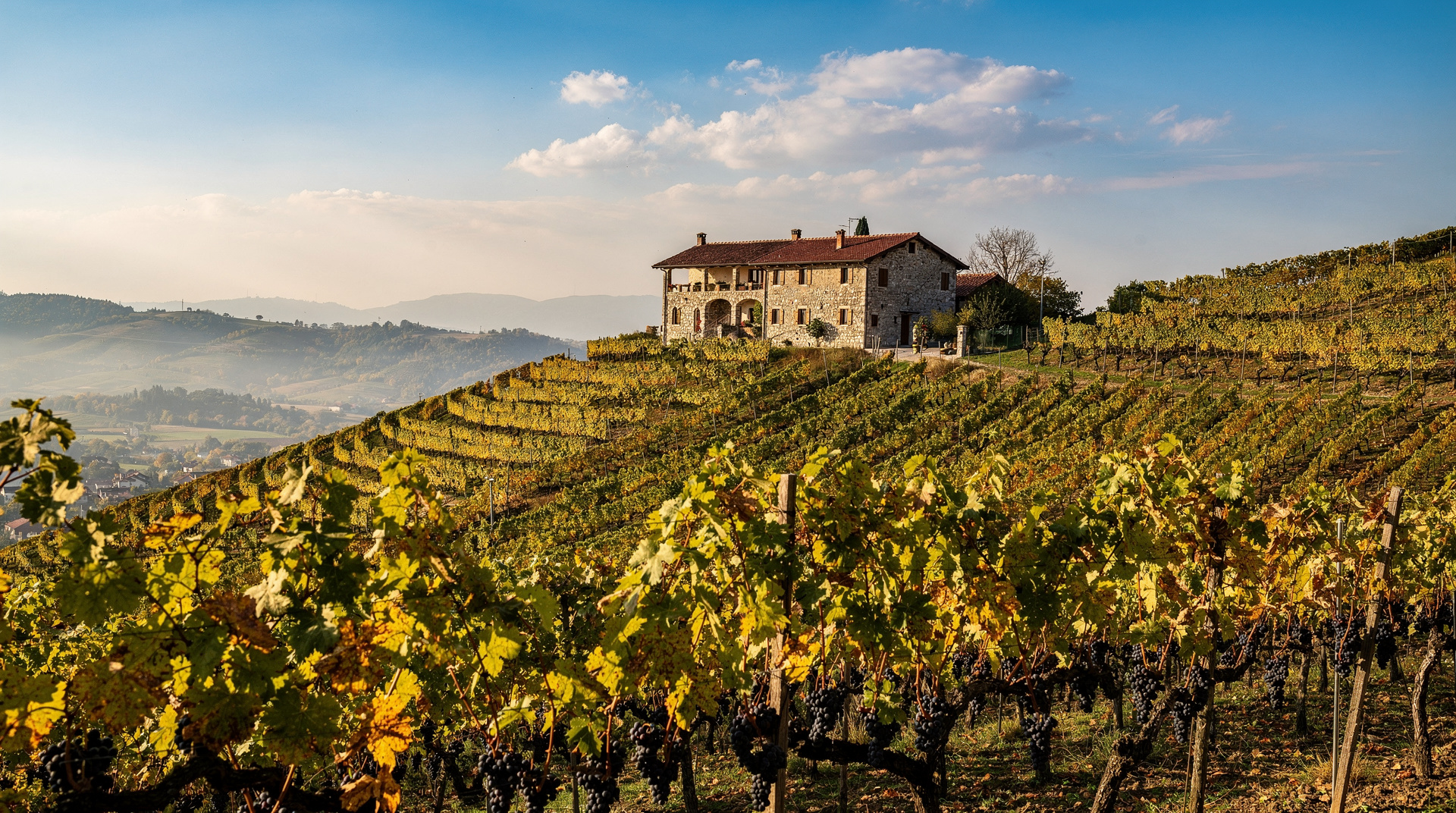
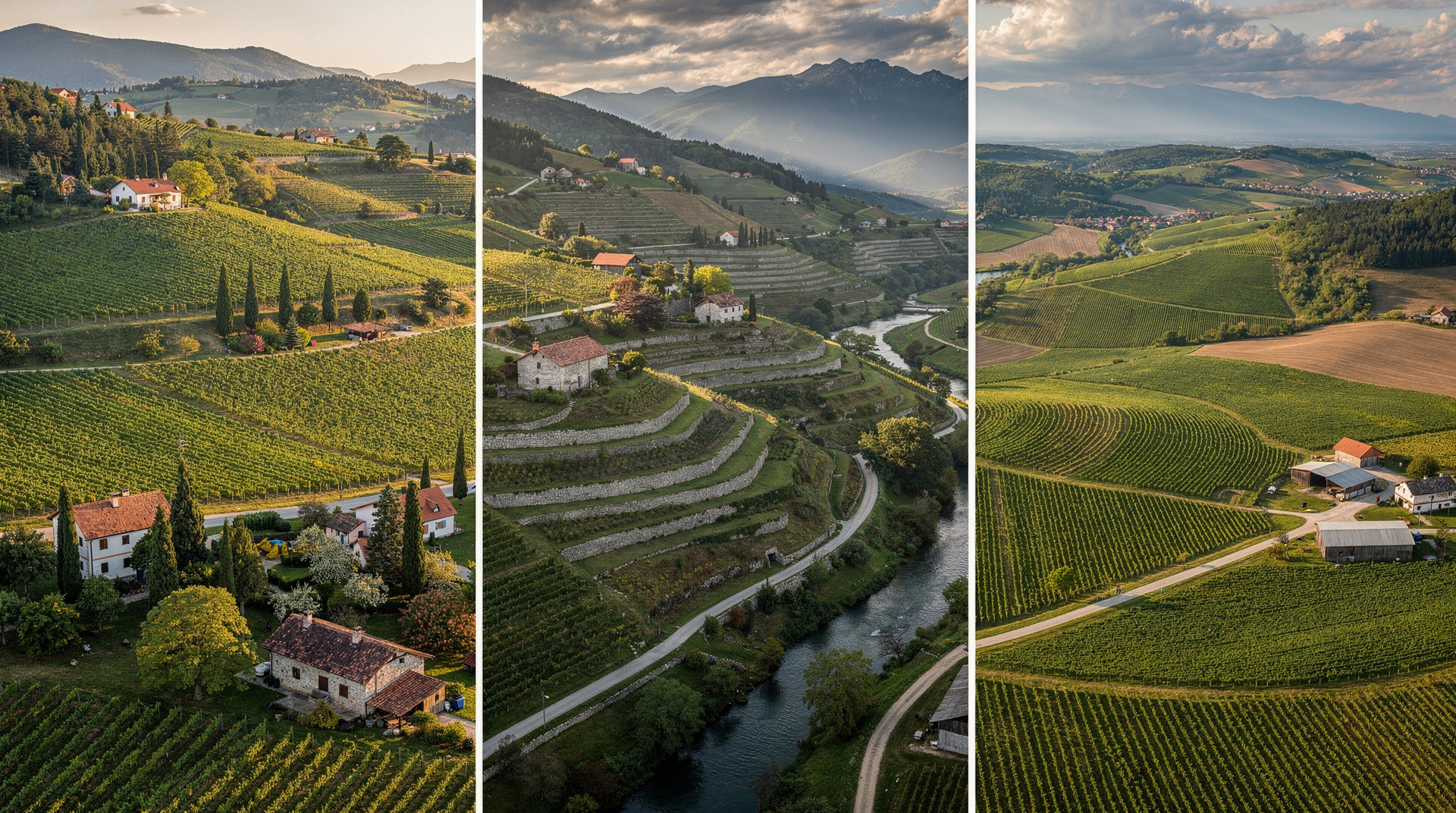
The Vipava Valley occupies a flat, sunny cleft between two limestone plateaux in western Slovenia — the Trnovo plateau to the north, the Karst to the south — and it grows grapes that exist in meaningful commercial quantity almost nowhere else on earth.
| Where | ~55 km from Ljubljana, 50 min by motorway |
| Signature grapes | Zelen, Pinela, orange-style Rebula |
| Best time | May–June or September (avoid Burja wind season) |
| Booking | Email ahead for small producers; weekends easiest |
| Typical tasting | EUR 15–30 per person at cellar door |
The valley sits 90–200 metres above sea level. Its climate is warm and dry relative to the Ljubljana basin — the Burja (Bora) wind that sweeps down from the Karst plateau in autumn and winter dries the grapes and makes the incidence of rot low, which is one reason natural winemakers find the terroir sympathetic. The soil shifts from alluvial deposits on the valley floor to rocky, calcium-rich scree on the slopes, and the best vineyard sites are on these stony slopes where the vine is stressed enough to produce concentrated grapes.
The indigenous varieties
Zelen is the variety that serious wine travellers specifically seek out. The name means green, but the wine is not green in the way Grüner Veltliner is green — Zelen’s character is more phenolic, more herbal, verging on medicinal in some vintages. Think bay leaf, dried herbs, lemon pith, mineral chalk. In a well-made example from a good vintage the phenolic bite integrates into a structural, savoury white of real personality. In an underripe or badly made example it can simply taste harsh. Guerila’s Zelen is the benchmark for clarity and precision. Burja Estate’s version (when you can get it — production is small) is the most structurally ambitious.
Pinela is almost the opposite of Zelen in character: pale gold, aromatic, delicate, with high natural acidity and floral notes (elderflower, white peach, apricot blossom). The risk with Pinela is that its delicacy can read as thinness if the yields are too high or the winemaking too interventionist. The best examples have a gossamer quality and real length — they pair well with fresh cheeses, light fish, and asparagus. Scurek produces a reliable, well-priced Pinela that gives a clear picture of the variety’s potential.
Klarnica is an indigenous red grape that came very close to extinction — only a handful of producers still cultivate it. The wine is medium-bodied, earthy, with a slightly rustic tannin structure. Batič Winery is the producer most associated with Klarnica’s preservation. It is a curiosity worth tasting at cellar door; not likely to find it in shops outside the region.
Rebula (Ribolla Gialla in Italian, the same grape grown across the border in Friuli’s Collio) is common to both the Vipava Valley and Goriška Brda. In the valley it tends to produce slightly lighter, higher-acid wines than in Brda. Both conventional (clean, fresh) and orange-style (skin-contact, amber) versions are produced. Batič’s orange Rebula is one of the valley’s signature wines — amber-coloured, richly textured, with considerable ageing potential.
Key producers
Burja Estate (near Štanjel, on the Karst plateau edge above the valley floor) is the most internationally recognised producer in the valley — the wines are exported to natural wine bars in London, Copenhagen and New York and the estate’s approach (minimal sulphur, no filtration, long maceration on indigenous varieties) has influenced a generation of Slovenian winemakers. Visiting requires an appointment; this is a working estate without a public tasting room. Contact by email. Production is small and some wines sell out before release.
Guerila (Nova Gorica area, vineyards in the Vipava zone) is probably the most technically consistent producer for everyday Vipava drinking. The Zelen is the best introduction to the variety: clean, aromatic, with good acidity and the characteristic herbal profile well-balanced. Visits are possible; call ahead.
Batič Winery (Šempas village) is a family estate that has worked with indigenous varieties since the early 1990s, before it was fashionable. Three generations of the Batič family cultivate about 10 hectares of indigenous and international varieties. The orange Rebula and the Zelen are the most important wines; the Klarnica is a rarity. English spoken; visits welcome with advance notice.
Scurek (near Šempas) produces a broader range than most Vipava producers, spanning conventional whites, skin-contact experiments, and reds. Good value across the range, consistent quality, and accessible for casual visits. A good entry-point winery if you want to taste the valley’s range without committing to the more specialist producers.
Simčič Marjan (Medana — technically in Brda, but worth noting as a cross-border producer whose wines appear in valley tasting rooms) makes some of the best Pinot Gris and Rebula in the western Slovenian zone. His son Edi Simčič runs a separate estate.
How to visit the valley
The valley’s main town, Ajdovščina, is 55 km from Ljubljana — about 50 minutes by motorway. This puts the valley within day-trip range of Ljubljana, which is the most common itinerary: drive out in the morning, visit two or three producers, lunch in the valley, drive back.
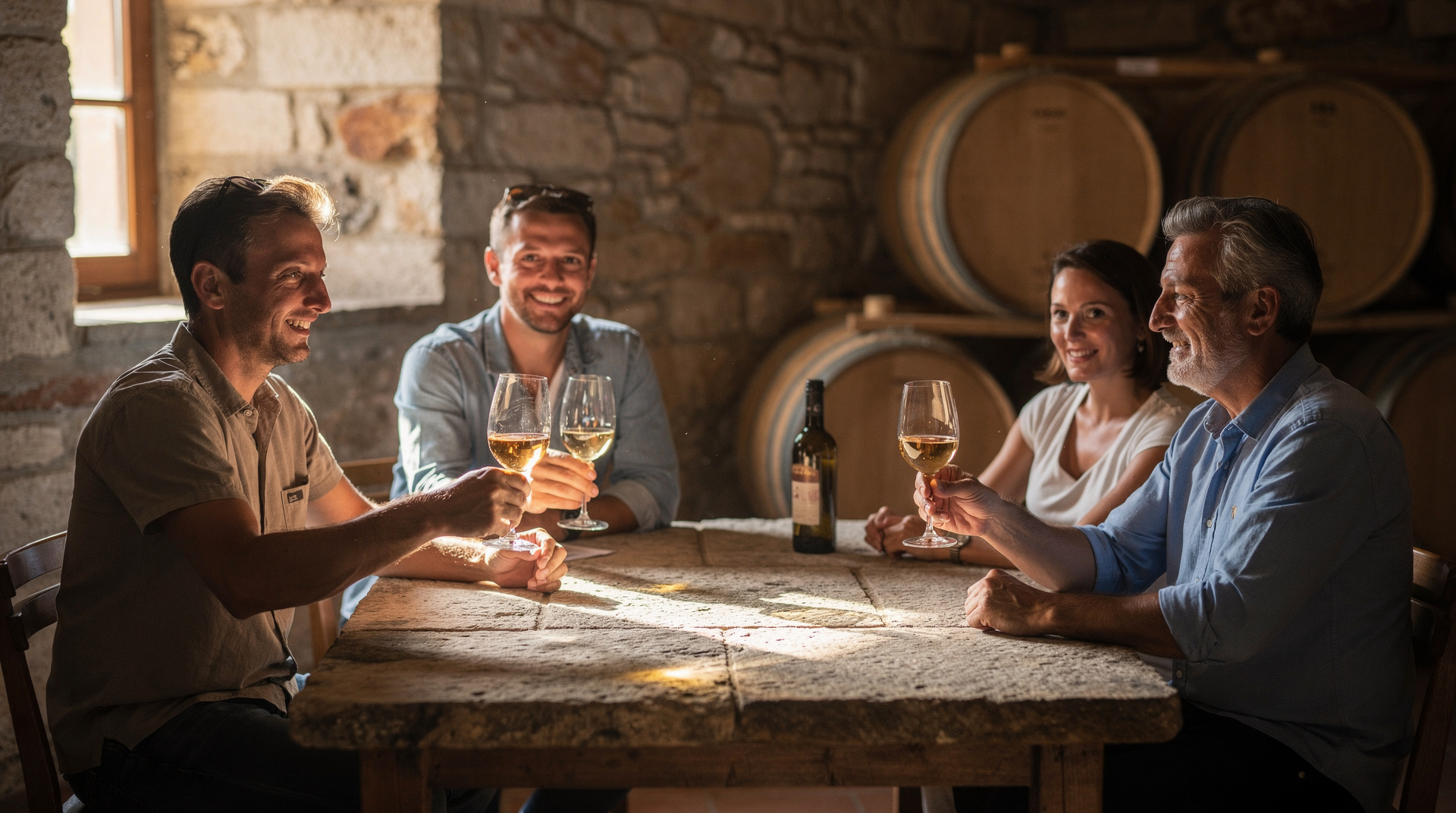
For visitors without a car, a Vipava wine express from Ljubljana handles transport, guide and producer visits in a single organized trip. If you are already in the valley or coming from Nova Gorica, a standalone Vipava wine tasting experience gives access to producers and structured tastings without the transport element.
For a combined day covering both the Vipava Valley and Goriška Brda, a Winexpedition through Vipava and Brda is the most efficient way to compare the two wine regions in one excursion — the producers and landscapes are distinct enough that the contrast is genuinely informative.
The wine route by car
A self-guided Vipava Valley wine day from Ljubljana works well on a Saturday or Sunday when producers are more likely to have their tasting rooms staffed. A suggested sequence:
Leave Ljubljana by 09:00. Drive west on the A1, take the exit toward Col/Ajdovščina. First stop: Batič Winery (Šempas, 30 minutes from the motorway exit) — reserve ahead for a tasting. From Batič, drive to Guerila (about 20 minutes along the valley floor toward Nova Gorica) for a comparison tasting of their Zelen. Lunch at Gostilna Mahorčič in Podnanos — book ahead, the kitchen closes at 14:00.
Afternoon: drive up to Štanjel on the Karst plateau above the valley for the medieval village and the views back across the valley to the Trnovo forest. Then down to Vipava town (30 minutes) to see the river spring and walk the old town. Drive back to Ljubljana via the motorway, arriving by 19:00.
This itinerary covers the valley’s width, two of its best producers, the best traditional restaurant, and the two most architecturally interesting villages — all in a single day without rushing.
Orange wine in the Vipava Valley
The valley’s most internationally discussed wine style is skin-contact Rebula: fermented on grape skins for weeks or months, producing wines that are amber to deep orange in colour, richly textured, and significantly more complex and structured than a conventional white. These are wines that benefit from decanting and are best served at cellar temperature (12–14°C) rather than refrigerator cold.
Batič’s orange Rebula is the benchmark: the wine typically spends several months on skins in concrete or large oak vessels, producing a wine with the texture of a light red, the aromatics of a Mediterranean white, and the ageing potential of a good white Burgundy. Each vintage is different; the 2021 and 2022 are currently at cellars and beginning to open up.
The orange wine style polarises opinion. Visitors expecting a conventional white will be surprised; visitors who know what skin-contact means will find the Vipava version structurally sound and food-friendly in a way that the more experimental natural wines from other regions sometimes are not.
Food in the Vipava Valley
The valley’s food culture is influenced by proximity to Italy — house-made pasta, air-dried meats, aged sheep and goat cheeses, abundant use of olive oil from the Karst farms above. The cooking is not Slovenian gostilna food; it has more in common with Friulian trattoria than with a Ljubljana restaurant.
Gostilna Mahorčič (Podnanos village) is the standout: trout from the Vipava river, valley lamb, hand-made pasta with seasonal mushrooms, and a wine list exclusively from Vipava producers at prices not much above cellar door. Mains EUR 13–18. Reserve ahead.
Pri Lojzetu (Dvorec Zemono, above Vipava town) is one of the best restaurants in Slovenia — a tasting menu kitchen in a 17th-century fortified manor at around EUR 65–85 per person. Reserve weeks ahead in summer. Worth the splurge for a special occasion.
Gostilna Čukovlje (Ajdovščina area) is the everyday local option: simple, well-priced, good for Slovenian comfort food (žganci, štruklji, goulash-style dishes) with a short local wine list.
Staying in the valley
The valley is close enough to Ljubljana that overnight accommodation is not strictly necessary for a day visit. But staying allows an unhurried evening in Ajdovščina or Vipava town, a morning visit to producers when the light on the limestone walls is best, and access to the valley in spring and autumn twilight — which is when it is most beautiful.
Agriturismo Špilar (Šempas) offers farmstay accommodation with rooms around EUR 55–70 per person half board, in an estate that produces wine, honey, and cured meats. Simple and genuine.
Hotel Vipavski križ (Ajdovščina) is the town’s standard hotel option — EUR 70–100 for a double room, functional rather than atmospheric, convenient if the farmstays are full.
Honest notes
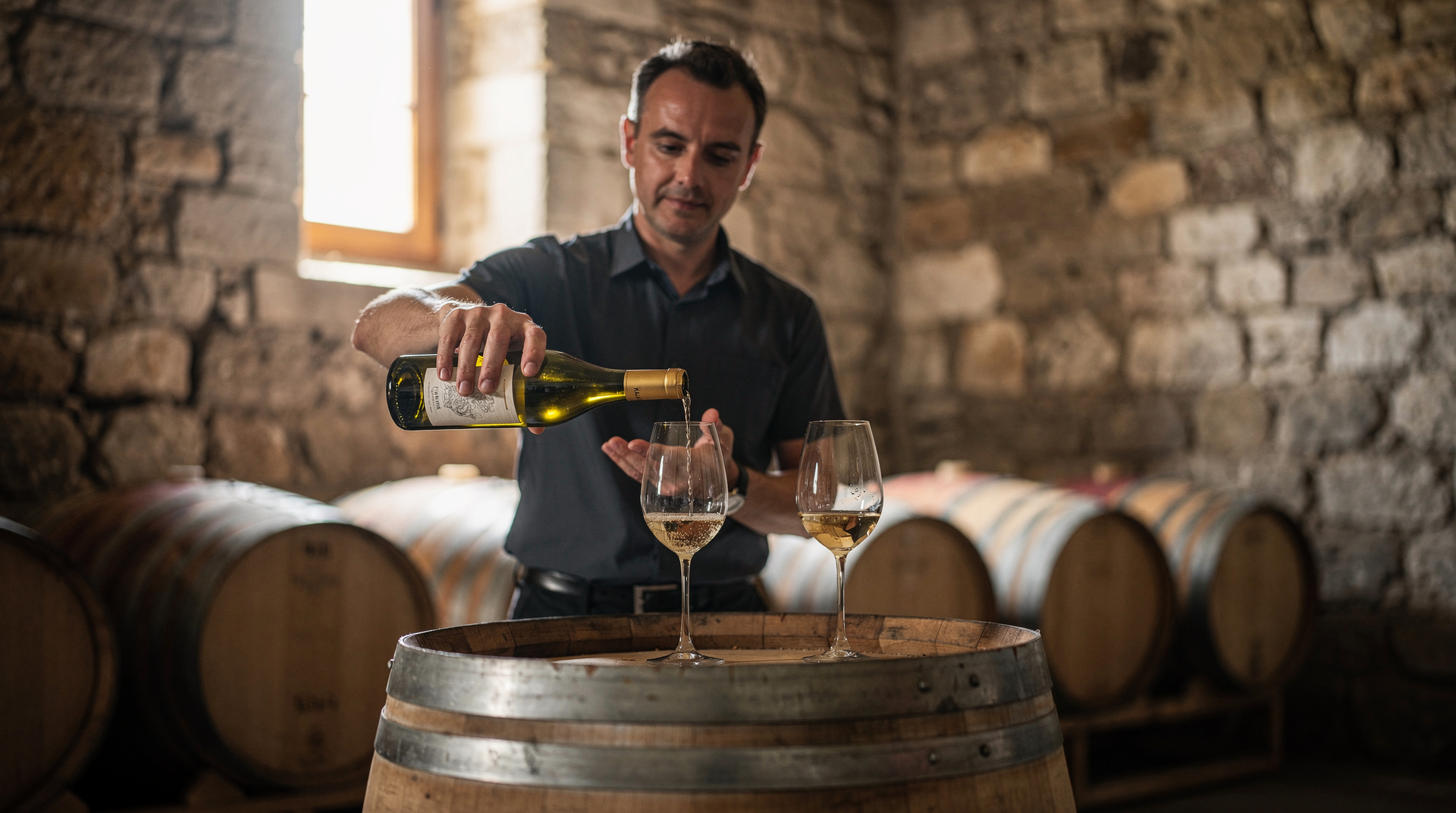
Zelen is an acquired taste. Its herbal intensity and phenolic character can read as strange to drinkers expecting a conventional white. Ask producers to explain the variety before you taste and the experience will be more rewarding. Most good Vipava producers will spend 20 minutes on context if you show genuine curiosity.
Burja in autumn and winter. The wind can be severe in October–March. Outdoor dining, cycling and walking are all affected. The wine road trip is better in May–June and September. Winter visits are possible but require a tolerance for cold wind.
Producer availability. Most small estates require advance booking. Arriving without an appointment during the week often means finding locked gates. Saturday and Sunday are easier. Email a week ahead; most respond in English or Italian.
Comparing vintages: what to look for
The Vipava Valley’s cool limestone terroir and the drying influence of the Burja wind produce wines that vary meaningfully by vintage. Warm, dry years (2017, 2019, 2021) give Zelen more body and aromatic intensity; cooler, wetter years (2018, 2020) emphasise the acidity and mineral character. The orange Rebula wines tend to be more consistent across vintages because the skin contact and extended maceration provide structure that compensates for variation in ripeness.
When visiting producers, ask about the current vintage compared to the previous one. Most Vipava winemakers are forthcoming about this — they would rather you understand the wine than be disappointed — and the conversation often reveals more about the winemaker’s philosophy than a scripted tasting.
Vertical tastings (the same wine from two or three vintages side by side) are available at Batič and occasionally at Guerila. If you have the chance to taste a Zelen from a warm year alongside one from a cooler year, take it. The difference makes the variety’s character legible in a way a single glass cannot.
Indigenous varieties elsewhere in Slovenia
The Vipava Valley is the heartland of Zelen and Pinela production, but other indigenous varieties are found across Slovenia. Goriška Brda has Rebula (Ribolla Gialla), shared with Italian Friuli — the same grape, different expression. The eastern zone around Maribor has Žametovka, the variety of the famous Old Vine. The coast around Piran has Malvazija Istrska. Each of these varieties has a specific relationship to its terroir that makes direct comparison between regions informative rather than competitive.
The indigenous variety argument for Slovenian wine is essentially this: in a world where international varieties (Chardonnay, Sauvignon Blanc, Merlot) grow everywhere and converge toward predictable profiles, the wines that grow nowhere else are the ones that repay the journey to find them. Zelen grown in the Vipava Valley by a committed producer is a wine that does not exist in any other form anywhere else. This is as strong an argument for visiting a wine region as any.
Wine tourism infrastructure in the valley
The Vipava Valley’s wine tourism infrastructure is developing but not yet polished in the way of, for example, the Napa Valley or Chianti. There is no formal wine route map with unified signage and predictable opening times. Each producer manages their own appointment system. The positive version of this is that visits feel genuine rather than staged — you are meeting a winemaker, not a PR operation.
Ajdovščina has a small tourism office (TIC Ajdovščina on Cesta 5. maja) that can help with producer contacts and cycling routes in the valley. The Vipava region’s cycling network is well-maintained and the flat valley floor makes day-long cycling itineraries between producers genuinely pleasant in May–September.
A practical tip: if you are combining a Vipava Valley wine day with a visit to Goriška Brda, drive the back road through Šempas to Brda rather than returning to the motorway. The road winds through the limestone hills and gives a clear picture of how the geology shifts from Vipava limestone to Brda flysch — the visible terrain change matches the wine character change.
The Vipava Valley’s natural wine community
The concentration of natural wine producers in the Vipava Valley is notable for a region of its size. Beyond the established names (Burja, Guerila, Batič), a second generation of smaller producers has emerged since 2015:
Aci Urbajs (near Šempas) is making low-intervention Zelen and Rebula that appear in natural wine bars in Ljubljana and occasionally in international markets. Production is very small; contact directly.
Mlečnik (Šempas area) produces natural wines that have a quiet international reputation. The Rebula from skin contact is particularly well-regarded among natural wine buyers.
Sutor (Vipava town surrounds) is a newer producer making wines with very little intervention and a strong focus on the local limestone terroir. Relatively unknown outside specialist Slovenian wine circles but worth seeking out.
This second tier of producers is where the most experimental work is happening in the valley — wines that are sometimes technically challenging but often genuinely interesting. If you have already explored the benchmark producers and want to push into less mapped territory, these are the names to follow.
The broader picture of Slovenian wine regions is covered in the Slovenian wine guide. The adjacent Goriška Brda wine guide covers the valley’s more celebrated western neighbour.
Vipava versus Goriška Brda: which to visit if you only have one day
Both valleys sit within an hour of each other and share the Rebula grape, but the character of a wine day differs meaningfully between them. Vipava’s Zelen and Pinela are genuinely unique — you cannot taste them with any seriousness anywhere else — while Goriška Brda’s strength is the polish and international recognition of its producers, several of whom export widely. For a visitor who wants the more unusual, less-mapped experience, Vipava is the better single choice.
For a visitor who wants a more classic, postcard wine-country day with rolling hills and established cellar-door infrastructure, Goriška Brda delivers that more consistently. The combined Vipava and Brda winexpedition exists precisely because most serious wine travellers want to sample both rather than choose.
What a first Vipava wine day should prioritise
For visitors with only a few hours rather than a full day, prioritise tasting Zelen at Guerila or Batič over trying to cover every producer on this list — the variety is the entire point of visiting Vipava, and a rushed multi-winery day risks tasting several wines without really engaging with any of them. If lunch is part of the plan, book Gostilna Mahorčič ahead; its wine list, drawn exclusively from valley producers, is itself an efficient way to sample four or five estates in a single sitting without the logistics of separate cellar visits.
A realistic half-day version: leave Ljubljana by 09:30, arrive at Guerila by 11:00 for a Zelen-focused tasting (about an hour), drive 20 minutes to Batič for a second tasting including the orange Rebula, then head to Podnanos for lunch at Mahorčič before returning to Ljubljana by mid-afternoon. This compressed version skips Štanjel and the wider valley drive but delivers the two producers that best represent what makes Vipava distinctive, without the fatigue of a full day of cellar visits.
Frequently asked questions about Vipava Valley wine guide
Do you need to book Vipava Valley wineries in advance?
Yes, for most small producers. Burja Estate, Batič and the smaller natural wine names operate by appointment rather than walk-in tasting rooms, so email a week ahead. Guerila and Scurek are more accessible for casual visits, but calling ahead still avoids a locked gate.Is the Vipava Valley suitable for a day trip without a car?
It's more practical with a guided option than fully independently — public transport between individual wineries is limited. A guided wine-tasting day trip from Ljubljana handles transport, appointments and tastings in one booking, which is the recommended route for visitors without a car.
Top experiences
Bookable activities with verified prices and instant confirmation on GetYourGuide.