Goriška Brda wine guide: Slovenia's most celebrated wine hills
Goriška Brda: wine walk and tasting
What wine is Goriška Brda famous for?
Goriška Brda is best known for Rebula (Ribolla Gialla) — especially orange-style skin-contact versions — along with Pinot Gris, Sauvignon Blanc and Merlot-based reds. Producers Movia and Kabaj are internationally known for their natural wine and orange wine production.
Rolling hills, Eocene flysch and Slovenia’s finest white wine
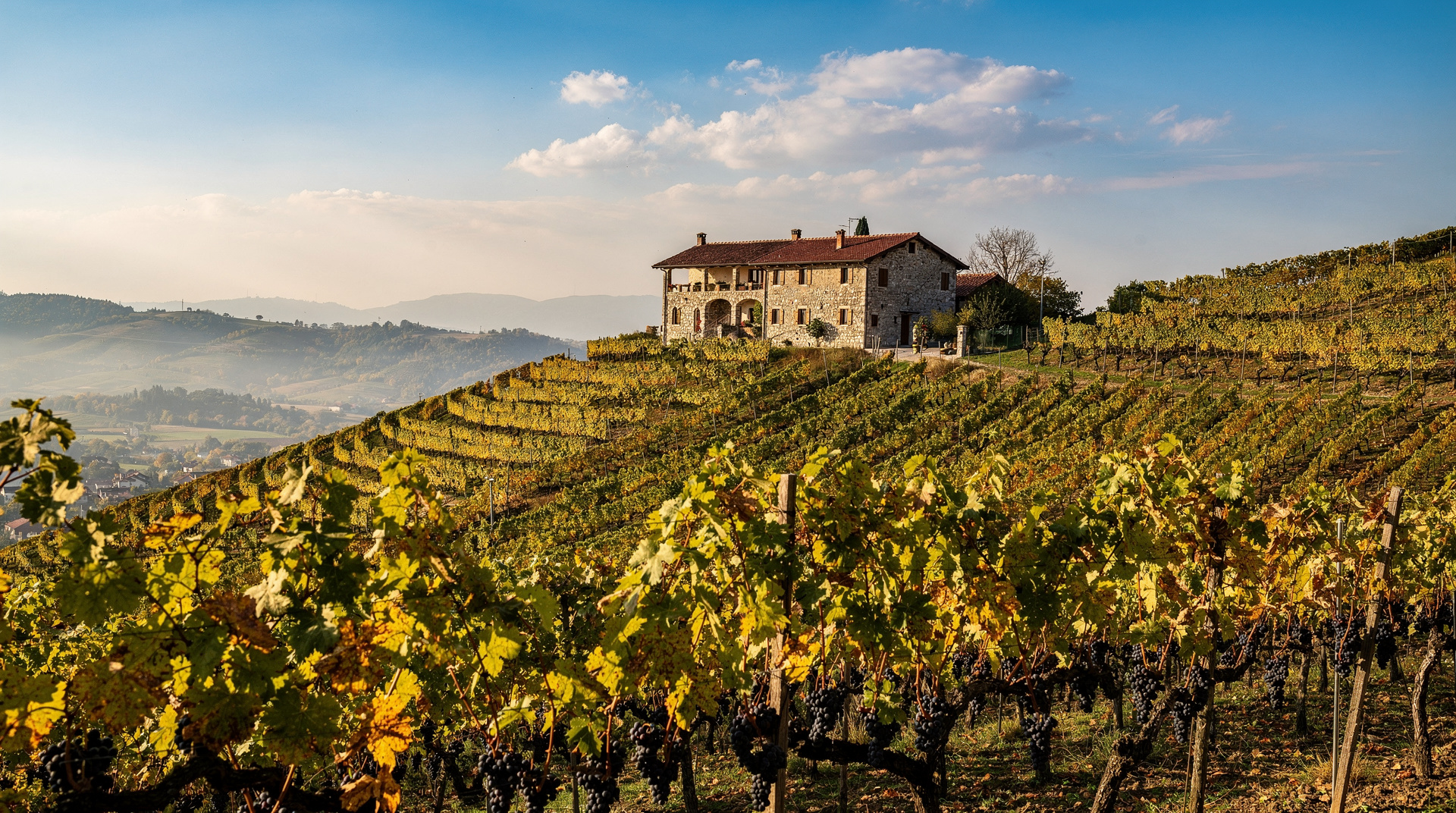
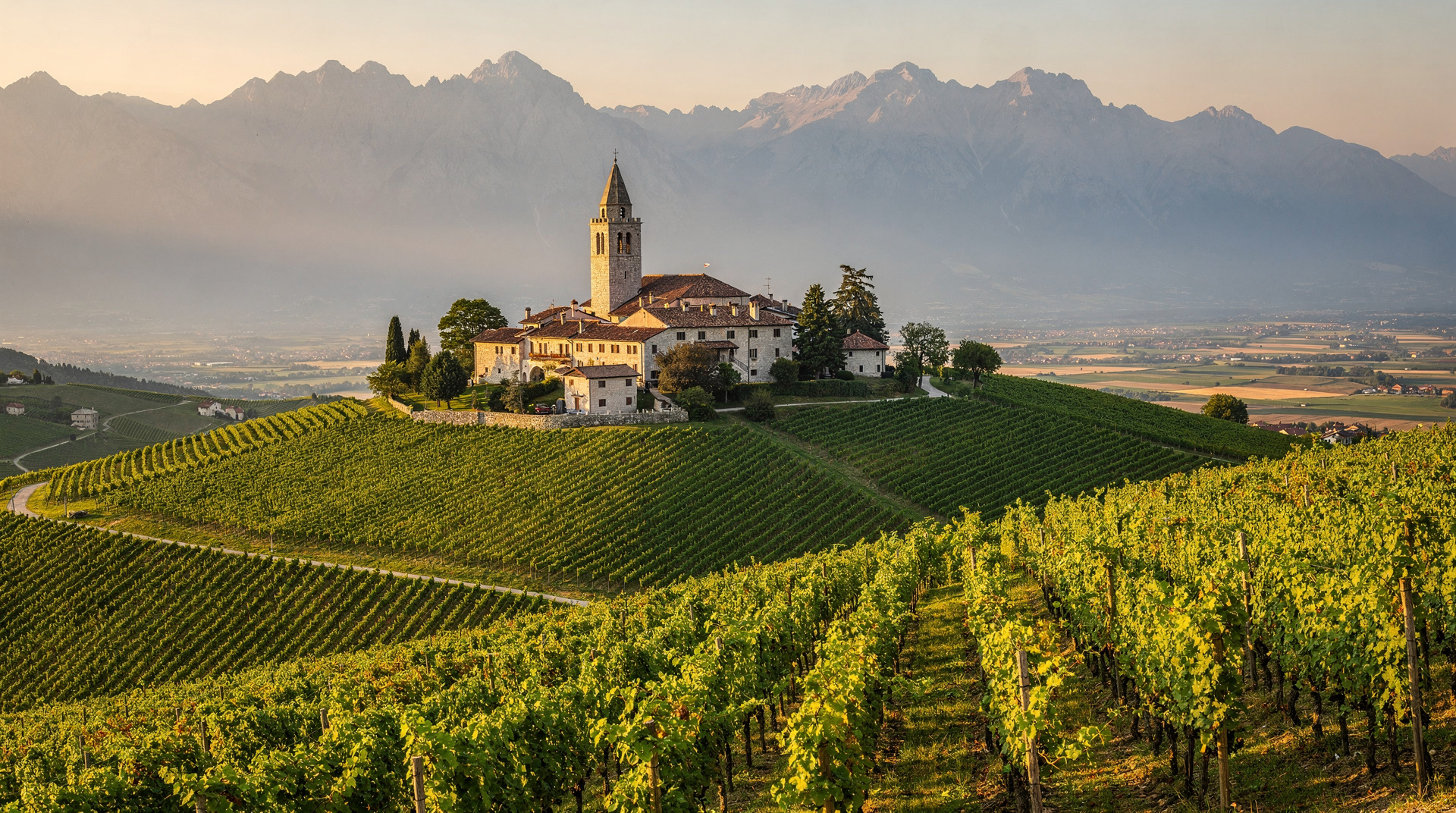
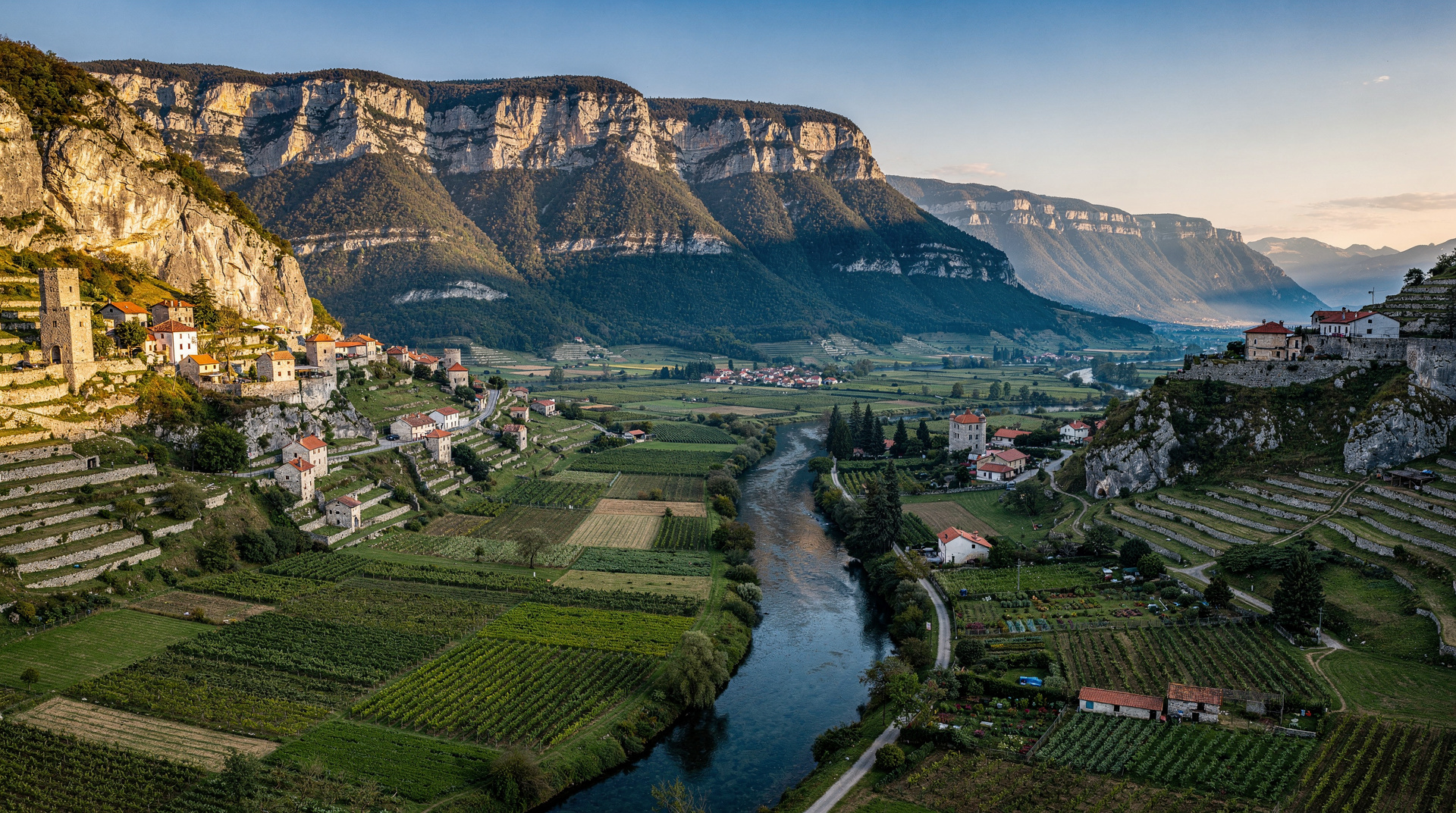
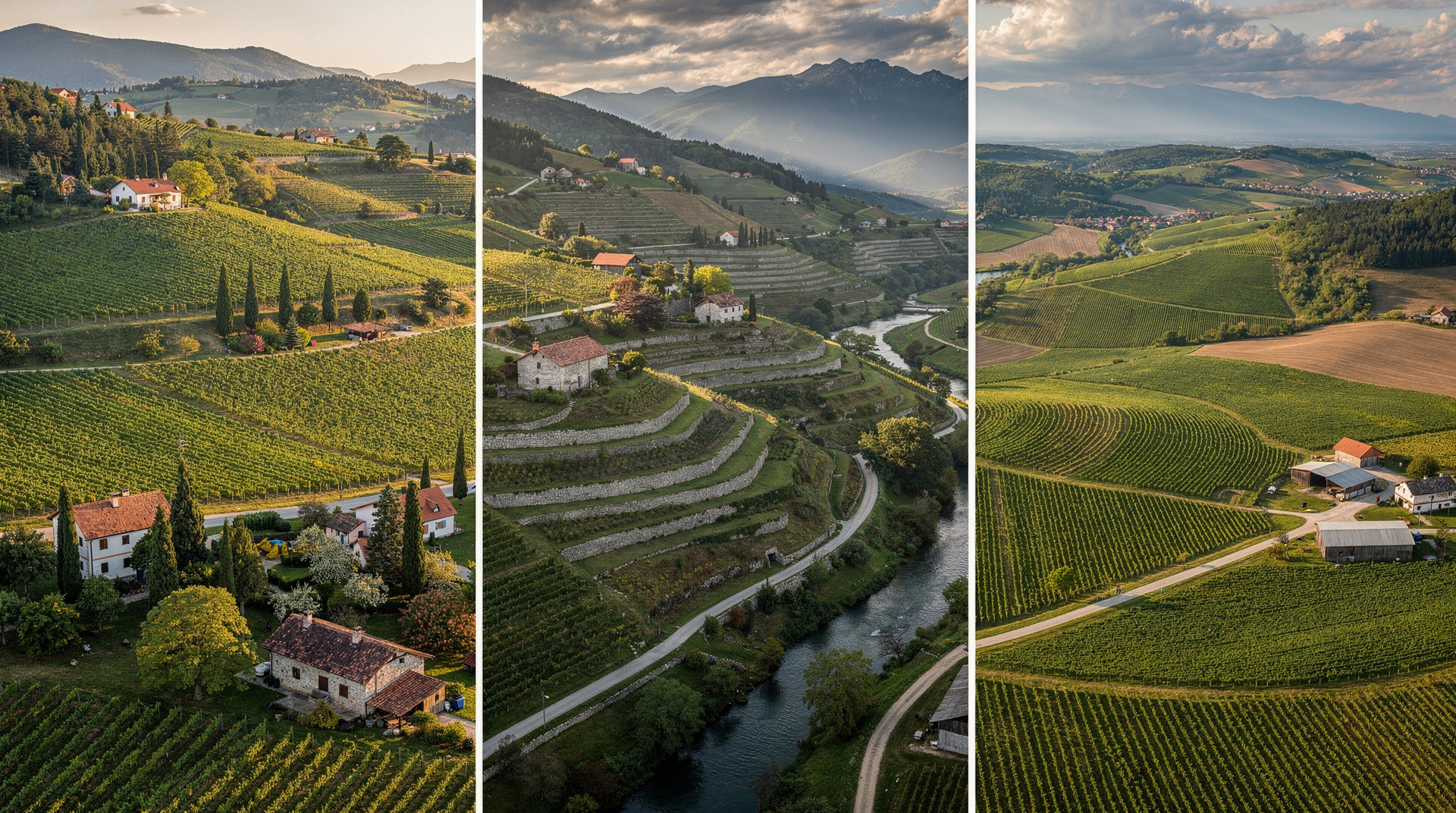
Goriška Brda — the “Slovenian Collio,” as its promoters often say — sits in the extreme southwest of Slovenia, a landscape of terraced vine-covered hills rising between the Soča (Isonzo) river valley to the south and the Italian border to the west. Drive twenty minutes into Italy from the Brda and you are in Collio, the Friulian wine zone that shares almost identical geology, the same grape varieties, and a wine culture that was unified until the post-World War II border drew a line through the middle of the vineyards.
The geology is the story. Brda’s hillsides are built on Eocene flysch — a sedimentary sequence of alternating marl and sandstone, soft enough to erode into the rounded hills that characterize the landscape, rich enough in calcium and trace minerals to give wines a textural density and mineral quality that Slovenian producers have spent thirty years learning to exploit. The same flysch runs into Collio, which is why the best Brda Rebula and the best Collio Ribolla Gialla taste like cousins rather than strangers.
The climate is Mediterranean-influenced — warmer and sunnier than Ljubljana, with warm air coming up the Soča valley from the Adriatic. Vintages are more reliable and consistent than in the cooler zones of Slovenia, and ripeness is rarely a problem. This produces wines with more body and alcohol than the Vipava Valley’s more nervous, herbal whites, and makes Brda the better zone for ambitious reds.
| Where | 80–90 km from Ljubljana, 1h15 drive |
| Signature wine | Rebula, especially orange/skin-contact style |
| Top producers | Movia, Kabaj, Edi Simčič, Klet Brda |
| Best season | Late April (cherry blossom), Sept–Oct (harvest) |
| Tasting cost | Around EUR 15–35 per person, guided walks EUR 40–70 |
The grapes
Rebula (Ribolla Gialla in Italian) is the signature variety of Goriška Brda. In conventional form — cool-fermented, early-bottled, clean — it is a fresh, mid-weight white with citrus, herbal and mineral notes and excellent natural acidity. In orange-wine (skin-contact) form, it becomes something structurally different: amber-coloured, tannic, aromatic, capable of ageing for years.
Brda Rebula, fermented in contact with skins for weeks or months, is the wine style most associated with the region internationally — largely through the influence of Joško Gravner in neighbouring Friuli (who was not Slovenian but whose approach inspired Slovenian winemakers) and through the production of Movia and Kabaj, whose orange Rebulahas been exported to natural wine bars worldwide since the early 2000s.
Pinot Gris (Sivi Pinot) is the second important white variety of Brda. In the hands of Edi Simčič and a handful of other producers, it produces wines of real weight and complexity — full-bodied, lightly smoky, with long minerality. These compete with good Alsatian Pinot Gris and often beat them on value.
Sauvignon Blanc is grown with success in several Brda estates and tends to produce a more restrained, mineral version than the pungent New World style — closer to Pouilly-Fumé than to Marlborough. Marjan Simčič makes a benchmark Sauvignon for the region.
Merlot is the dominant red in Brda and a significant improvement on the typical Slovenian red. The warmth of the valley and the richness of the flysch soil produce Merlot with real fruit concentration, soft tannins, and good ageing potential. Edi Simčič’s Opoka Merlot and Klet Brda’s Bagueri (a Merlot-dominant blend) are the most respected examples.
Cabernet Sauvignon and Cabernet Franc are grown in smaller quantities but produce serious results in warm vintages. These are not everyday wines; they are the cellar-ageing bottles that Brda producers point to when arguing for the region’s premium positioning.
Key producers
Movia (Dobrovo) is the name most associated with Goriška Brda outside Slovenia. Aleš Kristančič runs the estate his family has farmed since the 18th century, and his most famous wine — Lunar, a Rebula fermented on skins for months without sulphur, then bottled unfiltered and with residual CO2 — has become one of the defining orange wines of the international natural wine scene. Movia is open for visits; the estate is beautiful, the wines are polarising (deliberately so), and Kristančič himself is one of the more theatrical wine personalities in central Europe.
Kabaj (Šlovrenc) is the other internationally known Brda producer in the natural wine space. Kabaj makes a range of skin-contact wines across several varieties, with technical consistency that sets them apart from more experimental producers. The Amfora (Rebula in terracotta amphora) and the 2Kabaj blend are the estate’s most ambitious wines. More approachable tasting room experience than Movia.
Edi Simčič (Dobrovo) is a technically precise winemaker whose Opoka range represents a more conventional but high-quality counterpoint to the natural wine producers. His Pinot Gris and Sauvignon Blanc are reliable benchmarks. His son Marjan Simčič runs a separate estate with a different aesthetic — lighter, more mineral.
Klet Brda is the Brda wine cooperative — founded in 1957, processing grapes from over 400 growers across the region. Its premium Quercus and Bagueri ranges are genuinely good wines at reasonable prices, widely available in Slovenian shops and restaurants. The cooperative’s quality control has significantly improved since 2010.
Burja (note: Burja Estate is primarily Vipava Valley but sources some Rebula from Brda parcels — worth mentioning here for completeness).
How to visit
The Brda hills are 80–90 km from Ljubljana, about 1 hour 15 minutes by car. The landscape is one of the most scenic in Slovenia — terraced vineyards, hilltop villages with views into Italy, cherry orchards (the Brda cherry harvest in late May is a regional festival event). A day trip from Ljubljana is feasible but hurried; an overnight stay in Dobrovo or one of the agriturismo estates allows a more relaxed pace.
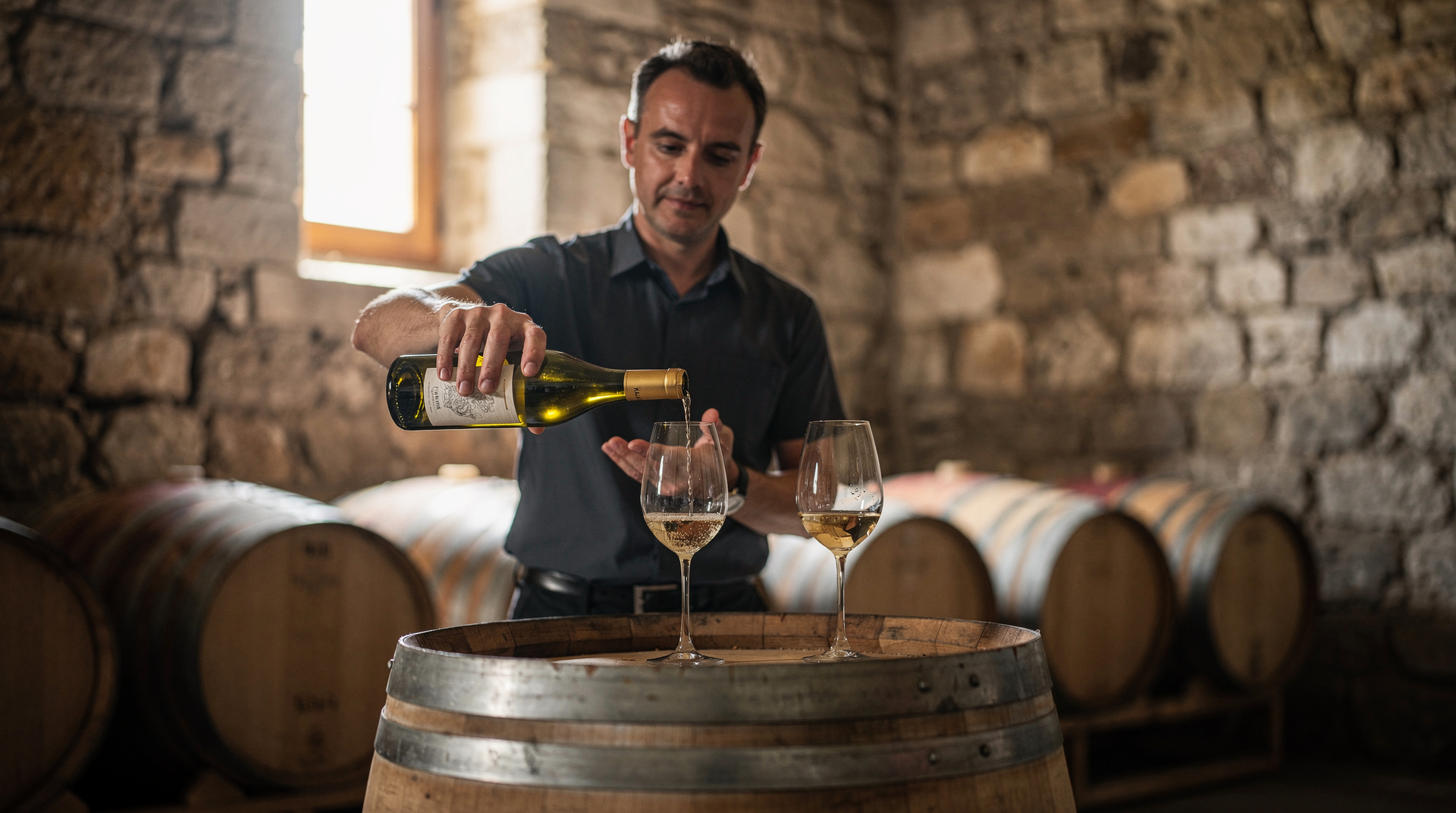
A guided Goriška Brda wine walk through the village lanes and vineyard terraces, with tastings at local producers, is the best way to understand the landscape and the wine together in a half-day. For a pairing of wine with local cured meats, cheese and bread, a Brda wine and snacks experience combines tasting with a traditional food spread.
To compare Brda directly with the Vipava Valley in a single day, a Winexpedition through Vipava and Brda packages both regions with transport and guide — the contrast between Brda’s richer, Mediterranean-influenced whites and Vipava’s more herbal, mineral indigenous varieties is educational.
The village loop by car
A self-guided Brda loop from Ljubljana: take the A1 motorway west, then south toward Nova Gorica, and enter the Brda from the Dobrovo direction. The hilltop villages of Šmartno (medieval walls, wine bar) and Kojsko are the most scenic; the views from the Šmartno church terrace into Italy on a clear day are exceptional.
Dobrovo Castle (Grad Dobrovo) houses the Klet Brda tasting room and a small cultural history exhibition. Easily visited without booking; good for an overview of the cooperative’s range. Continue to Vipolže manor and Medana village for a quieter stretch of the hills.
Allow 5–6 hours for a comfortable loop including two winery visits and lunch. Gostilna Manda in Šlovrenc and Gostilna Keber in Dobrovo are the most reliable rural restaurants in the hills.
Brda versus Vipava: which to visit first?
Both regions produce excellent wine and are within 30–45 minutes of each other, making a combined visit natural. The question of which to visit first depends on your palate:
If you prefer richer, more structured whites and are interested in orange wine as a fine wine style, start with Brda — Rebula here has the body to make the skin-contact style convincing from your first glass.
If you are specifically interested in indigenous varieties that exist nowhere else, or if you prefer lighter, more mineral whites, start with Vipava — Zelen and Pinela are nowhere else.
If you want both in one day, begin in Vipava (arrive for a 10:00 tasting, lunch at Mahorčič), then drive west to Brda for an afternoon tasting (arrive around 14:30) and end in Nova Gorica for dinner.
Food in Goriška Brda
The food culture in Brda is strongly Friulian-influenced: prosciutto crudo from the surrounding farms (Kraški pršut, from the Karst nearby), aged cheeses, pasta with game or mushrooms, grilled meats with local olive oil. The Brda cherry (Briška češnja) is a specific local cultivar, harvested in late May and early June, and the subject of the annual Brda Cherry Festival in Dobrovo — a good reason to visit the region in late May if the timing aligns with your trip.
Gostilna Manda (Šlovrenc) is the most consistently praised rural restaurant in the Brda hills — house-made pasta, locally sourced meats, a focused wine list from Brda and Vipava producers. Mains EUR 15–22. Book ahead.
Restaurant Dobrovo (Grad Dobrovo) in the castle grounds is more formal, with a good Brda wine list and a menu that uses local ingredients in slightly more elaborate preparations. Mains EUR 18–28.
Honest notes
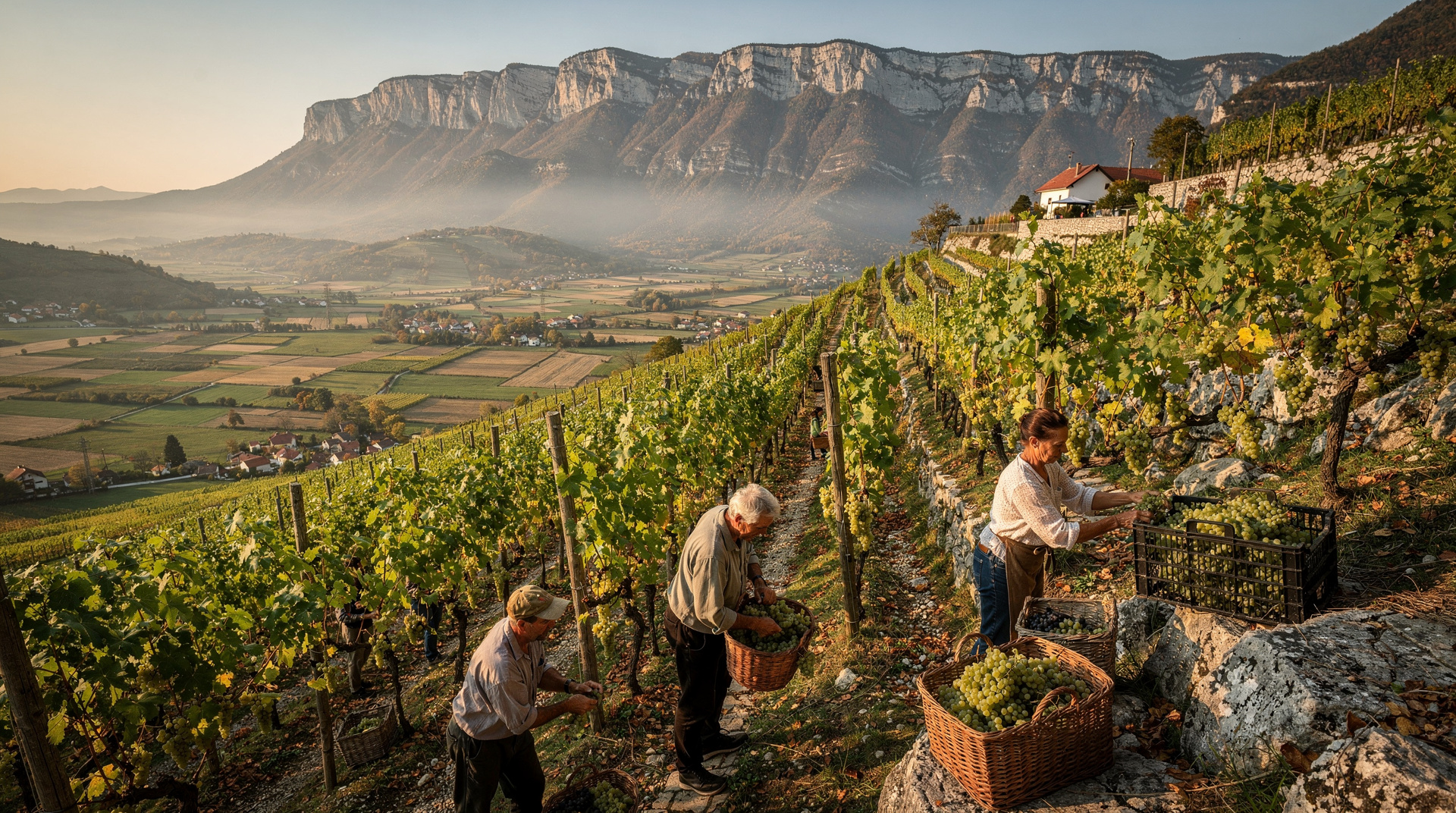
Cherry blossom versus harvest. The Brda is beautiful at all times but the two most spectacular visual seasons are late April (cherry blossom, white hillsides) and late September to October (harvest, golden light on vine-covered terraces). If your visit is in summer, the hills are green and the views are still excellent, but the countryside is less dramatically photogenic.
Orange wine adjustment. If this is your first encounter with serious orange wine, try a clean Rebula alongside the skin-contact version at the same producer. The contrast makes the skin-contact style make sense in context. Without that reference point, the colour and tannin can seem like flaws.
Italian border crossings. The Brda borders Italy; some producers have vineyards on both sides. The border crossings are unmarked (Schengen) and driving into Collio for lunch before returning to Slovenian Brda for an afternoon tasting is a pleasant way to spend a day if you have a car.
The vintage pattern in Goriška Brda
Brda’s Mediterranean climate gives it more consistent vintages than the eastern Slovenian zones, but there is still meaningful variation. The warmest years (2017, 2019, 2022) produce Rebula and Merlot of unusual concentration and ageing potential; cooler years (2018, 2020) emphasise acidity and freshness. The skin-contact wines are more resilient across vintages because the extended maceration and natural tannin provide structure regardless of ripeness level.
The best recent vintages available at cellar doors: 2021 for whites and orange wines; 2019 for reds. Ask producers specifically what they recommend from their current stock for drinking now versus ageing.
Cycling the Brda hills
The Brda hills are among the most scenic cycling terrain in Slovenia — the combination of terraced vineyards, cherry orchards, hilltop villages with views into Italy, and relatively gentle gradients (steep in places but nowhere brutal) makes a one-day cycling circuit through the central Brda one of the best bike rides in the country.
A marked cycling route (Briška kolesarska pot) runs a 40-km loop through the main villages — Šmartno, Kojsko, Vipolže, Dobrovo, Medana — with options to extend toward the Italian border or south to the Soča valley. Bike rental is available in Nova Gorica (25 minutes from Dobrovo) and from some of the larger estates. The road surfaces are generally good; a gravel bike or a sturdy hybrid is more comfortable than a road bike on the smaller lanes.
Cherry blossom cycling in April: The Brda cherry blossom season (typically late April, occasionally extending into early May) coincides with the warmest riding weather before the summer heat. The combination of white blossom hillsides, vineyard green and limestone walls is one of the most photogenic landscape events in Slovenia. Timing is not entirely predictable but checking local webcams and weather forecasts a week ahead is usually reliable enough.
Where Brda connects to the rest of Slovenia
Goriška Brda sits in the far western corner of Slovenia, at the point where three political and cultural geographies meet: Slovenia, Italy and the former Yugoslavia. The town of Nova Gorica — 25 minutes south of Dobrovo — is the most curious consequence of this geography: it was built in the 1940s as a socialist new town directly alongside Italian Gorizia, the two cities divided by a border that was one of the Cold War’s most contested.
The border has been open since Schengen, and Gorizia and Nova Gorica are now a joint European Capital of Culture (2025). The Transalpina square, straddling the border between the two cities with a giant chess board on the former frontier line, is worth a brief stop.
From Nova Gorica, the Soča valley is accessible to the north (Kobarid 30 km, Bovec 55 km) — making a combined Brda wine day plus Soča valley afternoon feasible with an early start and a car. The drive north from Nova Gorica into the Soča system, through the deep valley below Kobarid, is one of the most dramatic road sequences in Slovenia.
Brda wine in Ljubljana
If you cannot make it to Goriška Brda in person, Ljubljana has several outlets where Brda wine is well-represented. The Movia wine shop on Mestni trg is the Brda producer’s Ljubljana outpost — tasting the current releases here at cellar price before deciding which bottles to buy is the rational approach. Dvorni Bar and Vino-Vino both carry Brda natural wine producers by the glass.
The Central Market’s wine stalls occasionally include bottles from Brda cooperative (Klet Brda) and from small producers who have arrangements with individual stallholders. Less predictable than the dedicated wine shops but worth checking.
Sustainability and organic farming in Brda
A significant number of Goriška Brda producers have converted to organic or biodynamic viticulture in the past decade. The flysch soil — already relatively free-draining and mineral-rich — responds well to organic management, and the Mediterranean climate (low humidity, high sun hours) reduces disease pressure compared to the wetter continental zones.
Certified organic producers in Brda include Kabaj, several smaller estates, and an increasing portion of the Klet Brda cooperative’s member vineyards. Biodynamic certification (Demeter) is held by a smaller number. Asking about farming practices when you visit is welcomed by most producers; they typically have a view and are happy to explain it.
See the Slovenian wine guide for the full picture of Slovenian wine regions, and the Vipava Valley wine guide for the region 30–40 minutes east of Brda.
Staying overnight in Brda
A handful of agriturismo properties and boutique guesthouses are scattered through the Brda hills, mostly family-run and often attached to a working winery or farm. These typically cost EUR 80–150 per night for a double room and offer a genuinely different pace from a Ljubljana-based day trip — waking up among the vines, having breakfast with a view into Italy, and being able to walk to a nearby producer for a morning tasting before the day-trippers arrive.
Dobrovo itself has the most concentrated small-hotel and guesthouse options; Šmartno and Medana have a handful of quieter, more rural stays. Booking two to three months ahead for the late-April blossom season or the September–October harvest is sensible, since both are popular windows with limited inventory.
Pairing Brda wine with food elsewhere in Slovenia
If your itinerary does not include a full day in Brda, the wine still turns up meaningfully elsewhere. A gostilna anywhere in western Slovenia is likely to carry at least one Brda producer on the wine list, and the Movia shop on Ljubljana’s Mestni trg makes tasting current releases at cellar price possible without the drive. For a broader introduction to how Slovenian food and wine work together — including the gostilna’s approach to house wine by the carafe — the gostilna traditional dining guide is the natural companion piece to this one.
Comparing Brda to the Slovenian coast for a combined trip
Many visitors base a western Slovenia itinerary around either Brda or the coast, without realising how well the two combine. The coastal towns of Piran and Koper are roughly 1h15–1h30 from Dobrovo, similar to the drive from Ljubljana, which makes a Brda-and-coast loop (skipping Ljubljana on the way) a genuinely efficient use of a western Slovenia week: two or three nights in Brda for the wine and the hills, then two or three nights on the coast for the Venetian towns and the sea, connecting through Nova Gorica rather than backtracking to the capital.
Frequently asked questions about Goriška Brda wine guide
Do I need to book winery visits in Goriška Brda in advance?
Larger operations like Klet Brda (the cooperative at Dobrovo Castle) can be visited without booking. Smaller, well-known estates such as Movia and Kabaj strongly recommend booking a few days ahead, especially for a guided tasting rather than just the shop. In peak season (May–October) and during the Brda Cherry Festival in late May, booking a week ahead is the safer approach for any specific producer.Is Goriška Brda suitable as a day trip from Ljubljana?
Yes, though it is a long day: the drive is about 1h15 each way, so a round trip plus winery visits and lunch takes 7–8 hours minimum. It works well as a day trip if you have a car and start early, but an overnight stay in Dobrovo or a Brda agriturismo gives a noticeably more relaxed experience and allows an evening and morning in the hills without the return drive pressure.
Top experiences
Bookable activities with verified prices and instant confirmation on GetYourGuide.