Gostilna dining in Slovenia: how to eat like a local
Ljubljana's traditional flavors: a 3-hour food journey
What is a gostilna and what should I order?
A gostilna is a traditional Slovenian inn or tavern — the local equivalent of a French bistro. Order štruklji (rolled dumplings), Kranjska klobasa (Carniolan sausage), žganci (buckwheat mush with crackling), or seasonal game and trout. A full three-course lunch with wine costs EUR 18–28 at a good rural gostilna.
The gostilna: Slovenia’s most important culinary institution
The gostilna — pronounced goh-STEEL-na, roughly — is the traditional Slovenian inn that combines eating, drinking and sometimes accommodation under one roof. In its best form it is run by a family, serves dishes made from local produce, keeps a short seasonal menu, and operates with the kind of unhurried hospitality that disappears when restaurants are run primarily as financial exercises.
The word comes from gost (guest) and is related to the Serbo-Croatian gostionica and the Austrian Gasthaus — the same concept runs throughout the Central European cultural zone. What makes the Slovenian gostilna distinct is its food: the rolled-dough preparations (štruklji, potica), the buckwheat and cornmeal dishes (žganci), the freshwater fish, the game, and a general approach to cooking that relies on technique and ingredients rather than on presentation.
Understanding the gostilna logic will significantly improve your experience of eating in Slovenia. Tourist restaurants in Ljubljana’s old town often look like gostilne (wooden interior, checked tablecloths, printed menus with Slovenian dishes) but are not — they serve mediocre food at premium prices to visitors who do not know the difference. A real gostilna is typically slightly off the main tourist circuit, has a regular local clientele, changes its menu with the season, and charges prices that reflect the cost of the food rather than the rent of the location.
| What it is | Traditional Slovenian inn, family-run |
| Typical cost | Daily lunch EUR 10–15, à la carte mains EUR 10–22 |
| Where to find real ones | 20–60 km from Ljubljana, off the tourist circuit |
| What to order | Dnevno kosilo (daily menu), štruklji, Kranjska klobasa |
| Hours | Lunch to 14:00, often closed until dinner at 18:00 |
What a menu looks like
The structure of a traditional gostilna menu follows the Austrian-inherited pattern: soup, then a main with side dishes (or a starter and main), then dessert. Daily specials (dnevno kosilo or jed dneva) are typically the best value and the most seasonal.
Soups. Slovenian soup culture is strong: beef broth with pasta (goveja juha), minestrone-style vegetable soup (zelenjavna juha), mushroom cream soup in autumn (gobova juha), jota (sour bean and sauerkraut soup with smoked pork). Soup is EUR 3–5 at a typical gostilna; mandatory for a full meal in winter.
Main dishes. The Slovenian gostilna main is usually a generous protein with two or three side dishes. The side dishes are often better than the protein — braised red cabbage, roasted root vegetables, buckwheat žganci, fried potato slices — and reflect the season more accurately. Common mains:
Kranjska klobasa: the Carniolan sausage (PDO-protected, coarsely minced pork, lightly smoked) served boiled with mustard, horseradish and bread. EUR 7–10. The standard test of a gostilna’s commitment to sourcing — a genuine Kranjska klobasa from a proper producer tastes clearly different from an imitation.
Trout (postrv): freshwater trout pan-fried or grilled, typically from Slovenian rivers or farms. Served with seasonal vegetables and žganci or potatoes. EUR 13–18. The best versions come from gostilne near the rivers — around Bohinj, Soča valley, or the Vipava river.
Game (divjačina): rabbit (zajec), venison (jelenjina), wild boar (merjasec) in autumn and winter. Game is often cooked as a slow stew (narastek) or roasted. EUR 15–22. A reliable indicator of a gostilna with genuine hunter connections.
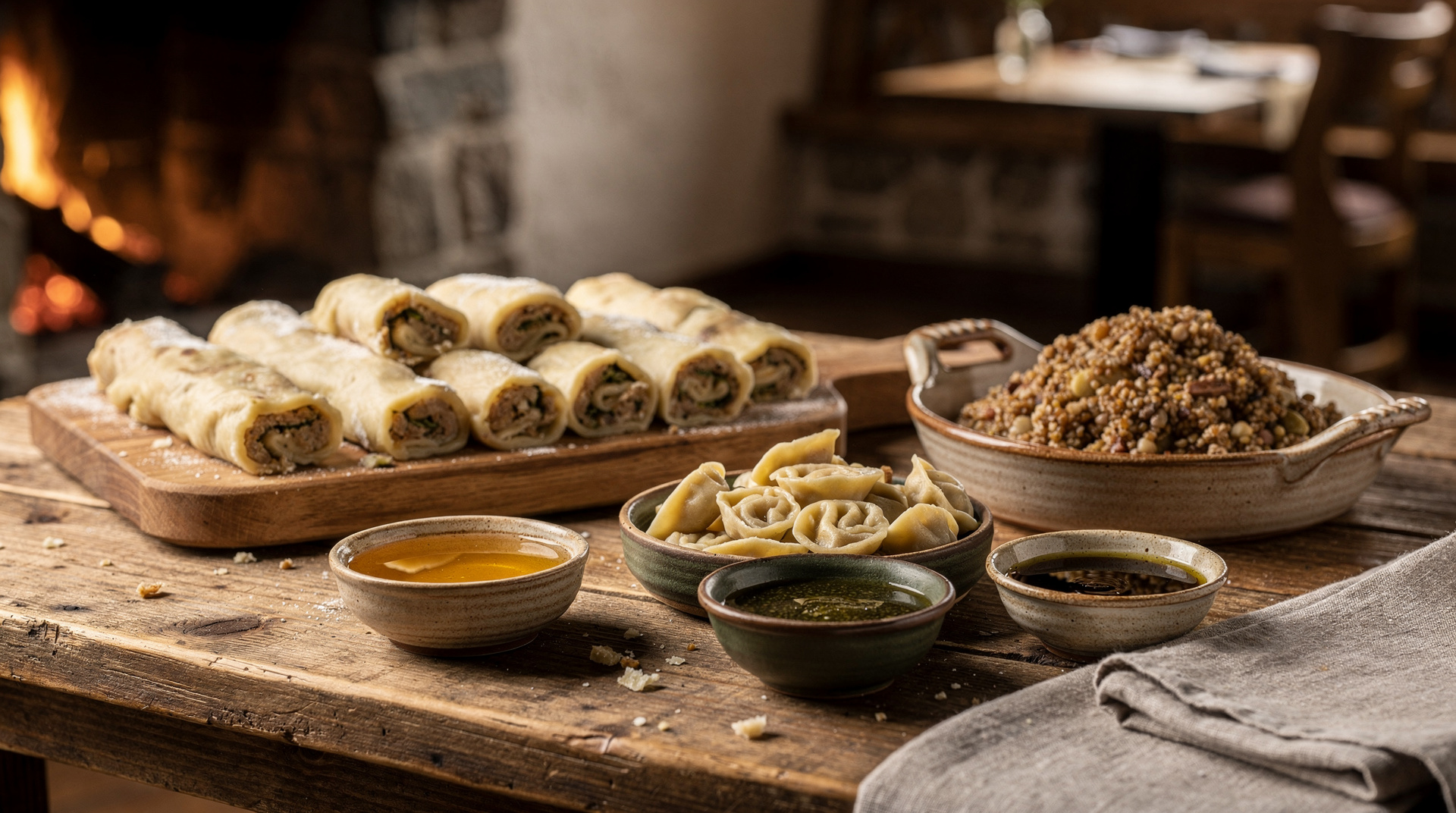
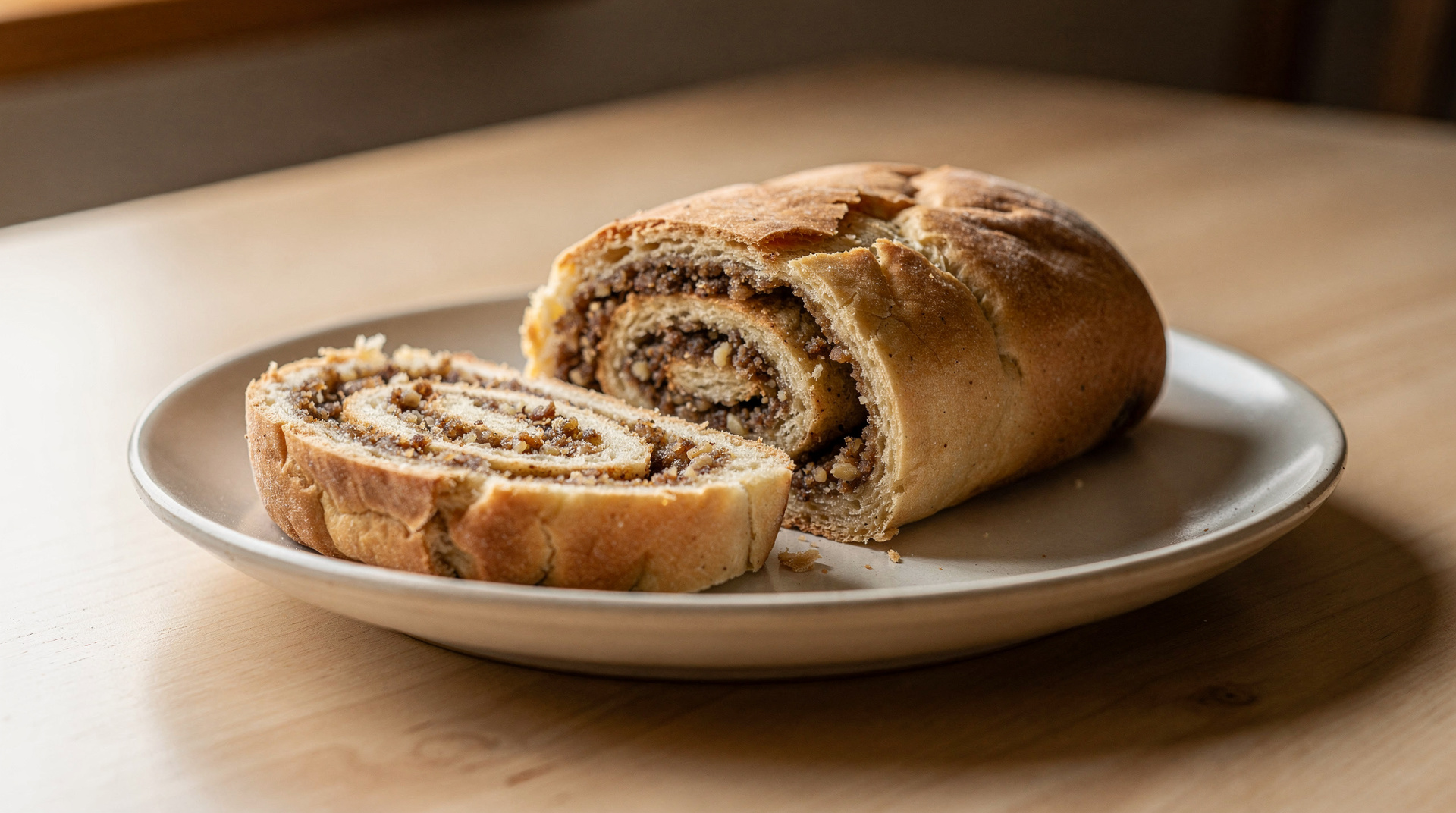
Štruklji: served as a starter (savoury, tarragon filling) or dessert (sweet, walnut or poppy seed). EUR 5–8. The kitchen’s štruklji will tell you more about the gostilna’s craft than the protein dishes.
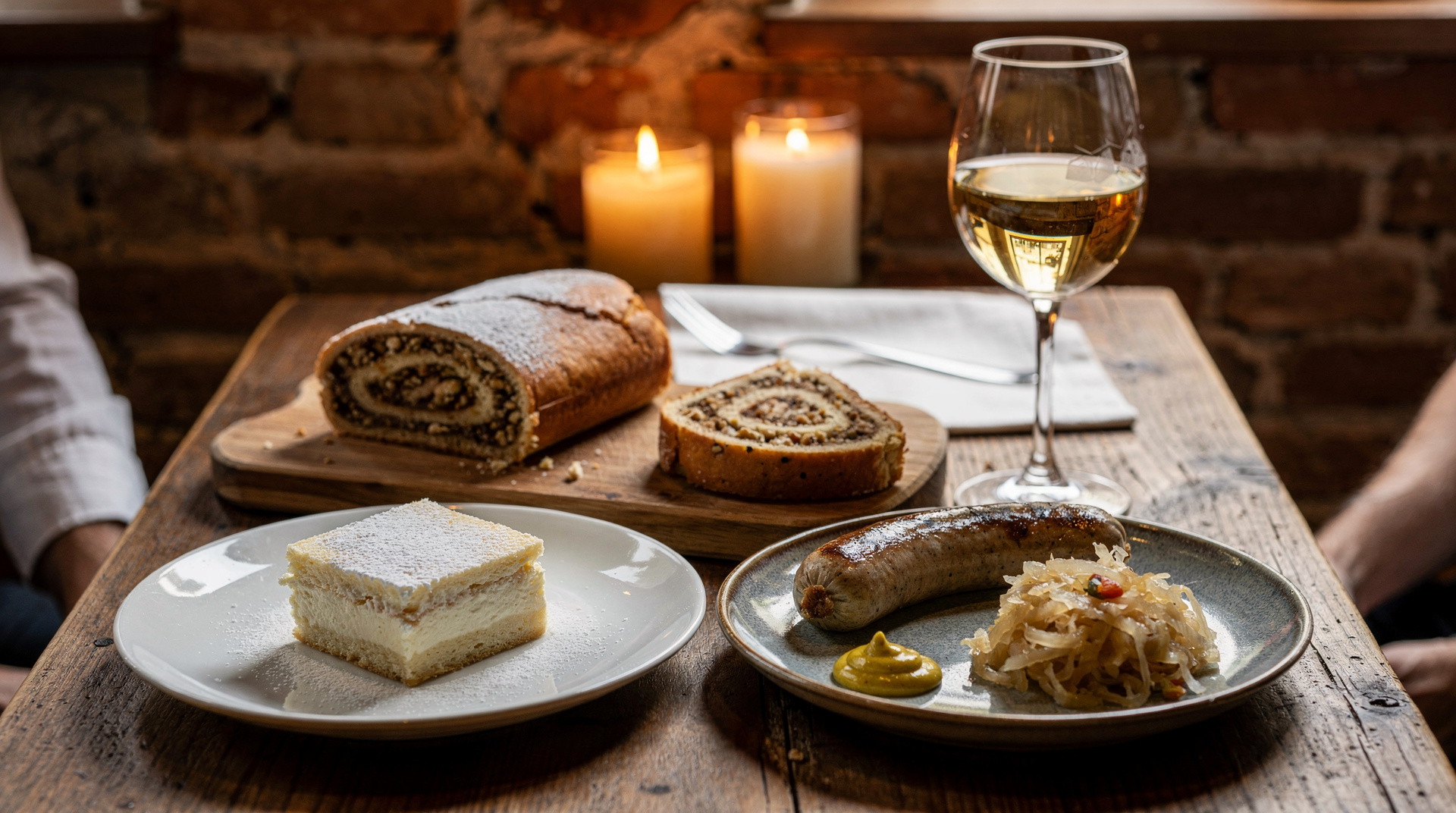
Desserts. Potica if the kitchen makes it fresh (not always — ask if it is house-made). Sweet štruklji with walnuts or poppy seed. Prekmurska gibanica if the gostilna has Prekmurje connections. Kremšnita everywhere, though quality varies.
The best gostilne in Ljubljana
Gostilna As (Čopova 5): the most respected gostilna in the city for quality — fresh štruklji, good sourcing, a natural wine list that takes Slovenian producers seriously. Mains EUR 16–26. Booking essential; garden terrace in summer. This is the answer to “where should I eat in Ljubljana if I want the best gostilna experience.”
Šestica (Slovenska 40): the everyday-local version — no pretension, consistent traditional dishes, lower prices (mains EUR 10–14), genuine Ljubljana regulars at lunch. The Kranjska klobasa and žganci here are well above average.
Pri Skofu (Rečna 8): slightly outside the tourist circuit, near Tivoli park, and consistently cited by Ljubljana residents as a favourite. Seasonal menu, excellent sourcing, unhurried service. Mains EUR 14–20. Booking essential.
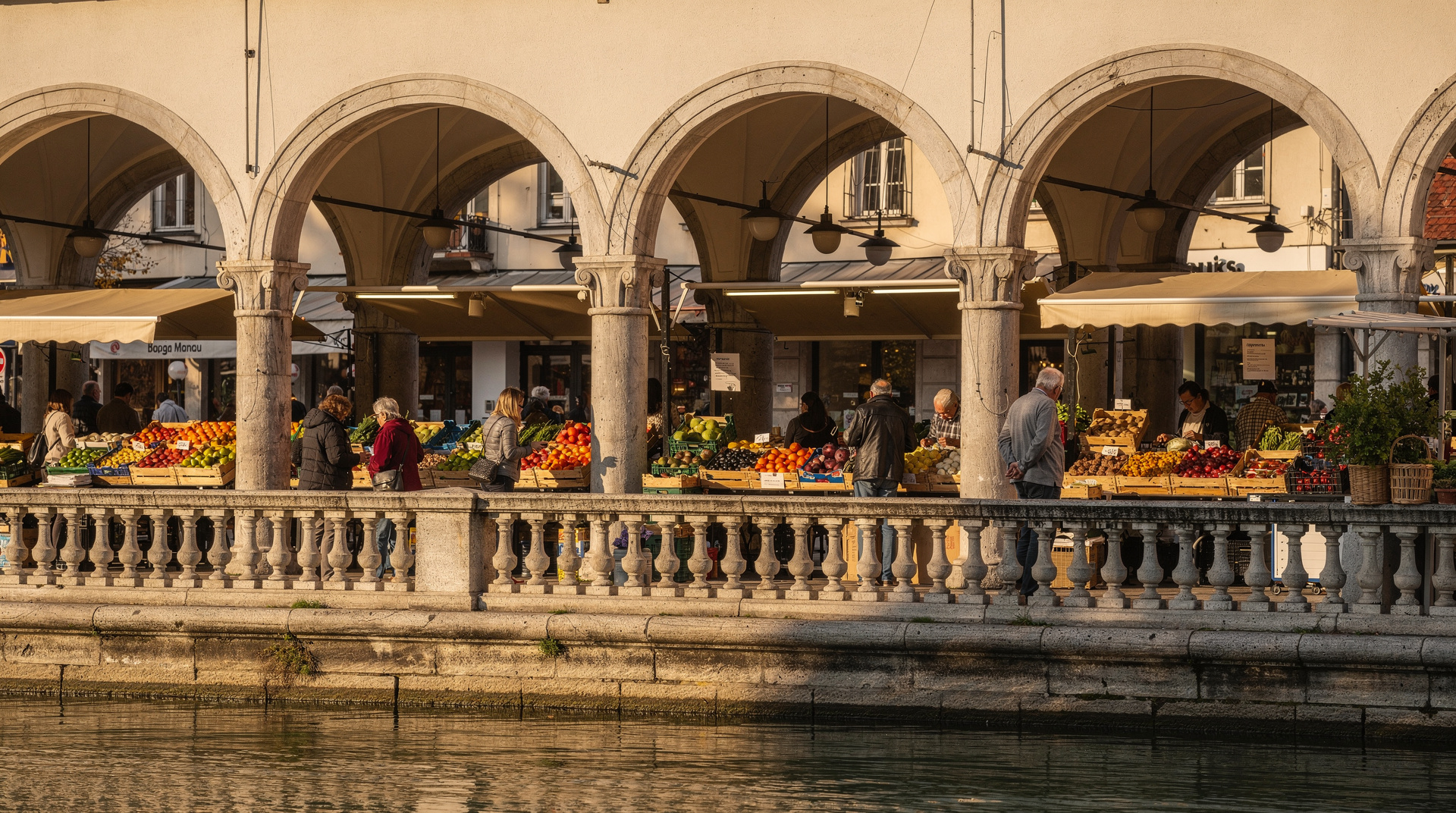
Gostilna Vodnikov hram (Vodnikov trg, near the Central Market): convenient location, traditional menu, reliably good for a market-day lunch. Ask for the daily special; it reflects what the kitchen has at its best that day.
The best rural gostilne beyond Ljubljana
The best gostilne in Slovenia are not in Ljubljana. They are in villages 20–60 km from the capital, serving local farmers, hunters and families who expect genuine home-cooked food and would know immediately if the quality dropped. These are the places that most travel guides never mention because they do not serve English-language websites and do not appear on mainstream booking platforms.
Gostilna Mahorčič (Podnanos, Vipava Valley): the outstanding rural gostilna near the wine country — trout, Vipava lamb, hand-made pasta with mushrooms, exclusively local wine list, mains EUR 13–18. See the Vipava Valley wine guide for context.
Gostilna Murka (Kamnik, 30 km northeast of Ljubljana): excellent traditional cooking in the Kamnik-Savinja Alps foothills. Seasonal game, mushroom dishes, good local wine. Mains EUR 12–18.
Gostilna Taverna (Škofja Loka area): reliable rural cooking with emphasis on game and mushrooms in autumn. Worth combining with a visit to Škofja Loka medieval town.
Pri Lojzetu (Dvorec Zemono, Vipava Valley): this is technically a fine dining restaurant rather than a gostilna but it operates in the gostilna spirit — seasonal Vipava ingredients, no affectation, a tasting menu in a 17th-century manor. EUR 65–85 per person. For a special occasion.
The daily lunch menu (dnevno kosilo)
Every working gostilna offers a daily lunch menu — typically two to three courses for a fixed price of EUR 10–15, served between 12:00 and 14:00. This is the single best-value food experience in Slovenia. The daily menu reflects what the market had that morning, what the kitchen’s strengths are, and what the local clientele expects at midday. It is not simplified tourist food. At a good gostilna, the dnevno kosilo is better than most of the à la carte menu.
Order the soup, order the daily main, drink a glass of house wine (ordinario or hišno vino — a carafe of local wine, typically Vipava or Štajerska, EUR 2–3 per glass at a rural gostilna). This is how Slovenians eat lunch; it costs EUR 12–18 and is the most authentic food experience available.
Guided traditional food experiences in Ljubljana
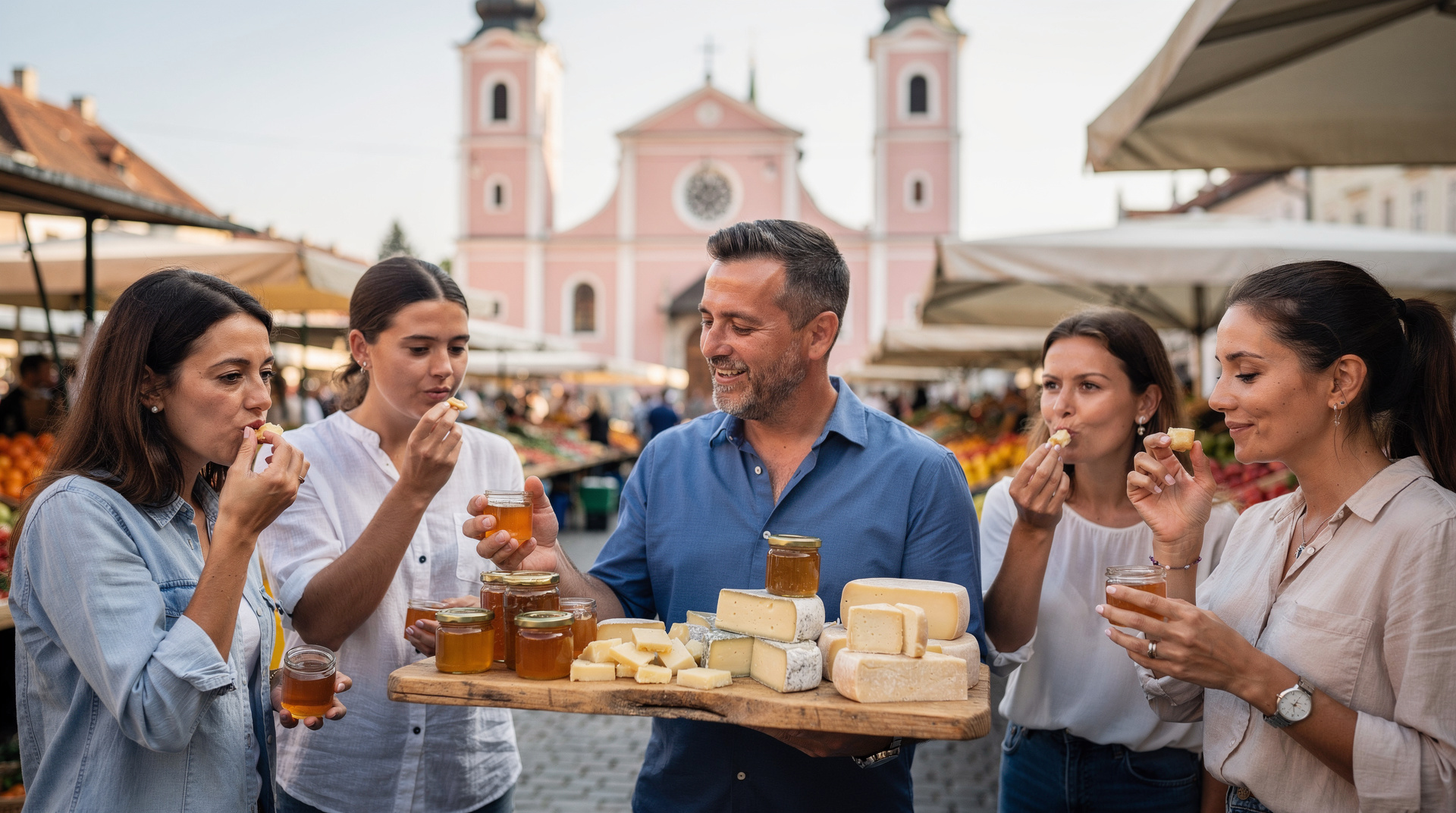
For visitors who want context alongside the food, a traditional Slovenian flavours food experience in Ljubljana covers the gostilna culture, the market producers, and the key traditional dishes with a guide who explains what you are eating and why it matters. A three-hour Ljubljana food tour takes a slightly broader approach, covering the old town’s food culture with stops at market stalls and gostilne.
For visitors in Maribor, a Maribor stories and tastes tour covers the eastern Slovenian gostilna tradition alongside the city’s wine culture — a good counterpart to the Ljubljana-focused experiences.
Wine in a gostilna
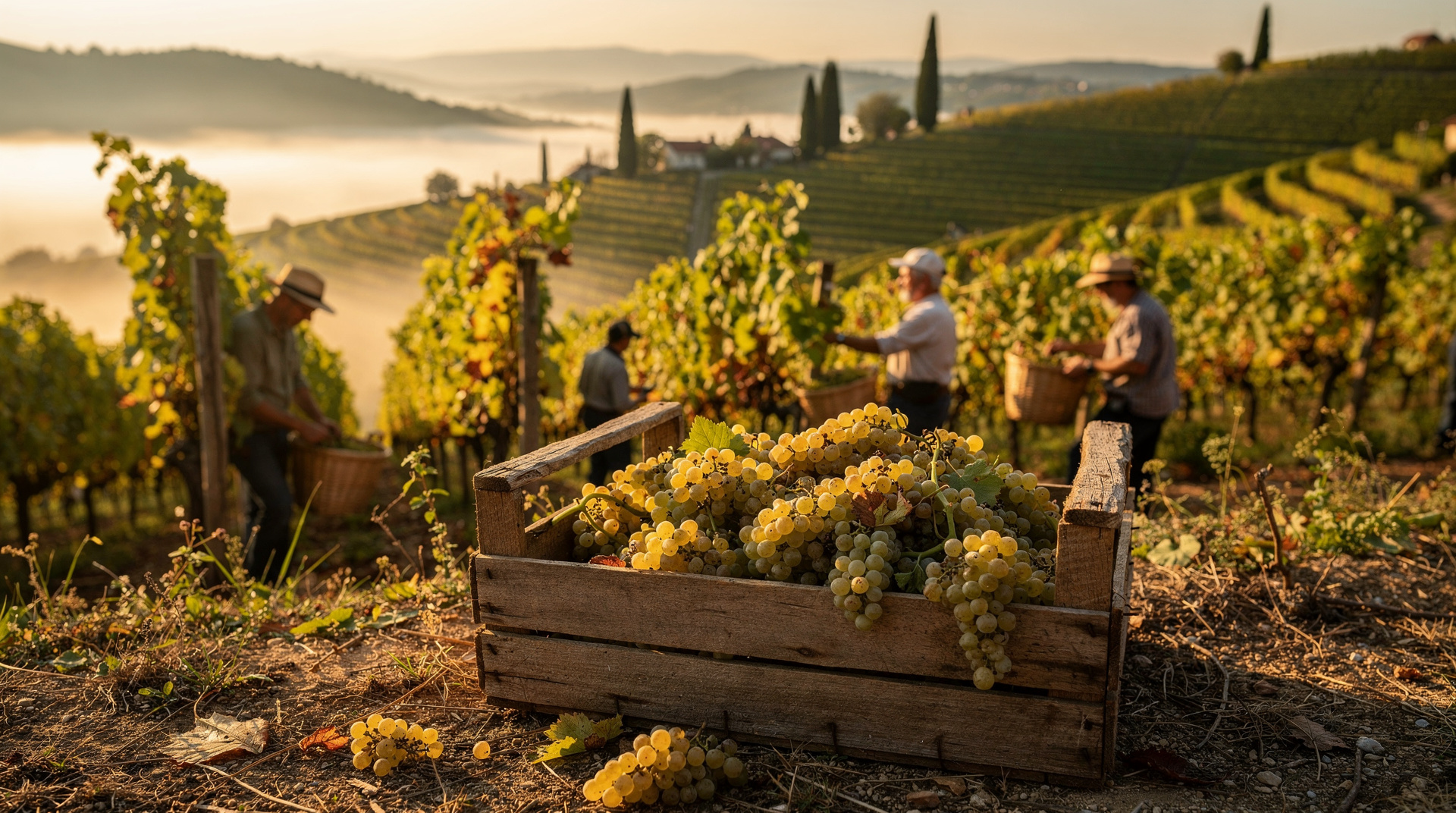
The wine list at a traditional gostilna is short and often limited to Slovenian producers. This is a feature, not a limitation. The house wine (hišno vino) is typically a local producer’s wine sold by the decilitre or carafe — inexpensive, appropriate to the food, and genuinely regional. At a gostilna in the Vipava Valley, the house wine will be Vipava. At a gostilna in the Brda hills, Brda. At a gostilna in Maribor, Štajerska Welschriesling. The food-wine matching in a traditional gostilna is honest and intuitive.
If you want a structured view of what good Slovenian wine looks like alongside gostilna food, a Ljubljana wine tasting covers the full range of regional styles with context. See the Slovenian wine guide for the producer picture.
Honest notes
Urban gostilne versus tourist gostilne. The difference matters. In Ljubljana’s old town, “gostilna-style” decor with laminated tourist menus and multiple languages on the same page is a warning sign. The real gostilne are slightly inconvenient — less central, less obviously sign-posted, slower to translate the daily menu if you don’t have Slovenian. The inconvenience is worth it.
Reservations. Good rural gostilne fill up for Sunday lunch by 12:00. Always book for Sunday and for evenings in summer. Weekday lunches are more forgiving but calling ahead is still sensible.
Language. In rural gostilne, staff may speak limited English. The menu may only exist in Slovenian. A few words of Slovenian or German will be appreciated; Google Translate handles the menu. The staff at a good rural gostilna will make a genuine effort to communicate; they are not unfriendly, just practical.
Cash. Some rural gostilne are cash-only or prefer cash. Carry EUR 30–50 in cash if you are heading to a rural gostilna without known card acceptance.
The gostilna in the rest of Slovenia: regional variations
The gostilna tradition is national but its expression varies by region in ways that reflect the underlying food geography of the country:
Julian Alps and Bled area: gostilne here lean heavily on freshwater fish (trout, carp), forest mushrooms (particularly in September–October), and Austrian-influenced baked and roasted preparations. Game (venison, wild boar, chamois) appears in autumn and winter. The mountain setting means hearty portions; the tourist traffic around Bled means the prices are higher than in the rural gostilna equivalent elsewhere.
Soča valley (around Kobarid and Bovec): a more distinct Italian influence — the Soča valley was part of Italy between the wars, and the food memory of that period persists in the pasta preparations and the approach to fresh fish. The Kobarid museum restaurant is the most celebrated, but the small family gostilne along the valley (Gostilna Breza, Gostilna Turistič near Tolmin) offer simpler and often better cooking for less.
Vipava Valley and Brda: Italian-Slovenian border food — hand-made pasta, air-dried meats, aged cheeses, mushroom dishes with wine. Gostilna Mahorčič in Podnanos is the regional standout (see the Vipava Valley wine guide). The food matches the wine better here than anywhere else in Slovenia.
Eastern Slovenia (Maribor, Ptuj area): bograč stew, heavier meat dishes, the influence of Austrian and Hungarian cooking. Portion sizes tend to be largest in this region. The price-to-quality ratio is the best in Slovenia — a full three-course meal at a rural gostilna near Ptuj or Maribor typically costs EUR 14–20 all-in with a glass of local wine.
Coastal Istria: the gostilna concept exists but the food is Mediterranean — grilled fish, pasta, olive oil, minimal bread-and-meat thinking. The word “gostilna” here often means something closer to a seafront trattoria than a Central European inn.
Seasonal eating at a gostilna
The best gostilne change their menus visibly with the season. Visiting in different months produces genuinely different experiences:
Spring (March–May): asparagus appears in late April; the first fresh cheeses from goat and sheep flocks; trout in season from the rivers (the no-fishing closed period ends in April). Light, vegetable-forward dishes.
Summer (June–August): the menu fills with local vegetables — beans, courgettes, tomatoes. Some gostilne run lighter summer menus; the heavier stews and game dishes step back. Tourist traffic peaks, and the best gostilne are busiest.
Autumn (September–November): the most interesting gostilna season. Porcini mushrooms from September (gobova juha, mushroom risotto, mushroom štrukljiv). Game season opens — venison, wild boar, chamois, pheasant and partridge. Harvest wine from local producers. The atmosphere in a rural gostilna in October, with a bowl of mushroom soup and a glass of new Zelen, is quintessential Slovenia.
Winter (December–February): the heaviest dishes return. Jota (bean and sauerkraut stew), bograč, roast pork with sauerkraut and dumplings. The best rural gostilne are particularly warm and welcoming in winter — the business is quieter, the staff have more time, the fire is lit.
Gostilna etiquette and practical notes
The gostilna is not a formal restaurant. The etiquette is relaxed but not absent:
Seating: in a genuine gostilna, you seat yourself unless a member of staff approaches first. Communal tables are normal in busy rural gostilne — being placed at a table with other guests is expected, not an imposition.
Ordering the house wine: ask for the house wine (hišno vino) with confidence. The answer will be a carafe or a small jug of local wine, served by the decilitre. This is how wine works in a gostilna; ordering by the bottle is possible but not the standard mode.
Bread and cover charge: in some gostilne, bread is brought automatically and charged on the bill (kuvert, EUR 1–2 per person). This is normal practice.
Service timing: gostilna meals are not rushed. The gap between ordering and the arrival of food can be 25–40 minutes in a working rural kitchen. This is not poor service — it means the food is being prepared. Plan accordingly.
Cash: a significant number of rural gostilne are cash-preferred or cash-only. Card acceptance has increased but is not universal. Carry EUR 30–50 in small denominations for rural gostilna visits.
Tipping: not expected in the same way as in the US or UK. Rounding up the bill to the nearest convenient amount is standard — leaving a 10–15% tip is appreciated but would surprise most gostilna staff as overly generous.
Gostilne recommended for specific experiences
Best for štruklji: Gostilna As (Ljubljana) makes them fresh daily. In the Vipava Valley, any serious rural gostilna in the tarragon-growing area will have house-made versions.
Best for game: a rural gostilna in the Kamnik-Savinja Alps area in October or November (Gostilna Murka, Gostilna Razgor near Kamnik) is the right context for venison stew, wild boar terrine, and chamois.
Best for trout: gostilne directly on or near Soča-system rivers (Kobarid area, the Bovec valley) or near Bohinj and the upper Sava tributary streams. The trout will be local; the preparation will be direct.
Best for the full traditional three-course lunch: any rural gostilna in the country on a weekday, ordered from the daily menu (dnevno kosilo). This experience — soup, main with vegetable sides, dessert, glass of house wine, bill under EUR 18 — is available throughout Slovenia and is the single most authentic food experience the country offers.
For the full picture of Slovenian traditional food and what to order, the Slovenian food guide covers all the major dishes. The Ljubljana food tour guide covers the city’s restaurant scene in detail.
Ordering with confidence: a short phrase guide
A handful of phrases make ordering at a rural gostilna considerably smoother. “Kaj priporočate?” (What do you recommend?) is the single most useful question — staff at a genuine gostilna are usually proud of specific dishes and will steer you well. “Dnevno kosilo, prosim” (the daily menu, please) gets you the best-value option without needing to read a Slovenian-only menu. “Je to domače?” (Is this home-made?) is a fair question for štruklji or potica specifically, since not every kitchen makes them fresh. “Račun, prosim” (the bill, please) closes the meal. None of this is essential — pointing and smiling works perfectly well — but a few attempted words are consistently well received at rural gostilne where English is not a given.
Gostilna versus fine dining: which trip deserves which
Slovenia’s food scene has grown a genuine fine-dining tier over the past decade — Michelin-starred and Michelin-recommended restaurants in Ljubljana and around the country now sit alongside the traditional gostilna network. The two are not competing for the same evening. A gostilna delivers honest, seasonal, unpretentious cooking at a fair price and is the right choice for most meals on a Slovenia trip, including several times a week.
Fine dining (Hiša Franko in Kobarid, for instance, holds international recognition) is the right choice for a single special occasion within a longer trip — a splurge that showcases Slovenian ingredients at their most ambitious, rather than the everyday register. Visitors who eat exclusively at fine-dining level for a whole trip miss the gostilna’s specific, harder-to-replicate warmth; visitors who never splurge miss what Slovenian chefs can do with the same raw ingredients pushed further.
What a gostilna reveals about a region
Because gostilna menus are so tied to local sourcing, eating your way through a few regions is one of the more informative ways to understand Slovenia’s internal geography. A gostilna near Lake Bohinj or in the Julian Alps tells you about the dairy and mountain economy through its cheese, trout and buckwheat dishes.
A gostilna in the Vipava Valley or Goriška Brda tells you about the Italian border influence through its pasta and cured meats. A gostilna near Maribor or Ptuj tells you about the Austro-Hungarian legacy through bograč and heavier stews. Ordering the regional specialty rather than a generic “Slovenian menu” item wherever you are is the single best way to taste this geography directly, rather than reading about it.
Frequently asked questions about Gostilna dining in Slovenia
How do I tell a real gostilna from a tourist-trap version?
Look for a short, seasonal menu rather than a long laminated one in five languages, a car park or street with local-plated vehicles, a location slightly off the main tourist route, and a daily lunch special (dnevno kosilo) written on a chalkboard or single sheet. Genuine gostilne change their menu with the season and rarely advertise heavily in English; a restaurant that looks like a gostilna but has a multilingual printed menu at every table is usually priced for tourists rather than locals.Do I need to speak Slovenian to eat at a rural gostilna?
No, but be prepared for limited English at the most authentic rural places. Staff are generally patient and happy to help, pointing at the dnevno kosilo (daily menu) works even without shared language, and a translation app handles most menu items. A few words of Slovenian or German are appreciated but not required — the food and the welcome do not depend on your fluency.
Top experiences
Bookable activities with verified prices and instant confirmation on GetYourGuide.