Potica and Slovenian desserts: the complete guide
Ljubljana: guided food tour with 10 local tastings
What is potica and where can I buy it in Ljubljana?
Potica is Slovenia's iconic rolled walnut cake — yeasted dough filled with walnut, raisins, honey and rum, baked in a ring mould. Buy the best versions at Ljubljana's Central Market from artisan stalls, or at Slaščičarna Čad and similar local cake shops. Avoid the commercial tins at the airport — they do not represent the dish honestly.
Slovenia’s sweet repertoire: more than tourist tins of walnut cake
The potica on sale in shrink-wrapped tins at Ljubljana airport is not a reliable guide to what potica actually tastes like at its best. It will give you the basic concept — rolled dough, walnut filling — but the commercial version is drier, sweeter, and more uniform than the real thing. This guide covers what Slovenia’s most important desserts and pastries are genuinely like, where to find versions that justify the reputation, and how to navigate a sweet-tooth tour of Ljubljana and beyond.
The sweet tradition in Slovenia is primarily Central European in origin — Austrian-influenced yeasted cakes, rolled doughs, poppyseed preparations, strudels and layered pastries — with specific dishes that have become recognisably Slovenian. Some of these (prekmurska gibanica, potica) have protected status or official cultural designation. Others (kremšnita, the Lake Bled cream cake) are famous more through marketing than through objective merit. This guide distinguishes between the two.
| Must-try | Potica (walnut), prekmurska gibanica, kremšnita |
| Where | Ljubljana Central Market, Slaščičarna Čad, Slaščičarna Zvezda |
| Cost | EUR 2.50–4 per slice, EUR 12–28 for a whole potica |
| Best day | Tuesday or Friday morning (Central Market fresh bakes) |
| Booking | None needed — walk-in, though food tours help with context |
Potica: the national cake
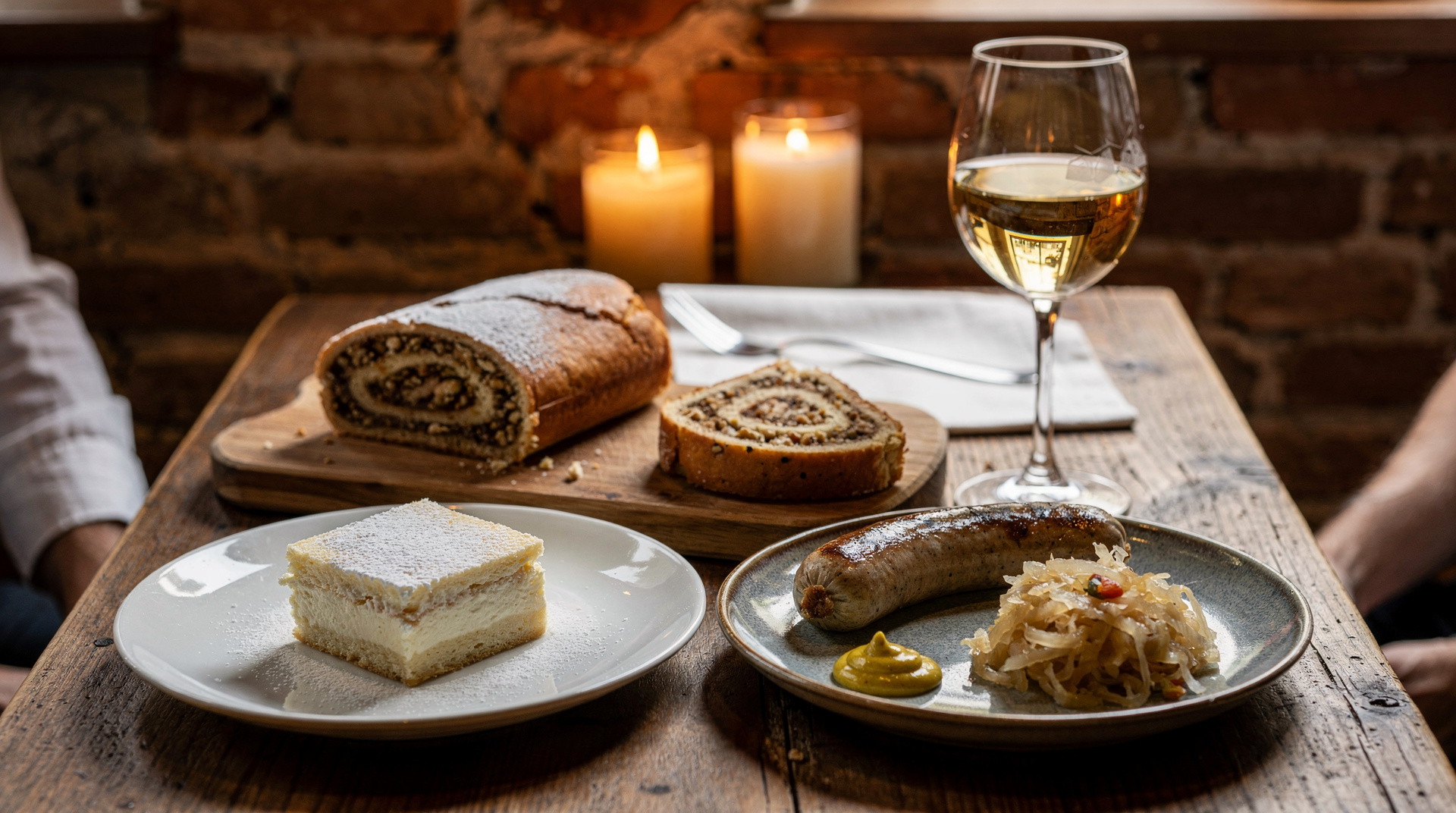
Potica is the most important sweet preparation in Slovenian food culture — served at Christmas, Easter, weddings, name days, and any occasion important enough to warrant a proper celebration. The structure is: a yeasted dough, rolled thin, spread with a filling, rolled into a log and then coiled into a ring mould (potičnik), then baked until the surface is glossy and golden.
The canonical filling is walnuts — ground or chopped, mixed with honey, sugar, often raisins, sometimes rum or lemon zest, occasionally cinnamon. The result is a walnut-paste spiral visible in each slice, moist and slightly dense against the lighter dough. The ratio of dough to filling varies by family recipe; the best potica is heavy on the filling, the worst is mostly dry dough with a token stripe of walnut.
Variations. Poppy seed filling (Mohnstrudel meets Slovenian yeast dough) is the second most common. Tarragon filling (štrukljiv z estragonom in roll form) is technically a potica-like preparation and appears in savoury form as a starter or side dish. There are versions with cheese, ham, and even chocolate, though these are regional curiosities. The walnut and poppy seed versions are the ones to seek out first.
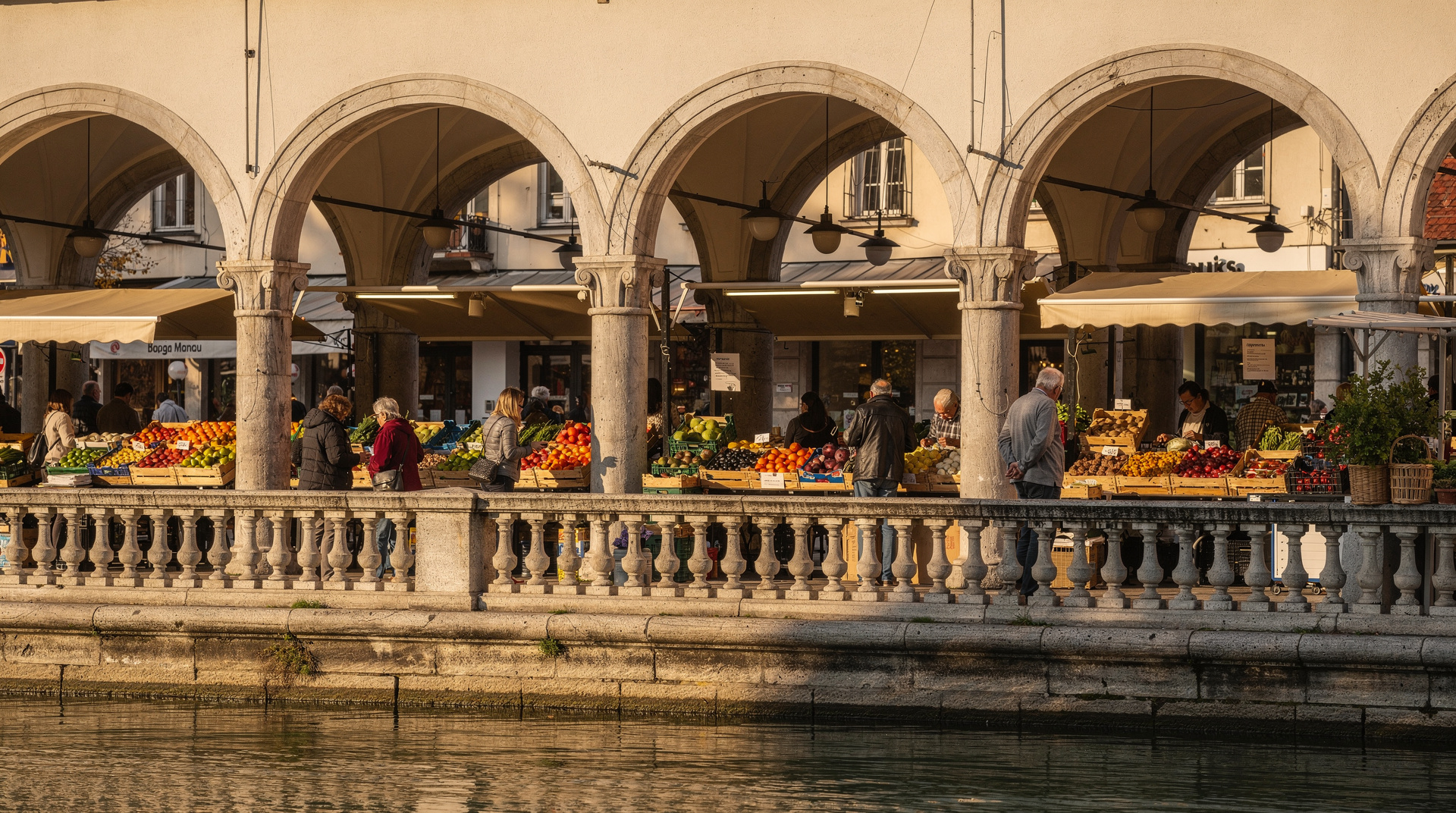
Where to find good potica in Ljubljana. The Central Market on Tuesday and Friday mornings has the best artisan potica: home bakers who sell their own production directly, made that morning, still slightly warm, available by the slice or in whole form. Ask which stall makes it fresh rather than buying pre-packaged.
Slaščičarna Čad on Mestni trg is the most respected traditional cake shop in the city centre — potica made in-house, sold by the slice and whole. The version here is reliably good year-round. Slaščičarna Zvezda (near the Kongresni trg) is the other classic option — more commercially oriented but consistent.
What to pay. A slice of good potica at the market or a cake shop: EUR 2.50–4. A whole potica (serves 8–10): EUR 12–18 from an artisan producer, EUR 20–28 from a cake shop. Commercial packaged versions at supermarkets: EUR 6–10.
Taking potica home. A whole potica travels well for two to three days wrapped tightly and kept cool. For longer journeys, ask the bakery to vacuum-pack it. The airport tins will survive the trip but do not represent the dish. A freshly made piece from the market, eaten in Ljubljana, is the honest recommendation.
Prekmurska gibanica: the layered masterpiece
Prekmurska gibanica is Slovenia’s most complex traditional pastry — a structured layering of four distinct fillings (poppy seed, walnut, apple and cottage cheese) in a yeasted pastry case, baked together into a single dense, fragrant slab. Each layer has its own texture and flavour; the whole thing is simultaneously sweet, aromatic, slightly sour from the cheese, and deeply satisfying in a way that lighter pastries cannot match.
This dish comes from Prekmurje — the flat, agricultural region in northeast Slovenia along the Mura river — and is technically a protected traditional speciality. It is most authentic when bought in Prekmurje itself (Murska Sobota has several bakeries and cafés that make it to a consistently high standard) but versions are available in Ljubljana at specialist cake shops and some gostilne.
It is not a delicate pastry. The portion sizes served in Prekmurje are the size of a thick book. Eat half a portion and you will not need lunch. Ask for a thin slice if you want to taste it without committing to the full Prekmurski experience.
Where to find it in Ljubljana: Gostilna As occasionally serves it as a dessert; Slaščičarna Zvezda has it on the menu but not always house-made. The most reliable Ljubljana option is the Open Kitchen (Odprta Kuhna) on Friday afternoons in summer, where a Prekmurje vendor occasionally sets up with fresh-baked gibanica.
Kremšnita: the famous Lake Bled cream cake
The kremšnita (cream cake, or vanilla slice in some translations) is associated with Lake Bled more than with Ljubljana — the Bled version (a thick layer of vanilla custard between two sheets of puff pastry, topped with cream and icing sugar) is sold at the Park Hotel Bled café as a tourist attraction. It is genuinely good. It is also not a unique Slovenian dish — it is a variant of the Austro-Hungarian Cremeschnitte found in identical or near-identical forms throughout the former empire (Krempita in Serbia, Krémes in Hungary, Cremeschnitten in Austria).
The Bled kremšnita has been successfully marketed as a “Slovenian specialty,” which is a function of effective local promotion rather than historical uniqueness. Eat it at Bled because the setting is beautiful and the cake is good. Do not mistake it for a rare cultural artifact.
In Ljubljana, kremšnita is available at most traditional cake shops; the Zvezda version is reliable. Price: EUR 3–4 per portion.
Štruklji in sweet form
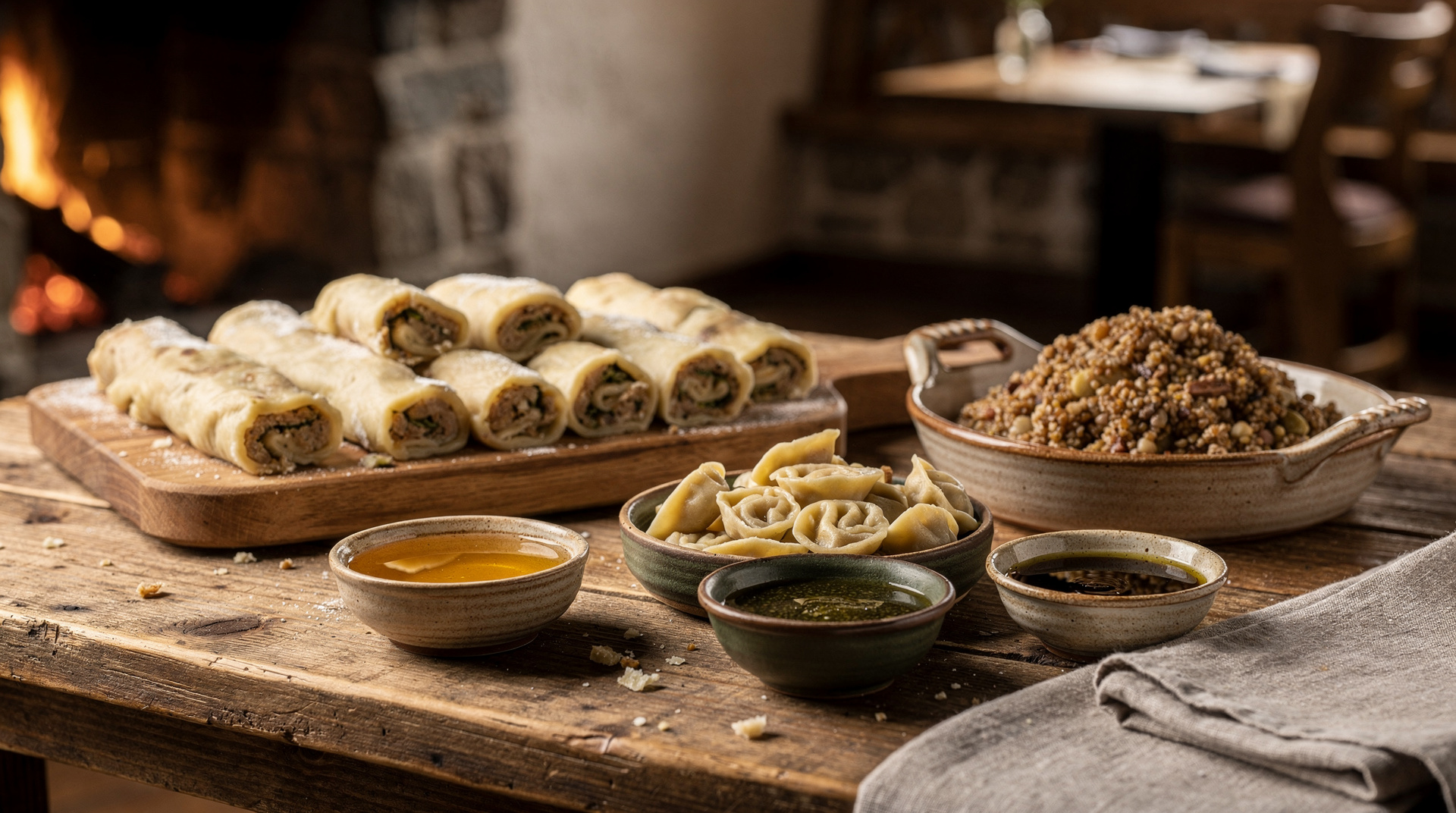
The štruklji that appear in savoury form as gostilna starters (tarragon, mushroom, spinach) reappear as desserts in sweet versions — rolled dumplings filled with walnuts, poppy seed, cottage cheese and sugar, then boiled or steamed and served with butter or soured cream.
Sweet walnut štruklji (štrukljiv s slivami in the plum-season version, štrukljiv z orehi in the walnut version) are one of the most genuinely traditional desserts in Slovenian cooking — less Instagram-ready than potica but more deeply embedded in everyday cooking. They are available at traditional gostilne as a dessert course, usually EUR 5–7 per portion.
Sweet cottage cheese štruklji (štrukljiv z skuto) are softer and more delicate — the curds give them a slightly tangy note that cuts through the sweetness. These are the most common sweet štruklji at Ljubljana gostilne.
The cake shop circuit in Ljubljana
A half-day dessert tour of Ljubljana:
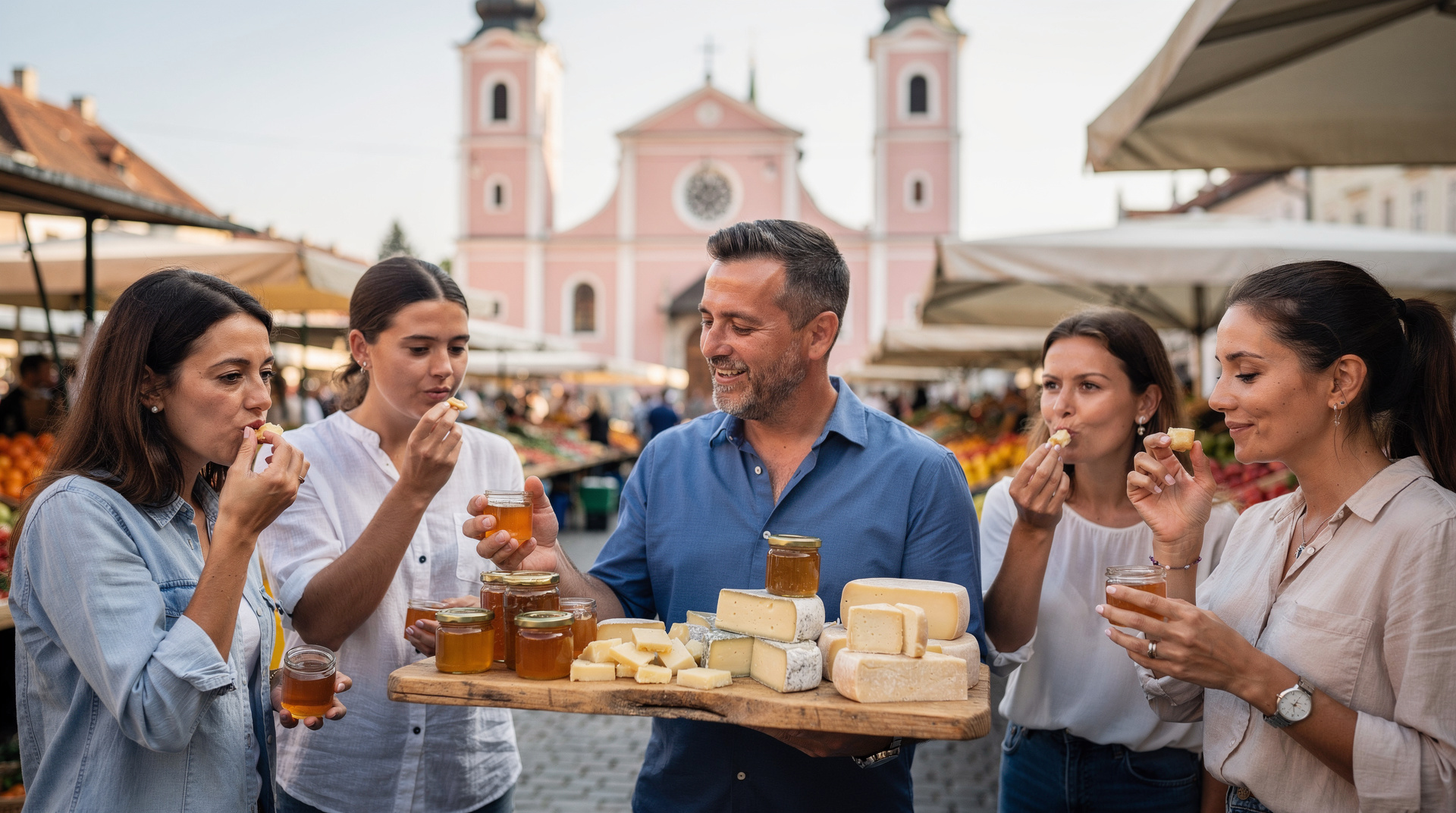
Start at the Central Market (Tuesday or Friday morning): buy a slice of potica from an artisan stall, taste the available honeys, buy a piece of Tolminc cheese to cut the sweetness.
Continue to Slaščičarna Čad (Mestni trg): their version of potica is the most reliably traditional in the city centre. Have coffee here.
Walk to Slaščičarna Zvezda (Kongresni trg): try the kremšnita and, if available, a piece of prekmurska gibanica. The interior retains its 1950s design and is mildly worth seeing.
If it is a Friday afternoon in season, finish at the Open Kitchen (Pogačarjev trg) and look for the traditional food vendors — walnut štruklji, honey-based pastries, and any Prekmurje gibanica vendor that has set up.
A guided food tour covering the market, cake shops and traditional vendors in sequence — the Ljubljana food tastings tour or the three-hour Ljubljana food tour — includes the sweet producers alongside the savoury market stops. Both offer the context that makes the food more interesting than eating without explanation.
Seasonal and regional specialities
Mlinci (baked flatbread sheets, often served with roast duck or turkey) are not a dessert but appear here because they are sometimes confused with pastry — they are a savoury side dish, crispy and buttery, essential alongside roast poultry in autumn.
Flancati (Slovenian fried dough pastries, dusted with sugar) appear at carnival time (February) and at some village fairs. They are the Slovenian version of the fried dough found throughout Central and Southern Europe and are reliably good when fresh-fried.
Potica varieties by season: at Christmas, the walnut and poppy seed versions dominate. At Easter, sometimes a tarragon-filled version (savoury potica) appears as a starter. In summer, light fruit-filled versions (cherry, plum) appear at some market stalls.
Honey-based sweets: Slovenian honey production is substantial and varied, and the confectionery tradition based on honey — medenjaki (honey biscuits), medenke (honey wafers), and honey-dipped nuts — is worth exploring at the Central Market stalls that specialise in honey products. The buckwheat honey from the Prekmurje region is the most intensely flavoured and the best match for the stronger-tasting pastries.
A note on coffee culture
Slovenian café culture is Central European rather than Mediterranean — coffee is served slowly, seated, without the pressure of a quick turnover. Espresso is the standard; filter coffee is called “Turkish” and is made in a džezva pot rather than drip filter. Cappuccino and cortado-equivalents are available in most Ljubljana cafés.
The best coffee in Ljubljana is not in the tourist zone: the small independent roasters and espresso bars in the streets behind Trubarjeva (Čuk Coffee, Kavarna Pop’s) consistently outperform the river-terrace venues.
Regional sweet specialities beyond Ljubljana
Slovenia’s sweet culture varies by region in ways that a Ljubljana-only visit misses:
Prekmurje: home of gibanica and also of Prekmurska bučna potica — a savoury version using pumpkin seed filling rather than walnut. Made in homes rather than restaurants; the equivalent of the savoury tarragon potica of the Vipava Valley. If you are travelling through northeastern Slovenia, asking at a local gostilna whether they make pumpkin potica in season is worthwhile.
Coastal Istria: the dessert tradition in Slovenian Istria is Mediterranean rather than Central European — fresh figs with honey, cherry-filled crostata, fritole (fried carnival pastries similar to the Venetian version). Not part of the potica-and-štruklji family but characteristic of the coastal zone.
Blejska kremna rezina: to clarify the Bled cream cake point — the product at the Park Hotel Bled café is legitimately good and worth eating while you are at the lake. The specific version made at the Park Hotel has been consistent since the 1950s and deserves its local reputation. Price: EUR 4. The view from the terrace while eating it is free and substantially more impressive than the cake.
Rogaška Slatina (Štajerska): this 19th-century spa town has a tradition of spa-hotel pastry that is slightly more Austrian in character than the Ljubljana cake shop tradition — more meringue, more cream pastry, reflecting the Austro-Hungarian spa culture of the period. The kremšnita here predates the Bled version.
Planning around the sweets. Desserts fit best at the end of a day of eating rather than as a standalone mission. If you are building a wider food itinerary, the slow-travel gastronomy itinerary shows how to pace sweet stops between savoury ones, and the Ljubljana in one day guide helps you slot a cake-shop break between the main sights. For savoury meals that make the sweet course feel earned, the gostilna dining guide explains what to expect at a traditional inn.
Making potica at home
Several Ljubljana cooking schools and food tour operators offer potica-making workshops — dough preparation, walnut filling, the rolling and baking technique are teachable in a 2–3 hour session. A potica-making session is one of the more genuinely transferable food souvenirs from Slovenia — you leave with the recipe and the reference point to know whether what you are eating at home is genuine.
The Ljubljana Central Market area has occasional workshops advertised through TIC Ljubljana (Krekov trg tourist information centre). The Ljubljana food tour with ten tastings covers the market producers alongside the cake shops in a structured circuit that gives you the full picture of Ljubljana’s sweet culture.
Potica at Christmas: the ritual dimension
The potica is not just food in Slovenia — it is a cultural practice with ritual dimensions that the commercial packaging cannot capture. Every Slovenian family that maintains a traditional food culture makes potica for Christmas. The recipe is transmitted from grandmother to grandchild; the specific filling ratios and dough proportions are points of pride. Family disagreements about whether the filling should be more or less sweet, whether rum is obligatory, whether the nuts should be finely ground or coarsely chopped — these are genuine recurring conversations in Slovenian households.
Visiting Slovenia in December places you in this cultural moment. The smell of baked potica — yeast, walnut, honey, the faint ghost of rum — is the most Slovenian smell there is, present in every home kitchen that takes Christmas seriously. A slice of homemade potica offered by a gostilna host or a guesthouse host in December is a different proposition from a slice of the same cake bought in July. The context makes it.
The Ljubljana Christmas market on Kongresni trg in December is a reasonable substitute if you are visiting in summer and want to understand what the occasion looks like: the stalls selling potica, the honey vendors, the mulled wine, the particular quality of Ljubljana winter light on the old buildings. But the food itself is better in December when it is made fresh for the celebration rather than for the tourist market.
If you are pairing sweets with a drink, the Slovenian wine guide and the Slovenian coffee culture blog post are good companions: a glass of local wine or a slow coffee changes how a dense walnut slice tastes.
A note on the national status of potica
In 2021, potica was inscribed on the UNESCO representative list of intangible cultural heritage of humanity as part of Slovenia’s nomination of its honey-bee culture. This is worth noting not as a tourism marketing point but as a reflection of the genuine depth of the dish’s cultural significance. Potica is present at Slovenian state functions, at the diplomatic table, and at family celebrations. It is served at the inauguration of the President of Slovenia. The inscription recognises the social function of the dish — not just what it tastes like but what it represents.
For the visitor, this means that eating a genuinely good potica is not merely a food tourism exercise. It is eating something that carries the weight of continuous domestic tradition in a way that few dishes in Europe still do. That is worth seeking out the real thing rather than settling for the commercial version.
For a broader picture of Ljubljana’s food culture, see the Ljubljana food tour guide. For the full range of Slovenian traditional dishes beyond desserts, the Slovenian food guide covers the complete picture. The Ljubljana Central Market guide has detail on the specific stalls and what to look for by season.
Frequently asked questions about Potica and Slovenian desserts
How much does potica cost in Ljubljana?
A slice from the Central Market or a traditional cake shop costs EUR 2.50–4. A whole potica (serving 8–10) runs EUR 12–18 from an artisan producer or EUR 20–28 from a cake shop, versus EUR 6–10 for a commercial supermarket or airport version, which tastes noticeably drier and less generous with filling.Is potica gluten-free or available for dietary restrictions?
Traditional potica is a yeasted wheat dough and is not gluten-free. Some Ljubljana bakeries and health-food shops produce gluten-free versions on request or as a limited seasonal item, but these are the exception rather than the norm — ask specifically at the Central Market stalls or specialist bakeries rather than assuming availability.
Top experiences
Bookable activities with verified prices and instant confirmation on GetYourGuide.