Ljubljana Central Market: the complete visitor guide
Ljubljana: guided food tour with 10 local tastings
When is Ljubljana Central Market open and what should I buy?
The Central Market is open Monday–Friday from around 07:00 to 18:00 and Saturday until 14:00. Closed Sundays. Buy fresh goat's cheese, Tolminc aged cheese, Slovenian honey (chestnut, linden, acacia), seasonal vegetables, and Kranjska klobasa sausage. Tuesday and Friday mornings are the best sessions.
The market that Plečnik built: Ljubljana’s food heart
The Central Market complex on the left bank of the Ljubljanica river is the work of Jože Plečnik — Ljubljana’s defining architect, who redesigned much of the city between the 1920s and the 1950s. The covered colonnade along the embankment, completed in the 1940s, is one of his most successful buildings: a long, vaulted arcade with market stalls in the ground-floor bays, apartments above, and a view through the arches to the river below. The proportions are dignified without being monumental; the materials (stone columns, terracotta tiles, wrought iron) age gracefully.
The building is worth examining as architecture. But the market inside is worth visiting for the food.
The Ljubljana Central Market (Centralna tržnica Ljubljana or Plečnikova tržnica) combines a covered permanent market hall with an open-air extension along Vodnikov trg and Pogačarjev trg. The covered section specialises in dairy, eggs, and charcuterie; the outdoor section runs seasonal vegetables, herbs, spices, dried goods, and artisan food products. On Friday mornings, an artisan food fair extends the market with additional producers.
| Where | Left bank of the Ljubljanica, old town |
| Cost | Free to browse; food EUR 2–9 per item |
| Time needed | 45 min–1.5 hours |
| Getting there | 10 min walk from the railway station |
| Best time | Tuesday or Friday morning, 08:00–11:00 |
Opening hours and best times to visit
The covered market stalls are open Monday to Friday, approximately 07:00 to 18:00, and Saturday until 14:00. The outdoor vegetable and artisan stalls run shorter hours — typically 07:00 to 14:00. The market is closed on Sundays.
Best times:
- Tuesday and Friday mornings (08:00–11:00): the highest concentration of stalls, the freshest produce, and the full artisan offer. Friday has the additional artisan food fair on Pogačarjev trg.
- Saturday mornings: slightly reduced but still good for cheese, honey, and charcuterie. The outdoor vegetable market runs until early afternoon.
- Avoid Saturday afternoons and midday Monday–Wednesday: stalls are fewer and the produce selection is more limited.
The Open Kitchen (Odprta Kuhna) is a separate event that takes over Pogačarjev trg every Friday from late March to late October, 10:00 to 21:00 — around 60 food vendors, not a market in the conventional sense but an extension of the food culture centred on the same square.
The dairy stalls: what to look for
The interior of Plečnik’s colonnade is dominated by dairy stalls — this is the best reason to visit the Central Market rather than a supermarket, because the selection and quality of artisan dairy here is unavailable elsewhere in the city.
Fresh goat’s cheese (kozji sir): sold in plain, herb, garlic and pepper versions. Buy the plain to taste the milk quality; buy the herb version if you want something to eat with bread. The producers change seasonally — in winter there are fewer fresh cheeses; spring and early summer (April–July) are the peak months for fresh goat’s milk. Price: EUR 2–5 depending on size.
Tolminc: a semi-hard pressed cow’s milk cheese from the Tolmin area in western Slovenia, made under protected designation. At its best — well-aged, six months or more — Tolminc is slightly granular, mildly pungent, with a buttery richness that distinguishes it from generic Alpine cheese. Ask specifically for the older (starejši) version. Price: EUR 3–4 per 100g.
Butter (maslo): cultured farmhouse butter, salted and unsalted, from small Slovenian dairy farms. The difference from supermarket butter is immediately obvious in flavour and texture. Buy a small piece to have with market bread.
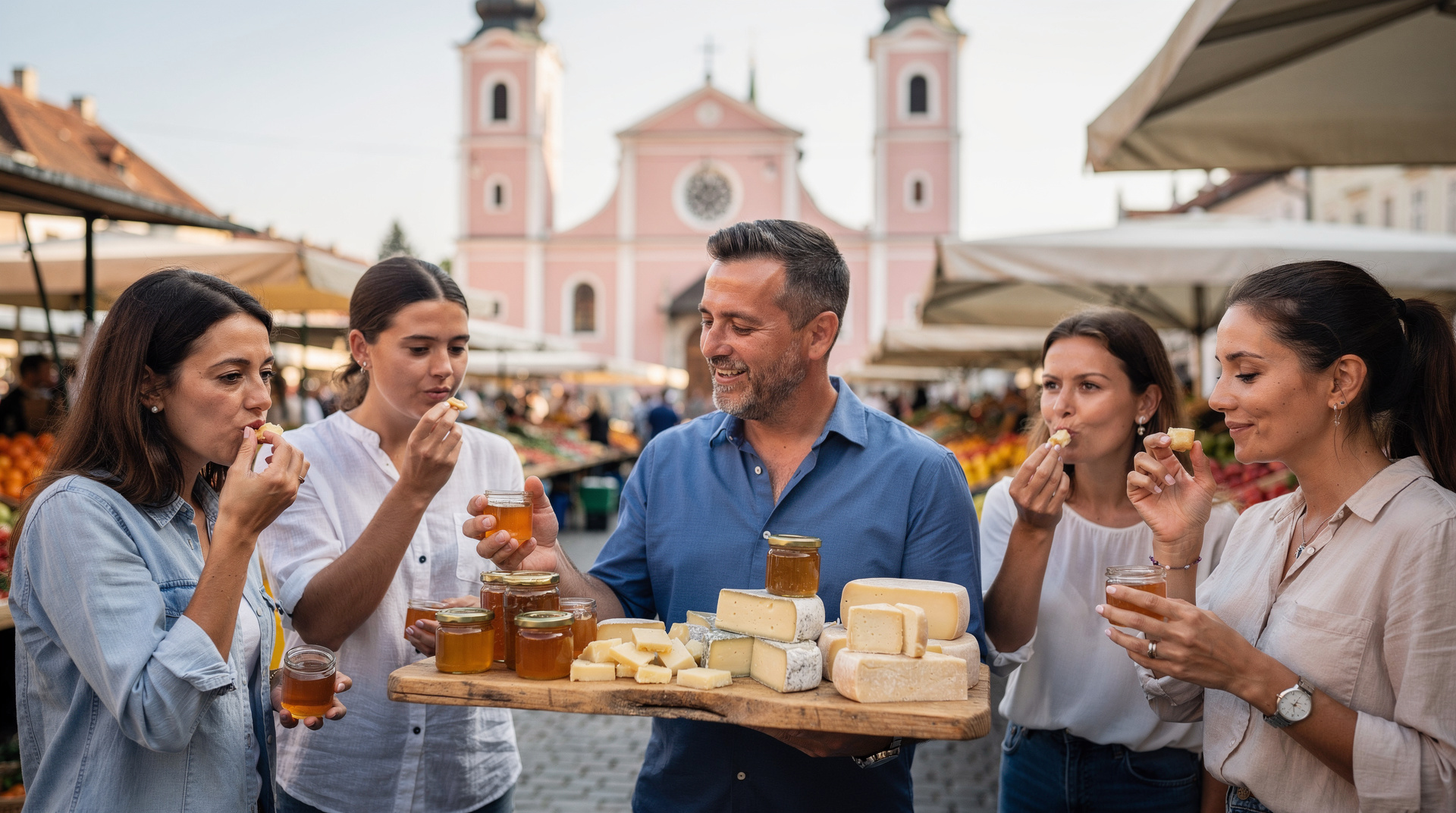
Honey (med): the honey section of the market is one of the most distinctive features of Ljubljana’s food culture. Slovenia is disproportionately important in European apiculture — the Carniolan bee (Kranjska čebela) is an internationally valued breed originating in Slovenia, and the tradition of beekeeping is deep. Honeys on offer:
- Chestnut (kostanjev med): dark, intensely bitter-sweet, the most characteristically Slovenian of the varieties. August harvest. Use as a strong flavour in cheese pairings or with bitter chocolate.
- Linden (lipov med): light gold, distinctly aromatic (linden blossom), mildly sweet. The classic Slovenian summer honey; best for general use and cooking.
- Acacia (akacijev med): pale, mild, almost neutral — the easiest entry point if you are not used to strong honey flavours.
- Buckwheat (ajdov med): deep brown, intensely malty and earthy. The boldest Slovenian honey; an acquired taste, excellent with game and aged cheeses.
- Spruce (smrekov med): forest honey, moderately sweet with a pine resin note. Mountain origin, spring harvest.
A jar of good Slovenian honey (250g) costs EUR 5–9 from market producers — significantly cheaper than in shops and from producers you have spoken to directly. The honey stalls are among the most photographed parts of the market; also genuinely worth buying from.
The outdoor market: seasonal vegetables and more
The outdoor section of the market (Vodnikov trg and Pogačarjev trg extensions) runs from early morning and tracks the Slovenian agricultural season precisely. What you find here tells you what the land around Ljubljana is producing at that moment.
Spring (April–June): asparagus (šparglji) from the Ljubljana basin, small strawberries (jagode) from Slovenian farms, fresh herbs (parsley, chives, lovage, tarragon), wild garlic (česen), young peas and broad beans.
Summer (July–August): tomatoes in serious variety and quality, courgettes, green beans, sweetcorn, apricots and cherries from the Brda and Koper areas.
Autumn (September–November): pumpkins and squash (enormous variety — Slovenia produces distinctive local pumpkin oil in Štajerska), apples and pears from Slovenian orchards, fresh walnuts, dried porcini mushrooms, kale and root vegetables.
Winter (December–March): pickled and preserved vegetables, root crops, dried mushrooms, smoked sausages, winter squash. The market reduces in size but does not close.
The artisan food fair (Friday mornings)
On Friday mornings in season (approximately April–October), a smaller artisan food fair sets up alongside the regular market, bringing additional producers to Pogačarjev trg. You will typically find:
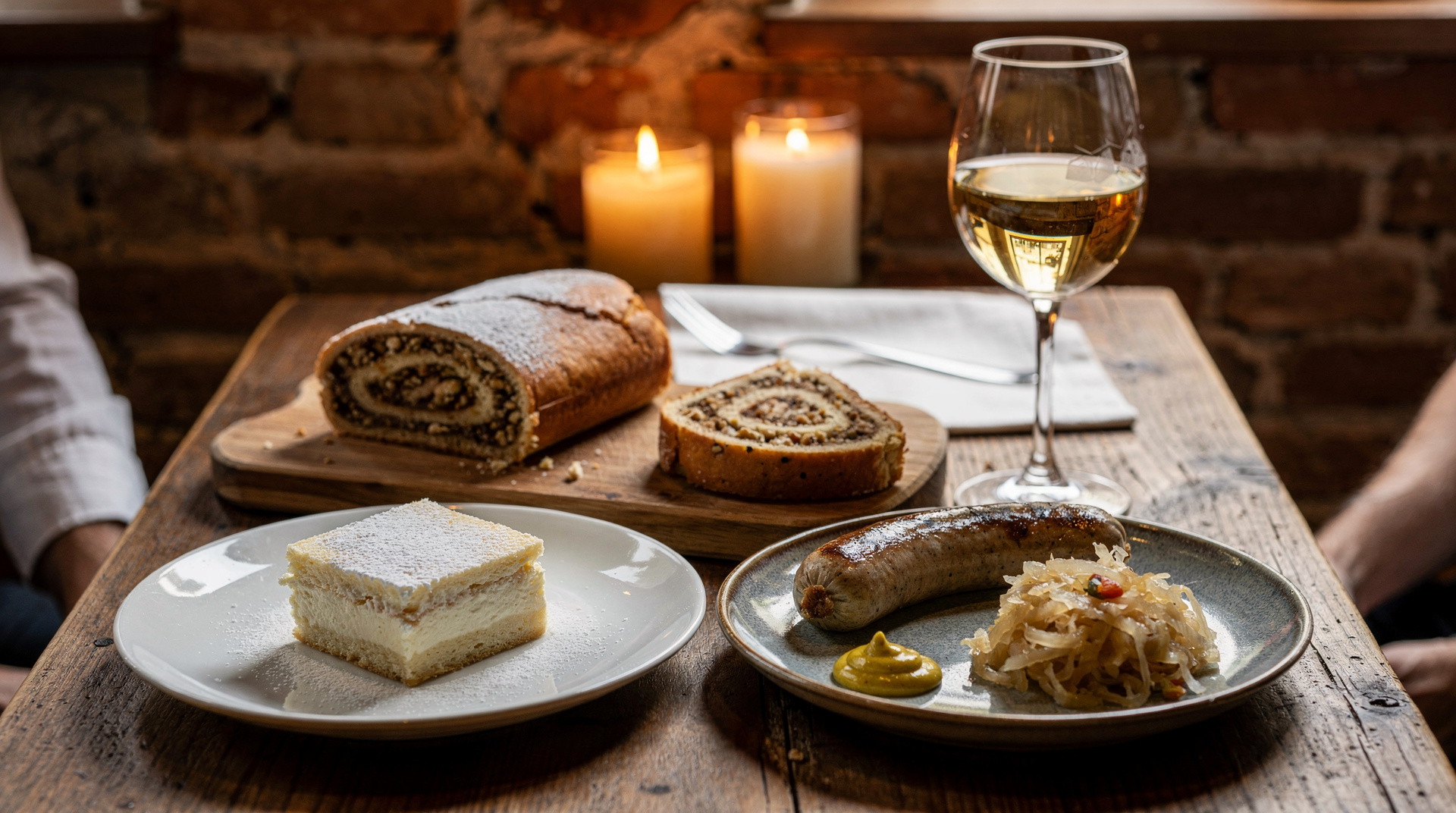
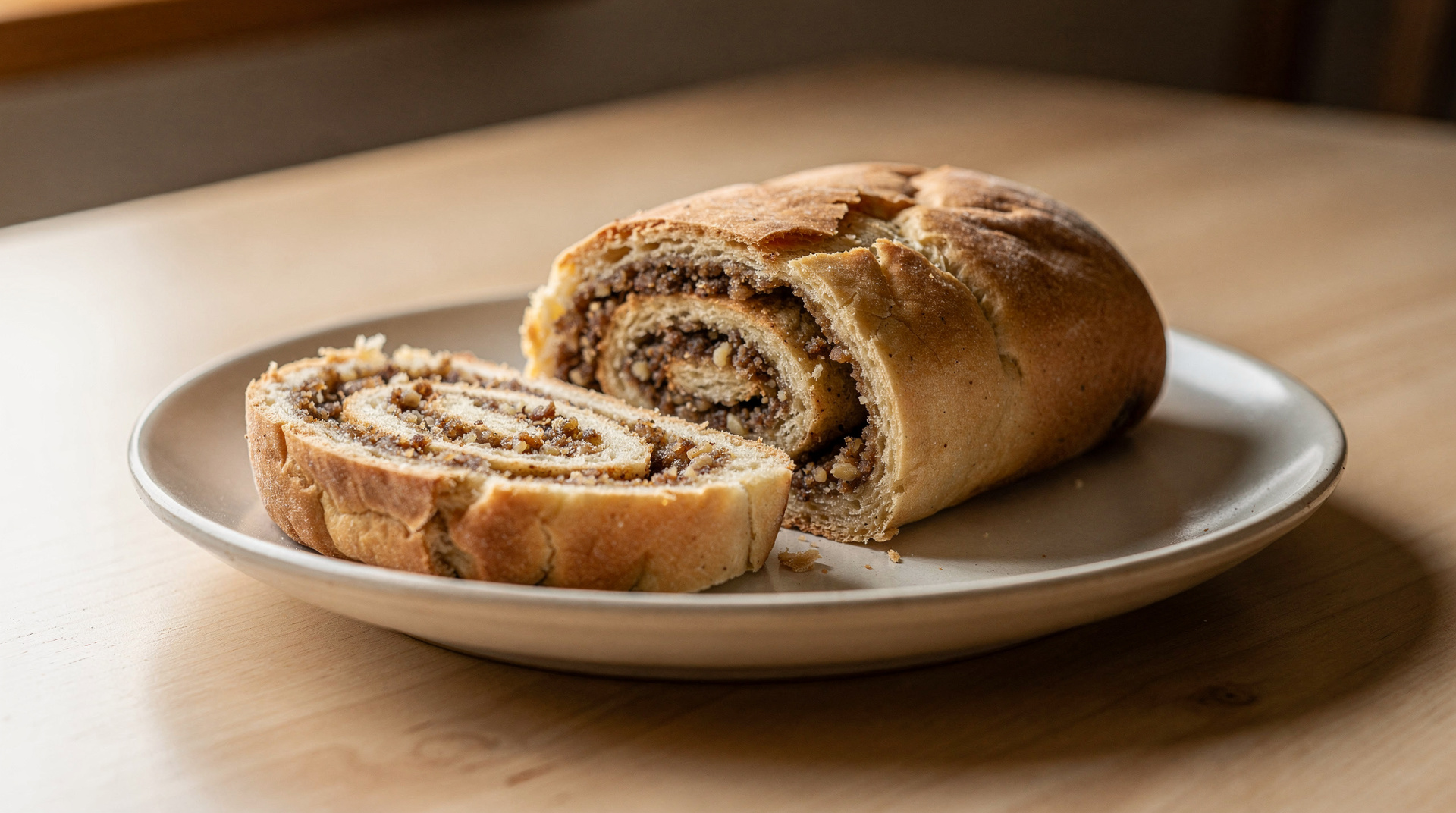
- Artisan potica from home bakers who sell directly from the car boot or a folding table — this is the best place to buy a genuinely fresh potica. Ask if it was baked that morning; the best stalls will say yes.
- Artisan bread from small bakers who do not have a regular market stall — sourdough, buckwheat bread (ajdov kruh), rye bread.
- Specialty jams, chutneys and pickles from small producers.
- Occasional artisan meat and charcuterie (Kraški pršut from the Karst, sometimes wild boar salami from hunting operations).
The covered fish and meat area
At the far end of the covered colonnade, the market transitions to a fish market and butcher section. The fish stall (ribnica) carries both fresh Adriatic fish (sea bass, bream, sardines in season) and freshwater fish (trout, carp). The Slovenian coast’s daily catch arrives several times a week — quality is best on Tuesday, Wednesday and Friday when fresh deliveries have come in.
The butcher stalls here stock high-quality Slovenian beef, pork and poultry. Kranjska klobasa in its proper form (coarsely minced, lightly smoked, PDO-certified) is available here. Ask for the “prava Kranjska klobasa” (genuine Carniolan sausage) — the vendor’s response will tell you whether they take the distinction seriously.
What to eat at the market
There is no shortage of things to eat while you are at the market:
Bread and cheese: buy a small piece of fresh bread from the artisan baker (if present on Friday), a slice of Tolminc, and eat standing at the market edge overlooking the river. EUR 3–5.
Honey tasting: most honey stalls let you taste before buying. Take advantage — taste five or six varieties, identify what you want, buy a jar.
Potica slice (if available): from an artisan stall on Friday mornings, a slice of house-made potica costs EUR 2.50–4 and eaten fresh is substantially better than the packaged version.
For a guided and comprehensive food circuit through the market and old town, a Ljubljana food tour with ten tastings includes the key market producers and explains the cultural context of what you are tasting. A shorter three-hour Ljubljana food tour covers the market in the context of a broader old-town food walk.
Open Kitchen (Odprta Kuhna): same location, different event
The Open Kitchen (Odprta Kuhna) that takes place every Friday in the same Pogačarjev trg square is a different event from the regular market — it is a street food festival with around 60 vendors, running from 10:00 to 21:00, from late March to late October. The two events overlap on Friday mornings: the regular artisan food fair and the beginning of the Open Kitchen vendors setting up happen in the same time window, which is why Friday morning is the richest single food experience in Ljubljana.
See the Ljubljana food tour guide for Open Kitchen detail and the full Ljubljana food picture, and the potica and desserts guide if the market’s fresh potica has whetted your appetite for the wider dessert scene.
Plečnik’s market: the architecture in brief
Jože Plečnik (1872–1957) is Ljubljana’s most significant architect — the man who designed the Triple Bridge, the National and University Library, the Žale cemetery, and the covered market, among dozens of other projects. His architecture is personal and referential, drawing on classical Roman forms filtered through Art Deco and the Vienna Secession. The market colonnade is one of his more approachable buildings: the arched bays with their stone columns, the covered walkway above, the direct relationship between the building and the river.
The Plečnik collection in the National Museum of Slovenia has drawings and models of the market project if you want architectural context. The market itself, seen from the bridge at midday with the castle above and the river below, is the most beautiful urban market setting in central Europe. This is not an exaggeration; it simply has not been marketed as such.
Combining the market with the rest of the old town
The market sits in the middle of the sights most visitors come for, so it rewards being treated as a first stop rather than a detour. After browsing, the Ljubljana old town guide picks up the story along the embankment, and the Plečnik architecture guide explains the other buildings by the same architect. If you want more to do once your bag is full of cheese and honey, the things to do in Ljubljana list and the Ljubljana destination page cover the castle, museums and river walks nearby. A relaxed first day in the capital is also laid out in the long weekend in Ljubljana itinerary.
Getting to the market
The Central Market is in the heart of Ljubljana’s old town — 10 minutes’ walk from the main railway station, 15 minutes from Metelkova. From the old town (Mestni trg), walk north along the Ljubljanica embankment toward the Dragon Bridge; the market colonnade begins immediately.
Parking is limited near the market in the mornings. The best approach by car is the Kongresni trg underground car park (EUR 1.20 per hour), 5 minutes’ walk from the market. The market also sits directly on the route of most Ljubljana walking tours, so it’s easy to combine with sightseeing rather than treating it as a separate trip.
The market through the seasons
The Central Market’s character changes significantly by season, and knowing what to look for at each time of year dramatically improves the visit:
Winter (December–February): the outdoor market reduces significantly. The covered colonnade remains full — dairy, honey, charcuterie, preserved and pickled vegetables. December is the best month for potica: home bakers bring their Christmas production to the market artisan fair in the weeks before the 25th. Buy a fresh walnut or poppy seed potica here and taste the real thing.
Spring (March–May): the market reactivates with the first outdoor spring vegetables in March. By April, asparagus from the Ljubljana basin is prominent — the thin-stalked Slovenian asparagus has a slightly more bitter, intense flavour than the thick Dutch variety. Fresh goat’s cheese returns as the flocks begin lactating. In late April, the honey stalls have new spring honey (rapeseed, fruit blossom) alongside the stored forest honey from the previous summer.
Summer (June–August): the outdoor market is at maximum size and variety. Strawberries in June, followed by cherries (including varieties from Brda and the Koper area), then stone fruit and tomatoes through August. The artisan fair on Friday mornings is at its most active in July and August, with the highest number of producers and the broadest food range.
Autumn (September–October): the mushroom season transforms the dried goods section. Fresh porcini appear in good years; the dried mushroom stalls are piled with ceps, chanterelles and horn of plenty. New walnut season means fresh walnuts and hazelnuts from Slovenian orchards. The honey stalls have the new-harvest chestnut honey in October — darker, more intensely bitter than any other season.
The market and tourism: what has changed and what has not
The Ljubljana Central Market has become more visibly touristic over the past decade — English-language labelling on some stalls, more souvenir-adjacent products (packaged potica, honey cosmetics, artisan chocolate), higher prices at some stalls on weekends. This is the honest picture.
What has not changed: the core dairy and vegetable market still serves Ljubljana’s residents, not its tourists. The honey producers who have been selling from the same position for thirty years are not there because of TripAdvisor; they are there because the regulars who buy from them return weekly. The difference between the tourist-facing stalls (brighter labels, higher prices, more packaging) and the genuine producer stalls (handwritten price signs, functional packaging, longer queues of Slovenian shoppers) is visible once you look for it.
Go on a weekday morning rather than a weekend afternoon. Stand in the queue where Slovenian shoppers are standing. Buy what they are buying. The tourism premium disappears entirely in this mode of visiting.
What’s in season, at a glance
If you only have one visit and want a quick reference rather than reading the full seasonal breakdown above, this is the shorthand version.
| Month | Best buys |
|---|---|
| Jan–Feb | Aged cheeses, preserved vegetables, forest honey, dried mushrooms |
| Mar–Apr | First asparagus, wild garlic, spring herbs, new goat’s cheese |
| May–Jun | Strawberries, peas, broad beans, linden honey beginning |
| Jul–Aug | Tomatoes, stone fruit, cherries, peak artisan fair activity |
| Sep–Oct | Porcini, walnuts, pumpkins, new chestnut honey |
| Nov–Dec | Root vegetables, smoked sausages, fresh Christmas potica |
Cross-reference this with the market’s opening pattern: the outdoor stalls thin out noticeably by 11:30 even in high season, so a table like this is only useful if paired with an early start.
Taking the market home with you
Food bought here makes some of the best souvenirs of a trip, and the market is a good place to understand what Slovenian cooking is built on. For the dishes these ingredients end up in, the guide to Slovenian dishes worth trying is a natural next read, and the blog’s foodie trail follows the same ingredients out into the countryside. Travelling with children, the market is also an easy, low-pressure outing, covered in the Ljubljana with kids guide.
Market etiquette and shopping tips
The market also rewards a slower pace than most first-time visitors give it. Arriving with a plan — three or four things to taste or buy rather than an aimless wander — makes the experience considerably richer, because the good stalls reward a real conversation rather than a quick photo and a purchase. Ask a cheese vendor which producer they’d buy from personally, or ask a honey stallholder which variety sold out fastest that week; these small questions routinely lead to the best recommendations of the day, often better than anything written in a guidebook, this one included.
A few habits separate a smooth visit from a frustrating one. Bring a tote bag or basket — few stalls provide free carrier bags, and buying one adds an unnecessary cost. Handle produce minimally; ask before picking things up if a stall looks tightly packed. Greetings matter more than in many countries: a simple “dobro jutro” (good morning) to a stallholder before asking a question is genuinely appreciated and often results in better service or an extra taste offered unprompted. If you are combining the market with a wider Slovenian food trip, the Slovenian wine guide is a useful companion for pairing the cheeses and charcuterie you buy here with a bottle from Vipava or Goriška Brda later in the trip.
Practical logistics for a market visit with luggage
If you are visiting the Central Market on the day you arrive in Ljubljana (train or bus) before checking into accommodation, the market logistics work well: Ljubljana Central Station is 10 minutes’ walk from the market. Luggage can be stored at the station (Garderoba, near the main entrance, EUR 3–5 per bag per day).
The market is a good first-morning activity before hotel check-in — buy breakfast ingredients (bread, cheese, honey, fruit), eat at the riverside edge of the market, and spend an hour orienting before the afternoon’s activities. It also slots naturally into the morning of the one-day Ljubljana itinerary if you are only passing through the capital briefly, and pairs well with an evening exploring Ljubljana’s traditional gostilne once the market stalls have closed.
What a guided market visit adds
The Central Market is navigable on your own, but a guide adds meaningful context. The Ljubljana food tour with ten tastings starts at the market and uses the stalls as teaching moments — explaining which honey variety to buy and why, which cheese producer has been there for twenty years, what the seasonal vegetables tell you about where Slovenian farming is right now.
The three-hour Ljubljana food tour covers the market as the opening act of a broader old-town food circuit. Both are morning experiences that work well as the first activity of a Ljubljana stay, giving you the food vocabulary to make better choices for the rest of the trip.
For the broader Ljubljana food culture including gostilne, wine bars, and the Open Kitchen in detail, see the Ljubljana food tour guide. The Slovenian food guide covers the national dishes that are best represented at the market stalls.
Frequently asked questions about Ljubljana Central Market
Is the Ljubljana Central Market open on Sundays?
No, the market is closed on Sundays, both the covered dairy and charcuterie hall and the outdoor vegetable stalls. Plan a Sunday visit around the market's closed hours by exploring the old town or a day trip instead, and save the market for Monday to Saturday morning.Can I pay by card at the market stalls?
Some larger stalls accept card payments, but many of the smaller producer stalls, especially the honey and vegetable sellers, are cash-only or prefer cash. Bring small euro notes and coins, since stallholders often cannot break large bills early in the morning before the till fills up.
Top experiences
Bookable activities with verified prices and instant confirmation on GetYourGuide.