Slovenian food: must-try dishes, where to eat and honest tips
Ljubljana: guided food tour with 10 local tastings
What food is Slovenia known for?
Slovenia is known for potica (rolled walnut cake), štruklji (rolled dumplings), Carniolan sausage (Kranjska klobasa), buckwheat dishes, trout, and a strong culture of traditional gostilne. The Ljubljana Central Market and Open Kitchen are the best places to eat your way through the range in one visit.
The honest truth about Slovenian food
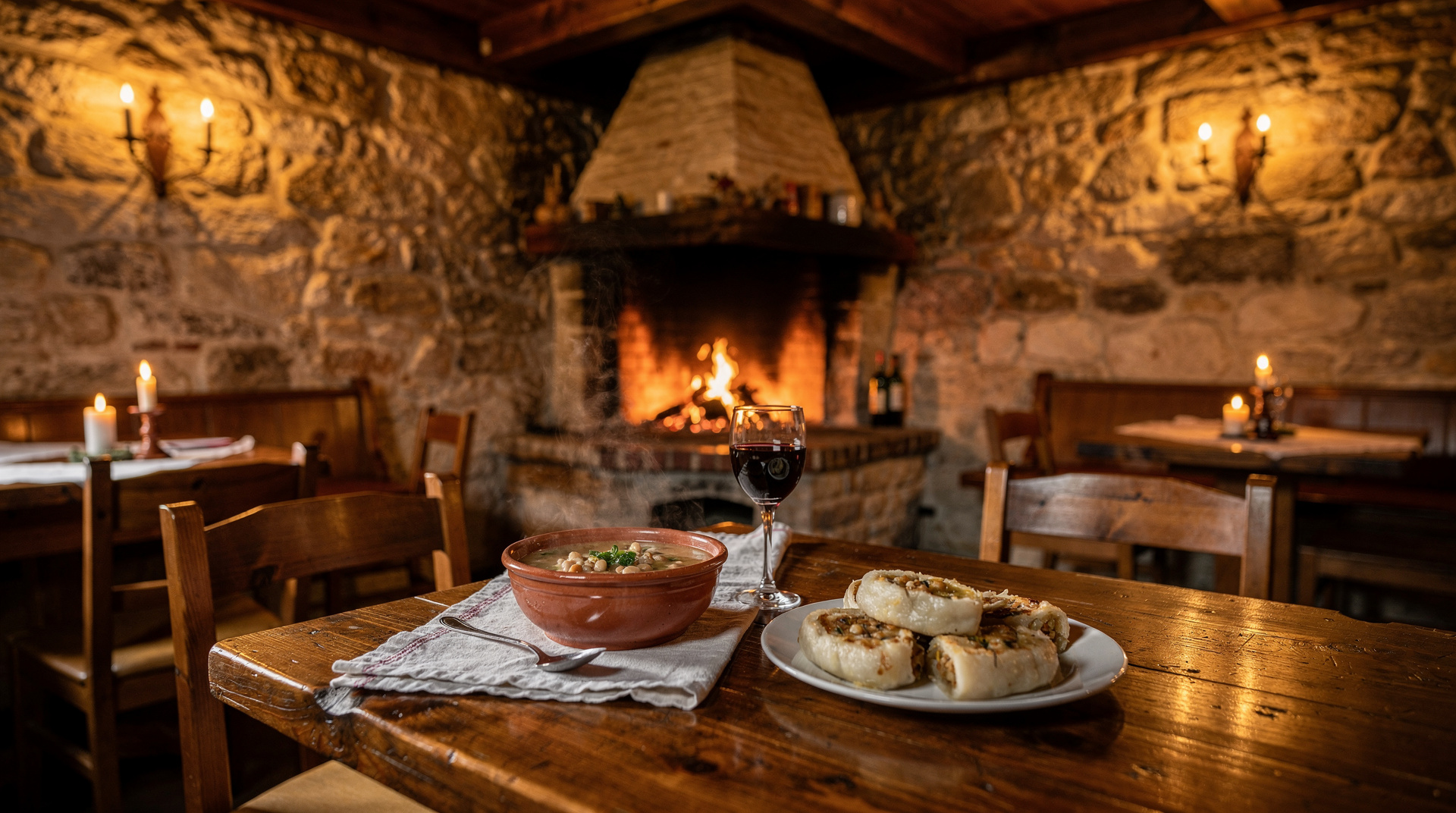
Slovenian cuisine is not flashy. It will not appear on many lists of Europe’s most exciting food scenes, and the country has no global star-chef mythology to prop up unrealistic expectations. What it has instead is something more durable: a genuine, continuous peasant and gostilna tradition that has not been broken by decades of communist food culture (as much of eastern Europe’s has), a rich diversity of local ingredients — buckwheat, trout, forest mushrooms, game, fresh dairy — and a Central European depth-of-flavour philosophy that rewards patience.
| Must-try dishes | Potica, štruklji, Kranjska klobasa, trout |
| Best single stop | Ljubljana Central Market (weekday mornings) |
| Weekly highlight | Open Kitchen, Fridays late March–October |
| Typical gostilna lunch | EUR 10–18 |
| Vegetarian-friendly | Yes, with some planning outside cities |
Ljubljana is where you start. The city’s food scene is small enough to navigate in a few days, mature enough to have restaurants worth a detour, and centred on the Central Market and the weekly Open Kitchen event in a way that makes eating well easy without planning. Beyond Ljubljana, the picture divides by region: the coast eats like coastal Croatia and Friuli; the wine country west of Ljubljana eats like Italian-Slovenian border country; the mountain and rural interior eats like Austria.
This guide works through the essential dishes, the best places to find them, and the honest notes on what is actually worth your time and money.
The dishes you must eat
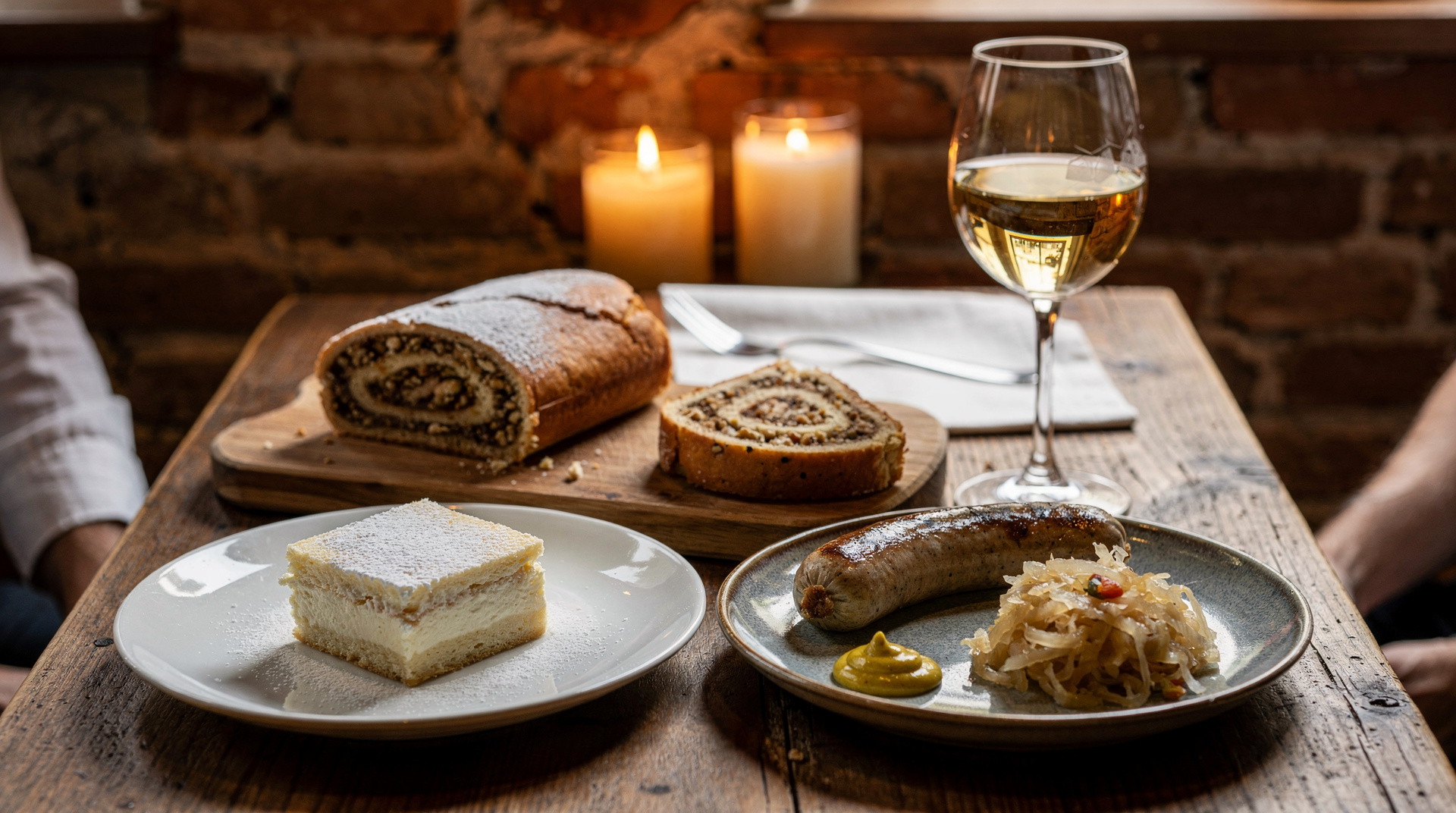
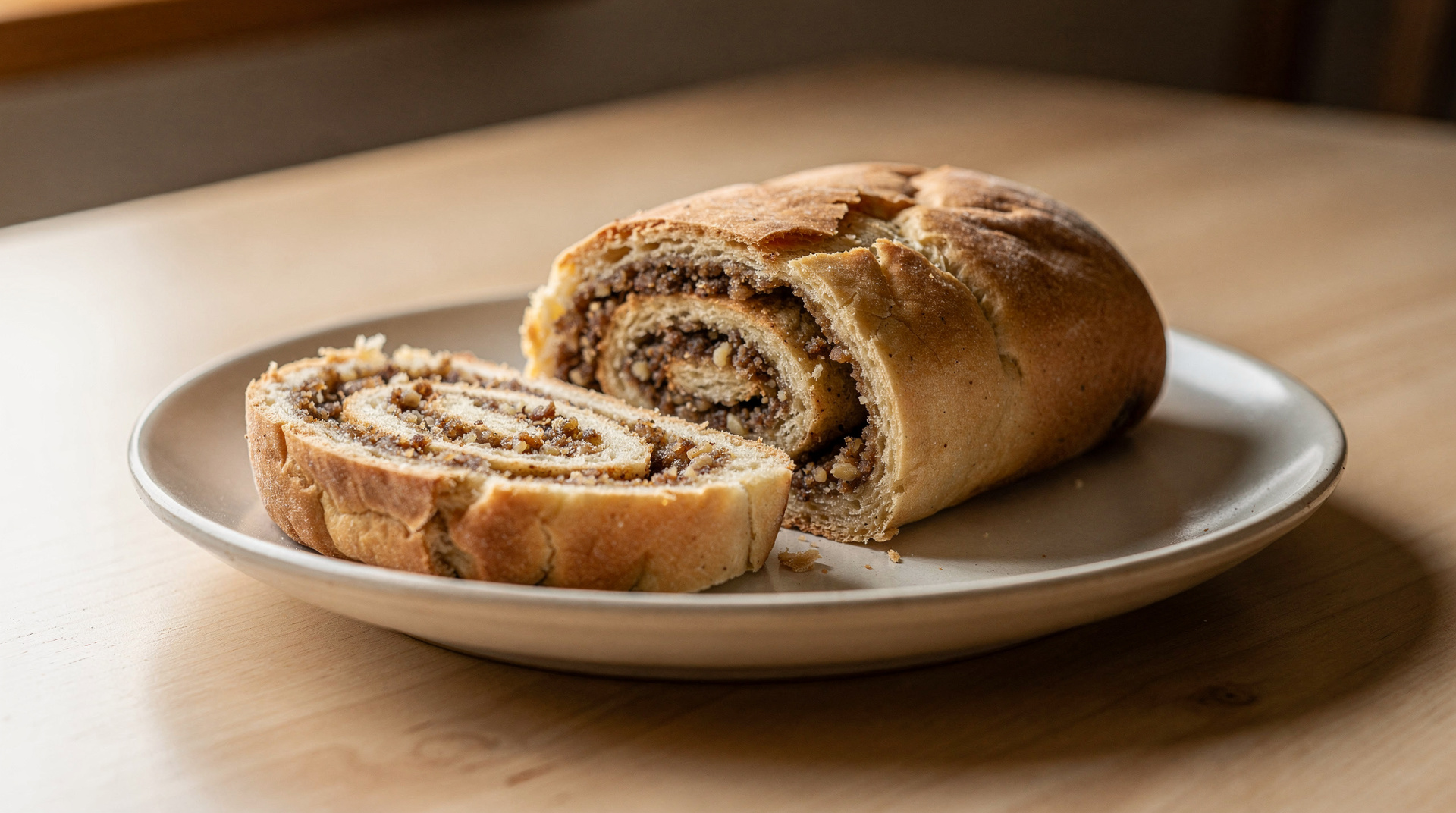
Potica. This is the one dish that almost every Slovenian would name as the defining national food, and the case is strong. A potica is a sweet (occasionally savoury) rolled dough filled with walnut paste, sometimes with raisins, honey, citrus zest or a splash of rum, baked in a deep ring mould called a potičnik. The result looks like a brioche wreath; sliced, each piece reveals the spiral of dark filling. The texture should be dense but moist, the dough rich but not cloying, the walnut filling present in every bite. Family recipes vary: some use more sugar, some more alcohol, some add poppy seed or tarragon in the savoury version. Find it at Ljubljana’s Central Market year-round; in December it is literally everywhere.
Štruklji. The other great rolled-dough preparation of Slovenian cooking: a pasta-like sheet wrapped around a filling and either boiled, steamed or baked. Savoury štruklji with tarragon filling (štrukljiv z estragonom) are the most characteristically Slovenian version — the tarragon’s anise-like flavour works remarkably well in the buttery dough-and-cottage-cheese context. Sweet versions (walnuts, poppy seed, apple) are served as a dessert or afternoon snack. The Central Market and every traditional gostilna will have them.
Kranjska klobasa. The Carniolan sausage holds PDO status — one of the few Slovenian food products with European protected designation. It is a cooked sausage of coarsely minced pork shoulder and bacon, lightly smoked, then boiled and served with mustard, horseradish and a slice of bread. The eating is simple; the flavour is clean, meaty, satisfying. Available at Ljubljana Central Market, at proper gostilne, and at the Open Kitchen. This is not a posh dish — it costs EUR 4–7 and is genuinely good.
Bograč. A meat stew with three types of meat (pork, beef, wild boar) slow-cooked with paprika, potatoes and wine — the Slovenian answer to goulash, more common in the east around Maribor and Ptuj than in Ljubljana. It is a hearty winter dish that does not pretend to be anything other than what it is.
Žganci. Buckwheat or cornmeal mush — the Slovenian version of polenta — served as a side dish or a base for various preparations. Ajdovi žganci (buckwheat žganci) with crackling (ocvirki) is one of the most traditional rural dishes in Slovenia, an agricultural staple that has made it onto the menus of gostilne as a nostalgic comfort food. It is an acquired texture — thick, slightly grainy, very filling — but worth trying once to understand the pre-tourist food culture.
Jota. A hearty sour bean and sauerkraut stew with smoked pork, slow-cooked and slightly sour — a winter staple of the Karst and coastal regions, related to the Friulian jota and the Istrian version across the border. Each family version differs in the balance of acidity and smokiness. The best versions require hours of cooking and are rarely on restaurant menus in summer.
Prekmurska gibanica. The layered pastry from the Prekmurje region in northeast Slovenia: poppy seed, walnut, apple and cottage cheese layers in a yeasted pastry case, baked together into a dense, complex sweet. It is the most ambitious of Slovenian pastries and the most rewarding. Available in Ljubljana at specialist cake shops and some gostilne; most reliably found in its home region around Murska Sobota.
Trout. Freshwater fish is central to the mountain and alpine cuisine of Slovenia, and the Soča river system produces some of the most prized trout in central Europe — the Soška postrv (Soča trout or marble trout), a hybrid found only in the Soča system, with distinctive marbled markings and firm, delicate flesh. It appears on menus in the Vipava Valley, Kobarid, and around Bohinj. Order it grilled or pan-fried with minimal seasoning; the quality of the fish does the work.
The Ljubljana Central Market
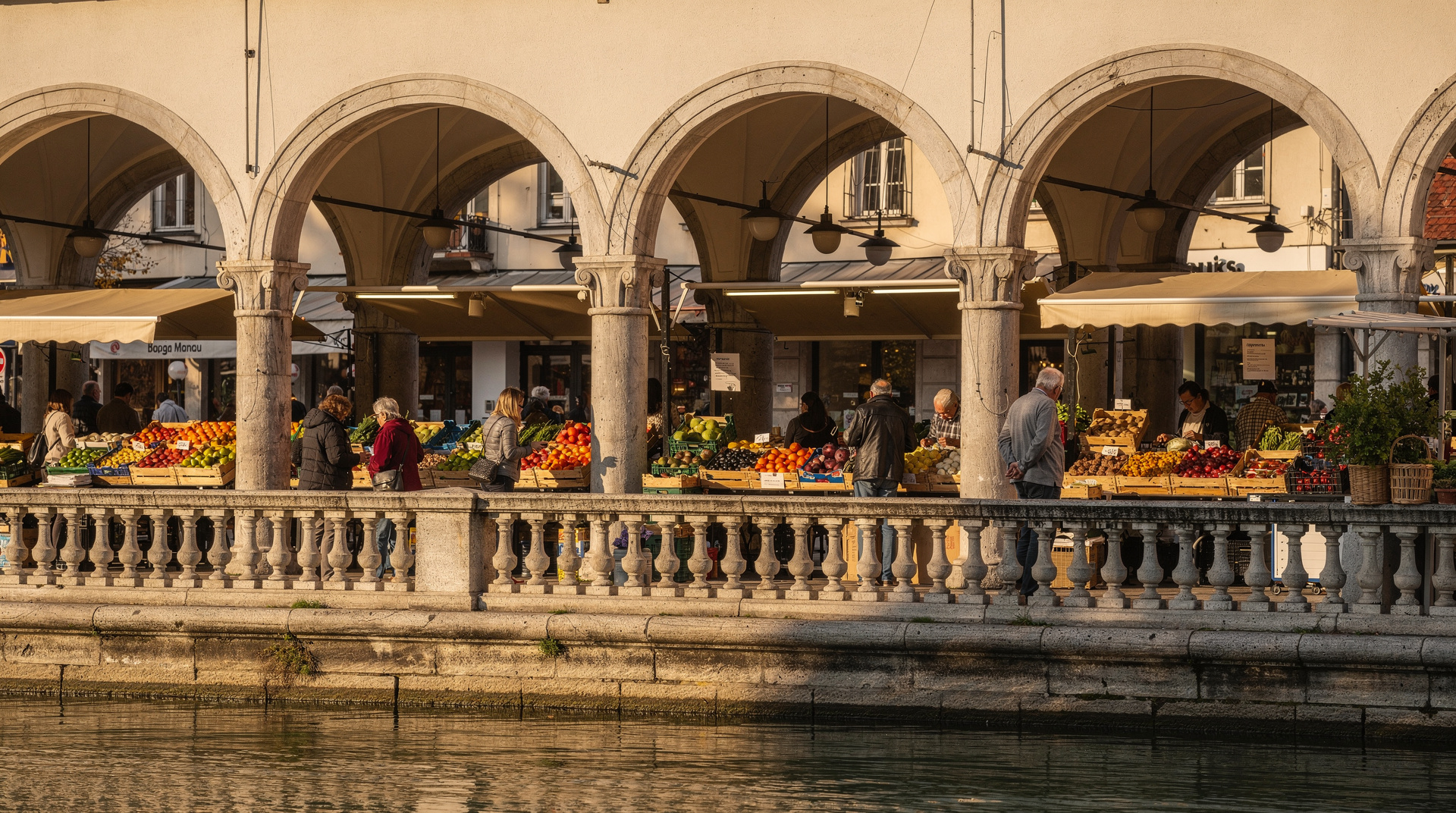
The market complex on the left bank of the Ljubljanica, designed by Jože Plečnik in the 1940s, is the food heart of Ljubljana. The main covered hall runs along the embankment colonnade; an outdoor market extends along Vodnikov trg and Pogačarjev trg beyond. It is at its best on Tuesday, Wednesday, and Friday mornings from about 07:30 to 14:00.
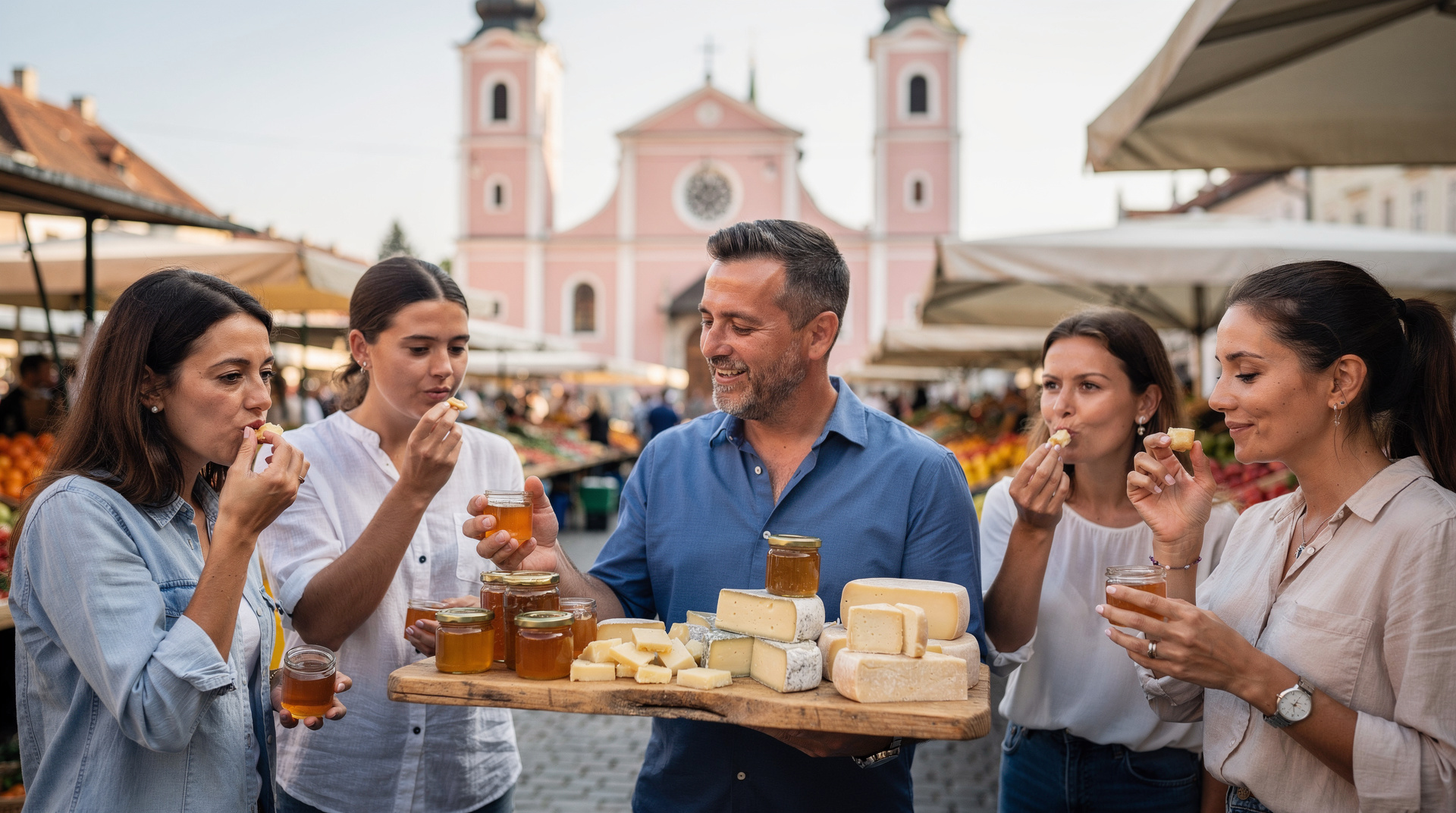
The dairy stalls are the highlight: fresh goat’s and cow’s cheeses, crème fraîche, cultured butter, and a remarkable range of local honeys — chestnut, linden, buckwheat, acacia — from small producers. Buy a piece of aged Tolminc cheese (a traditional cow’s milk cheese from the Tolmin area) if you see it. The vegetable stalls track the season precisely; asparagus in May, strawberries in June, ceps in September.
For a guided and structured eat-through of what the market and city offer, the Ljubljana food tastings tour with 10 stops is the most comprehensive introduction. A shorter three-hour Ljubljana food tour covers the market and the old town in a single morning session.
Open Kitchen (Odprta Kuhna)
The Open Kitchen runs every Friday from late March to late October in Pogačarjev trg — the square that extends the Central Market complex toward the Dragon Bridge. Around 60 vendors set up from 10:00, and the crowd builds through the afternoon until closing at 21:00.
The food offer is eclectic: alongside gostilna-style Slovenian dishes (štruklji, žganci, roast meats), you will find Lebanese mezze, Japanese yakitori, Indian thali, and a strong contingent of local fusion. The quality varies but the average is high, prices are reasonable (most dishes EUR 5–12), and the atmosphere — outdoor, communal, genuinely used by Ljubljana residents rather than purely tourist-facing — is one of the better food experiences in the country. No booking, no entrance fee. Just arrive.
Where to eat in Ljubljana
Gostilna As (Čopova 5) is the Ljubljana gostilna that consistently receives the most praise from local food writers — traditional dishes executed with real care, a serious natural wine list from Slovenian producers, and a garden terrace in summer. Mains EUR 16–26. Book ahead.
Šestica (Slovenska 40) is one of the older gostilne in the city centre and the best option for traditional comfort food without the gastronomy premium: žganci, štruklji, Kranjska klobasa, daily soup. Lunch menu EUR 10–14. Reliably good, no pretension.
Strelec (in Ljubljana Castle) has one of the better views in the city and a kitchen that focuses on updated Slovenian classics — game, trout, local vegetables. Main dishes EUR 22–32. The location is more impressive than the food, but the food is genuinely good.
Pop’s Place (Čopova 8) has become known as the best burger in Ljubljana, but the burger is Slovenian in ingredients — local beef, local bread, house-made sauces. Queue at lunch on weekdays.
Vino-Vino and Dvorni Bar are the two best natural wine bars in the city, both stocking deep selections of Slovenian producers. Dvorni Bar also serves food.
For a guided introduction to Ljubljana’s traditional food culture, a traditional Slovenian flavours food experience covers the market, historic gostilne, and key dishes with a knowledgeable guide.
Food outside Ljubljana
The coast and Istria. Around Piran and Slovenian Istria, the food switches register: olive oil, seafood, prosciutto, istrian pasta (fuži), grilled fish. The olive oil from the Koper area is produced from Istrska Belica olives and holds PDO status — cold-pressed, grassy, peppery, genuinely excellent. Local restaurants in Piran serve the day’s catch grilled simply with oil and lemon. This is Mediterranean food, not Central European, and it is very good.
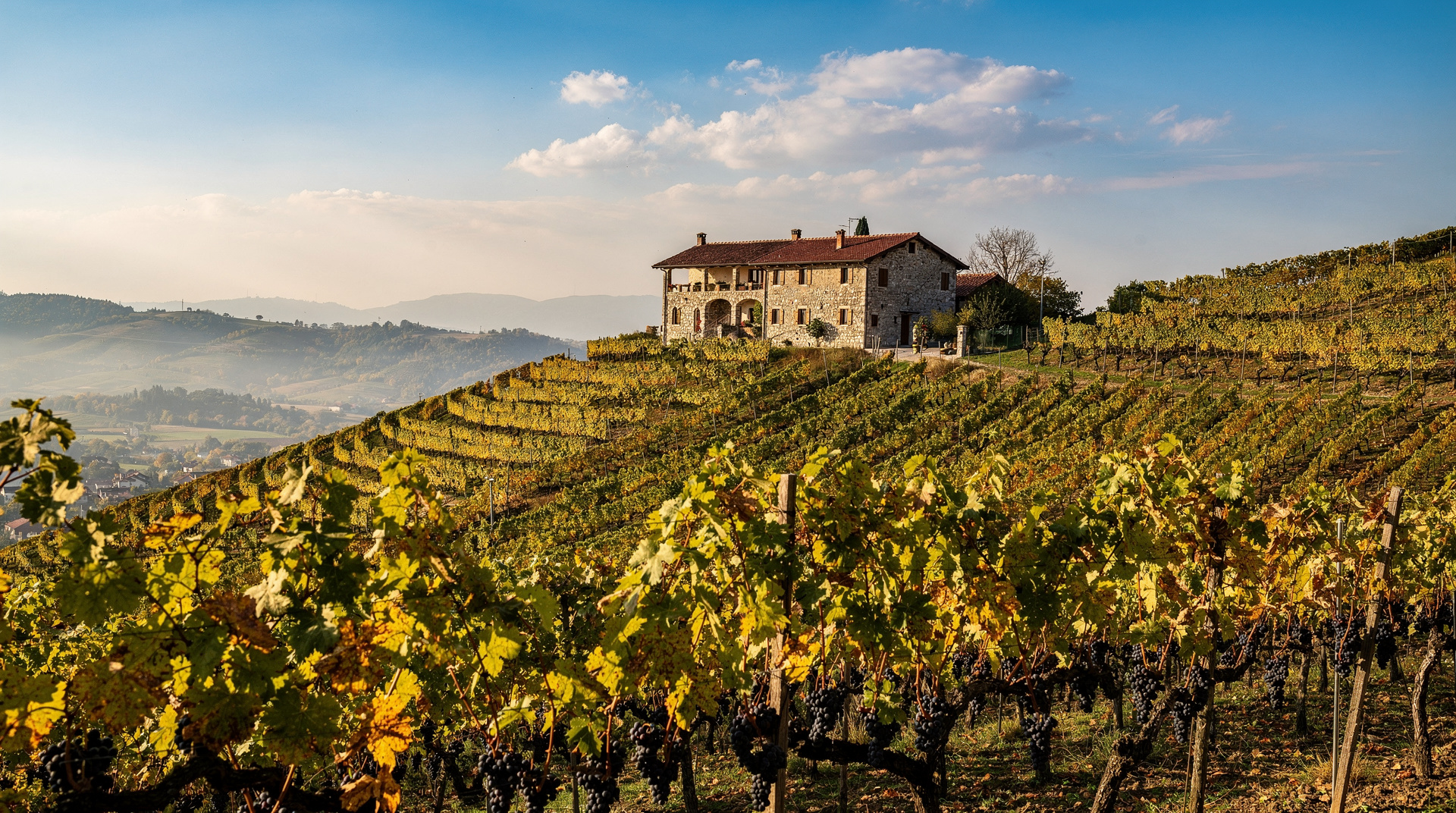
The wine regions west of Ljubljana. In the Vipava Valley and Goriška Brda, food culture is influenced by the proximity to Italy — hand-made pasta, air-dried prosciutto, aged sheep cheeses, and mushroom preparations. Gostilna Mahorčič in Podnanos (Vipava Valley) is one of the best rural restaurants in Slovenia: trout, lamb, seasonal mushrooms, house-made pasta, exclusively local wine list.
Maribor and the east. The east has a distinctly Austro-Hungarian food culture: bograč stews, roast pork with dumplings, Burek (a Balkan pastry of flaky dough and cheese or meat), and the excellent Ptujska Klet wine from the Ptuj cooperative. The food is heartier and less refined than in Ljubljana but often better value.
What to buy to take home
The best edible souvenirs from Slovenia are things that are either unavailable or significantly more expensive elsewhere: a bottle of Zelen or Pinela from the Vipava Valley (see the Slovenian wine guide); cold-pressed Koper olive oil; a jar of Slovenian chestnut or linden honey from Ljubljana’s Central Market; dried porcini from an autumn market visit; and if you can transport it, a piece of Tolminc cheese vacuum-packed at the market.
Potica purchased in tin packaging at Ljubljana airport is available but not the best expression of the dish — if you want to buy one to take home, buy it at a Central Market stall or at the city’s cake shops (Slaščičarna Čad or similar) where it has been made that week.
Frequently asked questions about Slovenian food
What is potica?
Potica is Slovenia’s most iconic food: a rolled yeasted dough filled with walnut paste, raisins, honey and sometimes rum, baked in a deep ring mould. It is present at every major celebration and varies by family recipe. The best versions are dense, moist and deeply flavoured. Find it at Ljubljana’s Central Market, at gostilne and in December at virtually every shop in the country.
What are štruklji?
Štruklji are rolled dumplings — a sheet of dough wrapped around a filling and boiled, steamed, or baked. The most distinctively Slovenian savoury version uses tarragon and cottage cheese filling. Sweet versions use walnut, poppy seed or apple. They appear in every traditional gostilna as a starter, side dish or dessert.
What is a gostilna?
A gostilna is a traditional Slovenian inn — the local equivalent of a French bistro or Austrian Gasthaus. At its best, it serves seasonal, locally sourced dishes in a relaxed, unfussy setting. Prices are lower than city restaurants (EUR 10–18 for a full lunch), quality is often higher, and they are the best way to eat like a local rather than a tourist.
Where can I eat at the Ljubljana Open Kitchen?
Open Kitchen (Odprta Kuhna) runs every Friday from late March to late October in Pogačarjev trg, from 10:00 to 21:00. Around 60 vendors serve Slovenian and international food. No booking required and no entrance fee. It is one of the best outdoor food events in central Europe.
Is Slovenian food suitable for vegetarians?
Traditional Slovenian cuisine is meat-heavy, but the vegetable side dishes, mushroom preparations, cheese-filled štruklji, bean soups and dairy products are often the best parts of a traditional meal. Ljubljana’s restaurant scene has strong vegetarian and vegan options. Rural gostilne can usually accommodate vegetarians with pasta, cheese dishes and seasonal vegetable preparations — ask when booking.
What is Kranjska klobasa?
Kranjska klobasa (Carniolan sausage) is a PDO-protected cooked pork sausage — Slovenia’s equivalent of a French saucisson or German Bratwurst with legal protection. Coarsely minced pork shoulder and bacon, lightly smoked and boiled, served with mustard and horseradish. Find it at Ljubljana’s Central Market and at traditional gostilne throughout the country.
What should I eat at Ljubljana Central Market?
The covered market colonnade (Tuesday–Friday, Saturday mornings) is best for fresh local dairy — goat’s cheese, cultured butter, Tolminc cheese — and for honey from small producers. The outdoor market extends with seasonal vegetables and herbs. Friday mornings bring an artisan food fair. Come hungry, bring a bag and plan at least an hour.
Does Slovenian food differ much by region?
Yes, noticeably. Ljubljana and the central interior eat Central European gostilna food (Kranjska klobasa, štruklji). The coast and Istria switch to Mediterranean, seafood and olive-oil-based cooking. The Vipava Valley and Goriška Brda have Italian-influenced pasta and cured meats. Maribor and the east have a heartier Austro-Hungarian style. Prekmurje in the northeast has its own distinctive layered pastries.
What drinks pair well with Slovenian food?
Slovenian wine is the natural pairing: Malvazija with coastal seafood, Refošk or a Brda red with heartier dishes and game, a light Laški Rizling or local red with gostilna classics like Kranjska klobasa. Union and Laško are the two main Slovenian lager brands, both reasonable with hearty food, and Ljubljana’s growing craft beer scene is worth exploring for something different.
Regional food differences at a glance
Slovenia is small enough to drive across in a few hours, but the food changes character noticeably by region — worth knowing if you’re combining Ljubljana with the coast, the wine country or the mountains.
| Region | Food character | Signature dish |
|---|---|---|
| Ljubljana / central | Gostilna classics, market culture | Kranjska klobasa, štruklji |
| Coast / Istria | Mediterranean, seafood, olive oil | Grilled fish with blitva |
| Vipava / Goriška Brda | Italian-influenced, pasta, prosciutto | Hand-made pasta, aged sheep cheese |
| Maribor / east | Austro-Hungarian, heartier | Bograč, burek |
| Prekmurje (northeast) | Layered pastries, distinctive regional dishes | Prekmurska gibanica |
Drinks to pair with Slovenian food
Slovenian wine deserves as much attention as the food — see the Slovenian wine guide for the full regional breakdown. As a quick pairing reference: Kranjska klobasa and gostilna classics go well with a light Slovenian red or a crisp Laški Rizling; coastal seafood pairs naturally with Malvazija; richer dishes like bograč or game suit Refošk or a fuller Brda red. Beer drinkers are also well served — Union and Laško are the two national lager brands, both perfectly decent with hearty gostilna food, and Ljubljana’s craft beer scene (try a beer boat cruise for a guided introduction) has grown substantially in the past decade.
A Ljubljana beer boat cruise combines the city’s craft beer scene with a relaxed river-level view of the old town — a good complement to a food-focused day.
Top experiences
Bookable activities with verified prices and instant confirmation on GetYourGuide.