Ljubljana food tour guide: markets, restaurants and what to eat
Ljubljana: 3-hour Slovenian cuisine walking tour
What is the best food experience in Ljubljana?
The Open Kitchen (Odprta Kuhna) on Friday afternoons and the Central Market on weekday mornings are the best food experiences in Ljubljana. For a structured guided introduction, a food tour with a local guide covers both the market and the old town in three hours.
Ljubljana eats better than its reputation suggests
Ljubljana is a small European capital — about 300,000 people, a single old town, a castle, a river. Its food scene is not in the same conversation as Copenhagen, Barcelona or London, and attempting to position it there would be dishonest. But Ljubljana eats well: genuinely well, without pretension, and in a way that rewards visitors who look slightly beyond the tourist terrace restaurants clustered around the Plečnik colonnade.
The key is understanding the rhythm of the city’s food culture. The Central Market on weekday mornings is the working food life of Ljubljana. The Open Kitchen on Friday afternoons is where the city’s cooks (from gostilna chefs to food truck operators) compete for an audience of local regulars. The wine bars along the Gradaščica canal and the gostilne in the streets behind Mestni trg are where Ljubljana residents actually eat, at prices that do not reflect tourist-district markup.
This guide covers the full eating circuit: where to go, when, what to order, what to pay, and which guided options are genuinely worth the money.
| Where | Central Market, Open Kitchen (Pogačarjev trg), old town gostilne |
| Cost | EUR 20–45 per person for a sit-down meal with wine |
| Time needed | Half a day for market + Open Kitchen; evenings for gostilne |
| Getting there | All within 10–15 min walk of the old town |
| Best time | Friday for Open Kitchen; Tuesday/Friday morning for the market |
Starting point: Ljubljana Central Market
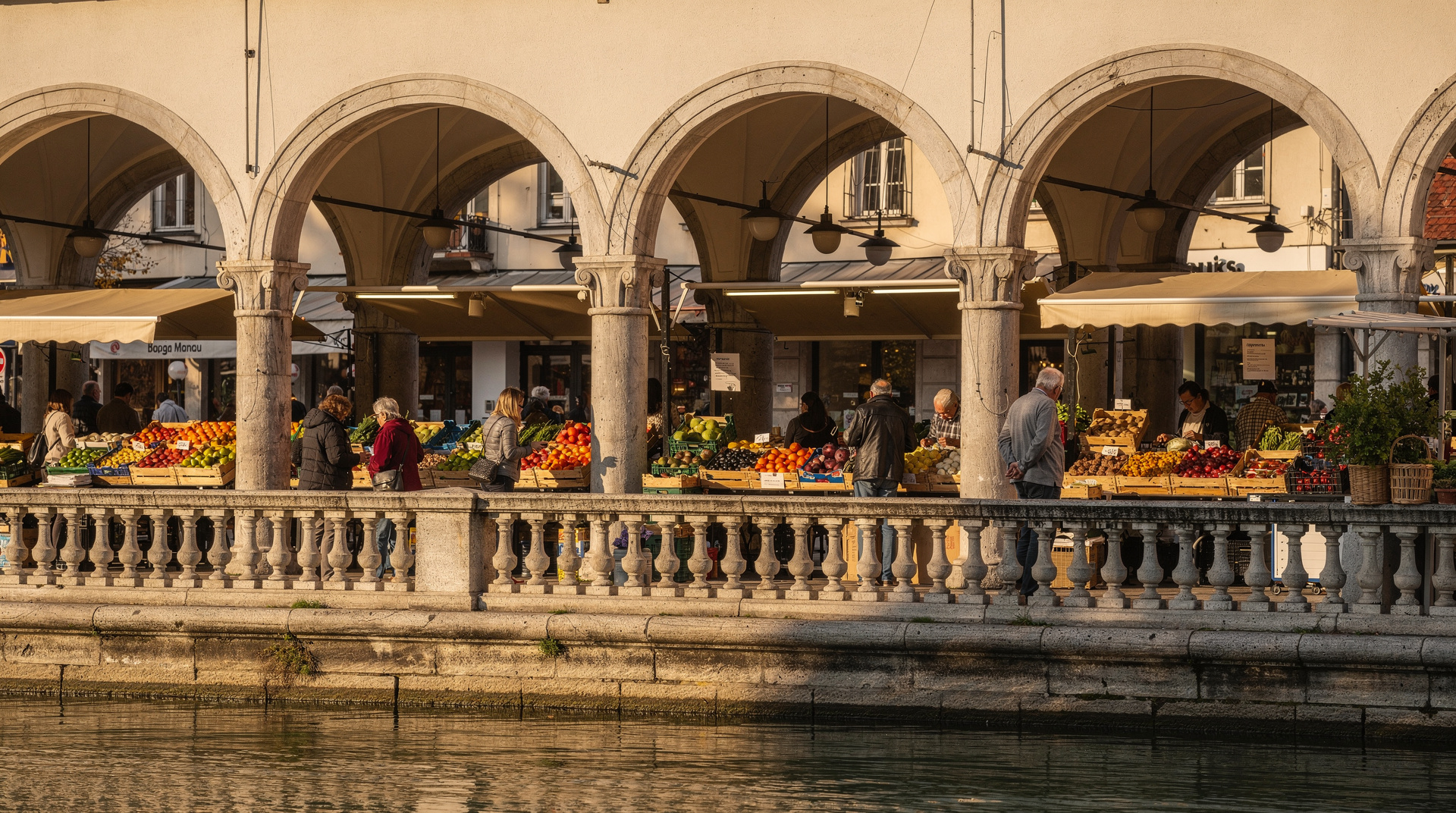
The covered market colonnade on the left bank of the Ljubljanica — designed by Jože Plečnik, completed in the 1940s, one of the more elegant market buildings in central Europe — is the right place to start any food exploration of Ljubljana. Open Tuesday through Saturday, with Friday mornings bringing an additional artisan food fair alongside the regular stalls.
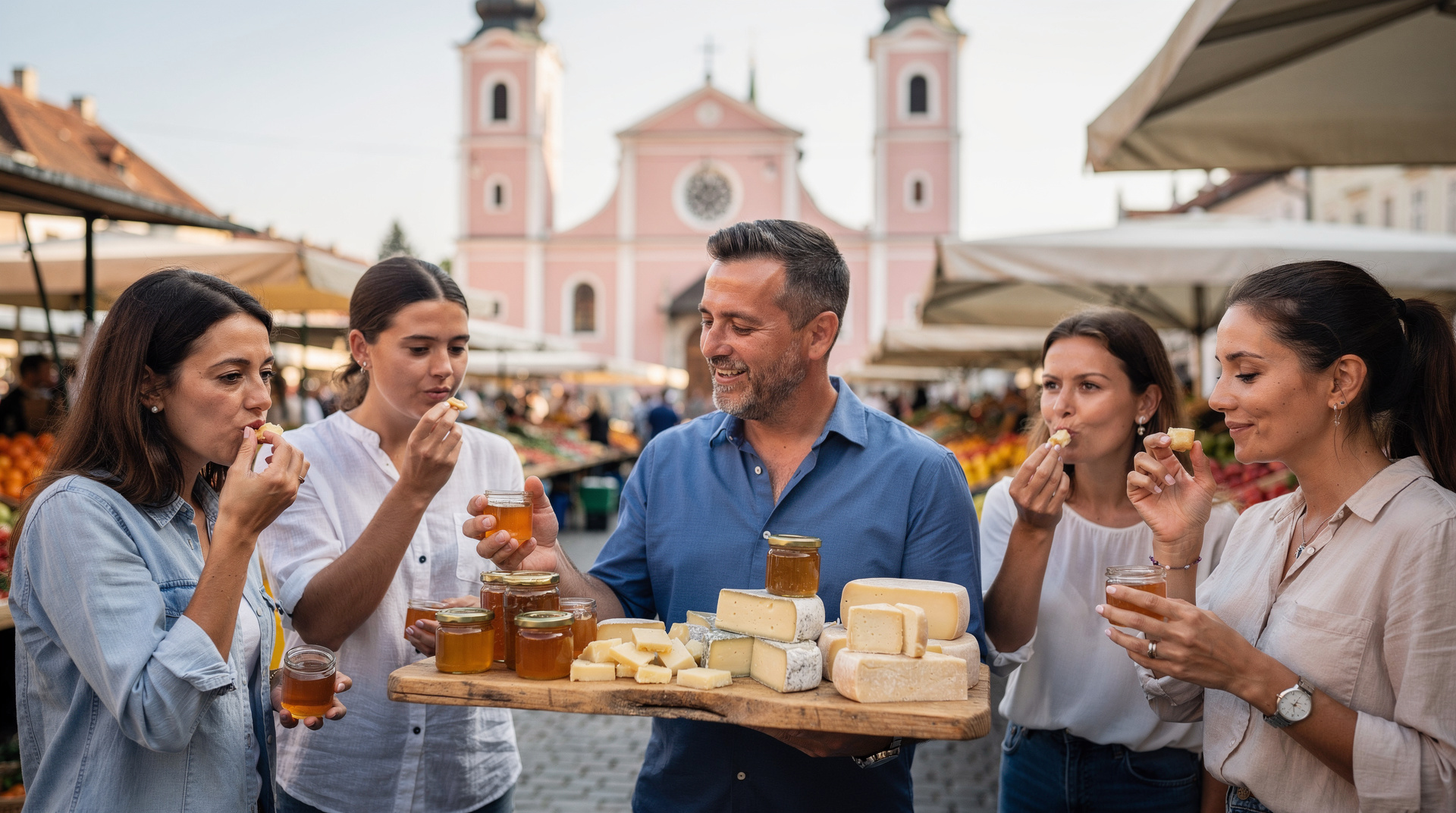
The dairy section is the highlight: fresh goat’s milk cheeses in plain, herb and garlic versions, cultured butter, crème fraîche, and rows of honey jars in every variety the Slovenian forests produce. Chestnut honey, dark and bitter, is the most characteristically Slovenian — buy a small jar as a breakfast condiment or to take home. Linden honey is the aromatic summer option; acacia (robinia) honey is the mild introductory choice.
The aged cheese stall carries Tolminc — a pressed cow’s milk cheese from the Tolmin area, slightly granular, mild to pungent depending on age. Find a piece aged 12+ months, buy a sliver to eat at the market and a larger piece vacuum-packed to take home.
The outdoor extension of the market runs along Vodnikov trg with seasonal vegetables, local eggs, spice and dried mushroom stalls. In September and October the porcini mushroom stalls are the most interesting: whole caps, sliced dried, and powdered. A bag of dried Slovenian porcini costs EUR 8–15 and is one of the better edible souvenirs.
A more structured eat-through of the market and the old town is best done with a guide — a Ljubljana food tour with ten tastings covers the market stalls, traditional producers and key neighbourhood stops in a comprehensive circuit.
The Open Kitchen (Odprta Kuhna)
Every Friday from late March to late October, Pogačarjev trg — the large square at the northern end of the Central Market — transforms from a car park into one of the better outdoor food markets in central Europe. Around 60 vendors set up from 10:00; the serious eating crowd arrives from 12:00 to 15:00; the evening session runs until 21:00.
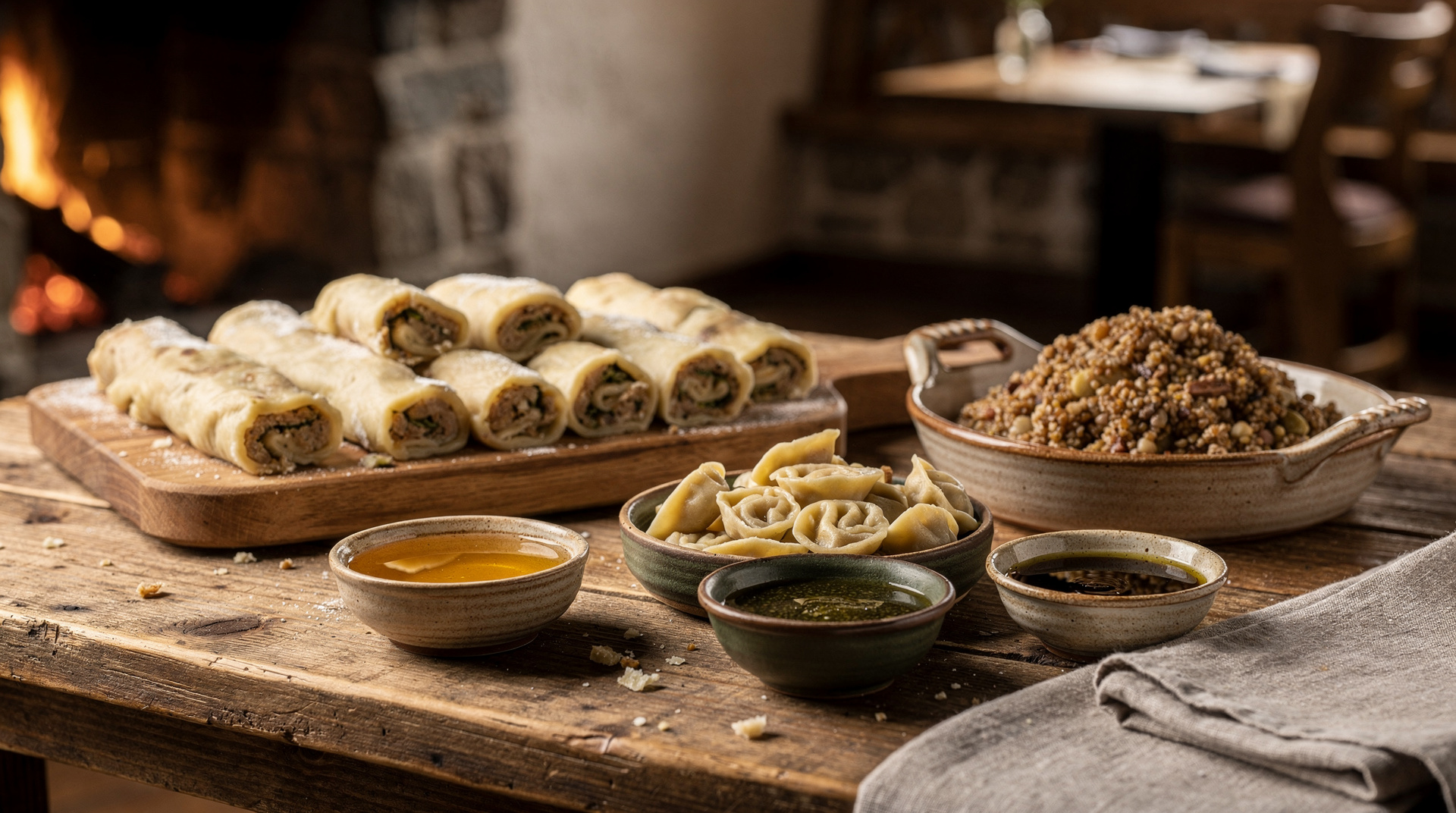
The vendor mix is eclectic and genuinely local: this is not a tourist market. Slovenian gostilna chefs occupy a section with traditional dishes — Kranjska klobasa grilled on a brazier, štruklji pulled from a steam pan, bograč stew ladled from a large pot. Alongside them: a Japanese gyoza vendor who has been at the market for years, Lebanese mezze and flatbread, Vietnamese pho, a rotating cast of fusion experiments, and the best coffee van in Ljubljana (arguable, but consistently popular).
Prices are honest: most dishes EUR 5–12, wine by the glass EUR 3–6 from local producers who set up their own stands. The crowd is mixed — office workers, families, students, a proportion of tourists who have discovered the market — and the atmosphere is relaxed and genuinely convivial. Arrive by 12:00 for the full choice of vendors; by 14:00 the best options sell out.
A structured three-hour food tour
If you want a guided and curated version of Ljubljana’s food culture, a three-hour Ljubljana food tour covers the Central Market, the old town’s key producers and gostilne, and the backstory of Slovenian food culture in a single morning session. The format — a guide, a small group, ten or so stops — works well for first-time visitors who want context alongside the food. For a deeper and more comprehensive introduction, a traditional Slovenian flavours food experience extends the time and the content to cover more of the traditional repertoire.
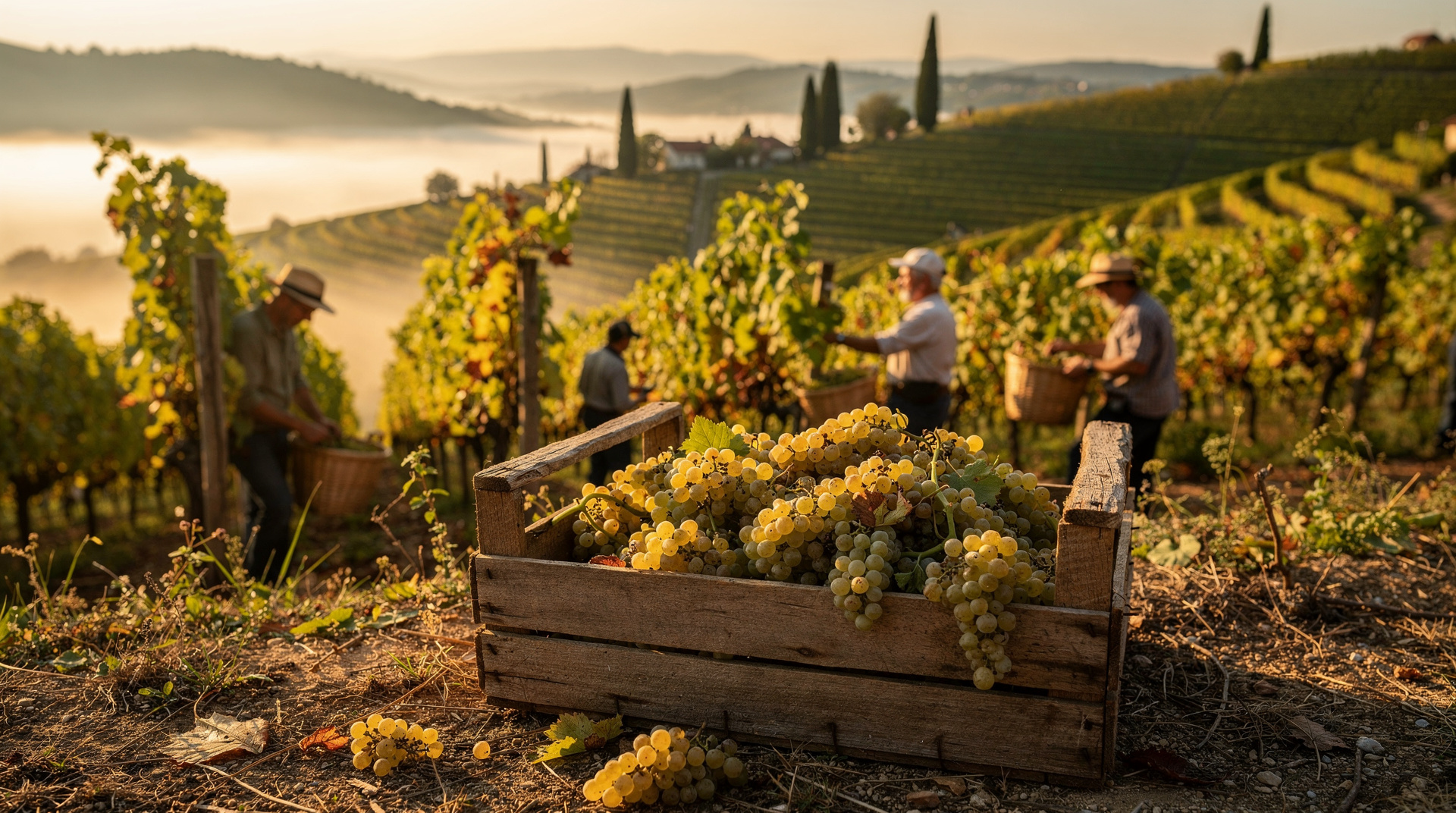
For visitors interested in pairing the food tour with a wine session, a Ljubljana Slovenian wine tasting covers the range of regional styles — Vipava, Brda, coastal Malvazija — with a local sommelier.
Best restaurants in Ljubljana
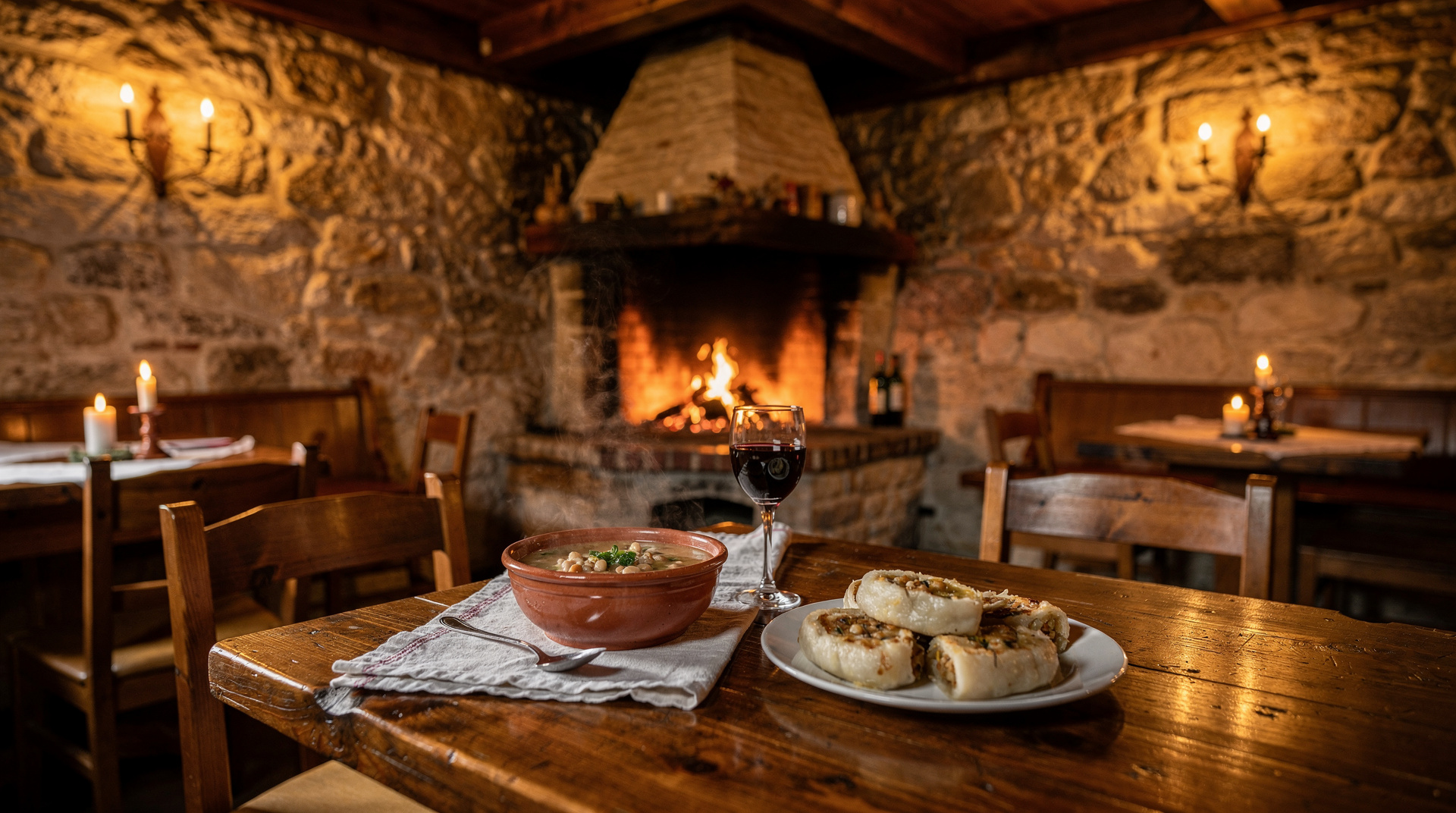
Gostilna As (Čopova 5) is the most respected gostilna in the city for food quality and wine list. Traditional dishes executed with real care — štruklji that are made fresh, trout from Slovenian rivers, seasonal game. The natural wine list is extensive. Mains EUR 16–26. Book ahead, particularly on weekends. The garden terrace is one of the better outdoor eating spaces in the city.
Šestica (Slovenska 40) is the best traditional gostilna for everyday quality at honest prices — žganci, štruklji, goulash, Kranjska klobasa, daily soup. Mains EUR 10–14. No pretension, consistent, popular with Ljubljana residents at lunch.
Strelec (Ljubljana Castle) has the most dramatic setting in the city — a medieval tower restaurant with views over the rooflines of Ljubljana. The kitchen updates traditional Slovenian dishes: game birds, trout, local vegetables prepared with more technique than a standard gostilna. Mains EUR 22–32. A special-occasion restaurant rather than an everyday choice.
Falafel (Trubarjeva) is a small counter that serves the best cheap lunch in Ljubljana’s old town — falafel wraps, hummus, fresh salad, EUR 5–7. Queues at noon. Worth it.
Pop’s Place (Čopova) has become the city’s best-known burger, using Slovenian beef, local bread and house-made sauces. The product is excellent; the queue at midday reflects genuine popularity rather than tourist confusion.
Pri Skofu (Rečna 8, near the Tivoli park) is the Ljubljana gostilna that locals cite most often as their favourite: old-fashioned, unhurried, with excellent seasonal cooking, a short wine list and prices that reflect none of the old-town premium. Booking essential.
Wine bars worth knowing
Dvorni Bar (Dvorni trg) stocks one of the deepest selections of Slovenian wine in the city — the Brda and Vipava producers are well-represented, and the owner’s knowledge is genuine. Light food available. Open until midnight.
Vino-Vino (Mestni trg) is the natural wine specialist: predominantly Slovenian and Italian natural producers, small plates, a terrace overlooking the river. Busy on Friday evenings.
Movia Wine Shop (Mestni trg) is the Ljubljana outpost of the Goriška Brda producer — you can buy Movia wines at cellar price and taste the current releases. Not a bar per se, but a good stop for an informed tasting before buying.
Neighbourhood eating map
Mestni trg and Stari trg (old town) contain the highest concentration of restaurants and wine bars but also the highest tourist-facing markup. Eat here once for the setting; eat elsewhere for value.
Trubarjeva and Prečna are the streets behind the old town where the local lunch crowd gravitates — cheaper, less polished, genuinely representative of how Ljubljana residents eat at midday.
Tivoli area (streets around the park) has several of the best gostilne including Pri Skofu — less visited by tourists, lower prices, longer menus.
BTC City area (outer city) is where the supermarkets, large food courts and chain restaurants are. No reason to venture here for food unless you specifically need a major supermarket.
Eating with a budget
Ljubljana is not cheap by Balkan standards but is significantly cheaper than Vienna, Zurich or Paris. A realistic food budget:
Breakfast at a café: EUR 4–6 (coffee and pastry). Market snack lunch (cheese, bread, sausage from the market stalls): EUR 8–12. Lunch at a mid-range gostilna with wine: EUR 20–28 per person. Dinner at Gostilna As with a glass of wine: EUR 35–45 per person. Open Kitchen dinner (three vendors, a glass of wine): EUR 20–28.
The cheapest good eating in Ljubljana is the market in the morning and the Open Kitchen on Friday afternoons. The most expensive is not the fine dining restaurants but the tourist-terrace gostilne along the river colonnade, which charge premium prices for mediocre food in a good location.
Where to eat, by budget
For visitors who want the shortest possible decision path rather than reading the full neighbourhood breakdown, this table maps budget tier to the specific places already covered above.
| Budget | Where | What to expect |
|---|---|---|
| Under EUR 10 | Market sausage stall, burek counters, Falafel | Cash, no seating or standing-room only, fast |
| EUR 10–20 | Šestica, Open Kitchen (2–3 dishes) | Traditional gostilna cooking or street-food variety |
| EUR 20–35 | Pri Skofu, Dvorni Bar with food | Real gostilna dinner or wine-bar small plates |
| EUR 35+ | Gostilna As, Strelec | Special-occasion cooking, booking essential |
The honest pattern across every price tier is the same: the further you get from the immediate Mestni trg riverfront, the better the value at a given price point, because you stop paying for the view.
Honest notes
River terrace restaurants: The restaurants along the Ljubljanica embankment are the most photographed eating spots in Ljubljana. Some serve genuinely good food; many do not. The location premium is real. Check reviews specifically for the kitchen rather than the view — a couple of the best-reviewed spots on the embankment have menus that significantly underperform their settings.
Weekend market hours: The Central Market is closed on Sundays and Monday. Plan your market visit for a Tuesday or Friday morning.
Booking ahead: Ljubljana is a compact city and the best restaurants fill up quickly in summer. Email or phone ahead for Gostilna As, Strelec and Pri Skofu. For the Open Kitchen, no booking is required.
Dietary restrictions: vegetarians are well served in Ljubljana — most gostilne offer at least one meat-free štruklji or mushroom dish, and the market and Open Kitchen make plant-based eating genuinely easy. Vegan options are more limited at traditional gostilne but increasingly available at the newer wine bars and at several Open Kitchen stalls. Gluten-free diners should be cautious with štruklji and potica (both wheat-based) but will find plenty of grilled meat, fish and vegetable dishes to build a meal around; mention “brez glutena” when asking.
Street food and quick lunches
Beyond the Open Kitchen and the gostilne, Ljubljana has a functional street food culture for quick, cheap lunch:
Burek: the Balkan flaky pastry filled with cheese (sirovi burek) or meat is available at several burekarna counters in the city — most reliably at the Olimpija burekarna near the main market and at the Šumi burekarna on Trubarjeva. A proper Balkan burek costs EUR 2–3 and is filling, hot and good. Not a Slovenian dish historically but thoroughly embedded in Ljubljana’s everyday food culture.
Palačinke (crêpes): thin crêpes filled with jam, Nutella or cheese, available at street stalls in summer near the river. EUR 2–4.
Sausage stalls at the market: the covered market’s meat section sells cooked Kranjska klobasa for immediate eating — sliced, on a piece of bread, with mustard. EUR 3–4. The best quick market lunch.
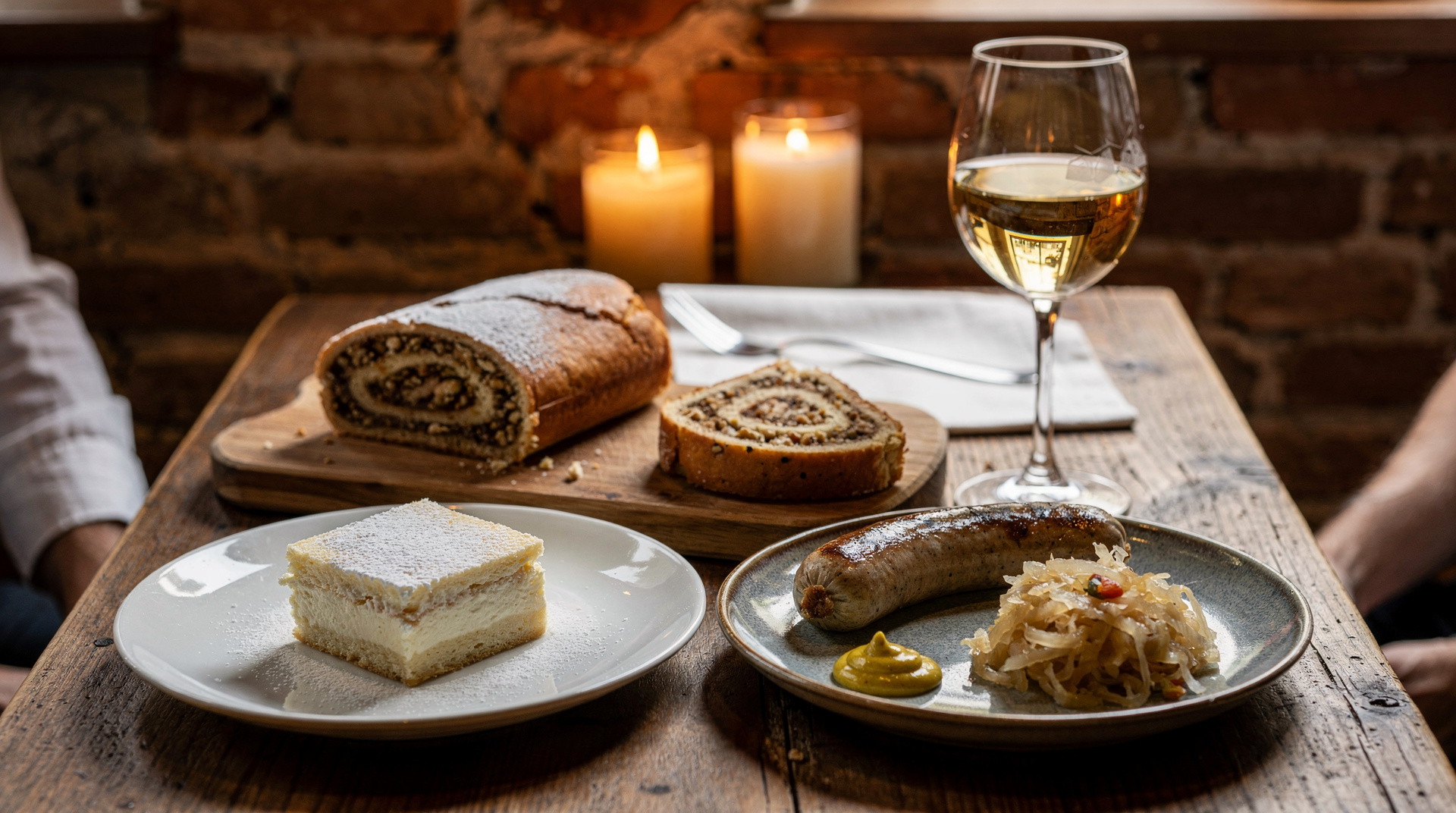
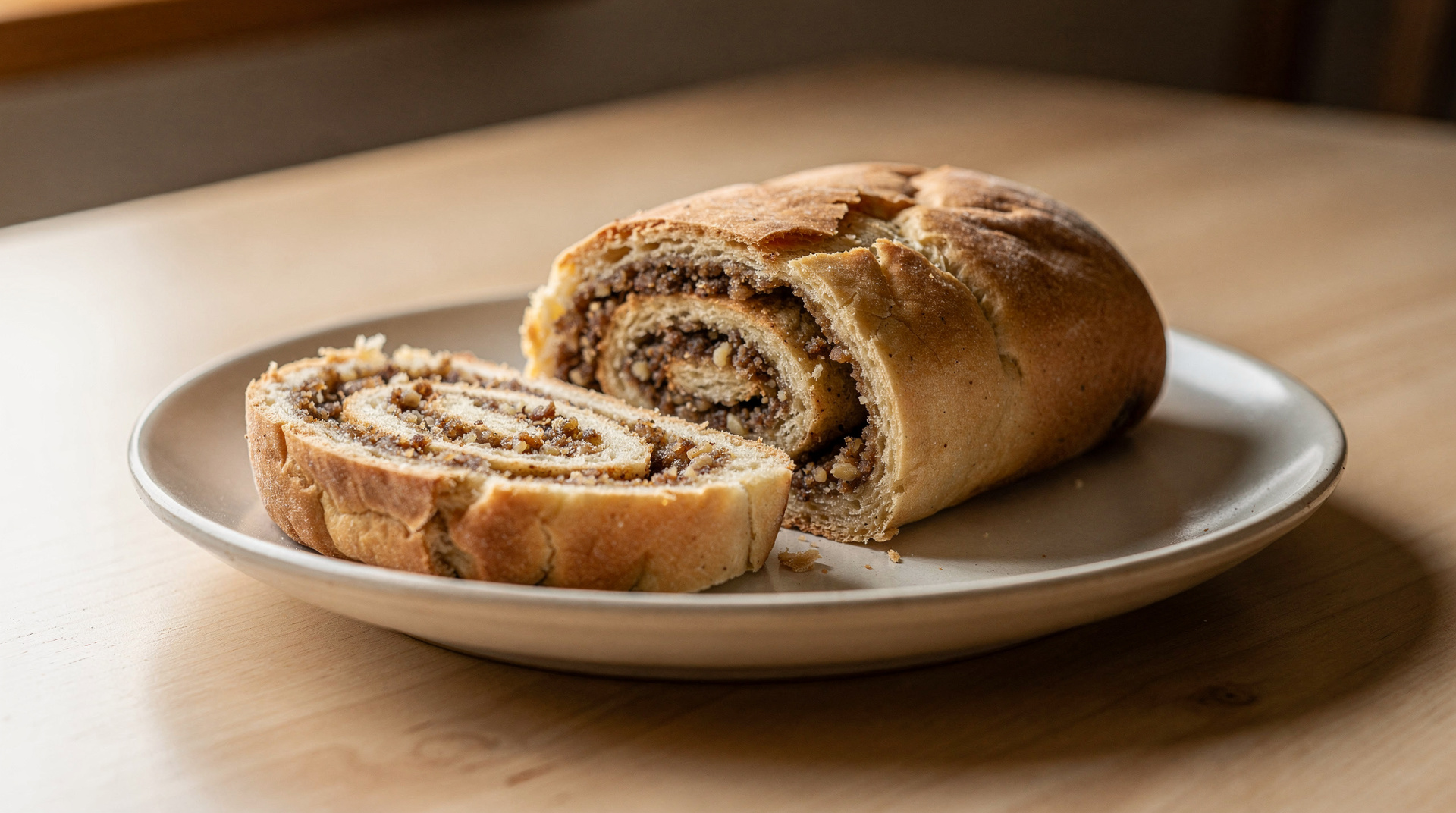
Potica for a sweet finish: if any of the quick lunches above leaves room for dessert, a slice of layered walnut or tarragon potica from a market bakery or old-town café is the natural next stop — see the potica and desserts guide for where to find the best versions and what fillings to look for.
The Ljubljana food scene by neighbourhood
Old town (Stari trg, Mestni trg): the tourist circuit. Highest prices, mixed quality, best setting. Eat here once for the atmosphere.
Behind Trubarjeva (Tabor area): where Ljubljana residents eat at lunch. Lower prices, no view, genuinely good. Pri Skofu is in this zone.
Tivoli park area: traditional gostilne for neighbourhood regulars. Pri Skofu and similar.
Metelkova area (near the Train Station): more student-oriented — cheaper, more international options, livelier at night. Good for a late dinner after arriving by train, and the natural place to continue the evening — see the Ljubljana nightlife guide for what happens after the kitchens close.
Šiška (northwest of centre, 15 min by tram): a residential neighbourhood with local gostilne that have no tourist traffic at all. Worth the tram ride if you want to see how Ljubljana residents eat in their own neighbourhoods.
Coffee and afternoon culture
Ljubljana’s café culture is Central European in tempo — seated, unhurried, with coffee as a social ritual rather than a functional stimulant. The best coffee in the city is at the independent roasters:
Čuk Coffee (Trubarjeva): single-origin espresso and filter, one of the more technically precise setups in the city.
Kavarna Rog (Herrmann square area): old-fashioned Ljubljana café with excellent cakes and a good house espresso.
Čajna hiša (Stari trg): tea house rather than coffee, with an excellent selection of Central and East Asian teas alongside the pastry menu. Worth knowing about if you prefer tea to coffee.
The standard Slovenian café order is a small espresso (kavica) and a glass of water. Asking for a “flat white” will be understood in most Ljubljana cafés; a “cortado” less reliably so. In a traditional café, just order a kavica — the espresso will be good.
For an evening drink option beyond wine bars, Ljubljana also has a small but genuine craft beer scene worth knowing about — see the craft beer in Slovenia guide for the taprooms and bottle shops worth a detour.
Food festivals and seasonal events in Ljubljana
Ljubljana’s food calendar has several fixed points worth planning around:
Open Kitchen (March–October, every Friday): the baseline food event, already covered above. The opening day in late March is particularly well-attended, with producers celebrating the season restart.
Taste Ljubljana (September): an annual food and wine festival in the old town, typically running over a long weekend in early September. Local and regional producers, restaurant participation, cooking demonstrations. More curated than the Open Kitchen but also less spontaneous.
Ljubljana Christmas Market (late November–January 1): primarily a festive market on Kongresni trg and surrounding squares, with food stalls heavy on mulled wine, grilled sausages, and winter pastries. The best food stalls are the ones from regional producers (Prekmurje gibanica, honey products, artisan chocolate) rather than the generic Christmas-market fare.
Ljubljana Restaurant Week (twice yearly, usually April and October): a fixed-price restaurant week where participating restaurants offer three-course menus at a reduced price. Good opportunity to try higher-end Ljubljana restaurants at a lower entry point; the participating list changes each year.
The Ljubljana food tour: what a guide adds
Self-guided market and restaurant exploration is entirely feasible in Ljubljana — the city is small and the market is straightforward to navigate. What a guided food tour adds:
Context for unfamiliar products. Without knowing what Tolminc is, you might walk past the cheese stalls without stopping. A guide identifies what to buy and why it is distinct from generic Alpine cheese.
Access to producers. The best market stallholders are more forthcoming about their products when a guide makes the introduction. Some artisan producers are reluctant to engage with tourists who do not speak Slovenian; a guide bridges the gap.
Neighbourhood navigation. The gostilne and wine bars that Ljubljana residents use are not the ones with English-language websites. A guide takes you to Šestica, Pri Skofu, or the specific honey producer who has been at the same market position for 25 years — none of which are in the standard tourist circuit.
The closed-Monday problem. The Central Market is closed Monday. A guided tour on any other day is not affected, but a self-guided Monday morning market visit will be frustrating. A good guide will redirect to alternative food experiences when the market is closed or quiet.
The traditional Slovenian flavours experience is the most comprehensive guided option and includes the market, gostilna culture, and traditional dishes in a structured session that gives the best overall picture of what Ljubljana’s food culture actually is.
The Slovenian food guide covers the broader national food culture. The Ljubljana Central Market guide covers the market in detail. The gostilna dining guide covers the traditional inn culture with restaurant recommendations beyond Ljubljana. If you’re only in the city for a single day, the one-day Ljubljana itinerary shows exactly where the market and a gostilna lunch fit around the sightseeing.
Frequently asked questions about Ljubljana food tour guide
Do I need to book Ljubljana restaurants in advance?
For the top gostilne — Gostilna As, Strelec and Pri Skofu — yes, especially for weekend dinners and the summer season, when tables fill days ahead. Casual spots like Šestica, the burek counters and the Open Kitchen need no booking at all; just show up.Is Ljubljana food expensive compared to other European capitals?
No — Ljubljana is noticeably cheaper than Vienna, Zurich or Paris, though not as cheap as Balkan capitals further south. A full sit-down dinner with wine typically runs EUR 25–45 per person, and the market plus Open Kitchen route can bring a full day of eating well under EUR 30.
Top experiences
Bookable activities with verified prices and instant confirmation on GetYourGuide.