Kobarid: WWI history and Soča Valley soul
Kobarid combines a prize-winning WWI museum, the outdoor Isonzo Front walk, and the Soča River's best swimming. Honest guide with EUR prices and seasonal
Rafting tour in Bovec/Kobarid with photos
Quick facts
- Best time to visit
- May–October
- Days needed
- 1–2 days
- Getting there
- Car from Ljubljana (1h 45min); bus to Bovec stops here
- Budget per day
- EUR 55 to 120
Where a military catastrophe became a place of pilgrimage
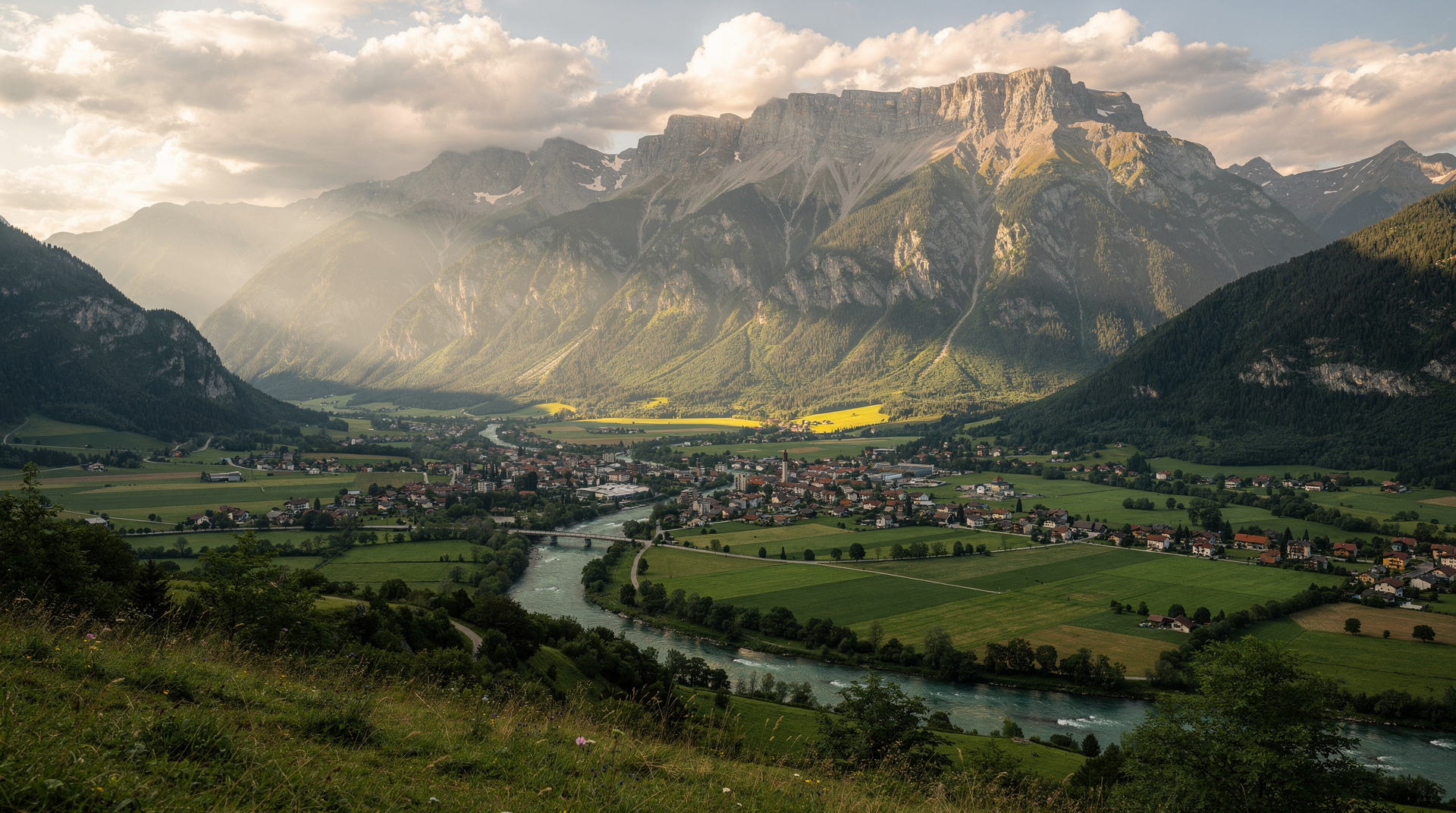
Kobarid (known in Italian as Caporetto) sits in the middle Soča Valley at 233m, surrounded by mountains that still bear the scars of one of WWI’s defining battles. In October 1917 the Austro-Hungarian and German forces launched an assault here that broke the Italian lines and sent 400,000 Italian soldiers into retreat — an event that Hemingway, serving as an ambulance driver nearby, immortalized in A Farewell to Arms. The Battle of Caporetto changed the war; the town itself never quite recovered its pre-war population, but what remained was slowly shaped into one of the most thoughtful memorial landscapes in Central Europe.
Today Kobarid is a small town of about 1,200 people that has found a balance unusual in Slovenian tourism: it is genuinely visited for its history and food rather than being engineered for mass tourism. The main square has a fountain, a church, a few restaurants, and the museum that earned the Council of Europe Museum Prize in 1993 — a recognition as notable as any architectural award in the region. It is also the calmest base in the Soča Valley for visitors who want outdoor activity without the full adrenaline culture of Bovec.
| Elevation | 233m |
| Population | Around 1,200 |
| Getting there | Car from Ljubljana (1h45); summer buses to Bovec stop here |
| Museum entry | EUR 8 adults, EUR 6 students |
| Best for | History, food, gentler river activities than Bovec |
The Kobarid Museum
The Kobarid Museum, on the main square in an 18th-century palace, covers the Isonzo Front campaigns of 1915–1917 — eleven battles fought along the Soča River between Italian and Austro-Hungarian forces before the Caporetto breakthrough. The exhibitions use original equipment, maps, photographs, and personal testimonies to trace the logic of industrial-era mountain warfare with unusual clarity.
What distinguishes the museum from conventional military museums is its tone: neither nationalistic nor sanitized, it addresses the scale of the casualties (500,000 dead, another half-million wounded or captured across all eleven battles) with a directness that most European war memorials avoid. Plan 90 minutes minimum. Admission EUR 8 adults, EUR 6 students. Audio guides available in multiple languages.
The museum shop sells a detailed trail map for the outdoor WWI Walk, which is essential for navigating the fortifications above town.
The WWI Walk and Italian Ossuary
The 5km outdoor walk (3h loop, free) departs from the museum and climbs through chestnut forest to the Italian Ossuary, a white-domed memorial church on the hill above Kobarid that contains the remains of 7,014 Italian soldiers — ranks, names where known, dates of death. The church has been adapted as a memorial space without being converted away from its religious function; the effect is genuinely moving.
From the ossuary the trail continues to surviving bunker networks, observation points, and the remains of supply roads blasted into the limestone cliffs. The mountain views from the upper waypoints extend across the valley to the peaks that formed the front line. In autumn the chestnut forest is exceptional.
The walk is manageable for most fitness levels. In wet weather the upper section becomes slippery — trail shoes are sufficient but sandals are not. Trekking poles help on the descent if you have them.
Waterfalls: Kozjak and the hidden valley
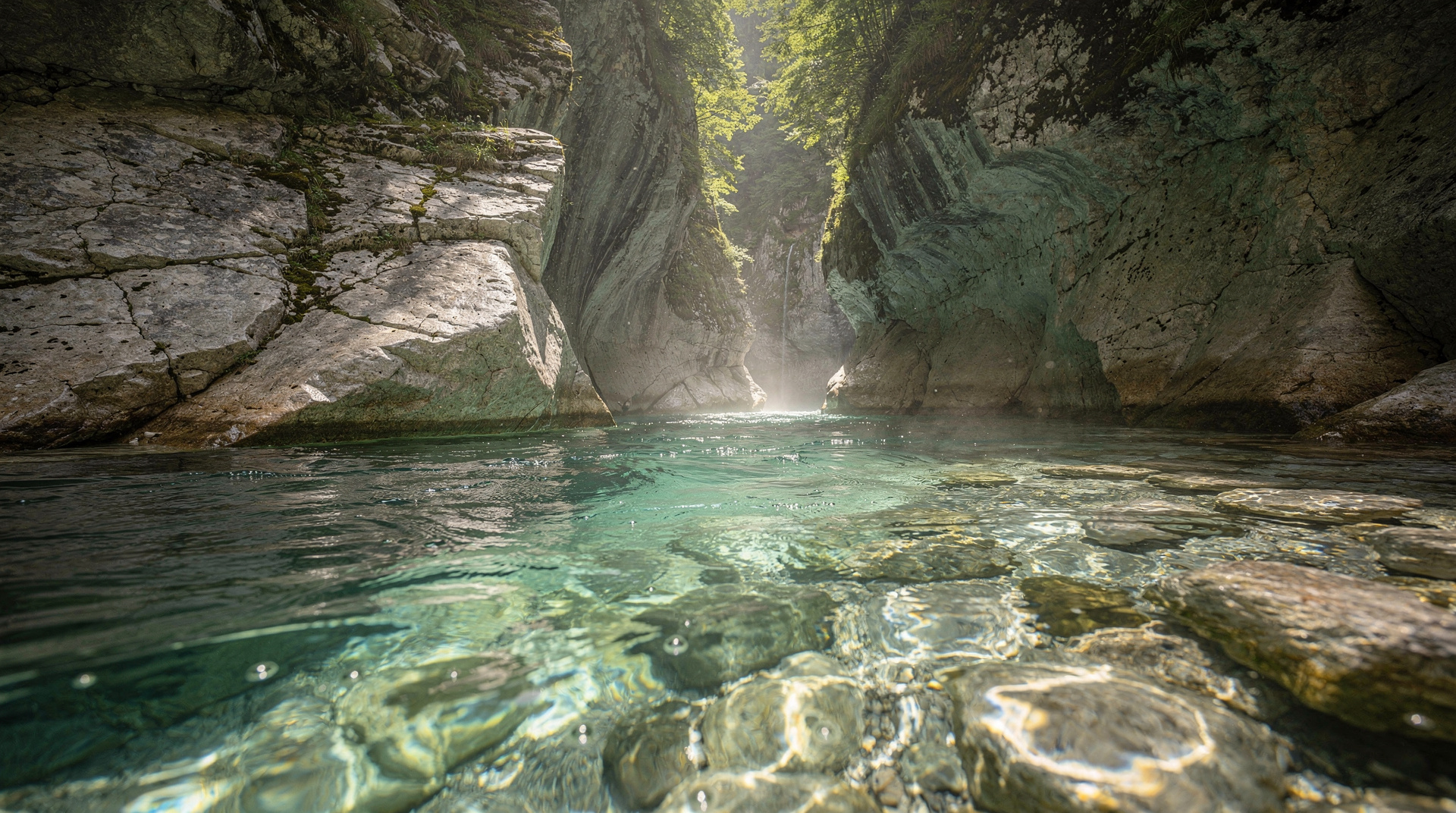
Three kilometres north of Kobarid, the Kozjak Waterfall is one of the most beautiful short hikes in the Soča Valley. The trail (1h return, minimal ascent) follows a narrow canyon cut by the Kozjak stream through karst limestone, ending at a single-drop waterfall that falls into a perfectly circular emerald pool in a natural amphitheatre. The geology here is different from the Soča main channel — more intimate, the scale more human. In July and August the trail is busy in the afternoons; arrive before 10:00 or after 16:00 for the quieter version.
The approach is from the signed car park near the Napoleon Bridge north of Kobarid. Do not confuse it with the much less impressive waterfall signposted from the main road to Bovec — that is a different, shorter walk to a different, less dramatic feature. The Kozjak trail requires the specific car park 6km north of Kobarid; use the GPS coordinates if unsure.
The Soča at Kobarid
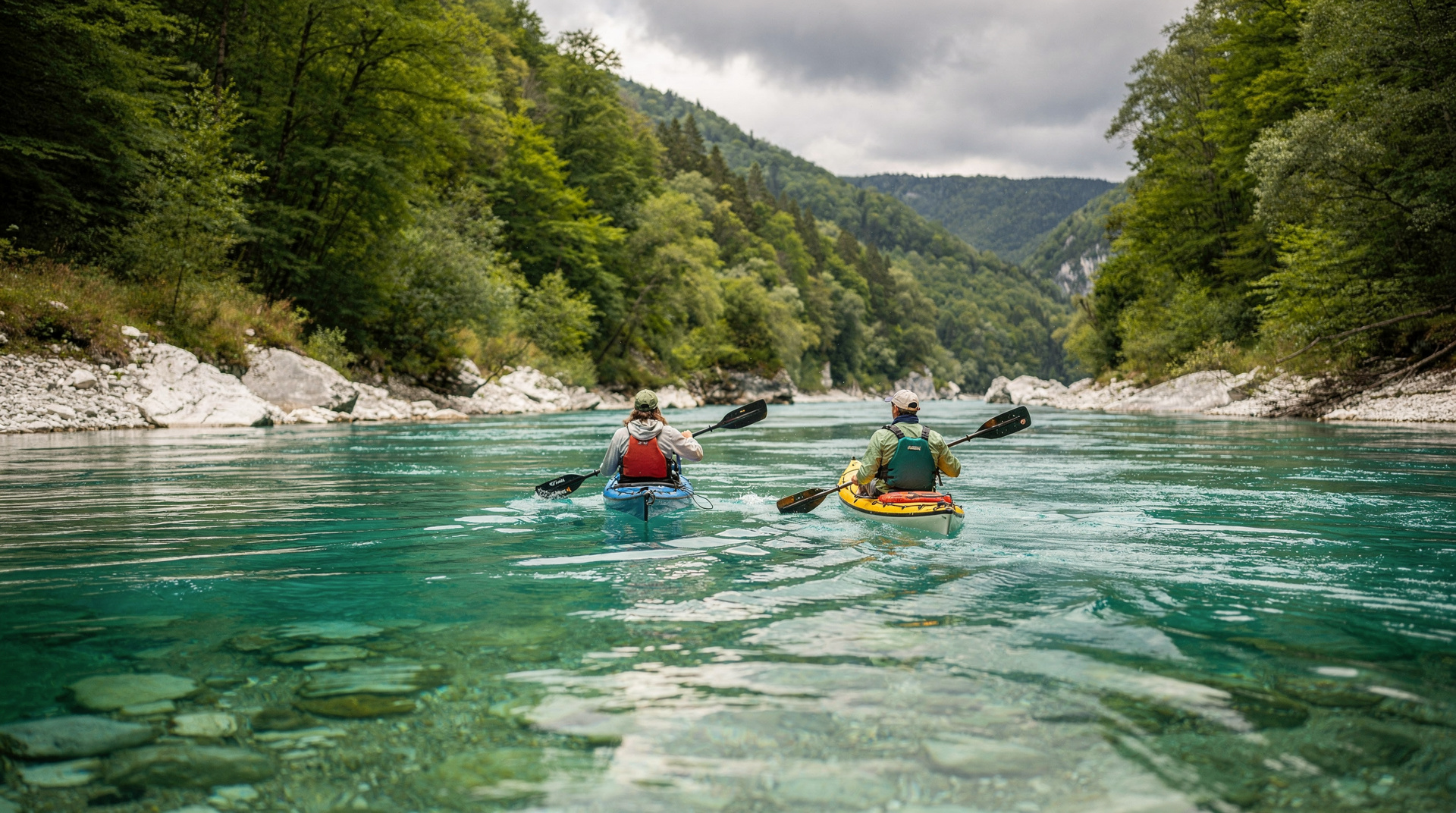
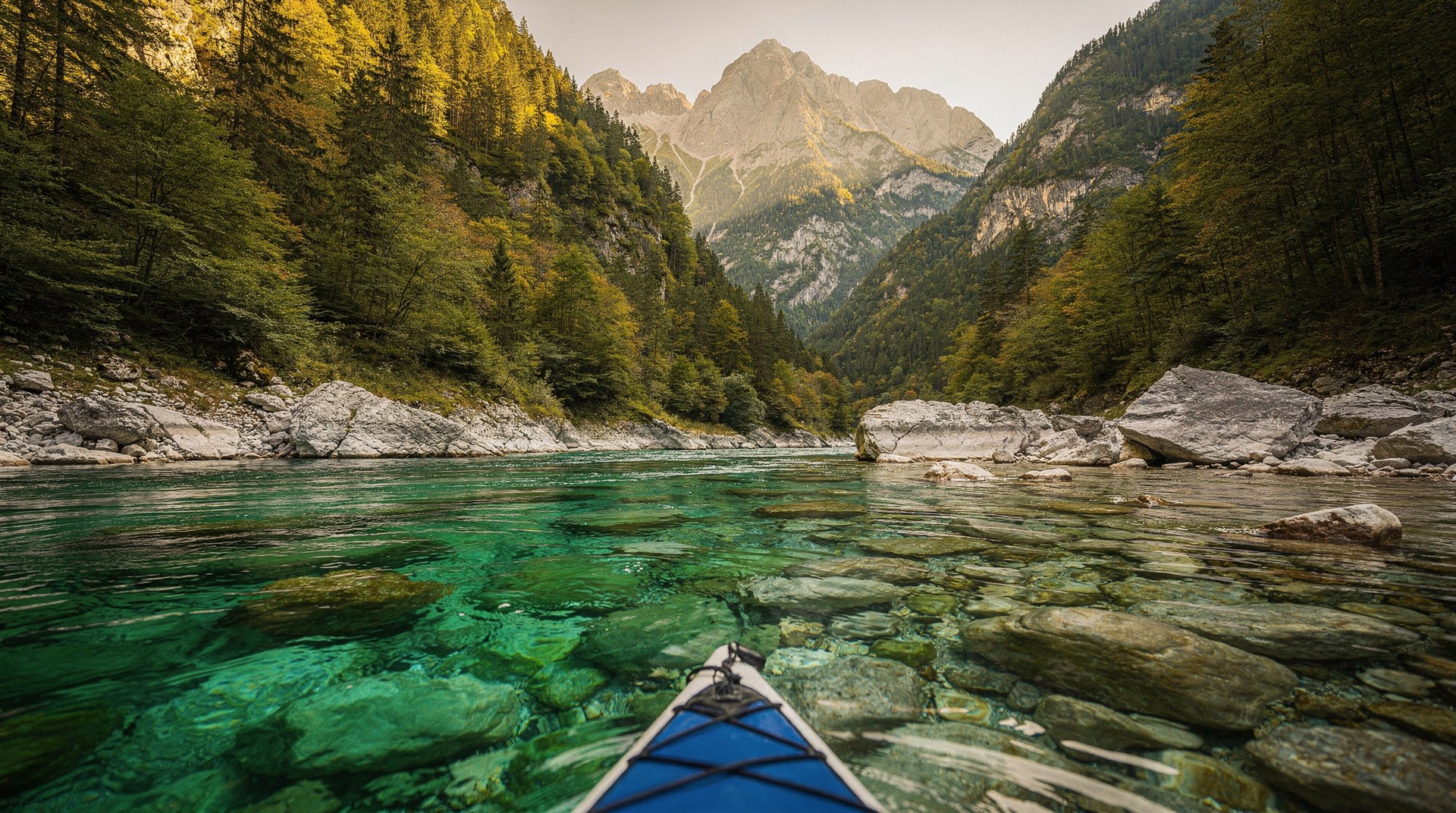
The Soča near Kobarid runs more gently than at Bovec — Grade I–II for most sections — which makes it the valley’s best destination for swimming, kayaking, and paddleboarding. The official swimming area below town is free, clearly marked, and supervised on summer weekends. Water temperature in July–August reaches 18–20°C.
Half-day rafting from Kobarid — gentler section, good for familiesFor kayakers, the stretch from Kobarid down to Tolmin (15km, Class I–II) is a beautiful half-day float through a valley that sees far fewer paddlers than the Bovec sections. Several operators run guided kayak trips on this section; rental is also available if you have experience.
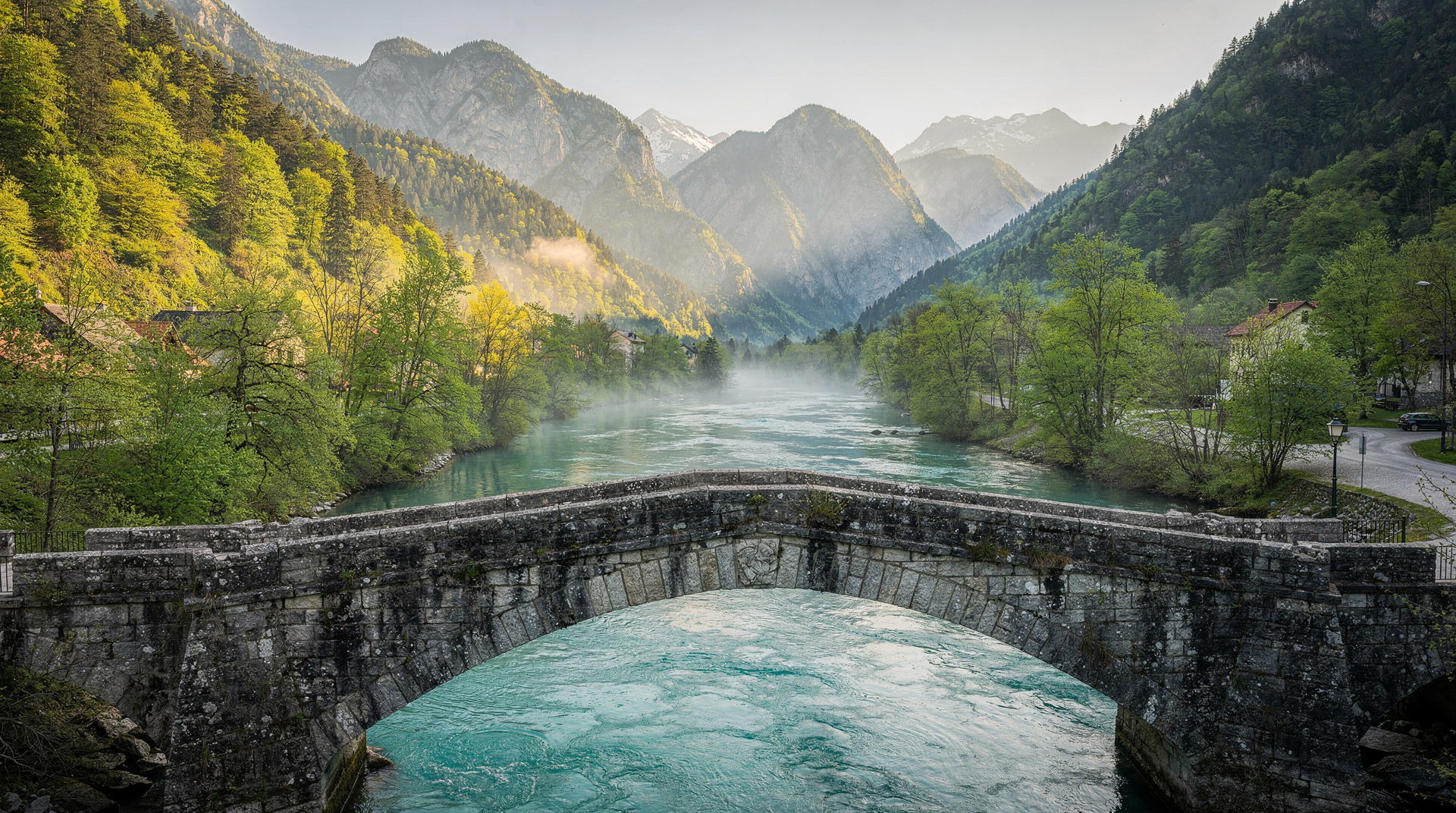
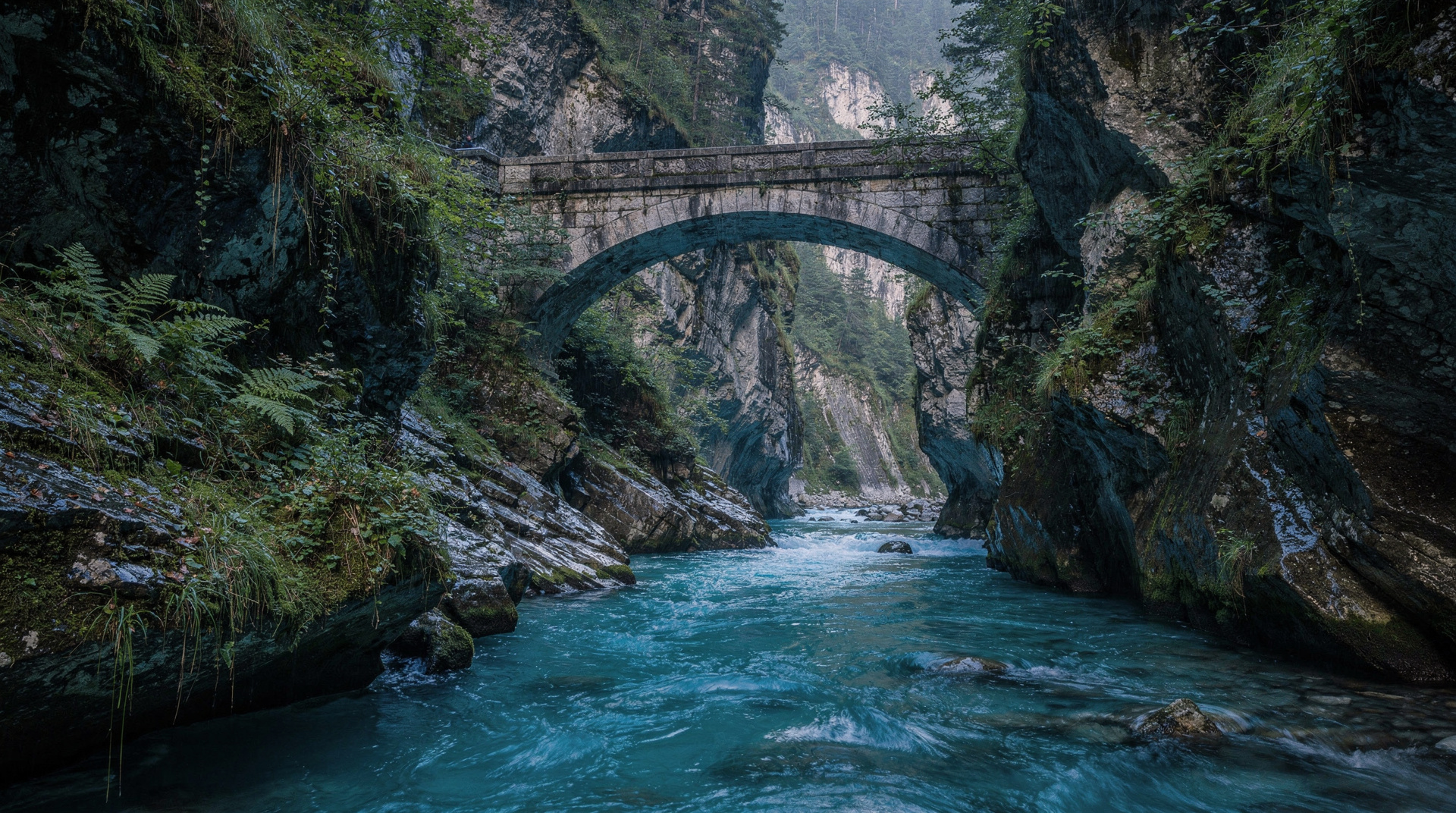
The Napoleon Bridge, 6km north of Kobarid at the confluence with the Nadiža, is an arched stone bridge used as a swimming and cliff-jumping spot in summer. The 8m jump is the tallest regularly used; not for the faint-hearted. The road to it is narrow; park in the signed layby and walk the final 500m.
If you are planning a wider stay in the valley, our Soča Valley day trip guide shows how Kobarid fits alongside the other stops, and the Soča trail hike is a natural companion for anyone who wants to follow the river on foot rather than float it. For a calmer take on the water, the kayaking the Soča River guide explains what to expect from the different stretches.
Hiša Franko and the food scene
Kobarid is home to Hiša Franko, run by Ana Roš, who in 2017 was named World’s Best Female Chef. The restaurant serves a tasting menu (EUR 130–170 per person, excluding wine) based on Soča Valley ingredients — river trout, foraged herbs, farmhouse cheese, and game from the surrounding mountains. Booking windows open three months in advance for summer weekends and are typically gone within hours. Mid-week slots in May, June, and September are more accessible. Don’t show up without a reservation.
For the rest of Kobarid’s food scene: Topli Val (mains EUR 14–22) is the most reliable all-day restaurant on the main square, serving solid Slovenian food without tourist markup. Kotlar (main square, mains EUR 12–18) does good grilled meat and has a terrace that fills up on warm evenings. The local bakery on the side street off the square opens at 7am and serves fresh bread, pastries, and hot burek for EUR 1.50–3.
Rafting and kayaking from Kobarid
The Kobarid sections of the Soča are family-friendly but not tame — the river still has character and pace, it is simply more forgiving than the Grade IV sections near Bovec. Half-day rafting tours from Kobarid run EUR 40–55 and are appropriate for children from around age 6. Many families in the Soča Valley find Kobarid a better base than Bovec precisely because the water activities are accessible without the intensity.
Guided kayaking on the Soča from KobaridThe best access point for kayak rental near Kobarid is the Kayak Center Soča, which has been operating on this section since the early 1990s and has good equipment. If you have intermediate kayak experience, the self-guided float from Kobarid toward Tolmin (15km, 3–4 hours depending on current) through remote valley terrain is excellent; the river is not technical but the scenery is stunning and the crowds are nonexistent.
Day trips from Kobarid
Kobarid’s central valley position makes it ideal for day trips in multiple directions:
Robič and the Italian border: 8km west of Kobarid, the small village of Robič sits at the confluence of the Nadža and Soča rivers and is used as a fly-fishing base. The border crossing into Italy is just beyond; Cividale del Friuli (Italy) is 20km west, a Roman city with a remarkable Lombard heritage museum that is entirely off the Slovenian tourist circuit.
Planina Kuhinja: A marked trail north of Kobarid climbs to a mountain pasture (planina) at around 1,600m with views across the upper Soča Valley toward Triglav. The ascent is 800m; plan 3 hours up and 2.5 down. The hut on the plateau serves basic food in summer (July–August only).
The Soča Source: 25km north, near Trenta, the Soča emerges from a cave in the mountains as a thin thread of clear water that gradually becomes the valley’s defining river. The source is accessible on foot from a marked trailhead (1h return, flat) and is one of those sites that makes a symbolic impression that the photographs afterwards never quite explain.
Hemingway and A Farewell to Arms
The literary connection to Kobarid is genuine and worth engaging with. Ernest Hemingway arrived in the Isonzo area in late May 1918 as an 18-year-old Red Cross ambulance driver — too late for Caporetto itself, which had happened the previous October, but in the aftermath of the battle and still within the war. The retreat he described in A Farewell to Arms is a fictionalized account of the Caporetto disaster, and the landscape descriptions match the Soča Valley with enough precision that readers with the novel in hand can trace Lieutenant Henry’s route through the valley.
The Kobarid Museum has a small section on the literary and cultural legacy of the Isonzo Front, including Hemingway, the Italian futurist Curzio Malaparte who also served here, and several Austrian writers who wrote about the campaign. Reading the relevant chapters of A Farewell to Arms before visiting the museum significantly deepens the experience — the museum assumes visitors have some prior knowledge of the battle’s narrative, and the novel provides it in more visceral form than any briefing note.
Kobarid vs Bovec: which base to choose
This is the most common question in the valley, and the honest answer depends entirely on what you want.
Choose Bovec if: you are here primarily for high-intensity water sports (Grade III–IV rafting, canyoning, paragliding). Most operators are based there. The atmosphere is organized around outdoor sport and you will meet other people with the same priorities.
Choose Kobarid if: you want history, better food, quieter evenings, and the option to do lighter river activities alongside hiking. The accommodation quality is slightly higher for the price and the overall experience is less adrenaline-focused.
Choose both: For a 3–4 night stay in the valley, two nights in each is optimal. Start in Kobarid (arriving from Ljubljana), do the museum and walk on day one, then drive to Bovec on day two for water sports. Return through Kobarid for dinner at Topli Val before continuing south.
If you are still deciding between the two bases, the Bovec adventure base guide lays out what the northern end of the valley offers in more detail, and the Soča adventure itinerary shows one way to split a longer stay between them.
Seasonal guide
May and June are the best months in Kobarid. The Soča runs full, the museum is uncrowded, the hiking is accessible without summer heat, and the restaurant terraces are not yet at capacity.
July–August is busy but not Bled-level overwhelming. Hiša Franko requires months of advance booking; Topli Val runs a queue at peak weekend dinner times. The museum adds two or three tour-bus groups per day but is large enough to absorb them.
September and October are outstanding. The Kobarid WWI walk is at its best in October — the chestnut forest is in full autumn colour, the light is golden, and there are essentially no tourists. Water temperature drops (16–18°C) but remains swimmable through most of September.
Practical information
Getting there: 30km south of Bovec (30min by car). From Ljubljana, the most direct route is 1h 45min via Tolmin or 2h via Bovec. Direct summer buses from Ljubljana stop at Kobarid en route to Bovec. There is no train access; the closest rail link is Most na Soči (25km south).
Accommodation: The town is small; accommodation options are limited but good. Hiša Polonka (same owners as Hiša Franko, EUR 140–180 double) is the best stay. Mid-range guesthouses Kamp Koren (4-star glamping and rooms, EUR 80–120) and Penzion Hvala (EUR 70–90) are reliable mid-range options. Book ahead for July–August weekends.
Medical and services: There is a basic health centre in Kobarid for non-emergency treatment. The nearest hospital is in Tolmin (20km south). Keep this in mind for adventure activities — your travel insurance should cover mountain rescue (EUR 200–500+ for a helicopter response).
Planning the drive: If you are renting a car for the valley, read the car rental guide and the vignette and driving guide before you set off, since the approach from Ljubljana is by road.
Day trip potential: Kobarid works well as a one-day stop between Ljubljana and Bovec. The museum and walk take half a day; add river swimming and a good lunch and you have a full day. If you’re doing the valley end to end, Kobarid deserves an overnight rather than a hurried stop.
Cycling from Kobarid
Kobarid is a good, less-crowded base for cycling the Soča Valley. The valley-floor road toward Tolmin (15km, gentle gradient, well surfaced) is manageable for casual riders, while the climb toward Livek and the WWI front-line villages above the valley is a serious workout that rewards with views across to the Italian side of the old front. E-bike rental is available in town and takes much of the difficulty out of the climbing routes; the Soča Valley e-bike explorer tour covers a full-day circuit through this terrain with support if needed.
For a shorter and flatter ride, the road along the Soča between Kobarid and the Napoleon Bridge is scenic and safe for families, with several spots to stop for a swim en route.
Combining Kobarid with the wider Soča Valley and beyond
Kobarid’s position in the middle of the valley makes it a natural hub for exploring in multiple directions without constantly repacking. North, Bovec is 30 minutes for the high-intensity water sports and the Kanin cable car. South, Tolmin adds the Tolmin Gorge and a quieter, lower-elevation stretch of the valley.
West, the Italian border towns (Cividale del Friuli, 20km) are an easy detour for those with a car and an EU-flexible itinerary. For those linking the Soča Valley to the rest of the Julian Alps, Triglav National Park and Kranjska Gora are reachable over the Vršič Pass in about 1h30–2h, weather and season permitting.
Frequently asked questions about Kobarid
Is Kobarid worth visiting if I’m not interested in WWI history?
Yes, though the museum is the single strongest reason to come. Even without the history angle, Kobarid offers gentler river activities than Bovec, one of Slovenia’s best restaurants (Hiša Franko), the Kozjak Waterfall walk, and a genuinely relaxed small-town atmosphere. Visitors purely chasing adrenaline sports should still base in Bovec, but anyone who wants a calmer valley base with good food will find plenty here regardless of interest in the museum.
Do I need to book Hiša Franko far in advance?
For summer weekends, yes — booking windows open three months ahead and fill within hours. Mid-week dates in May, June and September are considerably easier to get. If you can’t secure a table, Topli Val and Kotlar on the main square are solid, unpretentious alternatives at a fraction of the price.
For the full valley context, read our Soča Valley overview. For adventure activity details including the Bovec sections, see the Soča rafting guide. For itinerary ideas combining both Bovec and Kobarid, see our best time to visit Slovenia guide.
Top experiences
Bookable activities with verified prices and instant confirmation on GetYourGuide.