Soča River rafting guide: everything you need to know
Bovec: Soča River whitewater rafting
When is the best time to raft the Soča River?
April through October, with May–June peak for high water and the most intense Grade IV conditions. April sees cold water from snowmelt but dramatic flow. July–August is lower but warmer; September rises again with autumn rains.
| Where | Soča River near Bovec and Kobarid |
| Grade | III–IV (Bovec), II–III (Kobarid) |
| Cost | EUR 45–100 depending on trip length |
| Best season | May–June (high water) or September |
| Water temp | 10–13°C (May–June), up to 18°C (August) |
| Minimum age | Typically 7–10 depending on operator |
Why the Soča is Europe’s premier rafting river
The Soča runs 138km from its source below Mount Triglav to the Adriatic near Trieste, dropping fast through a landscape that changes from high alpine gorge to wide Karst plain. The section that matters for white-water sports is roughly 40km, from the upper canyon above Bovec down to the confluence at Most na Soči — a stretch that concentrates more technical rafting variety per kilometre than almost anywhere in the Alps.
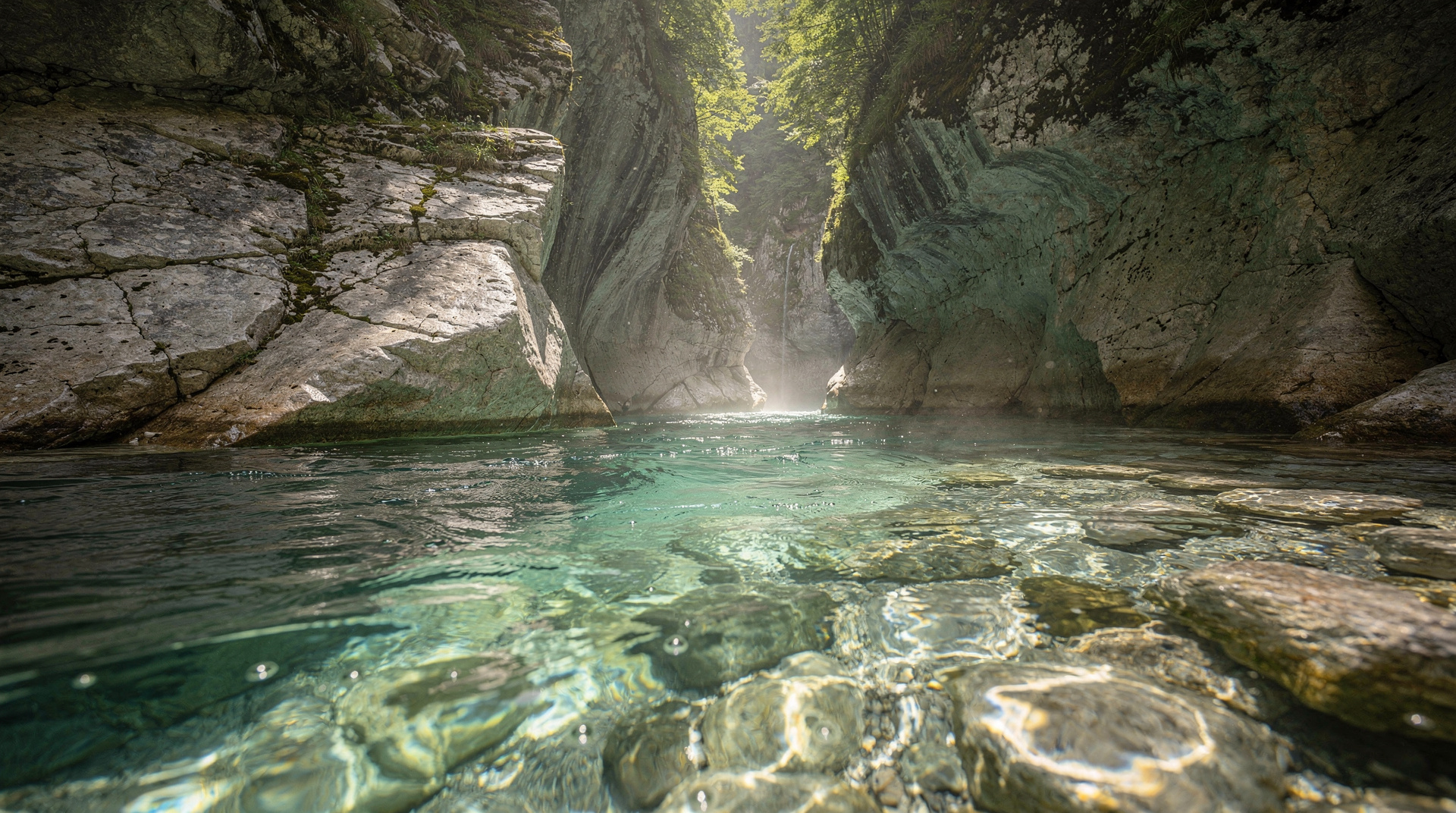
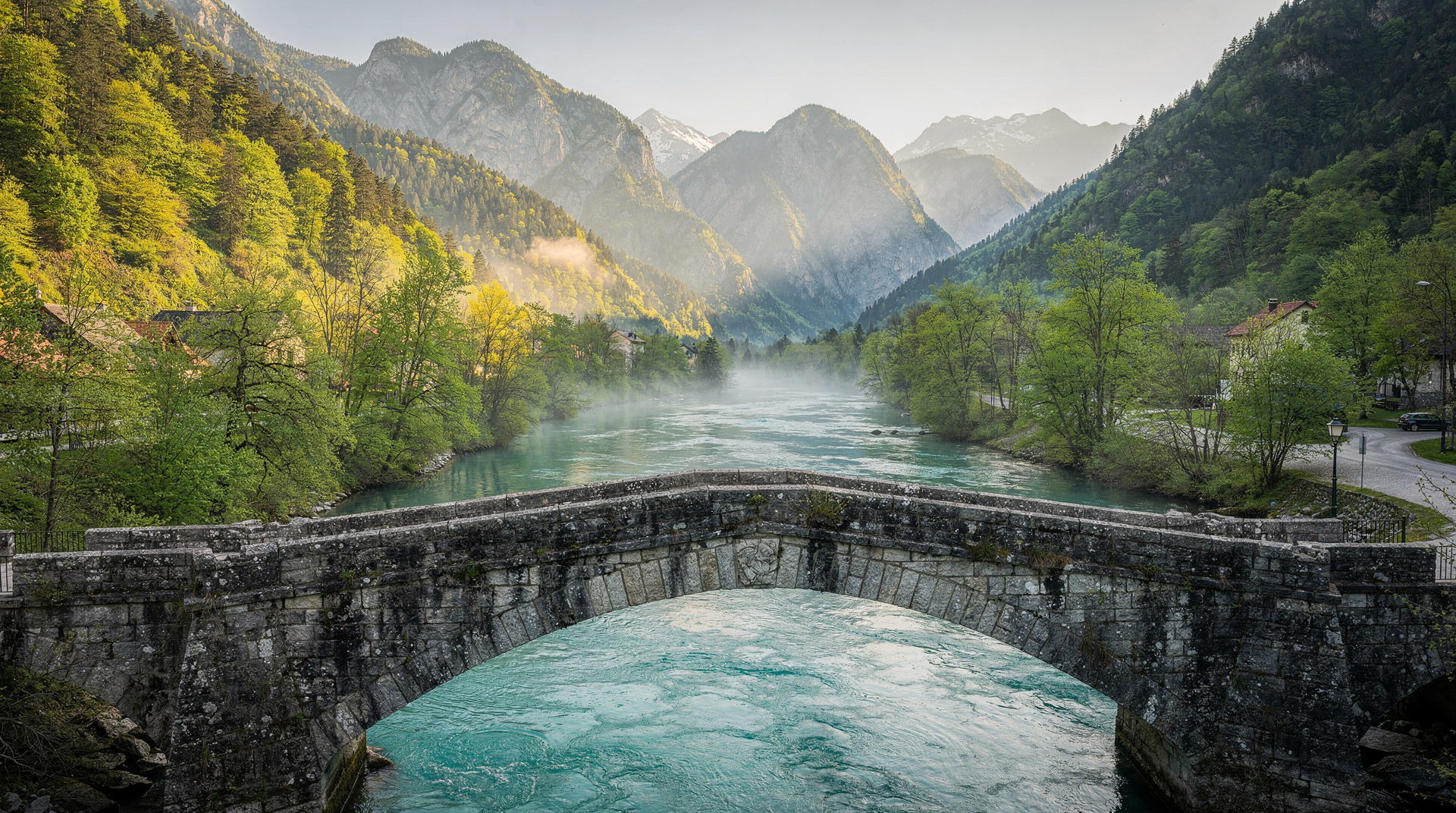
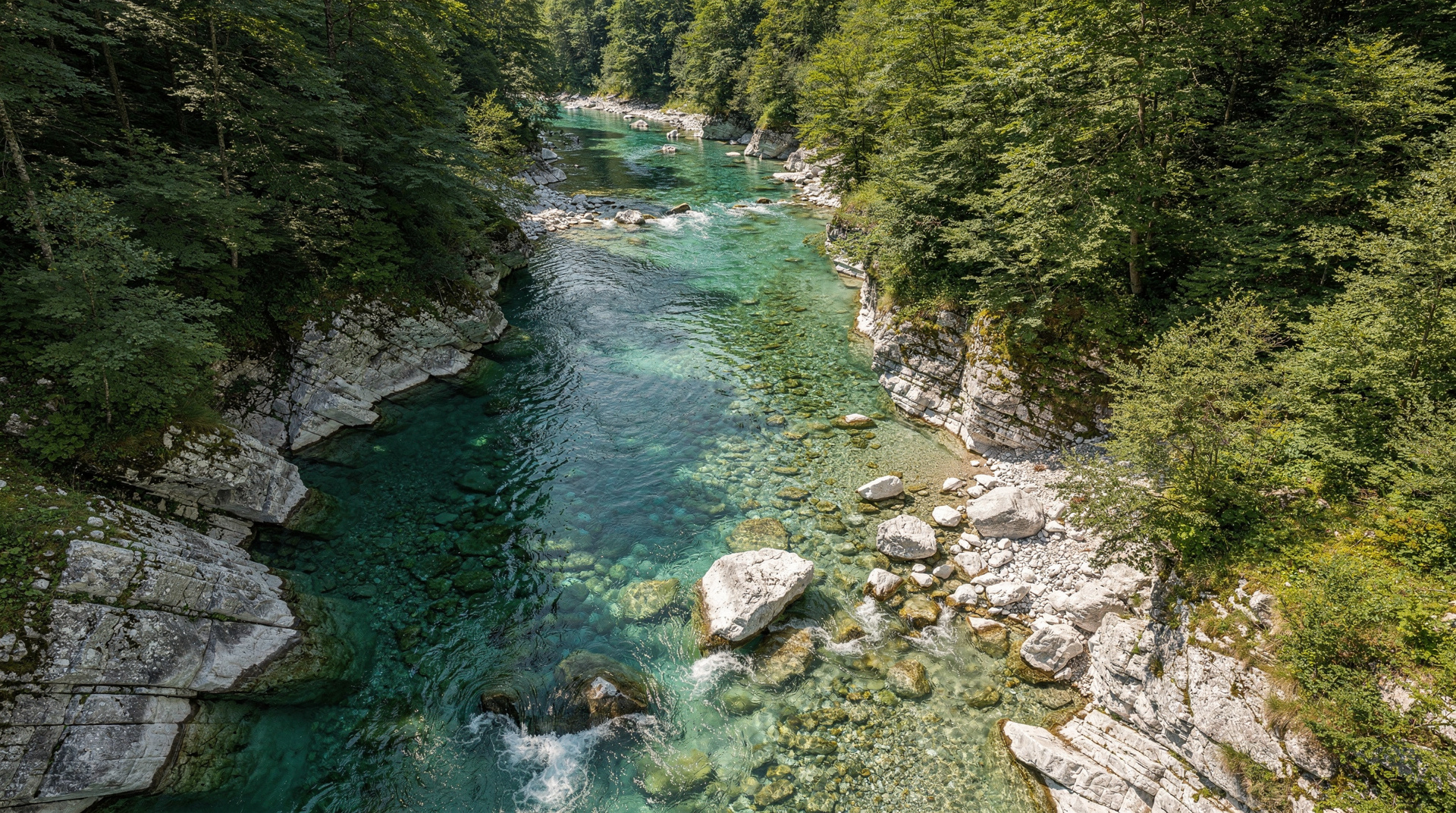
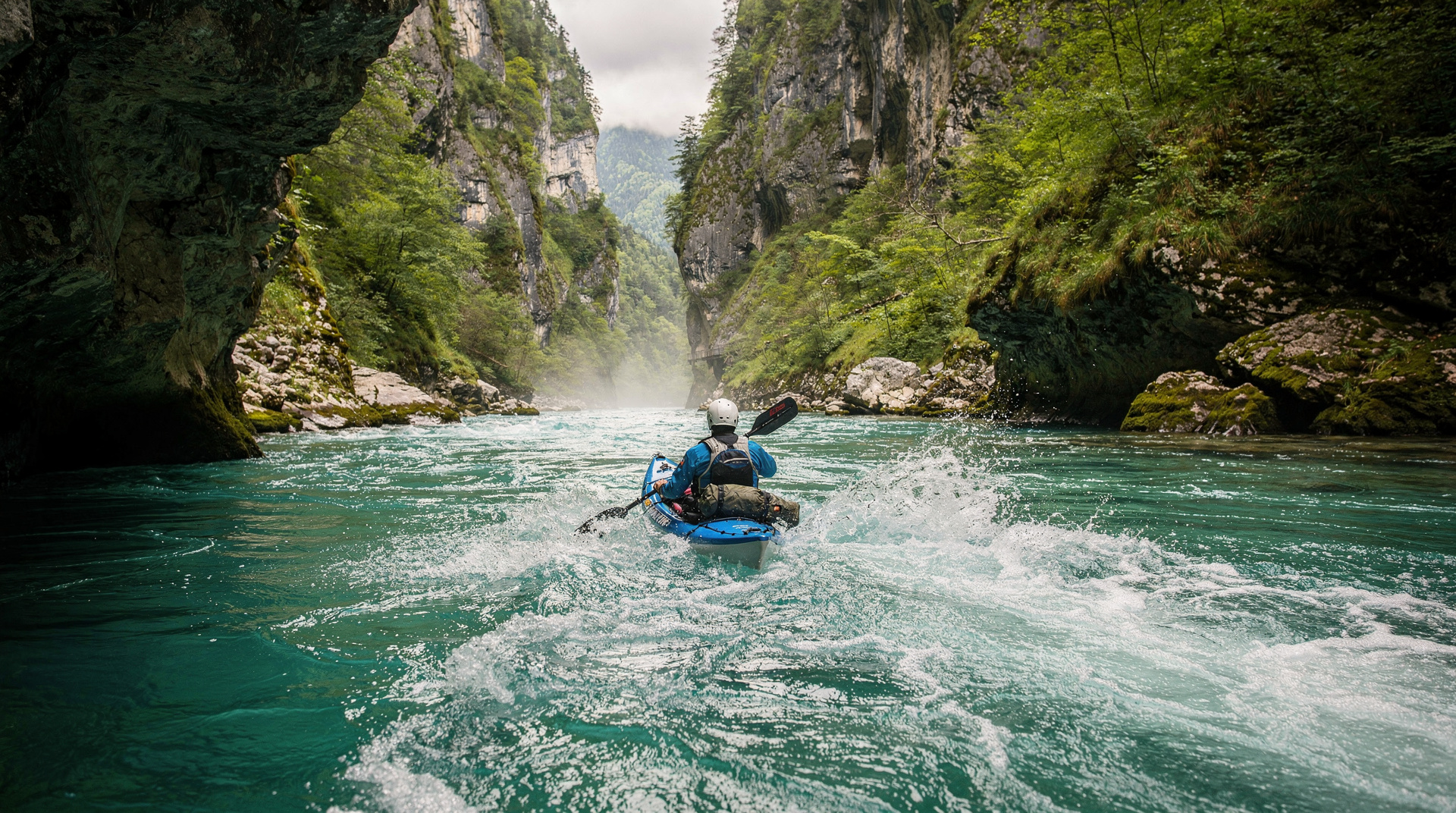
What sets the Soča apart from Central European rafting rivers is the colour. The water is a shade of turquoise-green that you have seen in photographs and assumed was a filter or post-processing. It is not. The colour comes from finely suspended limestone particles dissolved in the water, combined with exceptional clarity and the particular light angle of the Julian Alps. First-timers consistently name this as the surprise — they came for the rapids and stayed for the fact that the river looks luminescent.
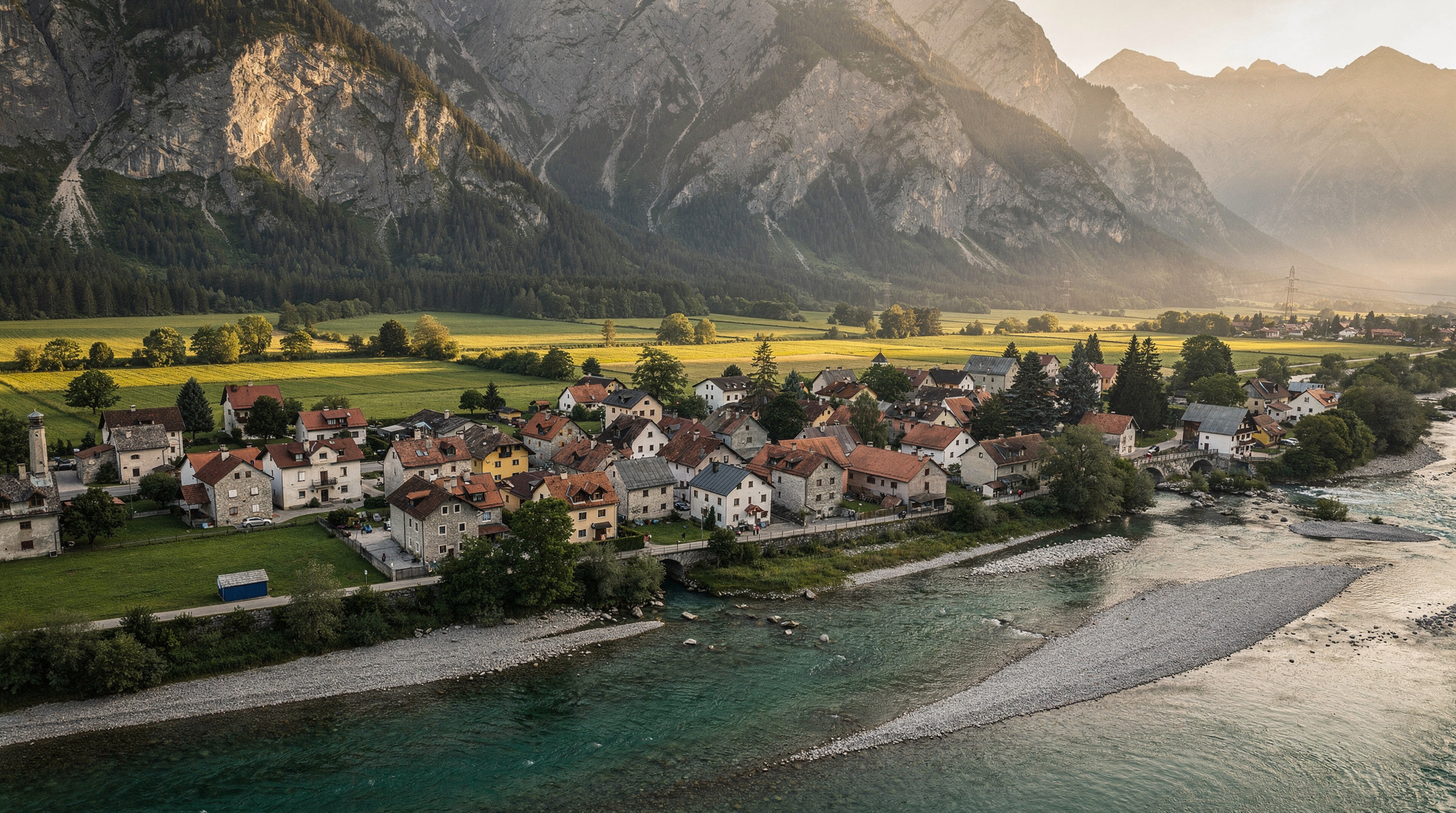
The surrounding landscape is Triglav National Park, which means the canyon walls above the main section are largely undeveloped. There are no riverside hotels or jet-ski rentals. The access points are farm tracks and small car parks. For a river this technically interesting, the wilderness quality is unusual.
The main sections explained
The Soča near Bovec is not a single-character river. The gradient varies significantly across the 40km stretch, which means you can choose your experience by choosing your section.
Upper Soča gorge (Grade IV): From the Soča source valley down through the Soča Gorge itself, the river threads between limestone walls that narrow in places to 10 metres. This section includes the most technical features: Pinzgauer hole (a hydraulic stopper that commercial guides navigate around rather than through), the Lepo Okno canyon section, and the final gorge series above Bovec. This is the section serious paddlers come specifically for.
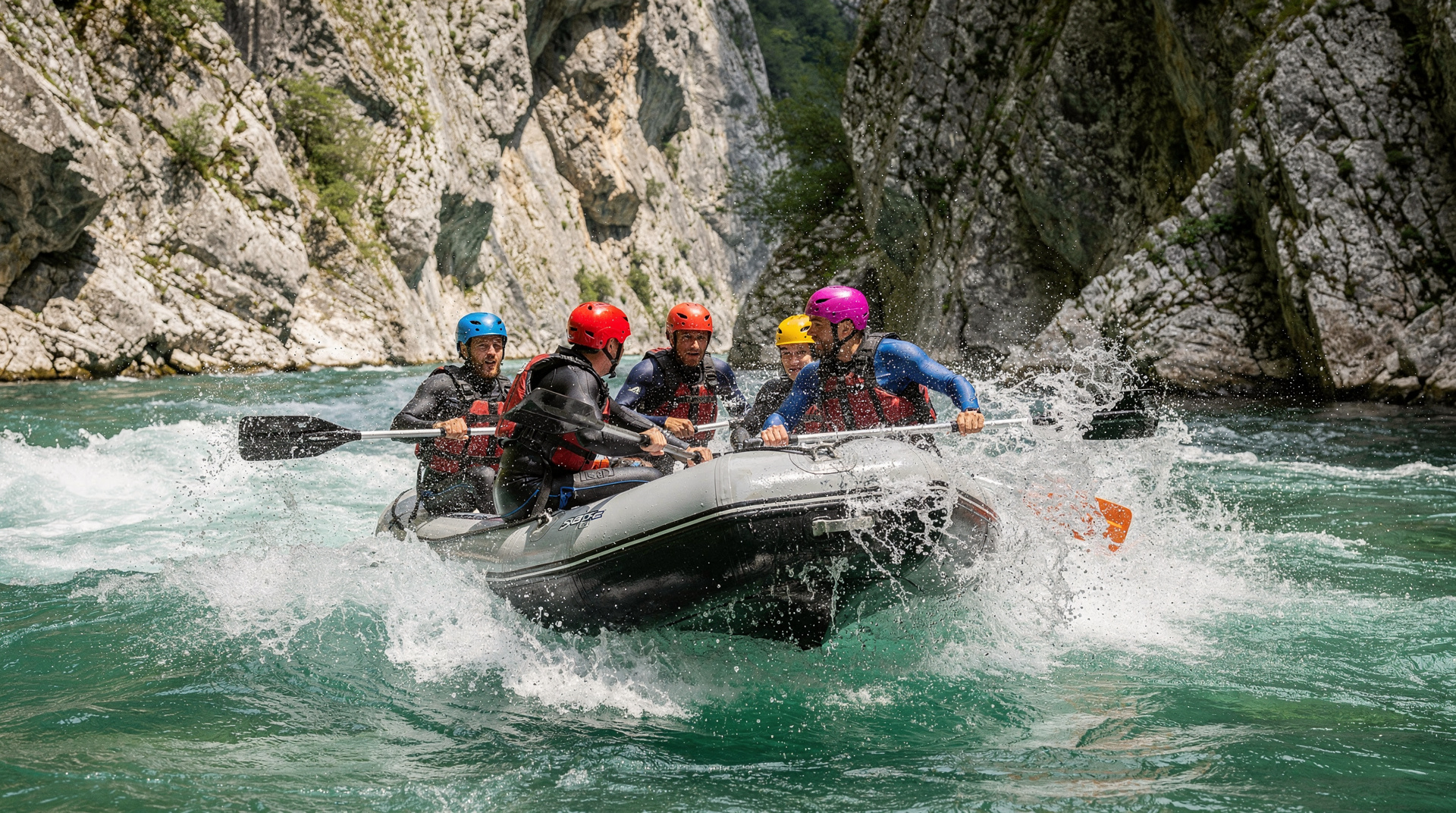
Bovec section (Grade III–IV): The most-booked commercial trip. Starting above Trnovo ob Soči and running to the Bovec basin, it covers around 10km with consistent Grade III rapids and several Grade IV sequences in high water. Travel time is 2.5–3 hours on the water.
Middle Soča toward Kobarid (Grade II–III): Below Bovec, the river opens out slightly. The Srpenica section and the stretch past Kobarid run cleaner and wider, with long pools between rapid sections. Better for beginners, more scenic in the wider-valley sense, and appropriate for groups with younger children.
Lower Soča to Most na Soči (Grade II): From Tolmin downstream, the river mellows considerably. Less used for commercial rafting but genuinely beautiful, popular with kayakers and stand-up paddleboarders.
What the season actually looks like
Understanding water levels is the key to planning a Soča rafting trip, and most generic travel guides oversimplify this.
April: Snowmelt from Kanin (2,587m) and the Julian Alps begins in earnest. River levels are often at their highest of the year. Water temperature runs 8–10°C. The most challenging conditions; some years the upper section is too high for commercial rafting and operators run modified trips. Always check current conditions before booking in April.
May–June: The sweet spot. Snowmelt continues but at a manageable rate. Grade IV rapids run as intended. Water warms to 12–15°C. Weather in the valley is generally good — warm enough to enjoy the experience, cool enough to make the wetsuit comfortable rather than stifling. Booking ahead is advisable, particularly for weekends.
July–August: Peak tourist season. River levels drop by roughly 40–60% compared to spring. The Grade IV sections become Grade III; the Grade III sections become technical Grade II. This is not a reason to skip — the experience is still excellent and the conditions are warmer (water 16–19°C, air 25–30°C). It is a reason to set expectations correctly. The canyon walls are just as dramatic whether the water is high or not.
September: Reliable. Autumn rains bring river levels back up, sometimes significantly. Water 14–16°C, crowds noticeably thinner than August, weather generally settled. Many experienced Soča paddlers consider September the best month to visit.
October: The season winds down. Some operators stop running after mid-October; others continue through month-end depending on weather and bookings. Water temperature drops back to 10–12°C. Worth checking ahead with operators.
Choosing an operator and trip format
There are perhaps 15–20 licensed rafting operators working the Soča Valley, concentrated in Bovec with several in Kobarid and a few in Tolmin. The differences between them are less dramatic than the marketing suggests. All use the same river sections, all are regulated by the same Slovenian guides association standards, and all provide equivalent kit.
What varies is group size, guide quality, and supplementary offerings.
Half-day trips (most common, 2.5–3h on water): EUR 45–65. These cover the Bovec section or a close variant. This is the right choice for most people visiting the Soča. Long enough to feel genuinely committed to the river, short enough to leave afternoon energy for other activities.
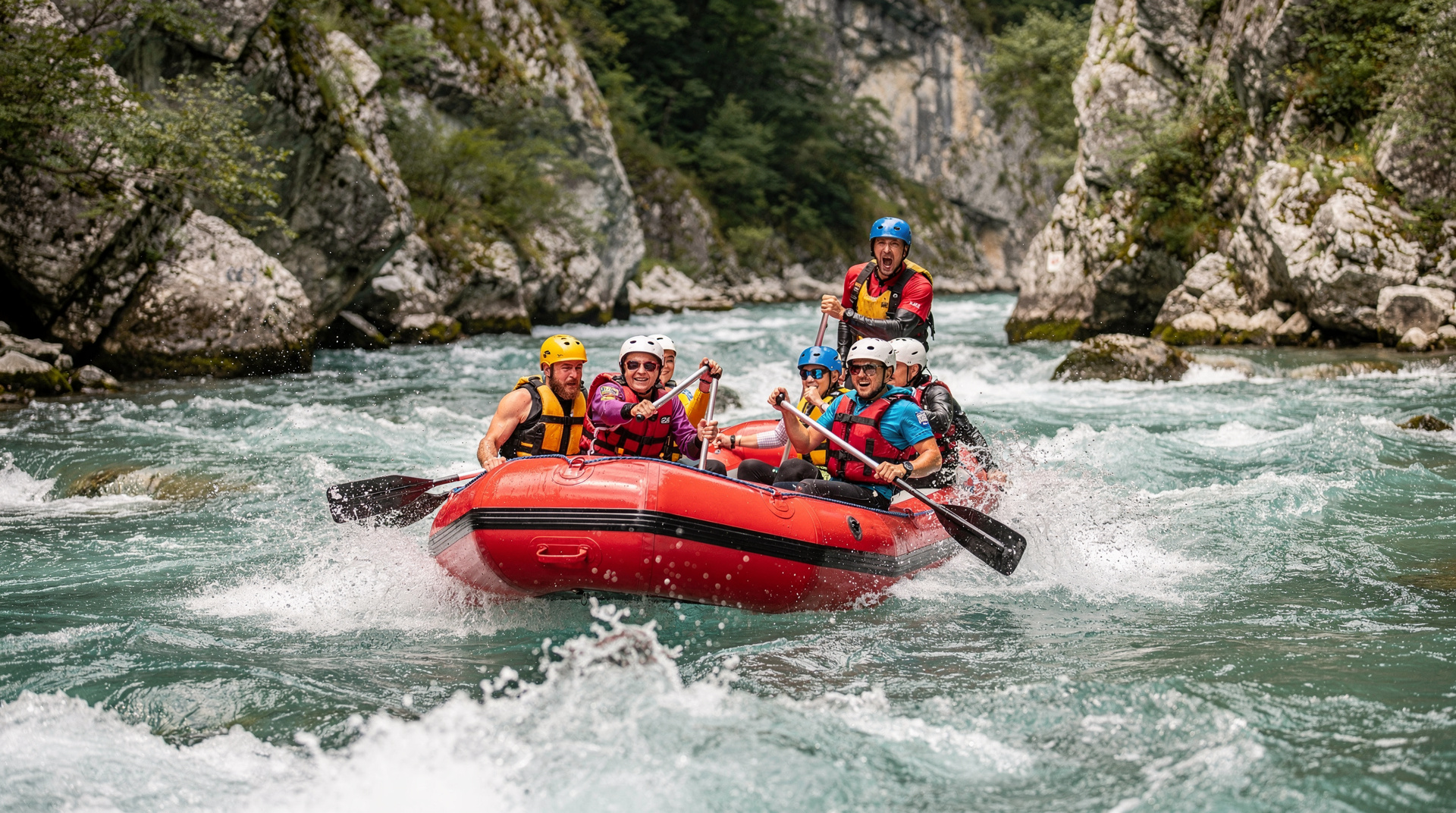
Book whitewater rafting from Bovec — half-day trips with all equipmentFull-day trips with picnic (5–6h): EUR 80–100. Covers a longer section, usually including both the Bovec canyon and the middle Kobarid stretch, with a riverside lunch break. Better for groups who want the full river experience and have no competing priorities for the day.
Full-day Soča rafting with riverside picnicPremium trips with professional photos: EUR 65–85. The canyon walls and turquoise water make for genuinely good photographs that are impossible to take yourself while paddling. The professional photo packages use waterproof cameras and telephoto positions set up in advance at the best features. If you want documentation, this is worth the premium.
Premium Soča rafting with professional photo serviceKobarid section trips: Slightly cheaper (EUR 40–55), appropriate for families and first-timers nervous about the technical upper section.
Rafting tour on the Bovec–Kobarid sectionWhat to bring and wear
Operators provide everything that needs to be waterproof: wetsuit (5mm neoprene), wetsuit boots, paddle jacket or cag, helmet, and buoyancy aid. You need to bring or wear:
- Swimwear or thermal underlayer (worn under the wetsuit)
- Old trainers or sandals with heel straps (if you have them — neoprene boots are provided but an extra layer under them helps in cold water)
- Sunscreen applied before you change into wetsuit (impossible to apply after)
- A dry change of clothes and towel left in the minibus
Leave watches, cameras, and loose jewellery in the vehicle. GoPros are fine if they are properly mounted to a helmet — not handheld.
Glasses wearers: bring a strap or leave them in the bus. Prescription goggles are not provided. Contact lenses work fine with a wetsuit hood or wrapped helmet.
Safety notes and what operators may not mention
Commercial Soča rafting has an extremely good safety record, and the vast majority of trips proceed without incident. That said, a few points are worth knowing:
Flip risk is real, not hypothetical. Grade III–IV means the guides will tell you there is a genuine possibility of capsizing. This is accurate. Full immersion in 12°C water is unpleasant but not dangerous if you keep calm and follow the self-rescue protocol (on your back, feet downstream, wait for the guide). Operators run man-overboard drills before launch. Pay attention.
Current levels matter. The Soča after sustained rain can rise dramatically — 50cm within a few hours. When this happens, operators either reschedule or move to a lower section. This is not operator timidity; it is correct risk management. A flexible itinerary is advisable if you are booking during changeable weather.
Swim competence. Most operators ask if you can swim 25m. This is not a trick question. If you cannot, say so — operators can provide additional flotation support and pair you with an experienced guide in the raft. Not being a strong swimmer is not a reason to avoid rafting; it is information the operator needs.
The gorge water temperature. Even in August, the Soča runs colder than you expect. The canyon shades the water. If you run cold in everyday life, tell your operator — many have thicker wetsuits available on request.
Getting to the Soča Valley
From Ljubljana: 2h 15min by car via the E61 motorway and mountain roads through Predel or Vrsic. The Predel approach (via the Plave junction) is the lower, faster route. Vrsic is scenic but adds 30–40 minutes and is closed November–May due to snow.
From Lake Bled: 1h 10min to Bovec, making the Soča an easy day trip. The road via Predel is straightforward; via Vrsic is more spectacular but seasonal.
Public transport: There are buses from Ljubljana to Bovec (journey time approximately 3 hours, 1–2 departures per day), but schedules are limited and do not always align with morning rafting start times. A rental car gives significantly more flexibility.
Parking in Bovec: The main square has a paid car park (EUR 1.50/hour). Most operators have their own meeting point with parking; check when booking.
Pairing rafting with other activities
The Soča Valley and Bovec offer enough to justify a 2–3 day stay rather than a single-activity day trip. The most natural pairings:
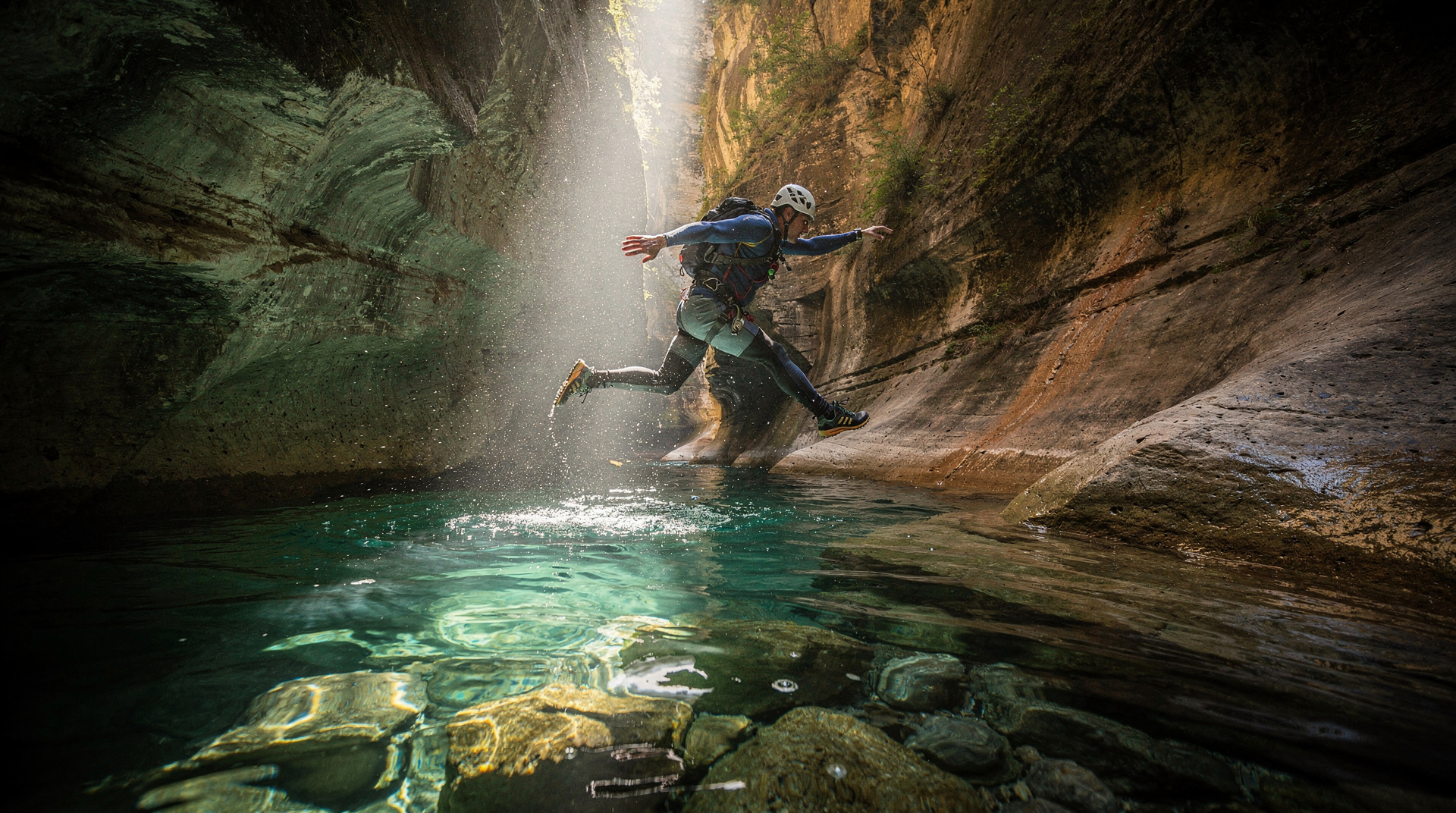
Rafting + canyoning: The standard combination. Rafting on the main river, canyoning on the Sušec or Fratarica gorges. Read our full canyoning guide for details on the canyon options and what to expect.
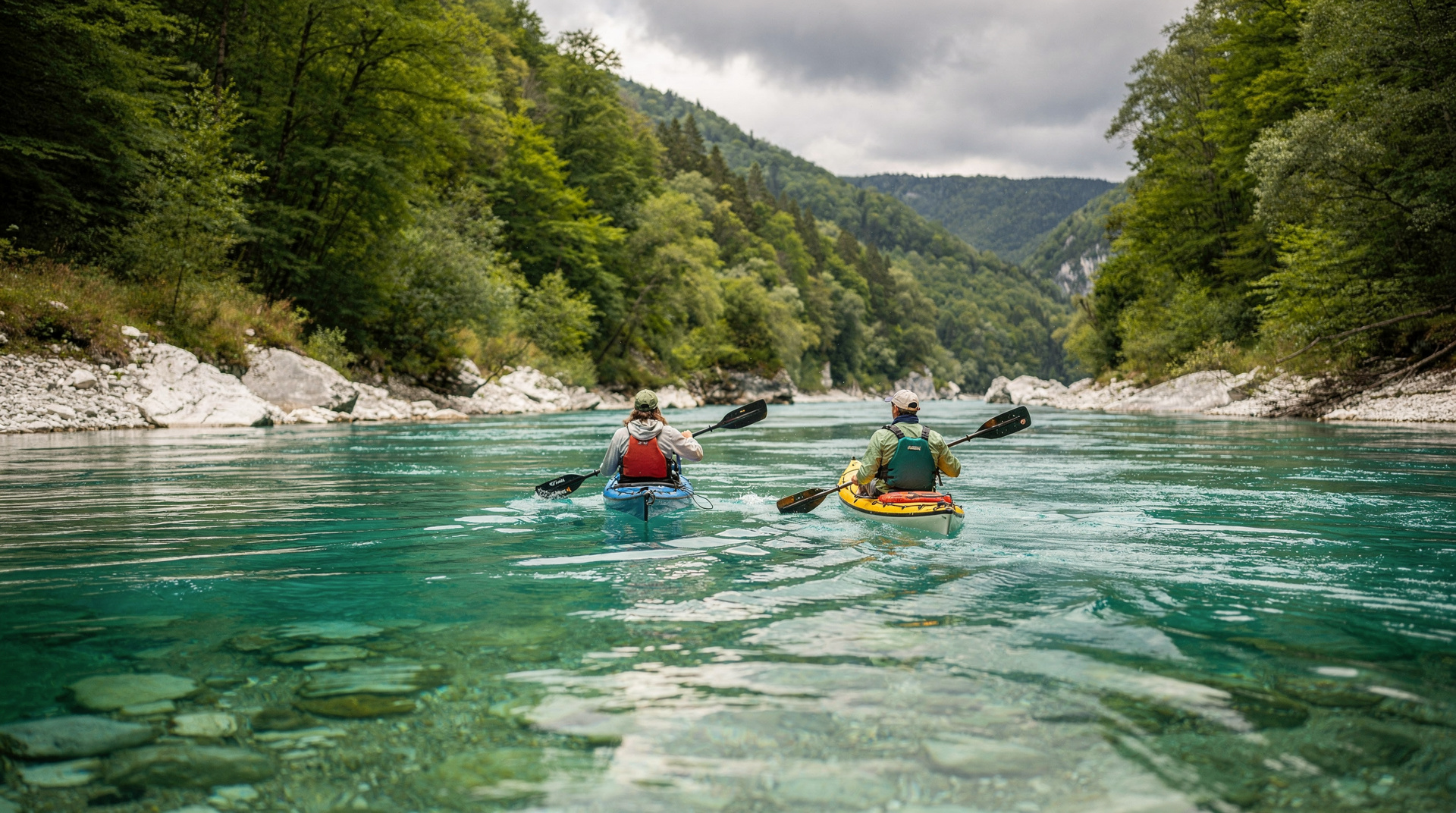
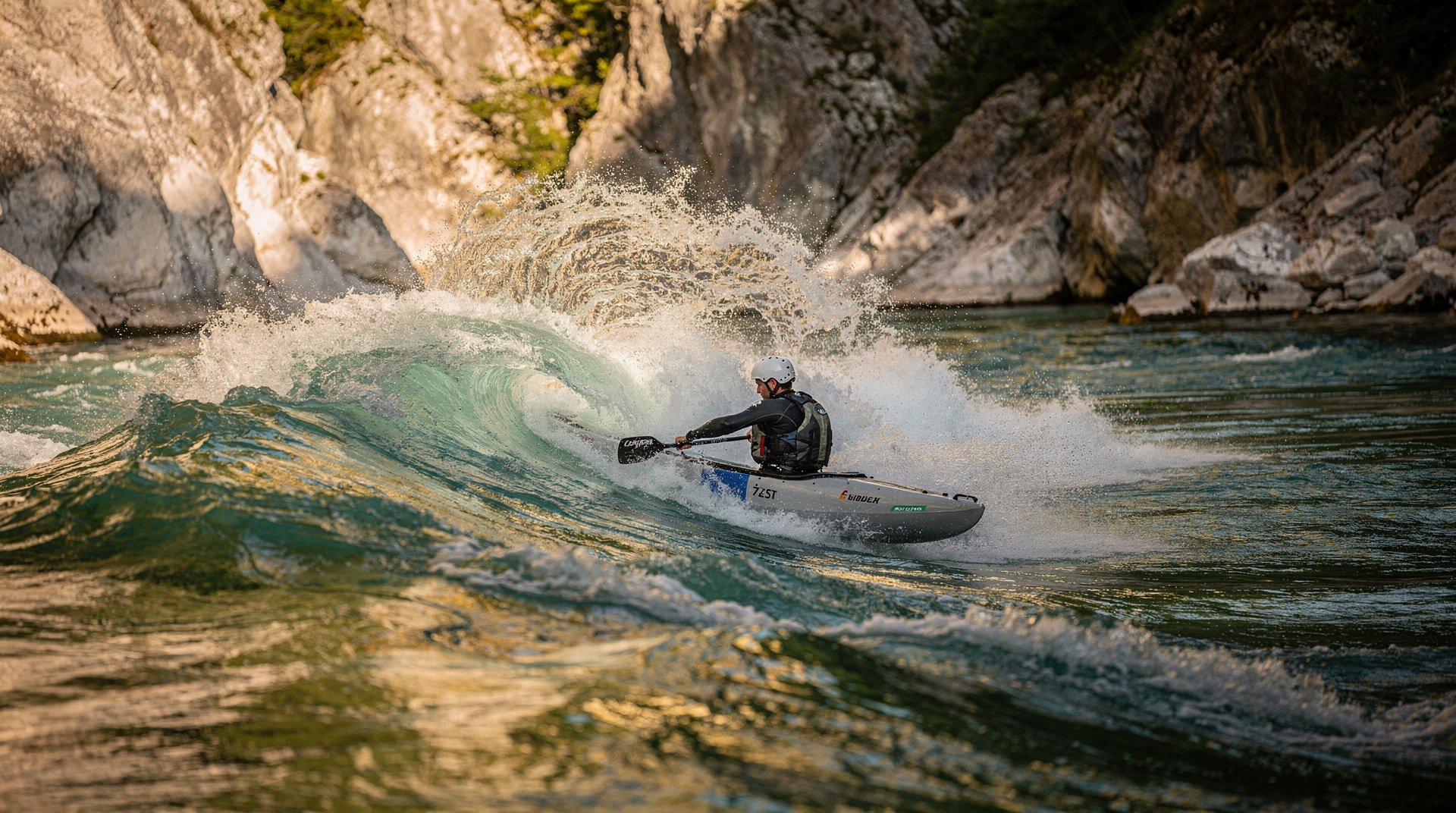
Rafting + kayaking: The Soča is one of Europe’s premier white-water kayaking rivers. If you have kayak experience and want to move beyond a raft, see the Soča kayaking guide.
Rafting + hiking: The Soča Valley floor trail between Bovec and Kobarid is 25km and rated easy-moderate, partly on an old road and partly on unmarked paths close to the river. Walking it gives you the same canyon views from a different angle and access to the War Museum in Kobarid, which covers the 12th Isonzo Battle and is worth two hours of anyone’s time.
Rafting + the Soča Trail: The marked Soča Trail (Pot Soče) runs 25km from Trenta to Bovec along the river’s upper valley. It is accessible to most fitness levels and combines section hiking with views of the river you will have been paddling.
Where to stay in Bovec
Most rafting operators work out of Bovec town centre. Accommodation options:
Hostel Soča Rocks (Bovec centre): The most popular backpacker option, well-located, good connections to operators. EUR 20–30 per bed.
Hotel Sanje ob Soči (Bovec): Mid-range hotel with a focus on outdoor guests. Double rooms EUR 80–120. River-view rooms worth the marginal extra cost.
Dobra Vila (Bovec): The most characterful guesthouse in town, in a converted telecommunications building. Double rooms EUR 110–150. Breakfast included, good restaurant.
Camping: Several riverside campsites between Bovec and Kobarid. Kamp Liza and Kamp Soča are well-reviewed, direct river access, EUR 15–25 per pitch.
For a wider look at what the town offers, see the Bovec adventure base guide.
The Soča is not overhyped. The combination of water quality, canyon scenery, and technical variety is genuinely exceptional, and the valley’s commitment to keeping commercial development minimal means the experience has not been diluted by infrastructure. If you are planning a Slovenia trip and have any interest in outdoor activity, allocating at least one full day to the Soča Valley is among the better decisions you can make.
The rapids: what they are actually called
A practical piece of information that most booking websites do not include: the Soča’s named rapids are not tourist marketing names — they are working river names used by guides, kayak clubs, and the operations teams who inspect the river before commercial trips.
Pinzgauer Hole: The largest hydraulic feature on the commercial section. A recirculating trough that forms at certain water levels — guides navigate around rather than through it on commercial trips. In high-water conditions, this feature is the most dramatic visible demonstration of what the river can do. In low water, it reduces to a standing wave. The name comes from the Austrian Pinzgauer cattle breed, which grazed the upper valley during the Austro-Hungarian period.
Lepo Okno (Beautiful Window): The point where the gorge walls close to 8–10m wide and the canyon profile creates the most photographic view on the whole section. The name refers to the “window” of sky visible above the narrow gap. Professional photo positions for the premium photo packages are typically set up here.
The Keyhole: A rapid where the channel narrows around a distinctive rock formation. The line requires the guide to position the raft precisely on approach; too far left or right and the raft catches the boulder rather than sliding the gap. This is the rapid most likely to generate visible anxiety and immediate relief in the same 10 seconds.
Understanding these features by name is useful if you want to ask guides specific questions or if you want to understand what experienced paddlers mean when they discuss the river in technical terms.
How guides read the river before your trip
Every day the commercial season runs, guide teams on the Soča assess current conditions before launching groups. What they are checking:
Water level gauges: Multiple gauge stations on the river report water depth in real time. Operators have threshold levels for each commercial section: below a certain level, the Grade IV features become Grade III; above a certain level, specific sections are closed.
Visibility: Particularly relevant after rain. The Soča’s normal water clarity is exceptional, but the river can run semi-opaque after heavy runoff. Some operators postpone trips rather than run in reduced-visibility conditions.
Debris: After high-water events, branches, logs, and occasionally larger objects enter the river. A pre-trip float check spots significant debris and allows repositioning of the trip to avoid it.
Bank stability: The limestone canyon walls occasionally shed rocks after frost-thaw cycles. Guides note any new debris on the banks that could indicate unstable sections above.
This assessment happens before 9am on trip mornings. It is the reason guides sometimes change the proposed route on short notice — not operator arbitrariness, but a daily professional judgement about which water is appropriate for the groups that day.
The ecology of the Soča
The Soča River system is an ecological priority area within Triglav National Park. The transparent water and oligotrophic (low nutrient) character of the river supports specialist species not found in more polluted rivers.
Marble trout (Salmo marmoratus): Slovenia’s most celebrated fish is endemic to the western Slovenian river system and is visible in the clear pools on the commercial rafting sections. The pattern of irregular pale marbling on a bronze-grey base is unique. Catch-and-release fly fishing is permitted on designated sections with a day permit (EUR 60–120). The population has recovered significantly from its critical low point in the 1990s.
Soča crayfish (Austropotamobius torrentium): A native freshwater crayfish species sensitive to water pollution. Its continued presence in the Soča tributaries is an ecological quality indicator.
Riparian vegetation: The canyon walls support stands of black alder and specific fern species adapted to the spray zone. The trail above the gorge rim passes through old-growth beech and spruce — the forest structure is largely intact because the canyon terrain resisted both the logging and the military operations that affected the wider valley in the 19th and 20th centuries.
None of this directly affects the rafting experience, but it changes how you understand what you are moving through — a protected ecology of unusual quality, not just a spectacular backdrop.
Rafting with kids and mixed-ability groups
Families and groups with mixed rafting experience have a genuine option beyond the technical Bovec section. The Kobarid stretch (Grade II–III) is deliberately gentler, and most operators running it set the minimum age lower than on the Bovec section — typically 7–8 years versus 10 on the more technical upper river. The pace is slower, the rapids more forgiving, and the scenery arguably just as good, since the valley widens and gives longer views of the surrounding peaks.
Rafting tour on the Bovec–Kobarid section is the option to book for families or anyone nervous about Grade IV water. If your group has a mix of confident and nervous paddlers, the Kobarid section lets everyone raft together rather than splitting into separate trips.
Frequently asked questions about Soča River rafting guide
What grade is rafting on the Soča?
The main commercial section near Bovec runs Grade III–IV. The upper canyon section is consistently the most technical; lower sections toward Kobarid run Grade II–III and suit mixed groups or families.Do I need experience to raft the Soča?
No prior experience is required for the standard half-day trips. Operators provide full briefings, wetsuits, helmets, and paddle instruction. Grade IV sections require following guide commands, which is different from kayaking experience.How cold is the water?
Typically 10–13°C in May–June (snowmelt), warming to 16–18°C by late July. Operators provide 5mm wetsuits and neoprene boots; cold is manageable for most people with proper kit.How much does Soča rafting cost?
Standard half-day trips (2.5–3h) run EUR 45–65. Full-day trips with picnic cost EUR 80–100. Premium packages with professional photos are EUR 65–85. Book at least a day ahead in summer; July–August sells out.Is the Soča safe for children?
Most operators set a minimum age of 7–10 years and minimum weight around 30kg. Lower sections toward Kobarid (Grade II–III) are more suitable for families. Always check with the operator directly for current conditions.What is the difference between Bovec and Kobarid rafting?
Bovec sits on the upper, more technical section (Grade III–IV). Kobarid is downstream; its stretch is mellower (Grade II–III) and suitable for first-timers or mixed-ability groups. Some operators offer combination trips taking the full river run.Can I do rafting and canyoning on the same day?
Yes, and many operators offer combo packages. The most common pairing is morning rafting followed by afternoon canyoning on the Sušec or Fratarica streams. Budget 6–7 hours total and bring a change of dry clothes.Which Soča rafting section is best for families with young children?
The Kobarid section (Grade II-III) downstream of Bovec, with a lower minimum age (typically 7-8 versus 10 on the technical Bovec section) and gentler, more forgiving rapids. It covers the same beautiful valley at a slower pace, making it the right choice for mixed-ability or family groups rather than the technical upper section.Can I combine Soča rafting with snorkeling or kayaking?
Yes. Many visitors do rafting one day and gorge snorkeling or kayaking on another, since each activity gives a different relationship with the same river. Rafting is the most essential single activity for a first Soča visit; snorkeling and kayaking work best as complements on a multi-day Bovec stay rather than replacements.
Top experiences
Bookable activities with verified prices and instant confirmation on GetYourGuide.