Soča Valley day trip from Ljubljana: the most beautiful drive in Slovenia
From Ljubljana: guided day tour to Soča and Kranjska Gora
How far is the Soča Valley from Ljubljana and how long does the drive take?
Bovec, the main town in the Soča Valley, is about 130 km from Ljubljana. Via the Vršič Pass (open roughly June–October), the drive takes 2–2.5 hours and is one of the most spectacular mountain roads in the Alps. Via Idrija (lower route, open year-round), it takes about 1h45. Plan for a full day — at least four hours in the valley makes the journey worthwhile.
| Distance from Ljubljana | ~130 km / 1h45–2.5h depending on route |
| Cost | Free driving; EUR 40–180 for river activities |
| Time needed | Minimum 4 hours in the valley, 6+ better |
| Best time | June–September (Vršič Pass open) |
| Without a car | Guided day tour recommended |
| Combine with | Kranjska Gora, Lake Bled (2-day loop) |
The Soča Valley: Slovenia’s most beautiful day trip
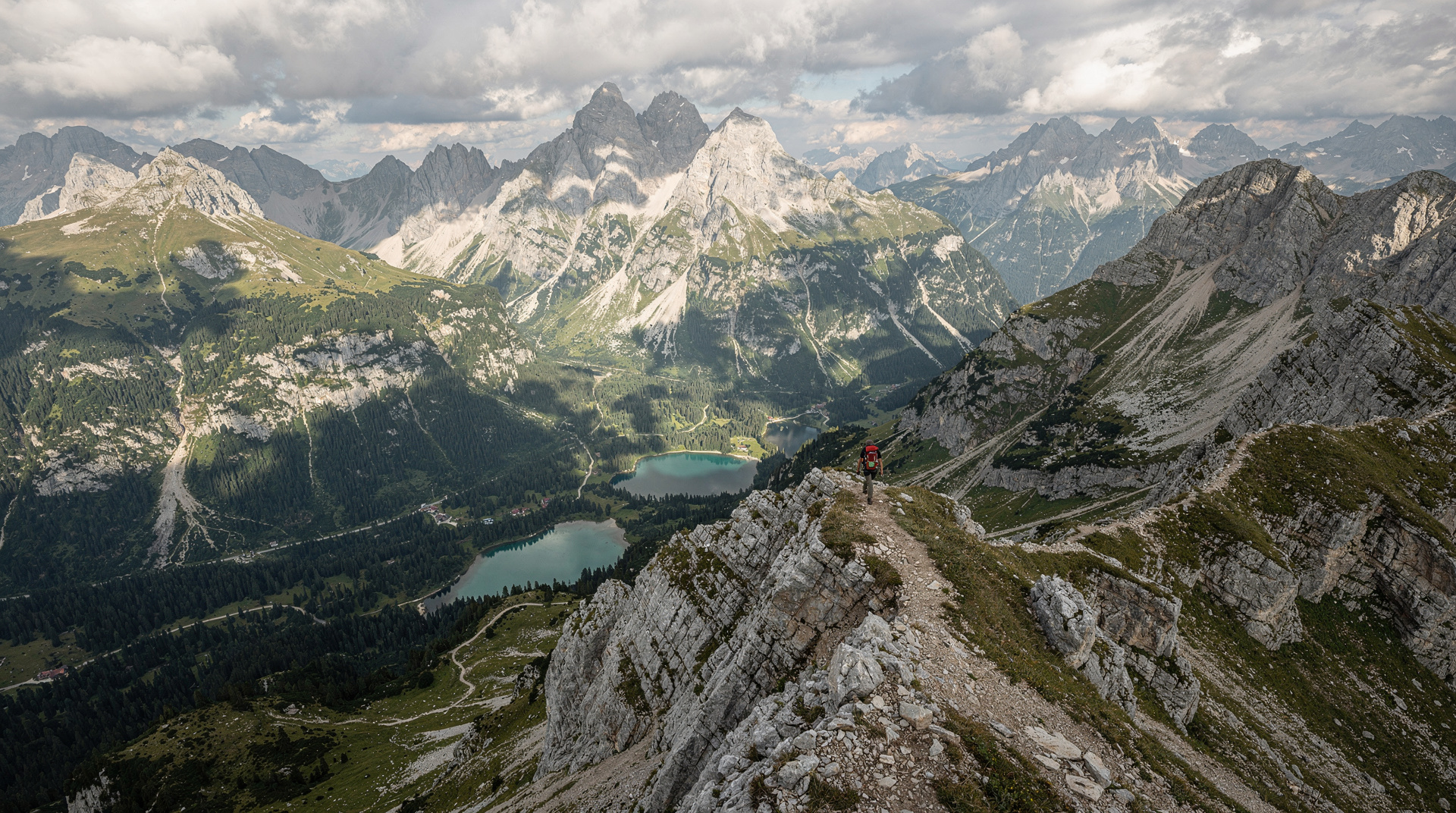
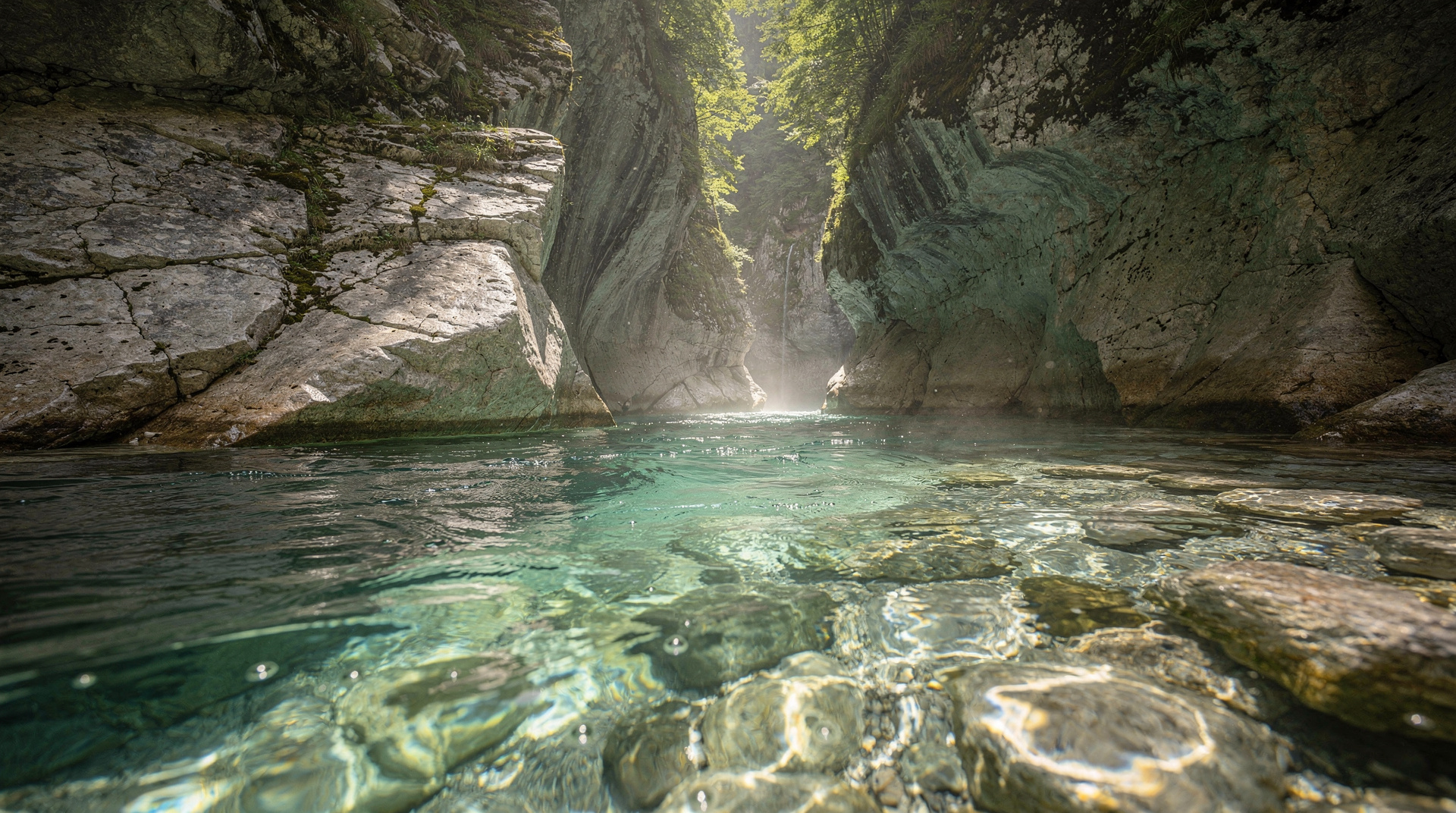
The Soča Valley is, by the consensus of most visitors who make the journey, the most spectacular landscape in Slovenia. The Soča River is a vivid mineral turquoise that looks digitally enhanced until you see it in person — a colour produced by the calcium carbonate and magnesium dissolved in glacial meltwater filtering through the limestone. The valley cuts through the Julian Alps in a narrow gorge, bordered by steep forested ridges, with the peaks of Triglav National Park rising above.
A day trip from Ljubljana covers approximately 130 km each way. That sounds like a lot, but the drive itself is part of the attraction — particularly if you take the Vršič Pass route in summer.
The two routes to the Soča Valley
Route 1: Via Vršič Pass (open roughly June–late October)
This is the iconic route. From Ljubljana, take the A2 motorway north-west to Kranjska Gora, then climb the Vršič Pass (1,611 m), descend into the Trenta Valley and follow the Soča River downstream through Bovec to Kobarid.
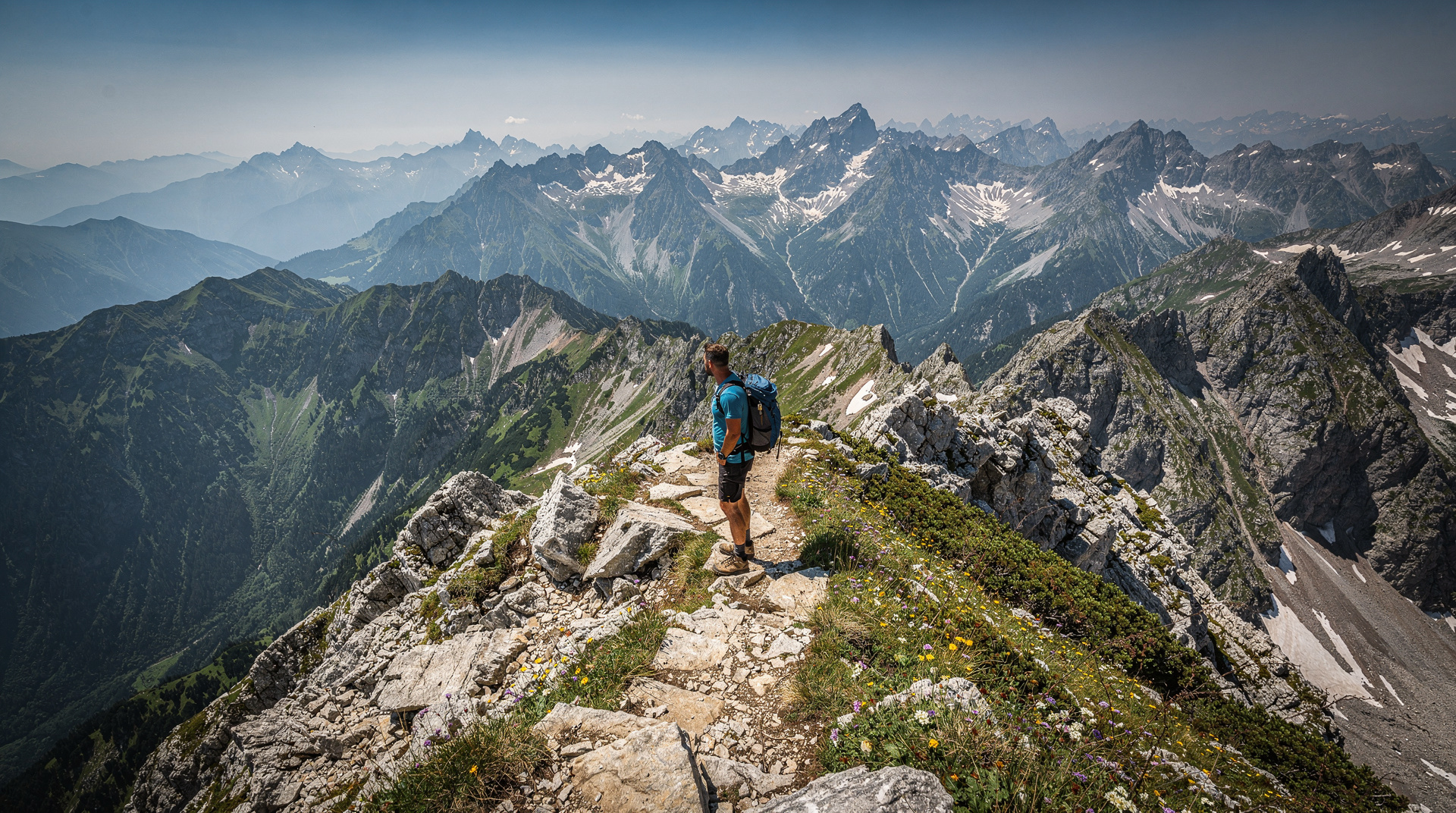
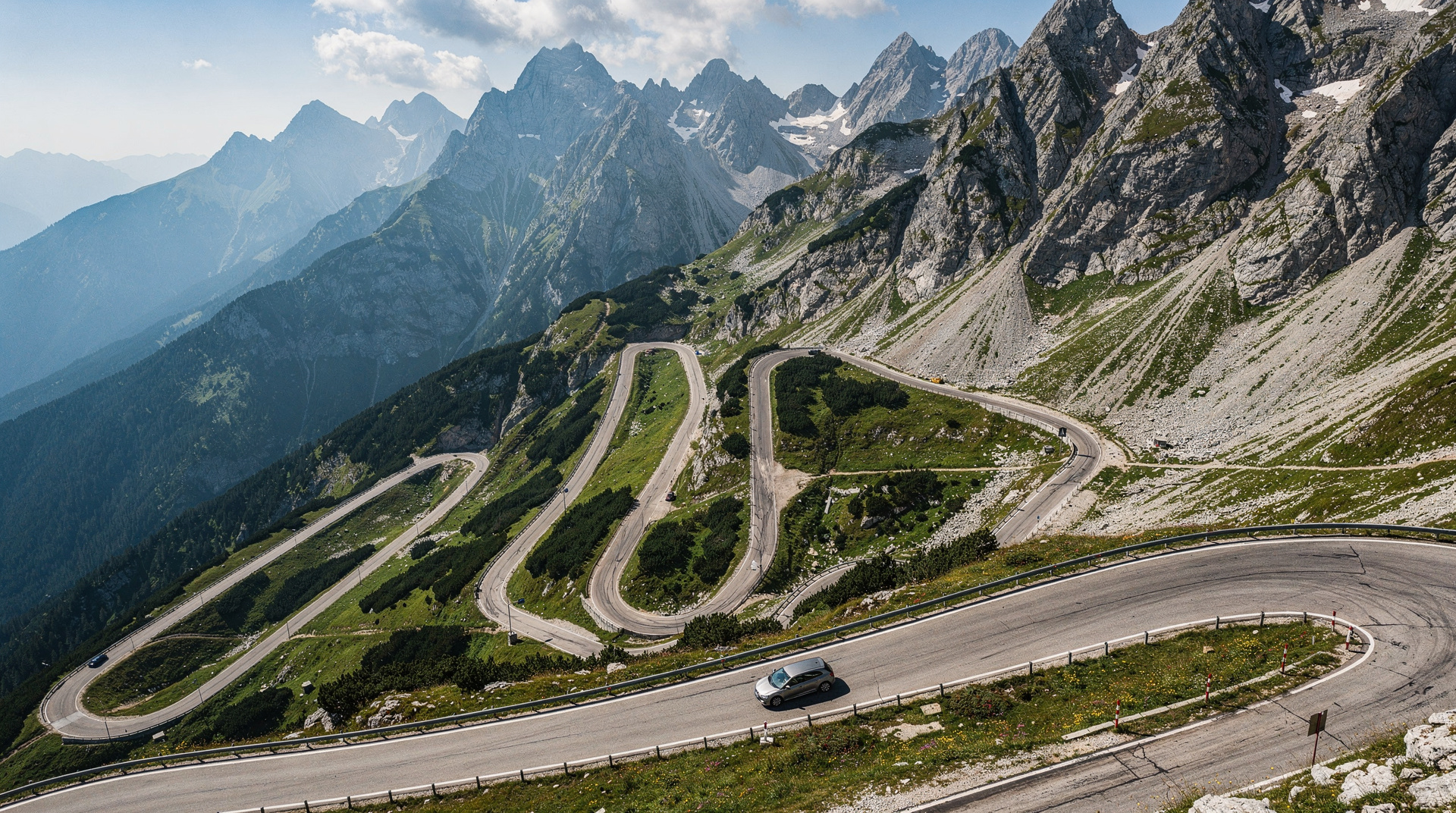
The Vršič Pass has 50 numbered hairpin bends on the ascent and 26 on the descent. The road is well maintained and driven in standard cars without difficulty, but it is narrow in places — pass each other with care. The views at the top are extraordinary: the Julian Alps spread in every direction, and on clear days you can see into Austria. Allow 40–50 minutes to drive the pass from Kranjska Gora to Trenta.
Route 2: Via Idrija (open year-round)
The lower route bypasses the pass entirely, running through Idrija (a UNESCO World Heritage mercury-mining town worth a brief stop) and the Bača Valley. It is slightly shorter in distance (1h40 from Ljubljana to Bovec) and more forested in character. In shoulder season or if the pass is closed, this is your route.
The loop circuit: The ideal full-day excursion does both routes — Vršič Pass going out, Idrija valley on the return (or vice versa). This gives you the dramatic mountain drive in one direction and the quieter valley drive in the other.
What to see and do in the Soča Valley
The Soča source, Trenta
The Soča emerges from a cave at the bottom of a short, mossy canyon about 90 minutes’ drive from Kranjska Gora. A signed walking trail from the main road (1 km, about 30 minutes return) leads you through forest to the spring itself. The water wells up clear and cold from the rock. In early season, the Soča downstream is almost electric in colour. This is a genuinely special place and not to be missed.
Bovec
Bovec is the main town in the upper Soča Valley, with a population of about 3,000 and a well-developed outdoor activity infrastructure. In summer, every operator in town offers rafting, kayaking, canyoning, zip-lining and paragliding. The town itself is modest but the setting is magnificent, with sheer karst cliffs rising on both sides.
If you book river activities in advance, Bovec is a reasonable base for the whole valley.
Kobarid and the Isonzo Front
Kobarid (Italian: Caporetto) was the site of the decisive 1917 battle of the First World War that broke the Italian front and is now home to the outstanding Kobarid Museum (EUR 8, open daily). The museum presents the WWI campaign through maps, diaries, photographs and artefacts in a way that is genuinely moving without being sensational. Ernest Hemingway used Kobarid as the setting for the retreat in A Farewell to Arms.
The Kobarid Historical Walk (5 km, 2 hours) includes remains of Italian and Austrian fortifications and the Kozjak Waterfall — a 15-minute detour to a canyon waterfall that drops into a turquoise pool. This walk should not be missed.
The Soča Trail (Soška pot)
The long-distance Soča Trail follows the river for 25 km from the source to Kobarid. Walking even a short section — particularly the stretch near Napoleon’s Bridge south of Trenta, or the Lepena Valley section near Bovec — gives an intimate experience of the river’s colour and character. The riverbed is limestone-white, making the turquoise water even more vivid.
Swimming holes
The Soča has several exceptional swimming spots where the current is gentle enough and the water deep enough for swimming. The most famous is at the confluence of the Soča and Koritnica rivers near Bovec, where a natural pool forms in the limestone. The water temperature peaks at about 16–17°C in August — cold by beach standards, exhilarating in the heat of summer.
Guided tours to the Soča Valley Guided day tour: Ljubljana to Soča Valley and Kranjska Gora Guided tours are the best option for travellers without a car. The combination of Soča Valley and Kranjska Gora in a single day is a classic Julian Alps circuit that gives you the valley drama, a mountain village, and the pass road — all with a driver and commentary.
Guided tour: best of the Julian Alps and Kranjska GoraDriving the Vršič Pass: practical notes
The Vršič Pass road is entirely manageable in a standard car. A few practical details:
-
Check conditions: The pass is typically open from late May or June to late October or November, depending on weather. Check podmeni.si or the Slovenian road conditions portal before setting out.
-
Width: The road is narrow in places with passing spots. Caravans and large motorhomes are prohibited.
-
Russian Chapel: On the ascent, stop at the Russian Chapel — a memorial built by Russian WWI prisoners of war who died building the road. A quiet and moving place.
-
Summit: The pass summit is at 1,611 m. The views on clear days extend to Triglav (2,864 m) and across the Alps into Austria. There is a small information point and car park at the top.
-
Descent: The Trenta-side descent is steeper and more dramatic than the ascent from Kranjska Gora.
Combining the Soča Valley with Lake Bled
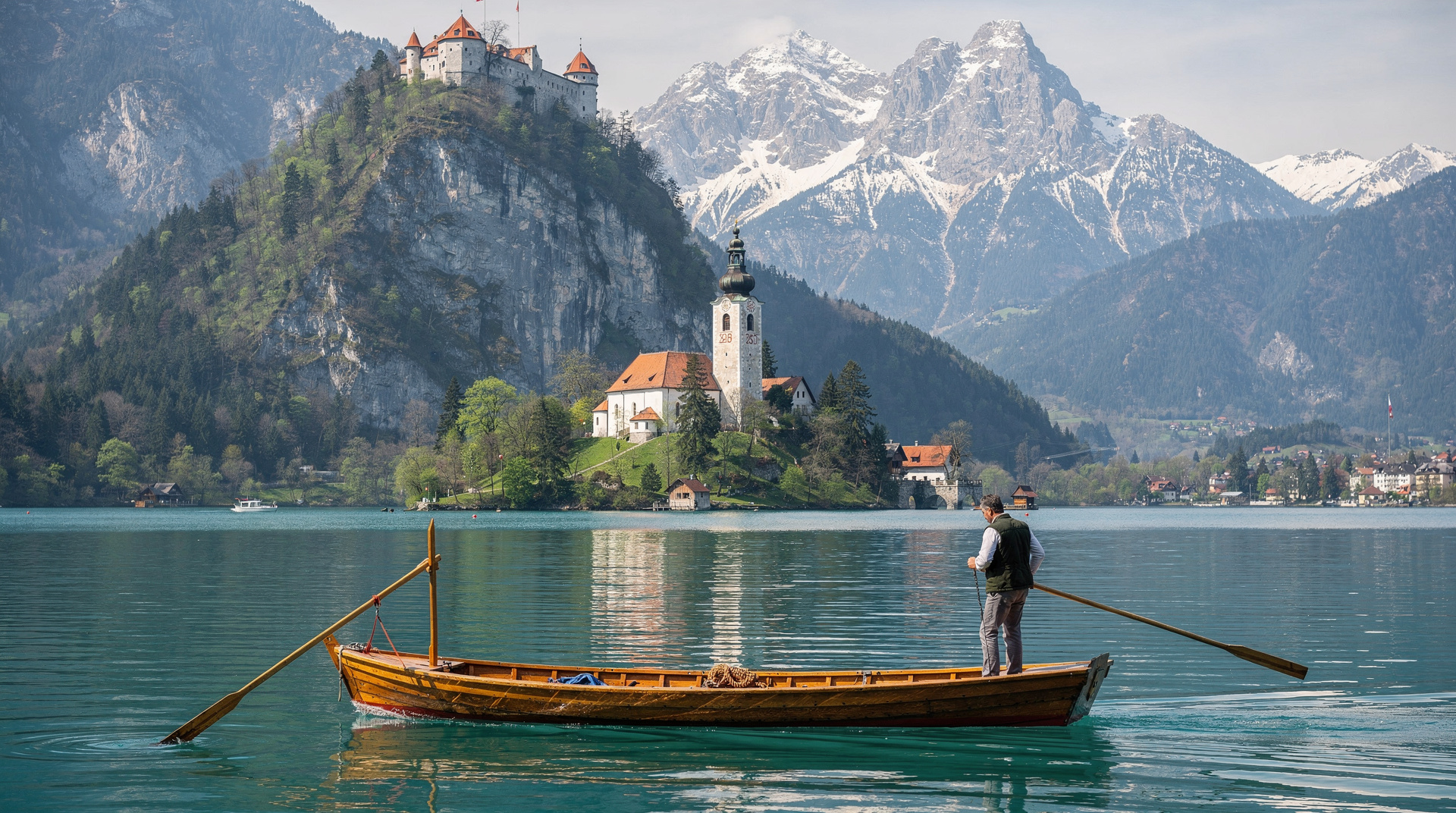
If you have two days and want to see the Julian Alps fully, combine Bled on day one with the Soča Valley on day two. The two destinations are connected by the Vršič Pass — a 90-minute drive — making a logical loop possible without returning to Ljubljana between them. Lake Bled and Triglav National Park are both natural bookends to the Soča experience.
When not to go
The Vršič Pass is closed in winter (typically November–May, depending on snowfall). The Soča Valley itself remains accessible via the lower route year-round, but the river activities close in winter and many accommodation and restaurant options in Bovec and Trenta are seasonal. Check ahead if visiting October–May.
Practical information
Fuel: Fill up in Ljubljana or Kranjska Gora before heading to the Soča. There are petrol stations in Bovec and Kobarid, but they are more expensive than motorway stations.
Phone coverage: Mobile signal is good in Bovec and Kobarid but drops in parts of the Trenta Valley and on the Vršič Pass descent. Download offline maps before departing.
Time needed: A minimum of four hours in the valley makes the two-hour drive worthwhile. Six hours is better — this allows the Soča source walk, a swim, lunch in Kobarid and the historical walk.
For more on activities in the valley, see the Soča rafting guide and the kayaking guide. For the full driving experience, the Vršič Pass guide covers every kilometre.
Eating in the Soča Valley
The Soča Valley has surprisingly good food for a mountain region this remote. Both Bovec and Kobarid have restaurants that go well beyond the standard tourist fare.
Kobarid: The town has several excellent restaurants concentrated in its small main square and the streets immediately off it. The tourist influx from hikers, rafters and WWI history visitors has pushed the food quality up. Local dishes include:
- Kobariški štruklji: Sweet or savoury rolled pasta parcels, a regional speciality unique to the valley
- Tolminc cheese: A firm, slightly pungent mountain cheese from the cows grazing on the high pastures above Tolmin. Found in shops and restaurants throughout the valley.
- Trout: The Soča’s marble trout and the standard brown trout are both on menus. Whether the restaurant is serving locally caught fish or farmed is worth asking.
Bovec: A larger tourist centre with more options at varying quality. The main square has several terrace restaurants that are reasonable; walk a street back for better value.
Mountain huts: If you are hiking above Bovec or in the Trenta Valley, the mountain huts serve traditional food — polenta, goulash, štrukli, local beer. Portions are large and prices are moderate (EUR 8–14 for a main course).
River activities on a day trip
If you want to do a river activity as part of your Soča Valley day trip, advance booking is strongly recommended in July–August. The main activity operators are based in Bovec:
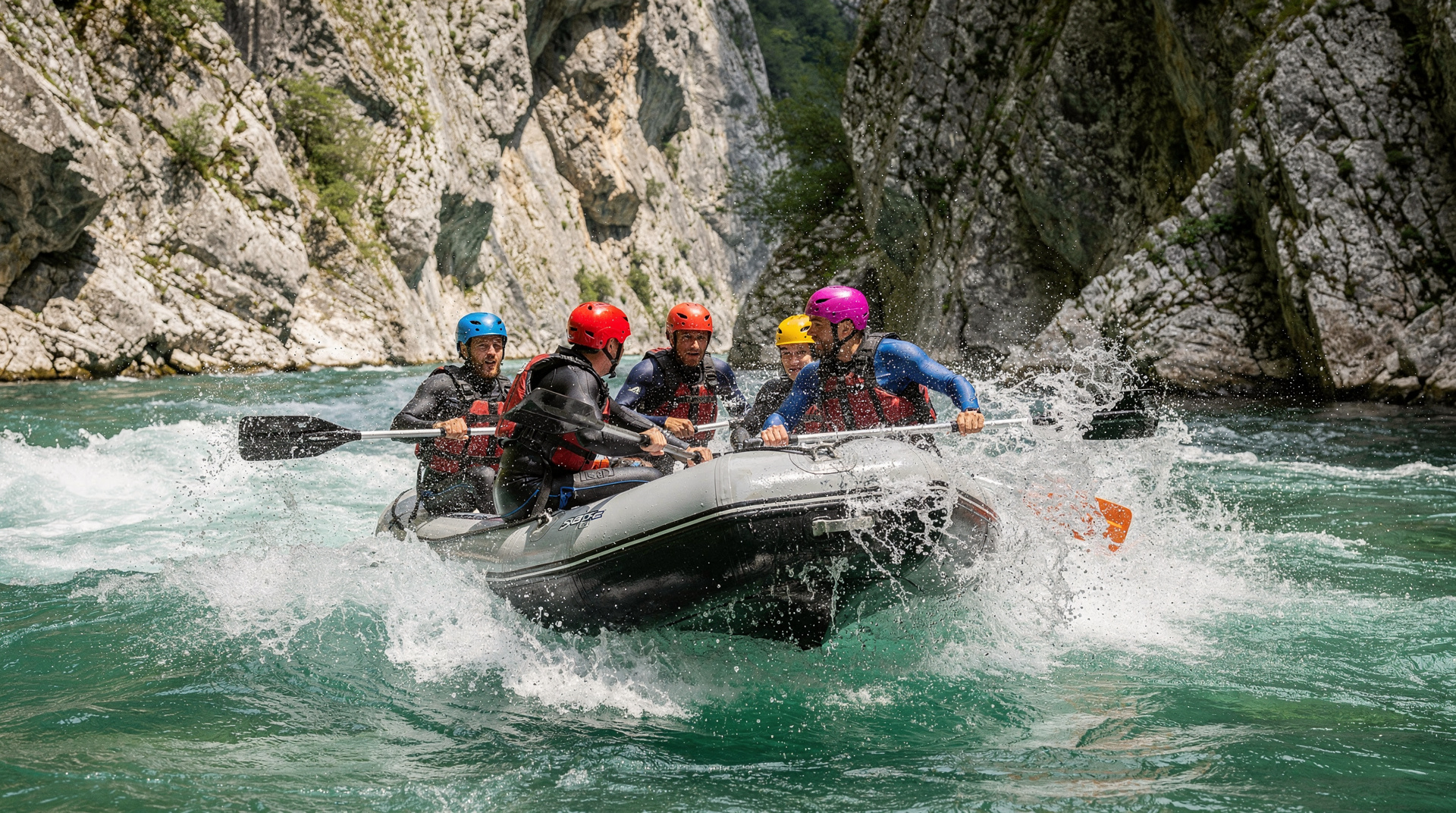
White-water rafting: The standard rafting section runs from Trnovo ob Soči to near Bovec, a 8–10 km stretch with Grade III–IV rapids. Duration 2–2.5 hours on the water; add 1 hour for briefing and equipment. Costs EUR 40–55 per person. Minimum age typically 7–8 years.
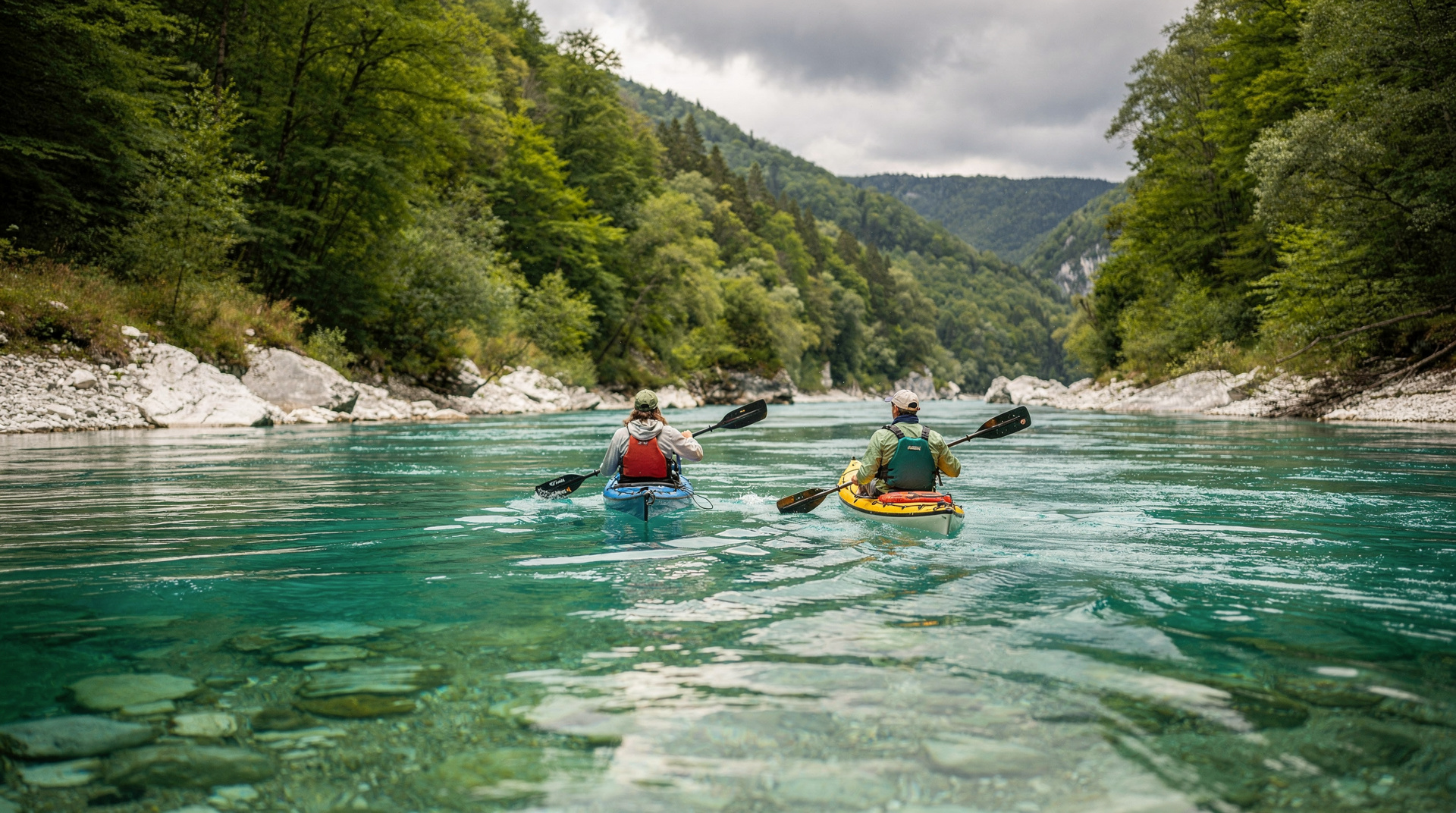
Kayaking: Sea kayak or inflatable kayak tours on the calmer sections. More family-friendly than rafting, excellent for accessing the best swimming spots. EUR 30–45 for 2–3 hours.
Canyoning: The canyon of the Fratarica river above Bovec is one of the best in Slovenia — technical descents through narrow slots, jumps, slides and plunge pools. Experienced guides only; not for first-timers without a guide. EUR 60–80.
Fly fishing: The Soča’s marble trout and the Sava’s grayling attract serious fly fishers from across Europe. A day’s guided fishing with a permit (required) runs EUR 100–180 per rod. The season runs from March to October.
The WWI dimension: why Kobarid matters
The Soča Valley was the site of eleven major battles of the First World War — the Isonzo Front, where Italian and Austro-Hungarian forces fought over the same few kilometres of rock for three years and a million casualties. The scale of the carnage was vast; the landscape still shows the scars.
The Kobarid Museum (Kobariški muzej) is one of the finest battlefield museums in Europe — it won the Council of Europe Museum Prize in 1993. The permanent exhibition uses maps, diaries, photographs and artefacts to tell the story of the front from multiple perspectives, without jingoism. It takes about 1.5 hours and costs EUR 8.
The open-air Kobarid Historical Walk includes Italian fortifications on the ridge above town, an ossuary with the remains of 7,000 Italian soldiers, and the Kozjak Waterfall at the base of the cliffs — all connected by a 5 km path that takes 2–3 hours.
Kranjska Gora as part of the loop
If you do the Vršič Pass route, you pass through Kranjska Gora on the way. The village is attractive in a tidy alpine way, with the Jasna Lake (stunning turquoise, easy 30-minute walk from the village) and good café options. A 30-minute stop in Kranjska Gora breaks the drive from Ljubljana nicely and gives you a sense of Slovenia’s best-known ski resort in its summer incarnation.
Is a day trip enough, or should you stay overnight?
A single day from Ljubljana genuinely works if you plan tightly: leave by 8am, prioritise two or three highlights (the source, the Soča Trail gorge section, Kobarid Museum or a swim), and accept that you will not do everything. If river activities (rafting, snorkeling, canyoning) are a priority, an overnight stay in Bovec is the better choice — booking a morning activity slot as a day-tripper means racing straight back to Ljubljana afterward with no time to properly see Kobarid or the source.
For most visitors with more than a single free day, splitting the Soča Valley across two days — one for the drive and sightseeing, one for a river activity — produces a noticeably less rushed trip than trying to compress everything into one long day.
Frequently asked questions about Soča Valley day trip from Ljubljana
What is the best route from Ljubljana to the Soča Valley?
In summer (June–October when the Vršič Pass is open), the classic route is via Kranjska Gora and over the Vršič Pass — 50 hairpin bends at altitude, with stunning views of the Julian Alps. This is a highlight in itself. In winter or shoulder season, take the lower route via Idrija and the Bača Valley, which is equally beautiful and stays open all year. A loop combining both (up via Vršič, back via Idrija) is the ideal full-day circuit.What are the best things to do in the Soča Valley on a day trip?
Stop at the Soča source in Trenta (a 1-hour forest walk to the spring). Walk the Soča Trail section near Bovec — the river here is a vivid turquoise that looks almost unreal. Visit the Kobarid Museum for World War I history (one of the best battlefield museums in Europe, EUR 8). Swim or paddle at one of the crystal-clear swimming holes along the river. In summer, rafting and kayaking are excellent.Is a guided tour or self-drive better for the Soča Valley?
Both work, but self-drive gives more flexibility. The mountain roads are not technically difficult in a standard car — the Vršič Pass involves 50 numbered hairpin bends but is well maintained and driven regularly by tourist vehicles. A guided tour is useful if you want commentary on the WWI history, if you want to join a rafting or kayaking activity without logistics, or if you're travelling without a car.Can you do the Soča Valley without a car?
Poorly. Public transport to Bovec from Ljubljana involves multiple changes and takes 3–4 hours. A guided day tour from Ljubljana is the best car-free option — it handles the driving and includes stops at the key sites.When is the best time to visit the Soča Valley?
June–September is ideal: the Vršič Pass is open, the river is high and vivid after spring melt (June), and by July the swimming holes are at their best. September offers excellent weather and far fewer visitors than July–August. October brings spectacular autumn foliage in the valley. Winter visits to Bovec are possible but the upper valley can be snow-covered and the Vršič Pass is closed.Should I stay overnight in the Soča Valley or do it as a day trip?
A day trip works if you prioritise two or three highlights and accept you won't see everything. An overnight stay in Bovec is the better choice if a river activity (rafting, snorkeling, canyoning) is a priority, since booking a morning slot as a day-tripper leaves little time for Kobarid or the Soča source afterward. With more than one free day, splitting sightseeing and a river activity across two days is noticeably less rushed.What is the biggest mistake people make planning a Soča Valley day trip?
Underestimating drive time and trying to fit in too much. The Vršič Pass route takes 2-2.5 hours each way with its hairpin bends, and cramming in the source walk, Kobarid Museum, a swim and a river activity in one day is unrealistic. Pick two or three priorities, leave early, and treat anything extra as a bonus rather than the plan.
Top experiences
Bookable activities with verified prices and instant confirmation on GetYourGuide.