Kayaking the Soča River: guided trips, courses, and what to expect
Soča River kayaking for all levels with photos
Can beginners kayak on the Soča River?
Yes — several operators run beginner courses on the calmer lower sections and on flat sections of the river. The upper canyon sections (Grade III–IV) require prior kayak training or guided white-water instruction. Guided half-day tours start at EUR 45–60.
The Soča as a kayaking river
The Soča occupies a specific place in the global kayaking community: it is a competition venue (World Cup events have run here), a benchmark for intermediate paddlers testing themselves on technically demanding Central European white water, and simultaneously a beginner-accessible river because the range of water character along its 40km active section means there are appropriate stretches for every ability level.
| Cost | guided sessions from around EUR 45–60 (half-day) |
| Time needed | 2–4 hours per session |
| Getting there | Bovec, around 2h15 from Ljubljana or 1h10 from Bled |
| Best time | June–September for warmer water |
| Booking | 2–3 days ahead in July–August |
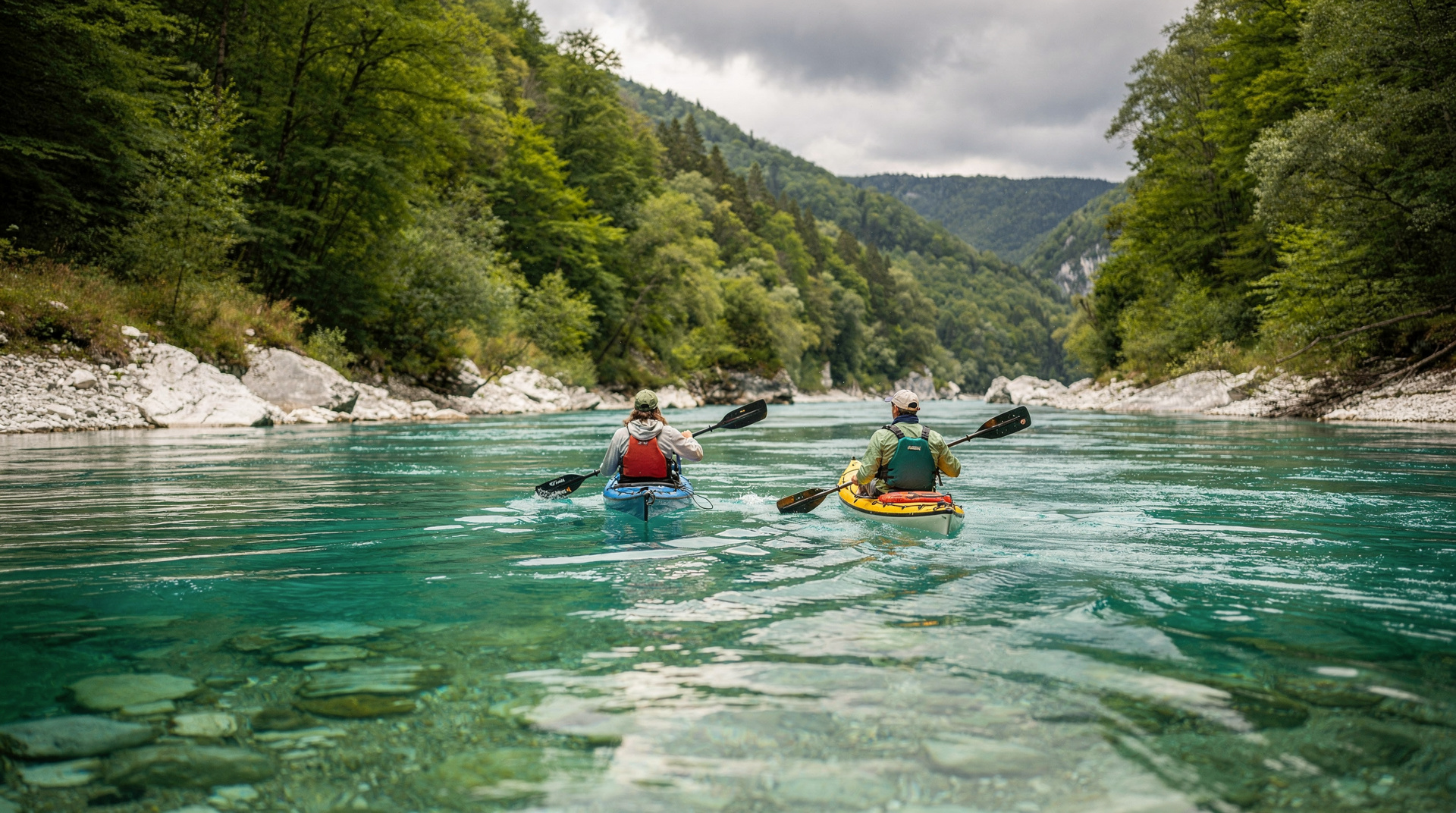
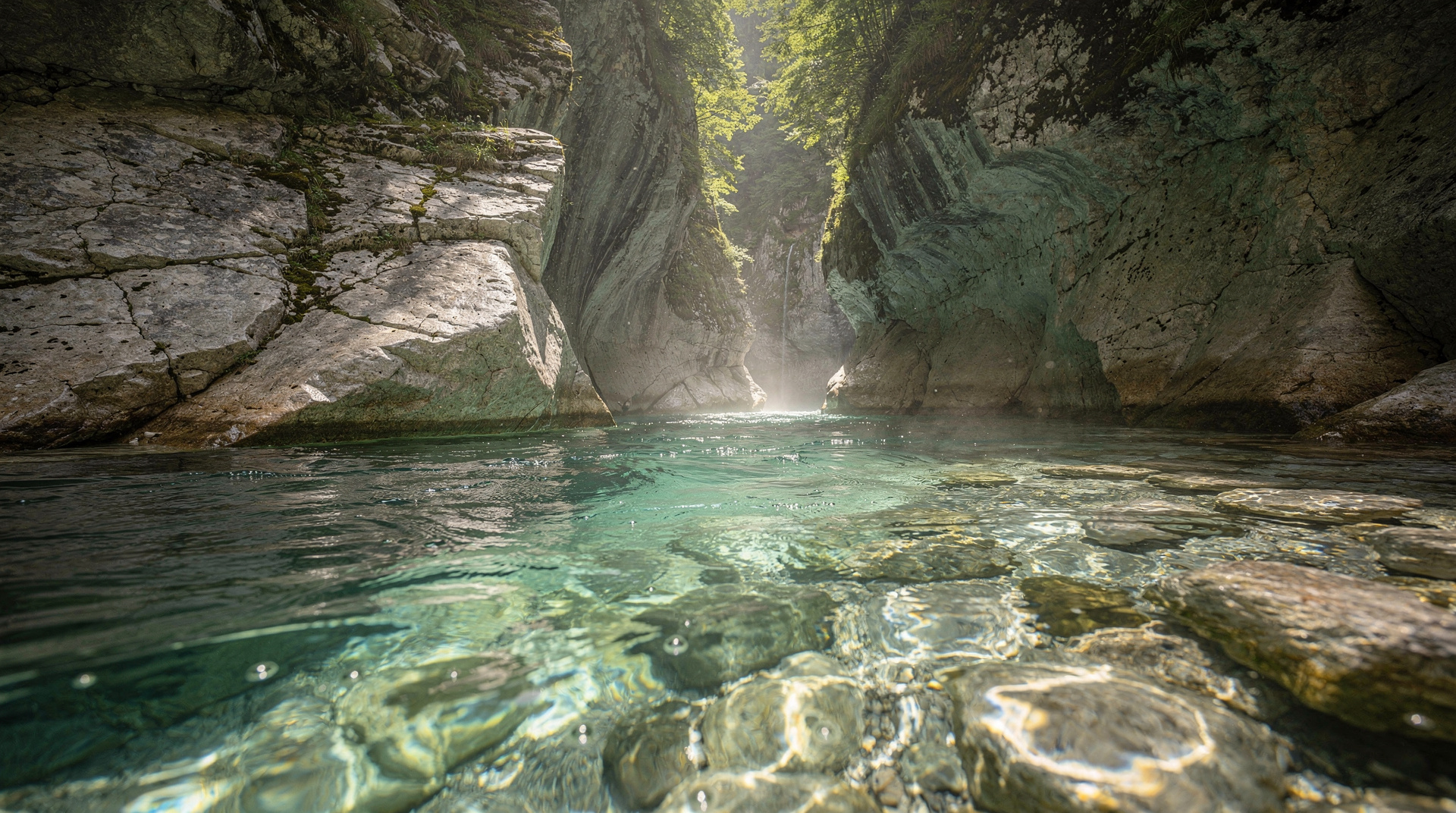
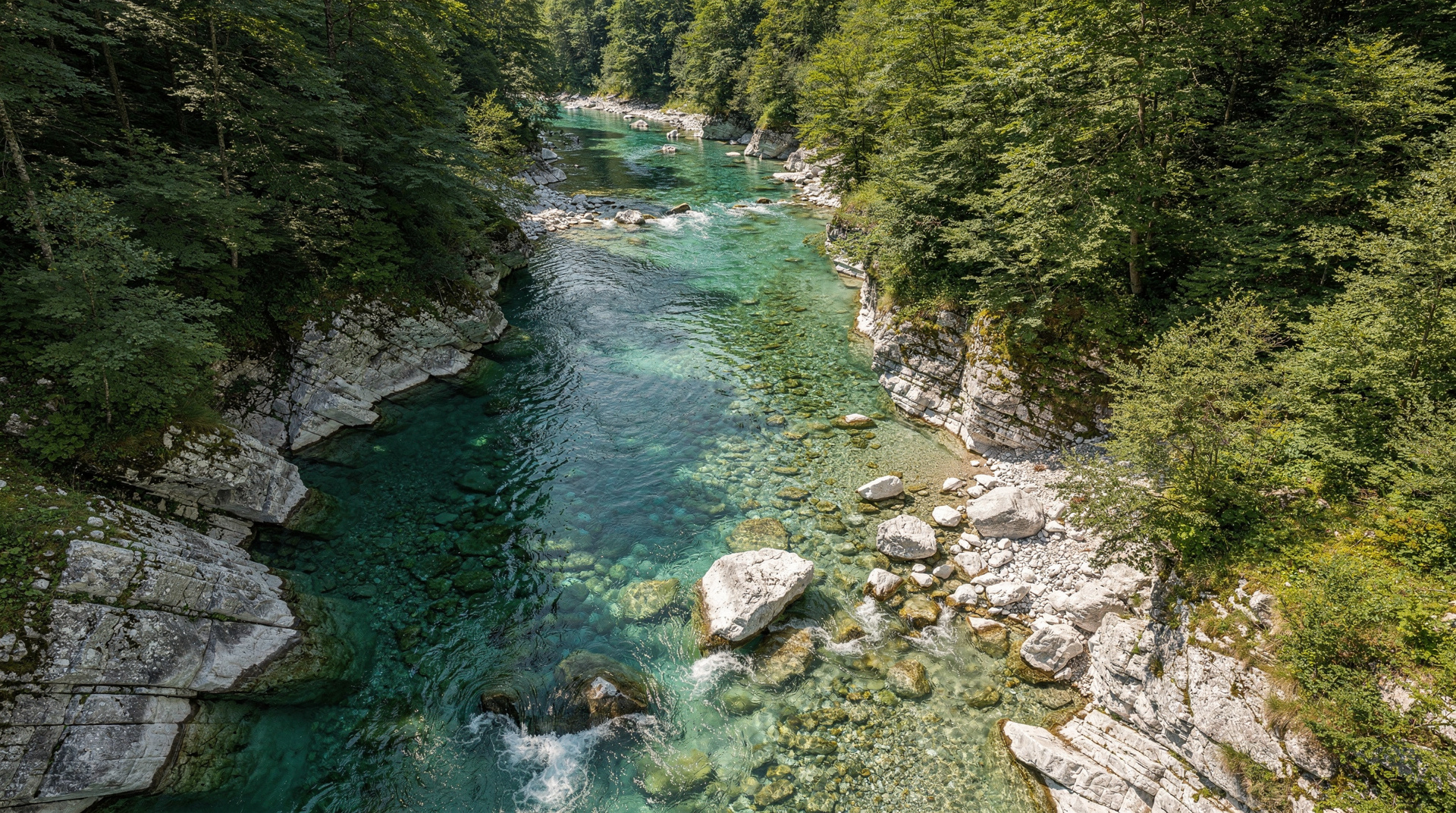
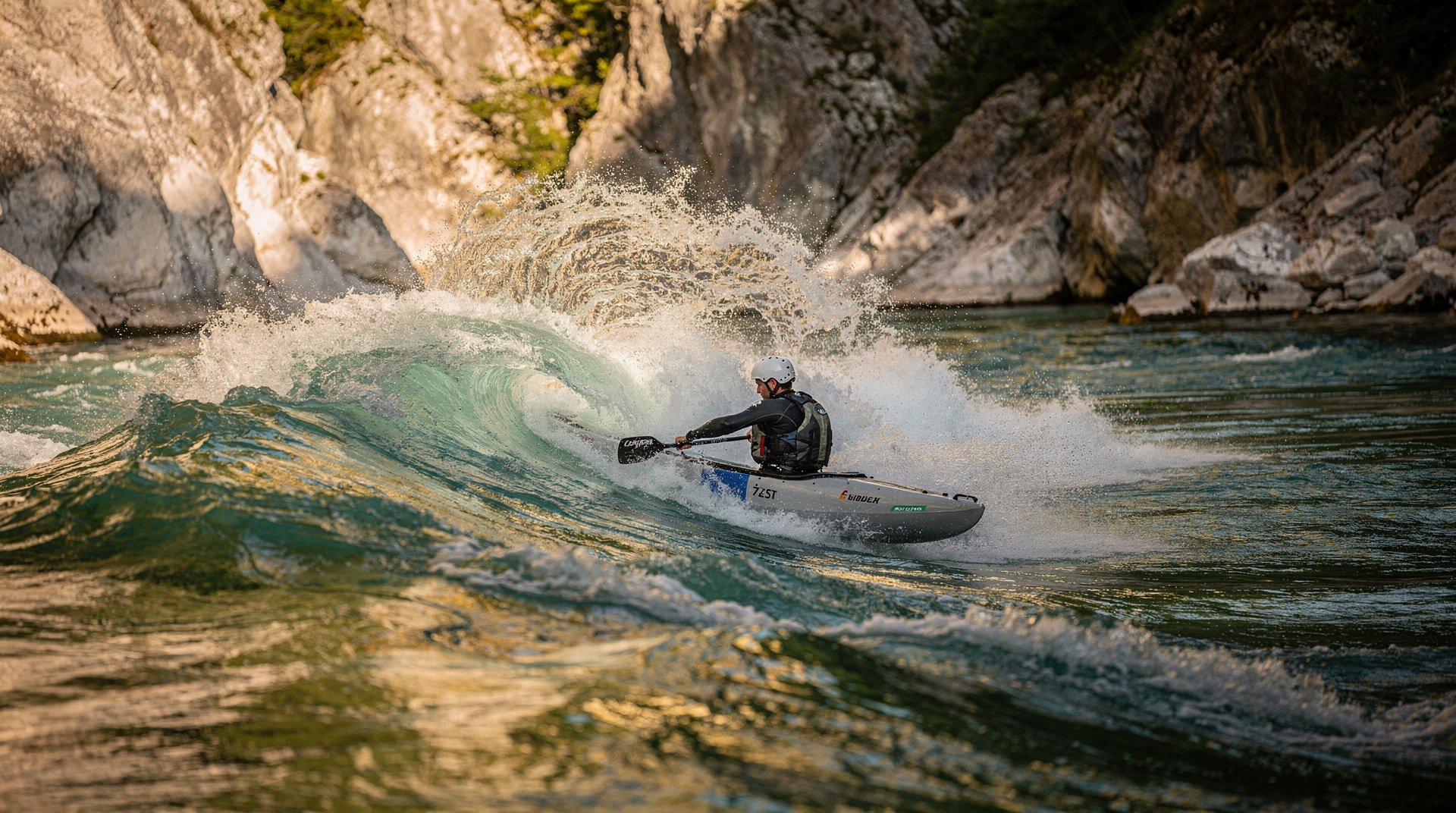
What makes the Soča different from other white-water rivers is the transparency and colour of the water. In a kayak, unlike in a raft, you are low in the water and the canyon walls are your eye-level. The turquoise-green of the river, the pale limestone below you, and the alpine walls above create a visual experience that is unlike paddling elsewhere in Europe. Experienced kayakers who have paddled rivers on three continents consistently note the Soča’s aesthetic quality.
For recreational visitors without prior kayak experience, the question is usually: raft or kayak? The answer depends on what you want from the experience. Rafting is a group activity with a guide managing the raft; you are a passenger with paddles. Kayaking is individual — even in a guided course, you are in your own boat, responsible for your own trajectory. The learning curve is steeper but the sense of personal agency is higher.
Kayaking options for all levels
Beginner guided kayaking sessions
The starting point for anyone without kayak experience. Guided sessions are run on sections of the Soča that have been selected for their approachable character — typically the middle river between Bovec and Kobarid, where the gradient eases and there are long calm sections between the mild rapids.
A beginner guided session includes:
- Introduction to kayak fundamentals: paddle strokes, bracing, wet exit
- Practise on flat water before moving to the guided section
- 2–3 hours on the river with the guide leading and correcting
Expect to capsize. Not as a failure — as a learning step. The Soča guide community is pragmatic about this: wet exits and rolling practice are built into beginner sessions because immersion in the river is part of the experience, not an accident. The cold water (12–15°C in the active season) is managed with provided wetsuits.
Guided Soča kayaking for all levels — from BovecGuided kayak tours for experienced paddlers
For those with existing kayak experience (flatwater or light moving water), guided tours cover the Bovec section in a format closer to an expedition than an instruction session. You paddle your own line, the guide provides river-reading advice and safety positioning, and the trip covers more technical features.
These tours typically run 3–4 hours and are offered in both solo kayak and sit-on-top formats.
Soča kayaking experience — guided tourMulti-day kayak instruction
For serious learners, several operators offer 2–3 day intensive kayaking courses covering wet exits, Eskimo rolls (both-sides), eddy turns, peel-outs, and ferrying. These are not beginner-friendly but are appropriate for people with some paddle experience looking to develop white-water competence.
Course prices run EUR 150–250 for 2 days depending on group size. Equipment (kayak, paddle, wetsuit, helmet, buoyancy aid) is included.
Lake Bled and the Sava river
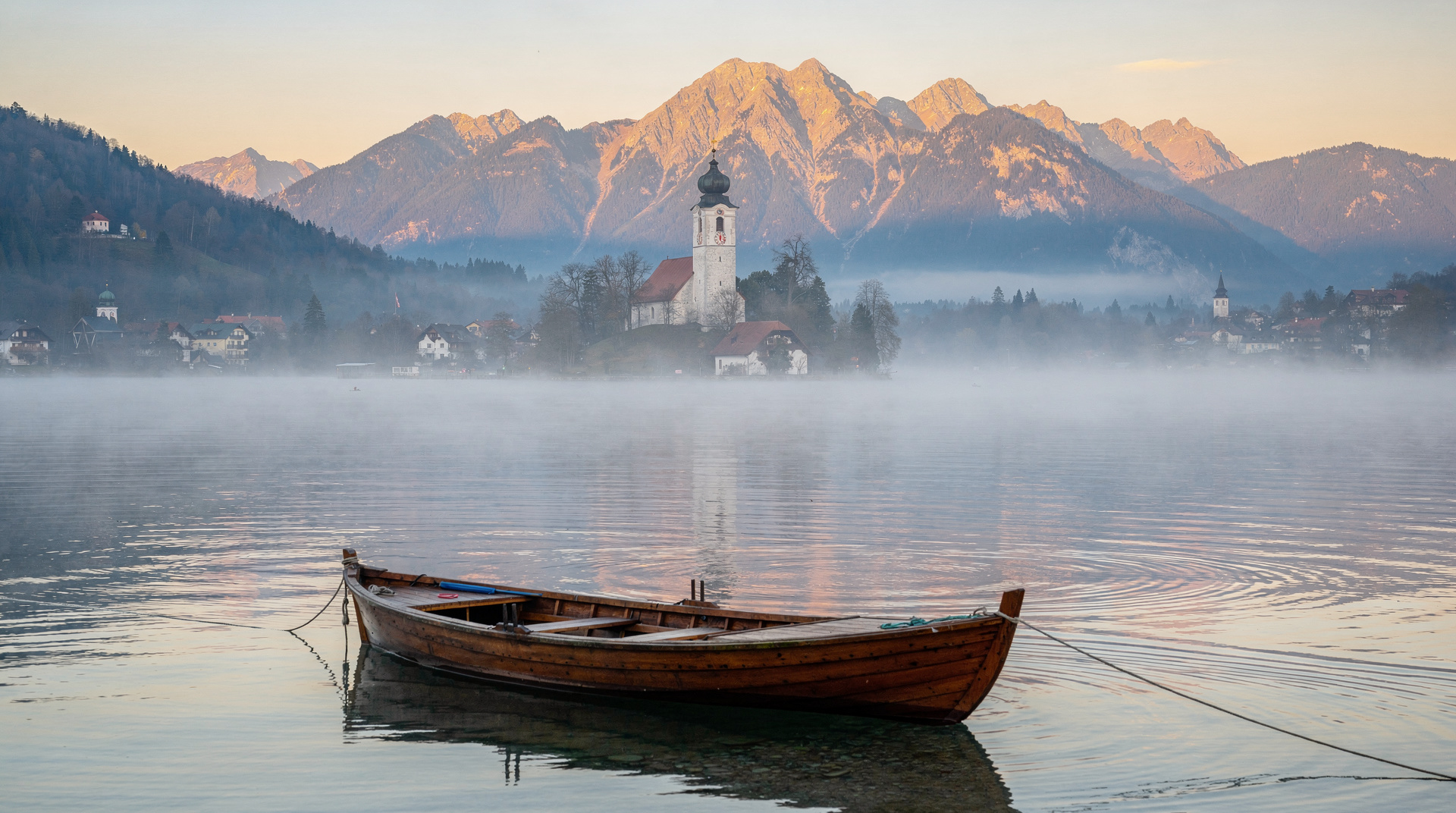
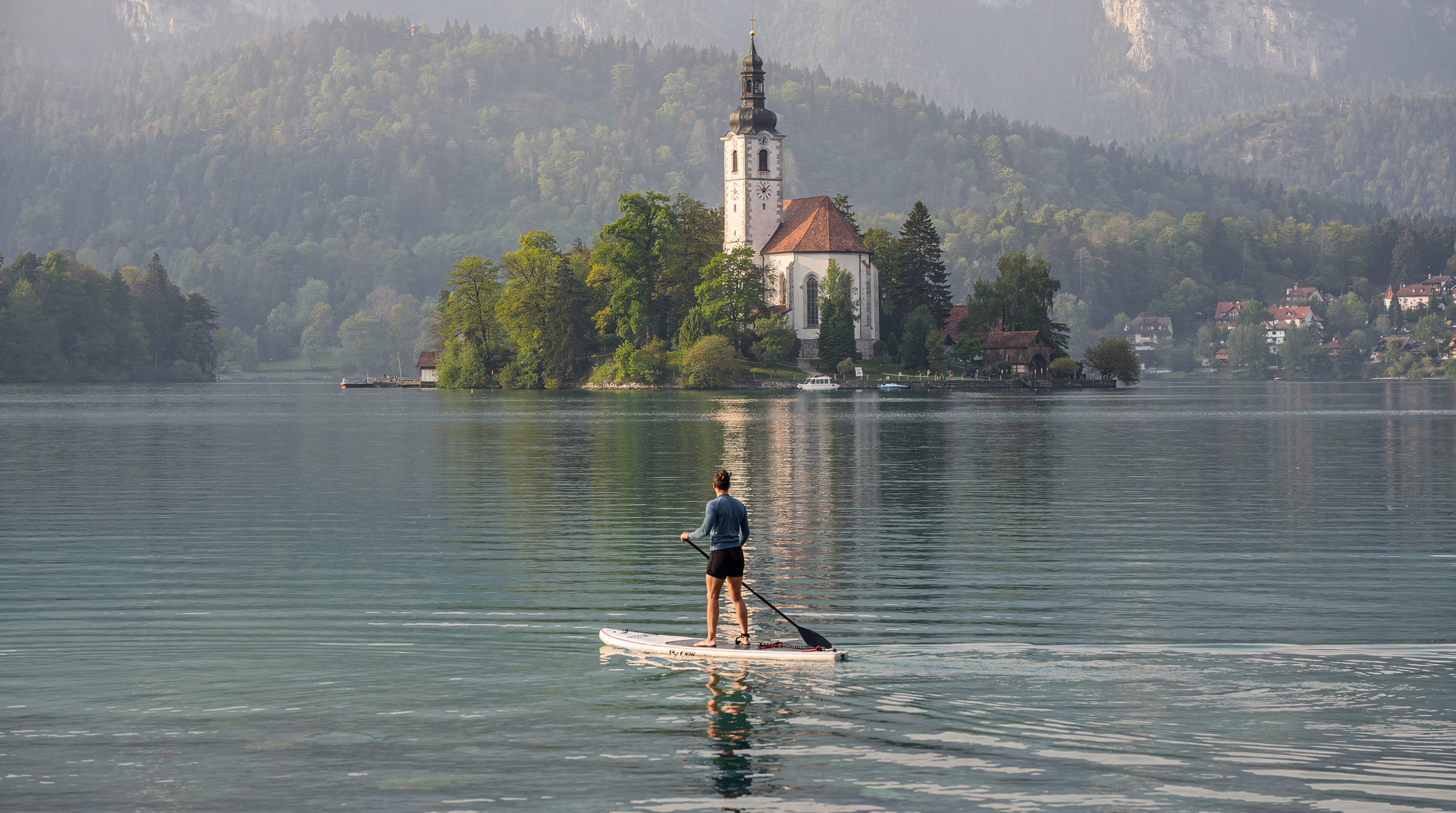
Lake Bled offers a completely different kayaking character. The lake itself is calm, transparent, and exceptionally scenic — the island with its church, the castle on the cliff above, the Karavanke mountains as a backdrop. Kayaking here is flatwater and accessible to anyone.
The Sava Bohinjka river that flows from Lake Bohinj through the Bled area offers mild moving water — Grade I–II — on guided trips that suit families and those specifically not interested in white-water intensity.
Bled Sava River kayaking adventureUnderground kayaking at Bled
One of Slovenia’s more distinctive experiences: a full-day guided kayak trip through the subterranean lake system beneath the Julian Alps. The route passes through limestone cave systems with dramatic formations, and the lake inside the cave system is larger than you expect from the entrance. Water temperature below ground is constant at around 10°C year-round, regardless of season.
This trip requires basic kayak comfort but not technical skill — the underground sections are slow-moving and the emphasis is on exploration rather than paddling technique.
Full-day underground kayaking near BledThe technical sections: what experienced kayakers come for
For those who already paddle white water, the Soča has several sections of genuine interest:
The Soča Gorge (Grade IV–V in high water): The narrowest section of the upper river, running between canyon walls 5–10m apart. This section is not commercially guided for beginners; it requires solid Grade IV skills or higher. The gorge is a World Cup slalom venue.
Trenta to Bovec (Grade III–IV): The most technically varied stretch, including the Kozjak waterfall entry and several named features. Guides with expert-level visitors run this section on request.
The Napoleon Bridge section near Kobarid: A specific stretch that gets good reviews from intermediate paddlers — continuous Grade III with clear water and the most accessible entry/exit logistics on the river.
If you are an experienced kayaker visiting the Soča independently, the Soča Valley Kayak Club (Kajak Kanu Klub Soča) has information on current conditions and non-guided access points.
Equipment and kit
All guided trips and courses include: kayak (specific to the trip type), paddle, wetsuit, neoprene boots, helmet, and buoyancy aid.
For independent paddlers: rental kayaks are available in Bovec from several operators, typically EUR 25–45 per half-day for sit-on-top or touring kayaks. White-water kayak rental for independent use requires proof of competence (most operators ask for a kayak certification or will do a brief skills assessment).
Personal kit to bring: swimwear or thermal underlayer, dry change of clothes, sun protection applied before changing into wetsuit, and a secure bag for valuables (leave in the vehicle when possible).
Comparing kayaking to rafting on the Soča
The most common question among visitors planning a Soča day is whether to book rafting or kayaking. The honest comparison:
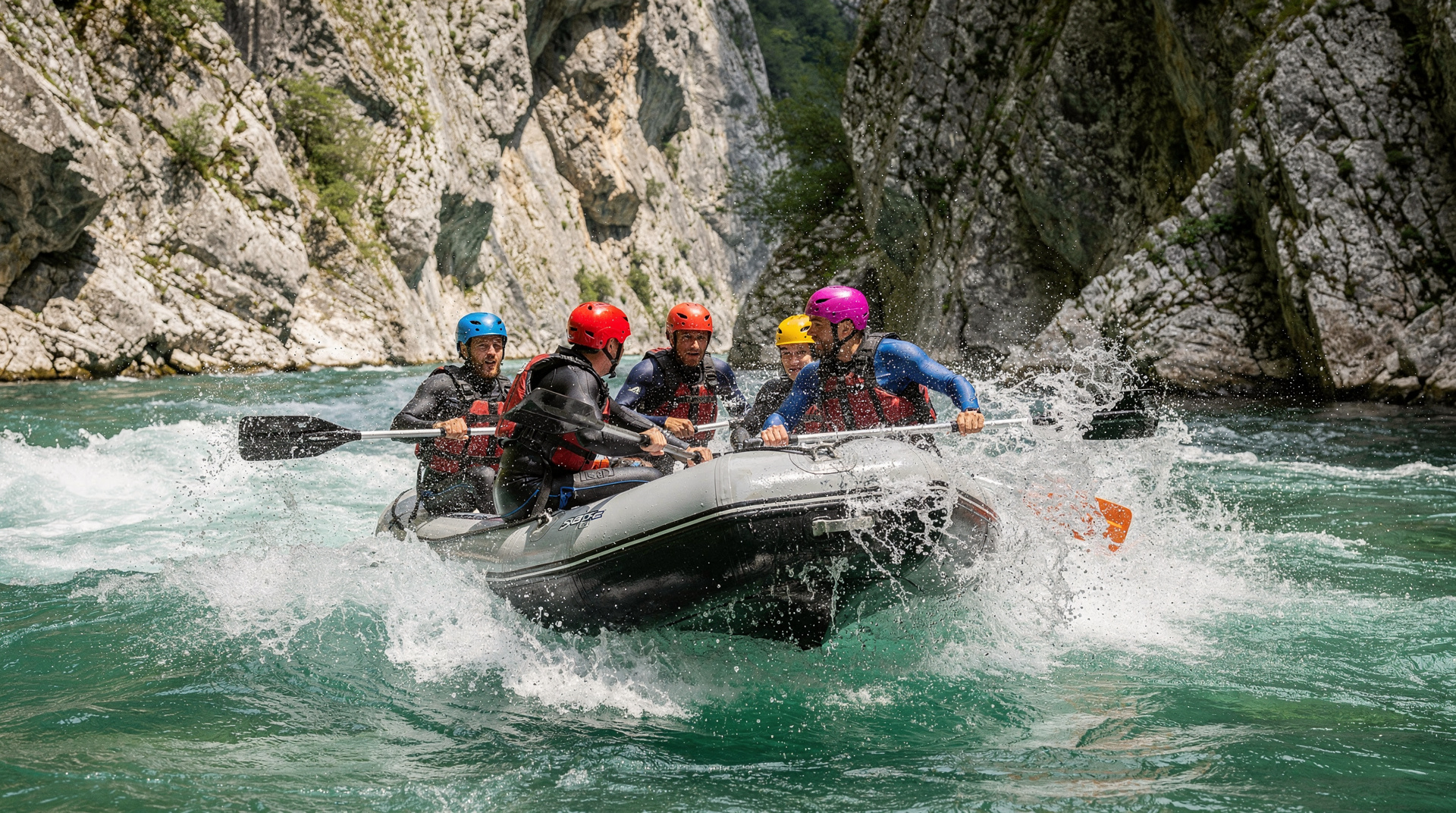
Choose rafting if: You want a group experience, are not interested in learning skills, want the most time in the dramatic upper canyon section, or are visiting with people of mixed fitness levels.
Choose kayaking if: You want individual agency and are willing to spend some of the session learning rather than purely experiencing, you have existing paddle experience and want to use it, or you are planning multiple days and want to experience the river in a different way.
Both give you the turquoise water. Both involve wetsuits. Both are guided. The kayak experience is simply more skill-dependent and more personally demanding.
| Rafting | Kayaking | |
|---|---|---|
| Group format | shared raft, one guide steers | individual boat, guided |
| Skill required | none | some, builds over sessions |
| Best for | groups, mixed fitness, passengers | individual agency, repeat visitors |
| Cost | comparable, EUR 45–70 half-day | comparable, EUR 45–60 half-day |
Water temperature and cold management
The Soča runs 10–13°C in spring (April–June), 15–18°C in July–August, and drops back to 11–14°C in September–October. These are cold by swimming-pool standards but very manageable in 5mm wetsuits for sessions of 2–4 hours.
The key cold moments: capsizing in the spring season (April–May) when water temperature is at its lowest. This is over quickly — your paddle reflex kicks in, you wet exit if needed, the guide assists recovery. Statistically more common on beginner trips than on experience tours because beginner sessions include deliberate capsizing practice.
If you are sensitive to cold, April and May sessions are more challenging for comfort. June onward is significantly more pleasant.
Gorge snorkeling as a complement to kayaking
If you want a completely different relationship with the same river, the Soča gorge snorkeling experience drifts through the gorge section in a wetsuit, viewing the limestone formations from water level and below. Doing both kayaking and gorge snorkeling over two days gives you an unusually comprehensive understanding of the river’s geography.
Getting to Bovec for kayaking
Bovec is 2h 15min from Ljubljana by car, 1h 10min from Lake Bled. Most kayaking operators are based in Bovec town centre with their own parking.
Public transport to Bovec is limited (1–2 buses per day from Ljubljana, 3h journey) and schedules do not align well with morning activity starts. For a kayaking-focused trip, a rental car is strongly advisable.
For the full Bovec logistics — accommodation, food, and the full adventure menu — see the Bovec adventure base guide.
What to book and when
July and August: book 2–3 days ahead for beginner sessions. Expert tours have more flexibility. Underground Bled kayaking has limited daily capacity — book 1 week ahead in high season.
May, June, September: same-day or next-day booking usually possible. The shoulder season kayakers tend to be more experienced and committed; beginner-friendly slots are less contested.
Weather: kayaking sessions are usually not cancelled for rain (you are already wet). Wind cancellations are rare on the Soča due to the canyon shelter. The main cancellation reason is dangerously high water after significant rainfall — operators will notify you and reschedule.
The white-water sports guide has a broader comparison of all the river activities — rafting, kayaking, SUP, and snorkeling — if you are still deciding which suits your trip best.
Learning to kayak in Slovenia: what beginners actually experience
The gap between what beginners expect and what kayaking instruction actually involves is worth addressing. Most people arrive for a kayaking session having done rafting or canoes, assume kayaking is similar, and then discover that the body position (low, knees braced, hips engaged with the boat), the paddle technique (torso rotation, not arm pulling), and the balance dynamic are all different enough that the first session is largely adjustment.
This is not a negative observation — it is how learning feels when the activity has enough technique to offer genuine progression. The instructors on the Soča have significant experience working with beginners from non-paddling backgrounds and the first wet exit (deliberate capsize and exit from the kayak) is managed supportively. Almost everyone finds the initial capsize less traumatic than anticipated.
What beginners frequently notice by the end of the first session: the connection between the kayak and the water is more direct and responsive than any raft. Small movements of the paddle create clear directional effects. The river — which is the same river regardless of which vessel you are in — reads differently from a kayak because you are low enough to see the wave patterns and water features that a raft passenger above the waterline cannot perceive.
The common feedback after a beginner kayak session: “I want to come back and do the harder sections.” This is because a 2–3 hour beginner session shows enough of the skill ceiling to make the deeper progression interesting, but covers none of it. Kayaking on the Soča is a sport with a clear and rewarding learning path; the beginner session is the entry point, not the conclusion.
The Soča as a competition kayak venue
For context on the river’s technical standing: the Soča near Bovec has hosted World Cup and international competitive slalom events. The World Canoe Sprint and Slalom circuit includes European and World Championship events, and the Soča has been part of the competitive calendar specifically because the natural river features provide technically demanding slalom gate possibilities that artificial whitewater courses replicate but cannot fully equal.
What this means for visiting kayakers: the river’s technical quality is internationally certified. The Grade IV sections near the Soča Gorge are not Grade IV because Slovenian grading is generous — they are Grade IV by international standards. Experienced kayakers who arrive with their own boats consistently rate the Soča among the top five white-water rivers they have paddled in Europe.
Paddle sports progression on the Soča
If you are planning multiple visits to Slovenia or a longer stay in the Soča Valley, the kayaking progression works roughly as follows:
Visit 1 (half-day beginner session): Basic strokes, first wet exit, gentle Grade I–II section. You understand what kayaking involves and whether you want to continue.
Visit 2 or extended stay (full-day intermediate session): Edge control, ferrying across current, basic eddy entries. You begin to read the river rather than react to it.
Multi-day course: Rolling practice (the Eskimo roll — self-righting without exiting the boat), sustained current paddling, introduction to Grade III features. This is where river kayaking becomes a proper skill rather than a guided tourist activity.
Independent paddling at Grade III: Typically after 5–10 days of instruction and practice over multiple sessions. The transition from guided to independent paddling at Grade III is significant — it means you can choose your lines and manage your own safety.
Grade IV: Requires consistent Grade III competence and specific introduction to the hydraulic features that characterize Grade IV water. Most Soča operators offer this introduction as a separate product for paddlers who have completed intermediate courses.
Kayak rental for experienced paddlers
Experienced kayakers visiting Slovenia independently can rent white-water kayaks in Bovec from operators who offer kit to visitors who can demonstrate competence (usually a brief skills assessment on arrival). Rental prices: EUR 30–50 per day for a white-water kayak, helmet, buoyancy aid, and paddle.
Independent paddlers on the Soča are required to:
- Hold appropriate skills for the section they are paddling
- File a float plan with someone onshore (informal but practical)
- Carry appropriate safety equipment (throw rope, first aid kit)
- Respect the closed sections and permit areas (the competition slalom course area may be restricted during events)
The Soča Valley Kayak Club (Kajak Kanu Klub Soča) based in Bovec has local information on current conditions, restricted sections, and access logistics. International paddlers are welcomed; stopping in at the club is recommended before an independent run.
Sit-on-top kayaks vs closed-deck kayaks
Most beginner sessions use sit-on-top kayaks — wider, more stable, self-draining, and forgiving of the inevitable early capsizes (you fall off rather than being enclosed). Sit-on-top kayaks are the entry point for river touring and are appropriate for the calmer Grade I–II sections.
Closed-deck kayaks (the type used in competition and on Grade III+ water) are enclosed with a spray skirt — you are inside the boat, not on top of it. This is less intuitive initially but provides significantly better control and efficiency on technical water. All advanced instruction and white-water touring on the Soča uses closed-deck kayaks.
The choice between formats is made by the operator based on the session type and group experience, not by the participant. If you have strong preferences about boat format, discuss with the operator when booking.
Kayaking with teenagers and older children
Most operators set a minimum age of around 12–14 for beginner Soča kayaking sessions, and a minimum level of swimming competence and comfort in cold water is generally required regardless of age. Guides assess confidence on flat water before moving to any moving-water section, and sessions for younger participants are usually shortened and kept to the gentlest stretches of river.
Families with younger children who still want a Soča paddling experience are generally better served by the Lake Bled kayaking or Sava Bohinjka options, which offer flat or very mild moving water without the cold-water immersion element that beginner Soča sessions deliberately build in. Always confirm the operator’s specific age and swimming-ability policy when booking for a family group, since it varies by operator and by water level on the day.
Top experiences
Bookable activities with verified prices and instant confirmation on GetYourGuide.