Snorkeling in the Soča gorge: what it is and whether it's worth it
From Bovec: Soča Gorge snorkeling and river walking
What is gorge snorkeling on the Soča and is it worth it?
Gorge snorkeling involves drifting through the Soča gorge section in a wetsuit and snorkel mask, using the river current. The water clarity is 10–15m, making it genuinely spectacular below the surface. Worth it as a complement to rafting — a completely different relationship with the same river. EUR 40–55.
| Where | Soča gorge near Bovec |
| Cost | EUR 40–55 per person |
| Duration | 2–3 hours total, 1.5–2h in water |
| Season | June–September (water too cold otherwise) |
| Needs | Basic swimming ability, comfort with cold water |
| Combine with | Afternoon rafting on the same gorge section |
What gorge snorkeling actually involves
Gorge snorkeling on the Soča is not ocean snorkeling adapted to a river. It is a specific activity built around the unique properties of this particular body of water: exceptional clarity, consistent gentle current in the gorge sections, and a limestone canyon environment that creates dramatic visual material both above and below the waterline.
The activity involves: putting on a wetsuit, snorkel, and mask, entering the water at a designated point in the Soča gorge, and drifting with the current through the narrowest, most spectacular section of canyon while looking through the water surface.
You are moving at the pace of the river, not swimming hard. The guide manages group pace, identifies the best viewing sections, and provides safety cover. Your role is primarily passive and observational — you are experiencing the river at a sensory level that neither rafting nor canyoning provides.
Soča gorge snorkeling from Bovec — guided experienceThe underwater environment
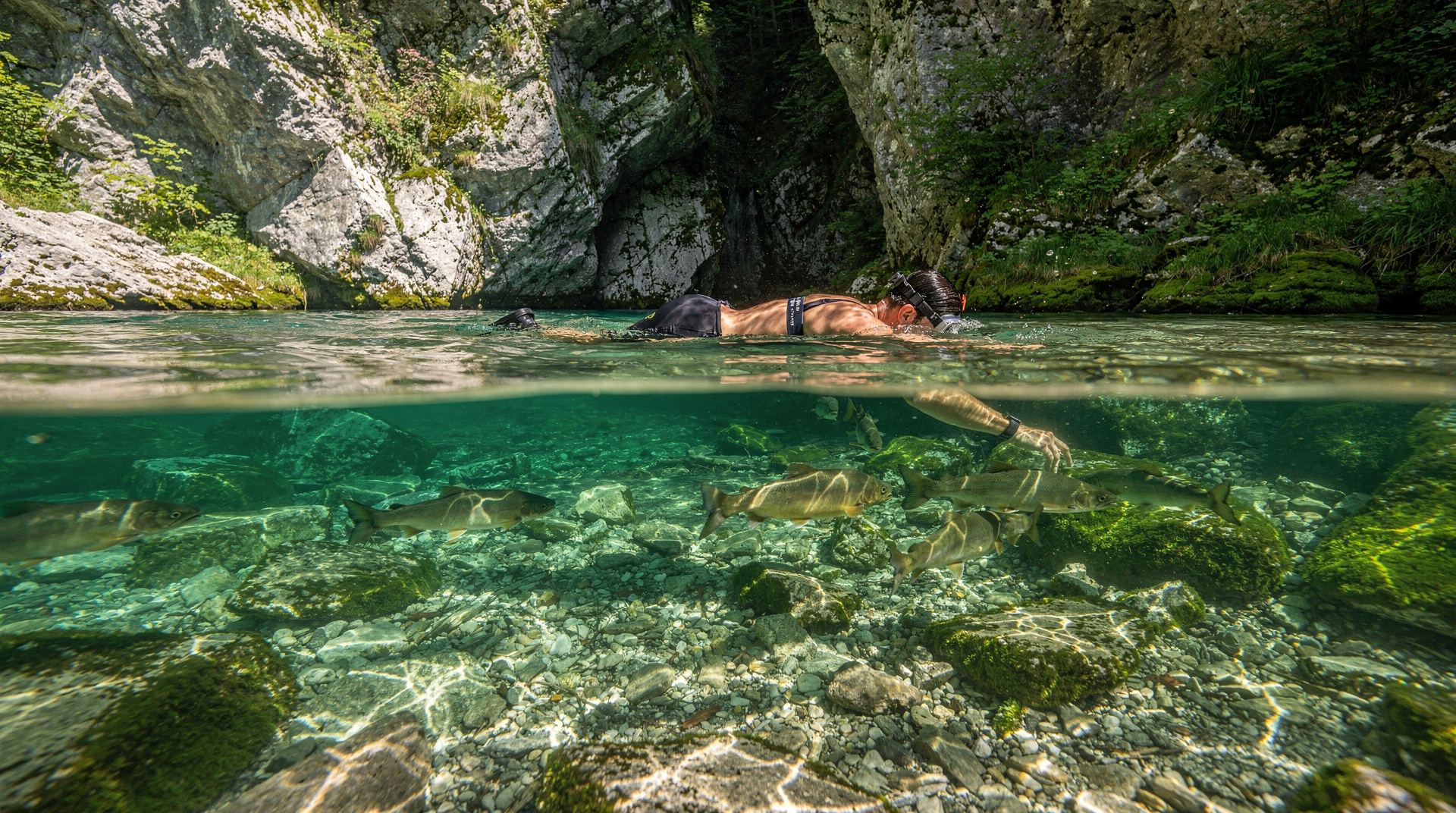
The Soča gets its turquoise colour from dissolved limestone particles suspended in water of exceptional clarity. Visibility in the clear sections of the gorge is typically 10–15m. For reference: the Mediterranean in good conditions averages 6–8m visibility; the Soča regularly exceeds this.
What you see below the surface in the gorge:
The limestone riverbed: Pale, smooth rock in the deeper sections, coarser gravel in the faster stretches. The colour is consistent with the above-water canyon walls — the whole environment reads as a single geological object rather than two separate zones (river and bank).
Fish: Soča trout (marble trout and brown trout) hold in the deeper pools and below rocks. At snorkel distance (1–3m depth in the pool sections), you will see them. They do not flee immediately — the current makes direct pursuit impractical from a human floating on the surface, and the fish have calibrated their response accordingly.
The canyon walls below water level: The gorge narrows underwater as it does above. In the tightest sections, the walls are visible 2–3m beneath the surface before the light angle cuts off. This underwater perspective on the canyon geometry is genuinely surprising — the canyon is deeper and narrower below the waterline than it appears from above.
Reflections and light: Afternoon light entering the gorge at a low angle creates visible light columns through the water on clear days. This is photogenic in the exact way that makes gorge snorkeling different from any other activity on the river.
How it compares to rafting and canyoning
The honest answer to “which should I choose” is that they are not alternatives — they show you the same landscape from fundamentally different positions.
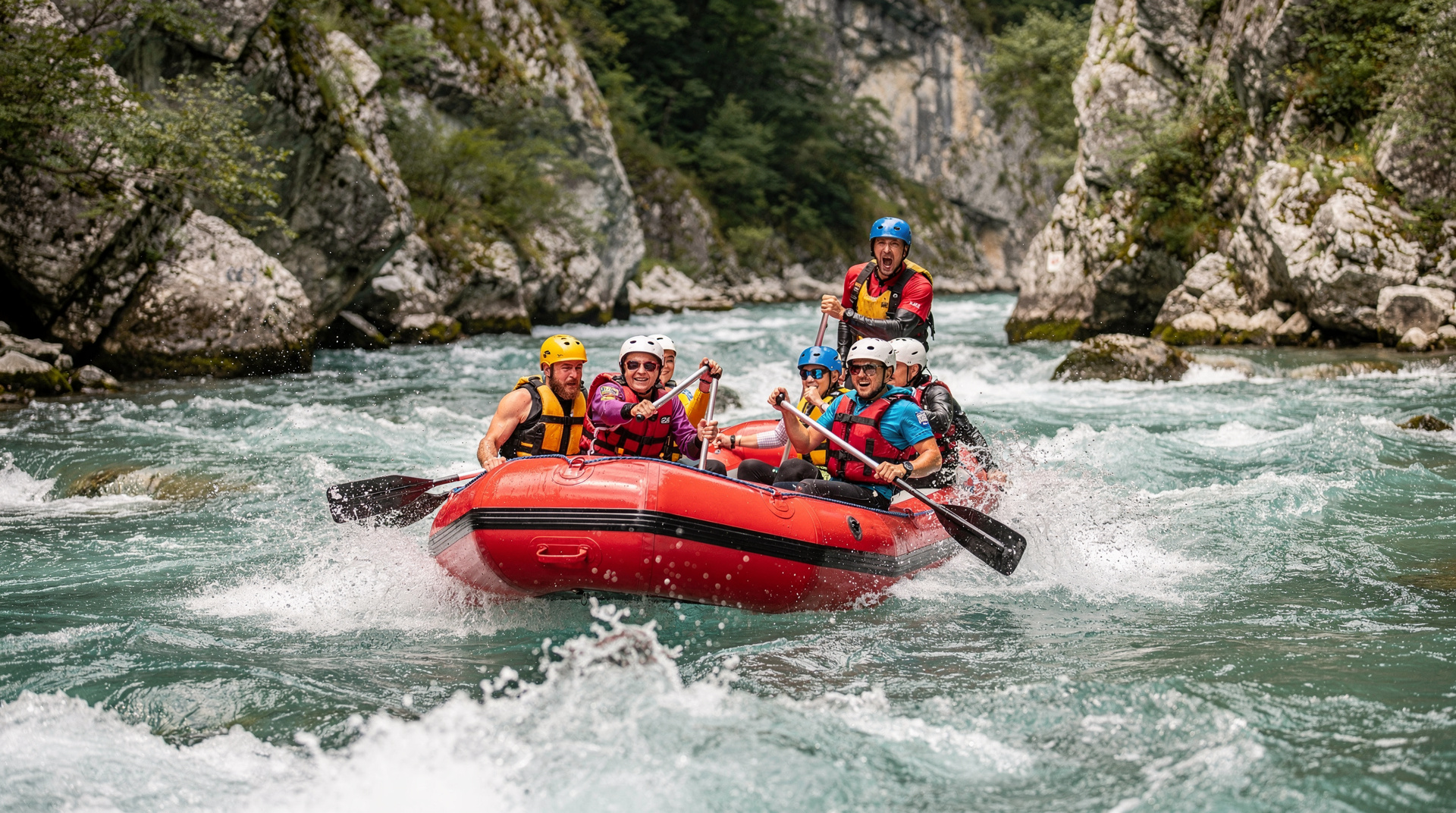
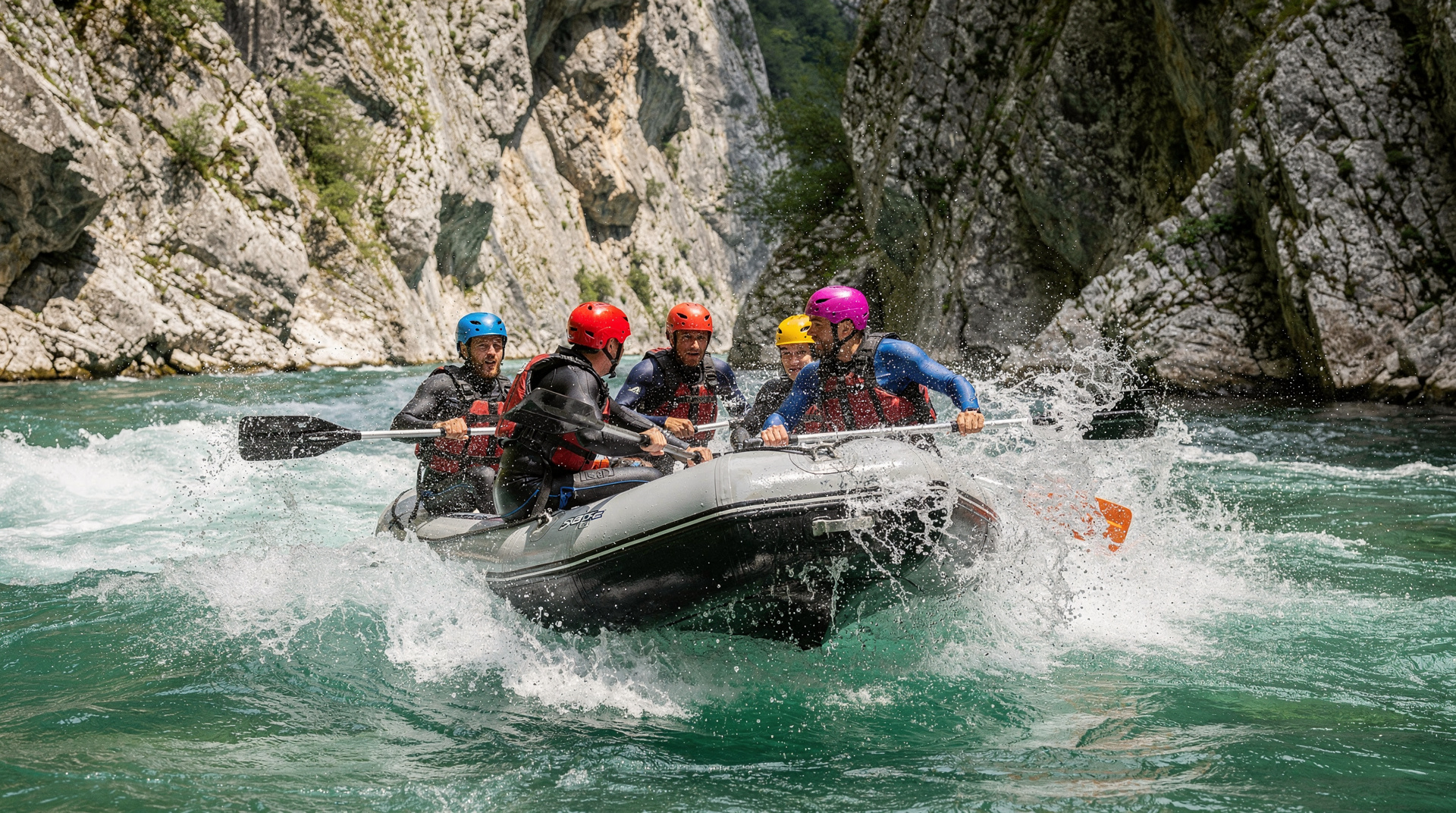
Rafting places you in a raft on top of the water, moving fast through the canyon. Your engagement is active (paddling), the canyon walls are the backdrop, and the experience is kinetic. If you want to pair the two, you can book a whitewater rafting trip on the Soča River for the same day.
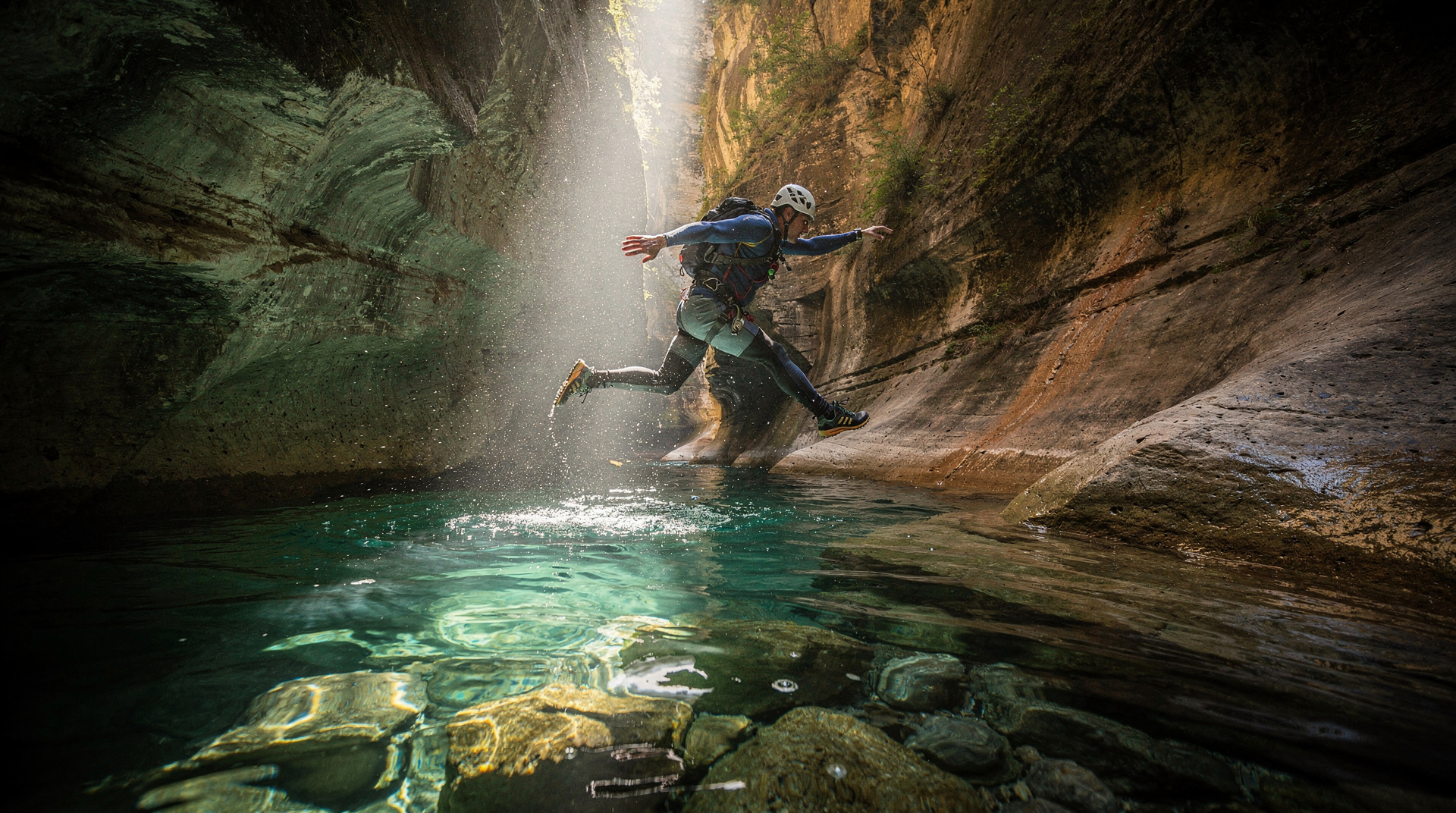
Canyoning places you inside the tributary gorges (not the main Soča), physically moving through tight limestone spaces. Active, cold, intimate at the cliff-face level.
Gorge snorkeling places you horizontal in the water, your face at the surface, looking down. Passive, slow, observational. The experience is about what the water contains, not what the water does to you.
The most common verdict from visitors who do both rafting and gorge snorkeling: they provide genuinely different enough experiences that booking both makes sense on a multi-day Bovec stay. Doing snorkeling without having seen the canyon from the raft first means you lack the above-water reference point that makes the underwater perspective interesting. Doing rafting and snorkeling in that order gives you a complete spatial understanding of the gorge.
What the experience is not
It is not warm-water tropical snorkeling. The Soča runs at 16–19°C in July–August, which is cold by snorkeling standards. Wetsuits are provided, but the experience requires comfort with cold-water immersion. If you have only ever snorkeled in the Mediterranean or tropics, recalibrate your expectations for the temperature.
It is not fast-moving. The gorge section selected for snorkeling tours is chosen for relatively gentle current — drifting speed, not white-water pace. This is a feature, not a limitation. Moving fast would prevent the careful underwater observation that is the point.
It is not suitable for non-swimmers. Unlike rafting (where you are in the raft, not in the water), snorkeling requires swimming ability. Not competitive swimming — calm floating and basic forward motion — but actual in-water comfort is necessary.
It is not year-round. The cold water and the need for extended immersion mean this activity is practical only when water temperature is at least 14°C — roughly June through September. Earlier in the season, water is too cold for a comfortable experience.
Practical details
Duration: 2–3 hours total including transfer, briefing, and the snorkeling section (typically 1.5–2h in the water).
Equipment provided: Wetsuit (5mm), neoprene boots, snorkel, and mask. Fins are sometimes provided; ask when booking.
What to bring: Swimwear to wear under the wetsuit, a dry change of clothes, sun protection applied before suiting up, and a towel.
Price: EUR 40–55 per person.
Group size: Typically 6–12 people. Smaller groups provide better guide attention; ask when booking if this is a priority.
Best time of day: Morning tours have better light in the gorge (sun angle enters the canyon better in morning hours). Afternoon tours are available but the gorge shading makes afternoon visibility slightly lower.
Season
| Month | Conditions |
|---|---|
| June | Good. Water warming to 14–16°C. Clarity excellent after spring runoff settles. |
| July | Best month. Water 17–19°C. Maximum clarity. Full season. |
| August | Excellent. Slightly lower water levels mean some sections are shallower; still very good. |
| September | Good. Water cooling to 14–16°C. Fewer people on the river. |
| April–May | Not recommended. Water 10–12°C even with full wetsuit — too cold for extended immersion. |
| October | Borderline. Water 11–13°C. Possible with thick wetsuit but marginal comfort. |
Getting there
All snorkeling tours operate from Bovec with transport to the gorge entry point included. The gorge section used for snorkeling is approximately 5–10km from Bovec centre. No independent access — guided tours only.
Bovec is 2h 15min by car from Ljubljana and 1h 10min from Lake Bled. For all the logistics of using Bovec as an activity base, see the Bovec adventure guide.
Booking
Book 24–48 hours ahead in July–August. May, June, and September have more availability. Weather cancellations are rare (rain does not significantly affect snorkeling conditions; the gorge is already wet). The main cancellation trigger is high water after significant rainfall, which affects visibility. Operators will notify you and reschedule.
For the complete comparison of all water sports on the Soča — rafting, kayaking, SUP, canyoning, and snorkeling — see the white-water sports guide. For the broader adventure sports picture across Slovenia, the adventure sports guide covers the full menu.
What you actually see: a description
The gorge section used for snorkeling includes the narrowest part of the Soča canyon near Bovec. At the surface level, the walls rise 15–25m above you, close enough that you could touch both sides in the tightest sections with an extended paddle. But the underwater view adds a dimension that is genuinely surprising.
The limestone floor in the pools: In the still pools between the gentle current sections, the bottom is visible 4–6m below — pale stone with irregular texture, some sections covered in fine silt, others exposing bare rock. The light penetrates to this depth because of the clarity. The colour of the floor matches the above-water canyon walls exactly, which creates a disorienting sense of continuity between the aquatic and aerial environments.
Trout positions: Marble and brown trout hold station in specific positions in the Soča that snorkelers can see clearly: in the shelter of large boulders, in the slower water on the inside curve of the canyon, and in the deeper pool sections. From the snorkel position, you are close enough to see the fish’s eye movement. They do not flee immediately — the current makes sustained pursuit impractical from above, and the trout seem to understand this. Staying still at the surface, face down, produces the longest viewing windows.
Submerged features: The Soča gorge has several geological formations visible only from below the surface: overhanging limestone shelves, crack systems in the canyon wall running below the waterline, and in the narrowest section, the canyon walls converging below the visible waterline to a degree that the surface view does not suggest.
Light effects: On sunny mornings, columns of light enter the gorge through the gap above and refract differently through the water surface. The effect is similar to what is described from sea cave snorkeling in the Mediterranean, but in a freshwater canyon context. The colour of these light columns is the specific turquoise of the Soča — a combination of the water’s mineral content and the particular wavelengths that penetrate the limestone-filtered clarity.
Snorkeling vs SCUBA on the Soča
A reasonable question, occasionally asked: is SCUBA diving possible on the Soča? The answer is technically yes — the deeper pools reach 4–6m and the visibility would be excellent — but commercial SCUBA operations on the Soča are not established. The current means that surface swimming with fins is more practical than tank diving for most of the route, and the existing snorkeling format covers the most interesting sections without the equipment overhead.
There are occasional organized technical dive events on specific deeper pool sections (organized by local diving clubs). These are not tourist products but can be joined by visiting certified divers who contact the organizing club in advance.
Photography underwater
The Soča gorge snorkeling experience is unusually photogenic, but capturing it requires specific equipment:
Waterproof camera/phone case: Standard phone cases rated to 5m (IPX7) are adequate for snorkeling depth if they seal correctly. Test the seal before the trip by submerging in a sink for 30 minutes.
GoPro or equivalent action camera: The best results from snorkeling photography. Wide-angle captures the canyon geometry more effectively than phone lenses. The underwater housing (supplied with GoPros) is specifically calibrated for the refraction correction that makes underwater photos look undistorted.
What to photograph: The most interesting underwater shots are from below looking up — the canyon walls above the waterline visible from underwater level, with the sky as a gap above. This requires pointing the camera upward from a 0.5–1m depth. The trout shots require patience and a camera that handles available-light conditions (no flash permitted near fish in the national park sections).
Professional photograph packages are available from the snorkeling operator in the same way as for rafting — a guide with an underwater camera documents the group at the best sections. These packages are worth considering for the jump and gorge-pass moments that personal camera handling makes difficult.
The Soča’s ecological significance
The gorge section used for snorkeling is within Triglav National Park, and the park’s regulations apply to behaviour in and around the water. The most relevant:
No feeding fish. The marble trout population is protected; any intervention in their feeding behaviour is prohibited.
No rock touching or collection. The canyon walls and floor are part of a protected geological environment. Touching is unavoidable as you drift through; deliberate impact is not permitted.
No loud noise. The canyon’s acoustics amplify sound. Guides keep group noise low, which also benefits the wildlife observation.
No littering. The river carries anything dropped rapidly downstream; even small items have significant impact in the gorge system.
These constraints align naturally with the activity’s format (drifting, observational, passive) and are not experienced as restrictions in practice. They are simply the operating conditions of snorkeling in a protected natural environment.
Combining snorkeling with the rest of the Soča day
Gorge snorkeling sessions typically finish by noon. The afternoon is free for other activities or for exploring the wider Soča Valley:
The Soča Gorge trail: A short walking trail along the top of the gorge (not in the water) gives the above-water perspective on the sections you just saw from below. 2–3km round trip, 1–1.5 hours. Free, no equipment needed.
Kobarid: 15 minutes south of Bovec, Kobarid has the WWI museum and the Napoleon Bridge. An afternoon in Kobarid gives historical and architectural context for the valley landscape.
Afternoon rafting: If you want to experience the same gorge section from a raft, afternoon slots are available. The double view — underwater in the morning, on top of the water in the afternoon — is the most complete way to understand the Soča canyon.
For the planning picture — how snorkeling fits into a multi-day Bovec itinerary alongside rafting, canyoning, and other activities — see the Bovec adventure base guide.
The gorge environment and why it is different from other snorkeling
Ocean snorkeling and river snorkeling are fundamentally different experiences in ways that first-timers do not always expect. Understanding the differences helps you get more from the Soča gorge session.
Water movement: The Soča gorge is a flowing river, not static water. In the selected snorkeling section, flow is gentle — drifting speed — but there is constant directional movement. This means you do not need to swim actively to move; you are carried by the current. It also means the fish hold station relative to the current, not relative to you, which makes their position more predictable.
Depth variation: Unlike a coral reef where depth is relatively constant, the gorge alternates between shallow (0.5–1m depth) and deep pool sections (4–6m). In the shallow sections you can see the bottom by looking directly down; in the pools, the bottom fades to the limit of visibility. This variation creates the most interesting snorkeling sections — the transition from shallow to deep.
Overhead environment: The canyon walls above the water surface are part of the visual experience in a way that ocean snorkeling never provides. In the tightest gorge sections, looking up through the water surface shows the sky as a narrow strip between walls. This above-water view, accessible from below the surface, is specific to river canyon snorkeling.
Cold: As described earlier, 16–18°C (summer water temperature) is significantly colder than Mediterranean snorkeling. The adaptation is genuine and takes 5–10 minutes, after which the body is warm enough from movement to sustain the session comfortably.
Snorkeling safety: the river considerations
River snorkeling has specific safety considerations that differ from ocean snorkeling:
Current: In the snorkeling section, current is gentle and managed. Guides are positioned to retrieve anyone who moves off the route. Do not fight the current — moving with it and steering with fins is much more efficient than swimming against it.
Submerged obstacles: The gorge floor has rocks and boulders that are not always visible until close range. Move feet-forward in any current section so your feet make contact before your head if you are moving into shallower water.
Entry and exit points: All entry and exit from the gorge section is at guide-designated points. Do not attempt to exit from undesignated points — the canyon walls are steep and the bank vegetation is dense. The guided exit routes are selected for safety and have established scramble paths.
Group positioning: Guides position themselves at both the front and rear of the snorkeling group. Stay within the group — do not swim ahead. The gorge has sections where the current accelerates, and the guide at the front is positioned to manage the transition.
Equipment management: The snorkel mask is the most important piece of equipment. Clear the mask before entering the water; if it fogs, do not panic — roll onto your back, float, clear it at the surface. Guides demonstrate the clearing technique during briefing.
The marble trout perspective
Snorkeling the Soča gorge gives you the closest non-fishing access to marble trout that is possible. From a raft 1–2m above the water surface, you may see the turquoise reflection of trout but rarely the fish detail. From snorkel depth, you are at the same level as the fish’s feeding zone.
What to look for: marble trout hold downstream of boulders in the current break, in the tail of pools where the current slows, and in the deeper sections of the gorge where the light is lower. Their pattern (irregular pale marbling on bronze-grey) is better camouflage than you expect until you know what to look for — once you have identified one fish, you start seeing them everywhere.
The trout are aware of your presence. They do not flee immediately, but they are watching you. Moving slowly and staying low in the water column (not thrashing at the surface) extends the viewing window significantly. Guides know the positions where trout consistently hold and will direct attention there.
After snorkeling: the full sensory recalibration
First-time Soča gorge snorkelers consistently report a specific effect after the session: when you return to land and look at the river from the bank, you see it differently. The underwater knowledge — what the limestone floor looks like at the depth you were floating above, where the fish hold, what the canyon walls look like below the waterline — changes the visual interpretation of what had been a purely above-surface experience.
This is the specific value of gorge snorkeling as a complement to rafting: the raft shows you the river’s surface character at speed; snorkeling shows you the river as a three-dimensional environment with an interior. The combination gives a more complete understanding of the Soča’s character than either activity provides alone.
Fitting snorkeling into a wider Soča trip
Snorkeling works best as one piece of a longer stay in the Soča Valley rather than a stand-alone outing. If you are still deciding how to spend your days, the Soča adventure itinerary shows how water activities, walks and rest days can be spread across a week, and the Soča Valley day trip guide helps if you only have a single day to work with.
For the other ways of getting onto the river, the kayaking guide covers paddling at your own pace, while the canyoning guide explains the tributary gorges. If you want to stay dry and still see the water, the Soča trail hike follows the river on foot. Anglers who are curious about the trout you will see below the surface can read the fly fishing guide.
Because the season is short, timing matters. The best time to visit Slovenia and the summer in Slovenia guide put the river season in the context of the whole country, and the packing guide lists what else to carry for a mountain valley where mornings can feel cool even in summer.
Getting to the valley is easiest with your own wheels, so the car rental guide is worth a look before you commit to a base. The where to stay guide compares places to sleep around the country, and nearby Tolmin is another option in the same valley. For a more personal take on the region, the blog stories discovering the Soča Valley and the emerald river Soča describe what the valley feels like once you are there, and the national parks guide explains the protected landscape around it.
Frequently asked questions about Snorkeling in the Soča gorge
Do I need to know how to swim for Soča gorge snorkeling?
Yes. Unlike rafting where you sit in a raft, snorkeling requires actual in-water comfort and basic swimming ability — calm floating and forward motion. You don't need to be a strong or competitive swimmer, but genuine unease in water is a real limitation for this activity. Tell your operator in advance if you have any doubts.Can I combine Soča gorge snorkeling with rafting on the same day?
Yes, and many visitors do exactly this. Snorkeling sessions typically finish by noon, leaving the afternoon free for a rafting trip on the same gorge section. Doing both in the same day gives you the complete above-water and below-water perspective on the canyon, and most visitors who try both consider it worth the extra booking.How cold is the water for Soča gorge snorkeling?
The Soča runs 16-19C in July-August, which is genuinely cold by snorkeling standards even with a 5mm wetsuit provided. The activity is only offered roughly June through September because water below about 14C makes extended immersion impractical. If you have only snorkeled in the Mediterranean or tropics before, recalibrate your temperature expectations.
Top experiences
Bookable activities with verified prices and instant confirmation on GetYourGuide.