Canyoning in Slovenia: Sušec, Fratarica, and the best gorges
Bovec: canyoning for beginners experience
Which canyon is best for beginners in Slovenia?
The Sušec gorge near Bovec is the most popular beginner option — natural slides, 3–8m jumps, and no technical climbing required. The Fratarica canyon is a step up in commitment and length. Both are guided, and no prior experience is needed.
Why the Soča tributaries are Slovenia’s canyoning heartland
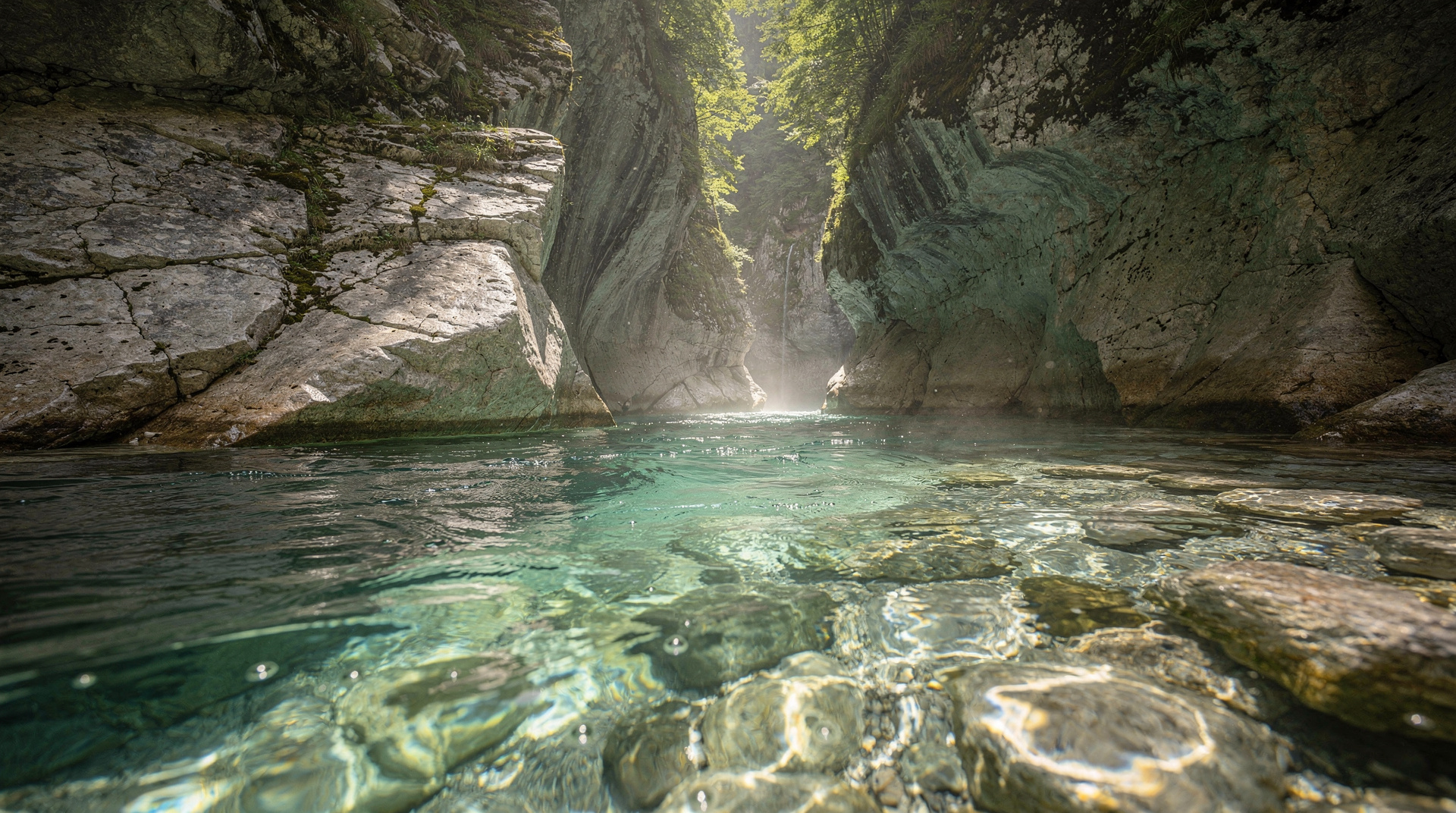
The canyons that feed the Soča River from the Kanin massif have been carved over millennia through a limestone plateau that is unusually suited to the sport. The Fratarica and Sušec streams drop sharply from the 2,587m Kanin peak toward the Soča Valley floor, and in doing so they have created narrow slot canyons with precisely the features that make canyoning interesting: smooth water-polished rock for natural slides, deep plunge pools for jumps, short rappelling sequences on fixed lines, and occasional wading sections where the canyon opens and you can see the limestone walls rising 20–30 metres above.
| Where | Sušec and Fratarica gorges near Bovec |
| Cost | Around EUR 50–95 depending on canyon and length |
| Time needed | 3–6 hours total including transfers |
| Season | April–October |
| Fitness | Basic swimming ability; no technical skill required |
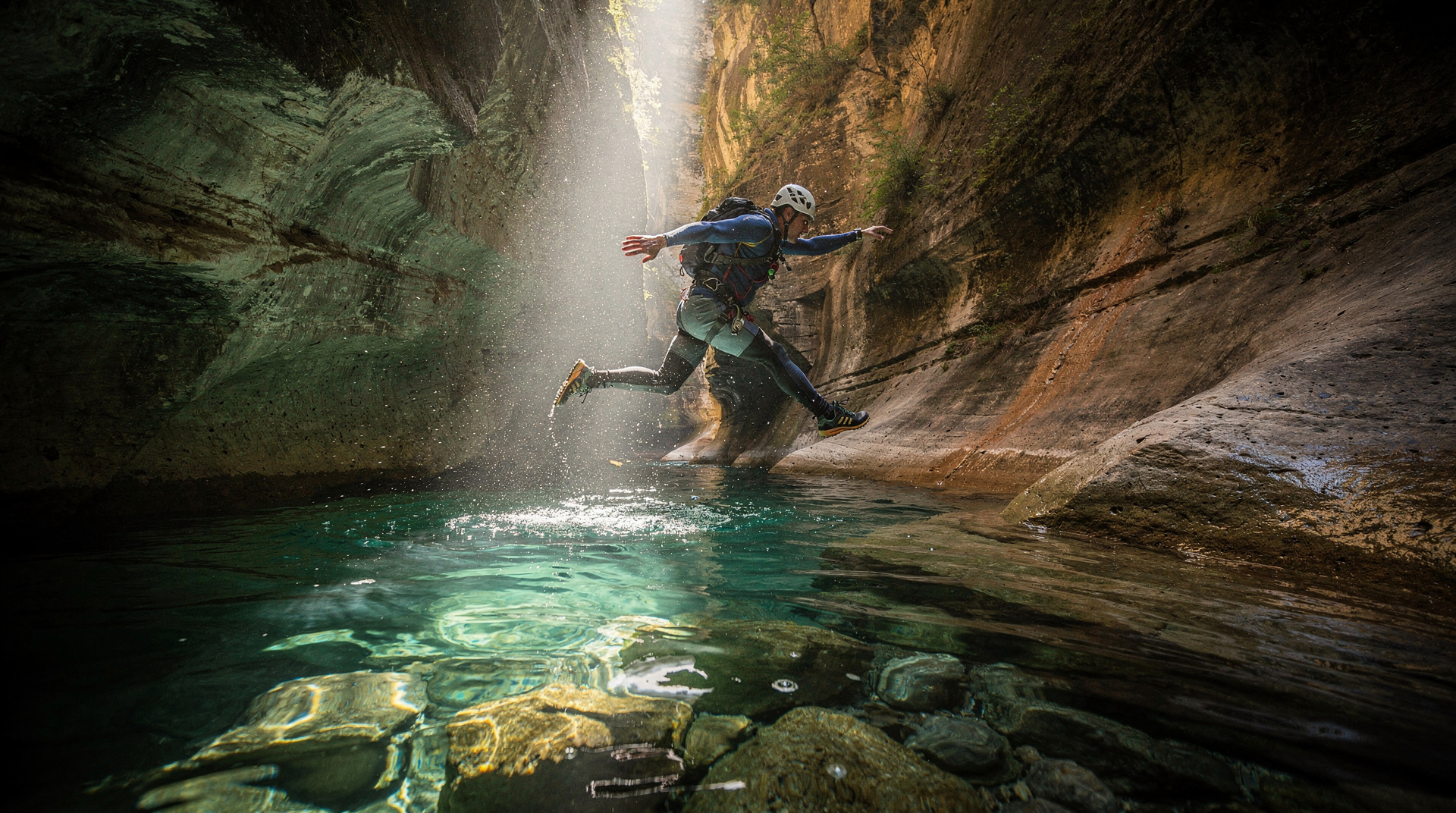
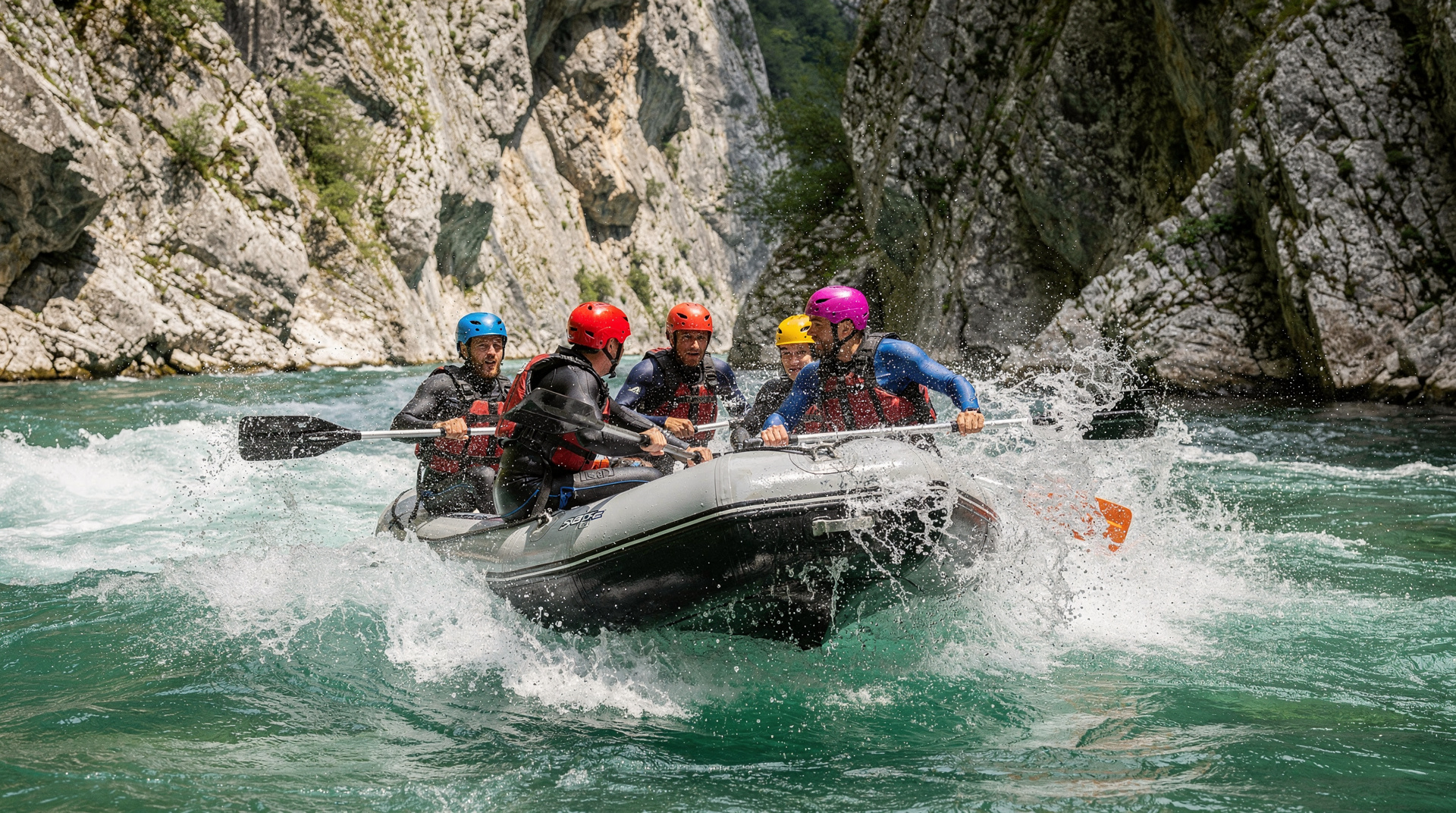
Canyoning is fundamentally different from rafting. In a raft, you sit in a group on moving water following a guide’s commands. In a canyon, you are in the water — sliding, jumping, abseiling, occasionally swimming — and the scale is intimate rather than panoramic. The canyon walls are arm’s reach, the sound is amplified, and the experience is more physically direct. It is also, in the right conditions, one of the most enjoyable ways to spend four hours in any mountain environment.
Slovenia’s reputation in this discipline comes specifically from the Sušec and Fratarica gorges, which together offer a complete progression from first-time beginner to experienced canyoneer seeking longer, more committing descents.
The main canyons near Bovec
Sušec gorge
The most-booked canyon in Slovenia and the standard starting point for first-timers. Sušec runs from a car park and staging area 20–30 minutes by minibus from Bovec down to its confluence with the Soča, covering roughly 2km of gorge with an elevation drop of around 150m.
The key features:
- Natural waterslides on polished limestone (3–10m long)
- Jumps ranging from 2m to a maximum of around 8m (all are optional — guides will indicate which are mandatory sections)
- One short rappel (abseil) on a fixed rope
- Sections of moving water where you drift rather than swim
- The exit is a short hike back to the staging area
Duration on the water: approximately 2.5–3 hours. Total trip time with transfers: 4–5 hours. Standard price: EUR 50–65.
The Sušec canyon is achievable for anyone comfortable in cold water, has no fear of heights that prevents standing at the edge of a 4m jump, and can swim 25m. Age minimums vary by operator (typically 10–12 years, but check). Maximum weight is usually 100–110kg due to wetsuit sizing.
Half-day canyoning in Sušec for beginners — from BovecThe professional photo packages for Sušec are worth knowing about. The canyon is narrow enough that a dedicated photographer positioned above the key features gets genuinely dramatic shots — the jump sequence and the main slide are both photo-worthy in a way that personal GoPro footage rarely matches.
Sušec canyoning with professional photo serviceFratarica canyon
More committing than Sušec in every dimension. Fratarica is longer (3–4km of gorge), has more sustained technical features, and takes 4–5 hours on the water. It is appropriate for people who have done Sušec before and want more, or confident first-timers who are specifically comfortable with heights and cold water.
The key differences from Sušec:
- Longer rappel sections (up to 15m on fixed ropes)
- Higher jumps (optional maximum around 10m)
- More sustained cold water immersion — Fratarica runs at 8–11°C even in July
- Less predictable water levels after rain
The half-day Fratarica trip runs EUR 55–70. The full 4-hour version covers the complete descent.
Four-hour Fratarica canyon descent from BovecAn introductory version of the Fratarica gorge is available — this covers the lower, easier section and suits groups with mixed experience or participants who are enthusiastic but not athletic.
Fratarica beginners’ canyoning — guided experienceCanyoning in Triglav National Park
For experienced canyoneers or those seeking a wilder environment, Triglav National Park has several canyon descents that require more technical skill and are run in smaller groups. These are typically half-day to full-day experiences depending on the specific route.
The key distinction from Sušec and Fratarica: National Park canyons are more remote, have less infrastructure (no manicured entry/exit points), and the guides lead through terrain that changes more between visits depending on recent water levels. This is an asset if you want genuine wilderness; it is a complexity if you need predictability.
Canyoning in Triglav National Park — guided experienceThe Sušec canyon experience (alternative operator)
Sušec is run by multiple operators; the Sušec Canyon Experience is a slightly different format run from the canyon’s own base, with a focus on smaller group sizes (maximum 8 people vs the standard 12–16).
Sušec canyon canyoning experience — small groupHalf-day canyoning in the Soča Valley
For operators offering the half-day Soča Valley canyoning format (a variant that covers whichever of the canyons has the best conditions on the day), this is a good choice if you are flexible on which specific gorge you descend.
What the water temperature actually means
This deserves honest treatment because it affects how much you enjoy canyoning in Slovenia.
The Sušec stream runs at 8–12°C year-round. The Fratarica runs similarly cold, sometimes dropping to 6°C in high snowmelt season. These temperatures are below the threshold that most people find comfortable for extended immersion, even with a wetsuit.
Operators provide 5mm neoprene wetsuits, neoprene boots, and gloves. For most adults, this kit is adequate for a 2.5–3 hour session with continuous movement. There is a significant difference, however, between moving continuously (sliding, swimming, jumping — your body generating heat) and pausing for briefings or waiting for the group to reassemble.
If you run consistently cold in daily life, ask your operator for a thicker wetsuit (7mm is sometimes available) or bring a thermal rash guard to wear underneath the wetsuit. This is not a marginal improvement — it can be the difference between a great experience and an uncomfortable one.
Peak cold exposure in canyoning: the moment after a jump into a plunge pool, before the movement reflex kicks in. This is approximately 2–3 seconds of significant cold. After that, your body adapts and the wetsuit does its job. Almost everyone finds this manageable; the anticipation is usually worse than the reality.
Canyoning vs rafting: which to choose
Both are day-trip activities from Bovec, both require no prior experience, both involve cold water and guides. The differences:
Rafting:
- Group activity (8–14 people per raft)
- More physically passive — you are sitting and paddling on command
- Longer sections of moving water between features
- More time to observe the canyon scenery
- Water temperature more comfortable (Soča main river is warmer than the tributaries)
Canyoning:
- Smaller groups (6–12 depending on operator)
- More physically active — you are swimming, jumping, rappelling
- More intimate with the terrain — you are inside the canyon, not on top of it
- Higher adrenaline per hour
- Colder
The most common advice from operators who do both: if you are going to spend only one day on water in the Soča Valley, rafting is the more accessible and broadly enjoyable choice. If you are staying 2+ days, pairing rafting with canyoning shows you two completely different relationships to the same landscape.
Safety and what guides manage
Slovenian canyoning operators are regulated by the ASSL (Association of Slovenian Sport and Adventure Guides) and certified by the ERCA (European Ropes Course Association). All commercial descents in Sušec and Fratarica are run with fixed anchors, pre-inspected routes, and guide-to-participant ratios of 1:6 to 1:12 depending on difficulty.
The safety risks in canyoning are predominantly:
- Impact from jumps (wrist and ankle injuries from poor entry form — guides demonstrate and correct)
- Hypothermia from extended cold exposure — addressed by appropriate kit and trip duration limits
- Flash floods — the serious one. After heavy rain upstream (sometimes invisible from the canyon) water levels can rise fast. All legitimate operators check forecasts, have contact with mountain meteorology services, and will cancel or modify trips when conditions require this. Never attempt to canyon without a licensed guide who has made this assessment.
Operators cancel canyoning in the following conditions: rain forecast exceeding 15mm in the watershed, water levels above safe operating range (each canyon has marker points that guides check on entry), and thunderstorm activity. These cancellations are not uncommon in July and August when afternoon convective storms develop over Kanin. Most operators offer rebooking or full refunds.
Getting to the canyons
All canyoning trips from Bovec include minibus transfer to the canyon entry point. You meet at the operator’s base in Bovec town, kit up there, and travel to the canyon. Return transfer to Bovec is included. Car parking at the operator’s base is free.
If you are staying in Kobarid (15km from Bovec), most Bovec operators will arrange pickup or provide directions to the canyon staging area. Ask when booking.
Combining canyoning with other activities
The Bovec area’s compact geography means canyoning fits naturally into multi-activity itineraries:
Rafting + canyoning (most popular combination): Morning rafting on the Soča (start 9–10am, finish noon), afternoon canyoning on Sušec (start 2pm, finish 5pm). This works physically if you have a proper lunch and allow the post-rafting warmup to settle. Most operators can co-ordinate bookings.
Canyoning + zipline: Canyoning in the morning, afternoon transfer to the Učja zipline. These are physically complementary (canyoning uses core and legs; zipline is passive).
Two-day progression: Day 1 Sušec (beginner), Day 2 Fratarica (intermediate). This is the ideal way to canyon in the Soča Valley if time allows.
For the full picture of what Bovec offers as an adventure base, see the Bovec adventure guide.
Gear checklist
Everything specifically canyoning-related is provided by operators. What to bring from your end:
- Swimwear or thermal underlayer for under the wetsuit
- Old trainers with heel straps (neoprene boots provided, but your own footwear can layer underneath)
- Sunscreen applied before you change into the wetsuit
- Dry change of clothes and a towel for after
- Any medication relevant to cold exposure (ask operators if relevant)
Do not bring: watches, jewellery, cameras without proper waterproof cases, or loose items that cannot be secured. Operators provide dry bags for valuables.
Prices and booking
| Canyon | Duration | Price |
|---|---|---|
| Sušec gorge (half-day) | 3–4h total | EUR 50–65 |
| Sušec with photos | 3–4h total | EUR 65–80 |
| Fratarica beginners | 3h total | EUR 55–70 |
| Fratarica 4-hour | 5–6h total | EUR 65–80 |
| Triglav NP canyon | 5–7h total | EUR 75–95 |
Book at least 24–48 hours ahead in July–August; canyons have group size limits and fill quickly on fine-weather days. Most operators allow same-day booking in shoulder season (May–June, September) if slots are available.
For the wider Soča Valley context, see the white-water sports guide covering rafting, kayaking, and SUP alongside canyoning.
What canyoning feels like: a realistic preview
First-time canyoners consistently report a sequence of emotional states that is worth describing honestly before you book. The pre-activity briefing is thorough and sometimes makes the activity sound more serious than you expect — guides cover the emergency protocols, the rappel technique, and the jump procedure methodically. This is correct behaviour; it is the standard for commercial adventure sports, not a warning sign.
The first feature — usually the opening slide on Sušec — is where the nerves convert. The limestone is smooth, the water direction is predictable, and the guide demonstrates before you go. By the time you have completed one slide, the psychological framework for the rest of the canyon is established. Almost everyone finds the first five minutes are the hardest part of the day.
The middle of the canyon is where most people relax into genuine enjoyment. The combination of canyon walls, clear water, and the physical engagement of moving through a narrow limestone gorge is genuinely absorbed at this point. The guides read groups well and know when to extend the pace and when to allow time for people to appreciate the environment.
The jumps are the most variable element by individual. The standard Sušec jumps range from platform level (essentially stepping into water) to 4–5m on the standard route, with the optional 7–8m reserved for those who explicitly want it. The guide-to-participant briefing before each jump covers the correct entry position (feet together, arms crossed), the water depth below, and the exit route. All jumps are optional; no-one is pressured to jump. Many people who intend to skip jumps decide to do them on the day; a smaller number who planned to jump reconsider at the edge and that is entirely acceptable.
Exit from the canyon is typically a 20–30 minute uphill hike back to the staging area, partly on a trail and partly on the canyon rim. This is the section that catches people by surprise if they have underestimated total trip length — it adds 30–45 minutes to the water time but is scenic and provides a different perspective on the gorge landscape.
First-timer FAQs
Do I need to be able to swim? Yes, basic swimming ability is required. Not competitive swimming, but the capacity to float and move calmly in water. If you cannot swim, canyoning is not the right activity — consider rafting instead, where you are in the raft rather than in the water.
What if I am afraid of heights? The jumps are optional. The rappel sections involve heights, but the guide clips you in before you begin and the descent is controlled. Most people with general height discomfort find the rappels manageable because the control is very direct. If you have significant vertigo, discuss with the operator before booking.
Can children participate? Most operators set a minimum age of 10–12 years and a minimum weight around 30–35kg (wetsuit sizing). Younger children are not excluded categorically, but the operators make the final call based on height, maturity, and current conditions.
What happens if the weather is bad? Rain during the session is normal and does not affect safety or the experience significantly. The issue is rain upstream — heavy rainfall that raises water levels in the gorges. Operators monitor conditions and cancel or modify routes when water is too high. Weather cancellations are handled with rebooking or refunds depending on operator policy.
Is there a maximum weight? Yes — typically 100–110kg due to wetsuit sizing and harness fit for the rappel sections. Check with the specific operator if your weight is near this range.
Getting to Bovec from other parts of Slovenia
From Ljubljana: 2h 15min by car via the E61 motorway and Predel Pass. Bus services exist (1–2 per day, 3h) but arrival times do not align well with morning activity starts.
From Lake Bled: 1h 10min to Bovec, making canyoning an achievable day trip — though staying overnight allows you to do both canyoning and rafting without early morning logistics.
From Kobarid: 15 minutes. Some Bovec operators can arrange pickup from Kobarid; confirm when booking.
From the Slovenian coast (Piran, Koper): Approximately 2h by car through the Karst and then north via Idrija or Tolmin. A logical inclusion if you are making a coastal-to-mountains itinerary through western Slovenia.
After the canyon: recovery and food
Canyoning is aerobically moderate and physically cold. The recovery needs are: warmth, food, and hydration. The operator’s staging area typically has warm showers (confirm when booking — most Sušec operators do). A change of clothes and a proper meal within 1–2 hours of finishing are enough for most people.
Food in Bovec after canyoning: Gostilna Hedvika and Martinov Hram both open for lunch from approximately 12:30pm. The main square has a small café that opens earlier for sandwiches and coffee. If you finish a morning canyon by 1pm, lunch in Bovec is the standard next move before afternoon activities or the drive home.
Canyoning versus other Soča Valley water sports
For visitors deciding between the full menu of Soča Valley water activities, the practical distinctions are: rafting is the most accessible and social, kayaking and SUP give the most independence and quiet time on the water, and canyoning is the most physically immersive and adrenaline-driven of the three. Most multi-day visitors to Bovec pair canyoning with one other water activity rather than attempting all three, since the combination of cold-water exposure across multiple sessions in a short period adds up physically.
Canyoning with kids and mixed-ability groups
Sušec accepts children from around 10–12 years old with most operators, provided they meet the minimum weight for wetsuit sizing (typically 30–35kg) and can swim competently. Fratarica’s more sustained technical sections make it less suitable for younger participants even where the minimum age is technically met. For families or groups with a wide range of confidence levels, the introductory Fratarica option (covering the lower, easier section) is a better fit than the full 4-hour descent, since it keeps the group together without forcing less confident members through the canyon’s harder features.
What’s included versus what to bring yourself
Operators supply the technical kit — wetsuit, helmet, harness (where needed), neoprene boots and gloves — and this is included in the listed price. What most operators don’t provide: swimwear or thermal layer to wear underneath, a change of clothes for after, a towel, and sunscreen (applied before you suit up, since it can’t go on afterward). Some operators include the photo package as an add-on; check whether this is bundled or separate when comparing prices, since a genuinely comparable quote should account for it.
Canyoning for first-timers who are nervous about the jumps
The single most common hesitation among first-time canyoners is the jumps, not the cold water or the rappelling. It’s worth stating plainly: every jump on Sušec and Fratarica is optional, guides never pressure participants, and the group waits without judgement for anyone who decides to take the walk-around instead. In practice, most nervous first-timers end up doing at least the smaller jumps once they see others go first and realise the water is deep and the guide’s spotting is careful. If jumps are your main concern, mention it to the guide at the pre-trip briefing — they will point out the walk-around option at each feature in advance rather than leaving you to discover it mid-canyon.
Frequently asked questions about Canyoning in Slovenia
How cold is the water when canyoning in Slovenia?
The Sušec and Fratarica streams run 6–12°C year-round, even in July and August, since they're fed by snowmelt from the Kanin massif. Operators provide 5mm wetsuits, neoprene boots and gloves adequate for a 2.5–3 hour session; if you feel the cold easily, ask about a thicker wetsuit or wear a thermal layer underneath.Is canyoning in Slovenia safe?
Yes, when booked with a licensed operator. Slovenian canyoning guides are certified by the ASSL and ERCA, routes are pre-inspected, and guide-to-participant ratios run 1:6 to 1:12. The main real risk is flash flooding after heavy rain, which legitimate operators monitor closely and will cancel trips for. Never attempt canyoning without a licensed guide.
Top experiences
Bookable activities with verified prices and instant confirmation on GetYourGuide.