Škocjan Caves: the underground canyon Postojna can't match
Slovenia's most dramatic underground landscape — a UNESCO gorge the size of a cathedral. EUR prices and comparison with Postojna.
Škocjan Caves day tour from Ljubljana
Quick facts
- Best time to visit
- May–October (tours year-round)
- Days needed
- Half day; combine with Lipica or Piran for a full day
- Getting there
- Car from Ljubljana (1h 30min); train to Divača (2km walk)
- Budget per day
- EUR 30 to 70
Why serious cave travellers prefer Škocjan over Postojna
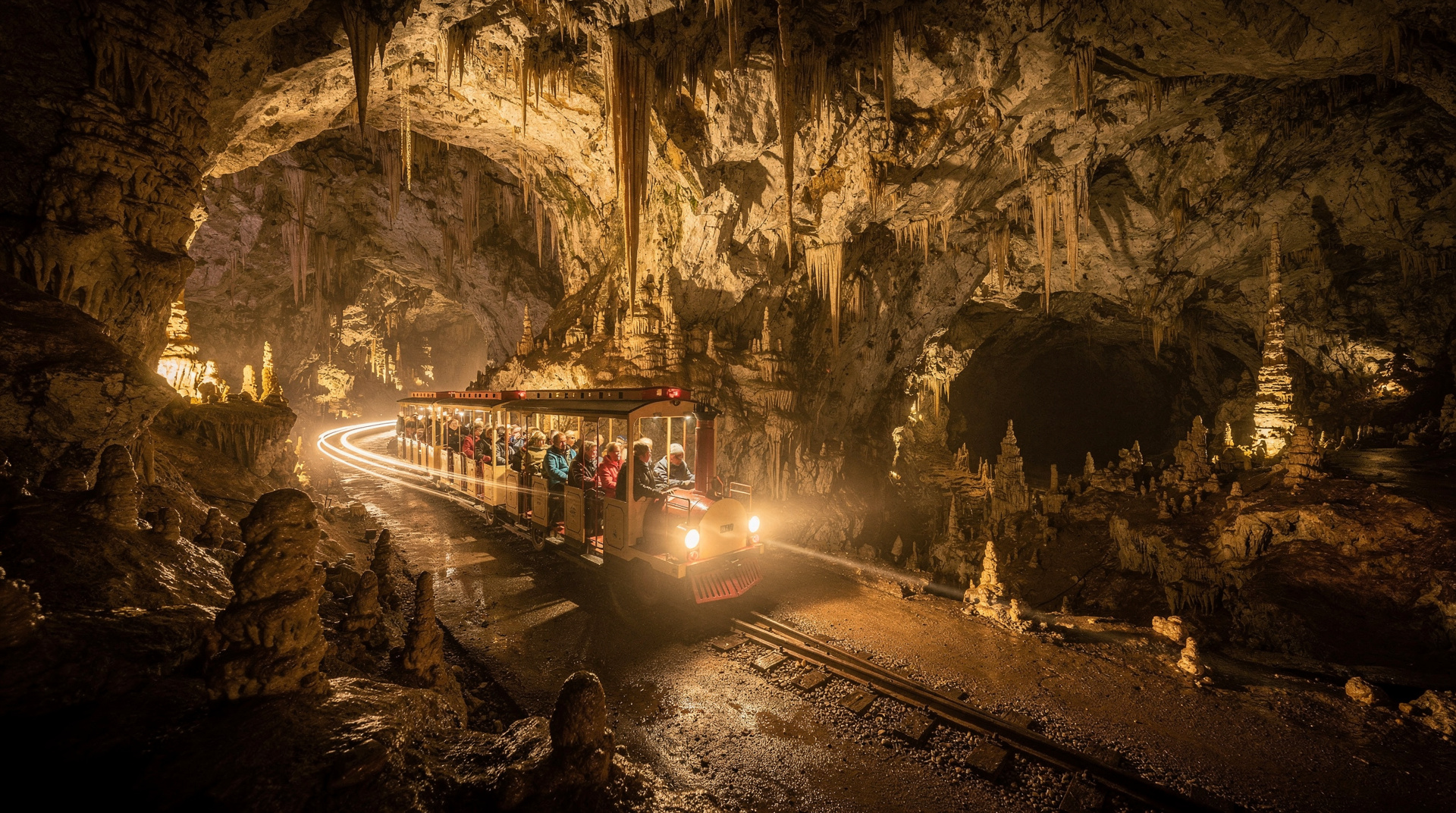
The argument for Škocjan over Postojna is not about which cave is better in some abstract sense — both are genuinely remarkable — but about which experience is more likely to produce the feeling you came to Slovenia for. Postojna’s cave train and million-visitor infrastructure produce a smooth, managed experience that has been optimized for throughput. Škocjan, with its UNESCO World Heritage status and a fraction of the visitors, produces something more raw.
| Where | Karst region, near Divača, 1h 30min from Ljubljana |
| Cost | EUR 18 adults, EUR 14 students and seniors, EUR 9 children (6–17), free under 6 |
| Time needed | Half day (2.5 hours minimum) |
| Getting there | Car (1h 30min) or train to Divača + 2km walk |
| Best time | Weekday mornings, May–October |
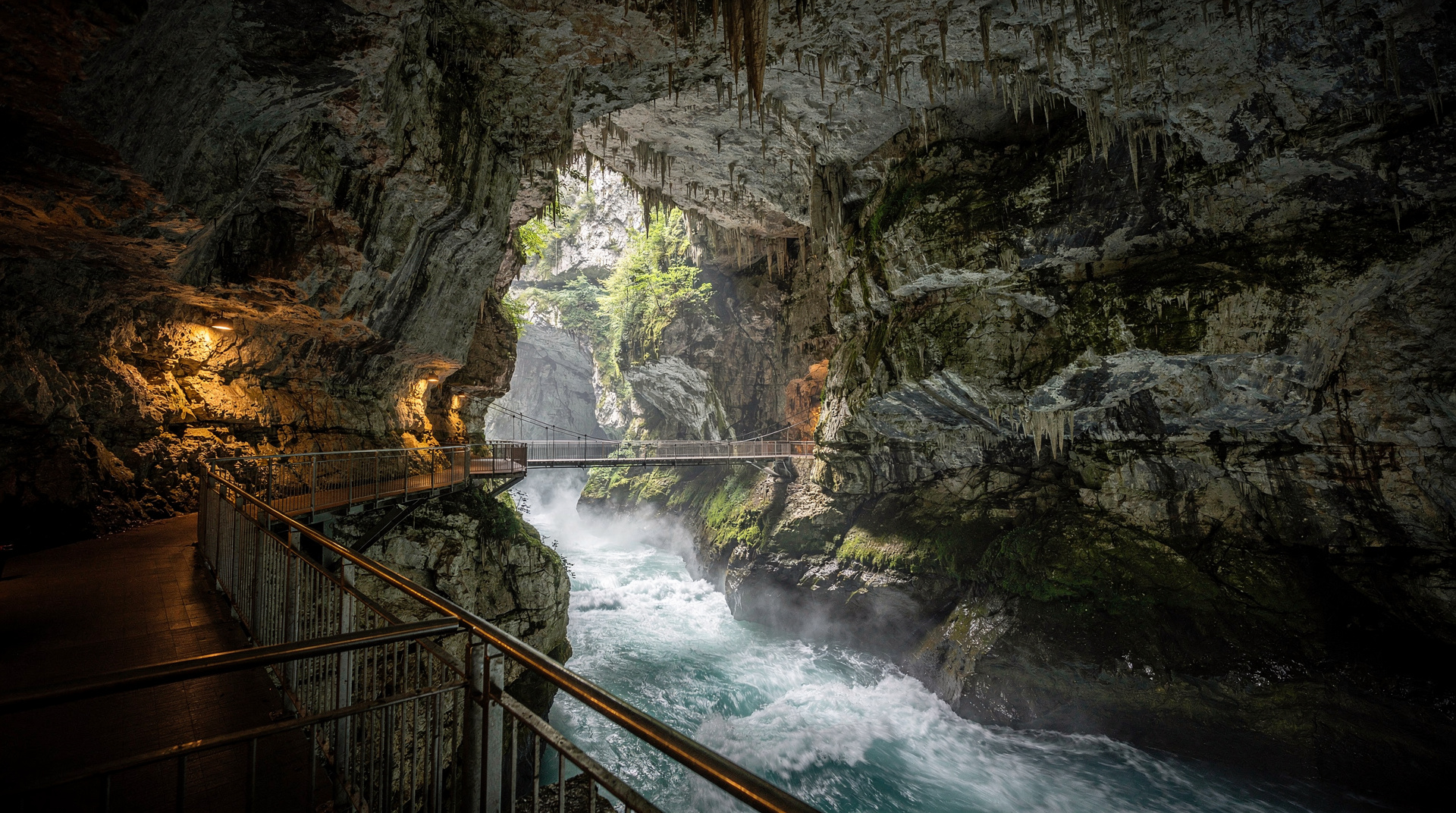
The comparison pivots on one specific feature: the Silent Cave and the Murmuring Cave lead to the Reka Canyon, where the Reka River has carved a subterranean gorge 2km long, up to 148m deep, and up to 120m wide. You cross this gorge on a footbridge at height — the river thundering somewhere below you in the darkness, the rock walls rising overhead into blackness, the scale so far beyond a tourist walk that the experience becomes, for many people, genuinely affecting.
Postojna has formations. Škocjan has a canyon. Both are true statements. But the canyon is harder to forget.
The UNESCO designation and what it means
Škocjan Caves received UNESCO World Heritage status in 1986, one of only three Slovenian sites on the list (the others are the old town of Idrija and the Škocjan Caves in combination with the surrounding karst landscape). The UNESCO listing covers not just the cave system but a wider territory of karst features — dolines, dry valleys, and collapsed cave sections — that together represent one of the most complete karst landscapes in Europe.
The UNESCO status has practical implications: the visitor infrastructure is managed to long-term conservation standards, commercial development is restricted, and the cave’s carrying capacity is deliberately maintained below the levels that would maximize revenue. This is why Škocjan feels less commodified than Postojna — not because of any particular management ideology, but because the UNESCO framework limits what the site can do.
How the Škocjan tour works
The standard tour (2.5–3 hours, about 5 km with roughly 1,000 steps) enters through the Silent Cave (enormous formations, well-lit, atmospheric rather than dramatic) and then transitions into the Murmuring Cave at the canyon rim. The footbridge crossing over the Reka Canyon is the emotional apex of the tour. The tour exits via a 500m tunnel through the cliff and emerges at the Okroglica chasm — a collapsed cave system open to the sky.
Entry prices (2026): EUR 18 adults, EUR 14 students and seniors, EUR 9 children (6–17), free under 6. Tours run every day of the year at fixed times: two departures a day in winter, up to hourly in July–August. Check the current timetable on the official park website, and book ahead in July–August.
Full-day Škocjan Caves tour from LjubljanaThe cave is maintained at 12°C — bring a layer. The path includes steep steps and the bridge crossing requires a normal level of balance; visitors with serious acrophobia should consider Postojna instead. Photography is permitted in most sections, though the gorge lighting makes it challenging without a camera with good low-light performance.
Visiting independently versus by guided tour
Škocjan is 5km from Divača, which has a train station with direct connections from Ljubljana (1h, EUR 5–8). The walk from Divača to the cave entrance is 2km on a marked path through karst landscape; many visitors find this a worthwhile approach rather than driving directly to the car park. A local taxi from Divača station to the cave runs EUR 8–12.
Half-day Škocjan morning tour from LjubljanaTours from Ljubljana make the logistics simple but add travel time. The cave is perfectly accessible independently if you are comfortable navigating a rural bus/train connection.
How Škocjan compares to Postojna
The practical differences: Postojna has 3× more tours per day, a cave train, the olm (salamander), and is easier to visit without pre-planning. Škocjan requires slightly more forward planning but is less crowded, has more dramatic geology in the canyon section, and is UNESCO-listed.
Travellers who have been to both most commonly say: if you only have time for one cave, choose Škocjan. If you can do two caves, do Postojna first for the formations and train experience, then Škocjan to see what an underground canyon looks like. Our Postojna vs Škocjan comparison guide goes into this in full detail.
The Postojna Cave guide covers everything on that side of the comparison.
Combining Škocjan with other sites
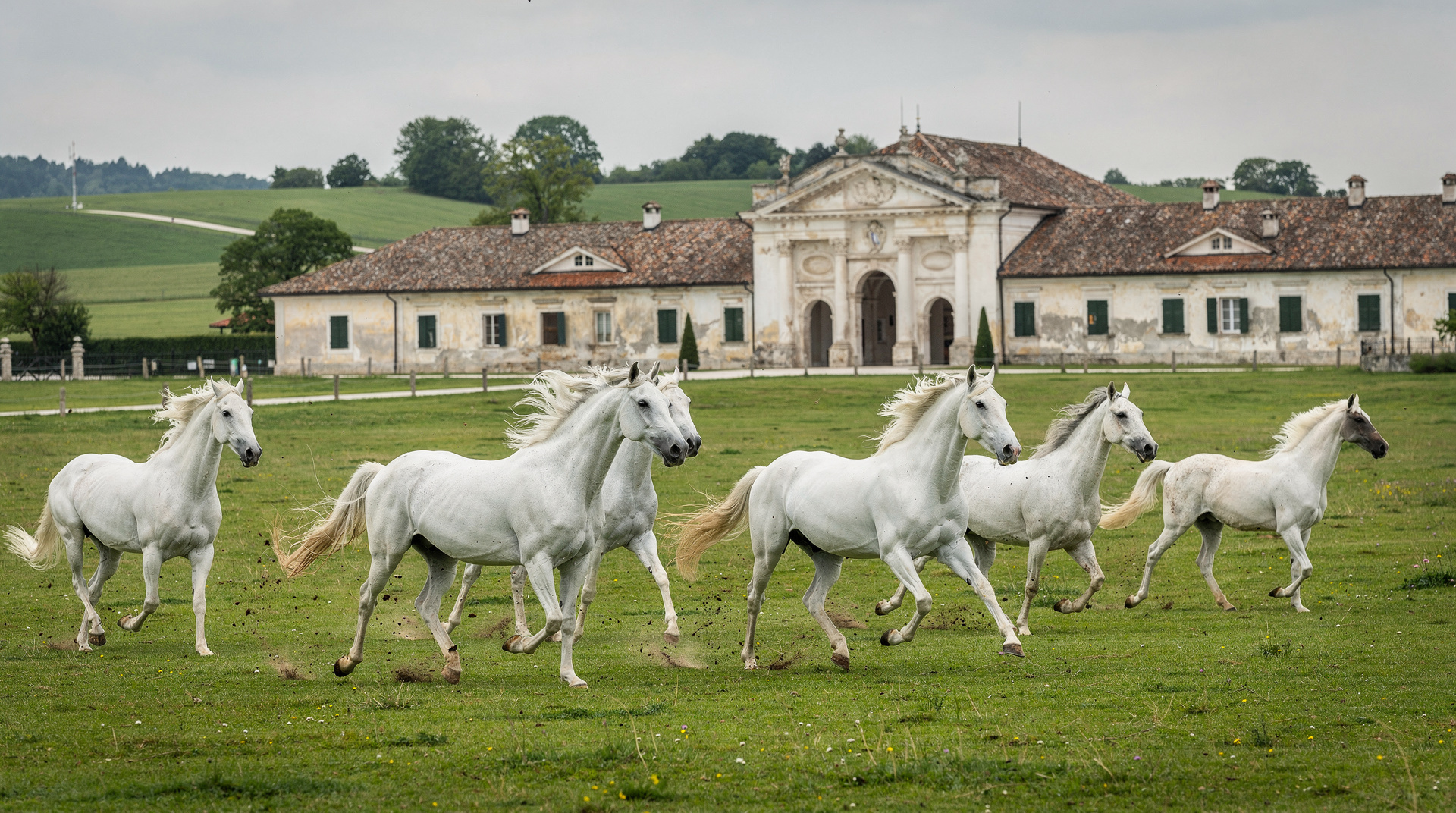
Škocjan + Lipica (half-day each): The Lipica Stud Farm, home of the white Lipizzaner horses, is 13km from Škocjan. The combination makes a natural full day in the karst region. See our Lipica guide.
Škocjan + Piran (day): From Škocjan it is 40km to Piran on the Adriatic coast — about 40 minutes by car. Several operators run day tours that combine the cave in the morning with the coast in the afternoon. This is among the most efficient ways to see contrasting Slovenian landscapes in a single day.
Rakov Škocjan: The natural rock arch valley between Postojna and Škocjan — not the same as Škocjan Caves but named for the same karst region — is a free, unvisited 90-minute walk through a collapsed cave landscape. It is about 10km from Divača and works as a morning warm-up before a Škocjan afternoon tour.
Adventure cave options at Škocjan
For visitors who want more than the standard tour, Škocjan offers an Adventure Tour (separate from the standard tour, EUR 100 per person, 3–4 hours, departing at 9:00 on set dates, not suitable for under-15s, reservation confirmed at least 10 days in advance) that accesses sections of the cave system not on the regular path. This includes sections of the lower cave and passages above the Reka Canyon that involve some scrambling and ladder-climbing. The adventure tour sees very limited numbers and gives an experience of the cave’s scale that the standard tour — impressively — doesn’t fully convey.
The guided tour of the cave museum (Škocjan Caves Regional Park interpretive centre) is a useful 45-minute supplement to any visit. The museum covers the geology, biology, and human history of the site — including the Bronze Age and Iron Age artefacts found in cave entrances — and provides context that deepens what you see underground.
The Reka River underground
The defining geological feature at Škocjan is that the Reka River — which rises near the Italian border and flows across the karst plateau — disappears underground at the Škocjan caves. It reappears some 34km away as the Timavo River, entering the sea near Trieste in Italy. This 34km underground journey, one of the longest underground river flows in the world, carved the canyon that visitors cross on the Hanke footbridge.
The river is visible at the bottom of the canyon during the tour, its sound audible well before you can see it. After heavy rain, the Reka floods the lower cave sections and tours must be rerouted through the upper passages; this occasionally happens in spring and autumn. Check before visiting after prolonged rainfall — the caves announce closures on their website.
Rakov Škocjan: the free outdoor complement
Rakov Škocjan is a collapsed cave valley about 8km north of Divača, accessible by car and by a 45-minute walk from the village of Rakek. The valley floor contains two natural rock arches — Veliki Naravni Most (Big Natural Bridge, 40m high) and Mali Naravni Most (Small Natural Bridge) — spanning a dry gorge where a river once flowed underground before the cave collapsed. Entry is free; the walk through the valley takes about 1.5 hours.
This is one of the most undervisited geological sites in Slovenia. On a weekday in any season you may have it entirely to yourself. It works well as a morning warm-up before a Škocjan afternoon tour, or as a half-day excursion from Piran or Portorož.
The Silent Cave: formations and light
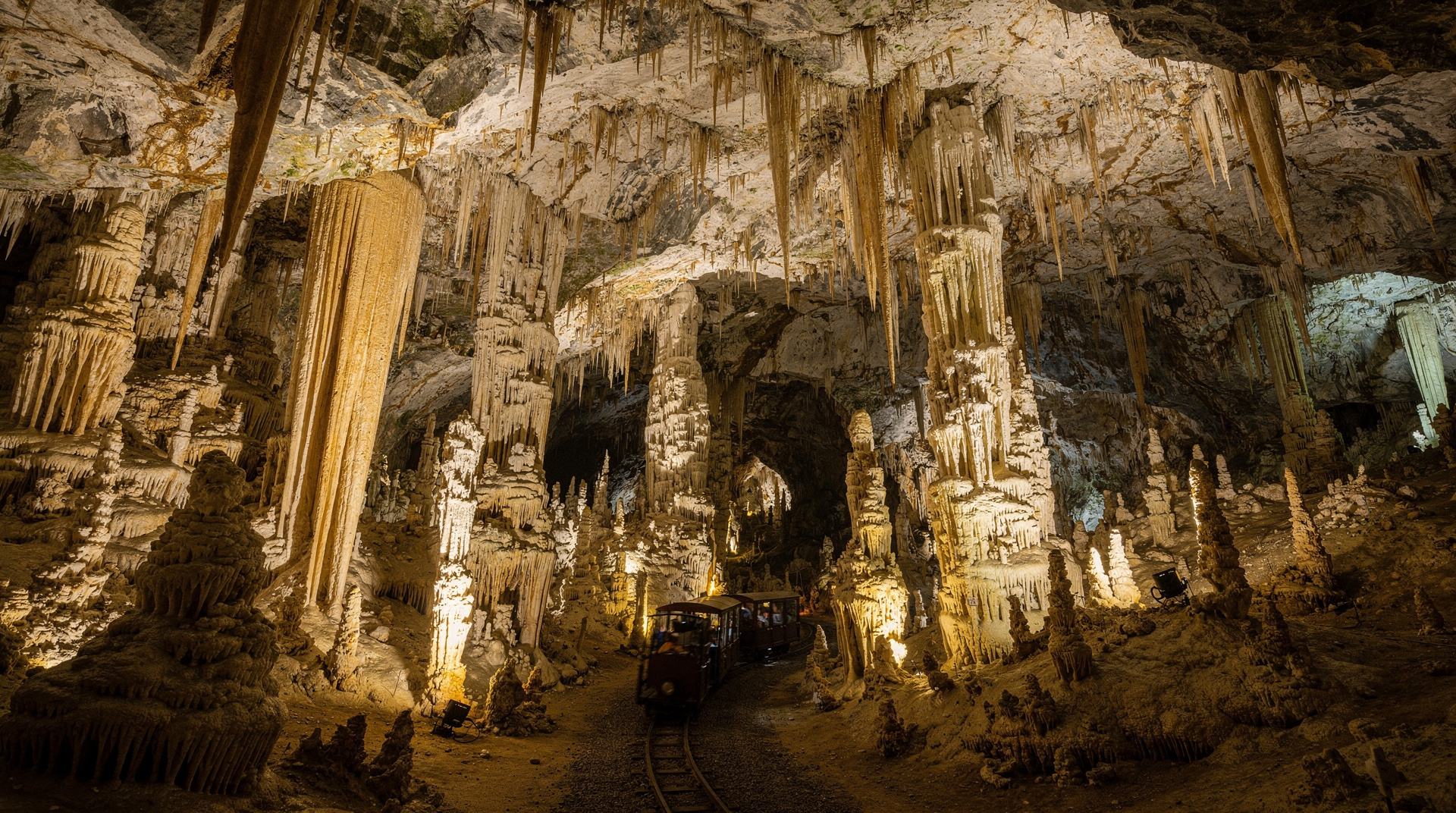
The first section of the Škocjan tour, through the Silent Cave, receives less attention than the canyon but deserves it. The Silent Cave contains some of the largest and most varied speleothem formations in Europe — columns up to 15m tall where stalactites and stalagmites have fused, curtains of translucent calcite, and formations known locally as “cauliflowers” (helictites growing in multiple directions simultaneously against the influence of gravity).
The cave is lit thoughtfully — warm light rather than the harsh floodlighting used at some sites — and the guides explain the formation mechanisms in the Silent Cave before the canyon section. If you rush through the Silent Cave to get to the famous canyon, you will have skipped something genuinely excellent.
How to approach your visit
The single most important logistical decision is whether to visit independently or by guided tour from Ljubljana. The journey from Ljubljana to Divača by train (1h, EUR 5–8) is entirely practical; from the station, the cave is 2km. The return from the cave is slightly complicated because the exit emerges at a different location from the entrance — a marked path connects back to the car park and Divača.
Guided day tours from Ljubljana handle the transport logistics and often include a guide who provides context beyond the cave’s own tour narration. If you are visiting Škocjan combined with Piran or Lipica on the same day, a car is significantly more efficient.
Booking: In July and August, book tickets online at least 2–3 days ahead. The cave’s daily capacity is lower than Postojna’s; specific time slots sell out. For May, June, and September, walk-in is usually feasible on weekdays.
Honest comparison with Postojna
Most travel guides treat Postojna and Škocjan as interchangeable alternatives. They are not — they are different experiences:
Postojna has a cave train (unique), the olm, and extremely polished visitor infrastructure. It is better for families with young children, visitors who want maximum efficiency, and people who want the dramatic formations of a large multi-chamber cave.
Škocjan has an underground gorge of a scale that is not matched anywhere in Europe that is accessible to the public. It is better for travellers who want a genuinely affecting geological experience, for those who find Postojna too crowded, and for visitors who appreciate UNESCO-level site management.
If you have time for only one: most independent travellers who have done both recommend Škocjan. If you have time for two: do Postojna first (easier logistics, the train is worth experiencing), then Škocjan to understand what a different scale of cave means. Our Postojna vs Škocjan comparison guide covers this in detail.
The Okroglica collapse doline
The tour exits from the cave through a 500m tunnel cut through the cliff and emerges at the Okroglica — a large circular collapse doline (depression formed by cave roof collapse), open to the sky and surrounded by steep walls of exposed limestone. After the long walk underground, emerging here at sky level is disorienting in a satisfying way; the scale of what you were inside becomes comprehensible from outside it.
A 30-minute circular walk around the Okroglica rim is available after the tour ends. This is free to continue after the main tour and gives good views into the collapsed section and across toward the karst plateau. Most visitors who are not in a hurry add this, and it is worth the time.
Practical information
Parking: Free at the cave car park, 500m from the entrance. Car park fills on summer weekends by 10:00; arrive early.
Eating: There is a café at the cave entrance with sandwiches and coffee. The town of Divača (2km) has a gostilna with more substantial food. For a better lunch, drive 15km to Lipica village or 40km to Piran.
What to wear: Flat, closed-toe shoes with grip are mandatory — the cave path is wet and sometimes slippery near the canyon. The cave provides no footwear. The temperature is 12°C regardless of season; a fleece or light jacket is essential.
Accessibility: The canyon section involves steps and a bridge with open-grid flooring. It is not suitable for wheelchairs or for visitors with significant mobility difficulties. Children must be able to manage stairs independently; minimum age is generally 5 years.
Duration: Allow 2.5 hours minimum for the standard tour including arrival, queuing, and the walk back to the car park. Add 1 hour if you walk the Okroglica circular trail after the tour.
For full karst region planning, see our Škocjan caves guide, the getting around Slovenia guide, and the Slovenian coast guide for combining the caves with coastal days.
Škocjan vs Postojna vs Rakov Škocjan: which fits your day
| Site | Cost | Time | Best for |
|---|---|---|---|
| Škocjan Caves | EUR 18 adult | 2.5 hours | UNESCO canyon scale, fewer crowds |
| Postojna Cave | Higher, cave train included | 1.5–2 hours | Families, first-timers, easy logistics |
| Rakov Škocjan | Free | 1.5 hours | Budget travellers, a quiet warm-up walk |
If your schedule allows only one karst stop and you value atmosphere over convenience, Škocjan wins; if you’re travelling with young children or want the guaranteed novelty of a cave train, choose the Postojna Cave guide instead. Rakov Škocjan works well bolted onto either as a free extra.
What the guides don’t always mention
The standard tour narration focuses on geology and scale, understandably, but a few practical details make a real difference to how the visit feels. The footbridge crossing is genuinely the highlight for most visitors, but it lasts only a few minutes — pace yourself through the Silent Cave beforehand rather than rushing to “get to the bridge,” since the guide will not slow down for photographs once the group is moving through the canyon section. Groups are capped and the guide sets the pace; there is no lingering.
Toilets are available only at the visitor centre before the tour starts — there are none inside the cave system or at the Okroglica exit, so plan accordingly, especially with children. Mobile signal disappears completely once you’re inside the Silent Cave and does not return until you’re back on the surface at Okroglica; if you’re using a phone for tickets, have them ready or printed beforehand.
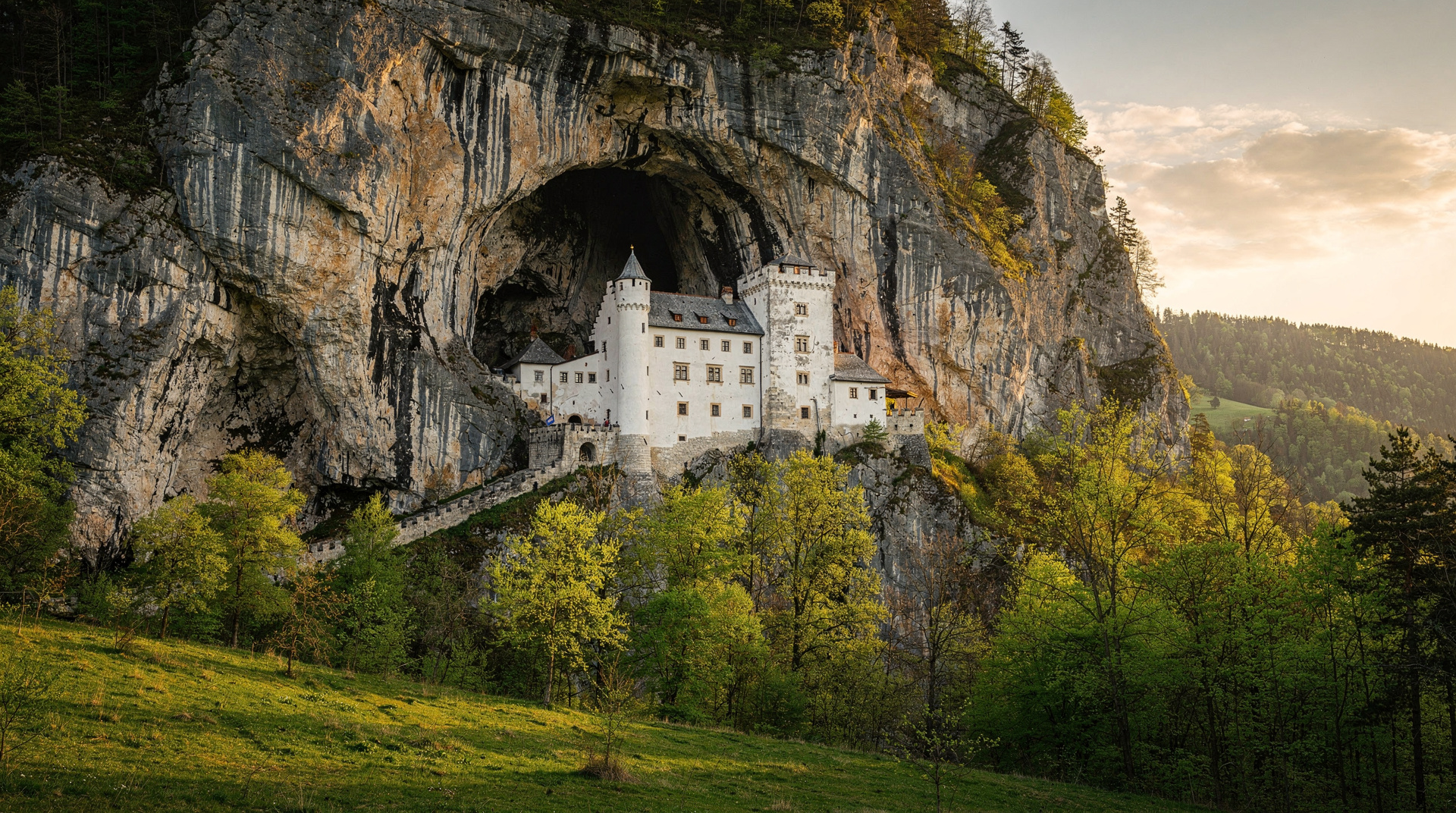
The nearby Predjama Castle, built directly into a cliff cave mouth, is a natural half-day pairing with Škocjan for visitors who want two very different cave-adjacent experiences on the same karst-region day — castle above ground, canyon below it.
Honest verdict
Frequently asked questions about Škocjan Caves
Is Škocjan Caves suitable for people afraid of heights?
The footbridge crossing over the Reka Canyon is at real height with open-grid flooring in places, and it is the emotional centrepiece of the tour — there is no way to skip it and still complete the standard route. Visitors with serious acrophobia should consider Postojna Cave instead, which has no comparable height exposure.
Can I do Škocjan Caves as a day trip without a car?
Yes. Trains run from Ljubljana to Divača (about 1 hour), followed by a 2km walk to the cave entrance on a marked path, or a short taxi ride. Guided day tours from Ljubljana handle the whole journey if you’d rather not manage the train and walk yourself.
How does Škocjan compare in price to Postojna?
Škocjan’s standard tour (EUR 18 adults) is much cheaper than Postojna’s regular cave entry (EUR 34.90), and Postojna’s combined Predjama Castle packages push its total cost higher still. Škocjan’s optional Adventure Tour (EUR 100) is a separate, pricier add-on for visitors wanting deeper access.
Top experiences
Bookable activities with verified prices and instant confirmation on GetYourGuide.