Postojna Cave guide: what to expect, honest pricing and whether it's worth it
From Ljubljana: Postojna Cave and Predjama half-day tour
Is Postojna Cave worth visiting and how much does it cost?
Postojna is genuinely spectacular — 24 km of decorated caverns, Europe's most dramatic stalactite formations, and the world's only cave tourist train. The ticket costs around EUR 34.90 per adult and the guided tour lasts 90 minutes. It is also extremely busy in July and August. Go early morning, book tickets online, and consider combining it with nearby Predjama Castle, which is included in a combo ticket.
Postojna Cave: Europe’s most spectacular tourist cave and how to visit it right
Postojna Cave (Postojnska jama) is the most-visited non-urban attraction in Slovenia. It has been drawing visitors since the early 19th century, when Habsburg officials and Viennese aristocrats made the journey south to see what local guides were calling the most extraordinary underground landscape in Europe. Franz Josef visited. Empress Elisabeth visited. Today around 700,000 people come each year.
| Where | Postojna, 55 km south of Ljubljana |
| Cost | EUR 34.90 cave only, EUR 49.90 combined with Predjama Castle |
| Time needed | 90-minute guided tour; half-day with Predjama |
| Getting there | A1 motorway (~45–50 min) or Arriva/FlixBus bus (~1h) |
| Best time | First tour of the day, or December–January for thin crowds |
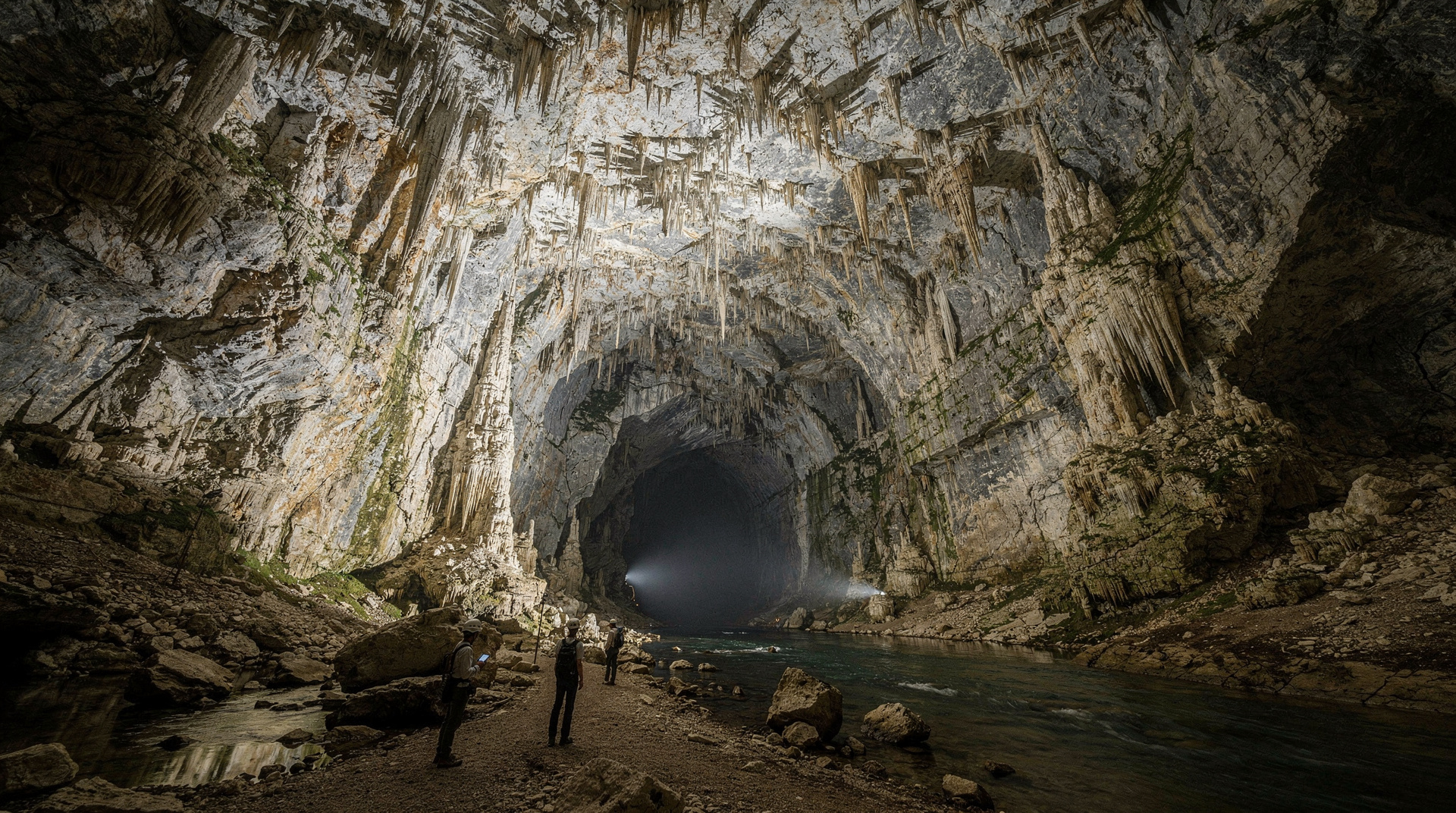
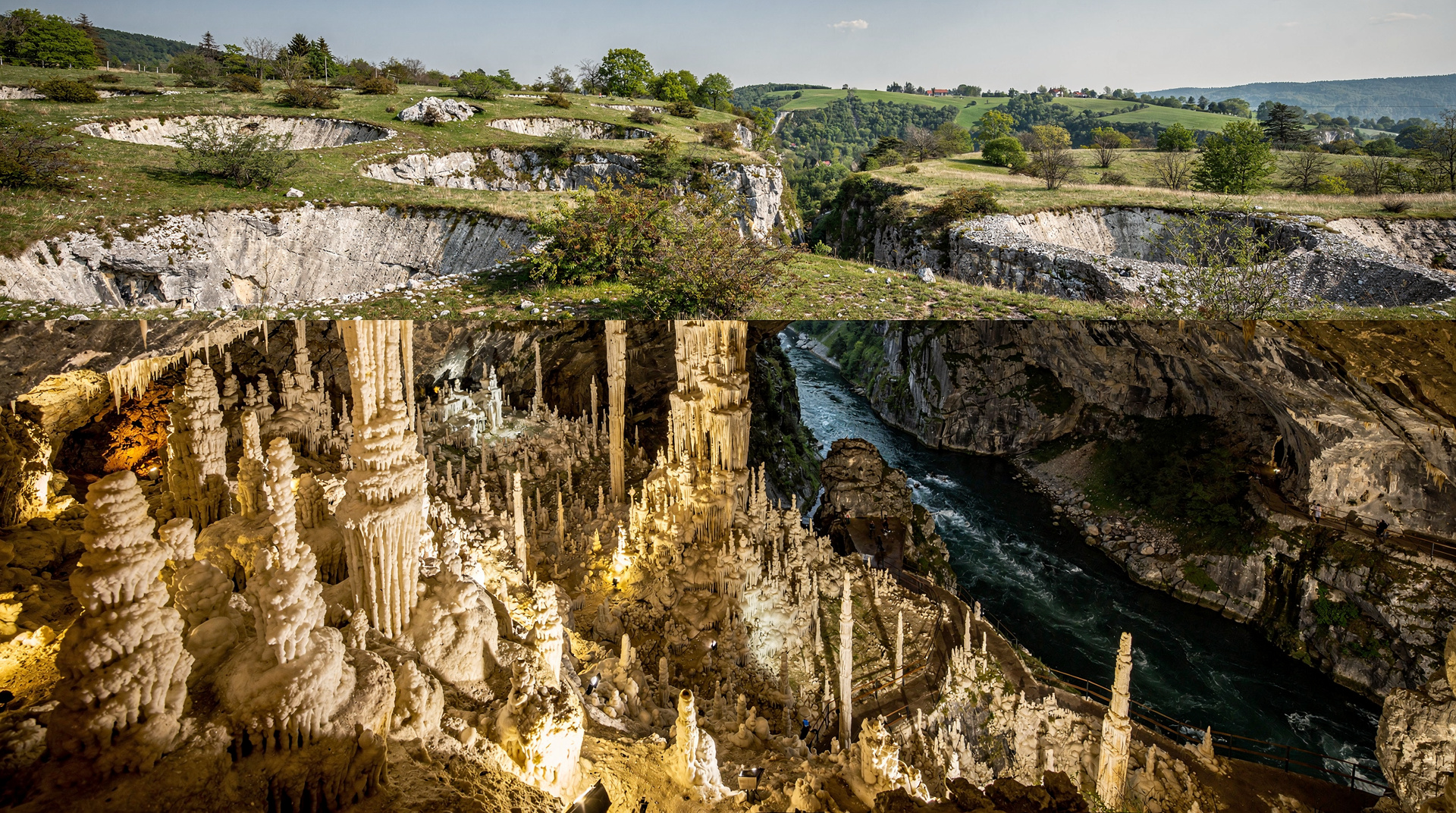
The scale of the place explains the numbers. Postojna is not just a cave — it’s a 24 km underground system with passages large enough to drive a train through, chambers that rise 50 metres above the walkway, and stalactite formations that have been growing for hundreds of thousands of years into shapes that seem deliberately ornate. The cave-dwelling animal that lives here — the Proteus anguinus, a blind, pale salamander found almost nowhere else on earth — is genuinely extraordinary.
It is also, in peak season, genuinely crowded. The visitor experience is structured and timed rather than spontaneous. The honest framing: Postojna is a world-class natural attraction with world-class crowds. Go at the right time, book correctly, and it’s magnificent.
What you see on the tour
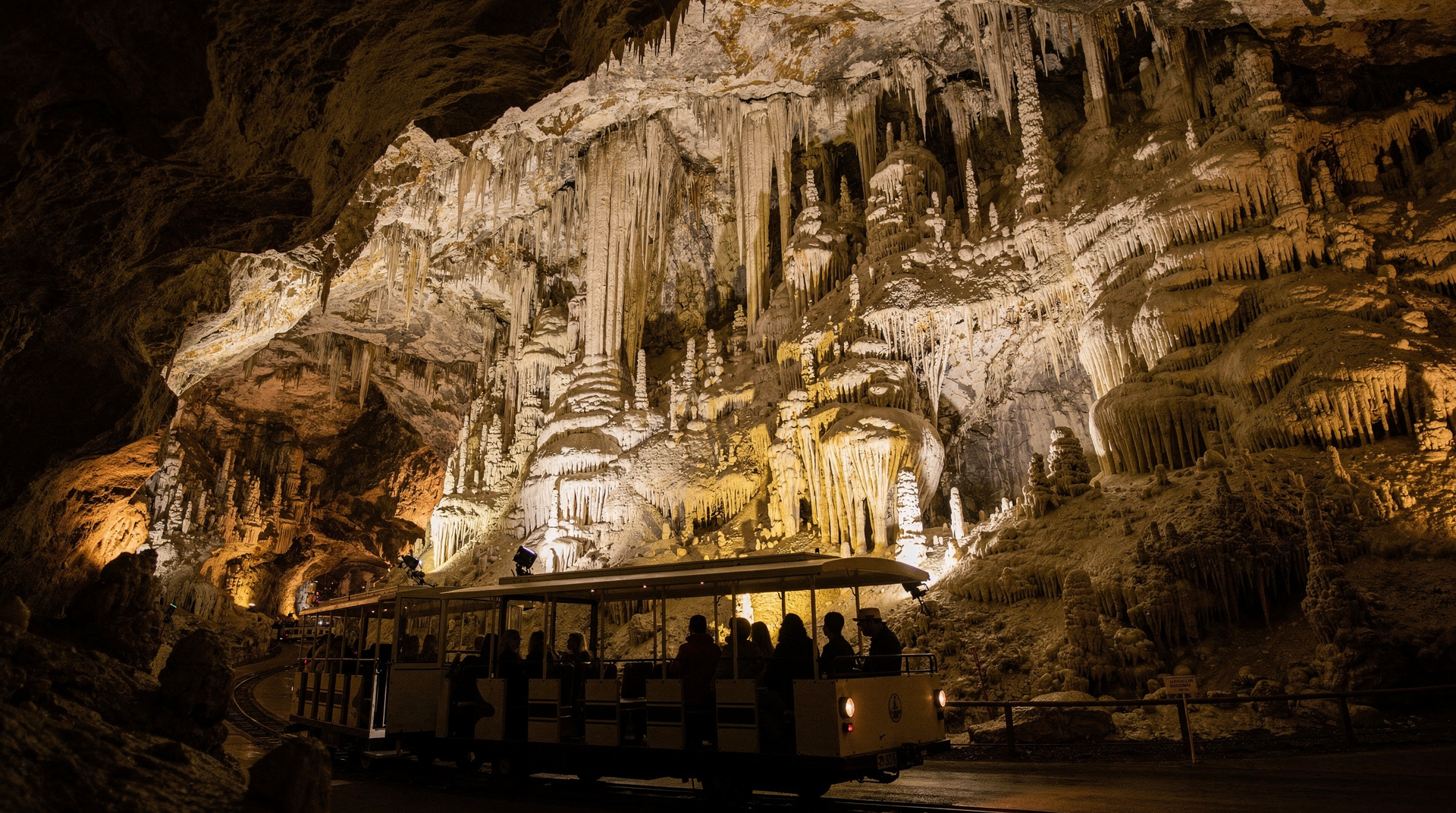
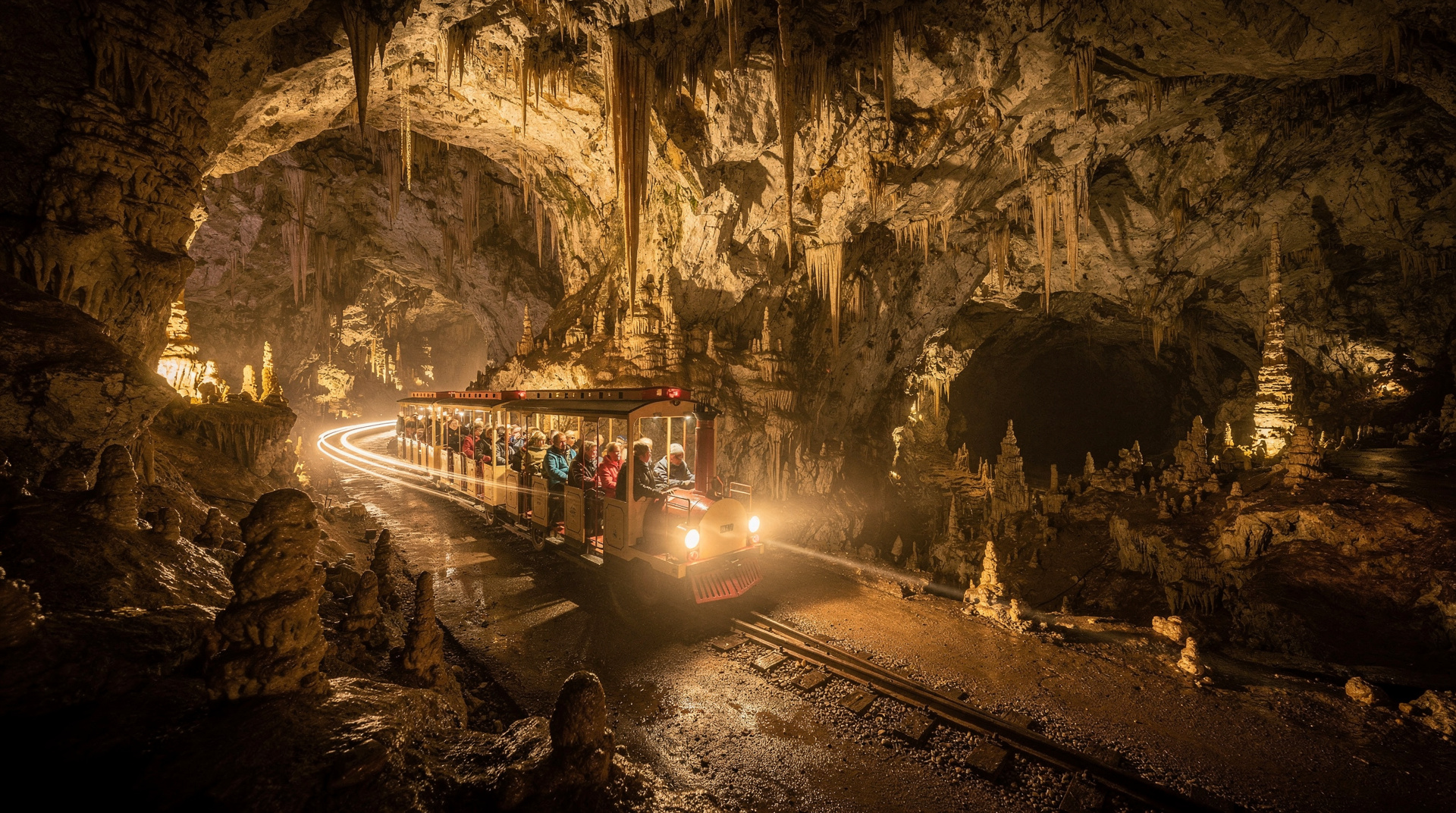
The standard Postojna Cave tour covers 5.2 km of the system — 3.7 km by electric train (the world’s first underground tourist railway, operating since 1872) and 1.5 km on foot with a guide. The entire visit lasts approximately 90 minutes.
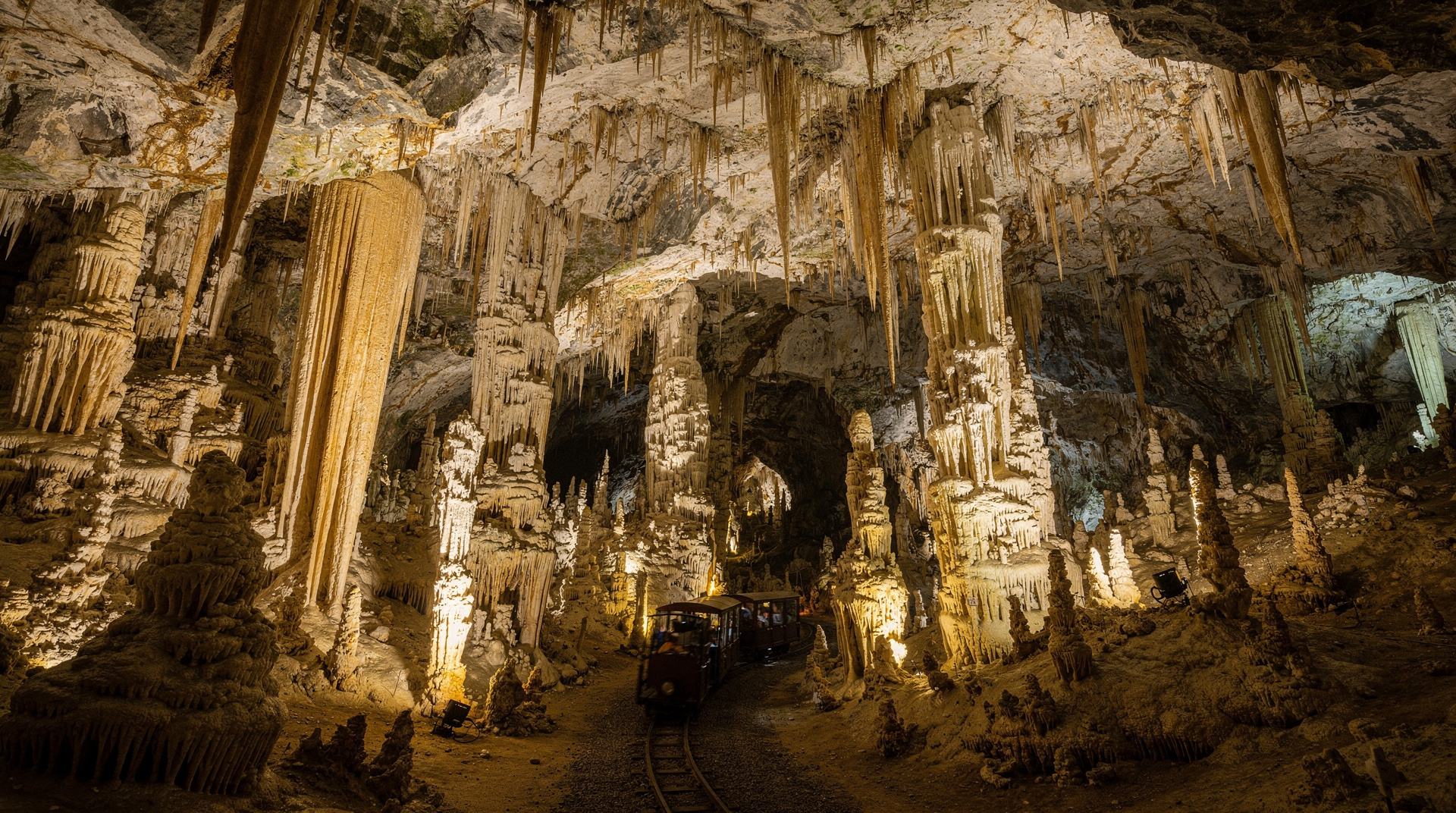
The train ride: the electric train carries around 70 passengers and runs through the main passage of the cave — a tunnel up to 20 metres wide and 15 metres high in places, with formations passing overhead. The ride takes about 3 minutes inbound and 3 minutes outbound. It’s extraordinary — the cave walls close in and open out as you travel, the formations catch the train lights, and the scale of the underground corridor is genuinely difficult to process at first.
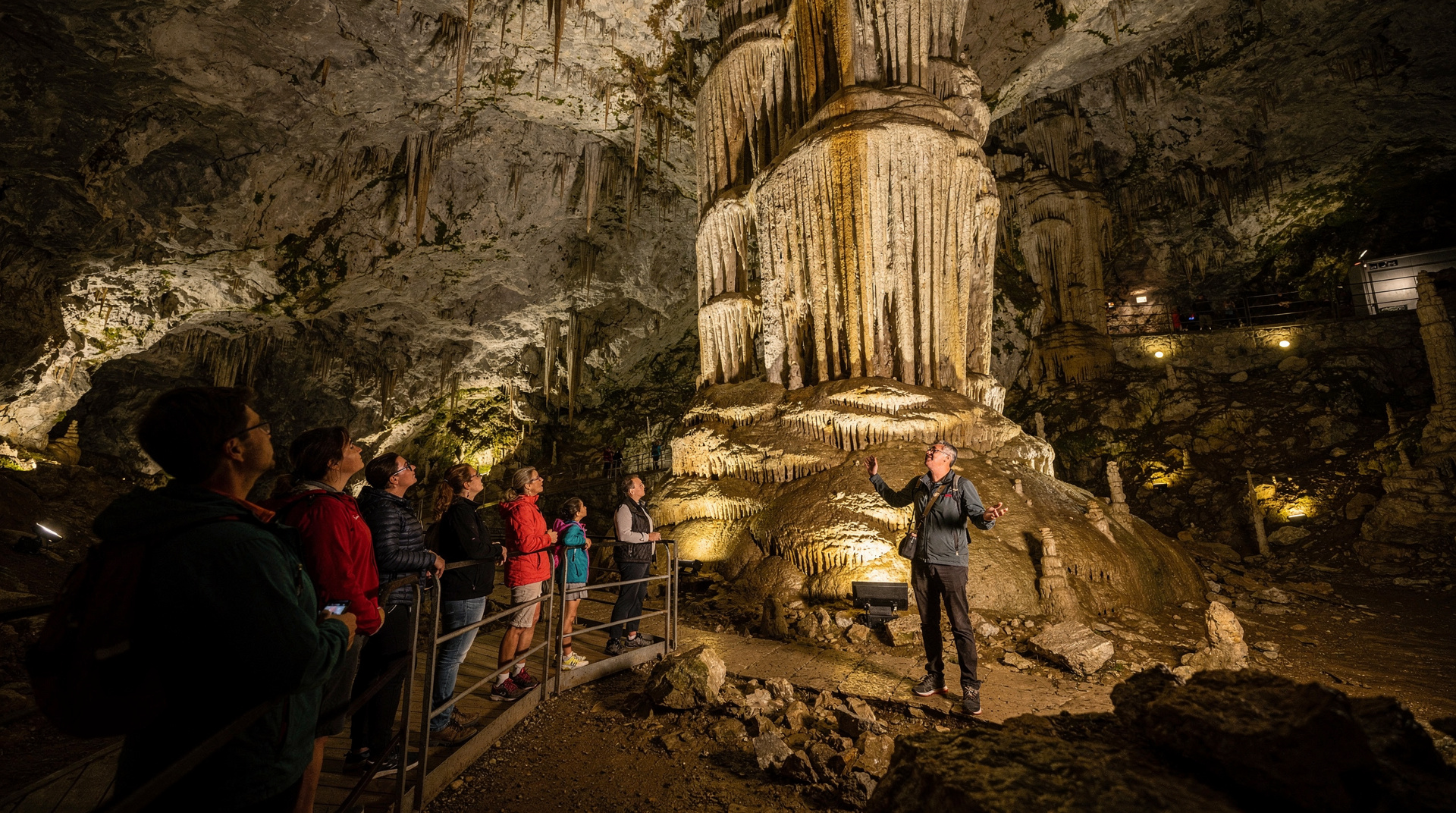
The walking section: the tour exits the train in the central part of the cave and proceeds on foot through a series of chambers that represent the decorated heart of Postojna — the areas with the densest and most dramatic stalactite formations. Key points include:
- Brilliant Hall (Briljantna dvorana): named for the translucent “cave calcite sinter” formations that sparkle in the light — tiny, perfectly formed stalactites and flowstones that took millions of years to develop and look like crystallised chandeliers.
- Concert Hall (Kongresna dvorana): the largest chamber, with seating for up to 10,000 people — concerts and events are held here. The acoustics are remarkable.
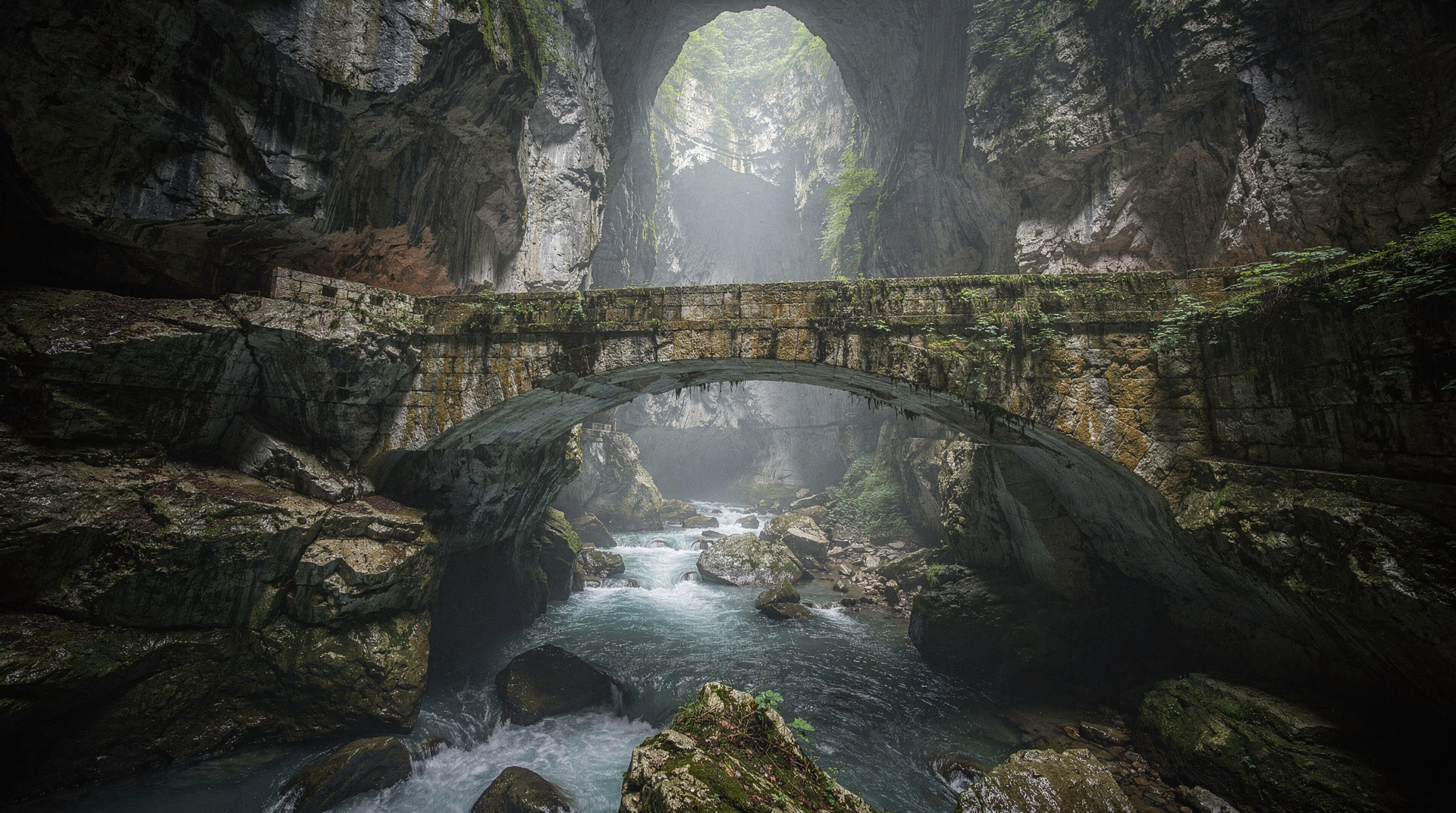
- Russian Bridge: a bridge built by Russian prisoners of war during World War I, used by the visitor route since 1916.
- Spaghetti Hall: where extremely long, thin “soda straw” stalactites hang in parallel — some over a metre long and as thin as a pencil.
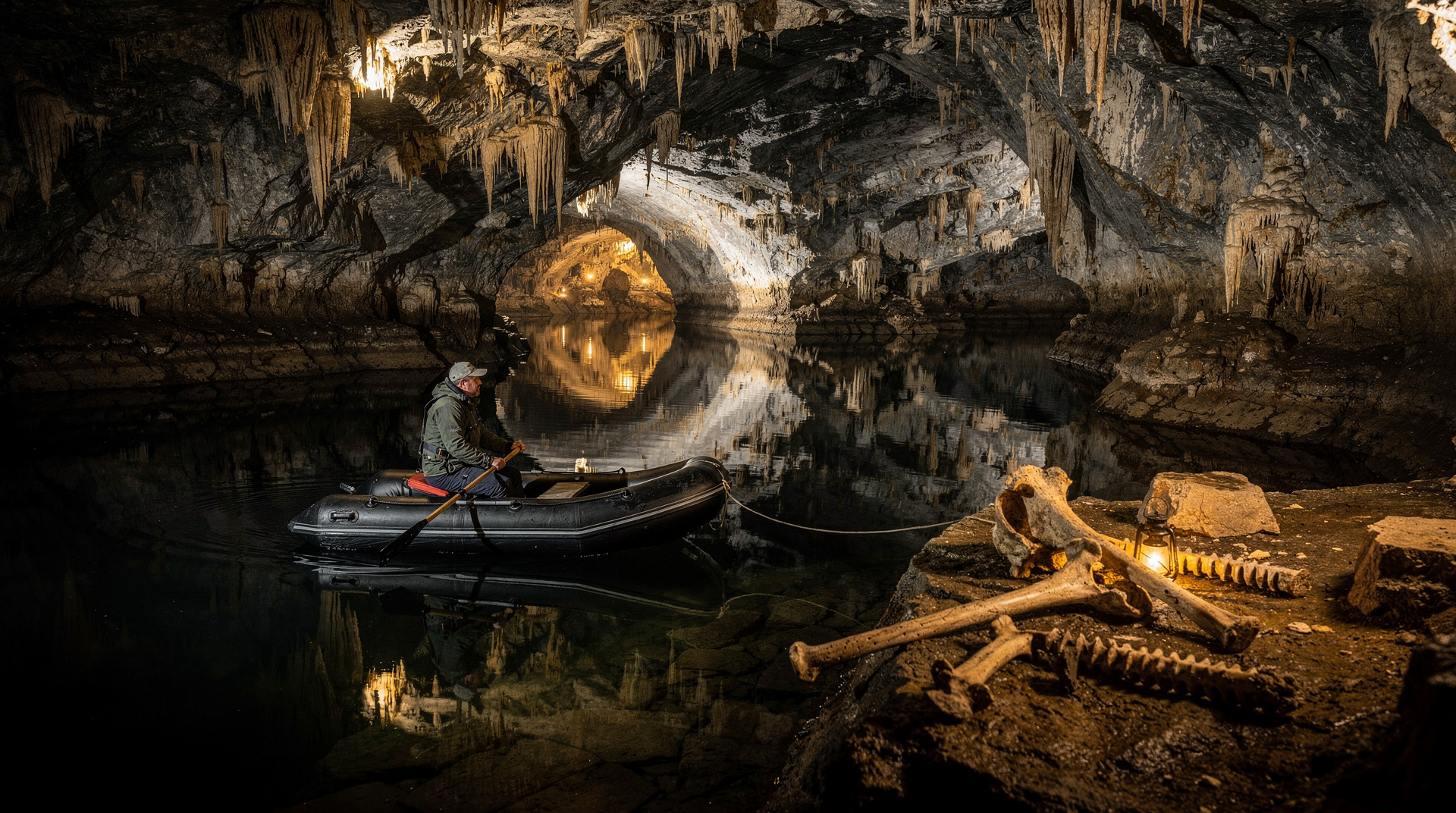
The Proteus vivarium: at the end of the walking section, the tour passes through a glass-walled vivarium where Proteus anguinus olms live in their natural spring-water habitat. These pale, eyeless salamanders are genuinely alien-looking — up to 30 cm long, pinkish-white, with tiny vestigial eyes under the skin. They breathe through external gills and through rudimentary lungs. They can survive for years without food. A breeding colony lives here permanently. This is one of the best places in Europe to see them.
Ticket prices and booking
Adult ticket (2026 approximate): EUR 34.90 for the standard cave tour. This price has increased significantly over recent years.
Child ticket: see current prices on the official Postojna Cave website (postojnska-jama.eu).
Under 6: free.
Combo ticket with Predjama Castle: approximately EUR 49.90 for cave + castle. Strongly recommended if you’re doing both in a day — a significant saving over buying separately. The castle ticket is valid for the same day.
Online booking: available and recommended. In July and August, time slots fill up 2–4 weeks in advance. Tickets are sold only on the official website, where you choose the date and time. Print or download your ticket — the cave entrance scanners accept both paper and phone tickets.
Tour frequency: tours depart roughly between 09:00 and 18:00, more often from May to September and less often in winter; check the timetable on the official website of the Postojna Cave Park for each month. The cave is open every day of the year, including public holidays and in bad weather. Arrive 30 minutes before your tour; boarding the train starts 15 minutes before your chosen time.
For a combined day from Ljubljana with guided transport, the Postojna Cave and Predjama Castle tour from Ljubljana handles the logistics of getting from the capital to both sites and back in a single day — straightforward and efficient.
If you want a half-day focused specifically on the cave and castle without returning to Ljubljana, the Postojna and Predjama half-day tour covers both sites in around 4–5 hours.
Getting to Postojna Cave
From Ljubljana: the cave is 55 km south of Ljubljana on the A1 motorway. By car: 45–50 minutes. By bus from Ljubljana bus station: Arriva and FlixBus services run regularly, journey about 1 hour (check current fares with the operators). The bus stops near the cave entrance.
From Koper and the coast: 50 km northeast of Koper, about 45 minutes by car.
From Piran: 60 km, about 55 minutes.
From Lake Bled: 120 km, about 1h30–1h45 by car. Feasible as a longer day trip if you have a car.
Parking at Postojna: large car parks adjacent to the cave entrance; check current parking fees on the official website of the Postojna Cave Park.
When to visit Postojna Cave
Best: early morning (the first departures of the day) in any season. The crowds are smallest at opening time.
Busiest: 11:00–14:00 in July and August. The cave runs tours back-to-back but the waiting areas and the walking sections can feel crowded.
Avoid: the week around Easter (one of the busiest periods of the year — school holidays across Europe). Peak summer mid-July to mid-August if you haven’t booked well in advance.
Winter: December–January is excellent. The cave interior is 8–10°C regardless, but the entrance and visitor centre are less crowded, and tour slots are easier to get.
The honest tourist-trap warning
Postojna is one of the places the CLAUDE.md notes as a potential disappointment if approached without realistic expectations. It genuinely earns its reputation as one of Europe’s great natural attractions. But it is also the most commercialised cave experience in Central Europe — the entrance complex has a large restaurant, souvenir shops, a hotel and a children’s play area.
The cave itself is beyond criticism as a geological spectacle. The surrounding infrastructure is that of a mass-market attraction. If you come expecting a quiet, intimate cave experience, you’ll be disappointed in peak season. If you come expecting a world-class natural wonder with efficient visitor management, you’ll be appropriately impressed.
For visitors who want the opposite of the Postojna experience — small groups, total silence, genuine wildness — Križna Jama is 20 km away and offers guided visits with booking recommended. See that guide for details.
Combining Postojna with nearby attractions
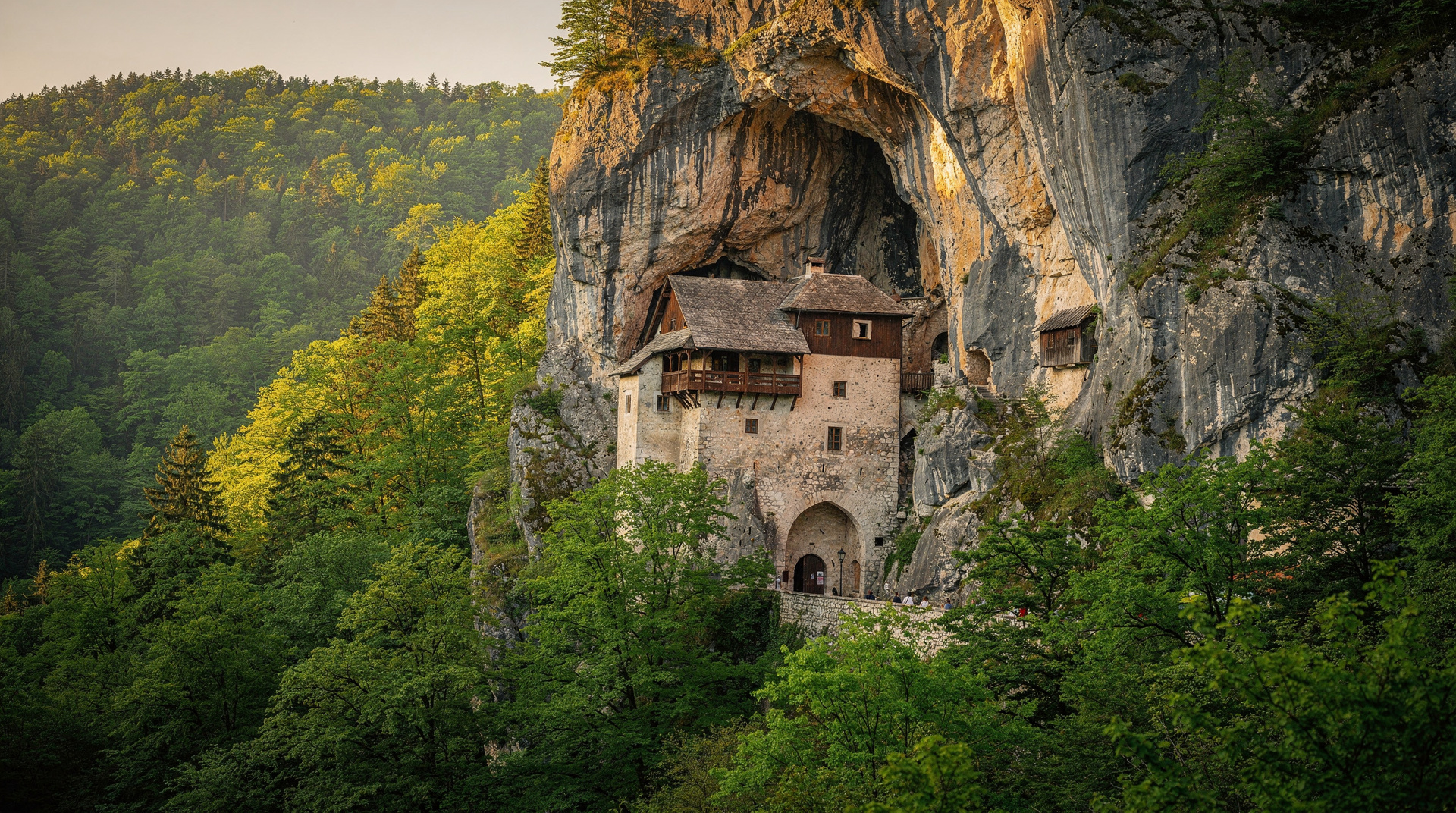
Predjama Castle (10 km, 20 minutes by car): the natural companion to a Postojna visit. The castle is built into the mouth of a cave partway up a 123-metre cliff, and it’s one of the most visually dramatic buildings in Europe. The combo ticket covers both. The Predjama Castle guide has the detail.
Škocjan Caves (30 km, 30 minutes): the main competitor. A UNESCO World Heritage site with an underground canyon and river. Different in character from Postojna — smaller but more dramatic in its rock formations. The Postojna vs Škocjan comparison guide breaks down which to choose.
Piran and the Slovenian coast: Piran is 60 km from Postojna — feasible to combine both in a day if you start early. See the Piran destination guide.
Ljubljana: Postojna is close enough to Ljubljana for a day trip — 45 minutes by car, 1 hour by bus. If you’re based in Ljubljana for 2–3 days, a Postojna day is among the top options.
For a private guided tour that allows more flexibility than a group visit, the private Postojna Cave and Predjama Castle tour provides a dedicated guide and customised pace — worth considering for families or groups who want a more personal experience.
Practical information
Opening hours: open every day of the year. Tours depart roughly between 09:00 and 18:00, more frequently from May to September; see the monthly timetable on the official website of the Postojna Cave Park.
Temperature inside: 8–10°C always. A jacket is essential regardless of outside temperature.
Cameras: photography is permitted in the cave (no flash in the Proteus vivarium). Video is allowed.
Disabled access: the main tour route is accessible for wheelchairs and pushchairs on the flat walking sections. The train is accessible. Some areas involve steps or slopes — contact the cave management in advance for specific accessibility needs.
Luggage: large bags must be stored in the locker room at the entrance (included in the ticket).
Time needed: the 90-minute tour plus travel time to Predjama Castle makes a full half-day from Ljubljana, or a comfortable full day if you’re also visiting Predjama and perhaps Piran.
For a broader overview of Slovenia’s cave network — including the less-visited options — see the Slovenia caves overview guide. For planning a complete Ljubljana-based caves day, the cave tours from Ljubljana guide is the practical starting point.
Postojna ticket options compared
| Ticket | Approximate price | Best for |
|---|---|---|
| Cave only | EUR 34.90 adult | Time-pressed visitors, repeat visitors |
| Cave + Predjama Castle | EUR 49.90 adult | Most first-time visitors |
| Cave + Proteus Vivarium exhibition | Cave price + EUR 12.80 | Natural history enthusiasts |
How Postojna Cave compares with visiting Slovenia’s other big draws
For visitors weighing Postojna against a full day at Lake Bled or the Julian Alps, the honest comparison is this: Postojna is a self-contained, weather-proof 90-minute experience that works regardless of season, while Bled and the mountains depend heavily on clear weather for their best version. If your Slovenia itinerary has a rainy or uncertain-weather day, Postojna (and Predjama) is the natural slot for it — the cave’s constant 10°C and indoor format make weather irrelevant. See how many days in Slovenia for how to sequence a caves day against the rest of a first-time itinerary.
Frequently asked questions about Postojna Cave
Is Postojna Cave worth the EUR 34.90 entrance fee?
For most visitors, yes. The cave is genuinely one of the great natural wonders of Europe — the scale of the formations, the cave railway and the Proteus vivarium are all exceptional. The price has increased significantly in recent years and is now on the high end for European cave attractions. Budget-conscious travellers should be aware that the combo ticket with Predjama Castle represents better value per site than the cave alone.
How early should you arrive at Postojna Cave?
In July and August, arriving for one of the first tours of the morning is the best strategy. Book online in advance — the first two or three slots of the day fill first, so book at least 1–2 weeks ahead in peak season. For spring, autumn and winter visits, same-day booking or even walk-in is usually possible.
Can I visit Postojna Cave without a guided tour?
No. All visits are guided and timed. You cannot explore the cave independently under any circumstances — the tunnel network is extensive enough to be genuinely hazardous without a guide, and the cave management enforces this strictly. The guided tour format is well-structured and the guides are knowledgeable in multiple languages.
What languages is the Postojna Cave tour offered in?
The guided tour is offered in Slovenian, English, German, Italian, French, Spanish, Russian and other languages depending on demand. Headphone audio guide systems are available in additional languages. Check current language availability when booking.
Is Postojna Cave good for a day trip from Ljubljana?
Yes — it’s one of the best day trips from Ljubljana. The cave is 55 km south (45 minutes by car, 1 hour by bus), and a combined visit to Postojna and Predjama Castle is easily done in a full day. For visitors without a car, the cave day trip from Ljubljana guide covers the bus and organised tour options.
What should I wear to Postojna Cave?
The cave is 8–10°C year-round. In summer, most visitors are in short sleeves or light layers and find the cave cold — a fleece or light jacket is the minimum. In winter, you’ll already be dressed warmly enough. Sturdy shoes are helpful as the paths can be slightly damp, though the standard visitor route is paved and smooth.
How do I combine Postojna Cave with Predjama Castle?
By car: the castle is 10 km from the cave (10–15 minutes on a narrow mountain road). By tour: several operators offer combined Postojna + Predjama tickets with shared transport between the two. See the Predjama Castle guide for the castle-specific information and visit timing.
Top experiences
Bookable activities with verified prices and instant confirmation on GetYourGuide.