Predjama Castle guide: the cave castle in the cliff and how to visit
From Ljubljana: Postojna Cave and Predjama half-day tour
How do you visit Predjama Castle and how long does it take?
Predjama Castle is 10 km from Postojna Cave and is usually combined with a cave visit on the same day (the combo ticket saves EUR 9 versus buying separately). The castle visit takes 1–2 hours to explore the interiors. The castle cave below the main building is accessed via a separate guided tour (May to September) — check current availability when booking.
Predjama Castle: the most dramatically located building you’ve probably never heard of
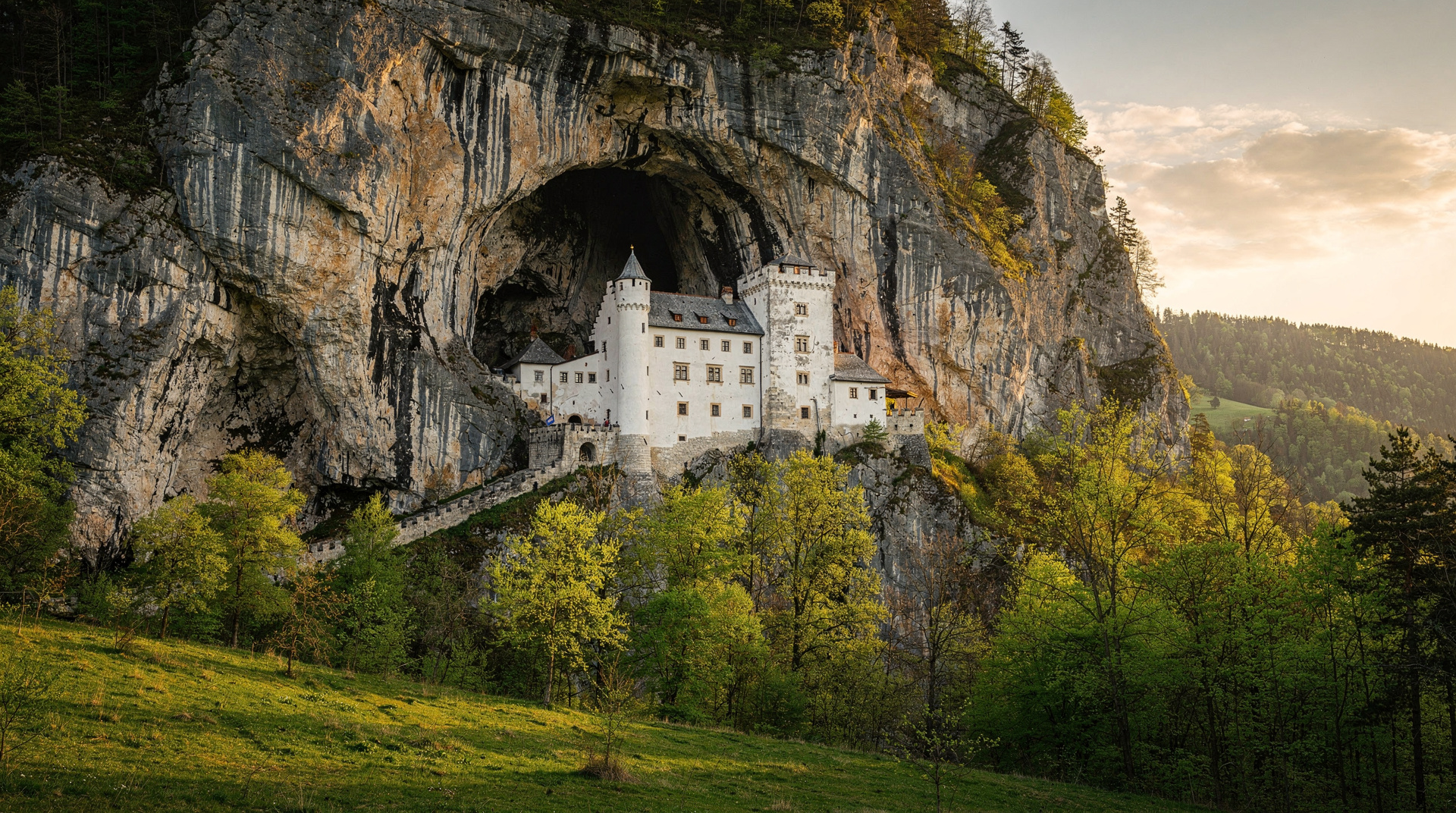
Predjama Castle (Predjamski grad) is built into the opening of a cave partway up a 123-metre limestone cliff. The castle’s foundations are the cave floor; the cave mouth forms the rear walls; the cliff looms overhead. It is, without exaggeration, one of the most visually remarkable buildings in Europe — and it sits just 10 km from Postojna Cave, which is why the two are almost always combined on the same day.
| Where | 10 km from Postojna Cave, Karst region |
| Cost | around EUR 24 alone, EUR 49.90 combo with Postojna |
| Time needed | 1.5–2 hours (plus the cave tour, May–September) |
| Getting there | Car easiest; tour from Postojna without one |
| Best light for photos | Afternoon (west-facing cliff) |
| Booking | Advance recommended in July–August |
The architecture alone would make it remarkable. The history adds another layer: Predjama was the stronghold of a 15th-century robber knight named Erasmus (Erazem Lueger), who used the cave system behind the castle to supply and defend it against a Habsburg siege. The story of Erasmus of Predjama — part Robin Hood, part horror movie villain, reportedly killed by a cannonball while visiting the privy — is one of the more entertaining pieces of Slovenian history.
The castle is also, importantly, genuinely interesting to walk through. It’s not just an exterior you photograph from the valley below (though that photograph is extraordinary). There are four floors of interior, including the original great hall, prison, drawbridge mechanism and the natural cave chambers that form the deepest parts of the building.
The history: Erasmus, the siege, and the cave
The site has been fortified since at least the 13th century, but the current castle structure dates primarily from the 16th century. The famous episode in its history is the siege of 1483–1484.
Erazem Lueger was a Slovenian knight who had killed a Habsburg court favourite in a duel and fled to Predjama with a price on his head. The Habsburg governor of Trieste laid siege to the castle — a reasonable strategy, since Predjama is effectively impregnable from the front. What the besiegers didn’t know was that the cave behind the castle connects to a network of passages that emerge on the plateau above. Erasmus was able to receive supplies through the cave for over a year — he even sent fresh cherries to the besieging commander as a taunt.
The siege ended when a traitor within the castle signalled to the besiegers at the moment Erasmus was in the privy (a tower at the castle’s most exposed corner). A cannonball hit at the right moment, and that was the end of Erasmus. The story is either true or a legend that has been told for so long it might as well be true.
What you see inside
The castle interior is four floors of roughly authentic medieval castle experience — without the extensive museum-level restorations and gift shops of some Austrian castles, which is both a limitation (the interpretation is sparse in places) and an advantage (it feels like a building, not a visitor attraction).
Ground floor: the castle entrance, the original kitchen area and the old well. The cave mouth is visible immediately from the entrance courtyard — looking up, the cliff rises 60+ metres above you with the cave ceiling and the castle walls merging seamlessly.
First floor: the great hall and living quarters. The wooden floors creak. The windows look straight out over the valley and the limestone karst landscape stretching toward the Adriatic.
Second floor: the chapel (small, atmospheric, original fittings intact) and more living quarters. A cramped spiral stair connects the floors — typical of medieval castle design.
Third floor and above: the highest rooms are partly cut into the rock itself, where the cave ceiling becomes the room ceiling. This is where the castle becomes architecturally extraordinary — rooms where natural stone meets dressed masonry, where the boundary between building and geology is genuinely blurred.
The cave: behind the living quarters, passages lead into the cave system itself — the supply route used by Erasmus during the siege. The main cave below the castle is accessible on a separate guided tour (May to September only — check the official website of the Postojna Cave Park for current scheduling). The cave includes the underground spring that supplied the castle with fresh water.
The drawbridge mechanism: a reconstructed drawbridge shows the engineering that protected the castle’s most exposed section — the front gate is the only place where an attacker could conceivably reach, and it was heavily defended.
Ticket prices and booking
Adult ticket (2026 approximate): EUR 24 for the castle alone.
Combo with Postojna Cave: approximately EUR 49.90 for Postojna Cave + Predjama Castle — a saving of EUR 9 versus buying separately. This is the standard way to visit both.
Children: see current prices on the official website of the Postojna Cave Park.
Under 6: free.
Online booking: available and recommended in July and August. The castle is generally less busy than Postojna.
Cave tour: the Proteus Cave below the castle runs on separate guided tours from May to September, with group sizes strictly limited. The cave tour is sometimes fully booked in peak season, so confirming in advance via the official website of the Postojna Cave Park (which manages bookings for both sites) is advisable.
For the standard combined day from Ljubljana, the Postojna and Predjama tour from Ljubljana is the most practical option for visitors without a car. For a focused half-day on both sites, the Postojna and Predjama half-day tour covers both in a single efficient session.
Getting to Predjama Castle
By car from Postojna Cave: 10 km, 10–15 minutes on a narrow mountain road that winds through the karst plateau. Well-signed. There’s a large parking area at the base of the cliff, directly in front of the castle.
By car from Ljubljana: 75 km, about 1h on the A1 motorway then the cave road. The castle is typically reached via Postojna — there’s no direct route that saves meaningful time.
By bus from Postojna: local buses don’t serve the castle directly. A taxi from Postojna is possible, but check the fare in advance. For visitors without a car, a Postojna-based tour that includes transfer to the castle is the most practical option.
Walking from Postojna Cave: technically possible via rural roads (about 10 km), but not recommended — the road is narrow and has no footpath for most of its length.
When to visit and how long to spend
Best: a morning visit to Postojna Cave (choose one of the first departures of the day), then drive to Predjama for the castle. This allows 2–3 hours at the castle before a late lunch and return to Ljubljana.
Alternative order: Predjama first (arrive 09:00, 2 hours), then drive to Postojna for a lunchtime or afternoon tour. This works well if you want morning light on the castle exterior (east-facing cliff, good light until midday).
Time needed at the castle: 1.5–2 hours for the castle interior and exterior photography. Add time if you take the cave tour below (May to September).
Crowds: Predjama is significantly less crowded than Postojna. Even in peak summer the castle never feels overwhelmed — the site is large enough to absorb visitors without feeling cramped.
Photographing Predjama Castle
The exterior photograph — the castle in its cave mouth, with the cliff rising overhead and the valley below — is taken from the parking area or from the path on the valley floor. The best angle is from the path that runs to the left of the parking area (looking at the castle), which gives a slightly elevated perspective.
Light: the cliff face is west-facing, so the best exterior light is in the afternoon (roughly 14:00–18:00 in summer). Morning visits see the cliff in shade. If photography is a priority, time your visit accordingly.
Interior: the rooms facing the valley have good window light for interior shots. The cave-ceiling rooms require a wider aperture — the natural cave chambers are dark.
For a private guide who can narrate the castle history and help position photographs, the private Postojna and Predjama tour includes a dedicated guide for both sites.
Practical information
Address: Predjama 1 (follow signs from the A1 Postojna exit, or from Postojna Cave).
Opening hours: year-round, opening at 09:00 and closing between 17:00 and 19:00 depending on the season; last entry is 30 minutes before closing. Check current hours on the official website of the Postojna Cave Park (which manages the castle).
Facilities: toilets and a small café in the car park area. No restaurant (unlike Postojna’s large visitor complex). Bring snacks if you’re spending a full day.
Accessibility: the ground floor of the castle is accessible. Upper floors involve steep, narrow medieval stairs with low ceilings and uneven surfaces. Not suitable for wheelchairs above ground level.
For the broader caves context — how Predjama fits into the Karst region’s cave landscape — see the Slovenia caves overview. For planning the full Postojna and Predjama day from Ljubljana, see the cave tours from Ljubljana guide.
The Erazem Lueger story in full
The 15th-century siege of Predjama is one of the best documented and most entertaining episodes in Slovenian history, and understanding the full story makes the castle visit considerably richer.
Erazem (Erasmus) of Predjama was a knight who held the castle in the 1480s. According to historical sources, he killed Philip of Rackhels — a favourite of the Habsburg Emperor Frederick III — in a duel in Vienna in 1483. Whether this was murder or a legitimate duel, the Habsburgs wanted him dead, and Erazem fled to Predjama with a price on his head.
The governor of Trieste, Andreas von Liechtenstein, was ordered to bring Erazem to justice. He assembled a siege force and surrounded the castle. The siege was expected to be short — Predjama’s only access was via the cliff-face entrance, which could easily be monitored. What the besiegers didn’t know was that a network of cave passages ran from inside the castle to exits on the plateau above the cliff, completely hidden from below.
Erazem used these passages to receive supplies throughout the siege. According to the most colourful accounts, he sent fresh cherries and roasted oxen to the besieging general, taunting him with the proof of continued supply. The siege dragged on for over a year.
The end came through treachery. A servant within the castle agreed to signal to the besiegers at the moment Erazem visited the privy — a small tower at the castle’s most exposed corner. The signal was a candle in a window, and a Habsburg cannonball struck at the indicated moment. Erazem was killed, and the siege ended.
The story encapsulates themes common to Slovenian folk history: the defiant local lord, the overbearing foreign power, the betrayal from within. Whether every detail is historically accurate is less important than the fact that the story has been told in this valley for 540 years.
The cave beneath the castle: Erazem’s Cave
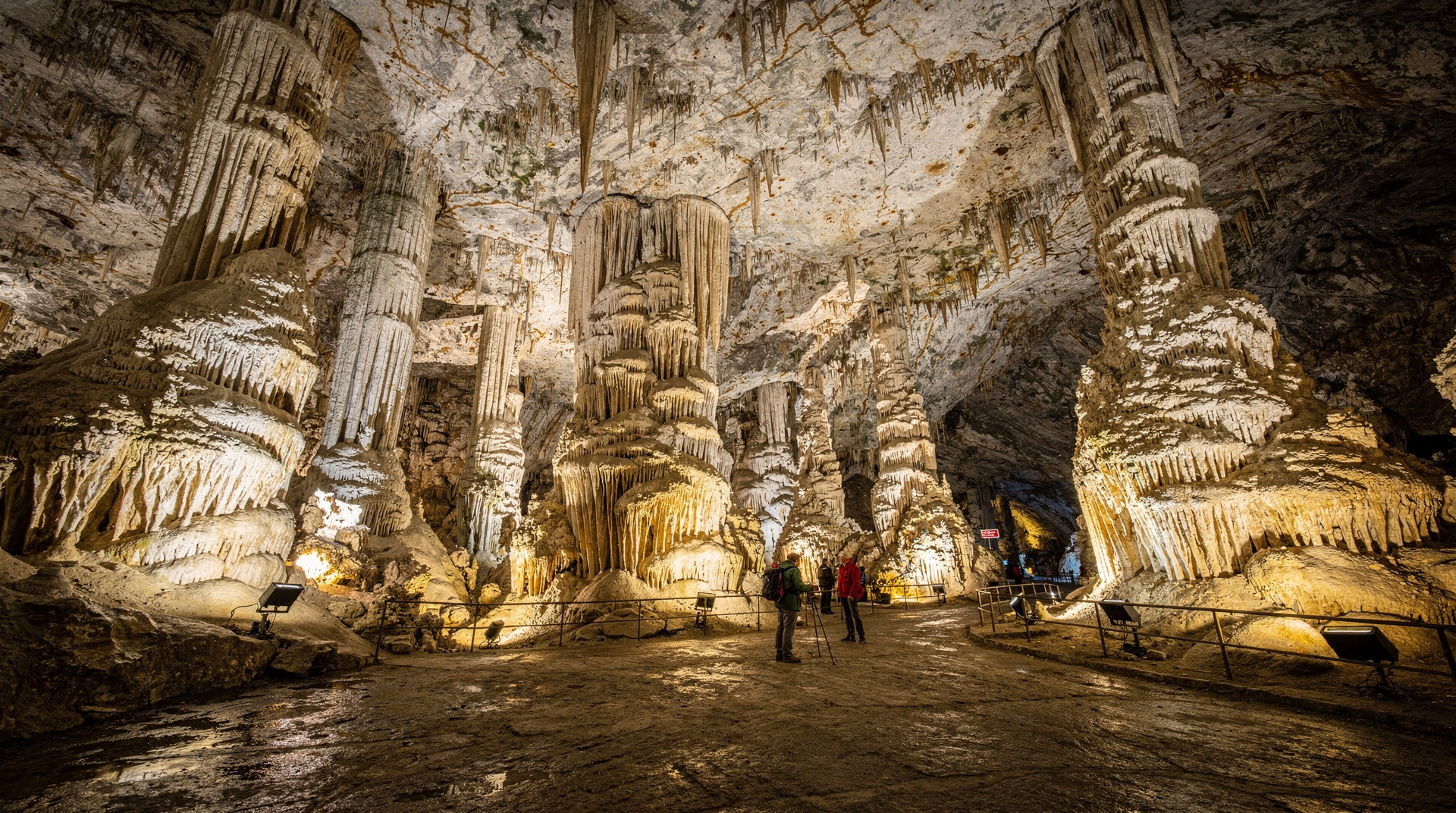
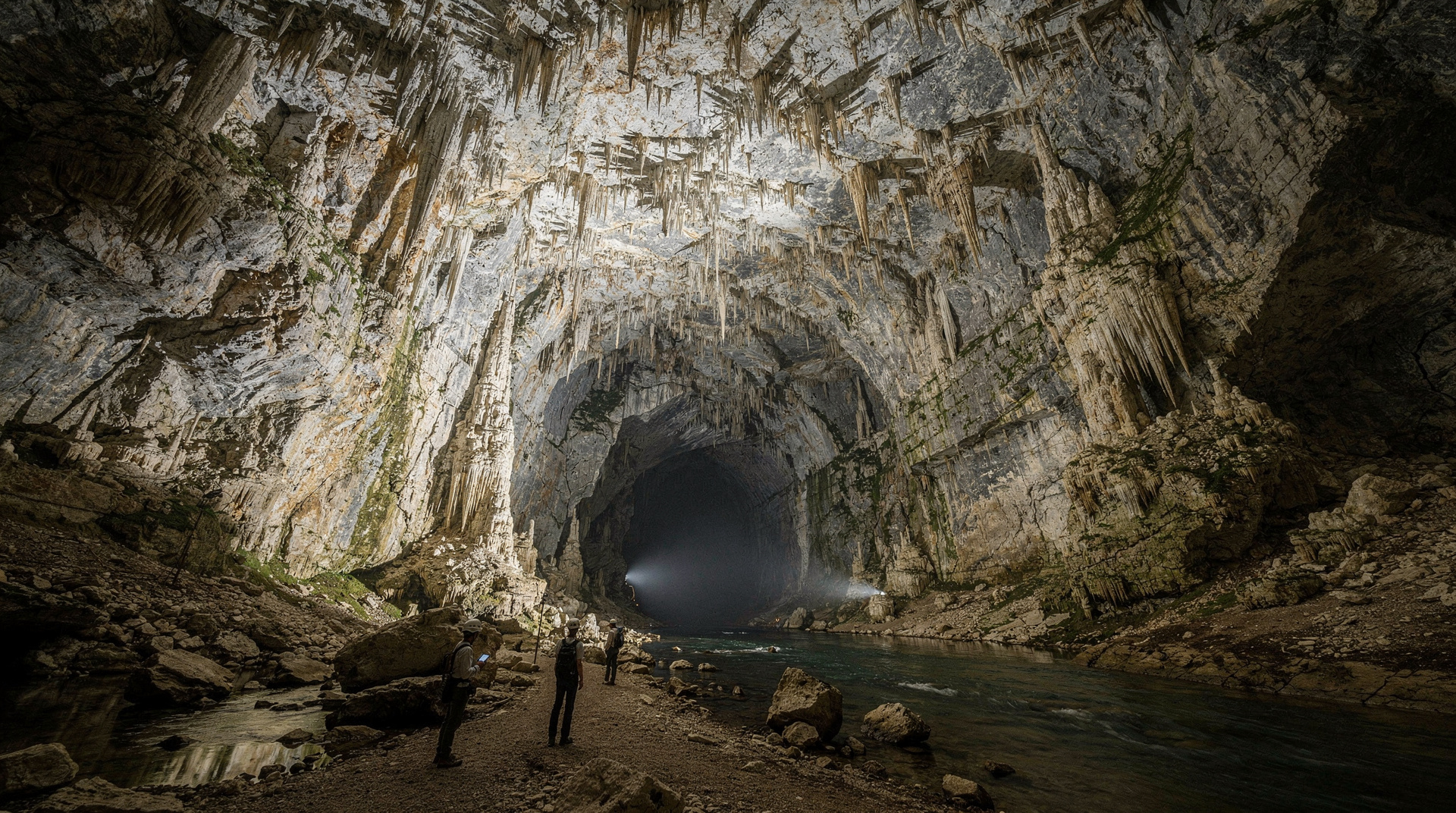
Below the main castle structure, accessible via a separate guided tour, is the cave system that Erazem used as his supply route. The cave (sometimes called Erazem’s Cave or the Predjama Cave) is a significant karst system in its own right, with stalactite formations in the deeper sections and an underground spring that supplied the castle with fresh water.
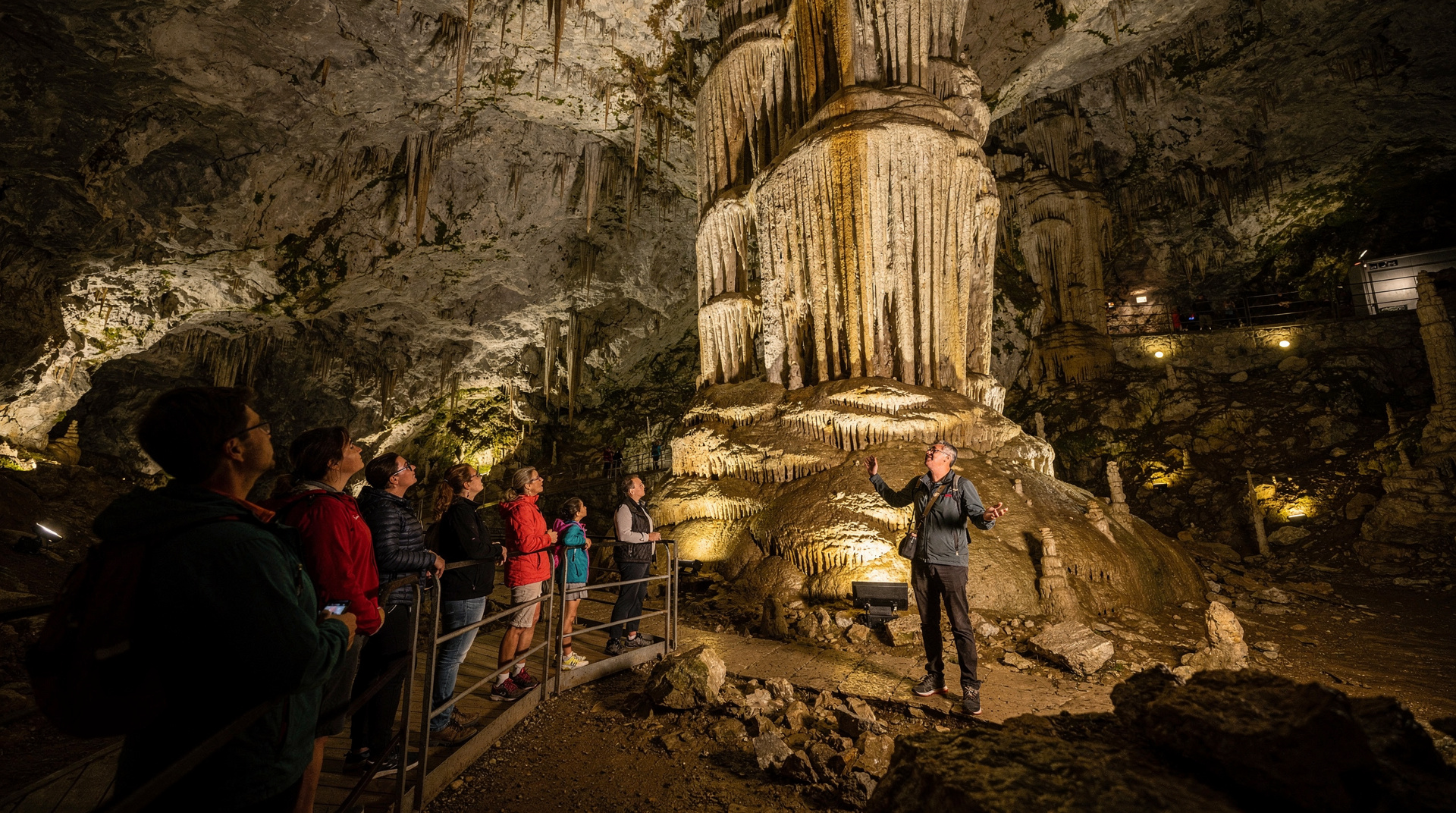
The cave tour is managed by the Postojna Cave administration (which also manages Predjama Castle) and runs with limited group sizes. The entrance to the cave tour is near the castle’s ground floor, where a locked door leads down into the rock. Tours are guided, with portable lighting and a route that covers the first significant section of the cave including the spring chamber.
Booking: the cave tour runs from May to September; check availability on the official website of the Postojna Cave Park. In peak season, slots may be limited, so book ahead rather than relying on arriving early.
Architecture and building techniques
The castle’s most remarkable engineering achievement is not any single building element but the overall integration with the natural cave. Construction in the 16th century faced a challenge that no architect using standard techniques could solve: how to build a habitable structure inside a cave mouth while using the cave’s natural ceiling and walls as part of the building fabric.
The solution involved:
- Using the cave floor as the foundation, with the bedrock providing stable footing without traditional foundations
- Building against and into the cave walls, with the limestone forming rear walls and parts of the ceiling
- Installing a drainage system to manage the water that seeps through the cave (the cave is still damp in the lower sections in winter and after heavy rain)
- The front facade — the visible face of the castle in the cliff — is primarily conventional masonry construction supported by the cave floor and walls behind it
The result is a structure that is simultaneously a conventional Slovenian Renaissance castle (when viewed from the front) and a cave dwelling (when viewed from inside). The medieval and early modern builders achieved something that would be considered ambitious even by modern engineering standards.
The castle in more recent history
Beyond the Erazem episode, Predjama Castle has a relatively quiet history compared to its dramatic appearance.
After the Habsburg siege, the castle passed through various noble families. It was partially destroyed and rebuilt in the 17th century following another conflict. By the 18th century it had declined from an active residence to a semi-abandoned structure.
In the 19th century, the castle attracted interest from the Romantic movement — its combination of medieval drama, cave geography and tragic history made it an ideal subject for artistic and literary treatment. Several 19th-century travel writers described it as one of the most atmospheric buildings in the Habsburg Empire.
The tourist visits that began in the late 19th century have continued since. The current visitor infrastructure — entrance, parking, basic café — was established after Slovenian independence in 1991, when the castle’s tourism potential was developed more formally.
The medieval tournament that takes place annually in late June or early July (Erazem’s Tournament) recreates period activities including jousting and archery in the valley in front of the castle. The event has become one of Slovenia’s better-attended historical recreations and is worth timing a visit around if the schedule aligns.
Building Predjama into a wider trip
Predjama works best as one piece of a larger Karst day rather than a stand-alone stop. If you are still deciding which cave to prioritise, the Postojna Cave day trip guide and the honest Postojna Cave review explain what the big cave offers, while Škocjan Caves is the quieter, more wild alternative if you want to compare the two.
Many visitors base themselves in the capital. The day trips from Ljubljana guide shows where the castle fits among the other easy excursions, and the Ljubljana and caves 4-day itinerary strings the castle, the caves and the city into a relaxed sequence. If you only have a few days in the country, the Slovenia highlights in 5 days route shows how a Predjama morning can sit alongside the lakes and the coast.
Getting around without a car is the main practical question. The getting around Slovenia guide covers the options, and the car rental in Slovenia page is worth reading if you want the freedom to arrive at the castle early or stay for the afternoon light. Remember that a motorway vignette is needed on the way, as explained in the driving and vignette guide.
Castle lovers can continue the theme with the Slovenian castles overview, which places Predjama next to the country’s other fortresses and helps you judge how much castle time to build into your route. For a wider look at how much to fit in, the first time in Slovenia guide is a sensible starting point.
Frequently asked questions about Predjama Castle guide
Can I visit Predjama Castle without visiting Postojna Cave?
Yes, though the combined ticket makes financial sense if you're visiting both — around EUR 49.90 versus buying separately. If Postojna doesn't interest you, the castle alone costs approximately EUR 24 for adults and is a worthwhile 1.5–2 hour visit in its own right, especially for the Erazem story and the cave beneath the building.Is Predjama Castle suitable for children?
Yes, and it's often a highlight for children thanks to the Erazem legend, the drawbridge mechanism and the dramatic cliff setting. The upper floors involve narrow medieval stairs, so supervise younger children closely. The site is generally less crowded than Postojna Cave, which makes it easier to explore at a child's pace.
Top experiences
Bookable activities with verified prices and instant confirmation on GetYourGuide.