Križna Jama cave: Slovenia's wildest underground lake experience
From Ljubljana: Postojna Cave day trip
What makes Križna Jama different from Postojna Cave?
Križna Jama is a wild cave run by a caving association, with no cave train and no crowds. The most accessible tour (1 to 1.25 hours, 13 EUR, 15 EUR from July to September) includes a boat crossing of the first underground lake; longer tours add the cave bear tunnel or the water sections for small groups of up to 4. Boots and lamps are provided. Payment is in cash only.
Križna Jama: the cave that Postojna visitors don’t know about
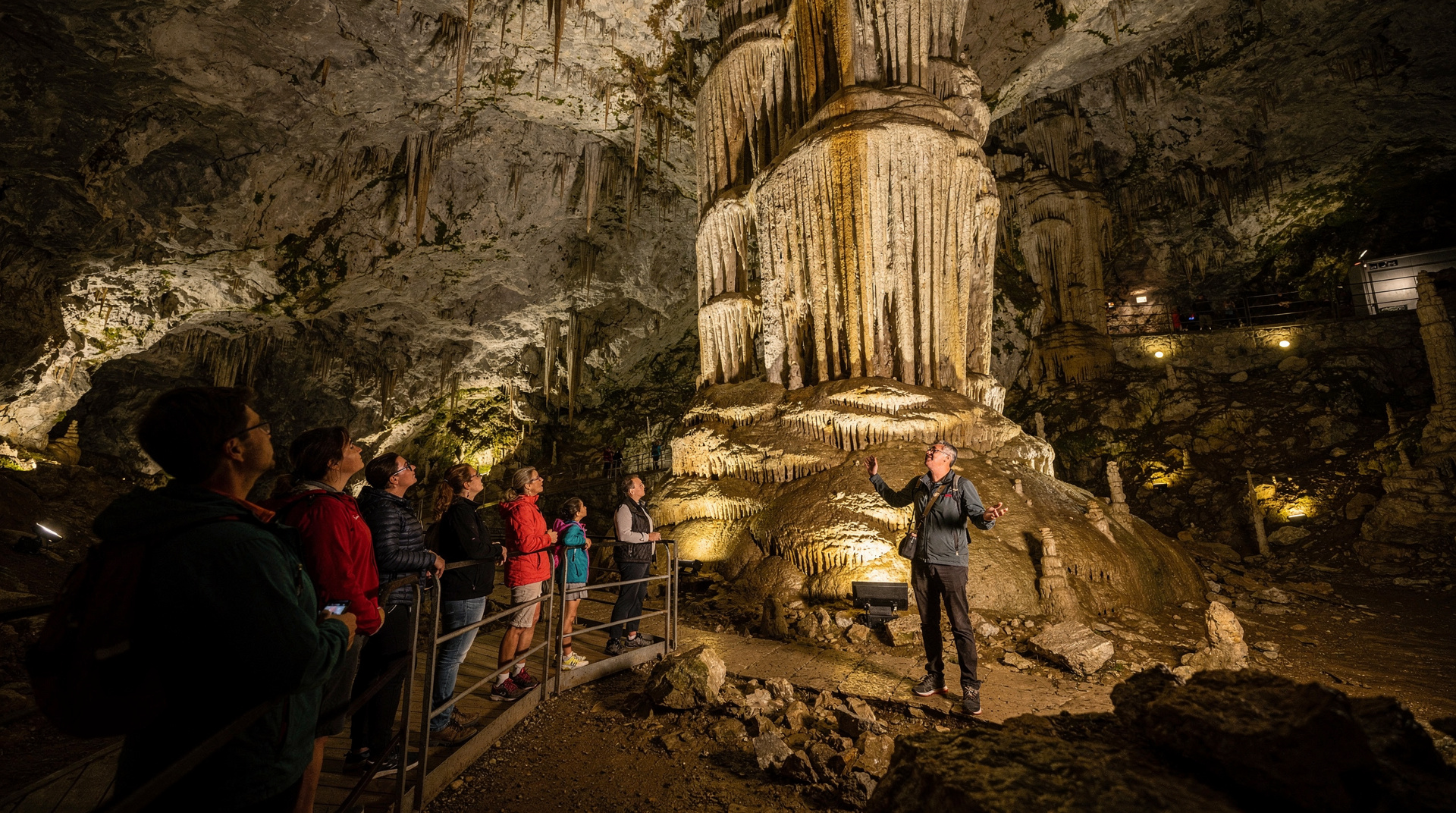
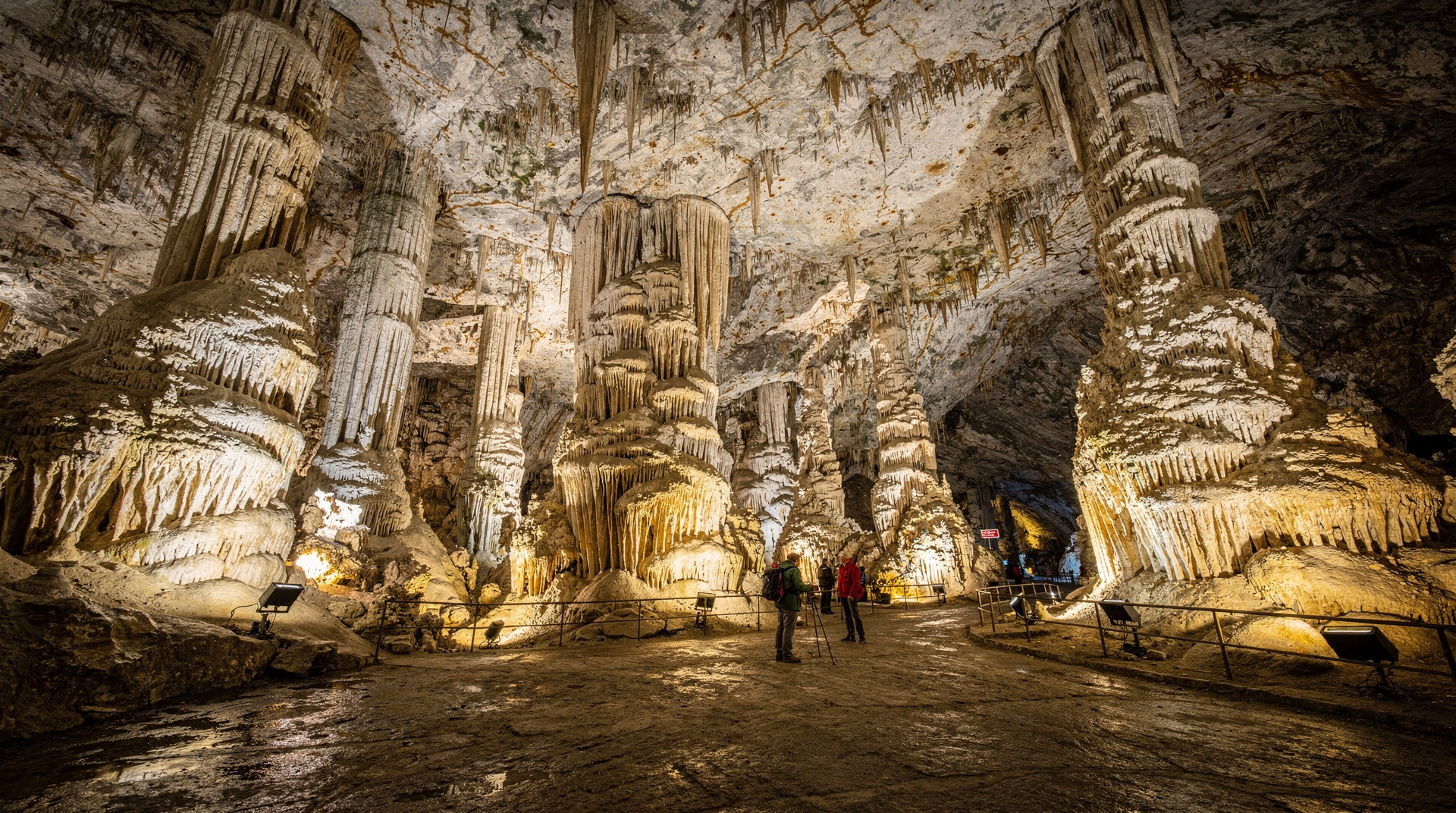
Twenty kilometres from Postojna Cave, in a quiet valley of the Karst region, Križna Jama offers one of the most unusual cave experiences in Europe. The entrance is modest — a low opening in a forested hillside, unmarked except by a small sign. The cave is run by a local caving association, not by a commercial operator, and there is no cave train and no souvenir shop.
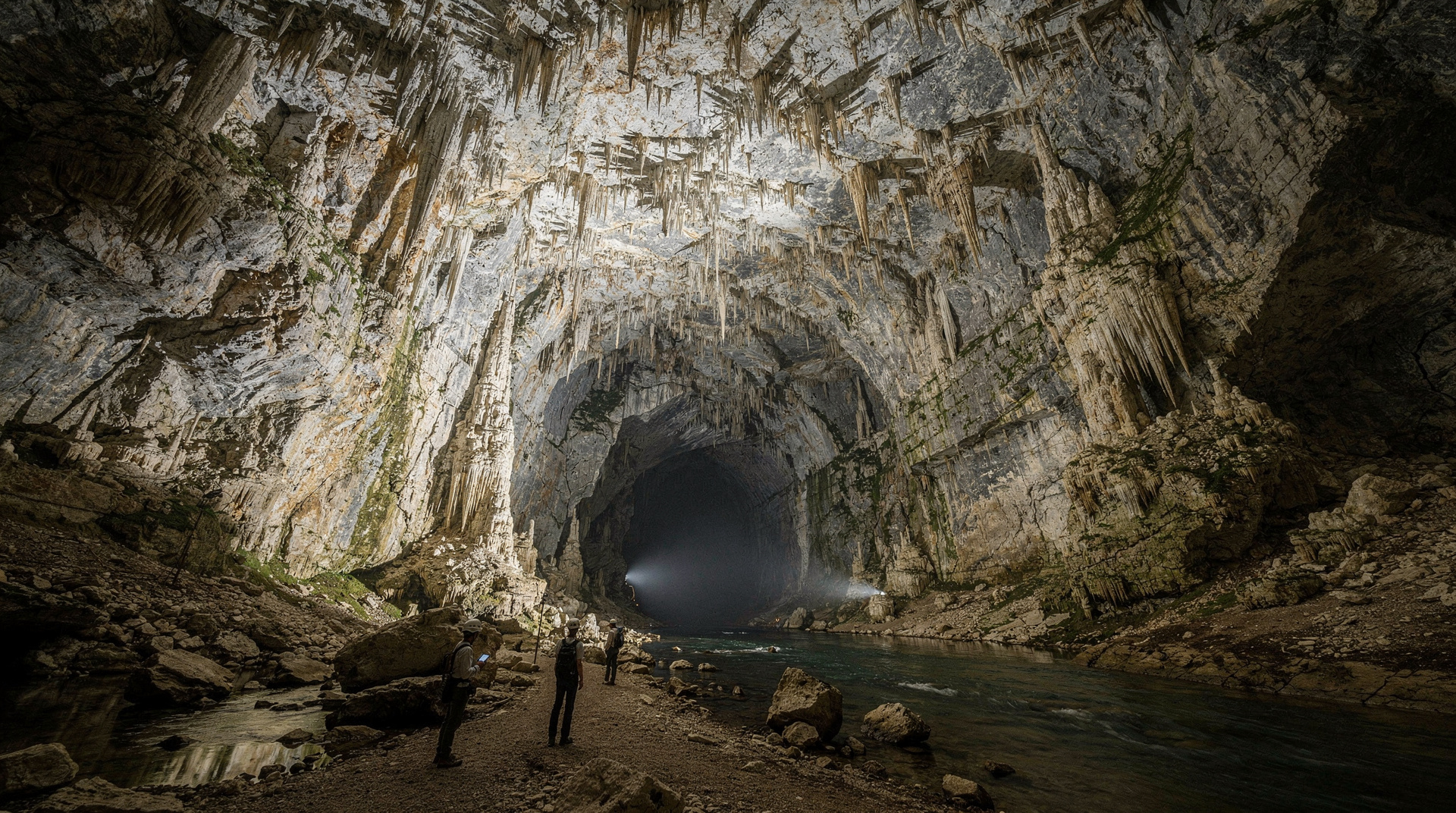
What’s inside is remarkable: 45 underground lakes connected by passages, navigated partly on foot and partly by boat, with bones of Pleistocene cave bears preserved in the sediment where they were deposited. The short tour takes groups of up to 60 visitors (20 per guide), while the water sections are reserved for groups of at most four. The silence is remarkable.
For visitors overwhelmed by the scale and commercialisation of Postojna Cave, Križna Jama is the alternative that experienced cave visitors recommend to each other.
| Where | Cerknica municipality, 20 km northeast of Postojna |
| Operator | Association of Križna Cave Lovers (Društvo ljubiteljev Križne jame) |
| Short tour with boat | 1–1.25 hours, 13 EUR (15 EUR July–September), groups up to 60 |
| Short tour + bear tunnel | 1.5–2 hours, 18 EUR per person, minimum 70 EUR per group, 2–12 people |
| Water tours | 3.5–4 hours (Calvary) or 6.5–7 hours (Crystal Mountain), groups of up to 4 |
| Payment | Cash only, no bank cards |
| Booking | Through the official Križna Jama website; tickets, request form or calendar depending on the tour |
| Getting there | Car essential; no direct public transport |
What is Križna Jama?
Križna Jama (“Cross Cave” in Slovenian, named for the crossroads-like junction near the entrance) is a 8.4 km cave system in the municipality of Cerknica, about 20 km northeast of Postojna. It was explored by cavers in the 1920s and 1930s and has been open for guided visits since 1952.
The cave is famous for three things:
Underground lakes: 45 interconnected lakes of varying size and depth, containing extraordinarily clear water. The largest lake (Rakov rokav) is about 50 metres long and 3 metres deep at its deepest point. The water temperature is around 8°C — cold, clear and perfectly still in calm conditions.
Cave bear bones: Ursus spelaeus (the extinct cave bear) used Križna Jama as a hibernation site during the last ice age. Bones, skulls and sometimes complete skeletons have been found throughout the cave, preserved in the sediment. Unlike museum specimens, these bones are in situ — you see them as they were found, in context.
Complete absence of tourist infrastructure: no electric lighting (visitors use portable rechargeable lamps supplied by the organiser), no paved paths, no safety railings. The cave is experienced much as early explorers found it.
How the visit works
Križna Jama offers four official visits, all guided in Slovenian or English. The cave is a constant 8°C. The 4-person limit applies only to the two water tours, not to the short visits.
1. Short tour with a boat on the first lake (1 to 1.25 hours): the entry point. Groups of up to 60 visitors with a maximum of 20 per guide. 13 EUR per adult (15 EUR from July to September); children aged 3 to 15 pay a reduced fare. Not recommended for visitors with reduced mobility. Tickets are booked through the ticket page of the official Križna Jama website, and online reservations get priority.
2. Short tour plus the bear tunnel (1.5 to 2 hours): for 2 to 12 people, from age 6. Good mobility is required because of the many natural steps. 18 EUR per person with a minimum of 70 EUR per group, booked through a request form.
3. Water section to the Calvary (3.5 to 4 hours): an expedition in groups of 4. Off-season, from 60 EUR per person for a group of 4 (more for fewer people); in summer 70 to 100 EUR depending on group size. About 1,000 visitors a year take it, via a booking calendar with a waiting list and special conditions.
4. Water section to the Crystal Mountain (6.5 to 7 hours): winter only, about 100 visitors a year, 400 EUR per group of at most 4. Free dates only start in December 2030.
Prices include basic accident insurance and the equipment.
Booking Križna Jama
The cave is run by the Association of Križna Cave Lovers (Društvo ljubiteljev Križne jame), Bloška Polica 7, 1384 Grahovo, phone +386 41 632 153. Each tour has its own booking route on the official Križna Jama website: tickets for the short tour, a request form for the bear tunnel tour, and a calendar for the water tours.
Departure times: for October the website shows the short boat tour daily at 15:00, with an extra 11:00 departure at weekends, and other visits on request. Times change with the season, so check the official Križna Jama website for the dates of your trip.
Payment: cash, or on order. Bank cards are not accepted.
Book ahead: online reservations have priority on the short tour, and the water tours need to be booked far in advance.
There are no GYG-bookable tours specifically for Križna Jama given its independent management. If you’re planning a caves day that includes both Postojna and a Križna Jama visit, you’ll need to book Križna separately and self-drive between the two. For the Postojna portion, the Postojna day trip from Ljubljana can be combined with a separate Križna booking if you have a car.
Who should book which tour
The choice matters more here than at most caves, since the four visits are genuinely different experiences rather than variations on the same route.
Choose the short boat tour if: you have children (reduced fare from 3 to 15 years), want the lowest price, or simply want a taste of the underground lakes without a physically demanding visit. It is not suitable for visitors with reduced mobility.
Choose the bear tunnel tour if: you are mobile enough for many natural steps, are travelling in a small group of 2 to 12 (children from 6) and want to go beyond the standard route.
Choose a water tour if: you are fit, comfortable with cold water and confined spaces, and want the expedition that experienced cave enthusiasts specifically travel for. Plan well ahead: the Calvary tour runs on a waiting-list calendar and the Crystal Mountain tour is winter only.
Neither tour suits: visitors expecting a Postojna-style walk with lighting, handrails and a gift shop. If that is what you want, Postojna Cave or Škocjan Caves are the better fit — Križna Jama is intentionally undeveloped.
Getting to Križna Jama
By car: from Postojna, head northeast on the road to Cerknica (about 20 km, 25 minutes). The cave is signposted from the village of Grahovo. GPS coordinates: 45.741°N, 14.404°E. The unpaved road to the entrance is passable by standard cars.
Public transport: there is no direct public transport to Križna Jama. The nearest bus stop is in Grahovo, from which the cave is a 3 km walk. A car or taxi from Postojna is necessary for independent visitors.
From Ljubljana: approximately 65 km, about 1 hour by car via the A1 motorway to Postojna and then northeast. Križna is most practical for visitors who are already in the Karst region with a car — not as a standalone day trip from Ljubljana.
What to bring
The cave is cold (8°C) and damp. The organiser supplies rubber boots and rechargeable portable lamps, and the prices include the equipment.
Official advice: wear long trousers and a long-sleeved sweater, and bring extra warm socks.
Useful extras: a waterproof bag for cameras and valuables, and cash, since bank cards are not accepted. For the water tours, ask the cave association about the conditions and any additional gear when you book.
Camera: photography is permitted and the cave provides extraordinary low-light subjects — the still lake surfaces, the bear bones, the cave formations caught in lamplight. A camera with good low-light performance is worthwhile.
Footwear detail: the entrance section and much of the route is uneven natural rock, occasionally slick where water seeps through. That is why the organiser lends rubber boots, which suit the wet ground far better than trainers.
The cave bears: what you’ll actually see
The bones of Ursus spelaeus — the cave bear, which became extinct approximately 24,000 years ago — are found throughout the cave in concentrations that make Križna one of the best-preserved cave bear sites in Central Europe. In the entrance chamber, skulls and limb bones are visible within a short walk of the cave entrance.
These are not museum reconstructions or arrangements for visitor display. The bones are where they were deposited — either from bears that died in the cave naturally, or from carcasses that washed in during glacial meltwater floods. The sediment has preserved them for thousands of years. Touching or disturbing the bones is strictly prohibited.
The cave also has smaller populations of cave salamanders (Proteus anguinus — the same species shown in the vivarium at Postojna) living in the underground water, though they’re not reliably visible on every visit.
Comparing Križna Jama with Postojna and Škocjan
All three caves are in the same Karst region of Slovenia and can be combined on a multi-day itinerary, but they serve completely different visitor needs.
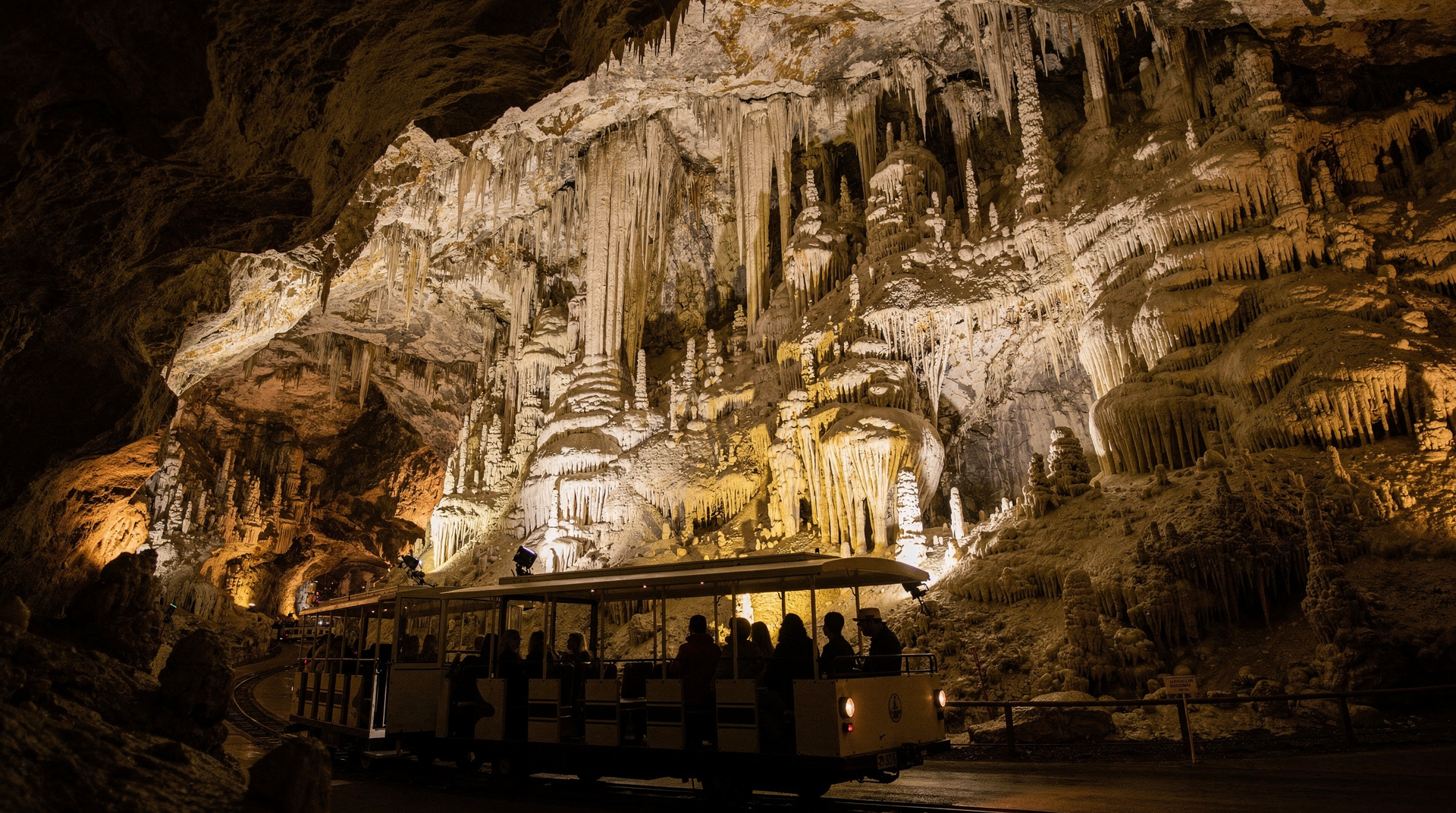
Postojna Cave is for the maximum-impact, family-friendly experience: the cave train, the density of formations, the large chambers. Perfect for a single day, accessible by bus, world-class spectacle.
Škocjan Caves is for geological drama: the underground canyon, the river, the UNESCO scale. Best for serious nature travellers.
Križna Jama is for visitors who want an experience rather than an attraction — silence, cave bears, underground boats, no infrastructure. Best for adventurous, curious adults who find the commercial aspects of Postojna and even Škocjan somewhat at odds with what they came to see.
For the broader picture of how these caves fit together, see the Slovenia caves overview guide. For day-trip logistics from Ljubljana, the cave tours from Ljubljana guide covers the options.
Practical information
Official contact: Association of Križna Cave Lovers, Bloška Polica 7, 1384 Grahovo — phone +386 41 632 153.
Open season: the schedule varies by season, so check the official Križna Jama website for current dates and times. After heavy rain or snowmelt, water levels in the cave can rise significantly and visits may be affected — confirm with the association if you’re visiting in spring.
Group size: up to 60 visitors (20 per guide) on the short boat tour, 2 to 12 on the bear tunnel tour, at most 4 on the water tours.
Languages: tours are given in Slovenian or English.
Children: the short boat tour has a reduced fare for ages 3 to 15. The bear tunnel tour is open from age 6 and requires good mobility. Water tours demand physical confidence.
Payment: cash only, no bank cards.
For the wider context of the Notranjska region — which includes Postojna Cave, Predjama Castle and Križna Jama within a small geographic area — see the Slovenia caves overview guide for itinerary ideas that combine multiple sites efficiently.
A day at Križna Jama: what to do before and after
The cave visit — even the short boat tour of 1 to 1.25 hours — leaves you in a remote valley with plenty of daylight remaining. Here’s how to make the most of a Notranjska day that centres on Križna:
Before the cave: departure times depend on the season (in October the short tour runs at 15:00 daily, plus 11:00 at weekends, per the official Križna Jama website), so the morning is free for the Cerknica area. Arrive in good time for your slot.
Cave tour: 1 to 1.25 hours for the short boat tour, up to 2 hours with the bear tunnel. Questions about the bear bones and the hydrology are welcome from the guides.
After the cave: the Notranjska Regional Park covers a diverse landscape above the cave. The Rakek plateau — a mosaic of meadows, forest patches and wetlands — is excellent for birdwatching and walking. The Park’s information centre in Cerknica can provide trail maps.
Lake Cerknica (Cerknišk jezero): 10 km from Križna, this is one of Europe’s most unusual lakes — a seasonal karst lake that floods in winter and spring, partially drains in summer, and hosts extraordinary concentrations of migrating birds during the flooding phase. In summer it may be mostly meadow; in spring it can be 10 km wide. The timing of your visit relative to the flooding cycle determines what you see, but the landscape is worth visiting regardless.
Postojna Cave: 20 km from Križna. Visiting both caves in a single day is achievable if you pick Križna’s morning departure (weekends in October) or visit Postojna first and reach Križna for the 15:00 tour — check both schedules in advance. This juxtaposition — the intimate cave bear experience followed by the mass-market spectacle — creates a useful contrast and a lasting appreciation of what makes Križna unique.
The cave bear bones: what you’re actually seeing
The bones found throughout Križna Jama are from Ursus spelaeus — the extinct cave bear. This species was significantly larger than modern brown bears (males could reach 400–500 kg) and used caves extensively for hibernation. At Križna, the abundance of bones suggests the cave was used as a hibernation site over an extended period — probably thousands of years.
The cave bears at Križna died of various causes: old age in hibernation, starvation (bears entered hibernation in poor condition and didn’t wake up), and — in some cases — accumulation at points where floods swept carcasses into the cave from the surrounding landscape.
What you see on the cave floor are bones that have remained undisturbed since the cave bears deposited them 15,000–24,000 years ago. The cave’s stable temperature and humidity have preserved them in excellent condition. Some skulls are largely complete; many long bones are intact. The sediment encapsulates rather than erodes them.
The most significant finding at Križna (reported by researchers from the Slovenian Academy of Sciences) is the high concentration of juvenile bear skulls in certain chambers — suggesting that young bears may have been particularly at risk of dying in hibernation. The age structure of the bone deposits tells a story about cave bear ecology that is still being interpreted.
Touching the bones is strictly prohibited. The sediment context is scientifically important — disturbing a bone destroys the stratigraphic information that allows researchers to date it and understand its position in the bone assemblage. The cave association is serious about enforcing this rule.
The water in Križna Jama
The 45 interconnected lakes in the cave range from shallow puddles to proper underground lakes several metres deep. The water comes from rainwater and snowmelt on the surface above, filtered through the limestone and entering the cave via fractures and solution passages.
The water is extraordinarily clear — visibility in the deeper sections exceeds 10 metres. In the boat sections, looking over the side into 3 metres of water is like looking through glass.
The water temperature is around 8°C — the same as the cave air. The cold is not dangerous on the short boat tour (you stay in the boat), but the water tours involve the possibility of getting wet, and accidental immersion into 8°C water requires immediate exit and warming.
The underground water connects to the broader karst drainage system of the Notranjska plateau and ultimately feeds springs that emerge north of the Karst region. The exact hydrological connections have been mapped by dye tracing experiments over decades.
Photography in Križna Jama
The cave is dark — lit only by the portable lamps supplied by the organiser. This creates extraordinary photography opportunities for low-light and long-exposure work, but requires appropriate equipment and technique.
What works well: a camera with good high-ISO performance (full-frame mirrorless or DSLR rather than phone camera). A wide aperture lens (f/1.8 or f/2.8 is ideal). Long exposures (2–10 seconds) with the camera on a makeshift support (pack, knee, rock edge) capture the water reflections beautifully.
What doesn’t work: phone cameras in full automatic mode. Flash (the distances are too large, the cave walls absorb the light). Auto-ISO in very dark sections (the noise is extreme).
The bear bones photograph effectively with a single directional light source — hold the lamp at a low angle to create shadow in the bone texture. The underground lake surfaces, perfectly still in windless cave conditions, reflect the cave ceiling when illuminated from above.
Ask your guide: experienced guides at Križna know the best positions for specific subjects. A genuine request (“I’m particularly interested in photographing the water reflections — is there a good moment on the tour?”) is typically met with helpful guidance.
| Cave | Group size | Infrastructure | Best for |
|---|---|---|---|
| Križna Jama | Up to 60 (short tour); max 4 on water tours | None — portable lamps, no paths | Adventurous, curious adults |
| Postojna Cave | Large, train-based | Full — train, lighting, paved paths | Families, first-time visitors |
| Škocjan Caves | Guided groups, moderate size | Partial — paths and bridges, no train | Serious nature and geology travellers |
For visitors combining the Postojna area with a stay near Ljubljana, the Postojna and Predjama half-day tour covers the mainstream Karst highlights, leaving Križna Jama as a separate, self-driven add-on for those who want the contrast.
Frequently asked questions about Križna Jama cave
Is Križna Jama suitable for people who are afraid of tight spaces?
The short tour with the boat on the first lake is the gentlest option and is fine for most visitors with mild claustrophobia concerns. The bear tunnel tour involves many natural steps, and the water tours (Calvary and Crystal Mountain) are expeditions with close contact with rock and are not recommended if you have significant claustrophobia. Contact the cave association before booking to check which tour suits you.Can I visit Križna Jama without a car?
It is difficult but not impossible. The nearest bus stop is in Grahovo, a 3 km walk from the cave entrance, and services are infrequent. Most independent visitors arrange a taxi from Postojna or combine the visit with a self-driven Karst itinerary. There is no guided tour operator bundling Križna Jama with transport, given its independent management by a caving association.
Top experiences
Bookable activities with verified prices and instant confirmation on GetYourGuide.