Avoiding crowds at Lake Bled: a practical timing guide for 2026
Bled: e-bike rental
What is the best way to avoid crowds at Lake Bled?
Arrive before 07:30 in July–August for 60–90 crowd-free minutes on the lake. Stay overnight to access both dawn and dusk. Visit in May, June or September for manageable crowds throughout the day. If you visit in peak summer and cannot arrive early, return after 18:00 when day-trip visitors have largely left. Park at P3 (south shore) rather than P1/P2 (north shore) — it fills 30–45 minutes later.
How to visit Bled without the crowd — specific tactics for 2026
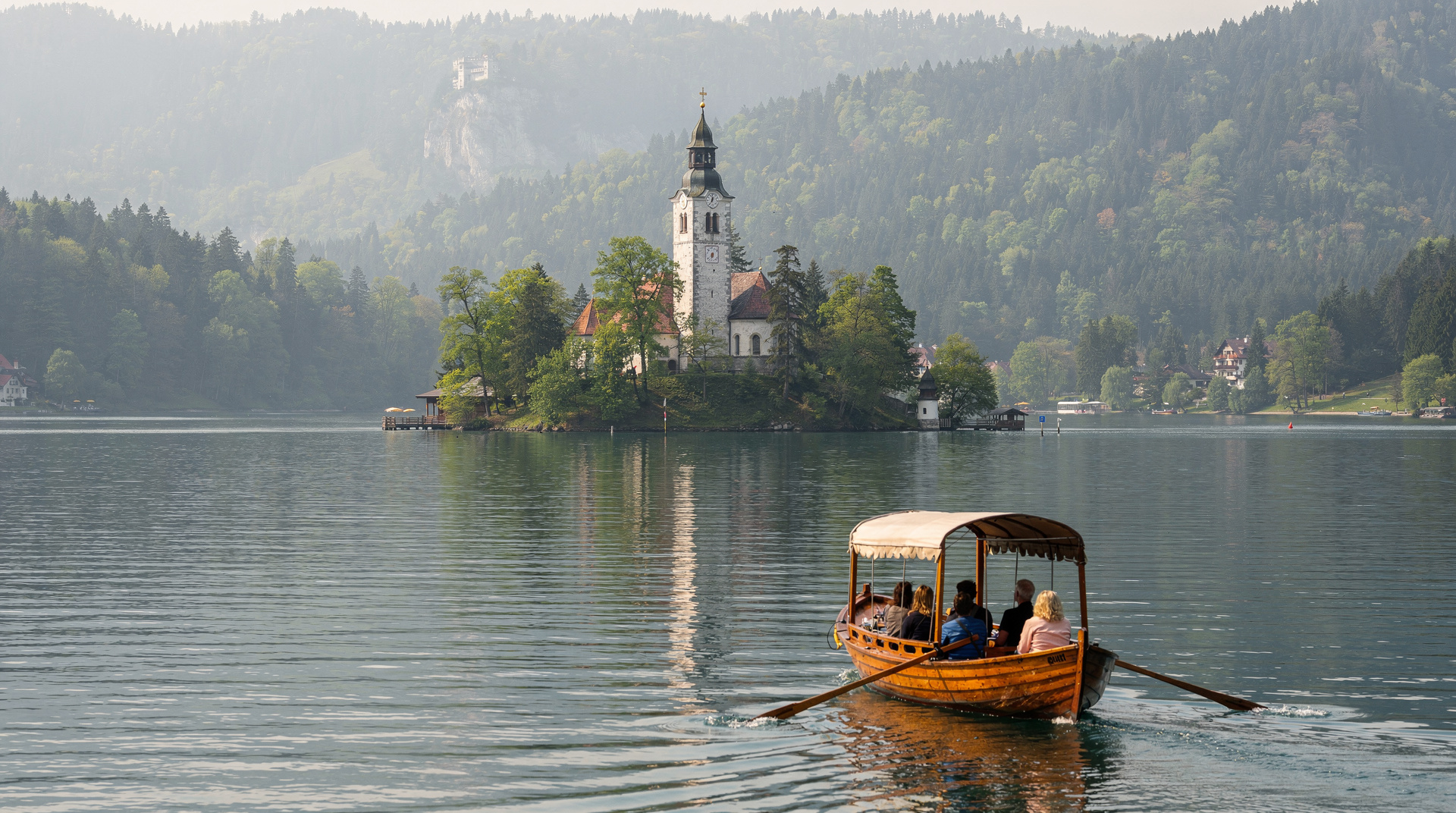
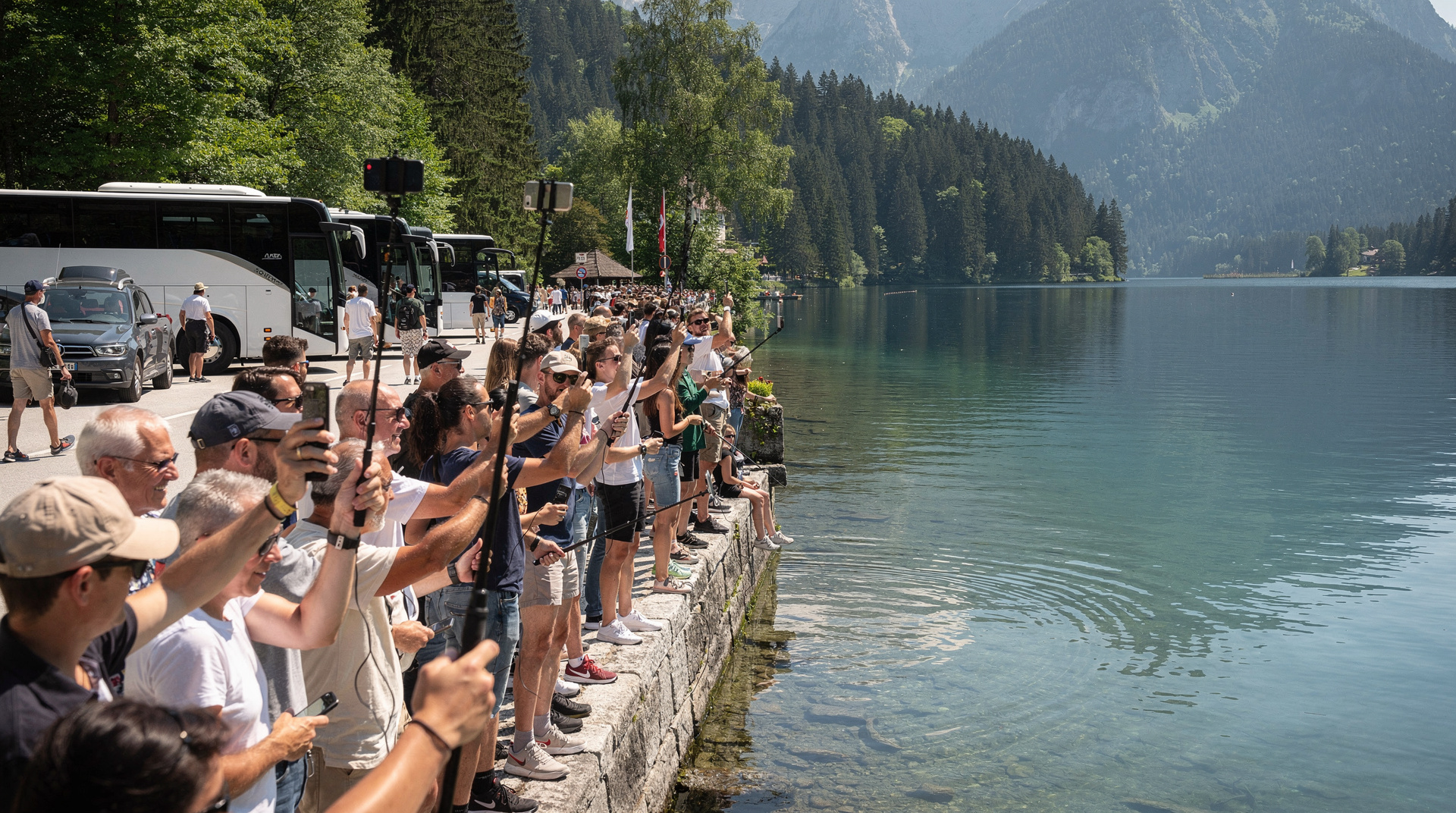
Lake Bled in summer is a case study in the gap between expectation and experience. The photographs — a lone pletna boat, perfect reflections, mountain silence — are accurate to a specific hour of a specific day. What the photographs do not show is what happens at 10:30 on a Tuesday in August.
This guide is about closing that gap with practical, specific information.
| Quietest window | 06:00–07:30 daily, year-round |
| Busiest window | 10:00–16:00, July–August |
| Best parking | P3 south shore (fills 30–45 min later than P1/P2) |
| Best low-crowd months | May, June, September |
| Alternative lake | Lake Bohinj, 30 min away |
The anatomy of a typical summer day at Bled
To know how to avoid the crowd, it helps to know how it builds.
06:00–07:30: The lake is at its quietest. A handful of local joggers, some photographers set up from 05:30 for dawn shots, and the Rowing Club coaches beginning morning training. The water is often glassy. The pletna boats are moored. Most of the café terraces are not yet open.
07:30–09:00: The first independent visitors with cars arrive. Roadside cyclists begin passing. The café at the Rowing Club opens; the first coffee is available. The lake is manageable — a few dozen people visible from any given point on the shore.
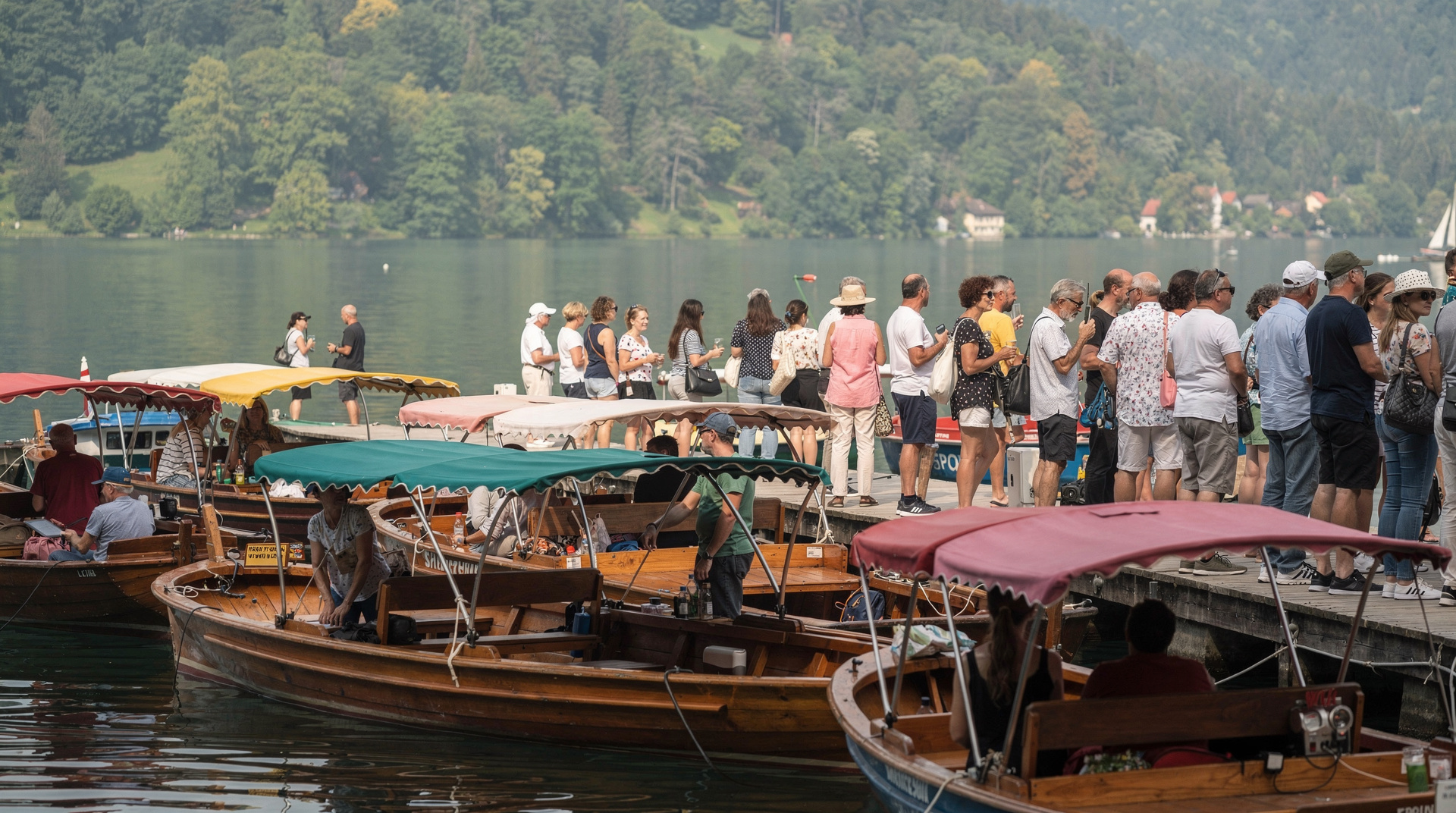
09:00–10:00: The transition hour. Tour buses arrive from Ljubljana, Klagenfurt, Vienna, Zagreb. Cars from Ljubljana have been arriving since 08:00. The P1 car park fills. The pletna queues form. The lakeside path on the northern shore starts to fill.
10:00–16:00: Peak density. The main path from the castle down to the rowing area is a slow-moving stream. The pletna boats operate continuously. The major café terraces have queues. Swimming areas are busy. This is the period to avoid for anyone expecting the serene alpine lake.
16:00–18:00: Numbers begin to thin as day-trippers leave for Ljubljana and the coach tours depart. It is still busy but noticeably less dense than midday.
18:00–21:00 (summer): The golden hour and early evening bring the lake back to something like its quieter self. Day-trip visitors are gone. Overnight visitors remain. The quality of the light at this hour is exceptional — low angle, warm tone, the castle cliff lit from the west. These are the best photography conditions of the day.
The overnight stay advantage
Staying in or near Bled eliminates the single biggest constraint on crowd avoidance: the drive from Ljubljana. Independent day-trippers from Ljubljana typically depart around 08:00–09:00 and arrive at Bled from 09:00 onwards. Tour buses follow a similar schedule. Overnight visitors are already there.
The practical difference: from a room in Bled, you can walk to the lake at 06:30 with a coffee and have the northern shore largely to yourself for the first hour and a half. From Ljubljana, achieving the same window requires a 05:30 departure.
Accommodation costs at Bled are higher than elsewhere in Slovenia, but the value proposition of the early-morning lake is real. Budget options: Hostel Bledec on the hillside above town (EUR 30–45 per dormitory bed, great views), Camping Bled on the south shore (EUR 20–30 per person). Mid-range: the Penzion Mayer above the lake (EUR 100–150 for a double, small garden). The Vila Bled (former presidential residence, EUR 250+) has private lake access and is the most privileged position for an early morning.
The parking strategy in detail
P1 and P2 are on the north shore, closest to the castle and the main café terraces. They fill first, typically by 09:00–09:30 on peak days in July–August. Arriving by 07:30 guarantees a space.
P3 is on the south shore near Camping Bled. It is a 15-minute walk from the castle viewpoint but is adjacent to the rowboat hire, the swimming area and the lakeside path that is typically less congested than the northern side. It fills 30–45 minutes after P1 and P2.
The overflow car parks on the roads leading into Bled town are serviced by a paid shuttle. These work but add time and cost — budget an extra EUR 5–8 per day and 20–30 minutes of walking if this is where you end up.
The alternative viewpoints most people miss
The obvious Bled viewpoints — the castle terrace, the lakeside café areas — are crowded because they are obvious. Several alternatives are less visited:
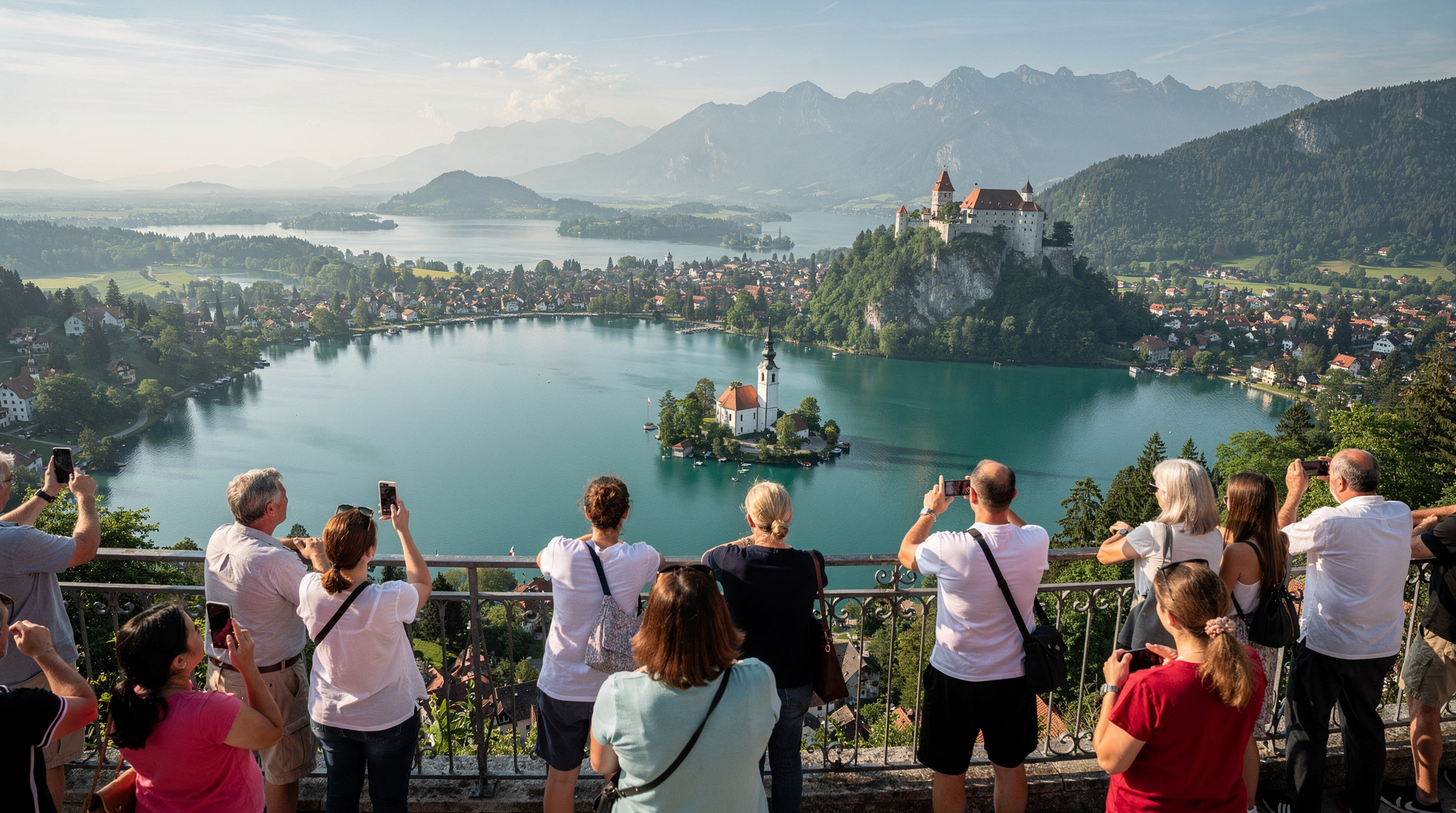
Osojnica: A 20-minute climb from the road on the western shore reaches a rocky viewpoint high above the lake with an aerial perspective over the island and the full Bled basin. The path starts from a small car park near the Bled Golf Club. Before 09:00 or after 17:00, you will often have it entirely to yourself. This is the best elevated view of the lake and one of the finest viewpoints in Slovenia.
Mala Osojnica: A slightly lower, easier version of the same viewpoint, 15 minutes from the road. Good for dawn photography when the light hits the island from the east.
St. Catherine’s Church hill (Straža): The south slope above Camping Bled has a chairlift to a viewpoint used mainly for skiing in winter. The summer chairlift runs in peak season (EUR 5–7 return) and gives a clean elevated view of the lake and island from the south.
If you would rather cover the quieter edges of the lake on two wheels, an e-bike rental in Bled lets you reach the less-visited shoreline and nearby villages at your own pace.
The north shore path toward Mlino: Walking west from the rowing club along the north shore toward the village of Mlino is one of the quieter stretches of the lake circuit. The crowds thin noticeably west of the rowing club.
Combining Bled with Bohinj to manage the day
The standard summer strategy for those who can’t or won’t do the dawn arrival: visit Bled first, accept that it will be busy, and drive 30 minutes to Lake Bohinj for the afternoon. Bohinj absorbs its visitors across a much larger area — the lake is 4.5 km long and the beach areas at Ribčev Laz spread the crowd thin. A late afternoon swim at Bohinj followed by dinner at one of the lakeside restaurants is a quieter and often cooler experience than an equivalent afternoon at Bled.
If you would rather not drive, a guided tour that links Bled, Lake Bohinj and the Savica Waterfall handles the move between the two lakes for you.
The 7 Lakes Valley hike above Bohinj is one of the best full-day walks in Slovenia — demanding but not technical, with views that equal anything in the Julian Alps. Groups are small and the trailhead crowds are nothing like Bled’s.
Visiting in shoulder season: what actually changes
The difference between Lake Bled in May and in August is not subtle. May: the car parks are rarely full before 10:00, the lakeside path has other walkers but no queues, the pletna boats depart when passengers are ready rather than on industrial rotation, and the lake temperature (around 14–16°C by late May) is cold but swimmable for the committed.
The mountain backdrop in May often has snow on the higher peaks — Stol and the Karavanke range — which is one of the most photogenic combinations possible. Vintgar Gorge opens in early May (confirm the exact date for each year as it varies slightly).
September is the other consistently good month. The lake temperature reaches its annual peak in late August–early September (typically 22–24°C) and then cools slowly through the month. Autumn colours begin in the higher parts of the Julian Alps in late September and October. Visitor numbers drop significantly after the end of August school holidays. The combination of warm water, autumn light and manageable crowds makes September arguably the best month of all for Bled.
For the complete picture on whether the visit is worth it despite these challenges, see is Lake Bled overrated. For the broader context on Slovenia’s overtourism pressure, see Slovenia overtourism.
Winter at Bled: a genuinely quiet alternative
November through March is when Bled reverts to something closer to a mountain town than a tourist attraction. Visitor numbers drop by 70–80% relative to August. The lakeside path is empty most mornings. The pletna boats do not operate in the coldest months (roughly December through February, conditions permitting).
The lake itself can freeze, though not every year — the last complete freeze was in early 2024. When it freezes solidly enough to walk on, the experience draws Slovenians from across the country and is one of the stranger and more beautiful things that can happen to an already-beautiful lake. The castle in snow, the island church with frost-covered rooflines, the absence of crowds: it is a completely different Bled.
What is not available in winter: Vintgar Gorge (closes roughly November, reopens April–May), rowing on the lake, most of the lakeside restaurants and cafés (many are seasonal), and some accommodation. What is available: the lake walk, the castle terrace, the kremna rezina at the handful of year-round cafés, and Vogel ski area above Lake Bohinj (30 minutes away), which is a legitimate ski area with runs up to 1,800 metres and a cable car from the lake shore.
Reading the lake before you arrive
Several Slovenian webcams provide live views of the lake and can help you decide whether to change your arrival time based on current conditions. The Bled.si tourism website and the Bohinj.si sites both maintain webcam feeds. Checking the lake at 08:00 on your planned day of arrival takes two minutes and tells you whether the current is glassy and quiet or grey and choppy.
Bled is most spectacular under blue sky with a still lake — conditions that allow the reflections that define the famous photographs. Overcast days with wind produce a different lake, still interesting but not the calendar version. If the forecast is mixed, the early morning window before wind picks up is more reliable than midday.
Where to read more before you commit to a plan
Timing is only one lever. If you are still deciding how Bled fits into the wider trip, the Lake Bled complete guide covers the lake circuit, the island and the castle in more depth, while Bled vs Bohinj helps you choose how to split your time between the two lakes. For the castle itself, the Bled Castle visit guide is worth reading before you decide whether to go up early or skip it. If the pletna boat is on your list, the pletna boat guide explains what to expect from the queue.
Those building a longer route can fold these tactics into the Ljubljana and Bled in 3 days itinerary, or choose the best season for the whole trip with best time to visit Slovenia. For a quieter half-day away from the lake, Vintgar Gorge works well at the edges of the day, as noted above.
Practical summary
Arrive before 07:30 in July–August. Stay overnight for the dawn window. Park at P3 (south shore) if P1/P2 are full. Hire a rowboat rather than the pletna if you want flexibility and value. Walk the lake circuit — it is free, takes 1.5 hours and covers every significant angle. Add Osojnica for the elevated view (20 minutes’ walk, free). Do Vintgar Gorge before 09:00 or after 17:00. Drive to Bohinj for the afternoon if the Bled lakeside feels too congested. Visit in May, June or September if you have any choice in the matter.
The crowds at Bled are real and the early-morning strategy works reliably. The lake is genuinely worth the effort.
What arriving late actually costs you
If a 06:00 start genuinely isn’t realistic, it helps to know exactly what you lose by arriving later. Arriving at 09:00 instead of 07:00 typically costs a guaranteed P1/P2 parking space (you will likely end up at P3 or an overflow lot with a paid shuttle), 20–30 minutes queuing for a pletna boat rather than walking straight on, and the glassy, undisturbed water that makes the classic photographs possible. Arriving at 11:00 costs all of the above plus a genuinely slow-moving crowd on the lakeside path near the castle. None of this makes a late arrival not worth doing — Bled is still Bled — but setting expectations correctly avoids the disappointment of comparing a midday visit to a postcard shot taken at dawn.
Frequently asked questions about Avoiding crowds at Lake Bled
What time do the tour buses arrive at Bled?
The first organised tour buses typically arrive from 08:30–09:00. By 09:30 the main car parks near the castle are full on peak summer days. The lakeside path is noticeably crowded from around 10:00. Independently-arriving visitors in rental cars start from around 08:00. Arriving at 07:00–07:30 gives you the lake to yourself or close to it.Is Bled still worth visiting in July and August?
Yes, with adjusted expectations and strategy. The lake is genuinely beautiful in summer heat. The swimming is excellent. If you arrive before 08:00 and plan to leave the main tourist areas by 10:30–11:00, moving to Vintgar Gorge or Bohinj for the rest of the day, the experience is very good. The mistake is arriving at 10:00 expecting a peaceful alpine lake.What is the best parking strategy at Bled?
P3 on the south shore near Camping Bled fills 30–45 minutes later than P1 and P2 near the castle. It is a slightly longer walk to the main viewpoints but gives better access to the swimming area and the rowboat hire. In peak season, arriving by 07:30 guarantees a space at any car park. After 10:00, the main car parks are typically full and roadside alternatives involve a 15–20 minute walk.Which month is least crowded at Bled?
November through February is the quietest period, though Vintgar Gorge is closed and some hotels and restaurants are closed or running minimal service. March and April are quiet but cold (the lake is around 7–10°C). May is the best month for a low-crowd visit: temperatures pleasant, Vintgar open, most facilities operational. The difference between May and August is dramatic.Are there less-crowded viewpoints at Bled?
Yes. The Osojnica viewpoint on the western shore requires a 20-minute uphill walk from the road and gives an elevated aerial view over the lake and island. It is less visited than the obvious lakeshore angles, particularly before 09:00. The Mala Osojnica viewpoint (slightly lower, 15 minutes) is even less used. The hillside paths above the northern shore, heading toward the castle, also offer good elevated angles with fewer people.Should I go to Bohinj instead of Bled?
If avoiding crowds is your priority, Bohinj is the honest answer. Lake Bohinj is larger, deeper, inside Triglav National Park, and receives a fraction of Bled's visitors. It is 30 minutes away by car. The trade-off is that Bohinj has no island, no castle and less tourist infrastructure. It is a wilder, quieter experience. Most visitors find that both lakes together — Bled for the iconic view, Bohinj for the swim — is the ideal combination.