Common mistakes in Slovenia: what first-time visitors get wrong
Most na Soči: evening SUP excursion from Bovec
What are the most common mistakes tourists make in Slovenia?
The top five: driving on the motorway without a vignette (EUR 300–800 fine); trying to see Bled and Postojna in the same day (they are in opposite directions and the drive alone is 3+ hours); visiting in peak July–August without booking accommodation in advance; confusing the Ljubljana Card value (it is only worth buying if you plan four or more paid attractions); and underestimating how much driving is involved in reaching the Soča Valley from Bled.
What first-time visitors to Slovenia get wrong — and how to avoid it
Slovenia rewards planning. It is a compact country — Ljubljana to the coast is 1h30, Ljubljana to Bled is under an hour, the entire country fits inside a square roughly 200 km on a side — but it is dense with things worth seeing and surprisingly easy to misjudge in terms of distance, timing and what is actually worth your time.
These are the mistakes that come up most often from visitors who have just returned.
| Biggest money mistake | Skipping the vignette (fine EUR 300–800) |
| Biggest time mistake | Bled + Postojna same day (3.5+ hrs driving) |
| Biggest planning mistake | Fewer than 5 days for the whole country |
| Easiest fix | Book Bled accommodation 2–3 months ahead for July–August |
| Most overlooked region | The Soča Valley, needs its own day |
Forgetting the motorway vignette
This is the most expensive logistical mistake and entirely avoidable. Slovenia’s motorways and many expressways require an e-vignette, which costs EUR 16 for one week or EUR 117.50 for a full year. Since 2022 the vignette is digital — registered to your number plate — so there is no sticker to forget; the fine comes when you are photographed passing a gantry without a valid vignette linked to your plate.
The fines run from EUR 300 to EUR 800 and are enforced. Border police sometimes check at entry points; motorway gantries check automatically.
Rental cars are the main risk area. Some companies include the vignette; some do not. “Toll fees” in the rental agreement does not reliably mean the vignette is included — ask specifically. If uncertain, spend EUR 16 at the first petrol station you reach after the border. The Dars.si website accepts foreign credit cards and the purchase takes two minutes.
Roads without a vignette requirement include the main road to Lake Bled via Radovljica (not the motorway), the coastal road through Piran, and essentially all mountain roads. If you are only going to Bled from Ljubljana, you can use the motorway and legally need the vignette, or take the slightly longer regional road (Škofja Loka road) and skip it. Most visitors should simply buy the vignette.
Trying to do Bled and Postojna in one day
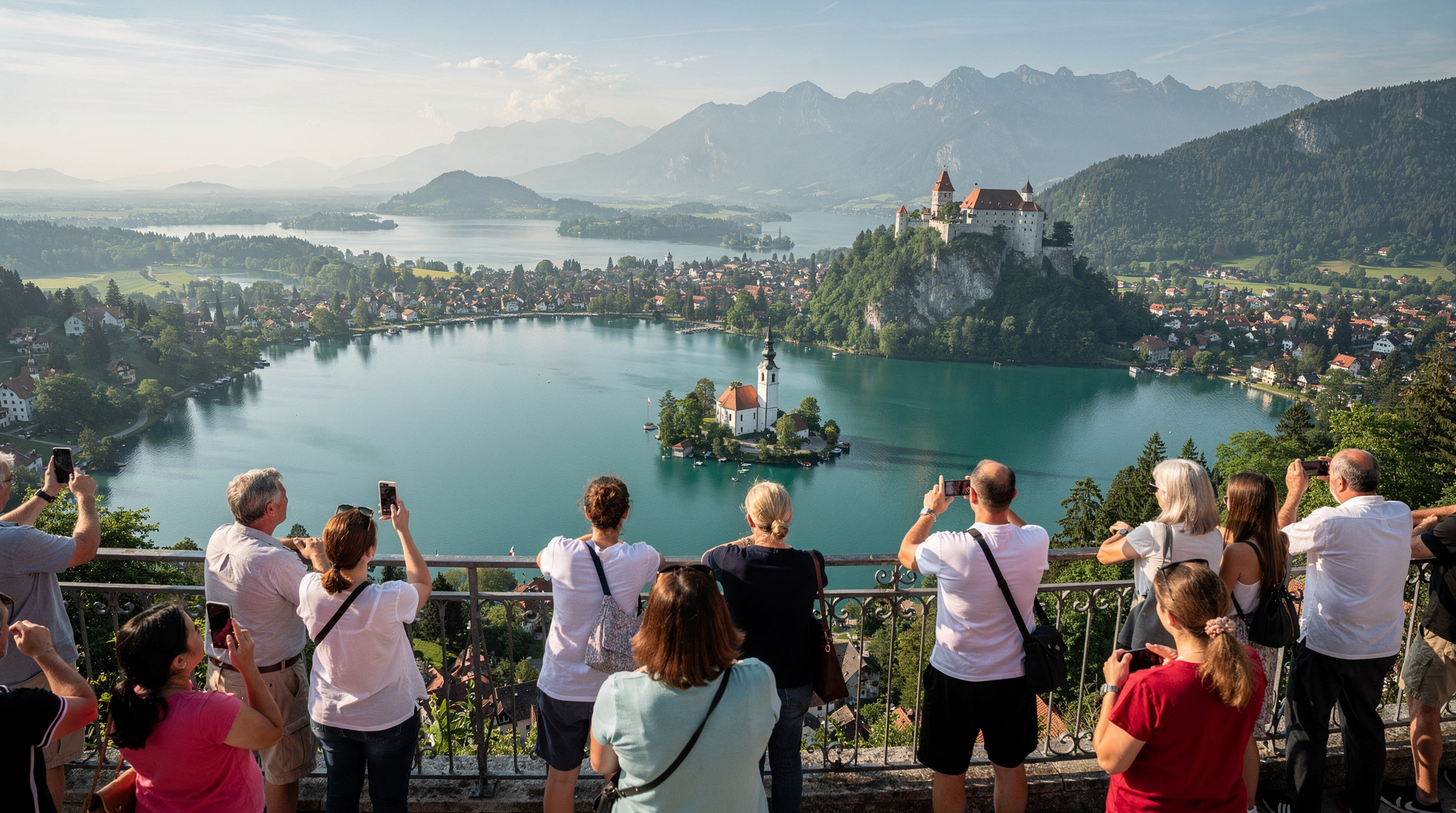
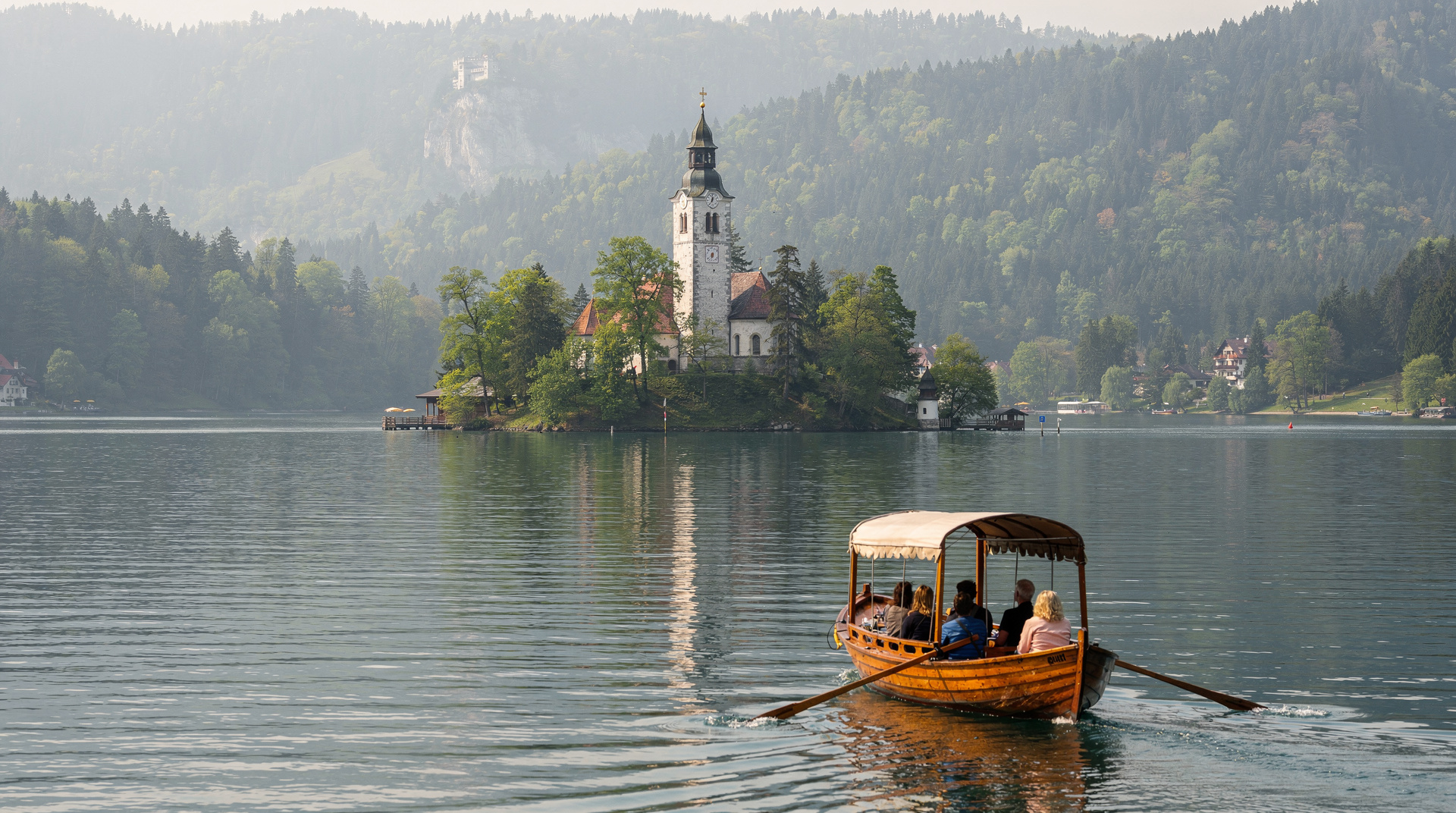
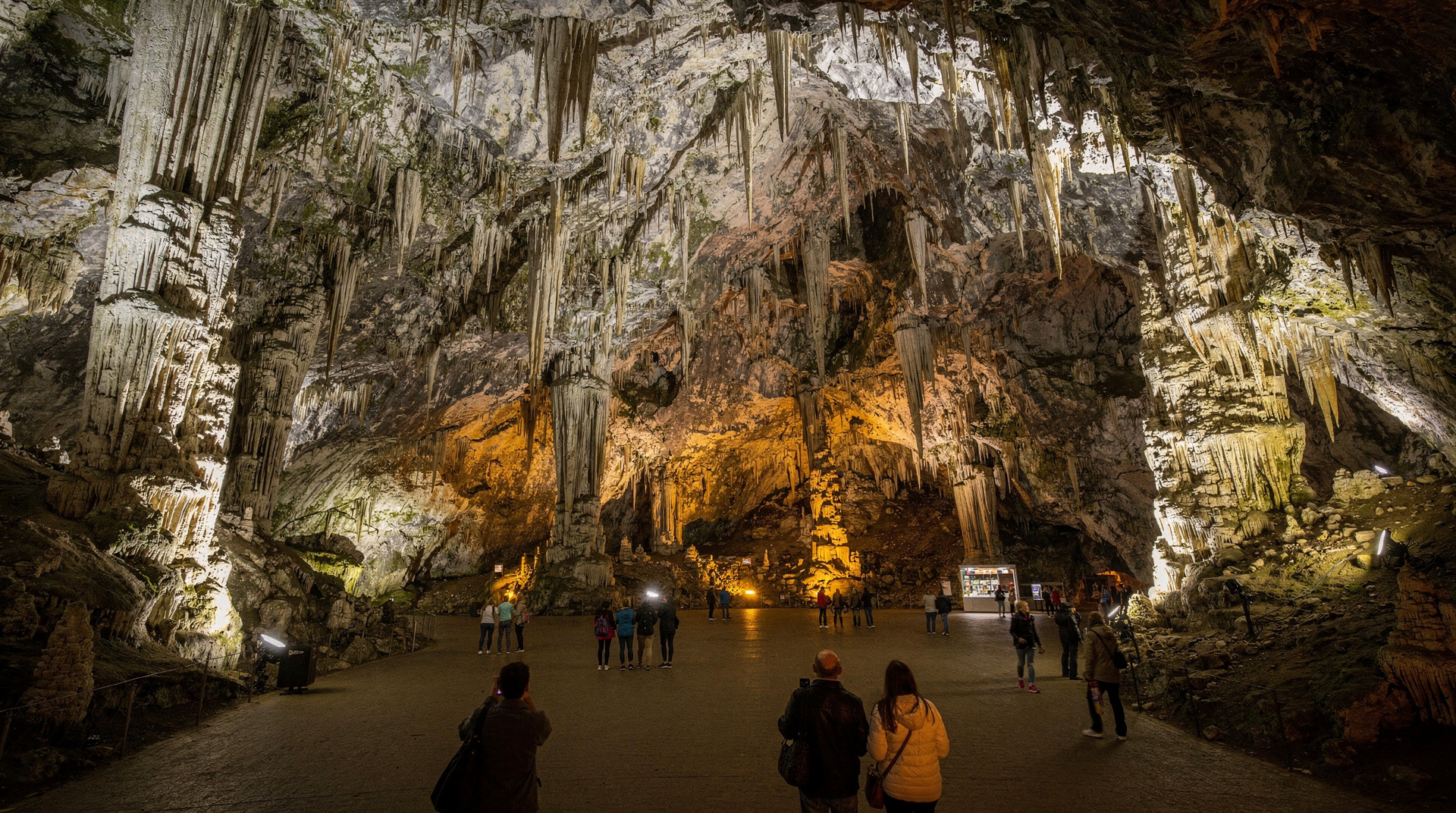
Lake Bled is 55 km northwest of Ljubljana. Postojna Cave is 54 km southwest. They are in opposite directions and the drive between them without going through Ljubljana is about 1h45. A day spent bouncing between these two major sights means 3.5+ hours of driving, a rushed hour at each and a late return to wherever you are sleeping.
The better structure: Bled as a standalone day (or overnight stay), Postojna as a half-day trip from Ljubljana easily combined with Predjama Castle. Both experiences deserve unhurried time.
Booking accommodation too late in peak season
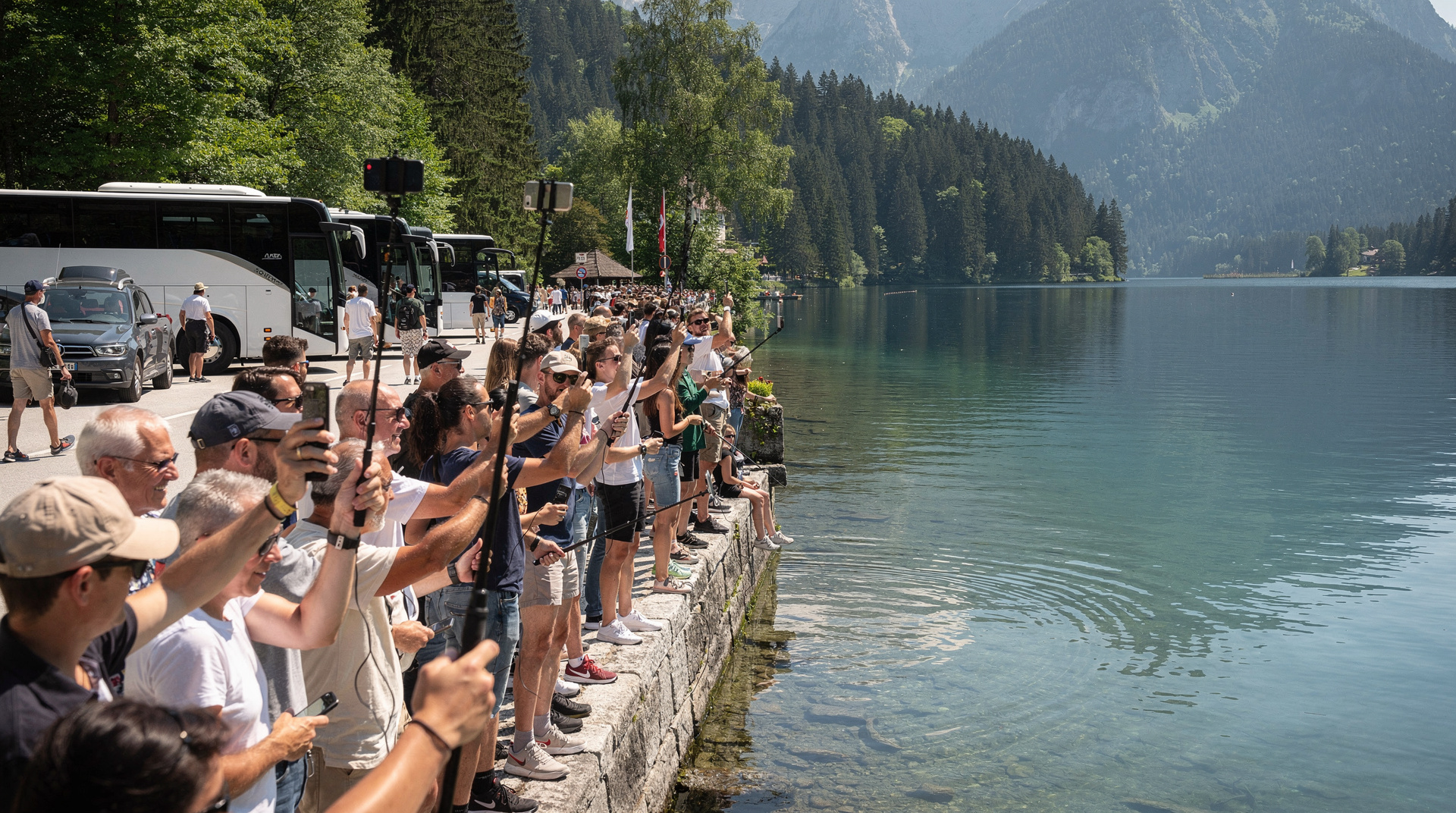
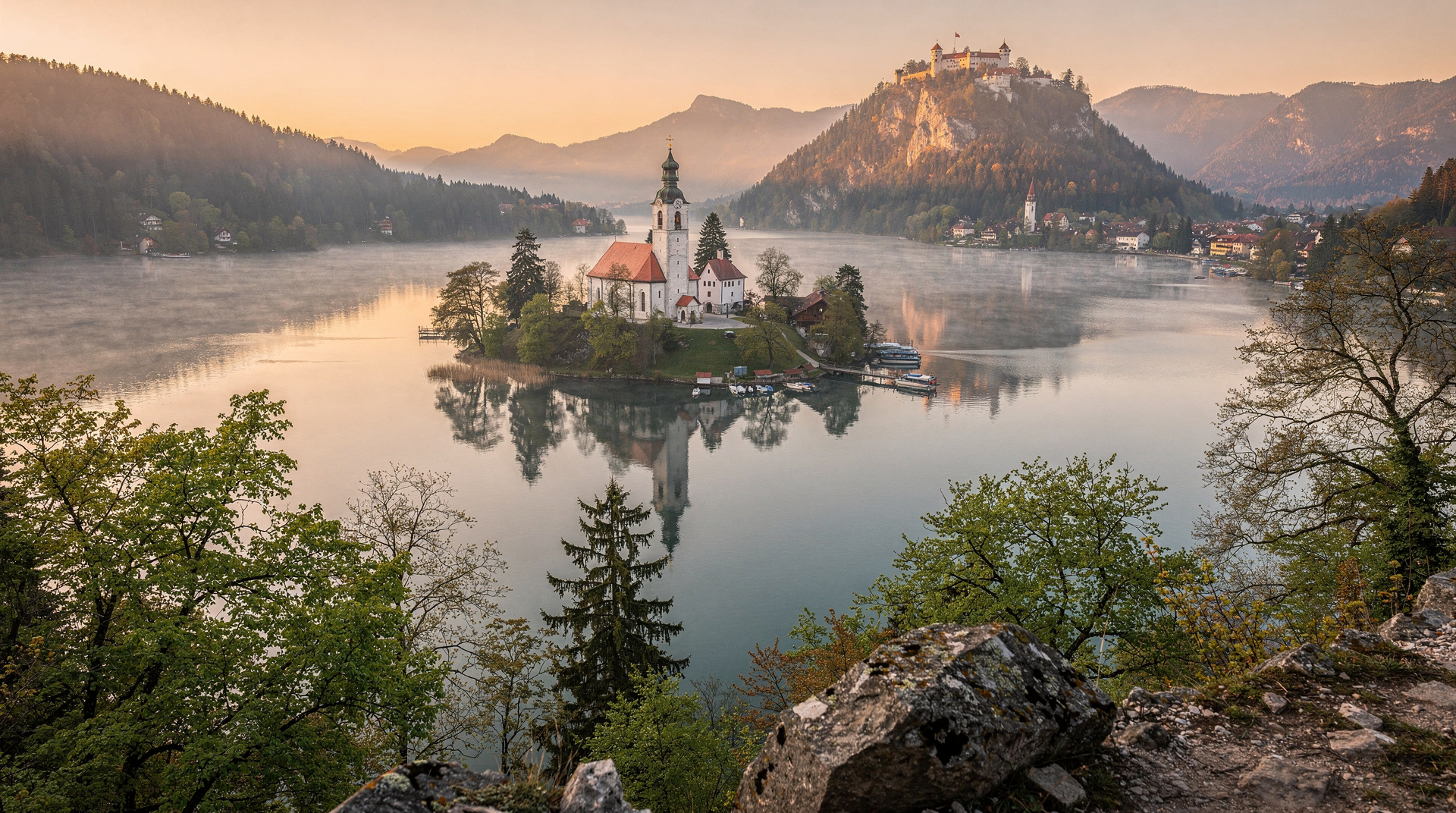
July and August accommodation at Lake Bled books out months in advance, and prices for whatever remains available spike significantly. Bled has limited accommodation relative to its visitor numbers and the town cannot easily expand. Similar patterns apply at Bovec in the Soča Valley and, to a lesser extent, Piran on the coast.
The practical advice: book Bled accommodation for July–August at least two to three months ahead. Ljubljana has far more supply and is relatively easy to book at shorter notice. If Bled accommodation is gone or too expensive, consider Radovljica (20 minutes away, much cheaper, excellent gostilna dining) or one of the guesthouses in the Bled Valley that are just far enough from the lake to be overlooked by casual searchers.
Underestimating driving time to the Soča Valley
The Soča Valley — Bovec, Kobarid, Tolmin — appears close to Bled on a map. The direct distance is under 50 km. The driving time is 1h15–1h30 via the Vršič Pass (open roughly June through October), which involves 50 hairpin bends on a narrow mountain road. Via the valley route through Nova Gorica it is 2+ hours. Neither route is quick.
Visitors who plan to do “Bled in the morning, Soča for an afternoon activity” regularly find themselves arriving in Bovec at 15:30 when the last rafting departure was at 15:00. The Soča Valley deserves at minimum a full day, ideally two. Plan it as a separate destination, not a side trip.
If you do base yourself in the valley, an easy way to make the stay worthwhile is to book an evening paddleboard excursion on the Soča near Most na Soči, which fits after a day on the road.
Expecting Slovenian to be easy to navigate
Slovenian is a South Slavic language and entirely unlike German, Italian or Hungarian, its neighbours. Place names can be confusing (Škocjan, Vršič, Čatež, Ptuj) and the pronunciation is non-intuitive if you have no exposure to Slavic languages.
In practice this matters mainly for map reading and entering destinations into GPS. Almost all Slovenians in tourist areas speak English; English is the de facto first foreign language in schools. Restaurant menus in tourist areas are routinely in four to five languages. The barrier is lower than many visitors expect.
What does cause confusion: the difference between Bled and Blejska Dobrava (a village near Bled), or between Škocjan (the famous caves) and Škocjan-by-Turjak (a different village), or the various towns named variants of “Grad” (castle). Double-check GPS entries by cross-referencing the postcode.
Skipping the less-obvious sights
Slovenia’s marketing is heavily concentrated on Bled, Postojna and Ljubljana. The result is that genuinely excellent places receive a fraction of the attention.
Radovljica, 20 minutes from Bled, is a perfectly preserved medieval old town with a first-rate museum of beekeeping (Slovenia has one of Europe’s oldest apiary traditions) and almost no tourist crowds. It is one of the most pleasant lunch stops in the country.
Logar Valley in the Kamnik–Savinja Alps (eastern Slovenia) is a glacial valley that compares to anything in the Julian Alps and is largely unknown to non-Slovenian visitors.
Ptuj in eastern Slovenia is the oldest documented town in the country, with a castle above a Roman-era river crossing and a perfectly preserved old town that gets perhaps 5% of the visitors that Ljubljana does.
The wine regions — Goriška Brda, the Vipava Valley — are accessible within two hours of Ljubljana and offer a completely different experience from the alpine-and-caves circuit.
Not accounting for seasonal closures
This is the mistake that most reliably creates disappointment. Vintgar Gorge — one of the most-photographed sites near Bled — closes roughly November through April. The Vršič Pass road closes roughly November through May. The lake boat services at Bohinj operate summer only. Many restaurants in Bled and Bohinj are seasonal, closing October through May.
If you are visiting outside May–September, verify specifically what is open. A winter trip to Bled is beautiful, but it is a different experience — no Vintgar, no rowing on the lake, some hotels closed and a quieter lakeside path. That can be wonderful. It is just not what the summer photographs show.
The reliable year-round sights: Ljubljana, Postojna, Škocjan Caves, Piran and the coast, Ljubljana Castle, the wine regions and most of eastern Slovenia.
Eating only in tourist restaurants
This is not a Slovenia-specific problem, but it applies here. The restaurants within 100 metres of Bled lakefront, around Ljubljana Castle and at the main Postojna car park are priced for day visitors and optimised for throughput. They are not where Slovenians eat.
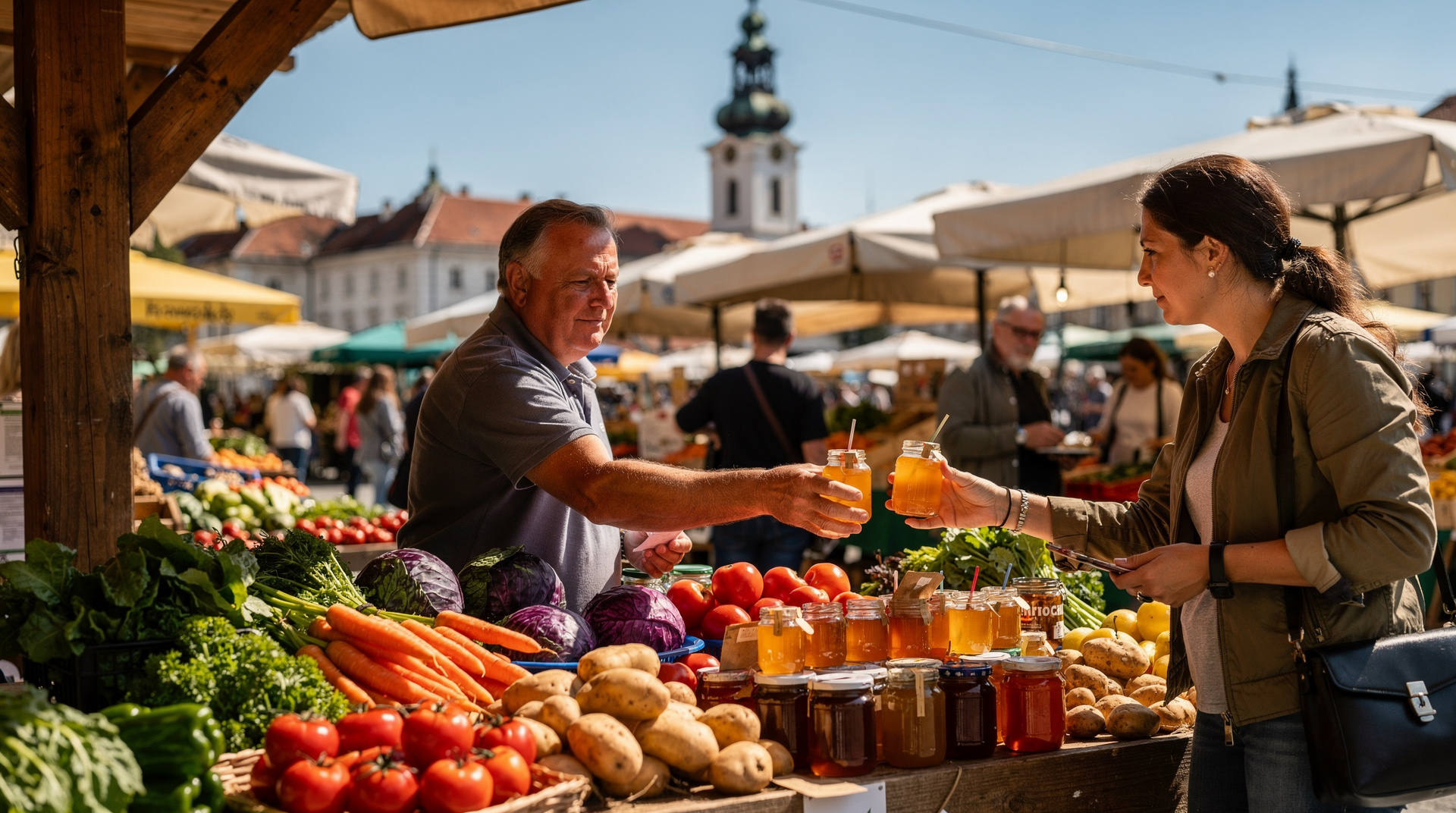
The alternatives are gostilne — traditional inns that typically serve regional cooking at prices 20–40% below the tourist-facing restaurants. Most are not listed prominently on Google Maps. The simplest approach: walk 10 minutes from any major sight in any direction and look for a place with a handwritten daily menu board outside and a car park containing Slovenian-plated vehicles.
Specific examples: in Ljubljana, Gostilna Dela near the central station serves a daily set lunch for EUR 8–11 that is usually better than anything on the tourist strip. In Bled, the village of Zasip (5 minutes’ drive from the lake) has gostilna dining at local prices. In Piran, the backstreet restaurants behind Tartinijev trg are noticeably better and cheaper than the front-facing fish restaurants on the harbour.
Taking the bus when a bike would do
Ljubljana has a well-developed bike network and the Bicikelj bike-share scheme (EUR 1/hour, first hour often free with registration). The old town is compact and largely car-free. Most visitors take the tourist tuk-tuk or walk when cycling would be faster, cheaper and more fun.
Similarly, the route from Bled toward Bohinj along the Sava Bohinjka river valley is a pleasant flat cycle of about 25 km — easily doable in two hours and one of the nicest ways to connect the two lakes. Bike hire in Bled starts at EUR 15–20 for a half-day.
Packing too much into too few days
Five days is the minimum for Slovenia to breathe. Seven is better. Many visitors plan Ljubljana, Bled, Bohinj, Soča Valley, Postojna and the coast into four days and end up spending most of their time in a car.
The structure that works: slow down at Bled (overnight rather than a day trip), pick one cave rather than both, and choose either the Soča Valley or the coast rather than squeezing in both. Slovenia is a country where the spaces between sights matter — the mountain roads, the village stops, the unplanned swim in a river. Those happen when you have left room in the schedule. If the river is your choice, a relaxed evening on a paddleboard from Bovec is the kind of unhurried stop that a packed itinerary never leaves room for.
More detail on planning: is Slovenia expensive for a budget framework, and avoiding crowds at Bled for the peak-season timing strategy.
Overlooking hiking safety in the mountains
The Julian Alps around Bled and in Triglav National Park are serious mountains. Triglav itself (2,864 m) is Slovenia’s highest peak and a significant mountaineering undertaking that has caused fatalities among under-prepared visitors who assumed it was a well-marked tourist trail. The lower walking routes — Vintgar Gorge, the Bohinj lake circuit, the Osojnica viewpoint — are safe for any fit walker. The higher routes — the 7 Lakes Valley approach, the Triglav summit attempts — require appropriate footwear, navigation skill and weather awareness.
Specific mistakes: attempting the Triglav summit from Bohinj in ordinary trainers; starting high-route hikes after 11:00 in summer (afternoon thunderstorms are common in the Julian Alps from June through August); not registering the route with a mountain guide or hut manager; failing to check Alpine Club (PZS) trail conditions before setting out.
Mountain huts (koče) along the major routes provide accommodation, weather information and emergency contacts. They operate roughly June through October. Staying in a mountain hut on the Triglav trail — the overnight ascent from Aljažev Dom or Dom v Tamarju — is one of the distinctive experiences of the Julian Alps and gives you summit conditions before the day-trip crowds arrive.
If you are not an experienced mountain walker, hire a local guide for any route above 1,800 metres. The cost (EUR 80–150 per day for a licensed guide) is proportionate to the safety margin it provides.
Missing the food geography
Slovenian cooking is regionally distinct in ways that matter to anyone who eats. The Julian Alps area (Bled, Bohinj) serves dairy-heavy dishes: buckwheat porridge with crackling (žganci), cured cheese, rich stews. The karst region produces the best pršut (a dry-cured ham with its own protected origin designation) and the Teran wine, a sour, tannic red from the iron-rich karst soil. The coast draws on Italian and Dalmatian traditions: seafood risotto, fresh pasta, the small oily fish characteristic of the northern Adriatic. Eastern Slovenia around Ptuj produces game dishes and the unusual Cviček wine.
Eating the same generic “Slovenian menu” (štruklji, ričet, kremna rezina) regardless of location misses the fact that the country’s cooking is deeply tied to its geography. The most interesting meal at the coast is fresh fish — not buckwheat porridge. The most interesting meal in the karst is pršut and aged Nanos cheese — not cream cake. Asking the server what is regional and seasonal is the most reliable route to the best version of Slovenian food wherever you are.
Arrival airport decisions
Ljubljana Airport (LJU) is the obvious choice and serves the widest range of direct connections. It is 27 km from the city centre; the bus takes 45 minutes and costs EUR 4. The airport is small and efficient.
For visitors whose primary destination is not Ljubljana, alternative airports are worth considering. Venice Marco Polo (1h30–2h by road to Bled) and Trieste (1h to Bled) offer routes from a wider range of European cities and can be considerably cheaper. Zagreb Airport (2h to Ljubljana by bus) is served by many intercontinental airlines and is significantly cheaper for transatlantic connections. Klagenfurt in Austria (1h to Bled) serves a handful of budget airline routes.
The mistake is booking Ljubljana Airport without checking alternatives, particularly if Bled or the Soča Valley is the primary destination — these are closer to the Italian and Austrian alternatives than to LJU in travel time.
Misjudging the Ljubljana Card
The Ljubljana Card bundles the funicular to Ljubljana Castle, a river cruise, public transport and free entry to several museums into one pass (24h card around EUR 41, 72h around EUR 54). The mistake runs in both directions: some visitors buy it assuming it will save money by default, others dismiss it as a tourist gimmick and skip it even when it would pay for itself.
The honest calculation: the card is worth it only if you plan four or more paid attractions in the covered list within the validity window. A visitor doing the castle, a museum and the river cruise on one busy day will roughly break even; a visitor planning a relaxed single afternoon in the old town almost certainly will not. Do the arithmetic against the individual ticket prices before buying, rather than assuming either way.
Underestimating the bura wind on the coast
The Karst plateau and the coast around Piran and Koper experience the bura (burja) — a cold, dry, occasionally violent wind that funnels down from the mountains, mainly October through March, though it can appear at any time of year. Visitors planning a coastal walk, a boat trip or outdoor dining without checking the forecast are sometimes caught out: gusts can exceed 100 km/h, closing bridges and disrupting ferries. Check the Arso.si forecast for coastal wind warnings before finalising outdoor plans on the Slovenian coast, and treat “bura warning” notices from your accommodation seriously rather than as an excuse to cancel.
Planning around EUR 15-a-day budget expectations
Some visitors arrive with budget assumptions carried over from Balkan neighbours (Bosnia, Serbia, North Macedonia) and are surprised that Slovenia runs closer to Austrian or northern Italian price levels for accommodation and restaurants, while still being noticeably cheaper for gostilna meals and public transport. See is Slovenia expensive and the fuller Slovenia trip budget breakdown before setting a daily spending target — arriving with the wrong reference country in mind is a quiet but common mismatch between expectation and reality.
Where to go next once the mistakes are sorted
Most of the problems above come down to the same few decisions: how to get around, where to base yourself and how much to attempt. Each has a guide that goes deeper than a list of pitfalls can.
On the driving side, car rental in Slovenia covers what to check before you pick up the keys, and the vignette and driving guide explains the motorway rules in full. If you would rather not drive at all, getting around Slovenia, trains in Slovenia and public transport in Slovenia show what the buses and rails do well and where they stop short. The five days without a car itinerary puts that into a worked plan.
On pacing, a first trip usually works best when it follows a proven shape rather than a wish list. The Slovenia highlights in five days route and the Ljubljana and Bled in three days plan both keep the driving sensible. Anyone drawn to the mountains and the river should read the Soča Valley day trip guide before deciding how much time that region needs, and the Vršič Pass driving guide before attempting the road.
On timing and expectations, the best time to visit Slovenia helps you match your dates to what is actually open, where to stay in Slovenia helps you choose a base before the busy months fill up, and the first-time visitor guide pulls the basics into one place. For the sights that disappoint some visitors, Slovenia tourist traps is the honest companion to this page, and Slovenia travel scams covers the small hazards worth knowing about.
Frequently asked questions about Common mistakes in Slovenia
Do I need a car in Slovenia?
For Ljubljana only, no. For Bled and Bohinj, a car helps but is not essential — the bus from Ljubljana is frequent and cheap. For the Soča Valley (Bovec, Kobarid), the Karst region (Škocjan, Predjama) and most of the wine country, a car is strongly recommended. Public transport covers the main tourist routes but stops well short of many of the best scenic roads and hiking trailheads.How much time do I need in Slovenia?
Five days covers Ljubljana, Bled, Bohinj and one of the caves adequately. Seven days adds the Soča Valley or the coast. Ten days is the sweet spot for seeing the country properly: Ljubljana, Julian Alps, Soča, Karst, coast and perhaps the wine country. Many visitors try to do all of this in four days and end up exhausted and car-bound.Is tap water safe to drink in Slovenia?
Yes. Slovenian tap water is excellent — the country has some of the strictest water quality standards in Europe and takes considerable national pride in its water. Do not buy bottled water. The tap water is better.What should I know about driving in Slovenia?
Three things: the e-vignette for motorways (EUR 16 per week, fines EUR 300–800), the right-of-way rules on mountain roads (ascending vehicles have priority on single-track roads, which is the opposite of many countries' instincts), and the Vršič Pass road, which has 50 hairpin turns and is spectacular but genuinely challenging to drive in a large vehicle. Winter tyres are compulsory December–March.Can I visit Bled and Postojna on the same day?
Technically yes, but it makes for an exhausting and rushed day. Bled is northwest of Ljubljana; Postojna is southwest. The drive between them is about 1h45 via Ljubljana. You would need to choose: a short morning at Bled, a long drive and a rushed Postojna tour, or vice versa. Both deserve more time. Do them on separate days or separate trips.What is closed in winter in Slovenia?
Vintgar Gorge closes roughly November through April. The Vršič Pass road (and many of the high alpine routes in Triglav National Park) closes roughly November through May due to snow. Many lake-facing restaurants and seasonal services at Bled and Bohinj are closed October through May. Ski resorts (Kranjska Gora, Vogel, Krvavec) open December through March or April. Ljubljana, Postojna, Škocjan and the coast are open year-round.Is Slovenia safe for solo travellers?
Very. Slovenia consistently ranks among the safest countries in Europe for all types of travellers. Petty theft in tourist areas (pickpocketing at markets, thefts from car parks near Bled) follows standard European patterns and is avoidable with normal precautions. Hiking safety is a more real concern in the Julian Alps — always register your route and carry appropriate gear.