Honest Postojna Cave review: is it worth EUR 34.90 in 2026?
Škocjan Caves day tour from Ljubljana
Is Postojna Cave worth visiting in 2026?
Postojna Cave is genuinely spectacular but operates at a scale that many visitors find detracts from the experience. The EUR 34.90 ticket covers an electric train ride through 3.5 km of passages and a 1.5 km guided walk through halls of dramatic formations. Groups of up to 60 people with pre-recorded commentary are the norm in peak season. If you want a more intimate cave experience, Škocjan Caves (groups of 20, EUR 18, UNESCO World Heritage) or Križna Jama (underground lakes, small guided groups) are better alternatives. Postojna is worth it for families with children, mobility considerations or people making a single cave visit.
Postojna Cave: what you get for EUR 34.90
Postojna Cave has been charging admission since 1819 — making it one of the oldest tourist attractions in the world — and it has optimised the visitor experience accordingly. The underground electric train, the paved walking paths, the coloured lighting, the concert hall large enough for 10,000 people: these are not recent additions but the result of 200 years of iterative improvement to the tourist infrastructure of a very large cave system.
The result is an experience that is undeniably impressive and simultaneously, for many visitors, disappointing. This honest review explains both.
| Cost | around EUR 34.90 adult, EUR 49.90 combined with Predjama Castle |
| Time needed | 1h30 for the tour, closer to 2h with the Vivarium |
| Getting there | around 50 minutes by car from Ljubljana, or bus (around EUR 6–8, ~1h15) |
| Best time | the first tour of the day, in June or September rather than July–August |
| Booking | online in advance, especially in peak summer |
What the visit actually involves
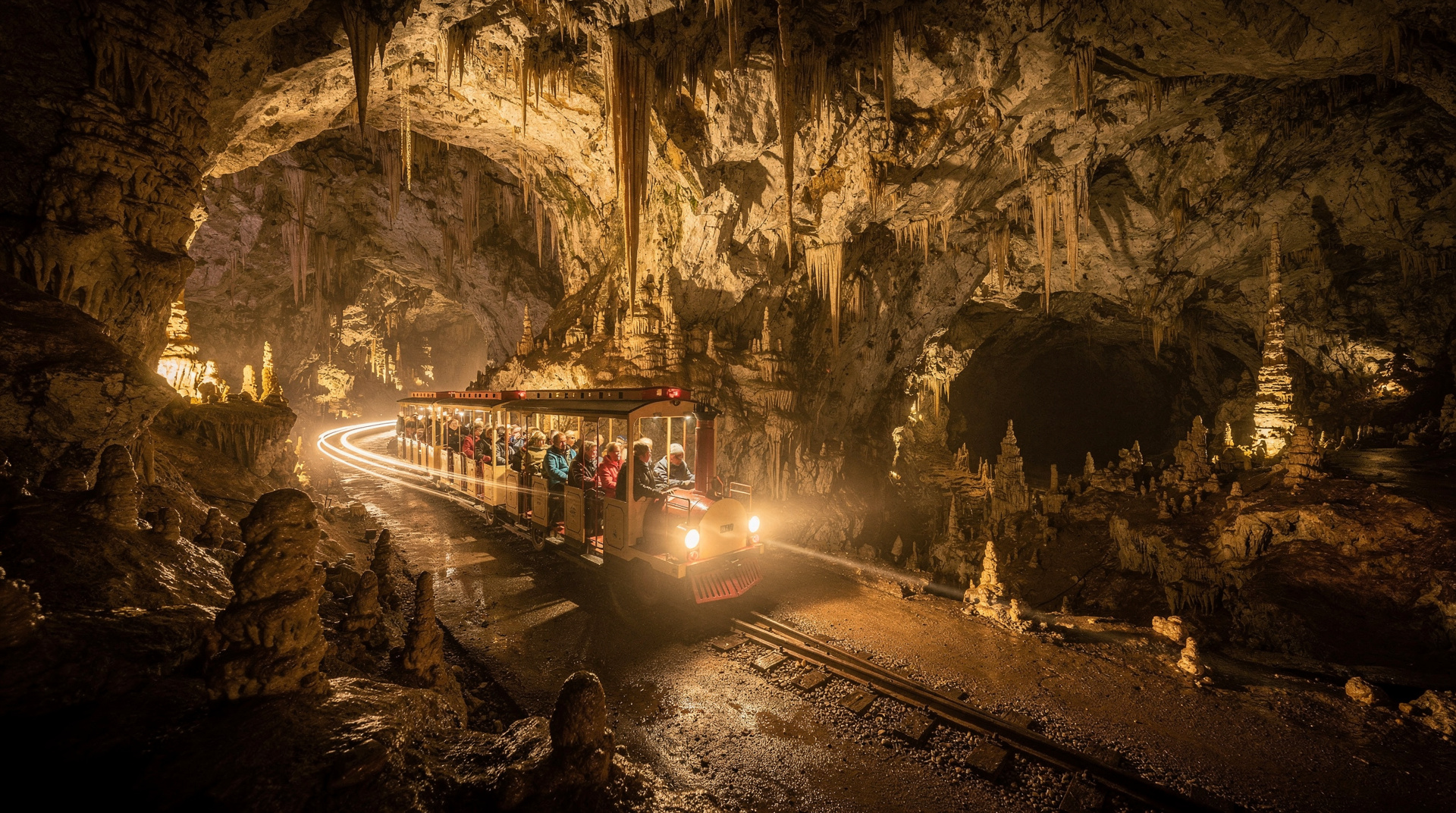
The Postojna Cave tour takes approximately 1 hour 30 minutes. It begins with a 3.5 km electric train ride through the cave’s largest passages — a genuinely unusual and enjoyable experience, watching lit formations pass at the speed of a slow tram. The train deposits you at a junction near the Concert Hall.
The guided walking tour (1.5 km) follows from there. A guide leads the group — up to 60 people in peak season — through a series of halls: the Concert Hall (a natural chamber acoustically suited to music and used for occasional concerts), the White Hall (dense accumulation of white stalagmites and stalactites), the Russian Bridge (built by Russian prisoners of war in 1916), and the Beautiful Caves, where the formations are at their most elaborate. Commentary comes from a speaker attached to the guide.
At the end of the walking tour, the Vivarium allows a self-guided look at live cave animals including the olm — the blind, unpigmented cave salamander that is endemic to the karst region and one of the genuinely remarkable animals of Europe. The Vivarium is small and sometimes has queues in peak season.
The return train ride brings you back to the entrance. Total time: 1h30–2h including the Vivarium.
If you would rather not handle the bus or a rental car, a guided trip that pairs the cave with nearby Predjama Castle from Ljubljana takes care of the transport and keeps both sights in one outing.
What is genuinely good
The formations are spectacular. Postojna contains an extraordinary density of stalactites, stalagmites, cave coral, cave curtains and columns, and the larger halls have the scale to make you understand that you are inside a mountain. The Concert Hall, at 500 metres long and 30 metres high, is one of the most impressive natural chambers accessible to ordinary visitors anywhere in Europe.
The train ride is unusual and fun — it is the only cave train of its kind in Europe at this scale. Children, in particular, tend to love it.
The olm is worth seeing. It is one of the longest-lived vertebrates on Earth, can go years without eating, and has evolved over millions of years of cave isolation into something that looks like a design brief from a science fiction writer: pale, eyeless, with external gills and a lifespan that can exceed 100 years.
The cave temperature is 10°C year-round — a welcome relief on a hot summer day, though a cardigan or light jacket is necessary.
What disappoints
The group size. Sixty people moving through a cave passage at the pace of a guided tour feels more like a public transport queue than an encounter with geology. The formations are visible but not felt in the way they would be if you were there in a group of ten or twelve.
The pre-recorded commentary. Some sections of the tour use loudspeaker recordings rather than live guide commentary. This is understandable at scale; it is also impersonal and occasionally loud in the cave’s natural acoustics.
The pricing versus the experience. EUR 34.90 for 1h30 in a tourist-infrastructure cave is not unreasonable by European attraction standards, but it is at the high end. The equivalent ticket at Škocjan Caves (EUR 18) buys a smaller group, better guide-to-visitor ratio, and an underground canyon that many cave visitors rate as the more memorable sight.
The summer queue. Tickets are sold only online with a chosen date and time, and on peak summer days the popular slots sell out. Book ahead.
Who Postojna is right for
Families with young children: the train ride, the olm, the scale of the halls and the paved, well-lit paths make Postojna the most child-accessible cave in Slovenia. The atmosphere is more Disneyland than wilderness — this is an accurate description, not a criticism in this context.
Visitors with mobility considerations: Postojna’s tourist paths are well-maintained, the inclines are gentle, and the cave is fully accessible on foot with standard mobility. Škocjan requires steeper paths and some steps. Križna Jama involves boats and physically crouching in places.
First-time cave visitors who want the conventional showcase: Postojna delivers the expected cave experience reliably. You will see impressive formations; you will come away with an accurate sense of what a large karst cave system looks like. That is a legitimate reason to visit.
The honest recommendation for adults without mobility constraints
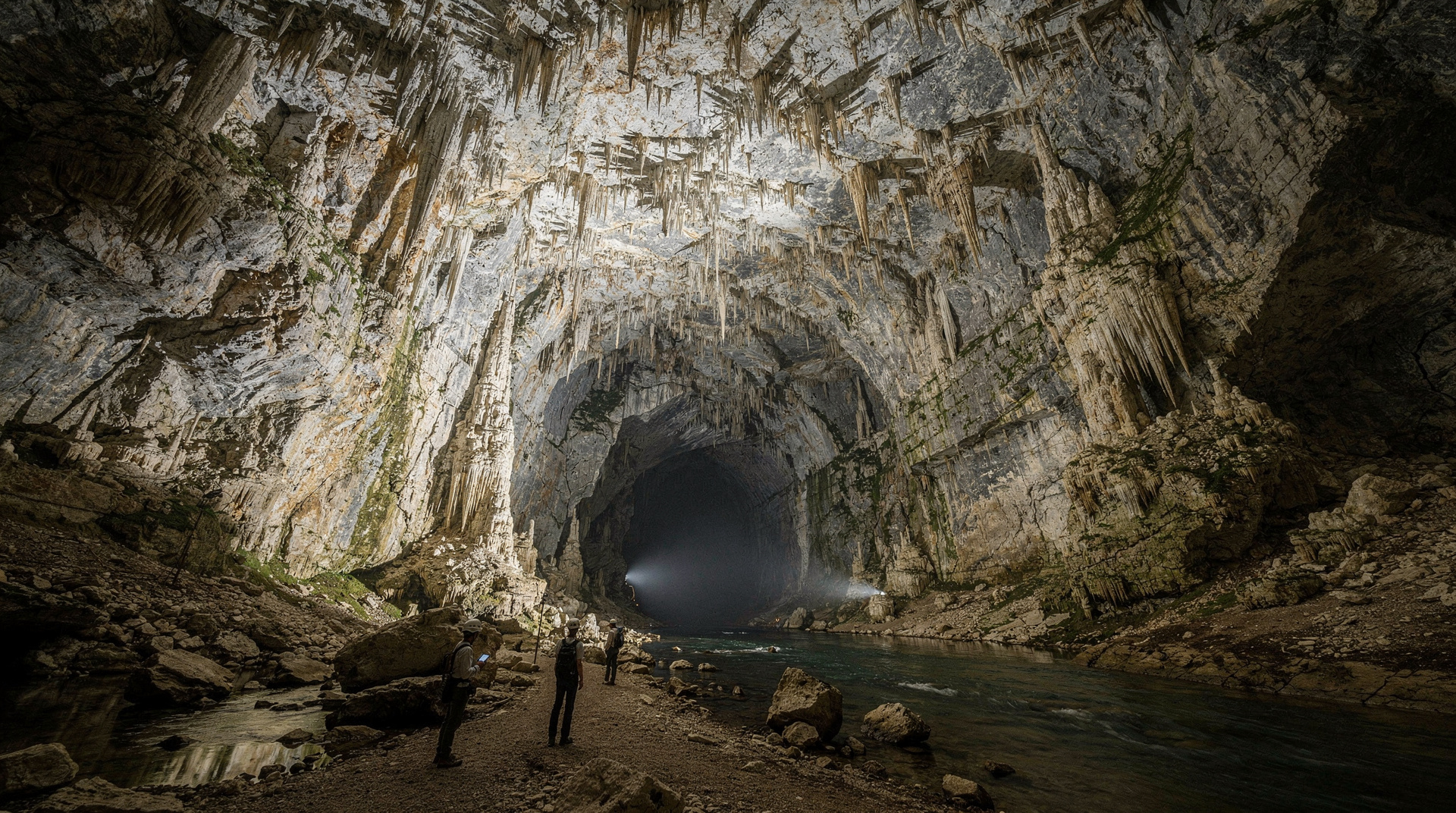
Visit Škocjan instead. The UNESCO World Heritage designation is not bureaucratic — it reflects a site of genuine outstanding universal value. The Murmuring Cave, where the Reka River has carved a canyon 150 metres deep through the limestone, is one of the most dramatic natural spaces accessible to ordinary visitors in Europe. The Cerkvenik Bridge suspended above the river gorge takes about four seconds of standing to produce a powerful visceral response to the exposure below.
Groups are capped at around 20. The guides are live and typically well-informed. The path is more demanding — some steep sections and stairs — but nothing requiring special fitness. The ticket costs EUR 18.
If you are visiting from Ljubljana and want to make a full day of Škocjan, the day tour handles the logistics of a destination that is genuinely difficult to reach efficiently by public transport.
Škocjan Caves day tour from LjubljanaCombining Postojna with Predjama Castle
If you go to Postojna, add Predjama. The combined ticket is EUR 49.90, the castle is 9 km away, and Predjama is architecturally one of the most extraordinary things in Slovenia. A Renaissance castle built inside a cave mouth in a vertical cliff, it was the home of the outlaw knight Erasmus of Lueg in the 15th century and later became a Habsburg possession. The entrance is a slightly medieval experience — low doorways, steep stairs, the cave visible through the castle windows — and the whole thing takes 1–1.5 hours. Predjama is typically much less crowded than Postojna and is not well-known enough to be on most tour itineraries.
The combination of Postojna in the morning and Predjama in the afternoon makes for a full and varied day in the Karst region.
Practicalities
Postojna is 54 km southwest of Ljubljana on the A1 motorway. By car it is about 50 minutes from the city centre (vignette required). By bus from Ljubljana it is EUR 6–8 and takes about 1h15. The cave entrance is 800 metres from Postojna town centre.
Tickets are sold only online at postojnska-jama.eu, with the date and time chosen when you book. In July–August, book for the first morning tour.
The cave is open year-round. In winter (November–March) tour times are reduced and may only run at 10:00, 12:00 and 15:00 on weekdays. Check the current schedule before visiting.
Bring a light layer: 10°C is cold after 20 minutes if you are lightly dressed, especially for anyone acclimatised to summer heat.
For the broader context on caves in Slovenia and how to choose: cave tours from Ljubljana.
The cave in different seasons
Postojna is open year-round and the cave temperature is always 10°C — this is one of its practical advantages over seasonal outdoor sites. The experience does not change significantly with the season, but the crowd level does. November through March is noticeably quieter; tour group sizes are smaller and the pre-recorded commentary feels less intrusive when you are not standing in a crush of 60 people.
The practical advice: if a summer visit to Postojna is unavoidable, book the first slot of the day online. The cave opens at 09:00 in high season and the 09:00 or 10:00 tour is significantly less crowded than the midday and early afternoon tours. Tour groups for the early slots are typically 25–35 people rather than 60, the guides are fresher and the experience is better.
The olm: why it matters
The Proteus anguinus — called človeška ribica (human fish) in Slovenian and commonly known internationally as the olm or cave salamander — is one of the genuinely remarkable animals on Earth. It has adapted to total darkness over millions of years: no functional eyes (vestigial and covered by skin), no pigmentation, external gills that allow it to breathe underwater, and an extraordinary lifespan. Individual olms in captivity have been observed for over 70 years with no visible ageing.
In 2016, researchers observed an olm laying eggs in the Postojna system for the first time in recorded history — a significant event that generated global press attention. The cave’s Vivarium maintains a small population in conditions as close to the natural cave environment as is practical.
The olm is the sole species in its genus and is endemic to the karst region of the western Balkans — found nowhere else on Earth. Seeing one alive is a legitimate reason to visit Postojna even if the cave itself is not your priority.
What Postojna vs. Škocjan actually means in practice
The two caves are about 70 km apart and both accessible from Ljubljana in a day. The practical differences:
Postojna is on the A1 motorway and takes about 50 minutes from Ljubljana by car. Škocjan is off the main tourist routes, requires either a car or an organised day trip, and takes about 1h20–1h30 from Ljubljana.
Postojna’s tour is 1h30 and uses an electric train for part of it — entirely flat and accessible for people with limited mobility. Škocjan’s tour is 2 hours and includes significant stair descents into the canyon — not suitable for people with limited mobility.
Postojna’s formations are varied and dense; the scale is vast. Škocjan’s formations are less elaborate but the underground canyon — 150 metres deep in places, with an active river — is the most dramatic underground space accessible to ordinary visitors in Europe.
If you can only do one: Škocjan for adults without mobility constraints. Postojna for families with children or anyone for whom accessibility or the train experience is the deciding factor.
If you can do both: Postojna in the morning, Predjama Castle in the early afternoon, then drive to the Karst region and spend the night near Lipica or Sežana for Škocjan the following morning. This itinerary covers the major karst experiences in two days and is manageable from Ljubljana without rushing.
The three karst caves compared
| Postojna Cave | Škocjan Caves | Križna Jama | |
|---|---|---|---|
| Cost | around EUR 34.90 | around EUR 18 | see krizna-jama.si |
| Group size | up to 60 | around 20 | up to 4 |
| Tour length | 1h30 | 2h | 1–2h by boat |
| Mobility | flat, train-assisted | steep sections, stairs | crouching, boat access |
| Best for | families, first-timers | adults wanting drama | adventurous small-group visitors |
For the fuller side-by-side breakdown, see Postojna vs Škocjan Caves and the Škocjan Caves guide. If the underground-lake experience at Križna Jama appeals, the caves overview explains how to book it and what to expect. And for the wider question of which Postojna-adjacent attractions are genuinely worth the money, Slovenia’s tourist traps covers Postojna alongside several other inflated-expectation sights.
Fitting the cave into a wider trip
Postojna works best as one stop inside a longer plan rather than a destination on its own. If you are still deciding how to structure your days, the Ljubljana and caves itinerary shows how the karst fits around the capital, and the Postojna Cave day trip guide walks through the logistics of a single outing. For the full picture of what the cave itself offers, the Postojna Cave guide goes into more detail than this review.
Visitors who want to see Predjama as well can read the Predjama Castle destination page, and anyone leaning towards the alternative can start with the Škocjan Caves destination page. If you are travelling by car, the driving and vignette guide covers what you need before heading onto the motorway, and the car rental guide helps if you are collecting a vehicle just for the karst. Without a car, getting around Slovenia explains the bus and train options. Budget-minded readers will also want is Slovenia expensive to see how a cave ticket sits against the rest of a trip.
Frequently asked questions about Honest Postojna Cave review
How crowded is Postojna Cave in summer?
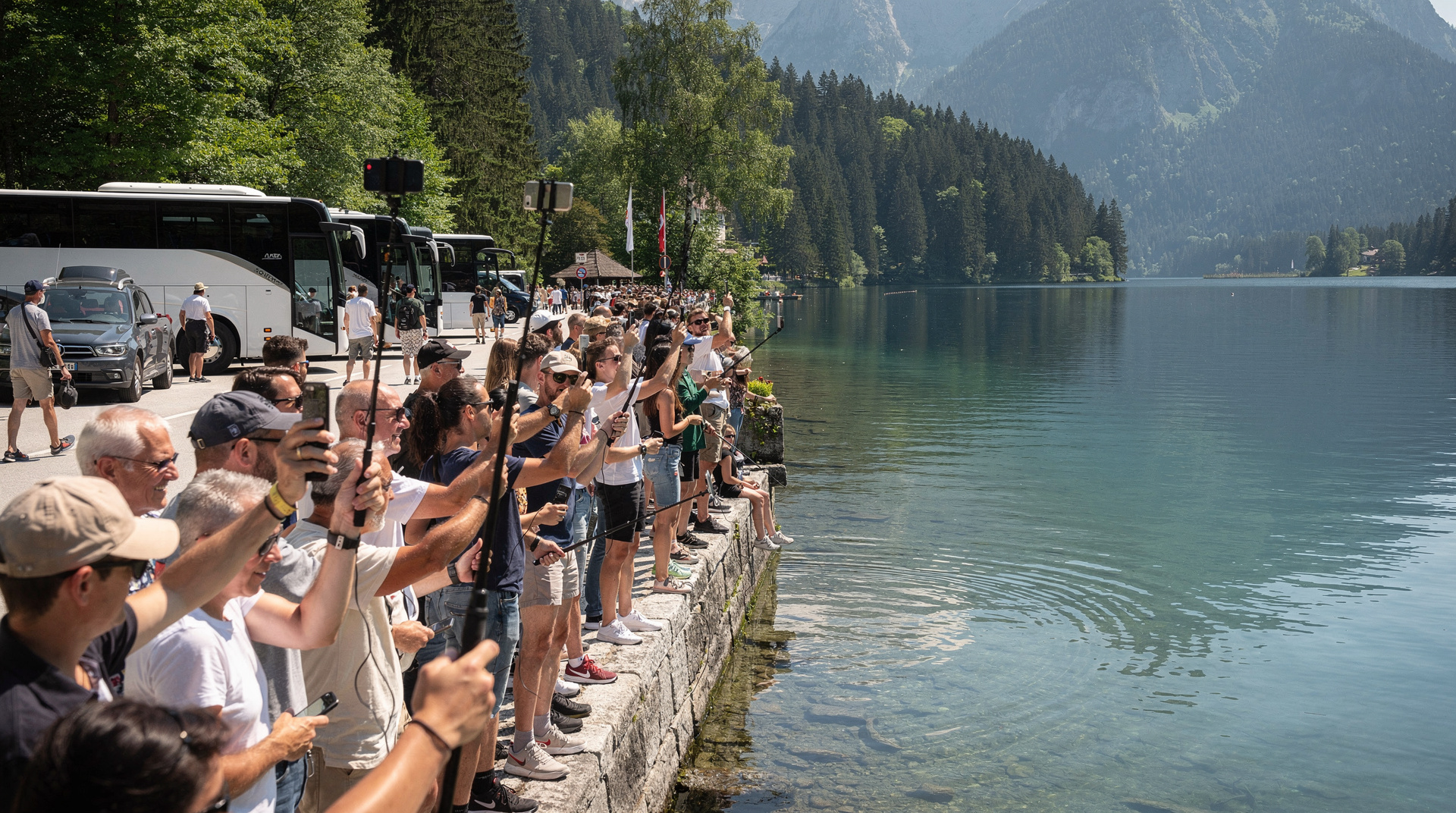
Very crowded. Postojna Cave receives up to 800,000 visitors per year and up to 5,000 per day in peak summer. Tours depart every 30 minutes with groups of up to 60 people. The cave's large passages handle the numbers physically, but the experience — shuffling in a large group with loudspeaker commentary — is very different from more intimate caves. Book the earliest morning slot online and visit in June or September rather than July–August if possible.What is actually inside Postojna Cave?
An extraordinary 24 km cave system, of which visitors see about 5 km. The underground train covers 3.5 km of the most dramatic sections. The walking tour (1.5 km) passes the Concert Hall (large enough for 10,000 people), the Russian Bridge, the White Hall and several zones of stalactites, stalagmites and columns. The Vivarium near the exit contains live olms (the endemic cave salamander, nicknamed 'human fish') and other cave fauna. The whole visit takes about 1h30.What is the best alternative to Postojna Cave?
Škocjan Caves, 70 km southwest, is the serious alternative for adults. UNESCO World Heritage Site, groups limited to around 20, EUR 18, and the centrepiece — the Murmuring Cave, an underground canyon with the Reka River 150 metres below — is architecturally more dramatic than Postojna's formations. The difference in atmosphere is significant. Crossing the Cerkvenik Bridge suspended above the canyon is a genuine highlight. A day tour from Ljubljana covers it well.Is Predjama Castle worth combining with Postojna?
Yes, and this combination is one of the most satisfying half-days in Slovenia. Predjama Castle, 9 km from Postojna, is a Renaissance castle built inside a cliff cave — architecturally extraordinary and underrated relative to Postojna. The combined ticket (Postojna + Predjama) costs EUR 49.90 per adult and is better value than either separately. Predjama is much less crowded than Postojna and takes 1–1.5 hours to visit properly.What is Križna Jama and is it worth it?
Križna Jama is a cave system near Cerknica, about 30 km from Postojna, with underground lakes crossed by boat on guided tours. It requires advance booking, has prices listed on the official site krizna-jama.si, and involves actual caving conditions rather than tourist paths. The combination of darkness, water and genuine remoteness makes it one of the most memorable cave experiences in Slovenia. Not suitable for young children or anyone with strong claustrophobia.What time should I visit Postojna Cave to avoid the worst crowds?
The first tour of the day (typically 10:00 in peak season, sometimes 09:00 in high summer) is the least crowded. Tickets are sold only online on the official site with a chosen date and time, so book in advance — July–August slots can sell out. Avoid midday and early afternoon. Weekdays are better than weekends. June and September are better than July–August.Is the Vivarium (olm tank) worth seeing?
For most visitors, yes — the olm (Proteus anguinus) is one of the most extraordinary animals in Europe and seeing one alive in its cave habitat is genuinely memorable. The cave salamander is blind, unpigmented, breathes both with gills and lungs, and can live for over 100 years. The Vivarium display is modest in size but the animal is real and worth the stop.Can I visit Postojna Cave without pre-booking?
Tickets are sold only on the official website (postojnska-jama.eu), where you choose your date and time, so booking ahead is effectively required; in July and August the popular slots can sell out.How does Postojna compare to Križna Jama for adventurous visitors?
They are not really comparable experiences. Postojna is a paved, lit, walk-through tourist cave designed for large groups. Križna Jama is a guided boat trip through unlit passages and underground lakes, and feels like genuine caving rather than a museum visit. Choose Križna Jama if you want an adventurous, intimate experience and don't mind the higher per-person cost and advance booking requirement.
Top experiences
Bookable activities with verified prices and instant confirmation on GetYourGuide.