Postojna vs Škocjan Caves: which one should you visit in 2026?
Škocjan Caves day tour from Ljubljana
Should I visit Postojna Cave or Škocjan Caves?
Both are world-class — the choice depends on what you want. Postojna has the cave railway, extraordinary stalactite chambers and the Proteus vivarium — better for families, easier to reach, more of an 'event'. Škocjan has an underground river canyon 150 m deep with UNESCO World Heritage status — rawer, more dramatic geologically, less crowded. If you can only choose one for the experience: Škocjan. For a family-friendly day: Postojna.
Postojna vs Škocjan: the honest guide to Slovenia’s great caves
Slovenia has more than 12,000 registered caves. Two of them dominate the visitor experience: Postojna Cave and Škocjan Caves. They are 30 km apart in the Karst region, each world-class, each quite different, and the choice between them is the most common planning question about Slovenian caves.
This guide is honest about both — including the tourist-trap element at Postojna and the logistical inconvenience of Škocjan. For a deeper look at each cave on its own, see the Postojna Cave guide and the Škocjan Caves guide, and for a frank verdict on the crowds read the honest Postojna Cave review.
| Postojna cost | EUR 34.90 adult (child prices: see postojnska-jama.eu) |
| Škocjan cost | EUR 18 adult, EUR 9 child (6–17) |
| Time needed each | Postojna 1.5–2 hours, Škocjan 2.5–3 hours |
| Getting there | Postojna: bus/train/car, easy. Škocjan: car or tour, harder |
| Best for families | Postojna (cave railway, olm vivarium) |
| Best for atmosphere | Škocjan (UNESCO canyon, fewer crowds) |
| Booking | Advance recommended July–August for both |
What each cave actually is
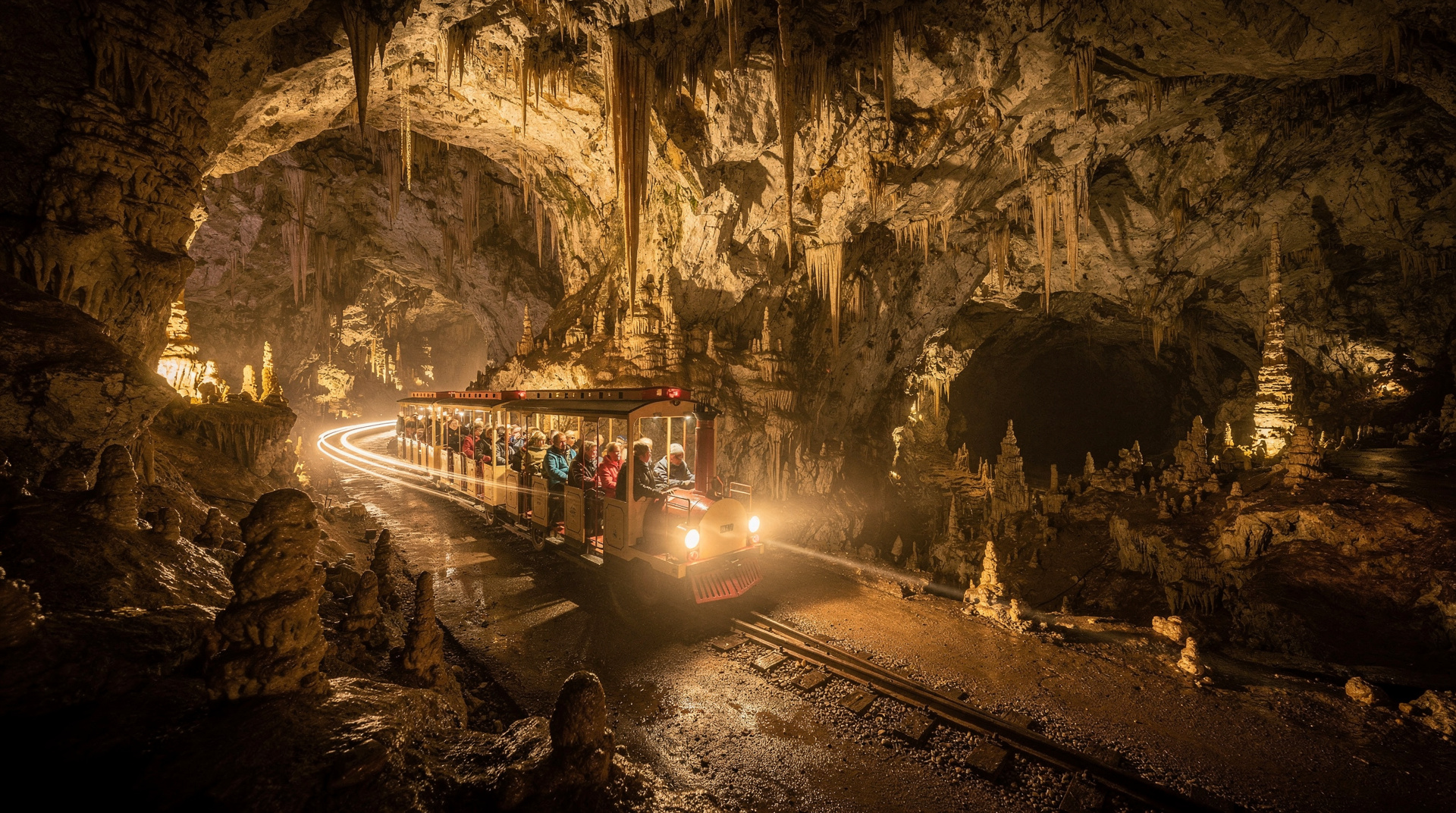
Postojna Cave: a 24 km network of passages and chambers, explored since 1818 and visited by over 40 million people since. The main attraction is the underground tourist railway (the world’s first), which takes visitors 2 km into the cave before the guided walk begins. Key features:
- The cave railway (3.7 km round trip, a genuine experience)
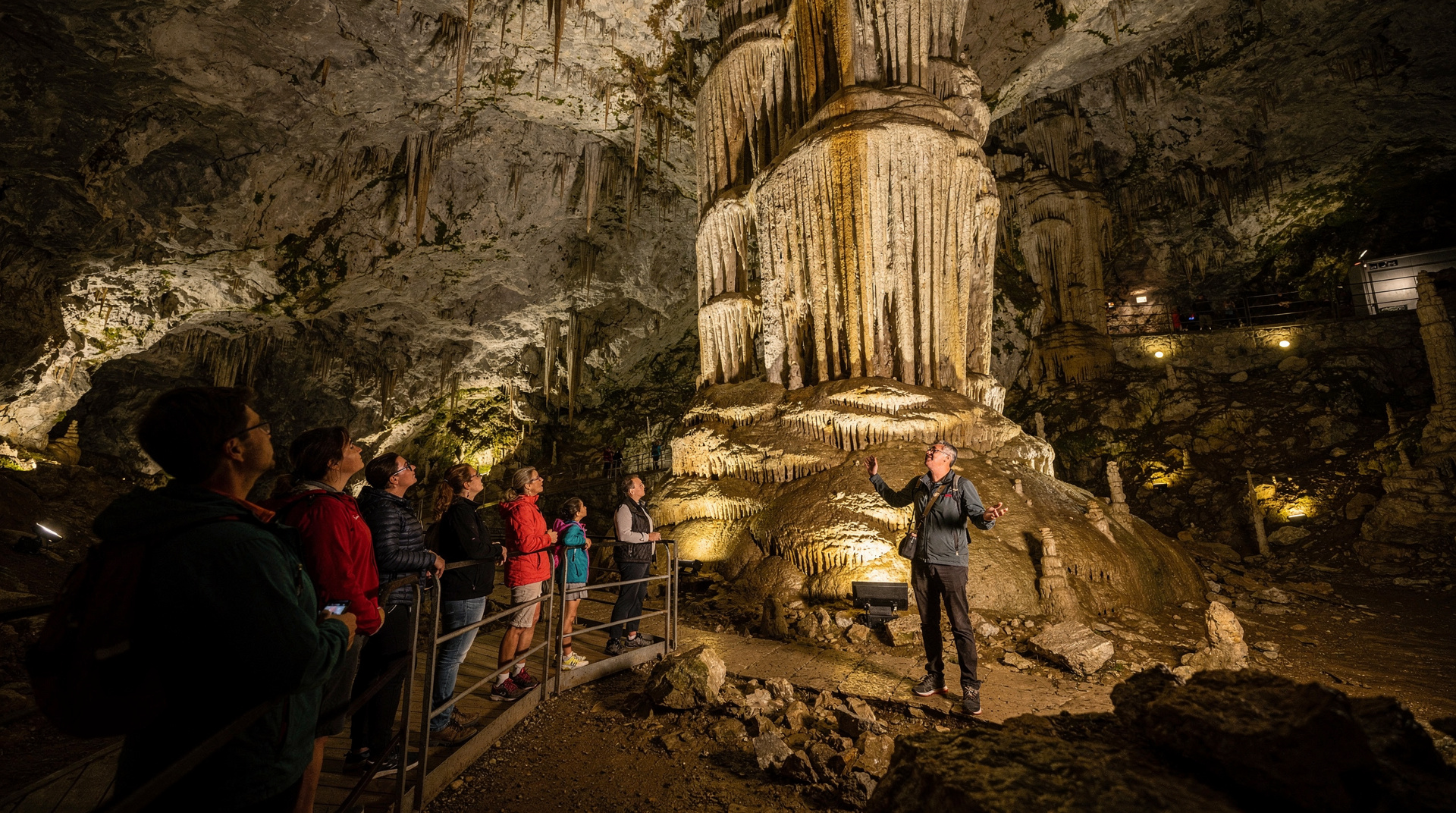
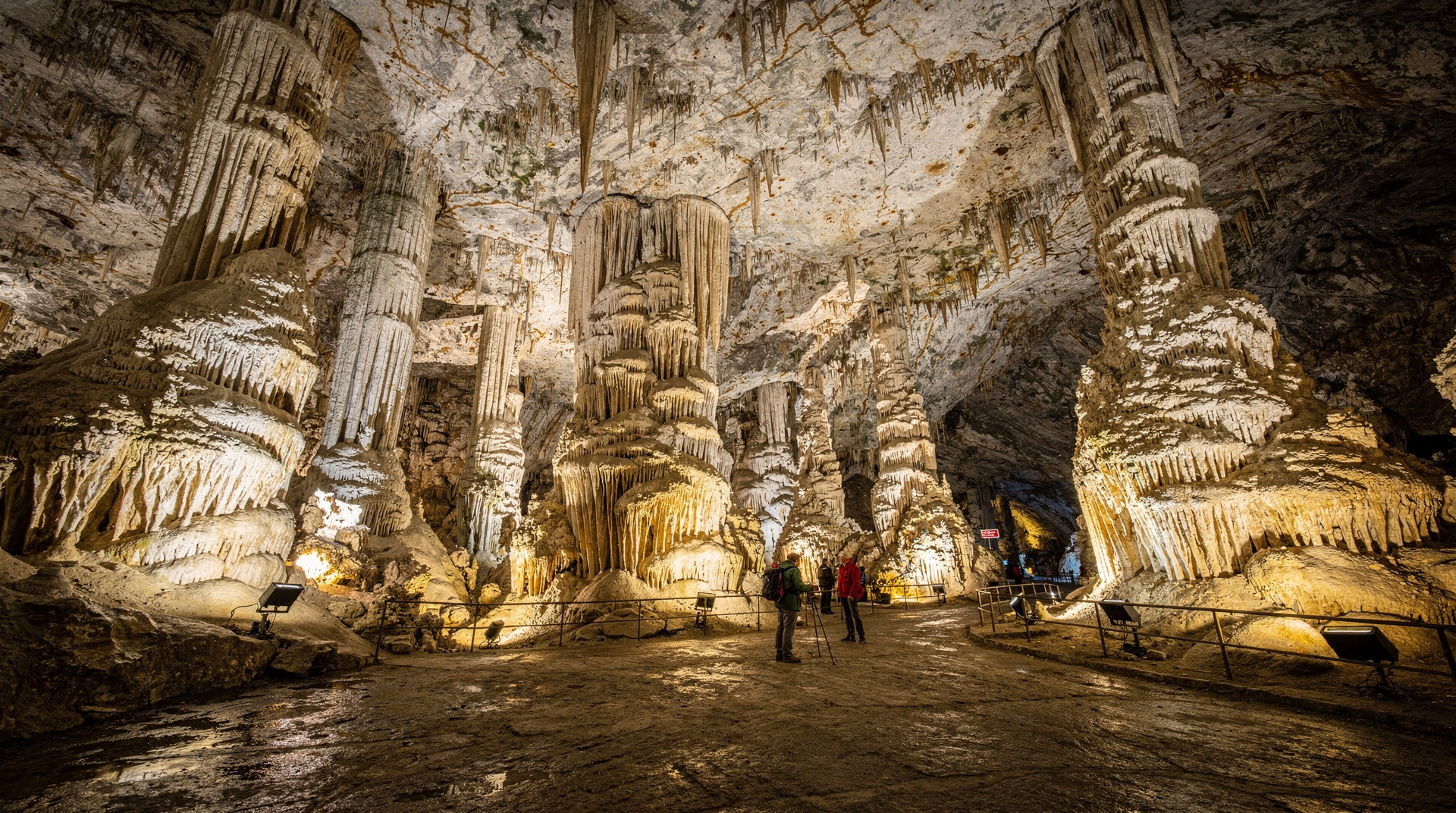
- The Brilliant Hall: extraordinarily dense crystalline formations
- The Concert Hall: vast underground chamber used for concerts
- The Proteus vivarium: the only place in the world with a reliable viewing platform for the olm (Proteus anguinus) — the blind cave salamander unique to Dinaric karst
- About 700,000 visitors per year
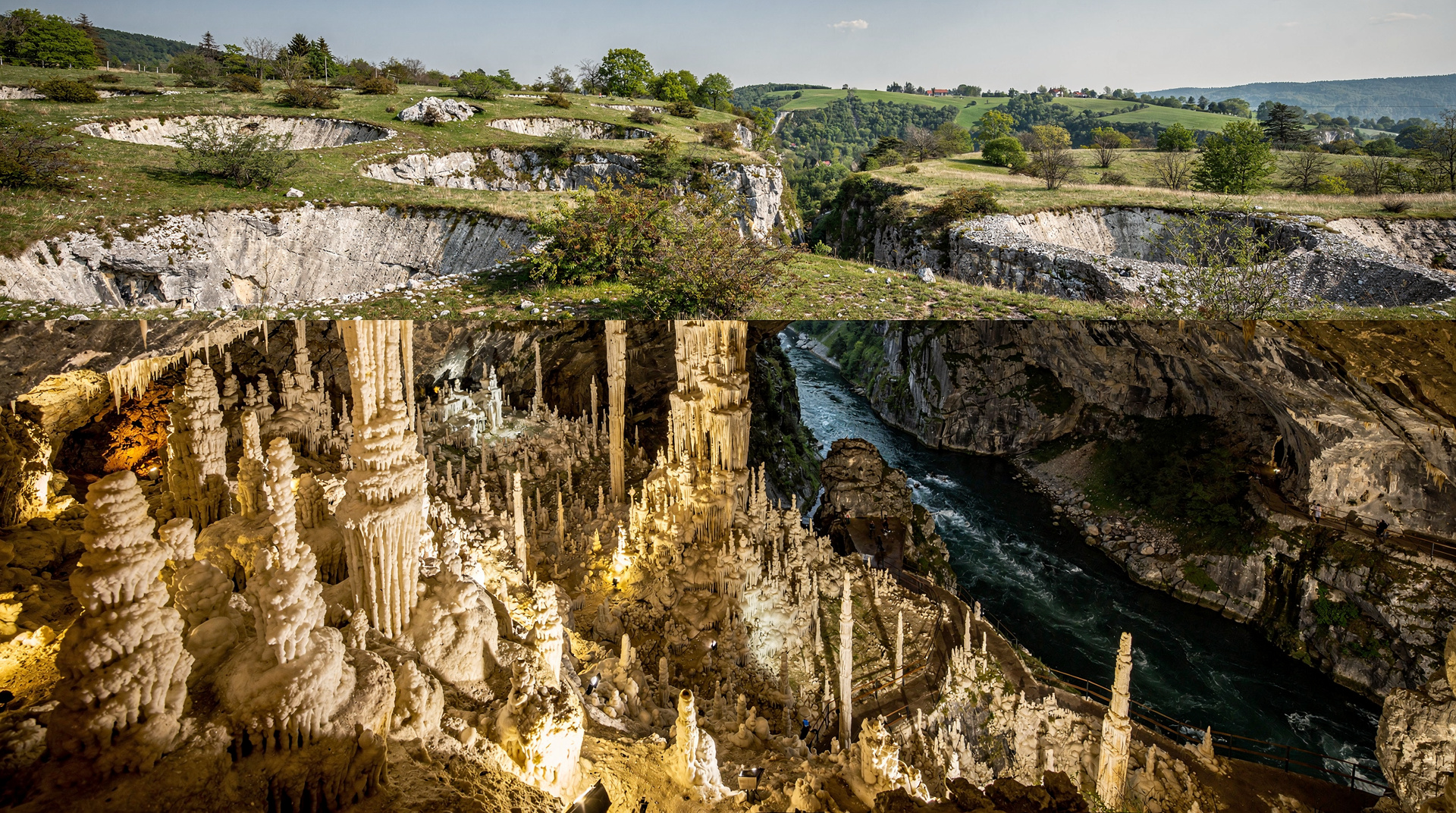
Škocjan Caves: a karst canyon system carved by the Reka River, UNESCO World Heritage Site since 1986. Key features:
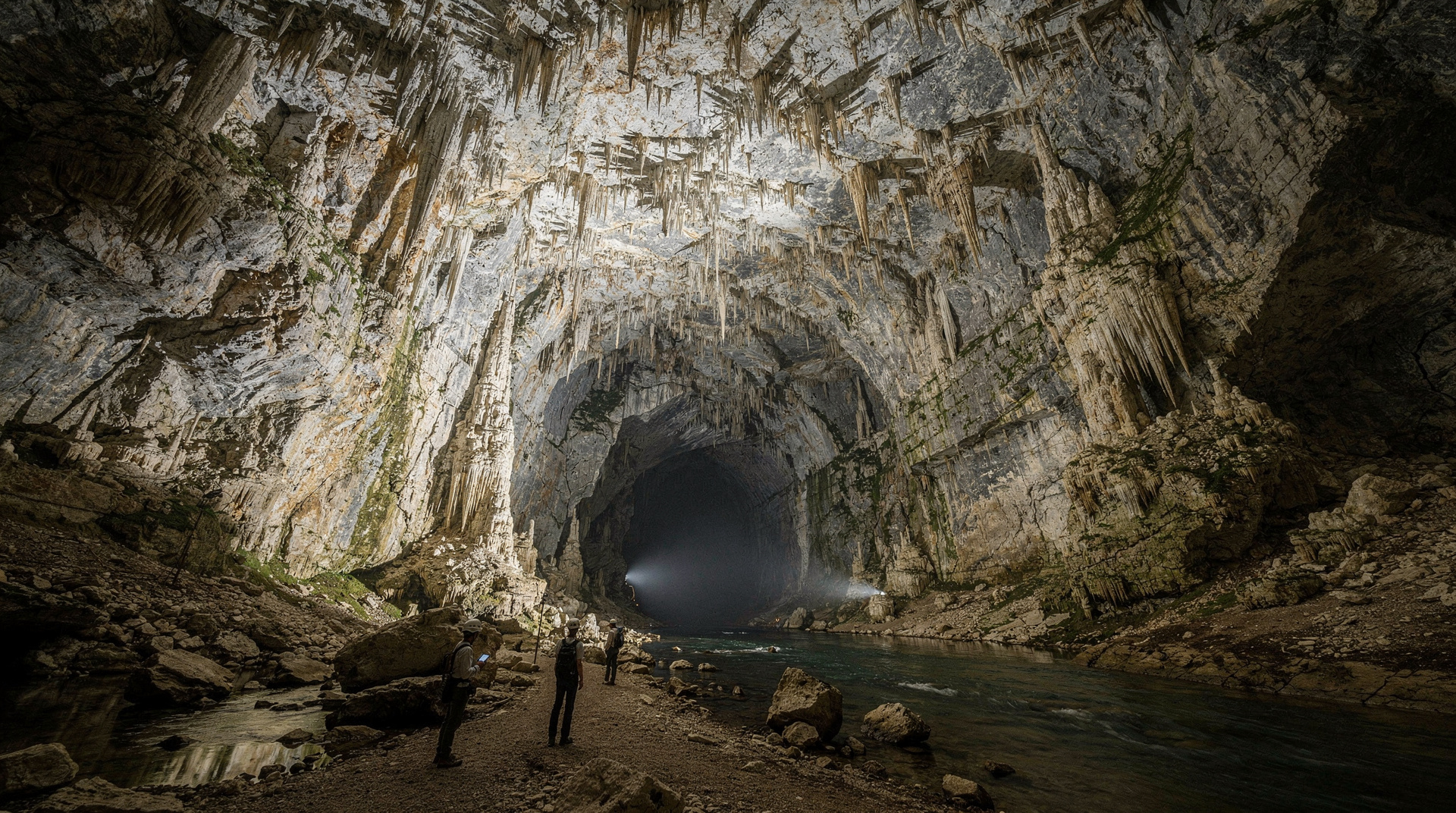
- An underground river canyon up to 150 m deep — one of the largest underground chambers in Europe
- The Hanke Bridge, 45 m above the rushing river
- The Murmuring Cave (Šumna dolina): a dry upper level with dramatic formations
- The Dead Cave (Tiha dolina): where the river disappears underground
- The natural dolines (collapse valleys) at the entrance
- About 100,000 visitors per year
The setting: arrivals and first impressions
Arriving at Postojna: the access road from the motorway is well-signed. The car park is large and free. Before you reach the cave, you pass through a commercial complex of restaurants, hotels and souvenir shops. The cave entrance itself is built into the cliff face, with a boarding area for the electric underground train. The scale of the infrastructure — and the size of the crowds in summer — prepares you for what kind of experience this will be.
Arriving at Škocjan: you park in a small car park above the doline landscape, walk through a quiet visitor centre, and begin descending through the collapse valleys toward the cave entrance. There are almost no commercial facilities. The approach through the dolines — giant natural bowls where the cave roof has fallen in — begins the experience before you’re underground. It’s understated and surprisingly effective.
The geological difference: what you actually see
This is the core practical distinction.
At Postojna, the experience is horizontal and decorative. You travel by train and then walk through vast chambers filled with formations of astonishing density. The Brilliant Hall is exactly what its name suggests: stalactites and stalagmites so numerous and varied that the walls appear to be encrusted with crystalline growth. The olm vivarium is a genuine biological rarity — a living cave salamander in controlled conditions.
The experience is curated and somewhat theme-park-like. Groups are large (up to 80 people), tours run every 30 minutes, and the infrastructure (lighting, paths, train) makes everything comfortable. Some visitors find this makes the cave feel like a spectacle rather than a natural wonder.
At Škocjan, the experience is vertical and visceral. You walk along the edge of an underground gorge where the canyon walls are 100 m above and the river is 100 m below. The sound of rushing water, the scale of the void, the feeling of suspension between geological forces — this is difficult to convey in words. There are formations, but they’re not the point. The point is the canyon itself.
Tours are limited to 40 people and the pace is controlled. The path is narrow in places and the bridges have open sides — not recommended for those with severe vertigo. But it’s entirely safe for most people.
The proteus anguinus (olm): the unique Postojna draw
The olm (Proteus anguinus) — called človeška ribica (human fish) in Slovenian for its pinkish, almost translucent skin — is a blind cave salamander found only in the Dinaric karst of Slovenia, Croatia and Bosnia. It is the world’s largest cave-dwelling vertebrate, can live for over 100 years, and survives without eating for up to 10 years.
Postojna is the only place in the world with a reliable, publicly accessible vivarium where you can see these creatures in controlled conditions. The vivarium is small — you get perhaps 2–3 minutes at the glass — but what you’re looking at is a genuine evolutionary rarity: an animal that has adapted completely to life in permanent darkness.
Škocjan has no olm vivarium. If seeing the olm is specifically on your list, Postojna is your only option among major tourist caves.
The tourist-trap question
Postojna is Slovenia’s most honest tourist trap. At EUR 34.90 per adult, it is Europe’s most-visited cave and knows it. The entrance area is a small commercial resort: car parks, three restaurants, a hotel, a souvenir complex, an adventure park and a chocolate-making museum (genuinely). In high summer, the queue for tours can be 45–60 minutes and the cave railway is filled to capacity multiple times per hour.
None of this means Postojna is not worth visiting. The cave itself is extraordinary and the geological formations are unlike anything you’ll see elsewhere. But the experience of visiting Postojna is unmistakably that of a major commercial attraction, and expectations should be set accordingly.
Škocjan has none of this. The entrance is a small visitor centre with a car park, a modest café and little else. Tours run a few times daily (book in advance in summer). The cave feels like a discovery rather than a product.
The experience in detail: what the tours involve
Postojna Cave tour (approx.
1h30–1h45 total):
- Waiting area → boarding the electric cave railway
- 2 km train ride into the cave (about 6 minutes) — genuinely exciting, especially if you’ve never been underground before; the speed through narrow passages in near-darkness is dramatic
- Disembark and join the guided walk through chambers including the Congress Hall, the Beautiful Caves and the Brilliant Hall
- The guide narrates in English (and other languages in separate groups); if you speak Slovenian or German, those groups are often smaller
- Pass through the vivarium where Proteus anguinus live in temperature-controlled tanks — you typically get 2–5 minutes here
- Board the train for the return journey
- Exit into daylight, optional visit to the winery on the way out
Škocjan Caves tour (approx. 1h30–2h total):
- Gather at the visitor centre, receive helmets (optional) and briefing
- Walk through the dolines (surface collapse valleys) to the cave entrance
- Enter the Murmuring Cave: dry, upper section with formations. The guide narrates in English
- Proceed to the Great Canyon: this is the main event. The path narrows as the canyon walls rise. You hear the river before you see it
- Cross the Hanke Bridge over the gorge — 45 m above the roaring Reka River. The bridge has open sides and moderate exposure; most people manage it comfortably
- Continue through the canyon to exit points
- Walk above ground through the doline landscape back to the visitor centre
The Škocjan tour requires more walking (about 5 km and roughly 1,000 steps) and has more physical demands than Postojna. The underground section at Postojna is entirely on flat, paved paths suitable for all mobility levels.
Which to choose: the honest guide
Choose Postojna if:
- You have children under 12 — the cave railway is a genuinely exciting experience for kids
- You want a self-contained, easy-to-organise visit with good infrastructure
- You want to see the Proteus anguinus (the olm) — this is not available elsewhere
- You’re combining it with Predjama Castle, which is 9 km away
- This is a one-shot visit and you want the densest geological formations
Choose Škocjan if:
- Geological drama over decorative formations is your priority
- You want a less crowded, more intimate cave experience
- You’re interested in UNESCO World Heritage sites for the substance, not the certificate
- You can manage narrow paths and open-sided bridges (moderate fitness required)
- You want the cave that serious cavers and geologists consider the greater natural wonder
Best plan: visit both. They’re 30 km apart and the Škocjan tour takes 2.5–3 hours. The Postojna and Predjama half-day tour from Ljubljana covers Postojna and Predjama Castle efficiently. The Škocjan day tour from Ljubljana and the Škocjan half-day tour both make the logistics simple without a car.
Logistics compared
Getting to Postojna from Ljubljana:
- Arriva bus (several daily, 1h, EUR 6–7 — note: the cave entrance is a 20-min walk or short taxi from the bus stop)
- Car: A1 motorway, 50 km, 45 min
- Tour from Ljubljana: various operators, transport included
Getting to Škocjan from Ljubljana:
- No direct bus. Nearest train station: Divača (on the Ljubljana–Trieste line), then 4 km by foot or taxi to the cave
- Car: A1 motorway to Divača exit, then local road, 80 km, 1h
- Tour from Ljubljana: the most practical option if you don’t have a car
Opening times:
- Postojna: open year-round. Tours run every 30–60 min. Peak summer: continuous tours 09:00–20:00.
- Škocjan: open year-round. Limited off-season tours (2–3 per day). Summer: more frequent, but still require advance booking
In both cases: book in advance in July–August. Postojna sells out for peak weekend slots. Škocjan has smaller groups and books out faster.
Practical booking advice
Postojna Cave tickets: Buy online at postojnska-jama.eu at least a few days ahead in summer. Tours run every 30 minutes in peak season (09:00–20:00 July–August). Weekend afternoons in July–August sell out by midday. Tickets are sold only on the official site, with the date and time chosen online, so book ahead in every season.
Škocjan Caves tickets: Book via park-skocjanske-jame.si. In peak summer, tours run at 10:00, 13:00 and 15:30 (approximately — check current schedule). Book at least 2–3 days ahead for July–August. The website accepts payment by card. Groups are capped at 40 people, and it shows — Škocjan feels intimate compared to the Postojna experience.
Combined tickets: The Postojna area offers a combined ticket for Postojna Cave + Predjama Castle (EUR 49.90 adult) — significantly cheaper than buying separately.
Photography: Postojna allows photography; no flash. Škocjan has restricted photography in certain parts of the canyon (the path requires both hands at some points; stopping to photograph can block the group). Both caves are dim — bring a camera with good low-light performance.
Temperature: Both caves maintain a constant temperature of around 8–10°C. Even in July, wear an extra layer or bring a jacket. This is non-negotiable — light summer clothing is genuinely cold after 30 minutes underground.
Accessibility: Postojna is highly accessible — wide paved paths, the cave railway eliminates the main walking section, and a wheelchair-accessible route exists. Škocjan requires climbing stairs, crossing bridges with open sides and some narrow paths. Not suitable for those with limited mobility or severe vertigo.
What to combine with each cave
With Postojna:
- Predjama Castle (9 km, 15 min): essential addition. Book combined ticket in advance
- Lipica Stud Farm (20 km): the home of Lipizzan horses — classical riding demonstrations, accessible to non-riders
- The Cave Bear Museum at Postojna: small museum at the cave entrance, included with cave entry — good context for the geology
- Lunch: the cave complex has a café/restaurant but it’s tourist-priced. The town of Postojna has better options 2 km away
With Škocjan:
- Piran (45 min): the coastal medieval town is a natural pairing for a full day. The Škocjan and Piran day trip from Ljubljana combines both efficiently
- Lipica Stud Farm (15 km): the closest major attraction to Škocjan; the Lipica day trip guide explains how to fit it in
- Trieste (30 min by car): if you’re coming from or going to Italy, the border crossing is 20 km from Škocjan. The city of Trieste rewards a half-day visit
- Regional karst walking: the Škocjan area has excellent walking in the doline landscape above the cave
The alternative: Križna Jama
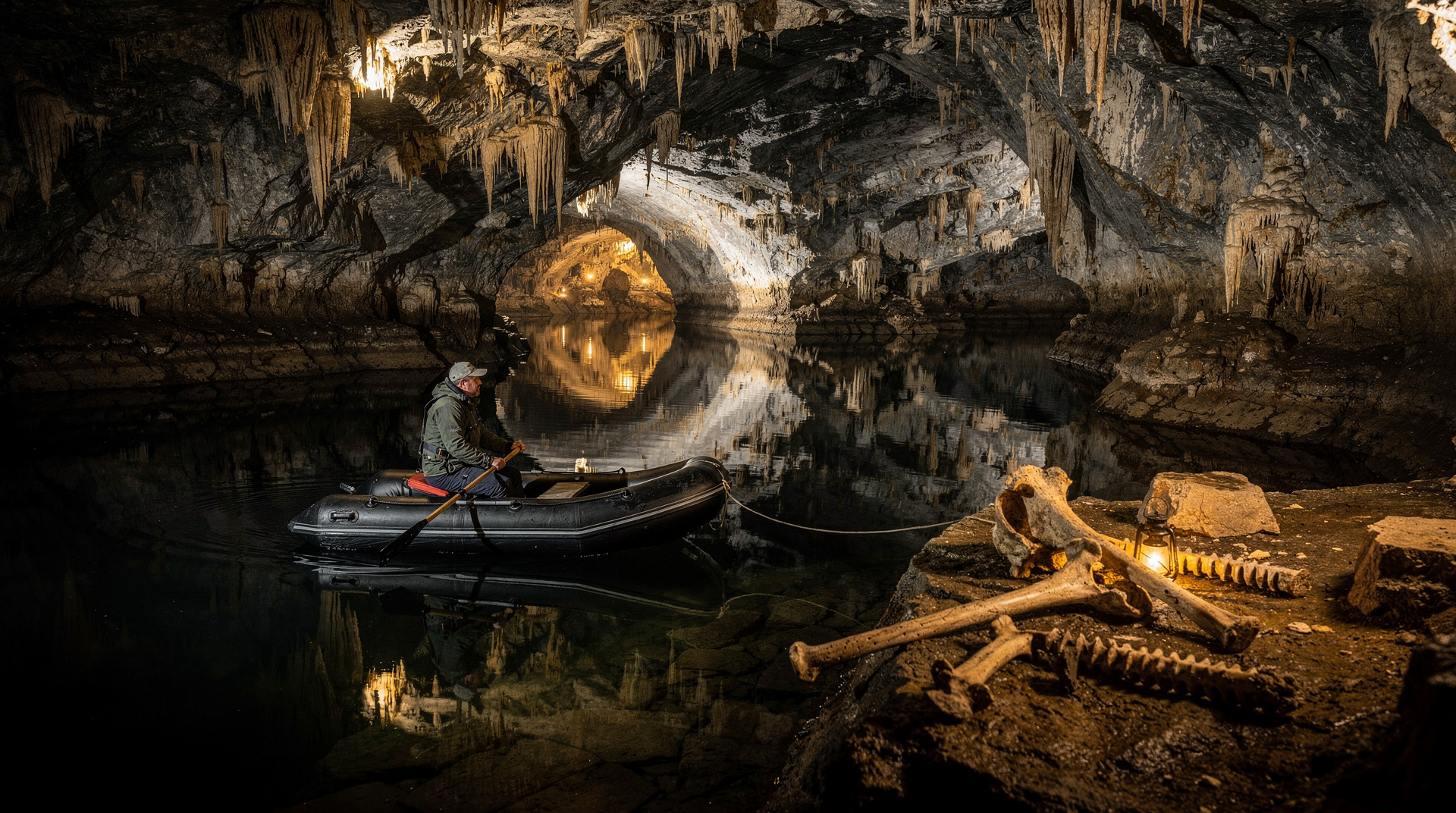
For those who find both Postojna (too commercial) and Škocjan (too geological) an imperfect fit, Križna Jama is the third great Karst cave — wild, lake-filled and visited on guided tours with a boat ride, booking recommended. It’s the most unusual cave experience in Slovenia and deliberately obscure. Visit if adventure and authenticity matter more than convenience. See the full Križna Jama guide for how to book.
A note on cave temperatures and what to wear
Both caves maintain a constant temperature of 8–10°C year-round. This is genuinely cold if you’re in light summer clothing after a 30°C afternoon in Ljubljana.
What to bring:
- A fleece or light down jacket (pocket-sized is fine — just bring one)
- A second layer if you run cold
- Sturdy flat shoes or trainers — cave paths are slightly damp and slippery in places; high heels and smooth-soled sandals are genuinely unsuitable
- Nothing else special is required
At Postojna, the cave train ride involves wind on the face as the train moves — a windproof layer helps if you’re sensitive to cold. At Škocjan, the canyon section can have cool airflow from the underground river — the same advice applies.
Neither cave requires waterproofs. Both caves have paths that are maintained and well-lit. Škocjan’s canyon section involves metal walkways over the gorge; these are perfectly safe but require alertness. Neither cave is recommended for visitors with severe claustrophobia — though the main chambers of both are vast enough that most people manage without difficulty.
Staying overnight in the Karst region
Stopping overnight near the caves, rather than day-tripping from Ljubljana, transforms the experience:
- You can visit Postojna in the evening (when tour groups are gone) and Predjama Castle in the morning
- The Karst plateau at sunset, with the bora wind blowing across the limestone, is one of Slovenia’s stranger and more atmospheric landscapes
- Accommodation in Postojna town is decent and affordable (EUR 60–90/night for a guesthouse)
- For Škocjan, Lipica has the atmospheric Kobilarna hotel in the stud farm complex; Sežana and Divača have simpler options
For context on all Slovenian caves, the Slovenia caves overview is the comprehensive reference. If you are building the caves into a longer trip, the Ljubljana and caves itinerary shows one way to sequence them, and getting around Slovenia covers the transport options between the Karst and the capital.
Frequently asked questions about Postojna vs Škocjan Caves
Which cave is more impressive geologically?
Škocjan, without question. The underground canyon at Škocjan — with the Reka River far below, natural bridges overhead and sheer canyon walls disappearing into darkness — is one of the most extraordinary natural spaces accessible to visitors anywhere in Europe. Postojna is magnificent in a different way: the density and variety of formations (stalactites, stalagmites, flowstones, soda straws) is unmatched. But the sheer geological drama belongs to Škocjan.Which cave is more crowded?
Postojna is significantly more crowded — about 700,000 visitors per year vs around 100,000 at Škocjan. In peak summer, Postojna runs tours every 30 minutes with groups of 60–80 people. The cave railway carries large numbers efficiently but the experience can feel like a theme park. Škocjan limits group sizes, requires timed entry and feels considerably more intimate. If avoiding crowds matters to you, Škocjan is the better choice.How much does each cave cost?
Postojna Cave: EUR 34.90 for adults (children's prices: see the official site postojnska-jama.eu). Predjama Castle (9 km away, often combined): EUR 24.00 additional. Škocjan Caves: EUR 18 for adults, EUR 9 for children aged 6–17, under 6 free, seniors and students EUR 14. Combined tickets with other Karst sites are available. Neither cave is cheap — this is a significant admission price. Postojna's higher price reflects the cave railway experience.Can I visit both caves in one day?
Technically yes — they're 30 km apart and the Škocjan tour alone takes 2.5–3 hours. But it makes for a very full day. Postojna + Predjama Castle + Škocjan in one day is tight, especially in summer when queues at Postojna can add 45–60 minutes. The better plan is to dedicate a half-day to each, or visit them on separate days from a base in Postojna or along the coast.Is Predjama Castle worth visiting with Postojna?
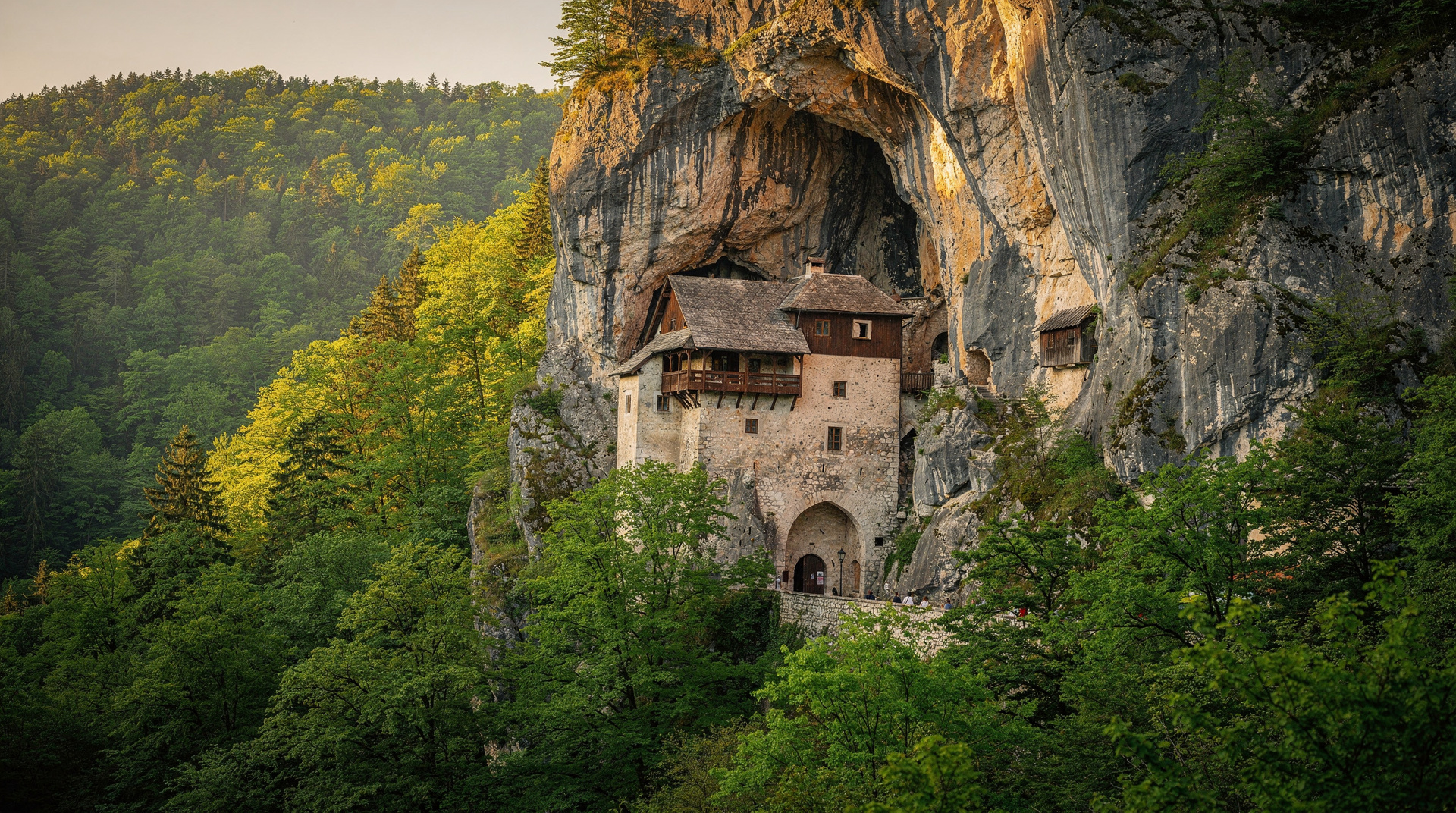
Yes — definitely worth the 9 km detour. Predjama Castle is built into a cliff face cave opening, and the combination of the cave-castle setting makes it one of the strangest and most visually arresting places in Slovenia. The interior museum tells the story of the outlaw knight Erasmus of Lueg. It's a 45-minute visit and a natural add-on to Postojna. The two together make a full half-day.
Top experiences
Bookable activities with verified prices and instant confirmation on GetYourGuide.