How to visit Bled Island: pletna vs rowboat, prices and what to expect
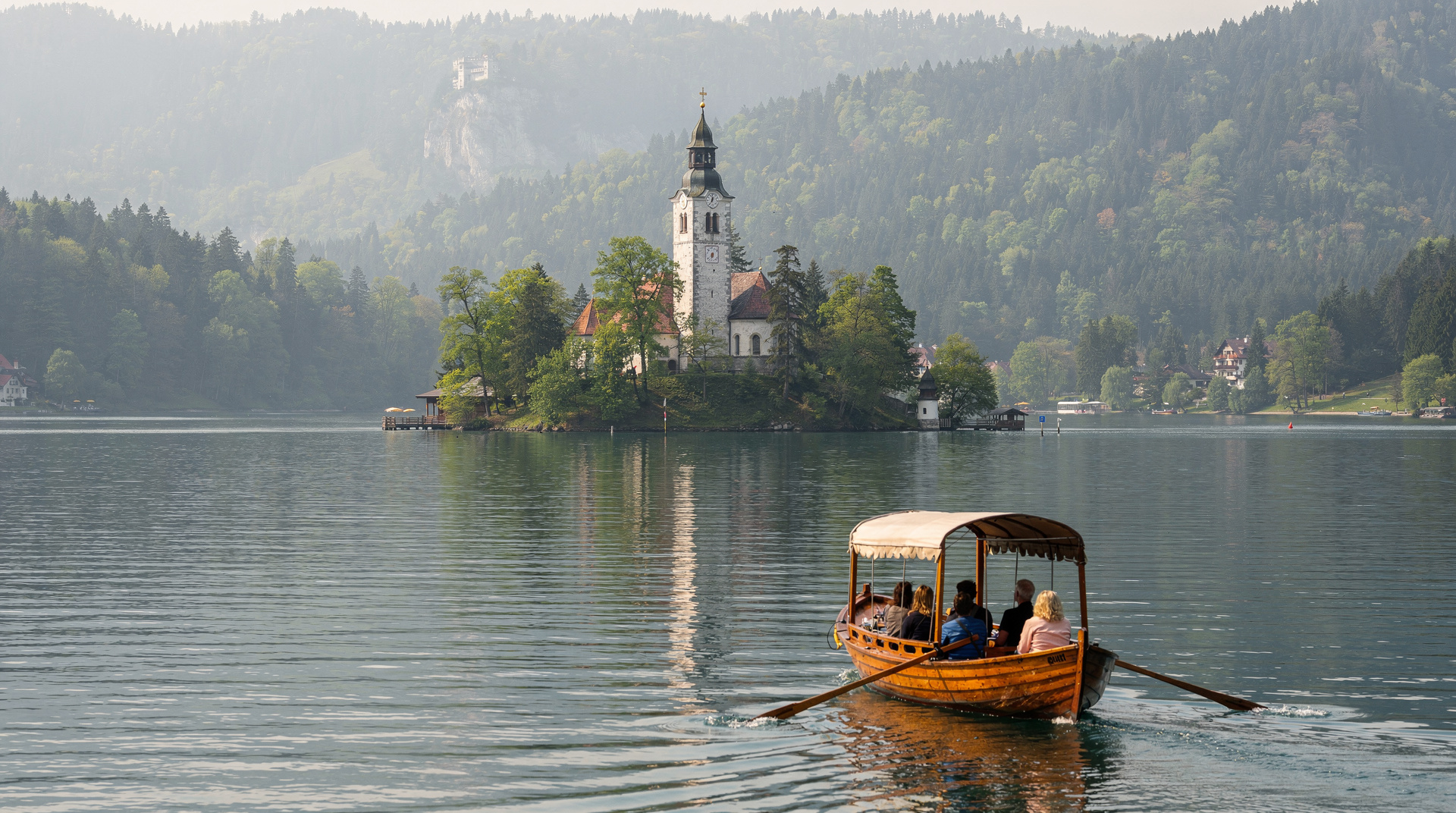
Lake Bled: pletna boat to Bled Island with dessert
How do you get to Bled Island and is it worth visiting?
You reach Bled Island either by traditional pletna boat (takes 15 minutes; confirm the fare at the dock) or by hiring a rowboat yourself (EUR 18–25 per hour). The island church costs EUR 12 for adults to enter (church, bell tower and museum). The experience is pleasant but brief — the real highlight is the view from the water looking back at the castle. It's worth doing once, but manage expectations about the island itself.
Bled Island: what you actually get and how to get there
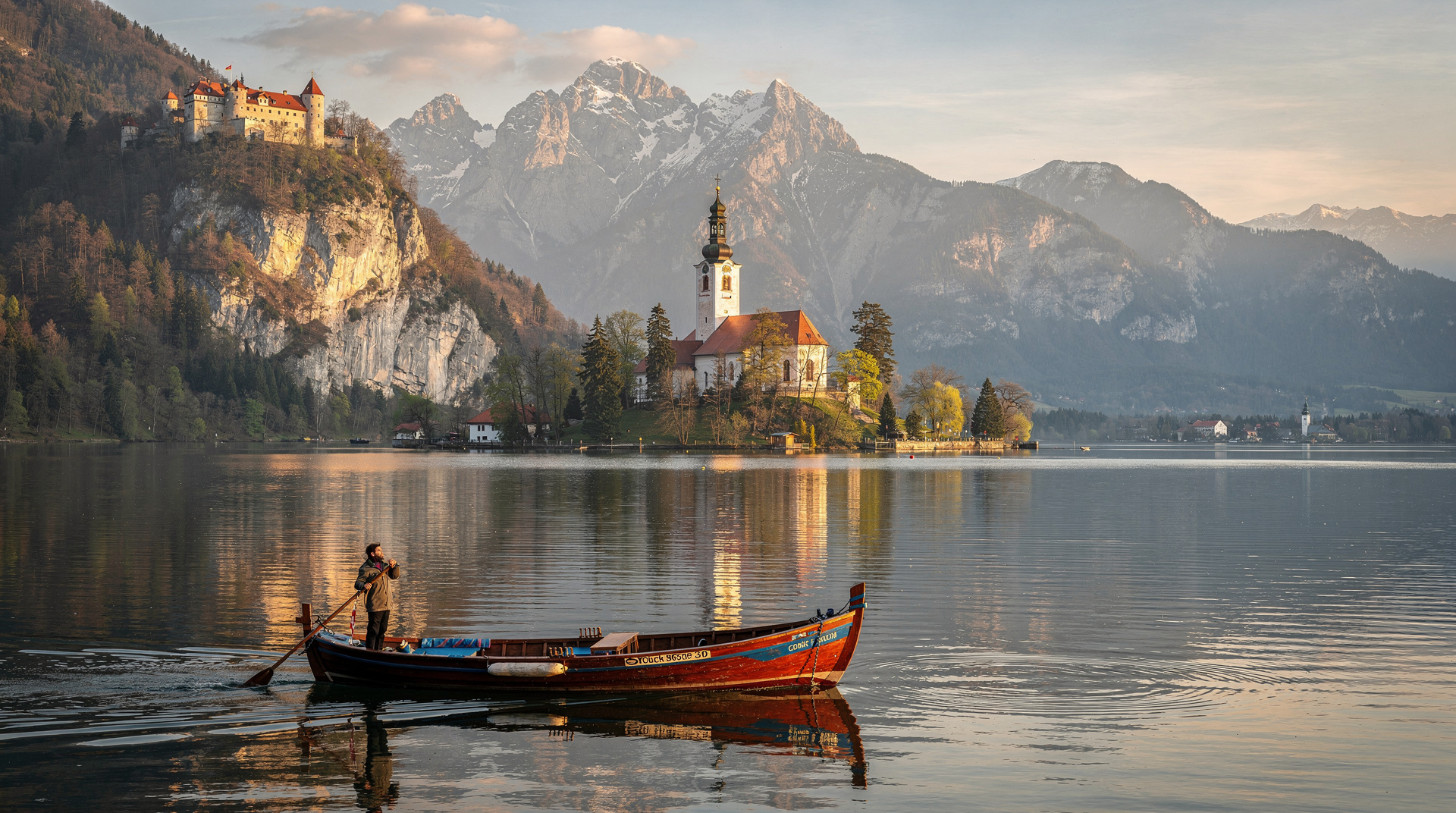
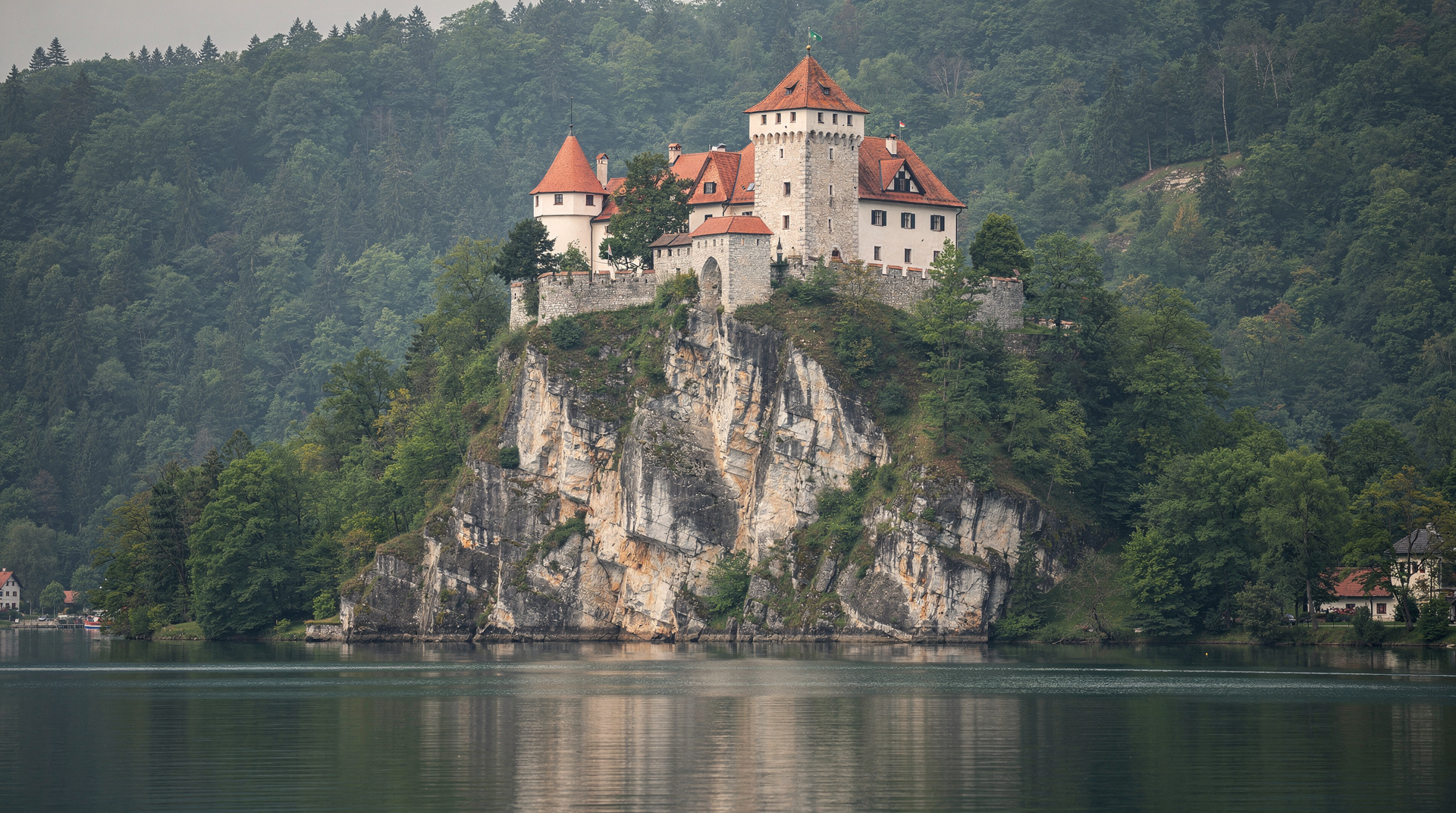
The island in the middle of Lake Bled is Slovenia’s most photographed image — a small hill of land supporting a Baroque church, reached only by water, framed by the cliff-top castle and the Julian Alps. It looks extraordinary from the shore. The question is whether the visit itself lives up to the approach.
The short honest answer: the journey across the water is the highlight. The island church is charming but small, and the 99-step climb to the door is moderately steep but not demanding. You’ll spend 15–30 minutes on the island before most people are ready to head back. Whether that’s worth the fare depends on what you’re looking for.
This guide covers every way to reach the island, what you’ll find there, and how to make the most of the experience regardless of which option you choose.
| Cost | pletna fare to confirm at the dock, or rowboat around EUR 18–25/hour |
| Time needed | 15–30 minutes on the island, plus the crossing |
| Church entry | EUR 12 per adult |
| Getting there | boat only — dock near Grand Hotel Toplice or Park Restaurant |
| Best time | early morning or after 17:00 to avoid the midday crowds |
What is on Bled Island?
The island is small — you can walk around its perimeter in about ten minutes. The main structure is the Church of the Assumption of Mary, rebuilt in its current Baroque form in the 17th century on foundations that have been a Christian site since at least the 11th century. Before Christianity arrived, this was a Slavic ritual site.
Inside the church: modest in scale, with Baroque altar furnishings, frescoes and a single notable element — the wishing bell in the bell tower. Legend says that ringing the bell three times while making a wish will see it granted. This tradition is enthusiastically promoted to visitors. The bell is accessible via a rope from inside the church.
The 99 steps: the stone stairway from the dock to the church entrance is famously used in Slovenian wedding tradition — the groom must carry the bride up all 99 steps without putting her down for the marriage to be blessed. You’ll see this performed occasionally in summer (and sometimes staged for photos with willing tourists).
Views from the island: looking back toward the castle is excellent. Looking out toward the mountains is also good. The island is surrounded by trees, which means the classic lake view — island church with mountains behind it — is only visible from the water or from the shore, not from the island itself.
Practical facilities: a small souvenir shop, a café (overpriced, but the terrace is pleasant), toilets. No overnight accommodation.
Option 1: the pletna boat
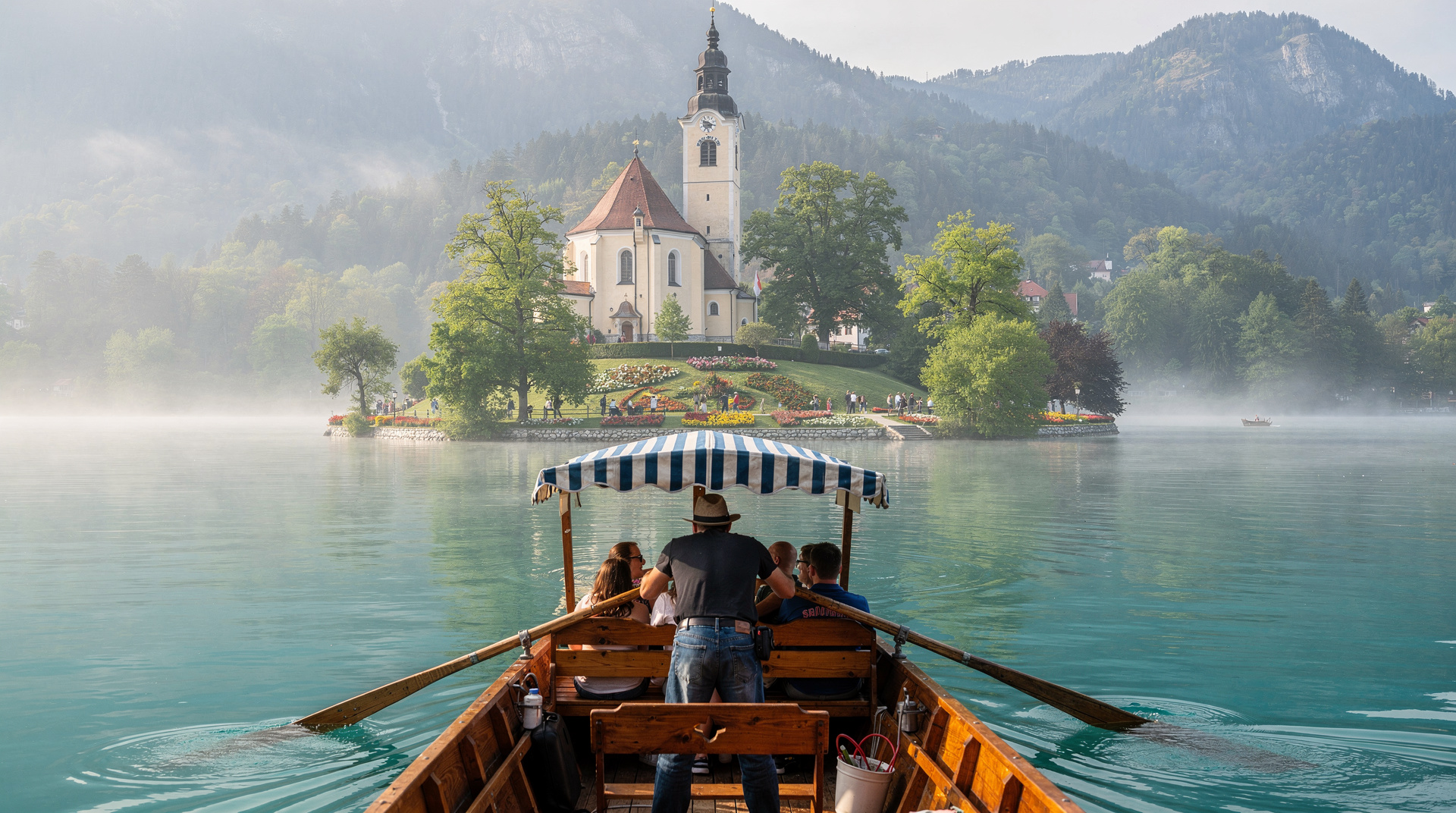
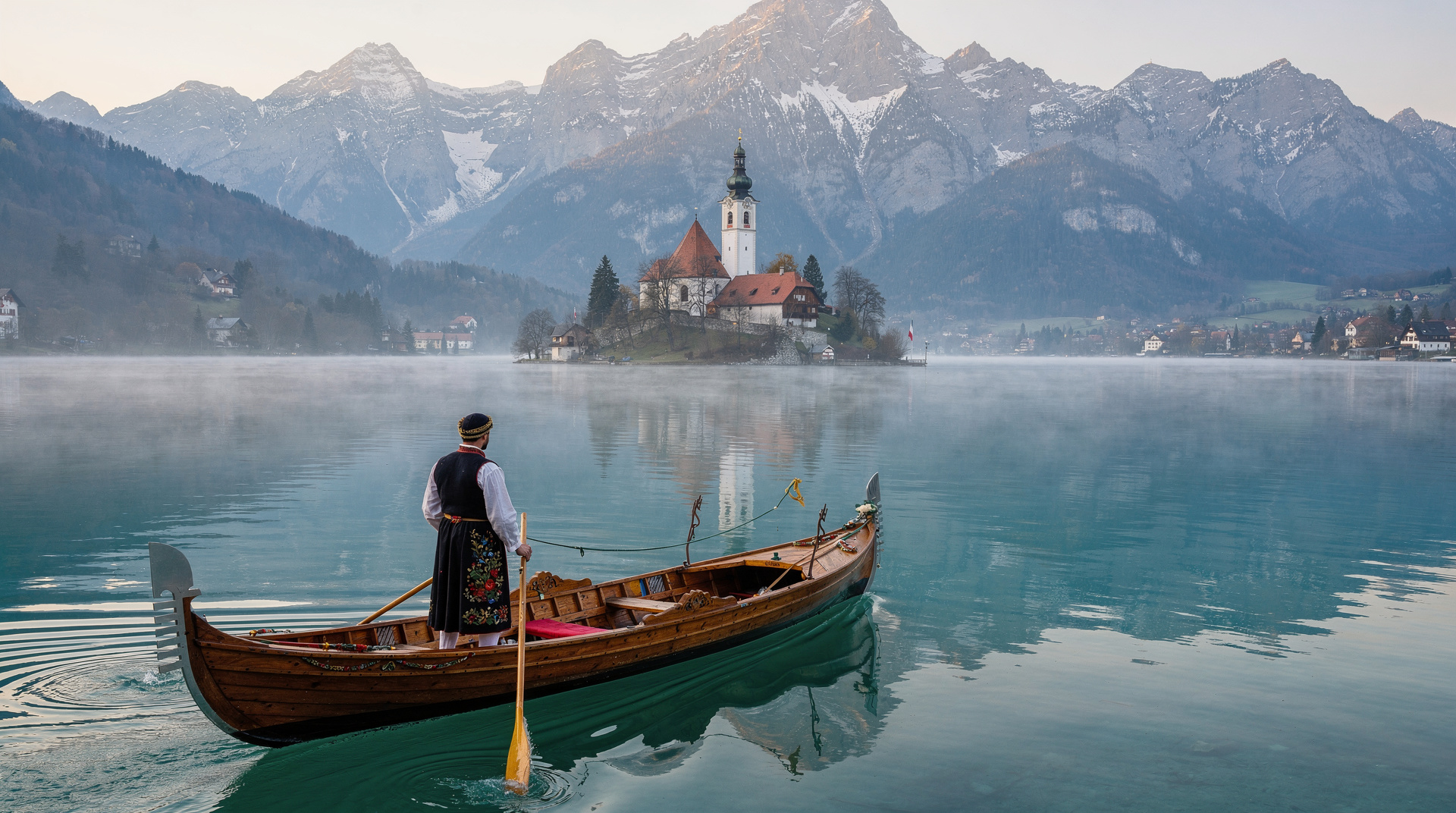
The pletna is a traditional flat-bottomed wooden boat, rowed by a standing oarsman who steers with two long oars. The boats hold up to 20 passengers and have been used to ferry people to the island for centuries. They are genuinely beautiful vessels and the crossing itself — gliding across the green water as the mountains rise around you — is the experience most people are picturing when they imagine visiting Bled Island.
Fare: not officially published, confirm at the dock or with the Bled tourist office (bled.si) (the fare is set collectively by the pletna association; prices have increased in recent years). Children under 6 are sometimes free or reduced. Confirm current pricing at the dock.
Departures: pletna boats depart from three main points around the lake — the dock near the Grand Hotel Toplice on the north shore, the dock near the Park Restaurant on the west shore, and occasionally from other points. In peak season (July–August), boats run continuously and you rarely wait more than 15–20 minutes. In shoulder season, waits can be longer.
Duration on island: the pletna waits for you at the island dock for approximately 30–40 minutes before returning. This is enough time to climb the steps, enter the church, ring the bell and have a brief look around. It is not quite enough time for a leisurely coffee on the island terrace. If you want more time, arrange with your oarsman.
Is it worth it? For a first visit, yes — particularly if you want to ring the bell, see the interior of the church and have the experience of the traditional boat. The crossing is genuinely lovely. But the fare feels steep once you’re standing on the small island in a crowd of other tourists. Many repeat visitors prefer the rowboat.
For the classic Bled experience combining pletna, island visit and the famous Kremšnita cream cake, the island pletna and Slovenian dessert tour packages all of this with a local guide.
Option 2: hire a rowboat
Several rental points on the south shore and around the lake offer rowboats (and sometimes pedal boats) for self-guided hire. Rates are approximately EUR 18–25 per hour for a boat that holds 2–4 people.
Advantages: you row at your own pace, stop wherever you want, linger at the island for as long as you like, and enjoy the lake in a much more private way than on a crowded pletna. The south-shore viewpoint from the water — the classic image of the lake — is yours to compose at leisure. You can also row to the island, spend an hour there, and row back while visiting other points on the lake.
Distance to the island: from the south shore hire points, the island is about 600 metres away — a relaxed 10–15 minutes of rowing in calm conditions. Allow more in wind.
Practical considerations: confirm you can dock at the island (the island dock is sometimes busy with pletna boats and access for private rowboats is managed accordingly). Bring a jacket — it can be cooler on the water than on shore. Life jackets are provided.
Overall: if you’re confident rowing and there are two or more of you, the rowboat is genuinely better value. The experience is also more intimate and memorable. Read more in the pletna boat guide for a deeper comparison.
Pletna vs rowboat at a glance
| Pletna boat | Rowboat hire | |
|---|---|---|
| Cost | confirm at the dock (bled.si) | around EUR 18–25 per hour (2–4 people) |
| Time on island | 30–40 minutes, set by the oarsman | as long as you like |
| Effort | none — you’re a passenger | rowing required, moderate effort |
| Best for | first visit, tradition, groups | couples, photographers, repeat visitors |
Option 3: no boat at all
The island is visible from everywhere around the lake, but the best views of the classic composition — island in front of the castle cliff — are from two free viewpoints on the south shore:
Ojstrica: 15 minutes’ steep walk up from the south shore car park. The standard viewpoint seen in most Slovenia travel coverage. Free.
Mala Osojnica: 25 minutes further up, a higher and wider angle. Fewer visitors. Also free.
Both give you the full composition without paying for a boat. If your primary interest is the photograph rather than the island experience itself, these viewpoints are actually better than the island for landscape shots.
The church entrance fee
Once on the island, entry costs EUR 12 per adult (children up to 15 EUR 5, students and seniors EUR 10.50, family EUR 24). The fee is collected at the door and includes access to the church interior, the bell tower (where you can ring the bell) and the small garden area.
You can also walk around the island exterior without entering the church — the garden paths are pleasant, and the views toward the mountains from the far side of the island are good.
Best time to visit the island
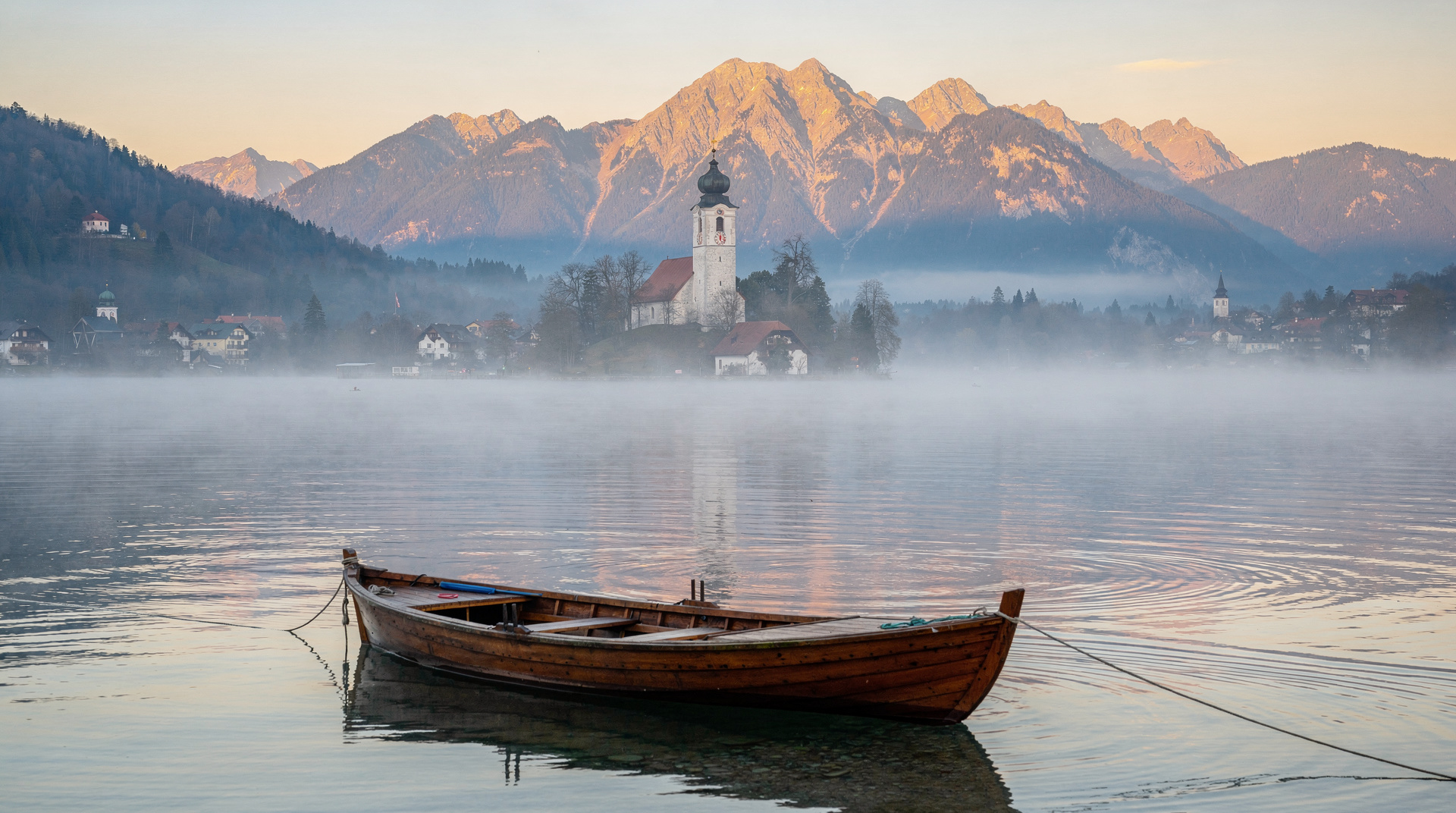
Early morning (before 09:00): the lake is at its most beautiful, and the pletna docks have very few people. Some visitors hire a rowboat at dawn and have the island entirely to themselves — possible in May, June, September and October. In July–August even 07:30 sees some boats.
Late afternoon (after 17:00): the tour buses have gone, the light turns golden, and the crossing has a different character. The church closes at 19:00 in summer (check for current hours), but the island itself and the crossing are worthwhile even if you arrive after closing.
Avoid: 11:00–15:00 in July and August. The pletna docks are at their busiest, the island is crowded, and the midday light is flat for photography.
Weather and conditions
The lake can be rough in strong winds — particularly the bora wind from the northeast, which occasionally arrives with little warning. In these conditions pletna operators may suspend service for safety reasons. Rowboats are also affected by wind. If the forecast shows strong wind (above 40 km/h), check with the rental operators before committing to a crossing.
Rain is not necessarily a problem — the island visit takes place mostly under cover, and the lake in light rain has its own moody atmosphere. Bring a waterproof layer regardless of the forecast.
Combining the island with other Bled highlights
The island visit pairs naturally with a walk to the Ojstrica viewpoint before or after — see the island from above, then see the viewpoint from the island. Together this makes a satisfying 3–4 hour morning.
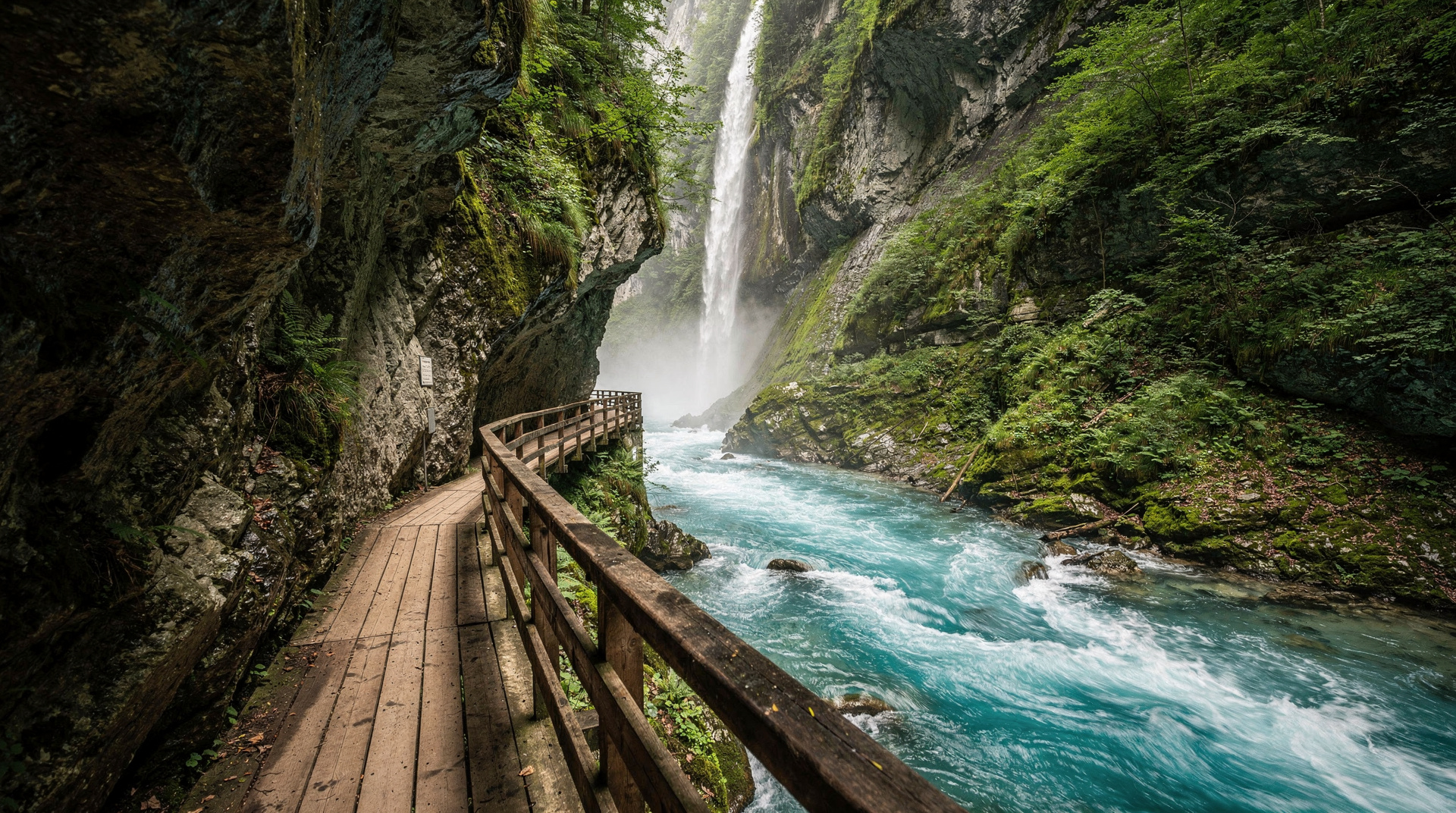
For a longer day, add the Bled Castle visit (the castle viewpoint from the cliff is the other essential perspective on the lake) and an afternoon walk to Vintgar Gorge if it’s between May and October.
For visitors combining Bled with a wider alpine day including gorge walking and local food, the Vintgar gorge and food tasting tour is an excellent full-day option.
Practical details
Pletna boarding points: main north-shore dock near Grand Hotel Toplice; west-shore dock below the Park Restaurant. Look for the wooden boats with standing oarsmen.
Rowboat hire: south shore near the campsite and near the rowing club. Several independent operators with signs from the lakeside path.
Island church opening hours: 8:30–19:00 from May to September, shorter hours off-season. Confirm on arrival.
Photography tip: for the classic island-and-castle composition, you need to be on the water or at Ojstrica viewpoint. From the island you cannot see the “classic” photograph — you’re inside it.
For a complete orientation covering everything from the island to the viewpoints to swimming and hiking, the Lake Bled complete guide is the place to start before planning your visit. And for an overview of Bled compared to Slovenia’s other alpine lakes — including the much quieter Lake Bohinj — see the alpine lakes of Slovenia guide.
History of Bled Island and the church
The island has been a place of worship since before Christianity arrived in this part of the Alps. Archaeological excavations have found evidence of a pre-Slavic Neolithic settlement and a later Slavic ritual site dedicated to Živa, the goddess of love and fertility. The first Christian church was built here in the 9th century, incorporating or replacing the earlier ritual structures.
The current Church of the Assumption of Mary is largely a 17th-century Baroque reconstruction of an earlier Gothic church that was partially destroyed by an earthquake in 1511. The bell tower, the most recognisable element of the island’s silhouette, was added in the 17th century. The church underwent restoration in the late 20th century, and the frescoes in the interior date primarily from the original 17th-century construction.
The wishing bell: the bell inside the church tower is a relatively recent tradition. The original bell was commissioned in the late 15th century and sank in the lake during transport to the island — the boatmen bringing it across were caught in a storm. According to legend, the bell’s rings can still be heard from beneath the water on calm days. A new bell was cast and installed in 1534. The current bell — the “wishing bell” — dates from 1661, when Venetian craftsmen created it as a gift from a widow who had prayed for her husband’s safe return from war. The tradition of ringing it for a wish has been promoted to visitors since the mid-20th century.
The 99-step tradition
The stairway from the dock to the church door has 99 steps. The exact number is intentional — it represents the number of prayers in a rosary cycle, and the climb was intended as an act of devotion.
The tradition associated with weddings — that the groom must carry his bride up all 99 steps without stopping — has been part of local folk culture since at least the 19th century, though its exact origins are unclear. Modern Slovenian couples still sometimes perform this as part of their wedding ceremony, and professional photographs of the occasion are taken regularly on summer weekends. It’s a genuinely athletic task — some of the steps are quite steep, and the full stairway with a person on your shoulder requires real physical confidence.
As a visitor, climbing the 99 steps takes about 3–4 minutes at a normal pace and requires no special physical condition.
The island café and terrace
The small café and terrace on the island is worth knowing about before you decide how long to spend there. Open in season (roughly May–October), the terrace overlooks the lake toward the castle cliff. The menu is basic — coffee, cakes, drinks — and the prices are predictably high for a captive audience. But the setting is genuinely pleasant: sitting on the island in the late afternoon light, with the pletna boats crossing below and the mountains above, is a memorable experience.
If you want to spend more than 35–40 minutes on the island — to have coffee on the terrace, photograph at leisure or simply absorb the atmosphere — you’ll need to arrange this with your pletna oarsman in advance, or hire a rowboat that allows you to return whenever you’re ready.
Photography from the island and on the water
The island itself is a poor location for the classic “island with mountains” photograph — you’re on the island, not looking at it. The best island photography involves:
Looking up at the castle from the dock: immediately after stepping off the pletna, look northeast toward the cliff. The castle rises directly above you, framed by the surrounding mountains. This is an angle rarely shown in standard Bled photography.
Looking across the lake from the western side of the island: the view from the small garden area on the far side of the island (not from the church steps but from the garden path that circles the building) gives a westward view across the lake toward the open water and the mountains beyond.
From the boat on the crossing: the outbound crossing is the prime moment for the classic composition — the island approaching with the castle behind it. Position yourself at the bow of the pletna with your camera ready before you board.
Golden hour light: the island faces roughly northwest, which means it catches the afternoon and evening sun well. A late-afternoon pletna crossing (after 16:00 in summer) catches better light than a midday visit. For the iconic morning shot — smooth water, no boats — you need the rowboat option at dawn.
Accessibility on the island
The 99-step climb is the main physical requirement. The steps are stone, some are steep and a few are irregular. There are no handrails on most of the stairway. For visitors with limited mobility, the church entrance at the top of the stairs is not accessible by wheelchair or with significant mobility limitations. The dock area at the base of the stairs is accessible from the pletna boat.
The pletna boat itself is a traditional wooden vessel that rides low in the water — boarding and disembarking requires stepping over the side, which some visitors find slightly challenging. The oarsman typically assists. This is manageable for most people but worth considering for visitors with balance or mobility issues.
The island in poor weather
Rain doesn’t necessarily ruin an island visit — the church interior is sheltered, and the island in mist and rain has an atmospheric quality that sunny midday visits don’t. However:
Strong wind can result in the pletna service being suspended — the boats are stable in normal conditions but the oarsman makes the call on safety. Check weather conditions before heading to the dock if the forecast shows wind speeds above 40 km/h.
Thunderstorms should prompt you to leave the island immediately — the bell tower is the highest point in the vicinity, and the exposed dock area provides no shelter. In summer, afternoon thunderstorms can develop quickly in the Julian Alps.
The church closes during severe weather regardless of visiting hours.
Visiting Bled Island with children
Children generally enjoy the pletna crossing more than the island itself — the traditional boat, the standing oarsman and the short journey across green water hold attention well, while the church interior is a quieter, quicker stop that younger children may not linger over. The 99 steps are a manageable climb for most children over about six, though there are no handrails on much of the stairway, so hold hands with younger climbers. Ringing the wishing bell is reliably popular with children of all ages. If travelling with a stroller, note that it cannot be taken up the 99 steps; leave it at the dock area, which is generally safe to do for the short duration of a visit, or plan to carry a younger child up instead.
Top experiences
Bookable activities with verified prices and instant confirmation on GetYourGuide.