Pletna boat at Lake Bled: tradition, prices and whether it's worth it
Lake Bled: pletna boat to Bled Island with dessert
How much does the pletna boat to Bled Island cost and where do you board?
The pletna boat fare is not officially published (confirm it at the dock or with the Bled tourist office, bled.si) and is set collectively by the pletna oarsmen's association. You board from the north-shore dock near Grand Hotel Toplice or from the west-shore dock near the Park Restaurant. The crossing takes about 15 minutes each way, with roughly 30–40 minutes on the island.
The pletna: a traditional boat with a complicated price tag
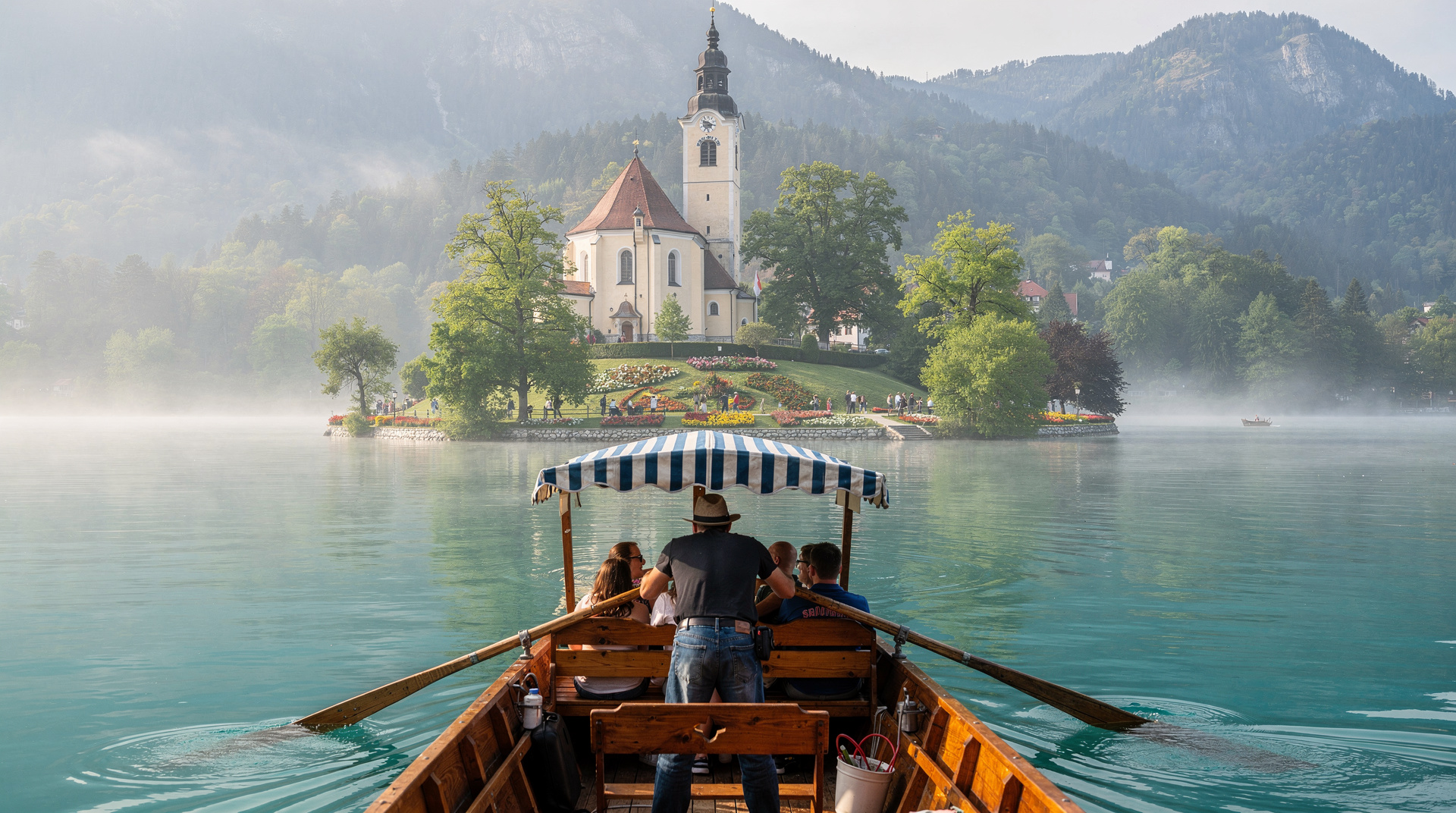
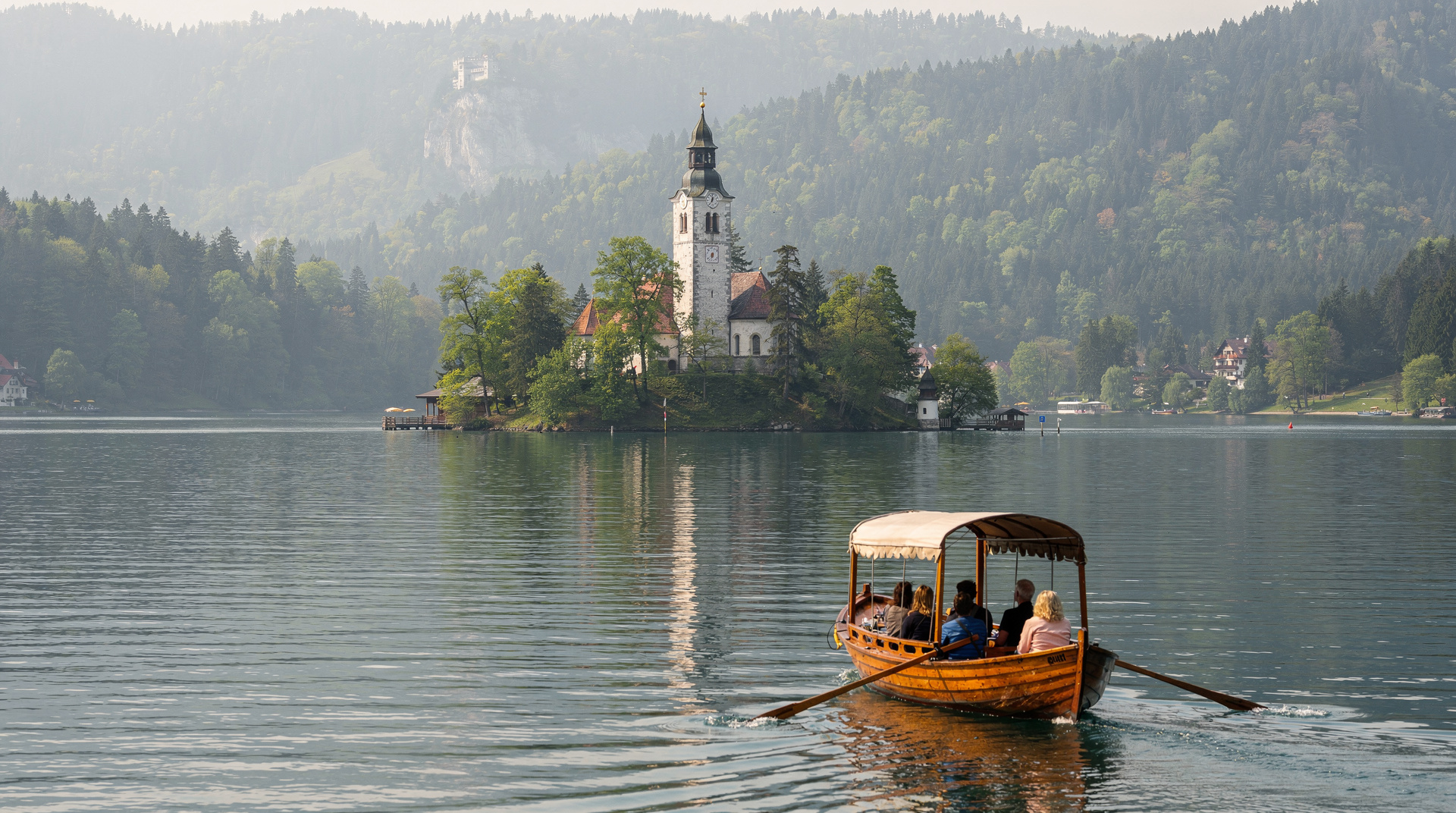
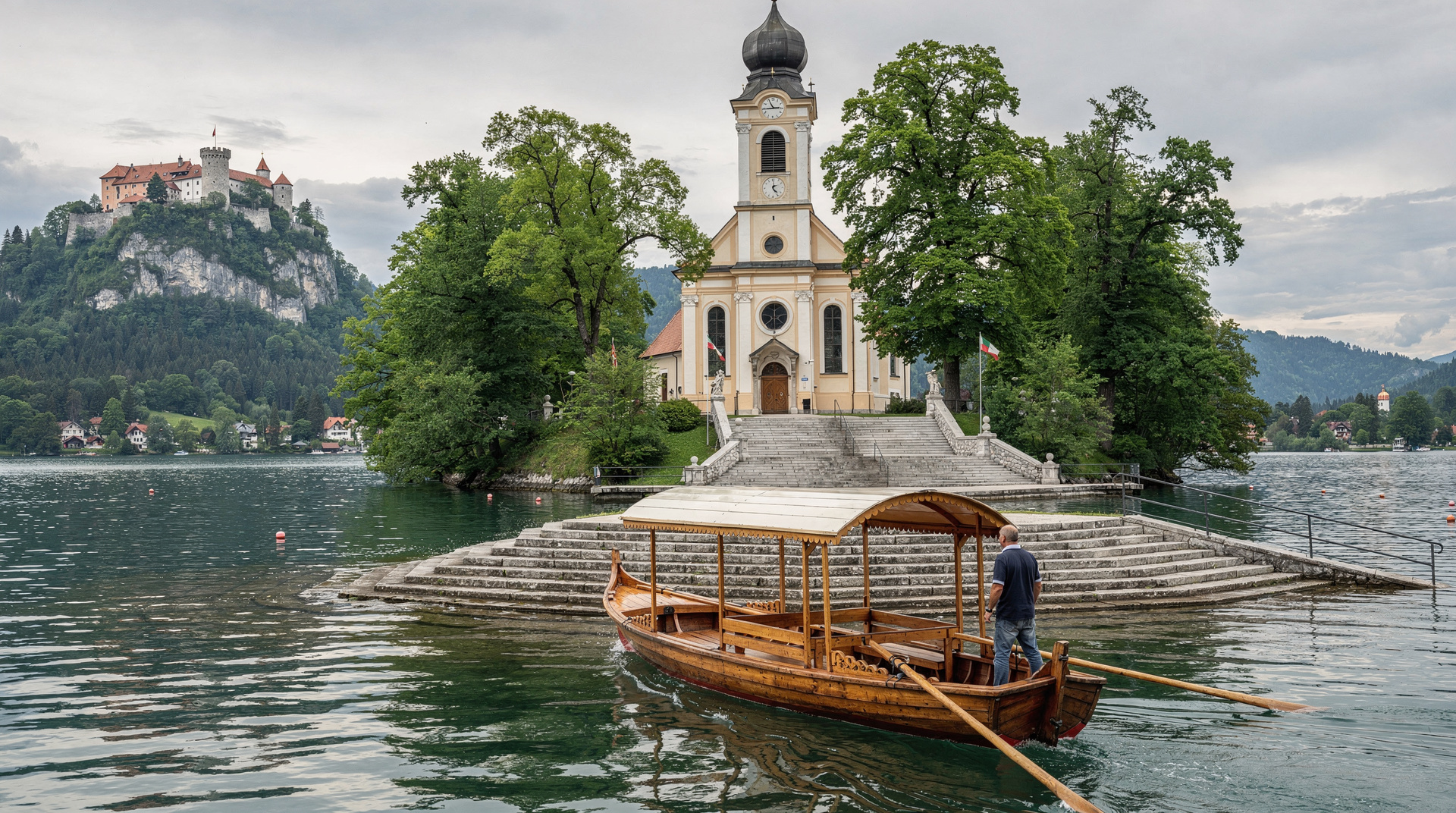
The pletna is one of the most recognisable images of Lake Bled after the island itself. A long, flat-bottomed wooden vessel, propelled by a standing oarsman who sweeps two long oars — one on each side — through the green water. The boats hold up to 20 passengers and have been ferrying pilgrims, aristocrats and tourists across this lake for at least several centuries.
Riding in a pletna is a genuine experience. The wooden hull, the rhythmic creak of the oarlocks, the silence on the water, the mountains rising on all sides — it is everything the postcards suggest. It is also one of the few tourist experiences where the price tag causes a small but real reckoning: is this a heritage transport service, or a tourist operation at tourist prices?
This guide gives you everything you need to make that decision.
| Where | North-shore (Toplice) or west-shore (Park) dock, Lake Bled |
| Cost | Confirm at the dock or with the Bled tourist office (bled.si) |
| Time needed | ~1h30 total (crossing + island time + return) |
| Getting there | Walkable from anywhere around Bled’s shore |
| Best time | First boat of the day (07:00–08:00) or shoulder season |
What is a pletna?
The word “pletna” refers specifically to the traditional wooden boats used on Lake Bled. They are not generic rowboats — they are a specific vessel type, built to a traditional design, and operated by a guild of oarsmen whose families have held pletna licenses for generations. The license to operate a pletna is inherited, not purchasable, which means the number of pletna boats is effectively fixed.
Currently around 22 pletna boats operate on the lake, each belonging to an oarsman whose family has held the right since at least the 19th century. The fare is set collectively by the association — there is no competitive pricing. You pay the same from any boarding point.
The boats are handbuilt and maintained by the oarsmen themselves. Each one is painted in a traditional colour scheme. The craft of building and rowing a pletna has been recognised as part of Slovenia’s intangible cultural heritage.
How much does the pletna cost?
2026 fare: not officially verifiable. Confirm exact pricing at the boarding dock or with the Bled tourist office (bled.si), as rates have increased in recent years and may adjust again.
Children: children under 5–6 are sometimes free or charged a reduced fare — ask at the dock. There is no standard published rate for children.
Group pricing: for large groups, booking in advance through a tour operator can sometimes result in slightly better pricing, though the individual fare is fixed.
One-way: one-way fares are typically not offered for independent visitors — the pletna returns you on the same boat. However, guided tours sometimes involve crossing on a pletna and returning via a different route.
Comparison: a rowboat hire from the south shore costs EUR 18–25 per hour for the whole boat (2–4 people). For a group of four, that works out at roughly EUR 4.50–6.25 per person per hour; check the current pletna fare at the dock to compare.
Where to board the pletna
There are two main boarding points for independent visitors:
North shore dock (Toplice): beside the Grand Hotel Toplice on the north shore of the lake. This is the most central and most photographed boarding point. The pletna oarsmen line up here in peak season.
West shore dock (Park): below the Park Hotel and Park Restaurant on the western side of the lake, near the main town area. Slightly easier to reach from the bus station.
Castle pier: some tours include a boarding point closer to the castle area on the northwest shore.
In peak season (July–August), boats depart regularly — roughly every 15–30 minutes once a boat fills. In shoulder season, you may need to wait until a boat has enough passengers to justify the crossing, or pay a higher rate for a near-private crossing. Mornings and late afternoons are generally quicker to board than midday.
The crossing: what the ride is like
The pletna dock at the boarding point typically has a row of boats waiting. You step aboard, take a bench seat, and the oarsman begins the crossing. The lake here is about 600–700 metres across to the island dock.
The crossing takes approximately 15 minutes at a steady rowing pace. The view during the crossing is the best angle you’ll get on the lake — the island approaches with the castle cliff rising behind it and the Julian Alps above that. This is the moment most people take the photograph that ends up as a wallpaper or a social media post.
The oarsman does not typically narrate during the crossing, though some will answer questions. It’s a quiet, atmospheric experience — or it can be, depending on the other passengers. Groups of 15–20 people on a single pletna can make it feel more like a ferry than an experience.
Tip: if you want a quieter crossing, take the first or last boat of the day, or go in May, June, September or October when boats are less likely to be full.
On the island: what the pletna time allows
The pletna waits at the island dock for approximately 30–40 minutes before the return crossing. This is enough time to:
- Climb the 99 steps to the church entrance (5 minutes)
- Enter the church and ring the bell (15 minutes including queuing)
- Walk briefly around the island exterior (10 minutes)
- Buy a souvenir or take a coffee on the terrace (if you’re quick)
It is not quite enough for a leisurely lunch on the island terrace. If you want more time, discuss this with your oarsman before crossing — some will allow extended stays (at the cost of missing the return boat and waiting for the next one).
The church entrance fee (EUR 12 per adult in 2026, covering church, bell tower and museum) is separate from the pletna fare and paid at the church door.
Pletna versus rowboat: the honest comparison
| Pletna | Rowboat | |
|---|---|---|
| Cost per person | Confirm at the dock | EUR 5–12 depending on group size and time |
| Experience | Traditional, guided, sitting | Active, self-paced, private |
| Time on island | Fixed (~35 min) | As long as you like |
| Views on water | Excellent | Excellent + more flexible |
| Physical effort | None | Moderate (600m row) |
| Best for | First-time visitors, couples, non-rowers | Groups, active travellers, photographers |
The rowboat wins on value and flexibility; the pletna wins on authenticity and ease.
The pletna in guided tours
Several tours to Lake Bled from Ljubljana or within the Bled area include a pletna crossing as part of a structured day. The pletna and Slovenian dessert tour combines the traditional crossing with a visit to the island church and a tasting of the famous Kremšnita cream cake — the classic Bled combination in a single guided experience.
For a full-day tour that combines Bled’s highlights, the Bled 360 tour with cream cake covers the island, viewpoints and castle in a single guided day and is well-suited to visitors coming from Ljubljana.
Photography from the pletna
The pletna crossing offers two distinct photographic opportunities:
Outbound (shore to island): the island approaches with the castle cliff and mountains behind it. This is the classic composition — get this shot from the bow of the boat as you approach the island dock.
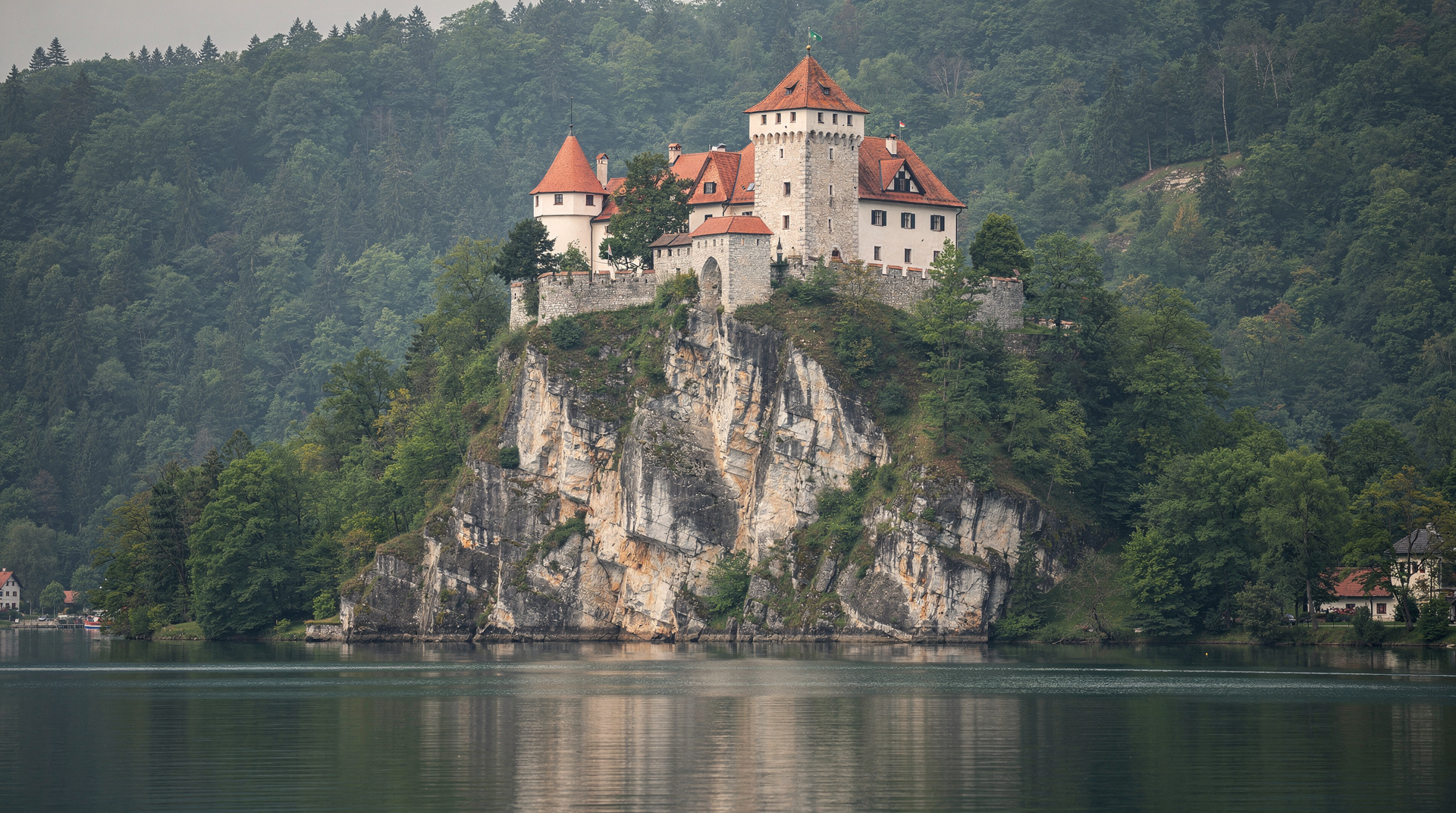
Return (island to shore): looking back toward the castle cliff with the island receding. A slightly different and sometimes more dramatic angle, depending on light conditions.
Light conditions: the best light on the lake is early morning (before 09:00) or late afternoon (after 16:00). The midday crossing in direct sun tends to produce flat, hazy photographs. If photography is a priority, time your pletna ride accordingly.
Seasonal considerations
Peak season (July–August): pletna boats operate from around 07:00 to 20:00 and are rarely idle. You may queue 15–30 minutes for a crossing. The experience on the boat is livelier (more passengers) but also louder.
Shoulder season (May–June, September–October): arguably the best time for the pletna experience. Boats may be half-full, crossings are quieter, and the light is often better. The lake is also calmer on average.
Winter (November–March): pletna service continues in winter if conditions allow, though frequency is reduced. The lake can occasionally freeze partially — in this case boat service stops. A winter pletna crossing with snow on the mountains and no other tourists is one of the best experiences Bled offers.
Wind: strong winds (particularly the bora from the northeast) can result in the pletna service being suspended for safety. This is rare but worth checking on the morning of your visit.
Combining the pletna with a full Bled visit
The pletna works best as one part of a full morning at Lake Bled — not as the only activity. A suggested morning:
- Arrive before 08:00 and walk to Ojstrica viewpoint (15 minutes from the south car park) for the classic lake composition in early light
- Return to the north or west shore and take the pletna to the island (allow 1h30 total including waiting and the visit)
- Walk to the Park Café for a Kremšnita
- Afternoon: hike up to the castle for the view from the cliff, or cycle to Vintgar Gorge
For the complete picture of what to see and skip at Bled, start with the Lake Bled complete guide. And for how the island visit itself is structured once you’re there, the how to visit Bled Island guide covers the detail.
If you’re planning a day trip from Ljubljana that includes the pletna, Lake Bohinj is easily combined as a second lake stop — see the Lake Bohinj guide for what’s worth doing there.
The pletna oarsmen: who they are and what they’re inheriting
The pletna tradition is worth understanding on its own terms, beyond the ticket price. The current oarsmen are typically the fifth, sixth or even seventh generation of their families to hold a pletna license. The license is not transferable by sale — it passes from parent to child within the family, and the number of licenses has been effectively fixed for generations.
The boats themselves are handbuilt. Each pletna takes approximately 6–8 months to construct from scratch, using techniques passed down within the builder’s family. The materials are local — primarily oak for the hull planks, pine for the oars. The distinctive shape (flat-bottomed, high-sided, raked bow and stern) is specific to Lake Bled and suited to the lake’s particular conditions: relatively shallow water, occasional strong winds from the north, and the specific choreography of boarding and disembarking at the island dock.
Most pletna oarsmen work the lake from April to October and have other employment in winter — farming, tourism, construction. The pletna income is significant but seasonal. Some families have two or three boats; others a single one.
The cooperative structure: the pletna association collectively sets the fare and manages the boarding points. This prevents undercutting and maintains the traditional character of the service, but it also means the fare is not subject to competitive pressure. The price has risen significantly over the past decade, which has generated some tourist criticism. The oarsmen’s position is that maintaining traditional boats and the skills to build and operate them has costs that conventional tourism pricing doesn’t reflect.
First-time visitors: managing expectations on the pletna
The most common underwhelmed response to a pletna experience comes from visitors who expected a quiet, private crossing on an ancient wooden boat and arrived to find 18 other tourists already on board, all photographing the same thing.
This is a reasonable thing to expect to avoid, and it’s entirely manageable:
Take the first boat of the day (typically 07:00–08:00 in summer). The first crossings of the day are the least full — many visitors arrive at Bled by bus after 09:00, which means the early boats have fewer passengers.
Go in shoulder season (May, June, September, October). The difference in passenger numbers between an August midday pletna and a May morning pletna is roughly the difference between a crowded commuter bus and a peaceful rowing boat.
Hire your own rowboat instead. If a private, at-your-own-pace water crossing is what you’re looking for, the rowboat rental is the right answer. See the how to visit Bled Island guide for the specific comparison.
Book a guided tour that includes the pletna at a specific time. Guided tours from Ljubljana that include the pletna typically have a booked time slot, which means you’re not waiting at the dock hoping for a boat. For the combination of lake view, island visit, Kremšnita and the traditional crossing, the island pletna and Slovenian dessert tour handles the timing as part of the guided day.
The pletna in culture and history
The wooden boat has been part of the Bled story for centuries. Historical records from the 17th century mention boatmen ferrying pilgrims to the island for the annual feast of the Assumption (15 August) — a tradition that continues, though the boats are now carrying tourists year-round rather than pilgrims seasonally.
The pletna’s survival into the 21st century as a working transport vessel (rather than a museum recreation) is genuinely unusual. In most of Europe, traditional watercraft have been replaced by motorboats. At Bled, the combination of national park regulations (which historically limited motor traffic on the lake), the pletna association’s political organisation, and the genuine tourist appeal of the traditional boat have maintained the pletna as the primary means of island access.
A small number of pletna boats are available for private charter — for a significantly higher fee (EUR 60–100 for the boat), a couple or small group can have a pletna to themselves for a longer crossing, a circuit of the lake or a sunset trip. This is the way to have the private wooden-boat-on-an-alpine-lake experience that most visitors imagine before they arrive. It needs to be arranged in advance at the boarding dock or through a Bled concierge service.
The Kremšnita: the other essential Bled ritual
The Kremšnita (cream cake) — layers of custard cream and whipped cream between thin pastry sheets, dusted with icing sugar — is as much a part of the Bled experience as the pletna. The cake was created at the Park Hotel (now the Park Café) in 1953 and has been made to the same recipe ever since.
A pletna return trip and a Kremšnita at the Park Café is the classic Bled ritual. The combination takes about two hours. It’s the kind of thing that sounds faintly ridiculous in description and turns out to be exactly right in practice.
The Park Café is on the western shore near the Park Hotel, a 5-minute walk from the main pletna dock. It serves the Kremšnita from opening (typically 09:00) and they sell out by early afternoon on busy summer days. Arrive before 11:00 to be confident of getting one.
Alternatives if the pletna doesn’t appeal
Not every visitor wants to pay the pletna fare for a 15-minute crossing, and there are legitimate alternatives worth knowing about before you commit. Renting a rowboat yourself, as covered above, is the main one — cheaper per person for groups and entirely self-paced. Stand-up paddleboarding around the lake, including a paddle out to the island, is another option for the more active visitor; see the SUP at Lake Bled guide for rental points and routes.
For those who simply want the classic photograph without crossing at all, the Ojstrica viewpoint and the path around the lake’s south shore give the postcard view of the island and castle without paying for a boat. None of these replace the specific experience of the pletna itself — the point of the pletna is the tradition, not just the transport — but they’re worth knowing about if budget or crowds are the deciding factor.
How the pletna compares with visiting Bled Island independently
Some visitors are surprised to learn the pletna fare and the church entrance fee are entirely separate charges — paying for the boat does not include going inside the church, and vice versa. Budgeting for a full island visit means adding both: the return crossing fare plus EUR 12 for the church, bell tower and museum. For a couple, the two adult island entries alone come to EUR 24 — worth knowing before you arrive at the dock expecting a single fixed price. The how to visit Bled Island guide breaks down every cost on the island itself in more detail.
Frequently asked questions about Pletna boat at Lake Bled
Can you take a pletna boat in the rain?
Yes — the pletna operates in normal rain, and oarsmen simply keep rowing; some boats carry a canopy or umbrellas for passengers. Service is only suspended for strong wind (particularly the bora) or in the rare event the lake surface partially freezes in a hard winter. Light rain does not usually stop the crossing, though visibility and photographs suffer.Do you need to book the pletna in advance?
No advance booking is needed for the standard independent crossing — you simply arrive at the dock and board the next available boat, paying the oarsman directly. In peak season this can mean a short wait for a boat to fill. If you want a private charter or a guaranteed time slot as part of a guided tour, that does need to be arranged ahead.
Top experiences
Bookable activities with verified prices and instant confirmation on GetYourGuide.