Bled Castle visit: is the entrance fee worth it and how to get there
Bled: highlights tour with hiking and Bled cream cake
Is Bled Castle worth the EUR 19 entrance fee?
The view from the castle battlements is genuinely one of the best in the Julian Alps — the whole lake, island and mountains in a single frame. The museum content is decent but not exceptional. You can reach the cliff terrace via a free path from below and judge for yourself at the gate, but most visitors who make the walk find it worth paying. Allow 1–2 hours.
Bled Castle: the cliff, the view and what the EUR 19 actually buys you
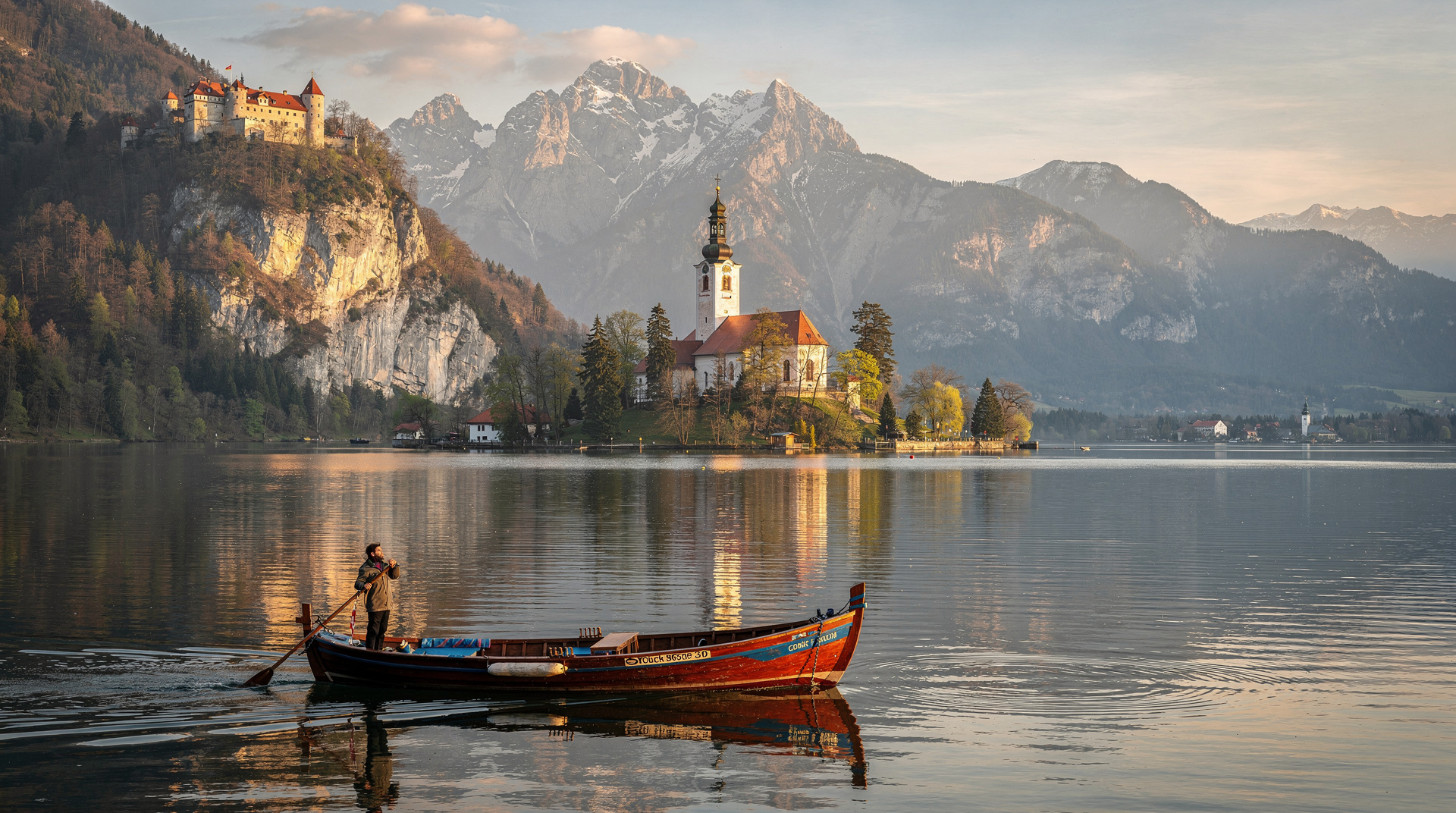
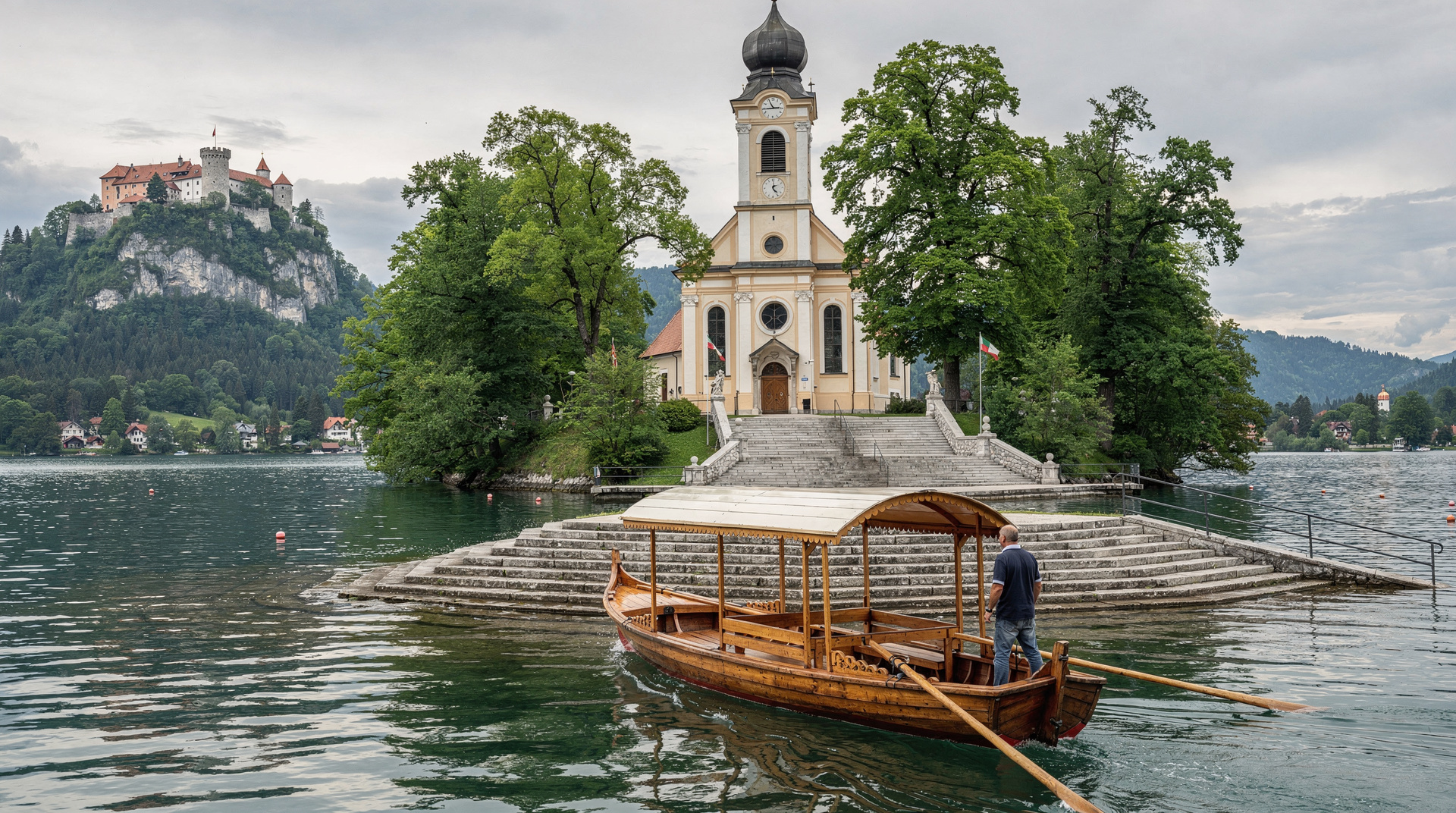
Bled Castle (Blejski grad) occupies one of the most dramatic positions of any medieval building in the Alps — perched on a sheer cliff face 130 metres above Lake Bled, visible from almost every point on the lake and from the island below. It has been here, in one form or another, for more than a thousand years.
| Where | Grajska cesta 61, Bled, on the cliff above the north shore |
| Cost | Around EUR 19 adult admission |
| Time needed | 1–2 hours, up to 2.5 with a restaurant meal |
| Getting there | 20–30 min walk (cliff path, town path) or tourist train |
| Best time | Before 10:00 or after 16:00 to avoid the tour groups |
The castle is the first thing most visitors see when they approach Bled from the main road, and it anchors the classic lake view from the south shore. The question that comes up consistently: is it worth the entrance fee, or is the cliff view from below sufficient?
The honest answer is that the view from inside the castle walls is genuinely better than anything you can see for free. The battlements look directly down on the island, across the full length of the lake, and out to the Karavanke range to the north. It’s one of the best viewpoints in Slovenia. The museum content that comes with the ticket is a bonus.
History: a brief and honest summary
The site has been occupied since at least the 9th century, when a Slavic hill fort stood here. The German prince Henry II donated it to the bishops of Brixen in 1004, and the castle developed through the Middle Ages as the administrative centre of a large episcopal estate. The current structure is primarily 16th-century Renaissance, built over and around the earlier medieval buildings.
The castle remained in ecclesiastical ownership until the early 19th century, when Napoleonic reforms transferred it to secular control. It passed through several ownerships before being restored in the 1950s under the Yugoslav state. Today it’s one of the best-preserved medieval castles in Slovenia and the most-visited paid attraction in the country.
What you get inside
The view: the main reason to pay EUR 19. From the upper castle terrace, you see the entire lake below — the island church in the centre, the forested shores, the mountains on every side. The view directly down to the water from the north wall is vertiginous. Photography-wise, this is the “castle looking down on island” angle that complements the “island looking up at castle” angle from the south shore.
The museum: spread across several castle rooms, the permanent collection covers the history of the Bled area from prehistoric finds through the medieval period. Archaeological finds from the site include Bronze Age artefacts, medieval armoury and documents related to the bishops of Brixen. It’s well presented for a regional museum, though not on the level of major European collections.
The printing press: one of the more unusual exhibits — a working replica of a 15th-century Gothic printing press. Demonstrations are given at scheduled times; check the castle noticeboard for the daily schedule.
The winery: a small castle wine cellar offers tastings of Slovenian wines, particularly varieties from the Primorska wine region. This is a separate purchase, around EUR 5–8 for a tasting.
The blacksmith: a working replica blacksmith workshop where a smith demonstrates traditional ironworking. Visitors can sometimes have small items made to order. Popular with children.
The restaurant: the castle restaurant occupies the upper terrace with lake views. Prices are high even by Bled standards — EUR 15–25 for mains — but the setting is extraordinary. Worth considering for a special occasion meal, less so for a regular lunch.
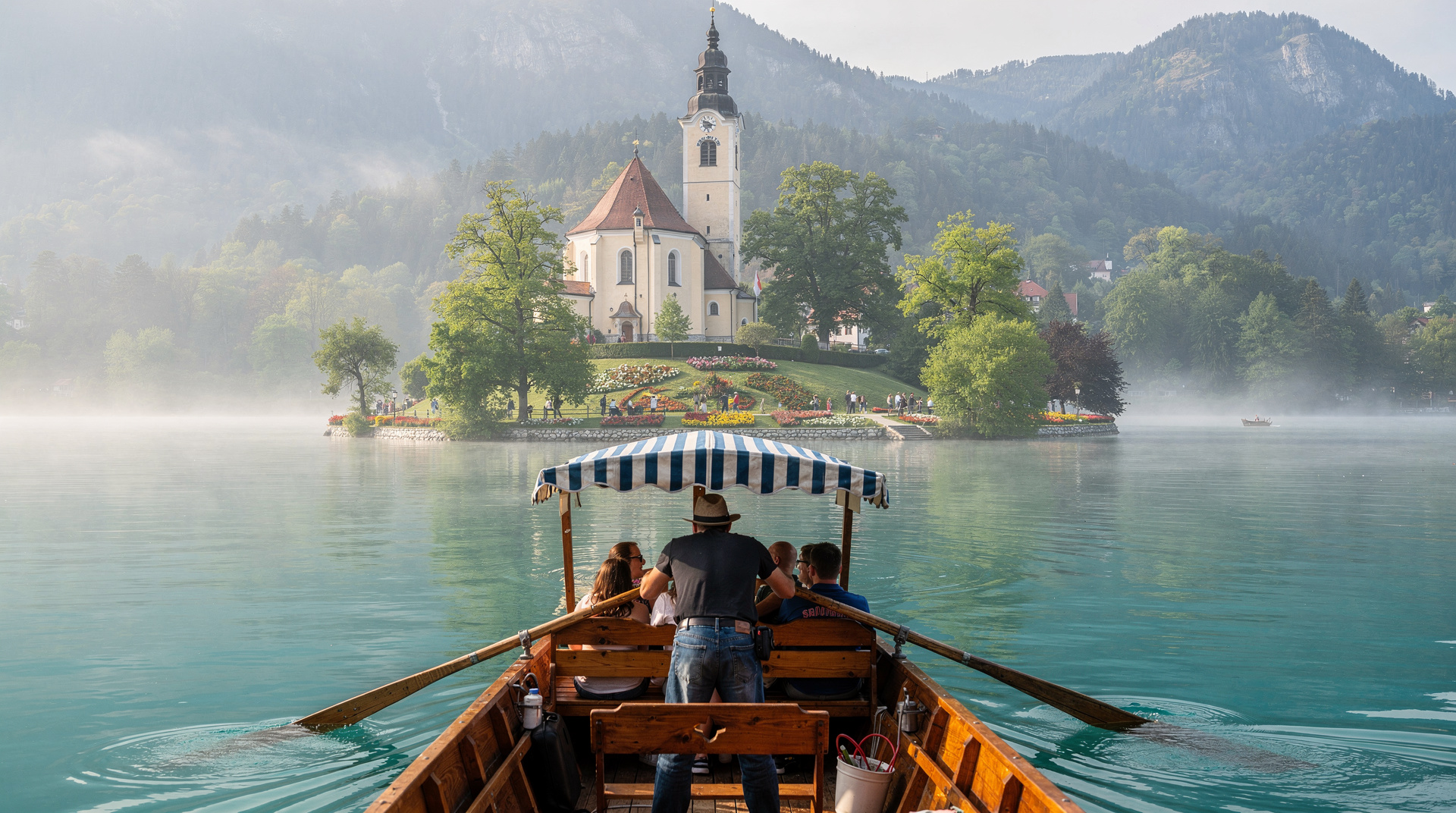
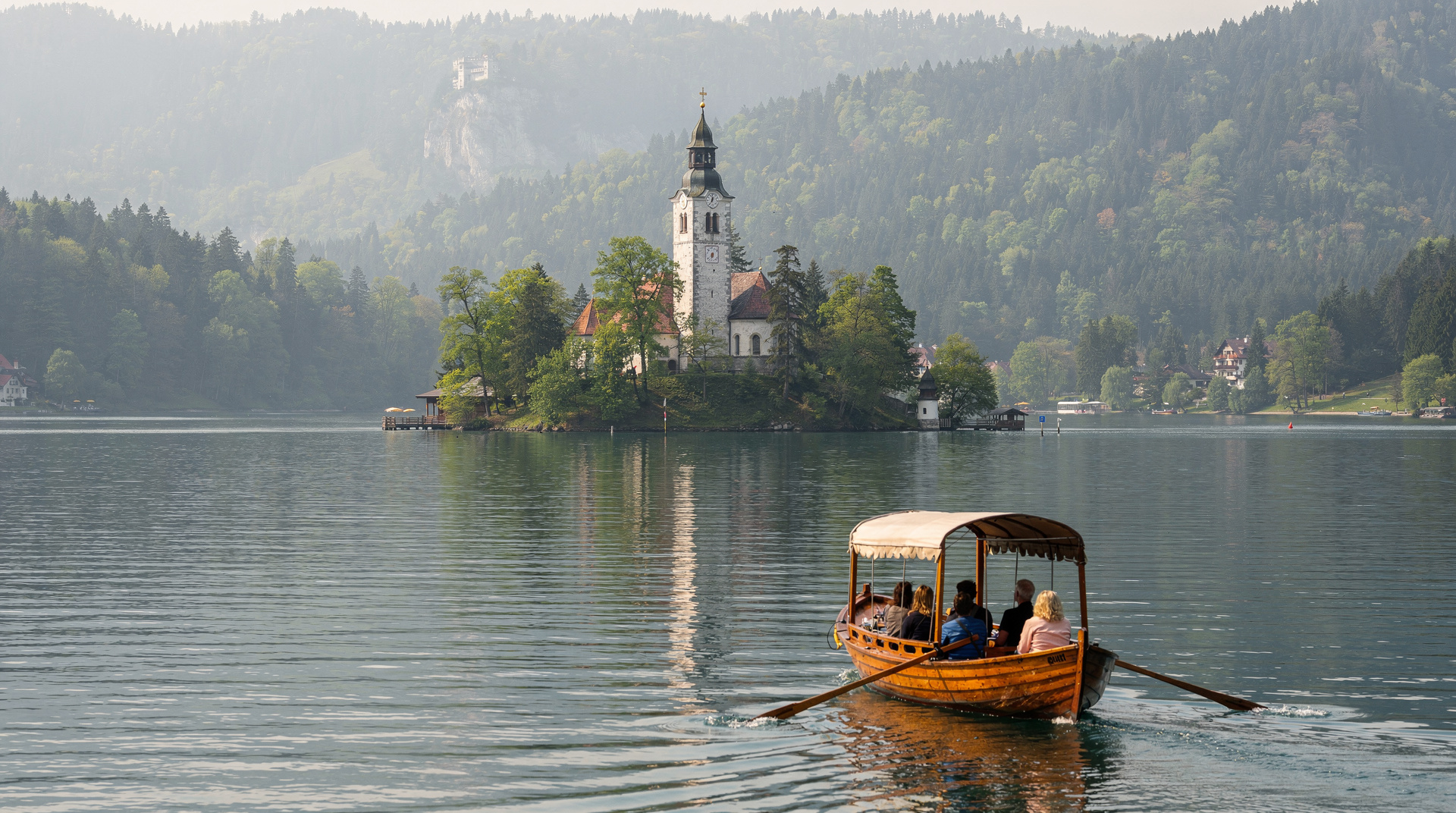
The panoramic terrace: accessible from the main castle courtyard, this is where most visitors spend their time — leaning on the stone parapet, photographing the lake below, watching the pletna boats cross the water 130 metres down.
Is it worth EUR 19?
For most visitors on a first trip to Bled: yes. The view is exceptional and genuinely different from the ground-level angles. The museum provides useful context for the castle’s history, the printing press is interesting, and the hour or two spent inside gives you the whole castle experience.
For visitors on a tight budget or return visitors who’ve seen the view: the free cliff path (see below) gets you to the castle gate without entering — you can assess whether you want to pay on the day.
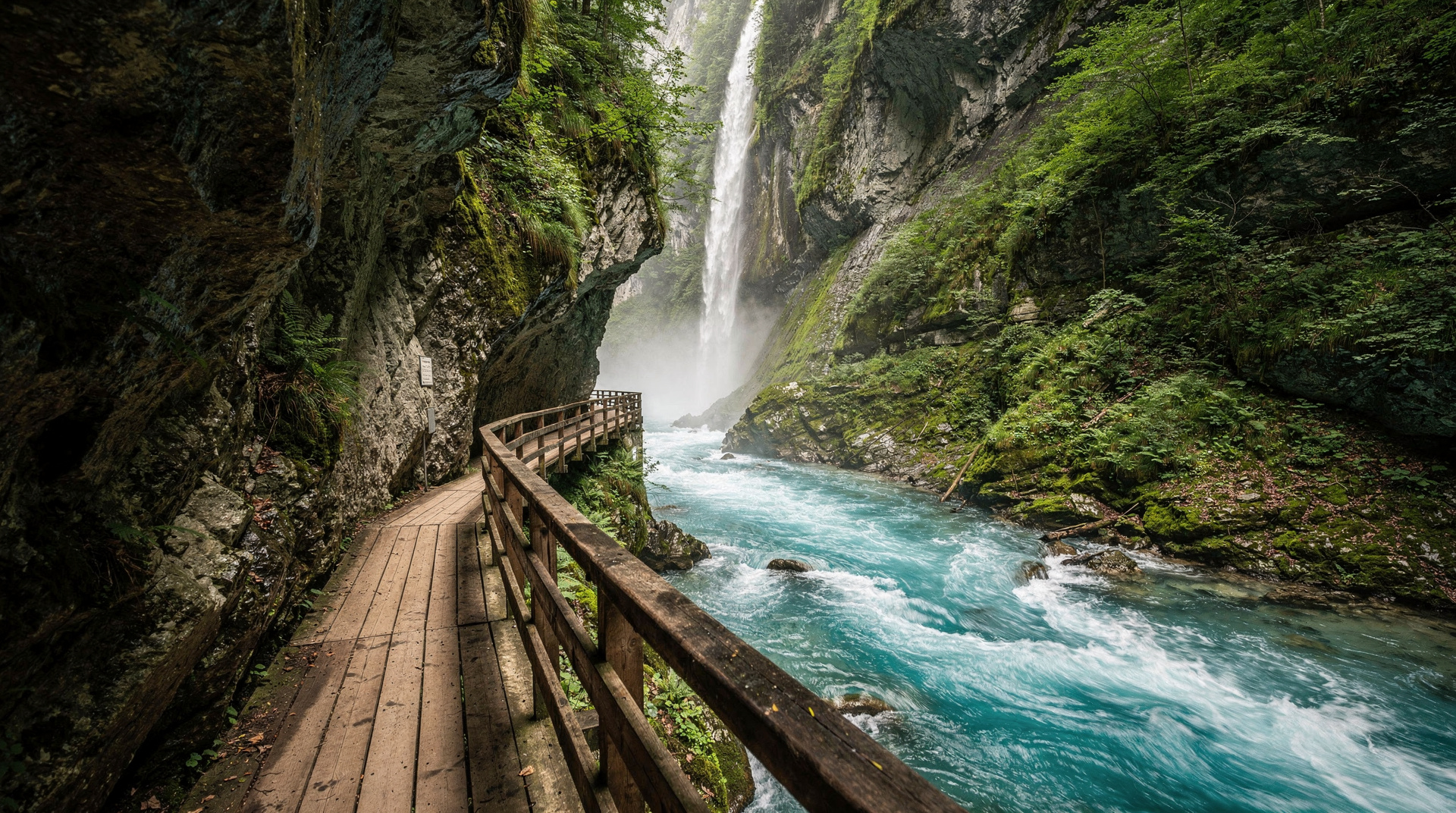
Skip it if: you have very limited time at Bled and need to choose between the castle and Vintgar Gorge. In that case, Vintgar is the more unusual natural experience, and the free viewpoints on the south shore give you excellent lake views without the castle ticket.
How to reach Bled Castle
The direct cliff path (25–30 minutes, steep): from the lake road on the north shore, a signed path leads up through the forest to the castle gates. It’s steep but well-maintained, with steps cut into the rock in the steeper sections. This is the most atmospheric approach — you emerge from the trees directly into the castle courtyard. Free to walk up; the entrance fee is paid at the castle gate at the top.
From the town centre (20–25 minutes): from Bled’s main street, a signed path leads through residential streets and then up the hill. Slightly less steep than the cliff path. Also free.
Tourist train: a small tourist train (Blejski vlakec) runs from the lake area to near the castle during peak season — check the current schedule and fare at the tourist office. Useful if you have mobility issues or are travelling with young children.
By car: a road leads to a small parking area near the castle gate. Limited spaces; best avoided in peak season. The walk is more enjoyable in any case.
Best times to visit the castle
Early morning (before 10:00): the castle opens at 08:00. Early arrivals get the terrace largely to themselves, and the morning light falls on the lake and island from the east — excellent for photography from the north-facing battlements.
Late afternoon (after 16:00): the tour groups have generally left by 16:00, and the light in the afternoon turns golden over the lake. The castle closes at 20:00 in summer (18:00 in winter) — the last hour or two of the day is a good time to visit.
Avoid: 11:00–14:00 in July and August. The castle terrace is at its most crowded, and the midday light is flat.
Combining the castle with other Bled highlights
The castle pairs naturally with a full Bled day. A suggested sequence:
Morning: arrive early, walk to the south shore Ojstrica viewpoint (15 minutes) for the classic lake shot, then take the pletna or rowboat to the island.
Midday: have a Kremšnita at the Park Café, then walk up to the castle via the cliff path.
Afternoon: spend 1–2 hours at the castle, then either walk down for a swim at the south beach, or cycle to Vintgar Gorge for a late afternoon walk.
For a guided day that combines castle, island and lake highlights, the Bled 360 highlights tour with cream cake covers all the key points with a local guide, which is particularly useful if you’re arriving by public transport from Ljubljana.
The free view option
If EUR 19 feels high, here is what you get for free: the cliff path brings you to the castle gate, and the view from just below the gate (looking out from the cliff path’s upper section) is already impressive. You can see most of the lake and the island from this point without buying a ticket.
However, the view from inside the battlements is meaningfully better — you’re higher, you can look directly down the cliff face, and you have a 360-degree panorama rather than a partially-obstructed viewpoint. The free option is a reasonable compromise but the full experience is worth the fee.
Practical information
Address: Grajska cesta 61, Bled (follow signs from the lake road).
Opening hours: daily 08:00–20:00 in summer; 08:00–18:00 in winter. Check current hours on the official Bled Castle website before visiting.
Adult admission (2026): approximately EUR 19. Students EUR 11.50, seniors 65+ EUR 16, children EUR 7, under-6s free.
Time needed: 1–2 hours for a relaxed visit including the terrace, museum and blacksmith. Allow 2.5 hours if you’re having a meal at the castle restaurant.
Accessibility: the cliff path approach is not wheelchair accessible (steep, with steps). The road access by car brings you closer to the castle gate, but the interior has some uneven surfaces. Contact the castle in advance if accessibility is a concern.
For everything else about planning your Bled visit — from the island to swimming to nearby gorge walks — the Lake Bled complete guide is the starting point. And if you’re building a broader alpine itinerary, Vintgar Gorge and Lake Bohinj are the natural additions to a Bled base.
The Bled and Vintgar alpine fairytale tour is a good option for a structured day that combines the castle area with the gorge and gives you local context for both.
History of Bled Castle in more depth
The earliest written reference to a fortification at Bled is from 1004, when Holy Roman Emperor Henry II donated the “castrum Veldes” (Latin for Bled) to the bishops of Brixen in the Southern Tyrol. The bishops would control the estate — and thus the entire Bled basin — for over 800 years.
The castle that stands today developed in phases from the 11th century (a simple wooden structure on the cliff) through the 13th century (stone fortification) to the 16th century (the main Renaissance restructuring that gives the castle its current appearance). The lower courtyard and the main residential tower are primarily 16th-century work. The romanesque-style chapel with its original frescoes dates from the 17th century.
The Habsburg period: after Bishop of Brixen Georg III transferred his seat to Innsbruck in the early 18th century, the castle’s importance declined. The bishops appointed administrators to run the Bled estates, and the castle itself was used less as a residence and more as an administrative centre and later a prison.
Napoleonic era: when Napoleon’s Illyrian Provinces absorbed Slovenia (1809–1813), the French secular administration briefly took over the castle before the Habsburg restoration returned it to ecclesiastical ownership.
19th century and tourism: the first tourist accommodation at Bled opened in the 1850s, driven partly by the fame of the lake and partly by the advocacy of physician Arnold Rikli, who promoted Bled as a health resort. The castle was still privately held (by the bishops of Brixen) and not open to visitors at this point.
20th century restoration: after World War II, the Yugoslav authorities took ownership of the castle and invested in a major restoration programme in the 1950s–1960s that returned it to a condition suitable for public visiting. The current museum and visitor infrastructure largely dates from this period, with ongoing updates since Slovenian independence in 1991.
Tito’s Bled: an interesting historical footnote — during the Yugoslav period, Bled was a favourite summer retreat for Tito, who had a residence on the lake (Villa Bled, now a hotel). The castle was not used as a government property, but the broader Bled area had a particular significance for the Yugoslav leadership.
The castle wine cellar
One of Bled Castle’s less-publicised offerings is its functioning wine cellar, which produces and sells wine from the Goriška Brda and Vipava Valley appellations — the two leading wine regions in western Slovenia.
The cellar is in the lower part of the castle, cut partly into the rock of the cliff. Tastings are available on request and can be combined with the castle visit. The wines are generally good — the Slovenian wine regions they draw from are increasingly well-regarded internationally. A tasting runs approximately EUR 8–15 depending on the selection.
The castle gift shop also sells the castle’s own branded wine, which makes an unusual and genuinely local souvenir if you’re travelling with checked luggage.
Events at Bled Castle
The castle hosts several notable annual events:
Medieval fair (summer): a recreated medieval market with craft stalls, costumed performers and demonstrations of traditional crafts. Typically held in June or July. Check the castle calendar for current dates.
Bled Festival (summer): international classical music performances in the Concert Hall and on the castle terrace. The setting — open-air concerts above the lake — is extraordinary. Tickets via the festival website.
Wine harvest events (autumn): the castle’s own wine production means an autumn harvest celebration, usually in October. A small-scale but atmospheric event.
Christmas events (December): the castle is decorated for Christmas and hosts an Advent market in December. One of the more atmospheric Christmas markets in Slovenia given the setting.
These events can significantly increase visitor numbers on specific days — check the official calendar if you’re visiting to avoid or to coincide with them.
Walking down from the castle
Most visitors take the cliff path or road to reach the castle and then return the same way. An alternative is the signed path that descends the back of the cliff toward the village of Mlino on the south shore — a different perspective on the landscape and a quieter route. This adds about 30 minutes to the walking time and brings you to the south shore rather than the north, which is convenient if you’re heading to the main beach for a swim.
The path is well-maintained but involves some steep sections with loose rock. Sturdy shoes are advised. From Mlino, the lakeside path leads back to the main Bled area in about 20 minutes.
The castle terrace at night: an underused option
Bled Castle is open until 20:00 in summer. Most visitors arrive in the morning or early afternoon and miss the castle’s most dramatic light. The castle terrace at 18:00–19:30 in June–August catches the late sun in extraordinary ways — the light turns golden on the lake surface, the Julian Alps behind the lake glow amber, and the evening silence replaces the midday crowds.
The castle restaurant stays open for dinner, which makes an early evening ascent followed by dinner on the terrace one of the most atmospheric meals in Slovenia. Expect EUR 25–35 for a main course at dinner — more than a gostilna in the town, but the setting is genuinely exceptional.
The one caveat: the last entry to the castle grounds is 30 minutes before closing time. Confirm the current closing time before planning a late visit.
Comparative value: castle versus viewpoints
For visitors who are genuinely budget-conscious, here’s the honest breakdown of what each option provides:
Free Ojstrica viewpoint (15 min climb, EUR 0): the standard postcard composition — island with castle behind it, mountains above. Widely photographed. The view is from the south shore, about 50 metres above the lake. Good for landscape photography; not a view of the castle itself.
Free Mala Osojnica viewpoint (25 min climb from Ojstrica, EUR 0): wider, higher view of the same composition. Less visited. Better for seeing the entire lake in a single frame. No view of the castle interior.
Free cliff path walk (20–25 min climb from the lake, EUR 0): this brings you to the castle gate. You see the cliff, the castle exterior and, from the path’s upper sections, some views toward the lake. You cannot enter the castle courtyard or the terrace.
Castle admission (EUR 19): the castle terrace, the battlements (looking down the cliff face directly toward the island), the museum, the wine cellar and the blacksmith. The view from inside is definitively better than any of the free viewpoints for seeing the relationship between the castle, the lake and the island.
The free options are genuine alternatives for budget travellers and they’re all worth doing. But if you have EUR 19 and reasonable fitness, the full castle experience adds something specific — the downward view — that cannot be replicated from outside.
The castle for photography
Serious photographers visiting Bled often find the castle more rewarding than expected as a photographic subject, not just a photographic viewpoint.
The castle’s south facade (the face visible from the lake) photographs well in the early morning when the low sun catches the stone walls from the east. From the lake level looking up, the castle and cliff are most dramatic in direct sun or in storm light (the combination of dark cloud behind white limestone is extraordinary).
From inside the castle looking out:
The classic view: standing at the north parapet looking straight south over the island and lake. Best in the hour before sunset when the sun is lower on the western horizon and the lake water takes on a metallic sheen.
The vertiginous shot: looking straight down the north cliff face from the lowest accessible point of the battlements. This requires a wide-angle lens and confidence with heights. The 130-metre drop is visible directly below.
The island from above: the island church, seen from the castle, is smaller than it appears from the south shore viewpoints but the relationship between the castle (which you’re standing in) and the island below creates a specific compositional opportunity — a two-point perspective that neither the south viewpoints nor the water can give you.
Booking tickets and avoiding the queue
Bled Castle tickets are sold at the gate and, in most seasons, cannot be pre-booked online in the way that Postojna Cave or Škocjan Caves tickets can. This means the practical strategy for avoiding a queue is timing rather than advance purchase: arrive at opening (08:00) or in the last two hours before closing, when tour groups have thinned out. In July and August, a queue of 15–20 minutes at the ticket window between 11:00 and 14:00 is common; outside these hours it’s usually a walk-up.
Payment is accepted by card and cash. Large groups arriving by coach are processed separately from independent visitors, so the walk-up queue for individuals often moves faster than it looks from a distance.
Is the castle wheelchair or stroller accessible?
Partially. The cliff path and the town path both involve sustained uphill walking with some uneven, stepped sections, which rules them out for wheelchair users and makes them difficult with a standard stroller. The road access by car (or the tourist train in season) brings visitors closer to the castle gate, reducing the walking distance considerably, though the final approach and the courtyard itself have some cobbled and uneven surfaces. Visitors with mobility concerns should contact the castle in advance to confirm what’s currently manageable — conditions can change with ongoing conservation work.
Weather and the castle experience
Bled Castle is worth visiting in almost any weather, with one caveat. In low cloud or fog — not uncommon in autumn and winter mornings — the celebrated view can disappear entirely, leaving only the museum, printing press and wine cellar as the draw. Check the forecast the morning of your visit; if the lake basin is socked in, it’s worth delaying the castle until the cloud lifts (often by midday) rather than paying for a view you can’t see. In clear weather at any time of year, including winter, the castle terrace is one of the best vantage points in Slovenia.
How the castle compares with Ljubljana Castle
Visitors doing both Ljubljana and Bled sometimes ask whether the two castles are redundant. They aren’t: Ljubljana Castle sits above the flat old town and its funicular ride and city views are the draw, while Bled’s appeal is entirely about the cliff-and-lake setting — a genuinely different kind of view with a different history (episcopal estate versus city fortress). Doing both across a Slovenia trip is not repetitive; each earns its place for different reasons.
Combining the castle with a wider Slovenia itinerary
If Bled is one stop on a longer trip, the castle visit fits naturally at either end of a day that also takes in Lake Bohinj (30 minutes away) or Vintgar Gorge (10 minutes). Visitors comparing the two Julian Alps lakes before deciding where to base themselves should read the Bled vs Bohinj guide, which covers atmosphere, crowds and cost in detail. For a broader look at how many days the Julian Alps region deserves overall, the how many days in Slovenia guide is a useful planning reference.
Frequently asked questions about Bled Castle visit
How long before closing can I still enter Bled Castle?
Last entry is 30 minutes before the posted closing time — 19:30 in summer (castle closes 20:00), 17:30 in winter (closes 18:00). Confirm the current closing time on the day, since it can shift seasonally.Is there a discount for Bled Castle tickets?
Children, students and seniors typically get reduced admission, and under-6s enter free — check current pricing at the gate or official website, as rates are updated periodically. Combined tickets with other Bled attractions are not standard; the castle is priced separately from the island boat and church entry.
Top experiences
Bookable activities with verified prices and instant confirmation on GetYourGuide.