Kamnik: small town, medieval castle, and gateway to the Kamnik Alps
Compact medieval town 25 km from Ljubljana with a castle on a rock, preserved old core, and cable car to Velika Planina.
From Ljubljana: Velika Planina guided hike
Quick facts
- Best time to visit
- Apr–Oct
- Days needed
- Half day to full day (with Velika Planina)
- Getting there
- Bus from Ljubljana ~50–60 min, EUR 3.50
- Budget per day
- EUR 30 to 70
A town for the curious traveller rather than the itinerary-ticker
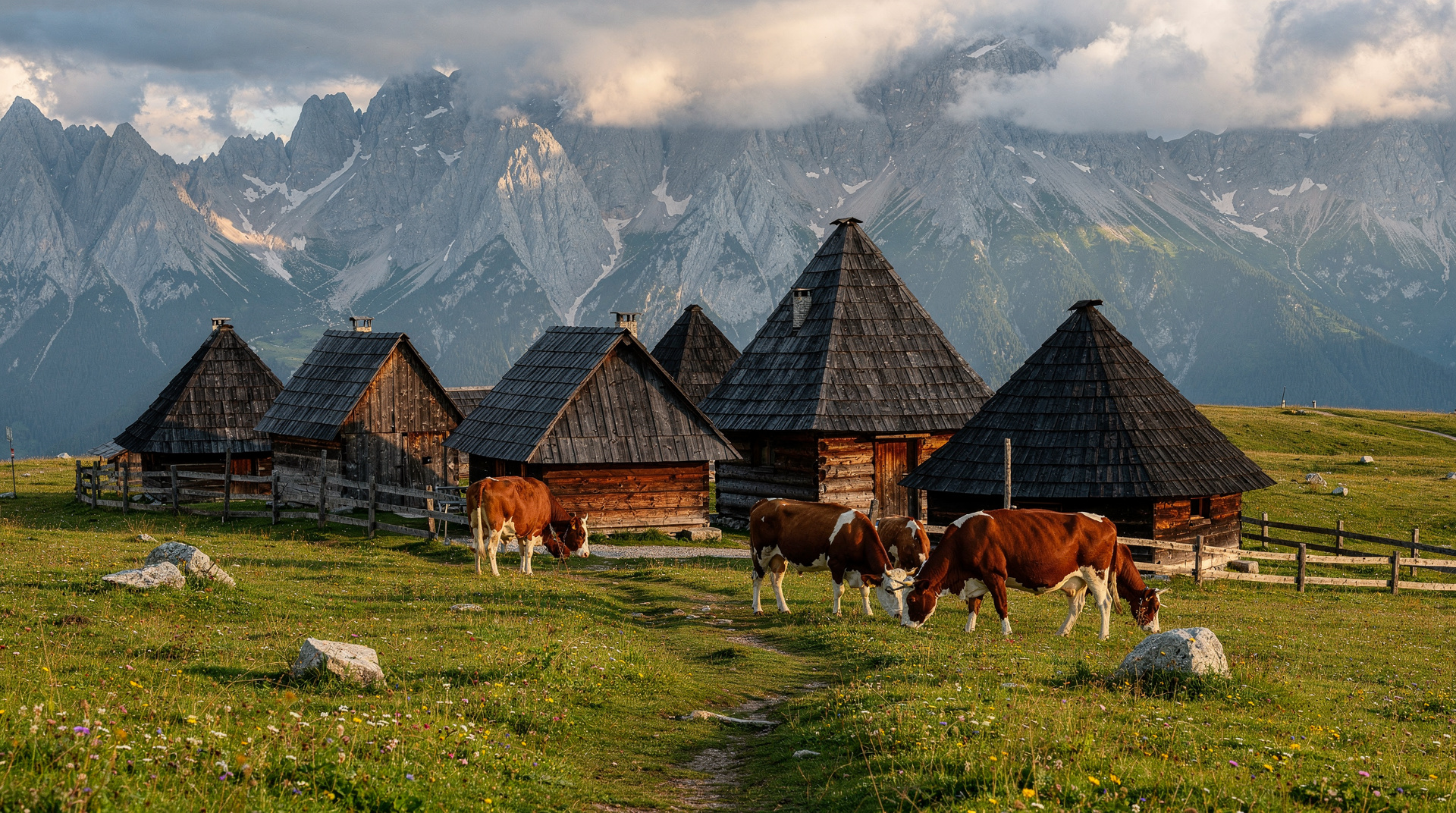
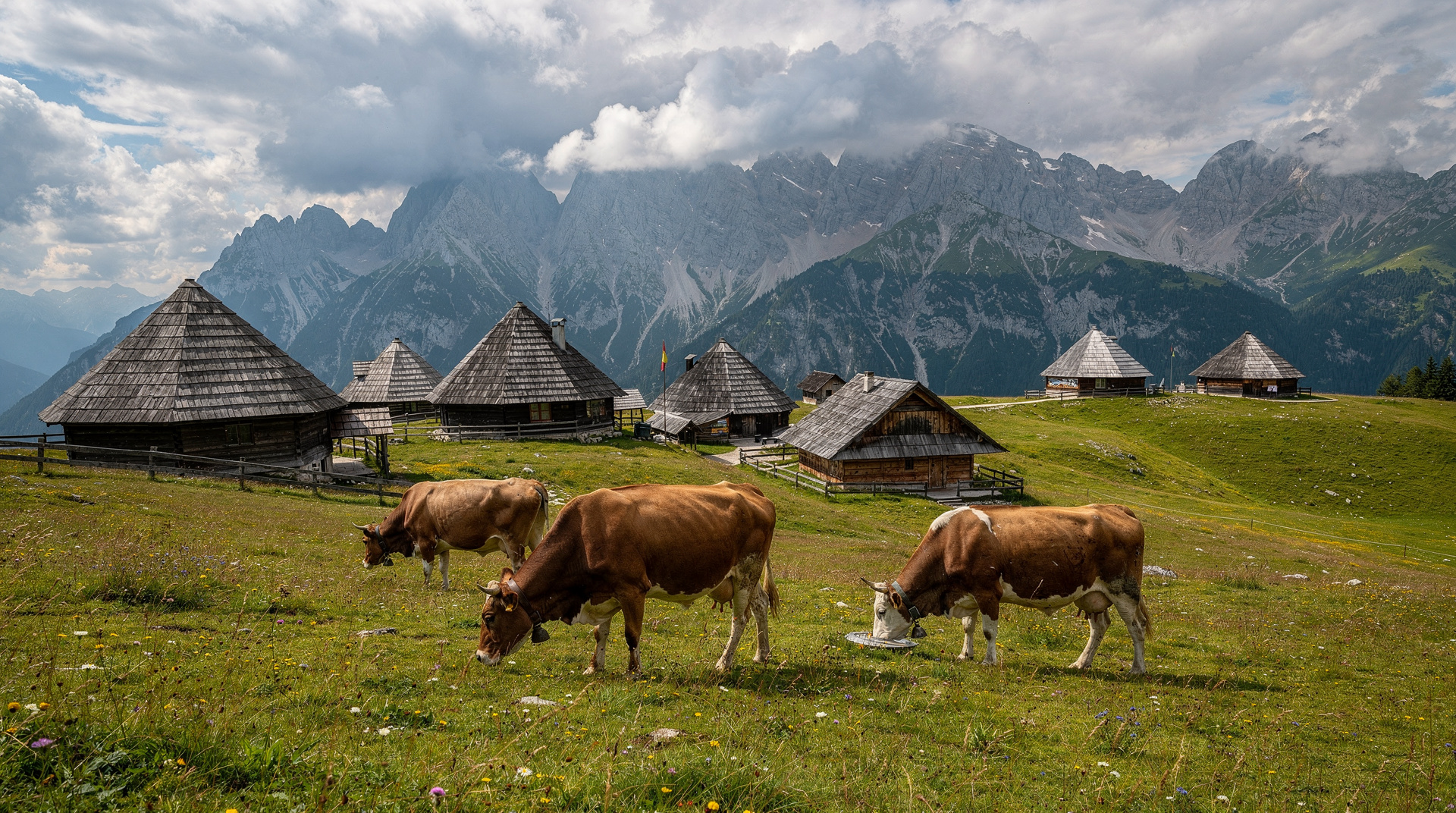
Kamnik is not on most tourists’ Slovenia radar, and that’s precisely its appeal. Twenty-five kilometres northeast of Ljubljana, this compact town of 14,000 people has a medieval centre that rewards an hour or two of slow walking, a castle ruin perched dramatically on a limestone outcrop above the main square, and thermal baths that have operated since the Roman period. Most importantly, it’s the transit point for the cable car to Velika Planina — the high Alpine plateau that is, in this guide’s view, one of the most underrated experiences in Slovenia.
Visitors who take the trouble to stop in Kamnik proper (rather than rushing through on the way to the cable car) generally find it a more authentically Slovenian experience than anything in Bled: local cafés, independent shops, a Saturday market, and a population that isn’t organised around tourism.
| Where | 25km northeast of Ljubljana, foot of the Kamnik-Savinja Alps |
| Time needed | Half day to full day (add a full day for Velika Planina) |
| Getting there | Bus from Ljubljana ~50–60min, EUR 3.50; car 30–35min |
| Budget per day | EUR 30–70 |
| Best time | April–October; September–October for autumn colour and fewer crowds |
Getting to Kamnik
From Ljubljana, direct buses run every 20–30 minutes from the central bus station, journey time 50–60 minutes, cost EUR 3.50. The bus stops at the central Kamnik terminus, a five-minute walk from the old town centre.
By car: 25 km from Ljubljana on Route 1 (Trubarjeva cesta to the A1 motorway, exit at Ljubljana-Šentjakob, then regional road via Domžale). Drive time 30–35 minutes. Parking is available in the town centre and is free.
Kamnik is also reachable from Celje and the Savinja valley direction via Route 225 — a scenic road through the Kamnik-Savinja Alps foothills.
The old town: what to see in an hour
Kamnik’s historic core is centred on Šutna street, a linear market street that has functioned as the town’s commercial spine for centuries. The buildings are modest by Ljubljana standards but genuine — Baroque townhouses with painted facades, a covered market arcade at the north end, and the Parish Church of the Holy Trinity at the south end.
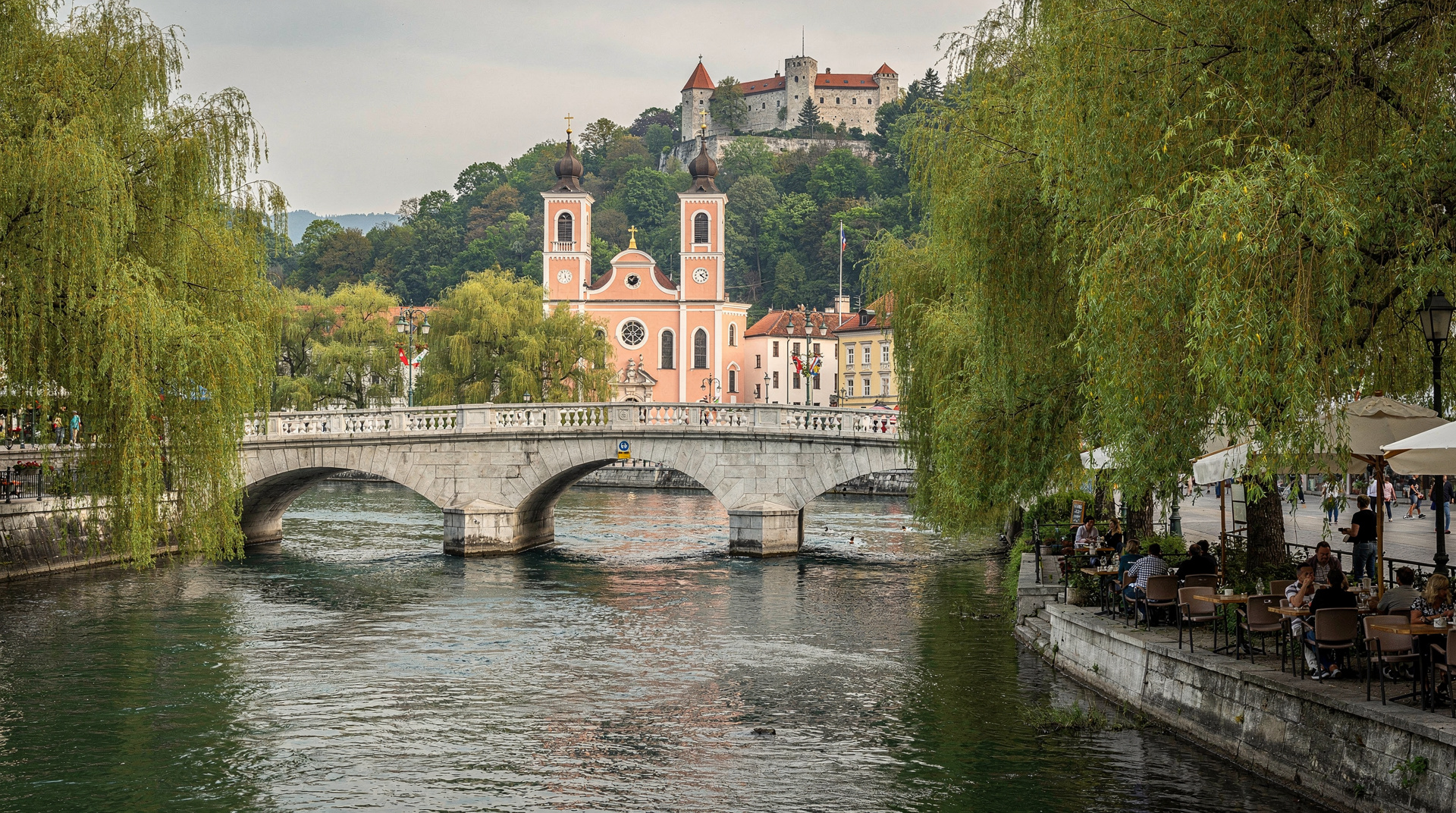
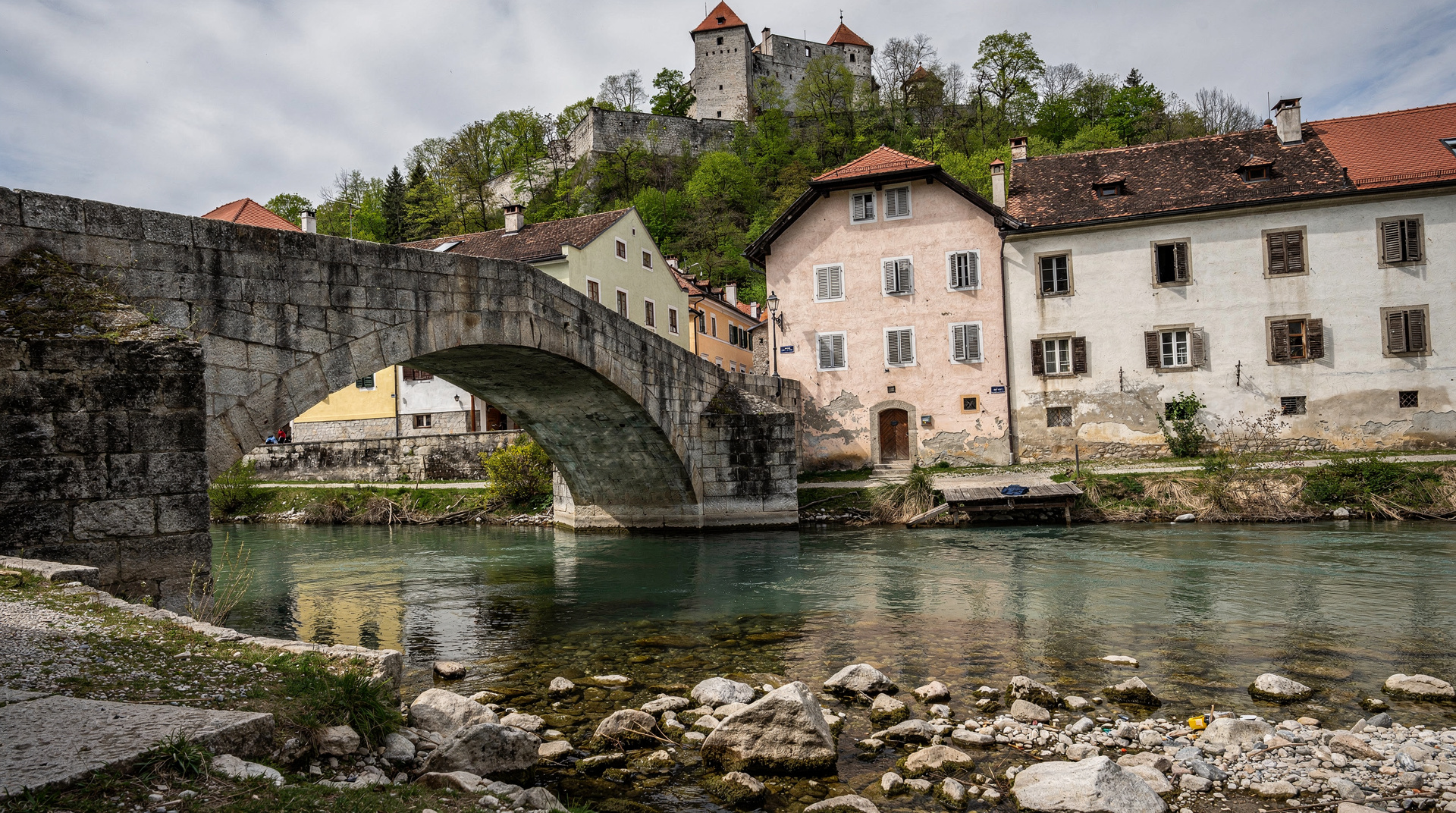
Mali Grad (Small Castle): the most visually striking element of Kamnik’s townscape. A limestone knoll rises directly from the town centre with a chapel and the remains of a 12th-century castle perched on top. The climb is free and takes about 10 minutes; the view from the top over the rooftops to the Kamnik Alps is excellent. The Romanesque twin-nave chapel at the summit (open in summer, closed in winter) is one of the few surviving examples of early medieval religious architecture in Slovenia.
Zaprice Castle: a 16th-century Renaissance manor on the eastern edge of the old town, housing the Town Museum of Kamnik (Medobčinski muzej Kamnik). The museum covers local history from prehistory to the 20th century, with a section on WWI and WWII Partisan activity in the Kamnik Alps that is less sanitised than most regional museum treatments of that period. Entry EUR 4; open Tuesday to Sunday.
The Saturday market (Sobotni sejem) operates year-round on the main square — farm produce, local honey, and crafts from the surrounding countryside. If your timing allows, this is a genuine local market rather than a tourist craft fair.
The Kamnik thermal baths
Kamnik has two spa facilities: Terme Snovik (10 km south of the town, set in a forest clearing, open year-round) and the older Zdravilišče Terme Kamnik within the town. Both have indoor and outdoor pools with thermal water. Day entrance at Terme Snovik is priced on the official Terme Snovik website; it’s less developed than the major thermal destinations but the forest setting is pleasant. Useful as a half-day add-on if the weather doesn’t cooperate with outdoor plans. For a comparison with the country’s other spa options, see the thermal spas in Slovenia guide.
Kamnik as a base for the Kamnik Alps
The Kamnik-Savinja Alps are less visited than the Julian Alps but contain some excellent hiking. The main draws:
Velika Planina (see above and the Velika Planina guide): the cable car valley station at Spodnje Straniče is 5 km from the Kamnik town centre, accessible by local bus (line 13) or taxi (EUR 8–10). This is the most popular excursion from Kamnik.
Kamniška Bistrica valley: a dramatic limestone gorge 14 km south of Kamnik (no regular bus — car or taxi needed), with a mountain hut (Dom v Kamniški Bistrici) at the valley head and trails toward the high peaks. The gorge itself is a 30-minute easy walk. Popular with Ljubljana residents for weekend walks.
Logarska Dolina (Logar Valley): Slovenia’s most dramatic glacial valley is 40 km northeast of Kamnik via the Pavličevo sedlo mountain road. The Rinka waterfall at the valley head is spectacular in spring snowmelt. A day trip requiring a car; not accessible by public transport. The Logar Valley destination page and the Logar Valley guide cover the valley in more detail. Celje, on the opposite side of the Savinja Alps, offers an alternative railhead-based approach to the same valley if you’re arriving from the east rather than from Kamnik.
The guided hike to Velika Planina
For those who want structure and context for the Velika Planina excursion, the guided Velika Planina hiking tour departs from the cable car station and covers the plateau with explanations of the shepherding culture, architecture, and Alpine ecology. The guide also handles the cable car logistics and timing — useful for those unfamiliar with the area.
For a meal-centred experience on the plateau, the Velika Planina with traditional Alpine meal includes a seated lunch at a shepherd’s hut — the most direct way to experience the plateau’s food culture without hunting for the right hut independently.
Eating and staying in Kamnik
Gostilna Repnik on the outskirts of town is the most consistently recommended gostilna — local produce, seasonal menu, main courses EUR 12–20. The veal (telečja zvarka) and mushroom dishes in autumn are particularly good. Popular with Kamnik residents; book ahead for weekend evenings. If you enjoy this kind of meal, the gostilna traditional dining guide explains how to order and what to expect in these family-run inns.
Kavarna Veronika on Šutna is the best café for coffee and cake in the old town — a neighbourhood spot without tourist pricing.
Accommodation in Kamnik is limited (the town is close enough to Ljubljana to work as a day trip) but Hotel Malograjski dvor offers comfortable rooms in a renovated building near Mali Grad. Rates EUR 65–90/night. Useful if you want to start early for Velika Planina without the Ljubljana bus commute.
Combining Kamnik and Velika Planina with Ljubljana
The most practical sequence for a day trip from Ljubljana:
Morning: bus to Kamnik (arrive 09:00), walk the old town and climb Mali Grad (10:00), local bus to cable car station.
Midday: cable car up to Velika Planina, walk the plateau circuit, lunch at a herdsmen’s hut or the Zeleni rob mountain hut.
Afternoon: cable car down, local bus back to Kamnik, final coffee, bus back to Ljubljana (arrive by 18:00–19:00).
This covers two distinct environments — medieval small town and high Alpine plateau — in a single day without rushing. For those combining this with other Ljubljana-area destinations, the Ljubljana guide covers the broader capital context, and Škofja Loka makes an equally good half-day on a different day for a similar unhurried atmosphere.
Kamnik’s medieval history: a brief orientation
Kamnik was one of the most significant towns in medieval Carniola — at various periods between the 12th and 15th centuries it contested with Ljubljana for regional dominance before the Habsburgs consolidated power in Ljubljana and Kamnik became a secondary market town.
The three castles (Stari Grad, Mali Grad, and Zaprice) reflect the town’s defensive importance in the Middle Ages. Stari Grad (Old Castle) sits on a higher hill behind Mali Grad and is accessible by footpath — the ruins are more extensive than Mali Grad but less well-maintained. From the Stari Grad remnants, you can see the full disposition of the Kamnik valley and understand why medieval lords chose this plateau.
The town’s medieval prosperity came from iron forging — the Kamnik Alps have significant iron ore deposits and the Kamniška Bistrica river provided water power for the forges. By the 17th century, Kamnik’s iron trade had declined as Habsburg commercial policy favoured other centres, and the town settled into its current role as a regional market settlement.
This history explains the architectural layering: Romanesque chapel foundations at Mali Grad, Gothic church proportions at St James, Baroque townhouse facades on Šutna — several centuries of modest prosperity documented in stone on a compact street.
The Kamnik-Savinja Alps vs the Julian Alps
First-time visitors to Slovenia usually default to the Julian Alps — and for good reason, given the concentration of iconic scenery at Bled, Bohinj, and Triglav. But the Kamnik-Savinja Alps, accessible from Kamnik, offer a rewarding alternative particularly for experienced hikers:
The terrain is slightly wilder and less developed than the Julian Alps equivalent. Trail markings are good but the mountain huts are fewer and more remote. The highest peaks — Grintovec (2,558 m), Ojstrica (2,350 m), Planjava (2,394 m) — require more technical competence than comparable Julian Alps objectives. The reward is a genuine sense of remoteness that’s increasingly rare in Slovenia’s more popular areas.
The Kamnik-Savinja Alps Hut Circuit (Kamniška-Savinjska Alpska pot) is a multi-day route connecting the main mountain huts across the range — 3–4 days for the full traverse. This is an advanced undertaking; suitable only for fit, experienced alpine hikers with appropriate equipment.
For day hikers based in Kamnik, the trails from Kamniška Bistrica to the huts at Češka koča and Kočna are manageable in a single day for fit walkers. The Kočna glacier is small and retreating but visible from the upper trails — one of very few accessible glaciers in Slovenia.
Kamnik’s food market and local economy
The Saturday market (Sobotni sejem) on the main square has operated continuously since the medieval period — the town’s charter included market rights as a central economic privilege. The current market is modest (15–25 stalls) but sells directly from local farms: seasonal vegetables, eggs, dried herbs, local honey, and occasionally farmstead cheese from the Kamnik Alps valleys.
The seasonal focus is worth noting: spring (April–May) brings asparagus, wild garlic, and the first radishes; summer brings tomatoes, peppers, and soft fruits; autumn has mushrooms, pumpkins, and squash. The honey season runs from July (first harvest of summer flowers) through September (forest honey). If your Slovenia visit falls on a Saturday and you’re near Kamnik, the market gives a more direct view of local food culture than any restaurant.
The market runs until approximately 13:00. Combine with the Mali Grad climb and a lunch at Gostilna Avguštin for an efficient morning.
Practical tips and seasonal notes
Kamnik functions year-round but the visitor infrastructure is modest. There’s no dedicated tourist information office open consistent hours; the best information source is the Kamnik municipality website or the Velika Planina cable car office (which handles tourist queries for the surrounding area).
The town centre is walkable and all the main sights are within 15 minutes’ walk. The Zaprice Castle museum is closed Mondays; plan accordingly if this is a priority.
Winter (December to March): the Kamnik basin has cold fog and frost; the plateau above (Velika Planina) can be sunny above the fog layer, making the cable car ride even more dramatic. The small ski area at Velika Planina operates in good snow years; call ahead to confirm conditions.
Autumn (September to October; the Slovenia in autumn guide covers the season nationwide): arguably the best time for the Kamnik area — the forests on the lower alpine slopes turn colour from mid-October, the summer crowds at Velika Planina have dissipated, and the weather is typically stable with cool clear days.
For planning a broader Ljubljana region itinerary that includes Kamnik, Škofja Loka, and Velika Planina, the Slovenia travel guide covers the logistics of connecting these destinations by public transport from the capital.
Fitting Kamnik into a wider trip
Kamnik works best as one stop among several rather than a destination on its own. The day trips from Ljubljana guide sets it beside the other easy excursions from the capital, which helps if you are deciding how to spend a free day. If you are building a short city stay around the capital, the long weekend in Ljubljana itinerary leaves room for a half-day here without crowding the schedule.
For the practical side — buses, timetables and what to do when a connection is awkward — the getting around Slovenia and public transport in Slovenia guides explain how the network fits together. Travellers who plan to stay out in the mountains for a few days will find the Velika Planina guide a useful companion to this page, with more depth on the plateau itself.
If the hiking bug bites, the best hikes in Slovenia guide shows where the Kamnik-Savinja Alps sit among the country’s wider walking options, and Triglav National Park is the natural next step for anyone who wants to compare the Julian Alps with what they saw from Mali Grad.
Kamnik vs Škofja Loka: which small town first?
Both towns sit within 30–40 minutes of Ljubljana and get compared often, since neither has the crowds of Bled or the scale of the capital. Škofja Loka has the more picture-perfect medieval square and castle, and works better as a purely architectural half-day. Kamnik’s advantage is Mali Grad’s dramatic setting and, more importantly, its role as the gateway to Velika Planina — a high-Alpine plateau experience that Škofja Loka simply cannot offer. If you only have time for one and want to combine a town with a genuine outdoor excursion, choose Kamnik; if you want the more polished old-town photograph, choose Škofja Loka.
What Kamnik lacks
An honest guide notes the gaps too. Kamnik has limited evening dining options compared with Ljubljana, no significant nightlife, and its tourist information is thin — there’s no dedicated office with consistent hours. The Zaprice Castle museum’s WWII section is informative but modest in scale; visitors expecting a major national museum experience should look to Ljubljana instead. None of this makes Kamnik not worth visiting — it simply confirms that its appeal is the combination of small-town texture and Velika Planina access, not a checklist of major sights.
Frequently asked questions about Kamnik
Can I visit Kamnik and Velika Planina in a single day from Ljubljana? Yes, comfortably. Buses run from Ljubljana every 20–30 minutes (50–60 minutes journey), and the cable car station is a further short bus or taxi ride from central Kamnik. A day starting at 08:00–09:00 from Ljubljana gives ample time for both the old town and a few hours on the plateau, returning by early evening.
Is Kamnik worth visiting without going up to Velika Planina? Yes, if you enjoy quiet small-town Slovenia — Mali Grad, the Zaprice Castle museum, and the Saturday market are genuinely worthwhile on their own, especially as a contrast to more heavily touristed stops. But most visitors who make the trip do combine it with the cable car, since skipping Velika Planina means missing the area’s single most distinctive experience.
Do I need a car to visit Kamnik and Velika Planina? No. Buses connect Ljubljana to Kamnik, and local bus line 13 (or a short taxi) covers the final leg to the cable car valley station. A car adds flexibility for the Kamniška Bistrica valley and the Logar Valley, neither of which has practical public transport.
Top experiences
Bookable activities with verified prices and instant confirmation on GetYourGuide.