Slovenia travel guide: everything you need to plan your trip
Ljubljana: private walking tour with a local
Is Slovenia worth visiting?
Absolutely — and it remains one of Europe's most underrated destinations. A country the size of New Jersey delivers Alpine lakes, river gorges, karst caves, a coast, and a capital city, all within two hours of each other. The honest caveat: Lake Bled and Postojna Cave are legitimately over-touristed in July and August.
Why Slovenia deserves a spot on your itinerary
Slovenia is a country that regularly surprises travellers who arrive with modest expectations. Tucked between Austria, Italy, Hungary, and Croatia, it covers just over 20,000 square kilometres — yet that small canvas contains the southeastern edge of the Julian Alps, 46km of Adriatic coastline, the Soča river gorge (rated among Europe’s finest), the world’s largest passage cave at Postojna, and a capital city that is genuinely walkable and genuinely pleasant.
The distances are almost absurdly short: Ljubljana to Lake Bled takes under an hour; Bled to the Soča Valley takes 90 minutes; Ljubljana to Piran takes 90 minutes in the other direction.
What trips people up is that the country’s compactness makes it easy to underplan. Travellers arrive, spend two days at Bled, briefly visit Postojna, and leave thinking they have seen Slovenia. They have seen the tourist billboards. The rest of the country — Bohinj’s mirror-calm lake, Kobarid’s First World War museum, Škocjan’s vertiginous cave canyon, the ochre towns of Goriška Brda, Logar Valley’s cirque, Ptuj’s medieval centre — is largely uncrowded and frequently exceptional.
This guide covers the practical and strategic elements of planning a trip. For specific destinations, link to the relevant destination pages throughout.
| Best months | May–June, September–October |
| Minimum trip length | 5 days (Ljubljana, Bled, one day trip) |
| Ideal trip length | 7–10 days |
| Do you need a car | Recommended beyond Ljubljana and Bled |
| Daily budget (mid-range) | €100–130 per person |
The fast facts
- Capital: Ljubljana (pop. ~295,000)
- Currency: Euro (€)
- Language: Slovenian; English widely spoken in tourism
- Time zone: CET/CEST (UTC+1/+2)
- Electrical: Type F (Schuko), 230V
- Driving side: Right
- Country code: +386
- Emergency services: 112
- Internet access: Good to excellent across the country; most accommodation includes Wi-Fi
When to go
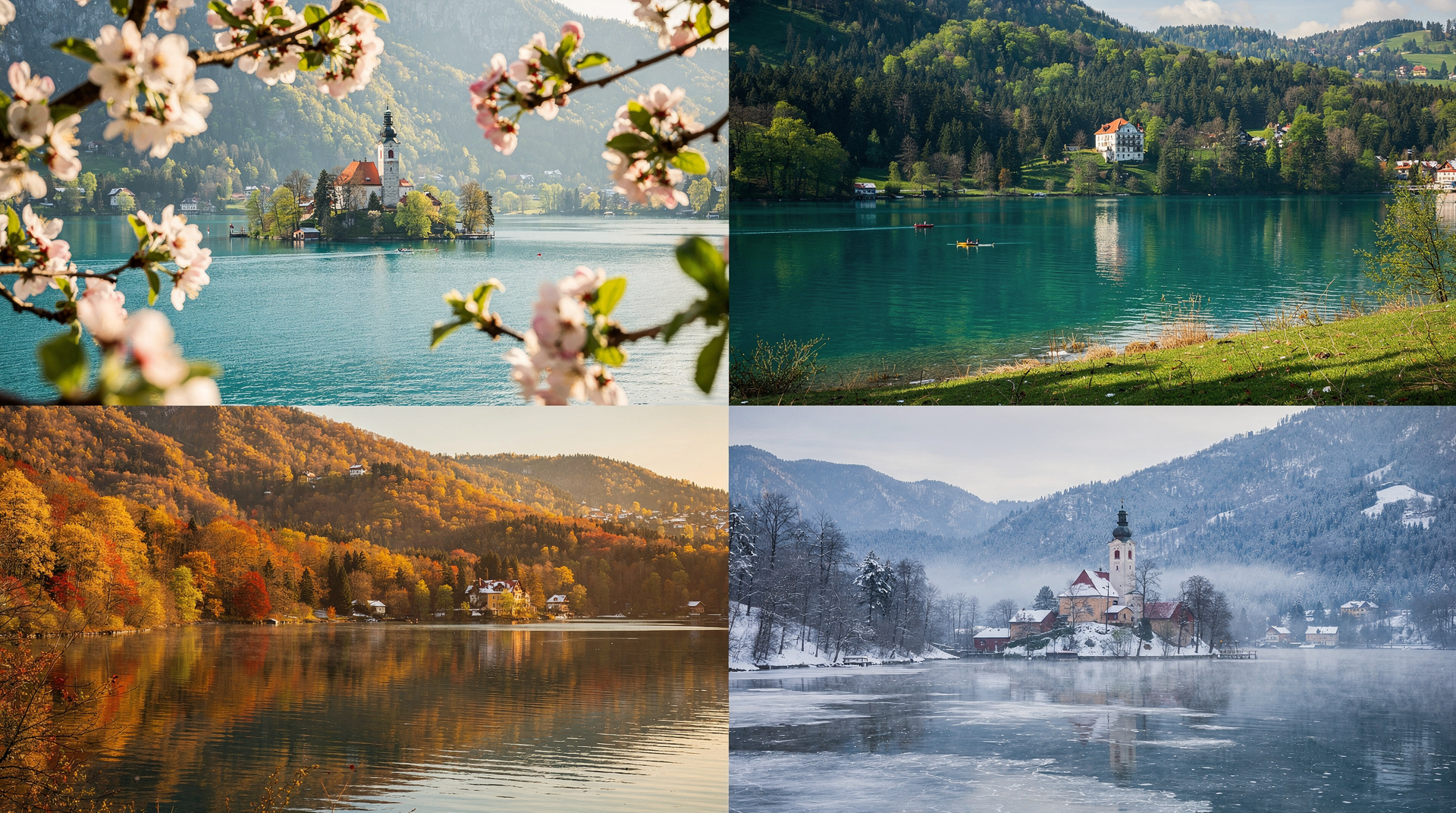
The most useful honest answer: May–June and September–October are the best months for most travellers. The weather is warm, the crowds are human-scale, and critically for mountain activities, the main trails and mountain passes are fully open but not overwhelmed.
July and August deliver the best lake swimming and are the peak season for festivals, but Lake Bled and Postojna Cave become genuinely crowded — think coach park, selfie queues, and prices at their annual peak. If you must visit in high summer, arrive at Bled before 8am and pre-book Postojna online.
Winter (December–February) is quiet, affordable, and genuinely beautiful for the right traveller. Kranjska Gora operates as a ski resort; Ljubljana has an excellent Christmas market. The trade-off: Vintgar Gorge closes November through April, the Vršič mountain pass closes November through May, and many lake-area restaurants and tour operators shut for the season.
The full seasonal breakdown — including monthly weather charts — is in the best time to visit Slovenia guide.
How to get to Slovenia
By air: Ljubljana Jože Pučnik Airport (LJU) is 27km north of the capital. It handles direct flights from most major European hubs including London (easyJet, Wizz Air), Amsterdam, Frankfurt, Paris, and Vienna. A shuttle bus to Ljubljana city centre runs roughly hourly and costs around €4; the journey takes 45 minutes. Taxis and ride-shares cost €25–35.
Alternative airports worth considering: Venice Marco Polo (VCE) or Trieste (TRS) are 1.5–2.5 hours from Ljubljana and often served by cheaper flights. Zagreb (ZAG) is 2 hours from Ljubljana with good bus connections. If the price difference is significant, the extra travel time is often worth it.
By train: Ljubljana is connected by direct or single-change rail to Venice (3h40), Vienna (6h), Budapest (8h), and Munich (7h). The European overnight train network has expanded; check Nightjet routes from Vienna and Munich if coming from Central Europe.
By car: Slovenia sits neatly on the road routes between Central Europe and the Adriatic. If driving from Austria or Italy, you will enter the motorway network immediately — purchase your e-vignette before or at the border. Driving without a valid motorway vignette incurs fines of €300–800. The vignette costs €16 for seven days and is purchased online at evinjeta.dars.si or at petrol stations near entry points.
Getting around
Car hire is the most practical option for exploring beyond the capital. Slovenia’s road network is excellent, distances are short, and parking — outside of Ljubljana’s old town and Bled in peak season — is cheap or free. Book early in summer; demand spikes and prices rise sharply in July. Note that most rental agreements include the motorway vignette, but verify before signing.
Buses are reliable and cover most destinations that travellers want to reach. Ljubljana to Bled: ~1h15, multiple daily services from the central bus station. Ljubljana to Piran: ~2h30. Ljubljana to Koper: ~2h. The Flixbus and Nomago networks cover intercity routes.
Trains are slower than buses on most routes and the network is limited. Ljubljana to Maribor is the most useful rail connection (1h40). Trains to Bled (the station is 4km from the lake) require a connecting bus. Rail is pleasant but plan around it rather than relying on it.
Cycling is increasingly well-served. The Soča Valley in particular has excellent cycle paths along the river. The Triglav National Park has marked mountain bike routes. Ljubljana itself is highly bikeable.
Where to stay
Ljubljana is the natural base for first-timers and those travelling without a car. It puts you within day-trip range of Bled, Postojna, and Piran, and has the widest range of accommodation at every price point.
Lake Bled is an excellent base for Alpine lake lovers and walkers, but can feel isolated if Bled itself disappoints — which it sometimes does in the peak summer crowds. Better to stay at Bohinj if you want the lake experience without the tourist mass.
Bovec in the Soča Valley is the adventure sports hub. Accommodation is limited, so book ahead if visiting June–September.
Piran is the most atmospheric base on the coast, though parking is a perennial issue (park outside the old town and walk).
A full breakdown of accommodation options by destination and budget is in the where to stay in Slovenia guide.
For first-timers without a car who want the essential Ljubljana sights covered efficiently on arrival, a short guided walking tour is a reasonable way to orient yourself before exploring independently: Private 2-hour Ljubljana walking tour
What to budget
Slovenia is mid-range by European standards — cheaper than Austria but not budget in the way that some Eastern European countries are. Honest working figures:
| Budget level | Daily estimate | What it covers |
|---|---|---|
| Shoestring | €45–60 | Hostel dorm, supermarket lunches, one café meal, public transport |
| Mid-range | €100–130 | Hotel double room, sit-down lunch and dinner, a paid attraction |
| Comfortable | €160–200 | Better hotel, two restaurant meals, activities like rafting or wine tasting |
| Luxury | €250+ | Boutique hotel, tasting menus, private guides or boat hire |
Attraction costs to factor in: Postojna Cave (€34.90), Predjama Castle (€24), the Postojna Cave and Predjama Castle combo (€49.90), Vintgar Gorge (€15), Lake Bled island pletna boat (fare to be confirmed at the landing or with the Bled tourist office, bled.si), Triglav National Park entry is free but guided hikes are extra.
See the complete Slovenia trip budget guide for detailed cost breakdowns.
The honest advice section
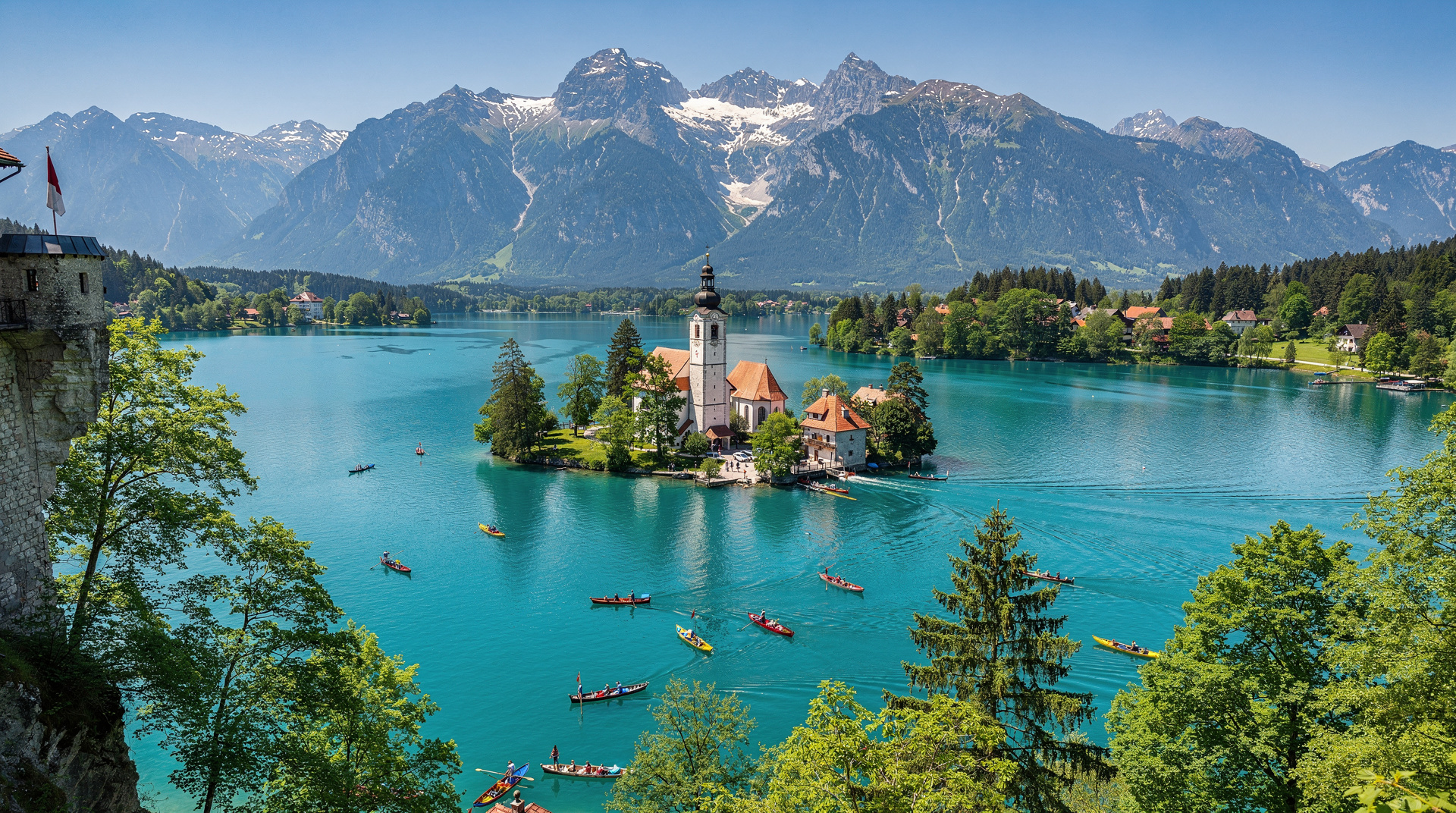
On Lake Bled: It looks exactly like the photos, which is both the appeal and the problem. In July and August, the lake viewpoints are sardine-dense, the island boat tickets queue out the door, and the famous Bled cream cake now costs €7 in the most prominently positioned cafés. None of this makes Bled a disappointment if you manage expectations. Arrive before 8am, walk up to Ojstrica or Mala Osojnica for the classic view (free, steep, 20 minutes), and be realistic about the pletna boat: at a fare you should confirm at the landing, you are paying for the experience of being on the lake, not for revelatory views from the island (from the island, you cannot see the island).
The genuinely underrated alternative nearby is Bohinj. It is quieter, larger, wilder, and more beautiful in many weather conditions. It does not photograph as cleanly as Bled, which is partly why it remains overlooked.
On Postojna: The cave itself is scientifically extraordinary — 24km of passages, with a narrow-gauge train that runs 3.7km into the mountain. The management around it is theme-park in scale: coach bays, branded merchandise, a price point that puts off independent travellers. This is not necessarily wrong — it is genuinely a world-class natural feature — but know what you are buying. Škocjan Caves (UNESCO World Heritage Site, 40 minutes from Postojna) are arguably more impressive geologically and far less crowded. Križna Jama, visited on guided tours with booking recommended, is the specialist cave for those who want something unusual.
On the Ljubljana Castle: The view from the castle hill is worth getting. The walk up through Krakovo or the funicular is enjoyable. The castle ticket (funicular, tower, exhibitions) costs €17.10 online or €19 at the desk. The honest assessment: the exhibitions are forgettable. The view is free if you walk to the outer ramparts without paying for the interior. The nearby Nebotičnik skyscraper café (free to enter) offers a comparable panorama for the price of a coffee.
On the tourist restaurant strip: The riverside terrace restaurants in Ljubljana, the Bled lake cafés, and the main seafront in Piran all charge premium prices for food that is frequently unremarkable. Two kilometres off the main drag in any direction, a gostilna (traditional inn) serving local food will charge half the price and deliver twice the quality. This is not a controversial local secret — it is just what happens in tourist concentrations everywhere.
Practical details
Tipping: Not expected, but appreciated. Rounding up a restaurant bill or leaving 10% for good service is normal. Guides typically receive €5–10 tip for half-day tours.
Water: Tap water is safe and very good quality throughout Slovenia. Carry a refillable bottle.
Pharmacies: Well-stocked; marked with a green cross. Dežurna lekarna signs indicate 24-hour pharmacies.
Medical: The European Health Insurance Card (EHIC) covers EU citizens; UK Global Health Insurance Card (GHIC) provides equivalent cover for British travellers. Travel insurance is still strongly recommended for mountain activities.
Mobile data: EU roaming rules apply across the eurozone. Local SIM cards are available from A1, Telekom, and Telemach networks.
Key destinations at a glance
- Ljubljana — the capital: compact, walkable, café culture, great food scene
- Lake Bled — the iconic Alpine lake and castle; beautiful and busy
- Soča Valley — turquoise river gorge; best adventure sports in the Alps
- Postojna Cave — world’s largest passage cave; impressive but crowded
- Piran — the jewel of the Adriatic coast; Venetian architecture, excellent seafood
- Triglav National Park — the Alps proper; Triglav summit, serious hiking
- Kranjska Gora — ski resort in winter, hiking hub in summer
Entry requirements for 2026
Slovenia is a full Schengen member. The rules as of May 2026:
- EU/EEA/Swiss citizens: Free movement; national ID or passport accepted.
- US, UK, Canada, Australia, New Zealand, and most Western nationals: Visa-free for up to 90 days in any 180-day Schengen period. No action currently required.
- ETIAS (European Travel Information and Authorisation System): Not yet in operation; the start date will be announced several months ahead. This is an online pre-authorisation (not a visa) similar to the US ESTA. Cost is €20, valid for three years. Check the official EU ETIAS website for the confirmed launch date.
For a comprehensive and nationality-specific breakdown, see the entry requirements tool or the is Slovenia safe guide which also covers practical safety context.
Slovenia’s specialities: what distinguishes it from neighbouring countries
The orange wine connection: Slovenia is one of the world’s original producers of skin-contact whites (often called “orange wine” — white grapes fermented with their skins, producing amber or orange-coloured wines with tannin structure). The tradition in Goriška Brda and the Karst dates back centuries before the style became fashionable in natural wine circles. Visiting the source is meaningfully different from ordering a skin-contact wine in a London or New York wine bar.
The Lipizzan horse: The Lipica stud farm in the Karst region is the original home of the Lipizzan horse — the breed that performs at the Spanish Riding School in Vienna. The horses’ ancestors have been bred at Lipica since 1580. Performances run April through October; the setting (a white limestone landscape with white horses) is genuinely striking.
The caves: Slovenia has the highest density of documented caves in the world relative to its size — more than 13,000 registered cave systems in a country the size of New Jersey. The accessible ones represent all points on the spectrum from theme-park managed (Postojna) to nearly wild (Križna Jama, guided visits with subterranean lakes). The geology of the Slovenian Karst (karst as a geological term derives from the Slovenian Kras region) is the foundational example for the phenomenon worldwide.
The food geography: Slovenian food divides into distinct regional traditions. The Alpine north (Julian Alps, Gorenjska region): hearty, dumplings, buckwheat, trout. The coastal Karst: lamb, prosciutto-style pork products (kraški pršut), olive oil, seafood. The Pannonian east: goulash, corn porridge, potica. The Soča Valley: freshwater fish, mountain herbs, a strong Italian influence from proximity. A single country contains what would be four distinct regional cuisines in a larger country.
The language and literature: Slovenian is one of the oldest written Slavic languages — the Freising Manuscripts, the oldest known continuous text in any Slavic language, date from approximately 972 AD and are written in an early form of Slovenian. France Prešeren, Slovenia’s national poet, wrote in Slovenian at a time when German was the dominant literary language of the Habsburg Empire; his act of writing in his native language had political dimensions that Slovenians understand as foundational to their national identity. The seventh stanza of his poem Zdravljica (A Toast) became the national anthem. None of this is necessary knowledge for a tourist visit; all of it rewards those who go deeper.
Sustainable travel in Slovenia
Slovenia has consistently been rated among Europe’s most sustainable tourism destinations. The Green Destinations Foundation and various European sustainable travel certification bodies regularly cite Slovenia as a model for responsible tourism development.
What this means in practice for visitors:
-
The national parks (Triglav, Notranjska Regional Park) are managed with genuine conservation goals, not purely visitor throughput targets. Follow park rules: stay on marked trails, do not light fires outside designated areas, pack out all waste.
-
The coastal salt pans at Sečovlje are an active UNESCO-protected cultural landscape still producing salt by traditional methods — visiting Sečovlje is a conservation act as well as a tourism one.
-
Buying wine directly from producers in Goriška Brda and the Vipava Valley supports small family wineries that maintain traditional varieties and production methods; the money stays in the community.
-
The gostilna network — family-run traditional restaurants that source locally — is the food economy that keeps rural Slovenia viable. Eating at a gostilna rather than a tourist-facing restaurant is consistently better value and consistently better for the local economy.
Ljubljana’s Green Capital credentials: Ljubljana was awarded the European Green Capital award (2016) for its urban sustainability achievements including: car-free city centre expansion, excellent cycling infrastructure, the Central Market’s local produce focus, and the Ljubljanica River cleanup (the river was heavily polluted until the 1990s; it is now clean enough for kayaking and occasional swimming).
Choosing between Slovenia and its neighbours
If you’re deciding whether Slovenia fits your trip alongside a bigger regional itinerary, two comparisons are worth reading before you commit dates: the Slovenia vs Austria guide for those weighing an Alpine-focused trip, and the Slovenia vs Croatia guide for those deciding between mountains and coast. Both cover cost, crowding and how easily the countries combine with Slovenia in a single trip.
What to skip, honestly
Not every well-known Slovenian experience delivers proportionate value. The Slovenia tourist traps guide names the specific overpriced experiences (the pletna boat as a must-do, Postojna at peak hours, the Ljubljana Castle interior) and their better alternatives in detail — worth reading before you build your itinerary rather than after.
Shaping your route
Because the country is compact, the real planning question is not whether you can reach a place but how much you want to fit in. A slower trip with fewer bases almost always beats a rushed loop. If this is your first visit, the five-day highlights itinerary and the Ljubljana and Bled in three days plan show how little you need to see the essentials without feeling hurried. Those with more time can stretch into the Julian Alps in seven days or combine mountains and sea with the coast and mountains itinerary.
Travelling without a car is entirely workable if you accept a narrower map. The five days without a car plan is built around buses and trains, and the public transport guide and trains in Slovenia explain what to expect at the station. If you decide to drive, read the car rental guide and the vignette and driving guide before you collect the keys.
If you would rather not drive at all but still want the lake and the gorge, a guided option such as a day trip from Ljubljana to Bled and Vintgar Gorge takes care of the logistics for you.
Choosing your activities
Slovenia rewards travellers who match the season to the activity. Summer favours water and lakes; autumn suits long walks and wine country; winter belongs to snow and thermal baths. The best hikes in Slovenia and the adventure sports guide are good starting points for active trips, while the Slovenian wine guide and the food dishes worth trying cover the slower, tastier side of the country. If you prefer to unwind, the best thermal spas give a gentle counterweight to a busy itinerary.
Day trips from the capital are an easy way to sample several regions without changing hotels. The day trips from Ljubljana guide sets out the options, and the Ljubljana in one day plan helps if you only have a short window in the city itself. Read the common mistakes guide too, as it collects the small errors that most often cost first-time visitors time and money.
Before you book
Two decisions shape everything else: when you travel and how long you stay. Settle those first, then choose bases, then add activities. For a sense of the wider conversation around visiting, the blog’s take on whether Slovenia is worth visiting and its 25 things to know before you go are useful companions to this guide, and the overtourism guide explains how to avoid the busiest moments at the best-known sights.
Planning resources on this site
- How many days in Slovenia? — itinerary building by duration
- Slovenia trip budget — detailed cost breakdown by travel style
- Best time to visit Slovenia — month-by-month honest guide
- Where to stay in Slovenia — regions and accommodation types
- Slovenia packing guide — what to bring by season and activity
- Slovenia for families — practical advice with children
- Solo travel in Slovenia — safety, logistics, and community
- First time in Slovenia — the baseline five-day plan
- Slovenia language phrases — the essential Slovenian phrasebook
- Accessible travel in Slovenia — mobility and disability guidance
Frequently asked questions about Slovenia travel guide
Do I need a visa for Slovenia?
Slovenia is in the Schengen Area. EU citizens enter freely. US, UK, Australian, Canadian and most Western passport holders can stay up to 90 days in any 180-day period without a visa. ETIAS pre-travel authorisation for visa-exempt non-EU nationals is not yet in operation; the start date will be announced several months ahead — check the official EU ETIAS website before booking.What currency does Slovenia use?
Slovenia uses the euro (€). There is no currency conversion to worry about if you are coming from the eurozone. ATMs are widely available in all towns; most restaurants and accommodation accept cards. Remote mountain huts may be cash-only.Do I need a car in Slovenia?
A car is strongly recommended if you want to explore beyond Ljubljana and Lake Bled. Public buses link Ljubljana, Bled, Bohinj, and Piran reliably, but the Soča Valley, Predjama Castle, Škocjan Caves, and most of eastern Slovenia are impractical without a car. If you only have a week and want to hit the highlights, a hire car transforms the trip.Is Slovenia expensive?
By Western European standards, Slovenia is mid-range rather than budget. Expect roughly €50 per day on a shoestring (hostel, self-catering, local lunch), €100–130 per day mid-range (hotel, restaurant lunches, one paid attraction), and €250 and up at the top end. It is noticeably cheaper than neighbouring Austria or Switzerland.How many days do I need in Slovenia?
Five days covers Ljubljana, Lake Bled, and one day-trip to Postojna or Piran. Seven days adds the Soča Valley or Bohinj without rushing. Ten days lets you do the full country justice — coast, caves, Alpine lakes, a river gorge, and the capital. Two weeks is ideal for those who want to slow down and include wine country or thermal spas.Is Slovenia safe?
Slovenia is one of the safest countries in Europe. Violent crime is rare; petty theft in crowded tourist spots is the main concern (the usual precautions apply). The main risks are in the mountains — weather changes fast, and trails above 1500m demand proper equipment and preparation. Respect closed trail warnings.What language do Slovenians speak?
Slovenian is the official language. English is widely spoken by anyone working in tourism, hospitality, or retail, particularly in Ljubljana, Lake Bled, and Piran. German is useful in Alpine areas. A few words of Slovenian — hvala (thank you), prosim (please) — will earn genuine warmth from locals.What is the single biggest mistake first-time visitors make in Slovenia?
Underplanning around the country's compactness. Because everything is close, travellers assume they can improvise, then spend two days at Bled and Postojna and leave thinking they've seen Slovenia. The country's best experiences — Bohinj, Škocjan, Goriška Brda, the Soča Valley — need to be planned in deliberately, since they don't announce themselves as loudly as the headline sights.Should I book a guided tour or self-drive?
Self-driving suits most of Slovenia well — the roads are excellent and distances short. Guided tours earn their price specifically for Škocjan Caves (awkward without a car), Triglav mountain routes (safety and route knowledge matter), and multi-site Karst days. For Bled and Ljubljana, independent travel is cheaper and equally easy.