Is Slovenia safe? Honest guide for 2026 travellers
Ljubljana: MTB Capital mountain bike tour
Is Slovenia safe for tourists?
Slovenia is one of the safest countries in Europe. Violent crime is rare; the main concerns are standard urban petty theft, mountain weather hazards, and river safety in unofficial swimming spots. Solo women travellers consistently rate it as comfortable. It consistently ranks top 15 in the Global Peace Index.
The short answer
Slovenia is safe. It is, by objective statistical measures and by the consistent experience of millions of visitors, one of the safest countries in Europe. The Global Peace Index has ranked it in the top 10–15 globally for several consecutive years. The homicide rate is among the lowest in the EU. Violent crime targeting tourists is exceptionally rare.
| Overall risk | very low — top 10–15 Global Peace Index |
| Main real risks | mountain weather, river currents, petty theft |
| Emergency number | 112 (all emergencies) |
| Solo female travel | consistently rated comfortable |
| Vignette required | yes, around EUR 16/week for motorways |
This guide gives you the honest, nuanced picture — including the real risks that do exist.
If you are still shaping the trip, it helps to read this page alongside the common mistakes first-time visitors make in Slovenia and the guide to Slovenia’s tourist traps, which cover the everyday annoyances that matter far more than crime. For scams specifically, see Slovenia travel scams.
Crime: what the statistics say
Slovenia’s crime rate is low by Western European standards:
- Violent crime: Very low; Ljubljana’s violent crime rate is a fraction of comparable Western European capitals
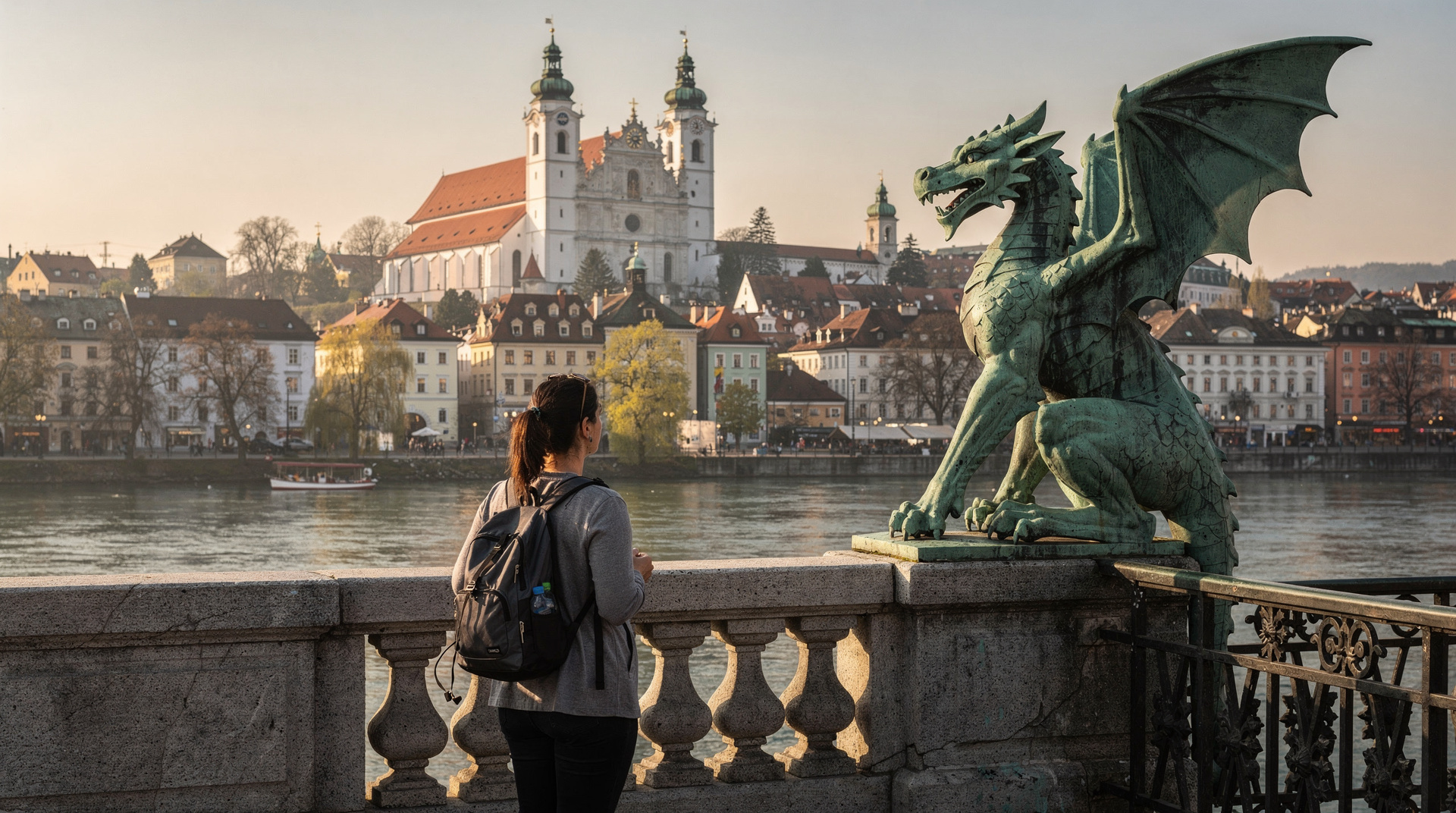
- Petty crime: Present in tourist hotspots — pickpocketing and bag snatching at Bled, Ljubljana’s old town, and Piran in summer — but at lower levels than Paris, Barcelona, or Rome
- Car crime: Break-ins at remote car parks near trailheads are the most commonly reported crime affecting tourists; do not leave valuables visible in parked hire cars
Practical precautions that make sense:
- In Ljubljana’s old town, Bled, and Piran in peak summer: keep a hand on bags in crowded areas; use inner pockets or a money belt for passports and cards
- At trail car parks: take valuables with you; leave nothing visible in the car
- Standard nightlife awareness applies in any city — Ljubljana’s bars and clubs are safe, but the standard late-night precautions hold everywhere
If you would rather explore the capital with a local who knows which areas and routes are comfortable, a guided mountain bike tour of Ljubljana and its green surroundings is a relaxed way to see more of the city without worrying about navigating on your own.
Mountain safety: the most important risk
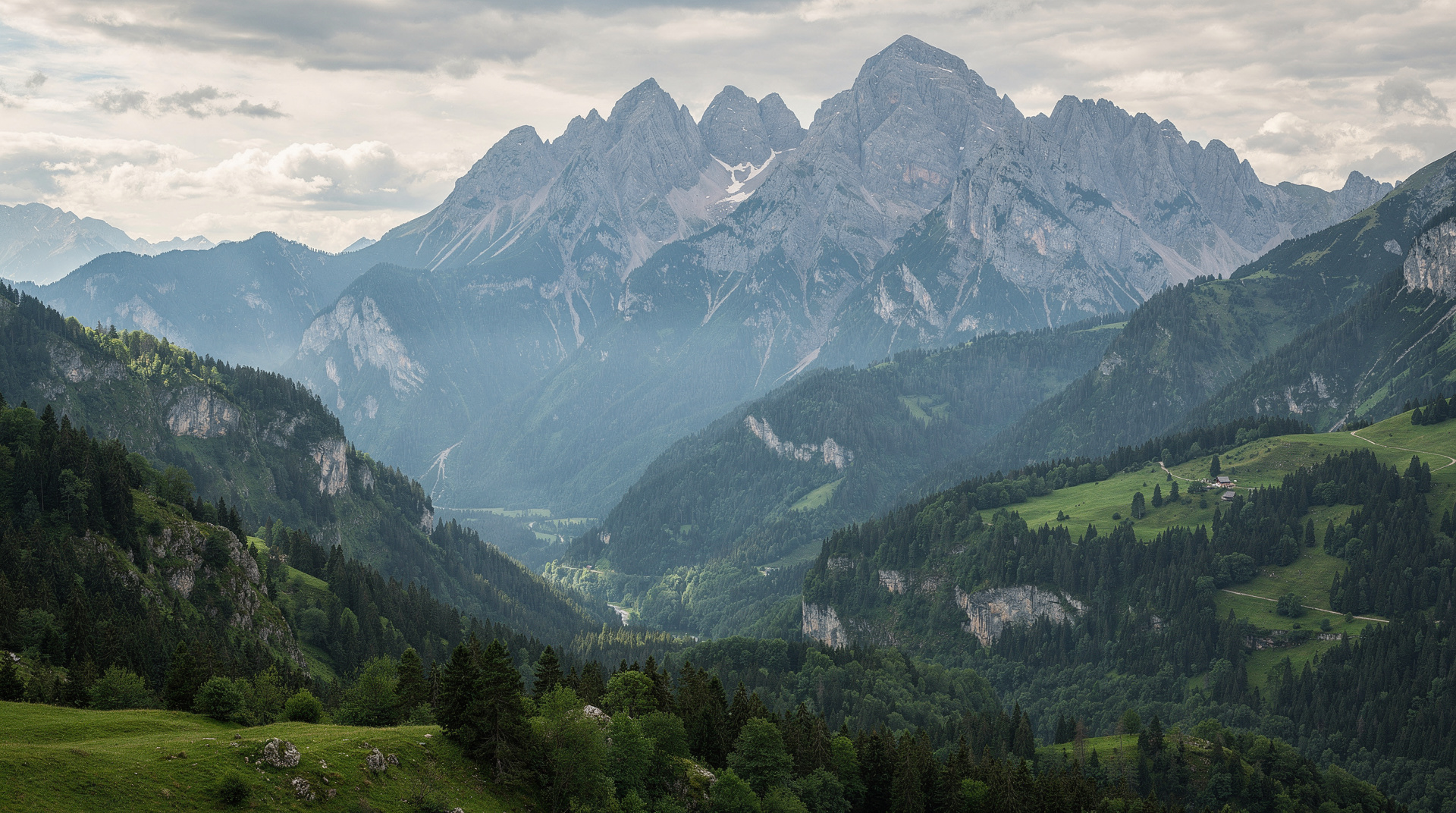
The mountains are the area where the most serious safety incidents involving tourists occur in Slovenia. The Julian Alps above 1,500m are real Alpine terrain — not a gentle hiking park with manicured paths and rescue huts every 200 metres. Weather deteriorates rapidly; July and August thunderstorms can develop within 90 minutes of a clear morning sky; temperatures drop significantly above 2,000m even in summer.
Mountain rescue (Gorska reševalna služba) responds to multiple callouts per week during summer. The pattern in serious incidents is consistent: hikers underestimate the time and difficulty of a route, are caught by afternoon weather, are inadequately equipped, or attempt trails above their fitness level.
Mountain safety rules:
-
Check the mountain weather forecast at Arso.si before any Alpine hike. International weather apps are unreliable above 1,500m; the Slovenian meteorological service’s mountain-specific forecasts are more accurate.
-
Tell someone (your accommodation, the local tourist information) your planned route and expected return time.
-
Carry: a charged phone with the mountain rescue number (112 or dedicated +386 1987), a physical map or downloaded offline map, extra warm layer, rain cover, headtorch, first aid kit, and sufficient water.
-
Set a realistic turnaround time and honour it. If the mountain is not cooperating, return and try another day. The mountain does not care about your schedule.
-
For Triglav (2,864m, Slovenia’s highest peak): go with a registered mountain guide (vodiška agencija) unless you have specific Alpine climbing experience. The summit ridge involves some via-ferrata assisted sections and is not a casual walk even in good conditions.
For route-by-route detail, the Julian Alps hiking guide, the Triglav climbing guide and the Triglav National Park page explain what each trail asks of you. If you are choosing between routes, the best hikes in Slovenia guide helps you match a hike to your experience, and the via ferrata guide is worth reading before any assisted route.
Mountain rescue: Dial 112 (all emergencies) or 1987 (direct mountain rescue line). The GRS (Gorska reševalna služba) app provides your GPS location automatically when you call from within the app — download it before hiking.
Water safety
The Soča River is beautiful and dangerous in the wrong places.
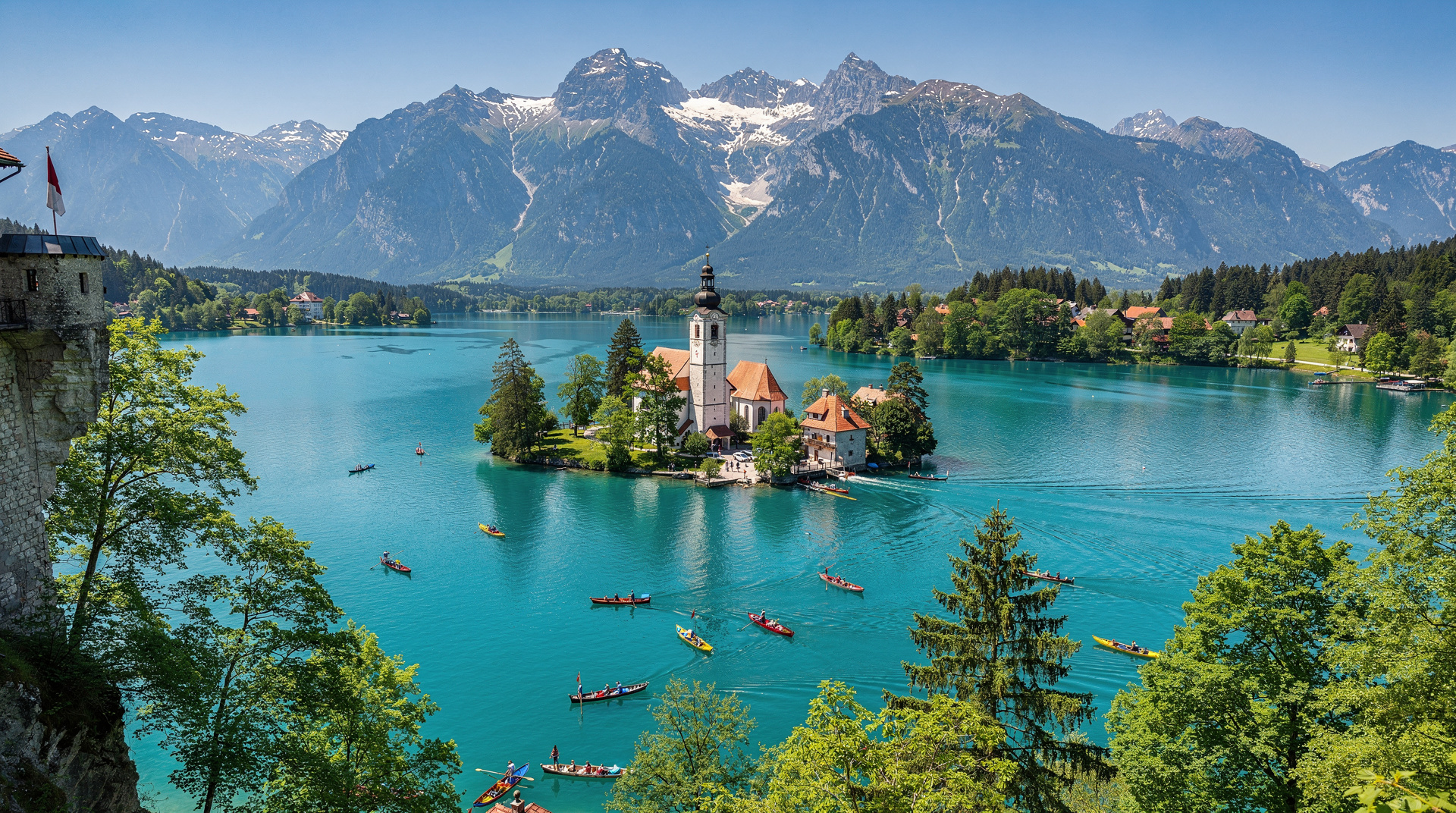
The river’s turquoise colour and mountain backdrop attract swimmers. In marked bathing areas and flat sections near Kobarid and Tolmin, swimming in summer (July–August) is safe and excellent. The danger is the unofficial sections: the Soča’s current is powerful even where the river looks calm from the bank. Cold water (8–14°C), underwater rocks, and deceptively strong flow account for several drowning incidents per year, almost always in unsanctioned swimming spots.
Rules:
- Swim only in marked areas or sections verified as safe by local operators
- The turquoise pools that look inviting from the road may have powerful undercurrents — check with locals before entering
- Children should not swim in the Soča without a flotation device unless in a supervised, calm section
Lake swimming at Bled and Bohinj is generally safe. Both lakes have designated swimming areas and lifeguards on duty in July and August.
If you want to be on the Soča rather than beside it, going with a licensed operator is the sensible route: the Soča River rafting guide and the kayaking on the Soča guide explain what a professional outfit provides, and Bovec and Kobarid are the usual bases. The swimming lakes guide lists calmer alternatives.
Natural hazards
Floods: Slovenia experienced serious flooding in August 2023 — the worst in decades — affecting the Savinja Valley, parts of the karst, and several valley communities. The country’s emergency infrastructure responded competently and the affected areas have largely recovered. Flooding risk is highest in the valleys during periods of sustained heavy rainfall; this is more of a structural risk for residents than a typical tourist concern, but if planning a mountain valley visit during an active weather period, check conditions.
Earthquakes: Slovenia sits on a seismically active zone. Moderate tremors are not uncommon; the last significant urban earthquake was the 1895 Ljubljana earthquake. The probability of a damaging earthquake during a typical tourist visit is very low, but not zero. Standard earthquake safety advice applies: during a tremor, shelter under a table or doorframe; after, evacuate a building via stairs (not lifts) and move away from structures.
Tick-borne encephalitis (TBE): Slovenia is in a TBE-endemic zone. Ticks are present in forested areas, particularly in spring and early summer (April–June). If you plan extended forest hiking, consider the TBE vaccine (course of three vaccines; speak to your GP or travel clinic before departure). Use tick repellent and check yourself for ticks after walks in forest areas. Lyme disease is also transmitted by ticks; if bitten, monitor for a characteristic bull’s-eye rash and seek medical advice if present.
Sunburn and altitude: The Alpine sun is stronger than at sea level, particularly above 1,500m. Use SPF 30–50 even on cloudy days in the mountains. Altitude above 2,000m can cause mild altitude sickness (headache, nausea) in some individuals — ascend gradually if you notice symptoms.
Road safety
Slovenia’s road accident rate is low by European standards. The motorway network is well-maintained; speed limits are enforced (motorway: 130km/h; main roads: 90km/h; built-up areas: 50km/h). Alcohol limits are strict — 0.05% BAC maximum, with zero tolerance for commercial drivers and those under 21.
Mountain road driving: The Vršič Pass road (50 hairpin bends, partially cobbled) and similar mountain routes require care — slow down significantly on hairpin descents, use lower gears, and watch for cyclists (the pass is popular with road cyclists). These roads are closed in winter (approximately November–May for the Vršič).
If you would rather ride than drive, a guided outing such as a mountain bike tour around Ljubljana keeps you on routes chosen by a local guide, away from fast traffic on unfamiliar roads.
Drink driving: Do not. The enforcement is consistent and the limits are low. Taxi and ride-share services are available in all tourist areas.
Wildlife: Deer, boar, and other wildlife cause road accidents in forested areas, particularly at dawn and dusk. Drive with attention in forested sections. The brown bears guide explains what to do if you ever meet one on a forest walk.
For the practical side of driving, the vignette guide, the car rental guide and the Vršič Pass driving guide cover what to arrange before you set off. If you would rather not drive at all, public transport in Slovenia is a safe and workable alternative.
Health and medical
Medical facilities: Ljubljana’s University Medical Centre (UKC Ljubljana) is a full tertiary hospital. Regional hospitals serve all major towns. Emergency care quality is competent at Western European standards. Rural primary care is adequate.
Insurance: EU/EEA citizens with EHIC cards have emergency treatment covered in public facilities. UK citizens use the GHIC with equivalent coverage. Non-EU visitors should carry comprehensive travel insurance. Mountain rescue can be expensive without insurance; most policies with adventure sports coverage include rescue costs.
Pharmacies (lekarna): Well-supplied; marked with a green cross. Available in all towns. A 24-hour pharmacy (dežurna lekarna) is available in Ljubljana; contact 080 12 30 for the duty pharmacy in other areas.
Solo women: the honest picture
The consensus across travel forums, published research, and community reports is consistent: Slovenia is very comfortable for solo women travellers. The specific feedback that recurs:
- Walking at night in Ljubljana, Bled, and Piran is described as comfortable and not intimidating by the overwhelming majority of solo women travellers
- The adventure sports community in the Soča Valley is described as welcoming, mixed, and professional
- Public transport feels safe, including at night on the main routes
- Local men in tourist areas are not described as persistently intrusive
The caveats that also appear in honest reports: late-night bar districts (Metelkova in Ljubljana, the old town late at night) have the same dynamics as any European city — aware but generally fine; very rural and remote areas at night warrant the same caution as anywhere.
Summary: who should feel confident visiting Slovenia
- Solo travellers of any gender
- Families with children
- LGBTQ+ travellers (Ljubljana is welcoming; rural areas more conservative but not hostile; same-sex civil unions were legally recognised in 2023)
- Older travellers (the infrastructure in tourist areas is good)
- First-time independent travellers
The appropriate precautions are ordinary: mountain awareness, river swimming caution, standard urban petty-crime vigilance, and tick checks in spring. Nothing in this list is exceptional to Slovenia; all of it is standard European travel common sense.
LGBTQ+ travel in Slovenia
Slovenia is the most progressive country in the former Yugoslavia for LGBTQ+ rights and social attitudes. Same-sex civil partnerships were legalised in 2023 (upgraded from the earlier civil union framework). Ljubljana has a modest but genuine LGBTQ+ social scene, centred on the Metelkova arts complex and a small number of inclusive bars and clubs in the city centre.
Practical experience: Same-sex couples travelling in Ljubljana and the main tourist areas report no notable issues. Public displays of affection are not considered unusual in Ljubljana’s café culture and younger social environments. In rural areas and in eastern Slovenia, attitudes are more conservative — not hostile, but more reserved.
Events: Ljubljana’s Pride Parade typically takes place in June; it is a well-attended, positive event in the city centre. The Roza Klub (Rosa Club) at Metelkova is the longest-running LGBTQ+ space in Slovenia.
Resources: Legebitra (legebitra.si) is the main Slovenian LGBTQ+ organisation and provides information on legal rights and community resources.
Travel advisories and government guidance
As of May 2026, Slovenia has no travel advisories from major Western governments. The country is not subject to conflict, terrorism warnings, or civil unrest issues that affect many global destinations.
UK Foreign Commonwealth and Development Office (FCDO): Slovenia is listed as safe for travel with standard precautions. No region-specific restrictions.
US State Department: Slovenia is at Level 1 (exercise normal precautions) — the lowest and most positive advisory level.
Australian DFAT: “Exercise normal safety precautions” in Slovenia.
This consensus is consistent with the statistical reality: Slovenia is one of the safest countries in Europe and poses no elevated risk to tourists of any nationality.
Insurance: what you actually need
European EHIC/GHIC: EU citizens use the European Health Insurance Card; UK citizens use the Global Health Insurance Card. Both provide access to emergency treatment at public hospitals and clinics in Slovenia at the same cost as Slovenian nationals. Carry both the physical card and a digital copy.
Private travel insurance: Recommended even with EHIC/GHIC. The key additional coverages that EHIC does not provide: (1) mountain rescue costs (helicopter rescue in the Julian Alps can cost several thousand euros without insurance coverage), (2) trip cancellation and delays, (3) personal liability, (4) equipment theft or loss.
Adventure sports coverage: If you plan rafting, canyoning, paragliding, or hiking above basic trail level, ensure your policy specifically includes adventure activities. Standard travel insurance often excludes “high-risk” activities. World Nomads, True Traveller, and Battleface are commonly used by adventure travellers to Slovenia.
Cost of travel insurance: A week’s travel insurance with adventure sports coverage for one adult runs approximately £25–50 (UK) or $30–60 (US) depending on the policy level. This is a small fraction of the cost of what it covers.
Emergency contacts summary
| Service | Number |
|---|---|
| All emergencies (police, ambulance, fire) | 112 |
| Police (direct) | 113 |
| Mountain rescue (Gorska reševalna služba) | 1987 |
| Duty pharmacy (24h) | 080 12 30 |
| Roadside assistance (AMZS) | 1987 (same number as mountain rescue — will redirect) or 1970 |
| Ljubljana University Medical Centre | +386 1 522 50 50 |
Food and water safety
Tap water: Safe and excellent throughout Slovenia. The country has high standards of water treatment and the mountain spring-fed systems in many areas produce water of exceptional quality. Carrying a refillable bottle is the recommended approach — plastic bottle purchases are unnecessary and environmentally wasteful.
Food safety: Restaurant hygiene standards are regulated to EU standards. Food poisoning from restaurants is uncommon. The main risk is the same as anywhere: street food or market stalls in summer heat without proper cold chain management. Standard precautions apply — avoid anything that looks like it has been sitting in sun for an extended period.
Allergies in restaurants: Slovenian restaurants are required under EU law to declare the 14 major allergens on menus. In practice, this is more consistently implemented in tourist-facing restaurants than in very rural gostilne. If you have a serious allergy, communicate it clearly at the time of ordering — Alergija na… (allergy to…) — and confirm the kitchen has understood.
Mushroom foraging warning: Autumn mushroom foraging in Slovenian forests is a serious local tradition. For visitors who want to forage: do not eat any mushroom you have picked without having it verified by a knowledgeable local or a foraging guide. Death cap mushrooms (Amanita phalloides) are common in Slovenian forests and cause several fatalities in Slovenia most years.
Crime targeting tourists: what happens in practice
Slovenia’s low crime rate does not mean the risks that exist are invisible. The specific patterns worth knowing:
Opportunistic theft at Bled: The most common tourist crime in Slovenia. Valuables left unattended at beach areas, in unlocked hire cars at Bled and Bohinj car parks, and in busy viewpoint areas. The thieves are opportunistic rather than organised. Prevention: do not leave bags unattended; do not leave visible valuables in parked cars; use hotel or hostel safes for passports and excess cash.
Confidence trickery: Rare but present in Ljubljana in tourist season — approaches by strangers with an overly familiar manner and a request involving some form of money. The standard European counter: be friendly but firm, do not stop walking, and do not engage with any request involving payment.
Online fraud in accommodation booking: Not specific to Slovenia but relevant: always book through established platforms (Booking.com, Airbnb, official hotel sites) rather than through links in unsolicited emails. The volume of fake vacation rental listings is a European-wide issue.
Drink spiking: Very rare in Slovenia compared to major nightlife cities. The same general precautions (do not leave drinks unattended, do not accept drinks from strangers in nightlife settings) that apply everywhere are appropriate without being paranoid.
Winter-specific safety notes
Winter travel in Slovenia (December–March) introduces a few additional considerations beyond the general picture above. Mountain roads including the approach to Kranjska Gora and Vogel require winter tyres or chains by law from mid-November to mid-March, and rental cars from reputable agencies are fitted accordingly — confirm this when booking rather than assuming it. Black ice is a real risk on shaded mountain roads and bridges in the early morning and evening; slow down accordingly.
Daylight hours are short (sunset around 16:00–16:30 in December), which shortens the practical window for any outdoor activity, including short hikes near Bled and Bohinj. Avalanche risk is a genuine concern for anyone leaving marked winter trails in the Julian Alps; stick to marked and maintained paths unless accompanied by a certified mountain guide with current avalanche training. Ski resorts (Kranjska Gora, Vogel, Krvavec) run standard patrol and rescue services and are considered safe within their marked runs.
Seasonal conditions change the picture, so check the Slovenia in winter and best time to visit Slovenia guides when you choose your dates, and the Ljubljana page for city-specific orientation.
Related guides
- Slovenia travel guide — the complete planning reference
- Solo travel in Slovenia — safety in the solo context
- First time in Slovenia — beginner’s overview
- Slovenia for families — family safety context
- Accessible travel in Slovenia — specific needs guidance
Frequently asked questions about Is Slovenia safe? Honest guide for 2026 travellers
Is Slovenia safe for solo female travellers?
Yes — the consensus among solo women travellers is strongly positive. Walking alone at night in Ljubljana, Bled, and Piran is widely reported as comfortable and unintimidating. The adventure sports community in the Soča Valley is mixed and welcoming. The usual urban precautions apply (awareness, avoiding unlit areas late at night), but there are no specific elevated concerns compared to other Western European destinations.What are the main safety risks in Slovenia?
The three genuine risks: (1) Mountain hazards — weather changes fast above 1,500m in the Julian Alps; under-prepared hikers get into trouble every summer. (2) River hazards — the Soča River has powerful currents in unofficial swimming spots; several drownings per year occur in unsanctioned sections. (3) Petty crime — standard tourist-area vigilance applies in Ljubljana, Bled, and Piran.Is driving in Slovenia safe?
Yes. Slovenia's road safety standards are comparable to Western Europe. The motorway network (vignette required: €16/week) is well-maintained. Mountain roads (the Vršič Pass, roads above Bohinj) require appropriate driving attention in poor weather — slow down and use lower gears on hairpin descents. Winter driving in mountain areas requires snow tyres or chains.Are there natural disaster risks in Slovenia?
Floods are the main natural risk — the Savinja Valley and parts of the karst region experience flooding in heavy rainfall periods, most recently significant flooding in August 2023. The country's emergency response system is well-organised. Earthquakes: Slovenia is in a seismically active zone (the 1895 Ljubljana earthquake was the last major urban event; moderate tremors occur occasionally). No volcanic activity.What should I do in a medical emergency in Slovenia?
Call 112 for all emergencies. Slovenia's healthcare system is competent at emergency level. EU citizens with EHIC cards receive covered emergency treatment at public hospitals. UK citizens use the GHIC card. Private travel insurance is recommended for mountain activities. Ljubljana's University Medical Centre (UKC Ljubljana) is the main hospital; regional hospitals cover all major towns.Is it safe to hike in the Julian Alps without a guide?
For valley walks and marked green or red trails, yes, with normal preparation. For high-altitude routes, via-ferrata sections and anything approaching Triglav, a guide is strongly recommended unless you have specific Alpine experience — weather changes fast above 1,500m and mountain rescue callouts are frequent in summer among under-prepared solo hikers.Are there dangerous animals in Slovenia?
Brown bears live in the forests of southern and central Slovenia in real but low numbers; encounters with tourists are very rare and bears generally avoid people. Ticks carrying TBE are a more realistic concern in forested areas from April to June. Vipers exist but bites are uncommon and rarely serious with prompt treatment.