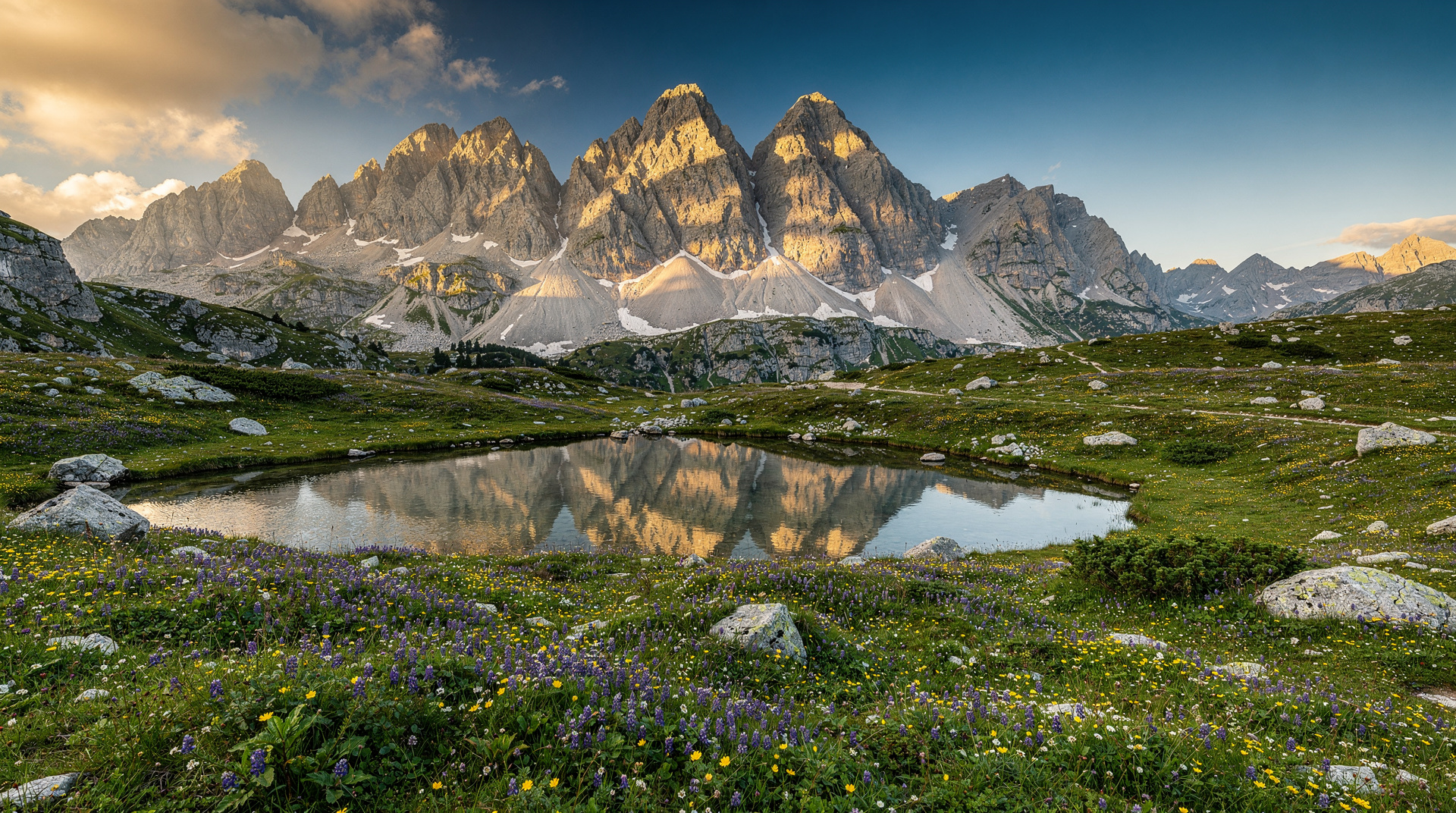
Velika Planina: the shepherd's plateau above the Kamnik Alps
High Alpine plateau with traditional shepherds' huts, sweeping views, and a cable car from Kamnik. Far less crowded than Bled.
From Ljubljana: Velika Planina tour with meal and photos
Quick facts
- Best time to visit
- Jun–Sep (summer plateau); Dec–Mar (skiing)
- Days needed
- Half day to full day
- Getting there
- Bus from Ljubljana to Kamnik ~1h, then cable car
- Budget per day
- EUR 35 to 80
A high Alpine world that feels nothing like a tourist attraction
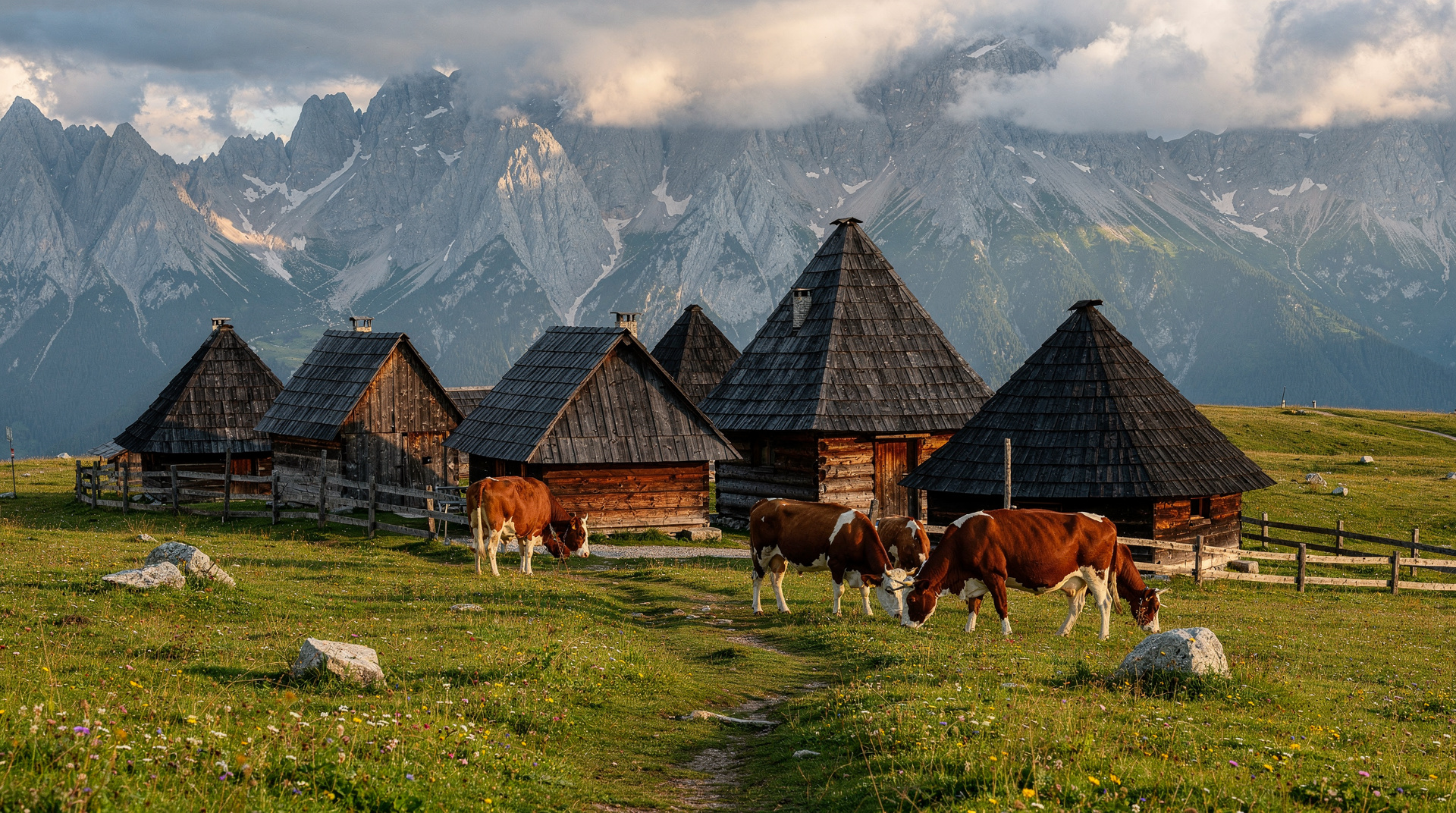
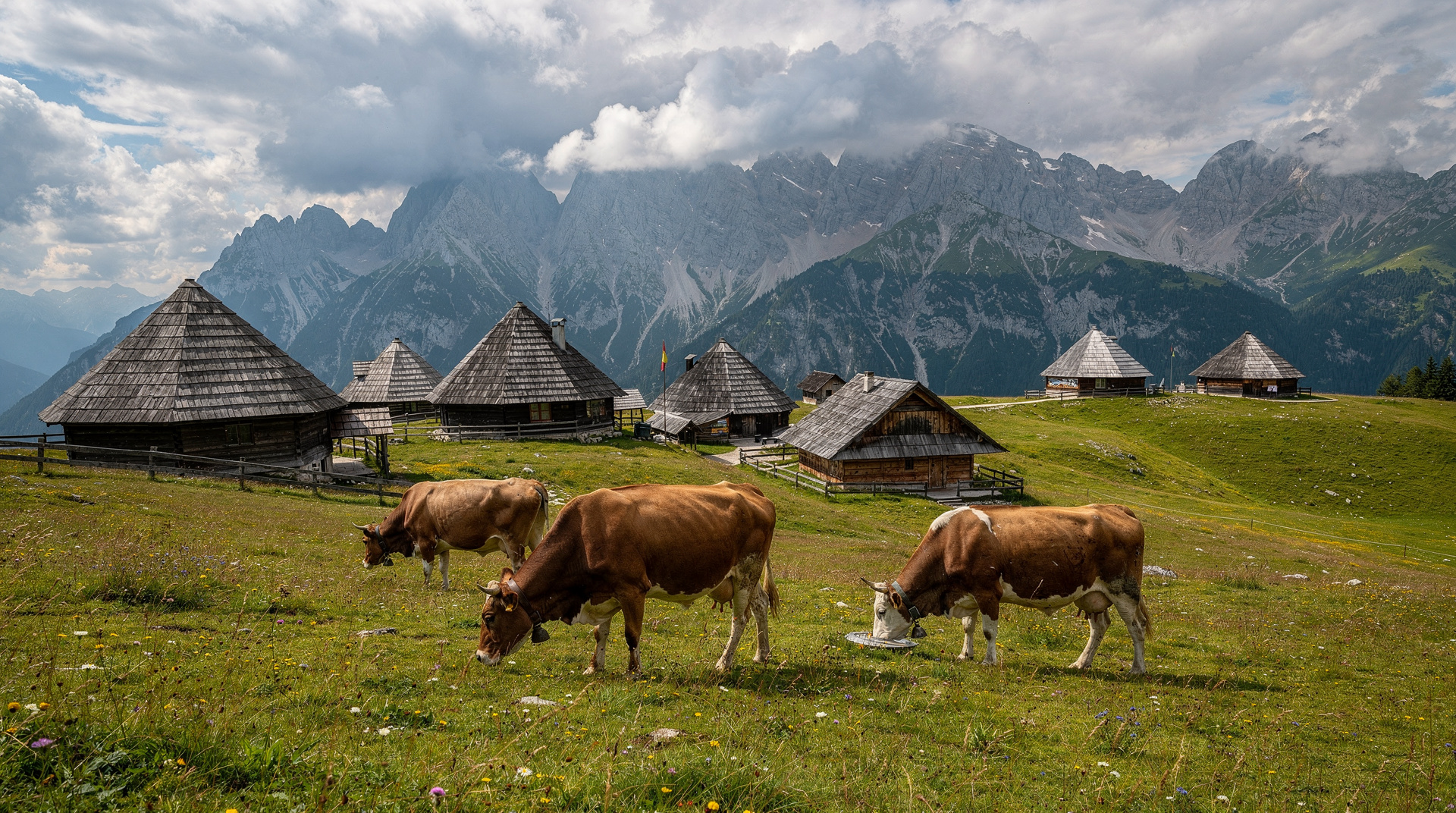
Velika Planina (the Great Plateau) sits at 1,600 m in the Kamnik-Savinja Alps, 50 km northeast of Ljubljana. A cluster of around 50 traditional shepherds’ huts occupies the plateau from June through September — wooden structures with distinctive curved roofs (called bačije) that have changed little in form since the 17th century. The herdsmen bring their cattle up in summer and return to the valley in autumn, a transhumance tradition that has persisted despite Slovenia’s EU membership and intensified agriculture.
It’s one of the most authentic high-altitude experiences in Slovenia. Almost nothing about the plateau is staged for tourism; it happens to be beautiful, accessible, and within 90 minutes of Ljubljana.
| Where | Kamnik-Savinja Alps, 50 km northeast of Ljubljana |
| Cost | Return cable car (fare on the official Velika Planina website) + EUR 10–15 hut meal |
| Time needed | Half day to full day |
| Getting there | Bus from Ljubljana to Kamnik ~1h, then cable car |
| Best time | June–September for the plateau; December–March for skiing |
Getting there
From Ljubljana, the route goes via Kamnik (see the Kamnik guide for what to see in the town itself). Buses from Ljubljana’s central station to Kamnik run frequently, taking approximately 50–60 minutes (EUR 3.50). From Kamnik, the cable car valley station at Spodnje Straniče is accessible by local bus or taxi (5 km from the town centre).
The cable car (žičnica) operates year-round (weather permitting) and rises from 608 m to 1,480 m in about 4 minutes. A second chairlift from 1,480 m continues to 1,666 m near the main plateau cluster. Current return fares are listed on the official Velika Planina website.
By car from Ljubljana: 45 km on the A2 motorway toward Domžale, then exit at Krtina and continue via Kamnik to the cable car station. Drive time about 50 minutes. Parking at the valley station is free.
Alternatively, it’s possible to hike up from the valley in 2–3 hours via the marked trail from Stahovica village. The trail is well-marked and moderately demanding; the reward is a genuine sense of arrival rather than being deposited by cable car. Descend by cable car to save legs for the afternoon.
The plateau and the huts
The upper plateau is open grassland ringed by limestone peaks. The huts cluster around the Zeleni rob area — stone and wood structures painted ochre and dark brown, each with a small fenced plot for the cattle. In summer (June to September), the herdsmen are in residence and sell fresh milk, cheese (skuta, a fresh curd), and sour milk directly from the huts. Prices are low (EUR 2–4 for a portion) and the products are genuinely farmstead-quality.
The experience of walking through the hut village on a summer morning, with cattle bells in the background and the Kamnik peaks rising behind, is one of the more distinctively Slovenian things you can do close to Ljubljana.
Tourist trap flag: the plateau has become popular enough that some huts now cater primarily to visitors rather than herdsmen. The refreshment stands near the cable car exit are the most commercial; walk 15 minutes further to the main hut cluster for the more authentic atmosphere.
For a guided experience that combines the plateau with a traditional Alpine meal, the Velika Planina with Alpine meal tour handles the cable car logistics and includes a seated meal at one of the plateau shepherd’s huts — a good option for first-time visitors who want to understand the cultural context.
Hiking on the plateau
The plateau itself is easily walkable in flat, open terrain. A circuit of the main hut cluster, the Gradišče hill (1,666 m, accessible by the second chairlift), and the Zeleni rob viewpoint takes 1.5–2 hours at a relaxed pace. Views extend south to Ljubljana (on clear days), east to the Savinja Alps, and north to the higher Kamnik peaks.
For more demanding hiking, the trails to Grintovec (2,558 m, the highest peak in the Kamnik-Savinja Alps) and Mali Grintovec begin from the plateau. These are full-day mountain hikes requiring proper equipment; Grintovec is a serious alpine objective.
Mala Planina and Gojška Planina: two smaller plateaux accessible by trail from Velika Planina, each with their own smaller hut clusters. The connecting walk is 2–3 hours and gives a sense of the full pastoral landscape.
The guided Velika Planina hiking tour covers the plateau circuit with a guide who can explain the shepherding traditions, the architectural history of the bačije huts, and the plant species of the Alpine meadows — worthwhile if you want more than a scenic walk.
Skiing and winter visits
Velika Planina operates a small ski area in winter (December to March) — 7 km of pistes and a ski school. It’s a low-key, family-oriented resort that charges significantly less than Kranjska Gora or Vogel. Snow coverage can be variable; the altitude (1,600–1,666 m) is lower than the major resorts, so warmer winters reduce the season.
The plateau in a fresh snowfall, with the huts under white caps, is beautiful in a completely different way from summer — but check the ski conditions and cable car operation before making it a primary winter objective.
Eating on the plateau
The refreshment huts near the cable car terminus serve coffee, beer, and standard Slovak snacks. For the more interesting eating, walk into the hut village proper and buy directly from herdsmen: fresh skuta with sour cream, cured cheese, and buttermilk are the things to try.
The Zeleni rob mountain hut (planinska koča) serves hot meals — štruklji (rolled dumplings), bean soup, grilled sausages — at prices that reflect the difficulty of getting supplies to 1,600 m. Expect EUR 10–15 for a main course. It’s busy in July and August; arrive before noon or plan to wait.
Combining Velika Planina with Ljubljana
Velika Planina makes an excellent half-day from Ljubljana: morning bus to Kamnik, cable car up, 2 hours on the plateau, cable car down, back in Ljubljana for dinner. Combined with a brief stop in Kamnik’s medieval old town (see the Kamnik guide), it’s a satisfying full-day excursion that shows a different face of Slovenia from the Bled circuit.
For planning the Ljubljana portion, the Ljubljana destination guide covers transport, accommodation, and what to do in the capital before or after the Kamnik Alps excursion.
The shepherding tradition: what you’re actually seeing
Velika Planina’s hut village is not a museum reconstruction. The curved-roof bačije huts (the curved profile was designed to shed snow loads) are still used by genuine herdsmen who bring their cattle up every June and return to the valley in September. The practice — called planšarstvo or transhumance — has been documented here since at least the 17th century and probably earlier.
The cattle are Simmental and Brown Swiss crosses adapted to Alpine conditions. You’ll see them grazing the open meadows throughout summer, and the cowbells are a constant auditory feature. The pastoral economy is not economically significant by modern standards, but it’s a living practice rather than a heritage performance.
UNESCO added the Slovenian Alps transhumance tradition — including Velika Planina — to the Representative List of Intangible Cultural Heritage in 2022. This is the appropriate framing: a living cultural tradition that happens to be beautiful, not a tourist attraction that happens to be cultural.
What the herdsmen sell: fresh skuta (fresh curd cheese) is the primary product — sold from the hut doorways from June to September in small portions (EUR 2–3). Sour cream (kisla smetana), fresh butter, and hard aged cheese are also available depending on the individual herdsman. Bring small notes; change is limited.
Photography at Velika Planina
The plateau is one of Slovenia’s most photogenic locations, but the light is demanding. The plateau faces east-southeast; morning light on the huts is excellent. By afternoon, the huts are in the shadow of the peak behind them and the light becomes flat.
The most-published view is the hut village looking north, with the Kamnik peak cluster behind — best from the Gradišče knoll (accessible via the chairlift from the main cable car). For the characteristic foggy morning plateau images, arrive at the cable car at opening time on days when low cloud fills the valley below — the plateau emerges above the cloud into clear morning light, and the hut shapes in mist are striking.
Drone photography requires advance permit from the national park authority — check current rules before bringing a drone.
Mala Planina and the connecting ridge walk
Two kilometres northwest of the main Velika Planina plateau, Mala Planina (the Small Plateau) is a similar but smaller hut settlement — perhaps 8–10 bačije huts at 1,540 m, with a mountain hut (Koča na Mali Planini) that serves food and drink. The walk between Velika and Mala Planina takes 40–50 minutes across open ridge terrain with excellent views in both directions.
Further northeast, Gojška Planina adds a third pastoral plateau to the circuit — similar character, even fewer visitors. A full circuit of all three plateaux takes 3–4 hours from the cable car upper station and provides the most complete picture of the Kamnik Alps transhumance landscape.
On the return from Mala Planina to the cable car, a slight detour via the Preskar open-air museum — a collection of traditional bačije huts preserved in their original arrangement, with interpretive panels — adds 20 minutes and contextualises what you’ve been walking through.
Practical planning: cable car timing and queues
The cable car is the bottleneck. In July and August on weekends, wait times at the valley station can reach 30–45 minutes. Strategies to avoid this:
Go on a weekday. The plateau is dramatically less crowded Tuesday through Thursday in summer.
Go early. The cable car typically opens at 08:00; arriving at 07:45 puts you in the first wave.
Go in autumn. September and early October see excellent conditions on the plateau — cool, clear air, cattle still in residence until late September, and autumn colour on the lower forest slopes.
Cable car closure: the cable car closes in high winds and for maintenance periods (usually mid-April to mid-May and some dates in November). Check the operational status on the Velika Planina cable car website before planning a visit around it.
Sustainability and visitor behaviour
The plateau is a working agricultural environment. Specific rules apply: stay on marked paths through grazed areas; do not enter the fenced hut plots without invitation; keep noise low near the huts; do not feed or touch the cattle.
The plateau carries around 150,000–200,000 visitors per year — significant for 2 km of open meadow. The herdsmen and the national park authority have periodically raised concerns about visitor pressure on the grassland. The practical implication for thoughtful visitors: spread out across the plateau rather than concentrating at the cable car exit area; walk to Mala Planina or the outer edges of the main plateau rather than circling the most-photographed hut cluster repeatedly.
The Slovenia travel guide addresses responsible tourism practices in alpine pastoral areas more broadly.
The view from the plateau: what you’re looking at
Standing at the Gradišče knoll (the high point accessible by the second chairlift), the panorama spans roughly 200 degrees of mountain. From left (northeast) to right (southwest):
The Storžič (2,132 m) rises immediately northeast — a pyramid-shaped peak visible from Ljubljana on clear days and the most photographed summit from the Kamnik basin. Its sharp profile makes it easy to identify.
The Kamnik Alps ridge extends east to west: Grintovec (2,558 m, the range’s highest peak), Skuta (2,532 m), Planjava (2,394 m), and Brana (2,252 m) form a high ridge just 6–8 km from the plateau. In July and early August, snow patches remain in the north-facing gullies of this ridge.
To the south, on very clear days, the Ljubljana basin is visible as a haze-filled plain between the Alps and the Karstic hills beyond. The Golovec hill immediately south of Ljubljana is identifiable.
The cattle on the foreground meadows, the wooden huts in the middle distance, and this mountain backdrop is the definitive Velika Planina composition — and it’s real, not staged.
Public transport from Ljubljana: the complete logistics
The journey from Ljubljana to Velika Planina by public transport has one awkward section that puts many people off — but it’s manageable:
Step 1: Ljubljana central bus station to Kamnik (Avtobusna postaja Ljubljana to Kamnik). Hourly buses, 50–60 minutes, EUR 3.50. The bus terminates at Kamnik Avtobusna postaja in the town centre.
Step 2: From Kamnik bus station, local bus line 13 (Arriva) runs to Kamnik Spodnje Straniče (the cable car valley station), 5 km, about 15 minutes. Frequency is approximately hourly in summer; check the current timetable at the Kamnik bus station or the Arriva website.
Alternatively: taxi from Kamnik town centre to the cable car station, EUR 8–12.
Step 3: Cable car (žičnica) to the lower upper station, then chairlift to the plateau. Round-trip fares are listed on the official Velika Planina website.
Total journey time from Ljubljana to plateau: approximately 2 hours. Worth it.
Autumn at Velika Planina: a specific recommendation
The window between mid-September and early October is the best time to visit Velika Planina, combining several advantages that peak season doesn’t offer:
The cattle are still in residence (they descend in late September to mid-October depending on the year) but the tourist crowds have gone. The plateau meadows turn amber and gold as the grass dries. The herdsmen are beginning to prepare for the descent, which means the huts are active but not oriented toward visitor service — a more authentic atmosphere.
Weather in this window is typically stable with cool clear days, low humidity, and exceptional visibility. The Kamnik Alps ridge in October light — snow-dusted above 1,800 m from mid-October — is dramatically photogenic.
The cable car schedule reduces after mid-September; check operating hours before planning a late-season visit. The plateau itself has no minimum temperature restriction for access, but the access trail (if walking rather than taking the cable car) requires appropriate layering once autumn sets in.
The best time to visit Slovenia guide covers the full seasonal pattern for the Ljubljana-central region and how Velika Planina fits within a multi-destination itinerary across different months.
Velika Planina vs the other Ljubljana-area day trips
| Day trip | Character | Best for | Trade-off |
|---|---|---|---|
| Velika Planina | High Alpine shepherds’ plateau | Authentic pastoral culture, easy hiking | Cable car queues on summer weekends |
| Škofja Loka | Medieval old town | History and architecture | Less dramatic scenery |
| Triglav National Park | High-mountain wilderness | Serious hikers, multi-day trips | Further from Ljubljana, needs more planning |
| Ljubljana itself | Capital city | First-time visitors, culture and food | Not a nature escape |
Velika Planina occupies a useful niche among these: it delivers a genuine high-alpine experience within a half day of Ljubljana, without the logistical commitment of a multi-day Triglav trip.
Combining Velika Planina with a longer Kamnik-Savinja Alps trip
Visitors with more than a single day can extend beyond the plateau itself. The wider Kamnik-Savinja Alps range, of which Velika Planina forms the southwestern edge, offers additional hiking around Kamniška Bistrica (the valley below Grintovec and Kamnik’s other high peaks) and the town of Kamnik itself, whose medieval old town and two castles make a natural half-day addition before or after the cable car. A two-day version of this trip — one day on the plateau, one day exploring Kamnik and the Kamniška Bistrica valley — gives a fuller picture of the region than the plateau alone, and avoids the return-trip rush that a single tight day from Ljubljana can impose.
Where Velika Planina fits in a wider trip
Velika Planina works best as a calm counterpoint to busier stops. Travellers who spend a few days around the lakes can balance them with a plateau day; the Lake Bled guide and the comparison in Bled vs Bohinj help decide how much time the lakes deserve. For a deeper look at the plateau itself, the dedicated Velika Planina guide goes further into route choices, while the Julian Alps hiking guide and best hikes in Slovenia suggest what to pair with it if the walking bug bites.
Those without a car can build the excursion into a five-day itinerary without a car, and anyone arranging the logistics will find the public transport guide a useful companion to the bus and cable car steps above.
Honest verdict
Frequently asked questions about Velika Planina
Is Velika Planina worth it if I’ve already seen the Julian Alps around Bled?
Yes — the character is different. Velika Planina is a working pastoral plateau with a distinct shepherding culture, whereas the Bled area’s appeal is centred on the lake and gorges. Visitors interested in cultural landscapes as much as scenery generally find it a worthwhile addition rather than a repeat experience.
Can I visit Velika Planina without the cable car?
Yes — a marked trail from Stahovica village climbs to the plateau in 2–3 hours, moderately demanding. Most visitors who hike up choose to descend by cable car to save their legs, which is a practical way to combine the sense of arrival from walking with an easier return.
Is Velika Planina suitable for a day trip with children?
Yes, the plateau itself is flat, open terrain that’s easy for children to walk, and the cable car ride is an attraction in itself for younger kids. The more demanding peaks (Grintovec) and multi-plateau circuits are for adults and older, fitter children only.
Top experiences
Bookable activities with verified prices and instant confirmation on GetYourGuide.