Ljubljana old town guide: the complete visitor's companion
Ljubljana: historic old town private walking tour
How long does it take to explore Ljubljana's old town?
A relaxed three-hour walk covers the main sights: Triple Bridge, the central market arcades, Dragon Bridge, and the castle hill. Half a day lets you pause for coffee, browse galleries and discover quieter lanes. A full day is ideal if you want to include the National Museum, Metelkova and a riverside lunch.
Ljubljana old town: what it is, why it matters and how to do it properly
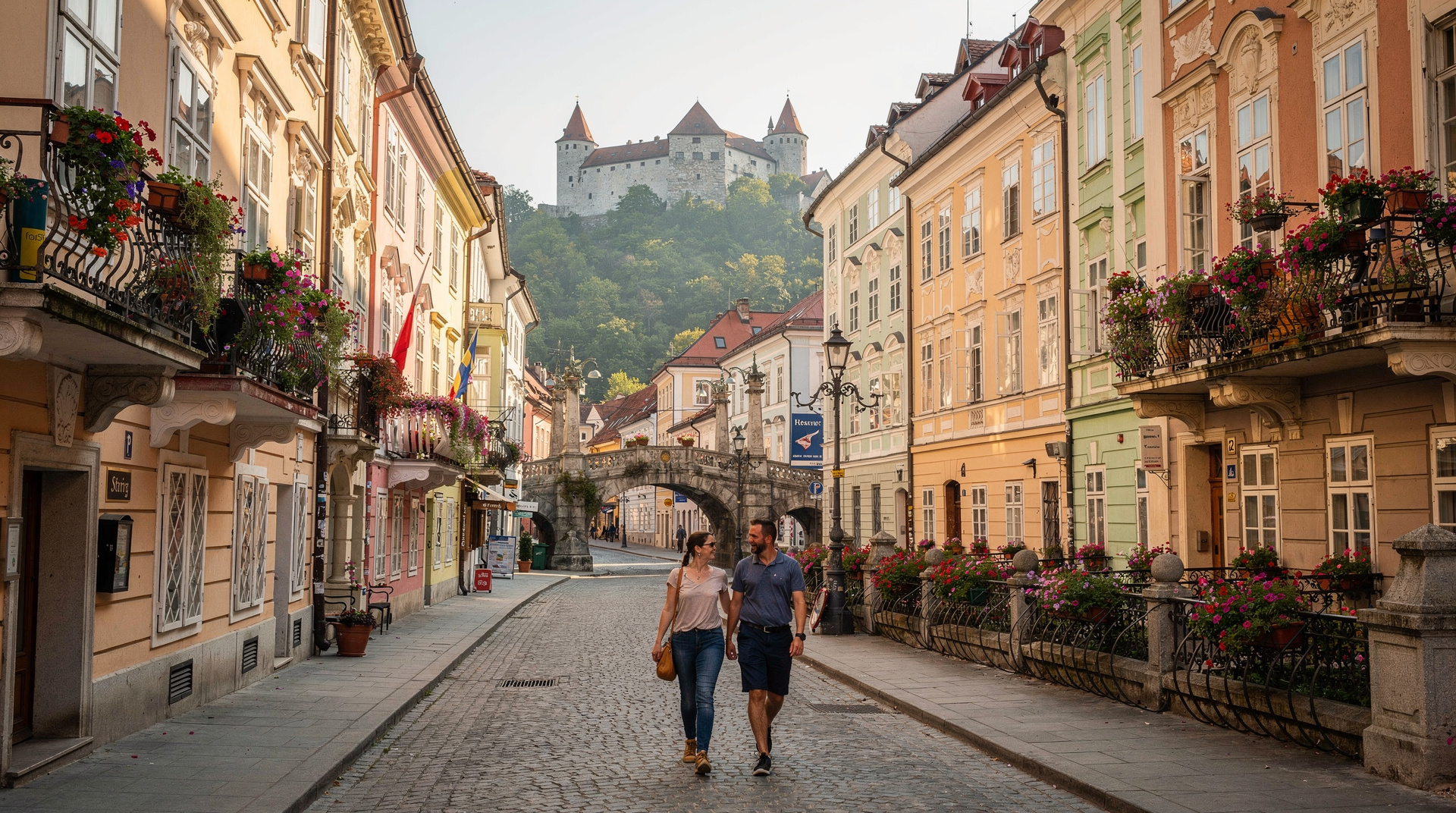
Ljubljana’s old town is small by European capital standards — and that is precisely its strength. Within a roughly 800-metre stretch along the Ljubljanica river, you will find Baroque townhouses, a castle on a pine-forested hill, and a suite of public spaces that represent one of the most coherent urban design projects of the twentieth century. The architect Jože Plečnik spent thirty years reshaping Ljubljana between the world wars, and the result is a city that feels designed as a single composition: bridges, fountains, colonnades and lamp posts all part of one unhurried visual language.
Ljubljana is not Prague. It is not Vienna. The crowds are manageable, the prices are reasonable, and the locals still use the old town as their actual daily neighbourhood rather than a backdrop for selfies. That combination — genuine beauty, real city life, human scale — makes it one of the most satisfying urban destinations in Central Europe.
| Where | Along the Ljubljanica river, below Castle Hill |
| Cost | Free to walk; castle interior EUR 17.10–19 |
| Time needed | 3 hours (highlights) to a full day (with market, museum, castle) |
| Getting there | 10 min walk from the train and bus station |
| Best time | Before 10:00 for photos; from 17:00 for the riverside |
Orientation: the three zones of the old town
The old town divides roughly into three overlapping areas, each with its own character.
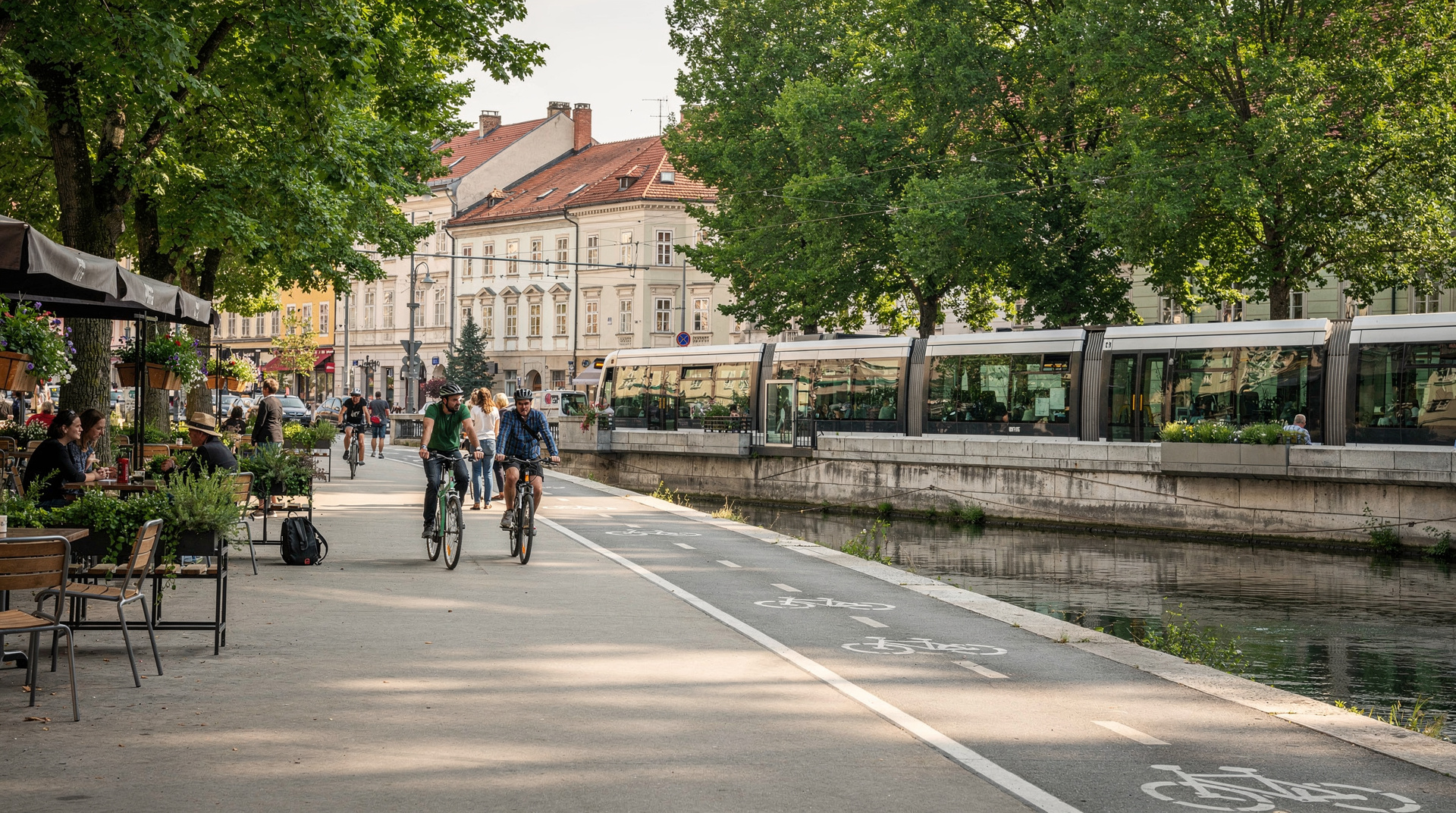
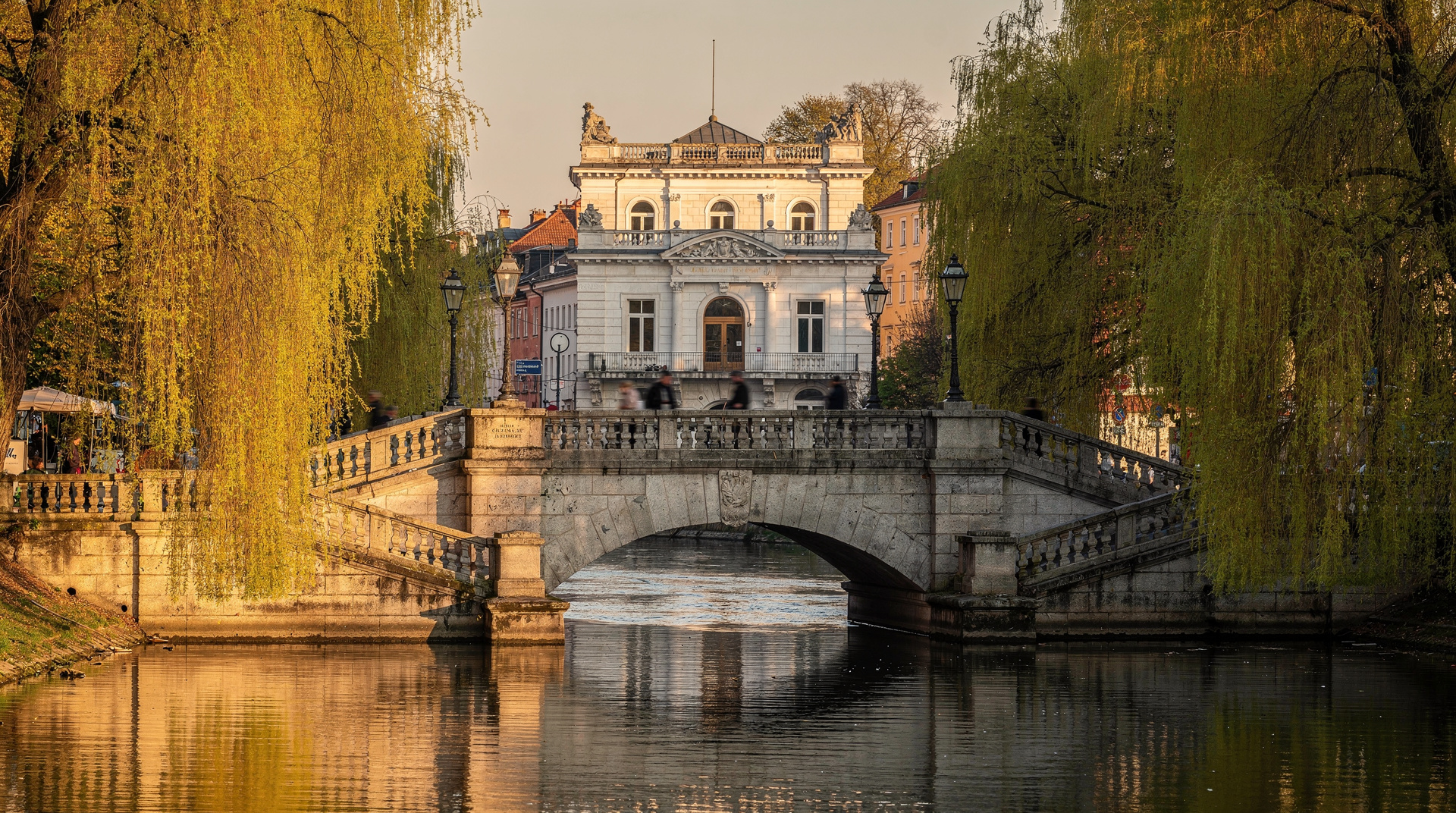
The riverside promenade (Breg and Gallusovo nabrežje) runs along the western bank of the Ljubljanica. This is Ljubljana’s aperitivo strip: dozens of café and restaurant terraces line the embankment from Triple Bridge down to Cobblers’ Bridge. Plečnik designed the low parapet walls, the lamp posts, and the stone steps descending to the water. It is at its best in late afternoon, when the golden light catches the painted façades on the opposite bank.
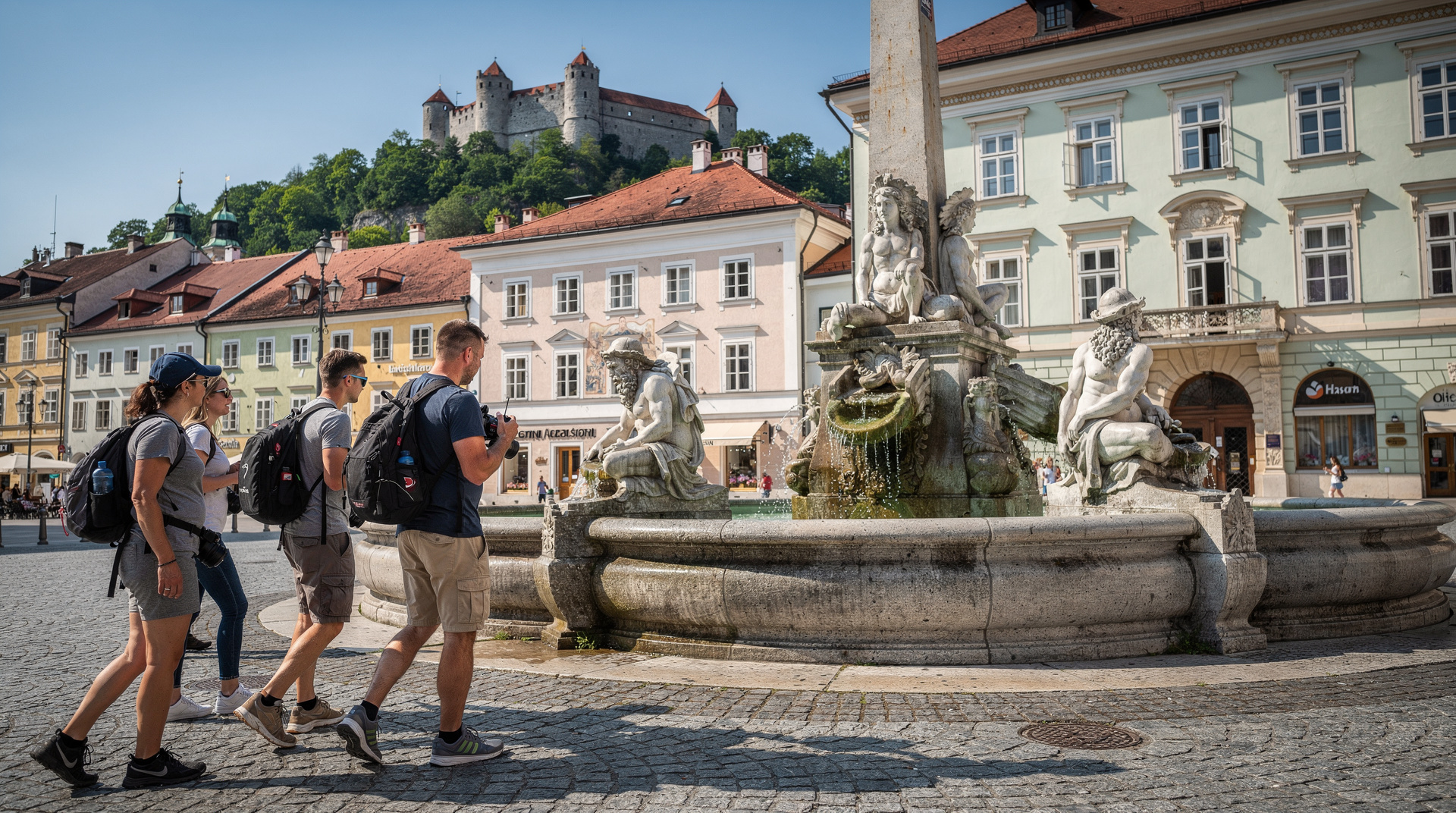
Mestni trg and Stari trg are the two main historic squares running north–south through the old town. Mestni trg (Town Square) contains the Town Hall (Rotovž), with its Renaissance courtyard you can usually enter for free, and a fountain of three Carniolan rivers by Francesco Robba — a work that held its own for two centuries before being moved inside for preservation (the outdoor version is a quality replica). Stari trg (Old Square) runs south from Mestni trg and is lined with antique dealers, independent bookshops and quieter cafés.
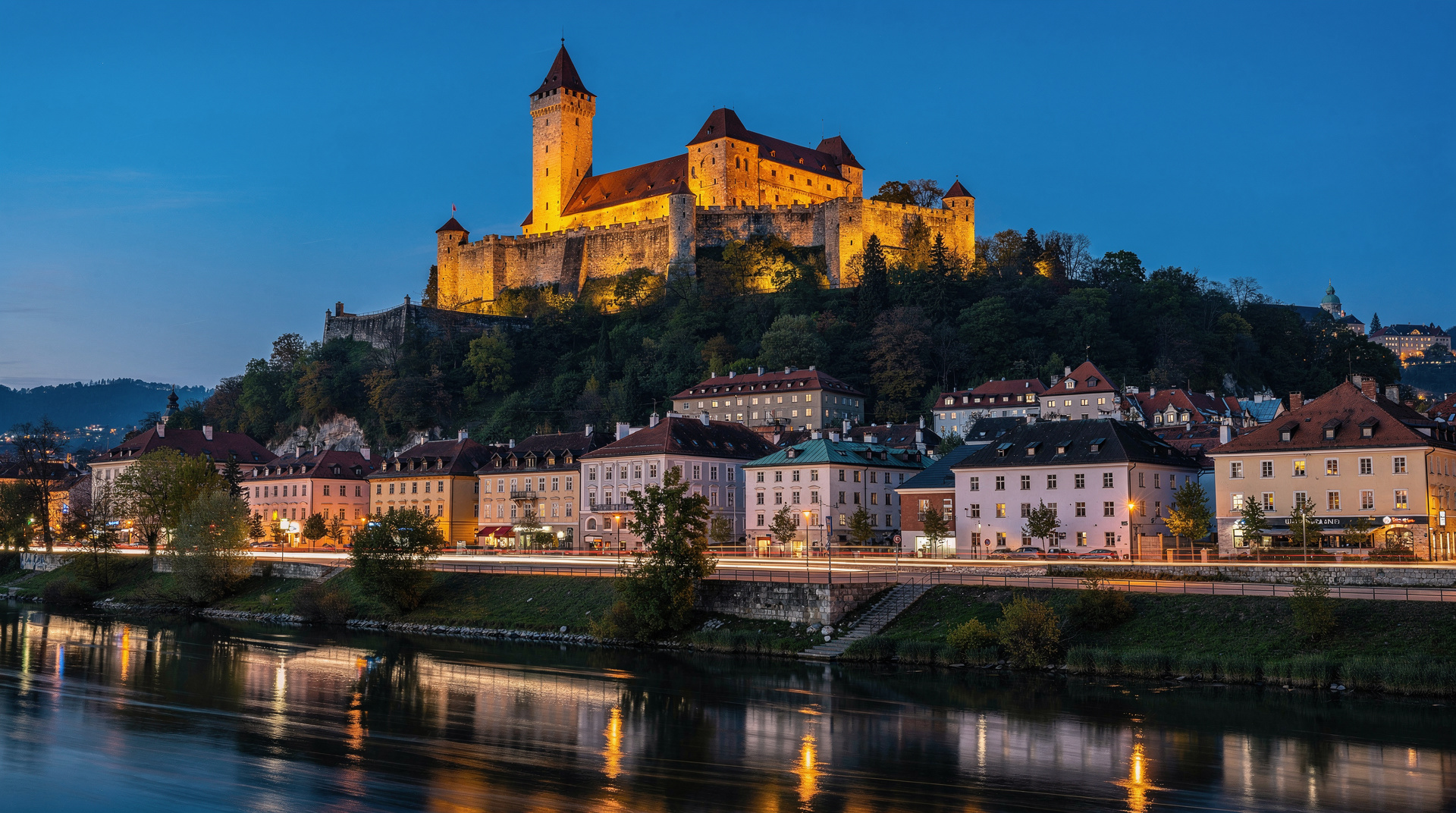
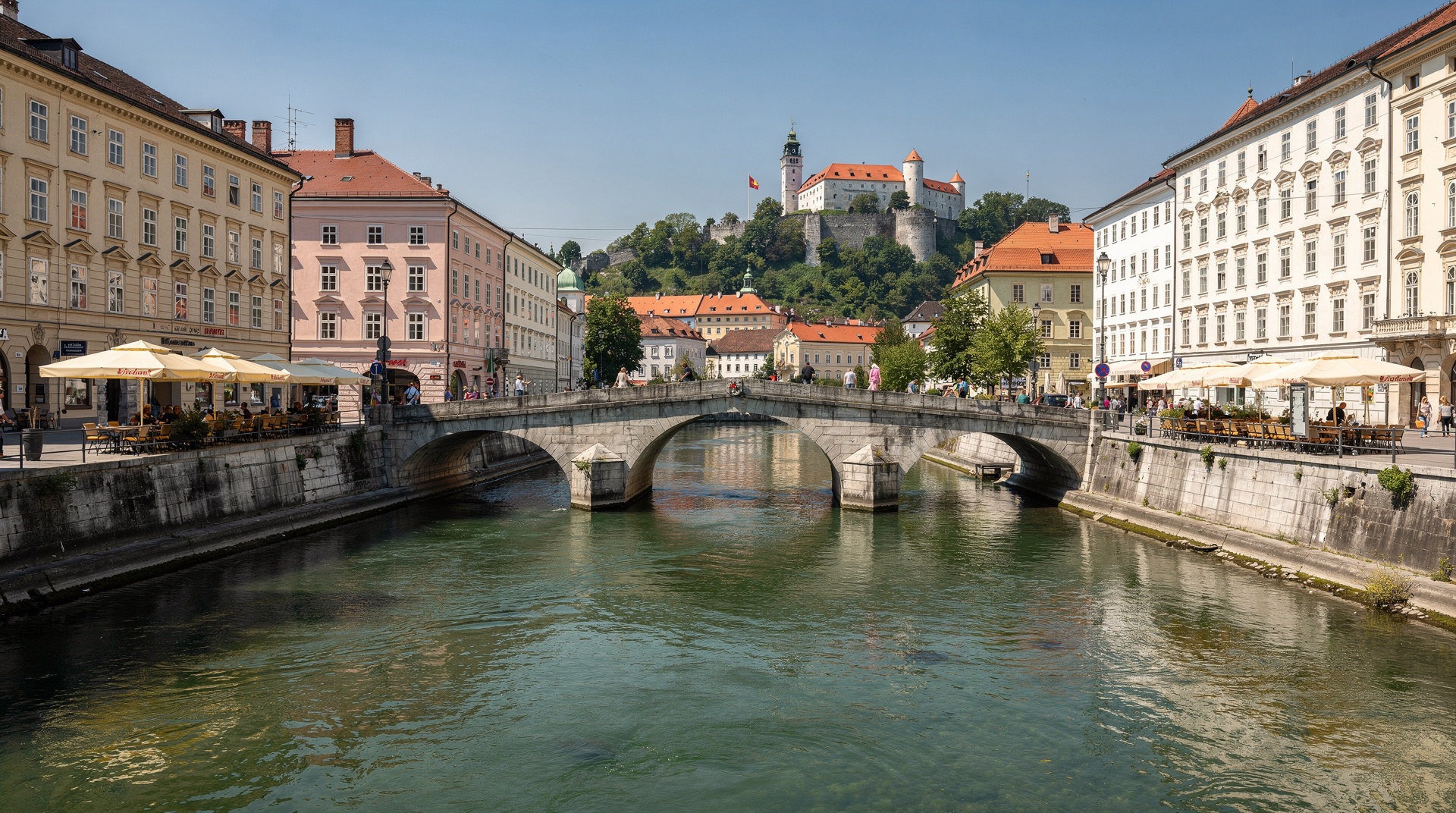
The castle hill (Grajski grič) rises immediately behind the old town, topped by Ljubljana Castle. The forested slopes are crisscrossed with paths you can ascend from multiple points in the old town. The castle itself is medieval in origin, repeatedly rebuilt, and now houses a history museum, a puppet theatre and a restaurant. The terrace offers the best panoramic view of the old town and the Alps beyond.
The essential sights
Triple Bridge (Tromostovje) is where most visits begin, and with good reason. Plečnik added two pedestrian bridges to either side of an existing road bridge in 1931–32, creating a three-pronged crossing that channels pedestrians gracefully from the modern city into the old town. Stand on the central bridge at dusk and look down the Ljubljanica — this is one of Slovenia’s most-photographed views, and it earns the attention.
The central market (Plečnik’s colonnade) runs along the river immediately north of Triple Bridge. The arcade — a long, vaulted Doric colonnade — was designed by Plečnik in the 1940s as a covered market and food hall. The ground floor still functions as a daily produce market: vendors selling local vegetables, cheese, honey and dried mushrooms. On Fridays from spring through autumn, an open-air market extends along the entire riverside. This is a working market serving local residents, not a tourist trap — prices are fair, and the atmosphere is genuine.
Dragon Bridge (Zmajski most) stands two blocks north of Triple Bridge. Four copper dragons guard the corners, patinated to a deep green. Built in 1901 in Secessionist style, it is technically a dragon bridge only by informal convention — the official name honours Emperor Franz Joseph — but the dragons have become the city’s symbol. Cross it to reach the covered Šumi fish market or the weekend flea market on Pogačarjev trg (Sundays, year-round).
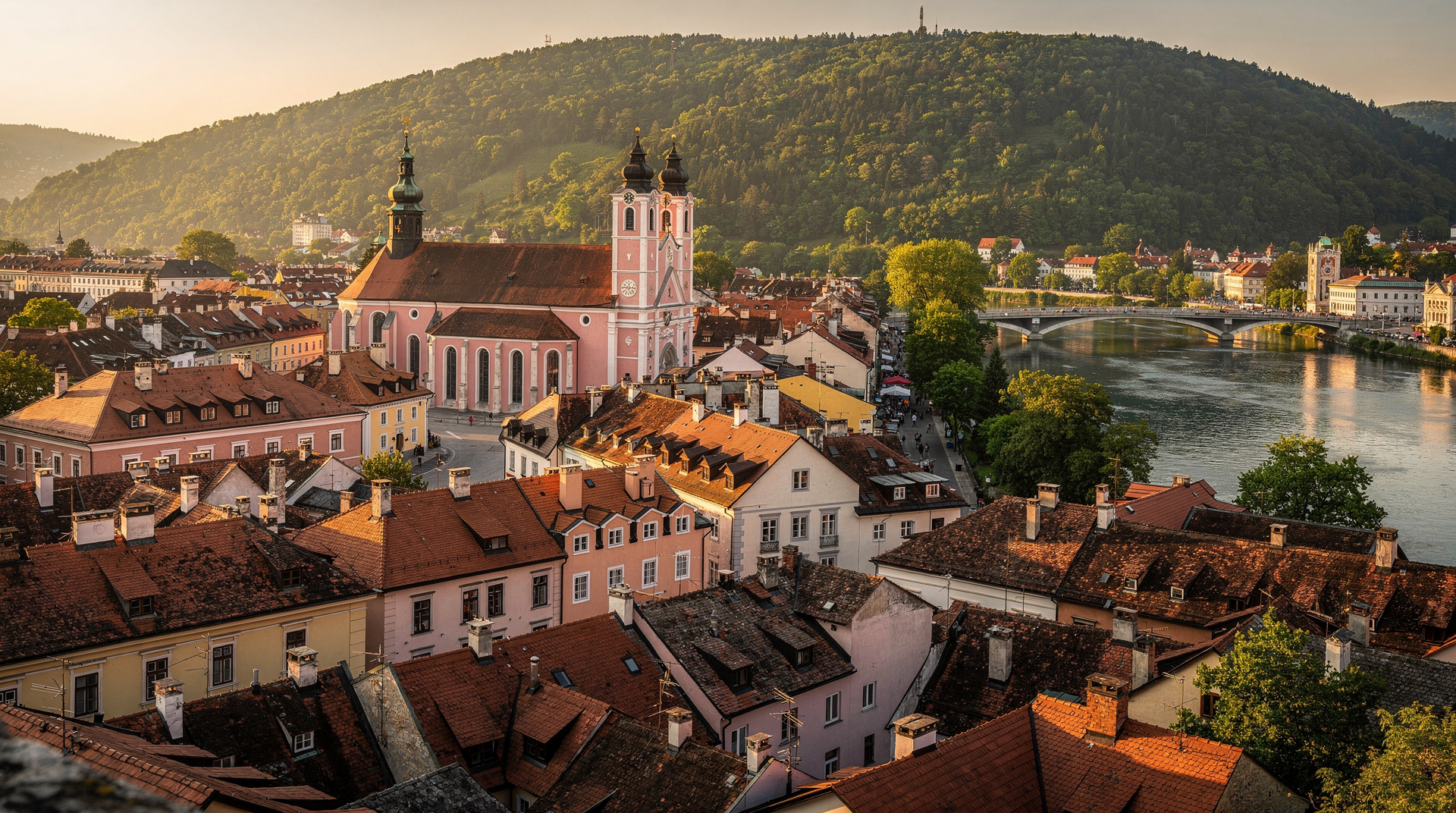
Preseren Square (Prešernov trg) is the main urban square at the foot of Triple Bridge. The pink Baroque Franciscan Church of the Annunciation dominates the north side; the monument to France Prešeren, Slovenia’s national poet, stands in the centre. This is the gathering point for New Year’s Eve, summer concerts and protests — the functioning heart of the modern city as much as a tourist attraction.
St Nicholas’s Cathedral sits a short walk from the market arcades. The Baroque cathedral contains ceiling frescoes by Giulio Quaglio and bronze doors added in 1996, depicting the history of Christianity in Slovenia. Entry is free. The twin-towered façade is more impressive from the small square in front than from the main riverside approach.
Town Hall (Rotovž) on Mestni trg has a Renaissance arcaded courtyard that is often overlooked because the entrance is through an archway that looks like a private passage. It is open to visitors during business hours and costs nothing. The fountain copy and the courtyard give a sense of what Ljubljana’s merchant-class architecture looked like before the 1895 earthquake drove a comprehensive Secessionist rebuild.
The castle: honest assessment
Ljubljana Castle sits at 376 metres — about 100 metres above the river. There are three ways up: a funicular from Krek Square (EUR 6 return), a tourist shuttle bus, or on foot through the forested paths. The walk takes 10–15 minutes from several starting points in the old town and is the most atmospheric option.
The castle complex is free to enter the outer areas — the main courtyard, the café terrace and the viewing areas around the ramparts. What costs money (EUR 17.10 online or EUR 19 at the desk, funicular included) is the funicular, the museum floors and the 4D film.
The guided funicular-and-castle walk is worth considering if you want the history explained efficiently without research — guides are generally excellent and the combo ticket makes the funicular worthwhile. Solo visitors with a good map or audio guide can cover the same ground for less.
The castle museum covers Slovenian history from the Roman period through to the twentieth century. It is competently done but not exceptional. The real value of the castle visit is the south-facing terrace: on a clear day you can see the Ljubljana Basin stretching south, the Kamnik–Savinja Alps to the northeast, and Mount Triglav on the northwestern horizon. For a fuller honest breakdown of what’s worth paying for inside, see the dedicated Ljubljana Castle guide.
Plečnik’s Ljubljana: a walking framework
Jože Plečnik (1872–1957) was a Viennese-trained Slovenian architect who spent three formative decades in Prague before returning to Ljubljana in 1921. Over the following thirty years he redesigned the city’s public spaces, bridges, markets, parks and civic buildings in a singular style that drew on Classical antiquity, folk tradition and his own invention. His work was largely ignored by architectural historians during his lifetime; since the 1980s it has received serious re-evaluation.
A dedicated Plečnik walk takes 2–3 hours. The key stops: Triple Bridge; the colonnade market; the National and University Library (Turjaška ulica — closed at weekends but viewable from outside, with its distinctive black and grey stone facade); Šuštarski most (Cobblers’ Bridge, with its columns and book-dealer tables); Kongresni trg (Congress Square) with its Ursuline Church and the wooded Zvezda park; the Križanke open-air theatre; and the Plečnik House museum in Trnovo (his actual home, open as a museum — one of the most intimate architectural museums in Europe). The Plečnik architecture guide covers this route stop by stop with the full historical background.
The Plečnik river cruise combining the main architectural landmarks with a boat segment is a good option for those who want an overview before exploring independently — it covers both the Plečnik landmarks and the riverside in sequence.
The hidden courtyards and less-visited lanes
Most visitors follow the main riverside route and miss the parallel streets a block or two inland. Stari trg running south from Mestni trg is quieter and lined with genuine neighbourhood shops. The lane Ribji trg (Fish Market Square) between the cathedral and the river holds a small square with outdoor tables used mainly by locals. Gornji trg, the extension of Stari trg further south, has the oldest surviving section of the medieval street plan and a cluster of antique dealers worth browsing.
On the castle hill side of the old town, the lanes climbing toward the castle — Studentovska ulica, Gornji trg’s upper reaches — pass small churches, garden walls and views over terracotta rooftops that most visitors in a hurry never reach.
Metelkova: where the alternative scene lives
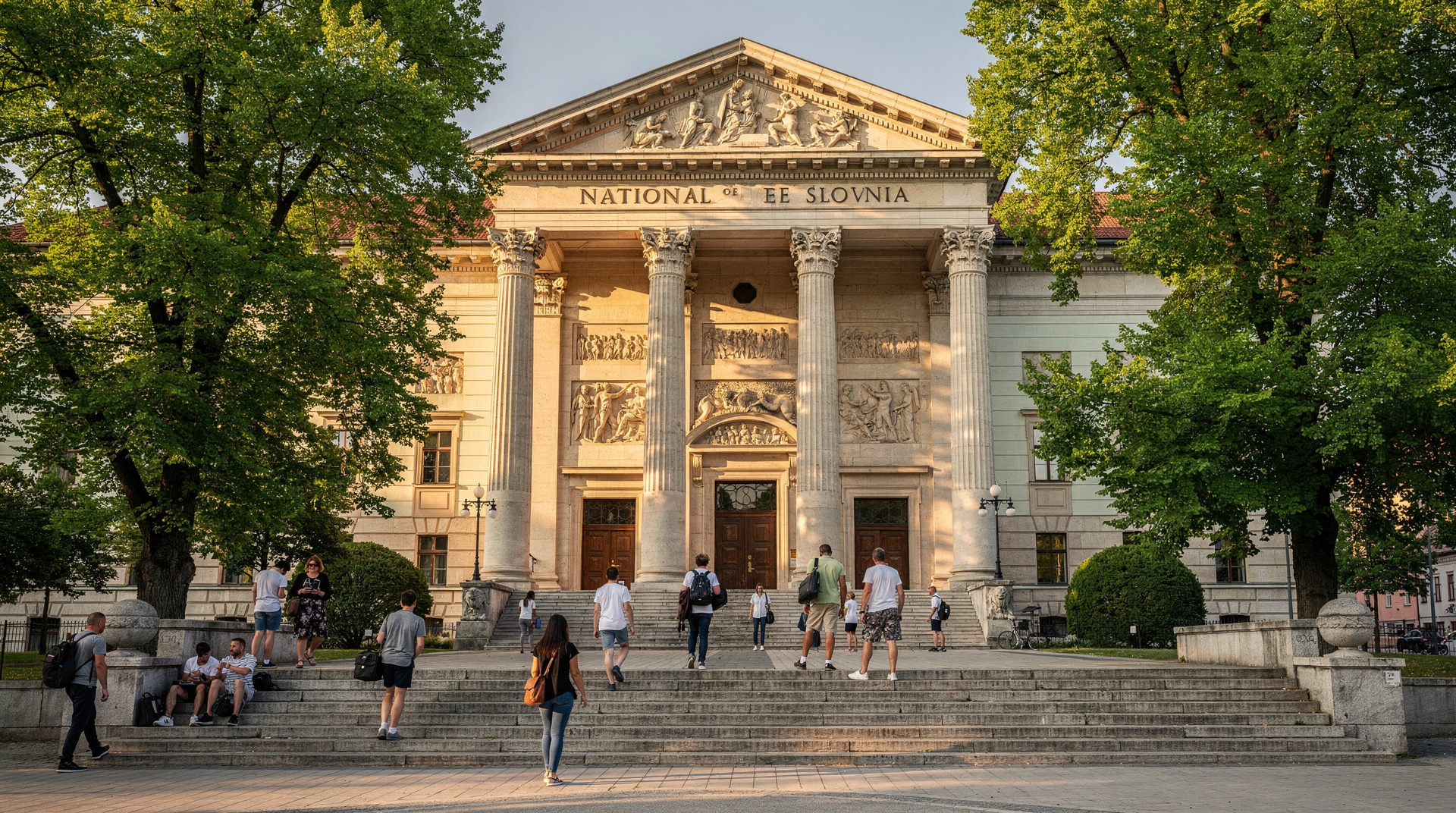
Ten minutes’ walk northeast of the main square, the former Yugoslav military barracks at Metelkova were occupied by artists and activists in 1993 following the army’s departure. They have been there ever since. The Metelkova mesto autonomous cultural zone is now an established institution: murals cover every surface, a cluster of clubs occupies the old barracks buildings, and two national museums (the Museum of Contemporary History and the Ethnographic Museum) sit on the same block.
Metelkova is free to enter. The clubs open only late at night; daytime visits are for the murals, the atmosphere and the adjacent museums.
Food and drink in the old town
The old town has no shortage of restaurants, but the best value is a street or two away from the main riverside terrace. The following are real establishments with consistent track records:
Gostilna na Gradu (in the castle) serves Slovenian dishes using local ingredients — pricier than the city average but a good choice if you want to eat with a view. Lunch is better value than dinner.
Gostilna Sokol on Ciril-Metodov trg is a traditional Slovenian gostilna with wooden interiors, a long menu of national dishes and prices that reflect a working lunch crowd rather than tourism. The žlikrofi (potato-filled pasta from Idrija) and various preparations of buckwheat are reliably well made.
Valter on Stari trg is a small, unpretentious place serving honest Slovenian food at prices noticeably below those of the riverfront. No river view, but the food quality and value ratio makes up for it.
For coffee, the Ljubljana café culture is genuine — the city has a long tradition of sitting in for extended conversations. Pri Skofu on Petrkovšek nabrežje is a well-regarded independent café with a good riverside terrace. Čajna Hiša on Stari trg specialises in teas but serves decent coffee.
For the evening, the riverside bars between Triple Bridge and Cobblers’ Bridge fill from 17:00. Order a glass of Rebula (the coastal white wine) or a Laško pivo (the main domestic lager) and find a spot on the Plečnik-designed stone steps down to the water.
Day trip and itinerary integration
Ljubljana old town works as a standalone day from Lake Bled (1 hour by bus), from Skofja Loka (30 minutes by bus) or from Kamnik (45 minutes). As a base, Ljubljana is the natural starting point for Maribor, Ptuj, Lipica and the Karst region.
Most visitors underestimate Ljubljana and allocate only a half-day — then find themselves extending their stay. The city rewards slowness: the old town seen in an hour is atmospheric; seen over two days, it becomes genuinely engaging. If you only have one day, the one-day Ljubljana itinerary sequences the old town, castle and market into a realistic schedule with timings. For a broader menu of things to do beyond the old town core, see things to do in Ljubljana and, for indoor options on a wet day, the Ljubljana museums and galleries guide.
For a structured introduction, a private guided walk of the old town is one of the better investments you can make on the first morning. A knowledgeable local guide will explain what you are looking at, introduce the Plečnik context and answer questions that no guidebook anticipates.
A self-guided three-hour route
If you would rather explore independently than book a guide, this sequence covers the essential old town in a logical order without doubling back.
Start at Prešernov trg, in front of the pink Franciscan church, and take five minutes to look at the Prešeren monument and the square’s role as the city’s gathering point. Cross Triple Bridge slowly — this is the moment most first-time photographs of Ljubljana are taken, and it is worth pausing on the central span rather than walking straight through.
From the far side, turn right along the riverside promenade toward the central market colonnade. If it’s a weekday morning, walk both levels of the arcade; if the market is closed, the empty colonnade is still architecturally worth ten minutes. Continue north to Dragon Bridge and take the obligatory photo of the copper dragons, then loop back south through Pogačarjev trg and past St Nicholas’s Cathedral.
Cross back over the river at Triple Bridge or continue to Cobblers’ Bridge, then walk the length of Mestni trg and Stari trg, ducking into the Rotovž courtyard along the way. At the southern end of Stari trg, decide whether to climb the castle hill (add 1.5–2 hours) or continue to Gornji trg for the quieter antique-dealer lanes before looping back to the river for a coffee.
This route covers roughly 2.5 kilometres of walking, most of it flat, and works equally well in reverse if you prefer to start from the castle side of the old town.
The old town through the seasons
Ljubljana’s old town changes character noticeably across the year, and knowing what to expect helps set realistic plans. Spring (April–May) brings the clearest mountain views from the castle terrace and the first outdoor café tables of the year, with moderate crowds. Summer (June–August) is at its busiest and warmest — the riverside bars are at full capacity by early evening, and the Ljubljana Festival fills the Križanke courtyard with concerts most nights.
Autumn (September–October) is arguably the best balance of mild weather, good light for photography and thinning crowds, with the market at its most interesting as mushroom and walnut season begins. Winter (November–March) brings the Christmas market to Prešernov trg and the surrounding squares from late November, along with genuinely quiet weekday mornings — the old town in a light dusting of snow, with the castle lit above, is one of the more underrated versions of the city.
Practical information
Entry fees: Old town — free. Castle outer areas — free. Castle funicular — EUR 6 return. Castle museum/exhibitions — EUR 17.10–19. Dragon Bridge and all bridges — free. Central market — free.
Opening hours: The castle is open daily (hours vary seasonally; check the website). The central market is most active Monday–Saturday mornings (closes around 14:00 on Saturdays, smaller on Sundays). Most churches are open daily, usually 09:00–12:00 and 15:00–18:00.
Getting there: Ljubljana city centre is easily reached by bus from the main bus station (connections from Bled, Kranjska Gora, Maribor, Koper, Piran). The train station is a 10-minute walk from Triple Bridge. By car: park in the Kozolec underground garage (near the bus station) or the Nama garage (northeast of the old town) — do not attempt to drive into the pedestrian zone.
Accessibility: The riverside path and main squares are flat and fully accessible. The castle requires either the funicular or a steep 15-minute walk on uneven paths. The colonnade market has cobblestone sections.
Frequently asked questions about Ljubljana old town
What is the most famous sight in Ljubljana old town?
Triple Bridge (Tromostovje) is Ljubljana’s most-photographed structure and the symbolic gateway to the old town. Dragon Bridge, the central market colonnade, the Franciscan church and the castle hilltop are all close competitors. In terms of historical significance, the Town Hall and St Nicholas’s Cathedral predate the Plečnik interventions by several centuries.
Can you visit Ljubljana old town for free?
Almost entirely. The riverfront promenade, all bridges, the main squares, the outdoor market, the castle outer areas and most churches are free. The only significant costs are the castle funicular (EUR 6 return) and the castle interior exhibitions (EUR 17.10–19). A full day in Ljubljana old town costs nothing beyond food and drink if you choose wisely.
How do you get from Ljubljana airport to the old town?
The official shuttle bus from Ljubljana Jože Pučnik Airport (LJU) runs to the main bus station in the city centre approximately every 30–60 minutes; the fare is around EUR 4 and the journey takes 45–55 minutes. Taxis and rideshares cost EUR 25–40. Several budget airlines also serve Trieste (2 hours) and Venice (3 hours), where international bus connections to Ljubljana are available.
Is Ljubljana safe for tourists?
Ljubljana is one of the safest capital cities in Europe by any metric. Petty theft from bags in crowded markets or bars is the main risk for tourists, as it is in any European city. The old town is well lit and busy until late in summer. Solo travellers, including women, regularly report feeling completely comfortable at night.
What is the best viewpoint over Ljubljana?
The castle terrace is the classic answer — the south-facing panorama is the widest. For a different angle, the Nebotičnik skyscraper café bar on Štefanova ulica (a 1930s Secessionist highrise) has a rooftop terrace open to the public for the price of a drink, with a view across the old town rooftops that many find more photogenic than the castle panorama. It also has the advantage of being free of the queue that forms at the castle funicular in summer.
When does Ljubljana old town get crowded?
July and August bring the highest visitor numbers, concentrated on weekend afternoons from about 11:00. The Ljubljana Festival (outdoor classical and world music concerts from July through August) fills the old town evenings with a festive atmosphere. The quietest times are weekday mornings in spring (May, early June) and autumn (September, October), when the old town is largely locals. Even at peak season, Ljubljana is never as crowded as Prague’s old town or Vienna’s Innere Stadt.
Are guided walks of Ljubljana old town worthwhile?
For a first visit, yes — a good guided walk transforms what might otherwise be pleasant but unexplained scenery into a coherent story. The Plečnik legacy, the history of the 1895 earthquake and the political history of Ljubljana under Habsburg, Yugoslav and Slovenian governance all add layers that guidebooks compress. Most tours run 2 hours and cost EUR 15–25 per person for group tours, EUR 60–100 for a private guide. The Ljubljana walking tours guide compares the free tours, themed tours and private options if you want to choose between them.
Top experiences
Bookable activities with verified prices and instant confirmation on GetYourGuide.