Things to do in Ljubljana: the complete activity guide for 2026
Best of Ljubljana: private tour with a local guide
What are the best things to do in Ljubljana?
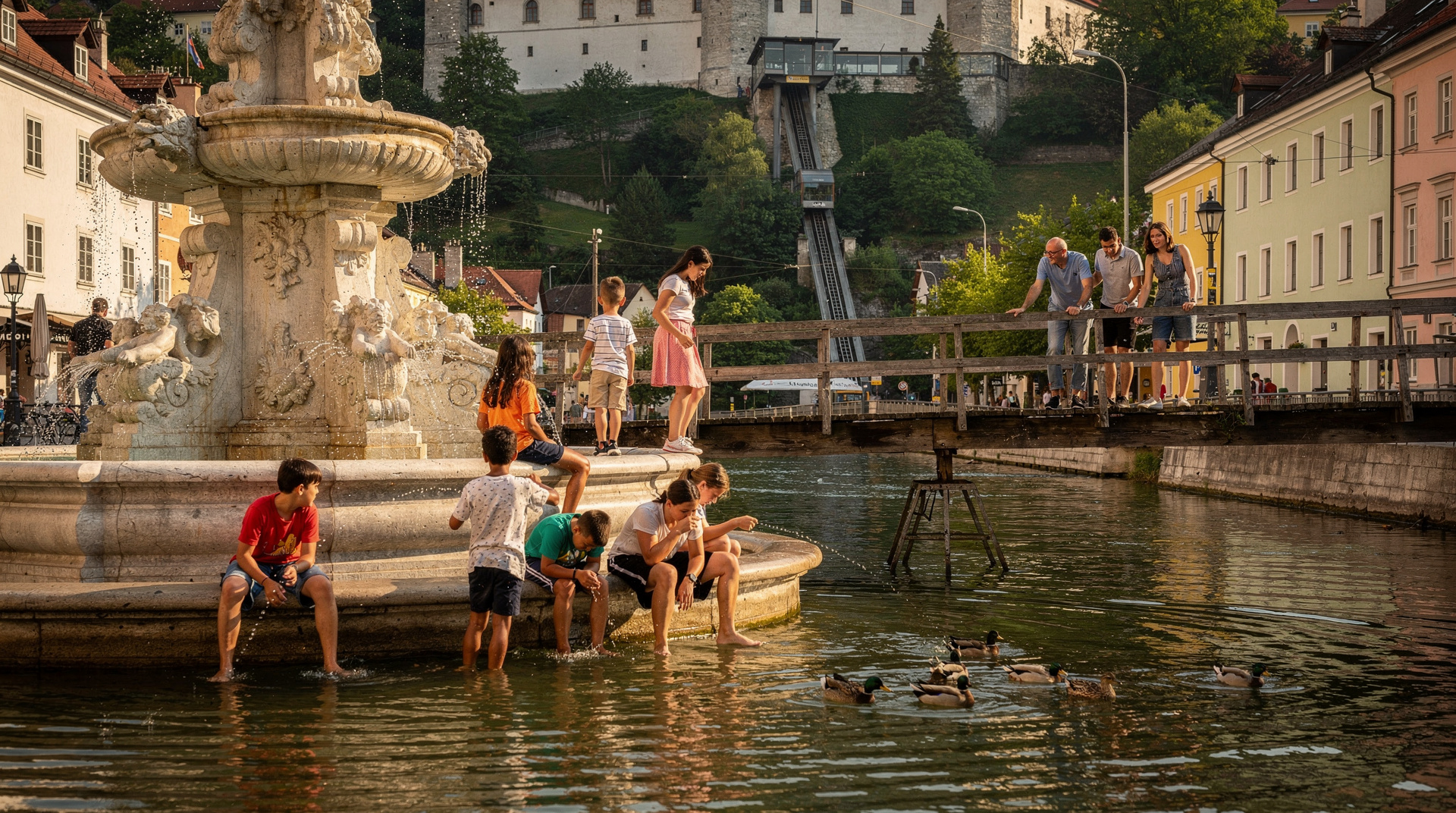
Walk the old town along the Ljubljanica river, visit the central market, climb to the castle for the panorama, explore the Plečnik architecture sequence (Triple Bridge, the colonnade, the National Library), and end an afternoon at one of the riverside café terraces. Ljubljana rewards slowness — the best things to do here are mostly free, outdoor and unhurried.
What to actually do in Ljubljana: the complete honest guide
Ljubljana has a habit of surprising visitors who arrive with low expectations. The capital of a small country that most travellers use as a brief base before heading to the Alps or the coast — it turns out to be one of the most liveable and genuinely pleasant cities in Central Europe.
The surprise is partly architectural (the Plečnik legacy is unique), partly atmospheric (the pedestrian zone and riverside café culture give the city a Mediterranean ease unusual this far north), and partly a question of scale. Ljubljana is small enough to feel comprehensible within an hour of arrival, and deep enough to reward several days of exploration.
| Time needed | 1 day for the essentials; 2–3 for a comfortable pace |
| Cost | Mostly free — old town, market, Triple Bridge, Metelkova |
| Getting there | Arriva airport shuttle, around EUR 4, 50 minutes |
| Best time | May–June and September–October |
| Paid highlights | Castle interior (EUR 17.10–19), City Museum (EUR 6) |
| Booking | Rarely needed; useful for guided tours in peak season |
Here is everything worth doing, organised by what it is, what it costs and what kind of visitor it suits best.
Walk the old town and the riverside
The foundational Ljubljana experience costs nothing. The pedestrian zone extends from Miklošičeva cesta in the north through the old town to the southern end of Stari trg, and the riverfront promenade runs along both banks of the Ljubljanica from the Šumi weir to the railway bridge.
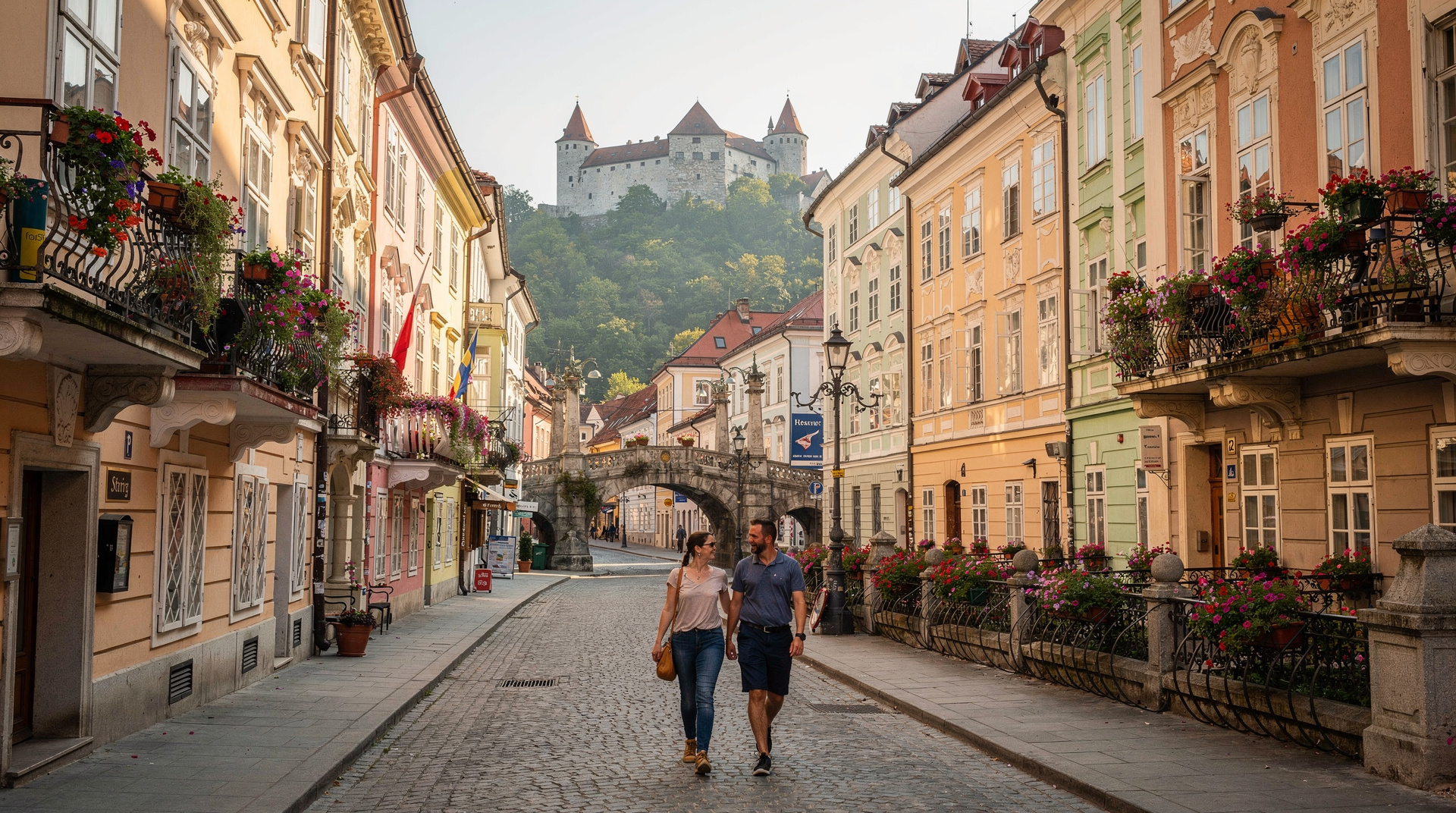
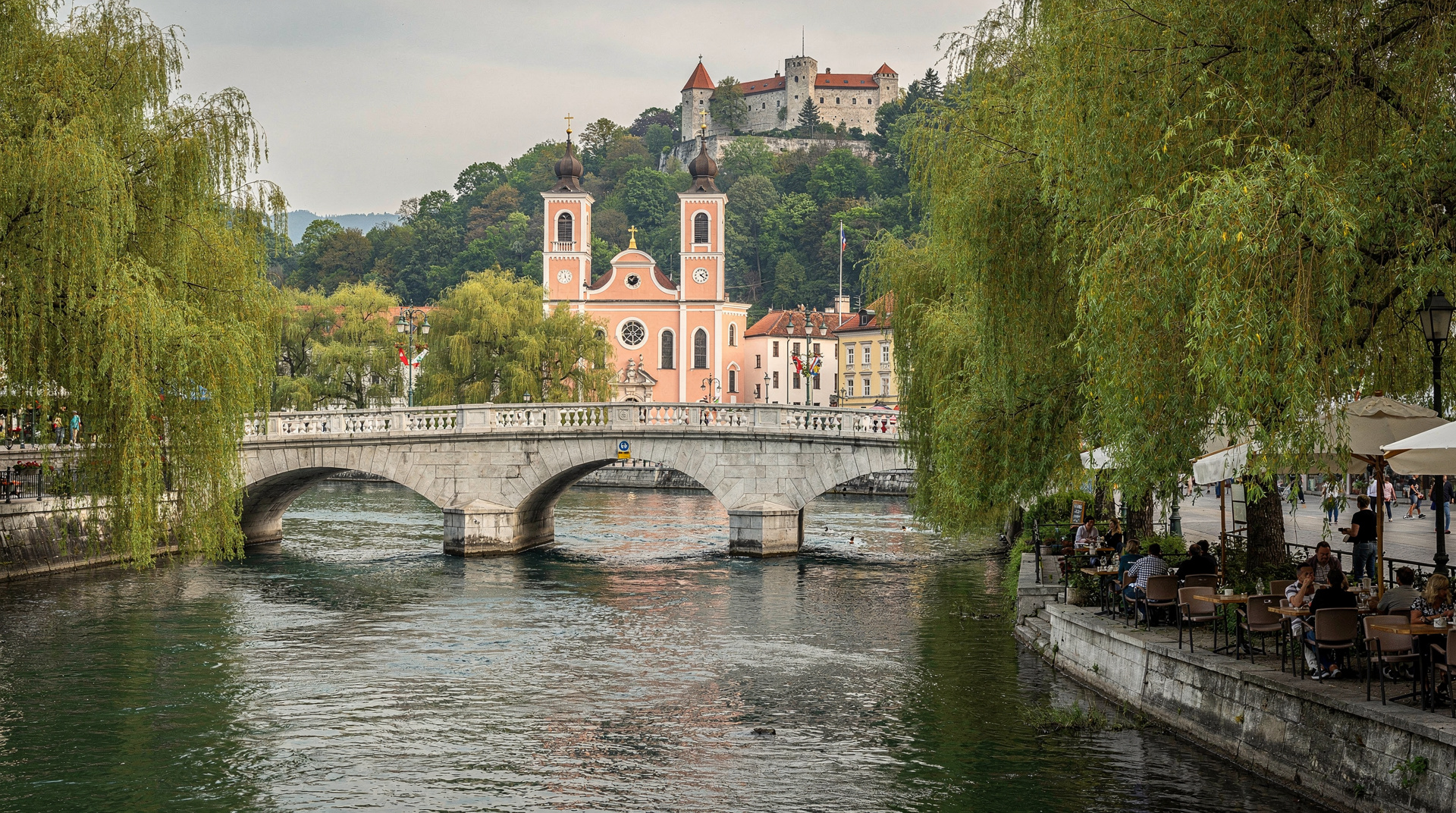
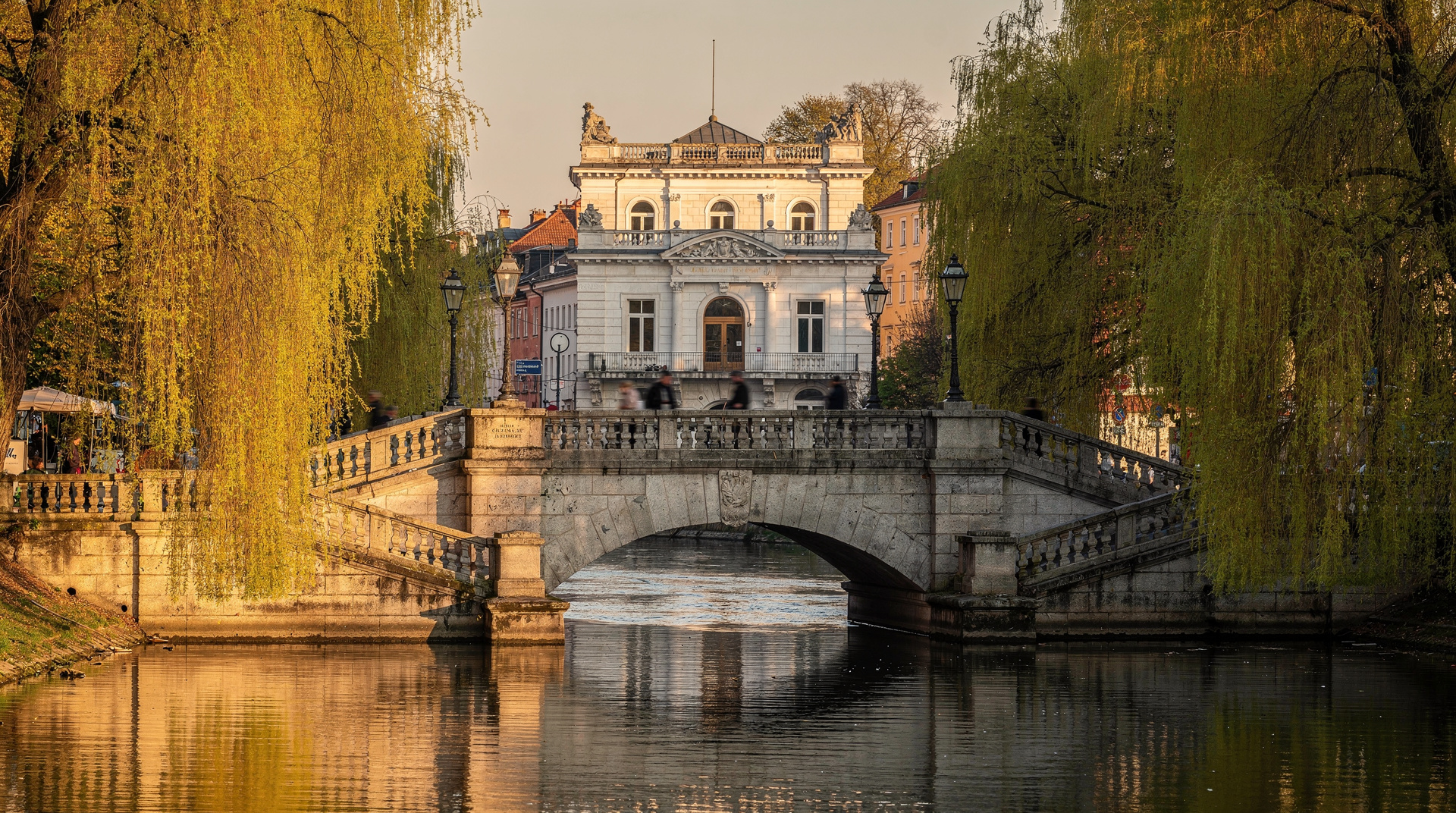
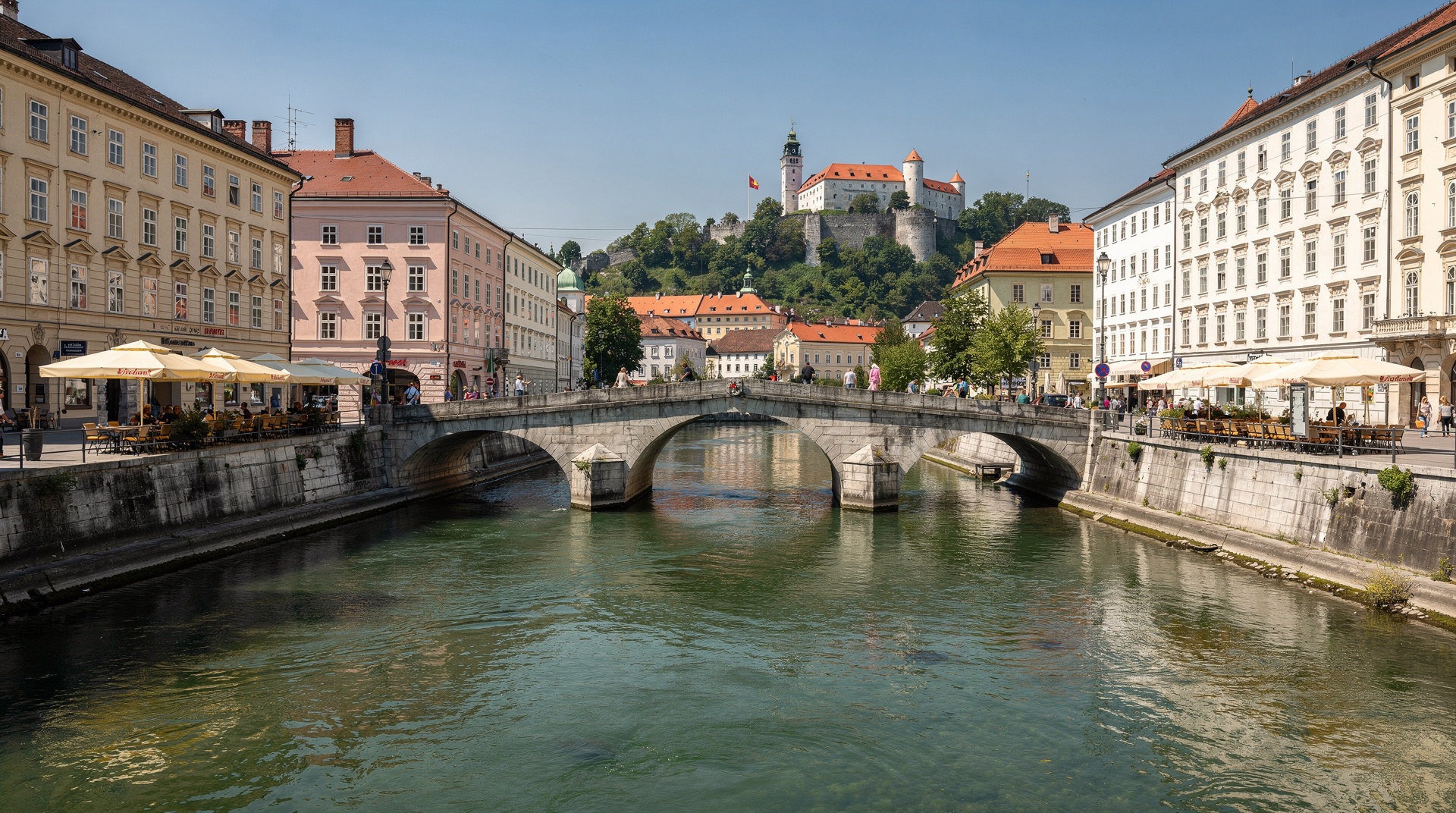
Start at Prešernov trg (Preseren Square) — the city’s main outdoor room, anchored by the pink Franciscan Church of the Annunciation and the Prešeren monument. From here, cross Triple Bridge into the old town. Walk south along Mestni trg and Stari trg — the historic street sequence lined with Baroque facades, independent bookshops and café tables spilling onto the pavement. Continue to Cobblers’ Bridge (Šuštarski most) with its book dealer tables and Plečnik columns.
Return north along the opposite bank, past the riverside cafés of Gallusovo nabrežje, through the Central Market colonnade (Plečnik’s 1940s arcade, still a working daily produce market) and back to Triple Bridge.
This circuit — never more than 800 metres from its starting point in any direction — takes 45 minutes to walk briskly and 2–3 hours to do well, with café stops and market browsing. It is the essential Ljubljana.
The Central Market (Plečnikova tržnica)
The covered market colonnade along the river is open Monday–Saturday, mornings. This is not a tourist market — it serves the local population — and the prices and atmosphere reflect that. Vendors sell seasonal vegetables, cheese (the Tolminc and Bovški hard cheeses from the Alpine region are worth buying), honey from various Slovenian producers, dried mushrooms, local fruit and several prepared food stalls.
On Fridays from spring through autumn, the Odprta kuhna (Open Kitchen) open-air food market extends the length of the colonnade with hot food stalls representing the full range of Slovenian and international cuisines. It runs approximately 10:00–21:00 and is genuinely excellent — both as lunch and as an evening food experience.
Visit Ljubljana Castle
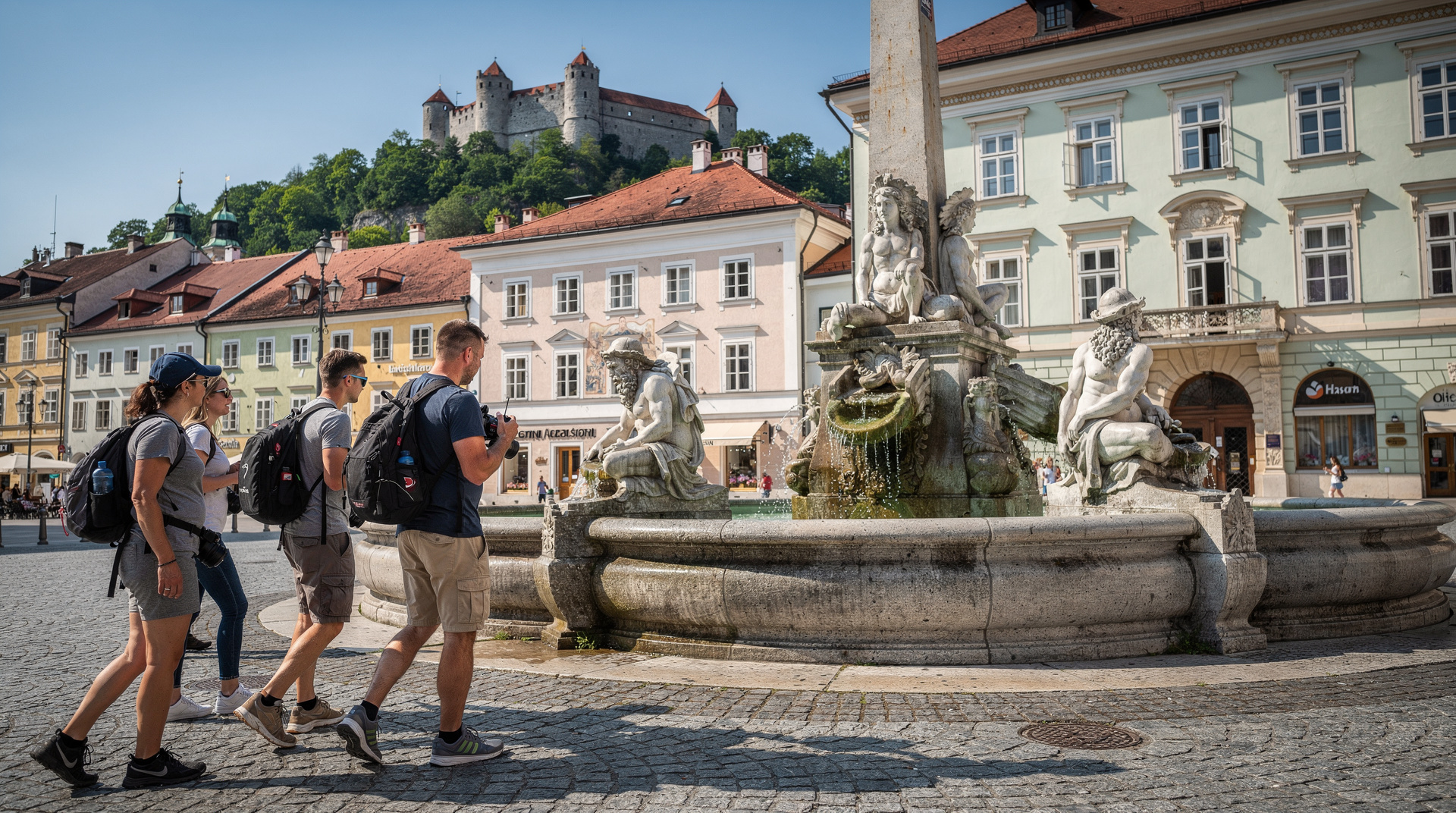
The castle on the hill above the old town takes 12–15 minutes to reach on foot and repays the effort with the best panoramic view of the city: Ljubljana Basin, old town rooftops, the Julian Alps on clear days. The outer courtyard and the panorama are free; the interior exhibitions cost EUR 17.10–19, depending on online or box-office purchase.
A guided castle visit is worth considering for the historical context — the castle’s role in Ljubljana’s history, the heraldic chapel and the museum floors make more sense with explanation. For those happy to explore independently, the free terrace is the main value.
Explore the Plečnik architecture
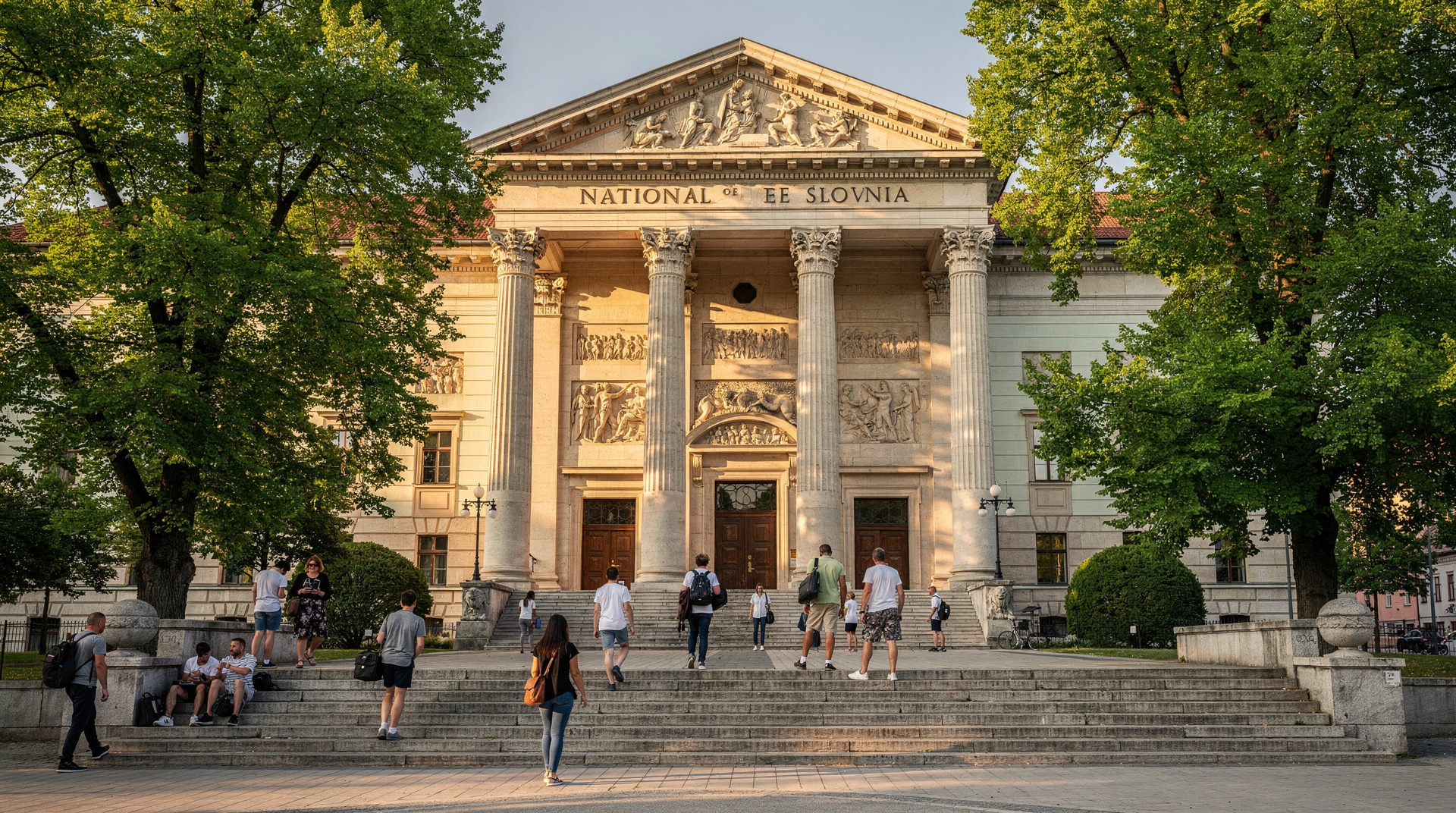
Jože Plečnik’s interventions in Ljubljana — Triple Bridge, the market colonnade, the National Library, Cobblers’ Bridge, Congress Square, the Plečnik House museum in Trnovo — form the city’s most distinctive cultural offering. No equivalent exists in any other European capital: a single architect’s sustained redesign of a city’s public spaces over thirty years, now recognised as UNESCO World Heritage.
The Plečnik architecture guide provides the full walking route. For those who want a guided experience, the Plečnik river cruise combines the main landmarks with a boat segment providing the riverside perspective.
Visit the Ljubljana City Museum
Gosposka ulica 15, EUR 6. The best museum in Ljubljana: an excellent permanent exhibition on the city’s history from prehistoric times through the present, in a beautiful seventeenth-century palace, with the world’s oldest wheel (5,200 years old) and underground exposed sections of Roman Emona directly beneath your feet.
Allow 1.5–2 hours. See the Ljubljana museums guide for the full museum overview.
Cycling in Ljubljana
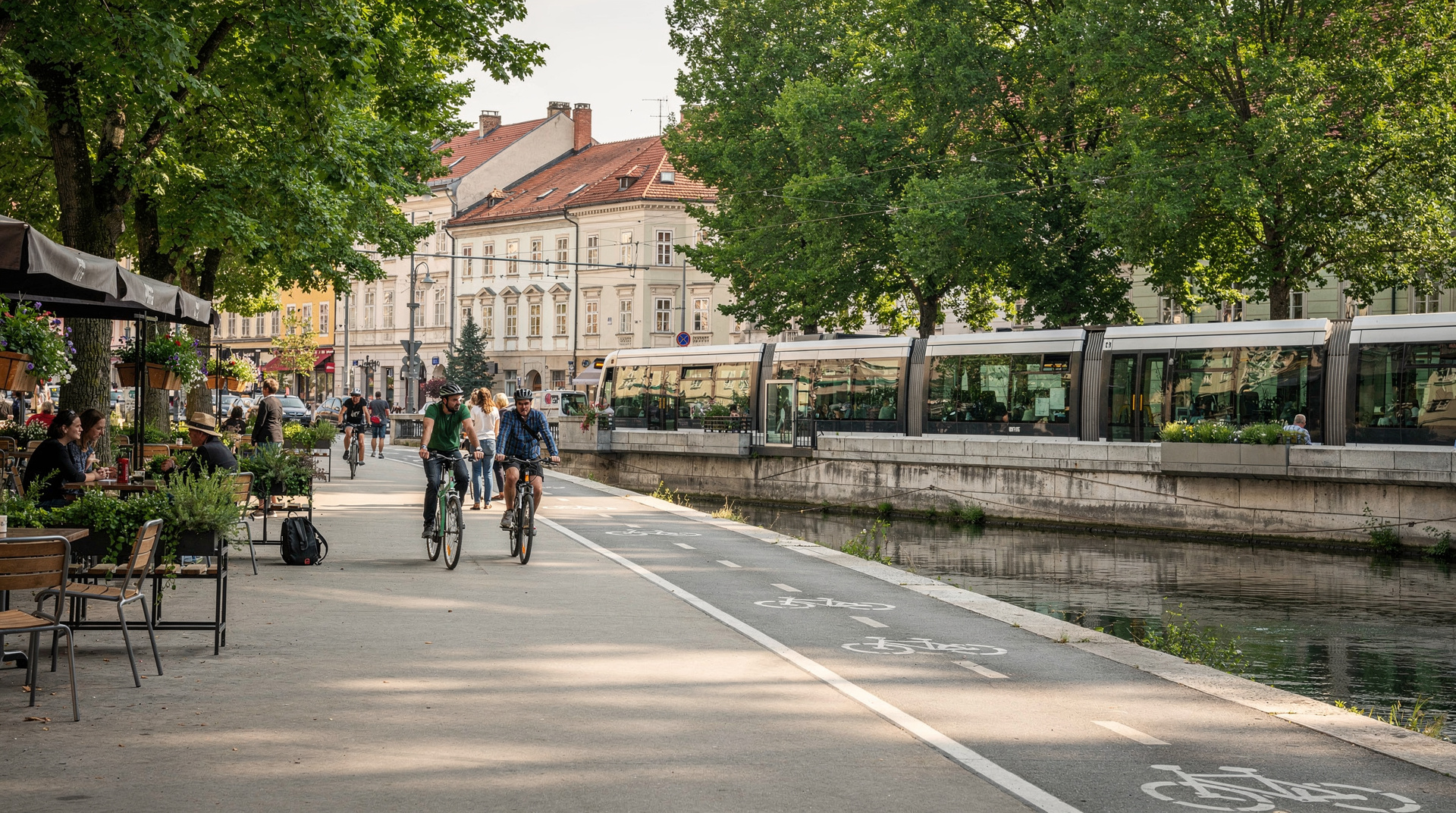
The city has an excellent public cycling infrastructure. BicikeLJ public bike stands are distributed throughout the city centre; registration costs EUR 3 per year (or a daily pass with credit card) and the first 60 minutes of each ride is free. Longer rides cost a small per-30-minute fee.
For a more structured cycling experience outside the city centre, an e-bike highlights tour covers the main sights and extends into the surrounding landscape — a good option for visitors who want to cover more ground than walking allows without being confined to a tour bus.
Photography in Ljubljana
The city has several superb photography locations: Triple Bridge at dusk (light from the west backlights the castle and the old town rooftops); the castle terrace at any time of day; Mala Osojnica viewpoint (above Bled, but worth the detour) for the wider landscape; and the riverside promenade at night.
For a structured photography tour, the Ljubljana photo landmarks tour visits the best shooting positions at the optimal times, with a guide who knows how the light changes across the day.
Metelkova
The former Yugoslav military barracks northeast of the train station (15 minutes’ walk from Triple Bridge) was occupied by artists and activists in 1993. Now Metelkova mesto is Ljubljana’s alternative cultural hub — murals covering every available surface, clubs in the old barracks buildings, and the Museum of Contemporary History and the Ethnographic Museum within the same block.
Visit in the daytime for the murals and the two museums. The clubs operate from midnight onwards and are a completely different kind of visit. Metelkova is free to enter at any time; museum entry costs EUR 4–7 per institution.
Tivoli Park
Ljubljana’s main park, immediately west of the city centre (10 minutes’ walk from the old town), covers 5 km² of mixed formal and informal landscape. The central avenue — designed in the nineteenth century with sycamore-lined formal paths — leads from the city to the wooded hillside behind. The park has the Jakopič Gallery (contemporary art, rotating shows), open-air café terraces in summer, jogging paths, sports courts and one of the better playgrounds in the central city.
In summer the park hosts outdoor cinema screenings and occasional concerts.
The Ljubljana nightlife overview
The old town riverside bars fill from 17:00 with the after-work crowd and remain active until midnight or later. The main concentration is along Gallusovo nabrežje and Cankarjevo nabrežje. Metelkova clubs open at midnight and run through the night on weekends.
For a full guide to Ljubljana’s evening and night options, see the Ljubljana nightlife guide.
Day trips from Ljubljana
Ljubljana’s most important function for many visitors is as a base for the wider region. The major day trips:
Lake Bled (1 hour by bus, 55 km by car): The postcard Slovenia view. Best morning arrival before the crowds.
Škofja Loka (30 minutes by bus): The best-preserved medieval town in the Ljubljana region. Half-day trip.
Kamnik (45 minutes by bus): A smaller medieval town with a ruined castle and access to the Velika Planina plateau.
Postojna Cave (1h15 by car, 50 km): The most visited cave in Central Europe. See the honest assessment before booking.
Škocjan Caves (1h15 by car): The UNESCO cave system — more extraordinary than Postojna but better suited to visitors who want quality over volume.
Practical visitor information
Getting around: Walk everywhere in the old town. BicikeLJ bikes for further distances. Taxis are well-priced and available via the Bolt app. City buses cover the outer areas.
Tourist information: Main office at Adamič-Lundrovo nabrežje 2, open daily. Free maps, event guides, booking assistance for tours and accommodation.
Money: ATMs are available throughout the city centre. Cards accepted almost everywhere. No currency conversion needed — Slovenia uses the euro.
When to visit: May–June and September–October for best weather and manageable crowds. The Ljubljana Festival (July–August) fills the evenings with outdoor concerts. December’s Christmas market (December 1–January 2) is one of the better in Central Europe.
Ljubljana for different kinds of visitors
First-time visitors with one day: the old town walk, Triple Bridge, the Central Market and the castle panorama cover the essentials in a single satisfying day. Add the Friday Open Kitchen if your visit falls on a Friday between spring and autumn.
Architecture and design enthusiasts: prioritise the full Plečnik architecture guide route and the Plečnik House museum in Trnovo, plus the Jakopič Gallery in Tivoli Park for contemporary Slovenian art.
Families: Tivoli Park’s playground, the Ljubljana Zoo (on the wooded hillside above the park), and gentle old-town walks work well with children. See the Ljubljana with kids guide for a fuller plan.
Food-focused visitors: the Friday Open Kitchen, the Central Market on any weekday morning, and a proper Slovenian dinner of žlikrofi or štruklji at a gostilna slightly off the main tourist streets. See the Ljubljana food tour guide for a structured version, and a 10-tasting Ljubljana food tour for a guided introduction to the local specialities.
Visitors combining Ljubljana with the wider region: treat the city as a 1–2 day base, then move on to Lake Bled, Postojna Cave or the Soča Valley. The day trips pillar guide covers the full range of options and how to sequence them.
Frequently asked questions about things to do in Ljubljana
What is the number one tourist attraction in Ljubljana?
Ljubljana Castle attracts the most organised tourist visits and is the most-counted attraction. For independent travellers, the combination of the old town walk, Triple Bridge and the Central Market is the actual experience that defines Ljubljana — these are free, outdoors and representative of what makes the city special.
Is Ljubljana suitable for a weekend trip?
Extremely — Ljubljana is one of the best European capital cities for a 2–3 day weekend break. The compact size means no wasted time in transit, prices are lower than Western European capitals, and the range of experiences (architecture, food, outdoor spaces, day trips) makes the visit varied without being exhausting.
What is Ljubljana like in winter?
Pleasant — cooler and quieter than summer, but far from closed. The Christmas market (December 1–January 2) is excellent. Most museums and indoor attractions operate normally. The castle and the riverside are beautiful in snow. The main reduction is in outdoor café culture and some day-trip sites (Vintgar Gorge is closed November–March).
How do I get to Ljubljana from the airport?
The Arriva airport shuttle from Ljubljana Jože Pučnik Airport (LJU) runs to the central bus station approximately every 30–60 minutes; fare around EUR 4, journey approximately 50 minutes. Taxis cost EUR 25–40. The Trieste and Venice airports (accessed from Koper or by bus from Ljubljana) offer alternative routings for budget airlines.
Is Ljubljana worth visiting if I am also going to Prague and Vienna?
Yes — the three cities offer genuinely different experiences. Prague is grandiose Baroque, crowds, and a well-worn tourist infrastructure. Vienna is imperial splendour and museum density. Ljubljana is intimate, Plečnik-shaped and genuinely unhurried. The combination gives a wider range of Central European experience than any two cities alone. Ljubljana also has lower prices than either Prague or Vienna, which the budget notices.
What local food and drink should I try while in Ljubljana?
Several Slovenian specialities are worth seeking out: žlikrofi (small potato-filled pasta from Idrija, similar to a dense gnocchi, usually served with meat sauce or butter and sage); štruklji (rolled dumplings, both sweet and savoury — the walnut version is the most common dessert form); buckwheat žganci (a porridge-like buckwheat dish served with sauerkraut and pork — an acquired taste but deeply traditional).
For drinks: Union and Laško are the main domestic lagers, both perfectly drinkable. Slovenian wine is underrated — the Vipava Valley whites (Pinela, Zelen) and Primorska reds (Teran, Refosco) are distinctive and rarely found outside Slovenia. Honey liqueur (medica) is the characteristic Slovenian sweet spirit. The Friday market’s food stalls provide the best introduction to the variety, with vendors happy to explain what they are selling.
Is Ljubljana accessible for visitors with disabilities?
Better than many historic European capitals. The riverside promenade and all bridges are fully accessible. The pedestrian zone main streets are cobblestone in sections but manageable with assistance for most mobility levels. The castle funicular is accessible. The Ljubljana City Museum and most national museums have lift access and accessible toilets. The Kavalir electric buggy service provides free transport within the pedestrian zone for visitors with mobility issues. The Ljubljana tourism website has a dedicated accessibility page with specific venue details.
Top experiences
Bookable activities with verified prices and instant confirmation on GetYourGuide.