Lipica day trip from Ljubljana: visiting the birthplace of the Lipizzan horse
From Ljubljana: Lipica stud farm and coastal Piran
How far is Lipica from Ljubljana and what is there to see?
Lipica is 90 km from Ljubljana, about 55 minutes on the A1 motorway. The stud farm — the oldest continuously operating horse stud in the world — offers guided stable tours, classical dressage performances and a museum of carriage driving. It is best combined with Piran (25 km away) or Škocjan Caves (30 km) for a full-day trip.
Lipica: the oldest horse stud in the world
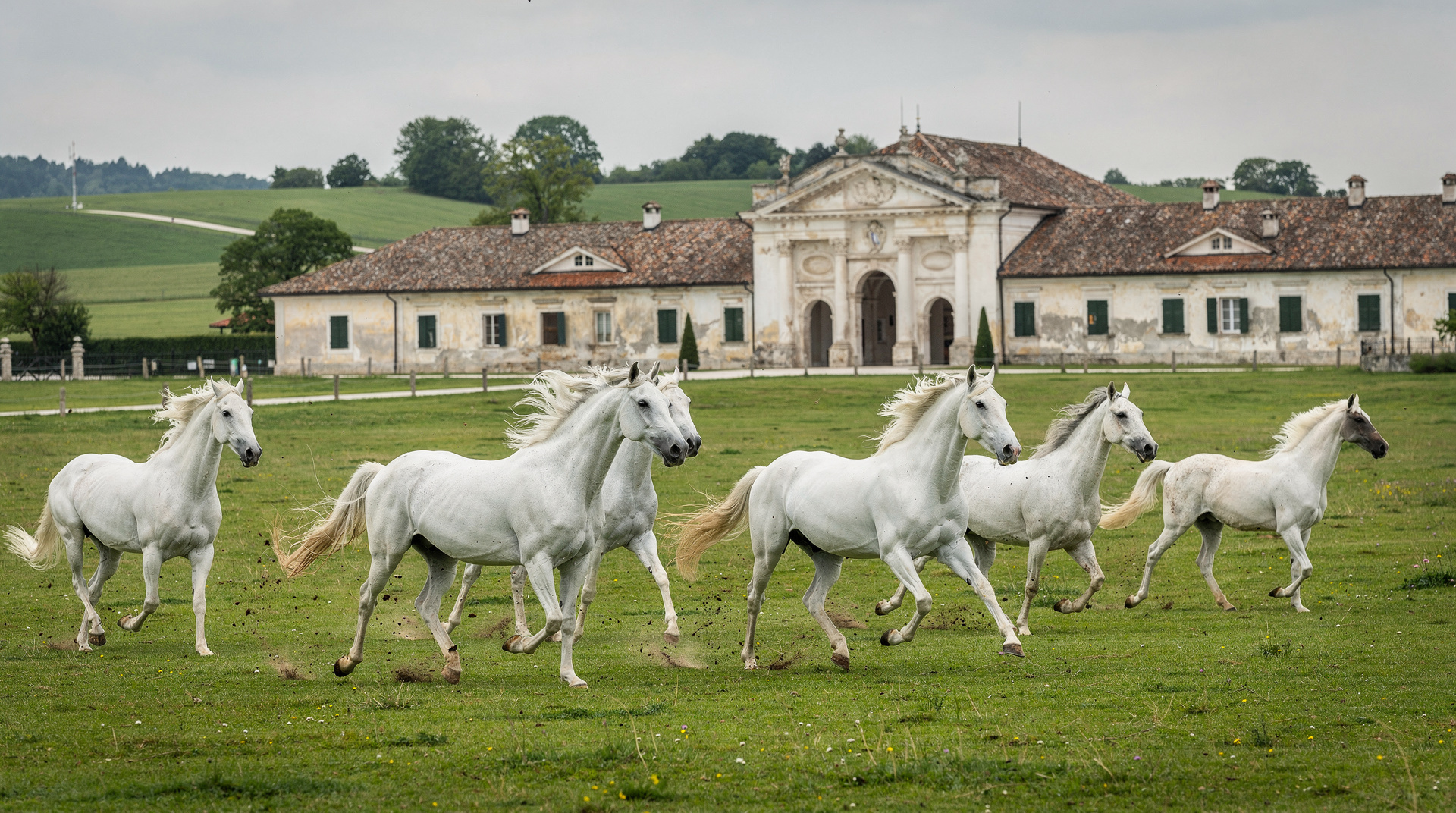
Lipica occupies a special place in European equestrian history. The stud farm founded here in 1580 gave the world the Lipizzan horse — the breed associated with Vienna’s Spanish Riding School but originating in this quiet karst estate on the Slovenian-Italian border. The horses that perform the celebrated haute école movements in Vienna are trained with a bloodline that traces directly to Lipica, and the farm here continues to breed them using the same rigorous standards that have been maintained for over four centuries.
For visitors to Slovenia, Lipica offers something genuinely different: a chance to see these extraordinary animals in their home landscape, in a setting that has barely changed in hundreds of years. It is 90 km from Ljubljana — an easy morning excursion that combines naturally with Piran or Škocjan Caves in the afternoon.
| Where | Karst region, near the Italian border, 90 km from Ljubljana |
| Stable tour | ~1 hour, from €16 (guided tours at 10:00, 12:00, 14:00 and 16:00) |
| Classical performance | 15:00, from €25 (stable tour included) |
| Time needed | About 1 hour for the tour; more with the 15:00 performance |
| Combine with | Piran (25 km) or Škocjan Caves (30 km) |
| Book ahead for | Performances in July–August; sell out weeks ahead |
Getting to Lipica from Ljubljana
By car: Take the A1 motorway south-west towards Koper. Exit at Divača and follow signs for Lipica (about 5 km from the motorway exit). The drive from Ljubljana takes about 55–65 minutes.
By guided tour: Several guided day tours combine Lipica with Piran in a full-day coastal excursion from Ljubljana.
Guided full-day tour: Lipica and Piran from LjubljanaThere is limited public transport to Lipica — the farm is outside the main bus network. For car-free visitors, a guided tour is the practical choice.
The stud farm: what to expect
The Lipica Stud Farm (Kobilarna Lipica) covers 310 hectares of karst plateau, with a mix of forest, pasture and historic buildings dating from the 17th and 18th centuries. The centrepiece is the classical stable complex — long, low limestone buildings arranged around cobbled courtyards, with the horses visible in their stalls and in the adjacent paddocks.
Stable tour (guided, ~1 hour): A guide takes small groups through the stable complex, explaining the Lipizzan breed’s history, characteristics and breeding programme. You can approach the horses in their stalls (with guidance) and see the young horses in the paddocks outside. The tour includes the carriage museum — a collection of historic carriages in an 18th-century coach house that includes everything from hunting chaises to ornate state coaches. Genuinely impressive if you have never seen a working carriage collection.
Tour price: from €16 (official Lipica stud farm website).
Classical performance: The formal dressage performance features fully trained Lipizzans performing haute école movements — piaffe (trotting on the spot), passage (slow elevated trot), piaffé, levade (horse rearing on its haunches and holding the position) and the airs above the ground. The horses wear traditional tack and the riders perform in 18th-century dress.
Performances are held at 15:00 on specific days of the week. Check the current schedule on the official Lipica stud farm website well in advance — the schedule changes seasonally and performances can be sold out weeks ahead in summer.
Performance price: from €25, stable tour included (official Lipica stud farm website).
The paddocks: Even without booking a tour or performance, the white horses are often visible in the paddocks surrounding the stable complex. Walking the estate grounds is free, and the sight of Lipizzan mares and foals in a karst limestone landscape under a blue sky is striking.
The estate grounds
The Lipica estate is beautiful beyond its horses. Centuries of cultivation have produced a landscape of mature lime, chestnut and oak trees that give the grounds a park-like character unlike the typical Slovenian karst. In spring, the estate is carpeted with wildflowers. In autumn, the colours are exceptional.
A café-restaurant on the estate serves reasonable food — useful for a mid-morning coffee stop or lunch before driving to the coast.
Combining Lipica with Piran
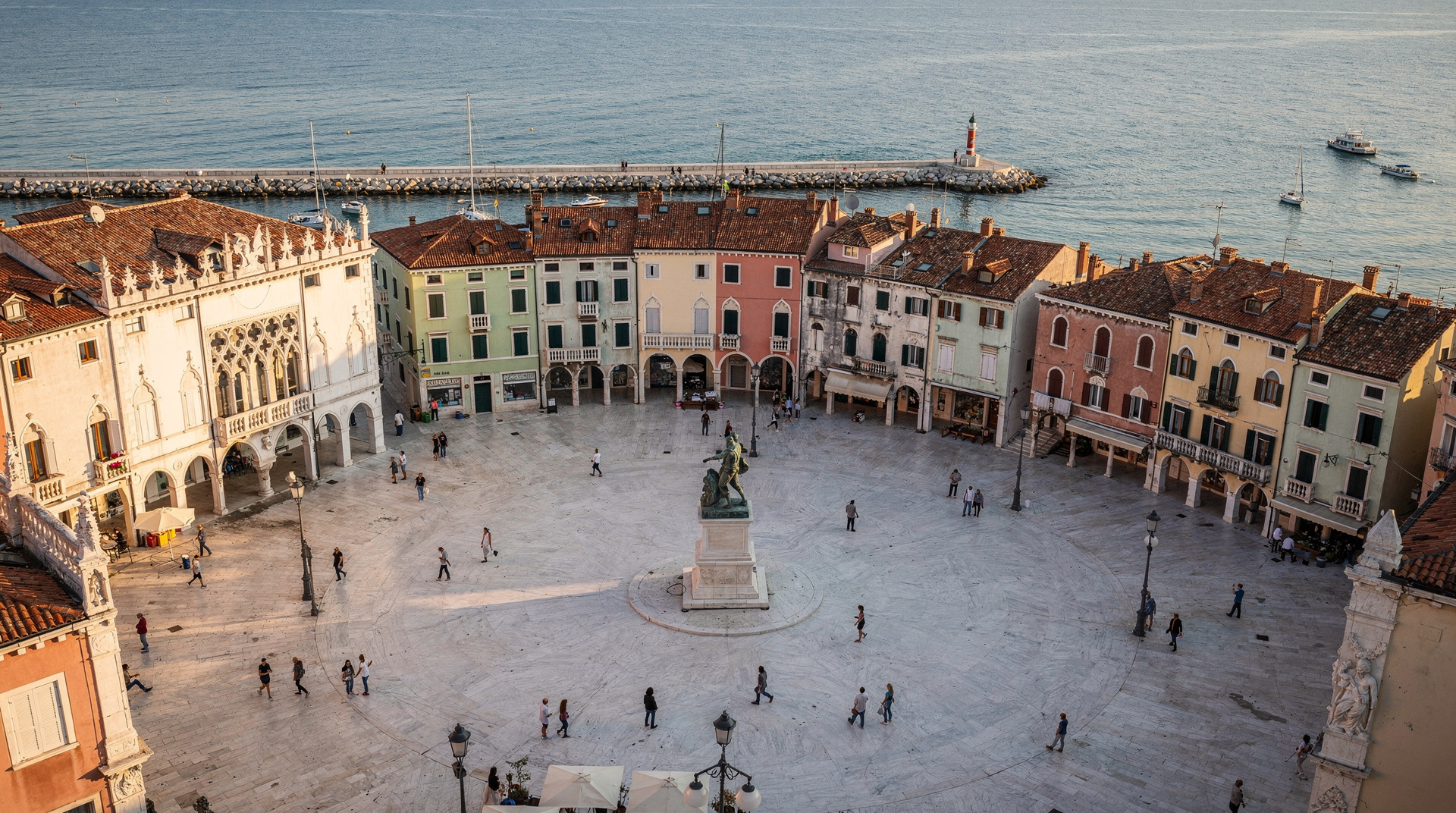
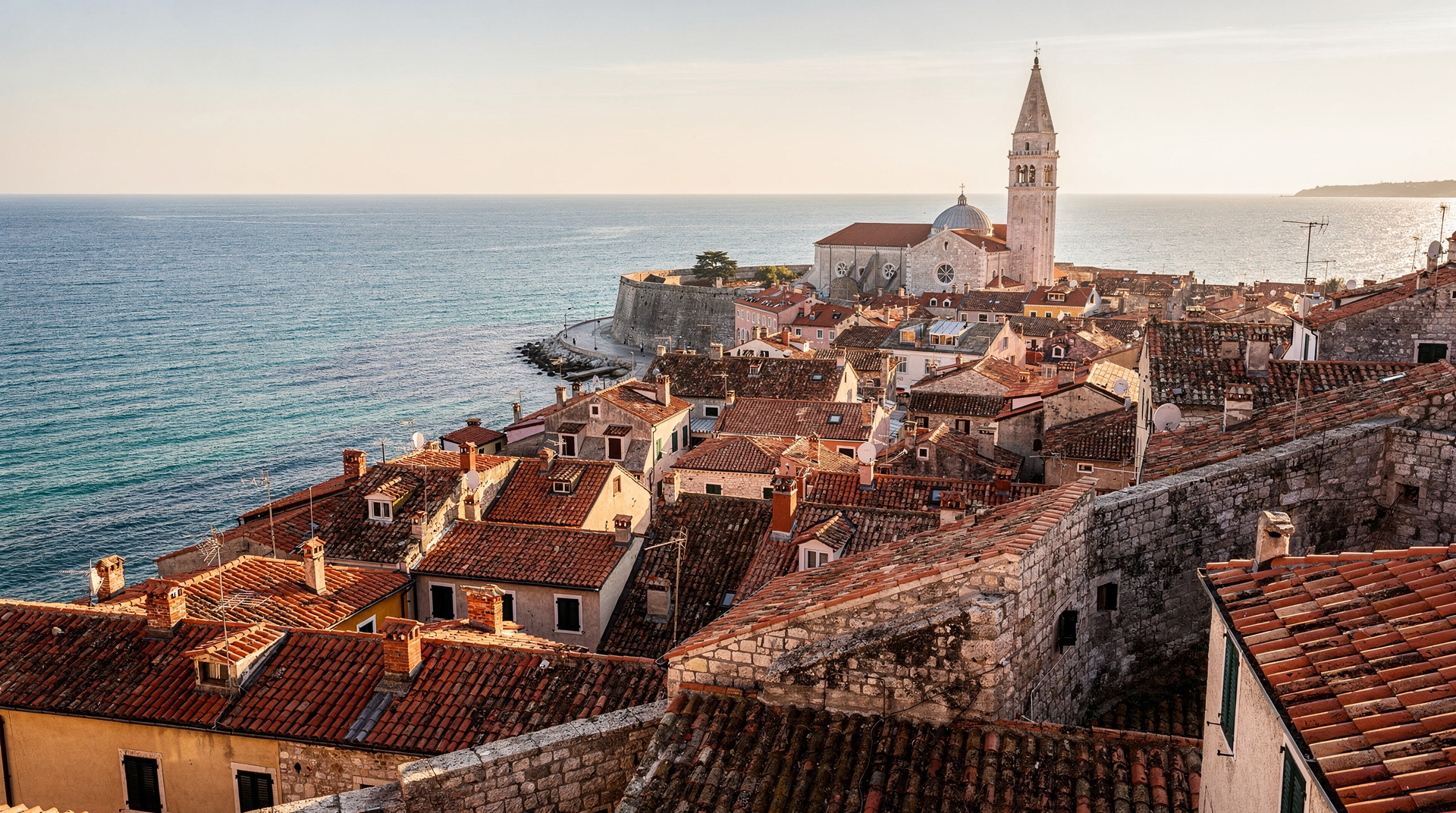
The most popular combination day trip is Lipica in the morning, Piran in the afternoon. The drive is 25 km — about 25 minutes — making this one of the most natural pairings in the western Slovenia day-trip repertoire.
A typical schedule: stable tour at 10:00 (finished by 11:00), optional performance if available, drive to Piran at 12:00, arrive for a fish lunch at 12:30, afternoon at the coast (swimming, old town walk, Tartini Square), drive home by 17:00.
The contrast between the refined elegance of Lipica and the Venetian bustle of Piran makes the day feel like two destinations rather than one.
Combining Lipica with Škocjan Caves
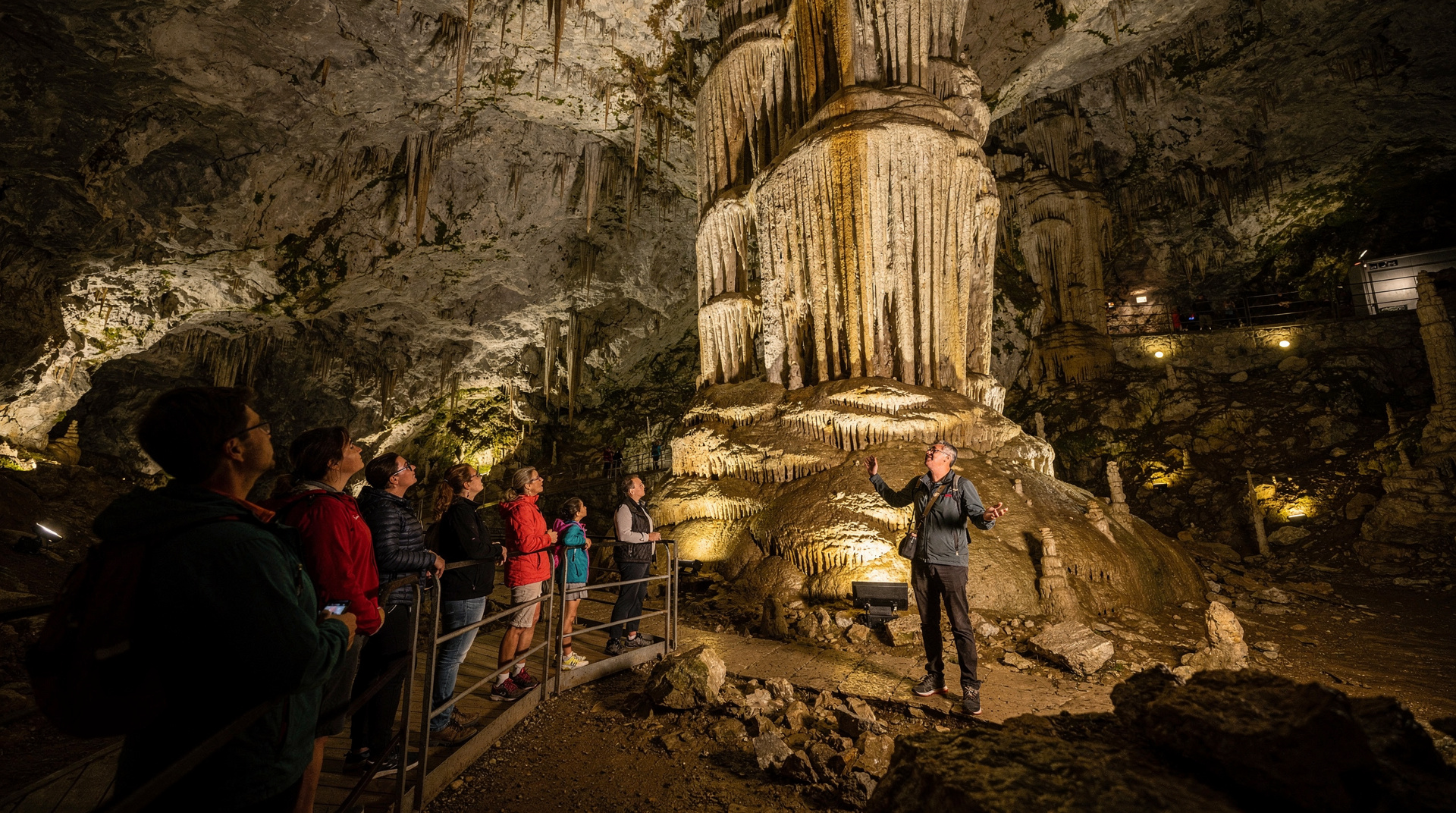
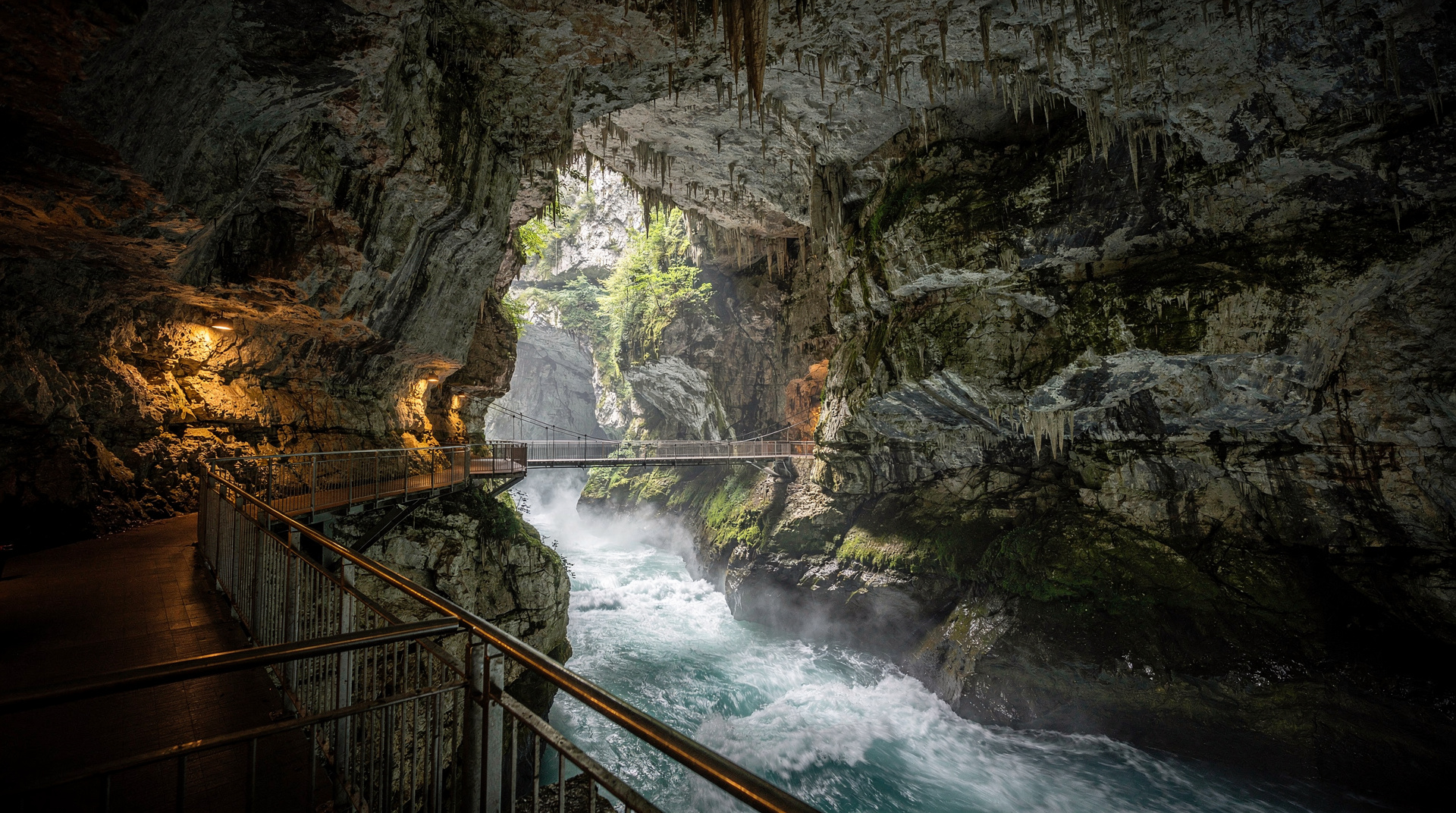
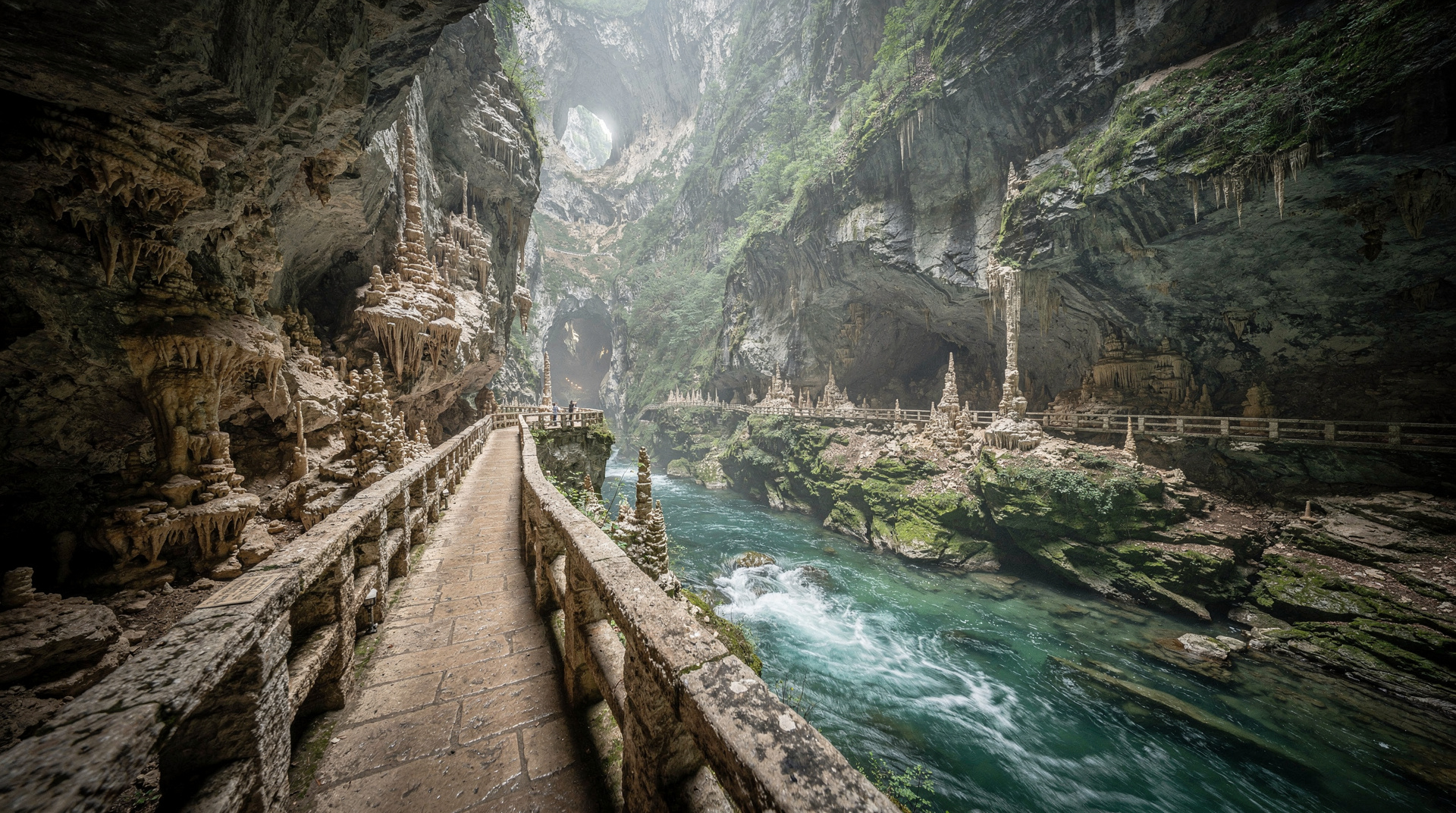
Škocjan Caves are 30 km from Lipica, about 30 minutes. Doing both in a day is perfectly feasible — Lipica in the morning, Škocjan in the early afternoon (a 10:00 or 11:30 cave tour). The cave tour takes 1.5 hours, leaving time for a late lunch near the cave or in Divača before returning to Ljubljana.
The karst landscape connects both sites thematically — the limestone plateau that makes cave formation possible is the same geology that defines the Lipica estate and the surrounding countryside.
The Karst region from Lipica
Lipica sits on the Slovenian Karst (Kras) — the area that gave the word “karst” to geology. The flat limestone plateau, punctuated by dry sinkholes, cave entrances and sparse vegetation, is one of the most distinctive landscapes in Slovenia. Beyond the tourist sites, the Karst is famous for:
Teran wine: A distinctively earthy, tannic red wine made from the Refosco grape in the Karst’s red iron-rich soil. Very unlike any other Slovenian wine and worth tasting at a local wine cellar (osmiza).
Karst prosciutto (kraški pršut): Air-dried cured ham that rivals the Italian equivalent. The Karst’s bora wind (bora/burja) accelerates the drying process and gives it a particular character. Buy it at any local shop or deli in the region.
The Karst coast: The transition from the flat plateau to the Adriatic happens over just a few kilometres, with dramatic coastal cliffs and the sea appearing suddenly.
For a broader overview of the Karst region’s day-trip potential, see the day trips from Ljubljana pillar guide.
Practical tips
- Book performances in advance: In July–August, classical performances sell out. Check and book on the official Lipica stud farm website.
- Best time to visit: May–June and September–October for pleasant temperatures and manageable crowds. July and August are the busiest months; the estate handles it well but performances are in highest demand.
- Photography: The stables and paddocks are photogenic in excellent light. Morning visits (before 11:00) give the best light for paddock photography.
- Time needed: Stable tour: about 1 hour, plus arrival time. The performance starts at 15:00. Add 30 minutes buffer for travel between sites.
The Lipizzan horse: history in brief
The word Lipizzan comes directly from Lipica — the Slovenian name for the village (in Italian: Lipizza). When Archduke Charles II founded the stud in 1580, he selected Spanish, Arab and Berber stallions to cross with the native Karst horse — a sturdy local breed adapted to the rocky limestone terrain. The resulting Lipizzan combined the elegance of Spanish baroque riding horses with the endurance and calm temperament of the oriental breeds.
The horses are born dark — bay, black or grey — and gradually turn white (technically “grey” in equestrian terms) over seven to ten years. A few individuals remain dark throughout their lives, which is considered good luck by the breeders. The white colour is not a breed standard; it is a genetic trait expressed with age.
During Napoleon’s campaigns through the Karst (1809–1813), the horses were evacuated from Lipica three times to prevent capture. In World War II, they were evacuated to Hostau in Bohemia; the operation to rescue them from advancing Soviet forces was led by General George Patton in coordination with the SS officer who had been caring for them — a remarkable moment of military cooperation over a shared love of horses that was later made into a 1963 Disney film (Miracle of the White Stallions).
The horses returned to Lipica after the war and the stud has continued without interruption since.
The classical dressage performance: what to watch for
The classical performance (alta scuola or haute école) is not a competition or a rodeo — it is a precisely choreographed demonstration of movements that take years of training for both horse and rider to achieve. The most spectacular are the airs above the ground:
Levade: The horse rears onto its haunches and holds the position, perfectly balanced. Requires extraordinary strength in the hindquarters and absolute control from the rider.
Courbette: From the levade, the horse jumps forward on its hindlegs.
Capriole: The horse leaps into the air with all four legs, kicks back with the hind legs at the peak of the jump, then lands squarely. The most difficult of the airs.
Not every performance includes all airs above the ground — the advanced movements depend on which horses are currently trained to that level. The piaffe (trot in place), passage (elevated slow trot) and pirouette are performed in every show and are beautiful in their own right.
The wider Karst heritage
Lipica sits within the broader cultural landscape of the Slovenian Karst — a region known not only for its geology and caves but for a distinctive agricultural and architectural tradition. The traditional Karst house (kraška hiša) is built of limestone, with thick walls, small windows and arched portals, adapted to the bora wind that scours the plateau in winter and spring. Villages like Štanjel (15 km from Lipica) are beautifully preserved examples of this architectural tradition and worth a brief stop.
The Karst is also the origin of two of Slovenia’s most distinctive food products: kraški pršut (Karst prosciutto, air-cured ham with EU protected designation of origin) and Teran wine (a deeply coloured, tannic red from the Refosco grape). Both are made in the farms and small wineries scattered across the plateau. An osmiza — a traditional farm wine-and-food stop authorised for temporary seasonal sales — is the best way to taste both in their proper context. Look for branches (smreka) tied to signposts on the plateau roads, which indicate an active osmiza.
For the full day trips from Ljubljana picture, the pillar guide covers all twelve options with honest assessments.
Photographing the horses and the estate
Lipica rewards patient photography more than most day-trip destinations. The white adult horses against the estate’s centuries-old chestnut and lime trees create striking contrast, particularly in the soft light of early morning or late afternoon. The paddocks nearest the stable complex offer the most reliable access — arrive shortly after opening for the best chance of horses close to the fence line before midday visitor numbers build.
The performance: photography during the classical performance is generally permitted but flash is discouraged, as it can startle the horses during precise movements. A camera with reasonable low-light performance captures the indoor arena’s atmosphere better than a phone in low light.
The foals: spring visits (April–June) offer the best chance of photographing dark-coated foals alongside white adults — a visual contrast that surprises visitors who expect uniform white horses throughout the estate.
Riding lessons and horse trekking at Lipica
Beyond watching, Lipica offers riding experiences at several levels. The stud farm’s equestrian school provides:
Dressage lessons: A guided session in the arena for riders with no or limited experience, from €50 (official Lipica stud farm website).
Guided trail rides: Rides on the estate trails for more experienced riders, from €90. The estate’s 310 hectares include forest and meadow trails ideal for easy riding.
Carriage drives: Horse-drawn carriage rides around the estate, no riding experience required, from €35 and running daily from 11:00 to 15:00. A popular option for families and for those who want the horse-drawn experience without the riding.
Booking is required for all riding experiences. Contact the stud farm directly via the official Lipica stud farm website for current availability and prices. In July–August, riding slots and carriage drives book out; reserve several days ahead.
Combining riding with the standard visit: most visitors who add a riding lesson or carriage drive do so after the stable tour rather than before, since the tour’s introduction to the breed’s history and temperament makes the riding experience more meaningful. Allow extra time if combining a carriage drive with the stable tour and performance.
Lipica for history enthusiasts
The stud farm’s history intersects with some of the most dramatic episodes of European history. Beyond the general Habsburg founding, specific moments worth knowing:
The Napoleonic period (1809–1813): When Napoleon’s forces occupied the Karst and made it part of the Illyrian Provinces, the stud farm continued operating under French administration. The Lipizzan horses were evacuated eastward to avoid becoming French military property.
World War I: The front lines of the Isonzo battles (Soča Valley) were about 60 km from Lipica. The stud farm was evacuated to Laxenburg near Vienna in 1915 when the front moved closer.
The Spanish Riding School connection: The Vienna Spanish Riding School sends young horses to Lipica for their initial schooling, maintains a breeding arrangement with the Lipica stud, and both institutions are considered the twin homes of the breed. Visiting Lipica and then the Spanish Riding School in Vienna gives a complete picture of the Lipizzan’s world.
The partition of Yugoslavia: After 1945, Lipica fell within the territory that eventually became Slovenia (then Yugoslav). The stud farm’s status in the divided post-war world was initially unclear; Slovenia eventually secured full ownership and the farm has been Slovenian since independence in 1991.
Practical transport note
For those arriving by public transport, the nearest train station is Divača (10 km). From Divača, a taxi takes you to Lipica. The connection from Ljubljana to Divača by train runs several times a day (1h15, EUR 7). This makes a Lipica visit feasible without a car, though less convenient than driving.
Which afternoon combination to choose
Both natural pairings for a Lipica day trip work well, but they suit different travellers.
Lipica + Piran: the stronger choice for anyone who wants sea air, a swim option and Venetian architecture in the same day. The drive is short (25 km) and the contrast between the refined stud farm and the bustling coastal square is part of the appeal. Best in warmer months when swimming or a seafront lunch is part of the plan.
Lipica + Škocjan Caves: the stronger choice for travellers prioritising nature and geology over coastal towns, or visiting outside the swimming season. The underground canyon at Škocjan is one of Slovenia’s most dramatic sights and works as a cooler, weather-independent counterpart to a morning with the horses.
| Combination | Distance | Best for | Season |
|---|---|---|---|
| Lipica + Piran | 25 km, 25 min | Coastal scenery, swimming, seafood | April–October |
| Lipica + Škocjan Caves | 30 km, 30 min | Geology, nature, weather-independent | Year-round |
| Lipica + Postojna Cave | 20 km east | Family-friendly, larger visitor infrastructure | Year-round |
Frequently asked questions about Lipica day trip from Ljubljana
What is Lipica famous for?
Lipica is the original home of the Lipizzan horse — the breed made globally famous by the Spanish Riding School in Vienna. The stud farm was founded in 1580 by Archduke Charles II of Austria, using Spanish, Arab and Berber stock, and has been breeding Lipizzans here continuously for over 440 years. The horses are born dark and turn white gradually, usually by age seven.What is the difference between a stable tour and a performance at Lipica?
The stable tour (guided, about 1 hour, from €16) takes you through the historic stables to see the horses at close quarters, explains the breeding programme and history, and includes the carriage museum. The riding school performance (15:00, from €25 with the stable tour included) is a formal display of haute école riding — piaffe, passage, levade — with the horses in tack under saddle. Performances run on specific days; check the current schedule on the official Lipica stud farm website before booking.How much does a Lipica visit cost?
Prices start from €16 for the stable tour and from €25 for the riding school performance (stable tour included); see the official Lipica stud farm website for current rates. The carriage museum is included in the stable tour. The surrounding park is free to walk, and the white horses can often be seen grazing in the paddocks from outside the stable area.Is Lipica suitable for non-horse-lovers?
The setting — a historic karst estate with centuries-old horse chestnut and linden trees — is beautiful regardless of your interest in equestrian sport. The museum of carriage driving in the 18th-century coach house is genuinely interesting. The classical performance is accessible even without equestrian knowledge — it is essentially choreographed movement to music, comparable to ballet. Most visitors find it unexpectedly engaging.What else is near Lipica?
Škocjan Caves are 30 km away (30 minutes). Piran is 25 km (25 minutes). Koper is 15 km. This part of the Karst region is within easy driving distance of several major sights — making Lipica most valuable as a half-day morning stop on the way to the coast, rather than a stand-alone destination.How much time should I budget for a Lipica visit?
The guided stable tour takes about 1 hour; allow extra time for arrival, and more if you add the 15:00 performance. Most visitors combine Lipica with an afternoon destination — Piran or Škocjan Caves are both within 30 minutes — making a full day trip from Ljubljana that starts with the horses and ends at the coast or underground.
Top experiences
Bookable activities with verified prices and instant confirmation on GetYourGuide.