Truffle hunting in Slovenian Istria: what to expect and honest tips
Slovenian Istria: truffle hunting tour
Can you go truffle hunting in Slovenian Istria?
Yes. Truffle hunting tours with trained dogs run from autumn through spring in the forests near Buzet, Motovun and the Istrian hinterland. Both Slovenian and Croatian Istria have truffle hunting operations. The Slovenian side near the Dragonja valley has oak forest habitat suitable for black truffles; white truffles are found in larger quantities on the Croatian side around Buzet.
Truffle hunting in Istria: the honest version
Truffle hunting tours have become one of the most heavily marketed food experiences in Istria — on both the Slovenian and Croatian sides of the peninsula. Before booking, it helps to know what the experience actually involves and what separates a genuine tour from a performance.
| Where | Dragonja valley forests, inland from Piran/Koper |
| Season | Year-round; white truffle peak Oct–Jan, black Mar–Jun |
| Duration | 1.5–2.5 hours in the forest, plus tasting |
| Cost | around EUR 40–80 per person |
| Booking | 2+ weeks ahead for Oct–Nov weekends |
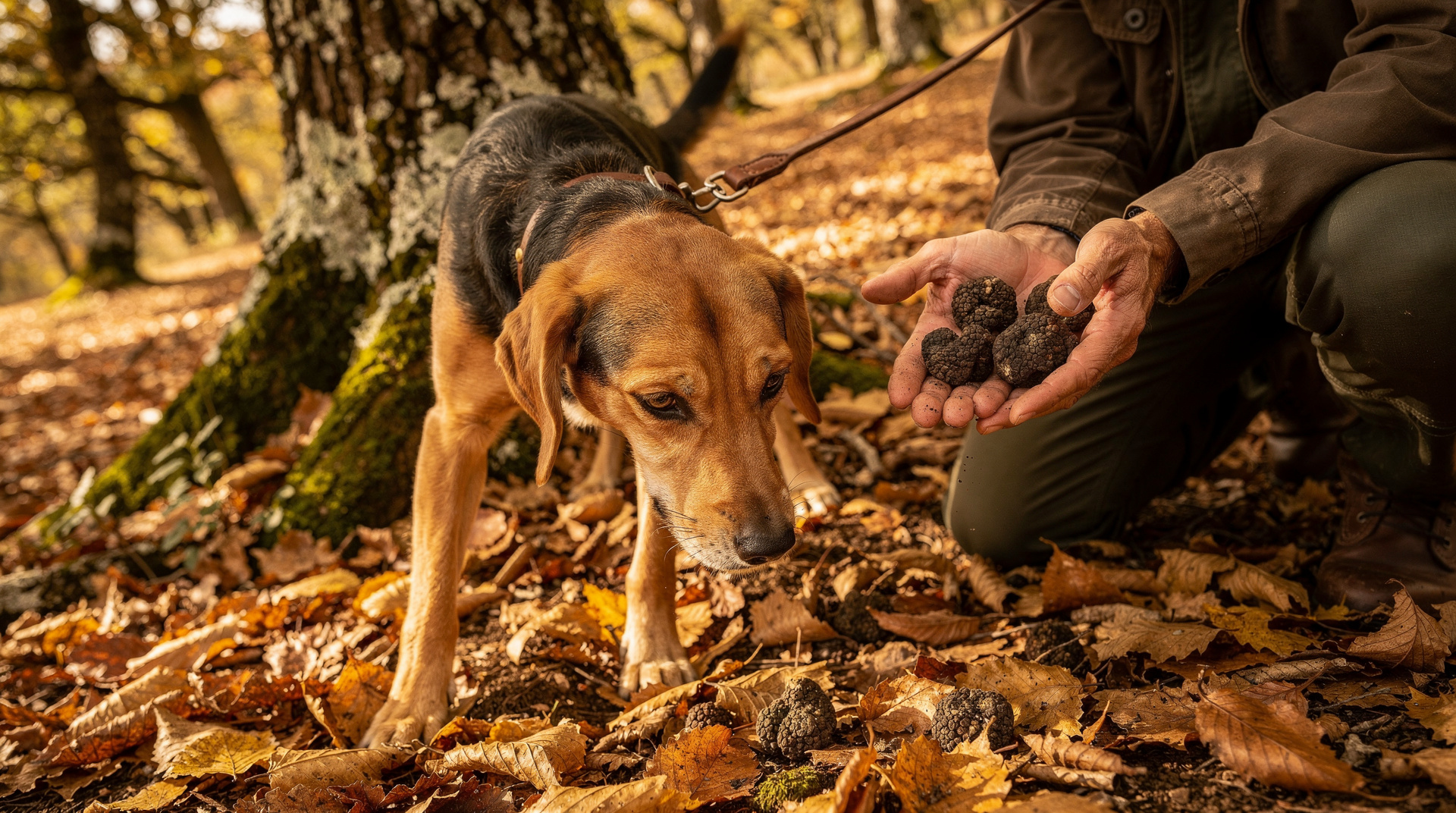
The genuine version: you walk in oak and mixed forest with a local truffle hunter and one or two trained dogs (usually lagotto romagnolo or similar). The dogs work off-leash, quartering the undergrowth, and when they find a scent, they dig and alert the hunter. The hunter digs carefully with a small tool, extracts the truffle, rewards the dog, replaces the soil over the hole. You watch, learn, walk, and at the end taste fresh truffle on bread with olive oil. The whole experience takes 1.5–2.5 hours in the forest, followed by a tasting.
The performance version: a truffle is planted before you arrive, the dog finds it immediately, a photo is taken, and you are back at the farm for tasting within 45 minutes. This is not a lie exactly — you did find a truffle — but it is staged. It is harder to distinguish these two types of experience from the outside than the operators would like you to believe.
The Istrian truffle hunting experience on this platform covers the authentic forest-walk version with trained dogs and a local hunter who knows the territory.
The truffle geography of Istria
Istria’s truffle reputation derives primarily from the Croatian side of the peninsula — the forests around Buzet, Motovun, Livade and the Mirna valley are among the most productive truffle habitats in Europe, and Istrian white truffle (Tuber magnatum pico) is the same species as the celebrated Périgord white, sold by the gram at prices comparable to Italian Piedmont. The Croatian truffle season runs October–January for white truffles and March–June for black.
The Slovenian part of Istria — the Dragonja valley inland from Piran and the forest zone south of Sečovlje — has oak forest habitat that supports black truffle (Tuber melanosporum and Tuber aestivum) in smaller quantities. The Slovenian truffle hunting tours typically work in the forests immediately north and east of the Croatian border, and some operators cross into Croatian territory for the richer white truffle grounds. Check which area your tour specifically works in.
Black versus white truffles: White truffle (Tuber magnatum) has a more intense, raw-garlic-and-honey aroma and is typically shaved raw over dishes. Black truffle (Tuber melanosporum) is earthier, slightly less intense, and works better cooked — into pasta sauces, scrambled eggs, risotto. The Istrian “white truffle” season is October–January; summer truffle (Tuber aestivum) is available May–September and is milder. If your visit is in summer, you will be hunting summer truffles — still interesting, less aromantically dramatic than the autumn whites.
The season, practically
Best months for white truffle hunting: October, November, December. This is when both the Croatian white truffle season and the main Slovenian tour season peak. The forest is cold and sometimes muddy; wear waterproof boots.
Spring: Black truffles are found March–June. Less famous than autumn whites but genuinely aromatic and available in better quantity on the Slovenian side of the peninsula.
Summer (June–August): Summer truffle (Tuber aestivum) tours run but the aroma is significantly milder. Tours are still interesting for the forest walk and the dog-handling experience; just don’t expect the intense white truffle hit.
Booking: October and November tours book up quickly, particularly on weekends. Book at least two weeks ahead for autumn visits.
What happens at a truffle hunting tour
A typical genuine tour in Slovenian Istria:
Meet at the farm or forest edge (8:30–9:00). The hunter explains the dogs, the territory, and what to look for. Walk into the forest — mostly mixed oak with some chestnut and hornbeam at the Slovenian sites. The dogs work independently; the hunter reads their body language. When a find is made, the hunter takes over and extracts carefully, trying not to damage the truffle or the mycelium below. You watch, take photographs, ask questions. Expect to find two to five truffles of varying sizes over a 90-minute walk; in a productive season more. The walk covers 2–4 km in uneven forest terrain.
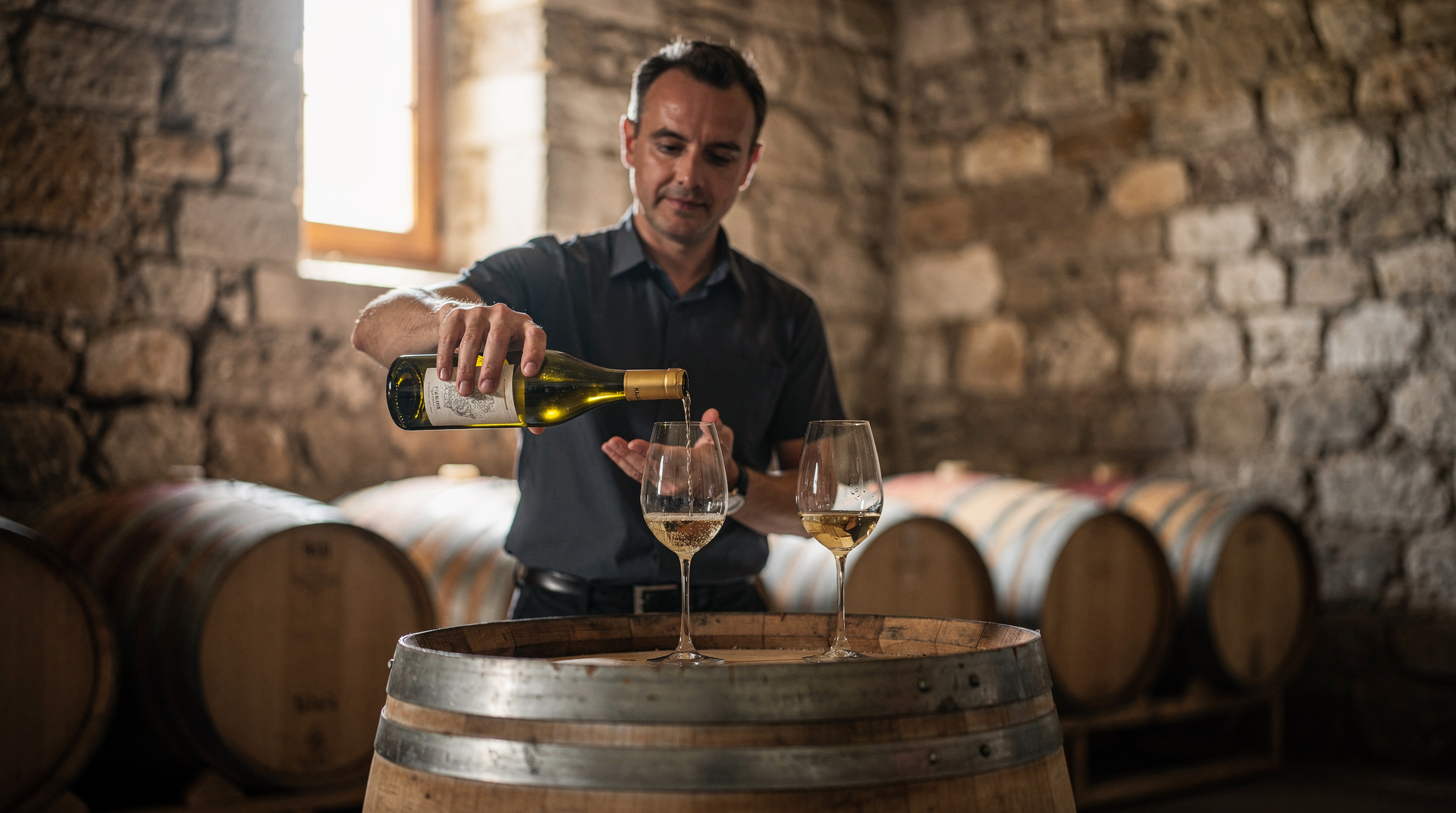
Return to the farm: fresh truffle grated onto toasted bread with local olive oil and possibly a young cheese. A glass of Malvazija or a local red alongside. Some tours extend to a full lunch with truffle-based dishes. The tasting portion is often as memorable as the hunt itself.
What to wear: waterproof boots are essential in autumn and winter (mud, wet leaves, uneven ground). Layers in autumn — the mornings are cool. In summer, lighter clothing but still closed shoes.
Truffle-based food in Slovenian Istria
Beyond the hunting experience itself, truffle-based dishes appear throughout Slovenian Istria on restaurant menus. In the autumn season, fresh truffle shavings appear on:
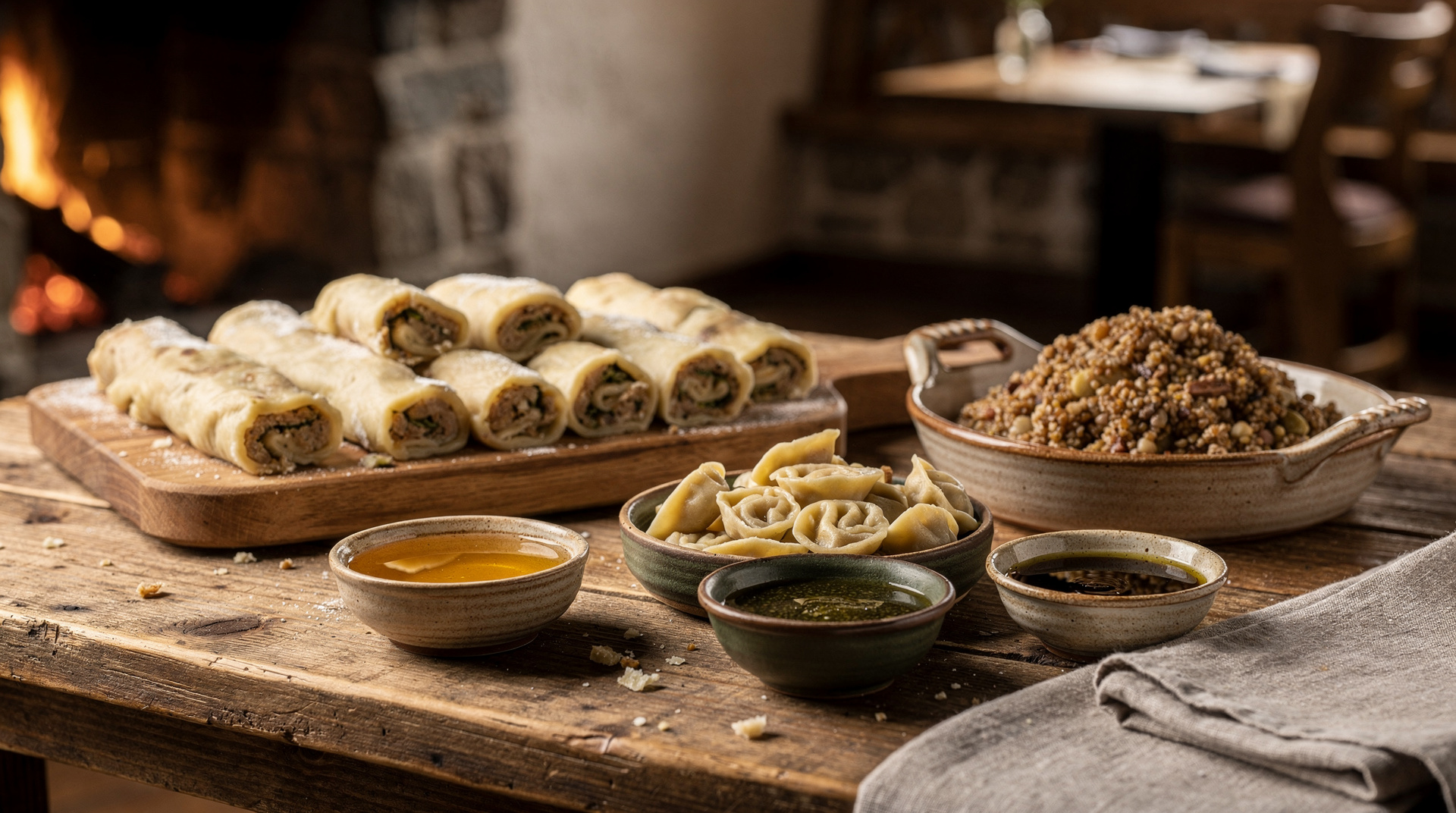
Fuži with truffle — the traditional Istrian hand-rolled pasta (a small tube, slightly irregular) with fresh truffle grated generously over the top. This is the defining truffle dish of Istrian cooking. Price in a local restaurant: EUR 25–45 depending on the amount of fresh truffle used and the type.
Scrambled eggs with truffle — the simplest truffle preparation, and often the most revealing: the truffle’s aroma comes through clearly in the neutral egg base. Available at truffle farm lunches and some local restaurants.
Truffle with local cheese — young sheep’s milk cheese or semi-soft Istrian cow’s milk cheese with truffle shaved over; served as an appetiser. More modest than the pasta version, but a good quick taste if you are just passing through.
Truffle oil: every shop in Istria sells truffle oil. Most is made with synthetic truffle flavour — 2,4-dithiapentane, a compound that mimics truffle aroma but is not derived from truffle. Real truffle oil (whole truffle pieces in neutral oil) exists but is expensive. The commercial bottles sold at souvenir stalls almost certainly contain the synthetic flavour. If you want to take truffle home, buy a small fresh truffle or truffle salt, not the oil.
The olive oil connection
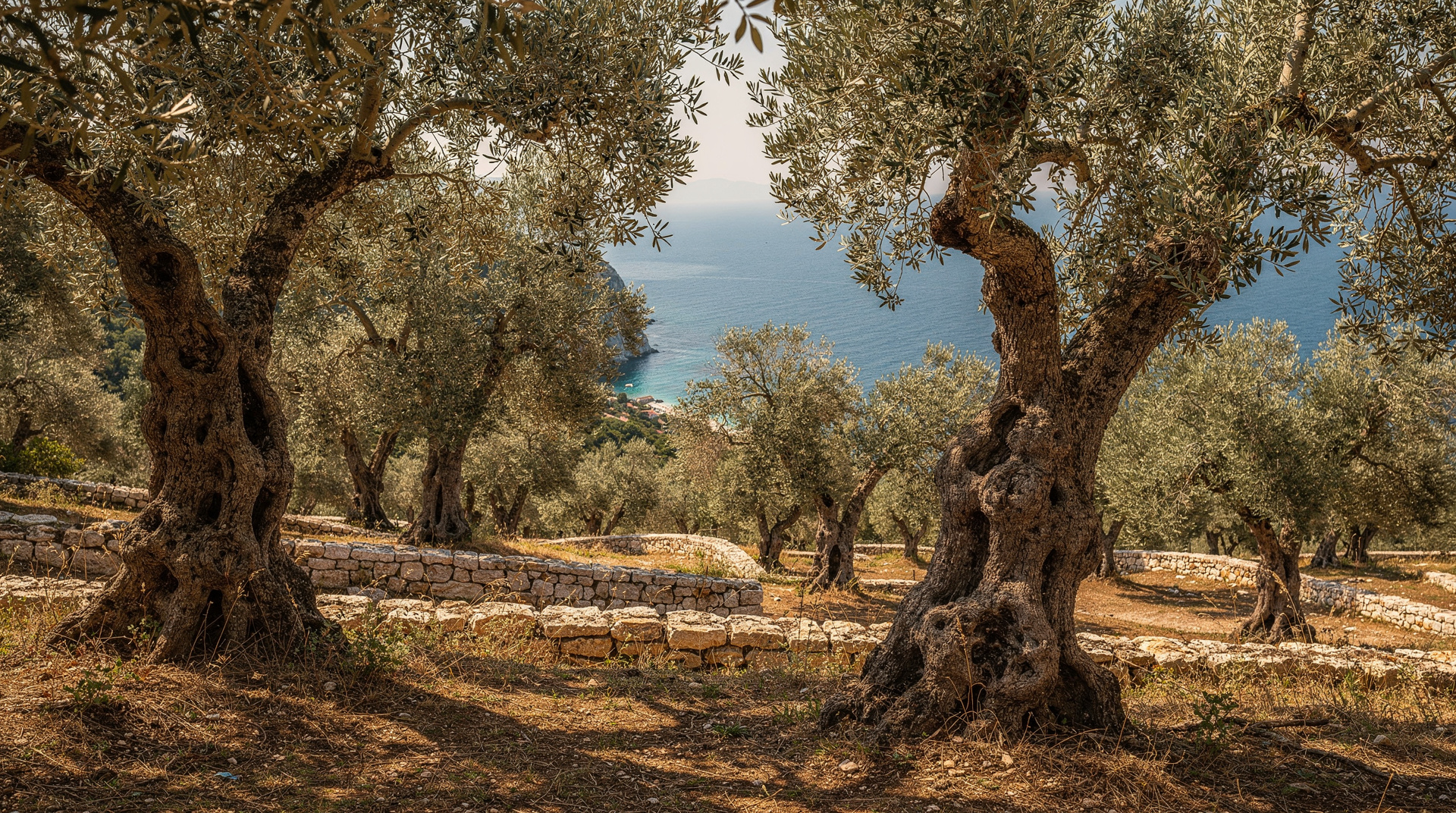
Truffle hunting tours in Istria almost always combine with olive oil — the two most celebrated Istrian food products often come from the same farm. A tour that includes olive oil tasting alongside the truffle experience is common and makes sense: the Slovenian coast’s Istrska Belica olive oil is as genuinely distinctive as the truffles, and the combination of truffle on bread with local olive oil is one of the simplest and best food experiences in the region.
A dedicated Slovenian Istria olive oil tasting experience covers the oil production, varieties and tasting with a guide. Combining this with the truffle hunting tour in autumn (when both products are at their best) makes a full food-focused day in the Istrian hinterland.
Getting to Slovenian Istria
The Slovenian coast and its hinterland are 100–115 km from Ljubljana — about 1 hour by motorway. Piran is the most famous destination; Koper is the practical base. Truffle hunting tours typically operate from farms in the forested inland zone (10–20 km from the coast) rather than from Piran itself — check the precise location when booking.
Most tours offer pick-up from Piran or Koper if you don’t have a car; confirm this when booking.
What the experience is honestly worth
A good truffle hunting tour (1.5–2.5 hours in the forest, genuine search, tasting at the end) costs EUR 40–80 per person. At this price, the experience is genuinely worthwhile in the October–November white truffle season, when the finds are real, the aroma dramatic, and the farm lunch a good addition. In summer, the experience is more about the walk and the dogs than the truffles themselves.
Do not book a tour that costs EUR 20 and promises to take 30 minutes. That is the staged version. The forest walk itself — the dogs working, the hunting logic, the quietness of an Istrian oak forest in autumn — is the interesting part of the experience.
Truffle dogs and how the hunt works technically
The most common breed used for truffle hunting in Istria is the Lagotto Romagnolo — an Italian water spaniel with exceptional olfactory sensitivity and, crucially, a disposition to point and alert rather than consume the truffle when found. Some hunters use mixed breed dogs trained from puppyhood; a trained truffle dog is a serious financial investment (EUR 2,000–5,000 for a reliable trained animal) and most hunters have two or three dogs working at different energy levels.
The training process involves conditioning the dog to associate the truffle scent with food reward, starting with truffle oil on training objects, progressing to buried pieces, and eventually to wild truffle search in genuine forest conditions. A well-trained dog working good territory will find truffles reliably in season; the same dog in poor territory or off-season will alert less often.
From the hunter’s perspective, the dog alerts by digging and stopping — the trained dog will not eat the truffle but will wait for the hunter to extract it and provide the food reward (a treat, not the truffle itself). The hunter uses a small pointed tool called a vanghetto to loosen the soil and extract the truffle without damage, then replaces the soil to protect the mycelium network. A single truffle mycelium can produce fruit over many years if the extraction is done carefully.
The Slovenian-Croatian Istrian truffle market
Most of the commercially significant truffle production on the Istrian peninsula comes from the Croatian side — the forests of the Mirna valley and around Buzet are among the most productive Tuber magnatum habitats in Europe. Croatian Istrian white truffle is sold fresh at EUR 1,500–4,000 per kilogram at peak season (October–December), competing with Piedmont and Périgord on quality.
The Slovenian side of Istria has a smaller truffle production — primarily black truffles and summer truffles — but is geographically close enough that some Slovenian tour operators source into Croatian territory for their hunts, which gives access to the more impressive white truffle finds. If the marketing for a truffle hunt specifically mentions “white truffle” (beli tartuf) and the season is October–January, confirm whether the hunt works on the Slovenian side (where white truffles are less abundant) or in Croatian territory.
This is not a reason to avoid Slovenian truffle tours — the forest environment and the dog-hunting experience are the interesting elements regardless of which side of the border you are on. But understanding the geography prevents disappointment if you are specifically seeking white truffle.
After the hunt: truffle-focused restaurants in the region
Several restaurants in the Slovenian Istrian coastal zone take truffle seriously enough to build menus around the October–November season:
Gostilna Ruj (near Sečovlje, close to the Dragonja valley): a rural gostilna with a kitchen that uses fresh local truffle when available in season — fuži with truffle, truffle scrambled eggs, truffle with local sheep’s cheese. Simple, genuine, inexpensive by truffle-food standards (EUR 20–35 for a truffle pasta). Call ahead to confirm the current truffle menu.
Restavracija Staro Sejmišče (Koper old town): more formal, with a broader seafood and truffle menu. The truffle dishes use locally sourced Istrian truffles alongside Koper olive oil. Mains EUR 22–38 in truffle season.
Piran’s waterfront restaurants in October and November occasionally feature fresh truffle additions to their fish menus — grilled fish with truffle shaved over, pasta with fresh truffle. Ask which restaurants are sourcing fresh (svež tartuf) rather than preserved (tartuf v olju) truffles before ordering.
Truffle preservation and buying tips
If you want to take fresh truffle home from Slovenia or Croatian Istria, the logistics require brief planning:
Fresh truffle shelf life: white truffle (Tuber magnatum) keeps for about 7 days after harvest if stored correctly — wrapped loosely in paper towel, in a sealed jar, in a refrigerator, with the paper changed daily. The aroma will diminish over time. Black truffle (Tuber melanosporum) keeps for up to two weeks with the same treatment.
Transporting fresh truffle on a flight: fresh truffle from Slovenia is legal to bring into most EU countries without restriction. For non-EU countries, check the food import rules — the UK post-Brexit has no restriction on fresh truffle from EU countries; the USA requires that fresh fungi not be commercially processed (no customs issues for a personal quantity of one or two truffles for personal use, but quantities that look commercial may attract attention).
Preserved truffle products: truffle paste (tartufata), truffle salt, and truffle rice are all available at the farm shop after a hunting tour and at Piran food shops. These are more practical for travel than fresh truffle and give a reasonable approximation of the flavour when used correctly. The truffle salt is the most versatile and travels easiest — a small jar sprinkled over a fried egg or pasta at home will remind you of the Istrian experience.
What to avoid: truffle-flavoured products made with synthetic 2,4-dithiapentane (the compound that mimics truffle aroma but is not derived from truffle). This includes most commercial “truffle oil” and many cheap truffle pasta sauces. A reputable farm shop will confirm whether their oil contains actual truffle; if they cannot confirm, assume it is synthetic.
Combining truffle hunting with the Slovenian coast
A truffle hunting morning followed by a Piran afternoon is a natural one-day itinerary for Slovenian Istria: the truffle forest is inland (20–30 minutes from the coast), the tour takes 2–3 hours including tasting, and you are back in Piran by 13:00 for lunch and the afternoon on the coast.
Piran’s old town — a Venetian-era fishing town on a narrow peninsula, with a campanile that gives views over the Adriatic and the Italian coast — is one of the most immediately beautiful small towns in Slovenia. The combination of truffle-breakfast at the farm and fresh grilled fish for lunch in Piran, with a glass of Malvazija between them, is one of the better single-day food experiences the country offers.
For more on the coastal food and wine culture, the olive oil guide covers the Istrska Belica variety in detail and the Koper stroll and taste experience offers a guided introduction to Koper’s food and wine culture as a complement to the Piran side of the coast.
For the broader food and wine context of the Slovenian coast, see the olive oil guide. The Slovenian food guide places Istrian food within the national picture.
Booking a genuine tour: what to ask before you pay
Because the word “truffle hunting” covers everything from a staged 30-minute photo-op to a genuine 2-hour forest search, the questions you ask before booking matter more than the marketing copy. Ask: how long does the walk itself last (under an hour is a red flag), how many dogs work the tour (one dog for a small group is normal; zero dogs and a “guaranteed find” is staged), and whether the truffle is found live in the forest or simply presented at the tasting table. A genuine operator answers plainly and is often happy to describe a recent unsuccessful outing — truffle hunting has an element of chance, and operators who claim otherwise are usually planting the goods.
Group size also matters: a group larger than 8–10 people turns the forest walk into a queue behind the dog rather than an intimate encounter with it. Smaller family-run operations near the Dragonja valley typically cap groups at 6–8. If a listing doesn’t state a maximum group size, ask directly.
Weather and mud: autumn and winter tours proceed in most weather short of genuinely dangerous conditions — truffle hunting is, after all, a forest activity in the rain-prone Istrian hinterland. Do not expect a tour to be cancelled for drizzle; do expect waterproof boots to be non-negotiable footwear from October through March.
Frequently asked questions about Truffle hunting in Slovenian Istria
Do you need to book a truffle hunting tour in advance?
Yes, especially for the October–November white truffle window, when both Slovenian and Croatian operators fill up on weekends. Book at least two weeks ahead for autumn; a few days is usually enough in spring or summer. Farms with only one or two dogs cannot absorb walk-up demand in peak season.Can vegetarians or non-drinkers still enjoy a truffle hunting tour?
Yes. The core experience — the forest walk, the dogs working, the extraction — has nothing to do with diet, and the tasting can be adapted: truffle on bread with olive oil rather than wine pairing, and the cheese course can be skipped. Mention dietary needs when booking so the farm can adjust the tasting plate.Can children join a truffle hunting tour?
Yes, generally from around age 6–7, since the walk covers 2–4 km of uneven forest ground and requires reasonably sustained attention. Younger children often find the actual digging more interesting than adults do, but check the specific operator's policy, as some farms limit group size and prefer older children on busier autumn dates.What happens if the dogs don't find anything?
A genuine hunt occasionally comes up short, particularly in dry summer conditions when truffle scent travels less well through the soil. Reputable operators are upfront about this possibility rather than guaranteeing finds — if a tour is advertised with a "100% guarantee," treat that as a sign the truffle may be pre-planted.
Top experiences
Bookable activities with verified prices and instant confirmation on GetYourGuide.