Ljubljana and caves 4-day itinerary
Ljubljana: Postojna Cave and Predjama Castle tour
Two cave systems, one capital, four days
Slovenia is one of the world’s great karst countries — the very word “karst” comes from the Slovenian word for the limestone plateau south of Ljubljana. Beneath that plateau lie thousands of caves, and two of them are world-class destinations in their own right: Postojna Cave (the most visited site in Slovenia, with underground railways and vast stalactite chambers) and Škocjan Caves (a UNESCO World Heritage Site with one of the world’s largest underground canyons).
Combining both caves with two days in Ljubljana makes a completely logical four-day itinerary for any visitor who does not want to rent a car. Both caves are easily reachable from Ljubljana on organised day trips, and both are dramatically different from each other — visiting both on the same trip gives you a complete picture of what karst geology produces at its most spectacular.
| Where | Ljubljana, day trips to Postojna Cave and Škocjan Caves |
| Car needed | No — organised day trips or train + taxi combinations cover both caves |
| Best time | Year-round; caves hold 10–12°C regardless of season |
| Biggest cost | Cave day trips, around €50–85 each including transport |
| Good for | Families, first-timers, no-car travellers |
Day-by-day snapshot
| Day | Focus |
|---|---|
| 1 | Arrival, first evening in Ljubljana |
| 2 | Ljubljana fully explored: market, castle, Plečnik trail |
| 3 | Postojna Cave and Predjama Castle day trip |
| 4 | Škocjan Caves day trip, possible Piran add-on |
For a comparison of what else no-car travellers can reach from the capital, see the day trips from Ljubljana guide; if four days becomes six, adding Piran is the natural coastal extension already flagged below.
Day 1 — Ljubljana: arrival and first impressions
Arrive at Ljubljana Airport and take the Markun or Goopti shuttle (€4, 50 minutes) to the city centre. Check in near Prešeren Square — the old town is entirely walkable from there.
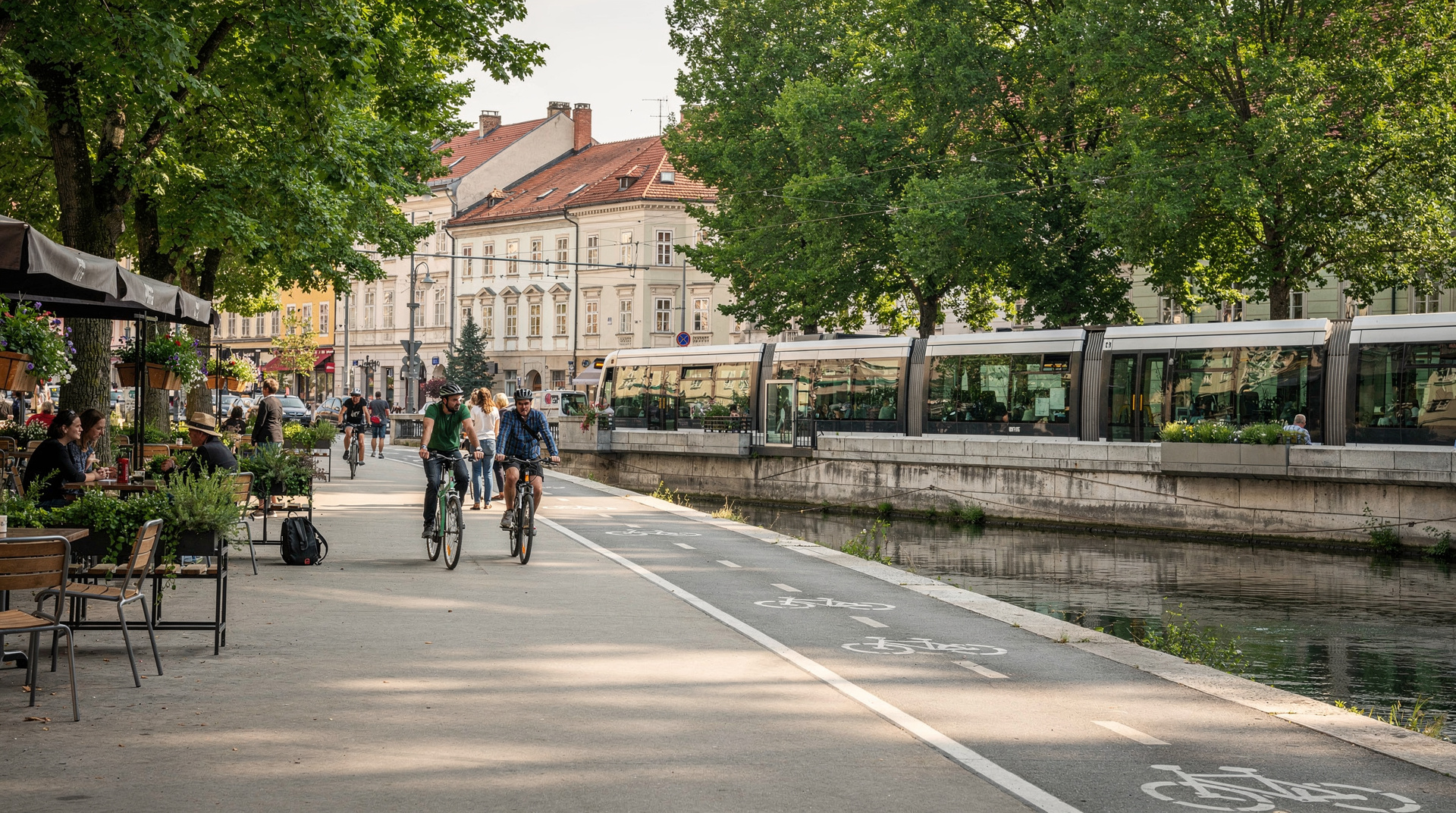
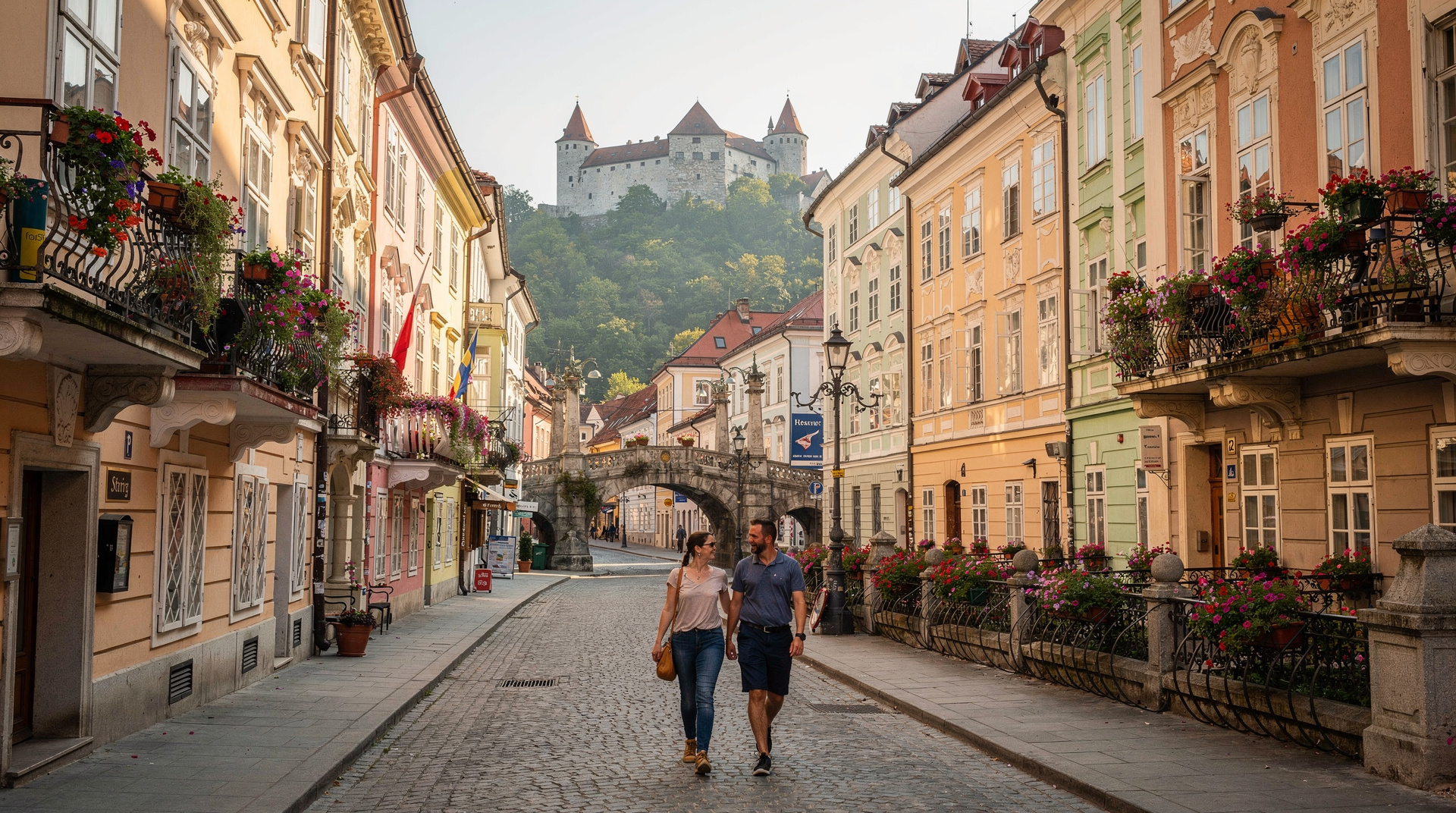
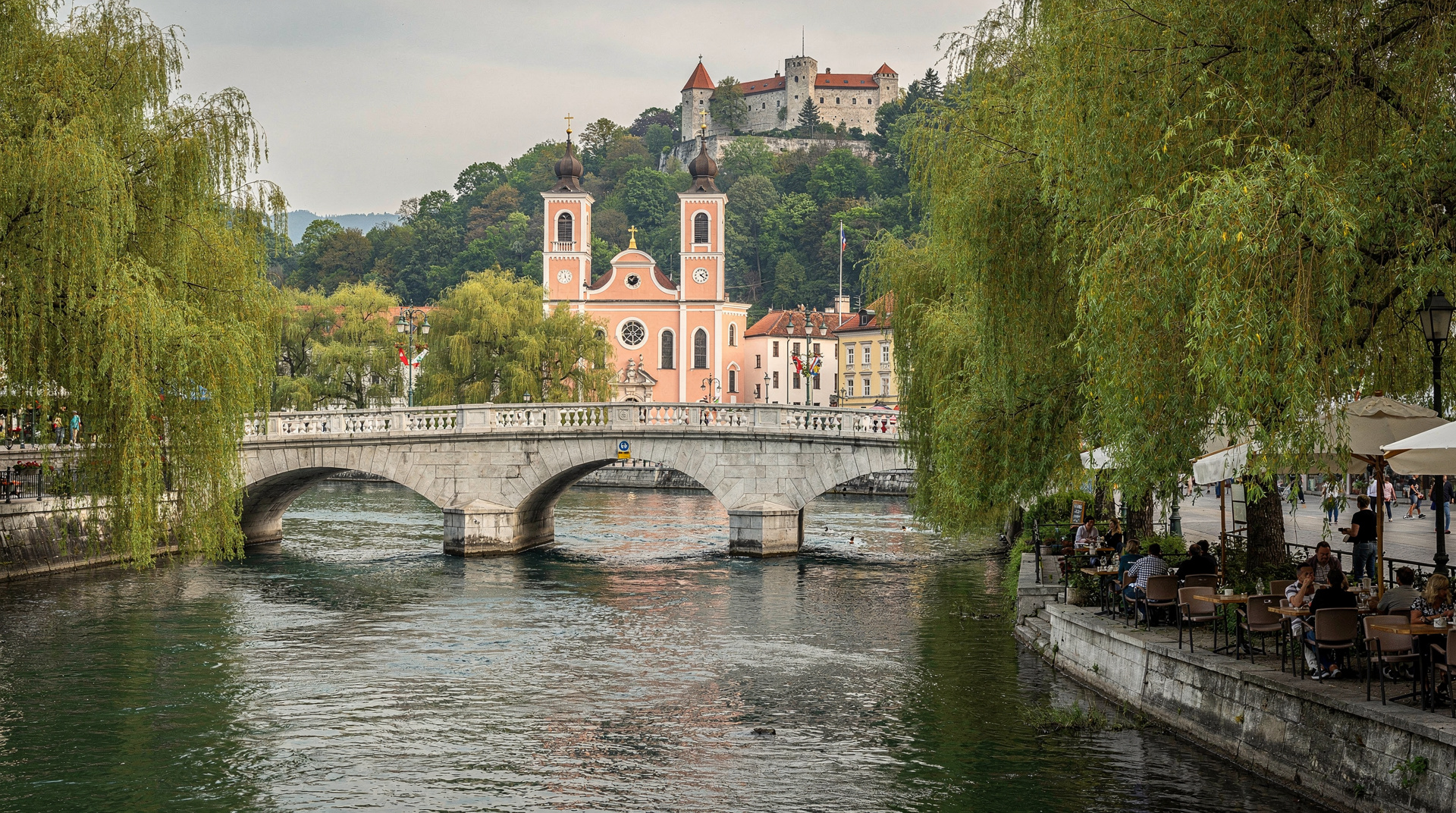
Ljubljana in the early evening is at its most appealing: the Triple Bridge, the riverside café terraces, the Dragon Bridge and the castle on the hill above. Walk from the bus station to the old town via the main Slovenska cesta (20 minutes) for a first orientation.
Dinner at Gostilna Šestica (since 1776, traditional Slovenian, €15–20 for a main) or Pri Škofu (similar price, excellent venison stew in autumn/winter). Both are around 10 minutes’ walk from the old town.
Day 2 — Ljubljana fully explored
Use the full day for Ljubljana’s essential sights and the food culture that makes the city more than just a gateway.
Morning: the riverside market (open daily except Sunday, best on Friday). Buy honey, cheese and local produce for breakfast, eaten at the Ljubljanica riverwall. Then walk the Plečnik architectural trail — the Triple Bridge, the market hall, the National and University Library (ask about visiting the reading room), the Cobblers’ Bridge. This takes 2–3 hours and covers the city’s most distinctive architectural heritage.
A private walking tour of Ljubljana’s historic old town runs 2–2.5 hours with a local guide and covers the Plečnik legacy, the Roman origins of Emona, the Habsburg era and the Yugoslav period — four layers of history overlaid on a city that looks deceptively simple.
Afternoon: Ljubljana Castle (funicular €6 return, terrace view free) and then south into Trnovo — the student district where the city’s second coffee culture lives. Kavarna Rog on Cankarjevo nabrežje is the best riverside coffee.
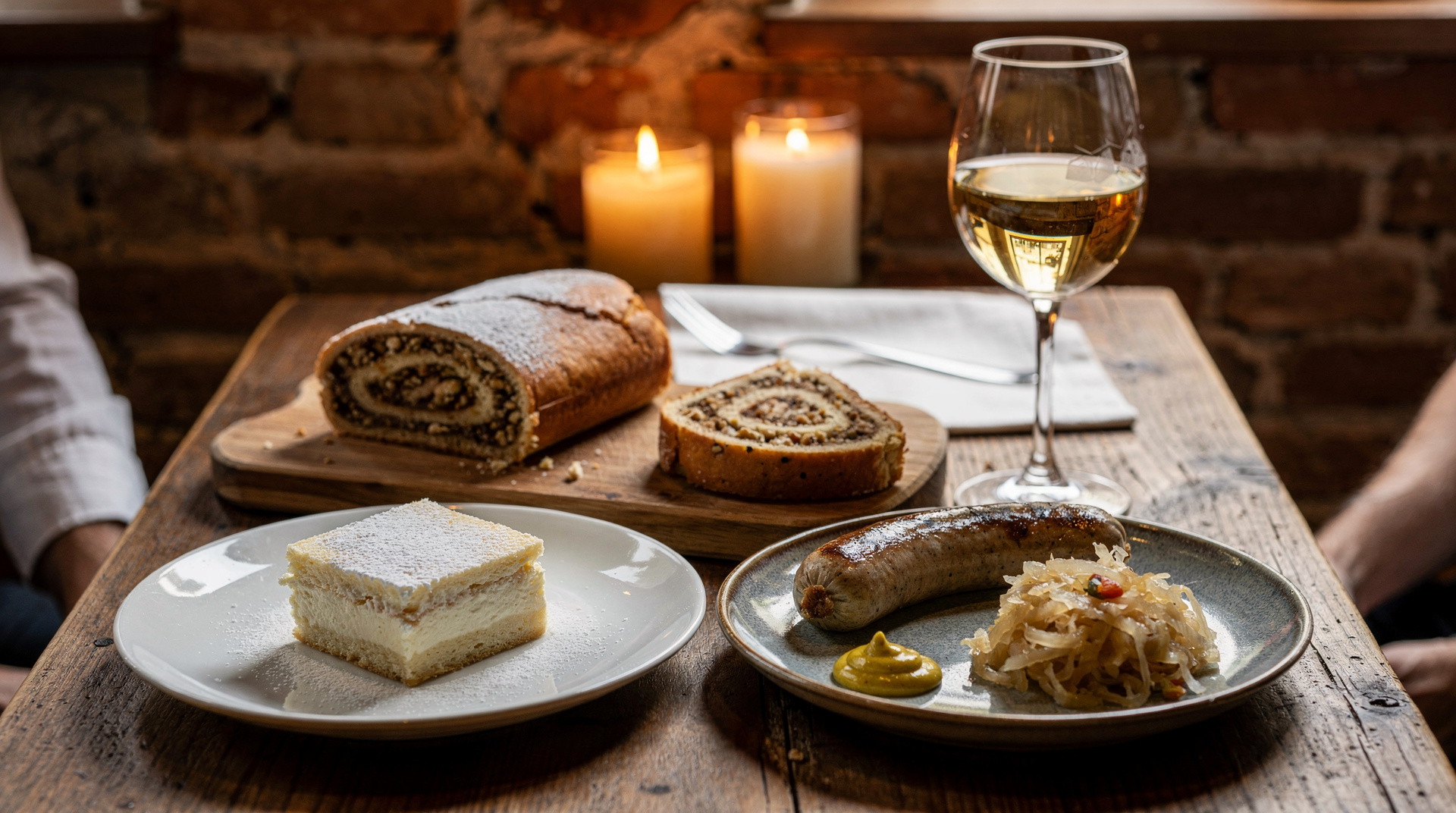
The Ljubljana food tour with 10 local tastings — if you would prefer to run this as an evening activity, the tour sometimes operates in afternoon slots (check the booking page). It covers market stalls, old-town delis and local wine bars across 3 hours.
Day 3 — Postojna Cave and Predjama Castle
Join a day trip to Postojna Cave and Predjama Castle from Ljubljana. Both organised tours and independent travel are options; the day trip is substantially more convenient.
The Postojna Cave and Predjama Castle day trip from Ljubljana departs in the morning, includes all transport and entry fees, and returns to Ljubljana by early evening. The tour price (around €75–85) works out favourably compared to booking cave entry (€34.90), castle entry (€24) and transport independently.
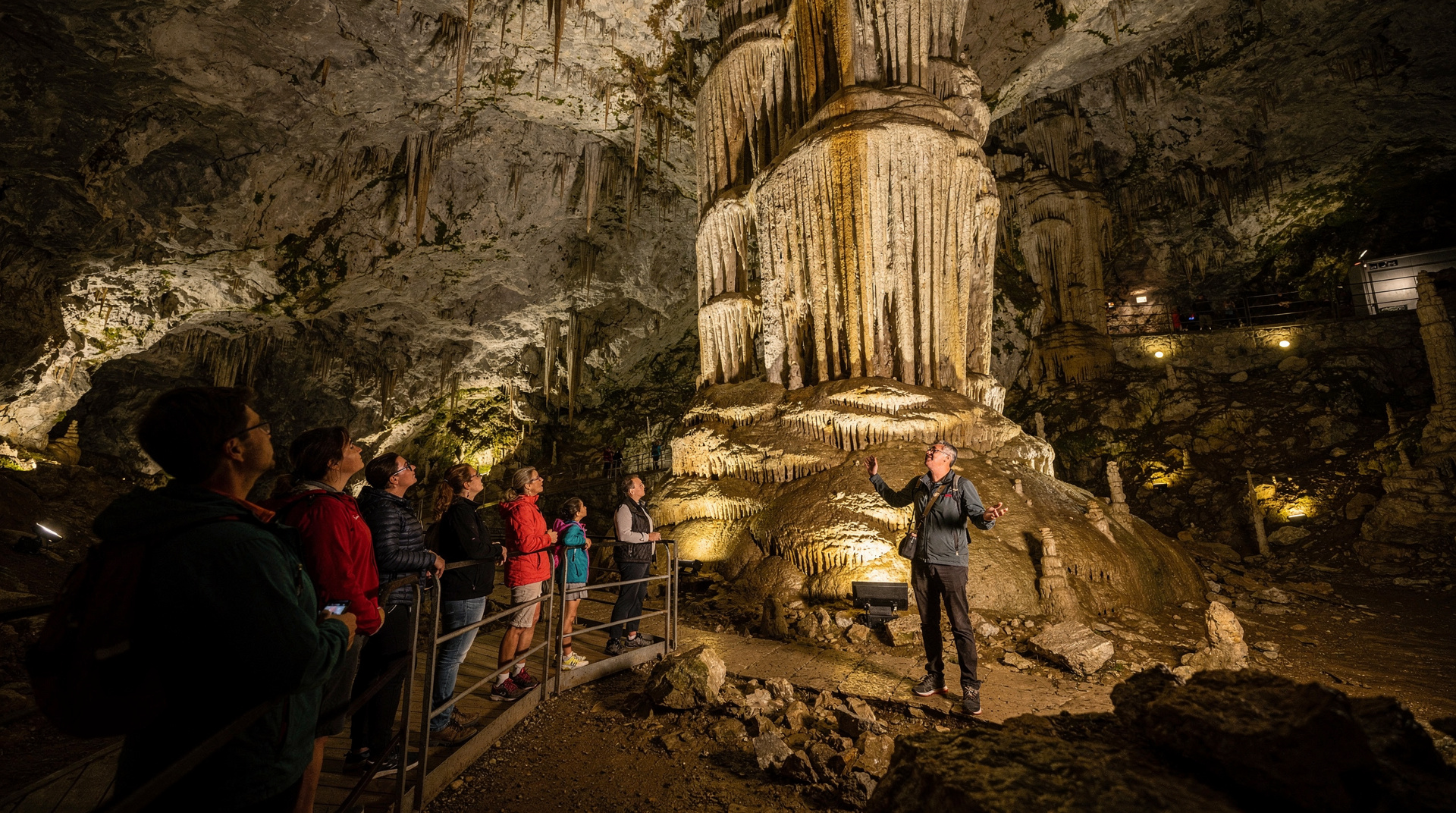
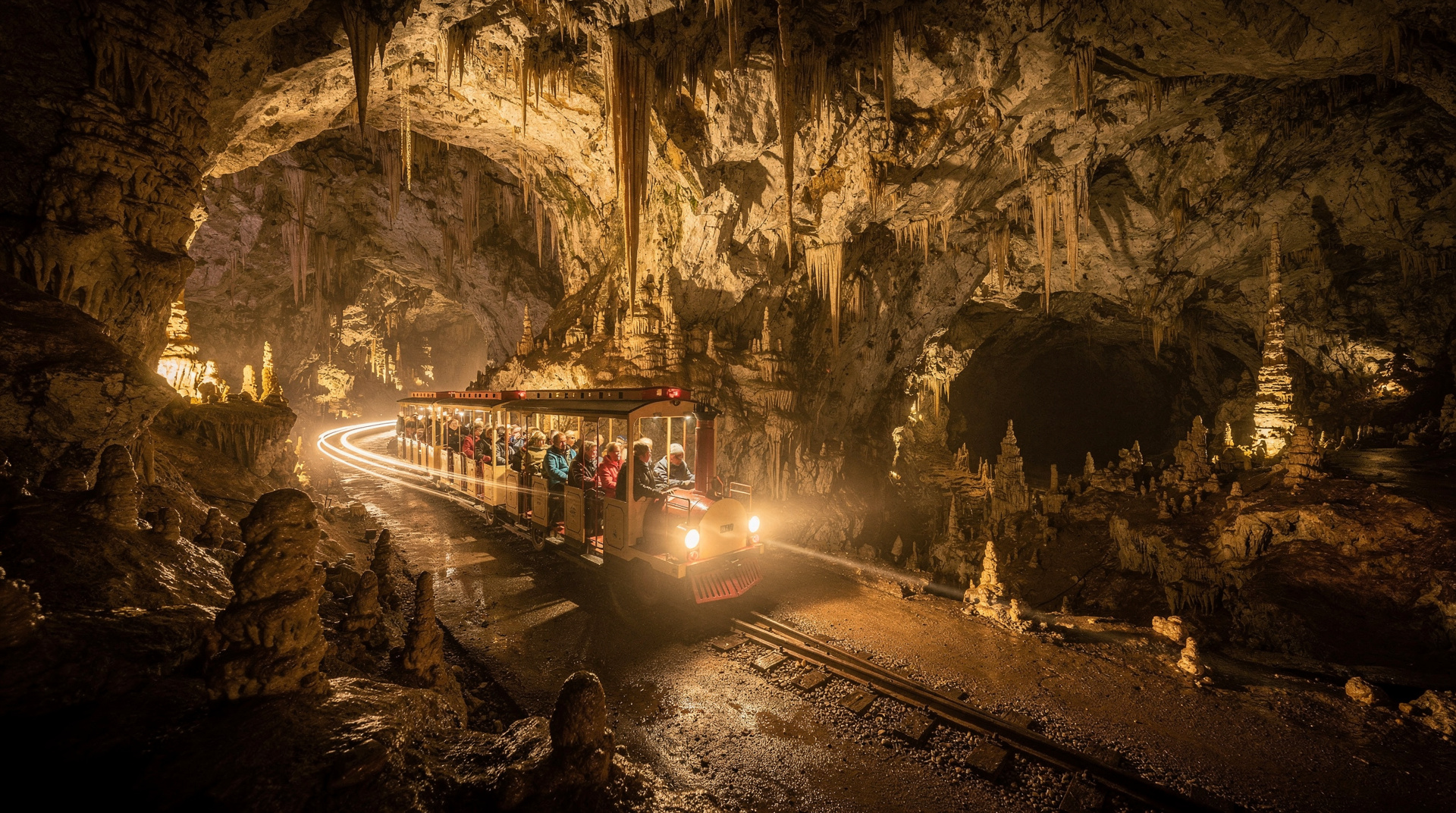
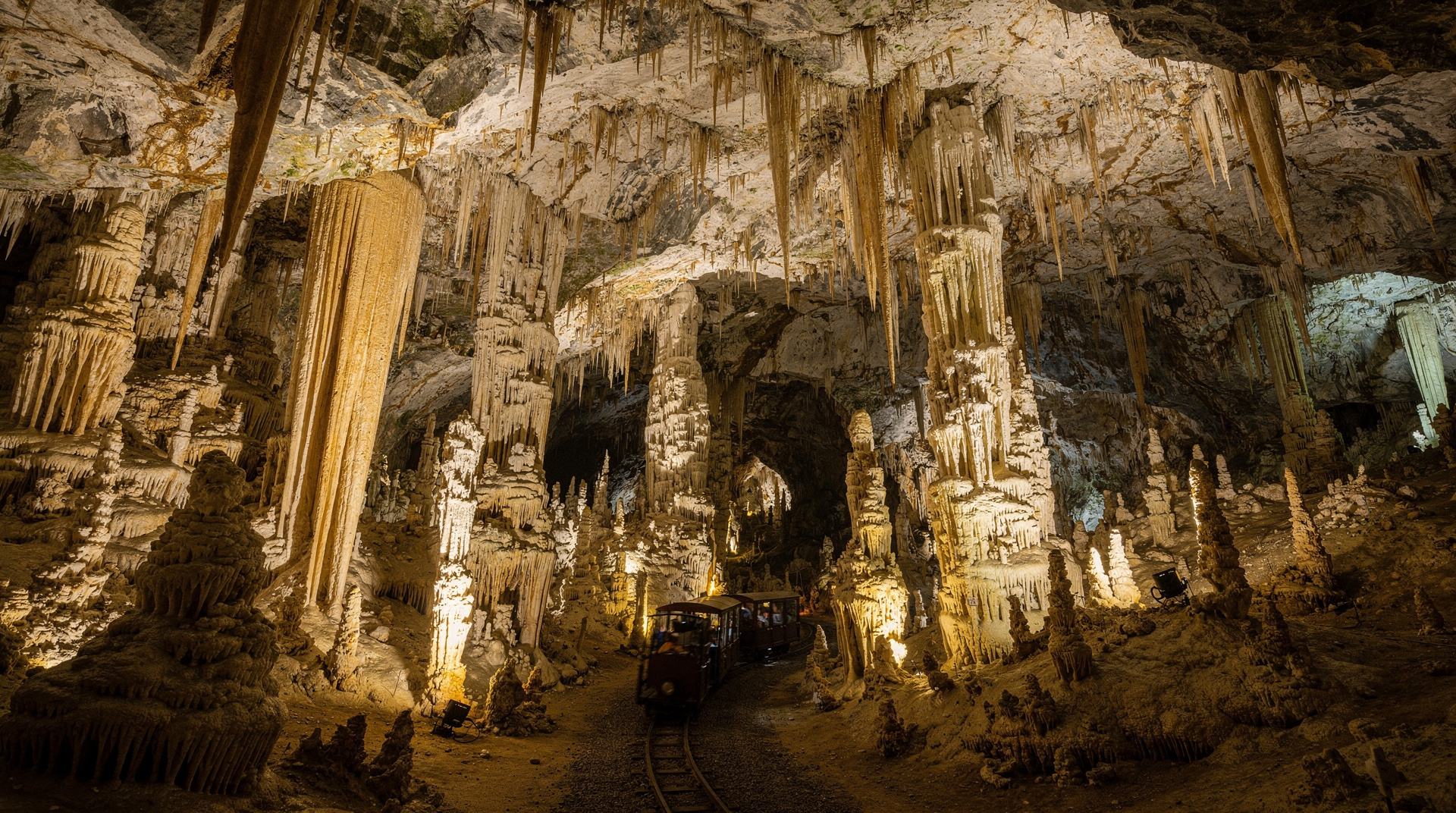
Postojna Cave itself: the underground electric railway runs 2 km into the mountain, then a 1.5-hour guided walk through chambers hung with hundreds of thousands of stalactites. The cave is 10°C year-round — bring a light jacket. The famous olm (Proteus anguinus, the cave-dwelling salamander, sometimes called the “human fish”) lives in the cave streams and can sometimes be seen in the dedicated tank near the exit.
Honest assessment: Postojna is genuinely spectacular but can feel theme-park-like on busy days (weekends in July–August). The experience is extraordinary; the queue management and gift-shop infrastructure are less so. Book timed entry online to avoid the worst of the queues.
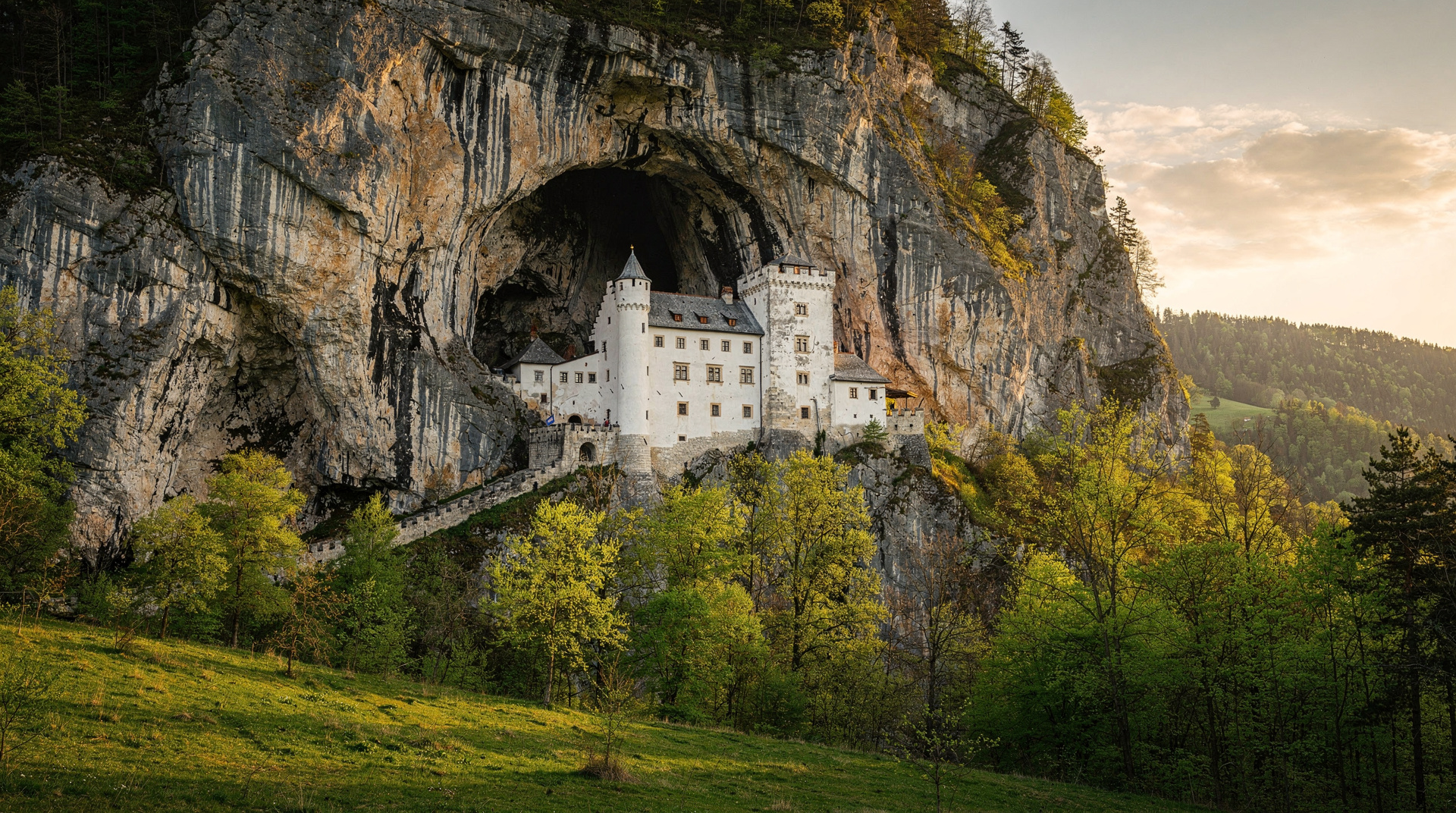
Predjama Castle (9 km from Postojna) is built into the mouth of a cave in a 123-metre cliff face — one of the most photographically compelling buildings in Central Europe. The interior tells the story of Erazem Lueger, a 15th-century Slovenian outlaw knight who held the castle against the Habsburg siege for over a year. Castle entry €24 (or combo ticket with Postojna).
Day 4 — Škocjan Caves and possible coast detour
The second cave day is fundamentally different from the first. Škocjan Caves is a UNESCO World Heritage Site that geologists and cave experts consistently rate among the most impressive cave systems on Earth.
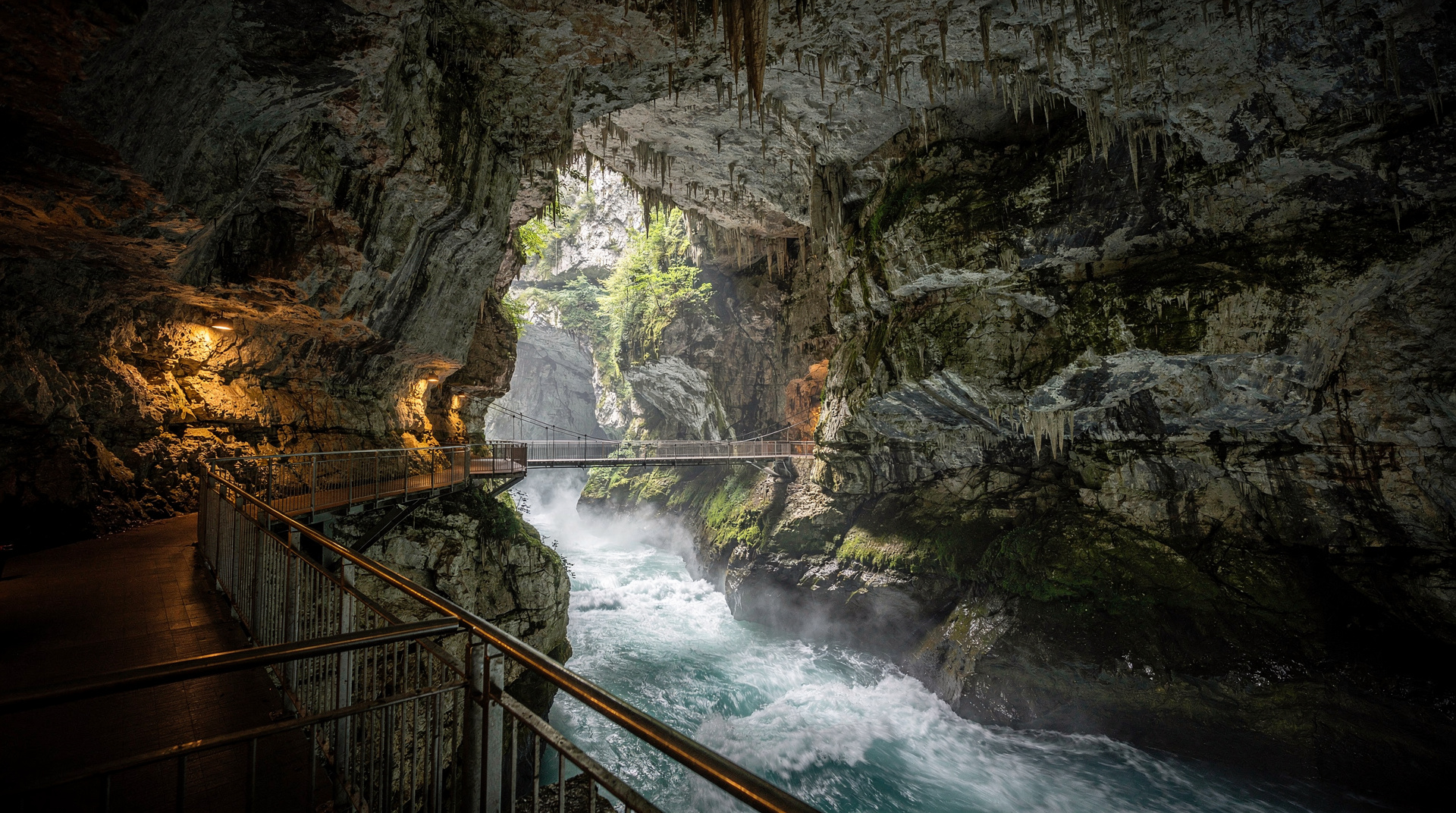
The key distinction: Postojna is a decorated gallery (tens of thousands of stalactites and stalagmites, beautifully lit). Škocjan is a wild underground canyon — the Reka River disappears underground and cuts through a gorge with 165-metre ceiling heights, ancient stone bridges and vast dark chambers. It is noisier, more dramatic and more physically demanding than Postojna (the walk involves stairs and a crossing over the river gorge).
The Škocjan Caves day trip from Ljubljana departs morning from Ljubljana, arrives at Škocjan in time for a guided tour (tours run on the hour, €18, groups limited to 65), and returns to Ljubljana in the afternoon with time for a Piran stop.
The combined Škocjan Caves and Piran day trip from Ljubljana adds the Venetian coastal town to the cave visit — a full and varied day that covers one of Slovenia’s most dramatic natural sites and one of its most beautiful towns in a single loop.
If doing Škocjan independently by tour, note there is no advance booking — tours fill on a first-come basis. Arrive at least 30 minutes before the hour to be guaranteed entry. The cave is closed on Mondays in winter.
Return to Ljubljana for a final dinner and the airport shuttle the next morning.
Caves comparison: Postojna vs Škocjan
| Factor | Postojna | Škocjan |
|---|---|---|
| UNESCO status | No | Yes |
| Visit style | Underground train + guided walk | Guided walk through gorge |
| Accessibility | Easy, paved, flat | Moderate, stairs, narrow paths |
| Duration | 1.5 hours | 1.5–2 hours |
| Advance booking | Yes, recommended | No (walk-in only) |
| Entry price | €34.90 | €18 |
| Crowds in peak season | Very high | Moderate |
| What makes it special | Vast stalactite chambers, underground train | Underground canyon, roaring river, massive chambers |
Honest recommendation: Škocjan is the more extraordinary geological experience; Postojna is more accessible and has better visitor infrastructure. If doing only one, and you are comfortable on steps and in narrow spaces, Škocjan edges it. If travelling with children or less mobile companions, Postojna is the right choice.
Practical notes
Getting to Postojna without a car: The organised day trips from Ljubljana (starting around €75) are the most convenient option and include entrance fees and a guide. Alternatively, the train from Ljubljana runs to Divača (1 hour, €6–8), from where you need a taxi to Postojna town (12 km, €15–20) and then walk or take another taxi to the cave entrance (2 km from the town centre). The direct bus from Ljubljana to Postojna runs 3–4 times daily (1 h, €5–7).
Getting to Škocjan without a car: Škocjan Caves have no direct bus service from Ljubljana. Options: (1) organised day trip from Ljubljana (€50–65 for transport, then pay €18 cave entry separately), (2) train to Divača (1 h from Ljubljana, €6–8) and taxi 12 km to the caves (€20–25), or (3) combine with a coast trip via Koper and take a taxi from Koper (30 km, €40–50).
Budget for this itinerary: Ljubljana mid-range hotel €80–120/night; cave day trips €75–85 each with transport; food €35–50/day; museum entries €15–25 over the four days. Total per person for 4 nights: approximately €550–700 plus flights.
The karst geology that makes Slovenia’s caves unique
Slovenia sits at the heart of the original karst landscape. The very word “karst” comes from the Slovenian “kras” — the name for the limestone plateau southwest of Ljubljana that stretches from the Istrian coast to the edge of the Pannonian plain. This plateau is riddled with caves, sinkholes, disappearing rivers and underground canyons that formed over millions of years as slightly acidic rainwater dissolved the limestone bedrock.
Postojna Cave and Škocjan Caves are the two most accessible and famous of thousands of caves in the Slovenian karst system. But they are also genuinely different from each other in character and geological type:
Postojna is a decorative cave — millions of years of water seeping through limestone deposits have created vast chambers hung with stalactites (growing downward), stalagmites (growing upward), curtains, helictites and cave pearls. The sheer density of formations is extraordinary; individual speleothems take hundreds of thousands of years to grow. The cave is also biologically rich — 150 animal species live in its darkness, including the famous olm (Proteus anguinus), Europe’s only cave vertebrate, pale pink and blind, which can live to 100 years old and go 12 years without food.
Škocjan is a tectonic and fluvial cave — shaped by the power of the Reka River cutting through the limestone over millions of years rather than by water seeping through it. The result is not a gallery of formations but an underground canyon of vertiginous dimensions: 165-metre ceiling heights, a thundering river below, ancient stone bridges across the gorge, and chamber names like “Martel’s Chamber” that honour the French speleologist who first explored it in 1884.
Both caves maintain a year-round temperature of approximately 10–12°C — visitors should bring a light layer even in midsummer. Both operate strictly guided tours; no independent exploration is permitted (or possible, given the cave geometries).
What to do between cave days
The itinerary structure — cave day 3, cave day 4 — works well because days 1 and 2 are city-focused (Ljubljana) and the contrast with the underground experiences is satisfying. But if you want to layer in more of the karst surface landscape, the area around Postojna Cave and Škocjan has several additional sites:
Predjama Castle (9 km from Postojna): the Renaissance fortress built into a natural cliff cave is typically combined with Postojna and is the most dramatic building in Slovenia. The story of Erazem Lueger, the outlaw knight who held it against a siege by hiding supplies through secret cave passages, is genuinely compelling.
Lipica Stud Farm (10 km from Škocjan): the birthplace of the Lipizzaner horses, bred at this location since 1580. Guided tours include a demonstration of classical riding (see current prices on lipica.org) and visits to the stables where horses are born white — or rather, dark grey, turning white over 7–10 years.
The Rakov Škocjan natural park (between Postojna and Škocjan): a short limestone valley with two natural bridges, a disappearing river and excellent birdwatching. Free to visit, well waymarked, 2–3 hours of walking.
Lake Cerknica (30 km from Postojna): Slovenia’s famous “disappearing lake” — a shallow polye (karst basin) that fills with water in autumn and winter and nearly empties in summer. The seasonal transformation and the birdlife (hundreds of nesting pairs in spring) are extraordinary; the nearby Notranjska Regional Park visitor centre explains the mechanism.
Extending to the coast
A four-day Ljubljana and caves itinerary connects naturally with two or three days on the Slovenian coast. Piran is 80 km from Postojna (1 hour) and 30 km from Škocjan (40 minutes). Adding two nights in Piran after the Škocjan day transforms the trip into a 6-day itinerary that covers three entirely distinct landscapes: the capital city, the underground world of the karst, and the Venetian-Adriatic coast.
Why see both caves?
The question that first-time visitors ask most often is whether it is worth seeing both Postojna and Škocjan in the same trip. The honest answer is yes — they are different enough that visiting both does not produce repetition.
Postojna Cave is an experience of abundance: 27 km of mapped passages, a 2 km underground railway, chambers with density of stalactites and stalagmites that is almost overwhelming, excellent lighting and a well-organized visitor flow. The olm (human fish) is a genuine natural wonder — a pale pink, eyeless cave salamander that breathes through external gills, lives in the cave streams, and can survive for a year without food. The cave infrastructure is exceptional and the visit feels complete and satisfying.
Škocjan Caves is an experience of awe: a wild underground canyon with a ceiling 165 metres above the roaring Reka River, ancient stone bridges and the sense of being somewhere genuinely extreme. The tour is more physically demanding (stairs, narrow passages, a bridge crossing high above the water), the lighting is minimal compared with Postojna, and the atmosphere is entirely different — it is dark, loud, cold and breathtaking in a way that Postojna, for all its splendour, is not. UNESCO designated it a World Heritage Site for both its geological and its biological significance.
The two caves together give you a complete picture of what karst geology produces at its most dramatic. Seeing only one is a reasonable choice (Škocjan if you want one experience; Postojna if you are travelling with children or prefer comfortable visits). Seeing both, over two days from a Ljubljana base, is the ideal option.
Doing the caves independently vs organised tours
The honest calculation on this route favours organised day trips more than it does almost anywhere else in Slovenia. Postojna independently by train and taxi costs roughly €40–55 per person once transfers and the €34.90 cave entry are added, against €75–85 for a full tour that includes transport, guiding and Predjama Castle — the tour is not dramatically more expensive and removes all the logistics.
Škocjan tips the calculation even further toward the organised option, since there is no direct public transport at all: a taxi round trip from Divača runs €40–50 before you have even paid the €18 cave entry. For most no-car travellers, one tour per cave is worth the modest premium. The cave tours from Ljubljana guide has a fuller price comparison across all the operators running this route.
Connectivity and cash for the cave days
Both cave sites accept cards for entry and gift shop purchases, but carry €20–30 in cash for the Divača taxi rank (Škocjan) and for smaller Postojna-area cafés that still prefer it. Mobile signal is reliable in Postojna town and at both cave visitor centres, though it naturally cuts out inside the caves themselves — download the tour departure times in advance rather than relying on checking online at the ticket booth.
Neither cave allows large bags, tripods or drones inside, and photography without flash is generally permitted at Postojna but more restricted in parts of Škocjan given the lower light levels and narrower passages — check current rules with the guide at the start of each tour rather than assuming continuity between the two sites.
Which cave to prioritise if you can only do one
If a scheduling conflict or budget forces a choice between the two, the honest recommendation depends on who is travelling. Families and less mobile visitors should choose Postojna Cave — flat, well-lit, and paired easily with Predjama Castle for a complete half-day. Travellers who want the single most dramatic natural experience in the country, and who are comfortable with stairs and narrower passages, should choose Škocjan Caves instead — it is smaller in visitor numbers, wilder in character, and rated by many geologists as the more extraordinary of the two.
Booking notes
Postojna: Tickets are sold only online at postojnska-jama.eu, with date and time chosen at booking (entry €34.90, combo with Predjama Castle €49.90). The tour departs every 30 minutes in peak season; the timed entry slot ensures you board immediately. The underground train runs regardless of the weather — this is Slovenia’s best rainy-day attraction.
Škocjan: No advance booking; tours run on the hour from 10:00 in summer. Arrive 20–30 minutes early to queue. Tour price €18. The cave is closed Mondays in winter and on some public holidays — check skocjanske-jame.si for the current schedule. Wear non-slip shoes; the cave paths are wet in places.
Predjama Castle: Entry €24 (standalone) or discounted in combo with Postojna. Open year-round except 25 December. The interior can be covered in 45–60 minutes; the exterior and the cliff face are worth photographing from the road below before entering.
Top experiences
Bookable activities with verified prices and instant confirmation on GetYourGuide.