Koper: the Slovenian coast's underrated city
Working Adriatic port city with one of Slovenia's finest Venetian squares and almost no tourists. EUR prices and day trip ideas.
From Koper: Slovenian Riviera tour with Izola, Piran, Portorož
Quick facts
- Best time to visit
- April–October
- Days needed
- Half day to 1 day; useful transit point
- Getting there
- Train or bus from Ljubljana (2h); 25km from Piran
- Budget per day
- EUR 50 to 110
The coast’s overlooked city
Koper is Slovenia’s only port city and its largest Adriatic settlement (population around 26,000), but it barely registers on the international tourist map. This is partly a function of geography — it sits between the mass-market resort of Portorož (25km south) and the gravitational pull of Trieste (50km northwest) — and partly because Koper presents itself as a working city rather than a tourist destination. The port handles significant cargo traffic. The old town is built on what was originally an island, connected to the mainland in the 19th century by a causeway that has since been absorbed into continuous urban fabric.
The result is a city with an exceptional medieval centre — one of the best preserved Venetian city squares in the eastern Adriatic — and almost no tourist infrastructure. Restaurants are priced for locals. The museums are small and honest about their limitations. The crowds that fill Piran in August barely register in Koper. It is, for visitors with the flexibility to go slightly off-script, one of the most rewarding coastal stops in Slovenia.
| Where | Slovenian coast, between Trieste and Portorož/Piran |
| Time needed | Half day to 1 day; strong transit hub |
| Getting there | Train or bus from Ljubljana (2h); 25km from Piran |
| Budget per day | EUR 50–110, cheaper than Portorož or Piran |
| Best time | April–October; avoid the seafront hotel strip prices of high summer |
History: a city with many names
Koper has been called Capodistria (Italian), Koper (Slovenian), Aegida (Roman), and Justinopolis (Byzantine). The name Capodistria — “head of Istria” — was the Venetian name used for most of its modern history, reflecting its position as the dominant city of Istrian territory. It was Italian-majority until 1945, when the Italian population largely departed following the transfer of Istria to Yugoslav control, and has been Slovenian-administered since.
This layered history means Koper’s old town has a different character from most Slovenian cities. The street signs are bilingual (Slovenian and Italian). The architecture is more Venetian-Mediterranean than Central European. Several of the best restaurants serve Istrian food influenced by Italian, Croatian, and Slovenian traditions simultaneously. The resulting hybrid cuisine — olive oil from local groves, pasta influenced by Trieste, fish from the same Adriatic that washes the Dalmatian coast — is worth seeking out.
Tito Square and the old town
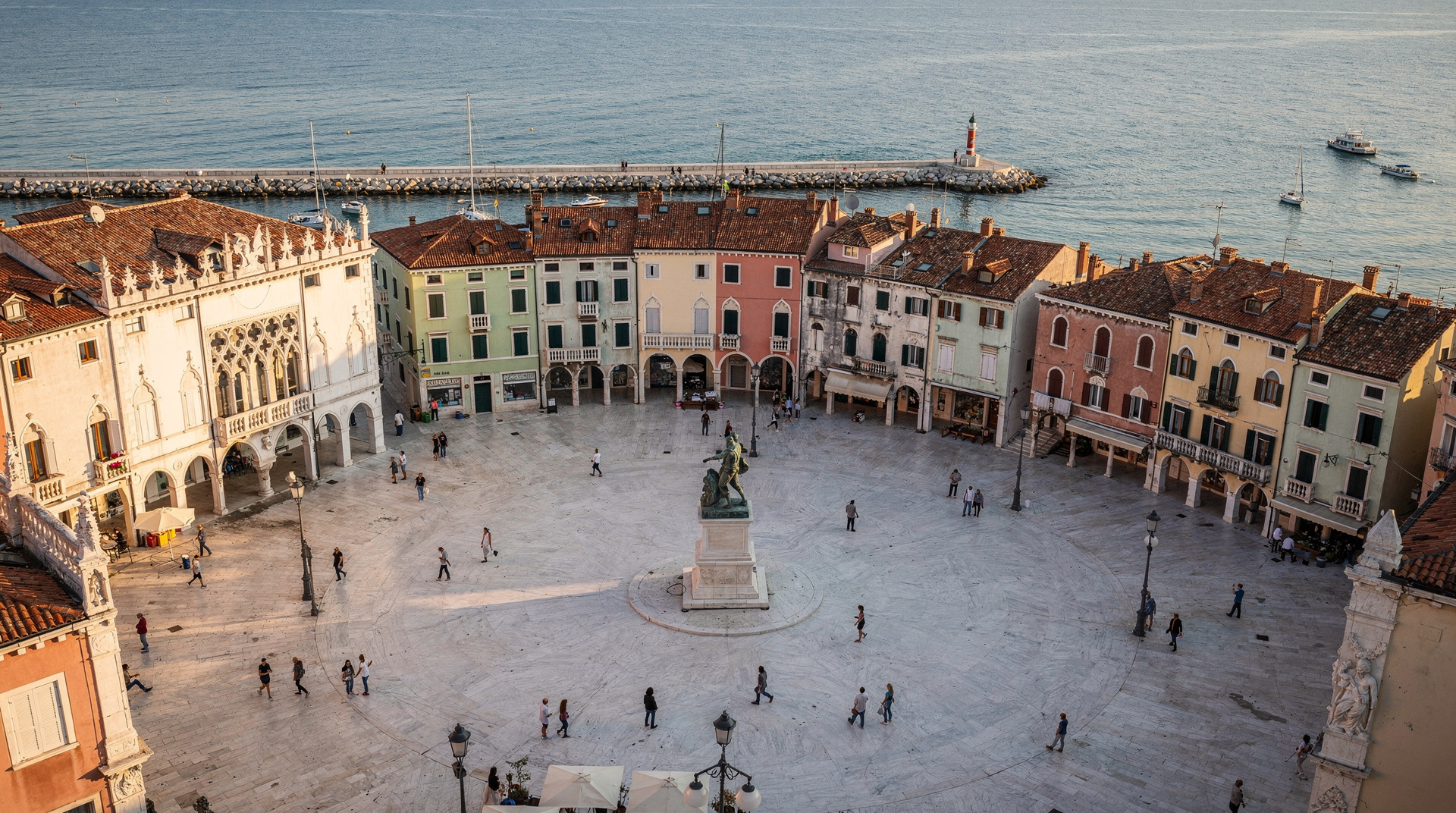
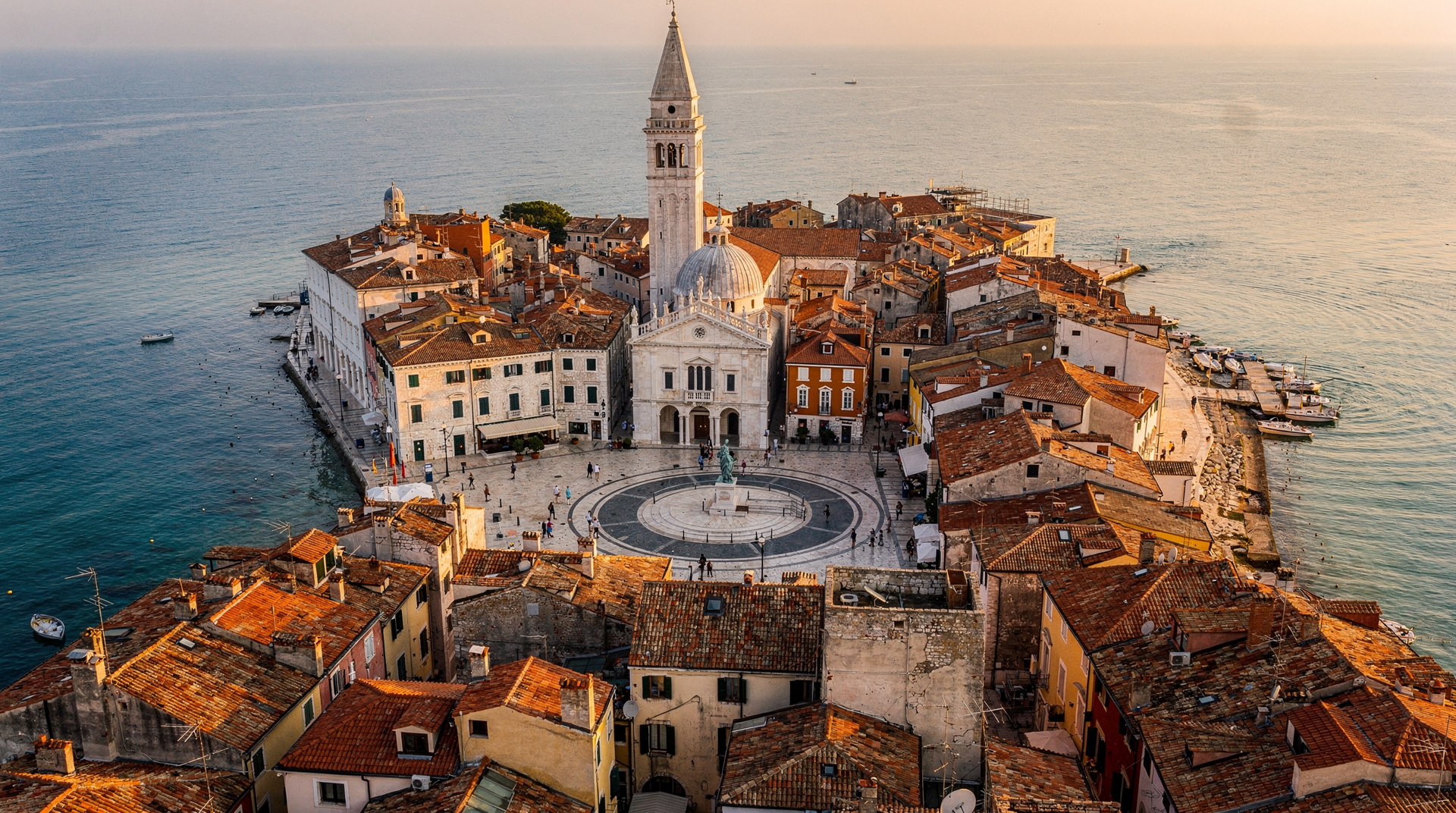
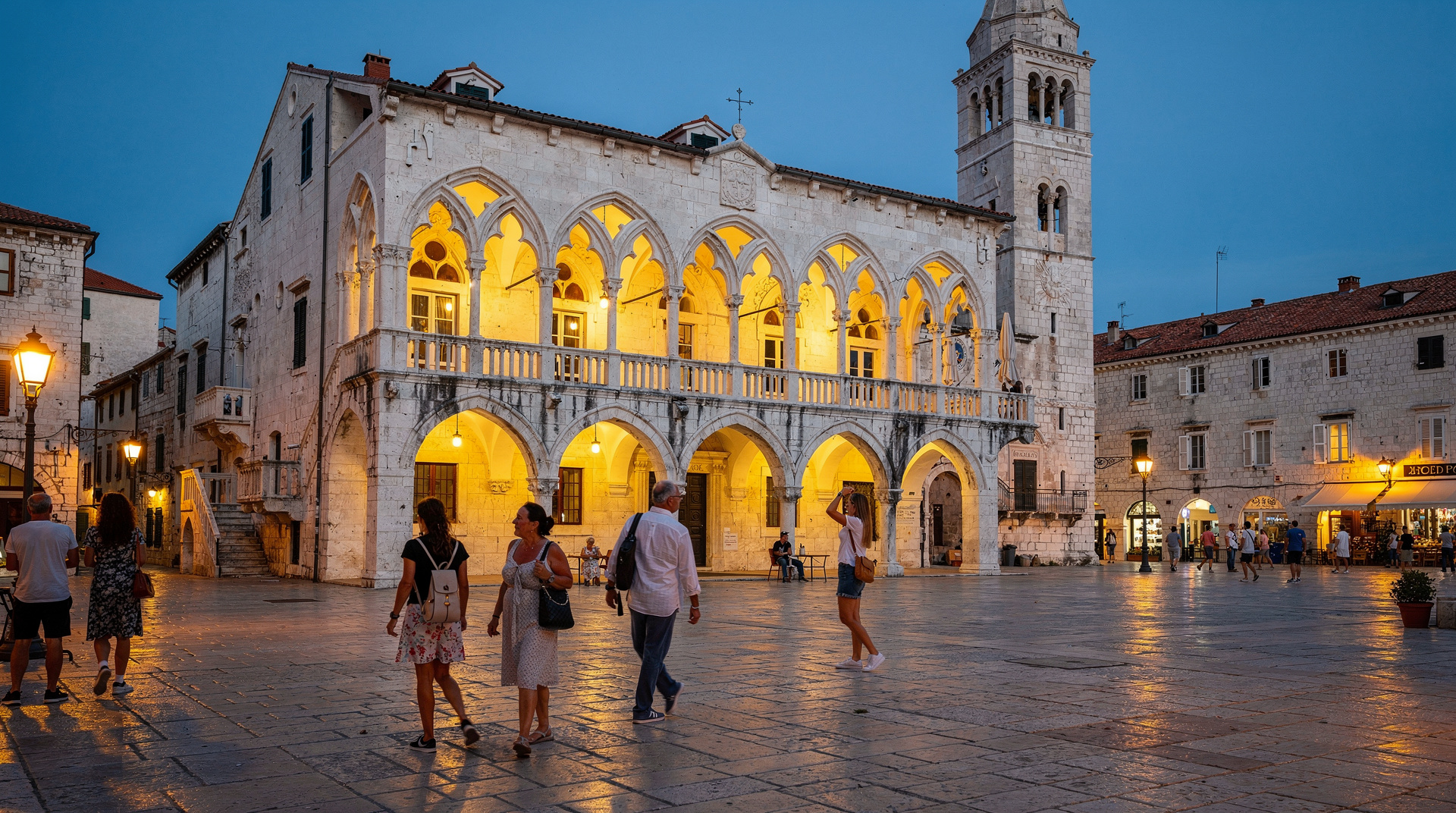
Titov trg (Tito Square) is the organizing centre of Koper’s old town and by most measures the most impressive single civic space on the Slovenian coast. The Gothic loggia, the Cathedral of the Assumption with its late Romanesque campanile (the tallest building in the Slovenian Littoral), and the Praetorian Palace (the seat of Venetian administration for five centuries) form three sides of a coherent composition that has not been significantly disrupted since the 15th century.
The Praetorian Palace interior contains the Regional Museum of Koper — small but good, covering the city’s Venetian period and the shifting political geography of Istria through the 20th century (Koper was Yugoslav until 1954, when the Trieste territory question was resolved). Entry EUR 4. The cathedral is free; the campanile can be climbed for views (EUR 3).
The surrounding medieval streets — particularly the alley behind the loggia and the narrow passages leading toward the fishing harbour — are quiet, well-preserved, and feel genuinely lived-in rather than stage-set. Koper has made no particular effort to sanitize its streets for tourists, which is partly why the urban fabric is more honest than in more visited coastal towns.
Walking food and culture tour of Koper’s old townThe Baroque city gate and walls
The old town is bounded by fragments of its original city walls, and the most intact section — the Muda Gate, a Renaissance arch with a large sundial carved into its exterior face — stands at the landward entrance to the medieval island. The Muda Gate dates to 1516 and is the most handsome single piece of exterior architecture in Koper. Unlike Piran’s walls, which require a 20-minute climb, the Muda Gate is at street level and easy to photograph from multiple angles.
Behind the gate, the main street of the old town (Čevljarska ulica — “Cobbler’s Street”) is a pleasant 400m promenade of cafés and shops that leads from the gate to Tito Square. It is narrower and quieter than the equivalent street in Piran and has a more local character — the businesses here are patronized by Koper residents, not tourists, and close on Sunday morning accordingly.
Food in Koper
Koper’s food scene is one of its strongest arguments. The restaurant prices are those of a provincial city rather than a resort, and several places do good Istrian-influenced cooking — the Italian culinary tradition that runs all the way down the peninsula.
Žgvabi (Kidričeva ulica 13, mains EUR 12–18) is considered the best-value fish restaurant in Koper; it functions as a neighbourhood spot rather than a tourist restaurant and the quality of the baked fish is notably better than many pricier Piran options. Buffet Mercator (EUR 6–10 for a cooked lunch) is the unpretentious local-chain lunch option that workers from the port use. For coffee, the terrace bars around Tito Square charge EUR 2–2.80 for an espresso — meaningfully less than Piran.
Koper Riviera food and culture tour by local busKoper as a transit hub
Koper’s most useful function for many visitors is as a transport node. It has: direct train connections to Ljubljana (2h, EUR 10–12, several times daily — one of the better value train journeys in Slovenia); bus connections to Piran (EUR 3, 40min) and Portorož (EUR 2.50, 30min); and a ferry connection to Venice (Venezia Lines) in summer. For budget travellers or those arriving without a car, Koper is often the logical entry point to the coastal region.
The drive from Koper to Trieste is 50km and 50 minutes — close enough for a morning or afternoon excursion. Miramare Castle, 8km north of Trieste on the seafront, is the obvious stop: a white 19th-century Habsburg castle on a cliff above the Gulf of Trieste, with gardens and sea views that justify the 20-minute detour.
For a fuller picture of the neighbouring towns before you commit to a base, our Izola guide and Slovenian Istria guide cover the quieter corners of the coast, while the Trieste guide and Venice guide help if you plan to cross the border from here.
Izola: the overlooked middle coast
Between Koper (10km north) and Piran (15km south), the small town of Izola sits on a peninsula similar in character to Piran — a compact old town on a promontory, Venetian architecture, a fishing harbour — but receives perhaps 10% of Piran’s visitor numbers. This makes it, for visitors who want the coastal atmosphere without the July crowds, arguably the most underrated stop on the Slovenian coast.
Izola’s main assets: the old town has a genuine fishing-port identity that Piran has largely lost; the Parenzana cycling trail connects it to both neighbours; and the Strunjan Nature Reserve to the south is better accessed from Izola than from Portorož. The town lacks Piran’s medieval concentration and Koper’s civic grandeur, but for a quiet lunch and a swim in clear water with no queue for parking, it is excellent.
Several boat operators in Izola run evening excursions along the coast, including sunset trips to the Piran peninsula and a boat-cave tour along the coastal cliff sections. The one-hour coastal boat tour (EUR 20–25) gives perspective on the rock architecture of the coast that is invisible from the road.
Day trips from Koper
Piran (25km, 30min): The natural complement; combined with Koper it makes a full coastal day — Koper in the morning for the square and food, Piran in the afternoon for the medieval lanes and waterfront.
Izola (10km, 12min): The quiet middle-coast alternative to Piran. Better for a lazy lunch and swim than for architecture tourism, but worth knowing about for mid-summer when Piran is at its most hectic.
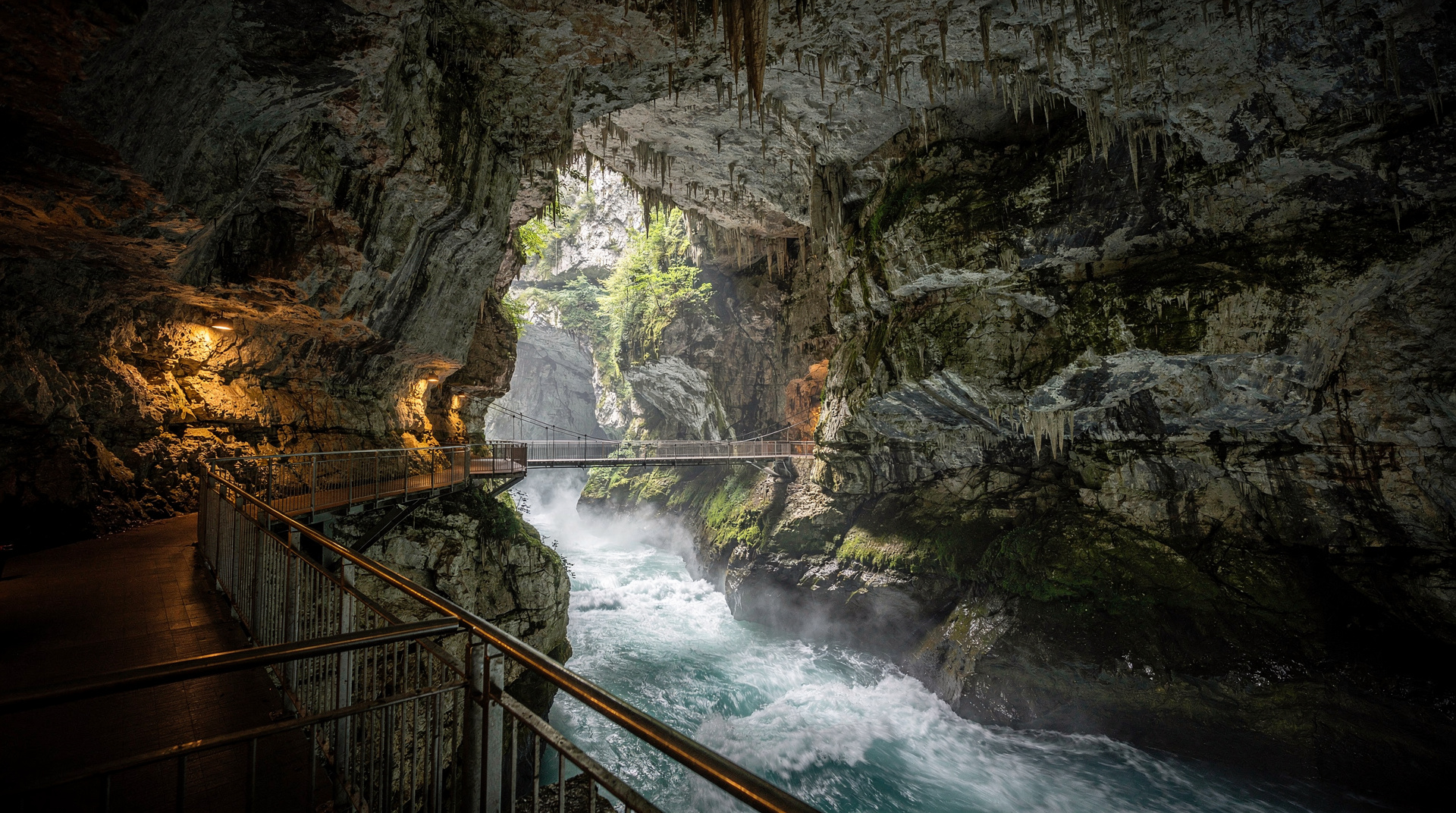
Škocjan Caves and Lipica (40km, 45min): Both cave and stud farm are accessible from Koper as a day trip. The combination covers karst in a single day while staying on the coast. Our Škocjan caves guide and Lipica guide have the details.
Trieste (50km, 50min): The Italian port city is a natural day-trip from Koper — close enough to be practical but culturally quite different. The coffee culture in Trieste (the original home of the Hausbrandt and Illy brands) is a specific draw for caffeine enthusiasts; the Miramare Castle (8km north of the city centre) is among the most dramatically located Habsburg buildings in the Adriatic.
Bled and Ljubljana (both 2h+): Accessible by train and bus, better as one-way transits than as day trips. If you are starting or ending your Slovenia trip on the coast, Koper–Ljubljana by train is a pleasant 2-hour journey through the Karst and then the Slovenian highlands.
Day trip from Koper to Bled and LjubljanaKoper’s market and local food culture
The covered market in Koper (near the main square, open Monday–Saturday mornings) is one of the best food markets on the Slovenian coast. Local farmers sell olive oil from the Istrian terraces above the city, pecorino-style cheeses, local vegetables, and dried herbs. Several stalls specialize in Istrian pršut (air-cured ham, closely related to prosciutto), which is produced in the villages inland and is significantly better value here than in the tourist shops in Piran.
The olive oil in particular is worth attention: the Slovenian Istrian olive groves produce a low-yield, high-quality oil that is almost entirely consumed locally and is rarely exported. Several producers sell direct at the market for EUR 15–25 per litre. It is a measurably better product than supermarket olive oil at comparable prices.
The weekly fish market (Friday mornings, at the harbour) sells the Adriatic catch from the previous night’s fishing. This is primarily a local wholesale market, not designed for tourists, but it is open to the public and gives an honest picture of what the local fishermen actually catch — small species (sardines, anchovies, mackerel) that dominate the real catch and are underrepresented on restaurant menus that focus on more profitable turbot and sea bass.
If the olive oil and cured ham at the market catch your interest, the olive oil of the Slovenian coast guide and the truffle hunting in Istria guide go deeper into the region’s produce, and the Slovenian food guide places Koper’s cooking within the wider national table.
The Koper–Piran panoramic coast road
The coastal road from Koper to Portorož and Piran is one of the most scenic driving routes in Slovenia — 25km of winding road that alternates between sea views, olive terraces, and small settlements. The road passes through Izola and Strunjan; several pull-offs allow you to stop above the sea at viewpoints that do not appear on tourist maps.
If you are driving the route for the first time, do it south-to-north (Piran to Koper) in the morning when you have the sea on your right and the light behind you. The return north-to-south in late afternoon with the sun over the water is also excellent.
Koper to Piran panoramic coast tourAccommodation in Koper
Koper is primarily a city rather than a resort, and its accommodation reflects this. The options are fewer and less polished than in Portorož or Piran, but significantly cheaper. Mid-range hotels (Hotel Koper, EUR 90–130 double) are functional and central. Guesthouses and private apartments (EUR 60–90) are the better value option and are plentiful in the residential streets above the old town.
For visitors using Koper as a transit point — arriving by train from Ljubljana and leaving by train toward the interior, or vice versa — a single night here is perfectly comfortable. The old town is 10 minutes from the station on foot.
Travellers weighing the whole coast against the mountains will find the best beaches in Slovenia and the Ljubljana guide useful for planning what comes before or after Koper, and the coast and mountains itinerary shows one way to combine them.
Practical information
Getting there by train: Direct trains from Ljubljana to Koper run several times daily (EUR 10–12, 2h). This is the most comfortable car-free access to the entire Slovenian coast. Trains depart from Ljubljana’s main station.
By bus: Multiple buses from Ljubljana daily (EUR 10–14, 2h). Slightly less comfortable than train but more frequent and sometimes faster during peak train congestion.
By car from Ljubljana: 110km, 1h 20min via A1 and the E61 coastal road. Parking in the old town is limited; the main paid car park is at the edge of the old town centre (EUR 1–1.50/hr).
What to skip: The seafront promenade outside the old town is largely undistinguished — modern apartment blocks and a mediocre hotel strip. The character is entirely in the old town, which is small enough to navigate in two to three hours. Koper doesn’t need more than a morning unless you are eating well for lunch.
Best combination: A morning in Koper followed by the coastal road to Portorož (25km) and an afternoon in Piran gives you the entire Slovenian coast in a single efficient day — old town squares, resort beach, and medieval peninsula tip. See our Piran guide and Portorož guide for the southern coast.
Koper vs Piran vs Portorož: choosing where to stay
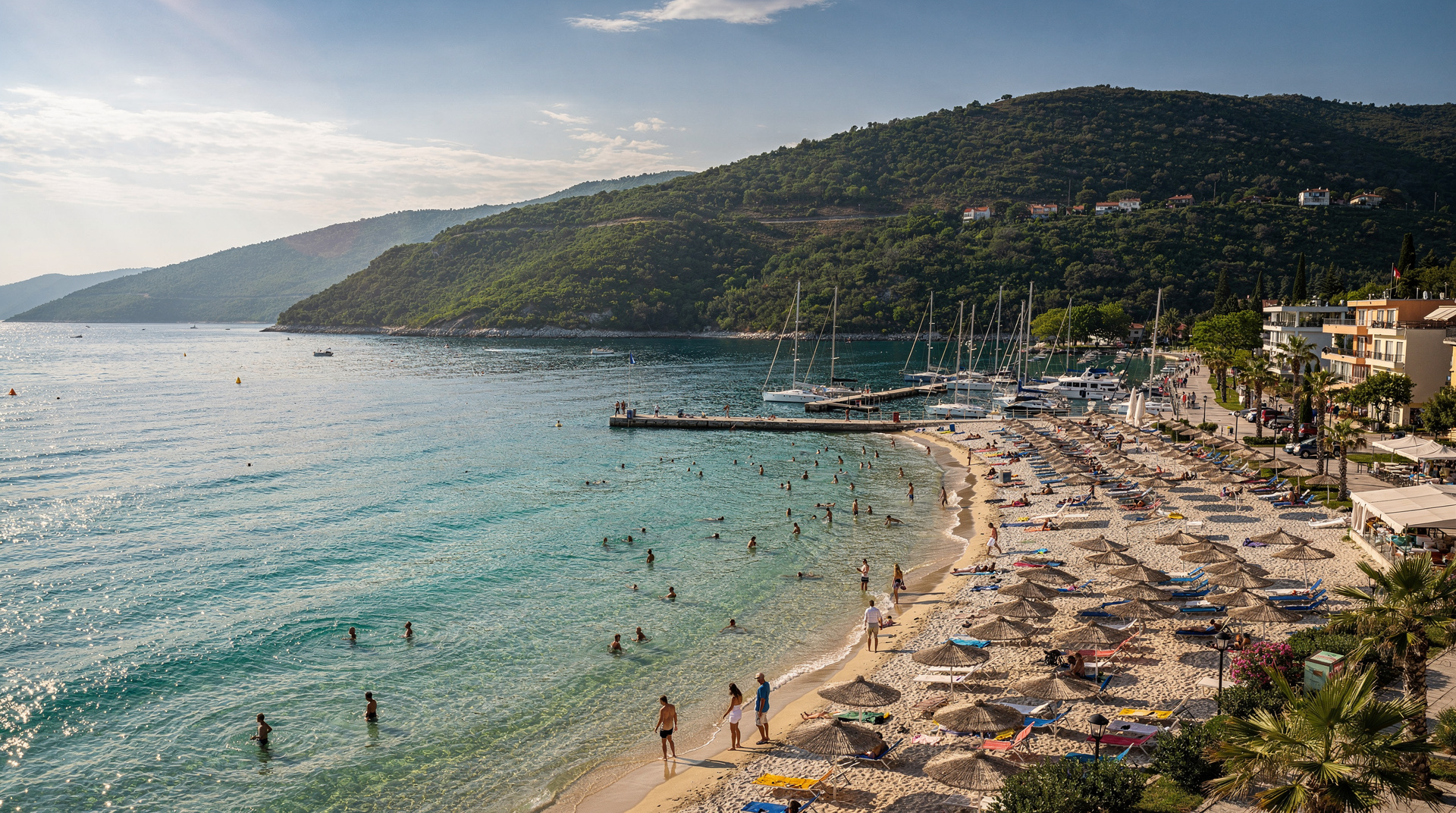
This question comes up constantly when planning the Slovenian coast, and the honest answer depends on priorities. Koper wins on price, authenticity and transit convenience — it’s the cheapest of the three and the best-connected by train and bus to Ljubljana and the interior. Piran wins on architecture and atmosphere, with the most photogenic medieval core, but pays for it in summer crowding and higher prices. Portorož wins on beach and resort infrastructure — sandy stretches, hotel pools, spa facilities — but has the least historic character of the three.
A common and sensible pattern: sleep in Koper or Izola for the price and calm, day-trip to Piran for the views, and use Portorož’s beach facilities as a day-pass option if a swim in comfort matters more than staying there overnight.
Getting to Koper by sea
Koper’s port occasionally receives passenger ferry services connecting to Venice in summer (Venezia Lines), which is worth knowing if you’re planning a multi-country coastal trip that includes Italy. Sailing time to Venice is around 3 hours; schedules are seasonal and should be confirmed directly with the operator before building a fixed itinerary around them. For most visitors, the train or bus connection to Ljubljana remains the more reliable and frequent option.
Frequently asked questions about Koper
Is Koper worth visiting, or should I go straight to Piran?
Koper is worth a half-day even if Piran is your priority destination — Titov trg is genuinely one of the best Venetian squares on the Adriatic, and the food is noticeably cheaper than in Piran or Portorož. If you have limited time and must choose one, Piran has the more striking architecture overall, but Koper rewards visitors who enjoy quieter, more “lived-in” old towns.
Can I use Koper as a base without a car?
Yes, and it may be the best car-free base on the coast. Direct trains and buses connect Koper to Ljubljana, and local buses reach Izola, Piran and Portorož frequently and cheaply. This makes Koper the most practical no-car base for exploring the whole Slovenian Riviera.
For complete coastal logistics, see our Slovenian coast guide and getting around Slovenia guide.
Top experiences
Bookable activities with verified prices and instant confirmation on GetYourGuide.
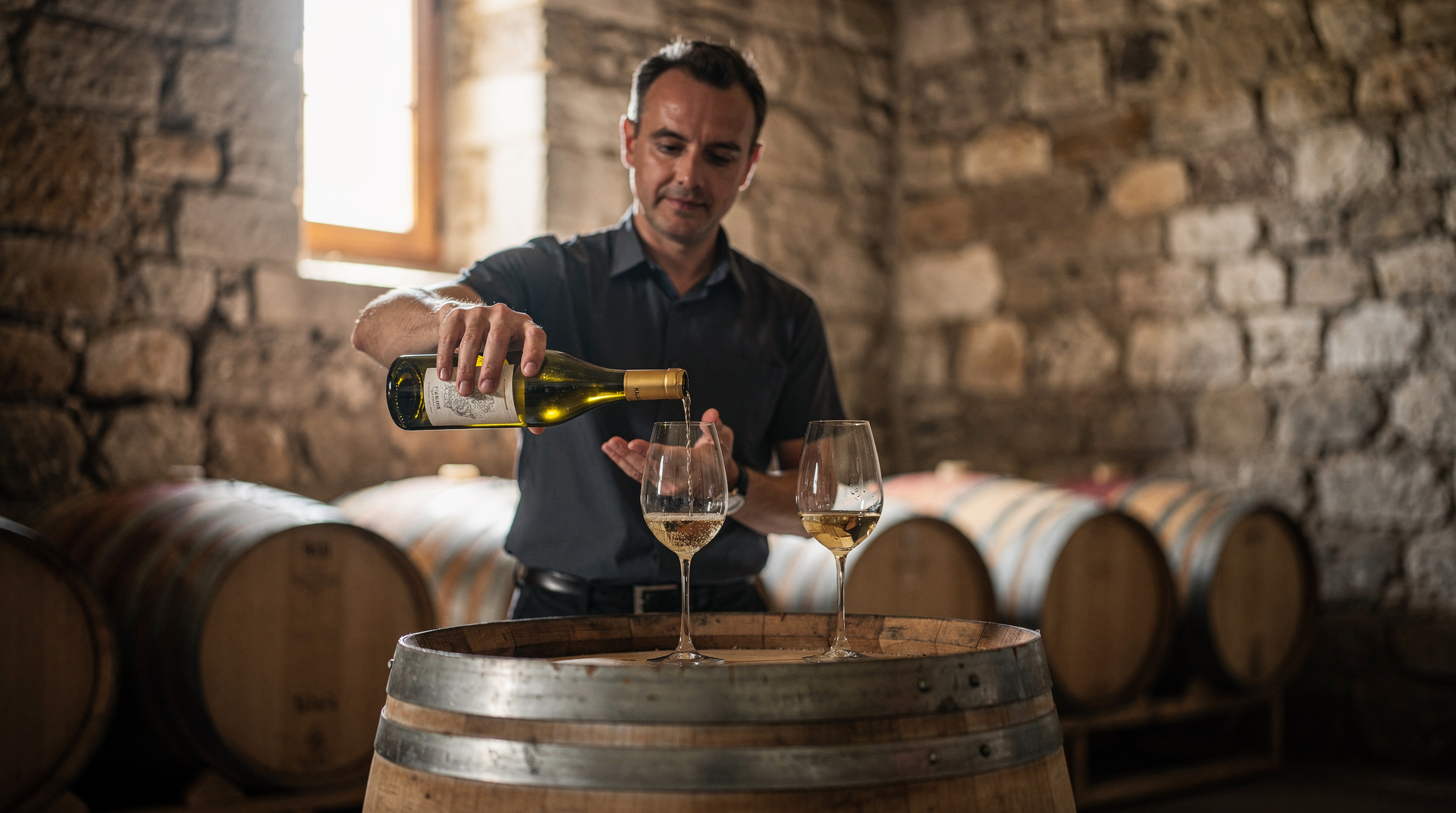
From Koper: Slovenian Riviera tour with Izola, Piran, Portorož
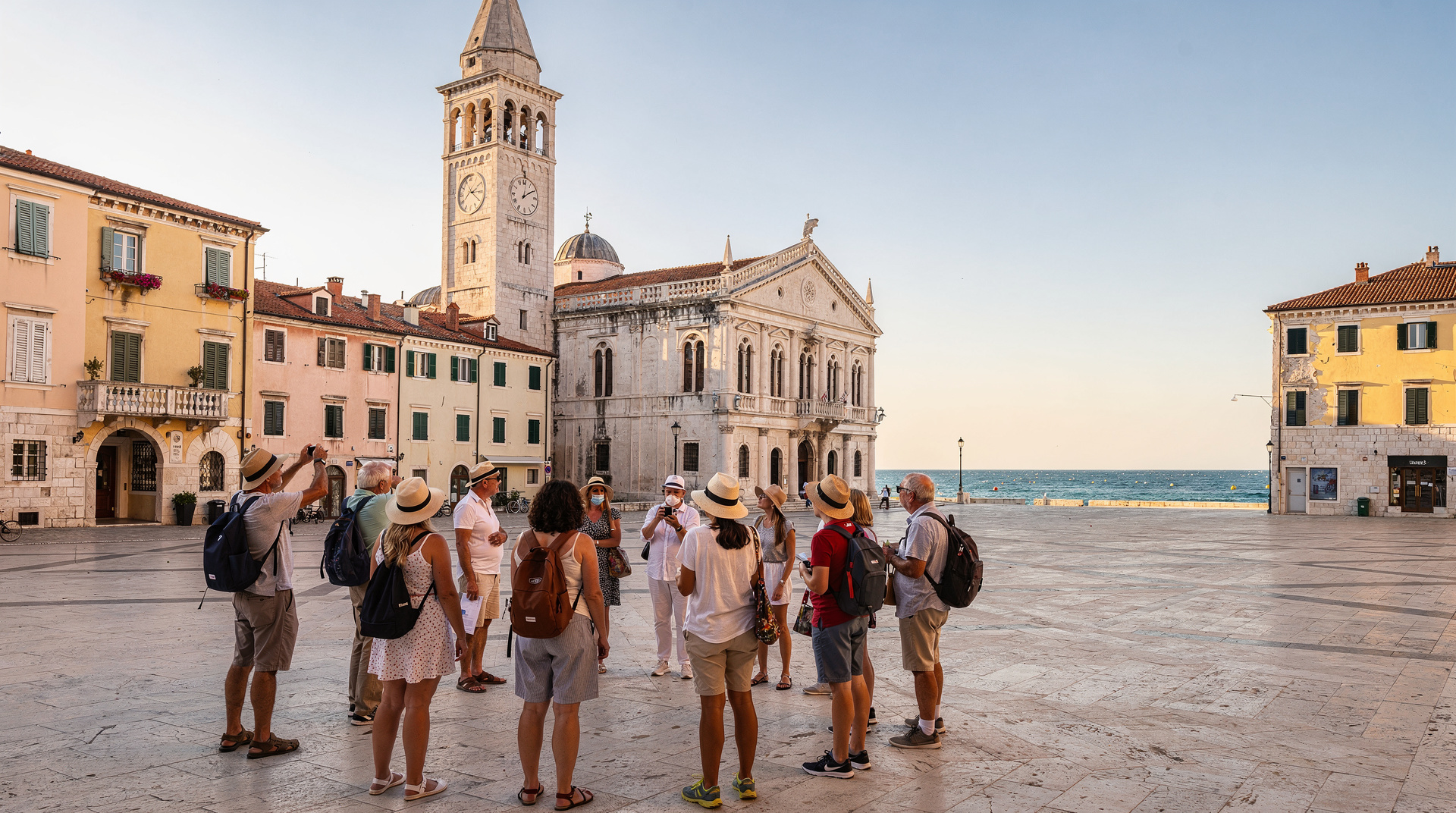
From Koper: Piran and panoramic Slovenian coast tour
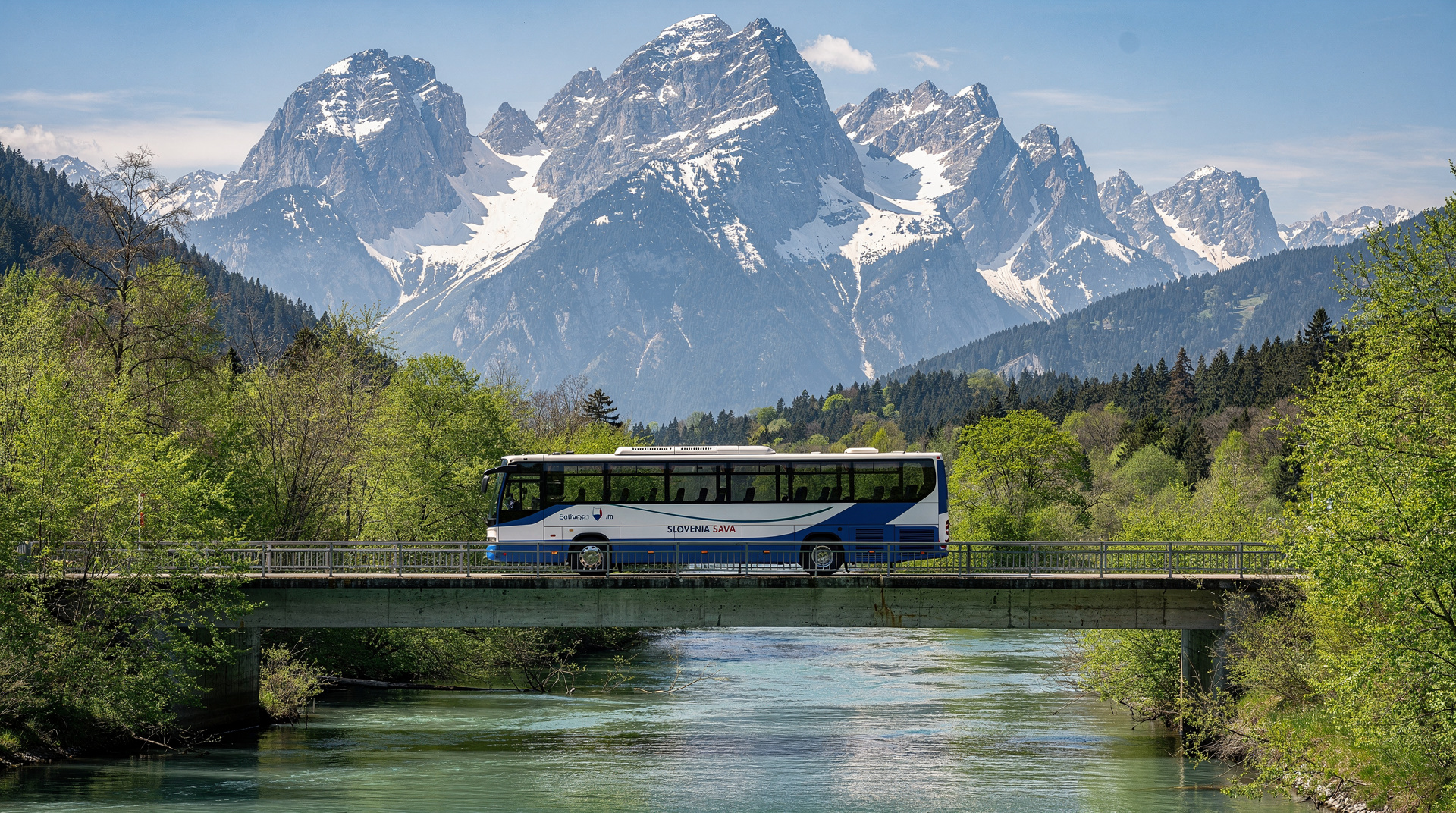
From Koper: day trip to Lake Bled and Ljubljana
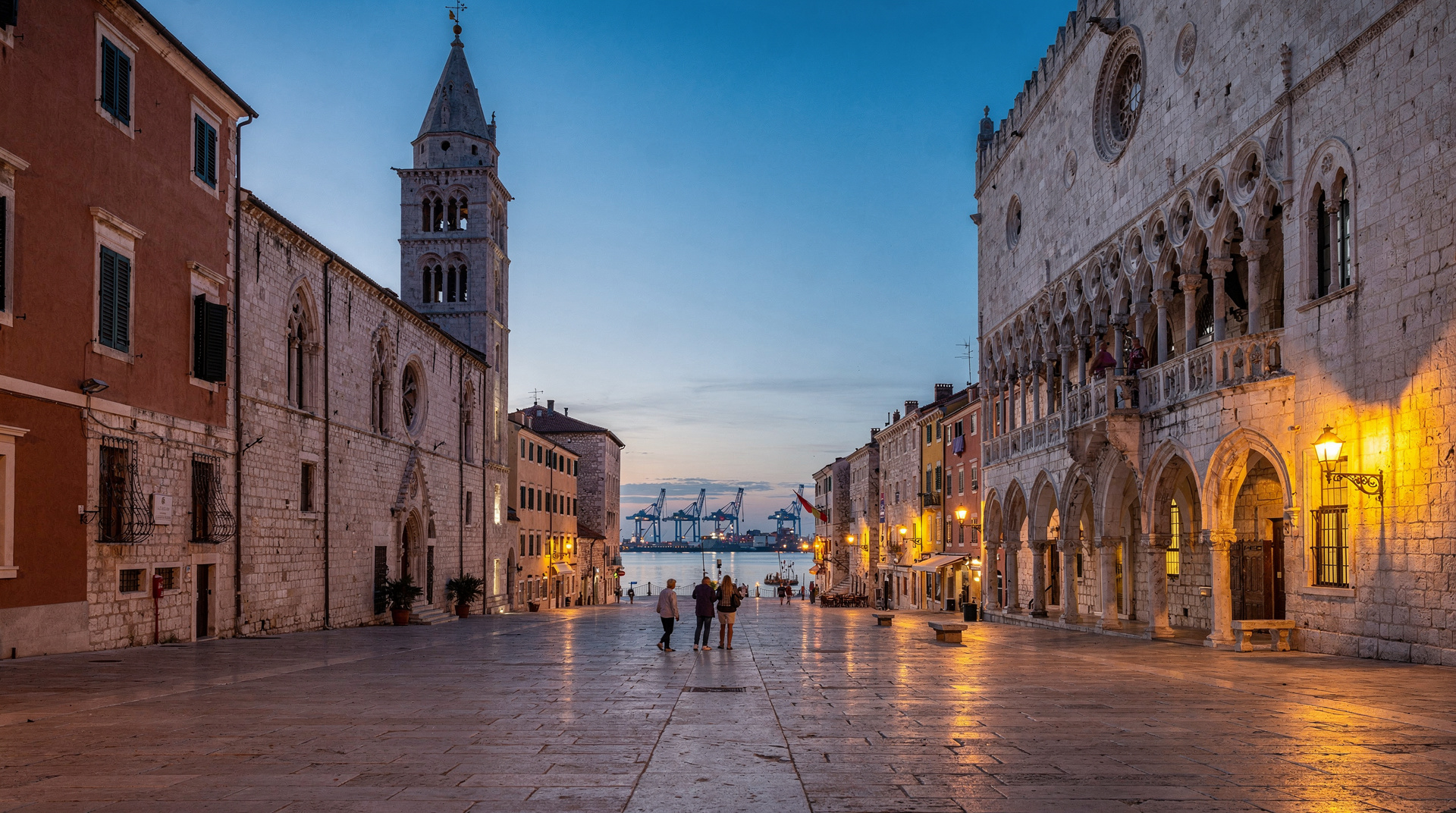
Koper: stroll and taste walking tour
From Koper: half-day tour to Trieste and Miramare Castle